One of the Navy’s four public shipyards has completed a major new training facility for its thousands of workers.
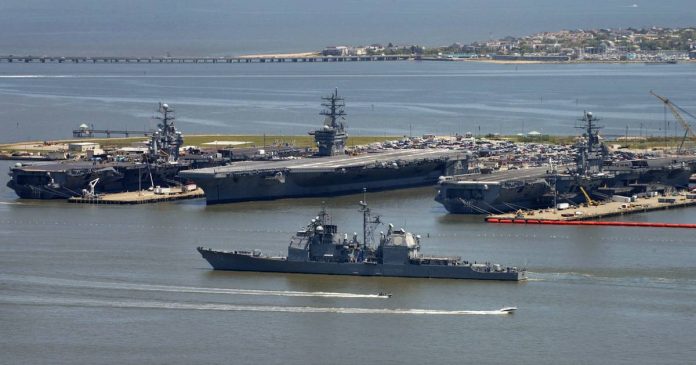
Norfolk Naval Shipyard recently opened a new $73.3 million, 157,000-square-foot training facility in Portsmouth as part of a shipyard modernization program. The four-story building means all the production training at the shipyard now happens in one location.
The new facility will allow the Navy to coordinate training as one team, shipyard commander Capt. Dianna Wolfson said in the announcement.
“From this very place, we will be providing training for ships that will be in service decades from now and training thousands upon thousands of shipyard employees who will develop and strengthen foundational skills for their entire careers,” Wolfson said.
The four-story building includes 34 academic classrooms and 26 mock-up areas, and will be used to train workers in quality assurance, operations, engineering and lifting and handling. It will also support training for Gerald R. Ford-class aircraft carriers and Virginia-class submarines.
The facility is part of a huge 20-year, $21 billion plan to modernize the Navy’s four public shipyards, including Norfolk Naval Shipyard and Portsmouth Naval Shipyard. Unveiled in 2018, the plan would upgrade aging dry-docks to continuing servicing ships and submarines. A 2022 study found that the cost to fully implement the plan has grown by at least $4 billion and is expected to increase more, according to the U.S. Government Accountability Office.
With roots tracing back to 1767, the shipyard employs around 6,000 military personnel and another 11,000 civilian workers.
At a ribbon-cutting ceremony, Rear Adm. Maria “Lore” Aguayo, commander with Naval Facilities Engineering Systems Command Atlantic, said the project faced several pandemic challenges like significant manufacturing delays and skilled labor shortages.
“However, the team worked together seamlessly and always found a way to keep moving forward,” she said.
The Navy has confirmed the identities of four Naval Station Norfolk sailors who recently died by suicide over a span of four weeks.
The sailors were identified as Kody Decker, Deonte Antwoine Autry, Janelle Holder, and Seaman Cameron Elan Armstrong on Tuesday by Rochelle Rieger, spokesperson for Mid-Atlantic Regional Maintenance Center, where all four sailors were assigned at the time of their deaths.
Their deaths are being investigated by the U.S. Navy and local police departments as apparent suicides. The suicides spanned from Oct. 29 to as recently as Nov. 26, according to a spokesperson for the command.
“Our thoughts and our deepest condolences are with these Sailors’ families, loved ones, and co-workers during this extremely difficult time,” said a statement from Chris Wyatt, MARMC spokesperson.
The first suicide was 22-year-old Kody Decker, an electronics technician, on Oct. 29. The Virginia native enlisted in the Navy on Sept. 10, 2018, serving aboard USS Bataan from Dec. 2019 to Aug. 2022 before he reported to MARMC.
On Nov. 5, a second sailor — Cameron Armstrong — died by suicide. He joined the Navy on June 10, 2018, serving as an electronics technician. He reported to the MARMC in November 2019, according to a spokesperson. Armstrong’s age was not immediately available.
Daywatch
Weekdays
Start your morning with today’s local news
Deonte Autry, a 22-year-old machinist mate fireman, died Nov. 14. The North Carolina native served aboard USS George Washington from May 2020 to March 2022 before he reported to MARMC.
The fourth was Janelle Holder, a 39-year-old fire controlman, on Nov. 26. She enlisted in the Navy on Nov. 15, 2018, serving aboard USS Gonzales from Nov. 2019 to January before she reported to MARMC.
Naval Sea Systems Command Investigation will be looking into any possible connection between the four deaths and the events or conditions that led to the deaths, a spokesperson told The Virginian-Pilot on Dec. 2.
“We remain fully engaged with our sailors and their families to ensure their health and well-being, and to ensure a climate of trust that encourages sailors to ask for help. Leadership, chaplains, psychologists, and counselors, are providing support and counseling to MARMC’s grieving workforce and for anyone in need of help,” Wyatt said.
MARMC previously did not identify the sailors, but a spokesperson said Tuesday the command is confirming the identities of the sailors “on a case by case basis when asked.”
Resources for service members and veterans struggling with mental health, including 24-hour crisis hotlines, can be found below:
The Military Crisis Line: call 1-800-273-8255, ext. 1; or text “273Talk” to 839863
Military OneSource: 1-800-342-9647
National Suicide Prevention Lifeline: 988 — call or text
John Prados, a military historian whose dogged pursuit of classified government material led him to write dozens of books upsetting accepted truths about the Cold War, Vietnam and the U.S. intelligence community, while also achieving renown as an award-winning board game designer, died Nov. 29 in Silver Spring, Maryland. He was 71.
His partner, Ellen Pinzur, said the cause of death, at a hospital, was cancer.
A self-described product of the 1960s who, with his ropy ponytail and bushy mustache, certainly looked the part, Prados was both a scholar and an activist.
As a historian, he wrote thick, deeply researched books on subjects as varied as the Battle of Leyte Gulf during World War II, the success of the Ho Chi Minh Trail during the Vietnam War and the White House’s maneuverings before the 2003 Iraq war.
Running through all his work was the contention that records of intelligence and covert activities represented a sort of historical dark matter: a vast amount of material that, while invisible in conventional narratives, could, if revealed, radically shift our understanding of the past.
Across several books about the Pacific theater in World War II, for example, he demonstrated that the U.S. command of everyday intelligence — where Japanese forces were, where they were going — was just as important as the sheer firepower the United States brought to the fight.
(Dutton/Caliber/Amazon)
His goal, he wrote in “Combined Fleet Decoded: The Secret History of American Intelligence and the Japanese Navy in World War II” (1995), was to “reassess the outcomes of battles and campaigns in terms not just of troops or ships but of how the secret war played out.”
For decades after World War II, such information was virtually impossible to access. Prados was still a graduate student at Columbia University when, in the 1970s, historians and journalists began taking advantage of the Freedom of Information Act to crack open government archives.
But going through the material was a slog, especially before digitization. Only a few people had the fortitude for it. Prados was one.
“He was an archives rat,” said Thomas Blanton, director of the National Security Archive, where Prados was a senior fellow. “He was the ultimate prospector in the primary source gold mine.”
Although he held a doctorate from Columbia, Prados never held a full-time academic position. Still, he was respected by academic historians and accepted into professional organizations, including the Society for Historians of American Foreign Relations.
(The New Press/Amazon)
“John was astonishingly productive, but what stands out in his work is the attention to detail,” Fredrik Logevall, a historian at Harvard University, said in an email. “He was ever on the hunt for new sources, for the latest declassified documents, and he put them to expert use in his books.”
Prados was driven by more than intellectual curiosity. As a young man in the early 1970s, he had been shocked by the extent of official perfidy revealed by documents such as the Pentagon Papers and events such as the Watergate scandal, and he believed that democracy hinged on the public’s access to government secrets.
Like other scholars and journalists who used the Freedom of Information Act, he worried that the lessons learned by his generation, coming out of the 1960s, were being forgotten in the 1980s, just as the Reagan administration was pushing secret wars in Central America and illegal deals such as the one revealed by the Iran-Contra affair.
“The American people not only have a need but a right to know their history,” he told The New York Times in 1993.
John Frederick Prados was born in the New York City borough of Queens on Jan. 9, 1951 — the same birthday as President Richard Nixon, he often noted, with a mix of humor and horror. When he was in middle school, his father, Jose Prados-Herrero, moved the family to San Juan, Puerto Rico, where he took a job with a sports arena. John’s mother, Betty Lou (McGuire) Prados, taught English as a second language.
Daywatch
Weekdays
Start your morning with today’s local news
Prados graduated from high school in Puerto Rico, then returned to New York to attend Columbia. He received a bachelor’s degree in political science and international affairs in 1973 and a doctorate in political science in 1982.
His dissertation, about the successes and failures of U.S. intelligence assessments of Soviet military power, became his first book, “The Soviet Estimate: U.S. Intelligence Analysis and Soviet Strategic Forces” (1982).
His marriage to Jill Gay ended in divorce. Along with his partner, he is survived by his daughters from his marriage, Dani and Tasha; his brother, Joe; and his sister, Mary.
(Oxford University Press)
After years spent collaborating with the National Security Archive, he joined the organization as a senior fellow in 1997. He soon became its most visible and vocal figure, quick with a quotation or research tip for a like-minded journalist, especially after 9/11 and the Iraq war, events that he feared would herald a new era of government secrecy.
Prados liked to say that his love for researching and writing was closely related to his second passion: designing board games that intricately simulated historical military conflicts. He created more than 30 such games, with titles involving the Napoleonic wars, World War II and, of course, Vietnam.
Many of his games have come to be regarded as classics of their genre, none more so than The Rise and Fall of the Third Reich (1974), a globe-spanning strategy contest in which players, as the different warring nations, balance economic and military resources against the chance of a dice roll. The game won a Charlie award, the top honor in war-game design.
Fans of the game were legion, and far-flung: Chilean author Roberto Bolaño created a character who mastered it in his novel “The Third Reich.”
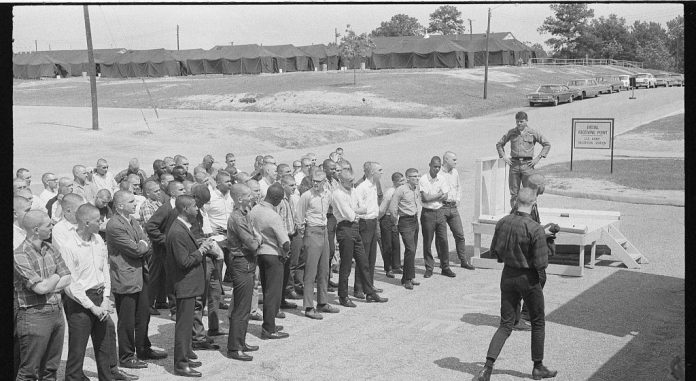
[1] See George Q. Flynn, The Draft, 1940–1973 (Lawrence: University Press of Kansas, 1993); John W. Chambers, To Raise an Army: The Draft Comes to Modern America (New York: Free Press, 1987); J. Garry Clifford and Samuel R. Spencer, The First Peacetime Draft (Lawrence: University Press of Kansas, 1986); and James M. Gerhardt, The Draft and Public Policy: Issues in Military Manpower Procurement, 1945–1970 (Columbus: Ohio State University Press, 1971).
[2] Amy J. Rutenberg, Rough Draft: Cold War Military Manpower Policy and the Origins of Vietnam-Era Draft Resistance (Ithaca, NY: Cornell University Press, 2019), 8.
[3] Rutenberg, Rough Draft, 195.
[4] See Tanya L. Roth, Her Cold War: Women in the U.S. Military, 1945–1980 (Chapel Hill: University of North Carolina Press, 2021); Kara Dixon Vuic, The Girls Next Door: Bringing the Home Front to the Front Lines (Cambridge, MA: Harvard University Press, 2019); Jennifer Mittelstadt, The Rise of the Military Welfare State (Cambridge, MA: Harvard University Press, 2015); Heather M. Stur, Beyond Combat: Women and Gender in the Vietnam War Era (Cambridge: Cambridge University Press, 2011); and Beth Bailey, America’s Army: Making the All-Volunteer Force (Cambridge, MA: Belknap Press of Harvard University Press, 2009).
Hampton Roads Transit is partnering with Naval Station Norfolk to bring back Base Express — a free transit service available exclusively to those commuting around the base — after a 15-year hiatus.
Beginning Sunday, Base Express will connect personnel — including service members, contractors, civilians, and visitors — to the ship piers, the Aquatics center and the commissary and Navy Exchange through two routes.
While variations of the free transit services have been offered on base dating to 1997, the last time Hampton Roads Transit provided Naval Station Norfolk with free transit service was November 2007. The past routes were discontinued due to lack of funding.
The new routes will be paid for through a $2.3 million grant from the Virginia Department of Rail and Public Transportation for the next three years. After that, the cost will be folded into the 757 Express network HRT launched in October.
“Now that we have steady funding, we are able to bring this service back to the base,” said Alexis Majied, an HRT spokesperson.
The blue route will run from 6 a.m. to 6 p.m. Monday through Friday. It will start at the Gilbert and First Avenue bus stop, with stops along Virginia Avenue, the piers, and Towway Drive in 15-minute intervals.
The gold route will run from 6 a.m. to 6 p.m. Monday through Friday and from 9 a.m. to 6 p.m. on weekends. The service will start at the HRT bus stop at the Navy Exchange. It will operate along portions of Maryland Avenue, Dillingham Boulevard, and Gilbert Street in 30-minute intervals.
Daywatch
Weekdays
Start your morning with today’s local news
“The circulators provide what transit officials call ‘last-mile accessibility’ for employees who wish to arrive at the base by conventional means, or who park in the Exchange area outside the gate but then must walk to their destination,” Majied said.
Representatives from Hampton Roads Transit, Naval Station Norfolk and the Department of Rail and Public Transportation gathered Friday near the Navy Exchange Complex to host a ribbon cutting ceremony to mark the return of free public transit at the base.
“The immense size of the base has long been a challenge for personnel who work there and need to travel from one location to another. These routes will provide connections and convenience that will help them every day,” said HRT President William Harrell.
A “dry run” of the service started Nov. 15 to train drivers and allow for necessary route and schedule adjustments. Base commuters were allowed to try the service during the two-week trial.
“More than 100 customers rode during that period and indicated that they were happy about the new service, saying it was much needed,” Majied said.
She said HRT predicts an average of 250 rides on weekdays by 2025, representing 65,000 trips per year.
The U.S. Navy and local police departments are investigating the death of a total of four sailors assigned to the Norfolk naval maintenance center who have been found dead in recent weeks.
The most recent sailor was found dead on Nov. 26. The other three sailors were found dead on Oct. 30 and Nov. 5 and 14, respectively, according to information provided by a spokesperson for theMid-Atlantic Regional Maintenance Center.
All four sailors were assigned to theMid-Atlantic Regional Maintenance Center, which operates under Naval Sea Systems Command to maintain military ships.
Naval Sea Systems Command Investigation will be looking into any possible connection between the four deaths and the events or conditions that led to the deaths.
“Our thoughts and our deepest condolences are with these Sailors’ families, loved ones, and co-workers during this extremely difficult time,” said a statement from Chris Wyatt, MARMC spokesperson. “We remain fully engaged with our Sailors and their families to ensure their health and well-being, and to ensure a climate of trust that encourages Sailors to ask for help. Leadership, chaplains, psychologists, and counselors, are providing support and counseling to MARMC’s grieving workforce and for anyone in need of help.”
Resources for service members and veterans struggling with mental health, including 24-hour crisis hotlines, can be found below:
The Military Crisis Line: call 1-800-273-8255, ext. 1; or text “273Talk” to 839863
Military OneSource: 1-800-342-9647
National Suicide Prevention Lifeline: 988 — call or text
WASHINGTON — America’s newest nuclear stealth bomber is making its public debut after years of secret development and as part of the Pentagon’s answer to rising concerns over a future conflict with China.
The B-21 Raider is the first new American bomber aircraft in more than 30 years. Almost every aspect of the program is classified. Ahead of its unveiling Friday at an Air Force facility in Palmdale, California, only artists’ renderings of the warplane have been released. Those few images reveal that the Raider resembles the black nuclear stealth bomber it will eventually replace, the B-2 Spirit.
The bomber is part of the Pentagon’s efforts to modernize all three legs of its nuclear triad, which includes silo-launched nuclear ballistic missiles and submarine-launched warheads, as it shifts from the counterterrorism campaigns of recent decades to meet China’s rapid military modernization.
China is on track to have 1,500 nuclear weapons by 2035, and its gains in hypersonics, cyber warfare, space capabilities and other areas present “the most consequential and systemic challenge to U.S. national security and the free and open international system,” the Pentagon said this week in its annual China report.
“We needed a new bomber for the 21st Century that would allow us to take on much more complicated threats, like the threats that we fear we would one day face from China, Russia, ” said Deborah Lee James, the Air Force secretary when the Raider contract was announced in 2015. “The B-21 is more survivable and can take on these much more difficult threats.”
While the Raider may resemble the B-2, once you get inside, the similarities stop, said Kathy Warden, chief executive of Northrop Grumman Corp., which is building the Raider.
“The way it operates internally is extremely advanced compared to the B-2, because the technology has evolved so much in terms of the computing capability that we can now embed in the software of the B-21,” Warden said.
Other changes likely include advanced materials used in coatings to make the bomber harder to detect, new ways to control electronic emissions, so the bomber could spoof adversary radars and disguise itself as another object, and use of new propulsion technologies, several defense analysts said.
In a fact sheet, Northrop Grumman, based in Falls Church, Virginia, said it is using “new manufacturing techniques and materials to ensure the B-21 will defeat the anti-access, area-denial systems it will face.”
Warden could not discuss specifics of those technologies but said the bomber will be more stealthy.
“When we talk about low observability, it is incredibly low observability,” Warden said. “You’ll hear it, but you really won’t see it.”
Six B-21 Raiders are in production; The Air Force plans to build 100 that can deploy either nuclear weapons or conventional bombs and can be used with or without a human crew. Both the Air Force and Northrop also point to the Raider’s relatively quick development: The bomber went from contract award to debut in seven years. Other new fighter and ship programs have taken decades.
The cost of the bombers is unknown. The Air Force previously put the price for a buy of 100 aircraft at an average cost of $550 million each in 2010 dollars — roughly $753 million today — but it’s unclear how much the Air Force is actually spending.
The fact that the price is not public troubles government watchdogs.
“It might be a big challenge for us to do our normal analysis of a major program like this,” said Dan Grazier, a senior defense policy fellow at the Project on Government Oversight. “It’s easy to say that the B-21 is still on schedule before it actually flies. Because it’s only when one of these programs goes into the actual testing phase when real problems are discovered. And so that’s the point when schedules really start to slip and costs really start to rise.”
The Raider will not make its first flight until 2023. However, using advanced computing, Warden said, Northrop Grumman has been testing the Raider’s performance using a digital twin, a virtual replica of the one being unveiled.
The B-2 was also envisioned to be a fleet of more than 100 aircraft, but the Air Force ultimately built only 21 of them, due to cost overruns and a changed security environment after the Soviet Union fell.
Daywatch
Weekdays
Start your morning with today’s local news
Fewer than that are ready to fly on any given day due to the significant maintenance needs of the aging bomber, said Todd Harrison, an aerospace specialist and managing director at Metrea Strategic Insights.
The B-21 Raider, which takes its name from the 1942 Doolittle Raid over Tokyo, will be slightly smaller than the B-2 to increase its range, Warden said.
In October 2001, B-2 pilots set a record when they flew 44 hours straight to drop the first bombs in Afghanistan after the Sept. 11 attacks. But the B-2 often does long round-trip missions, because there are few hangars globally that can accommodate its wingspan. That limits where B-2s can land for needed post-flight maintenance. And the hangars needed to be air-conditioned — because the Spirit’s windows don’t open, hotter climates can cook cockpit electronics.
The new Raider will also get new hangars, to accommodate the size and complexity of the bomber, Warden said.
A last noticeable difference is in the debut itself. While both will have debuted in the Air Force’s Palmdale Plant 42, in 1989 the B-2 was rolled outdoors amid much public fanfare.
Given advances in surveillance satellites and cameras, the Raider will debut very much under wraps and will be viewed inside a hangar. Invited guests including Defense Secretary Lloyd Austin will witness the hangar doors open to reveal the bomber for its public introduction, then the doors will close again.
“The magic of the platform,” Warden said, “is what you don’t see.”
SAN DIEGO — A fire broke out aboard a U.S. Navy aircraft carrier, resulting in minor injuries to nine sailors, military officials said Wednesday.
The blaze broke out Tuesday morning as the USS Abraham Lincoln was conducting routine operations about 30 miles off Southern California, the Navy said in a statement.
“The fire was quickly identified and extinguished through the crew’s fire-fighting efforts,” the statement said.
All nine injured sailors were treated aboard the ship, which will continue its operations in the area.
When Hampton Roads residents look to the sky Saturday morning, they might spot Santa Claus. But he won’t be in a big sleigh pulled by Prancer and Dancer.
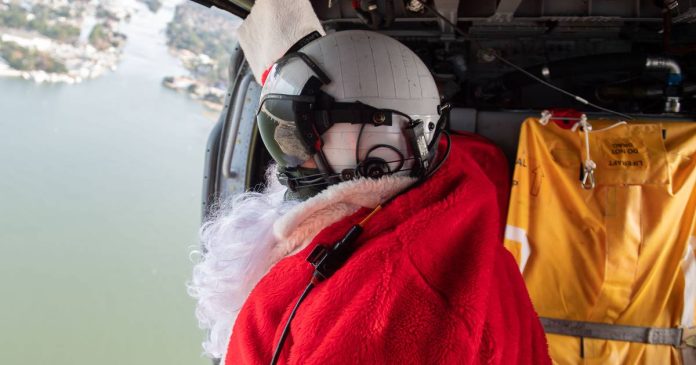
Instead, Santa will be in a MH-60S Knighthawk helicopter training with the Navy as he prepares for Christmas.
After departing from Naval Station Norfolk, Helicopter Sea Combat Squadron 2 will fly Santa around Hampton Roads from 10 a.m. to 12 p.m. on Saturday.
The “Fleet Angels” squadron will help Santa practice his holiday drops — and spread a little cheer — during the two-hour flight.
This is the third year the Fleet Angels have helped Santa prepare for Christmas.
“It is always a great day when Santa is able to fly with our pilots and aircrew during a scheduled training flight,” said Cmdr. Santico “Tico” Valenzuela, the squadron’s commanding officer.
This map provided by the U.S. Navy shows Santa’s helicopter route.
The festive fly-by can be spotted at the following locations:
Norfolk Naval Base: 10 a.m.
Patrick Henry Mall in Newport News: 10:05 a.m.
Riverpointe Shopping Center in Hampton: 10:15 a.m.
Town Point Park in Norfolk: 10:25 a.m.
Mount Trashmore in Virginia Beach: 10:35 a.m.
Cox High School in Virginia Beach: 10:45 a.m.
Lesnar Bridge in Virginia Beach: 10:55 a.m.
Fort Story in Virginia Beach: 11:05 a.m.
Virginia Beach Oceanfront: 11:15 a.m.
Greenbrier Mall in Chesapeake: 11:30 a.m.
Columbia Park in Portsmouth: 11:40 a.m.
Suffolk Walmart Supercenter at 1200 Main Street: 11:50 a.m.
Santa will be played by a Navy service member assigned to the squadron. He will be joined by another service member dressed as an elf.
As you continue to lead, your influence impacts more and more people. You look for opportunities to invest in them. Over the years, you may even build a community among those you mentor. They reach out to you when they approach significant career decisions. Maybe you share resources and thoughts with them through text, email, and on social media. You invest in them, but one at a time and in separate channels.
But…what if you had a way to bring them together? What if you had a way to build real community among those you lead?
Today, I want to share a leader development resource and offer some ideas about how you can build community for those you lead, whether that group is a part of a military unit, a business, or a distant group of leaders you have inspired in the past.
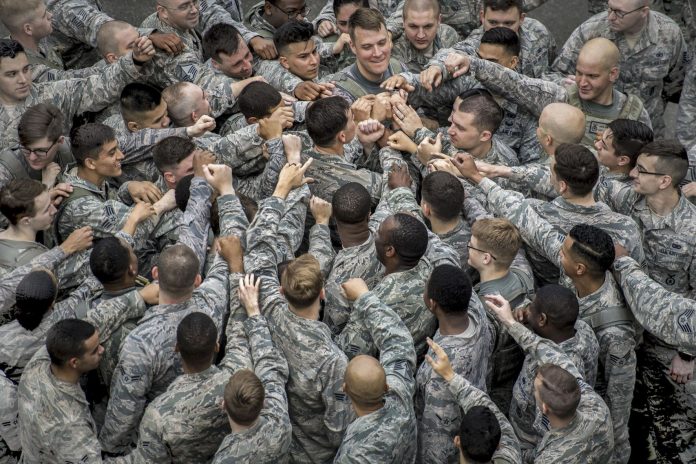
Airmen join in a group huddle at the conclusion of the Police Week Memorial 5K Ruck March at Yokota Air Base, Japan, May 15, 2017. The airmen are assigned to the 374th Security Forces Squadron. Air Force photo by Airman 1st Class Donald Hudson.
A Community of Leaders
I’m excited about this topic because I recently came across a community-building platform called Circle. Circle is what you wished you could get from your Signal and WhatsApp groups, Slack channels, and Facebook pages.
Circle is a software platform that’s solely focused on building community and integrates countless applications and engagement opportunities. You can share links, resources, files, and video, as well as connect live to your community…all from within the platform.
I am convinced that “community is the new content” and I was so impressed with Circle’s design that I immediately signed up and began building a community for The Military Leader audience…which will be available in the coming months!
The Vulnerability of Social Media
There’s another important reason to consider Circle for your leader engagement…Circle communities are not public.
Circle is a private, invitation-only platform that search engines cannot index. So, you can connect with other leaders in a more authentic and candid way than you ever can on social media. No trolls. No unwanted criticism for sharing your ideas. Just a group of like-minded leaders who appreciate your investment in their development.
Who Needs a Community?
There are two types of people who could benefit from starting their own community:
Leaders who want to bring together those they mentor and influence into one space, and…
Content producers who have an audience and want to bring them together in a more authentic and connected way.
If you fall into one of these groups, consider some of the many ways you could use community to build connections among those you lead and achieve greater influence.
20 Ways to Build a Community of Leaders
As I mentioned, Circle is the perfect platform to consolidate your leader network and create a more personal engagement experience for those who respect and follow you. As I’ve used Circle, I’ve found that the user interface is intuitive, easy to use, and flexible enough to customize to your needs.
Think of it as your own private blog, or a meeting space for your mastermind group of mentors. The possibilities are endless!
Here are a few thoughts about how Circle can enhance your impact as a leader:
Simply put…Circle brings your influence network into one space instead of fragmented among numerous channels.
You can create the meaningful conversations you aren’t getting at work.
Generate niche conversations around specific topics like strategy, leadership, fitness, or any other professional area that you care about.
Easily share the hard-earned lessons you have throughout your week.
Pass on an article, book, podcast, or TED video that was meaningful for you.
Create a book or movie club where your audience can comment and dialogue in one space.
Go live with that club and host engaging “face to face” discussions.
Share files you are using, like counseling templates, talent management files, etc.
Create an accountability group to inspire productive habits among your fellow leaders.
Post your personal high and low moments as you walk your leadership journey.
Invite others to post their wins and challenges, then garner high fives and feedback from the community.
Host guest speakers and senior leaders in live webinars for your group.
Create and host a weekly mastermind group to challenge your development and offer insight.
Create a video course to walk your audience through a challenge and share your perspective on solving it.
Propose a “question of the week” to your protégés.
Share a “quote of the week” and invite discussion among your team.
Host a weekly “Ask Me Anything” or “Office Hours” call to increase engagement with your audience.
Create another outlet to share your article, podcast, video, or book.
Use Circle community engagement to augment your unit or company’s leader development programs and events.
And most importantly…build a space where you can bring together the many, many junior leaders you have influenced over the years and keep them together as you move on to other opportunities.
How to Build Community
Whether you are a leader of many or a content producer with an audience, I invite you to check out Circle today. They have a 30% discount through December 2nd and you can easily schedule a demo to check out all that the platform can do for you.
Of course, if you have questions you can also post a comment below. Lead well!




:quality(70)/cloudfront-us-east-1.images.arcpublishing.com/tronc/6M4C7JMRGVGVVLGUHVVAPS64GY.jpg)
:quality(70)/cloudfront-us-east-1.images.arcpublishing.com/tronc/I6KHYBQQBRCGBDKIDFQB4BAE6Y.jpg)