Home Blog Page 212

USS Gerald R. Ford set to return home Saturday after 1st deployment – Daily Press

0

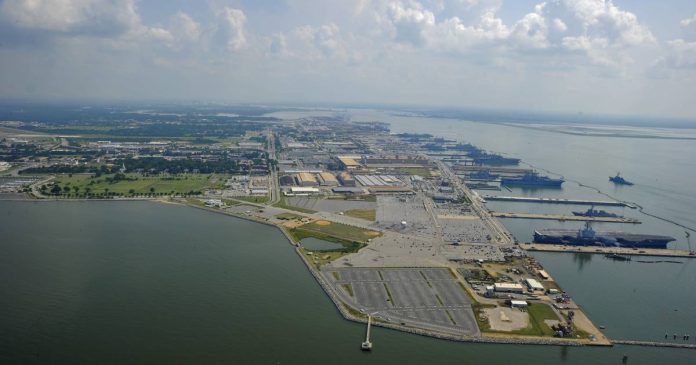
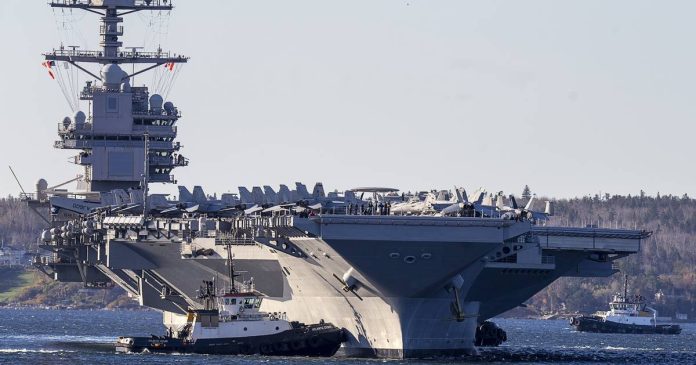
The USS Gerald R. Ford, and the strike group bearing its name, are set to return home to Naval Station Norfolk on Saturday.

The Navy’s newest and largest aircraft carrier deployed for the first time on Oct. 4. The warship is the first of a new generation.

“I am honored to welcome the Gerald R. Ford carrier strike group home from their inaugural deployment in the Atlantic, where they strengthened relationships with Allies and partners, exercised combined capabilities and demonstrated our commitment in the Atlantic,” said Vice Adm. Dan Dwyer, commander of the U.S. 2nd Fleet and Joint Force Command, Norfolk. “This deployment brought together an incredible group of Allies and partners with one single focus — to contribute to a peaceful, stable, and conflict-free Atlantic region through our combined naval power. Opportunities to interoperate and integrate make our nations, our navies, and the NATO Alliance stronger.”

The Ford sailed more than 9,200 miles in the Atlantic, alongside ships from Canada, the Netherlands, Denmark, France, Germany, Spain, Finland and Sweden.

The Ford strike group, which is made up of 9,000 or so personnel, conducted training on air defense and anti-subsurface warfare and participated in other operations.

“Leading the men and women of the Gerald R. Ford Strike Group has been awe-inspiring. Every day these Sailors committed themselves 100% to a safe and successful inaugural deployment of Ford and the strike group,” said Rear Adm. Greg Huffman, commander of Carrier Strike Group 12. “This deployment laid a strong foundation for the strike group, created momentum to carry us forward for future operations, and has prepared us to answer our nation’s call when needed.”

Nour Habib, [email protected]

New temporary home for USS Truman sailors features more privacy, better computer access, Navy says – Daily Press

0

When the USS Harry S. Truman carrier goes in for repairs soon, its 2,500 sailors will have access to new digs inspired by the cruise ship industry.

On Monday, the Navy held a ribbon-cutting for Auxiliary Personnel Lighter 68, its first berthing barge in 22 years.

The 609‐berth barge gives sailors “first-class accommodations” such as sleeping quarters with more privacy and modular bathrooms patterned after cruise ships, which make it easier to accommodate mixed-gender crews, said Rear Admiral William Greene, fleet maintenance officer for U.S. Fleet Forces.

APL 68 has central and self-service laundry rooms, a gym, and a barbershop. The drop-in space also provides a mess hall, lounge rooms and modular classrooms.

“This is a challenging environment to be in,” Greene said. “Folks didn’t join the Navy to be in a shipyard.”

It’s been a long time since crews had to live on their ships during repairs, Greene said, and an active shipyard isn’t an easy place to live even for short periods. Sailors work in the heat, cold, and constant noise, and there’s little respite.

Quality of life in the Navy has received scrutiny this year after three sailors on the USS George Washington died by suicide in one week in April, with reports that poor living conditions may have contributed to the crisis. The ship was in Newport News for repairs.

“We’ve taken on some aggressive actions following the incidents on George Washington,” Greene said, adding that the Navy’s investigation found pay, unaccompanied housing — where single sailors live — and quality of life and work were key concerns.

An additional three sailors died by suicide in recent weeks, Sens. Mark Warner and Tim Kaine confirmed Monday. The sailors were assigned to the Mid-Atlantic Regional Maintenance Center at Naval Station Norfolk but were not attached to a ship.

The Navy has worked to reduce the time sailors live on the ship while it’s in for repair, Greene said, and only 52 of the sailors will be living on the barge full-time when it opens in early December. The rest of the crew will use the barge when they have ship duty – about one day a week, depending on their assignment.

Petty Officer 3rd Class Tate Cardinal, 22, has been in the Navy for about three years and spent two of them with the Truman. This will be his second time working from the shipyard while the ship undergoes repairs.

Many of the ship’s crew are younger who may not have the strongest support systems and sleeping on the ship doesn’t improve matters. The barge, Cardinal said, will give them a place to stay that’s clean and warm.

Daywatch

Daywatch

Weekdays

Start your morning with today’s local news

“Compared to being on the ship, which is a construction site,” Cardinal said.

The entrance to some of the living quarters aboard the Auxiliary Personnel Lighter 68 housing barge docked at the Norfolk Naval Shipyard in Portsmouth on Monday, Nov. 21, 2022.

As important as the nicer quarters may be, the most requested update, Greene said, was better computer access.

The barge has been requested since 2002 and has been in the works since 2013, according to U.S. Fleet Forces Technical Director Steve Dungan. The Navy plans to add 12 large barges like this and 26 “medium” ones. Only one of the additional large barges is complete so far.

The barge has more than double the access points of existing barges and was designed for the hardwired local area network, or LAN, computer access sailors need for everything from training to day-to-day operations.

“People don’t understand everything is done on a computer network,” Dungan said, adding that without robust access, ships in for repairs are “hamstrung.”

“They wouldn’t really be able to do anything,” he said.

Katrina Dix, 757-222-5155, [email protected].

Navy SEAL Team 6 member who played role in Green Beret’s hazing death wins appeal of 10-year sentence – Daily Press

0

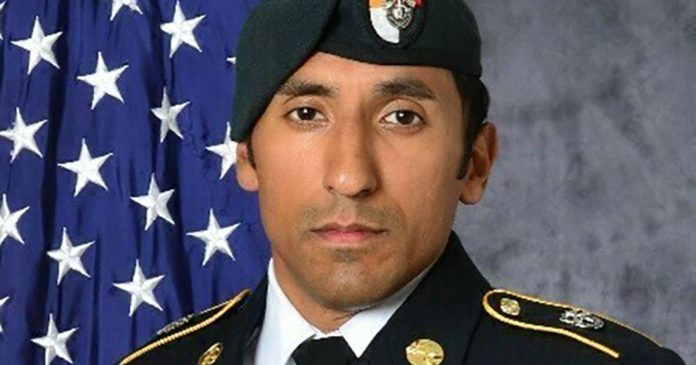
NORFOLK — A military appeals court has ordered a new sentencing hearing for a U.S. Navy SEAL who got 10 years in prison for his role in the hazing death of a U.S. Army Green Beret while the men served in Africa.

Prosecutors failed to disclose that a U.S. Marine who testified against the SEAL — and who participated in the hazing — had asked for clemency in exchange for his testimony, the court ruled. The SEAL’s defense attorneys missed the chance to question the Marine about a “potential motive to misrepresent events.”

The United States Navy-Marine Corps Court of Criminal Appeals published the ruling last week, nearly two years after Tony DeDolph received his decade-long punishment.

DeDolph, a Wisconsin native, was a member of the elite SEAL Team 6. He was one four American servicemembers — two SEALs and two Marines — who were charged in the death of Army Staff Sgt. Logan Melgar, a Texas native.

The hazing occurred in 2017 while the men served in Mali. Charging documents don’t state why they were there. But U.S. Special Forces had been in Africa to support and train local troops in their fight against extremists.

The case offered a brief window into how some of America’s most elite servicemembers have addressed grievances outside the law.

DeDolph testified during his 2021 court-martial that the four men were trying to get back at Melgar and teach him a lesson over perceived slights. In particular, some were upset that they missed a party at the French Embassy in the capital city of Bamako because Melgar and the others got separated in traffic.

DeDolph said they plotted an elaborate prank for Melgar known as as a “tape job.” That included binding Melgar with duct tape, applying a choke hold to temporarily knock him out and then showing Melgar a video of the incident sometime later.

DeDolph said his role in the prank was to cause Melgar to temporarily lose consciousness by placing him in a martial-arts-style chokehold. DeDolph said the “rear naked choke” restricts blood flow in the neck and is used in the military.

“I effectively applied the chokehold as I have done numerous times in training,” DeDolph said.

Melgar lost consciousness in about 10 seconds, but failed to wake up after the typical 30 seconds, DeDolph testified.

Daywatch

Daywatch

Weekdays

Start your morning with today’s local news

“Usually by that time, the individual has gotten up,” DeDolph said. “And he did not.”

DeDolph pleaded guilty to involuntary manslaughter and hazing, among other charges. A sentencing hearing followed, during which one of the Marines testified on behalf of the government. The appeals court used a synonym to identify the Marine in its ruling.

The Marine’s role in the hazing included raising the mosquito netting around Melgar’s bed and binding his arms and legs with tape, the appeals court wrote. The Marine offered a detailed account of the assault, including the methods that DeDolph used to render Melgar unconscious.

DeDolph’s attorneys knew that the Marine had already pleaded guilty to charges that included negligent homicide and hazing, while agreeing to testify against DeDolph, the court wrote. But DeDolph’s attorneys were unaware that the Marine was also requesting less prison time, specifically two years instead of the four he got.

“The fact that (the Marine) sought additional clemency … in exchange for his testimony is clearly information that tended to demonstrate (his) bias, and bore on his credibility,” the appeals court wrote. DeDolph’s attorneys were denied the opportunity to examine the Marine’s potential bias and whether he had a “motive to exaggerate his testimony.”

The Marine’s sentence was later reduced from four years confinement to three years.

“(T)here is a reasonable possibility that the outcome of the trial would have been affected by the disclosure of the clemency request,” the court wrote.

Three sailors assigned to Norfolk’s naval maintenance center died by suicide this month – Daily Press

0

Three sailors assigned to Norfolk’s naval maintenance center have died by suicide in recent weeks.

Sens. Mark Warner and Tim Kaine confirmed the rash of suicides Monday, which occurred throughout the month of November.

All three sailors were assigned to the Mid-Atlantic Regional Maintenance Center at Naval Station Norfolk. Mid-Atlantic Regional Maintenance Center operates under Naval Sea Systems Command to maintain military ships.

Warner’s and Kaine’s offices are in contact with the Mid-Atlantic Regional Maintenance Center about the deaths, but were unable to provide additional details. The military has not publicly commented on the deaths.

Kaine said he will raise the issue of the deaths with Naval leadership directly, describing the issue of service member suicides as “an immense challenge” facing the military community.

“I’m heartbroken to learn of the deaths of these three sailors,” Kaine said in a statement to The Virginian-Pilot. “One of my top priorities as the Chair of the Senate Armed Services Subcommittee on Readiness is to ensure that every member of our armed forces has access to the mental health services that can save lives.”

Last year, Kaine worked to include the bipartisan Brandon Act — which was named after a Navy sailor who committed suicide on Naval Station Norfolk in 2018 — in the annual armed services funding bill. The act would allow service members to confidentially seek mental health treatment and ensures sailors will not be retaliated against or punished for disclosing mental health struggles. While the act was signed into law by President Joe Biden in 2021, it has not been implemented by the Department of Defense.

“I’m pushing the Department of Defense to implement the bill as quickly as possible — and working to secure additional mental health resources for our armed forces through this year’s annual defense funding bill — so we can get service members the mental health services they need,” Kaine said.

Warner and Kaine extend their prayers to the sailors’ families and impacted community members.

“The truth is that this time of year can be particularly difficult for the men and women of our armed forces who serve our nation year-round and often have to spend the holidays away from their loved ones,” Warner said in a statement to The Pilot.

Warner reminds sailors that they should never suffer alone or in silence.

“I encourage any sailor who is struggling or considering suicide to reach out to the command suicide prevention coordinator, the Navy Fleet & Family Support Center, the local command chaplain, or Military OneSource,” Warner said.

The recent string of suicides comes eight months after three sailors assigned to the Norfolk-based USS George Washington took their own lives within the span of a week.

Daywatch

Daywatch

Weekdays

Start your morning with today’s local news

Resources for service members and veterans struggling with mental health, including 24-hour crisis hotlines, can be found below:

  • The Military Crisis Line: call 1-800-273-8255, ext. 1; or text “273Talk” to 839863
  • Military OneSource: 1-800-342-9647
  • National Suicide Prevention Lifeline: 988 — call or text

Caitlyn Burchett, [email protected]

No more mad cow worries, banned blood donors can give again – Daily Press

0

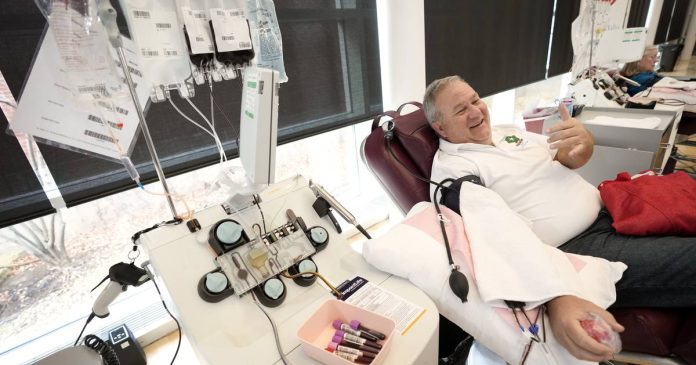
U.S. Army veteran Matt Schermerhorn couldn’t give blood for years because he was stationed in Europe during a deadly mad cow disease scare there. Now, he’s proud to be back in the donor’s chair.

Schermerhorn, 58, is among thousands of people, including current and former military members, who have returned to blood donation centers across the country after federal health officials lifted a ban that stood for more than two decades.

“It’s a responsibility. It’s a civic duty,” said Schermerhorn, who donated on Veterans Day at the ImpactLife center in Davenport, Iowa. “You really don’t have to go out of your way too much to help your fellow man.”

Blood collectors nationwide are tracking down people like Schermerhorn, U.S. citizens who lived, worked or vacationed in the United Kingdom, France, Ireland or served at military bases in Europe during various periods between 1980 and 2001, as well as anyone who received blood transfusions in those three countries anytime since 1980.

Since 1999, those people have been banned from giving blood in the U.S. for fear that they’d been exposed to mad cow disease. Outbreaks of the cattle-borne infection swept through Europe, eventually killing at least 232 people, mostly in the U.K. Four cases have been reported in the U.S., all in people who likely acquired the infections abroad, health officials said.

The rare disease is caused by an abnormal form of a protein called a prion, which triggers damaging changes to the brain and central nervous system. It’s spread from sick cattle to people who eat contaminated beef, but it can also be transmitted through blood transfusions. But after decades of research and reassessment, the federal Food and Drug Administration has determined that the risk of the disease has abated, thanks in large part to changes in the way cattle are raised and the treatment of donated blood. The agency eased the restrictions over the past two years and fully lifted them in May.

That means hundreds of thousands of former donors can once again roll up their sleeves, perhaps bolstering U.S. blood collections, which lagged during the COVID-19 pandemic.

“The most important thing is for individuals that believe they may now be eligible to call their local blood center,” said Kate Fry, chief executive of America’s Blood Centers, which represents more than 600 blood collection sites providing nearly 60% of the U.S. blood supply.

The American Red Cross, which provides about 40% of the U.S. supply, last month began accepting donors previously deferred because of the risk of mad cow disease, formally known as variant Creutzfeldt-Jakob disease, or vCJD.

Invariably fatal, with an incubation period that can last years or even decades, the emergence of vCJD in humans in the late 1990s alarmed officials responsible for the safety of the blood supply, said Dr. Rita Reik, chief medical officer for OneBlood, a collection center in Florida.

“It was a scary new disease,” Reik said. “Which is why it required such a length of time to study this disease to get a level of comfort to get to the deferral.”

In the U.K., five cases of vCJD were transmitted by blood transfusions, according to the National Health Service. Today, the risk of being infected via blood transfusion is “essentially negligible,” Reik said.

Daywatch

Daywatch

Weekdays

Start your morning with today’s local news

Tracking down lost donors has been a challenge, said Dr. John Armitage, chief executive of the Oklahoma Blood Institute. His staff has used emails, postcards and phones to contact more than 6,300 donors who were turned away since 1999. So far, about 350 have returned to donate.

“We feel good about that as a first effort,” Armitage said. “We know there are folks that we haven’t reached yet.”

Bans remain in place for people who are suspected of having vCJD or related diseases, those who have a blood relative with a related disease and those who received pituitary human growth hormone or a certain type of brain tissue transplant from cadavers.

The now-lifted military ban included Schermerhorn, a retired Army lieutenant colonel who was stationed in Germany from 1988 to 1992.

Schermerhorn stayed away for years — until he saw a local news story about the recent change. He’s donated his rare type O-negative blood eight times since last year.

For Schermerhorn, giving blood is one way to repay past donors who stepped up when his older brother was badly injured in a boating accident.

“My brother had taken nine pints of blood from complete strangers,” he said. “They were part of the lifeline that kept him alive.”

Members of ‘Little Rock Nine’ mark milestone for new Virginia-class submarine Arkansas – Daily Press

0

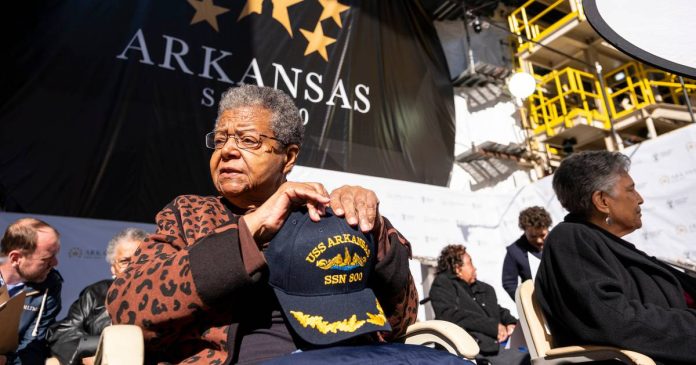
NEWPORT NEWS — Five members of the “Little Rock Nine” gathered Friday at Newport News Shipbuilding in preparation for the keel authentication ceremony of a new Virginia-class attack submarine that will pay homage to the group.

As sponsors and honorees of submarine Arkansas (SSN-800), their initials will be etched into the hull of the ship Saturday, representing the resiliency the Navy expects from its latest nuclear-powered attack submarine.

“Their characteristics of endurance and stick-to-itiveness are going to be part of this submarine and her crew forever,” said Jennifer Boykin, President of Newport News Shipbuilding.

The “Little Rock Nine” were the first Black students to enroll in an all-white high school in Arkansas in 1957, following the U.S. Supreme Court’s landmark ruling that declared segregated classrooms unconstitutional. Confronted by an angry mob of white segregationists and blocked by the National Guard, the students were able to enter the school only after intervention by federal troops, but endured harassment and threats throughout the school year.

The six women of the Little Rock Nine — Gloria Ray Karlmark, Melba Pattillo Beals, Elizabeth Eckford, Carlotta Walls LaNier, Minnijean Brown-Trickey and Thelma Mothershed Wair — were selected to sponsor the 27th Virginia-class submarine. According to maritime traditions, ship sponsors must be women, but the male members of the group, Ernest Green and Terrence Roberts, also will be honored during the keel authentication ceremony.

The eight members will have their initials welded onto steel plates, which will be affixed to the submarine. The initials of the ninth member, Jefferson Thomas, will not be etched into the hull because the shipbuilders were unable to obtain a copy of his handwritten initials after he died in 2010.

For Karlmark, one of those in attendance Friday, the submarine represents development in technology and inclusion.

“It is high tech, but it is high tech with an awareness of our common humanity — our shared values, resilience and solidarity,” Karlmark said. “It is a wonderful way to show we are taking technology into the new world in a very positive way.

While the Arkansas is about 50% complete, the keel authentication marks the first ceremonial celebration of the submarine’s construction.

Construction of the Arkansas began in 2018 as part of teaming agreement with Huntington Ingalls Industries and General Dynamics Electric Boat. Once complete, the ship will join a class of the most advanced attack submarines in the world. It is expected to be commissioned in 2025.

As the first commanding officer of the Arkansas, Vincent “Adam” Kahnke is focused on honing the training and the culture of the crew members — encouraging them to embody the character traits of the Little Rock Nine. The culture formed during its pre-commissioning, he said, will last the 33-year lifespan of the submarine.

“We are honored to have the Little Rock Nine as our sponsors. Looking at the the resiliency required of a submarine during warfare — there are tons of ties back to that character trait,” Kahnke said.

Jessica Lawson, a Newport News Shipbuilding welder, said diversity and inclusion have been welded into the ship since it essentially was scrap metal.

“The people is what make it happen. We have a huge diverse group — from right out of high school all the way to the master shipbuilder that have been here 40-plus years. We have all come together to be part of the build,” Lawson said.

Green, one of the honorees and the first Black student to graduate from the all-white Arkansas high school, said the Little Rock Nine have received flurries of recognition over the years, “but having the keel of the submarine etched with our initials is a very high honor.”

Daywatch

Daywatch

Weekdays

Start your morning with today’s local news

”This is a chance to right a wrong. It underscores that you have to be strong in your convictions and willing to stand by them when they may not be popular,” he said.

The Arkansas’ Saturday milestone will be live streamed on the Huntington Ingalls website at 11 a.m. The keel authentication ceremony follows the delivery of USS Montana (SSN 794), launch of New Jersey (SSN 796) and “pressure hull complete” status of Massachusetts (SSN 798) at Newport News Shipbuilding earlier in 2022.

Caitlyn Burchett, [email protected]

1Q23 Call for Strategy Bridge Submissions

0

In 2022, we considered questions ranging from identifying the greatest weakness of the U.S. in the national security arena to considering how to de-center the U.S. in discussions, expand the array of perspectives, and bring together fresh solutions and new ideas.

To begin 2023, we want to explore the relationship between historical lessons and preparation for an unknown future. A wide array of thinkers have inspired this theme, including Lawrence Freedman. In The Future of War: A History, Freedman explains that the future is so difficult to predict because “it depends on choices that have yet to be made, including by our own governments, in circumstances that remain uncertain.” Freedman continues to unpack this notion, stating:

History is made by people who do not know what is going to happen next. Many developments that were awaited, either fearfully or eagerly, never happened. Those things that did happen were sometimes seen to be inevitable in retrospect but they were rarely identified as inevitable in prospect.[1]

For 1Q23, we want to hear your perspectives on the most useful point Strategy Bridge readers should consider regarding preparation for future warfare based on historical lessons, learned or not. How have states and other actors envisioned future warfare? How did they prepare, or fail to prepare, for their future warfare? Are these lessons of use to states and other actors as they prepare for future conflict?

Submissions should conform to our submission guidelines. They should be concisely written, 1000-2000 words in length (excluding citations), and must include appropriate footnotes formatted consistent with the Chicago Manual of Style.

Submissions should be scoped narrowly enough to make a complete and meaningful argument that is backed up by evidence. All submissions must be received no later than 9 January 2023. Those submissions selected for publication will be published beginning in early March 2023. We highly encourage writers to download our submissions template to save you time and to ensure that your submission comports with our editorial requirements.

We know our community of readers, thinkers, and writers will have ideas to add to this conversation.

We can’t wait to read your writing!

Best Practices from Inside the First Island Chain

0

Notes:

[1] H. R. McMaster, Battlegrounds: The Fight to Defend the Free World (New York, NY: Harper, 2020), 15–16, 127–33.

[2] McMaster, 16.

[3] U.S. Congress. Senate, Statement of Admiral John C. Aquilino, U.S. Navy Commander, U.S. Indo-Pacific Command Before the Senate Armed Services Committee on Indo-Pacific Command Posture, Senate, 117th Cong., 2nd sess., March 22, 2022, 2.

[4] Robert D. Kaplan, The Revenge of Geography: What the Map Tells Us about Coming Conflicts and the Battle Against Fate (New York: Random House, 2013), xviii.

[5] Lt. Gen. Kevin B. Schneider, “Remarks to the Japan National Press Club” (Tokyo, February 25, 2020), usfj.mil.

[6] Seth Robson, “Russia Deploys Bastion Anti-Ship Missile System to Island North of Japan,” Stars and Stripes, December 7, 2021; Jon Grevatt et al., “Update: Russia Deploys Bastion Coastal Defence System at New Military Facility in Disputed Kuril Islands,” Janes.com, December 7, 2021.

[7] Rush Doshi, The Long Game: China’s Grand Strategy to Displace American Order (New York: Oxford University Press, 2021), 56–58.

[8] “Historian Addresses Wesleyan,” The New York Times, June 4, 1984, Late edition, sec. B, timemachine.nytimes.com.

[9] Doshi, The Long Game, 271–76; Brands and Beckley, Danger Zone, 27–28. Brands and Beckley note, “During the Century of Humiliation, China was forced to fight more than a dozen wars on its soil and suffered two of the deadliest civil wars in history: the Taiping Rebellion (1850-1864, 20-30 million dead) and the Chinese Civil War (1927-1948, 7-8 million dead).”

[10] Timothy Webster, “A Formula to Resolve the South Korea-Japan Wartime Forced Labor Issue,” United States Institute of Peace, August 18, 2022, https://www.usip.org.

[11] For an executive synopsis of China’ Three Warfares, see Seth G. Jones, Three Dangerous Men: Russia, China, Iran, and the Rise of Irregular Warfare, First edition (New York, NY: W. W. Norton & Company, 2021), 147–49.

[12] Regarding China, Australia’s former Prime Minister, Kevin Rudd, explains Xi Jinping’s world view using a heuristic of ten concentric circles, the first of which is Xi’s and CCP’s determination to remain in power. See, Kevin Rudd, The Avoidable War: The Dangers of a Catastrophic Conflict between the US and XI Jinping’s China (New York: PublicAffairs, 2022), 77–94.

[13] See Freedom House’s 2022 report for regional and country-specific assessments of tools authoritarian leaders use to maintain internal control. Brands and Beckley, Danger Zone, 49–51; Sarah Repucci and Amy Slipowitz, “Freedom in the World 2022, The Global Expansion of Authoritarian Rule” (Freedom House, February 2022), https://freedomhouse.org.

[14] Michelle Ye Hee Lee, “Russia Halts WWII Peace Treaty Talks with Japan in Response to Sanctions over Ukraine Invasion,” Washington Post, March 22, 2022, https://www.washingtonpost.com/.

[15] Council on Foreign Relations, “North Korea’s Military Capabilities,” Backgrounder, June 28, 2022, https://www.cfr.org.

An Analysis of Russian and American Strategic Cultures Influence on War, Peace, and the Realm In Between

0

Notes:

[1] President Vladmir Putin, National Security of the Russian Federation (Russian Federation, 2021), 3, 17.

[2] President Joseph R Biden Jr, Interim National Security Strategic Guidance (The White House, 2021), 6, 8 , 14.

[3] President Donald J. Trump, National Security Strategy of the United States of America (The White House, 2017), 25.

[4] Colin S. Gray, War, Peace and International Relations: An Introduction to Strategic History, 2nd edition (Abingdon, UK : New York: Routledge, 2011), 191.

[5] The JP 3-0 uses the conflict continuum to describe the range of military operations from peacetime to wartime activities. The JDN 1-19 reorients the conflict continuum war and peace scale into a world neither at peace nor at war, “the competition continuum describes a world of enduring competition conducted through a mixture of cooperation, competition below armed conflict, and armed conflict.” The Atlantic Council report expands the JDN 1-19 competition continuum concept further by adding specified enemy actions while proposing a U.S. strategy to counter adversary advantages throughout the continuum. DoD, Joint Publication 3-0: Joint Operations (Washington, DC: US GPO, 2018), V–4; DoD, Joint Doctrine Note 1-19: Competition Continuum (Washington, DC: US GPO, 2019); Clementine G. Starling, Tyson Wetzel, and Christian Trottie, “Seizing the Advantage: A Vision for the next US National Defense Strategy” (Atlantic Council, December 22, 2021), 31–46, https://www.atlanticcouncil.org/content-series/atlantic-council-strategy-paper-series/seizing-the-advantage-a-vision-for-the-next-us-national-defense-strategy/.

[6] Colin S. Gray, “Comparative Strategic Culture,” Parameters 14, no. 4 (1984): 27; Ken Booth, “The Concept of Strategic Culture Affirmed,” in Strategic Power: United States of America and the USSR, ed. Carl G Jacobsen (Springer, 1990), 121; John Street, “Political Culture – From Civic Culture to Mass Culture,” British Journal of Political Science 24, no. 1 (1994): 96; Frederick C. Turner, “Reassessing Political Culture,” in Latin America In Comparative Perspective: New Approaches To Methods And Analysis, ed. Peter H. Smith (Boulder: Routledge, 1995), 195; Jeffrey S Lantis, “Strategic Culture: From Clausewitz to Constructivism,” in Strategic Culture and Weapons of Mass Destruction (Springer, 2009), 34.

[7] John S. Duffield et al., “Isms and Schisms: Culturalism versus Realism in Security Studies,” International Security 24, no. 1 (1999): 156–80; John S. Duffield, “Political Culture and State Behavior: Why Germany Confounds Neorealism,” International Organization 53, no. 4 (ed 1999): 768–69; John Glenn, “Realism versus Strategic Culture: Competition and Collaboration?,” International Studies Review 11, no. 3 (2009): 523, 530, 545.

[8] For additional information on the evolution of political and strategic culture, respectively, see Camelia Florela Voinea, “Political Culture Research: Dilemmas and Trends. Prologue to the Special Issue,” Quality & Quantity 54, no. 2 (April 1, 2020): 361–82; Anand V., “Revisiting the Discourse on Strategic Culture: An Assessment of the Conceptual Debates,” Strategic Analysis 44, no. 3 (May 3, 2020): 193–207.

[9] Michael C Desch, “Culture Clash: Assessing the Importance of Ideas in Security Studies,” International Security 23, no. 1 (1998): 150–52; Duffield, “Political Culture and State Behavior,” 773–74; Colin S. Gray, “Out of the Wilderness: Prime-Time for Strategic Culture” (Washington, D.C: U.S. Nuclear Strategy Forum, July 2006), ii, https://apps.dtic.mil/sti/citations/ADA521640; Antulio J. Echevarria, “Strategic Culture: More Problems Than Prospects,” Infinity Journal 3, no. 2 (2013): 41; V., “Revisiting the Discourse on Strategic Culture,” 193; Antulio J. Echevarria, “Colin Gray and The Paradox of Strategic Culture: Critical but Unknowable,” Comparative Strategy 40, no. 2 (March 4, 2021): 174.

[10] Colin S. Gray, “Strategy and Culture,” in Strategy in Asia: The Past, Present, and Future of Regional Security, ed. Thomas G. Mahnken and Dan Blumenthal, 1st edition (Stanford, California: Stanford Security Studies, 2014), 92–93.

[11] Echevarria, “Colin Gray and the Paradox of Strategic Culture,” 175.

[12] Snyder’s strategic culture definition was tailored toward nuclear strategy. However, removing that portion of Snyder’s description does not detract from his assessment of strategic culture’s consistency. Jack L. Snyder, “The Soviet Strategic Culture: Implications for Limited Nuclear Operations” (RAND Corporation, January 1, 1977), 8.

[13] Stephen Peter Rosen, Societies and Military Power: India and Its Armies (Cornell University Press, 1996), 17.

[14] Andrew Scobell, China’s Use of Military Force: Beyond the Great Wall and the Long March (Cambridge University Press, 2003), 2.

[15] Gray, 22.

[16] Colin Gray, Nuclear Strategy and National Style (Lanham, Md.: Madison Books, 1986), 35–39; Booth, “The Concept of Strategic Culture Affirmed,” 126; Eric Herring, “Nuclear Totem and Taboo: Or How We Learned to Stop Loving the Bomb and Start Worrying,” 1997, 11.

[17] Colin S. Gray, “Out of the Wilderness: Prime Time for Strategic Culture,” in Strategic Culture and Weapons of Mass Destruction: Culturally Based Insights into Comparative National Security Policymaking, ed. Kerry M. Kartchner, Jeannie L. Johnson, and Jeffrey A. Larsen (Springer, 2009), 223–27.

[18] Gray, 227, 231.

[19] Strategic culture is a non-linear ecosystem that typically evolves slowly. However, since each antecedent is modulated by some variable, the significance or impact of that variable could dramatically revise the output of a nation’s strategic culture.

[20] The JP 3-0 uses the conflict continuum to describe the range of military operations from peacetime to wartime activities. The JDN 1-19 reorients the conflict continuum war and peace scale into a world neither at peace nor at war, “the competition continuum describes a world of enduring competition conducted through a mixture of cooperation, competition below armed conflict, and armed conflict.” The Atlantic Council report expands the JDN 1-19 competition continuum concept further by adding specified enemy actions while proposing a U.S. strategy to counter adversary advantages throughout the continuum. DoD, JP 3-0: Joint Operations, V–4; DoD, JDN 1-19: Competition Continuum; Starling, Wetzel, and Trottie, “Seizing the Advantage,” 31–46.

[21] Carl von Clausewitz, On War (Princeton University Press, 1976), 89.

[22] Clausewitz, 104.

[23] Clausewitz, 119.

[24] The Egyptians did not have a word for “war” or “peace.” Instead, they referred to “war” as “campaign, battle, or army, while “peace” equated to “quietness, satisfaction, or mercy.” Susanne Bickel, “Concepts of Peace in Ancient Egypt,” in Peace in the Ancient World: Concepts and Theories, ed. Kurt A. Raaflaub (John Wiley & Sons, 2016), 48–49, 54–55.

[25] Johannes Bronkhorst, “Thinking about Peace in Ancient India,” in Peace in the Ancient World: Concepts and Theories, ed. Kurt A. Raaflaub (John Wiley & Sons, 2016), 87–88.

[26] Robin D. S. Yates, “Searching for Peace in the Warring States: Philosophical Debates and the Management of Violence in Early China,” in Peace in the Ancient World: Concepts and Theories, ed. Kurt A. Raaflaub (John Wiley & Sons, 2016), 108.

[27] Yates, 112.

[28] Sun Tzu, The Illustrated Art of War, trans. Samuel B. Griffith, The Definitive English Translation by Samuel B. Griffith (New York: Oxford University Press, 2005), 91.

[29] Kurt A. Raaflaub, “Greek Concepts and Theories of Peace,” in Peace in the Ancient World: Concepts and Theories, ed. Kurt A. Raaflaub (John Wiley & Sons, 2016), 126.

[30] Raaflaub, 130, 142–44.

[31] Edward N. Luttwak, The Grand Strategy of the Roman Empire: From the First Century CE to the Third (JHU Press, 2016), 2.

[32] Edward N. Luttwak, The Grand Strategy of the Byzantine Empire (Harvard University Press, 2011), 58.

[33] Clausewitz conceded this point as well, stating “the ultimate outcome of a war is not always to be regarded as final. The defeated state often considers the outcome merely as a transitory evil, for which a remedy may still be found in political conditions at some later date.” Clausewitz, On War, 80.

[34] Luttwak, The Grand Strategy of the Byzantine Empire, 257.

[35] Tzu, The Illustrated Art of War, 115; Basil Henry Liddell Hart, Strategy, 2nd rev. ed (New York, N.Y., U.S.A: Meridian, 1991), 5, 324–27.

[36] Liddell Hart, Strategy, 322.

[37] Liddell Hart, 322.

[38] Tzu, The Illustrated Art of War, 115.

[39] Tzu, 106; Liddell Hart, Strategy, 338; Clausewitz, On War, 96.

[40] Liddell Hart, Strategy, 352.

[41] Stephen Possony, “A Century of Conflict: Communist Techniques of World Revolution,” in The Communist Conspiracy: Strategy and Tactics of World Communism, by United States Congress. House Committee on Un-American Activities, vol. 1 (U.S. Government Printing Office, 1956), 19; Jacob W. Kipp, “The Other Side of the Hill: Soviet Military Foresight and Forecasting,” in Soviet Strategy and The New Military Thinking, ed. Derek Leebaert and Timothy Dickinson (Cambridge: Cambridge University Press, 1992), 250–51.

[42] Possony, “A Century of Conflict: Communist Techniques of World Revolution,” 20.

[43] Nathan Leites, The Operational Code of the Politburo (Santa Monica, CA: RAND, 1951), 31.

[44] Leites, 76.

[45] Ofer Fridman, Russian Hybrid Warfare Resurgence & Policisation, eBook (London, 2018), chap. 2.

[46] Max Boot, War Made New: Technology, Warfare, and the Course of History, 1500 to Today (Penguin, 2006), 13–15.

[47] Fridman, Russian Hybrid Warfare Resurgence & Policisation, 64.

[48] Maine, Sir H. J. S. 1888. International Law: A Series of Lectures Delivered before the University of Cambridge. Cambridge, 8; Quoted in: Hans Van Wees, “Broadening the Scope: Thinking about Peace in the Pre-Modern World,” in Peace in the Ancient World: Concepts and Theories, ed. Kurt A. Raaflaub (John Wiley & Sons, 2016), 158.

[49] Michael Howard, The Invention of Peace: Reflections on War and International Order (Yale University Press, 2000), 29–31.

[50] In their landmark The Puzzle of Peace, Goertz et al. analyzed six indicators to construct a framework measuring positive-peace relationships. The number, prominence, and degree to which states handle disputed issues determine placement along the continuum, with “severe rivals” and “security cooperation relationships” serving as the poles. The four interrelated characteristics were: 1) absence of major territorial claims, 2) institutions for conflict management, 3) high levels of functional interdependence, and 4) satisfaction with the status quo. In severe rivalry relationships, each state views the other as an enemy or competitor, leading to an extent threat of war, and driving both to prepare for its occurrence. In contrast to rivalries, negative peace is somewhat of a no-man’s land. Within this category, relationships may take on the appearance of rivalries or friendships. The absence of major territorial claims, the establishment of institutions for conflict management, high levels of functional interdependence, and satisfaction with the status quo characterize the “positive peace zone.” In this relationship, war or the use of military force between members is unthinkable or has a zero probability of occurring. Gary Goertz, Paul F. Diehl, and Alexandru Balas, The Puzzle of Peace: The Evolution of Peace in the International System, 1st edition (New York: Oxford University Press, 2016).

[51] President Harry S Truman, Inaugural Address of Harry S. Truman (Washington, D.C.: Yale Law School, Lillian Goldman Law Library, 1949), https://avalon.law.yale.edu/20th_century/truman.asp.

[52] Putin’s Asymmetric Assault on Democracy in Russia and Europe: Implications for U.S. National Security (Simon and Schuster, 2018), 43.

[53] Mariya Zheleznova and Nikolay Epple. 2016. “Pens of the Motherland: Why High-Ranking Officials Are Fighting the United States in the Russian Media.” Vedemosti. April 18, 2016. Quoted in: Graeme P. Herd, Understanding Russian Strategic Behavior: Imperial Strategic Culture and Putin’s Operational Code (London: Routledge, 2022), 98.

[54] Biden Jr, Interim National Security Strategic Guidance, 6, 11, 13, 16–17, 20; Trump, National Security Strategy of the United States of America, 17, 22, 31, 40–41, 46; President Barack H. Obama, National Security Strategy (The White House, 2015), i–ii, 15.

[55] Dexter Perkins, “The Moralistic Interpretation of American Foreign Policy,” in A Reader in American Foreign Policy, by James M. McCormick (Itasca, IL: Peacock, 1986), 21.

[56] James M. McCormick, “Diplomatic History,” in Routledge Handbook of American Foreign Policy, ed. Steven W. Hook and Christopher M. Jones, 1st edition (New York, NY: Routledge, 2013), 22.

[57] Putin, National Security of the Russian Federation, para. 19.

[58] Keir Giles, Moscow Rules: What Drives Russia to Confront the West (Washington, D.C.; London: Brookings Inst. Press/Chatham House, 2019), 109.

[59] Giles, 112.

[60] Ashish Kumar Sen, “Mr. Putin’s Lies Hiding in Plain Sight,” Atlantic Council (blog), May 28, 2015, https://www.atlanticcouncil.org/blogs/new-atlanticist/mr-putin-s-lies-hiding-in-plain-sight/.

[61] Christopher Bort, “Why The Kremlin Lies: Understanding Its Loose Relationship With the Truth,” Carnegie Endowment for International Peace, accessed February 1, 2022, https://carnegieendowment.org/2022/01/06/why-kremlin-lies-understanding-its-loose-relationship-with-truth-pub-86132.

[62] Nicolai N. Petro, “Russia’s Moral Framework and Why It Matters,” The National Interest (The Center for the National Interest, September 24, 2015), https://nationalinterest.org/feature/russia%E2%80%99s-moral-framework-why-it-matters-13923.

[63] Ofer Fridman, “The Russian Mindset and War: Between Westernizing the East and Easternizing the West,” in Special Issue on Strategic Culture, ed. Jeannie Johnson (Quantico, VA: Marine Corps University Press, 2022), 31.

[64] “By Enlarging NATO, West ‘Spat Upon’ Russia’s Interests Despite Good Relations, Putin Says,” TASS, June 9, 2021.

[65] U.S. White House, “Fact Sheet: President Bush’s Accomplishments in 2005,” accessed November 2, 2021, https://georgewbush-whitehouse.archives.gov/news/releases/2005/12/20051222-2.html.

[66] Herd, Understanding Russian Strategic Behavior, 58; Miroław Minkina and Malina Kaszuba, “Color Revolutions as a Threat to Security of the Ressian Federation: The Analysis of Russian Perspective,” Torun International Studies 1, no. 14 (2021): 80.

[67] “Putin Warns of ‘quick and Tough’ Response to Any Provocation by the West,” France 24, April 21, 2021, https://www.france24.com/en/europe/20210421-putin-warns-of-quick-and-tough-response-to-any-provocation-by-the-west.

[68] Oscar Jonsson, The Russian Understanding of War: Blurring the Lines Between War and Peace, 2019, 2.

[69] Volodymyr Yermolenko, “The New Russian Attack on Ukraine: Is It Real?,” Explaining Ukraine, accessed December 15, 2021, https://soundcloud.com/user-579586558/ep-58.

[70] Stalin, Joseph, Sochineniya, Institut Marksa-Engelsa-Lenina pri TsK VKP(b), Gosudarstvennoe Izdatelstvo Politicheskoi Literaturi, Moscow, 1948, 167-168. Quoted in: Leites, The Operational Code of the Politburo, 85; Jonsson, The Russian Understanding of War, 41.

[71] Mark Galeotti, “Controlling Chaos: How Russia Manages Its Political War in Europe,” European Council of Foreign Relations (ECFR), September 1, 2017, 8–10; Michael Kofman, “A Comparative Guide to Russia’s Use of Force: Measure Twice, Invade Once,” War on the Rocks, February 16, 2017, https://warontherocks.com/2017/02/a-comparative-guide-to-russias-use-of-force-measure-twice-invade-once/.

[72] Luttwak, The Grand Strategy of the Byzantine Empire, 58.

[73] Paul F. Diehl, “Exploring Peace: Looking Beyond War and Negative Peace,” International Studies Quarterly 60, no. 1 (March 1, 2016): 1.

[74] Goertz, Diehl, and Balas, The Puzzle of Peace, 36; Herbert Kelman, “Transforming the Relationship Between Former Enemies: A Social-Psychological Analysis,” in After the Peace: Resistance and Reconciliation, ed. Robert L. Rothstein (Boulder, CO: Lynne Rienner Publishers, 1999), 197; Benjamin Miller, “Hot Wars, Cold Peace,” in War in a Changing World, ed. Zeev Maoz and Azar Gat (Ann Arbor, MI: University of Michigan Press, 2001), 100.

[75] According to the Hobbesian world view, great-power states are the “guardians” or “custodians” of the international order and maintain powerful militaries. Similar to the concept of “suzerainty,” guardian powers limit the external sovereignty of non-incorporated states in their empire or alliance while allowing “almost complete” autonomy in internal matters. In a Hobbesian world, all states are sovereign; some are just more sovereign than others. Additionally, Bull argues that great powers are recognized as such and have the right to help determine the international system’s peace and security issues. Moreover, great powers preserve the international order’s balance by preventing the emergence of a hegemon. In the Hobbesian tradition, states, especially great powers, are unencumbered by moral or legal restrictions while pursing goals and interests. Hedley Bull, Andrew Hurrell, and Stanley Hoffman, The Anarchical Society: A Study of Order in World Politics, 4th ed. (New York: Columbia University Press, 2012), 17, 24, 97, 195–96, 201; E. Wayne Merry, “The Origins of Russia’s War in Ukraine: The Clash of Russian and European ‘Civilizational Choices’ for Ukraine,” in Roots of Russia’s War in Ukraine, ed. Elizabeth Wood et al. (Washington, D.C; New York: Woodrow Wilson Center Press / Columbia University Press, 2015), 28–31.

[76] Hobbes saw humankind’s existence as “poor, nasty, [and] brutish,” people must divest their liberties to a sovereign authority to “prevent Discord and Civil War.” Hobbes viewed the world as being in a perpetual state of war, stating, “during the time men live without a common power to keep them all in awe, they are in that condition which is called war; and such a war as is of every man against every man.” Thomas Hobbes, Hobbes: Leviathan, ed. Richard Tuck, 2nd Revised Student Edition (Cambridge; New York: Cambridge University Press, 1996), 88-89, 125.

[77] David R. Jones, “Soviet Strategic Culture,” in Strategic Power: United States of America and the USSR, ed. Carl G Jacobsen (Springer, 1990), 35.

[78] Marlene Laruelle, Russian Nationalism, Foreign Policy and Identity Debates in Putin’s Russia: New Ideological Patterns after the Orange Revolution (Columbia University Press, 2014), 7–8.

[79] For a more thorough reading on Locke’s views on the social contract, see John Locke, Locke: Two Treatises of Government, ed. Peter Laslett, Student Edition (Cambridge England; New York: Cambridge University Press, 1988), 271, 287–88, 336, 344, 362, 384–85.

[80] William R. Emerson, “American Concepts of Peace and War,” Naval War College Review 10, no. 9 (1958): 3.

[81] Theo Farrell, “Strategic Culture and American Empire,” The SAIS Review of International Affairs 25, no. 2 (2005): 5, 12; Colin Dueck, “Hegemony on the Cheap: Liberal Internationalism from Wilson to Bush,” World Policy Journal 20, no. 4 (2003): 1–11; Thomas G. Mahnken, “United States Strategic Culture,” in Comparative Strategic Cultures Curriculum Project: Assessing Strategic Culture as a Methodological Approach to Understanding WMD Decision-Making by States and Non-State Actors, ed. Jeffrey A. Larsen (McLean, VA: Science Application International Corporation, 2006), 6–7, 9, https://apps.dtic.mil/sti/citations/ADA521640.

[82] Mahnken, “United States Strategic Culture,” 6; Dominic Tierney, “How We Fight: Crusades, Quagmires, and the American Way of War – Foreign Policy Research Institute,” November 6, 2010, chap. 1.

[83] Clausewitz, On War, 69, 87; Joseph Caldwell Wylie Jr, Military Strategy: A General Theory of Power Control (Naval Institute Press, 2014), chap. 7; The Principles of Strategy for An Independent Corps or Army in a Theater of Operations (Ft. Leavenworth, KS: Command and General Staff School Press, 1936).

[84] Emerson, “American Concepts of Peace and War,” 5.

[85] Michael J Boyle and Anthony F Lang Jr, “Remaking the World in America’s Image: Surprise, Strategic Culture, and the American Ways of Intervention,” Foreign Policy Analysis 17, no. 2 (2021): 1.

[86] Boyle and Lang Jr, 1–7.

[87] Farrell, “Strategic Culture and American Empire,” 5.

[88] Reşat Bayer, “Peaceful Transitions and Democracy,” Journal of Peace Research 47, no. 5 (September 1, 2010): 542.

[89] Bayer, 542.

[90] Colin S. Gray, Fighting Talk: Forty Maxims on War, Peace, and Strategy (Washington, D.C: Potomac Books, 2009), 58.

[91] Depending on where a reader pulls Clausewitz’s “continuation of policy” quote from On War, a reader will see “policy by other means” or “policy with other means.” Clausewitz, On War, 69, 87; James R. Holmes, “Everything You Know About Clausewitz Is Wrong,” accessed November 4, 2021, https://thediplomat.com/2014/11/everything-you-know-about-clausewitz-is-wrong/.

[92] Clausewitz, On War, 153.

[93] David Kilcullen, “Strategic Culture,” in The Culture of Military Organizations, ed. Peter R. Mansoor and Williamson Murray (Cambridge University Press, 2019), 51–52.

[94] Hon. William M. Thornberry et al., “The Evolution of Hybrid Warfare and Key Challenges,” Statement before the House Armed Services Committee 22 (2017): 5.

[95] Clausewitz, On War, 75, 184.

[96] Gray, “Out of the Wilderness: Prime Time for Strategic Culture,” 231.

[97] Colin S. Gray, “British and American Strategic Cultures” (Paper prepared for the symposium, Democracies in Partnership: 400 Years of Transatlantic Engagement, Williamsburg, VA, April 18, 2007), 7; Jeannie L. Johnson, The Marines, Counterinsurgency, and Strategic Culture: Lessons Learned and Lost in America’s Wars (Georgetown University Press, 2018), 17.

[98] Gray, “Out of the Wilderness: Prime Time for Strategic Culture,” 231.

[99] Lantis, “Strategic Culture: From Clausewitz to Constructivism,” 44–45; Heiko Biehl, Bastian Giegerich, and Alexandra Jonas, eds., Strategic Cultures in Europe: Security and Defence Policies Across the Continent, vol. 13 (Potsdam, Germany: Springer VS, 2013), 12–13; Gray, “Out of the Wilderness: Prime Time for Strategic Culture,” 232, 236.

[100] In the American case, examples include, but are not limited to: WWI, WW2, the Berlin Airlift, Korean War, Vietnam War, Operation Desert Storm, Operation Restore Hope, September 11th, 2001, Operation Enduring Freedom, and Operation Iraqi Freedom. In the Russian case, examples include, but are not limited to: WW1, the Bolshevik Revolution, WW2, the Berlin blockade, Cuban Missile Crisis, Afghanistan, fall of the Soviet Union, Chechnyan Wars, Color Revolutions, Russo-Georgia conflict, supporting Assad regime in Syria, Annexation of Crimea, and current Russo-Ukrainian War. Kerry M. Kartchner, Jeannie L. Johnson, and Jeffrey A. Larsen, eds., “Introduction,” in Strategic Culture and Weapons of Mass Destruction: Culturally Based Insights into Comparative National Security Policymaking (Springer, 2009), 6.

[101] Lantis, “Strategic Culture: From Clausewitz to Constructivism,” 45.

[102] Johnson, The Marines, Counterinsurgency, and Strategic Culture, 16.

[103] Lloyd J. Austin III, Fact Sheet: 2022 National Defense Strategy (U.S. Department of Defense, 2022), https://media.defense.gov/2022/Mar/28/2002964702/-1/-1/1/NDS-FACT-SHEET.PDF.

[104] Jeannie L. Johnson, “Conclusion: Toward a Standard Methodolical Approach,” in Strategic Culture and Weapons of Mass Destruction: Culturally Based Insights into Comparative National Security Policymaking, ed. Kerry M. Kartchner, Jeannie L. Johnson, and Jeffrey A. Larsen (Springer, 2009), 244.

[105] Thomas C. Schelling, Arms and Influence: With a New Preface and Afterword, Revised edition (New Haven, CT: Yale University Press, 2008), 23, 35.

Leveraging Climate Change to Win Friends and Influence the South China Sea

0

Sub-objective 1: Strengthen Bilateral Relationships with the SCS Five. The DoS will lead the diplomatic efforts to conduct and manage bilateral relationships with each of the governments of the SCS Five. The Office of the U.S. Trade Representative (USTR) will provide trade support. The Department of Defense (DoD), USAID, and the U.S. Development Finance Corporation (DFC) will support DoS diplomatic initiatives with expertise and offerings in their respective areas of operation. The support efforts would include membership in state delegations, trade, foreign aid, humanitarian support, Rule of Law, and other pertinent areas necessary to bolster U.S. goodwill. The Director of National Intelligence (DNI) and the Intelligence Community (IC) will provide the Intelligence and Information support required to facilitate successful diplomatic relations and international support. IC support mechanisms include human intelligence, signal intelligence, and cyber-intelligence that would give the U.S. an advantage. IC information support mechanisms include operations and sharing relationships that encourage the SCS Five to embrace and welcome close diplomatic, trade, and military relationships.

Sub-objective 2: Strengthen Multilateral Relations with ASEAN. The DoS will also lead the way in conducting and managing multilateral relationships with ASEAN and its member states. In addition to the support outlined in Sub-objective 1 above from the DoD, USAID, DFC, and IC, the office of the UN Ambassador will also support this multilateral diplomatic effort to facilitate successful diplomatic relations and international support.

Objective 2: Free The Sea. The U.S. will deter China’s illegal enforcement of unfounded claims without provoking military conflict and deny the fait accompli of coercing maritime concessions from the SCS Five.

Sub-objective 1: Deter Chinese Escalation and Deny Coercion Opportunities. The DoD will show U.S. commitment and might by maintaining its readiness and deployments supporting existing defense agreements. The U.S. counters China’s coercive use of its naval assets against the SCS Five and deters Chinese expansion by conducting routine freedom of navigation operations (FONOPs) in the SCS. The U.S. also engages in military exercises with its partner nations. U.S. defense treaties with the Philippines and Thailand and the U.S. partnership with Australia justify U.S. military presence. There is no need to change this mode of operation, which serves as a deterrent to further Chinese expansion.

Sub-objective 2: Secure Information- and Cyber-Space. The IC and the U.S. Military will lead the efforts to secure the cyber domain. There will be an increased need for information operations to counter Chinese propaganda and misinformation regarding U.S. military activity, especially in advance of “Save the SEA” implementation operations. The U.S. must be wary to prevent portrayal as imperialistic, hidden agenda-driven opportunists to the SCS Five. The IC must upgrade cyber measures to prevent sabotage of “Free The Sea” and “Save the SEA” operations. The IC must proactively gather and process intelligence to stay ahead of hostile Chinese information and cyber-attacks well before the start of the “Save The SEA” operations. The information should be shared as needed with USAID, USTR, DoS, and the USACE to shape the development of technology and operational schemes for “Save the SEA” implementation, including working with local governments to tailor the information and messaging.

Objective 3: Save the SEA—NOAA’s ARC. The U.S. will develop and deploy coastal adaptation programs to the SCS Five.

Sub-objective 1: Develop Feasible Coastal Adaptation Measures for the SCS Five. NOAA will lead the ARC’s technological effort to ascertain SCS Five needs and facilitate the development of feasible coastal adaptation measures. The ARC will include the U.S. Army Corps of Engineers (USACE), the DFC, and the DoS. The USACE will provide technological and personnel support similar to the DoD support of NASA during the 1960s space program. The DFC will lead the mobilization and facilitation of U.S. private sector support. The DoS will leverage U.S. relationships with international organizations such as the World Bank and the International Finance Corporation to facilitate the internationalization of the support effort.

Sub-objective 2: Secure Agreements For Coastal Adaptation Support To The SCS Five. With USAID support, the DoS will lead the effort to provide aid to the SCS Five, offering coastal adaptation ARC support for areas bordering the SCS. As part of ARC efforts, the DFC and the DoS will facilitate the involvement of international organizations and the private sector to provide the infrastructure and workforce for the projects. The military will provide security, and the IC will provide intelligence and information support to facilitate the closing of the respective agreements.

Sub-objective 3: Manage And Execute SCS Five Coastal Adaptation Measures. USAID will oversee the projects, and NOAA will provide operational oversight over ARC construction of the coastal adaptation projects. As part of ARC efforts, the DFC and international partner organizations will facilitate the involvement of the public and private sectors, emphasizing using local talent for the respective projects to provide an ancillary economic benefit. USAID will also provide legal oversight support to American entities to prevent corruption and misuse of aid funding and resources. The DoD will adjust its ongoing operational effort to afford security as an ancillary benefit to the operating theater. The IC will provide information and intelligence support, including cyber support, to prevent sabotage from hostile actors. The DoS will provide diplomatic support for the effort by coalition-building with international partners and serving as the liaison between the U.S., the SCS Five, and ASEAN.

Constraints

There are several constraints: (i) Governmental: The U.S. Congress may not support or grant sufficient funding for the initiative, (ii) Domestic: the U.S. Congress or public may not support SEA-Merica 2040, (iii) International: Opponents may portray the U.S. as imperialistic, (iv) media-driven polarization: the initiative may be attacked from within and become a subject of political polarization. Support must be bi-partisan to be sustainable.

First, this diplomatic effort must have support from the Presidential level. As seen in the 2000 and 2016 elections, administration changes can stop diplomatic efforts in their tracks. DoS must conduct the diplomatic effort in a way that garners bipartisan support to ensure stability and sustainability. Information channels, including the media, must be utilized to shape and obtain the political and public support necessary to avoid the politicization of the diplomatic effort.

Second, China may exhibit a thin skin when viewing increased U.S. diplomatic activity and retaliate with a “Wolf Warrior” response to intimidate ASEAN member states and the SCS Five. China will also likely employ misinformation and aggressive cyber-campaigns to portray the U.S. as insincere, disingenuous, and imperialistic. Information and Intelligence actors must be proactive in shaping the narrative to mitigate Chinese misinformation. Diplomatic, Economic, and Financial actors can also have trade and financial alternatives ready for the SCS Five, which would blunt any Chinese threats and deter China from bullying a regional trade partner exclusively into the U.S. orbit.

SEA-Merica 2040 Costs, Benefits, and Risks

Costs

SEA-Merica 2040 leverages existing missions and funding in the diplomatic and military arena for “Treat Friends Like Family” and “Free The Sea.” But the research and development effort will require additional funding for the assessment, development, and deployment of the technological needs for “Save The SEA.”

“Save The SEA” requires further development of existing coastal adaptation technology into deployable projects permanently maintainable by the host nation.[45] The DoD and USACE will require funds and resources to assess each host nation’s needs adequately and thoroughly. The DFC will then require the resources to mobilize and involve the private sector in developing the necessary technology, including both “hard” and “soft” coastal adaptation measures to afford the versatility of courses of action. USAID will require increased resources and budget to manage the implementation and construction phase and afford proper oversight to guard against corruption. IC resources must prevent hostile cyber-attacks, sabotage, and misinformation campaigns.

Benefits

The benefits of SEA-Merica 2040 outweigh the costs. “Save the SEA” completes the foundation for a peaceful strategy to deny China dominance through coercion of the SCS Five. In the same way that the Marshall Plan cemented Europe’s confidence in the U.S., “Save the SEA” will engender SCS Five goodwill and trust in the commitment and resolve of the U.S. by showing concern for the future of Southeast Asia in the face of impending climate change losses. Presenting a sustainable option to stave off the effects of climate change preserves the economic viability of the SCS Five benefits the U.S. by stabilizing the region. “Save the SEA” denies China the opportunity to capitalize on climate change, hindering its domination of the SCS. The investment benefits are a stable, free, and open SCS, increased regional resilience, climate change advances, and enhanced U.S. international standing – benefits well worth the investment.

Risks To SEA-Merica 2040

There are three key risks to SEA-Merica 2040: (i) lack of U.S. political support, (ii) failure to develop adequate technology, and (iii) SCS Five rejection of U.S. overtures.

First, political polarization and xenophobia may generate political opposition to SEA-Merica 2040 initiatives. Save The SEA and NOAA’s ARC should be presented to the Bipartisan Senate Climate Solutions Caucus to forestall opposition. The Caucus, with an equal number of Republican and Democratic members, is dedicated to crafting and advancing bipartisan solutions to address climate change needs.[46] Tying in climate change with U.S. national security interests would help enhance congressional level support. A robust information campaign highlighting the importance of free and open seas to the targeted leaders and the American population mitigates this risk. So will the embedding of projects within programs and schemes already funded and not rising to the treaty level where Senate ratification is required.

Second, the technology for feasible, sustainable, deployable coastal adaptation packages may come slow or reach a dead end. A thorough assessment of each host nation’s customized needs mitigates this risk. Maximum leverage of the U.S. private sector (and international private sector via the International Finance Corporation) to conduct the research and development spreads the cost and internationalizes the effort.

Third, the SCS Five may be hesitant to accept U.S. coastal adaptation support. The appointment of NOAA as the lead agency accomplishes the demilitarization of the U.S. effort. The internationalization of ARC presents the SCS Five with a joint scientific initiative rather than a predatory capitalistic effort (unlike the Belt-Road Initiative). The story of Noah and the Ark transcends societies and religions.[47] Thus, the branding of the NOAA team as the “ARC” communicates to the SCS Five the purpose: to remediate flooding from rising sea levels. The messaging cultivates trust from host nations, leading to confidence in the sincerity and effectiveness of U.S. coastal adaptation measures.

Risks From SEA-Merica 2040

There are three key risks from SEA-Merica 2040: (i) provocation of China, (ii) sabotage, and (iii) corruption.

First, China may feel threatened by U.S. peaceful overtures that influence the balance of power and, in retaliation, may engage in provocative military and economic action. Robust intelligence and information initiatives that allow the U.S. to calculate its moves and counter Chinese propaganda, misinformation, or military escalation mitigate this risk. Having a civilian agency such as NOAA lead the coastal adaptation effort also quells notions of militarization.

Second, China or other hostile nations might engage in acts of sabotage, including cyber-attacks and other nefarious means. China may also engage in corruption efforts or flood the area with projects to compete with or wall out SEA-Merica 2040. IC escalation of information and intelligence efforts to stay ahead of China and counter any propaganda, cyber-attack, misinformation, corruption, or pre-emptive commercial campaigns mitigates this risk.

Third, the private sector employment in the host nations, where the Rule of Law differs from the U.S., may result in corruption or mismanagement of “Save The SEA” assets. Providing resources to USAID for Inspector General audits from the outset of planning and throughout the process mitigates this risk. Unfortunately, after the “Save The SEA” projects are complete, Inspector General efforts may be less effective since the projects revert to the management of the host country. But deferring to the host nation to manage its affairs is the price of sovereignty and avoiding the appearance of U.S. imperialism.

Counter-Arguments

SEA-Merica 2040 stands up to criticism and alternatives. The most significant criticism is that the strategy is too expensive. Alternatively, detractors may deem SEA-Merica 2040 inferior to a head-to-head trade or military clash. Both arguments fail.

SEA-Merica 2040’s Benefits Outweigh The Costs

Since “Treat Friends Like Family” and “Free The Sea” use existing diplomatic and military funding, the only additional expense is developing and deploying versatile and sustainable coastal adaptation technology. “Save The SEA” is consistent with current national strategies and goals because coastal adaptation mitigation is an existing need. Senator Marco Rubio, a member of the Bipartisan Senate Climate Solutions Caucus, acknowledged the rise of sea level as a measurable fact against which the U.S. must mitigate and adapt.[48] With congressional support and Save the SEA’s nesting within both U.S. national security and imminent environmental needs, obtaining bipartisan executive and legislative branch support is realistic and achievable.

Regarding funding NOAA’s ARC and USAID for assessment, management, and deployment of coastal adaptation assets, the investment directly results in valuable goodwill and confidence in the U.S. commitment to Southeast Asia. This goodwill translates to influence and economic development in the region, thus increasing trade potential, cementing regional security, and effectively combating climate change. Peacefully leveraging climate change to gain a free and open sea and long-term U.S. influence is well worth the investment.

SEA-Merica 2040 Is The Most Achievable Approach

Direct trade or military competition involves behavior modification as an aim. China’s interest in the SCS is well-ingrained into its society as a national goal. China’s political will is too strong—no matter who the leader is, China will no sooner bend in its will for SCS domination than it would with Taiwan. A head-to-head trade battle would be costly. China’s economy is too strong to starve out—the Cold War tactics used against the Soviet Union will not work. A military war is too costly and risky for the U.S. The American public is not receptive to war.

A peaceful focus on mitigating climate change is consistent with international moods and U.S. domestic concerns. Elimination of coastal flooding is a bipartisan issue, benefitting the U.S., partner nations, and even China. Like the Moon landing program, SEA-Merica 2040 can unite the world by proactively addressing coastal adaptation, with the U.S. taking the lead.

Conclusion

China’s excessive maritime claims in the SCS destabilize and undermine the balance of power in Southeast Asia. The best way to achieve a free and open SCS is a peaceful strategy that nests the common needs of the SCS Five within U.S. security interests and capabilities, all without requiring modification of Chinese behavior for success. SEA-Merica 2040 does the job.