How can I connect the audience with my message? — that was my challenge at TEDx. And a challenge that every presenter faces. Your talk needs to hook the audience in the opening seconds. It must give them just enough context to follow the journey you’re about to take them on and prime them to receive your big idea.
When the audience shares your experiences and perspective, this is easier to do. But sometimes you have almost nothing in common with them. They’re on the other side of an intellectual Grand Canyon — and you must build a bridge to reach them.
My talk at TEDx KU Leuven was about leading through the first moments of a crisis, so I told the story of a surprise attack during combat operations in Iraq in 2008. My audience? Hundreds of Belgian university students, half my age, with little understanding of the military.
Most were just entering their careers, with little to no experience in leadership or managing organizational crises. My talk was directed at a problem they had yet to face. So before I could share insights on crisis leadership, I had to help them visualize what their own future crisis might look like. I needed to build a bridge from my crisis to theirs.
Finding a Way to Connect About Crisis
In writing my talk, I considered three approaches to establish this common understanding of crisis.
Define the concept of crisis.
Ask the audience to describe crisis in their world.
Describe relatable crisis scenarios myself.
#1: Define Crisis for the Audience
I considered the first approach for several weeks, stubbornly holding on to a definition of crisis that John Maxwell offers. This is the text I scripted and even rehearsed, but eventually canned:
Today, I’ll share the playbook you can use to respond to these situations.
First, let’s figure out what we mean when we say crisis.
On the one hand, a quick search will give you dozens of definitions.
But on the other hand, plenty of companies and even entire industries don’t have a working understanding for what it means to be in crisis.
I like the definition by bestselling leadership author John Maxwell. He says that a crisis is “an intense time of difficulty requiring a decision that will be a turning point”
From this perspective we see that a crisis has three major elements.
First, a crisis has an element of shared risk or danger.
Second, there is a time component that adds pressure to the situation.
And third, a crisis is a situation which will require a decision (or many decisions) to navigate.
When I talk about crisis, I like to add a fourth important element. And that’s leadership.
The kind of crisis I’m talking about today is the kind that will require a leader.
It will require you.
So let’s talk about how to survive the first minutes of a crisis…when you realize the world around you is changing and others are relying on you to get through it.
3 actions.
Your first action focuses on the people. Your second action addresses the organization. And your third action brings it back to the people and prepares them for the challenge ahead.
It was too much. And though I liked the way it sounded, I had to find a more concise way to orient the audience.
#2: Get the Audience Involved
The second option was to do a segment of audience participation, where I would invite a few crowd members to describe a crisis situation in their field of study or profession. I knew this method would consume precious minutes of my stage time, but I thought it might be an engaging, authentic way to align the audience’s viewpoint.
However, after a day or two of considering this method, I decided it would take too much time and be too risky to involve the audience in an unscripted or hastily coordinated way. Best to keep the presentation clean and in my control. Convincing me further was my speaker coach, who warned that audience participation doesn’t come across well in the TEDx online versions.
#3: Highlight Crisis Scenarios
That led me to option three: describe crisis scenarios the audience could relate to.
I needed to help them see that crisis is a real possibility, regardless of the profession. If all went well, these future leaders would envision their future selves and hold a crisis scenario in their minds as the rest of my talk unfolded. I wanted to bring them to a moment of pause—a “zero state”—where they could feel the weight of the problem before I offered a path forward.
The question became, how many possible crises to describe and in how much detail? After brainstorming with ChatGPT for a bit, I developed seven example scenarios:
You’ll be a corporate PR manager when a cyber security breach exposes sensitive customer data
You’ll be a politician on the campaign trail when a news outlet releases a damaging article.
You’ll be a doctor leading a ten person surgical team when the procedure goes wrong.
You’ll be leading a student finals project and your presentation gets corrupted the night before it’s due.
You’ll be a small business owner when a delivery truck carrying your most valuable product crashes
You’ll be a lead researcher and lose funding for your most important work
Or…you’re the hospital nurse manager when a global pandemic hits.
I again felt like this was too much but I recorded a few sessions with this version and sent it to some friends, with mixed feedback.
Balancing Multiple Audience Perspectives
During the formal rehearsal two weeks ahead of the talk, a TEDx speaker coach said that the student-heavy audience may struggle to see themselves in the scenarios I had drafted. Another reviewer pointed out that “finals project” isn’t a phrase that European students would use.
I was at a crossroads. True, the live audience would be European, but I estimated that more Americans would view the TEDx video online when it was posted.
I had days left. I had to decide.
Decision Time
After lots of early morning deliberation, I decided to revise the student example to be more universal and cut the list down to four diverse crisis scenarios that future leaders could imagine themselves facing. Then I added some questions to create tension around the fact that a crisis is coming and they need a way to lead through it, which I would then provide.
Here’s the final version of the text:
Like it or not, your next crisis could be just around the corner.
Now, it may not arrive as an explosion like mine did, but let’s imagine where you could be when it happens.
You’re a corporate PR manager when a cyber security breach exposes sensitive customer data
You’re leading a student project and your presentation gets corrupted the night before it’s due.
You’re a small business owner when a delivery truck carrying your most valuable product crashes
Or…you’re the hospital nurse manager when a global pandemic hits.
So, what will your next crisis look like?
And when chaos strikes, what do you do?
So, how do you lead when everything starts falling apart?
Today, I’d like to share three actions that I have come to rely on in crisis…and may help in your next crisis.
And here is how I rehearsed it just hours before the live TEDx event:
It took a lot of trial and error to land on this version—and even now, I wonder if there was a better way to deliver it. Nonetheless, here is what it looked like in the final rehearsal and I can’t wait for you to see the onstage version when it comes out.
How Would You Do It?
Time for feedback. What could I have done differently to bring crisis into context and orient the audience for the rest of the talk? What would you change about this version? And what techniques do you use to connect with your audience?
Share this on social media and comment with your thoughts!
And be sure to check out my other rehearsal videos:
“We don’t rise to the level of our expectations, we fall to the level of our training.” (Archilochus, c. 650 BCE)
“There is no tough. There is only trained…and untrained.”
Left over from decades of training for combat operations, big leadership moments, and Ironman races, these mantras echoed in my mind every day during my TEDx preparation.
I had been offered a unique opportunity—and I had to deliver. That meant I couldn’t just wing it.
I had to craft every word, plan every movement, and rehearse every detail. I needed to become so familiar with the 1,900 words of my presentation that I could pick it up at any point and keep going.
I memorized lines during early morning runs. I rehearsed while driving to work (where I’m sure my hand gestures triggered a few looks from other drivers).
And I recorded video in my home rehearsal space above the garage, which meant getting over the awkwardness of watching myself perform.
This clip captures my perspective of the 2008 rocket attack on our small base in Sadr City, Iraq—a story I used to set up the core message of my TEDx talk. I’ve added on-screen text to show how I blended the words and movements into a synchronized performance.
Getting this story right was a true learning journey. In this video, you’ll see how I:
Narrowed the story to only the most essential elements
Told it in the present tense to build urgency and realism
Used onstage blocking techniques to refine delivery
Adjusted emotional tempo and tension to connect with the audience
Practiced precise slide transitions to support the narrative
But the biggest challenge? Translating the chaos of combat into a story that a civilian audience could genuinely feel.
Thankfully, I believe the preparation paid off—and I delivered exactly as I rehearsed.
Watch for the TEDx Video Launch
The full TEDx talk goes live in the coming weeks. It’s titled:
“How to Lead Through the First 10 Minutes of Any Crisis.”
I can’t wait for you to see it, and I’d deeply appreciate you watching and sharing it with your network of friends and colleagues when it comes out.
Until then, I hope this video offers a behind-the-scenes look at what it takes to prepare for a big moment—and how powerful storytelling can carry a leader’s message.
Thanks for checking it out and I’d love to know what stands out to you in this rehearsal. Email me or leave a comment on social media!
I am excited to share that I recently delivered my first TEDx talk, “From Chaos to Control: Leading Through the First Moments of Crisis.” The video won’t be out for several weeks, but the journey to TEDx KULeuven was both challenging and rewarding—unlike any other presentation I’ve ever given.
And a lot of people have asked how I prepared for the talk.
I’ve got a TON of lessons that I look forward to sharing in a series of posts and perhaps a full guide…but for now, I’ll take a moment to focus on perhaps the most important aspect of preparation: the mental game.
Mental Preparation for TEDx
In every way, TEDx was a crucible—a formative experience that challenged me to focus like never before.
One lesson I learned (or perhaps relearned) is the importance of thought discipline, focus, and visualization.
In any big endeavor, the mental game must equal or exceed the task you’re pursuing. If not, you’ll need to adapt quickly or risk becoming overwhelmed and falling short.
From the moment I received the acceptance email on January 2, I knew this opportunity would require total focus if I wanted to deliver for the audience two months later.
I culled irrelevant information streams, especially on YouTube and the already limited news feeds I followed (which isn’t easy to do these days).
I set up my workspace to reinforce my goal—displaying a TEDx photo in my eyeline and rearranging furniture so I could practice on a circular rug that roughly matched the famous TEDx red dot.
I also learned to be ruthless about my thought discipline. I dedicated my uncommitted mental time to my talk—memorizing lines, testing delivery methods, rehearsing, and visualizing success.
In the car. Walking into the office. On runs and rides. Brushing my teeth.
Even while lying in bed—when a hundred random thoughts tend to pop up—I learned to forcefully push away anything that didn’t support my TEDx preparation.
Extreme? Perhaps. But I knew what it would take to perform… and I wasn’t there yet.
I also knew I would have to spend dozens, even hundreds, of hours preparing—and I didn’t have moments to waste on frivolous thoughts.
Did my process work? To me, it did.
I delivered exactly as I had rehearsed and shared my best work with the audience that night. As a result—at least in my mind—whether my talk resonates with the online audience will depend on the content, not the quality of my presentation.
I look forward to hearing your thoughts when it comes out in a few weeks!
Questions for Leaders
What presentation or performance in your life deserves your best mental preparation?
How could you increase your focus by removing distractions like unnecessary social media feeds and useless thoughts?
Who in your sphere of influence needs to improve their own mental preparation? How can you share what you know to help them level up?
For an insightful resource on mental toughness and unshakable performance, I highly recommend The Confident Mind: A Battle-Tested Guide to Unshakable Performance by Dr. Nate Zinsser. (recommended to me by Anthony Randall) The Director of West Point’s influential Performance Psychology Program shares the secrets of mental toughness and self-belief in this definitive guide to mastering confidence, the key to performance in any field.
Some years ago, as a new company commander, I encountered a junior leader in my command who personified Marshall Goldsmith’s Habit #8 of the “Twenty Habits that Hold You Back From the Top.” Like many of the destructive habits, this one is a learned, not inherited. It can stifle momentum on any team and, paradoxically, it is easy to succumb to as leaders gain more authority and experience. Habit #8 is negativity.
“Is everyone here like this guy?”
The leader I mentioned had an office directly across from mine, so close that I spent my first few days in the job trying to ignore his booming voice as he levied opinions on topic after topic. He was not a young Soldier. In fact, he was a platoon sergeant with about 15 years of Army service who had become cynical and negative along the way. He made sarcastic comments about Soldiers and leaders, decried initiatives from higher headquarters, and resisted the slightest hint of initiative or motivation from others.
In short order, I even noticed that his attitude affected my outlook. I found myself hesitant to express some of the positivity I was feeling at the outset of this new and exciting job. Perhaps most importantly, this leader’s attitude—just one person, across a few interactions—was characterizing my opening impression of the unit I now commanded. “Is this how people talk around here? Is this how they feel?” I hoped not.
My story is just one example of negativity that I have come across in my career. Unfortunately, negative leaders appear in nearly every organization, and I am confident you have a few stories of your own.
“Let me explain why that won’t work…”
Negativity is not simply highlighting the downside of a situation, which can actually be helpful for emotional processing and coping with challenges. In What Got You Here Won’t Get You There, Marshall Goldsmith says negative people are “constitutionally incapable of saying something positive or complimentary to any of your suggestions. Negativity is their default response.”
Goldsmith adds that a common phrase among negative people, “Let me explain why that won’t work,” is simply “pure, unadulterated negativity under the guise of being helpful.” Someone who phrases their response in this way has already dismissed your input and is not interested in understanding your position or coaching you toward greater insight.
Spotting Negativity
How can you spot a negative person? Some negative leaders stand out, like the sergeant I mentioned. Others are more subtle, and their negative effects may not be obvious.
Look for these signs and behaviors:
“But.” Negative leaders rely on the word but, a contrasting word that reflects their opposing viewpoint. It’s more subtle than saying, “You’re wrong,” but similarly dismissive unless delivered respectfully. “No, but…” conversations are generally unproductive, even caustic. “Yes, and…” conversations, by contrast, are collaborative and engaging.
“Why that won’t work…” Part of negativity is rooted in the desire to be right. Negative people elevate themselves by devaluing others’ contributions. While constructive debate promotes better ideas, negative people make a sport of scuttling good ones, often starting with, “Here’s why that won’t work.”
“We tried that.” Similarly, negative people use history as an anchor, cherry-picking the past to counter present ideas. They are threatened by possibility and progress. They also fail to see that conditions are constantly in flux and that new people, resources, and priorities can create new opportunities.
Interrupting.As I’ve written before, negative people are often interrupters. Their leading assumption is that the other person is wrong, and their impatience or insecurity prompts them to interrupt before a good idea can emerge.
How do they make you feel? Much of the team experience rests on how people feel from moment to moment, in every interaction. A positive person will make you feel uplifted and encouraged. A negative person will leave you deflated. Similarly, a negative person may make you nervous or hesitant to present an idea.
Unfortunately, these phrases and attitudes darken the work environment and spread like cancer, undermining healthy organizational climates. I’ll dive deeper into this in my next post on negativity.
A Warning for Leaders
As a leader, you have the advantage of years of experience and exposure to what works and what doesn’t. You may recognize bad ideas before your team does, sometimes even as they are presenting them. In these moments, it’s crucial to remember that your authority can distort communication with your team.
Your tone and manner of delivery are especially important when giving feedback. Because of your position, team members are more likely to perceive your comments as negative, even if your intent is supportive. There is a fine line between, “The boss shot down my idea in front of everyone,” and, “The boss helped me understand why this isn’t the best time for my project idea.”
Questions for Leaders
What stories do you have about the negative leaders you’ve encountered? Do you share those stories with your current team to teach a lesson?
How do you respond to negativity? Are you tuned in enough to notice it? What is your response?
What attitudes does your organization tolerate? Does negativity survive—or even thrive—where you work?
Next Steps
If this is the first of Marshall Goldsmith’s destructive habits that you’ve read about, it’s time to check out the first seven habits.
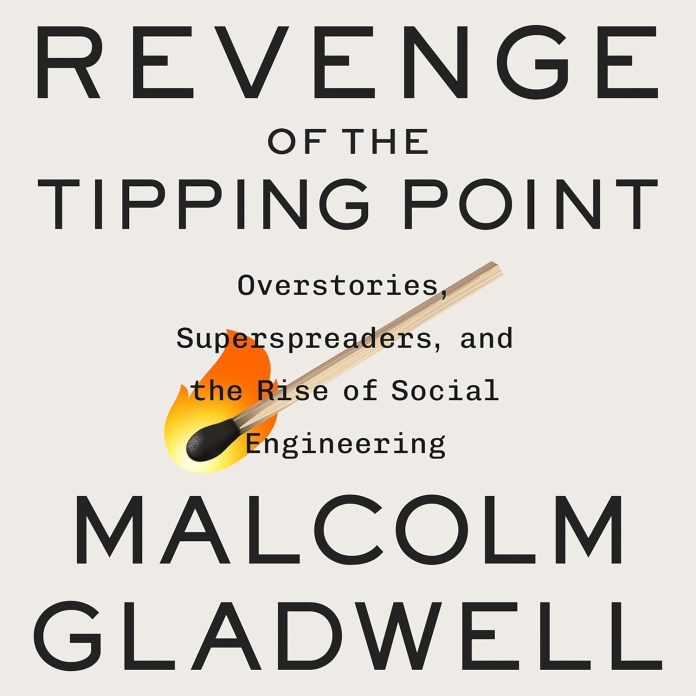
Years ago, Blink changed my entire perspective on leadership. I remember filling the book’s margins with insight sparked from #1 bestselling author Malcolm Gladwell’s fresh look at intuition, judgment, and decision making.
That book also sparked a personal interest in neuroscience, leading to a Military Review article on the brain in combat and eventually a Master’s thesis focused on helping leaders improve decision making by managing their emotional responses.
Since Blink, Gladwell has written five more books and launched the wildly popular Revisionist History podcast. He’s also embraced contrarian views, often inviting criticism—but he’s never afraid to be wrong.
Much like in Blink and Outliers, Gladwell reveals how the world is more interconnected—and sometimes more dangerous—than we realize. Through captivating stories, he offers new perspectives on how societal trends and tipping points can lead to unexpected and often troubling outcomes.
I invite you to grab an early copy and dive into the latest masterpiece from one of the most insightful thinkers of our time, Malcolm Gladwell.
For over a decade, The Strategy Bridge has helped to lead a conversation among practitioners, scholars, and students about strategy, national security, and military affairs. Written early in 2013 our guiding principles reflect what we have always tried to do here.
Writing and strategy are communal affairs. We exist to develop a community of thinkers and writers who seek to improve the level of discussion in these areas.
By creating this community, we will support the authorship of quality content in the areas of policy, strategy, and military affairs.
By creating this community, we will also create networks of individuals that support current thinkers and practitioners, as well as support the development of future leaders in these areas.
Forever in our sight should be the development of the next generation of thinkers and practitioners in the realm of strategy.
We believe these principles to be as true today as they were when written a decade ago. The Strategy Bridge built an amazing community and helped shape an online publication world that looks remarkably different. We hold great faith in the next generation of strategy thinkers and practitioners. While we fervently believe that there remains much work to be done, we also believe that the time is right for that work to occur elsewhere.
Just as strategy must change and adapt, so too must its practitioners determine when the strategy has run its course. The Strategy Bridge’s journal will remain online and it will remain free as it always has, a repository of the work of our community, as a resource for future research, and as a marker on the path to our community’s development and the development of those who will come next.
Strategy requires deep study, rigorous thinking, deliberate writing, and honest debate. It has been our absolute honor to have participated in this project with you for so many years. We look forward to continuing the conversation in other ways, through the sustainment of our Strategy Bridge Podcast and our in-person strategy sessions, and perhaps in new ways in the future.
Strategy is always about positional advantage, about ensuring an opportunity for another move, a next step, a follow-on decision. We look forward to watching our community’s next moves.
[1] Matthew Weaver, “Cardiff Philharmonic removes Tchaikovsky performance over Ukraine conflict,” The Guardian, March 09, 2022, https://www.theguardian.com/uk-news/2022/mar/09/cardiff-philharmonic-orchestra-removes-tchaikovsky-over-ukraine-conflict?CMP=Share_iOSApp_Other.
[2] Emma Pinedo, “Madrid’s Opera House cancels Russian’s Bolshoi ballet show after Ukraine invasion,” Reuters, March 04, 2022, https://www.reuters.com/world/europe/madrids-opera-house-cancels-russias-bolshoi-ballet-show-after-ukraine-invasion-2022-03-04/.
[3] Sophia Kishkovsky, “London’s Saatchi Gallery cancels Russian-organised show of Ukrainian art social media backlash,” The Art Newspaper, August 17, 2022, https://www.theartnewspaper.com/2022/08/17/londons-saatchi-gallery-cancels-russian-organised-show-of-ukrainian-art-after-social-media-storm.
[4] Yahoo Entertainment (@yahooentertainment), original video content from Evel Pie. “#Vegas bar protests Russian invasion by allowing customers to purchase $300 bottles of Russian-produced #vodka to dump out,” TikTok, February 28, 2022, https://www.tiktok.com/@yahooentertainment/video/7069823352277601582?lang=en.
[5] “Russian Art & Soviet Nonconformist Art,” accessed June 10, 2023, Zimmerli Art Museum of Rutgers University, https://zimmerli.rutgers.edu/collections/russian-art-soviet-nonconformist-art.
[6] David Schimmelpenninck van der Oye, “Vasilij V. Vereshchagin’s Canvases of Central Asian Conquest,” Chaier d’Asie central 17/18, (2009), 182, https://core.ac.uk/download/pdf/224150223.pdf.
[7] Clayton Schuster, “The Apotheosis of War,” Sartle, accessed June 10, 2023, https://www.sartle.com/artwork/the-apotheosis-of-war-vasily-vereshchagin. Originally noted and discussed by Russian biographer, Fedor I. Bulgakov in 1905 in his work V.V. Vereshchagin i ego proizvedenija [V.V. Vereshchagin and his Works].
[8] van der Oye, 186.
[9] van der Oye, 187.
[10] Vassili Verestchagin, Soldier-Painter-Traveler, Autobiographical Sketches, Volume I,
translated from German and French by FH Peters (London, UK: Richard Bentley & Son: 1887), 99-103.
[11] Ibid, 144-145.
[12] van der Oye, 182. The show itself was discussed in the April 7, 1873 London Times article, “Central Asia at the Crystal Palace.”
[13] van der Oye, “Vasilij V. Vereshchagin’s Canvases of Central Asian Conquest,” 202.
[14] Vassili Verestchagin, Soldier-Painter-Traveler, Autobiographical Sketches, Volume II,
translated from German and French by FH Peters (London, UK: Richard Bentley & Son: 1887), 275.
[15] Maureen P. O’Connor, The Vision of Soldiers: Britain, France, Germany, and the United States Observe the Russo-Turkish War, War in History 4, no. 3 (July 1997), 267-271.
[16] Verestchagin, Soldier-Painter-Traveler, Autobiographical Sketches, Volume II, 137.
[17] Ibid, 210-220.
[18] John Bushnell, “The Tsarist Officer Corps, 1881-1914: Customs, Duties, Inefficiency,” The American Historical Review 86, no. 4 (October 1981), 754 – 755.
[19] Ibid, 754.
[20] Ibid, 764.
[21] O’Connor, “The Vision of Soldiers,” 267-276.
[22] Bushnell, 773-774.
[23] “A Resting Place of Prisoners” and “The Road of War Prisoners,” European Art, Collection Menu, Brooklyn Museum, accessed June 10, 2023, https://www.brooklynmuseum.org/opencollection/objects/4630.
[24] O’Connor, “The Vision of Soldiers,” 279-280, 288.
[25] Verestchagin, Soldier-Painter-Traveler, Autobiographical Sketches, Volume II, 187, 275.
[26] Verestchagin, Soldier-Painter-Traveler, Autobiographical Sketches, Volume II, 275.
[27] “A Resting Place of Prisoners” and “The Road of War Prisoners,” European Art, Collection Menu, Brooklyn Museum, accessed June 10, 2023, https://www.brooklynmuseum.org/opencollection/objects/4630.
[28] Verestchagin, Soldier-Painter-Traveler, Autobiographical Sketches, Volume II, 330.
[1] Ole R. Holsti, P. Terrence Hopmann, John D. Sullivan, Unity and Disintegration in International Alliances (New York, NY: Wiley, 1973), 22.
[2] “Foreign Ministers address lessons learned from NATO’s engagement in Afghanistan”, NATO, December 1 2021, https://www.nato.int/cps/en/natohq/news_189512.htm?selectedLocale=en.
[3] Samuel P. Huntington, The Soldier and the State: The Theory and Politics of Civil–Military Relations (Cambridge, MA: Belknap Press, 1957), 357; Morris Janowitz, The Professional Soldier: A Social and Political Portrait (Glencoe, IL: Free Press, 1960), 314–17; Peter D. Feaver, Armed Servants: Agency, Oversight, and Civil-Military Relations (Cambridge, MA: Harvard University Press, 2005); Risa Brooks, Reconsidering American Civil-Military Relations: The Military, Society, Politics, and Modern War, ed. Risa Brooks and and Daniel Maurer (Oxford: Oxford University Press, 2020).
[4] Douglas L. Bland, The Military Committee of the North Atlantic Alliance: A Study of Structure and Strategy (New York: Praeger, 1990).
[5] Ryan C. Hendrickson, Diplomacy and War at NATO: The Secretary General and Military Action After the Cold War (St. Louis, MO: University of Missouri, 2006).
[6] Timothy Andrews Sayle, Enduring Alliance: A History of NATO and the Postwar Global Order (Ithaca, NY: Cornell University Press, 2019).
[7] Matthew Connelly, The Declassification Engine: What History Reveals about America’s Top Secrets (New York: Pantheon Books, 2023), 347–75.
[8] Sten Rynning and Paal Sigurd Hilde, “Operationally Agile but Strategically Lacking: NATO’s Bruising Years in Afghanistan,” LSE Public Policy Review, May 2, 2022, 1–11; Sten Rynning, “Still Learning? NATO’s Afghan Lessons beyond the Ukraine Crisis,” in NATO’s Return to Europe: Engaging Ukraine, Russia, and Beyond, Edited by Rebecca R. Moore and Damon Coletta (Washington, D.C.: Georgetown University Press, 2017).
[9] Diego Ruiz Palmer, “NATO Review – NATO’s Engagement in Afghanistan, 2003-2021: A Planner’s Perspective,” NATO Review, June 20, 2023, https://www.nato.int/docu/review/articles/2023/06/20/nato-s-engagement-in-afghanistan-2003-2021-a-planners-perspective/index.html.
[10] Theo Farrell, Unwinnable: Britain’s War in Afghanistan 2001-2014 (London: Vintage, 2017), 284–85.
[11] John Manza, “I Wrote NATO’s Lessons from Afghanistan. Now I Wonder: What Have We Learned?,” Atlantic Council (blog), August 11, 2022, https://www.atlanticcouncil.org/blogs/new-atlanticist/i-wrote-natos-lessons-from-afghanistan-now-i-wonder-what-have-we-learned/.
[12] “Missing in Action: UK Leadership and the Withdrawal from Afghanistan, First Report of Session 2022–23” (London: UK House of Commons Foreign Affairs Committee, May 17, 2022), https://committees.parliament.uk/publications/22344/documents/165210/default/; “Between Wish and Reality: Evaluation of the Dutch Contribution to Resolute Support” (The Hague, Netherlands: Ministry of Foreign Affairs Policy and Operations Evaluation Department, March 2023), https://english.iob-evaluatie.nl/publications/reports/2023/05/19/dutch-contribution-resolute-support; Krisanne Campos, “Lessons Learned Record of Interview – Unnamed NATO Official” (Special Inspector General for Afghanistan Reconstruction, February 23, 2015), background_ll_01_xx_brussels_02232015, The Washington Post’s “Afghanistan Papers,” https://www.washingtonpost.com/graphics/2019/investigations/afghanistan-papers/documents-database/.
[13] Farrell, Unwinnable: Britain’s War in Afghanistan 2001-2014, 374.
[1] Robert Kagan provides an extensive discussion of the incident. He asserts that “the military remains as wedded as ever to the tradition of military abstention”, despite Milley’s misstep, in Robert Kagain, “The Battle of Lafayette Square and the Undermining of American Democracy” Brookings, June 6, 2020, https://www.brookings.edu/articles/the-battle-of-lafayette-square-and-the-undermining-of-american-democracy/. Also, Kori M. Schake has argued in traditional civil-military relations terms that Milley’s behavior was apolitical and appropriate in Kori M. Schacke, “The Military and the Constitution Under Trump” Survival: Global Politics and Strategy, Vol. 62 (2022) https://doi.org/10.1080/00396338.2020.1792096
[2] David Welna, “Gen. Mark Milley Says Accompanying Trump To Church Photo-Op Was A Mistake,” NPR, June 11, 2020, https://www.npr.org/sections/live-updates-protests-for-racial-justice/2020/06/11/875019346/gen-mark-milley-says-accompanying-trump-to-church-photo-op-was-a-mistake
[3] Ibid.
[4] We draw a significant distinction here between “structured” and “unstructured”. Officers, Non-Commissioned Officers, and Warrant Officers who rise to the top of their fields will have almost certainly benefited from mentors passing on hard-won lessons in political effectiveness. War Colleges, as well as CAPSTONE, and PINNACLE-type courses, likewise create unstructured or loosely-structured opportunities for officers to meet and learn from a variety of politically-savvy actors, in uniform and out. What is missing, and what we call for, is explicit and transparent education in gaining appropriate political competencies.
[5] McChrystal in the book by Lawrence Freedman, Command: The Politics of Military Operations from Korea to Ukraine (Dublin: Allen Lane, 2022), pp. 513.
[6] For work on influence tactics see: Falbe, Cecilia M., and Gary Yukl. “Consequences for Managers of Using Single Influence Tactics and Combinations of Tactics.” Academy of Management Journal 35, no. 3 (1992): 638-52.; for work on ’hard’ versus ’soft’ influence tactics see van Knippenberg, Barbara, Rob van Eijbergen, and Henk Wilke. “The Use of Hard and Soft Influence Tactics in Cooperative Task Groups.” Group Processes & Intergroup Relations 2, no. 3 (1999): 231-44.
[7] These civil-military relations were of interest because they had already begun to show signs of stressing America’s democratic institutions. See William T.R. Fox, “Civil-Military Relations: The SSRC Committee and Its Research Survey”, World Politics 6, no. 2 (1954): 278-288.
[8] See pages 22-23 of Thomas Crosbie “What is Military Politics?” in Military Politics: New Perspectives ed. Thomas Crosbie, (Berghahn Books, 2023).
[9] Damon Coletta and Thomas Crosbie, “The Virtues of Military Politics”Armed Forces and Society 47:1 (2021): 3-24.
[10] Peter D. Feaver, “The Civil-Military Problematique: Huntington, Janowitz, and the Question of Civilian Control” Armed Forces and Society 23:2 (1996), pp. 149-178; and Peter D. Feaver Armed Servants: Agency, Oversight, and Civil-Military Relations (Harvard University Press, 2003); and Rebecca L. Schiff, “Civil-Military Relations Reconsidered: A Theory of Concordance” Armed Forces Society Vol. 22, No.1 (Fall 1995), pp. 7-24; and Deborah Avant “Conflicting Indicators of “Crisis” in American Civil-Military Relations” Armed Forces & Society” (April 1998).
[11] See Suzanne C. Nielsen “Civil Military Relations Theory and Military Effectiveness” in Handbook of Military Administration ed. Jeffrey A. Weber and Johan Eliasson (New York: Routledge, 2007); See also Deborah D. Avant “Are the Reluctant Warriors Out of Control? Why the U.S. Military is Averse to Responding to post-Cold War Low-Level Threats” Security Studies 6:2 (1996/1997), pp. 51-90, since Avant also used the Principal-Agent framework.
[12] Peter D. Feaver, Armed Servants: Agency, Oversight, and Civil-Military Relations (Harvard University Press, 2003); and Thomas Crosbie “What is Military Politics?” in Military Politics: New Perspectives, ed. Thomas Crosbie (Berghahn Books, 2023), pp. 27-30.
[13] This argument is expanded in Thomas Crosbie “What is Military Politics?” in Military Politics: New Perspectives ed. Thomas Crosbie (Berghahn Books, 2023) pp. 27-30.
[14] David Pion-Berlin and Andrew Ivey, “Military dissent in the United States: Are there lessons from Latin America?” Defense & Security Analysis, Taylor & Francis Journals, Vol 37(2) (April 2021), pp. 36-37.
[15] Risa Brooks, “Paradoxes of Professionalism: Rethinking Civil-Military Relations in the United States,” International Security 44(4)(2020), pp. 7-44.
[16] Samuel P. Huntington, Changing Patterns of Military Politics, (Free Press, 1962)
[17] See Thomas Crosbie “What is Military Politics?,” in Military Politics: New Perspectives ed. Thomas Crosbie(Berghahn Books, 2023) pp. 30-33, for a summary of this literature.
[18] Thomas Crosbie, “Military Politics as Research Program” in Military Politics: New Perspectives, ed. Thomas Crosbie (Berghahn Books, 2023), pp. 246-252
[19] Carsten F. Roennfeldt “Wider Officer Competencies: The Importance of Politics and Practical Wisdom,” Armed Forces and Society 45:1 (2019), pp. 59-77, and; Charles D. Allen “Military Officers Need to Be Politically Savvy,” Australian Journal of International Affairs (2018) – The attributes noted by Allen are social astuteness, interpersonal influence, networking, and apparent sincerity. See also Damon Coletta and Thomas Crosbie, “The Virtues of Military Politics,”Armed Forces and Society 47(1) (2019): 3-24.
[20] James M. Dubrik, “Taking a ‘Pro’ Position on Principled Resignation,” Armed Forces and Society 43:1 (2017), pp. 17-28; and Peter D. Feaver, “Resign in Protest? A Cure Worse than Most Diseases,” Armed Forces and Society, 43:1 (2017), pp. 29-40; and Richard H. Kohn, “On Resignation,” Armed Forces and Society, 43:1 (2017), pp. 41-52; and Don M. Snider, “Dissent, Resignation, and the Moral Agency of Senior Military Professionals,” Armed Forces and Society, 43:1 (2017), pp. 5-16.
[21] see Falbe and Yukl (1992) see also Lee, Soojin, Soojung Han, Minyoung Cheong, Seckyoung Loretta Kim, and Seokwha Yun. “How Do I Get My Way? A Meta-Analytic Review of Research on Influence Tactics.” The Leadership Quarterly 28, no. 1 (2017): 210-28.
[22] see van Knippenberg, van Eijbergen, and Wilke (1999)
Read a review from Tim Bettis here: Despite its omissions, Paths of Dissent is an exceptionally substantive and moving book for anyone interested in personal accounts at the intersection of ethics and military service…As America exits another costly decades-long counterinsurgency era into an uncertain future, it requires courageous dissenters…to avoid national security malpractice. It is only by capturing the perspectives of those who are willing to make personal sacrifices in informing the public’s understanding of war that principled countries can avoid waste and hypocrisy in its conduct.
Read Daniel Sukman’s review here: An Army Afire offers lessons for leaders throughout the joint force in how to approach and solve complex and seemingly overwhelming problems. Bailey’s work is an important addition to the historical record of the U.S. military, and, more specifically, the U.S. Army. Innovative ideas and novel courses of action are necessary for combat and institutional actions. The military that fought in the 1991 Gulf War, and later in Afghanistan and Iraq were more than the product of combat platforms, the Goldwater-Nichols Act, and AirLand Battle; it was a force composed of a diverse set of men and women who stood on the shoulders of those who suffered and fought to change a system of inequality.
Read Chiara Ruffa’s review here: Reconsidering American Civil-Military Relations shows how the various views of civil-military relations have transformed in a dramatic fashion, but also how much we rely on old conceptual tools to study new phenomena. It definitely shifts existing conversations about civil-military relations, allowing us to imagine that it is possible to move beyond Huntington…Moving past Huntington’s model means recognizing complication and fluid boundaries. This departure from Huntington could also build better military and civilian expertise to understand and navigate civil-military relations, rather than dangerously assuming superiority in a military class that is isolated from democratic society.
Read a review from Jean-Michel Turcotte here: A Short History of War will certainly be welcomed by a larger public interested in military history. Not only has Black remarkably explored multiple facets of the global history of war, but he also highlights complex elements regarding the evolution of warfare over a long period of time. In addition, the volume is written in a language accessible to a general public unfamiliar with the field of war history which helps to democratize debates and discussion about the nature of war.
Read Shawn Conroy’s review here: Inheriting the Bomb looks at the diplomatic process that led to the removal of nuclear weapons on the territories of newly independent Belarus, Kazakhstan, and Ukraine, with a focus on the latter. Inheriting the Bomb contributes to a resurgence of interest in Ukraine’s denuclearization in the wake of Russia’s first invasion of Ukraine in 2014. Mariana Budjeryn highlights the complexity (a myriad of factors) rather than contingency (one factor) that affected Ukraine’s denuclearization.
Read Tyler A. Pitrof’s review here: Fleets, Cares and Cowden argue, have four functions—striking, screening, scouting, and basing—and proper naval operational art is the ability to defeat an opponent by appropriately combining all four. While Cares and Cowden make no bones about the fact that this work is a math-heavy textbook intended for current naval officers, the two retired captains nevertheless succeed in crafting an accessible entryway into the world of modern naval command and planning in a text that is a spare 101 pages, plus technical appendices.
Read a review from Christine Sixta Rinehart here: Is Remote Warfare Moral? Weighing Issues of Life and Death from 7,000 Miles by Joseph O. Chapa is a thoughtful and necessary contribution to the literature on RPA warfare. The book’s biggest contribution is that of a primary source from a seasoned veteran and RPA instructor in the United States Air Force. The book also elucidates some of the ambiguity surrounding RPA warfare.
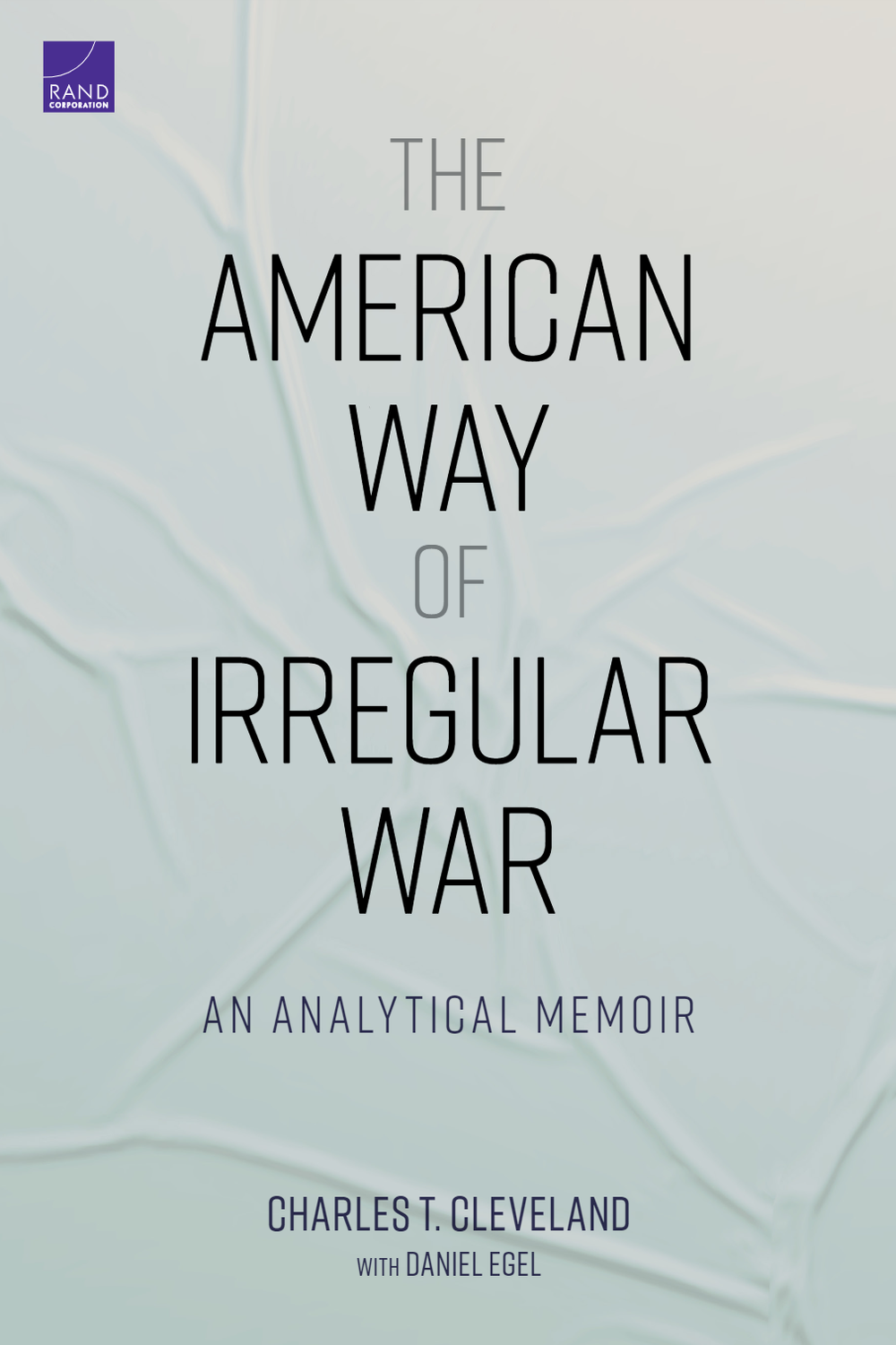
Read M.T. Mitchell’s review here: While satisfied with the U.S. military’s tactical performance in irregular warfare, Cleveland rejects the argument that special operations can raid their way to victory or capture enough terrain. Cleveland uses the strategic failures of the U.S. in Vietnam, Iraq, and Afghanistan to argue the U.S. military must focus on its failure to structurally, doctrinally, and militarily invest in irregular warfare to succeed.
Read David W. Bath’s review here: Curatola’s most important accomplishment is creating a comprehensive look at how the United States changed its perspective on national security policy during 1949 by identifying and highlighting the importance of the lesser known national security issues that may have been hidden by the creation of the nuclear bomb.
Read Brandon Bernick’s review here: The Wandering Army offers a new and powerful perspective on debates surrounding the British way of war. By suggesting observational and experiential learning in previous wars led to experimentation and knowledge diffusion throughout the officer class, Davies challenges previous views on an old subject. As such, he makes a great contribution to the field of military history and is one that should be considered of interest to experts as Davies crafts a very interesting book that furthers opportunities for study and debate.
Read Gregory Brew’s review here: In a series of short, engaging, and clearly written chapters, Demarais breaks down why the U.S. found sanctions such an appealing policy instrument; how their widespread use in the 1990s and 2000s triggered changes and upheavals, as countries around the world coped with the issues of challenges of compliance; and, finally, how sanctions implementation has generally backfired, imposing costs on the U.S. and its allies while encouraging targeted states towards policies and strategies designed to insulate their governments and economies from U.S. pressure.
Read Matthew C. Brand’s review here: In his novel The Lone Leopard, Sharifullah Dorani provides a sweeping view of the struggle that Afghans endured under the burden of foreign influence, ethnic and religious seams, and the clash between traditional conservative cultural norms versus more modern liberal western ideals. The book does an excellent job of bringing the reader into the complicated societal mosaic that makes Afghanistan so unique.
Read a Jared Young’s review here: Simply put, Writing Wars is necessary reading for scholars and writers working at the intersections of literary, military, and American studies. The interdisciplinary nature of the book also makes it well suited for a variety of classes. In addition to American Literature and History courses, select chapters on higher education’s influence on the genre and the ethics of authorship would make for insightful reading in creative writing classes that consider the history of writing programs or how identity politics figures into the ethos of storytelling. This potential widespread readership of Writing Wars is timely. With the ongoing military conflict in Ukraine and the reverberating effects of the U.S. campaigns in the Middle East, there is a need for a new wave of war fiction and, perhaps more importantly, a diverse collection of voices to tell such stories. Eisler’s book emphasizes the critical importance of this need and illuminates how those diverse voices can effectively address it.
Read a review from Katherine Voyles here: Esty’s slim book charts what he terms “declinism” to powerful effect, distinguishing declinism from decline: “Decline is a fact; declinism is a problem. American decline is happening, slowly but inevitably. It is a structural and material process. Declinism is a problem of rhetoric or belief.” This story of America on a downhill slide that Esty tells is not self-consciously set in opposition to today’s national security concerns—whether they are framed as integrated deterrence, multi-domain operations, or large-scale combat operations—but the implications of Esty’s account are profound for what America might look like on the backside of decline.
Victor in Trouble. Alex Finley. Athens, Greece: Smiling Hippo Press, 2022.
Read a review from Nicole E. Dean here: Finley’s work is part of a long and glorious tradition of satire in the world of military and foreign affairs. Her books are a welcome mental break for modern audiences, but the wellspring of military and diplomatic satire was already deep. For autocratic societies, where censorship is a defining characteristic, satirists walk fine lines to say quiet thoughts out loud.
Read B.A. Friedman’s review here: A shroud of myth and legend surrounds Russian strategy. As far back as the 1980s, the U.S. began looking at the widespread use of precision-guided munitions and other associated technology because the Russians had an allegedly more advanced conception of their potential. In 1982, the operational level of war debuted in U.S. doctrine, allegedly because it existed in Soviet doctrine. The only way to combat such misconceptions is to take the Russians at their word. Specifically, by reading their words. Strategiya: The Foundations of the Russian Art of Strategy, edited by Dr. Ofer Fridman, Lecturer at King’s College London, is one of the best weapons available.
Read Kathryn Angelica’s review here: Zachery A. Fry reimagines the camps and battlegrounds of the Army of the Potomac as focal points of ideological debate. Enlisted men not only reflected partisan divides of the broader Northern public but directly engaged in the political process through correspondence, voting, and political resolutions. This book sheds light upon mobilization within the ranks to reframe notions of political space and activity during the Civil War.
Read a review from Andrew Forney here: Labeled an acute threat by the U.S. Department of Defense in its 2022 National Defense Strategy, the Russian military in Ukraine revealed itself as the flimsiest of paper tigers, a modern-day Potemkin army meant to prop up a faltering regime and its neo-imperialist visions. Where were the unmanned vehicles and the modernized tanks and the fire strikes employed in eastern Ukraine in 2014? Was that army actually a mirage, with the real army now being bled dry eight years later? There was no way that two disparate things, two photo negatives of each other, could exist at the same time. Can two divergent ideas—or two opposite armies—both be true?
Read Brian Green’s review here: In Space Civilization: An Inquiry into the Social Questions for Humans Living in Space, political science professor James Gilley provides an ambitious interdisciplinary overview of the social factors, from the interpersonal to the international levels, that will affect humanity’s ability to become a truly interplanetary species. In its relatively short format, the book moves briskly through many of the broad technological and biological, legal, economic, psychological, sociological, and political issues that will shape the future human exploration and potential settlement of outer space.
Read a review from Bob Beach here: Goode’s corrective to the history of this incident is an important work in the study of U.S. foreign policy entering its last phase of the Cold War. Goode skillfully places the embargo in a new light, emphasizing the role of ethnic lobbies, the U.S. war on drugs, and the political negotiations on Capitol Hill. Long considered a failure of U.S. foreign policy in a time of executive turmoil and legislative assertiveness, Goode suggests the episode was a demonstration of the dynamics of political processes in a functioning representative society.
Read Chris Booth’s review here: Highly engaging and thought-provoking, Griffin has put together an insightful book that leaves the reader with an improved understanding of pop culture’s impact on Reagan in not only leading the nation through the Cold War, but in the totality of his life as well.
Read Luke Truxall’s review here: In Flying Camelot: The F-15, the F-16, and the Weaponization of Fighter Pilot Nostalgia, Michael W. Hankins argues that starting as early as the 1960s, a group of fighter pilots and reformers sought to change the procurement process for aircraft to emphasize the importance of the fighter pilot and air superiority missions. Hankins states that this resulted in the development and acquisition of the F-15 and F-16 fighters by the United States Air Force. Hankins further asserts that these reformers sought to change how fighter pilots were trained to emphasize the importance of dogfighting and air superiority campaigns over other aspects of air combat.
Read Marshall McGurk’s review here: Military leaders and policy makers would be foolish to believe that war with a peer adversary would not involve some form of retreat or retrograde. Retreats can lead to routs, or they can provide critical time to rally forces for new campaigns or counteroffensives. Routs must be avoided, but such disaster may befall those who fail to study the history of armies in retreat.
Read Christopher D. Booth’s review here: This short, yet comprehensive, and extensively documented examination of the Digital Silk Road and the Chinese Communist Party’s efforts to develop world-dominating technology (through collaboration between the military, state-owned enterprises, and closely associated parastatal private companies), will be of interest to policymakers, national security professionals, and hopefully U.S. and Western business leaders.
Read Amy E. Foster’s review here: Nathalia Holt’s book on the women of JPL and their contributions to the United States’ history in space is a welcome addition. JPL is only one of twenty NASA centers. The women and their contributions at each NASA center deserve attention and recognition. What Nathalia Holt has done with this book is remind readers that women’s work for NASA did propel us to the Moon and Mars.
Read a review from Lewis Bernstein here: Hone’s study shows Nimitz understood command is an art based on collaboration that relies on effective personal relationships to extract ideas and understand new opportunities. He adopted his subordinates’ ideas and made them part of his own plans. Nimitz never backed away from difficult decisions and when appropriate was as bold as any commander. He relied on unified command with decentralized execution combined with the continual consideration of options; the figures and tables Hone provides show this in operation.
Read Laren Turek’s review here: The Peacemaker: Ronald Reagan, the Cold War, and the World on the Brinktakes up the banner of attributing the end of the Cold War to the foreign policy acumen and foresight of Ronald Reagan. Indeed, it suggests that Reagan possessed a remarkable perspicacity that allowed him to perceive the world’s historic changes on the horizon well before others did, and that this, plus his innate optimism, helped him lead the United States toward a better future.
Read Brett Swaney’s review here: Drawing on a universe of science fiction franchises including The Expanse, Star Wars, Star Trek, Ender’s Game, Starship Troopers, Dune, Earthseed, The Murderbot Diaries, and many more, a wonderful array of authors, who are strategic thinkers in their own right, offer fresh perspectives in 35 chapters that span 6 major themes: leadership and command; military strategy and decision making; ethics, culture, and diversity; cooperation, competition, and conflict; the human relationship with technology; and toxic leaders.
Read a review from Davis Ellison here: In this welcome addition to the literature on alliances, international relations scholar Alexander Lanoszka makes an optimistic case for the continued salience of the U.S.-led alliance system. In his two-hundred-page study, he reviews the most common areas that past studies have focused on: alliance formation, fears of entrapment and abandonment, burden-sharing, warfare, and alliance termination.
Read Ben Griffin’s review here: The book primarily examines how during the first two decades of the Cold War, the Asia Foundation utilized funding from the Central Intelligence Agency to support the work of, and establish connections between, anti-communist filmmakers throughout east Asia…Cinema and the Cultural Cold War is a welcome addition to the growing historiography on how Cold War belligerents actively sought to influence popular culture both domestically and abroad.
Read Peter Molin’s review here: The subject of John W. Lemza’s scholarly study The Big Picture: The Cold War on the Small Screen is a U.S. Army-produced documentary television series called The Big Picture that ran from 1951-1971 on network, local, and educational stations, as well as on the Armed Forces Network of overseas stations. Lemza’s study is relevant to our own era in which a gaping civil-military divide separates the American public from the military, and in which the military largely fails to communicate a compelling appreciation of its goals, virtues, and activities.
Read a review from Kevin Woods here: The book’s title alone might suggest a more general history or analysis of the use of artillery in the Gulf War, but the book is primarily a wartime memoir framed by the experiences of a senior artilleryman whose perspectives were shaped in the Cold War’s final decade. As a memoir, Desert Redleg lands somewhere between the classic campaign and sentimental forms. In an appendix, the author dedicates a chapter to lessons of the war gleaned from a broader military and geo-political perspective.
Read Christi Siver’s review here: Reconsideration of U.S. grand strategy is critical in the context of the ongoing war in Ukraine alongside rising tensions with China. Rebecca Lissner’s Wars of Revelation makes a compelling argument that past U.S. military interventions have played an important role in shaping U.S. grand strategy.
Read a review from Scott Noon Creley here: This collection is remarkable because, whether or not everything in each story is strictly speaking factual, everything is true. If you’re interested in military culture, the ongoing cultural change in the armed forces, or just looking for excellent writing from veterans and their families, this is a book that belongs on your shelf.
Read Kevin Li’s review here: Knowing the Cold War historical context, namely the necessity of, and the paradoxical relations between the deterrence mission in Europe and the mission of fighting limited wars around the globe is indispensable for understanding Mahler and his comrades’ experiences in U.S. Army Europe.
Read Javan David Frazier’s review here: The title of Negroponte’s book nicely sums up her work. Her first four segments explore questions and themes related to James Baker’s overall time as secretary of state. She explores the real goal for the foreign policy review initiated by the National Security Council and how it affected all aspects of President George H.W. Bush’s administration; the challenges of German reunification and Germany’s admission to the North Atlantic Treaty Organization (NATO); the response of the United States to the June 1989 Tiananmen Square massacre; and the aftermath of Saddam Hussein’s August 1990 invasion of Kuwait.
Read J.P. Clark’s review here: Michael O’Hanlon, a senior fellow at the Brookings Institution, is an influential advisor to the national security elite with a reputation for deep expertise and careful judgment. Though O’Hanlon is a political scientist, he argues that military history can usefully inform current policy debates. His latest work, Military History for the Modern Strategist: America’s Major Wars since 1861, attempts to do just that through a survey of over 150 years of U.S. military history.
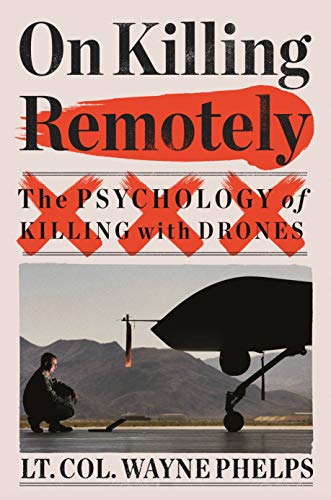
Read Caleb Miller’s review here: To date, moral injury remains a syndrome, that is, a group of symptoms lacking clear definition or cause. Phelps exemplifies a possible way ahead in On Killing Remotely. In terms of quantifiability, Phelps makes room for analyzing a new arena for moral injury without stretching the term past its breaking point. In terms of severity, Phelps clarifies that stakes can be high without involving immediate personal danger, thus opening up discussions of comparable scenarios with the potential to morally injure. In terms of technology, Phelps distinguishes between kinds of unmanned or remote aerial technology, sketching a taxonomy and noting the unique stressors of each tool or mission.
Read Christopher G. Ingram’s review here: Ninety years after the abolition of slavery in the United States, Blacks faced a dominant caste system in the 1950s that used the violence and power of the state to deny equal treatment or opportunity across the deep south. In more general terms, when confronting an imbalance of power, a subjugated people face a choice between submission or finding a way to alter the nature of the fight. To overcome this disparity, the Civil Rights Movement developed a strategy that aligned their actions to their desired change.
Read a review from Zac Rogers here: Ron Riekki’s new collection of poems Blood/Not Blood Then the Gates is a pitiless, unsentimental, and piercing insight into the legacy of extreme violence on a human being. The volume left me with the strong impression that redemption is neither sought nor expected. What is needed is relief.
Read Ian Boley’s review here: All told, Kevin Rudd’s The Avoidable War is very much worth the time and effort. Through a series of missteps in execution, it takes Rudd a while to get the reader onboard with his topic. Once there, however, the information provided is valuable, and Rudd’s perspective from personal experience does give his words an air of authority in these matters. For those starting out on their journey to understand what is arguably the world’s most important contemporary competition, this book is a fine place to begin.
Read a review from Brian Kerg here: The character of war is rapidly changing. The increasing availability of evolving technology confounds previous frameworks for military operations. Socioeconomic factors and demographic shifts complicate manpower and force generation models for national defense. Ubiquitous connectivity links individuals to global audiences, expanding the reach of influence activities. And a renewed emphasis on strategic competition enhances the scope of military action below the threshold of violence. This is the world that Mick Ryan explores in War Transformed: The Future of Twenty-First-Century Great Power Competition and Conflict.
Read Lindsey R. Peterson’s review here: Shea successfully demonstrates that more attention should be paid to this understudied Union general. Curtis’ wartime emancipation policies should shift historians’ narrowed focus away from the Eastern Theater to more thoroughly integrate the trans-Mississippi West into their analyses of wartime emancipation. Hopefully, Union General will inspire other historians to incorporate Curtis into the current historiography on wartime emancipation, the Missouri and Arkansas home front, and Civil War memory. Ultimately, Union General is a worthy addition to the scholarship on military leadership and will appeal to readers.
Read a review from Heather Venable here: The line between celebrating heritage and creating a fully-rounded history can be a fine one in many institutional histories. Appreciating this tendency, Royal Air Force-insider John Shields reassesses the 1982 Falklands Conflict, seeking to explode multiple myths while also providing a better assessment of the air campaign by focusing on the operational rather than the tactical level of war.
Read Joe Buccino’s review here: Simon reviews more than four decades of American endeavors in the region from the perspective of eight presidential administrations ranging from Jimmy Carter to Joe Biden. The book’s chapters illuminate cabinet-level thinking on vexing national security issues: Iranian influence in the Levant in the 1980s, the response to the U.S. Marine Corps barracks bombing in Beirut, the Persian Gulf War, the unsolvable Israel-Palestine quandary, and the rise and fall of Saddam Hussein and the resultant chaos in Iraq and Syria.
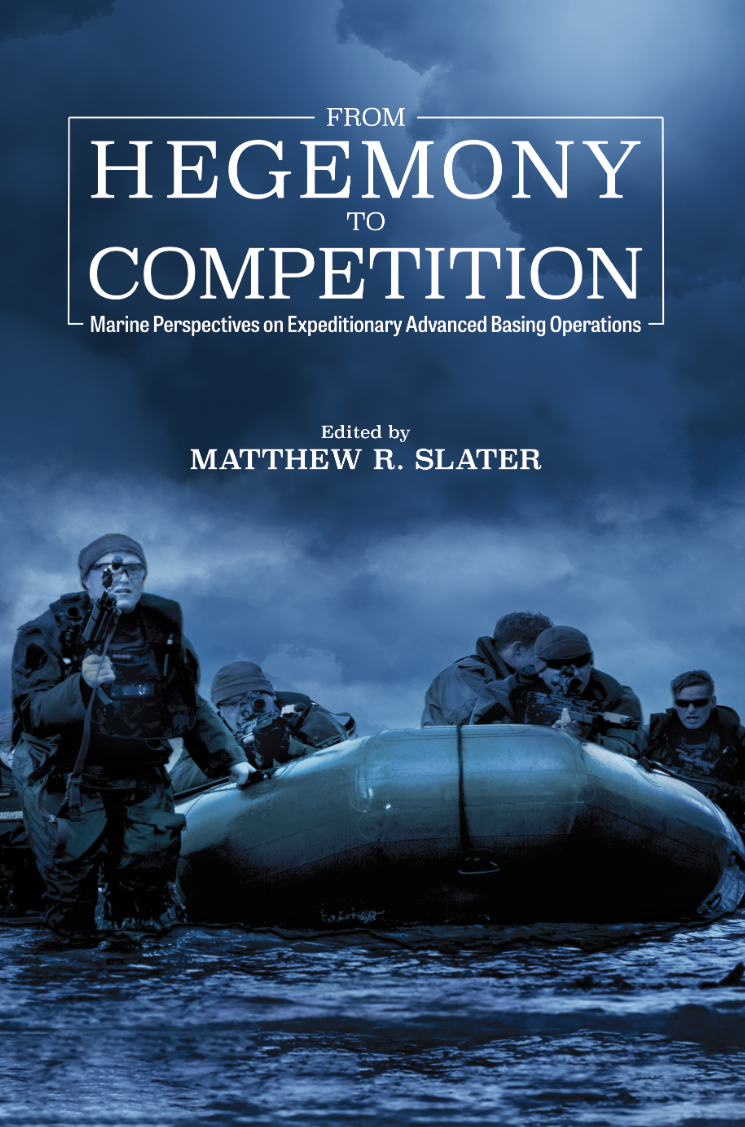
Read B.J. Armstrong’s review here: From Hegemony to Competition: Marine Perspectives on Expeditionary Advanced Base Operations offers thoughtful examinations of important elements of the transition to what the 2018 National Security Strategy called a new era of Great Power competition and how new Marine Corps concepts continue to develop. This book’s great strength is the questions that it is asking, and the rigorous efforts put forth to study them.
Read a review by Charlie Thomas here: The history of African decolonization is inherently linked with the processes, rivalries, and challenges of the global Cold War. Even those states that saw a pacific removal of colonial authority, such as Ghana or Senegal, did so under the shadow of the rivalry between the capitalist and communist states. However, the process was even more stark in Southern Africa, where the Cold War saw the contests for armed African liberation interpreted as proxy conflicts between the two ideological blocs.
Read B.J. Armstrong’s review here: The “Kitty Hawk Race Riot’” holds an important place in American naval history. An illustration of the deep and unavoidable connections between the sailors and officers of the Navy and the society they served during the Civil Rights era, it is often mentioned in passing but rarely examined in detail. Marv Truhe’s new book sets out to rectify that oversight and to help readers dive deeply into both the details of the history and the important questions it raises about the Navy of the 1970s as well as the Navy of the 21st century.
Read Brian Drohan’s review here: Brian Drohan joins The Strategy Bridge to review “Preparing for War” by Boyd van Dijk” “International humanitarian law has only appeared to be absent during recent wars in Yemen, Syria, and Ukraine, but Boyd van Dijk’s Preparing for War: The Making of the Geneva Conventions reveals that the 1949 Geneva Conventions have an enduring influence. He shows that the Conventions have retained their legal, moral, and ethical applicability through a contextualized understanding of their history.
Read Marshall McGurk’s review here: A design draws you in through color or shock; a title intrigues you. Heat + Pressure: Poems From War by Ben Weakley delivers on the initial interest brought about by its unique title that sits in bold letters over the melted green army figure on the cover. Heat + Pressure shows how today’s warriors can become poets and help veterans synthesize war and their reintegration into society.
Read Harrison Manlove’s review here: Mud Soldiers: Life Inside the New American Army is an examination of the post-Vietnam U.S. Army and the pre-Gulf War Army. It serves as an excellent supplement to recent works on the AVF by authors like Beth Bailey, Bernard Rostker, and William A. Taylor. Author George C. Wilson writes a broad study of Charlie Company, 2nd Battalion, 16th Infantry Regiment (2-16), 1st Infantry Division spanning two generations of soldiers.
The Military and the Market. Edited by Mark R. Wilson and Jennifer Mittlestadt. Philadelphia, PA: University of Pennsylvania Press, 2022.
Read Sam Canter’s review here: Looking beyond more traditionally studied factors such as battlefield tactics, leadership, and military strategy, new studies under the general War and Society umbrella take into account social dynamics such as race, class, and gender in the context of national defense and warfare. In the case of The Military and the Market, the wide scholarly aperture offered by the War and Society approach extends to marketplace and economic factors, adding additional layers of complexity to American military history.
Read a review from Panagiotis Gkartzonikas here: In pre-nineteenth century wars with linear tactics, initiative existed but was not necessary in the same ways. From the Napoleonic Wars onwards, initiative became imperative, mainly due to the increase in the size of armies. The third chapter examines how we should interpret the principle of initiative. Woide believes that it should be made obligatory for the entire army, its implementation should be formalized and it should be considered a professional duty.
The Strategy Bridge is read, respected, and referenced across the worldwide national security community—in conversation, education, and professional and academic discourse.
Thank you for being a part of the The Strategy Bridge community. Together, we can #BuildTheBridge.
Header Image: Richard Macksey’s home library. (Will Kirk/Johns Hopkins University)





 I set up my workspace to reinforce my goal—displaying a TEDx photo in my eyeline and rearranging furniture so I could practice on a circular rug that roughly matched the famous TEDx red dot.