Home Blog Page 48

As peak Atlantic hurricane season approaches, updated NOAA outlook calls for ‘above-normal’ number of storms – Daily Press

0

The National Oceanic and Atmospheric Administration has updated its outlook for the 2023 Atlantic hurricane season, which now is predicted to be “above normal” — rather than on par with previous seasons.

NOAA’s update to the 2023 outlook calls for 14-21 named storms (winds of 39 mph or greater), of which six to 11 could become hurricanes. Of those, between two and five could become “major” hurricanes with winds of 111 mph or greater. NOAA provides these ranges with a 70% confidence.

In their May prediction, NOAA researchers said 2023 would likely be within a range of 12 to 17 named storms that have winds of 39 mph or higher. Of those, five to nine could become hurricanes, or storms with winds of 74 mph or higher, including one to four “major” hurricanes.

There would usually have been two tropical storms in the Atlantic by this point of the season, according to Matthew Rosencrans, lead hurricane season forecaster with NOAA’s Climate Prediction Center. So far in 2023, there have been five.

An “average” hurricane season, according to NOAA, produces 14 named storms, of which seven become hurricanes, including three major hurricanes. Previously, forecasters estimated that effects of higher sea-surface temperatures — which heighten the effects of tropical storms — would be balanced and dampened by an El Nino effect. Now, that likely isn’t happening at the scale originally thought.

“One of the local conditions in the Atlantic that we monitor (is) the sea-surface temperature. The June and July sea-surface temperatures in the main development region of the North Atlantic were the warmest since 1950 at 1.23 degrees centigrade above normal,” Rosencrans said. “Warm waters are conducive to more development. Those warm waters likely contributed to the development of two tropical storms in the deep Tropics.”

Each year, NOAA updates its outlook by this time. The forecast covers the entire Atlantic coast of the Americas, so there is no outlook for specific regions, such as the Mid-Atlantic or the Gulf of Mexico. This prediction also only covers tropical storms during the season overall, not necessarily what storms make landfall. Whether a storm reaches the East Coast can only be predicted about a week in advance.

“We are now entering the peak months of the Atlantic hurricane season, August to October,” Rosencrans said. “Historically, this is when about 90% of all tropical storm activity occurs which is why we issue an updated outlook in early August.”

No matter the outlook, forecasters are encouraging residents to be prepared, since just one storm can greatly impact property and safety.

Eliza Noe, [email protected]

Chesapeake teen set to star in musical has sung like Elvis for years

0

Stephen Culpepper was 5. He and his parents were enjoying a karaoke night in Kill Devil Hills. The juke joint’s scene, its noisy laughter and vocalists rotating up and off the stage mesmerized and reminded him of how he’d sing along to oldies in the car with his dad. The kindergartner asked if he could get up and sing Elvis’ “Jailhouse Rock” in front of the 50 or so people there.   

His parents didn’t think he would do it. But …

“I had all the moves. I was swinging my hips, all the gyrating. Oh, yeah. I had everything going on.”

And he’s never stopped swiveling.

Culpepper, now 14, is starring in The Hurrah Players’ “All Shook Up” show Thursday through Sunday at the Susan S. Goode Fine and Performing Arts Center at Virginia Wesleyan University.

The rock ’n’ roll musical written by Tony-winning Broadway playwright Joe DiPietro features over 20 Elvis hits, including “Hound Dog,” “Blue Suede Shoes” and, obviously, “Jailhouse Rock.”

The show centers on a small, quiet town that is injected with energy and music when a guitar-playing roustabout rides in. Based on William Shakespeare’s “Twelfth Night,” characters fall in and out of love throughout the show, which includes many large choreographed dance numbers. In this production, adults will perform adult roles, and younger characters will be played by high schoolers.

Courtesy of T. Ginny Culpepper

Stephen Culpepper, at 5, as Elvis.

Culpepper is the roustabout.

“He changes everything in the town, with his song and his pelvis,” Culpepper said.

The Chesapeake actor is a rising freshman at Deep Creek High School and the Governor’s School for the Arts in Norfolk. He’s performed in more than 20 Hurrah Players shows.

He began taking Hurrah’s acting classes at the age of 5, not long after his karaoke night premiere.

At one of those first classes, someone happened to point out Hugh Copeland, the company’s artistic director, strolling through the building. Culpepper boldly walked up to him.

He held up a picture of Elvis.

“This is what I do,” he said.

“I remember it,” Copeland said, in a recent interview. “I remember turning and saying, ‘Who is this kid? Who is this kid?’ He was just so determined to be there and not just for any minute was he ever idle.”

Copeland put Culpepper in Hurrah’s junior company, Babes on Broadway, and Culpepper spent the next summer doing his by-then well-rehearsed Elvis song and dance routine at nursing homes and hospitals around Hampton Roads.  

Since then, he has also performed with the Virginia Opera, Virginia Stage Company and Virginia Musical Theatre.

“The goal is ultimately Broadway.”

___

If you go

When: 7 p.m. Thursday and Friday, 2 and 7 p.m. Saturday and Sunday  

Where: Susan S. Goode Fine and Performing Arts Center, 5817 Wesleyan Drive, Virginia Beach

Tickets: Start at $20

Details: hurrahplayers.com

Work on the Colonial Parkway will begin next week; expect some closures – Daily Press

0

A $123 million, multi-year project to rehabilitate several segments of the Colonial Parkway is set to begin next week.

Construction will start on Monday for the project’s first phase, which will include closure of the parkway from Ballard Street in Yorktown to Fusiliers Road. Other closures during this phase include the stretch of parkway from Route 199 to the Williamsburg Tunnel and the Route 17 access ramps.

“We appreciate motorists’ awareness and patience as this first phase of this incredibly important infrastructure project begins,” Colonial National Historical Park Superintendent Jerri Marr said in a city news release. “We encourage all visitors to stay safe.”

Marr also requested that motorists pay attention to information provided on detour signs and caution signs, as well as stay on the lookout for construction works and equipment and any traffic stoppages or lane closures.

Over the course of three years of construction, approximately 10 miles of parkway, 11 bridges and the stormwater drainage systems will be rehabilitated, with additional repairs being done to the Williamsburg Tunnel. The project is slated to be completed by June 30, 2026, ahead of the semiquincentennial celebrations for the 250th anniversary of the country’s founding.

Funding for the project was provided by the Great American Outdoors Act.

Last month, Wagman/JMT Design Build Team project manager Jerry Whitlock came to the July work session to give the Williamsburg City Council an overview of the project timeline, with the first phase set to wrap up in October 2025. Phase two, which includes the stretch of road between Felgates Creek and Penniman Road, is scheduled to begin in spring of 2024 and the final portion between Penniman Road and Parkway Drive will begin in winter of 2024.

According to Whitlock, as additional segments of the road begin work and new detours are posted, there will be additional public information meetings to update people. There will also be ongoing updates on the project website, which Whitlock estimated would be posted every month or so. The website can be found at www.nps.gov/colo/planyourvisit/colo-parkway-rehab.htm.

Sian Wilkerson, 757-342-6616, [email protected]

Atlantic Beach pie with a salty twist – Daily Press

0

Gretchen McKay | Pittsburgh Post-Gazette (TNS)

Some foods just speak to the season.

In July and August, citrus often rules supreme because its bright, sunny taste brings to mind the roadside lemonade stands and fruity Popsicles we enjoyed as kids.

Now that we’re adults, lemon and lime add sparkle to so many refreshing cocktails. They’re easy to find just about anywhere and provide a relatively inexpensive way to add a punch of acidic flavor to everything the fruit rubs shoulders with.

This modern take on a vintage Southern pie made with lemon and lime juices absolutely shines on a dessert table when it’s hot and muggy outside — which is just about every day, it seems, between Memorial and Labor days in Pittsburgh. It was created a little over a decade ago by cookbook author Bill Smith, who was the chef at Crook’s Corner in Chapel Hill, North Carolina, for nearly 30 years until his retirement in 2019.

An Atlantic Beach pie is made with a saltine cracker crust. (Gretchen McKay/Pittsburgh Post-Gazette/TNS)

In 2011, he was asked to teach a group of food writers and chefs from the Southern Foodways Alliance about his home state’s food traditions (he grew up in New Bern, North Carolina). To illustrate dessert, he decided to recreate the much-loved, no-frills “icebox” lemon pie of his youth, Atlantic Beach pie.

A common dessert in seafood restaurants along North Carolina’s coast, its zippy, lemony custard filling is traditionally topped with meringue, with a salty, cracker-crumb crust made from crushed Ritz crackers. Smith’s updated version is built on a crumbled Saltine cracker crust, with whipped cream sprinkled with coarse sea salt standing in for the meringue, which can be frustrating to make when it’s humid outside.

When Smith brought the recipe back to his restaurant, it not only became an instant hit, it soon went viral. “Southern Living” called it “The Best Dish of Summer.”

The recipe calls for half a cup of lemon or lime juice, or a mix of both. Fresh-squeezed is better than bottled, though in a pinch you can take that shortcut. It’s easy enough that you can actually make it at the beach while on vacation.

There’s just one caveat: You’ll want to make the pie at least several hours before you plan to eat it so it can properly chill. Then, wait until serving time to top it with the whipped cream and a pinch of salt to make the pie pop.

———

ATLANTIC BEACH PIE

PG tested

For crust

  • 1 1/2 cups finely crushed Saltine crackers (from 1 sleeve, about 37 crackers)
  • 6 tablespoons unsalted butter, melted
  • 3 tablespoons granulated sugar
  • 1 large egg white, lightly beaten

For filling

  • 1 (14-ounce) can sweetened condensed milk
  • 4 large egg yolks
  • 1/4 cup fresh lime juice (from 2 large limes)
  • 1/4 cup fresh lemon juice (from 2 lemons)
  • 1 1/2 cups heavy whipping cream
  • 1/4 cup powdered sugar
  • Lemon and lime zests, for garnish
  • Coarse sea salt, such as Maldon, for garnish

Preheat oven to 350 degrees Fahrenheit.

Make crust: Stir together crushed crackers, melted butter, sugar, and egg white in a medium bowl until combined.

Transfer mixture to a 9-inch glass pie plate; firmly press on bottom and sides. Freeze 10 minutes. Bake in preheated oven until crust is lightly browned, about 20 minutes. Transfer to a wire rack; cool slightly, about 10 minutes.

While crust is cooling, prepare filling. Whisk together condensed milk and egg yolks until smooth. Whisk in lime juice and lemon juice until combined. Pour lime mixture into warm crust.

Bake pie until center is just set, about 15 minutes. Transfer to a wire rack; cool 1 hour. Refrigerate until chilled, about 2 hours.

Just before serving, prepare whipped cream for topping: Beat cream and powdered sugar in a large bowl with an electric mixer on high speed until stiff peaks form, about 2 minutes.

Spread whipped cream topping over chilled pie, leaving about a 1/2 -inch border of custard showing around crust. Garnish with lemon and lime zest and sea salt, if desired.

Pie can be stored, covered, without whipped cream topping, in the refrigerator up to 4 days. Spread with topping just before serving.

Makes 1 pie.

— Southernliving.com

An Atlantic Beach pie is made with a saltine cracker crust. (Gretchen McKay/Pittsburgh Post-Gazette/TNS)

___

(c)2023 the Pittsburgh Post-Gazette

Visit the Pittsburgh Post-Gazette at www.post-gazette.com

Distributed by Tribune Content Agency, LLC.

4 ways restarting student loan payments could impact economy – Daily Press

0

By Elizabeth Renter | NerdWallet

After more than three years of an interest-free payment pause on federal student loans, millions of Americans will soon be on the hook for monthly payments. The effects could be felt across the economy.

How resuming payments will affect a single borrower varies widely, depending on, among other things, whether they stopped making payments at all, how much debt they have, the repayment program they’re in, and their current and future expected income. It also depends on the other expenses competing for a piece of their monthly budget. Because so many people are affected — 43.6 million people hold federal student loan debt, according to the Department of Education — the impact to the economy stands to be broad even if some borrowers don’t have a difficult time adjusting.

Currently, there is $1.6 trillion in federal student loan debt outstanding, according to data from the New York Fed’s first quarter Household Debt and Credit Report. This will come down by at least an estimated $39 billion (about 2.4%) before repayment begins, as long-time debtholders who have been paying for 20 years or more stand to have their slates cleared in a one-time adjustment recently announced by the Biden administration.

The White House is also implementing a repayment plan that could significantly reduce the monthly payments due for some borrowers, and a 12-month “on ramp,” where debtholders who enter repayment in coming weeks will not face repercussions for paying late. These two efforts alone could soften and slow the economic effects of those reentering repayment.

There’s little doubt that potentially hundreds of billions of dollars in consumer debt coming due will impact the economy — it represents debt held by roughly 17% of American adults and is the second-largest source of household debt, according to the NY Fed report. But the gravity of this impact is yet to be determined and likely to play out over the next several months and years. Here are four potential economic outcomes I’ll be watching for in the coming months:

1. Student loan delinquencies will rise

In the first quarter of 2020, nearly 11% of student loan balances were 90 or more days past due, according to the Household Debt and Credit Report from the New York Fed. The payment pause cleared this slate, and delinquency stands at less than 1% as of the first quarter of 2023. That will change. The 12-month on-ramp plan that promises to not penalize late payments will delay this impact, but there’s a good chance that at least some of those who struggled before the pandemic will soon find themselves back in a familiar situation.

2. Consumer spending will slow

Pandemic relief payments and forbearances on mortgages and student loans were just a few of the factors that led to households having more to spend during the pandemic. Money that may have otherwise gone to student loan debt could be used for home repairs, clothing, or entertainment and travel after pandemic restrictions were lifted. This robust consumer demand has played a role in higher-than-comfortable inflation rates over the past few years.

The return of a debt obligation means some households will have to rein in their spending once again, and consumer demand will likely fall.

3. Savings will remain low or fall further

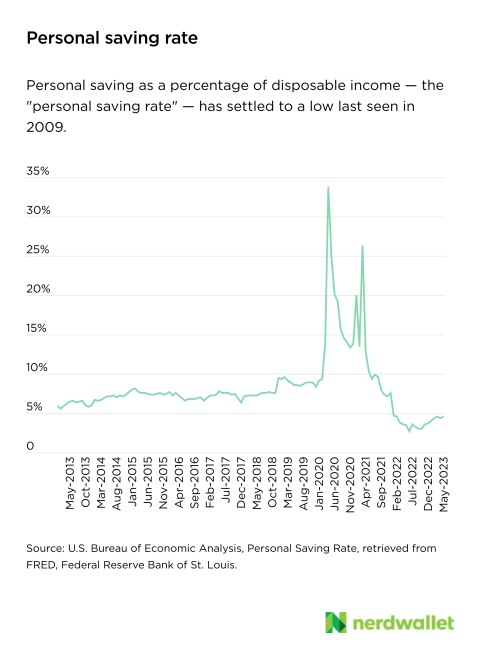
The personal saving rate — a percentage of disposable income that people are able to set aside after taxes and expenses — rose significantly, hitting 34% early in the pandemic, but is now at the lowest since the Great Recession, at 4.6%, according to the Federal Reserve Bank of St. Louis. With student loan debt payments coming due, this rate will necessarily decline for those affected households.

4. Delinquencies across debt types may rise

Borrowers on a student loan payment pause “sharply increased mortgage, auto and credit card borrowing,” a new working paper from the National Bureau of Economic Research reveals. Credit card balances initially fell in 2020 as relief payments came in and fewer debt payments went out, but that reduction in balances was ultimately undone. Overall, those balances were 10% higher by the first quarter of 2023. And it wasn’t just on credit cards that balances grew. Total debt balances grew by 19% from 2020 to 2023, compared to only 12% from 2017 to 2020, according to the Household Debt and Credit survey.

The increased liquidity, or available cash, in households with paused student loan debt may have gone toward home or auto down payments they previously struggled to afford, according to the NBER paper. Now, having to return to regularly scheduled student loan obligations after three years without payments could leave some new homeowners (and additional debtholders) strapped. Though the total share of delinquent debt balances fell from 3.2% to 1.4% in the three-year forbearance period, representing a difference of about $215 billion, it’s likely this will ultimately settle closer to the pre-pandemic rate.

How borrowers can cope

If you’re worried about your ability to make full student loan payments once the forbearance ends, the 12-month on-ramp period will save you from default, so consider easing back into full payments if it’s helpful. But remember, your loan balances will accrue interest during this time, so the sooner you can make full payments, the better. If your payments are simply too high to manage, contact your loan servicer; an income-driven repayment plan may be a good fit, and a new one is set to launch this fall.

More From NerdWallet

Maui wildfire: Before and after photos show devastation

0

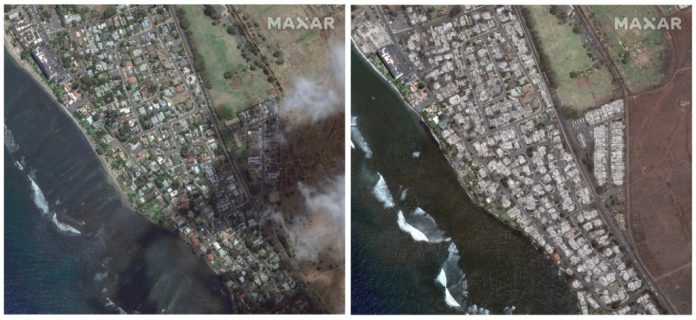
Wildfires fueled by a dry summer and strong winds from a passing hurricane killed 36 people and destroyed hundreds of homes and other buildings on the Hawaiian island of Maui, in the deadliest blaze in the U.S. in years.

MAP: Maui wildfires burning in Lahaina and upcountry

Rescuers searched Thursday through the leveled, ashen homes and businesses of Lahaina, which dates to the 1700s, is the biggest town on the west side of the island and has long been a favorite destination of tourists.

Firefighters are still battling blazes on the island and local officials are preparing to evacuate thousands of visitors and residents in need of shelter.

Acting Gov. Sylvia Luke is discouraging travelers from coming to Maui, saying that right now, it’s “not a safe place to be.”

This combination of satellite images provided by Maxar Technologies shows an overview of Lahaina Square on Maui, Hawaii, on June 25, 2023, left, and an overview of the same area on Wednesday, Aug. 9, following a wildfire that tore through the heart of the Hawaiian island. (Maxar Technologies via AP)
This combination of satellite images provided by Maxar Technologies shows an overview of Banyan Court in Lahaina on Maui, Hawaii, on June 25, 2023, top, and an overview of the same area on Wednesday, Aug. 9, following a wildfire that tore through the heart of the Hawaiian island. (Maxar Technologies via AP)

This combination of satellite images provided by Maxar Technologies shows an overview of Lahaina on Maui, Hawaii, on June 25, 2023, left, and an overview of the same area on Wednesday, Aug. 9, following a wildfire that tore through the heart of the Hawaiian island. (Maxar Technologies via AP)

From eggs to electronics to used cars, consumer inflation eased its grip on US households in July – Daily Press

0

By PAUL WISEMAN (AP Economics Writer)

WASHINGTON (AP) — Inflation in the United States edged up in July after 12 straight months of declines. But excluding volatile food and energy costs, so-called core inflation matched the smallest monthly rise in nearly two years, a sign that the Federal Reserve’s interest rate hikes have continued to slow price increases.

The inflation figure the government reported Thursday showed that overall consumer prices increased 3.2% from a year earlier. That was up from a 3% annual rise in June, which was the lowest rate in more than two years. The latest figure remained far below last year’s peak of 9.1%, though still above the Fed’s 2% inflation target.

The Fed, economists and investors, though, pay particular attention to core inflation figures for signs of where inflationary pressures might be headed. From June to July, core inflation remained a tame 0.2%, thanks to easing prices for such items as groceries, used vehicles and electronics.

“Core prices are moving in the right direction,” said Rubeela Farooqi, chief U.S. economist for High Frequency Economics. “That will be welcome news to (the Fed’s) policymakers.”

Thursday’s price data will be among the key barometers the central bank will weigh in deciding whether to continue raising interest rates. In its drive to tame inflation, the Fed has raised its benchmark rate 11 times since March 2022 to a 22-year high.

Overall prices, measures on a month-to-month basis, rose 0.2% in July; roughly 90% of it reflected higher housing costs. Excluding shelter, Paul Ashworth of Capital Economics calculated that core prices actually fell 0.1% from June to July.

Food prices, which have pressured Americans’ budgets for months, rose a mild 0.2% from June to July. Eggs, meat, beer and dairy products all declined in price, though food is still up 4.9% over the past 12 months. Also falling last month were prices of televisions, audio equipment and pet food.

Energy costs rose just 0.1%. Modestly higher gasoline prices were offset by falling electricity prices.

Used vehicle prices fell for a second straight month, dipping 1.3% from June and 5.6% from a year ago. Those prices had surged last year as a shortage of computer chips disrupted production of new vehicles, forcing buyers into the used market. The chip shortage has eased, and new-car production has rebounded, reducing demand for used cars and trucks.

On a three-month basis, consumer inflation was an annualized 1.9% from May through July, the slowest such pace in three years. Some economists prefer the three-month figure because it captures inflation trends with less volatility than the month-to-month figures.

Economists say that in the Fed’s fight to conquer inflation, the easy progress has likely already been achieved. Gasoline prices, for example, though liable to bounce around from month to month, have already plunged from a peak national average of more than $5 a gallon, which was reached in June of last year after Russia’s invasion of Ukraine.

Much of the inflationary surge that began in 2021 was caused by clogged supply chains: Ports, factories and freight yards were overwhelmed by the explosive economic rebound from the pandemic recession of 2020. The result was delays, parts shortages and higher prices. But supply-chain backlogs have eased in the past year, sharply reducing upward pressure on goods prices. Prices of long-lasting manufactured goods actually dipped in June.

Now, the Fed faces a daunting problem: persistent inflationary pressures in service businesses — restaurants, hotels, entertainment venues and the like — where wages represent a substantial share of costs. Worker shortages have led many of these services companies to sharply raise pay.

Last week, for example, the Labor Department reported that average hourly wages rose 4.4% in July from a year earlier, more than expected. To cover their higher labor costs, companies have typically raised their prices, thereby fueling inflation.

Another factor working against continued declines in year-over-year inflation rates is that prices soared in the first half of last year before slowing in the second half. So any price increase in July would have the effect of boosting the year-over-year inflation rate.

Still, economists caution against reading too much into one month of numbers. Many of them expect inflation to continue trending lower.

Despite chronic concerns about higher labor costs, one closely watched measure of wages and salaries — the Labor Department’s employment cost index — grew more slowly from April through June. Excluding government jobs, employee pay rose 1%, less than the 1.2% increase in the first three months of 2023. Compared with a year earlier, wages and salaries grew 4.6%, down from a year-over-year increase of 5.1% in the first quarter.

Many Americans continue to feel under pressure from higher prices.

“There are some things you can stop buying or slow down on buying,’’ said Mark Dye of Port St. Lucie, Florida. “The cost of junk food has gone outrageously high. It’s $5, $6 for a bag of chips. And I just think that is ridiculous. And then we pay even more for the healthy stuff.”

Likewise, Richard Priedits of Grand Rapids, Michigan, said he’s noticed higher costs during his annual vacation out West.

“We are using credit cards a lot more,” he said as he stopped at the Red Rock Canyon National Conservation Area in Nevada. “The hotel was probably about $100 more … We filled up the tank this morning. It was like $90.’’

Prices, he said, are high back in Michigan, too: “It’s expensive everywhere.’’

Fed officials will have plenty of data to absorb before deciding whether to continue raising rates. Thursday’s report is the first of two CPI numbers the policymakers will see before their next meeting Sept. 19-20. In addition, their favored inflation gauge, called the personal income expenditures price index, comes out on Aug. 31. And the August jobs report will be released Sept. 1.

The moderating pace of inflation, combined with a resilient job market, has raised hopes that the Fed may achieve a difficult “soft landing”: — raising rates enough to tame inflation without causing a painful recession.

“Barring a hot August CPI and labor market report, the progress should encourage the (Fed) to skip a rate hike on Sept. 20 and, in our view, for the remainder of this exceptional tightening cycle,” said Sal Guatieri, senior economist at BMO Capital Markets. “That can only increase the prospect for a soft landing.”

Many economists and market analysts think the Fed’s most recent rate hike in July will prove to be its last: More than 90% of traders now expect no Fed hike next month, according to the CME Group’s FedWatch Tool.

____

AP Video Journalist Ty O’Neil in the Red Rock Canyon National Conservation Area, Nevada; AP Writer Josh Boak in Washington; and AP Auto Writer Tom Krisher in Detroit contributed to this report.

Missing 15-year-old Norfolk girl found safe after 2 weeks – Daily Press

0

A 15-year-old Norfolk girl who had been missing for more than two weeks was found safe in Norfolk on Thursday morning, police said.

Gabriella “Gabby” Todman went missing from her home on July 24. She had gone missing in the past but would always return within a day, according to Norfolk Police Chief Mark Talbot.

The investigation grew more urgent on Aug. 3 when Todman’s mother received texts and social media messages that appeared to be from her daughter, but police had doubts. The messages raised the possibility of a “different thought” about what happened, Talbot said.

Police are classifying this as a runaway investigation. A police spokesperson declined to comment on whether this means they’ve ruled out any criminal charges related to Todman’s disappearance, saying only that the investigation is ongoing.

Gavin Stone, 757-712-4806, [email protected]

At least 36 killed on Maui as fires burn through Hawaii and thousands race to escape – Daily Press

0

By AUDREY MCAVOY, JENNIFER SINCO KELLEHER and NICK PERRY (Associated Press)

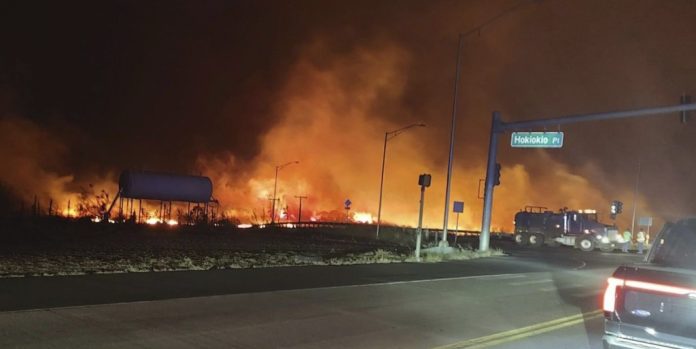
WAILUKU, Hawaii (AP) — Thousands of Hawaii residents raced to escape homes on Maui as blazes swept across the island, destroying parts of a centuries-old town and killing at least 36 people in one of the deadliest U.S. wildfires in recent years.

The fire took the island by surprise, leaving behind burned-out cars on once busy streets and smoking piles of rubble where historic buildings had stood in Lahaina Town, which dates to the 1700s and has long been a favorite destination for tourists. Crews battled blazes in several places on the island Wednesday, and the flames forced some adults and children to flee into the ocean.

At least 36 people have died, according to a statement from Maui County late Wednesday that said no other details were available. Officials said earlier that 271 structures were damaged or destroyed and dozens of people injured. The 2018 Camp Fire in California killed at least 85 people, destroyed nearly 19,000 homes, businesses and other buildings, and virtually razed the town of Paradise.

Lahaina residents Kamuela Kawaakoa and Iiulia Yasso described a harrowing escape under smoke-filled skies Tuesday afternoon. The couple and their 6-year-old son got back to their apartment after a quick dash to the supermarket for water, and only had time to grab a change of clothes and run as the bushes around them caught fire.

“We barely made it out,” Kawaakoa said at an evacuation shelter on Wednesday, still unsure if anything was left of their apartment.

As the family fled, a senior center across the road erupted in flames. They called 911, but didn’t know if the people got out. As they drove away, downed utility poles and others fleeing in cars slowed their progress.

Kawaakoa, 34, grew up in the apartment building, called Lahaina Surf, where his dad and grandmother also lived.

“It was so hard to sit there and just watch my town burn to ashes and not be able to do anything,” Kawaakoa said. “I was helpless.”

Maui County Mayor Richard Bissen Jr. said the island had “been tested like never before in our lifetime.”

“We are grieving with each other during this inconsolable time,” he said in a recorded statement. “In the days ahead, we will be stronger as a ‘kaiaulu,’ or community, as we rebuild with resilience and aloha.”

As the fires rage, tourists were advised to stay away. About 11,000 visitors flew out of Maui on Wednesday, with at least another 1,500 expected to leave Thursday, according to Ed Sniffen, state transportation director. Officials prepared the Hawaii Convention Center in Honolulu to take in the thousands who have been displaced.

The fires were whipped by strong winds from Hurricane Dora passing far to the south. It’s the latest in a series of disasters caused by extreme weather around the globe this summer. Experts say climate change is increasing the likelihood of such events.

Fires in Hawaii are unlike many of those burning in the U.S. West. They tend to break out in large grasslands on the dry sides of the islands and are generally much smaller than mainland fires. A major fire on the Big Island in 2021 burned homes and forced thousands to evacuate.

As winds eased somewhat on Maui, some flights resumed Wednesday, allowing pilots to view the full scope of the devastation. Aerial video from Lahaina showed dozens of homes and businesses razed, including on Front Street, where tourists once gathered to shop and dine. Smoking heaps of rubble lay piled high next to the waterfront, boats in the harbor were scorched, and gray smoke hovered over the leafless skeletons of charred trees.

“It’s horrifying. I’ve flown here 52 years and I’ve never seen anything come close to that,” said Richard Olsten, a helicopter pilot for a tour company. “We had tears in our eyes.”

About 14,500 customers in Maui were without power early Wednesday. With cell service and phone lines down in some areas, many people were struggling to check in with friends and family members living near the wildfires. Some were posting messages on social media.

Tiare Lawrence was frantically trying to reach her siblings who live near where a gas station exploded in Lahaina.

“There’s no service, so we can’t get ahold of anyone,” she said from the Maui community of Pukalani.

Maj. Gen. Kenneth Hara, from the Hawaii State Department of Defense, told reporters Wednesday night that officials were working to get communications restored, to distribute water, and possibly adding law enforcement personnel. He said National Guard helicopters had dropped 150,000 gallons of water on the Maui fires.

The Coast Guard said it rescued 14 people who jumped into the water to escape flames and smoke, including two children.

Among those injured were three people with critical burns who were flown to Oahu, officials said.

Bissen, the Maui County mayor, said at a Wednesday morning news conference that officials hadn’t yet begun investigating the immediate cause of the fires, but officials did point to the combination of dry conditions, low humidity and high winds.

Mauro Farinelli, of Lahaina, said the winds had started blowing hard on Tuesday, and then somehow a fire had started up on a hillside.

“It just ripped through everything with amazing speed,” he said, adding it was “like a blowtorch.”

The winds were so strong they blew his garage door off its hinges and trapped his car in the garage, Farinelli said. So a friend drove him, along with his wife, Judit, and dog, Susi, to an evacuation shelter. He had no idea what had happened to their home.

“We’re hoping for the best,” he said, “but we’re pretty sure it’s gone.”

President Joe Biden ordered all available federal assets to help with the response. He said the Hawaii National Guard had mobilized helicopters to help with fire suppression as well as search and rescue efforts.

“Our prayers are with those who have seen their homes, businesses and communities destroyed,” Biden said in a statement.

Former President Barack Obama, who was born in Hawaii, said on social media that it’s tough to see some of the images coming out of a place that is so special to many.

Wildfires also burned on Hawaii’s Big Island, Mayor Mitch Roth said, although there had been no reports of injuries or destroyed homes there.

Acting Gov. Sylvia Luke issued an emergency proclamation on behalf of Gov. Josh Green, who was traveling, and urged tourists to stay away. “This is not a safe place to be,” she said.

Green’s office said he’d cut short his trip to return Wednesday evening.

Alan Dickar, who owns a poster gallery and three houses in Lahaina, said most tourists who come to Maui visit Front Street.

“The central two blocks is the economic heart of this island, and I don’t know what’s left,” he said.

Dickar took video of flames engulfing the main strip before escaping with three friends and two cats.

“Every significant thing I owned burned down today,” he said. “I’ll be OK. I got out safely.”

___

This story has been updated to correct that nearly 19,000 homes, businesses and other buildings were destroyed in the 2018 Camp Fire, not nearly 19,000 homes.

___

Sinco Kelleher reported from Honolulu and Perry from Wellington, New Zealand. Associated Press writers Christopher Weber in Los Angeles and Beatrice Dupuy in New York contributed to this report.

$68.1 million ‘stormwater park’ in Virginia Beach aims to reduce flooding, create rec space – Daily Press

0

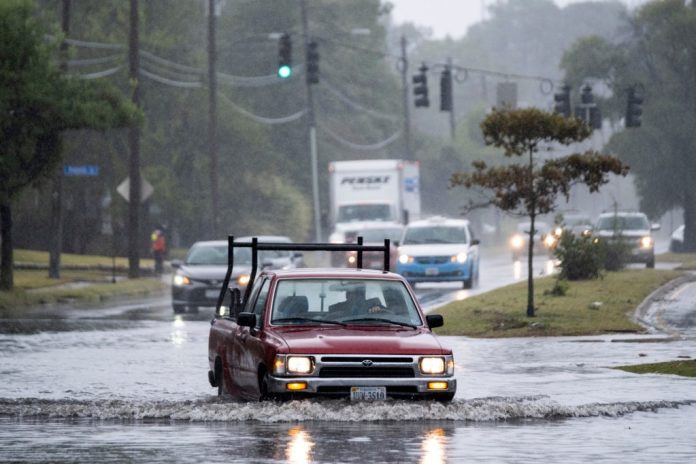
The city of Virginia Beach has broken ground on a massive project set to reduce stormwater flooding — and bring new recreational opportunities — over the next several years.

The concept is called a “stormwater park,” which cities across the country have begun using as flood prevention infrastructure. But after several years and a hefty price tag, the idea has come to fruition.

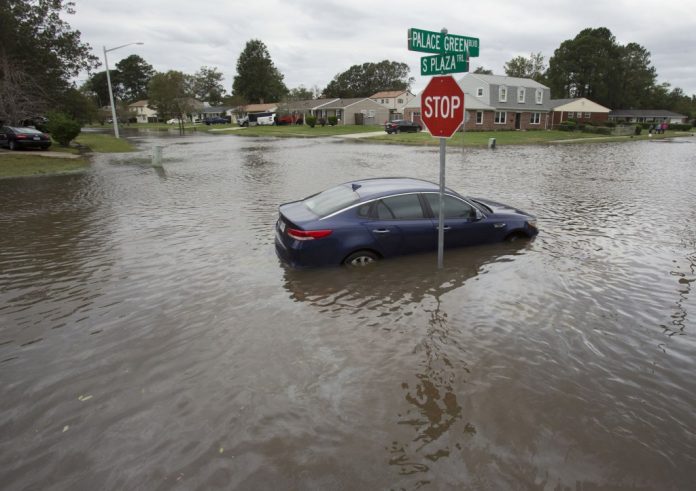
After Hurricane Matthew dumped as much as 14 inches of rain on parts of Hampton Roads in 2016, Virginia Beach leaders began to work with engineers to find a solution for residents in the Windsor Woods neighborhood — which experienced major flooding during the storm. Planning, design and development administrator Chad Morris said engineers noticed there was no area to store water, so they began to investigate ways to pump water to prevent it from flowing into the neighborhoods.

Nearby is the former Bow Creek Golf Course site, originally a private country club in the 1960s. The city acquired the property in 1975, turning it into a public recreation center and municipal course. An outdoor pool was enclosed in 1991, but the center was rated “poor” in 2009. It shut down in August 2013 and was demolished at the end of that year. Now, a center twice the size of the old one stands in its place. The city-owned Bow Creek Golf Course closed for use in November 2022.

“So there’s a 120-acre piece of property that was a good fit, but we can do more with that besides just dig a big hole in the ground to capture stormwater,” Morris said. “There was collaboration between (the public works and parks and recreation departments) to make the stormwater containment areas and developing this into some type of park, or what we call a stormwater park. That’s kind of how that all came together. Can we provide more than just a hole in the ground and be able to create park-like amenities for the for the public, as well?”

City of Virginia Beach

By the end of the project, the former golf course will be a space to hold stormwater and a host for community amenities.

According to the city, Bow Park is a 121-acre parcel of land that, by the end of the project, will be able to store 300 acre-feet of water. One acre-foot is the amount of water needed to cover an acre of land with one foot of water, or about 325,851 gallons.

Morris said the park is a win-win for Virginia Beach residents, and once completed, its usage could rival Mount Trashmore. Amenities at the finished site include nature trails, multi-use paths, pickleball courts, wildlife viewing shelters, canoe and kayak launches, mountain bike trails, restrooms, a pump track, sand volleyball courts and a playground. The old golf course clubhouse will be converted into a rentable event space.

In 2021, Virginia Beach residents voted to approve a half-billion dollar bond referendum to fund flood prevention, and the Bow Creek Stormwater Park is part of that measure.

The park’s construction is divided into two phases. In Phase One, the city will close off an area on the east side for construction, while an area on the west side will remain open to the public for use. Multi-use trails can still be accessed from the Bow Creek Recreation Center parking lot, and the first phase is scheduled to be completed by 2026 with a price tag of about $28.1 million. The second section, which is still in the design phase, is estimated to cost about $40 million.

For the near future, Morris said residents will see a lot of excavating to create stormwater storage. By the end of digging, the city estimates that 80,000 truckloads will remove over 1 million cubic yards of soil during this project.

Other cities across the country have already latched onto the concept. In North Miami, a former vacant lot was converted into the Florida Good Neighbor Stormwater Park with artistic structure and walking paths. The Historic Fourth Ward Park in Atlanta takes a similar approach, with stormwater flowing into the pond from its four sides. Globally, flood-prone countries such as China have used the stormwater park strategy to decrease flooding while creating more recreational space for citizens.

“It’s taken a little bit more of a nature-based solution, as well. We could have dug the hole and and created walls to create more volume, but we didn’t do that,” Morris said. “We created gradual slopes, made this more natural look and created lots of habitat zones and let some of the vegetation help with water quality, and it makes it more natural feeling versus creating a holding area full of concrete surfaces.”

Eliza Noe, [email protected]