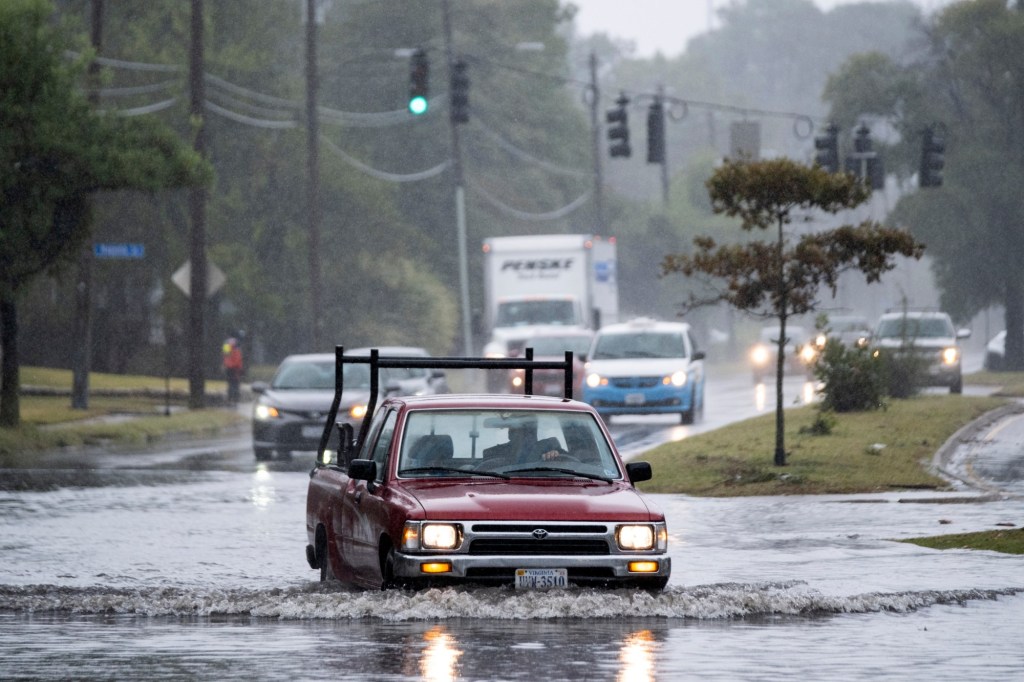
The National Oceanic and Atmospheric Administration has updated its outlook for the 2023 Atlantic hurricane season, which now is predicted to be “above normal” — rather than on par with previous seasons.
NOAA’s update to the 2023 outlook calls for 14-21 named storms (winds of 39 mph or greater), of which six to 11 could become hurricanes. Of those, between two and five could become “major” hurricanes with winds of 111 mph or greater. NOAA provides these ranges with a 70% confidence.
In their May prediction, NOAA researchers said 2023 would likely be within a range of 12 to 17 named storms that have winds of 39 mph or higher. Of those, five to nine could become hurricanes, or storms with winds of 74 mph or higher, including one to four “major” hurricanes.
There would usually have been two tropical storms in the Atlantic by this point of the season, according to Matthew Rosencrans, lead hurricane season forecaster with NOAA’s Climate Prediction Center. So far in 2023, there have been five.
An “average” hurricane season, according to NOAA, produces 14 named storms, of which seven become hurricanes, including three major hurricanes. Previously, forecasters estimated that effects of higher sea-surface temperatures — which heighten the effects of tropical storms — would be balanced and dampened by an El Nino effect. Now, that likely isn’t happening at the scale originally thought.
“One of the local conditions in the Atlantic that we monitor (is) the sea-surface temperature. The June and July sea-surface temperatures in the main development region of the North Atlantic were the warmest since 1950 at 1.23 degrees centigrade above normal,” Rosencrans said. “Warm waters are conducive to more development. Those warm waters likely contributed to the development of two tropical storms in the deep Tropics.”
Each year, NOAA updates its outlook by this time. The forecast covers the entire Atlantic coast of the Americas, so there is no outlook for specific regions, such as the Mid-Atlantic or the Gulf of Mexico. This prediction also only covers tropical storms during the season overall, not necessarily what storms make landfall. Whether a storm reaches the East Coast can only be predicted about a week in advance.
“We are now entering the peak months of the Atlantic hurricane season, August to October,” Rosencrans said. “Historically, this is when about 90% of all tropical storm activity occurs which is why we issue an updated outlook in early August.”
No matter the outlook, forecasters are encouraging residents to be prepared, since just one storm can greatly impact property and safety.
Eliza Noe, [email protected]