Home Blog Page 38

Mobile morgue arrives to assist in identification of confirmed dead in Maui wildfires – Daily Press

0

By CLAIRE RUSH, JENNIFER SINCO KELLEHER and CHRISTOPHER WEBER (Associated Press)

LAHAINA, Hawaii (AP) — A mobile morgue unit arrived Tuesday to help Hawaii officials working painstakingly to identify the 99 people confirmed killed in wildfires that ravaged Maui, and officials expected to release the first list of names even as teams intensified the search for more dead in neighborhoods reduced to ash.

The U.S. Department of Health and Human Services deployed a team of coroners, pathologists and technicians along with exam tables, X-ray units and other equipment to identify victims and process remains, said Jonathan Greene, the agency’s deputy assistant secretary for response.

“It’s going to be a very, very difficult mission,” Greene said. “And patience will be incredibly important because of the number of victims.”

A week after a blaze tore through historic Lahaina, many survivors started moving into hundreds of hotel rooms set aside for displaced locals while donations of food, ice, water and other essentials poured in.

Crews using cadaver dogs have scoured about 32% of the area, the County of Maui said in a statement Tuesday. Gov. Josh Green asked for patience as authorities became overwhelmed with requests to visit the burn area.

“For those people who have walked into Lahaina because they really wanted to see, know that they’re very likely walking on iwi,” he said Monday, using the Hawaiian word for “bones.”

Just three bodies have been identified and officials expected to start releasing names Tuesday, according to Maui Police Chief John Pelletier, who renewed an appeal for families with missing relatives to provide DNA samples. Family members of missing people have submitted 41 DNA samples, the county statement said, and 13 DNA profiles have been obtained from remains.

The governor warned that scores more bodies could be found. The wildfires, some of which have not yet been fully contained, are already the deadliest in the U.S. in more than a century. Their cause was under investigation.

When asked by Hawaii News Now if children are among the missing, Green said Tuesday: “Tragically, yes. … When the bodies are smaller, we know it’s a child.”

He described some of the sites being searched as “too much to share or see from just a human perspective.”

Another complicating factor, Green said, is that storms with rain and high winds were forecast for the weekend. Officials are mulling whether to “preemptively power down or not for a short period of time, because right now all of the infrastructure is weaker.”

The local power utility has already faced criticism for not shutting off power as strong winds buffeted a parched area under high risk for fire. It’s not clear whether the utility’s equipment played any role in igniting the flames.

Hawaiian Electric Co. Inc. President and CEO Shelee Kimura said many factors go into a decision to cut power, including the impact on people who rely on specialized medical equipment and concerns that shutting off power in the fire area would have knocked out water pumps.

Green has said the flames raced as fast as a mile (1.6 kilometers) every minute in one area, fueled by dry grass and propelled by strong winds from a passing hurricane.

And he felt conflicted about the anticipated storm.

“I want the rain, ironically, but that’s why we’re racing right now to do all the recovery that we can, because winds or heavy rain in that disaster setting, which it’s showing right now, it will make it even harder to get the final determination of who we lost,” Green said.

Authorities have paused a system that had allowed Lahaina residents and others to visit devastated areas with police permits. Kevin Eliason said when he was turned away, the line of cars waiting to get a permit was at least 3 miles (5 kilometers) long.

“It’s a joke,” Eliason said. “It’s just crazy. They didn’t expect, probably, tens of thousands of people to show up there.”

The blaze that swept into centuries-old Lahaina last week destroyed nearly every building in the town of 13,000. That fire has been 85% contained, according to the county. Another blaze known as the Upcountry fire was 60% contained.

The Lahaina fire caused about $3.2 billion in insured property losses, calculated Karen Clark & Company, a prominent disaster and risk modeling company. That doesn’t count damage to property not insured. The firm said more than 2,200 buildings were damaged or destroyed by flames, with about 3,000 damaged by fire or smoke or both.

Even where the flames have retreated, authorities have warned that toxic byproducts may remain, including in drinking water, after the flames spewed poisonous fumes. That has left many unable to return home.

The Red Cross said 575 evacuees were spread across five shelters on Monday. Green said thousands of people will need housing for at least 36 weeks. He said Tuesday that some 450 hotel rooms and 1,000 Airbnb rentals were being made available.

“We want to get everyone out of all of the shelters by week’s end,” he told Hawaii News Now.

President Joe Biden said Tuesday that he and first lady Jill Biden would visit Hawaii “as soon as we can” but that he doesn’t want his presence to interrupt recovery and cleanup efforts. During a stop in Milwaukee to highlight his economic agenda, Biden pledged that “every asset they need will be there for them.”

More than 3,000 people have registered for federal assistance, according to the Federal Emergency Management Agency, and that number was expected to grow.

FEMA was providing $700 to displaced residents to cover the cost of food, water, first aid and medical supplies, in addition to qualifying coverage for the loss of homes and personal property.

The Biden administration was seeking $12 billion more for the government’s disaster relief fund as part of its supplemental funding request to Congress.

Green said “leaders all across the board” have helped by donating over a million pounds (454,000 kilograms) of food as well as ice, water, diapers and baby formula. U.S. Marines, the Hawaii National Guard, the Army Corps of Engineers and the Coast Guard have all joined the aid and recovery efforts.

“When people are hurting, the community steps up and takes care of each other,” Lt. Gov. Sylvia Luke said Monday.

___

Kelleher reported from Honolulu and Weber from Los Angeles. Associated Press journalists Haven Daley in Kalapua, Hawaii; Kathy McCormack in Concord, New Hampshire; and Darlene Superville and Seth Borenstein in Washington contributed.

___

Associated Press climate and environmental coverage receives support from several private foundations. See more about AP’s climate initiative here. The AP is solely responsible for all content.


North Korea asserts US soldier bolted into North after being disillusioned with American society – Daily Press

0

By HYUNG-JIN KIM (Associated Press)

SEOUL, South Korea (AP) — North Korea asserted Wednesday that a U.S. soldier who bolted into the North across the heavily armed Korean border last month did so after being disillusioned with the inequality of American society and racial discrimination in its Army.

It’s North Korea’s first official confirmation of detention of Private 2nd Class Travis King, who entered the North while on a tour of a Korean border village on July 18. He became the first American detained in the North in nearly five years.

The North Korean official news agency, KCNA, said King told investigators that he had decided to enter North Korea because he “harbored ill feelings against inhuman mistreatment and racial discrimination within the U.S. Army.”

It said King also expressed his willingness to seek refuge in North Korea or a third country, saying he “was disillusioned at the unequal American society.”

KCNA is a propaganda arm of North Korea’s dictatorship and often releases statements and articles carefully calibrated to reflect the government’s official line that the United States is an evil adversary.

It’s virtually impossible to confirm the authenticity of King’s comments reported in North Korea’s state media. North Korea has coerced statements from captives before.

The United States, South Korea and others have accused North Korea of using foreign detainees to wrest diplomatic concessions. Some foreign detainees have said after their release that their declarations of guilt while in North Korean custody were made under coercion.

Some analysts earlier said North Korea might try to use King’s case to wrest concessions from Washington, such as tying his release to the U.S. cutting back its military activities with South Korea.

King’s border crossing came amid heightened animosities on the Korean Peninsula. North Korea has conducted more than 100 weapons tests since the beginning of last year, prompting the U.S. to expand its military drills with South Korea. Next Monday, the allies are to begin major annual drills, which North Korea views as an invasion rehearsal.

The KCNA dispatch on King came hours after North Korea slammed U.S.-led plans for an open U.N. Security Council meeting on its human rights record as “despicable” and only aimed at achieving Washington’s geopolitical ambitions.

North Korean Vice Foreign Minister Kim Son Gyong said the American human rights issue must be dealt at the U.N. council, calling the United States “the anti-people empire of evils, totally depraved due to all sorts of social evils.” Kim accused the U.S. of fostering racial discrimination, gun-related crimes, child maltreatment and forced labor.

North Korea said an investigation into King would continue.

King was supposed to b e heading to Fort Bliss, Texas, following his release from prison in South Korea on an assault conviction.

According to U.S. officials, King — who chose to serve his time at a labor camp rather than pay the nearly $4,000 fine — has been declared AWOL. The punishment for being away without leave can include confinement in the brig, forfeiture of pay or dishonorable discharge and it is largely based on how long they were away and whether they were apprehended or returned on their own.

The U.S. and North Korea, which fought during the 1950-53 Korean War, are still technically at war since that conflict ended in a truce, not a peace treaty, and have no diplomatic ties. Sweden provided consular services for Americans in past cases, but Swedish diplomatic staff reportedly haven’t returned since North Korea ordered foreigners to leave the country at the start of the COVID-19 pandemic.

North Korea has previously held a number of Americans who were arrested for anti-state, espionage and other charges. But no other Americans were known to be detained since North Korea expelled American Bruce Byron Lowrance in 2018. During the Cold War, a small number of U.S. soldiers who fled to North Korea later appeared in North Korean propaganda films.

U.S. officials have expressed concern about his well-being and said previously that North Korea ignored requests for information about him.

Bill Bramhall: Opposing Realities

0

Cartoon by Bill Bramhall for Aug. 16, 2023.

Chesapeake sheriff’s deputies will be resource officers in elementary schools – Daily Press

0

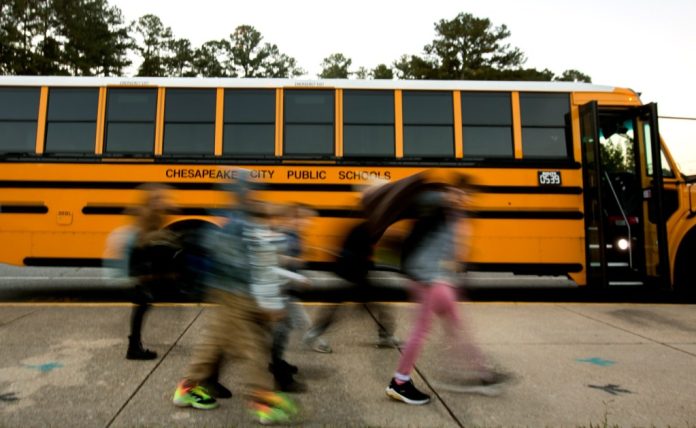
Chesapeake sheriff’s deputies will serve as School Resource Officers in the division’s elementary schools this year. The partnership between the school division and the Sheriff’s office was presented during Monday’s school board meeting.

Superintendent Jared Cotton told the board that the school division will pay  $828,000 to cover salary and vehicle costs for eight deputies who will rotate among Chesapeake’s 28 elementary schools, which have been divided into “boroughs,” or groups of 3-5 schools. Funding will come from pandemic relief funds, Cotton said.

“This partnership with the Sheriff’s Office represents a significant step forward in our continuous efforts to provide a safe and nurturing environment for all students within our schools,” Cotton said in a press release issued from the division last week.

The school division has been exploring options to add security coverage to elementary schools since the spring. School officials have said the city’s police department provides SROs for the division’s middle and high schools, but does not have enough officers to cover elementary schools. The division also considered the option of arming its own security officers, and in May the board approved revised policies to allow the change if needed.

The press release said the deputies will receive the same training that police officers serving in the middle and high schools receive.

School Board Member Mike Lamonea, who is also a member of the executive committee of the Mayor’s Safety Task Force, helped coordinate the partnership.

“As a School Board member, former law enforcement leader, and CPS parent, I am proud to be part of a district that prioritizes school safety and can’t thank Sheriff O’Sullivan enough for his partnership to see this vision through,” Lamonea said in the press release.

Chesapeake Sheriff Jim O’Sullivan attended Monday’s board meeting, along with the deputies who will be serving as SROs. O’Sullivan said he is excited about the partnership, which he said will also give children positive first interactions with law enforcement “to show them we are the good guys and good girls.”

“We’re there to help them if they have a problem,” he said.

Nour Habib, [email protected]

Many Americans are prioritizing wanderlust amid economic uncertainty – Daily Press

0

Lane Gillespie | Bankrate (TNS)

Trying to cut back on spending is never easy, and it becomes even more difficult if all you want to do this summer is go on a summer vacation. As travel has grown more expensive, ongoing economic uncertainty means some Americans may be reconsidering their priorities: spend their hard-earned money on a vacation or reserve it for emergency savings?

Bankrate has found that Americans are typically choosing to spend money on travel, even when their emergency fund is low.

Slightly less than half (44 percent) of U.S. adults who have traveled or anticipate taking a leisure trip this year have spent, or plan to spend, at least $1,000, according to a June 2023 Bankrate survey. Simultaneously, 52 percent of U.S. adults have less than three months’ expenses in emergency savings, according to a separate June 2023 Bankrate survey. That includes 22 percent of people who have no emergency savings at all.

Spending money on a vacation isn’t inherently irresponsible, but spending money instead of putting it aside in savings can sometimes cause guilt. Although building your emergency fund is a top priority during economic uncertainty, that doesn’t mean you have to sacrifice discretionary spending or vacations. By considering what’s important to you and taking stock of your budget, you can save for the future and enjoy your time now.

Two in three (63 percent) U.S. adults have traveled or plan to travel for leisure this year, according to Bankrate. After COVID-19-related travel restrictions ended, more people have begun feeling comfortable flying again. On July 20, 2023 alone, the U.S. Transportation Security Administration screened 2.74 million travelers, up from 2.7 million that same day in 2019, before the beginning of COVID-19.

Crowds aren’t the only headache travelers are facing — they’re facing sticker shock, too. Inflation has impacted the cost of airfare, gasoline, food and other common travel expenses, and 53 percent of those who have already traveled in 2023 are seeing higher prices than they’re used to, according to Bankrate.

Just under half (44 percent) of U.S. adults traveling in 2023 expect to spend at least $1,000, and most will try to stretch that money as far as they can: 80 percent of summer vacationers told Bankrate in April 2023 that they planned to change something about their vacation due to inflation:

—29 percent planned to select less expensive accommodations and/or destinations.

—28 percent planned to engage in cheaper activities.

—26 percent planned to drive instead of fly to their destination.

—26 percent planned to travel for fewer days.

Despite the moves to cut costs, rising prices may mean people spend the same, or even more, on their vacation. Roughly one in four (28 percent) leisure travelers expect to spend more this year than they did in 2022, according to Bankrate.

Younger Americans are less likely to spend as much on travel. Only 31 percent of Gen Z travelers plan to spend at least $1,000 on travel this year, the smallest percentage of any generation.

In comparison, only 29 percent of Gen Zers, who are likely much newer to the workforce, have enough emergency savings to cover at least three months’ expenses.

Regardless of how much you have saved, if you haven’t gone on a vacation since before COVID-19, it can be tempting to go all out on a trip. But Bankrate Senior Industry Analyst Ted Rossman advises against spending money you don’t have.

“I don’t want to tell people they can’t have any fun, but it is worth pointing out that the average credit card rates are much higher than most other financial products. Financing a vacation with a credit card is a risky and expensive proposition,” Rossman said.

Instead of going into debt or using emergency savings, Rossman suggests the happy medium of traveling on a tighter budget, or forgoing travel altogether in favor of a staycation.

“Consider driving instead of flying,” Rossman said. “Or visiting a place during its offseason or shoulder season. I also like the idea of letting the deal dictate when and where you go. So often, people get their hearts set on a specific place at a specific time, and that makes it harder to save.”

Budgeting for travel while building savings

Just because you have a tight budget doesn’t mean you can’t spend money on a vacation. Like any other large purchase, careful planning and research can save you money when traveling. Try starting with these tips:

—Start ahead of time. The sooner you make a budget for your trip, the better prepared you’ll be. Start looking for travel dates a few months in advance to make it easier to ask for time off work and begin keeping an eye out for deals. Popular budgeting apps like Expensify and PocketGuard can help you make a travel budget before your trip. If you feel like you can’t make a trip work this summer, start brainstorming plans for later this year — or even next year’s summer vacation.

—Know your resources. Do you have a travel credit card with unused points? Are your airline miles gathering dust? Nearly half (47 percent) of U.S. adults have at least one unused gift card, according to Bankrate, so check to see if you have any unused cash you can use for your upcoming trip.

—Make rising interest rates work for you. As you plan for your upcoming trip, consider saving ahead of time with a high-yield savings account. Interest rates are at a 22-year high, which means interest rates on savings accounts are higher, too. Saving ahead of time allows your savings more time to accrue interest and can lessen the budget hit when you leave for your trip.

—Be open to throwing your plans away. Flexibility is the ultimate key to saving money on travel. Keep an eye on prices in the weeks leading up to your trip for flight deals and consider weekdays or the off-season to fly out, when fares are cheaper. Travel hacking tips like earning rewards on shopping portals or dining rewards programs can allow you to save even more. Credit card points and miles are also a great way to save money on upcoming travel if you have the flexibility to plan your vacation around rewards.

_____

Older Americans are most likely to spend thousands on travel

Only 58 percent of baby boomers and 60 percent of Gen Xers plan to travel this year, compared to 69 percent of millennials and 68 percent of Gen Zers. But baby boomer and Gen X travelers, who may have more disposable income and more time to travel, are spending far more.

Half (50 percent) of Gen X and baby boomer travelers will spend at least $1,000 on travel this year:

Source: Bankrate survey, June 6-9, 2023

Note: Additional options were present in the survey question but are not shown here.

___

©2023 Bankrate online. Visit Bankrate online at bankrate.com. Distributed by Tribune Content Agency, LLC.

That East Coast tsunami warning test you received was a mistake, government says – Daily Press

0

An unusual alert pinged phones and inboxes along the East Coast Tuesday afternoon — a test tsunami warning. The text and email alert issued by the National Tsunami Warning Center went out at 12:29 p.m. It read:

“Tsunami Warning TEST. Tsunami Warning issued August 15 at 12:29PM EDT until August 15 at 1:29PM EDT by NWS National Tsunami Warning Center.”

Meanwhile, an email issued by Dare County Emergency Management on the Outer Banks stated:

“…THIS IS A TEST TO DETERMINE TRANSMISSION TIMES INVOLVED IN THEDISSEMINATION OF TSUNAMI INFORMATION…”

The alert caused a stir, leading the National Weather Service to post on channels across the East Coast that the alert was sent in error.

“There is NO TSUNAMI threat for the US Atlantic/East or Gulf Coast. We are aware of an erroneous tsunami alert on some apps. Please disregard, we have not issued a tsunami alert. NWS is reviewing the incident,” the NWS Newport/Morehead City field office tweeted.

Dare County Emergency Management tweeted “it was the National Tsunami Warning Center not us,” and said the local weather service office assured them the alert was sent in error and an investigation is underway.

As gas prices surge, here are the best gas rewards credit cards – Daily Press

0

Ted Rossman | Bankrate.com (TNS)

Gas prices have been on a shocking upswing, rising 48% over the past year and 21% over the past month, according to AAA. The national average for a gallon of unleaded gas was $4.27 as of March 18, down slightly from the record-high $4.33 set on March 11. In California, it was an obscene $5.80 (an all-time record).

The latest catalyst was Russia’s Feb. 24 invasion of Ukraine, but gas prices were already high for other reasons, including supply chain imbalances and strong demand as COVID cases receded.

Your best bet to save on gas is to use a gas rewards credit card—but it might not be the card you expect.

Gas stations’ cobranded cards are lackluster

An obvious choice would be to sign up for a gas station’s credit card. However, most of these cards aren’t very lucrative. The typical discount is a mere 5 to 10 cents per gallon, according to a recent Bankrate analysis of 22 cards offered by 17 popular gas retailers.

These cards are even more forgettable if you ever plan to carry a balance. The average interest rate of the 22 cards we analyzed was 25.8%, much higher than the average credit card APR of 16.34%. You’ll rarely come out ahead if you carry a balance on a rewards credit card, but the math is particularly unfavorable for gas cards.

General-purpose cards can offer much better gas rewards

A much better choice would be to sign-up for a general-purpose credit card—that is, one that can be used much more widely—with lucrative gas rewards. My no-annual-fee favorites include:

—Citi Custom Cash℠ Card: 5% cash back on your top eligible spending category each billing cycle (up to $500 in purchases, with 1% cash back on all other purchases).

—Sam’s Club® Mastercard®: 5% cash back on gas (purchased almost anywhere, not just at Sam’s Club—up to $6,000 per year). This card also gives 3% cash back on dining and offers enhanced rewards for Sam’s Club Plus members. Other purchases earn 1% cash back. The total cash back maximum per year is $5,000.

—The Discover it® Cash Back: 5% cash back on rotating quarterly categories (gas is a bonus category for the third quarter of 2023). The rate applies after activation on up to $1,500 in quarterly spending (then 1% cash back after that).

—Costco Anywhere Visa® Card by Citi*: 4% cash back on gas and EV charging (again, purchased almost anywhere, this time with a $7,000 annual cap), plus 3% cash back on eligible travel and dining, 2% cash back at Costco and 1% cash back on everything else.

—Like the Discover it® Cash Back, the Chase Freedom Flex℠* offers rotating bonus categories — including gas stations and EV charging purchases for the third-quarter of 2023. Cardholders can earn 5% cash back on these purchases (up to $1,500 in purchases, then 1%).

In more normal times, most Americans should spend well below these limits. For example, in 2019, the average household spent $2,094 on gas, according to the Bureau of Labor Statistics. In 2020, that fell to $1,568 as the pandemic led most people to drive less. But with gas prices skyrocketing and more people returning to the roads for daily commutes and vacations, it’s a good time to seek out as many savings opportunities as possible.

Because these cards offer rewards as a percentage of your purchase price, they’re much more meaningful than the flat 5- or 10-cent per gallon discounts offered by gas stations’ cobranded cards; the advantage stays steady as prices climb.

Gas station apps

Another good tip is to stack your credit card rewards with a gas station’s app. Most of the major brands have these. For example, Phillips 66 is offering 10 cents off each gallon for a limited time when you pay through their app. Elsewhere, discounts of 3 to 5 cents per gallon are more common. And you can save 10 cents per gallon via Shell’s app if you pay with your checking account (since those transactions are cheaper for the retailer to process).

At the grocery store

You can also stack gas savings by buying groceries and redeeming those points at the pump. Kroger and Albertsons are among the large supermarket chains that allow customers to rack up rewards on food shopping which can translate into gas rebates. This is a great example of getting money back from purchases you would have made anyway. You’ll benefit even more by using a rewards credit card.

Research the best prices

It’s common sense to shop around for the best prices, but that can be easier said than done. I thought I recently found an amazing deal on GetUpside, but when I got to the station, the posted price was 90 cents per gallon higher than what the app was showing.

GasBuddy is another popular resource, but with prices changing so rapidly, it’s also having trouble keeping up with the latest information and the surges in website and app traffic. If you’re willing to link your debit card to GasBuddy’s payment card, you could save up to 25 cents per gallon.

Carry less junk in your trunk

The EPA says that your fuel mileage decreases by about 1 percentage point for every additional 100 pounds your car carries. If you’ve been using your trunk as a storage unit, find somewhere else to put those items.

The agency also says that your fuel mileage drops off rapidly as you exceed 50 miles per hour, so ease off the accelerator, lead foot. Avoid excessive braking and idling and consider using cruise control to smooth out your gas consumption.

Also, consider combining errands whenever possible. Working from home and cutting back on some outings could also make sense if you can.

The bottom line

Gas prices are one of the most obvious and frustrating examples of a troublesome trend: Inflation is running at its hottest pace in 40 years, the Bureau of Labor Statistics reports. Almost all Americans are noticing this trend, and a recent Bankrate survey revealed that about three in four say inflation is harming their personal finances.

Ultimately, we have a few choices. According to the Bankrate survey, the most common reaction is to cut back on some purchases to afford higher prices elsewhere. This makes sense at the household level, although it could hurt some sectors of our consumer-driven economy, particularly discretionary spending categories such as travel and dining. Others will surely cut into their savings or add to their debt. Many will probably end up doing all three.

Inflation is causing consumers to make hard choices. Revisiting your budget with an eye toward this new normal is a good first step. Additionally, seek out ways to save whenever you can. At the pump, that means a gas rewards credit card and perhaps a gas station’s payment app as well.

NOTE: The information about the Costco Anywhere Visa® Card by Citi and Chase Freedom Flex℠ has been collected independently by Bankrate. The card details have not been reviewed or approved by the issuer.

(Visit Bankrate online at bankrate.com.)

©2023 Bankrate.com. Distributed by Tribune Content Agency, LLC.

What you need to pull off the ‘siren eyes’ makeup trend – Daily Press

0

The latest social-media-driven makeup trend, siren eyes, is here to add sultry glamor to the end of summer. At first glance, siren eyes look like the classic cat-eye wing, but a sharp inner corner and a pitch-black waterline add retro-Hollywood allure. Siren eyes elongate the eye, flattering almost any eye shape, and it’s easy to replicate this runway-ready look at home.

The siren eyes look is inspired by classic Hollywood bombshells such as Sophia Loren and the always-fashionable cat-eye look. Siren eyes combine dark, smoky eyeliner with a long, sharp outer wing and a smaller wing in the inner corner of the eye. You’ll usually see the waterline lined with black, too.

Start by applying a brown eyeshadow that’s just a couple of shades darker than your skin tone along the lash line, blending it up and out past your crease into a soft wing shape. Follow with a smaller amount of a darker brown or gray shadow to add depth along the outer corner of your eye.

Next, use a black or dark brown eyeliner to create an upward-tilting wing that extends past your crease. You can smudge a pencil eyeliner for a diffused, smoky look or get more drama with precise liquid eyeliner — or try both to add a sharp point to a smoky eye look.

With the same eyeliner, create a shorter wing on your inner corner. Use a waterproof eyeliner to darken your waterline. Complete the look with your favorite mascara.

What you need to know: Create a precise, richly pigmented eyeliner wing with this user-friendly, quick-drying pen.

What you’ll love: The marker-like tip glides on smoothly so you can apply a cat eye without worrying about skipping or smudging. It comes in seven neutral shades to experiment with.

What you should consider: Some users found the formula wasn’t as waterproof as advertised.

Where to buy: Sold by,and Amazon

What you need to know: Silky and precise, this eyeliner pen features an extra-smooth tip inspired by calligraphy pens.

What you’ll love: The flexible pen tip is made of individual bristles like a paintbrush. The ultra-black formula is smudge- and fade-resistant for up to 12 hours. It’s formulated with vitamins B5 and E and peptides to nourish lashes and promote growth.

What you should consider: The liquid formula can bleed if too much is applied. The tip is much smoother than a typical felt tip eyeliner, so it has a bit of a learning curve.

Where to buy: Sold byand Amazon

What you need to know: With more than 30 waterproof shades and finishes to choose from, this pencil is a great pick for your waterline.

What you’ll love: This best-selling eye pencil features a smooth, creamy application and bold color. Vitamin E, jojoba oil, and cottonseed oil help nourish the eye area and make the formula soft and easy to blend.

What you should consider: It can be hard to get a sharp point with this pencil, so it’s better suited to smudged-out looks. Some colors aren’t as smudge-proof as others.

Where to buy: Sold by ,and Amazon

What you need to know: The built-in smudger and sharpener in this mechanical pencil makes it a great pick for vacation or touch-ups.

What you’ll love: Since it’s a mechanical pencil with an included sharpener, you’ll always be able to create a sharp point for precise lines. It comes in seven colors, including white to brighten or highlight parts of your lash line.

What you should consider: Despite claiming to last 16 hours, some users found the eyeliner fades and smudges within a few hours.

Where to buy: Sold by Amazon and

What you need to know: For soft, grungy, or diffused eyeliner, this synthetic short-bristled brush can work with cream or powder products.

What you’ll love: You can use the brush to pick up and apply eyeshadow over to smudge out already-applied eyeliner. It makes creating a smokey eye smooth and simple.

What you should consider: It may be too soft to blend out some eyeliner formulas.

Where to buy: Sold by

What you need to know: Use this soft synthetic brush to apply and smudge eye shadow along your lash line.

What you’ll love: This small brush helps for finely detailed looks as well as smudging. It can even be used as a lip brush or to fill in brows.

What you should consider: Some users found the brush bristles too scratchy for the delicate eye area.

Where to buy: Sold by 

What you need to know: This mascara’s unique brush shape helps give lashes intense volume.

What you’ll love: It enhances lashes’ length and adds dramatic volume without flaking. The formula stays on well through sweat or humidity.

What you should consider: The wand doesn’t work well for everyone. The formula can be difficult to remove without a quality eye makeup remover.

Where to buy: Sold by 

What you need to know: One coat of this mascara gives lashes impressive volume and separation.

What you’ll love: The buildable formula glides on smoothly with minimal flaking or clumping. It comes in four shades of black or black-brown.

What you should consider: Application can be messy due to the amount of product that comes out on the brush. Some users found this mascara dries up too quickly in the tube.

Where to buy: Sold byand Amazon

Want to shop the best products at the best prices? Check out Daily Deals from BestReviews.

Sign up here to receive the BestReviews weekly newsletter for useful advice on new products and noteworthy deals.

Laura Duerr writes for BestReviews. BestReviews has helped millions of consumers simplify their purchasing decisions, saving them time and money.

BestReviews spends thousands of hours researching, analyzing and testing products to recommend the best picks for most consumers. BestReviews and its newspaper partners may earn a commission if you purchase a product through one of our links.

Distributed by Tribune Content Agency, LLC.

A novel chapter added to Holocaust history – Daily Press

0

Linda Ambrus Broenniman, author of “The Politzer Saga,” has added a new, novel chapter to Holocaust history.

Her book reads like a detective story that connects the dots, pulling together pieces of a puzzle in a wonderful, suspenseful way.

It is not a book of fiction. It is the record of her quest to uncover the secrets of her family’s 300-year-old history.

In the introduction of her book, Linda writes, “In 1949 my Hungarian parents crossed the ocean to start a new life. They have survived World War II, escaped a Stalinist regime, and finished their medical studies. They wanted to leave behind the pain and suffering. They wanted to start again. And they did, building successful careers as doctors in the United States. My six siblings and I were raised Catholics in what was an idyllic American childhood.

“The Politzer Saga” by Linda Ambrus Broenniman

“When I was 27, I accidentally discovered that my father was Jewish. And that much of what I knew about him, and his family was a lie. But I was young, not ready to embark on a journey to excavate the truth. Thirty-three years later, I could no longer ignore the yearning to know the truth that lay buried. It was time. Perhaps not too late, but almost. Many who knew the stories of my father’s family could no longer remember them or had died. ”

Then, in 2006, Linda’s family learned that her Catholic mother was honored by the Israeli government as Righteous Among the Nations, an honor recognizing non-Jews “who acted according to the noblest principles of humanity by risking their lives to save Jews during the Holocaust.”

Her name is inscribed on the wall at Yad Vashem (the World Holocaust Remembrance Center in Israel.) Among the names inscribed at Yad Vashem are Oskar Schindler and Raoul Wallenberg. Linda’s mother risked her life to save Jews from deportation to Nazi extermination camps, among them her father and grandmother.

Linda was still in the dark about her father’s Jewish family. He refused to talk about the past. But Linda’s mother once mentioned a box put away that contained old family photos and documents. Then in February 2011, Linda’s parents’ home caught fire. Her father survived with minor burns, but her mother succumbed to her injuries.

Five years later, Linda got a call from her sister, saying she had found the box, rescued from the fire.

“The box arrived,” Linda writes. “When I opened it nervously, its musty odor reminded me of an attic closed off to fresh air for decades. The box was filled with dog-eared filles and manila envelopes of photos. The documents were in Hungarian and German. Amazingly, they survived World War I, World War II, the Hungarian Revolution of 1956, and the fire in my parent’s home.”

At the bottom of the box was a composition book titled “Our Family Tree.” It was written in English. Its author was Gabor Varany, Linda’s father’s cousin. He remembered everything.

There was much more to discover about the 300 years of the Politzer family history. At the recommendation of a friend, Linda teamed up with Andras Gyekiczki, a Hungarian researcher in Budapest who had degrees in law and sociology.

“Andras was an amazing sleuth, a master of connecting the dots to lead us to more discoveries, “ Linda writes. “From names and dates on gravestones, he explored birth, death, and marriage records, most handwritten in ancient registers.

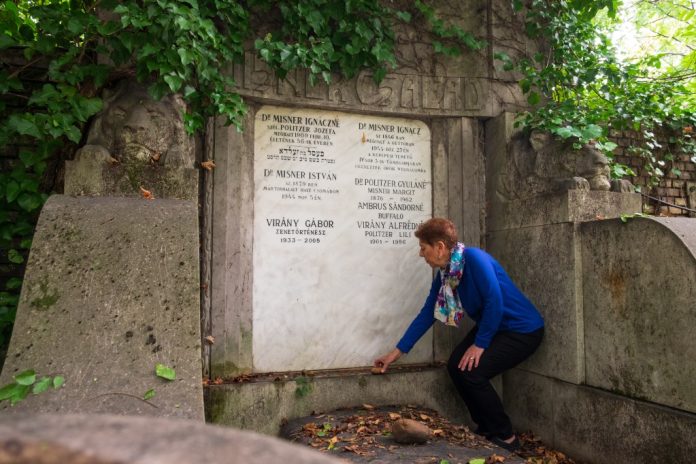
“Ironically, cemeteries became the place where my family felt most alive to me. Their names were etched into gravestones with dates, names of spouses or other family members, proof that they have lived and died. That they had really been of this place.”

Gyekiczki wrote: “I hardly know any nonfiction saga to better exemplify Hungarian Jewish fate of the past 300 years as this Politzer Saga story. All that fantastic talent, diligence, and readiness to act for and during much of modern Hungary. All those sufferings, torture, and misery they went through.”

For Linda it wasn’t enough to find the family her father never spoke of. She needed to write their stories. “It was a way to connect to their lives and make them even more real. By writing about them, I began to understand where my siblings and I came from.”

The Hungarian Jewish Museum and Archives mounted a permanent exhibit in the newly renovated Rumbach Synagogue, based on the family stories based on the book. Linda and her family will be traveling to Budapest in September for the celebration of the exhibit.

It was my Gazette column about my reunion with Dr. George Berci, a 101-year-old famous medical researcher and Holocaust survivor, that brought me together with Linda.

She got in touch with Dr. Berci and me, wondering whether her father, also a Jewish Holocaust survivor who escaped from a Nazi slave labor camp, was ever part of our work gang.

It turned out, he never was.

The printed version of “The Politzer Saga” will be published on Sept. 12, 2023 and can be pre-ordered on Amazon.com. To learn more about the book and the exhibit, visit www.politzersaga.com.

Frank Shatz is a Williamsburg resident. He is the author of “Reports from a Distant Place,” the compilation of his selected columns. The book is available at the Bruton Parish Shop and Amazon.com.


Old Donation to start school year as planned; lawsuit moves forward

0

A Virginia Beach judge said Old Donation School second-graders will start the new school year as planned while a lawsuit regarding the selection process for the gifted school moves forward.

Nearly 20 Virginia Beach parents asked the judge to order the Virginia Beach school system to redo the selection process for the gifted school, alleging that an unapproved lottery system was used and arbitrarily denied their “top students” enrollment.

Judge James Clayton Lewis told the parents in the courtroom Monday afternoon Virginia law was “very unfriendly” to those seeking such an injunction and the standards for him to order that were not met.

The matter is set to come back before a judge on Aug. 31.

The school board’s counsel filed its opposition to the parents’ complaint Monday afternoon. The division argued redoing the selection process two weeks before school starts would cause the division to have to also redo much of its planning regarding transportation, staffing and class sizes while the students who had already been selected to attend Old Donation were forced to return to their neighborhood schools.

Lewis also raised concerns about the start of school and asked the parents’ attorney, Patricie Drake, if he was expected to tell the school system, “Second grade is canceled until further order?”

Drake previously told The Virginian-Pilot she believed the division could go through the selection process prior to the start of school. Monday, she added that division leadership had created the hardship for themselves by delaying the “simple remedy.”

She said the reason the motion had not been filed until several months after the parents were notified their children had been waitlisted was because they had been led to believe the division was working on solutions with them. The motion was filed July 31.

She said Lewis’ decision was “disappointing.”

According to a joint statement from the parents, division leadership promised solutions but failed to provide them “despite the acknowledged errors and flaws in this year’s admission process.”

The statement read, ” Our grievance stems from the fact that the division violated regulations, misled us, deprived both us and our children of the suitable educational environment that had been identified to cater to their very distinct gifted requirement needs, and eroded our faith in the school system.”

According to past presentations to the school board, there was an increased in the number of students identified as gifted this year. There were also changes to the ranking system used by the selection committees. Under this new process of ranking students, more than 200 students were identified as “top students” to fill the 130 second grade seats at Old Donation, so a random selection process was used.

The parents, as well as some school board members and members of the community advisory committee for gifted education, said the ranking system needed to more differentiation to prevent a situation in which a lottery would be needed to fill all available seats at Old Donation.

Deborah Collins, who represented the school board, said the parents’ were not able to prove that their students would not succeed in the gifted cluster programs at their neighborhood schools. All the students who were identified as “top students” had received the same ranking, and therefore eligible to attend Old Donation.

The school system’s response to the parents’ complaint also questioned whether readministering the selection process for just second grade when the same one was used for all grades Old Donation serves, which is second through eighth grades, would be equitable. All the parents involved in the lawsuit have rising second graders.

Moving forward, the parents would need to prove that division leadership misrepresented the selection process and show that “irreparable harm” was being done to the students by not receiving full-time gifted instruction at Old Donation.

Kelsey Kendall, [email protected]