Home Blog Page 39

How employers are attracting the next generation of talent in Hampton Roads – Daily Press

0

Employers looking to attract the next generation of talent are relying on paid internships as more high school and college students compete for increasingly beneficial opportunities.

Students aren’t taking traditional unpaid internships anymore, said Michelle Simmons, the project director for 757 Regional Internship Collaborative. Funded by a $250,000 grant from the State Council of Higher Education for Virginia, the program aims to connect prospective interns with employers.

“If you’re going to be treating them as an employee, you should be paying these kids,” she said.

A survey of 2,307 graduating college seniors this year shows that 62% had worked an internship, and of those, 59% were paid, according to the National Association of Colleges and Employers.

The average hourly pay for interns in Virginia was $15.98 in August 2022, according to research of listings across 100 industries this year by CashNetUSA. Still, about about 10.9% of internships analyzed in the state were unpaid.

Companies experienced labor shortages during the coronavirus pandemic, which gave more leverage to students, said Jaedda Hall, director of emerging workforce programs with the Hampton Roads Workforce Council.

And while there are an influx of internship applicants in certain industries, Generation Z has certain priorities they are not willing to give up. Pay is an important driver for this generation of recent college graduates about to enter the workforce, according to a Great Place to Work survey of 32,000 Gen Z workers.

“The job seeker is expecting more from the employer,” Hall said. “So, it’s not just about your role. It’s about the culture of the company. It’s about the benefits. And you know, is it going to be a remote or hybrid environment where I can still kind of live my life?”

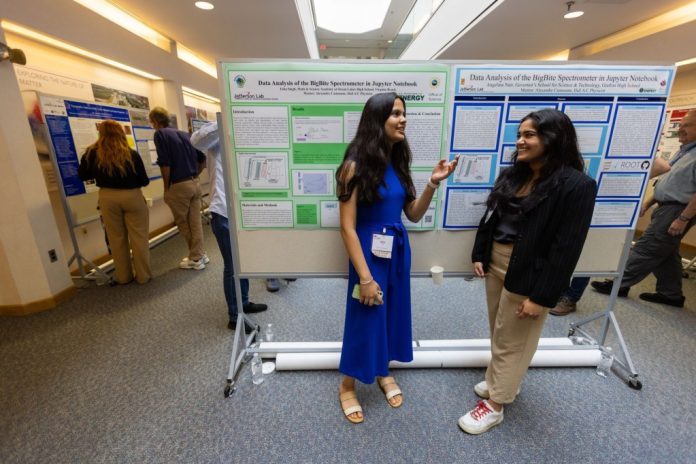
An intern from the University of Virginia, Lourdes Leung, speaks about her project an event displaying the Jefferson Lab interns’ final projects at the U.S. Department of Energy’s Thomas Jefferson National Accelerator Facility in Newport News on Aug. 4. (Tess Crowley / The Virginian-Pilot)

___

Path to full-time career

Malik Hairston, a master’s student at Hampton University, has spent the past two summers working on projects at Virginia Beach-based Breeden Construction with experts in his field.

The construction development intern said the experience not only confirmed he wanted to pursue a career in architecture, but taught him skills that he was able to bring back to school.

“You learn a lot in doing your homework and everything, but the true knowledge comes from the internship,” Hairston said.

For students like Hairston, having paid internships allows them to pursue a position in their field while also receiving the hands-on experience that can lead to a full-time job after graduation.

Multiple former interns have gone on to become employees at Breeden, and the company plans to extend more full-time offers, said Corbin Matacunas, Breeden marketing manager.

Interns at Breeden Construction participate in a nine-week program with three-week rotations through project management, field management and either pre-construction or development.

___

Thousands of applications

Depending on the year, LifeNet Health in Virginia Beach can receive up to 4,000 internship applications, said Kelly Laffey, a director within the not-for-profit company. But students are competing for 12 to 14 spots for 10 weeks each summer.

Another recruiting tool is interns can receive paid holidays, lunches and weekly golf lessons, she said.

LifeNet develops biotech products like skin grafts and heart valves in addition to facilitating organ donation in Virginia. The goal of the internship program is to have students bridge the gap between what they are learning in school and applying it to their desired career, Laffey said.

“The end result is far beyond skill development,” she said. “It’s about making a difference.”

Amanda Wilder, a student at Old Dominion University, said her internship with the production and logistics engineering team at LifeNet Health allowed her to develop her technical skills working with microscopes and 3D printing.

“My team really trusted me to take responsibility of very important projects,” she said.

Shanita Byrd, executive vice president of employee engagement and development at Atlantic Bay Mortgage Group, agreed on the importance of giving interns more meaningful opportunities beyond fetching coffee. The firm paid interns $15 per hour this summer.

“It’s not just sitting there and watching someone do their job, but they are a part of the team,” Byrd said.

For others, the opportunity to work in a professional setting can sometimes lead them down different paths. The exposure to the job helps students make decisions about their careers, including deciding not to pursue a line of work, and that’s OK, Byrd said.

___

Bringing new perspectives to workplaces

Aside from filling positions, employers find interns can bring new ideas and help build skills in their existing employees.

Douglas Higinbotham, a senior staff scientist at Jefferson Lab in Newport News, has been mentoring students and interns for over two decades. He believes having interns keeps employers “on their toes.”

“Sometimes, when you become a specialist in anything, right, you’re here and you’re so focused on your field. You encounter everything about it and you miss the simple questions,” he said. “And the students will come in here and they’ll ask you a question you haven’t thought about and you’ll go ‘Oh, wow.’”

At Breeden, having employees act as mentors to interns helps develop their coaching skills and instills a sense of pride and responsibility, Matacunas said.

“I really think their interactions with the interns brings a fresh perspective as well as innovative ideas to our organization and stimulates creativity and problem-solving within the teams beyond the program,” he said.

Gabby Jimenez, [email protected]
Driver fell asleep, crashed into water at Monitor-Merrimac bridge, police say – Daily Press

0

A driver fell asleep at the wheel just before getting onto the Monitor-Merrimac Memorial Bridge Tunnel and careened into the water between the bridge’s two directions Tuesday morning, police said.

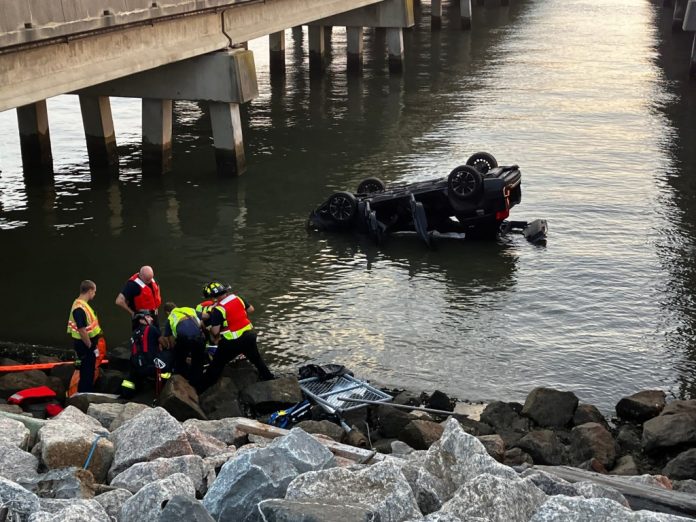
The driver and another passenger were rescued and are alive, though the extent of their injuries is unknown. Their vehicle was discovered on its roof in the shallow water, just beyond a rocky embankment, by a state trooper passing through the area at about 6 a.m.

They were travelling northbound on I-664 preparing to enter the MMMBT from the Suffolk side at the time of the wreck. Images from the scene provided by Virginia State Police indicate that the vehicle broke through a fence before going into the water.

Emergency crews stand at the Suffolk entrance to the Monitor-Merrimac Memorial Bridge Tunnel where a driver apparently fell asleep at the wheel, broke through a fence and crashed into the water between the two directions of the bridge-tunnel Tuesday morning.

The water was shallow enough in that area that the majority of the vehicle was visible from the road.

Traffic headed northbound on I-664 will be blocked for an unknown amount of time. Crews are in the process of rerouting traffic and opening the shoulder to allow traffic to pass.

Gavin Stone, 757-712-4806, [email protected]

Permitting reform can help advance clean energy goals – Daily Press

0

If you have ever put an addition on your home, you know how onerous obtaining the needed permits can be. Energy infrastructure projects have price tags in the millions rather than thousands. Nevertheless, they too are slowed by permit procedures.

The vast majority of energy infrastructure projects involve renewable energy, not fossil fuels, and the most urgent are new electricity transmission lines. Transmission lines link renewable energy sources, such as wind and solar, to demand centers. Both wind and solar require a lot of land that can be cost prohibitive closer to demand centers. Currently it takes 10 years or more to complete a new transmission line and about half that time is getting through the federal permit process.

The current growth rate for new transmission lines is 1% per year, and if that pace doesn’t increase, only 20% of clean energy projects in the works will come online soon enough to meet our goals of cutting greenhouse gas emissions under the Paris Agreement. Any effort to reduce fossil fuel use requires replacing carbon energy with carbon-free energy.

Perry Lindstrom of Arlington is a volunteer on the Citizens’ Climate Lobby electricity team. He was previously the lead subject matter expert on energy-related carbon dioxide with the U.S. Energy Information Administration.

Much of the need in the United States involves getting wind power and solar power from the heartland to the coasts, but here in Virginia the electricity resources of offshore wind are likely to require more transmission lines. Construction of these lines will employ many, but more importantly, will make possible the jobs at the renewable energy projects.

The U.S. Chamber of Commerce has put forth four principles that should be followed: 1) predictability, so that clean energy project investors can have a degree of certainty that the rules of the game won’t change midstream; 2) efficiency, so that multiple agencies at all levels of government can act quickly and simultaneously rather than slowing down the process; 3) transparency, so that stakeholders know where things are in the process; and 4) early stakeholder and community input.

The current permitting process is governed by two acronyms: NEPA and FERC. NEPA is the National Environmental Policy Act, signed into law on Jan. 1, 1970. Using the NEPA process, agencies evaluate the environmental and related social and economic effects of proposed actions. The Federal Energy Regulatory Commission has jurisdiction over pipelines that run across multiple states. However, there is no such agency for electricity transmission lines. Increasing FERC’s role in those transmission lines that cross a region in conjunction with the local regional authorities is an important component of speeding up the permitting process. FERC and NEPA are not equipped to handle permitting quickly enough. It is possible to fix this, and to do so while improving the timeliness and thoroughness of community input.

The recent Fiscal Responsibility Act, which raised the debt ceiling, contained some provisions that move us in the right direction. These provisions include having one lead agency that supervises cooperating agencies’ preparation of documents and review schedules. Procedures to allow project sponsors to prepare environmental assessments (EA) and environmental impact statements (EIS) with the agency doing the review keep the process transparent and timely. A two-year time limit for EISs and a one-year time limit for EAs is in place unless the agencies negotiate an extended deadline with applicants. Also, agencies may rely on prior environmental documents within five years if the circumstances have not substantially changed.

Even with these changes there remains an urgent need for additional reform. As the Bipartisan Policy Center says, “Both Democrats and Republicans have incentive to pursue a bigger, more comprehensive permitting bill even with the bipartisan provisions included in the Fiscal Responsibility Act of 2023.” Neither political party will gain all they desire from enacting this reform, but it is an essential component of our climate survival strategy. Please contact your congressional delegation and let them know that now is the time for permitting reform in order to achieve job creation and climate survival.

Perry Lindstrom of Arlington is a volunteer on the Citizens’ Climate Lobby electricity team. He was previously the lead subject matter expert on energy-related carbon dioxide with the U.S. Energy Information Administration.

Drew Sheneman: What’s the Mileage?

0

Cartoon by Drew Sheneman for Aug. 15, 2023.

Young environmental activists prevail in first-of-its-kind climate change trial in Montana – Daily Press

0

By MATTHEW BROWN and AMY BETH HANSON (Associated Press)

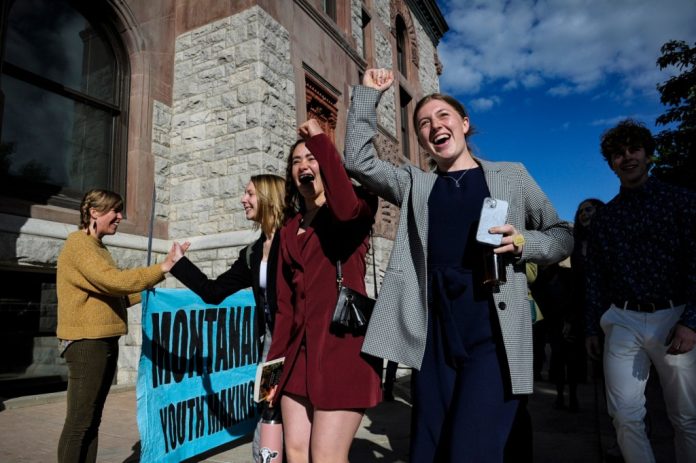
HELENA, Mont. (AP) — Young environmental activists scored what experts described as a ground-breaking legal victory Monday when a Montana judge said state agencies were violating their constitutional right to a clean and healthful environment by allowing fossil fuel development.

The ruling in this first-of-its- kind trial in the U.S. adds to a small number of legal decisions around the world that have established a government duty to protect citizens from climate change.

If it stands, the ruling could set an important legal precedent, though experts said the immediate impacts are limited and state officials pledged to seek to overturn the decision on appeal.

District Court Judge Kathy Seeley found the policy the state uses in evaluating requests for fossil fuel permits — which does not allow agencies to look at greenhouse gas emissions — is unconstitutional.

It marks the first time a U.S. court has ruled against a government for violating a constitutional right based on climate change, said Harvard Law School Professor Richard Lazarus.

“To be sure, it is a state court not a federal court and the ruling is based on a state constitution and not the U.S. Constitution, but it is still clearly a major, pathbreaking win for climate plaintiffs,” Lazarus wrote in an email.

The judge rejected the state’s argument that Montana’s emissions are insignificant, saying they were “a substantial factor” in climate change. Montana is a major producer of coal burned for electricity and has large oil and gas reserves.

“Every additional ton of GHG (greenhouse gas) emissions exacerbates plaintiffs’ injuries and risks locking in irreversible climate injuries,” Seeley wrote.

However, it’s up to the Montana Legislature to determine how to bring the state’s policies into compliance. That leaves slim chances for prompt changes in a fossil fuel-friendly state where Republicans dominate the statehouse.

Only a few states, including Pennsylvania, Massachusetts and New York, have constitutions with similar environmental protections.

“The ruling really provides nothing beyond emotional support for the many cases seeking to establish a public trust right, human right or a federal constitutional right” to a healthy environment, said James Huffman, dean emeritus at Lewis & Clark Law School in Portland.

State officials had tried to derail the case and prevent it from going to trial through numerous motions to dismiss the lawsuit.

Claire Vlases was 17 years old when she became a plaintiff in the case. Now 20 and working as a ski instructor, she said climate change hangs over every aspect of her life.

“I think a lot of young people feel really helpless, especially when it comes to the future,” Vlases said, adding that she expects Montana lawmakers to respect the state’s constitution and abide by the court’s decision.

“Hopefully this is one for history,” she said.

Emily Flower, spokesperson for Montana Attorney General Austin Knudsen, decried the ruling as “absurd” and said the office planned to appeal. She criticized Seeley for allowing the plaintiffs to put on what Flower called a “taxpayer-funded publicity stunt.”

“Montanans can’t be blamed for changing the climate,” she said. “Their same legal theory has been thrown out of federal court and courts in more than a dozen states. It should have been here as well.”

Attorneys for the 16 plaintiffs, ranging in age from 5 to 22, presented evidence during the two-week trial that increasing carbon dioxide emissions are driving hotter temperatures, more drought and wildfires and decreased snowpack.

The plaintiffs said those changes were harming their mental and physical health, with wildfire smoke choking the air they breathe and drought drying out rivers that sustain agriculture, fish, wildlife and recreation. Native Americans testifying for the plaintiffs said climate change affects their ceremonies and traditional food sources.

The state argued that even if Montana completely stopped producing C02, it would have no effect on a global scale because states and countries around the world contribute to the amount of C02 in the atmosphere. A remedy has to offer relief, the state said, or it’s not a remedy at all.

Seeley said the state’s attorneys failed to give a compelling reason for why they were not evaluating greenhouse gas emissions. She rejected the notion that Montana’s greenhouse gas emissions are insignificant and noted that renewable power is “technically feasible and economically beneficial,” citing testimony from the trial indicating Montana could replace 80% of existing fossil fuel energy by 2030.

Since its founding, Our Children’s Trust has raised more than $20 million to press its lawsuits in state and federal court. No previous attempts reached trial.

Carbon dioxide, which is released when fossil fuels are burned, traps heat in the atmosphere and is largely responsible for the warming of the climate. This spring, carbon dioxide levels in the air reached the highest levels they’ve been in over 4 million years, the National Oceanic Atmospheric Administration said earlier this month.

July was the hottest month on record globally and likely the warmest that human civilization has seen, according to scientists.

Six former Mississippi officers plead guilty to state charges for torturing two Black men – Daily Press

0

By MICHAEL GOLDBERG (Associated Press/Report for America)

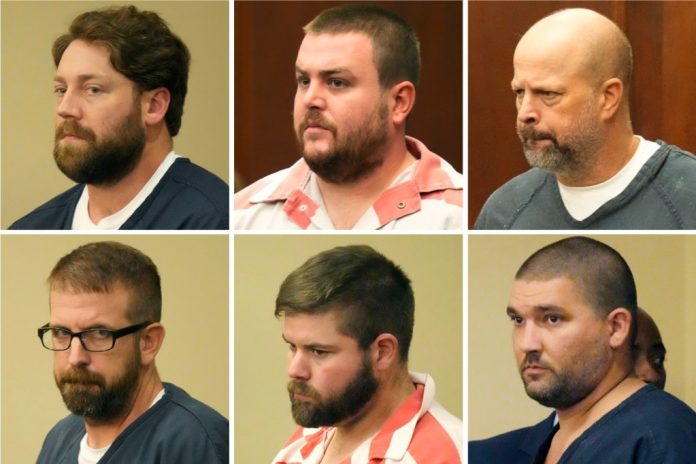
BRANDON, Miss. (AP) — Six white former Mississippi law officers pleaded guilty on Monday to state charges for torturing two Black men in a racist assault. All six had recently admitted their guilt in a connected federal civil rights case.

In the gruesome crimes committed by men tasked with enforcing the law, federal prosecutors saw echoes of Mississippi’s dark history, including the 1964 killing of three civil rights workers after a deputy handed them off to the Ku Klux Klan. Locally, the sheriff whose deputies committed the crimes this year called it the worst case of police brutality he had ever seen.

Prosecutors say some of the officers nicknamed themselves the “Goon Squad” because of their willingness to use excessive force and cover up attacks including the assault that ended with a deputy shooting one victim in the mouth.

In January, the officers entered a house without a warrant and handcuffed and assaulted the two men with stun guns, a sex toy and other objects. The officers mocked them with racial slurs throughout a 90-minute torture session, then devised a cover-up that included planting drugs and a gun, leading to false charges that stood against the victims for months.

Their conspiracy unraveled after one officer told the sheriff he had lied, leading to confessions from the others. The charges against the victims weren’t dropped until June after federal and state investigators got involved, according to their attorney.

The men include five former Rankin County sheriff’s deputies — Brett McAlpin, Hunter Elward, Christian Dedmon, Jeffrey Middleton and Daniel Opdyke — and a former police officer from the city of Richland, Joshua Hartfield, who was off duty during the assault.

Elward pleaded guilty to aggravated assault for shooting his handgun in the victim’s mouth in what authorities called a “mock execution,” thinking the weapon would dry fire without a bullet in the chamber.

Each appeared Monday in jumpsuits with the names of the jails covered by tape.

They agreed to sentences recommended by state prosecutors ranging from five to 30 years, although the judge isn’t bound by that. Time served for the state convictions will run concurrently with the potentially longer federal sentences they’ll receive in November.

The victims — Michael Corey Jenkins and Eddie Terrell Parker — arrived together to Monday’s hearing and sat in the front row, just feet from their attackers’ families. They were embraced by Monica Lee, the mother of Damien Cameron, a Black man who died in Elward’s custody in 2021.

“I enjoyed the view of seeing the walk of shame. Head down, the disgust everybody felt for them and that they feel for themselves,” Parker said after the officers were led away in shackles. “I hope this is a lesson to everybody out there: Justice will be served.”

The charges followed an Associated Press investigation in March that linked some of the officers to at least four violent encounters since 2019 that left two Black men dead. In addition to Jenkins’ lasting injuries, another Black man also accused them of shoving a gun inside his mouth. The Justice Department launched a civil rights probe in February.

All six of the former officers pleaded guilty to state charges of obstruction of justice and conspiracy to hinder prosecution. Dedmon and Elward, who kicked in a door, also admitted to home invasion.

After details of the case became public, some residents pointed to a police culture they said gives officers carte blanche to abuse their power.

Rankin County’s majority-white suburbs have been a destination for white flight out of the capital, Jackson, which is home to one of the highest percentages of Black residents of any major U.S. city.

The officers warned Jenkins and Parker to “go back to Jackson or ‘their side’ of the Pearl River,” the federal charging documents say.

Jenkins and Parker were targeted because a white neighbor complained that two Black men were staying at the home with a white woman, court documents show.

Parker was a childhood friend of the homeowner, Kristi Walley, who was at the hospital at the time. She’s been paralyzed since she was 15, and Parker was helping care for her.

“He’s a blessing. Every time I’ve needed him he’s been here,” Walley said in a February interview. “There were times I’ve been living here by myself and I didn’t know what I was going to do.”

Parker and Jenkins have left Mississippi and aren’t sure they will ever return for a long stay.

Jenkins still has difficulty speaking because of his injuries. The gunshot lacerated his tongue and broke his jaw before exiting his neck. He can only eat soft foods easily and has recurrent nightmares.

“As far as justice, I knew we were going to get it,” Jenkins has said. “But I thought it was maybe going to take longer.”

Other consequences remain to be determined.

Lee claims Elward and a current deputy not linked to the Jenkins assault killed her son. A grand jury declined to indict Elward after he punched Cameron and shocked him with a stun gun, but a Rankin County judge ruled Wednesday that Lee’s claims of excessive force could move forward against him, and Lee said the FBI told her they’re reviewing the case.

Separately, Carvis Johnson, the Black man who said another deputy pointed a gun into his mouth, filed a federal lawsuit from behind bars alleging that McAlpin beat him during an arrest and told him to stay out of Rankin County.

Jenkins and Parker, meanwhile, are seeking $400 million in damages in their federal civil rights lawsuit against Rankin County.

Rankin County Sheriff Bryan Bailey applauded the investigations that led to the guilty pleas.

“I believe today’s guilty pleas show the community that our system of checks and balances is effective,” Bailey said in a statement after the hearing. “An unbiased and impartial investigation into these former officers uncovered their criminal actions.”

Bailey had acknowledged his lax body camera policy failed. After the officers pleaded guilty, he promised to change it.

Malik Shabazz, one of Jenkins and Parkers’ attorneys, said Bailey is “directly responsible for the vicious acts of his subordinates.”

Court documents unsealed by federal prosecutors suggest only some members of the Goon Squad participated in the illegal raid. There are other Rankin County deputies “known to the United States Attorney,” the documents say.

“We would certainly hope that they continue to investigate the Goon Squad and other outstanding claims that may exist against these officers, as well as other officers,” said Trent Walker, another attorney for Jenkins and Parker.

___

Michael Goldberg is a corps member for the Associated Press/Report for America Statehouse News Initiative. Report for America is a nonprofit national service program that places journalists in local newsrooms to report on undercovered issues. Follow him at @mikergoldberg.

Number of dead from Maui wildfires reaches 99, as governor warns there could be scores more – Daily Press

0

By CLAIRE RUSH, JENNIFER SINCO KELLEHER and CHRISTOPHER WEBER (Associated Press)

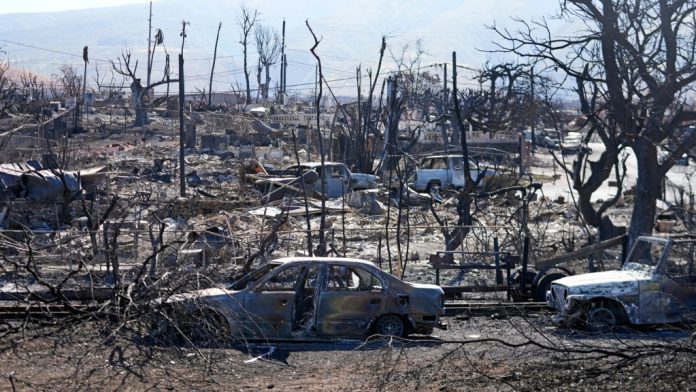
LAHAINA, Hawaii (AP) — The number of deaths caused by the Maui wildfires stood at 99 Monday, a figure that is likely to increase as search crews comb neighborhoods where flames moved as fast as a mile a minute.

The blazes that consumed most of the historic town of Lahaina are already the deadliest in the U.S. in more than a century. The cause was under investigation.

Gov. Josh Green said the search will take time and and asked for space to do it properly. “For those people who have walked into Lahaina because they really wanted to see, know that they’re very likely walking on iwi,” he said at a news conference on Maui, using the Hawaiian word for “bones.”

In an interview with CBS aired earlier Monday, Green estimated searchers will find the remains of 10 to 20 people per day until they finish their work. “And it’s probably going to take 10 days. It’s impossible to guess, really,” he said.

As cellphone service has slowly been restored, the number of people missing dropped to about 1,300 from over 2,000, Green said.

Twenty cadaver dogs and dozens of searchers are making their way through blocks reduced to ash. As of Monday, they had searched about 25% of the area, up from just 3% over the weekend, said Maui Police Chief John Pelletier.

Meanwhile, some state officials say there is a shortage of water available for firefighters, and they blame a recent ruling by an environmental court judge. It’s part of a long-running battle between environmentalists and private companies over the decadeslong practice of diverting water from East Maui streams that started during Hawaii’s sugar plantation past.

Green said there are people fighting over access to water to fight fires. “We have a difficult time on Maui and other rural areas getting enough water for houses, for our people, for any response,” he said.

Green said the attorney general’s office is reviewing decisions related to the fires.

Hawaiian Electric Co. Inc., Maui’s power provider, will cooperate with the state and do its own investigation, President and CEO Shelee Kimura said.

It’s not clear whether the utility’s equipment played any role in igniting the flames. Hawaiian Electric has faced criticism for not shutting off power as strong winds buffeted a parched area under high risk for fire.

Kimura said many factors go into a decision to cut power, including the impact on people who rely on specialized medical equipment. She also noted that shutting off power in the fire area would have knocked out water pumps.

“Even in places where this has been used, it is controversial and it’s not universally accepted,” she said.

As the utility worked to fully restore power, evacuees were expected to begin moving into hotels Monday evening. Green said that 500 hotel rooms were being made available for displaced locals and an additional 500 rooms will be set aside for workers from the Federal Emergency Management Agency who are aiding in the recovery.

In addition, FEMA has started to provide $700 to displaced residents to cover the cost of food, water, first aid and medical supplies, agency administrator Deanne Criswell said Monday. The money is in addition to whatever amount residents qualify for to cover the loss of homes and personal property.

“We’re not taking anything off the table, and we’re going to be very creative in how we use our authorities to help build communities and help people find a place to stay for the longer term,” Criswell said. More than 3,000 people have registered for federal assistance, according to FEMA, and that number was expected to grow.

On the water-supply issue, the deputy head of the U.S. Fire Administration, Tonya Hoover, said she did not have details on the island’s current water supply. She said the head of her agency has been meeting with firefighters, including one who was badly hurt and hospitalized.

The Biden administration is seeking $12 billion more for the government’s disaster relief fund as part of its supplemental funding request to Congress.

Authorities had required anyone traveling into the disaster areas to get a police-issued placard, but that was suspended Monday due to overwhelming demand. Lahaina resident Kevin Eliason said when he was turned away, the line of cars with people waiting to get a placard had grown to at least 3 miles (4.8 km) long.

“It’s a joke,” Eliason said. “It’s just crazy. They didn’t expect, probably, tens of thousands of people to show up there.”

The blaze that swept into centuries-old Lahaina last week destroyed nearly every building in the town of 13,000. That fire has been 85% contained, according to the county. Another blaze known as the Upcountry fire has been 60% contained, officials said.

“There’s very little left there,” Green said of Lahaina in a video update Sunday, adding that “an estimated value of $5.6 billion has gone away.”

Even where the fire has retreated, authorities have warned that toxic byproducts may remain, including in drinking water, after the flames spewed poisonous fumes. And many people simply have no home to return to.

The Red Cross said 575 evacuees were spread across five shelters on Monday, including the War Memorial Gymnasium in Wailuku. Among the visitors was Oprah Winfrey, who told Hawaii News Now that she delivered personal hygiene products, towels and water in recent days.

Winfrey, a part-time Maui resident, warned that news crews will eventually depart from the destruction and the world will move on. But she said that “we’re all still going to be here trying to figure out what is the best way to rebuild. … I will be here for the long haul, doing what I can.”

As firefighters battled the flames, a flurry of court actions were lodged last week over access to water. On Wednesday morning, Judge Jeffrey Crabtree issued an order temporarily suspending water caps he imposed for 48 hours. He also authorized water distribution as requested by Maui fire officials, the county or the state until further notice if the judge could not be reached.

But that wasn’t enough for the state attorney general’s office, which later filed a petition with the state Supreme Court blaming Crabtree for a lack of water for firefighting. The state asked the court not to let Crabtree alter the amount of water to be diverted or to put a hold on his restrictions until the petition is resolved.

The judge “substituted his judgment for that of the agency,” the petition said, referring to the Board of Land and Natural Resources. “As a result, there was not enough permitted water to … battle the wildfires.”

Wayne Tanaka, executive director of the Sierra Club, said Monday that the attorney general’s office exaggerated the effect of water diversion caps on firefighting.

“It’s a shameless exploitation of this horrible tragedy,” he said. “The central Maui reservoirs are of no use to west Maui, where most of the devastation is ongoing.”

He said he’s concerned the state is out to help a private company monopolize water.

Representatives for former sugar plantation land owner Alexander & Baldwin and the East Maui Irrigation Company did not immediately respond to an email seeking comment. A spokesperson for the Board of Land and Natural Resources said it does not comment on pending litigation.

The attorney general’s office said in a statement Monday that Alexander & Baldwin uses water for wetting the ground for preventative fire suppression, and that Crabtree’s previous orders affect only the central Maui area water supply and “does not directly affect the water situation for Lahaina.”

The main focus of the petition “is that administrative review is more appropriate than having the court monitor this type of activity,” the statement said.

Fueled by a dry summer and strong winds from a passing hurricane, the flames on Maui raced through parched brush. One fire moved as fast as a mile (1.6 kilometers) every minute, according to Green.

“With those kinds of winds and 1,000-degree temperatures, ultimately all the pictures that you will see will be easy to understand,” the governor said.

___

Kelleher reported from Honolulu, and Weber from Los Angeles. Associated Press journalists Haven Daley in Kalapua, Hawaii; Beatrice Dupuy in New York; and Josh Boak in Washington contributed.

___

Associated Press climate and environmental coverage receives support from several private foundations. See more about AP’s climate initiative here. The AP is solely responsible for all content.

Coaches rank William & Mary fourth in FCS preseason poll – Daily Press

0

COLLEGE FOOTBALL

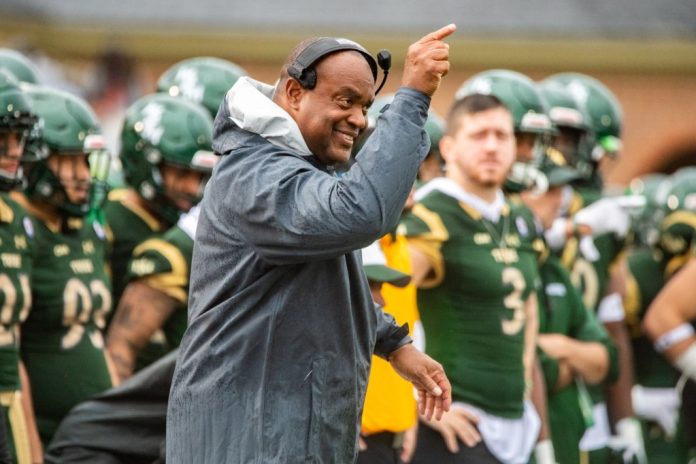
William & Mary was ranked fourth in the American Football Coaches Association preseason FCS poll. That continued a pattern that has seen the Tribe ranked between third and seventh in various organizations’ surveys.

W&M returns most of its starters from a team that tied a school record with 11 victories and reached the NCAA quarterfinals.

Reigning champion South Dakota State got 24 first-place votes, and No. 2 North Dakota State received one. Montana State, which ended the Tribe’s season last year, was picked third.

Other CAA teams besides W&M to reach the top 25 were No. 12 New Hampshire, No. 16 Richmond, No. 21 Delaware and No. 23 Rhode Island. No. 19 North Carolina Central, coached by Tabb High graduate Trai Oliver, was the only MEAC team in the top 25.

NFL

Veteran safety from W&M signs with Ravens

Former William & Mary star DeAndre Houston-Carson, who spent his first NFL seasons with the Chicago Bears, signed with the Baltimore Ravens after working out Monday with them.

He will join the Ravens for this week’s joint practices and exhibition game with the Washington Commanders.

Last season, the former FCS All-American had 45 tackles and two for loss, playing in a 4-3 defense for the first time in his NFL career.

COLLEGE MEN’S BASKETBALL

Spartans go 2-1 on Puerto Rico trip

Norfolk State earned a 96-88 victory over the LBP Red All-Stars on Monday night at the Ruben Zayas Montanez Coliseum in Trujillo Alto, Puerto Rico, finishing 2-1 in a trio of exhibition games against pro competition in Puerto Rico.

Tyrese Jenkins pushed the Spartans to a nearly wire-to-wire win Monday, knocking down four 3-pointers in a 20-point effort. Jamarii Thomas had 17 points and eight assists. Terrance Jones and Jaylani Darden added 14 points each.

The Spartans’ only loss of the trip came Saturday against the LBP White All-Stars, 72-61. Darden led NSU with 13 points, while Tyrel Bladen pulled down a team-high 11 rebounds. Bladen provided the Spartans with a slew of second-chance opportunities, recording seven rebounds on the offensive end.

Norfolk State bounced back from its opening loss with resilience, taking down the LBP Blue All-Stars 90-82 the next evening. A fiery first quarter fueled the Spartans to an early advantage, and they gained a 15-point halftime lead.

The Blue All-Stars chipped away in the third quarter, but NSU played with poise down the stretch to earn its first victory of the trip. The Spartans clicked on both ends of the floor, shooting 31 of 68 (45.6%) from the floor and holding their opponents to a 22-of-63 (34.9%) performance.

Jones led the Spartans with 16 points in Sunday’s win, making 6 of 8 shots and adding a pair of steals. Daryl Anderson added 15 points, accounting for four of Norfolk State’s 12 3-pointers on the night.

Bladen posted nine rebounds Sunday, including six on the offensive end. Thomas contributed 15 points and four assists, draining a pair of 3-pointers.

COLLEGE WOMEN’S BASKETBALL

ODU adds game Nov. 7

Old Dominion coach DeLisha Milton-Jones announced that the Monarchs added a home game against the NCAA Division II Lincoln Lions of Pennsylvania at 6:30 p.m. Tuesday, Nov. 7. It will be ODU’s season opener, though the Monarchs first will appear on the court in an Oct. 29 exhibition against Christopher Newport, last season’s Division III runner-up.

The Monarchs will now play 29 regular-season games, with 16 of those at Chartway Arena. ODU beat Lincoln 81-64 last season.

COLLEGE MEN’S SOCCER

ODU predicted ninth in Sun Belt

Old Dominion was picked ninth in the 10-team Sun Belt coaches’ poll and didn’t have a player chosen to the 12-man all-conference preseason team.

Kentucky, with six first-place votes and 93 points, was named the favorite, followed by Marshall (two and 91) and West Virginia (one and 77).

James Madison, last year’s conference tournament runner-up, was chosen eighth. Dukes midfielder Alex Krakowiak made the preseason All-SBC team.

COLLEGE FIELD HOCKEY

W&M tabbed third in CAA

William & Mary was predicted to finish third in the Coastal Athletic Association in a poll of CAA coaches.

Delaware, with 35 points and five first-place votes, was the favorite, followed by Monmouth, with 32 points and two first-place votes. Drexel and Northeastern shared fourth, while Hofstra was picked sixth and Towson seventh.

Four Tribe players earned recognition from the coaches: Senior Jayden Moon and junior Pyper Friedman, both midfielders, were among 12 players named to the Preseason All-CAA team, while senior goalkeeper Maddie George and graduate student Lauren Curran received honorable mention.

W&M was 9-8 last season and reached No. 16 in the national poll, its highest ranking in the last two decades.Delaware back Julia Duffhuis was tabbed the Preseason Player of the Year.

GOLF

UVA sophomore shares second after one round of U.S. Amateur stroke play

Virginia sophomore Ben James of Milford, Connecticut, shot a 5-under-par 67 to finish the opening round of stroke play at the U.S. Amateur Championship tied for second place. James had six birdies one bogey during his round at Colorado Golf Club.

During his first year at UVA, James was the winner of the 2023 Phil Mickelson Outstanding Freshman Award, a first-team Ping All-American, ACC Freshman of the Year and a finalist for both the Haskins and Jack Nicklaus Awards. He finished sixth at the NCAA Championships and is currently the sixth-ranked amateur in the world.

The top 64 players in the 312-competitor field will advance to match play following Tuesday’s second round.

Not far behind James on the leaderboard is UVA junior Rui Chang. The Chinese Cavalier posted a round of 2-under 69 on the Cherry Hills Country Club course to stand tie for 15th after the first round. Chang will be on the UVA roster for the first time this fall after competing for the Virginia club program. Chang’s round featured two birdies, two bogeys and an eagle.

Incoming freshman Josh Duangmanee of Fairfax finished at 75 while playing the Cherry Hills course. He was tied for 124th place.

MORE COLLEGES

UVA names Dawkins to staff as liaison

Virginia named Armani Dawkins its Deputy Athletics Director for Competitive Excellence. She has had a similar role at Oklahoma for the last five years.

Dawkins will serve as a collaborative liaison to all areas of the athletics department, with a focus on student-athlete and sports program success. She will be responsible for day-to-day oversight of student development and departmental strategic planning, and will serve as the departmental Title IX coordinator.

MEDIA

Hatfield, Young join Podcast Network

Longtime area broadcaster, writer and editor Matt Hatfield and Nansemond River boys basketball coach Ed Young will join the Podcast Network for regular weekend shows, many of them held at the Virginia Beach Sportsplex.

Until the show’s recent cancellation, they often joined forces for chats and interviews on 94.1FM. Young gained his 500th career victory last season. The podcasts will be available on the Sportsplex’s YouTube channel.

TENNIS

Cavaliers’ Rodesch takes title in Mississippi

Virginia senior Chris Rodesch won the singles title at the International Tennis Federation’s World Tennis Tour 25K tournament in Southaven, Mississippi.

Rodesch won his quarterfinal over top-seeded Aidan McHough, a Brit who is ranked No. 388 in the world, 6-3, 6-3. Rodesch then won 7-5, 6-2 against No. 3 seed Andy Andrade before downing No. 2 seed Martin Damm 6-7 (3-7), 6-1, 6-3 in the final.

This was Rodesch’s second ITF WTT singles title. He won the 15K in Vejle, Denmark, last year.

Read the full Georgia indictment against Trump and 18 others

0

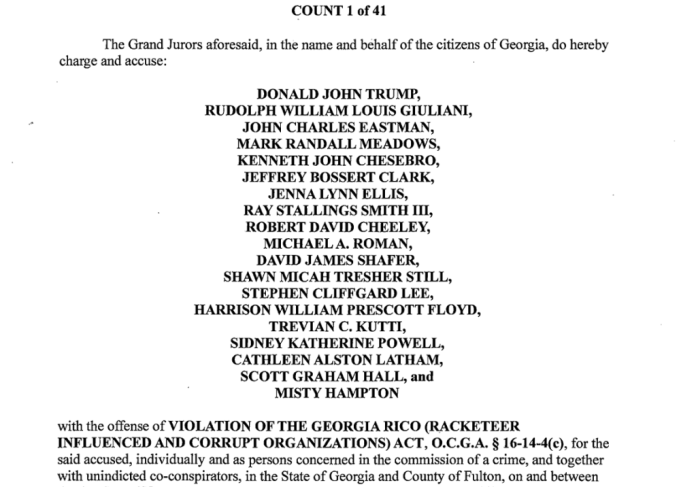
A grand jury in Fulton County, Georgia, late Monday returned10 indictments requested by District Attorney Fani T. Willis against former President Donald Trump and 18 others in relation to his efforts to overturn the Georgia results of the 2020 presidential election. The charges in the indictments include racketeering, soliciting a public officer to violate their oath, conspiring to impersonate a public officer, conspiring to commit forgery, conspiring to file false documents and others.

Read the full indictment below or click here.

They were alone in a fight to survive. Maui residents had moments to make life-or-death choices – Daily Press

0

By CLAIRE GALOFARO, MATT SEDENSKY and CLAIRE RUSH (Associated Press)

LAHAINA, Hawaii (AP) — The smoke was starting to blot out the sun. Winds were howling, and heat bore down as flames licked the trees on the horizon. The power had been out all day, so Mike Cicchino thought he’d drive to the hardware store for a generator. He turned off his street, and in an instant, his Lahaina neighborhood seemed to spiral into a war zone.

“When I turned that corner, I see pandemonium,” he said. “I see people running and grabbing their babies and screaming and jumping in their cars.”

It was around 3:30 p.m. Tuesday when Cicchino and his neighbors began a desperate fight for their lives. They had just moments to make decisions that would determine whether they lived or died in a race against the flames — a harrowing, narrow window of time in one of the most horrifying and lethal natural disasters the country has seen in years.

There were no sirens, no one with bullhorns, no one to tell anyone what to do: They were on their own, with their families and neighbors, to choose whether to stay or to run, and where to run to — through smoke so thick it blinded them, flames closing in from every direction, cars exploding, toppled power lines and uprooted trees, fire whipping through the wind and raining down.

Authorities confirmed that at least 96 people died — already the deadliest U.S. wildfire in more than 100 years — and they expect that number to rise.

Just 10 minutes before Cicchino made that turn away from his street, Maui fire officials had issued an ominous warning. The Lahaina brush fire had sparked that morning, but authorities reported it was contained. Now, officials said, erratic wind, challenging terrain and flying embers made it hard to predict the fire’s path and speed. It could be a mile away, Fire Assistant Chief Jeff Giesea said, “but in a minute or two, it can be at your house.”

Cicchino did a U-turn, ran into his house and told his wife they needed to leave: “We need to go! We need to get out of here now!”

They ran to the car with five dogs and called police, and a dispatcher said to follow the traffic. Access to the main highway — the only road leading in and out of Lahaina — was cut off by barricades set up by authorities. The roadblocks forced Cicchino and the line of cars onto Front Street.

A few blocks away, Kehau Kaauwai said the wind was so intense it tore the roof from her neighbor’s home. It felt like tornado after tornado was slicing down her street.

“It roared,” she said. “It sounded like an airplane landing on our street.”

Within moments, she said, the smoke that had been blocks away suddenly engulfed them. It darkened from gray to black, day seemed to turn to night.

Kaauwai couldn’t even see buildings anymore. Something was exploding; it sounded like fireworks. She ran inside. She couldn’t think — she just grabbed her dog and some clothes, never imagining she would not see her house or anything in it ever again.

Around 4 p.m., she got into her car. Traffic crawled, people were dragging uprooted trees out of the road with their bare hands. Debris whipped in the wind and banged on the car. Danger seemed to come from every direction.

Kaauwai would have driven to Front Street, but a stranger walking by told her to go the other way. She wishes now she could thank him, because he might have saved her life.

On gridlocked Front Street, people were panicking, crying, screaming, honking.

Bill Wyland grabbed his computer, passport and Social Security card and stuffed them into a backpack. He got on his Harley Davidson and drove on the sidewalk.

“I could feel the heat burning in my back. I could pretty much feel the hair is burning off the back of my neck,” said Wyland, who owns an art gallery on the street.

At one point, he passed a man on a bicycle madly pedaling for his life. Some were abandoning cars and fleeing on foot. The smoke was so thick, so toxic, some said they vomited.

“It’s something you’d see in a ‘Twilight Zone’ horror movie or something,” Wyland said.

The street was so jammed, he thinks if he’d taken his car instead, he would have died or been forced into the ocean. The people sitting in their cars saw black smoke ahead.

“We’re all driving into a death trap,” Mike Cicchino thought. He told his wife: “We need to jump out of this car, abandon the car, and we need to run for our lives.”

They got the dogs out. But it was impossible to know which way to run.

“Behind us, straight ahead, beside us, everywhere was on fire,” Cicchino said. It had been less than 15 minutes since he left his house, and he thought it was the end. He called his mother, his brother, his daughter to tell them he loved them.

The black smoke was so thick they could see only the white dogs, not the three dark ones, and they lost them.

Propane tanks from a catering van exploded.

“It was like a war,” Cicchino said. They could tell how close the fire was coming based how far away the cars sounded when they erupted.

“The cars sounded like bombs going off,” Donnie Roxx said. “It was dark, it was 4 o’clock in the afternoon, and it looked like midnight.”

A seawall separates the town from the ocean, and Roxx realized he and his neighbors were confronting a horrific decision: stay on burning land or go to the water. The sea was churning and treacherous even for strong swimmers, as the wind kicked up the waves.

“Do you want to get burned or take your chances and drown?” he asked himself. He jumped over the wall.

So did dozens of others, including Mike Cicchino and his wife.

Others came to realize they needed to flee — but not because officials told them. Some heard from friends and neighbors, others just had a feeling.

“There was no warning. There was absolutely none,” said Lynn Robinson. “Nobody came around. We didn’t see a fire truck or anybody.”

She left her apartment near Front Street around 4:30. About a mile away, Lana Vierra’s boyfriend stopped by her home and said he’d seen the fire raging toward them.

“He told me straight, ‘People are going to die in this town; you gotta get out,’” she recalled. So she did.

Anne Landon was chatting with others in her senior apartment complex. She said she felt a sudden blast of hot air that must have been more than 100 degrees. She ran to her unit and grabbed her purse and her 15-pound dog, La Vida.

“It’s time to get out! Let’s get out!” she shouted to neighbors as she rushed to her car.

She’d already packed a rolling duffle bag in her car, just in case. She didn’t know where to go. She stopped and asked an officer, who didn’t know what to tell her, except to wish to her luck.

Debris was flying through the air. She ran into people she barely knew but recognized. They told her to come with them to their home. They got stuck in a dead stop in the traffic, so they abandoned the car. She put the dog on top of her rolling suitcase and dragged it down Front Street, to the beach.

Downtown’s historic wooden buildings were burning. The splintering lumber broke apart and flew through the wind, still flaming.

“The sky was black, and the wind was blowing, and the embers were going over us. We didn’t know if we’d have to jump in the water,” she said. “I was terrified, absolutely horrified — so, so scared.”

But a path through the smoke cleared for just a moment, and police came shouting for them to go north. They ran.

Many others remained trapped on the beach.

Mike Cicchino and his wife took off their shirts, dunked them in water and tried to cover their faces. Cicchino ran up and down the seawall, shouting his lost dogs’ names. He saw dead bodies slumped next to the wall. “Help me,” people screamed. Elderly and disabled people couldn’t make it over the wall on their own. Some were badly burned, and Cicchino lifted as many as he could. He ran until he vomited from the smoke, his eyes nearly swollen shut.

For the next five or six hours, they moved back and forth between sea and shore. They crouched behind the wall, trying to get as low as they could. When flames fell from the sky, they dunked themselves into the water. Their surviving dogs’ fur was singed.

It was so surreal, Cicchino thought he must be dreaming.

“My mind kept going back to: This has got to be just a nightmare. This cannot be real. This cannot actually be happening,” he said. “But then you realize you’re burning. I’m feeling pain, and I don’t feel pain in nightmares.”

The U.S. Coast Guard’s first notification about the fires was when the search and rescue command center in Honolulu received reports of people in the water near Lahaina at 5:45 p.m., said Capt. Aja Kirksy, commander of Coast Guard Sector Honolulu.

The boats were hard to see because of the smoke, but Cicchino and others used cellphones to flash lights at the vessels, guiding them in to rescue some, mostly children. Fire trucks eventually came and drove them out, through the flames.

Those who survived are haunted by what they endured.

Cicchino jolts awake at night from dreams of dead people, dead dogs. Two of his dogs remain missing. He agonizes over the decisions he made: Could he have saved more people? Could he have saved the dogs?

Anne Landon was practically catatonic. She imagines her neighbors who didn’t make it out and wonders if she might have been able to help them. She was covered in ash but couldn’t bring herself to shower.

Her dog wouldn’t eat for two days.

____

Associated Press climate and environmental coverage receives support from several private foundations. See more about AP’s climate initiative here. The AP is solely responsible for all content.

___

AP national writers Galofaro and Sedensky reported from Louisville, Kentucky, and New York. Reporters Audrey McAvoy, Andrew Selsky, Haven Daley and Jennifer Sinco Kelleher also contributed.