Home Blog Page 196

VA, NIH looking for veterans of Gulf War to study Illness – Daily Press

0

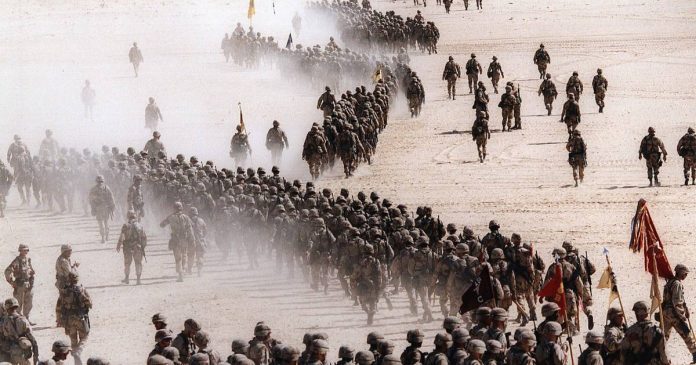
The VA and National Institutes of Health began a five-year pair of studies Monday to better diagnose and potentially discover a treatment for an illness affecting roughly 175,000 to 210,000 veterans of the Gulf War, which included operations Desert Shield and Desert Storm.

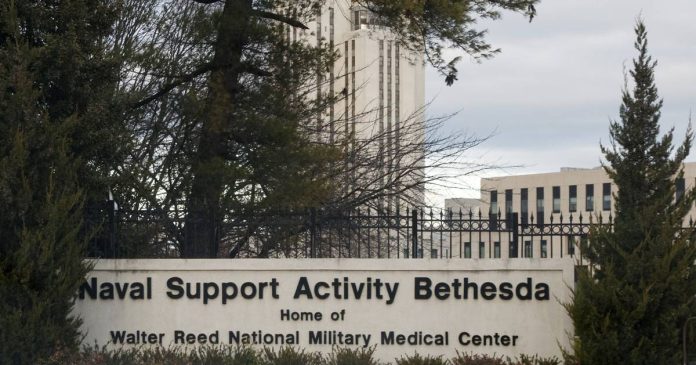
The first veteran to participate in the studies arrived at the NIH Clinical Center in Bethesda Maryland this week, according to a release from the VA Monday.

Symptoms of the illness including respiratory complaints, sleep disturbances, forgetfulness and muscle and joint pain, according to NIH. Roughly one-third of the 700,000 veterans deployed to the Persian Gulf in the conflict are estimated to have the affliction, according to the VA.

Veterans interested in participating in the Gulf War Illness study must be veterans of the conflict, ages 48 to 70, have at least a 7th grade education and either have Gulf War Illness symptoms after deployment in the conflict between 1990 and 1991 or have no self-reported or documents Gulf War illness symptoms. The VA and NIH is encouraging veterans interested in participating or with more questions to email [email protected].

“This is an important collaboration that we hope will lead to many answers to those suffering from Gulf War Illness,” said Dr. Walter Koroshetz, director of the NIH’s National Institute of Neurological Disorders and Stroke in the Monday news release. “Taking advantage of the resources available only at NIH, this comprehensive study will take a new look at this illness and uncover biological mechanisms that may pave the way to treatments.”

Comprehensive testing will be at the NIH Clinical Center in Bethesda will last up to 14 days, with additional tests done at home with the participating veterans compiling a diary, among other tasks.

Required procedures for the study include an exercise test to trigger symptoms, interviews, memory tests, blood and urine collection, eating a special diet and X-rays, among others. Optional procedures include muscle and skin biopsies and brain MRI, among others, according to NIH.

“Effective treatments for Gulf War Illness have remained elusive, forcing health care providers to mostly focus on easing patient symptoms,” said Rachel Ramoni, VA chief research and development officer in the Monday news release. “VA and NIH’s collaboration will bring together experts who will meticulously investigate the underlying causes of Gulf War Illness symptoms.”

Ian Munro, 757-447-4097, [email protected]

Now among NASA’s brightest stars, former Langley Research Center director to be inducted into Astronaut Hall of Fame – Daily Press

0

Roy Bridges calls himself an improbable astronaut.

During parts of his childhood in rural Georgia, his home had no indoor plumbing or electricity. He often did his homework by lamplight. His family later moved to Gainesville, Georgia, and after years of military service, engineering study and flight training, Bridges got to see the stars.

Now, NASA is thanking him for his decades of contribution to space exploration. He will be inducted into the Astronaut Hall of Fame in May.

“That was a huge surprise because I only had the one space flight,” Bridges told The Virginian-Pilot by phone on Tuesday. “They told me sometime in either late February or early March, and I figured that running NASA Kennedy Space Center and Langley would qualify me for this.”

Each year, inductees are selected by a committee of Hall of Fame astronauts, former NASA officials, flight directors, historians and journalists. To be eligible, an astronaut’s first flight must have taken place no less than 15 years prior. Candidates must be U.S. citizens and either a NASA-trained space shuttle commander, pilot, mission specialist or an International Space Station commander or flight engineer. Inductees must have orbited the earth at least once, and at least five years need to have passed since their last day eligible for flight assignment as a NASA astronaut.

Bridges, who now lives in Colorado Springs, Colorado, said he knew early on that getting to space was his ultimate goal. Russia had sent Sputnik into orbit when Bridges was young, and he was excited by the next level of exploration — which ignited his fascination with the final frontier. The clearest path to becoming an astronaut includes training at the Air Force Academy, which requires a congressional recommendation.

“My father was an avid newspaper reader,” he said. “So he saw a notice in the paper that our congressman was coming to town. I stayed home from school and dressed up in my own suit, and my father got me down to the only hotel in town. He would sit in the car, and I would go cold call the congressman.”

After graduating from the Air Force Academy, Bridges earned a master’s degree in astronautics from Purdue University. Bridges served at Edwards Air Force Base in California after school and got experience with test piloting, a requirement for becoming an astronaut. He served in the Vietnam War and made several other stops during his military career, including Wright-Patterson Air Force Base in Ohio, Nellis Air Force Base in Nevada and what is now Patrick Space Force Base in Florida.

He applied to be part of the 1978 class of astronaut candidates and scored well during his interview, but ultimately, he didn’t get selected. Bridges worked a desk job in the Pentagon for the next couple years and was on the verge of not applying for the 1980 class. A colleague noticed his application had not come in and called Bridges asking where it was. That’s when Bridges decided to go for it. He was accepted and became part of the 1980 class.

“There were many forks in the road,” Bridges said.

In July 1985, he piloted the space shuttle Challenger for the eight-day Spacelab 2 mission. The main objective was to verify the performance of the shuttle’s Spacelab systems, determine interface capability of the orbiter and measure the spacecraft environment. Experiments covered life sciences, plasma physics, astronomy, high-energy astrophysics, solar physics, atmospheric physics and technology research.

Kennedy Space Center Director Roy Bridges (left) and Deputy Director Jim Kennedy place a wreath at the visitors complex.

Daywatch

Weekdays

Start your morning with today’s local news

“We were taking pictures for scientists, and I noticed that as we were brought over some of these places, I knew that people down there were really just scraping along trying to survive or having a really tough time,” Bridges said. “And here I am, one of the few hundred people that are getting to fly in space. I had a really exciting job doing things that are good for all humanity, and I felt very special. Maybe a little selfish.”

Bridges was scheduled to fly aboard Challenger a second time during the summer of 1986. But before he could, disaster struck the program. The space shuttle exploded 73 seconds into its January flight, killing all seven astronauts on board. Bridges never made a second trip into orbit, but he stayed within the field of space exploration.

As a pilot, test pilot and astronaut, Bridges flew 4,460 hours in a variety of aircraft. He retired as a U.S. Air Force major general.

He went on to serve as Center Director of NASA’s Kennedy Space Center from 1997 to 2003, where he was responsible for space shuttle and International Space Station programs. Between 2003 and 2005, he served as center director of NASA’s Langley Research Center in Hampton. While at Langley, Bridges was tasked with setting up a new organization called the NASA Engineering Safety Center to correct issues that led to the Challenger explosion and the 2003 space shuttle Columbia disaster.

“There’s absolutely nothing like being onboard that powerful rocket pulling 3 g’s and ending up a couple hundred miles above the planet,” Bridges said. “We floated through the cabin over to the window, and looked at the earth. It’s quite an awesome experience. I never got tired of peaking, although we were very busy, out the window as we went around the world.”

The ceremony for Hall of Fame inductees will take place at at Kennedy Space Center Visitor Complex on May 6.

Eliza Noe, [email protected]

MilSpouseFest returns to Hampton Roads next week – Daily Press

0

MilSpouseFest will return next week to Hampton Roads for the fifth time, connecting spouses with resources designed to address the challenges military families face.

MilSpouseFest will host a conference Tuesday at Lesner Inn in Virginia Beach. The day program will run from 11 a.m. to 2 p.m. followed by an evening program from 5:30 to 9 p.m.

The conference will connect attendees with resources for child care, resumé building, military family support, veteran services and mental health counseling services. Representatives from Operation Childcare, Ohana Homefront Foundation, the Elizabeth Dole Foundation, the Armed Services YMCA of Hampton Roads and more plan to attend.

“The goal of MSF is to empower military spouses and families by providing them with information, resources, and the community support they need in their daily lives,” said Danya Devine, a military spouse and director of MilSpouseFest.

Active duty families relocate every two to three years, picking up their lives and settling into new communities, all while juggling the stress of military life.

“Every time you PCS (permanent change of station) to a new duty station, you start all over essentially and need resources — everything from a dentist to a hairdresser to childcare. But if you come to an event like MilSpouseFest, you might get a whole bunch of needs met and make some friends,” Devine said.

Daywatch

Weekdays

Start your morning with today’s local news

This year, military spouse and comedian Ashley Gutermuth is the emcee and headliner. Gutermuth is a stand-up comedian who went viral on TikTok in recent years for her videos poking fun at military life.

A military spouse for more than 27 years, Devine said she once shied away from similar opportunities.

“I thought ‘I’m not going to be that spouse. I am going to go to work and do my own thing.’ But then I was like ‘wait a minute — I need that. I need that resource or that human connection’,” Devine said.

MilSpouseFest is free, but registration is required. The registration portal, which can be found at MilSpouseFest.com, will close at 11:59 p.m. Monday.

Caitlyn Burchett, [email protected]

Walter Reed military hospital criticized after dropping Franciscan priests for secular pastoral care – Daily Press

0

The management of Walter Reed National Military Medical Center has drawn criticism from a prominent archbishop — and some members of Congress — by choosing not to renew a contract for Franciscan priests to provide pastoral care, and instead hiring a secular firm to oversee provision of those services going forward.

For nearly two decades, priests from the Holy Name College Friary in Silver Spring, Maryland, had ministered to service members and veterans hospitalized at Walter Reed, a renowned medical facility in nearby Bethesda.

Walter Reed said it notified the Franciscans in March that their contract would not be renewed, and that another bidder for the new contract had been selected — secular defense contractor Mack Global LLC.

The medical center said it issued a cease-and-desist order on April 4 — in the midst of Holy Week — when Franciscans continued to provide pastoral services after their contract expired on March 31.

The events dismayed Timothy Broglio, who is president of the U.S. Conference of Catholic Bishops and also is archbishop for the Military Services.

“I fear that giving a contract to the lowest bidder overlooked the fact that the bidder cannot provide the necessary service,” Broglio said in a statement. “I earnestly hope that this disdain for the sick will be remedied at once and their First Amendment rights will be respected.”

Walter Reed, in a lengthy statement provided to The Associated Press, said it “honors and supports a full range of religious, spiritual, and cultural needs.”

The statement said the new contract offered to Mack Global “is under review to ensure it adequately supports the religious needs of our patients and beneficiaries.”

For now, the medical center said, an active-duty Army priest on its staff is providing Catholic pastoral services, supplemented as warranted by other priests in the region.

The medical center declined to say whether it was dissatisfied in any way with the services provided by the Franciscans. It also declined to provide any monetary figure for the new and previous contracts.

Asked for comment, the Franciscans provided a statement Wednesday expressing pride in the services they had provided to Walter Reed.

“While this is certainly disappointing after 20 years of service – after building trust and so many wonderful relationships and friendships – the Franciscan Friars of Holy Name Province respect the process,” the statement said. “It has been an incredible privilege – and, really, a very powerful ministerial experience – for the Franciscan Friars to be invited into the lives of these true American heroes who have sacrificed so much for our country.”

Daywatch

Weekdays

Start your morning with today’s local news

Walter Reed is one of many U.S. military medical centers whose pastoral care lies within the Archdiocese for Military Services, headed by Broglio.

The statement issued by Broglio’s office last week was stinging: “The refusal to provide adequate pastoral care while awarding a contract for Catholic ministry to a for-profit company that has no way of providing Catholic priests to the medical center is a glaring violation of service members’ and veterans’ Right to the Free Exercise of Religion.”

The developments have drawn the attention of several Republican members of Congress who criticize Walter Reed’s action. Among them was Rep. Marjorie Taylor Greene of Georgia, who tweeted that the decision was “incredibly embarrassing and wrong.”

Eleven other members of Congress, including Sens. Marco Rubio of Florida and Roger Marshall of Kansas, sent a letter to Defense Secretary Lloyd Austin inquiring why the contract was awarded to a secular contractor “which cannot fulfill the statement of work.”

“We have made promises to our service members and veterans that if they take care of us, we will take care of them,” the letter said. “This extends to not just providing quality healthcare at our nation’s military medical facilities, but by also providing the ability to freely practice their religion to those under the care at these facilities.”

___

Associated Press religion coverage receives support through the AP’s collaboration with The Conversation US, with funding from Lilly Endowment Inc. The AP is solely responsible for this content.

#Reviewing Inheriting the Bomb

0

Inheriting the Bomb: The Collapse of the USSR and the Nuclear Disarmament of Ukraine. Mariana Budjeryn. Baltimore, Maryland: Johns Hopkins University Press, 2023.


Mariana Budjeryn’s Inheriting the Bomb: The Collapse of the USSR and the Nuclear Disarmament of Ukraine looks at the diplomatic process that led to the removal of nuclear weapons on the territories of newly independent Belarus, Kazakhstan, and Ukraine, with a focus on the latter. She argues Ukraine’s efforts to alter the terms and conditions of denuclearization failed because the Non-Proliferation Treaty (NPT) was “too comprehensive a regime” for a nascent state to challenge amid substantial diplomatic pressure.[1] Inheriting the Bomb contributes to a resurgence of interest in Ukraine’s denuclearization in the wake of Russia’s first invasion of Ukraine in 2014. This discussion has spurred speculation on an alternative history where Ukraine never denuclearized. With her book, Budjeryn provides an “evidence-based account of Ukraine’s nuclear disarmament to the debates that are often more mired in myth than grounded in fact.”[2]

Budjeryn highlights the complexity (a myriad of factors) rather than contingency (one factor) that affected Ukraine’s denuclearization. The normative framework of international arms treaties, as well as contemporary domestic and international developments, restricted the number of options available to Ukraine. Ukraine had hoped that, in asserting its ownership over the nuclear warheads on its territory as a successor state to the Soviet Union, it could have secured international recognition, economic aid, and security guarantees prior to denuclearization. However, the Non-Proliferation Treaty had no category for a temporary nuclear state. The treaty only stipulated the existence of nuclear-weapon states (NWSs) and non-nuclear weapon states (NNWSs). Because the United States and Russia shared the view that Russia should inherit the Soviet Union’s spot as a nuclear-weapon state, they managed to combine their political, diplomatic, and economic influence to pressure Ukraine to abide by the provisions of the Non-Proliferation Treaty.

Responding to counterfactuals on Ukraine’s denuclearization, Budjeryn emphasizes that Ukraine’s lack of time and resources made rapid denuclearization the best option at that moment.[3] Economically, Ukraine desperately needed American financial aid that the U.S. made contingent on Ukraine’s implementation of a swift and complete denuclearization. In international politics, Ukraine’s greenhorn-diplomats faced an alliance of seasoned American and Russian diplomats adamant that Ukraine follow the letter of existing treaties. In domestic Ukrainian politics, the lack of consensus on an alternative denuclearization plan prevented the formation of a unified Ukrainian front against the Americans and Russians.

U.S. President Clinton, Russian President Yeltsin, and Ukrainian President Kravchuk after signing the Trilateral Statement in Moscow on 14 January 1994. (William J. Clinton Presidential Library/Wikimedia)

Arms control treaties such as the Non-Proliferation Treaty and the Strategic Arms Reduction Treaty (START) play central roles in the author’s analysis of the denuclearization process. Through their “web of institutions, relationships, practices, norms, and shared understandings,” these treaties informed interactions between the international players in Ukraine’s denuclearization.[4] The Non-Proliferation Treaty’s clear categories and definitions on nuclear possession proved the major stumbling block to Ukraine’s claim to temporary ownership. The U.S. and Russia, both wanting Ukraine to denuclearize quickly, justified their position to the international community as integral to the survival of the Non-Proliferation Treaty, which would require renewal in 1995.

Budjeryn convincingly juxtaposes Ukraine’s denuclearization with those of Kazakhstan and Belarus to stress that these states’ contemporary historical context shaped their denuclearization process. Belarus was first to denuclearize because its parliament was unified and in agreement with Russia’s views on the process. Kazakhstan completed its denuclearization later than Belarus because Kazakhstan had a credible claim to nuclear ownership vis-à-vis the Non-Proliferation Treaty and was willing to make that argument to secure international financial assistance.[5] However, once President Nazarbayev decided to sign the NPT, there was no opposition in Kazakhstan’s parliament to oppose him. Of the three states, Ukraine held onto its nuclear warheads the longest because it faced persistent Russian threats to its national security and had a strong nationalist group in parliament to lobby for a better denuclearization deal with security guarantees.

Though a political scientist by training, Budjeryn’s extensive use of historical primary sources also makes her work an important contribution to historical scholarship. The book includes memoirs and interviews from key officials involved in the diplomatic process, state archives, and the texts of relevant arms control treaties. Ukraine’s Declaration of State Sovereignty (1990) and the Budapest Memorandum (1994) provide convenient bookends to the analysis.

Overall, Budjeryn is convincing in her argument. She points out the substantial hurdles that prevented Ukraine from retaining its nuclear arms while still acknowledging Ukrainian officials’ agency in influencing the course of denuclearization. This book should help bridge the gap between the two extremes of the ongoing debate on Ukraine’s denuclearization. Those who believe that Ukraine missed an historic opportunity to build an effective deterrent against Russia will find some hard truths here. At the same time, those who lament yet another chapter in Ukraine’s saga of victimization at the hands of bigger powers will find some counterevidence showing that, historically, Ukraine has been able to punch above its weight.

Scholars and policymakers will find this work most relevant. Scholars will appreciate the diplomatic history and interpretation of treaty provisions. Policymakers should take note of Russia’s history of aggression towards Ukraine and how Russia has used diplomacy as part of a multi-pronged strategy to reassert its control over its neighbors. Russia’s empty gestures towards a diplomatic solution of the war it instigated against Ukraine is evidence this strategy remains one of Moscow’s favorites.[6]


Shawn Conroy is a PhD candidate in Russian, Eastern European, and Eurasian history at the Ohio State University. His research interests include the collapse of the Soviet Union and regionalism in eastern Europe. His dissertation looks at how Dnipropetrovsk managed the transition from the Soviet Union to independent Ukraine.


The Strategy Bridge is read, respected, and referenced across the worldwide national security community—in conversation, education, and professional and academic discourse.

Thank you for being a part of the The Strategy Bridge community. Together, we can #BuildTheBridge.


Header Image: Missile Transport Truck MAZ-537 With a Special Missile Container, Strategic Missile Forces Museum, Ukraine 2008 (Vladimir Zinin).


Notes:

[1] Mariana Budjeryn, Inheriting the Bomb: The Collapse of the USSR and the Nuclear Disarmament of Ukraine (Baltimore: John Hopkins University Press, 2023), 186.

[2] Budjeryn 7-8.

[3] See Yuri Kostenko, Ukraine’s Nuclear Disarmament: A History (Cambridge: Ukrainian Research Institute, 2020) for a robust argument that Ukraine could have secured a better denuclearization deal.

[4] Budjeryn 13.

[5] The NPT stipulates that only those powers that tested a nuclear weapon on their territory prior to 1967 could be considered nuclear-weapon states. The Soviet Union started testing nuclear weapons on the territory of the Kazakh SSR in 1949. Independent Kazakhstan argued that this was evidence that it deserved the status of a temporary nuclear state.

[6] Minor correction: on page 213, the author writes that Leonid Kuchma became director of Pivdenmash in 1982. He actually became director in 1986.

#Reviewing Mastering the Art of Command

0

Scholars and practitioners have been examining the art of command since organized warfare began and have identified two models: centralized and decentralized.[1] Commanders should rely on capable, well-trained, well indoctrinated subordinates’ talents, judgments, and initiative to gain victory. War is a human endeavor and technology alone does not win wars. Because people fight wars, finding the best ways to exploit their talents is central to attaining victory. Therefore, a commander’s greatest attribute is an ability to place the right people in the right jobs and his effect on morale. Leadership is an intangible, composed of personality and vision and its practice an art. Good leaders stress clarity of intent—state the goal but never tell people how to do things. This fosters a collaborative organizational culture that avoids blame by encouraging learning from mistakes to take bold but calculated risks. A good commander is accessible and promotes subordinates sharing their stories as a way to learn and communicate, creating an adaptable, innovative, and flexible organization based on mutual trust and confidence. Those in formal leadership positions must be cognizant of the welfare of those they lead: their well-being must be encouraged as this is one way a leader ensures organizational effectiveness. All leaders must also set aside time for self-reflection to remind themselves all success includes other people.

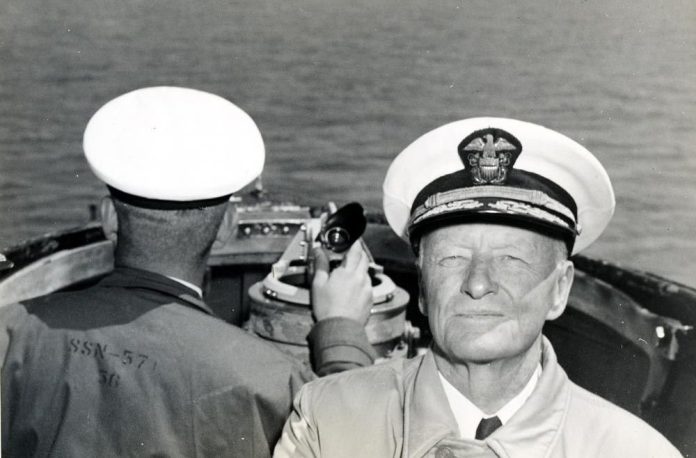
Trent Hone presents a study showing how Admiral Chester W. Nimitz initially organized and then modified his staff organization to meet a changing military environment.

Following these general ideas, Trent Hone presents a study showing how Admiral Chester W. Nimitz initially organized and then modified his staff organization to meet a changing military environment. To aid those unfamiliar with the course of events, Hone includes lists of operational code names, abbreviations, maps, figures, and tables as well as an extensive bibliography to enlighten readers. The tables, in particular, show how Nimitz and his staff were able to adjust their plans to reflect changed circumstances. He uses the way General MacArthur organized his theater-level staff to examine the efficacy of these two models (Army and Navy) through the lens of organizational behavior theory. Further, he shows how Nimitz created opportunities for offensive action by asking his staff to consider various strategic options as situations in the theater of war evolved. 

Many narrative histories of the Pacific War present events as occurring in a set pattern with little chance for variation, eliminating much human agency. The area of conflict was vast and consisted of oceans dotted with islands which were home to various ethnic groups. The United States divided this theater of war into several sub-theaters: the North Pacific, the Central Pacific, the South Pacific, and the Southwest Pacific. The latter was divided between two commanders-in-chief—Admiral Chester Nimitz, Commander in Chief Pacific Fleet (CINCPAC) and Commander in Chief Pacific Ocean Area (CINCPOA) and General Douglas MacArthur, Commander in Chief Southwest Pacific.

The most important lessons drawn from any war are usually found in the events preceding hostilities and at its beginning when there are no abundant resources. In the first campaigns nations fight for survival with inadequate resources, and often with unsuitable commanders—handicaps of fighting on terms dictated by the enemy. As a war continues and a nation fully mobilizes its resources, it can choose options and, as final victory appears certain, debate how to secure it quickly and cheaply. Admiral Nimitz and his staff experienced all these phases.

Important decisions are made before the first shots are fired, when the nature of the war to be fought is determined. When fighting in a coalition engaged in a global war, conferences decided strategy based on plans and statistics concerning matériel, shipping, and personnel. The main subjects of a conference were high level strategy and policy, encompassing war aims, choosing allies and operational theaters, as well as creating organizations to distribute men and matériel. Hone’s book deals with the ways theater-level activities are decided and the way these commanders use their staffs. They discussed, among other topics, theater-level strategy and personnel matters. These meetings allowed them to work through their disagreements. While Nimitz did not participate in inter-allied conferences and decision making, he met regularly with Admiral Ernest J. King, who did participate in these meetings as a member of the American Joint Chiefs of Staff and the Anglo-American Combined Chiefs of Staff.

In terms of structure, Hone divides his work of ten chapters into three parts. The first three chapters concern the initial phase of the Pacific War, from December 1941 through June 1942. Hone describes this as a period of disequilibrium, of material disadvantage and defense. The next three chapters cover a phase of equilibrium, from July 1942 through October 1943, as the United States transformed its economic power into military power. The final four chapters cover a period of advantage from November 1943 through August 1945, when American forces took the offensive in the Central and South Pacific bringing their overwhelming matériel superiority to bear against Japan.

Hone begins with Nimitz assuming command of the Pacific Fleet on Christmas Day 1941, finding it stunned by the Japanese attack and doubting its own expertise. At that time, the Japanese Navy that carried out the Pearl Harbor raid was the only force capable of assembling and operating a fleet of six aircraft carriers. Nimitz had three initial tasks: (1) assemble a staff, (2) restore the staff’s and the fleet’s self-confidence following the sneak attack, and (3) deal with serial crises in the first months of the war. He earned the confidence of his superiors and subordinates by not replacing the staff and having the fleet demonstrate it could strike the Japanese in battle through a series of raids and to defeat them at the Battles of the Coral Sea and Midway. He listened to his advisors but over-ruled their defensive preferences, opting for taking the offensive. Throughout this initial period, Nimitz emphasized that plans and operations would be governed by the principle of calculated risk. We see this principle in operation in planning the initial carrier raids (betting the Japanese were more interested in Malaya, the Philippines and the Netherlands East Indies), and in the instructions given to the admirals in tactical command at Coral Sea and Midway. At the same time, he was able to replace certain commanders by placing them in jobs more suited to their talents.

The second phase, a period of equilibrium, deals with Nimitz’s role in the campaigns in the Southwest Pacific. His meetings with Admiral King and General MacArthur’s surrogates governed an American opportunistic strategy, a reaction to Japanese moves in the Solomons and New Guinea. Nimitz’s two main tasks were to find commanders who could cooperate fully with General MacArthur’s staff, exercise initiative on their own behalf, and prepare the Navy for the battle of attrition that was the Guadalcanal campaign.

During this period, he also changed the staff structure and, despite Army objections, retained both fleet and area command. The victory at Guadalcanal allowed the US to seize the initiative in the Pacific War. While Admiral Halsey and Admiral Kincaid undertook opportunistic offensives (in the Southwest Pacific to support MacArthur and in the North Pacific to seize Attu and Kiska, respectively), Nimitz’s staff prepared to use the fleet to take the offensive in the Central Pacific. Through 1943, Nimitz, his staff, and their subordinates improved tactics, doctrine, and force structure by incorporating lessons learned since December 1941. Logistics, an on-going issue, was solved by fully integrating the Army into Nimitz’s joint staff planning and operations sections, which resulted in increased attention to a logistical organization and planning capability that could concentrate power at the right time and the right place. This happened only when Nimitz abandoned prewar assumptions concerning ways to organize a Pacific campaign.

The third phase began with the amphibious assault on Tarawa Atoll in the Gilbert Islands and ended with Japan’s formal surrender in September 1945. At the beginning of this phase the Allies could choose options and engage in a debate on ways to achieve final victory at the cheapest cost in the shortest time. After Tarawa, Nimitz again decided to strike directly at Kwajalein against the staff’s advice; taking a calculated risk that the Japanese were too weak after the actions in the Southwest Pacific to mount a coordinated defense of the Marshall Islands. The successful invasion of Kwajalein and Eniwetok threw the Japanese off balance and advanced the projected timetable for invading the Marianas by six months. All through 1944, the campaigns in the Central and the South Pacific worked in tandem, each reinforcing the other. 

Virginia county seeks up to $21 million from government for taking land to expand Arlington cemetery – Daily Press

0

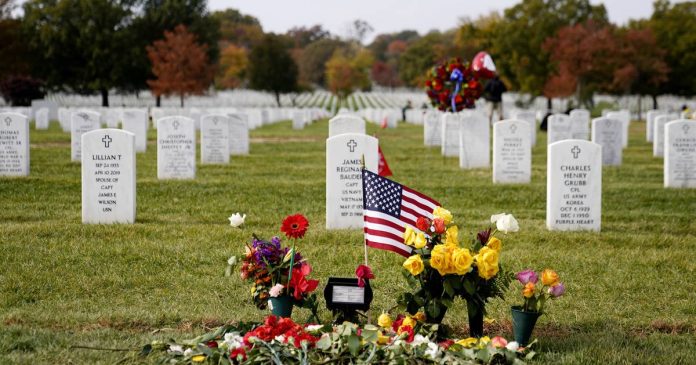
ALEXANDRIA, Va. — A trial underway in federal court will decide whether the U.S. government must pay up to $21 million to compensate a Virginia county for a parcel of land taken to expand Arlington National Cemetery.

The cemetery expansion project is expected to add 50,000 to 60,000 burial spaces and extend its ability to accommodate new burials by 19 years — until 2060, under the current eligibility requirements. Work on the expansion has already begun and will not be halted no matter what the judge decides at the trial’s conclusion.

At issue is how much money, if any, the federal government must pay to Arlington County for the nine acres of land it took from the county to accommodate the expansion.

The federal government says it’s fulfilling its duties by replacing and improving the road network on the cemetery’s southern border, including significant improvements to a highway, Columbia Pike, that serves as a primary commuter route.

The county, on the other hand, contends that it also should be compensated for a 4-acre parcel that could be developed into housing if it were rezoned. The county says the plot of land is particularly valuable in a region that is starved of adequate housing and is within walking distance to the Pentagon and the new Amazon headquarters being built in the county.

The condemnation that facilitated the cemetery expansion has been the subject of discussions and negotiations for more than 20 years. Despite urging from U.S. District Judge Leonie Brinkema that the two sides settle their dispute, no agreement was reached, and a bench trial began Monday that is expected to last the better part of the week.

The early negotiations contemplated a land swap in which the county would receive a developable plot of land from the federal government in exchange for what it was ceding on the cemetery’s border.

But the negotiations went nowhere and in 2017, the Army opted to condemn the property without a negotiated agreement. Since then, the county has been focused on ensuring it receives what it believes is a fair price for the land that was taken.

The federal government says improvements to the roadway adequately compensate the county. The improvements to Columbia Pike make it significantly wider and straighter, adding sidewalks and bike paths. The bike paths, as an example, widen the road’s footprint and necessarily take away space that could have been used for burials, former cemetery superintendent Katharine Kelley testified Monday.

But the Army agreed to the wider configuration, in part to help the county placate “a very vocal and somewhat powerful bike constituency” that demanded the path’s inclusion, Kelley said.

Breaking News

As it happens

Get updates on the coronavirus pandemic and other news as it happens with our free breaking news email alerts.

The Justice Department also argued that the federal government deeded the land to the county in the 1950s and 1960s under the condition that it be used only for roads, so a multimillion-dollar housing development would be impermissible.

“The county is looking for a windfall from the federal government using the very road the federal government conveyed to the county for free,” Justice Department attorney Emma Hollowell said during opening statements.

The county says nothing in the deeds restricts it from developing the land and that it has longstanding policy commitments to address a housing shortage that the land in question could help ameliorate.

“A vacant multi-acre land parcel is a rare asset within a County comprising only 26 total square miles,” lawyers for the county wrote in their trial brief. An appraisal conducted for the county in 2020 concluded that the land would be worth $21 million if it were developed into about 50 townhouses.

In 2021, Brinkema ruled in favor of the federal government. But the county appealed, and the 4th U.S. Circuit Court of Appeals in Richmond vacated her ruling and sent the case back for trial.

The cemetery — which dates back to the Civil War and is the final resting place for more than 400,000 service members, veterans and their families — estimates that the expansion will be completed in 2027.

The cemetery’s life could be extended further under changes proposed in 2019 that would significantly restrict the eligibility for burial there. That proposal is still making its way through the rulemaking process.

puppy raisers – Daily Press

0

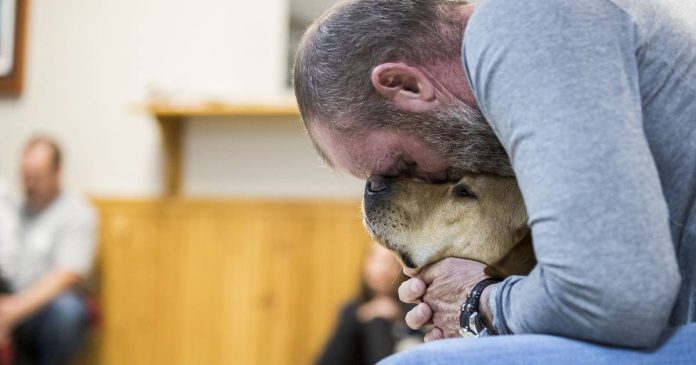
Doug Monda’s hands trembled as he helped place a red, white and blue service dog vest on Ash, a yellow labrador. When Monda was done, Ash attentively sat at his feet, leaning ever-so-slightly against his knees.

“When I first saw Ash with him, I just knew — Ash was never meant to be mine. She was destined to be his,” said Donna Kust, a Mutts with a Mission volunteer, as she clenched a tissue. Tears formed in Kust’s eyes as she prepared to say goodbye to the dog she spent the past two years raising.

Mutts with a Mission, Hampton Roads’ only accredited service dog provider, celebrated the certification of five new canines Friday at VFW Post 392 in Virginia Beach, ending with each service dog going home with the veteran, first responder or agency the dog was matched with.

The five who graduated represent a fraction of the regional need for assistance dogs. But just as great is the need for volunteers to raise the canines while they undergo two years of extensive training.

Approximately 50 veterans and first responders apply for a Mutts with a Mission service dog each year. Just 15 are accepted annually, creating about a two-year wait. The nonprofit’s inability to accept more applications has a lot to do with a shortage of puppy raisers.

“Puppy raisers are our greatest asset and also our most hard to obtain asset. The number of dogs we have available depends on the number of puppy raisers we have,” said Brooke Corson, director of the nonprofit.

Beginning at around 6 to 8 weeks of age, the puppies are exposed, socialized, and trained so they are capable of completing tasks to mitigate veteran and first responder disabilities. During this process, the dogs live with “puppy raisers” — volunteers who care for the dogs, bring them to class, do homework with them, and take them out in public.

Mutts with a Mission currently has 28 dogs in all different stages of training. Because the organization does not have enough puppy raisers, multiple dogs are sometimes placed in one home.

Kust is one of around 20 volunteers, taking in an 8-week-old Ash and helping her grow into the 2-year-old intelligent, attentive mobility dog she now is.

“To see her come full circle is amazing. But I am heartbroken at the same time,” Kust said.

Ash has been Kust’s shadow for nearly two years. The graduation means Ash is ready to go home with her new owner. A former Department of Defense contractor and a retired police officer, Monda suffers from post-traumatic stress disorder and Parkinson’s disease. He lives in Cocoa Beach, Florida.

“I can tell it is time because there is no more I can do for her, no more I can teach her. I can tell Ash is ready to serve,” Kust said.

Ash is the 15th service dog Kust has raised over the past 22 years, and she won’t be the last. The same night Kust handed Ash over, she took in Bronco, a 15-week-old black labrador. The young puppy, still growing into his blue “in training” vest, is already laser focused on Kust.

For the next two years, Kust will guide Bronco through his training, helping him hone various skills, including how to turn lights off and on, open and close doors, retrieve a bottle of water, get help, and alert when it is time to take medication.

People often ask Kust how she could be a puppy raiser, spending two years raising a dog in her home only to give it away.

“It’s not easy. And you can draw a line in the sand, but all it takes is one wave or an ocean breeze and that line is gone. It could be a twinkle in your puppy’s eye or a head tilt — not to mention all the puppy breath,” Kust said.

Toting a full box of tissues, she joked that any puppy raiser watching their dog graduate should “forget about the small travel pack of tissues” — “just bring the whole box, because trust me, you will need it.”

But it is the moment you see your dog serving their person, she said, that makes the tears of giving up the dog worth it.

Daywatch

Weekdays

Start your morning with today’s local news

“This is a puppy with a purpose, and when you see them with their person, you know they were never yours. I know Ash’s person needs her much more than I ever will,” Kust said.

The graduation ceremony culminated with each canine receiving a new vest, signifying they are certified service dogs. Two dogs will serve as facility dogs — one as an emotional support animal for Project Horizon and the other as a security dog for the Metropolitan Washington Airports Authority in Dulles. The three other dogs, including Ash, will be service dogs to their matched veteran or first responder.

Monda helped Ash put on her new vest. While Ash and Monda have only spent two weeks bonding, Ash is already attuned to Monda’s needs, walking in stride with him and leaning against his legs when seated. Kust cried as she took a video of the pair.

“It never gets an easier. But seeing her with him — that is is why I do it … Now my puppy is graduating and she will be providing the service of independence, freedom and comfort wherever she goes,” Kust said.

For more information or to apply to be a Mutts with a Mission puppy raiser, visit https://www.muttswithamission.org/puppy-raising.

Caitlyn Burchett, [email protected]

Federal legislators eye cap to attorney fees in Camp Lejeune lawsuits – Daily Press

0

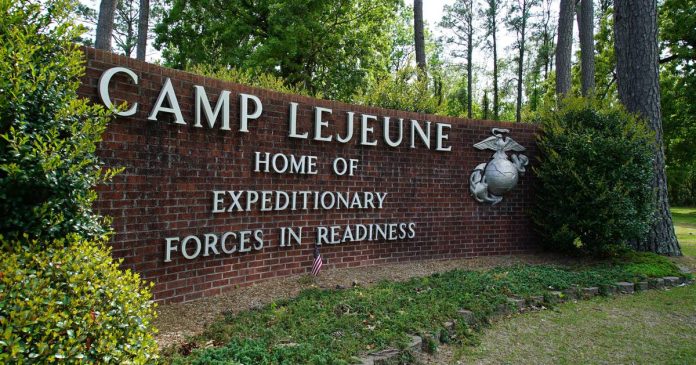
A variety of bills in the House of Representatives and the Senate propose capping the attorney fees in veteran disability settlements in Camp Lejeune contaminated water cases.

Republicans have introduced the Protect Camp Lejeune VETS bill in the House and the Senate, and Democrats have proposed the Protect Access to Justice for Veterans bill in the House.

Both would amend the Camp Lejeune Justice Act, a part of last year’s Promise to Address Comprehensive Toxics (PACT) Act, which covered veterans with 23 conditions linked to exposure to hazardous materials, such as burn pits and airborne toxins. The legislation led to $111 million in ad buys from law firms connected to Camp Lejeune related litigation last year, according to a March 10 report in Reuters citing research firm X-Ante.

However, the bills have differing cap limits: The bill introduced by Democrats would have a higher cap than Republican legislation.

For administrative claims, the Republican legislation would cap attorney fees at 12%, while the Democrats’ bill would cap attorney fees at 20% for awards, compromise or settlements reached within 180 days of presenting the claim.

For judgments and settlements after the suit is filed, the Republican proposal would cap attorney fees at 17%, while the Democrats’ bill would cap attorney fees at 33.3%.

The Republican Senate bill and the Democratic House bill have found new cosponsors about every other week since they’ve been introduced.

Rep. Bobby Scott, D-Newport News, said in an email he doesn’t support the Protect Camp Lejeune VETS Act because it may affect veterans’ abilities to get effective representation.

“Many of these claims involve complex legal issues, and the time frame for filing lawsuits is limited,” said Scott, who is a lawyer. “In cases like this, attorney’s fees are often limited by a requirement that fees be authorized by the court or be awarded in addition to the underlying case.”

Scott said his office has heard from a “small number of constituents” about the issue and welcomed more to reach and to share their thoughts.

Daywatch

Weekdays

Start your morning with today’s local news

“We need to make sure reasonable fees for these cases can be charged and provided through court-approved attorney’s fees, so that veterans may be able to hire a lawyer,” he said.

Rep. Jen Kiggans, R-Virginia Beach, said there is bipartisan support for capping attorney fees and is looking forward to figuring out “fair and sensible” solutions.

“Ensuring that our former service members receive their benefits is very important; however, receiving these benefits should not be accompanied by overpriced attorney fees,” Kiggans said.

Virginia Sen. Mark Warner said in an email the discussion around legal fees are important to veterans’ access to assistance.

“In certain instances, where veterans need legal assistance, it’s critical that they have the ability to attract and receive first-rate representation from attorneys who have veterans’ best interest at heart,” Warner said. “Proposals to cap legal fees are an important part of the conversation for ensuring veterans can access this assistance. Ensuring that they aren’t being targeted by unscrupulous attorneys or scammers is also critical.”

A statement provided by the office of Sen. Tim Kaine said he “condemns any effort to take advantage of veterans” and that Virginia veterans with questions about benefits should reach out to his office.

Ian Munro, 757-447-4097, [email protected]

Virginia Beach towing firm accused of illegally selling service members’ vehicles settles federal lawsuit – Daily Press

0

A Virginia Beach towing firm accused of illegally auctioning seven service members’ vehicles agreed to shell out $90,000 to settle a federal lawsuit.

The agreement comes after a year-long legal battle in U.S. District Court against Steve’s Towing Inc.

Federal prosecutors accused the company of violating the Servicemembers Civil Relief Act by illegally seizing and selling vehicles belonging to seven service members, including a member of SEAL Team 2 who was deployed overseas. According to the act, towing companies need a court order before auctioning off service members’ vehicles and are barred from enforcing a storage lien while service members are deployed — plus 90 days after their return.

Under the proposed consent order, which must still be approved by the court, Steve’s Towing Inc. will pay $67,500 to the affected service members. The firm will also pay up to $12,500 to compensate additional servicemembers whose vehicles it may have sold without obtaining court orders.

Another $10,000 civil penalty will go toward providing training to its employees on the Servicemembers Civil Relief Act and developing new policies and procedures consistent with the act.

“This resolution will compensate all of the servicemembers whose vehicles were illegally taken from them while they were serving their country,” said Kristen Clarke, assistant attorney general of the Justice Department’s Civil Rights Division.

The investigation into Steve’s Towing began when a SEAL Team 2 Petty Officer 1st Class returned from an overseas deployment only to find his vehicles, parked across from team headquarters at Joint Expeditionary Base Little Creek, were gone.

Breaking News

As it happens

Get updates on the coronavirus pandemic and other news as it happens with our free breaking news email alerts.

The 1992 Toyota Land Cruiser and 1987 Toyota 4Runner had been towed from the military base by Steve’s Towing and sold without a court order despite one of the vehicles containing “evidence of the Navy SEAL’s military service” — including a duffel bag of military uniforms and a Naval Special Warfare Development Group Sniper challenge coin.

The vehicles also had Arizona license plates. While Steve’s Towing asked the Virginia Department of Motor Vehicles for vehicle records, it did not check with Arizona.

Thirty-six days after towing the vehicles, on Feb.7, 2020, Steve’s Towing filed liens to cover storage charges of $970 each for the vehicles, the lawsuit said.

That same day, Steven E. Gilliam, the company’s president, reported to the Virginia DMV that the company enforced its two $970 storage liens on the Land Cruiser and 4Runner by purchasing both from itself for $500 each, the lawsuit said.

The company never obtained a court order allowing it to dispose of the vehicles, the lawsuit said.

“Servicemembers often rely heavily on their personal vehicles to commute to work and care for their families. A servicemember’s loss of a vehicle, therefore, can affect the military’s readiness,” said Jessica D. Aber, U.S. Attorney for the Eastern District of Virginia.

Caitlyn Burchett, [email protected]