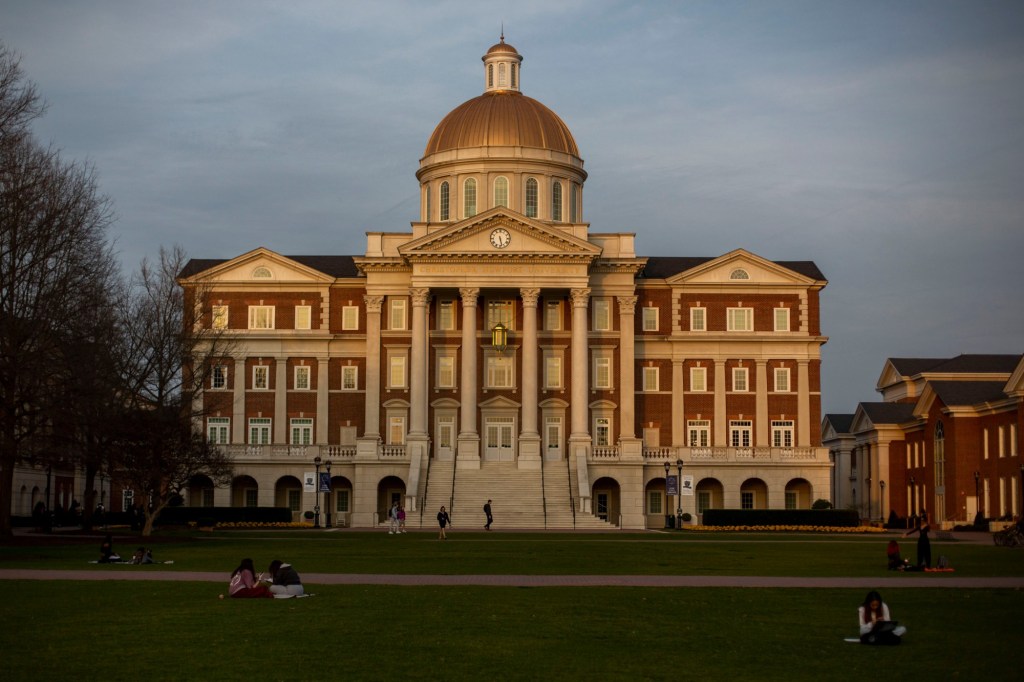
College campuses should be bastions of intellectual and academic freedom, places where students and faculty develop theories, test new ideas and engage in rigorous debate that challenges young minds and furthers our understanding of the wider world.
That ideal is increasingly under assault by a variety of forces. Preserving it necessitates greater tolerance on campus and a willingness to confront, rather than suppress, controversial ideas. And it will require public officials to defend academic freedom rather than eroding it to achieve a partisan outcome.
While Labor Day traditionally marks the end of summer, the bustle of activity in college communities across Virginia this weekend tells another story. Students have returned to campus for the start of classes and all that awaits them during this fall semester.
At schools across the commonwealth this weekend, students were hauling belongings into dorms and setting up their rooms, meeting new people and catching up with old friends, and preparing for the first day of classes this week. It is an undeniably exciting time for these young adults as they pursue their education goals and forge friendships that will last a lifetime.
But college campuses have increasingly become battlegrounds in the culture wars. Students are increasingly hostile toward controversial viewpoints, and public officials are more willing to seek reforms with explicitly partisan goals.
Colleges should be safe, but they aren’t intended to be comfortable. They are meant to be challenging and innovative, ground-breaking and illuminating. That can only happen through the free exchange and robust debate for which campuses are ideally and uniquely suited.
That doesn’t mean handing a microphone to extremists to spew hate for the sake of making a scene. But it does require greater tolerance for those with whom we disagree and a willingness to at least listen to controversial or challenging ideas.
After all, colleges should be places where concepts rise and fall based on their merits and value. There may be no point in trying to persuade a zealot, but there are plenty of people — especially on campuses — that are receptive to a superior argument when one is made.
Just as we need greater tolerance from students and administrators on campus, Virginia also needs its lawmakers to eschew the troubling path pursued by other state legislatures of recklessly intruding on academic freedom.
Consider Florida, for instance, where Republican Gov. Ron DeSantis and the state legislature have prohibited teaching certain subjects, packed university boards with partisans and limited the protections once assured by tenure status.
Neighboring North Carolina has charted a similar path. Lawmakers this year proposed, but did not pass, a measure that would have ended tenure across the University of North Carolina system, considered one of the best in the nation. Lawmakers and their political appointees believe the member schools are too liberal.
In June, two of Gov. Glenn Youngkin’s appointees to the University of Virginia Board of Visitors — Douglas Wetmore and Bert Ellis — “questioned why the university’s Diversity Dashboard does not include an assessment of student or faculty ideologies,” according to Inside Higher Ed. Tracking the political persuasion of individual faculty or students would have a deeply chilling effect on academic freedom (in addition to likely being illegal).
Thankfully, Virginia lawmakers have avoided delving into things such as ending tenure or other areas that could harm academic research or programming. But it’s possible, if not probable, that some measures passed in North Carolina, Florida, Texas and elsewhere could well be up for debate soon in the commonwealth as well.
After all, it was a little more than a decade ago that then-Attorney General Ken Cuccinelli spent two years and half a million in public funds in an ultimately failed quest to subpoena a UVa. professor’s research, data and notes on climate change.
Virginia’s colleges and universities are educators of our commonwealth’s future leaders, developers of cutting-edge research and incubators for new ideas. They will continue to be, so long as our commitment to protecting academic freedom is unwavering.