Home Blog Page 97

Former treasurer seeks a seat on King William Board of Supervisors – Daily Press

0

KING WILLIAM — Former King William County treasurer Mary Sue Bancroft, who resigned from the office last year, is seeking a seat on the Board of Supervisors.

The county published a list of candidates who qualified for the ballot on Nov. 7. It includes three incumbents on the Board of Supervisors. A fourth incumbent, Stephen Greenwood, failed to get enough verified signatures to qualify but is running as a write-in candidate.

Bancroft, a frequent critic of the board, is challenging Fifth District incumbent Edwin Moren.

Bancroft has been critical of the board and the county’s financial management after the supervisors and school board expressed concerns over the performance of the treasurer’s office in a letter to a judge. Bancroft resigned as county treasurer last September. The supervisors and school board members sent a letter to a judge expressing “no confidence” in the Office of the Treasurer including Bancroft, who had already resigned, and her deputy, Abbi Carlton. The judge rejected the letter’s recommendation that Julie Mills, the county’s Deputy Director of Finance, take over the role of treasurer and appointed Carlton as interim treasurer.

Carlton won a special election against Mills in March. She is running unopposed for the post in November.

In the First District covering West Point, board Chairman Bill Hodges faces a challenge from Brenton Bohannan.

Travis Moskalski is not seeking his Second District seat. Benjamin Edwards III and Douglas Riley have qualified for the Nov. 7 ballot.

Incumbent Stewart Garber faces a contest with Lindsay May Robinson in the Fourth District.

No candidates qualified for the election in the Third District. Registrar Alison Fox said Greenwood failed to qualify and a write-in election will take place.

Greenwood, who has been on the board for 12 years, said he will not appear on the ballot because some signatures on his petition, which is required of all candidates, were ruled ineligible. He said 145 people signed his petition but he ended up being eight valid signatures short of the 125 required.

“I had 145 people. Some people don’t tell the truth and some were not in the district,” he said. “I’m going to be a write-in.”

Four candidates are on the ballot to replace long-serving Sheriff Jeff Walton, who has announced his retirement. They are Don Lumpkin Jr., Robbie Nester Jr., Scott Hamilton and Benjamin Smith. Karena Funkhouser is running unopposed as Commissioner of the Revenue.

Two incumbents, Veda Frazier and Lindsay Catlett are running for the School Board. Eric Farmer, Scott Wassenberg, Jessica McLane and Patricia Adams have also qualified for the election. McLane and Atkins will face off in the Fifth District.

David Macaulay, [email protected]


Snowy egret spotted in Cape Charles, osprey parents feed chicks in Virginia Beach – Daily Press

0

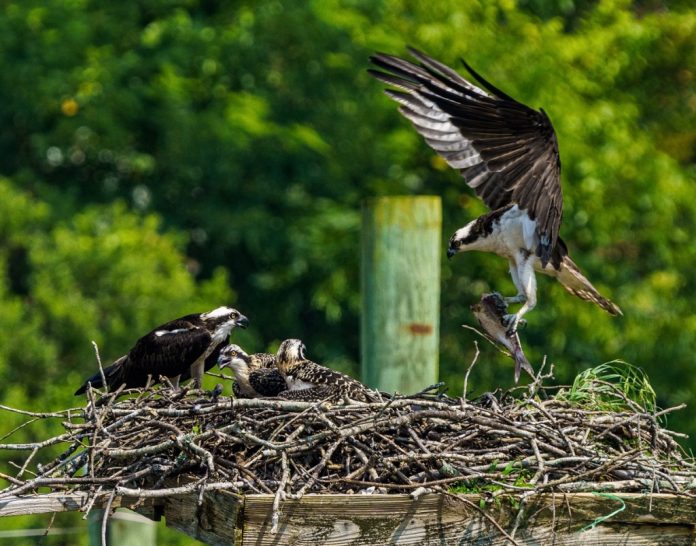
Woody Stephens photographed an osprey nest with the parents feeding the chicks on Thurston Branch in Virginia Beach. “There are two nestlings that are getting bigger every day,” wrote Stephens.

A snowy egret runs through the water chasing its prey at Cape Charles on the Eastern Shore. Courtesy of Connie Owen

Connie Owen sent photos of snowy egrets hunting for food at Cape Charles on the Eastern Shore. Snowy egrets don’t always just stand in one place and wait for food to come by. They are sometimes seen running back and forth with their wings spread chasing their prey as though doing a dance.

Robert Parker photographed a great egret crossing the road in the Churchland neighborhood in Portsmouth.

A juvenile yellow-crowned night heron takes flight from the marsh at Pleasure House Point in Virginia Beach. Courtesy of Steve Daniel

Steve Daniel photographed a juvenile yellow-crowned night heron as it was taking flight from the marsh at Pleasure House Point in Virginia Beach.

Neil Rose sent a photo of a yellow-crowned night heron perched on the rocks as the sun was setting at Nauticus in Norfolk.

A black-crowned night heron looks out from his perch on a tree limb on the Upper North Landing River in Virginia Beach. Courtesy of Mike Weirich

Mike Weirich got a photo of a black-crowned night heron on the Upper North Landing River in Virginia Beach. Even though black-crowned night herons are year-round residents, they are rarely seen as they often perch on tree limbs concealed among the branches.

A family of Canada geese go for a swim at Rudee Inlet in Virginia Beach. Courtesy of Michael Schimmel

Michael Schimmel sent a family of Canada geese swimming at Rudee Inlet in Virginia Beach.

A female boat-tailed grackle searches for food in Sandbridge in Virginia Beach. Courtesy of Kristin West

Kristin West sent photos of a female boat-tailed grackle searching for food in the marsh in Sandbridge in Virginia Beach.

A barred owl makes an appearance at the Alligator River National Wildlife Refuge in North Carolina. Courtesy of Rich Thiesfeld

Rich Thiesfeld got a quick glimpse of a handsome barred owl at the Alligator River National Wildlife Refuge in North Carolina.

A juvenile hummingbird dries off after a dip in the fountain in the Castleton neighborhood in Virginia Beach. Courtesy of Nylia Laney

Nylia Laney sent photos of baby hummingbirds that had just taken a dip in the fountain in the Castleton neighborhood of Virginia Beach.

Leslie Garrett spotted a spicebush swallowtail in her Stokes Aster. “Both the Swallowtail and the flowers are so beautiful and I love the pollination,” Garrett wrote.

Joseph Robbins sent a beautiful photo of a bumblebee foraging for nectar and/or pollen on a dahlia plant in the Rose Hall District in Virginia Beach.

Terry Zawacki photographed a cicada in the Glenwood neighborhood of Virginia Beach. The cicada had just molted and had a fresh, shiny green exoskeleton with its shed exoskeleton just beneath it.

Debbie McNulty sent a photo of a broad-headed skink that she saved from her dog for a total of about six so far. “He is still hunting in the background,” wrote McNulty.

While kayaking in a river swamp near Elizabeth City in North Carolina, Gary Williamson came upon a fawn. The fawn “was completely surrounded by water but found a dry spot nestled between three tupelo trees,” wrote Williamson.

Jim Meehan got an interesting photo of a pair of painted turtles at Mirror Lake in the Norfolk Botanical Garden. The position of one turtle above the other with its leg behind the head of the second turtle gives the illusion of a deformed turtle with its eye and mouth upside down.

Richard Olivieri got a photo of a yellow-bellied slider turtle depositing eggs in his backyard in the Linkhorn area of Virginia Beach.

Cindy Morrison photographed a green anole lizard on the arm of her lawn furniture in her backyard in the Ridgely Manor neighborhood in Virginia Beach. “Green anoles are plentiful in my backyard,” wrote Morrison.

Laura Jordan sent a photo of her cat having a showdown with a black racer snake through a glass door in Broad Bay Point Greens in Virginia Beach. Both animals were saved by the glass door.

Johnny Richards was sight fishing for cobia in the Chesapeake Bay in Virginia Beach when he spotted a loggerhead sea turtle with a horseshoe crab in its mouth.

Vickie Shufer, [email protected]

Danielle Steel, the bonds of combat, and a busy art thief – Daily Press

0

Hardcover rankings reflect sales for the week ended July 1, which were reported on a confidential basis by vendors offering a wide range of general interest titles. Every week, thousands of diverse selling locations report their actual sales on hundreds of thousands of individual titles. The panel of reporting retailers is comprehensive and reflects sales in stores of all sizes and demographics across the United States.

An asterisk (*) indicates that a book’s sales were barely distinguishable from those of the book above. A (b) indicates that some bookstores reported receiving bulk orders.

___

FICTION

1. THE FIVE-STAR WEEKEND, by Elin Hilderbrand. (Little, Brown) After a tragedy, a popular food blogger brings friends from distinct times in her life to spend a weekend in Nantucket.

LAST WEEK: 1

WEEKS ON LIST: 3

2. HAPPY PLACE, by Emily Henry. (Berkley) A former couple pretend to be together for the sake of their friends during their annual getaway in Maine.

LAST WEEK: 2

WEEKS ON LIST: 10

3. FOURTH WING, by Rebecca Yarros. (Red Tower) Violet Sorrengail is urged by the commanding general, who also is her mother, to become a candidate for the elite dragon riders.

LAST WEEK: 8

WEEKS ON LIST: 8

4. LESSONS IN CHEMISTRY, by Bonnie Garmus. (Doubleday) A scientist and single mother living in California in the 1960s becomes a star on a TV cooking show.

LAST WEEK: 3

WEEKS ON LIST: 60

5. THE COVENANT OF WATER, by Abraham Verghese. (Grove) Three generations of a family living on south India’s Malabar Coast suffer the loss of a family member by drowning.

LAST WEEK: 5

WEEKS ON LIST: 9

6. PALAZZO, by Danielle Steel. (Delacorte) Challenges arise when a young woman takes over her family’s haute couture Italian leather brand and 400-year-old palazzo in Venice.

LAST WEEK: —

WEEKS ON LIST: 1

7. DEMON COPPERHEAD, by Barbara Kingsolver. (Harper) Winner of a 2023 Pulitzer Prize for fiction. A re-imagining of Charles Dickens’ “David Copperfield” set in the mountains of southern Appalachia.

LAST WEEK: 7

WEEKS ON LIST: 35

8. ZERO DAYS, by Ruth Ware. (Gallery/Scout) A security system tester must elude the police to find the person who killed her partner in marriage and in crime.

LAST WEEK: 4

WEEKS ON LIST: 2

9. THE ONLY ONE LEFT, by Riley Sager. (Dutton) In 1983, a mute woman in a wheelchair types out her side of the story about a family massacre to her home-health aide.

LAST WEEK: 6

WEEKS ON LIST: 2

10. HELLO BEAUTIFUL, by Ann Napolitano. (Dial) In this homage to Louisa May Alcott’s “Little Women,” a young man’s dark past resurfaces as he gets to know the family of his college sweetheart.

LAST WEEK: 10

WEEKS ON LIST: 16

11. CROSS DOWN, by James Patterson and Brendan DuBois. (Little, Brown) John Sampson seeks justice after Alex Cross gets injured.

LAST WEEK: 9

WEEKS ON LIST: 4

12. TOMORROW, AND TOMORROW, AND TOMORROW, by Gabrielle Zevin. (Knopf) Two friends find their partnership challenged in the world of video game design.

LAST WEEK: 11

WEEKS ON LIST: 39

13. LADY TAN’S CIRCLE OF WOMEN, by Lisa See. (Scribner) Tan Yunxian learns the pillars of Chinese medicine from her grandmother but is sent into an arranged marriage and pressured by her mother-in-law.

LAST WEEK: 13

WEEKS ON LIST: 4

14. THE FIRST LADIES, by Marie Benedict and Victoria Christopher Murray. (Berkley) First lady Eleanor Roosevelt and civil rights activist Mary McLeod Bethune work together for justice and equality.

LAST WEEK: —

WEEKS ON LIST: 1

15. IDENTITY, by Nora Roberts. (St. Martin’s) After her roommate is killed by a con artist, a former Army brat builds a new life at her mother’s home in Vermont.

LAST WEEK: 12

WEEKS ON LIST: 6

___

NONFICTION

1. OUTLIVE, by Peter Attia with Bill Gifford. (Harmony) A look at recent scientific research on aging and longevity.

LAST WEEK: 1

WEEKS ON LIST: 14

2. THE WAGER, by David Grann. (Doubleday) The survivors of a shipwrecked British vessel on a secret mission during an imperial war with Spain have different accounts of events.

LAST WEEK: 2

WEEKS ON LIST: 11

3. I’M GLAD MY MOM DIED, by Jennette McCurdy. (Simon & Schuster) The actor and filmmaker describes her eating disorders and difficult relationship with her mother.

LAST WEEK: 4

WEEKS ON LIST: 47

4. UNBROKEN BONDS OF BATTLE, by Johnny Joey Jones. (Broadside) The Fox News military analyst shares stories from working with veterans for over a decade.

LAST WEEK: ––

WEEKS ON LIST: 1

5. THE ART THIEF, by Michael Finkel. (Knopf) The author of “The Stranger in the Woods” tells the story of Stéphane Breitwieser, who stole art more than 200 times for the sake of admiring it.

LAST WEEK: —

WEEKS ON LIST: 1

6. 1964, by Paul McCartney. (Liveright) A collection of photographs taken with a 35mm camera during the rise of the Beatles from the end of 1963 through early 1964.

LAST WEEK: 3

WEEKS ON LIST: 3

7. THE IN-BETWEEN, by Hadley Vlahos. (Ballantine) A hospice nurse shares some of her most impactful experiences and questions some of society’s beliefs around end-of-life care.

LAST WEEK: 7

WEEKS ON LIST: 3

8. ULTRA-PROCESSED PEOPLE, by Chris van Tulleken. (Norton) How ultra-processed foods, which are now part of much of what we consume, negatively impact our health and the environment.

LAST WEEK: —

WEEKS ON LIST: 1

9. PAGEBOY, by Elliot Page. (Flatiron) The Oscar-nominated star details discovering himself as a trans person and navigating abuse in Hollywood.

LAST WEEK: 6

WEEKS ON LIST: 4

10. WHAT AN OWL KNOWS, by Jennifer Ackerman. (Penguin Press) The author of “The Genius of Birds” explores new scientific discoveries about the brains and behavior of owls.

LAST WEEK: 10

WEEKS ON LIST: 3

11. AMERICAN WHITELASH, by Wesley Lowery. (Mariner) The Pulitzer Prize-winning journalist examines a cyclical pattern of violence and backlash against racial progress.

LAST WEEK: —

WEEKS ON LIST: 1

12. WHITE HOUSE BY THE SEA, by Kate Storey. (Scribner) A multigenerational story of the Kennedy family and their Hyannis Port compound on Cape Cod.

LAST WEEK: —

WEEKS ON LIST: 1

13. SPARE, by Prince Harry. (Random House) The Duke of Sussex details his struggles with the royal family, loss of his mother, service in the British army and marriage to Meghan Markle.

LAST WEEK: 8

WEEKS ON LIST: 25

14. THE BOOK OF CHARLIE, by David Von Drehle. (Simon & Schuster) The Washington Post columnist shares stories and wisdom he learned from a neighbor who was more than a century old.

LAST WEEK: 9

WEEKS ON LIST: 6

15. MY FRIEND ANNE FRANK, by Hannah Pick-Goslar with Dina Kraft. (Little, Brown Spark) A memoir by the Holocaust survivor who was first referred to as Lies Goosens in Anne Frank’s diary.

LAST WEEK: —

WEEKS ON LIST: 3

___

The New York Times bestsellers are compiled and archived by the bestseller lists desk of The New York Times news department and are separate from the culture, advertising and business sides of The New York Times Co. More information on rankings and methodology: nytimes.com/books/best-sellers/methodology.

How to make hummus in a blender – Daily Press

0

Whether it’s spread in a falafel wrap, piled on a salad bowl or used for dipping chips or veggies, good hummus is a revelation. When making it at home, it’s sometimes pureed in a food processor, but it’s perfectly possible to make it in a blender. 

If you do it right, you can get even smoother results in a blender than you would in a food processor. Once you’ve perfected your recipe, you’ll never buy it from a grocery store again. 

How to make hummus in a blender

Gather your ingredients

You only need a handful of ingredients: chickpeas, tahini, lemon juice, garlic, olive oil, salt and water. For this recipe, you’ll need them in the following quantities: 

  • 1 1/2 cups of cooked chickpeas
  • 1/2 cup tahini
  • 1/4 cup of lemon juice (from 1-2 lemons)
  • 1 large clove of garlic
  • 1-2 tablespoons of extra-virgin olive oil
  • 1/2 teaspoon of salt
  • 1/4-1/2 cup of water or liquid from your can of chickpeas

Mix garlic and lemon juice

Mince the garlic, and mix it with lemon juice and salt. Leave this to sit for at least 10 minutes or while you carry out the next step. Raw garlic can sometimes taste overly sharp and overpower the flavor, but mixing it with lemon juice in this way mellows it, giving it a more balanced taste.

Skin your chickpeas

Bad news if you were hoping to just stick all your ingredients in a countertop blender and go wild, but for the smoothest hummus, you need to remove the skins from your chickpeas. This is an optional step, but it’s worth it if you aren’t in a hurry. It’s less time-consuming than it sounds. It should take around 10 minutes, which is just the right amount of time to let your garlic mellow out in the lemon juice. 

Start by draining your chickpeas if they come in a jar or can. Reserve this liquid to use later. Tip the chickpeas into a bowl and lightly massage them with your fingertips. You’ll find the skins come off easily. Remove the skins from the bowl as you go. Keep going until you’ve removed all the skins or as many as possible — if there are a few left it won’t affect the texture significantly. 

Mix lemon juice and tahini

Pour your lemon juice, salt and garlic mix into the blender, and blend the ingredients until they form a smooth paste. The tahini will take on a paler color, and the mixture will be thick and creamy, not stiff and grainy. If it’s too stiff, add an extra tablespoon or two of cold water and blend again. 

Blend your hummus

Now add your skinned chickpeas and 1/4 cup of water or liquid reserved from your can of chickpeas. Don’t add the extra-virgin olive oil at this point because it turns bitter when blended and can ruin the flavor. Blend the mixture until it’s smooth. 

You may need to add extra water or chickpea liquid at this time to reach your desired consistency, but increase the quantity of water by a tablespoon at a time. There’s a fine line between smooth and watery hummus. 

Add olive oil

Transfer the hummus to a bowl or container of your choice, and add 1-2 tablespoons of extra-virgin olive oil. Stir thoroughly to combine, but don’t be tempted to blend it into the hummus to avoid bitterness.

Taste and adjust seasonings

Give your hummus a taste and see how you like it. You may find you need to add an extra pinch of salt or an additional tablespoon of lemon juice to brighten it. 

Serve

You can get creative when serving your hummus. Try drizzling it with some extra-virgin olive oil, adding a sprinkle of paprika or za’atar or topping it with a few whole chickpeas or a handful of toasted pine nuts. 

FAQ

What blender do I need to make hummus? 

A. You can use any blender, from cheap hand blenders to top-of-the-line high-powered blenders. However, the more powerful the blender, the easier it is to get a smooth result, especially if you don’t want to peel your chickpeas. 

How long does homemade hummus last? 

A. Kept in a covered container, it can stay fresh for three to four days in the fridge, but you’ll be lucky if it lasts that long given how tasty it is. 

Do you need to cook chickpeas before making hummus? 

A. Unlike falafel, which is best made using soaked but uncooked chickpeas, hummus must be made using cooked chickpeas. You can either buy dry chickpeas and cook them yourself or use jars or cans of cooked chickpeas.

Cooking your own chickpeas will give you the best results, especially if you overcook them until they’re slightly mushy. Otherwise, find high-quality, ready-to-use chickpeas. Those sold in jars are usually larger and more tender than canned varieties, but you can find some decent canned chickpeas.

What you need to buy for making hummus

Vitamix E310 Explorian Blender

With this high-speed blender, you’ll have no trouble making super smooth hummus, even if you can’t be bothered to remove the skins from your chickpeas. 

Where to buy: Sold by Amazon


Goya Foods Chickpeas, 15.5-ounce (Pack of Eight)

These chickpeas come in a pack of eight cans, which are 15.5 ounces each. 

Where to buy: Sold by Amazon


Soom Foods Single-Source Pure Tahini

Poor-quality tahini can ruin hummus. This stuff is silky smooth, and it is made from high-quality Ethiopian sesame seeds. 

Where to buy: Sold by Amazon


Colavita Extra-Virgin Olive Oil

As with tahini, it’s worth splurging on a quality olive oil to give your hummus the best flavor. This olive oil is cold-pressed and has a rich, fruity taste that’s delicious but not overwhelming.

Where to buy: Sold by Amazon


Want to shop the best products at the best prices? Check out Daily Deals from BestReviews.

Sign up here to receive the BestReviews weekly newsletter for useful advice on new products and noteworthy deals.

Lauren Corona writes for BestReviews. BestReviews has helped millions of consumers simplify their purchasing decisions, saving them time and money.

BestReviews spends thousands of hours researching, analyzing and testing products to recommend the best picks for most consumers. BestReviews and its newspaper partners may earn a commission if you purchase a product through one of our links.

Distributed by Tribune Content Agency, LLC.

© 2023 BestReviews. Distributed by Tribune Content Agency, LLC

Former Afghan pilot, grounded in Virginia, strives to bring family to U.S. – Daily Press

0

ROANOKE, Va. (AP) — Gripping a wrench and pulling back with all his might, Tashmorad Qara loosened the heavy cap on a fire hydrant. When the water spouted, he took a sample, closed the hydrant at a Roanoke apartment complex, then he and his partner headed off for the next one.

Qara likes his job as a water quality technician at the Western Virginia Water Authority, but it’s just not the same as his old job: flying missions for the Afghan Air Force against the Taliban. His real name is not being used for fear of reprisals from the Taliban.

Almost 10 years into his career as a military pilot, Qara, 37, became completely grounded after his evacuation from Afghanistan in 2021, when the United States military left the country and the Taliban regained power. Qara lost his career, his family and his ability to fly.

Two years ago, Qara flew the skies of northern Afghanistan in a PC-12 airplane, helping U.S. special operations forces by scouting for Taliban positions in the rugged mountains.

“I’ve done a lot of dangerous missions in Afghanistan to capture the bad guys like Al-Qaeda and Taliban,” Qara said.

“We were always chasing the bad guys.”

Equipped with night vision goggles and infrared cameras, Qara flew hidden by darkness at maximum altitudes of 12,000 to 25,000 feet — “nobody can hear us or see us,” he said.

Now, he is grounded in Roanoke, where his pilot experience does him no good because the Federal Aviation Administration does not recognize his Afghan military credentials and requires multiple steps before he can obtain a pilot license or commercial-flight certificate in the United States.

“I feel sad sometimes because I am still thinking about flying,” Qara said. “It was my dream to fly a plane.”

When he was about 10 years old, Qara watched an Afghan pilot make an emergency landing with a helicopter in his farming village in northern Afghanistan. Qara has wanted to fly ever since. “It was the first time I have seen a big helicopter,” Qara said. “People was all around, it was kind of exciting to see.”

When Qara was in high school a family friend in the Afghan military visited his village. Qara went to ask him about being a pilot and was told he needed to learn English, the language used in aviation around the world.

Qara did not know anyone who could teach him, so he bought a book from a local shop translating phrases in his native language of Dari to English

He earned a degree in language and culture with a focus on aviation from the U.S. backed National Military Academy of Afghanistan in 2012. After graduation, he underwent flight training from the U.S. military in western Afghanistan.

“I loved my job when I was flying and serving my country,” he said. “Flying is my great passion. I wish I could fly again one day, but I don’t have the budget to go to school here” in the United States.

Qara would like to get his commercial pilot license in the U.S., but he said he cannot afford the cost of flight school. His story is common among refugees who come to the United States and find themselves in a place where their skills and talents go unused.

Qara works full-time as a water quality technician for the Western Virginia Water Authority at the Crystal Spring Plant in Roanoke, and on weekends and evenings he delivers food through DoorDash. After paying bills and sending money home to his family who remain in Afghanistan, Qara said he has no money left to pay for schooling to get a flight license in the U.S.

“It’s just like a sad story, leaving my own country. We had everything, I had a good salary. I was with my family with my kids,” Qara said.

Twenty-five percent of working-age Afghans who are newcomers to the United States are professionals with a higher education, according to a report from Upwardly Global, a nonprofit that helps refugees and immigrants restart their careers.

Joshua Garner, strategic communications director with the organization, explains that talent of foreign skilled individuals often goes unrecognized by U.S. employers.

“There are 2 million underemployed immigrants and refugees in the U.S. who are unable to find jobs at their skill level. It’s very common for us (Upwardly Global) to see people who are what we typically say have survival jobs, or jobs to make ends meet, when really they could contribute so much more to our country and our economy,” Garner said.

The professional or educated population of all newcomers to the United States is growing, with 48% coming with higher education experience in 2019 compared to 27% in 1990, according to a 2021 study from the Migration Policy Institute, a Washington, D.C., think tank that supports expanded immigration. However, the country is failing to leverage the skills from those educated immigrants trying to regain the career they left behind. Highly skilled immigrants are slightly less likely to use their professional skills, compared to those educated and born in the United States, according to the institute.

___

Family torn apart

During the chaos of the U.S. withdrawal from Afghanistan, Qara did not realize that when he parted with his family to fly a mission that it would be the last time he saw them.

Qara had started a two-week assignment in northern Afghanistan when a family friend called him from Kabul and informed him the Taliban was taking over the city. Qara reached out to the helicopter squadron commander on duty who confirmed the situation.

“We didn’t know what was going on,” Qara said. “He said, ‘The mission is done.’ I said ‘Why? The Taliban are still all around.’”

The squadron leader told Qara to fly back to Kabul where he would help with an evacuation of military personnel to the neighboring country of Uzbekistan.

“It all happened so fast,”Qara recalled.

He was stationed in the city of Mazar-e-Sharif in northern Afghanistan, about a 10-hour drive or 45-minute flight from Kabul, the country’s capital where Qara’s family lived.

The country was about to fall back into the hands of the Taliban, an extremist Islamist regime that had controlled Afghanistan in the 1990s before the United States invasion in 2001 in response to the 9/11 attacks.

Qara narrowly escaped the Mazar-e-Sharif airport. He did a tactical takeoff that he learned in training to get off the ground in a short distance. He turned off his airplane lights, a dangerous act as it was getting dark, he did not want to be seen. “I made a good decision at that time,” he recalled. He saw a fellow Afghan pilot, who departed with aircraft lights on, get shot down. The pilot ejected himself and landed back in the airport and survived but was badly injured from the landing.

When Qara made it back to Kabul, the Taliban was seizing his city.

“I saw the situation was not good,” he said. The capital of Afghanistan, typically bustling with men and women shopping at bazaars, visiting historic gardens or attending university, was filled with people running in terror, frantic to escape. His commanders told him it was not safe to leave the airport, but the next morning Qara went home to see his family.

“I said, ‘I haven’t seen my family. I want to at least see my family.’”

He made it home to his then-pregnant wife and two young sons, but could not stay long because he was instructed to help evacuate military personnel. Qara’s wife handed him his passport and cash before he left.

“I didn’t think I would leave forever,” he said. “I thought, ‘I will be back.’” That’s the last time he saw his family in person.

Qara said he took flight with 50 helicopters and fixed-wing aircraft to neighboring countries of Afghanistan. During the airlift operation, he carried 12 Afghan military personnel aboard a Pilatus PC-12 single-engine aircraft, designed to hold seven people. Qara said a helicopter squadron commander told him to fly to Uzbekistan where the U.S. had pre-authorized temporary relocation.

“Everyone was rushing,” Qara said. The Afghan pilots were taken by surprise as they approached the border and were forbidden to land in Uzbekistan. Qara circled the Uzbekistan-Afghanistan border for 45 minutes until he ran low on fuel and was forced to make an emergency landing at an airport in Uzbekistan. He would not talk to his family for a month.

Qara said when he landed his phone was taken from him and they were transported in a van with no windows to an Uzbeki military base and forced to stay in a tent encampment.

He said over the next two weeks they were held in tight quarters inside tents in the extreme heat with no showers and given stale and moldy bread to eat. “They treated us like prisoners,” Qara said.

Qara speaks Uzbeki, like many other people in Afghanistan. He chastised the military personnel for their poor treatment.

“I told them we were in a dangerous situation and they are not treating us like a good neighbor,” he said.

An Afghan commander had sneaked in a phone and texted a contact with the U.S., who two weeks later got them out of the camp and into a hotel where they stayed for two more weeks until Qara was able to get his phone back and call his family.

“My wife was shocked I was still alive,” he said. “She told me she went to the airport and try to escape but (realized) ‘I have two young kids, they are going to be killed.’”

Because of the chaos, shooting and bombing at the Kabul airport, his wife decided not to risk trying to escape.

After months of going through security procedures in multiple locations, Qara arrived in Roanoke in December 2021.

It was not safe for him or other U.S. allies to return to Afghanistan due to possible reprisals by the Taliban. Qara came to the United States under humanitarian parole and was sent to Roanoke by immigration officials because he had a contact nearby — a sister of a fellow pilot who lived near Blacksburg — and because the city is home to an office of Commonwealth Catholic Charities, one of the largest resettlement agencies in the state. More than 350 Afghans have resettled in the Roanoke and New River valleys since August 2021, with those numbers increasing.

Meanwhile, his wife and children are still on the run in Afghanistan, frequently changing locations, so the Taliban won’t find them and take revenge for Qara’s service with the Afghan military. He has yet to meet his infant daughter.

Qara desperately wants to get his family to Roanoke.

“Life doesn’t make sense for me with being away from my family,” Qara said.

“When I came here, I thought the government would help me bring my family because I used to work with the U.S. government.”

He is not alone in having family members left behind in Afghanistan and scared for their lives.

In November, the U.S. State Department launched an Afghan family reunification page on its website to help separated families reunite.

Approximately 3.2 million Afghans are displaced inside Afghanistan due to conflict, with two-thirds of the population in need of humanitarian and protection assistance, according to the United Nations Refugee Agency.

The Virginia Department of Social Services reports that 10,782 refugees from Afghanistan have been resettled in Virginia since 2021. Nearly 90,000 Afghans have been welcomed to the United States through Operation Allies Welcome, according to the State Department. Iran and Pakistan host 85% of displaced Afghans.

“My wife blames me everyday saying, ‘This is your fault we are still in Afghanistan,’” Qara said. “I say, ‘this was a tough situation, I didn’t know,’” Qara said.

___

Hope and friends

Bored and tormented with loss, Qara sat in a small studio room at the Mainstay Suites Airport hotel near Valley View in December 2021 after he arrived in Roanoke. CCC provided the temporary accommodation until it could find a permanent residence. Qara knew no one other than another Afghan pilot who fled with him, and who was also relocated to Roanoke. A couple of months later, the two became roommates when CCC found them an apartment in Roanoke.

Qara reached out on a neighborhood social media group and introduced himself. He asked if anyone would help him practice English and show him around his new Roanoke home.

After reading negative responses to his post, with people warning others not to trust him, Qara did not expect anyone to help him.

“I think they see my name, and not trust me,” Qara said.

Somebody replied anyway.

Andreas Panagore had been following the U.S. withdrawal from Afghanistan in the news and said his heart felt for the Afghan people. Panagore, 30, who moved to Roanoke from Maine three years ago and owns a landscaping company called Ecoscape, also said he empathized with Qara’s loneliness in an unfamiliar city.

“I’ve been to new places before without friends and it can be hard,” Panagore said. “I was happy to help.”

Panagore wrote to Qara through a messaging app.

“Hello my friend, you want English lessons?”

They quickly formed a friendship.

“He’s such a personable guy,” Panagore said about Qara. “It’s really difficult to not be friends.”

Qara knew English but wanted to improve his communication skills. He began to inquire about terms and phrases that he did not understand. When watching a movie, he heard a couple say “on the rocks.” So, he asked Panagore what the phrase meant.

“On the rocks = not doing well,” Panagore wrote.

Panagore started sending Qara daily slang definitions.

“Today’s slang term is chillin,” Panagore said using the voice feature. “Chillin is usually used when somebody’s just hanging out. They’re either with friends or they’re alone. They’re not really doing much of anything. They’re chillin.”

Later, in May, the two reminisced while enjoying a traditional Afghani dish of chicken karahi that Qara prepared with tomatoes and hot peppers. The two sat at the table in Qara’s kitchen, holding their phones.

Panagore laughed when replaying his voice message defining “chillin.”

“I used a slang term in the definition,” he said, referring to “hanging out.” Qara probably didn’t know what either meant.

The two discussed a year and a half ago, during a chilly day in January, when Panagore drove Qara and his roommate to see downtown Roanoke. The three of them squeezed in the front of his Ford F-150 pickup. Panagore took his new Afghan friends to Cedars Lebanese Restaurant and to get savings rewards cards from Food Lion.

In a short time, Qara’s social circle grew because of his friendship with Panagore, who introduced him to Chris and Micki Brumfield.

“They was giving me positive energy to move forward and never give up, even though I lost everything. I’ve made really good friends here,” Qara said.

The Brumfield’s were motivated to help Qara and his roommate after hearing their stories.

“The fact that they were our allies, they were helping the U.S. We wanted to help them,” Micki said.

After a couple months staying at the hotel, CCC found the former Afghan pilots a place to live and provided them with beds, blankets and basic household items.

Katie Dillon, marketing manager with CCC, explains that a variety of factors make it time-consuming to find long-term housing for refugees, including low availability of affordable housing and need for government identification.

The nonprofit was in the process of obtaining additional furnishings when the Brumfield’s jumped into action, taking Qara and his roommate shopping for clothes and household items.

“They came to my house and they saw we had nothing,” Qara said. “They brought us TV and couches, a microwave, a new grill. I thought that one day I hope we can help them, too.”

Qara and his roommate took the first job they could get when they applied at Voyant Beauty, a cosmetics factory in northeast Roanoke where many refugees find work.

CCC works with the factory on a regular basis and is thankful for their partnership and readiness to promptly hire refugees. “While the positions may not always match the refugees’ skills they (the beauty factory) are still a way for them to earn an income and establish residency while they find something more suitable,” Dillon wrote in an email.

Qara was working on the assembly line at the factory, which became monotonous after having flown airplanes. He wanted a challenge.

The factory also lacked opportunities to improve his English.

“There was no chance to speak English with anyone,” he said. “The other people there, they do not speak English.”

Chris Brumfield, who works for the Western Virginia Water Authority, told Qara about a job fair for the water authority and gave him a good recommendation. Qara landed the job.

“I am so thankful to get a job at the water authority,” Qara said. “There, at least I can learn something.”

The past year Qara has worked to expand his skills and knowledge at the water authority. He is learning to look for water breaks and leaks to troubleshoot and read meters. Qara is on his way to getting a promotion to the second step of a water quality technician, according to his supervisor, Joel Bostic, water quality assist management strategist.

“We love having him, he’s a very hard worker,” Bostic said.

Panagore and the Brumfields, also helped him navigate his way through the confusing federal departments to try and get his family out of Afghanistan. Each of them emailed Rep. Ben Cline, R-Botetourt, whose office has started to work with the State Department on the reunification process.

“I said, ‘Hey, we need his family over here.’” Panagore said. “His office came back and said, ’OK, we’re gonna try to start working on that.”

As that process started, another major complication erupted. Russia invaded Ukraine and refugees from Ukraine started flooding the U.S. immigration network.

After four months of sending documents to the U.S. government and answering questions for U.S. officials, Qara received an email in early June from the State Department that began:

“Dear ….…,

Your application for family reunification assistance has been received, and you qualify for U.S. government assistance to provide family reunification assistance to your eligible family members outside the United States.”

Charlotte Law, communications director for Cline, confirmed the office is working on Qara’s case but would not discuss ongoing cases.

Qara called his wife to tell her the U.S. government approved her and their children to come to the U.S., but he warned he is still not sure how long it will take for action.

“She was so happy,” Qara said. “She said, ‘I’m counting the seconds to know some good news.’”

Qara’s wife had completed two years of her nursing degree when the Taliban took control of Afghanistan, he said, and banned higher education for women. The family remains in hiding, he said, while she and their children wait to come to the U.S., and as she studies English with a tutor three days a week in hopes of completing her degree when they resettle.

“I tell her to study English,” he said. “If you don’t know English it will be so difficult.”

In Afghanistan, Qara liked to fish, hunt and hike. Now settled in the Blue Ridge Mountains, he has visited places such as Apple Orchard Falls in Botetourt County and Mill Mountain.

While fishing at Smith Mountain Lake in early June, Qara set aside his rod in the boat and used his cellphone to speak to his family on FaceTime. It was night in Afghanistan, but daytime in the U.S. His youngest son cried, frustrated he was unable to be with his dad.

“My son, he was kind of mad and sad because he said, ‘Why are you not bringing us there? We are stuck here, I need a fish but I can’t find fish,’” Qara said. “It make me so sad.”

He asked his brother, who is in Afghanistan, to buy a fish from a market and take it to his family, but the feeling of helplessness remained.

___

Back in the pit

Qara said memories flooded his mind as he sat in the cockpit of a Diamond Star single-engine airplane, a type often used for pilot training. There was silence as he stared at the instruments and controls.

Orin Osmon, a retired U.S. Air Force pilot who was Qara’s flight instructor in Afghanistan, stood outside the airplane.

“How do you feel?” he asked. Qara smiled.

Although Qara cannot fly in the U.S., he enjoyed the experience sitting in the cockpit.

“One of my great memories was when I did my first solo flight,” Qara said.

He had bad memories too. Qara recalls the time when he lost control of the aircraft and recovered the plane after losing between 4,000 and 5,000 feet of altitude.

“I was so lucky I had altitude that night and (was) not close to the mountain,” Qara said.

The two pilots toured airplanes at Star Flight Training, a flight school located at Roanoke-Blacksburg Regional Airport. Osmon, who lives in Washington, D.C., visited Qara in December and organized the visit with Star Flight management. He thought Qara would appreciate sitting in an aircraft again.

Osmon now does contract work for Pacific Islands Forum Fisheries Agency, flying a Beechcraft King Air plane to help the international agency enforce fishing rules in the South Pacific.

Osmon trained Qara during a flight screening program at Shindand Air Base in Afghanistan for about a year in 2012 and then again a few years later in Kabul. He also flew with Qara when he advanced from co-pilot to a pilot in command.

“He would come to class well prepared,” Osmon said. “He had a positive attitude. Very excited. He made it clear to the instructors there that he was glad to have them as instructors. And he had a sense of humor.”

Osmon explains that even though Qara was approved to fly by the U.S. military, the Federal Aviation Administration does not recognize documents that say he trained adequately. The FAA only accepts military pilot training if it is done in the U.S. And flight school can cost anywhere from $10,000 to $15,000.

Osmon said he has kept in contact with about 36 of the Afghan pilots he’s trained who resettled in the United States since the fall of Kabul. Some of the pilots have been able to pursue licensing from the FAA, but most try to save money to send home to family members left behind.

“As far as I can tell, they’re kind of in blue-collar working type jobs,” Osmon said of the Afghan pilots he trained who are now in the U.S. He added: “And even though this (flight) training could very well pay off to a much better job … if you’re trying to send money back home, you feel like it’s a frivolous act, to go pursue flying.”

After a full day of flushing fire hydrants for the water authority, Qara got in his 2004 Toyota Corolla, opened the DoorDash app on his cellphone and clicked “confirm pickup.” Minutes later he delivered McDonald’s carryout to a hungry customer. “Enjoy your food,” he said, giving a thumbs up as he returned quickly to his car to accept another delivery.

I kind of need to do this to survive to support my family, I don’t have another option,” Qara said about his second job.

He took a sip from a silver tumbler filled with coffee and put his car into drive.

“I used to drink tea back at my home, but I am getting used to it (coffee) like Americans,” he said.

Qara said he hopes to buy a house with at least two bedrooms for his family when they come. “This is one of my dream, hopefully I can buy a house someday,” he said.

Filled with American dreams and caffeine, Qara is ready for new opportunities.

New marker honors woman who took on bulldozer to save Jockey’s Ridge in the Outer Banks – Daily Press

0

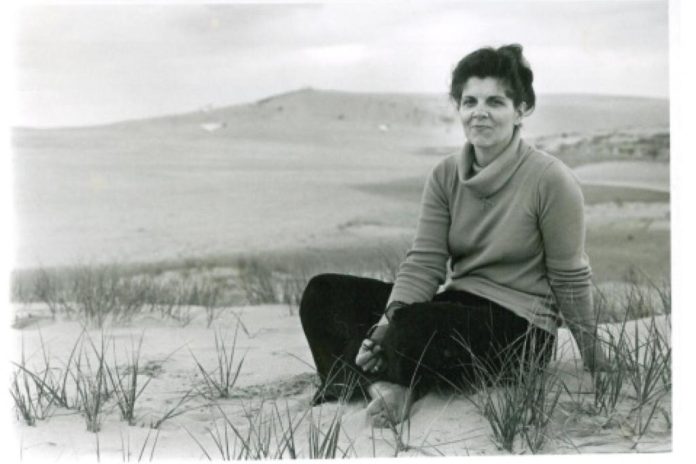
In the summer of 1973, Carolista Fletcher Baum took on a bulldozer to help save Jockey’s Ridge in Nags Head. This summer, a historical marker has been placed in her honor.

On Aug. 15, 1973, Baum positioned herself in the path of a bulldozer sent to remove sand from Jockey’s Ridge, the tallest living sand dune on the East Coast.

“Defying the machine’s progress and finally engaging in a heartfelt conversation with the bulldozer’s operator, the driver departed the dune,” the N.C. Division of Parks and Recreation said in a news release.

While local organizations had previously discussed protecting the expansive dune from encroaching development, it was Baum’s determination that transformed the idea into reality. Inspired by her dramatic protest, Baum co-founded the group People to Preserve Jockey’s Ridge, rallying support through fundraising initiatives and petition drives to capture the attention of state lawmakers and local officials.

In 1973, the Division of Parks and Recreation released a report advocating for the preservation of Jockey’s Ridge as a state park. A year later, the dune received designation as a National Natural Landmark. With the General Assembly’s allocation of funds in 1975, the preservation of the dune system was secured for future generations to protect and enjoy.

Kari Pugh, [email protected]

Heavy rains swamp Northeast again as flash flooding claims at least 5 lives in Pennsylvania – Daily Press

0

The Associated Press

WASHINGTON CROSSING, Pa. (AP) — Heavy rains pounded an already saturated Northeast on Sunday for the second time in a week, spurring another round of flash flooding, cancelled airline flights and power outages. In Pennsylvania, a sudden flash flood late Saturday afternoon claimed at least five lives.

Officials in Bucks County’s Upper Makefield Township in Pennsylvania said torrential rains occurred around 5:30 p.m. Saturday in the Washington Crossing area, sweeping away several cars. At least five people died and two childen, a 9-month-old boy and his 2-year-old sister, remained missing, authorities said.

Other parts of the East Coast were experiencing heavy rain, including Vermont. Authorities there said landslides could become a problem Sunday as the state copes with more rain following days of flooding.

“There are flash flood warnings throughout the state today. Remain vigilant and be prepared,” Vermont Gov. Phil Scott said.

Sunday’s strong storms led to hundreds of flight cancellations at airports in the New York City area, according to the tracking service FlightAware. More than 350 flights were canceled at Newark Liberty International Airport in New Jersey alone, while more than 280 flights were canceled at Kennedy International Airport in New York. Hundreds of flights were delayed.

The National Weather Service issued flash flood warnings and tornado watches for parts of Connecticut, western Massachusetts, Vermont and New Hampshire. A tornado warning was issued for an area along the Massachusetts-New Hampshire border.

Thousands of power outages also were reported.

New York Gov. Kathy Hochul urged people to stay home Sunday until the storms passed.

“Here comes the rain. It just seems unrelenting this year,” she said. “You have to avoid unnecessary travel. … A flash flood doesn’t give you warning … and in those moments your car can go from a place of safety to a place of death.”

Hochul said 5 inches (13 centimeters) of rain fell within two hours in Suffolk County on Long Island. The state saw $50 million in damages from last week’s storms. Disaster declarations will cover more than a dozen New York counties.

Manchester, New Hampshire, the largest city in northern New England, opened its emergency operations center in response to severe weather. Manchester Mayor Joyce Craig and other officials urged residents to stay inside.

Flooding forced Tweed-New Haven Airport in Connecticut to close Sunday. The small airport, which offers daily commercial flights from one carrier, Avelo Airlines, said in a Twitter post that the terminal was closed until further notice. Several flights were delayed.

Flash flooding was reported in New Haven, Hartford, Waterbury and other Connecticut towns, leaving many roads impassible. Connecticut Gov. Ned Lamont said he was headed to Bristol, home of ESPN, to view flooding.

In northern New Jersey, some roads were closed Sunday as crews worked to repair stretches of concrete that buckled under heavy rain and flooding. Local creeks washed over passageways and a rockslide blocked Route 46. Thoroughfares were a mess of water and rocks covered in brown sludge.

In Pennsylvania, a sudden, torrential downpour turned deadly in Upper Makefield Township.

Fire Chief Tim Brewer told reporters the area got about 6 1/2 to 7 inches of rain (about 18 centimeters) in 45 minutes.

“In my 44 years, I’ve never seen anything like it,” he said. “When the water came up, it came up very swiftly.”

About 4 to 5 feet of water washed over the road and three of an estimated 11 cars were swept away. All three were later recovered and no one was found inside, Brewer said. Eight people were rescued from the cars and two from the creek, he said.

The two children who remained missing Sunday are part of a Charleston, South Carolina, family visiting family and friends. They were on their way to a barbecue when their vehicle got stuck in the flash flood, Brewer said.

“As they tried to escape the fierce floodwaters, Dad took his 4-year-old son while the mother and the grandmother grabbed the two additional children, aged 9 months and 2 years,” he said. The father and son were “miraculously” able to get to safety. “However the grandmother, the mother, and the two children were swept away by the floodwaters,” Brewer said. The mother was among those later found dead.

“We continue to look for the two children. We are not going to give up,” Brewer said.

About 150 people were searching the creek during the night and 100 were involved Sunday. Brewer said earlier that officials were treating the effort as a rescue “but we are fairly certain we are in a recovery mode at this time.”

Gov. Josh Shapiro vowed aid from state emergency and transportation officials.

“All hands are on deck,” Shapiro said.

In North Carolina, floodwaters were blamed for the death of a 49-year-old woman whose car was swept off a road in Alexander County late Saturday night. A man who was in the car with her was rescued.

And as far south as Miami, soccer fans sought shelter from a torrential downpour as they waited for an event presenting international superstar Lionel Messi one day after the team signed him through the 2025.

Meanwhile, recovery efforts were underway in Vermont from recent days of heavy precipitation.

The Vermont Agency of Transportation said 12 state roads remained closed while 12 were partially open to one lane of traffic and 87 have been reopened that were previously closed.

The agency said 211 bridge inspections have been completed this week in damaged areas and there are four state bridges closed and four town structures closed.

Rail lines throughout Vermont were also damaged, the transportation agency said. The agency said it reopened 57 miles (92 kilometers) of rail lines, and 64 miles of rail line remained closed.

“Our crews have been working tirelessly all week to repair the damaged state roads and bridges, and to restore the state’s transportation infrastructure for Vermonters and visitors,” Transportation Secretary Joe Flynn said.

Heavy precipitation was not the only extreme weather plaguing the U.S. A scorching heat wave across the Southwest has put roughly one-third of Americans under some type of heat watch or warning. That included brutal temperatures in the hottest place on Earth — Death Valley, which runs along part of central California’s border with Nevada. Las Vegas also faced the possibility of reaching an all-time record temperature Sunday.

The U.S. Environmental Protection Agency posted air quality alerts for several states stretching from Montana to Ohio on Sunday because of smoke blowing in from Canadian wildfires. Hochul, the New York governor, said she expected air quality alerts to be issued for northern and western parts of New York state Monday because of the wildfires.

“Air Quality alerts are in place for much of the Great Lakes, Midwest, and northern High Plains,” the National Weather Service said. “This is due to the lingering thick concentration of Canadian wildfire smoke over these regions.”

___

This story corrects the name of the township to Upper Makefield.

___

Associated Press writers Ron Todt in Philadelphia; David Collins in Hartford, Connecticut; Patrick Whittle in Portland, Maine; and Leah Willingham in Charleston, West Virginia; contributed to this report.

What can make a difference between life and death during a heat wave – Daily Press

0

Weather forecasts have gotten quite good over the years, but their temperatures aren’t always spot on — and the result when they underplay extremes can be lethal. Even a 1-degree difference in a forecast’s accuracy can be the difference between life and death, our research shows.

In a new working paper for the National Bureau of Economic Research, we looked at how human survival depends on the accuracy of temperature forecasts, particularly during heat waves like large parts of the U.S. have been experiencing in recent days.

We found that when the weather forecasts underplayed the risk, even small forecast errors led to more deaths.

Our results also show that making forecasts 50% more accurate would save 2,200 lives per year across the country and would have a net value that’s nearly twice the annual budget of the National Weather Service.

In the U.S. alone, the National Oceanic and Atmospheric Administration issues 1.5 million forecasts per year. We examined data on each day’s deaths, weather and National Weather Service forecast in every U.S. county from 2005 to 2017 to analyze the impact of those forecasts on human survival.

We then compared deaths in each county over the week following a day with accurate forecasts to deaths in the same county over the week following a day with inaccurate forecasts but the same weather. Because weather conditions were the same, any differences in mortality could be attributed to how people’s reactions to forecasts affected their chance of dying in that weather.

We found similar results when the forecast was wrong on hot days with temperatures above 86 degrees Fahrenheit and on cold days with temperatures below freezing. Summer days that were hotter than forecast and winter days that were colder than predicted had more deaths. Yet forecasts that overestimated the summer heat or winter cold had little impact.

The fact is, people do pay attention to weather forecasts and adjust their activities in response to them. We found that on days when the forecast called for temperatures to be milder than they turned out to be — either cooler on a hot day or warmer on a cold day — people spent more time on leisure and less in home or work settings.

Electricity use also varies in sync with forecasts, suggesting that people’s use of air conditioning does not just respond to the weather outside but also on how they planned for the weather outside.

However, weather forecasts are not used equally across society. Deaths among racial minorities are less sensitive to forecast errors, we found. That could be due in part to having less flexibility to act on forecasts, or not having access to them.

It’s clear that people use weather forecasts to make decisions — when to go hiking, for example, or whether to encourage an elderly neighbor to go to a cooling center.

So, what is the value of accurate weather forecasts?

We used federal cost-benefit estimates of how people value improvements in their chances of survival to estimate their willingness to pay for better forecasts.

The result shows that 50% more accurate forecasts are worth at least $2.1 billion per year based on the mortality benefits alone. In comparison, the 2022 budget of the National Weather Service was less than $1.3 billion.

Weather forecasts have gotten steadily better over the past decades. About 68% of the next-day temperature forecasts now have an error of less than 1.8 degrees. Our results suggest investing in improved forecast accuracy would be worth the cost. Past improvements have come from better models, observations and computers. Future improvements could come from similar channels and from applying recent innovations in machine learning and artificial intelligence to weather prediction and communication.

The frequency of extremely hot days is increasing due to climate change, making more accurate weather forecasts even more important for human health and survival. Our weather is getting weirder, but weird weather can do less harm when we can see it coming.

Derek Lemoine is a professor of economics in the Eller College of Management at the University of Arizona. Jeff Shrader is an assistant professor at the School of International and Public Affairs at Columbia University. Laura Bakkensen is an associate professor of economics and policy at the University of Arizona. They wrote this for the Los Angeles Times. 

Heavy rains swamp Northeast again as flash flooding claims at least 4 lives in Pennsylvania – Daily Press

0

The Associated Press

WASHINGTON CROSSING, Pa. (AP) — Heavy rains pounded an already saturated Northeast on Sunday for the second time in a week, spurring another round of flash flooding, cancelled airline flights and power outages. In Pennsylvania, a sudden flash flood late Saturday afternoon claimed at least four lives.

Officials in Bucks County’s Upper Makefield Township in Pennsylvania said torrential rains occurred around 5:30 p.m. Saturday in the Washington Crossing area, sweeping away several cars. At least four people died and three others, including a 9-month-old boy and a 2-year-old girl, remained missing, authorities said.

Other parts of the East Coast were experiencing heavy rain, including Vermont. Authorities there said landslides could become a problem Sunday as the state copes with more rain following days of flooding.

“My team and I continue to monitor the situation as more rain falls in Vermont. There are flash flood warnings throughout the state today. Remain vigilant and be prepared,” Vermont Gov. Phil Scott said.

Sunday’s strong storms led to hundreds of flight cancellations at airports in the New York City area, according to the tracking service FlightAware. More than 350 flights were canceled at Newark Liberty International Airport in New Jersey alone, while more than 280 flights were canceled at Kennedy International Airport in New York. Hundreds of flights were also delayed.

The National Weather Service issued flash flood warnings and tornado watches for parts of Connecticut, western Massachusetts, Vermont and New Hampshire. A tornado warning was issued for an area along the Massachusetts-New Hampshire border.

Thousands of power outages also were reported in the region.

New York Gov. Kathy Hochul urged people to stay home and not drive Sunday until the storms passed. There were no immediate reports of injuries from the storms and flooding in the state.

“As songwriter Annie Lennox would say, here comes the rain again New Yorkers, here comes the rain. It just seems unrelenting this year,” she said. “You have to avoid unnecessary travel. … A flash flood doesn’t give you warning … and in those moments your car can go from a place of safety to a place of death.”

Hochul said 5 inches (13 centimeters) of rain fell within two hours in Suffolk County on Long Island.

The governor said work crews were checking the integrity of roads and dams hit by flooding around the state, which saw $50 million in damages caused by last week’s storms. Disaster declarations will cover more than a dozen New York counties.

Manchester, New Hampshire, the largest city in northern New England, opened its emergency operations center in response to severe weather. Manchester Mayor Joyce Craig and other officials urged residents to stay inside if possible.

Flooding forced Tweed New Haven Airport in Connecticut to close its terminal Sunday. The small airport, which offers daily commercial flights from one carrier, Avelo Airlines, said in a Twitter post that the terminal was closed until further notice. Several flights were reported delayed.

Flash flooding was reported in New Haven, Hartford, Waterbury and other Connecticut towns, leaving many roads impassible. Connecticut Gov. Ned Lamont said he was headed to Bristol, home of ESPN, to view flooding.

In north New Jersey, some roads were closed Sunday as crews worked to repair stretches of fragmented concrete that had buckled under the stress of heavy rain and flooding. Local creeks washed over passageways and a rockslide blocked passage along Route 46. Thoroughfares were a mess of water and rocks covered in brown sludge.

In Pennsylvania, meanwhile, a sudden, torrential downpour turned deadly in Upper Makefield Township.

Fire Chief Tim Brewer told reporters the area got about 6 1/2 to 7 inches of rain (about 18 centimeters) in 45 minutes.

“In my 44 years, I’ve never seen anything like it,” he said. “When the water came up, it came up very swiftly. We do not think that anybody drove into it, that they were actively on that road when it happened.”

There were about 11 cars on the road at the time, and three were swept away. There was about 4 to 5 feet of water over the road, he said. The bodies of four people had been recovered and three people — a woman and the two children — remained missing as of midday Sunday, Brewer said.

Brewer declined to identify the relationships of the victims but said “one family has been severely affected.”

Eight people were rescued from the cars and two from the creek, he said.

All three vehicles swept away were later located, and no one was found inside. One was about 1.5 miles from where it entered the creek.

“We are treating this as a rescue but we are fairly certain we are in a recovery mode at this time,” Brewer said.

About 150 people were searching the creek during the night and 100 were involved Sunday morning, walking along the creek, he said.

As far south as North Carolina, floodwaters were blamed on the death of a 49-year-old woman whose car was swept off a road in Alexander County late Saturday night. A man who was in the car with her was rescued.

Meanwhile, recovery efforts were underway in Vermont from recent days of heavy precipitation.

The Vermont Agency of Transportation said 12 state roads remained closed while 12 were partially open to one lane of traffic and 87 have been reopened that were previously closed.

The agency said 211 bridge inspections have been completed this week in damaged areas and there are four state bridges closed and four town structures currently closed.

Rail lines throughout Vermont were also damaged by the rain and flooding, the transportation agency said. The agency said it reopened 57 miles (92 kilometers) of rail lines, and 64 miles (103 kilometers) of rail line remained closed.

“Our crews have been working tirelessly all week to repair the damaged state roads and bridges, and to restore the state’s transportation infrastructure for Vermonters and visitors to our state,” Transportation Secretary Joe Flynn said.

Heavy precipitation was not the only extreme weather plaguing the U.S. A scorching heat wave across the U.S. Southwest has put roughly one-third of Americans under some type of heat watch or warning. That includes brutal temperatures in the hottest place on Earth — Death Valley, which runs along part of central California’s border with Nevada. Las Vegas also faced the possibility of reaching an all-time record temperature Sunday.

The U.S. Environmental Protection Agency posted air quality alerts for several states stretching from Montana to Ohio on Sunday because of smoke blowing in from Canadian wildfires. Hochul, the New York governor, said she expected air quality alerts to be issued for northern and western parts of New York state Monday because of the wildfires.

“Air Quality alerts are in place for much of the Great Lakes, Midwest, and northern High Plains,” the National Weather Service said. “This is due to the lingering thick concentration of Canadian wildfire smoke over these regions.”

___

This story corrects the name of the township to Upper Makefield.

___

Associated Press writers Ron Todt in Philadelphia; David Collins in Hartford, Connecticut; Patrick Whittle in Portland, Maine; and Leah Willingham in Charleston, West Virginia; contributed to this report.

Cubs reacquire former Old Dominion catcher P.J. Higgins from Diamondbacks – Daily Press

0

PRO BASEBALL

Per The Athletic’s Patrick Mooney, the Cubs have acquired former Old Dominion catcher P.J. Higgins for cash considerations in a trade with the Diamondbacks.

It’s a homecoming for Higgins, 30, a Connecticut native who was drafted by the Cubs in the 12th round in 2015. He made his big league debut for Chicago with nine games in 2021. Higgins made it into 74 games in 2022, hitting .229, catching and playing both infield corners.

He signed with Arizona in the offseason and hit well with Triple-A Reno, batting .317 with an .880 OPS. He’s likely going to go to Triple-A Iowa at first with the Cubs, sharing time with another former ODU player, Bryce Windham, and Dom Nunez.

HORSE RACING

‘Kingdom’ reigns at Colonial Downs

Determined Kingdom won Saturday’s Punch Line Stakes, the featured event of Colonial Downs’ first thoroughbred racing weekend this season, for the second year in a row.

Jockey Mychel Sanchez led the 4-year-old gelding to a 5-1/4 -length triumph, which followed last year’s 5-1/2 -length victory. The winner is trained by Phil Schoenthal.

Saturday’s fourth through seventh races, all featuring Virginia-bred horses on the grass course in New Kent County, had a combined purse of $500,000.

Thursday, the meet’s first day, featured a victory by Schoenthal-trained Determined Sail in a $75,000 Virginia-restricted maiden special weight race. D Hatman Thoroughbreds owns the winner, whose jockey was Antonio Gallardo.

TENNIS

Bertimons earn $5K for doubles title at Princess Anne

In a clash of brothers for likely the area’s most notable tennis title of the year, Max and Charles Bertimon rallied past Floridians Stefan and Boris Kozlov 2-6, 7-6, 6-4 Sunday afternoon for the Princess Anne Country Club Summer Open championship in Virginia Beach.

The Bertimons are Frenchmen who have played for VCU and who reached the 2022 NCAA doubles semifinals. They trailed 6-2, 5-4 before breaking serve to stay in contention against the Kozlovs; Stefan has been ranked as highly as 103rd in the world, and he defeated former world No. 3 Grigor Dimitrov in the Miami Open in February 2022.

After winning the tiebreaker, the Bertimons broke serve for a 2-1 third-set lead and held four times to take the $5,000 first-place check in a 16-team event that benefits An Achievable Dream, an educational initiative that helps children in localities such as Newport News and Virginia Beach. The Kozlovs can split $2,500.

Most of the tournament was held on outdoor clay, but play moved to indoor hard courts because of rain early in the semifinals.

Cox High graduate Barrett Foster, Hampden-Sydney’s No. 1 player, and Georgia Tech star Andres Martin won two matches together to reach the semifinals, worth $1,250. They fell 3-6, 6-2, 1-0 (10-2) to the Kozlovs while the Bertimons were defeating Virginia Tech’s Jordan Chrysostom and Wake Forest’s Matthew Thomson 6-4, 7-6 (8-6).

Before playing in his hometown event, Foster also reached the doubles semifinals of the Mid-Atlantic Clay Court Championships in Midlothian alongside 2017 NCAA singles winner Thai-Son Kwiatkowski, whom Martin defeated for the singles crown at that event at Salisbury Country Club. Martin will be a wild-card entry on July 24 in the ATP Atlanta Open, near where he grew up.