Home Blog Page 8

Death counts remain high in some states even as COVID fatalities wane – Daily Press

0

Tim Henderson | Stateline.org (TNS)

Several months after President Joe Biden ended the national emergency for COVID-19, preliminary health data indicates the historic degree to which the pandemic increased death rates nationwide — not just because of the virus itself, but also through the pandemic’s reverberating effects on society.

Deaths from vehicle crashes, homicides, suicides and overdoses spiked in many states during the national health emergency that began in January 2020. Deaths of despair, which include people who died by suicide or from an accidental overdose, reached their highest numbers during the first year of the pandemic. And even as fewer cars were on the roads during shutdowns, vehicle fatalities jumped.

Yet after historic increases during the pandemic, deaths in most of the country are nearing a return to pre-pandemic levels, according to a Stateline analysis of preliminary federal statistics.

Still, in the first half of this year, the death count in some states and the District of Columbia was much higher than it was during the first half of 2019. The District’s death count was 35% higher than before the pandemic, and in six states the count was at least 15% higher: Arizona, Delaware, Nevada, Tennessee, Texas and Utah.

Nationally, death counts for the first six months of 2023 are about 7.7% higher than they were for the same period in 2019, before the pandemic, the analysis found. That’s just a bit above the 6.7% increase to be expected anyway; counts routinely inch up annually with the United States’ aging population.

Before the pandemic, the historical trend since 1900 was for the number of deaths to rise a little every year as the population got larger and older, and for age-adjusted death rates to go down and life expectancy to rise every year due to advances in health and medicine.

COVID-19 played havoc with that pattern, bringing historic spikes in both death counts and death rates. Between 2019 and 2020, the number of U.S. deaths from all causes jumped 19%, a 100-year record. The current U.S. death toll from the virus is more than 1.1 million people, according to the World Health Organization.

The year-over-year spike in death rates between 2019 and 2020 surpassed that of the 1918 flu epidemic. In 2020, the death rate rose 17% to 835.4 per 100,000 people, compared with a 12% jump between 1917 and 1918. The death rate peaked at 879.7 in 2022.

Life expectancy in the United States dropped 2.7 years by 2021, the biggest dip in almost 100 years.

States where COVID-19 hit first, such as New Jersey and New York, are the closest to complete recovery.

Public health experts debate why deaths might be stubbornly high in some areas of the country — as in Arizona, where death rates rose the most between 2019 and 2022, and where increases in deaths continue to be high in preliminary 2023 data.

There’s some evidence that COVID-19 deaths have gone unrecognized, and that the chaos from the pandemic caused still more deaths by shutting sick people out of hospitals packed with COVID-19 patients.

“There’s a lot of things going on that might cause [continued high death rates]. It’s not just one thing,” said Robert Anderson, chief of the mortality statistics branch at the federal National Center for Health Statistics in Maryland.

Nationally, only about 62% of the increase in death rates between 2019 and 2022 is directly attributed to COVID-19, according to the Stateline analysis. But that might be an undercount because COVID-19 was not always detected as a cause, according to Boston University School of Public Health research published in January.

In the pandemic, unexplained or “excess deaths” tended to peak earlier than COVID-19 deaths did, suggesting that many deaths really were undetected COVID-19 deaths.

COVID-19 cases were more likely to be misclassified in Arizona, the Rocky Mountain states, the South and rural areas, than in New England and in mid-Atlantic states such as New Jersey and New York, the article said.

As deaths peaked in New Jersey in 2020, a report from the New Jersey Hospital Association said two trends suggested people were dying from lack of hospital care as well as COVID-19: an increase in deaths at home from conditions usually treated in hospitals, and a decrease in hospital admission for life-threatening emergencies like heart attacks and strokes.

New Jersey, despite being the first state hit hard by COVID-19 in 2020, is now the only state with fewer deaths in early 2023 compared with the first six months of 2019. Eight other states saw increases of about 2% or less, including New York, another of the states slammed early in the pandemic.

The other seven states with death rates falling back to normal are Connecticut, Illinois, Maryland, Mississippi, South Dakota, West Virginia and Wyoming.

COVID-19 is listed as a contributing cause of only 1,143 deaths in New Jersey so far this year, down from more than 14,000 in the same time frame in 2020. Similarly in New York, COVID-19 deaths were down to 2,685 from more than 32,000 early on.

New Jersey, like many other states, has worked hard to get the virus under control, reaching its goal to vaccinate 4.7 million people who live or work in the state by mid-2021, and zeroing in on hot spots as they popped up with concentrated publicity campaigns to boost testing and vaccination, said Nancy Kearney, a spokesperson for the state Department of Health, in a statement.

As an early epicenter of the virus, New Jersey became a laboratory for techniques that became standard practices in the rest of the country, said Cathy Bennett, president of the New Jersey Hospital Association.

“New Jersey health care providers were writing their own playbook for responding to this novel virus,” Bennett said. “Our hospital teams were among the first to use new medication and tactics like proning [turning patients face down] to ease the burden on COVID-19 patients’ lungs.”

But even Arizona is slowly returning to normal death patterns, despite spikes in February, April and May, according to an analysis by Allan Williams, an Arizona epidemiologist who collaborates on state reports. COVID-19 deaths in the state are down to fewer than a thousand so far this year, compared with about 7,000 at the peak during the same time period in 2021.

“Deaths are returning to normal,” Williams said.

The state faces unique challenges in that COVID-19 deaths spiked late compared with the East Coast, with peaks coming in late 2020 and early 2021 at much higher rates than nationally, according to Williams’ analysis.

Williams said Arizona also saw increases in deaths from a multitude of other factors, including traffic accidents, overdoses, firearms, heart disease and strokes.

The state-by-state difference in COVID-19 deaths has been studied and discussed by experts for years. COVID-19 had the biggest cumulative impact on Arizona from 2020 to mid-2022, according to a study published this March in The Lancet, which concluded some states did better than others in extending health care access equitably and in convincing residents to get vaccinated.

Hawaii, which took an early hit economically when tourism from Asia stopped even before the pandemic hit the United States, has been one of the least-affected states in terms of deaths.

A White House Council of Economic Advisers analysis last year calculated that if deaths in the whole country followed Hawaii’s pattern, another 780,000 people would have survived the pandemic. Hawaii and New England states got high marks for health care during the pandemic, though Hawaii is facing new challenges from COVID-19 as well as wildfire deaths on Maui.

The Council of Economic Advisers study also suggested that lower rates of health insurance were associated with more deaths. Health insurance rates have been rising and reached an all-time high last year, the latest figures available. Among those states with death counts that are at least 15% higher this year than they were during the first six months of 2019, Arizona, Texas and Nevada were also in the top 10 for uninsurance rates as of 2021, and Tennessee was 11th.

Changes in population could explain some of the differences among states. Many of the states with large death count increases also grew rapidly in 2022, and many of those with small increases are losing population.

But in some states, such as Arizona, the increase in deaths outpaced population gains. Between 2019 and 2021, the height of pandemic death rates nationally, Arizona’s age-adjusted death rate rose 38%, the biggest increase among states. Arizona also had the highest change in death totals between 2019 and 2022 at 21%.

______

Stateline is part of States Newsroom, a national nonprofit news organization focused on state policy.

©2023 States Newsroom. Visit at stateline.org. Distributed by Tribune Content Agency, LLC.

This self-defense jewelry can subtly help you stay safe when you’re out alone – Daily Press

0

Remaining brave in frightening times

The horrific news last year of a Memphis kindergarten teacher’s abduction and slaying while out for a run left many feeling confused and scared. It’s hard to feel safe when something as innocent as a morning jog can end so tragically, but it’s important not to let that fear cripple you.

Why it’s important to face your fears

Fear is important. It helps keep you safe and alive. However, when irrational fear keeps you from living, it is no longer beneficial.

After learning there was a crime in your neighborhood, for instance, it can take a while to feel safe again, even if you weren’t directly affected. While it’s never wise to put yourself in a dangerous situation, facing your fears in a controlled way with a predictable outcome is one of the best ways to help you reclaim your life.

Tips for staying safe

The best way to stay safe is to never be alone. If you’re walking to your car after work or running through a park, always do it with at least one other friend. But if you find yourself alone, there are a few things you can do to help you stay safe:

What is a Defender Ring?

A Defender Ring is a ring that doubles as a defensive weapon. There are two types of Defender Rings. One has a concealed blade hidden beneath a decorative element. This element can be unscrewed in about two seconds. The other is a ring that has an exposed blade, so there is no prep time required before use.

According to the company, “Defender Ring was founded as a practical self-defense tool for women, following the deaths of Karina Vetrano and Vanessa Marcotte, two women who were attacked in broad daylight while out for a jog.”

A Defender Ring can inflict pain or damage to an attacker by puncturing, slicing or tearing. The ring will also collect a DNA sample from your attacker. The rings range in price from $45 to $149 and are sold on the company’s website, with some options available on Etsy.

Open-blade Defender Ring options

Duo Stacker ]

The Duo Stacker is a white gold-plated stainless steel ring with stabilizing side supports and features two points.

Trio Stacker ]

The Trio Stacker is a stainless steel ring (no plating) with stabilizing side supports and features three points.

Crest Stacker ]

The Crest Stacker is a stainless steel ring (no plating) with stabilizing side supports and features a single, curved point.

Three other devices that may help keep you safe

She’s Birdie – The Original Personal Safety Alarm for Women by Women ]

When activated, the Birdie blasts a loud siren and flashing strobe lights to help frighten off a potential attacker. The device is easy to use, and the battery lasts for up to 40 minutes.

Sabre Advanced Compact Pepper Spray ]

This widely popular pepper spray has a three-in-one formula that includes CS tear gas for a more debilitating effect and UV marking to help identify suspects. The sprayer has a 10-foot range and contains 35 bursts.

Hipat Whistle ]

The stainless steel whistles in this two-pack create a shrill 120-decibel sound that can scare away attackers before they even get close. The included lanyard means you’ll always have your whistle at the ready.

Want to shop the best products at the best prices? Check out Daily Deals from BestReviews.

Sign up here to receive the BestReviews weekly newsletter for useful advice on new products and noteworthy deals.

Allen Foster writes for BestReviews. BestReviews has helped millions of consumers simplify their purchasing decisions, saving them time and money.

BestReviews spends thousands of hours researching, analyzing and testing products to recommend the best picks for most consumers. BestReviews and its newspaper partners may earn a commission if you purchase a product through one of our links.

Distributed by Tribune Content Agency, LLC.
Exhibits in Jamestown, Yorktown show the impact of faraway kings on Virginia’s history – Daily Press

0

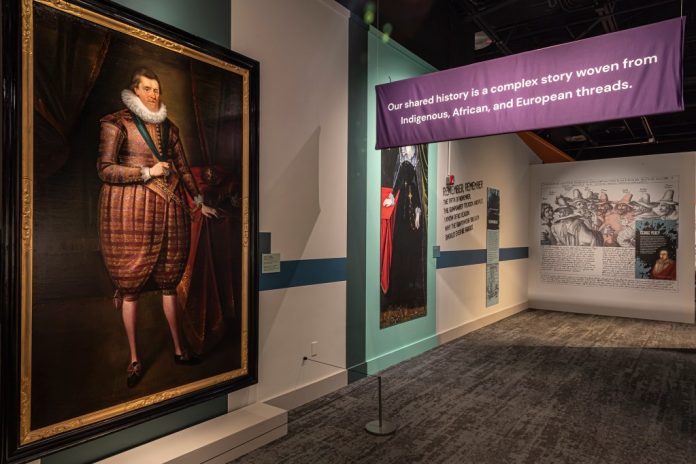
Only three weeks remain to examine “Reign & Rebellion,” a special exhibition in Jamestown and Yorktown that focuses on the Stuart monarchs of England and Great Britain and their effects on early America and Virginia.

Situated at Jamestown Settlement and the American Revolution Museum at Yorktown, the two-part exhibit will run through Sept. 19 and spans the 100-plus year reign of the Scotland-born dynasty.

The exhibit was extended to welcome “Outlander” author Diana Gabaldon, who will give a sold-out talk and book signing in Yorktown on Sept. 16. Gabaldon plans to include the end of the American Revolution at Yorktown in her 10th book.

“We’ve received overall very positive responses to this exhibition,” said Kate Egner Gruber, manager of curatorial services. “We hope that this multi-layered exhibit has shed light on the complex tapestry of Virginia history we are continuing to weave together in our Commonwealth because of its Stuart-era past.”

George Washington, before leading patriots in rebellion, wore this copper gorget, circa 1774, engraved with the ancient coat of arms of Virginia, with the colony’s original motto, En Dat Virginia Quartam, meaning “Behold, Virginia gives the fourth.” Virginia, which still maintains the “Old Dominion” moniker, was claimed as the fourth English dominion after the unified England and Scotland, along with France and Ireland. The gorget is on exhibit at the American Revolution Museum at Yorktown. Courtesy of the Jamestown-Yorktown Foundation

Not only does the presentation survey those historical events of the 17th century that shaped early Virginia, it also relates the lasting impacts the monarchy had on the later 18th century, continuing to today’s world.

Video introductions, developed for each location, present the significant elements that will be examined and studied. Do not expect to breeze through the exhibits, which include additional videos, as well as numerous artifacts and history-lesson narratives.

At Jamestown Settlement, where the story begins, the Stuart reign was intertwined with the beginnings of the Old Dominion. Important to the early settlers were the Indigenous people who lived in Tsenacommacah, a district of Chiskiak in the Powhatan Paramount Chiefdom.

The paramount chief, Powhatan, had to cope with the settlers while trying to maintain his own power and influence. Through those early years, there were military encounters and wars that James I of England (James VI of Scotland) faced in his initial years on the throne.

James I met Pocahontas, Powhatan’s daughter, when she visited London, and promoted trade in Africa. His heirs, the exhibit relates, established the Royal African Company that later supplied enslaved Africans to the colonies.

The exhibits at Jamestown Settlement include the Rolfe Family Bible. John Rolfe married Pocahontas, beginning that lineage of Virginia’s first families. Also included is a mourning ring of Charles I with a secret message.

Part of the Reign & Rebellion exhibit at Jamestown Settlement is Charles I mourning ring, circa 1648/49. The ring features his portrait, but its hinged lid allowed the wearer to keep their political loyalties secret until the restoration of the monarchy in 1660. Courtesy of the Jamestown-Yorktown Foundation
Part of the “Reign & Rebellion” exhibit at Jamestown Settlement is Charles I mourning ring, circa 1648/49. The ring features his portrait, but its hinged lid allowed the wearer to keep their political loyalties secret until the restoration of the monarchy in 1660. Courtesy of the Jamestown-Yorktown Foundation

Among the artifacts of the Indigenous is a turkey feather mantle, or cape, a reproduction of the type possibly worn by tribal chiefs and elders. It was hand-woven in the early 1930s by Mollie Wade Holmes Adams, a full-blooded member of the Upper Mattaponi nation whose husband was chief of the tribe at that time.

The American Revolution Museum at Yorktown continues the Stuart story, primarily demonstrating the impact of the era on Virginia today — the role of religion and the separation of church and state and the function of government.

Slavery is an important element in both portions of the exhibit with the ongoing reckoning with injustice and social and racial inequality existing today.

There is an in-depth examination of the Brafferton, the school at William & Mary where Indigenous children were educated, and a look at the Bray School, also associated with the college where free and enslaved Black children received an education within the city.

In addition to artifacts from the Jamestown-Yorktown collection, more than 125 artifacts are on loan from more than 25 international and national institutions and private collections. A number of early pieces are from the William & Mary Muscarelle Museum of Art and at Special Collections Research Center at William & Mary Libraries.

The Rolfe family bible, circa 1580, is one of the artifacts on display in the Reign & Rebellion exhibit at Jamestown Settlement. Before marrying John Rolfe in 1614, Pocahontas accepted Christian baptism with the name Rebecca. There is no record of her innermost religious beliefs or what she thought about Biblical teachings. Regardless, Virginia Company officials promoted Pocahontas as a successful convert. Courtesy of Jamestown-Yorktown Foundation

Jamestown-Yorktown Foundation

The Rolfe Family Bible, circa 1580, is one of the artifacts on display in the “Reign & Rebellion” exhibit at Jamestown Settlement. Before marrying John Rolfe in 1614, Pocahontas accepted Christian baptism with the name Rebecca. There is no record of her innermost religious beliefs or what she thought about Biblical teachings. Regardless, Virginia Company officials promoted Pocahontas as a successful convert. Courtesy of Jamestown-Yorktown Foundation

This exhibit is included with the general admission to the two state-operated facilities. There is a combined admission ticket of $30 for adults and $15 for children ages 6-12. Residents of James City and York counties and the city of Williamsburg, including William & Mary students, can receive free admission.

Additionally, in conjunction with the “Reign & Rebellion” special exhibition will be “Counter Cultures: Rebellion,” a special program on Saturday at the American Revolution Museum at Yorktown. From 11 a.m. to 5 p.m., visitors will encounter first-person portrayals of patriot/traitor Benedict Arnold in 1780, freedom fighter Gabriel Prosser’s wife Nan in 1800, suffragist Mary A. Nolan in 1917 and Civil Rights activist Fannie Lou Hamer in 1964.

For more information on the exhibits, visit jyfmuseums.org/events/special-exhibits/reign-rebellion.

Wilford Kale, [email protected]


Man dies after shooting on Campostella Road in Norfolk – Daily Press

0

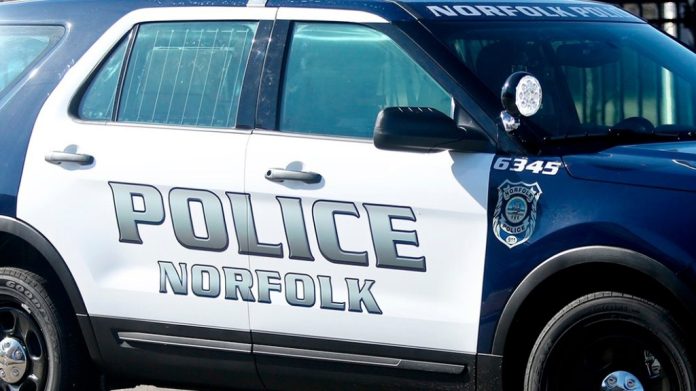
The 27-year-old man who was injured in a Monday shooting in Norfolk has died, police said.

Officers responded to the 300 block of Campostella Road in Campostella Heights following a report of a gunshot victim at about 4:55 p.m. They found Da’Shawn N. Whitaker suffering from a life-threatening gunshot wound and took him to the hospital for treatment.

Whitaker succumbed to his injuries Tuesday. No further information has been made available.

The shooting investigation is ongoing. Anyone with information is encouraged to submit an anonymous tip by calling the Crime Line at 1-888-LOCK-U-UP or going to P3Tips.com.

Gavin Stone, 757-712-4806, [email protected]

Colonial Williamsburg to open new bookstore in Merchants Square – Daily Press

0

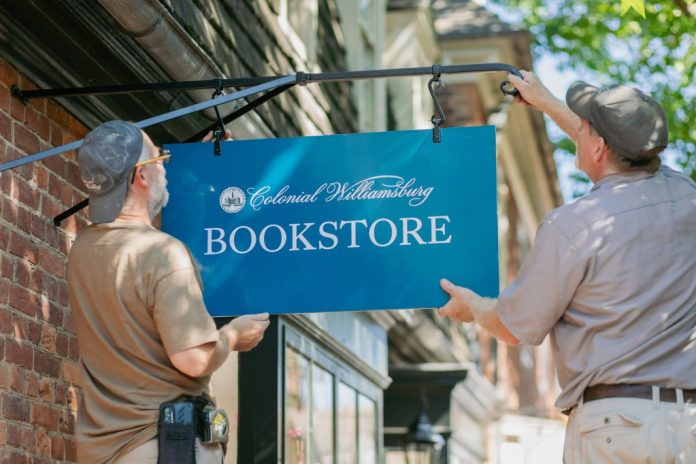
WILLIAMSBURG — The Colonial Williamsburg Foundation is getting ready to open a new bookstore dedicated to the foundation’s titles in Merchants Square.

The new bookstore, which will host more than 50 Colonial Williamsburg titles, is set to open Friday and will be located on the second floor of the building that houses J. McLaughlin on Duke of Gloucester Street. It will be open seven days a week and operated by the foundation’s retail partner, Aramark.

According to Colonial Williamsburg, selections at the bookstore will include titles such as “Restoring Williamsburg,” an illustrated volume that expands on the story of restoration efforts in Williamsburg, “The Williamsburg Cookbook,” “Williamsburg: The Art of Cookery,” “Ghosts Amongst Us” and “Hauntings.”

Since 1935, the foundation has been publishing books on various subjects. In addition to the foundation’s titles, the bookstore will also host books written by historians whose articles have appeared in Colonial Williamsburg’s Trend & Tradition magazine, other early American history books from publishing partners and books affiliated with other museums, including Mount Vernon, Monticello and the Museum of the American Revolution.

Because the bookstore is on the second floor, a doorbell will be available at the ground floor level to summon help for customers with limited mobility. The shop will be open daily from 10 a.m. to 6 p.m. this fall. Hours will vary by season and will be updated on the website. For more information on the bookstore, visit colonialwilliamsburg.org/cwbookstore.

Sian Wilkerson, 757-342-6616, [email protected]

Seven coffee shops to explore in Hampton Roads

0

Something’s brewing in Hampton Roads.

Several coffee shops have opened this year, featuring iced and hot specialty and traditional drinks, pastries, and other food choices. They are designed to attract people looking for their daily fix and nondrinkers who want to join them. Arrive early. Stay late. The environments are suitable for anyone looking to chill and those who want to grab and go.

The menus reflect a growing trend. Lattes, espressos and cappuccinos are in a three-way tie for America’s most popular specialty coffee beverage, according to a 2023 National Coffee Data Trends report commissioned by the National Coffee Association. It also found about one-third (32%) of past-week coffee drinkers had flavored coffee, with vanilla being the most popular, followed by mocha, hazelnut and caramel.

Coffee lovers can get their favorites at these seven places in the area now and add two others to the list for later.  

___

Rekaya Gibson

7 Brew Coffee in Newport News, the first location in Virginia.

A steady stream of cars rolled through the drive-thru at 7 Brew Coffee at midday on a Sunday. A song by 50 Cent played on the loudspeaker as smiling teenagers with keypads took orders carside.

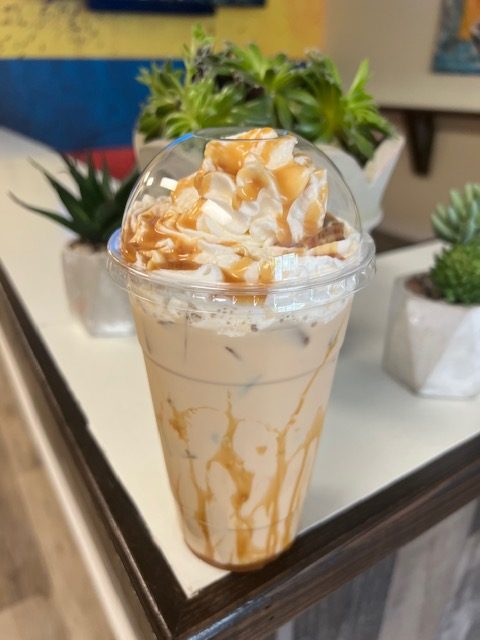
The chain coffee shop offered seven iced and hot original flavors, such as Blondie (caramel and vanilla breve), Cinnamon Roll (white chocolate and brown sugar cinnamon) and German Chocolate Mocha (coconut and caramel mocha). It also had classic coffees, teas, smoothies and shakes. Customers used the QR code displayed to pull up the menu, which included more than 25 syrup flavors, some sugar-free.

Service was quick and easy. Busy folks would love this spot near Jefferson Avenue. 5018 W. Mercury Blvd., Newport News. 479-358-9274; Visit 7brew.com.

___

C4 Classic Colombian Coffee Cafe was a colorful locale in the Woodtide Shopping Center, serving more than 15 drinks such as the popular caramel brulee latte and Nutella latte. A few teas and lemonades were available, too. Other menu items included open faced toast (caprese and the Elvis, for example), breakfast classics and other sandwiches, and bakery items like cookies and Colombian empanadas.

This veteran-owned cafe featured artwork by Colombian artists, which set the mood for a midmorning retreat. LPs designed to resemble the artist hung in the middle of the wall between pictures of Groucho Marx and Marilyn Monroe. It made the place seem alluring and fun.

C4 came across as a cool meeting space for friends and remote workers. 4676 Princess Anne Road, Virginia Beach. 757-758-3700; Visit c4cafes.com.

___

Interior of Colattao Coffee House in Virginia Beach.

Rekaya Gibson

Inside Colattao Coffee House in Virginia Beach.

Colattao Coffee House was a groovy establishment. Textured walls, wicker plates and brick design wallpaper made the space feel warm and inviting. Couches and homey chairs sat on the right side of the room and different styles of stools and chairs on the left. Plants throughout added a nice touch. A see-through bookshelf with mugs, moka pots and bagged coffee for purchase divided the room. The clink and clatter of coffee cups being stacked led to the back, where the counter was located to order.

Colattao used Colombian coffee to prepare about six classic drinks. The signature list sounded interesting, for instance churro latte, coconut matcha and rose lavender lemonade. Two specialty ones were written on a chalkboard; rum cake, made with a house blend rum syrup and Irish rum sauce, and dark chocolate orange, made with dark chocolate syrup. The countertop display case held chocolate croissants, muffins, rustic coffee cake, chocolate chip cookies and more. For guests who wanted more substance, croissant sandwiches were available, such as the Monte Cristo and the apricot chicken cheddar. A large round table near the cash register could hold a family of four.

Remote workers and a mature crowd would appreciate the energy in this cool place near Haygood Road. 1115 Independence Blvd., Virginia Beach. 757-937-3060; Visit instagram.com/colattao.

___

The High Cup seemed like a place where everyone wore dark clothing and sunglasses and snapped their fingers to show admiration. There were about 10 javas and just as many teas to choose from on the digital menu board.

Two customers sat on a black couch playing dominoes on the coffee table; other board games were housed underneath. Another guest ordered one of the shop’s six Korean bowls for lunch and one of three slushies. She sat at a table with pink suede chairs to wait. The oversized garage door with windows overlooking Princess Anne Road illuminated the place, allowing diners to clearly see the local artwork hanging on the white brick walls from the front to the back of the room. “Artists get 100 percent of the sales,” Joseph Nieves, the owner, said.

Creatives would feel at home here, as would those who like playing board games while sipping their cafe au lait. 117 E. Princess Anne Road, Norfolk. 540-676-0019; Visit highcupnfk.com.

___

Joyu Tea & Coffee had a hefty tea menu but the selection of coffees for the phin — the Vietnamese filter/press — wasn’t puny. It had more than 10, including an Americano, Vietnamese coffee and caramel macchiato. The pastries were minimal, mainly croissants and a croffle.

Young adults ordered at the counter; some scanned the QR code on the display sign. They sat and waited in white chairs that matched the tables and walls. The room looked simple and neat. High schoolers gossiped and sipped their bubble teas while staff placed beverages on a nearby bookshelf labeled for third-party delivery services. A cursive sign on the wall reminded customers to “Listen to Your Cravings.”

3545 Buckner Blvd., Virginia Beach, near South Independence. 757-301-2384; Visit joyuteacoffee.com.

___

Operation Brew, a coffee shop and bakery, is across the street from the Naval Air Station Oceana commissary on Oceana Boulevard, not on base. It offered a range of about 15 coffees, from raf (half and half and vanilla sugar) to cappuccino to mocha latte. A display case filled with delicious-looking pastries kept customers standing in line mesmerized as they waited to order. The coffeehouse also had lemonades, refreshers and teas for customers seeking something different. Sandwiches and wraps rounded out the menu.

The modern styled place had ample seating with lights dangling from the ceiling in the center of the room and a lounge area on the right with an Instagrammable wall with artificial vines. Other tables were filled with families, girlfriends and military members. It had a youthful, chill vibe that made everyone feel welcome. A customer took a bite of a croissant stuffed with strawberries and chantilly cream and said, “This is the most amazing thing; I can live off this. I want to come back tomorrow morning.”

1329 Oceana Blvd., Virginia Beach. 757-937-8179; Visit operationbrewva.com. Near General Booth Boulevard.

___

A cold brew from Rich Port Coffee is photographed in the lobby of the Truist building in downtown Norfolk on July 18. Rich Port serves up smooth Puerto Rican coffee as the owners, Miguel and Mia, are natives to the island. (Kendall Warner/The Virginian-Pilot)
A cold brew from Rich Port Coffee, inside the Truist building in downtown Norfolk. Rich Port serves up smooth Puerto Rican coffee as the owners, Miguel and Mia, are native to the island. (Kendall Warner/The Virginian-Pilot)

Rich Port Coffee had a simple selection of Puerto Rican coffee: drip, caffe latte, Americano, cappuccino, cold brew, espresso shot and mocha latte. Perfect for a business inside an office building on the corner of Norfolk’s Main Street and Waterside Drive.

Workers don’t have much time to navigate an extensive menu, which also consists of pastries such as muffins, tres leches and pan de bono. Some customers ate at one of the three high-top tables. Couches were nearby. The coffee counter with a wooden overhang was noticeable at the entrances on both sides.

Tourists can pop in on their way to and from Nauticus across the street or before and after they set sail on a Carnival cruise. Bagged coffee, moka pots, local snacks and other products were available for purchase. 150 W. Main St., Norfolk. 757-322-7017. Visit richportcoffee.com.

___

Others to consider

Buckroe Coffee Co. had planned a grand opening for last month but ran into some delays. No new updates have been posted to its social media page. In April, more than 4 million people watched an Instagram video of the shop’s renovations in which a hidden vault was discovered in the building, a former bank. (No treasure was found, the Daily Press reported.) The owner hopes to make the vault and the hole he made to get inside it part of the coffee shop’s aesthetic. 1936 E. Pembroke Ave., Hampton. 757-879-1341. Visit buckroecoffee.com. Near Old Buckroe Road.

___

Pangaea Coffee Emporium plans to open in Poquoson soon. A post on its Facebook page describes the shop as having a dense tropical jungle atmosphere. “It will serve culturally rich coffee beverages, teas, lemonades and tapas that are inspired by countries and their cultures from around the world.” 200 Fountains Lane, Poquoson. Visit instagram.com/pangaeacoffeeemporium.

Rekaya Gibson, 757-295-8809, rekaya.gibson@virginiamedia; on Twitter, @gibsonrekaya

August closes with a rare moon over Hampton Roads – Daily Press

0

Wednesday night will see the rise of a rare full moon — the “Blue Supermoon,” which takes place at one of the moon’s closest points to Earth for the second time this month.

You may have heard of blue moons, of the “once in a blue moon” fame. That’s when two full moons fall in the same calendar month. Despite the colloquialism referring to uncommon events, blue moons are relatively frequent, occurring once every two or three years.

You may have also heard of supermoons, which occur when a full moon takes place during the moon orbit’s perigee, or its closest point to Earth. The moon is about 14% closer to the planet than at its apogee, or furthest point from Earth. Supermoons happen three or four times per year and always appear consecutively.

The coincidence of the blue moon and the supermoon is somewhat rare.

According to NASA, there could be anywhere from two months to twenty years between blue supermoon events. The next one won’t be until January 2037, followed by another in March 2037.

The name “blue moon” doesn’t have anything to do with the color, but the moon will appear larger and brighter than normal due to its supermoon status and relatively closer position to Earth.

The Back Bay Amateur Astronomers hosted an observation event Tuesday night on the Virginia Beach Boardwalk near the 24th Street Stage to look at the moon and other objects in the night sky.

“It’s going to be a waxing gibbous, it’s going to be one day shy of a full moon,” Jeff Goldstein, vice president of the club, said Tuesday. “And it’s just as terrible today as it will be tomorrow.”

According to Goldstein, full moons don’t make for great astronomical viewing. Their brightness blots out the stars, and without the moon’s shadow, it’s difficult to make out features on the surface of the moon through a telescope. That’s one of the reasons the club is hosting the event on Tuesday instead of Wednesday.

“We think, ‘Oh my gosh, the full moon,’ and then you blind yourself with the telescope,” he said. “It doesn’t hurt your eyes, it just makes you see spots after you stop looking at it, because it’s so bright. It’s really bright.”

Goldstein also hoped to see Saturn and Albireo, a gold and blue double star in the constellation Cygnus, on Tuesday night.

Jeff Goldstein angles his telescope toward Saturn so passerby can look at the Oceanfront Boardwalk in Virginia Beach, Virginia on Aug. 29, 2023. (Billy Schuerman / The Virginian-Pilot)

The group was out despite cloudy conditions, hoping to catch glimpses of the night sky through breaks in cloud cover.

On Wednesday in Hampton Roads, the moon will rise about 7:47 p.m. in the east to southeast direction. It will set in the west-southwest at 7:01 a.m. Thursday. The moon will be full at 9:36 p.m., according to NASA.

Seeing the moon Wednesday night could prove difficult because of the weather.

The National Weather Service in Wakefield is forecasting cloudy skies, with about 75% to 90% cloud cover after sunset. Hampton Roads is also at the edge of heavier rainfall taking place to the south due to Hurricane Idalia, according to Ryan Rogers, a meteorologist at the weather service. Rain could start Wednesday afternoon and continue through Thursday morning.

It’s possible the supermoon will make flooding from Hurricane Idalia worse as its intensified gravitational pull raises tides the same day the storm is expected to make landfall in Florida.

Cianna Morales, 757-957-1304, [email protected]

Schools that don’t adopt Virginia’s transgender model policies can be sued, according to state officials – Daily Press

0

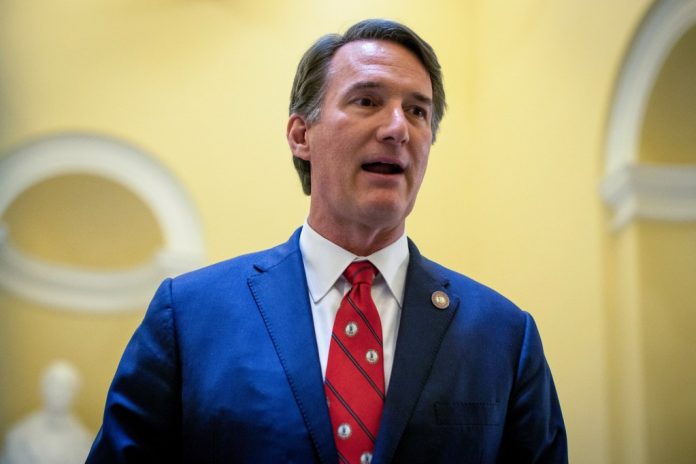
Some Virginia school divisions appear to be entering a faceoff with the state and parents groups over Gov. Glenn Youngkin’s model policies on the treatment of transgender students.

Attorney General Jason Miyares last week issued an advisory opinion stating that the policies complied with federal and state nondiscrimination laws. The opinion also states that local school divisions must adopt policies that are consistent with the state’s model policies.

The opinion comes in the wake of several school divisions refusing to adopt the new policies, including Fairfax County Public Schools and Prince William County Public Schools, which have indicated that they would not adopt the new policies. Last week, a resolution to adopt the new policies failed in Virginia Beach in a split 5-5 board vote.

In Virginia Beach, some board members questioned whether the administration’s model policies were in compliance with existing state and federal anti-discrimination laws. Miyares’ opinion states he believes the 2023 model policies comply with Title IX, the Equal Protection Clause of the 14th Amendment and the Virginia Human Rights Act.

In stating that school boards are required to adopt policies consistent with the 2023 model policies, Miyares writes that although local school boards have general authority over the supervision of their divisions, “that power is not absolute.”

“Rather, ‘primary responsibility and authority for effectuating the educational policy’ of the Commonwealth lies with state government, particularly the General Assembly,” he said.

Miyares adds that the Supreme Court of Virginia has consistently held that local school boards “only have those powers expressly granted or necessarily implied by statute.”

Questions remain about what might happen if schools fail to adopt the policies. The 2020 legislation that called for the drafting of guidelines on how transgender students should be treated did not address whether school boards that refuse to adopt state model policies will face any consequences. The majority of school divisions in Virginia did not adopt then-Gov. Ralph Northam’s model policies released in 2021. Northam’s model policies called for schools to use a student’s preferred pronoun and allow students to use restrooms that aligned with their gender identity.

Annie Kim, an assistant professor at the University of Virginia’s School of Law, said the 2020 legislation that called for the adoption of these model policies explicitly states that school boards “shall adopt policies that are consistent with but may be more comprehensive than the model policies developed by the Department of Education.”

But legal theories could differ as to whether the state education department developed the model policies “pursuant to subsection A” of that legislation, Kim said.

That subsection states that the model policies should be developed “in accordance with evidence-based best practices,” and lists several points that the policies must address, including bullying prevention and response and the “maintenance of a safe and supportive learning environment” for all students.

Kim added that generally, model policies are considered guidance documents, and do not hold the same weight and force of law as state agency regulations.

“Guidance documents are basically lesser than regulations of an agency, more informative or advisory in nature,” she said.

In announcing their intent earlier this month not to change their existing policies on the treatment of transgender students, Fairfax County and Prince William County schools both said that their policies “are consistent with federal and state anti-discrimination laws.”

Youngkin’s policies, released last month, require parents to provide written consent to allow students to go by preferred names and pronouns as well as require parental consent for students to receive counseling services “pertaining to gender.” The new policies also state that teachers cannot be instructed or encouraged to conceal information about a student from a parent, including information related to gender.

In addition to Miyares’ opinion, Youngkin has in recent days said schools “don’t have a choice” in whether to adopt the new policies.

In response to a question about what consequences school divisions face if they refuse to adopt the new policies, Miyares spokeswoman Victoria LaCivita said: “If a school board voted not to adopt policies consistent with the model policies, parents can sue under current state law. Our office will be monitoring all litigation and will be prepared to participate where doing so is appropriate and parents have valid claims.”

In response to the same question, a Youngkin spokesperson referred to a memo from Superintendent of Public Instruction Lisa Coons sent to division superintendents earlier this month, which stated: “Local school boards that elect not to adopt policies consistent with those released by the Department for the upcoming school year assume all legal responsibility for noncompliance.”

Nour Habib, [email protected]

UVA will be without key defensive player for opener against No. 12 Tennessee – Daily Press

0

COLLEGE FOOTBALL

The University of Virginia will be without All-ACC defensive end Chico Bennett Jr. for Saturday’s game against No. 12 Tennessee in Nashville.

Bennett suffered a non-contact knee injury during the Cavaliers’ first scrimmage of fall camp and had to have a minor procedure to remove bone fragments.

There’s a chance he could return for UVA’s second game Sept. 9 against James Madison at home.

Spartans open new locker room

Norfolk State revealed a newly-renovated locker room to its football team on Monday.

“We are extremely excited to have a place to call home with this new locker room,” NSU head football coach Dawson Odums said. “I want to thank everyone who made this possible. Our players are excited and now we can fully turn our attention to this weekend’s opponent.”

The Spartans will open the season at 2 p.m. Saturday against rival Virginia State at Dick Price Stadium.

Briefly

  • Tickets for the best-of-three International League Championship Series, scheduled to start Sept. 26 at Harbor Park, have gone on sale. The Norfolk Tides clinched a spot in the series by winning the IL’s first half. Game 2 will be Sept. 27 and Game 3, if necessary, will be Sept. 28. Single-game tickets or packages are available. To purchase tickets, visit www.milb.com/norfolk/tickets/single-game-tickets.
  • Old Dominion women’s soccer player Ashlynn Kulha, a freshman defender, has been named the Sun Belt Conference Defensive Player of the Week. She led the Monarchs’ back line in shutout victories over VCU and Richmond.
  • The Christopher Newport field hockey team will kick off the season ranked 15th in the NFHCA National Preseason Coaches Poll.
  • James Madison men’s soccer player Luca Nikolai has been named to the TopDrawerSoccer National Team of the Week. The freshman defender from Germany assisted on game-winning goals against both Duquesne and UCLA.
  • Liberty’s swimming and diving team will compete in the Atlantic Sun Conference for the 2023-24 academic year. It will be the first year the conference has sponsored the sport. Other schools include Bellarmine, Florida Gulf Coast, Gardner-Webb, North Florida, Queens and UNC Asheville.

The Need for an Interests-Centric Approach to Integrated Campaigning

0

Yet, while this new emphasis on campaigning rather than campaigns, and continuous competition instead of finite operations, is a helpful step forward, it is not enough. U.S. doctrine, to include the new Joint Concept for Competition, are overly focused on adversaries—nations against whom U.S. policymakers can envisage using force. However, for the U.S. and its military to truly compete in all arenas short of war, it must recognize that integrated campaigning requires not just a different mindset and toolkit, but an entirely new perspective. When considering campaigning, the adversary focused, force-centric approach embedded in operational planning must take a back seat and make room for an interest-focused, alignment-centric approach to take hold.

An Innovation Inflection Point

Warfare, and its planning, is inherently conservative. The deadly consequences of error in the conception and execution of war tends to breed caution in its practitioners. Innovation and adaptation in both the theory and practice of war is uneven, often requiring jolts from outside forces or events to dislodge the orthodoxy.[2] Yet, when the conditions demand, vast doctrinal and theoretical shifts are possible. The development of operational art, adoption of the idea of a deep battle, and the concept of targeting an enemy as a system of systems all grew out of a period of shifting military technology and political demands.[3] While still controversial in some circles, the departure from a linear battlefield, defined by engagements along a frontline, to a conception of a deep battlefield with interlinked actions across distance and time drove much of the American military’s change in the 1980s. Concurrently, development of weapons such as the Army’s Big 5 or precision strike weapons for the Navy and Air Force made implementing the theory of deep battle or effects-based targeting possible.[4] Politically, the Goldwater-Nichols act drove doctrinal and policy reforms necessary to harness these new systems. In many ways, this process culminated in the sweeping victory of Operation Desert Storm. While some have seen Desert Storm as the opening war in a new era of history, it may be more useful to see it as the final battle in America’s last great period of military innovation.

The limits of the last innovative era are approaching. Evolutionary changes in the reach and precision of weapons continue, but more revolutionary changes in the way nations compete strain the current system’s ability to keep up. While operational art was developed to meet the increased physical reach and power of military formations, the very success of that formulation drove opponents to consider new ways of warfare.[5] While the idea of competition below the threshold of armed conflict is not new, the emergence of the so-called gray zone as a pivotal battlefield harkens back to the emergence of the deep battlefield’s rise in the development of operational art. Instead of new military hardware, it is the rise of social media, cyber warfare, and the blurring of combatants through the use of unmanned or unacknowledged forces that characterizes much of gray-zone warfare. Operational art’s development acknowledged the shift in international struggle from a linear, border-focused battle to a much larger battlefield, characterized by deep strikes and attacks on an enemy’s systems of command and control. Today’s challenge expands that struggle beyond even the confines of traditional warfare or even declared hostilities to encompass tactics such as information strikes against an opponent’s very culture and attacks on a nation’s cognition.[6]

Meeting the challenge of the gray zone and great power competition will require a return to innovation. Some of this work has already begun under the guise of integrated deterrence, but there is still far to go. As in the last great period of innovation, a wholesale reexamination of America’s way of war is needed. The culmination of the 1990s was the embrace of jointness, but the joint force, and the entire national security enterprise, must now lift its eyes to the horizon. The field of competition has expanded beyond where current conceptions of force can win the day. To meet these new challenges, America must embrace the challenge of a new innovative era, find what lies beyond Joint, and, most importantly, craft the tools we will need to get there.

Adversary-Focused, Force-Centric vs. Interest-Focused, Alignment-Centric

An adversary-focused, force-centric approach is vital to proper operational planning. It is impossible to develop a plan to defend Korea, for example, or restore access to the Persian Gulf without a clear focus on the likely adversary. This type of thinking is fundamental to good operational design, military campaign planning, and, to some extent, force design and budgetary formulation. This type of thinking generates a myriad of operational plans, base estimates, and other documents that detail how the United States will prepare for and fight its adversaries. While the nation has found long-term strategic gains elusive, the force-centric approach has proved remarkably effective at fielding a military that has dominated battlefields since the 1990s. As such, adversary focus and centrality of force are correctly at the core of joint planning and underpin much of the work at both the Defense Department and within the combatant commands.

Yet, an adversarial focus has its limits. When considering improving America’s overall security, a force-centric, deterrence-focused model may paradoxically reduce American security. The Clausewitzian conceptualization of warfare as a violent struggle between opposing parties is a valuable tool for understanding war, and by extension, the deterrence of war. The Clausewitzian analogy of a wrestling match provides the proper logical framework for force-centrism, placing primacy on gaining positional, temporal, or material advantage to win a fight, or, in the case of deterrence, showing an opponent they could either never win or only win at an unacceptable cost. Yet, this formulation reduces any third parties to either permanently uninvolved, irrelevant observers or participants eventually subsumed into one side of the equation of the other. While this may be a generally accurate view during armed conflict, applying this force-centric lens to relationships outside of open warfare may preclude a more nuanced approach.

In contrast, an interest-focused approach considers particular issues as problems to be solved. Rather than a wrestling match, the interest-based approach sees all parties as facing a problem together, such as disputed boundary lines in the South China Sea.[7] This is not to say that an interest-based approach equates to a cooperative approach. Some parties, antagonists, will be opposed to the preferred outcome of the United States. Other nations, protagonists, will be in support of the preferred outcome, but still may differ in approach or levels of interest. Interestingly, countries normally thought of as either allies or adversaries may be either protagonists or antagonists to a U.S. position, depending on the issue. The two statuses are not intrinsically linked.

Unlike the force-centric approach, using an interest-based model leads to an alignment-centric approach. The binary dichotomy of the wrestling match, so central to the effective use of force, gives way to a game of many players. In this multi-party game, the U.S. goal is to shift the environment to increasingly align other nation’s interests with the U.S. position. While force, or the threat of force, may play a role, the importance of a wider variety of techniques takes hold. Ultimately, the key to the interest-based model is acceptance that the United States and its security interests are not at the center of other nations’ decision making. Where the adversary-focused model distills struggles down to an “us vs. them” formulation, the interest-based approach leaves room to acknowledge and shape the varied interests of each party on their own merits, rather than as an eventual counterweight to deter a potentially shared adversary.

It is on this front that the Joint Concept for Competing may be most in need of improvement. The Joint Concept for Competing explicitly states that its precepts apply only to competition with nations that are potentially hostile and against whom the use of force may be envisaged, parties defined as adversaries in Joint Doctrine.[8] Yet, competition is not a binary state, nor limited to just two-party contests. Nations compete with each other in nearly all they do, from establishing trade agreements to setting immigration policy. Constraining the military’s mindset to considering only adversarial relationships in relation to competition is unhelpful and antithetical to the concept of integrated campaigning. When facing the need to either use or deter the use of force, the joint force must rightly adopt the adversary-centric approach. But, if integrated campaigning, which is to say the integration of the military instrument alongside all others, is to succeed, it must do so from an interest-centric perspective.

The Tools of Force vs. The Tools of Interest

As previously noted, when facing conflict, adversary-centrism works. While varying approaches are available, from center-of-gravity tactics to the never-ending search for the decisive point, an adversary-centered mindset is the foundational intellectual framework behind military success on the battlefield. At its core, adversary-centrism hones tactical logic, or the logic one uses to develop plans that gain decisive positional, material, or temporal advantage for the use of force on an enemy.

It is important to note that the term tactical, often used somewhat pejoratively in certain circles, does not imply a lower or less difficult form of intellectual endeavor. The use of tactical logic at the theater scale, such as War Plan Orange or Desert Storm, requires massive skill and military genius. Indeed, some have referred to the practice used to develop plans at this scale with terms such as military strategy or operations to delineate them from “simple tactics.”[9] Clearly, the practice of tactical logic at the theater or global scale is the province of only the most experienced, educated practitioners. While orders of magnitude more difficult and broader in scale than small unit tactics, however, the core logic behind these massive operations is not different. Each plan, fundamentally, sought to defeat an adversary through gaining positional, material, or temporal advantage.