Home Blog Page 71

One year after its debut, 988 emergency number drawing many more calls — and more challenges – Daily Press

0

The new national number for mental health emergencies — 988 — has been contacted five million times across the country since it was introduced a year ago July 9, according to national data.

Virginia has been expanding its ability to take these calls, according to the Virginia Department of Behavioral Health and Developmental Services.

Between May 2022 and May of this year, the department’s five regional hubs fielded about 75,000 more calls than in previous years, said Bill Howard, director of crisis operations.

The department started working with call centers to divert mental health crisis calls in 2021. In Virginia, the call centers are where the “tapestry” of local, state and federal mental health services comes together, he said. For example, the 988 line helps with response for the Marcus Alert — legislation enacted after a high school teacher was shot to death in Richmond during a mental health crisis in 2018. Virginia localities are trying to preparesuch mental health crisis programs by July 2026. Virginia Beach was the first to have a pilot program in Hampton Roads.

Responses from call centers range across four levels from lowest risk to highest:

  1. Regional crisis call centers trained crisis workers screen calls for suicide risk, offers support and local resources
  2. Voluntary visit from mental crisis teams with no homicidal thoughts, intent or behavior from the caller
  3. Co-response from mental crisis responder and law enforcement with medical response and mental health support transit
  4. Law enforcement response due to immediate threat or active suicide attempt

In January 2021, state call centers received 1,886 calls, 52% with an average answer time of 35 seconds. By May 2023, they fielded 5,671 calls with an average answer time of 20 seconds, according to data provided by the department.

“We view this as the entry point to the crisis system with someone to talk to, someone to respond and a place to go,” Howard said. “So we’ve been building capacity on this front end of that system and then in subsequent years we have to build out further the capacity for that someone responds and the place to go and a number of those initiatives are being addressed with the Right Help Right Now initiatives coming from the governor’s office and other ongoing programs being developed at DBDHS as well.”

This includes Virginia Crisis Connect, which provides lists of localized resources to the call centers, according to Howard. The aims of building out localities’ crisis response teams also will help unburden police departments.

“We’re asking the police officers to deal with mental health challenges, and to deal with bad neighborhoods, to deal with all of the problems that come with communities that lack resources that have historically been marginalized,” Norfolk Police Chief Mark Talbot told a community gathering Monday in Lamberts Point.

The state is split into five regions: Region 5 includes Hampton Roads and the Eastern Shore.

Across all of Region 5, there was a 518% increases in mobile clinician responses in the first six months of last year compared with the first six months of this year, according to data provided by Casey Mewborn of the Western Tidewater Community Services Board. Responses to adults increased by 447% from 89 to 398, while responses to juveniles increased 638% from 52 to 332.

The regions also have their own community lines because 988 is not geolocated — the number in Region 5 is 757-656-7755. Calls through the community lines increased from 466 in the first six months of last year to 2,109 in the first six months of this year — more than a 450% increase, according to data provided by Mewborn.

Situations where police are already on a scene, but the case is deemed suitable for mobile crisis response have increased over 1,000% from 23 cases in the first six months of last year to 246 cases in the first six months of this year.

“We’re trying to treat each crisis as best we can before it becomes so that you require law enforcement involvement,” Mewborn said.

And law enforcement was only rarely needed to respond to these mental health crises — only 26 times out of 730 cases in the first six months of this year and only three times out of 141 cases in the first six months of last year. And some of these situations were mental health crews requesting law enforcement to carry out a welfare check, according to Mewborn.

However, the rollout of the new phone line and crisis response has not been without its hiccups.

“Certainly we welcomed 988 and I do think it’s having a positive impact,” said Bruce Cruser, executive director of Mental Health America Virginia. “The challenge has been, I think for them, gearing up to provide the services they’re expected to deliver.”

Cruser said it was a misstep to launch 988, then build out capacity.

“Because it’s not just a number, it’s supposed to also be a network of community resources that people can be connected with,” Cruser said. “And that continuum of care does not exist in a lot of the state.”

That matters because if someone were to call and have a negative response, including no answer, they will likely put them off from ever calling again, according to Cruser.

“If they expect to get somebody right away and they expect to be able to avoid a police response or to be connected to community resources and then they aren’t — then they’re less likely to call again,” he said. “My concern from the beginning has been that’s a risk of starting it before it’s fully operational.

“Callers have been complaining that they either can’t get through or the staff were unprofessional and didn’t help much. We’ve heard that from several callers, so that’s unfortunate and I hope this is partly growing pains as they try to staff up.”

The 988 line has to determine how to slot in with myriad new local, state and federal initiatives that have come out in recent years to address the mental health crisis, Cruser said.

“I think once it gets to the point where they’re fully staffed and work out the kinks, it will be a really good thing because it will be connected to the Virginia services that are also coming on line like the mobile response teams,” he said.

There are advantages to having locality specific services that can be tailored and respond best to local needs instead of a one-size-fits all approach, according to Cruser. However, there still needs to be state coordination and some form of integration to ensure needed services are available and can be delivered, he said.

Local mental health providers also have a role, according to Freddie Anderson Jr., CEO of Harbor Point Behavioral Health Center in Portsmouth.

“It’s our responsibility to make sure people are educated about this process,” he said. “All of us have to have a willingness to make sure we are directing people to what we believe is the right frontline response.”

The responses to call lines are also set at various levels — 1 through 4. Virginia Beach city staff, which help operate the Level 2 call center for the mental health crisis lines, also are trying to help get the word out about their services.

The Virginia Beach team has geared up staffing calls from 8:30 a.m. to 10:30 p.m. Monday through Friday — above the state requirements of 2 p.m. to 10:30 p.m., according to Shelby Giles, Virginia Beach behavioral health clinical services administrator.

“Our goal is to be able to build into the weekend,” she said.

The city’s mobile crisis response teams for the regional hub several months ago expanded into weekends and is now operational seven days a week from noon to 10 p.m., she said.

“We are looking to have job fairs to promote that so we can get those weekend hours and 24-hour coverage,” she said.

There is a clinician at each level of the response tree from the top — the national 988 number — down to regional hubs, according to Mewborn and Giles. The local number is especially important because it also streamlines the process for local health care workers to make sure people have been followed up with and there are other benefits, such as a local call taker being more familiar with local issues and needed resources a caller may need.

“When I think about building, in regards to trust, I think if you put your word out there that you’re going to be able to do something, you have to have the resources to do it,” she said.

“Our end goal is to call the call center, you get a supportive ear and they’re conducting a risk assessment and at some point if they realize that you might be better served by someone responding in the community, they would ask you for your consent for someone to respond in the community and link you with the nearest person via the mobile dispatch service that we have.”

And they would still be able to provide other resources that are locally available, such as shelters and soup kitchens, according to Howard. These sort of ongoing need calls amount to about 6% of the calls coming to DBDHS contracted 988 call centers, he said.

Last year’s focus of building up call centers and building out crisis response continues, while new data modeling for placement of future crisis stabilization and receiving centers and tying together those crisis teams with the call centers is the focus of the coming year, Howard said.

Ian Munro, 757-447-4097, [email protected], @iamIanMunro
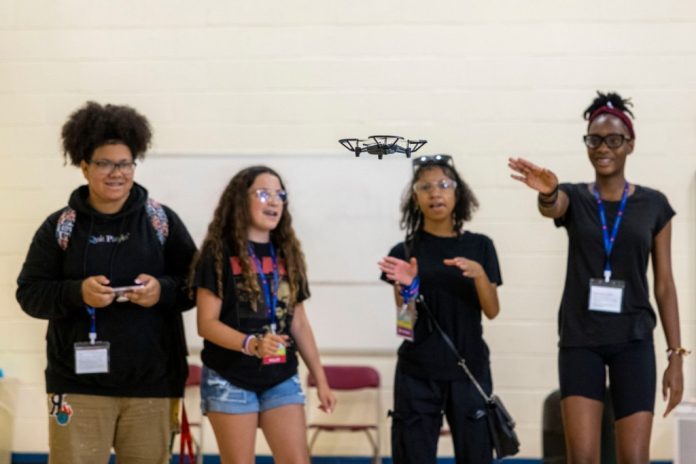
Photos: Newport News students show off their STEAM camp projects

0

Newport News students showcase their STEAM Camp projects and experiences during the STEAM Camps Community Expo at Hines Middle School on Thursday, July 27, 2023.

Boy dies in Portsmouth homicide, another man injured in separate shooting – Daily Press

0

A boy died Saturday afternoon in a homicide in Portsmouth. Another person was injured in a separate shooting Saturday night.

Officers found the boy with a fatal injury around 4:26 p.m. near the 6000 block of Churchland Boulevard, according to police.

Later, a man was shot and seriously injured near the 100 block of Grand Street. He was taken to a hospital for treatment. Police posted a tweet about the shooting at 11:24 p.m.

Police have not released further details about either incident. Check PilotOnline.com for updates.

Cianna Morales, 757-957-1304, [email protected]

Slowing down and finding true Sabbath rest – Daily Press

0

What do you think of when you hear the word “Sabbath?” Writing as a Christian, I have some very complicated feelings about this word. It is such a churchy word. Maybe some of you have it all figured out, but I often feel like the notion of Sabbath rest is unattainable in today’s fast-paced, modern world.

Barbara Brown Taylor, reminiscing about her own childhood, suggests that the commandment might as well have been, “Remember the Sabbath day and keep it boring.” She says Sunday was a day where you couldn’t wear blue jeans, play cards, ride bikes or go to the movies. All you could do was go to church in the morning, sit at home bored, and then go back to church again later in the day.

This idea of “keeping the Sabbath” strikes me as unnecessarily restrictive — something that is more likely to stop us from having fun than lead us to joy and life in abundance.

Rest is such a necessary and vital part of being human, and yet so many of us find ourselves hustling through life at a chaotic and blistering pace, simply trying to make ends meet and check all the boxes off on our “to do” list before collapsing into bed at the end of the day. Between work and volunteering and parenting and friendships and walking the dogs and grocery shopping and paying bills and cleaning the house and yard work and CrossFit and hobbies and all the other things, it’s no wonder that many of us spend a majority of our lives feeling tired and exhausted, to the point that it hardly feels like living at all. Honestly, I’m breathless after just writing that last sentence.

I can’t speak for other faith traditions, but Christian churches are hardly immune from hustle culture themselves: the temptation that we often feel is to do more things, add more programs and offer more worship services to reach more people. And it inevitably just leaves us tired and burnt out.

What if we could recapture the idea of Sabbath as a quality of time rather than simply a set of specific and restrictive rules to follow one day each week? What if we could reclaim the original impulse within Sabbath: restorative, life-giving rest?

Rest is profoundly counter-cultural, unfortunately. Our American cultural rhythm is work, work, work — and then collapse on the beach with a Mai Tai in hand and relax for a week. If you can afford to. And then repeat: work, work, work. In our culture, the idea seems to be that work leads to rest. If you work hard enough, then you deserve some time off.

This is almost exactly the opposite of the rhythm of life imagined by some early Christians, who used the Latin phrase otium sanctum to describe “holy leisure.” They argued that restful leisure, rather than frenzied work, lies at the heart of what it means to be human. Doesn’t that sound nice? It flips the script in our American context: life should begin in sacred rest and leisure, and then proceed outward in intentional ways, shaping our engagement with the world with a profound sense of divine purpose.

Sabbath rest is, of course, a commandment, right up there with “Thou shalt not kill.” It must be important, right?

In Deuteronomy 5, the Sabbath commandment says, “Keep the Sabbath day and treat it as holy. … Remember that you were enslaved in Egypt, but the Lord your God brought you out of there with a strong hand and an outstretched arm.”

Compare this to Exodus 20:8-11 and you’ll see that it’s unusual that Deuteronomy connects Sabbath observance to the plight of the Hebrew people in Egypt. Here is the key point, though: Remember when God’s people were the property of Pharaoh? When they were enslaved in Egypt, their value to Pharaoh was defined strictly on the basis of how many bricks they could make for the economy and how much work they could get done in the fields.

But God saved them and led them out of Egypt to a land of promise. And this Sabbath commandment is intended, in part, to remind them that productivity is not how God values people. In America our productivity leads to self worth and net worth, and many of us wear our exhaustion like a badge of honor. But in the divine economy, we are valued simply as we are, because God created us, and we bear the image of God. That’s it. No one has to earn God’s love.

In God’s economy, our value doesn’t come from what we can produce or accomplish, how much we get done on our “to do” lists, whether we learn a new language or write a book, what our job title is, or how great our garden looks. As Rob Bell once said, we are human “beings,” not human “doings,” and we are made in the image of a God who rests.

Remember this: you are not a machine. But we run the risk of feeling like one if we don’t slow down and find ways to experience Sabbath rest in our lives.

Here is a challenge: find a way to be kind to yourself in the week ahead. Carve out time to do something that is deliberately restful and restorative for your soul. Choose something that you know is life-giving for you. Intentionality is key here.

Go for a hike. Have coffee or wine with a friend. Waste time together. Play an instrument, write or sketch just for fun. Not to be productive. Not to “improve” yourself. Instead, try to savor this thing that we call life and remember that it is a gift. And remember that you are a person of infinite worth just because you’re you.

My hope and prayer is that each of us will find and experience true Sabbath rest this week. May it be so.

The Rev. Dr. Art Wright is the senior pastor of Williamsburg Baptist Church.

Use the summer, not the fall, to make a voting plan for the general election – Daily Press

0

Though Virginia’s general election is still more than three months away, campaigns are already working at a feverish pitch to canvass neighborhoods, speak to voters and encourage more people to cast a ballot in November.

As both Republicans and Democrats have launched early-voting campaigns to get their voters to the polls, a recently concluded primary contest in Northern Virginia provides timely evidence of how important those efforts can be.

The Republican nomination contest in the 29th Senate District, which includes parts of Prince William and Stafford counties, featured two candidates — Nikki Baldwin and Maria Martin — making their first bid for a Senate seat. On July 21, one month after the June 20 primary election, a recount confirmed that Baldwin had prevailed by a two-vote margin, 2,605 to 2,603.

Primary elections routinely draw a paltry number of voters to the polls, though early voting and absentee options have helped to boost totals in recent years. Margins tend to be closer than in a general election and even the slightest advantage in getting people to cast a ballot can make all the difference.

Though the results in the 29th District were extraordinarily close, they weren’t without precedent. Only six years ago, candidates seeking the 94th House District in Newport News ended in a tie. A drawing in January 2018 sent Republican David Yancey to Richmond over his Democratic opponent, Shelly Simonds.

In that case, the drawing did more than determine who represented Peninsula residents in the House of Delegates. Yancey’s victory also made the chamber an even partisan split — 50 seats for each party — which helped shape the legislature’s priorities and the course of legislation for the ensuing two years.

The stakes are similarly high for this year’s election.

Two years ago, voters swept Virginia Republicans into power. GOP candidates won all three statewide offices and a majority in the state House. In addition to all 100 House seats up for grabs this year, this will be the first time since that historic election that voters will decide who holds the 40 seats in the state Senate.

Gov. Glenn Youngkin has all but staked his political reputation and aspirations for higher office on holding GOP control of the House and winning back the Senate. That would give Republicans full control in Richmond for the first time since 2012, when the GOP enjoyed its largest-ever advantage in the House and Senate leaders used arcane rules to turn a 20-20 split into near-total control of the chamber.

Democrats, conversely, want to hold or expand their majority in the Senate as a bulwark against Youngkin and to win back control of the House. This election will be the first under legislative maps drawn by special masters selected by the Virginia Supreme Court, which analysts suggest give the party a slight advantage in key swing districts

If recent elections are any guide, voter turnout can negate any statistical edge that exists on paper. That’s why both parties have launched early voting efforts to encourage Virginians to make plans in the summer to cast a ballot so that, come November, it is easier for them to do so.

Of course, those who intend to participate in this year’s election need not rely on a partisan program. The Virginia Board of Elections website (elections.virginia.gov) enables Virginians to view and update their voter registration, confirm their voting location, sign up for absentee balloting and learn about early voting options.

Early voting begins Sept. 22, the deadline for registering to vote this year is Oct. 16 and voters must request an absentee ballot by Oct. 27. Those dates will be here sooner than one might expect, which is why campaigns are braving the summer swelter to connect with voters as early as possible.

Even one or two more ballots can decide a close election, as Virginia saw again this month. Don’t leave these critical decisions to others. Make a plan now to vote in November.

Meeting reading benchmarks requires greater commitment – Daily Press

0

Virginia is behind Louisiana, Mississippi and Tennessee when it comes to helping all children read by third grade. These states have taken a back-to-the-basics approach grounded in research and evidence and they have results to show for it.

In 2022, 1 in 4 children in Virginia were not meeting literacy benchmarks. Although reading Standards of Learning scores have declined across most divisions in third and eighth grade, Black, Hispanic and disadvantaged children are at the highest risk for reading and math difficulties.

Lisa Howard is the president and CEO of E3: Elevate Early Education, The New E3 School and Raise Your Hand, Virginia Campaign.

The research is clear: When children are not reading by third grade, they are four times more likely to drop out of school. When children cannot read, they cannot learn. If children do not have a strong foundation in reading, math, and writing, they will struggle in K-12, higher education and in the workforce. This is a problem that affects us all.

The documentary “The Right to Read” sheds light on how we have failed children, teachers and families. The film follows an NAACP activist and two American families fighting for literacy as our greatest civil right. It is a beacon of hope that shows that improving reading rates is possible if we use evidence-based reading instruction that includes the five pillars of early literacy (phonemic awareness, phonics, vocabulary, fluency and comprehension), dyslexia screening, professional development, literacy coaches and tutoring to help children. Every child’s progress is monitored, and intervention is provided every step of the way for struggling readers.

The National Council on Teacher Quality recently released an evaluation of more than 693 undergraduate and teacher training programs and found that 40% of programs instruct aspiring educators to use ineffective teaching practices and are not aligned with the science of reading. We are not equipping and empowering our teachers with the skills they need to be successful in the classroom.

Rodney Jordan, Norfolk School Board
Rodney Jordan is a grandparent, Norfolk Public School Board member and past president of the Virginia School Boards Association.

The Virginia Literacy Act (VLA) was passed in 2022 with bipartisan support in the legislature. Gov. Glenn Youngkin signed the bill and it is funded for kindergarten through third grade. Virginia is moving in the right direction, but we can’t move fast enough. There must be a sense of urgency to fix this problem, a strong focus on implementation and accountability throughout the state. Our children are struggling, our teachers are frustrated and school leaders are facing multiple challenges.

The VLA will make sure every teacher is using an evidence-based literacy curriculum, train teachers on how to help children become strong readers, assess student learning, develop individualized reading plans, monitor progress, provide reading specialists, deploy reading coaches, and provide access to online literacy resources for families. This is good policy and now we must ensure strong implementation across Virginia for every student, regardless of zip code.

Our local school boards have a responsibility to work alongside superintendents to ensure that teachers have the tools, skills and support to reach all children. School board meetings must spend time focused on monitoring literacy benchmarks in kindergarten, first, second and third grade with a goal that every student is reading by third grade.

Jenny Mackenzie is an Emmy Award-winning filmmaker committed to telling important social and racial justice stories.

If third grade reading benchmarks are a concern, school boards must focus on how to improve student performance over the next three to five years. There must be a data-driven approach that includes setting goals, implementing strategies and monitoring data. Ultimately, we should ask the question, Are our children on track? Budget decisions should align with what our students need and the outcomes we want for every child.

Every child in Virginia and the United States has the right to read. This is a call to action for all of us. Literacy leads to freedom and opportunity. We are asking every business leader, philanthropist, superintendent, school board member, university faculty, policymaker and concerned citizen to watch the documentary and raise your hand to make early literacy a top priority.

E3:Elevate Early Education and WHRO teamed up to show segments of The Right to Read documentary, listen to a panel of experts and discuss the implementation of the Virginia Literacy Act on Aug. 8 from 12-2 p.m. at WHRO. The screening event is open to the public; please register at whro.org/community/39684-screening-discussion-the-right-to-read.

Lisa Howard is the president and CEO of E3: Elevate Early Education, The New E3 School and Raise Your Hand, Virginia Campaign. Email her at [email protected]. Rodney Jordan is a grandparent, Norfolk Public School Board member and past president of the Virginia School Boards Association. Email him at [email protected]. Jenny Mackenzie is an Emmy Award-winning filmmaker committed to telling important social and racial justice stories. Email her at [email protected].

Proposed legislation would jeopardize veteran care – Daily Press

0

Veterans all over the nation are at risk of seeing a significant decline in the quality of care they receive at VA hospitals due to a group of conservative politicians attempting to revive the failed 2017 Accountability and Whistleblower Protection Act in the United States Congress.

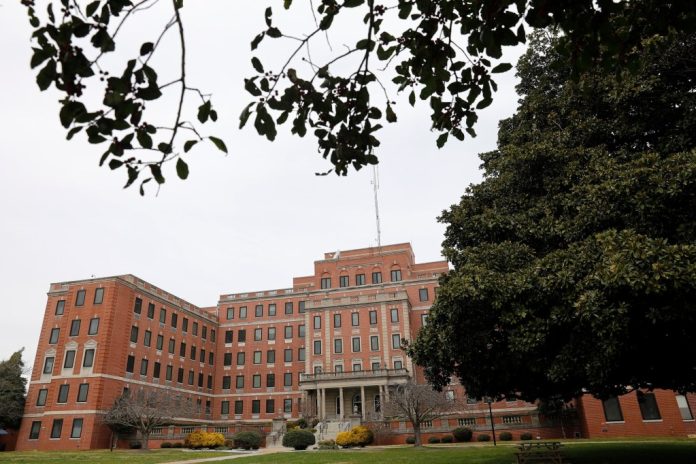
The latest version, the Restore Veterans Affairs (VA) Accountability Act of 2023, claims to address the original’s flaws, which was signed into law in June 2017. However, a closer look reveals that it actually aims to jeopardize the quality of care provided to our nation’s heroes and undermine the rights and job security of dedicated VA workers such as myself.

Sheila Elliott, Pharm.D., is the president of the American Federation of Government Employees National VA Council Local 2328 in Hampton. She has worked at the Hampton VA Medical Center for more than 33 years as a clinical pharmacist specialist and resides in Sioux.

As president of the American Federation of Government Employees Local 2328 representing more than 1,000 employees, including clinical pharmacists such as me, at the Hampton VA Medical Center, I’m fighting against the passage of this bill to protect VA workers and veteran care. My union joins me — the American Federation of Government Employees National VA Council, representing more than 291,000 VA workers nationwide, a third of whom are veterans.

Like its predecessor, the 2023 VA Accountability Act threatens civil servants at the VA who have tirelessly served those who have sacrificed for our country. Regrettably, U.S. Rep. Jen Kiggans of Virginia’s 2nd District has chosen to lend her support as a co-sponsor to this disastrous legislation. Every one of us should be outraged.

Over the last six years, federal courts, arbitrators and federal agencies, including the Federal Labor Relations Authority and the Merit Systems Protection Board, have repeatedly ruled against the VA, finding that the agency abused its authority by misapplying the accountability act.

Even VA Secretary Denis McDonough recognized the issues of the 2017 law and ordered the VA to abandon its use of it earlier this year. The VA submitted a statement to the U.S. House Subcommittee on Oversight and Investigations this month, stating it does not support the bill.

Additionally, this new legislation distracts from the real issues plaguing the VA health care system, such as staffing. More than 500 employees were hired last year, and only 20 stayed.

Throughout the VA, there were approximately 50,000 employee vacancies nationwide, even before the Honoring Our PACT Act of 2022 passed last year, which took a necessary step to expand benefits for 6.2 million veterans but has exacerbated the strain on an already critically understaffed health care system. The shortage of clinical staff in Veterans Health Administration facilities has escalated, with 88% of front-line employees reporting the need for additional staff.

Despite a severe staffing shortage, VA hospitals consistently outperform non-VA hospitals on all 10 core patient satisfaction metrics, as shown in a nationwide survey conducted by Medicare. This exceptional performance is due to the unwavering commitment of VA workers who ensure veterans can connect with providers who comprehend their specific needs. Trust in the VA’s ability to deliver health care is reflected in the fact that 90% of veterans rely on the VA for their health care needs.

The 2023 Accountability Act poses a significant threat to VA employees’ job security and rights, jeopardizing the dedicated individuals devoted to caring for our nation’s heroes and the veterans we serve. The legislation’s ease of employee termination, the weakening of employee protections and limited emphasis on professional growth undermine the quality of care our veterans receive.

Kiggans should also keep in mind that Hampton Roads is home to the world’s largest naval base and one of the largest military communities in the world. National VA Council union members at the Hampton VAMC, such as myself, are proud and honored to care for the veterans in our community.

This makes it especially disheartening to see Kiggans, who possesses a nursing and Navy background, co-sponsoring legislation that threatens care for the many veterans in our neighborhoods and further burdens an already understaffed and overworked VA workforce.

I urge Kiggans to reconsider her support for this bill and instead place the well-being of VA workers at the forefront and focus her efforts on improving veterans’ access to exemplary health care. Veterans across the nation — and especially at the Hampton VA — deserve better.

Sheila Elliott, Pharm.D., is the president of the American Federation of Government Employees National VA Council Local 2328 in Hampton. She has worked at the Hampton VA Medical Center for more than 33 years as a clinical pharmacist specialist and resides in Sioux.

Wake Forest-bound Kyle Haas sinks birdie putt on 18th hole to win 66th Eastern Amateur in his first appearance – Daily Press

0

PORTSMOUTH — For 18-year-old Kyle Haas, golf is in the blood.

His uncle Jay was a nine-time winner on the PGA Tour and a three-time Ryder Cup participant. Father Jerry Haas is the head golf coach at Wake Forest.

With such a lineage, the recent high school graduate set foot on the Elizabeth Manor Golf & Country Club course Saturday two shots behind leader Jack Schoenberger of Belmont University, but with great confidence and a wealth of links knowledge to draw from.

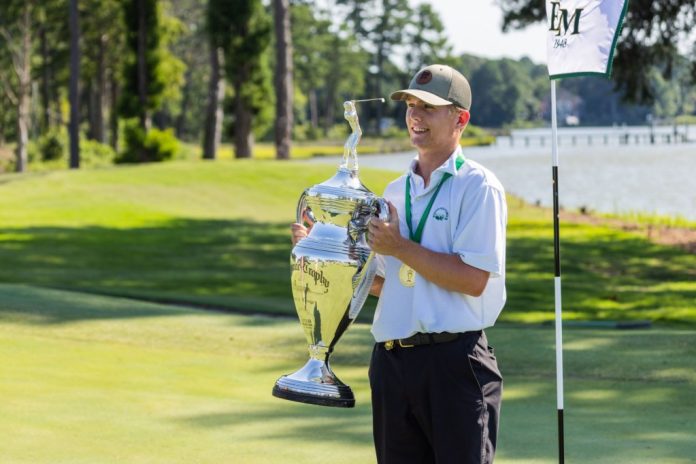
On the 72nd hole of the 66th Eastern Amateur Championship on Saturday, Haas sank a 5-foot birdie putt to top Schoenberger and Utah’s Brandon Robison by one shot. He finished the tournament with an 8-under 272.

Robison provided a spirited charge at the end, making a birdie on the 17th hole and then draining an 81-foot eagle putt from the front of the 18th green. It put added pressure on Haas to make par on the final hole, a 534-yard behemoth with a dogleg right and water hazard.

After a rainy night followed by Saturday’s strong gusts of wind, there would be no guarantees for any of the 60 golfers who made the cut on Thursday. Haas felt the elements immediately.

“I did not have a great start today,” said Haas, who will continue his academic and athletic careers at Wake Forest this fall. “But it was windy, so I decided to stay patient.”

Kyle Haas reacts after making his final putt on the 18th hole during the Eastern Amateur championship on Saturday at Elizabeth Manor Golf & Country Club in Portsmouth. Tess Crowley/Staff

As one golfer after another dropped back in the standings, Haas methodically attacked the course, staying at par through the first 17 holes, which was good enough to vault him from fifth place to first.

Surprisingly, Haas was unaware of his elevation in the standings.

“I didn’t realize that I was leading until I got to the 18th,” said Haas, who bogeyed the 16th hole and missed a birdie putt on the 17th. “I thought I was a shot or two back. But I had two good shots to start off 18 and figured, “Hey, I’m winning, let’s finish this.”

It was Haas’ first time playing the tournament, but he knew the reputation of the event, whose past winners include Ben Crenshaw and Williamsburg PGA pro Curtis Strange.

“It was awesome to see the course in good shape,” Haas said. “It hasn’t been as great in recent years.”

Sihan Sandhu of Ashburn and Bryce Corbett of Radford University tied for fourth with a 4-under 276.

Adam Horton of Chesapeake was the top local finisher, tying for 10th with an even-par 280. Yorktown 14-year-old sensation Brandon Sipe made the cut and finished tied for 26th with a 6-over 286.

Carson Hocevar earns lightning-delayed NASCAR Truck Series victory at Richmond Raceway – Daily Press

0

By Holly Cain

NASCAR Wire Service

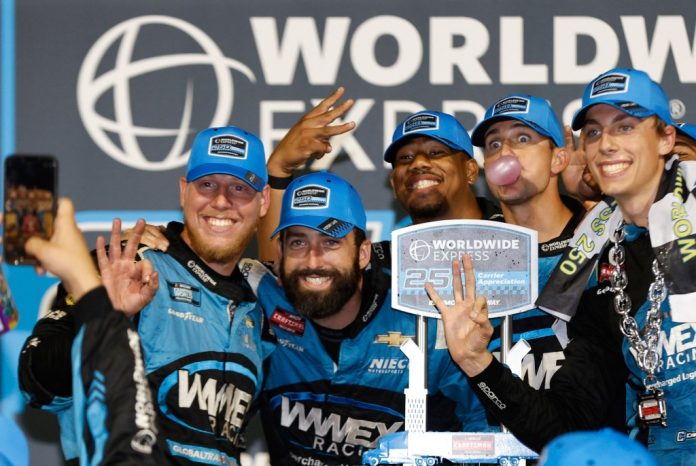
Carson Hocevar’s race started in the pits with a flat tire even before the green flag for Saturday night’s NASCAR Truck Series Worldwide Express 250 at Richmond Raceway, but ended with a celebration in Victory Lane.

The 20-year-old driver of the No. 42 Niece Motorsports Chevrolet passed the night’s most dominant driver, Ty Majeski, with only three laps remaining, thanks to pit-road strategy and a fast Silverado. Hocevar claimed his third win of the season by 2.308 seconds over Majeski.

“We didn’t come here to run second,’’ Hocevar said. “I knew we had to do something different, and new tires prevailed.’’

Corey Heim secured the series’ regular-season championship with a third-place finish in the opening stage of the lightning-delayed race. The 21-year old driver of the No. 11 Toyota will start the seven-race playoff portion of the season with a 15-point bonus, thanks to a title run that included a pair of wins. He finished sixth Saturday — his series-best 13th top-10 finish in 16 races.

“It really means a lot,’’ Heim said. “With Tricon Garage and Toyota Racing coming such a long way from the beginning of the year, I really felt like we had a lot of progress to make in the first four or five weeks, and we’ve really been improving ever since.

“Tonight, it was a rough night at Richmond. It is kind of a unique racetrack. On the normal tracks, we’ve been really consistent. Still a good finish for us, but definitely want to do better leading into the playoffs.”

After earning his second pole position of the season, Majeski dominated much of the race, sweeping both stage wins for the first time in his career and leading a dominating 168 of the 250 laps in the No. 98 Ford.

His truck was so good Saturday that he even overcame a mid-race pit-stop speeding penalty to regain the lead late. Majeski stayed out while Hocevar pitted for tires with 40 laps remaining, and Majeski was ultimately unable to hold off the fresh tires in the closing laps.

“Just didn’t have enough there,’’ he said. “Obviously made a mistake there, speeding on pit road, but we had a chance to win even with the penalty. It’s just so disappointing. I don’t know if I’ve ever had a dominant vehicle that much faster than the field, and to not win with it is so hard.

“But we have fast race trucks and we’ll make a run at the playoffs.”

The playoff field – in points order – includes Heim, 2022 series champion Zane Smith, who finished third at Richmond, Hocevar, Christian Eckes, Grant Enfinger, Majeski, 2021 series champion Ben Rhodes, rookie Nick Sanchez, Matt DiBenedetto and three-time series champion Matt Crafton.

Stewart Friesen came into the race ranked 11th, trailing Crafton by nine points, but Friesen’s No. 52 Chevrolet had a disappointing qualifying run – 23rd – and never mounted a challenge forward. He finished 27th.

“We brought a dull knife to a gunfight tonight,’’ Friesen said.

Hocevar led 64 laps on the evening, moving into the lead position while Majeski was recovering from his pit-road penalty.

“We passed every single truck here. The 98 (of Majeski) was the class of the field, but I thought we were second and won with the second-best truck because I have the first-best pit crew and first-best crew chief on the box,’’ Hocevar said. “I just love it.’’

Rookie Jake Garcia and Matt Mills rounded out the top five at Richmond. Heim finished sixth, followed by Crafton, Sanchez, Enfinger and 16-year old William Sawalich, who was making only his third series start.

The series playoffs begin at 9 p.m,. Aug. 11 with the TSport 200 at Lucas Oil Indianapolis Raceway Park.

Tyler Reddick captures pole for Sunday afternoon’s NASCAR Cup Series race at Richmond Raceway – Daily Press

0

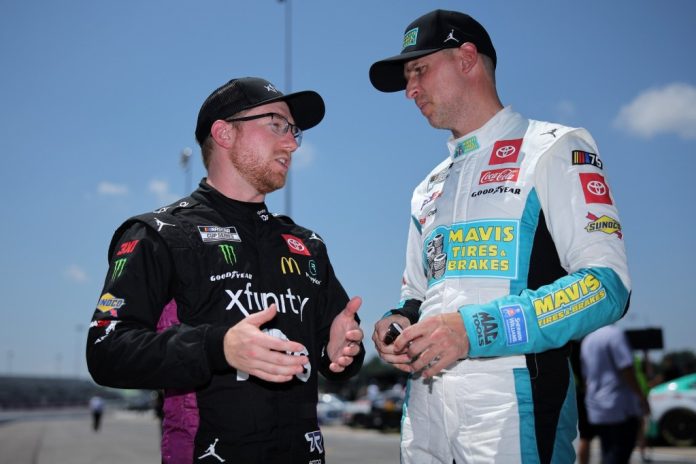
Tyler Reddick earned his first NASCAR Cup Series pole the season — and first with his new team, 23XI Racing — Saturday afternoon with a lap of 113.669 mph in the No. 45 Toyota at Richmond Raceway. He outpaced Richard Childress Racing’s Kyle Busch — the track’s winningest active driver — by 11-thousandths of a second.

“Really excited to be on the pole for the first time this year with 23XI and nice to finally get that first pole with the team,’’ said Reddick, who made slight contact with the Turn 4 wall during the first session of qualifying and wasn’t sure if the team would need to make any repairs before Sunday’s 3 p.m. Cook Out 400.

“I pretty much knew I was going to hit the wall, but I knew if I lifted, I wasn’t going to be able to make that second round, so I stayed in it,’’ Reddick said of the close call. “Hit the wall pretty good but was able to transfer into that second round.’’

Reddick, a 27-year-old Californian, won this year at the Circuit of the Americas road course in Austin, Texas.

Richmond-area native Denny Hamlin, Chase Elliott and Bubba Wallace rounded out the top five at the 0.75-mile oval.

William Byron, Ty Gibbs, defending race winner Kevin Harvick, Ricky Stenhouse Jr. and Cup points leader Martin Truex Jr. were in spots 6-10. Kyle Larson, who won at Richmond in the spring, will roll off 14th.

The Chevrolets of Ross Chastain (No. 1), Elliott (No. 9) and Justin Haley (No. 31) failed pre-race inspection twice and will lose their car chiefs and pit selections for the race.