Home Blog Page 63

Woman’s escape from cinder block cell may have spared others from similar nightmare, FBI says – Daily Press

0

By GENE JOHNSON and CLAIRE RUSH (Associated Press)

PORTLAND, Ore. (AP) — A woman who escaped her kidnapper by punching her way out of a cinder block cell at a home in southern Oregon may have spared other women from a similar fate by alerting authorities to a man they now suspect in sexual assaults in at least four more states., the FBI said.

Negasi Zuberi posed as an undercover police officer when he kidnapped the woman in Seattle three weeks ago, drove hundreds of miles to his home in Klamath Falls and locked her in the garage cell until she bloodied her hands breaking through the door to escape, the FBI said Wednesday.

Zuberi, 29, faces federal charges that include interstate kidnapping, and authorities said they are looking for other possible victims after linking him to the other assaults. Authorities have not yet said publicly in which states those attacks took place.

“This woman was kidnapped, chained, sexually assaulted, and locked in a cinderblock cell,” Stephanie Shark, the assistant special agent in charge of the FBI’s Portland field office, said in a news release. “Police say she beat the door with her hands until they were bloody in order to break free. Her quick thinking and will to survive may have saved other women from a similar nightmare.”

After the woman escaped from his home in Klamath Falls, Zuberi fled the city of roughly 22,000 people but was arrested by state police in Reno, Nevada, the next afternoon, the FBI said.

Court records didn’t list an attorney who might speak on Zuberi’s behalf as of Wednesday. He hasn’t yet been assigned a public defender in Oregon as he’s still being transferred from Nevada, which can take several weeks, said Kevin Sonoff, a spokesperson for the U.S. attorney’s office in Oregon.

A grand jury in Portland on Wednesday returned an indictment charging Zuberi with interstate kidnapping and transporting an individual across state lines with intent to engage in criminal sexual activity. He could face up to life in prison if convicted.

According to the FBI, Zuberi also went by the names Sakima, Justin Hyche and Justin Kouassi, and he has lived in multiple states since 2016, possibly including California, Washington, Oregon, Colorado, Utah, Florida, New York, New Jersey, Alabama, and Nevada.

According to a criminal complaint filed in U.S. District Court in Oregon, Zuberi solicited the woman, identified only as Adult Victim 1, in the early-morning hours of July 15 to engage in prostitution along Aurora Avenue in Seattle, an area known for sex work. Afterward, Zuberi told the woman he was an undercover officer, showed her a badge, pointed a stun gun at her and placed her in handcuffs and leg irons before putting her in the back of his vehicle, the complaint says.

He then drove to his home, stopping along the way to sexually assault her, according to the complaint. When they arrived about seven hours after he first encountered her in Seattle, he put her in the makeshift cell built from cinder blocks with a door of metal bars and said he was leaving to do paperwork.

The woman “briefly slept and awoke to the realization that she would likely die if she did not attempt to escape,” the complaint says.

She managed to break some of the door’s welded joints, creating a small opening which she climbed through, Klamath Falls Police Capt. Rob Reynolds said at a news conference.

“She repeatedly punched the door with her own hands,” Reynolds said. “She had several lacerations along her knuckles.”

The victim opened Zuberi’s vehicle which was in the garage, grabbed his gun and fled, leaving blood on a wooden fence she climbed over to escape, the complaint says. She flagged down a passing driver, who called 911.

Two Nevada State Patrol officers tracked Zuberi down at a Walmart parking lot in Reno the next day, July 16, the complaint says. He was in his car holding one of his children in the front seat while talking to his wife, who was standing outside the vehicle. He initially refused to get out of the car when the officers asked and instead cut himself with a sharp object and tried to destroy his phone, according to the complaint. Zuberi eventually surrendered, and the child wasn’t harmed.

Investigators interviewed Zuberi’s wife and neighbors, but authorities declined to say if there was any indication that any of them had been aware of the abduction.

A search of Zuberi’s home and garage turned up the Seattle woman’s purse and handwritten notes, according to investigators. One of them was labeled “Operation Take Over” and included a bullet list with entries that read, “Leave phone at home” and “Make sure they don’t have a bunch of ppl (sic) in their life. You don’t want any type of investigation.”

Another handwritten document appeared to include a rough sketch for an underground structure using concrete blocks, foam insulation and waterproof concrete.

The FBI said Zuberi may have used other methods of gaining control of women, including drugging their drinks. The agency said it was setting up a website asking anyone who believes they may have been a victim to come forward.

The Klamath Falls rental home where Zuberi allegedly took the woman is owned by the city’s mayor, Carol Westfall, and her husband, Kevin, according to property records. The house backs onto a park and is on a residential street, less than a quarter-mile (half a kilometer) from a highway.

Court records show that after Zuberi’s arrest, the couple had him evicted.

“We are shocked and dismayed by what has occurred,” the Westfalls, who declined to comment on their interactions with Zuberi, said in an email. “We applaud the actions of the woman who helped capture this person and prevent him from committing further atrocities.”

___

Johnson reported from Seattle. Associated Press writers Andrew Selsky in Salem, Oregon, and Rebecca Boone in Boise, Idaho, contributed. Claire Rush is a corps member for the Associated Press/Report for America Statehouse News Initiative. Report for America is a nonprofit national service program that places journalists in local newsrooms to report on undercovered issues.


Cities boost wages, embrace ‘culture change’ to beat lifeguard shortage – Daily Press

0

Lifeguard shortages closed thousands of pools and beaches during the COVID-19 pandemic, when social distancing requirements disrupted training and rising wages lured some workers to other summer jobs.

Now, some states and cities say they’re back in the swim of things, thanks to major changes in how they train, recruit and compensate lifeguards.

Several states, including Connecticut and New York, lowered their minimum lifeguard age to 15 years old this summer. Dozens of cities raised lifeguard pay and offered eye-popping bonuses. In San Antonio, Texas — where all but one municipal pool opened this summer, after three years of closures and delays — the Parks and Recreation Department even decked out a parade float, complete with live plants and light-up butterflies, to promote an aggressive recruitment campaign.

“We had digital billboards on highways, we had graphics up at bus shelters, we had radio ads and street banners,” said Shanea Allen, the San Antonio parks and recreation manager who oversees the aquatics program. “We were everywhere. If you were in San Antonio this spring, you couldn’t miss us.”

In many ways, the push represents what some government and industry officials call an overdue reappraisal of lifeguarding — an iconic and critical public safety job that has nonetheless been relegated, in many places, to low-paid students on summer break. Periodic shortages have plagued American pools and beaches for decades, forcing some communities to reduce hours or close facilities.

But in the wake of acute pandemic shortfalls — and amid record-high summer temperatures — many local governments have begun recruiting, training and paying lifeguards more aggressively than ever before. In a 2021 op-ed for the industry magazine Aquatics International, one California pools supervisor warned that swim programs now need to recruit lifeguards “with the same ferocity as the military recruits soldiers.”

The approach seems to have worked in some places that attempted hard-core recruiting, even as the lifeguard shortage closed pools elsewhere. Several major cities, including Baltimore, Chicago, Denver and San Antonio, fully staffed their pools this summer for the first time in several years. The American Red Cross, which operates one of the country’s largest lifeguard certification programs, also says enrollments have increased steadily over the past two years.

“Everyone is realizing that these are not just young kids who are babysitters for the pool,” said Juliene Hefter, the executive director of the Association of Aquatic Professionals, a national membership organization for aquatic and recreation program managers — often, the people who hire lifeguards.

“The mentality always was that it’s a job for kids. But that’s not necessarily the case anymore.”

___

Serious shortages

Hefter, a former lifeguard and aquatic program supervisor, has seen several cycles of lifeguard shortages over her decadeslong career. As a teenager, she said, dozens of applicants would try out for each available lifeguard chair. Now, the opposite is far more likely to be true: At a recent lifeguard training in Brevard County, Florida, two candidates tried out for 50 open positions.

Much of the deficit springs from the COVID-19 pandemic, which forced lifeguard training classes to an abrupt halt. New lifeguards couldn’t start work for much of 2020, and returning lifeguards — who are typically required to recertify every two years, on average — couldn’t update their credentials. Between early 2019 and early 2020, the number of people certified in American Red Cross lifeguarding classes fell by almost half.

Widespread pool and beach closures cut millions of Americans off from a critical public health resource, said Amelie Ramirez, the director of the Institute for Health Promotion Research at the University of Texas Health Science Center at San Antonio. Pools and beaches can help people stay cool in record-high temperatures. And swimmers are less likely to die of drowning in bodies of water where a lifeguard is present.

“Having access to safe water recreation is really important, especially for underrepresented communities,” Ramirez said, “because many are disproportionately impacted by climate change and heat waves like the ones we just experienced.”

But while the pandemic closures made shortages more visible, pools and beaches have long struggled to attract enough lifeguards — competing with other part-time, seasonal employers in food service and retail. Today, servers, cashiers and child care workers all make a higher hourly wage than lifeguards, on average. They’re also generally not expected to pay for their own training or maintain a high level of physical fitness, as lifeguards are.

In Florida’s Brevard County, for instance, lifeguards earn $13.75 per hour and must complete 80 hours of mandatory ocean rescue and emergency medical training, in addition to passing a physical exam. Part-time cashiers make comparable wages — with far fewer qualifications.

“We’re facing the same challenges that every other industry is facing across the country trying to recruit staff,” said John Cattelan, the vice president of government relations for the Connecticut and Rhode Island Alliance of YMCAs. “It doesn’t help that becoming a certified lifeguard is a pretty intense process.”

To attract would-be lifeguards to the profession, some lawmakers and parks officials have sought to rebrand it from a fun summer gig to a high-skilled or pre-professional job. “Our City lifeguards are highly-skilled and highly-trained first-responders,” reads one Philadelphia press release, announcing a partnership to grant college credits to students who worked as lifeguards.

Dozens of city, county and state governments offered significant wage bumps, cash bonuses and other incentives this year, promising $500 or $1,000 checks to lifeguards who lasted the full season. In Phoenix, which operates one of the country’s more generous incentive programs, hourly pay increased to $15.72 from $14 — plus a $3,000 bonus for workers who finished the season in good standing and took fewer than 10 days of vacation.

“That really got people in the door,” said Becky Kirk, the city’s aquatics supervisor. “We were teaching humongous lifeguard classes after the incentive.”

Many programs also have begun paying for lifeguards’ training and certification — following the example of Colorado Democratic Gov. Jared Polis, who in May announced a quarter-million dollars of state funding for lifeguard training. Other programs have sought to expand the typical candidate pool beyond sporty high school and college students, even offering benefits such as retirement accounts and health insurance.

Pools and beaches increasingly recruit from among the ranks of first responders, said Wyatt Werneth, the national spokesperson for the American Lifeguard Association. In Massachusetts, Democratic Lt. Gov. Kim Driscoll, a former lifeguard, encouraged older adults to apply for open positions at state beaches.

On the other end of the spectrum, at least two states — Connecticut and New York — loosened existing labor laws to allow more facilities to hire 15-year-old lifeguards. Connecticut, for instance, already allowed 15-year-olds to work as lifeguards in municipal parks and pools, but not in private pools, waterparks or sports complexes. The shortage had disrupted YMCA swim lessons and summer camps across the state, said Cattelan, of the YMCA.

Younger lifeguards have kept public pools open in places such as Wisconsin, which lowered its minimum age to 15 five years ago, said Hefter, of the Association of Aquatic Professionals. The younger minimum age also can give aquatics programs an advantage over retail and food service employers, who can only hire older teenagers.

Connecticut’s new age limit, which became law in June, is expected to affect lifeguard staffing next summer.

“We’re dealing with very serious shortages here and looking for solutions wherever we can,” said state Rep. Henry Genga, a Democrat who co-sponsored the bipartisan legislation.

___

San Antonio’s success

Local and state officials have yet to close the lifeguard gap, however: Across the country, the American Lifeguard Association estimates that as many as a third of the nation’s public pools are still affected by the shortage. That does not include beaches, lakes or private pools owned by community and condominium associations, which in many states are not required to staff a lifeguard.

Los Angeles officials cut swim hours by half this year. Houston filled only 57 of 188 lifeguard slots by the start of its season. In Phoenix, even massive bonuses failed to attract enough qualified applicants: The city hired fewer than 400 of the 650 lifeguards it needed and opened 15 of its 29 pools — up from 14 last year.

Kirk, the aquatics supervisor, blames the lingering effects of the pandemic, which slashed her department’s retention rate to just 30%. Arizona’s teacher shortage also trickled into the park system, she said: Her department once commonly hired schoolteachers during summer break, but many have left that role for year-round jobs.

Now, Kirk is trying to “change the culture” in her department and publicize how lifeguarding can fit into other long-term, full-time professions, she said. Last December, she hosted a polar plunge with former lifeguards who had used the job to launch careers as firefighters and medics.

“We have to change the perception that it’s just kids having fun at the pool — they’re highly trained first responders,” Kirk said.

On average, 371 children under 15 died in pool- or spa-related drownings between 2018 and 2020, according to a report in June from the federal Consumer Product Safety Commission. And some 6,400 kids under 15 suffered non-fatal drowning injuries last year, according to the report.

Ultimately, it may take a range of incentives and cultural changes to lure lifeguards back to beaches and pools, industry and government officials said. But some places have managed it.

Last fall, San Antonio’s City Council approved an across-the-board pay raise for city employees, with one of the largest bumps — roughly $5 an hour — going to lifeguards. The Parks and Recreation Department also introduced a $75 uniform stipend, a $500 retention incentive and a free training and certification program for lifeguards.

Previously, lifeguards could not begin the hiring process until they had an American Red Cross certificate. Now, if candidates can retrieve a 10-pound brick from the bottom of a pool’s deep end, swim a 300-yard breaststroke and tread water for two minutes, the city will hire and certify them — mirroring paid training norms in other professions, said Allen, the aquatics manager.

On June 17, San Antonio opened 23 of its 24 pools for the regular summer season.

As for that last pool, it should open next year — it’s only closed for construction.

Adidas brings in $437 million from selling Yeezy shoes that will benefit anti-hate groups – Daily Press

0

FRANKFURT, Germany (AP) — Adidas brought in 400 million euros ($437 million) from the first release of Yeezy sneakers left over after breaking ties with Ye, the rapper formerly known as Kanye West, as the German sportswear maker tries to offload the unsold shoes and donate part of the proceeds to groups fighting antisemitism and other forms of hate.

The first batch of shoes sold in June helped the company reach an operating profit of 176 million euros ($192 million) in the second quarter, better than it originally planned, Adidas said in a statement Thursday.

After Ye’s antisemitic and other offensive comments led the company to end its partnership with the rapper in October, Adidas has sought a way to dispose of 1.2 billion euros ($1.3 billion) worth of the high-end shoes in a responsible way.

“We will continue to carefully sell off more of the existing Yeezy inventory,” said CEO Bjørn Gulden, who took over in January. Adidas said it sold out the first batch of Yeezy shoes and launched a second release on Wednesday.

“This is much better than destroying and writing off the inventory and allows us to make substantial donations to organizations like the Anti-Defamation League, the Philonise & Keeta Floyd Institute for Social Change and Robert Kraft’s Foundation to Combat Antisemitism,” Gulden said.

Several Jewish civic leaders contacted by The Associated Press said they weren’t planning to buy a pair of Yeezys themselves but generally welcomed the plan to support anti-hate organizations, saying the company is trying to make the best of a bad situation.

The Adidas chief executive added that the Yeezy sales are “of course also helping both our cash flow and general financial strength.”

The blow-up of the Ye partnership put Adidas in a precarious position because of the popularity of the Yeezy line, and it faced growing pressure to end ties last year as other companies cut off the rapper. Adidas said it now expects to report an operating loss of 450 million euros ($450 million) this year instead of 700 million euros ($765 million).

Yeezy revenue from June were “largely in line” with sales seen in the same April-to-June period last year, Adidas said.

Adidas has not said how many shoes it is selling or whether Ye is receiving royalties from the sales. It has only said that “we will honor our contractual obligations and enforce our rights but will not share any more details.”

CNU business school, Peninsula Chamber aim to stimulate regional collaboration for economic growth – Daily Press

0

A partnership between Christopher Newport University’s Luter School of Business and the Virginia Peninsula Chamber of Commerce aims to get regional cities working together on growing the economy.

Regional collaboration has been talked about for decades, but a lack of cooperation continues to be the area’s Achilles’ heel.

“It was brought up 30 years ago. We say we need to work together to optimize our assets because it’s best for the whole area. But it doesn’t happen,” said Dr. William “Willy” Donaldson, founder and president of Strategic Venture Planning and associate professor of management at CNU.

So, Donaldson and Peninsula Chamber President and CEO Bob McKenna joined forces to bring together city and business leaders for regional growth. The July 18 kickoff event, Rising Tide, brought together over 170 business owners, industry professionals, academics and community leaders to solve problems and identify opportunities.

Future plans are to meet about twice a month to discuss business, public transportation, public safety and education. An ongoing topic will be leveraging the region’s unique assets in technology, including NASA Langley Research Center in Hampton and Jefferson Lab in Newport News, McKenna said.

William Donaldson is an associate professor of management at Christopher Newport University’s Luter School of Business. (Courtesy photo)

Another major Hampton Roads technology asset is the educated workforce, Donaldson said. The area has one of the highest per capita densities of scientists, engineers and technicians in the country. That needs to be leveraged, Donaldson said.

“When it comes to technology, Hampton Roads should be a leader,” he said.

The group has begun several initiatives, starting with optimizing Jefferson Lab for commercial uses in manufacturing. Jeff Lab technology can also be used for water purification, flue gas remediation and more, Donaldson said.

A Hampton Roads regional aviation, aerospace and unmanned systems assessment is another initiative. It will involve a consortium of regional leaders from airports, NASA, the Department of Defense, academia and industry that will attempt to solve aviation problems. It will address pilot shortages, fuel costs, carbon footprint and fuel conversion issues. Plans are to develop and assist in the scale-up of drones and autonomous unmanned aerial vehicles, Donaldson said.

Other opportunities exist with helping the port with research needed to lessen the carbon footprint or helping the Department of Energy with emerging alternative nuclear power development. Donaldson said that at the Chesapeake location of IBC Renewables, a consortium will work to convert waste into clean, sustainable products.

For entrepreneurs and current companies who want to grow, the chamber will host successful local founders to tell their stories. There are several local organizations such as Campus 757, SCORE and 757 Collab that help entrepreneurs in the area. McKenna said a “meet the resources” event is on the horizon to allow entrepreneurs to figure out who can help their business.

On a wider regional scale, the Mid-Atlantic Hydrogen Hub will be consortium of about 50 cross-sector leaders from Washington, D.C., Maryland and Virginia. The group hopes to develop a regional hydrogen hub and ecosystem tied to the emerging offshore wind industry. Hydrogen can be used in shipping, ports aviation and trucking, Donaldson said.

The initiatives are needed because Hampton Roads is not doing as well economically compared with other regions because various city leaders do not cooperate, he said. He points to evidence on how much the region is suffering because of it, including lagging gross domestic product.

“We lag in job creation, and wages are declining. Yet the cost of living goes up,” he said.

In regards to low wages, Donaldson said that in 2021, the region had a per capita personal income of $56,716, ranking the area 149th out 421 regions in the United States. The national per capita income is $64,143. And housing costs are higher than in comparable regions. In Charleston, South Carolina, the average portion of household income for housing is about 30%. For Hampton Roads, the average is 35% of household income.

Virginia ranks in the bottom half for venture capital investment as well, Donaldson said.

He said the heavy reliance on the Department of Defense and the federal government in the regional economy has been a “double-edged sword.”

Donaldson said when defense budgets get cut, the region suffers.

“When D.C. sneezes, Hampton Roads gets a cold,” he said.

Kyle Stowers’ inside-the-park grand slam lifts Tides, who split doubleheader with Charlotte – Daily Press

0

Kyle Stowers hit an inside-the-park grand slam and Chayce McDermott tossed one-hit ball over six scoreless innings as the Norfolk Tides blanked the Charlotte Knights 4-0 in the first game of a doubleheader Wednesday at Harbor Park.

The Knights (40-64 overall, 5-24 in second half) overcame a 5-0 deficit to win the second game 11-7 and earn a split.

In the opener, the Tides (65-38, 17-12) managed only three hits off Charlotte pitchers Alejandro Mateo, Jordan Holloway and Nate Fisher before getting to Fisher (5-10) in the bottom of the fifth inning. Jose Godoy singled to lead off, Connor Norby reached on a fielding error and Heston Kjerstad singled to load the bases with no outs.

After Joey Ortiz flied out to right, Stowers hit a flare to center field that Knights outfielder Clint Frazier dove for, but couldn’t come up with it. The ball got past him and rolled to the wall, clearing the bases.

That was all that McDermott needed to improve to 3-0 with the Tides. He pitched a scoreless sixth inning to lower his ERA to 1.89 and finished with seven strikeouts and two walks.

Nick Vespi capped the shutout with a scoreless seventh, striking out two.

Kjerstad had two of the Tides’ six hits.

In the second game, Norfolk jumped out to a 5-0 lead with three runs in the first inning and two in the second. Daz Cameron’s two-run double was the key hit in the first and Ortiz hit an RBI single in the second.

Charlotte stormed back with six runs in the top of the fourth, two runs in the fifth and three in the sixth. Frazier hit a three-run triple in the fourth.

Ortiz finished the second game 4 for 4 with two RBIs, while Kjerstad went 3 for 3 with four runs.

Tides reliever Kyle Dowdy (7-3) took the loss, allowing six runs (three earned) in one-third of an inning. Noah Denoyer started the game and pitched three hitless innings.

The teams will play a 12:05 p.m. game Thursday.

Prosecutors may be aiming for quick Trump trial by not naming alleged conspirators, experts say – Daily Press

0

By RICHARD LARDNER and ALAN SUDERMAN (Associated Press)

WASHINGTON (AP) — By not naming or charging six alleged co-conspirators in the indictment this week of former President Donald Trump, federal prosecutors may be signaling their desire to expeditiously put the Republican presidential front-runner on trial for seeking to overturn the 2020 election.

More defendants mean more defense lawyers, and more legal motions and more delays, according to legal scholars and former prosecutors. Such a large cast of defendants would make it extremely difficult for Justice Department special counsel Jack Smith to get Trump in front of a jury before the final stretch in the 2024 campaign, the experts said.

“This keeps it pretty streamlined,” said Christopher Ott, a former federal prosecutor. “All of those motions by defendants affect all of the defendants, including Trump. It would slow things down. If you don’t name and charge them, you don’t have that trouble.”

Trump, 77, was indicted by a federal grand jury in Washington on Tuesday on felony charges of seeking to illegally overturn the results of the 2020 election and block the peaceful transfer of power to President Joe Biden.

The four-count indictment chronicles a months-long campaign by Trump and six unnamed co-conspirators to spread lies about the election results — falsehoods that resulted in a violent insurrection at the U.S. Capitol.

It includes charges of conspiring to defraud the U.S., conspiring to obstruct an official proceeding and obstructing an official proceeding. It also alleges Trump violated an 1800s law that makes it a crime to conspire to violate rights guaranteed by the Constitution — in this case, the right to vote.

It is the third time this year that Trump has been charged with a criminal offense. He was indicted by a federal grand jury in Miami on charges of illegally retaining top secret documents. In New York, Trump faces criminal charges in a hush money case and a civil trial over his business practices.

He could face further charges in Georgia, where a county district attorney is investigating efforts by Trump and his allies to overturn his 2020 election loss in the state.

The indictment Tuesday alleges that Trump was aided in his efforts to overturn the election by six unnamed co-conspirators. The Associated Press has identified five of them through court and Congressional records and other means:

— “Co-Conspirator 1” and “Co-Conspirator 2” are lawyers Rudy Giuliani and John Eastman. Giuliani, one of Trump’s attorneys, is described in the indictment as “an attorney who was willing to spread knowingly false claims” about the election. Eastman “advised and attempted to implement a strategy,” the indictment said, that would have seen former Vice President Mike Pence reject the certification of the electoral vote.

— “Co-Conspirator 3,” attorney Sidney Powell, pushed election conspiracies that even Trump privately conceded sounded “crazy,” the indictment alleged.

— “Co-Conspirator 4” is Jeffrey Clark, a Justice Department official who championed Trump’s false claims of election fraud.

— “Co-Conspirator 5” is lawyer Kenneth Chesebro, whom the indictment alleges “assisted in devising and attempting to implement a plan to submit fraudulent slates of presidential electors to obstruct the certification proceeding.”

— “Co-Conspirator 6” is an unknown political consultant who also assisted with the fake electors plan.

In deciding not to charge those six individuals, legal scholars said, Smith and his prosecutors were not just thinking about how to move quickly before the 2024 election. They may also be feeling pressure to win a conviction before Trump or another Republican might capture the presidency and order a stop to the prosecution.

Smith may have been trying to find ways to simplify the unprecedented trial of a former president accused in the indictment of assaulting the “bedrock function of the United States federal government: the nation’s process of collecting, counting, and certifying the results of the presidential election.”

“Four counts, one defendant, that’s it,” said Jimmy Gurulé, a law professor at Notre Dame.

Not indicting the alleged conspirators doesn’t mean they won’t face charges. Legal scholars, in fact, said they believed the alleged conspirators stand a strong chance of being indicted and going on trial, perhaps after Trump faces a jury.

“It doesn’t mean they are off the hook,” said Randall Eliason, a former federal prosecutor who is a George Washington University law professor. “It’s just a question of timing and tactics. … The prosecution is very clearly saying, ‘I’ve got you in my sights.’”

Beijing records heaviest rainfall in at least 140 years, causing 21 deaths – Daily Press

0

By ANDY WONG and HUIZHONG WU (Associated Press)

ZHUOZHOU, China (AP) — China’s capital recorded its heaviest rainfall in at least 140 years over the past few days as remnants of Typhoon Doksuri deluged the region, turning streets into canals where emergency crews used rubber boats to rescue stranded residents.

The city recorded 744.8 millimeters (29.3 inches) of rain between Saturday and Wednesday morning, the Beijing Meteorological Bureau said Wednesday.

Beijing and the surrounding province of Hebei were hit by severe flooding because of the record rainfall, with waters rising to dangerous levels. The rain destroyed roads and knocked out power and even pipes carrying drinking water. It flooded rivers surrounding the capital, leaving cars waterlogged, while lifting others onto bridges meant for pedestrians.

The number of confirmed deaths from the torrential rains around Beijing rose to 21 on Wednesday after the body of a rescuer was recovered. Wang Hong-chun, 41, was with other rescuers in a rubber boat when it flipped over in a rapidly flowing river. Four of her teammates survived.

At least 26 people remain missing from the rains.

Among the hardest hit areas is Zhuozhou, a small city in Hebei province that borders Beijing’s southwest. On Tuesday night, police there issued a plea on social media for lights to assist with rescue work.

Rescue teams traversed the flooded city in rubber boats as they evacuated residents who were stuck in their homes without running water, gas or electricity since Tuesday afternoon.

“I didn’t think it would be that severe, I thought it was just a little bit of water and that it would recede,” said 54-year-old Wang Huiying. She ended up spending the night on the third floor of her building as the water seeped into the first floor, which holds her steamed bread shop. All the machinery is now underwater.

It’s unknown how many people are trapped in flood-stricken areas in the city and surrounding villages. Rescue teams from other provinces came to Zhuozhou to assist with evacuations.

“We have to grasp every second, every minute to save people,” said Zhong Hongjun, the head of a rescue team from coastal Jiangsu province. Zhong said he had been working since 2 a.m. Wednesday when they arrived, and expects to work into the night. They’ve rescued about 200 people so far. “A lot of the people we saved are elderly and children,” he said.

On Wednesday, waters in Gu’an county in Hebei, which borders Zhuozhou, reached as high as halfway up a pole where a surveillance camera was installed.

Gu’an county resident Liu Jiwen, 58, was evacuated from his village on Tuesday night. “There’s nothing we can do. It’s natural disaster,” he said.

Two other people were trying to pass through the flooded areas to rescue a relative trapped in a nearby village.

Nearly 850,000 people have been relocated, local authorities in Hebei province said.

The previous record for rainfall was in 1891, the Beijing Meteorological Bureau said Wednesday, when the city received 609 millimeters (24 inches) of rain. The earliest precise measurements made by machines are from 1883.

Ma Jun, director of the Institute of Public and Environmental Affairs, called the recent rainfall “extreme.” Last year’s total rainfall in Beijing did not even top 500 millimeters (19.6 inches).

Ma said there should be a review of how cities are planned because some places experience repeat flooding. “We need to avoid building large-scale construction … in low-lying areas,” Ma said.

The record rainfall from Doksuri, now downgraded to a tropical storm, may not be the last. Typhoon Khanun, which lashed Japan on Wednesday, is expected to head toward China later this week. The powerful storm, with surface winds of up to 180 kph (111 mph), may also hit Taiwan before it reaches China.

Thousands of people were evacuated to shelters in schools and other public buildings in suburban Beijing and in nearby cities. The central government is disbursing 44 million yuan ($6.1 million) for disaster relief in affected provinces.

The severity of the flooding took the Chinese capital by surprise. Beijing usually has dry summers but had a stretch of record-breaking heat this year.

___

Wu reported from Taipei, Taiwan. Associated Press news assistant Caroline Chen and researcher Wanqing Chen contributed to this report.

What you need to know about Trump’s arraignment and upcoming trial in Jan. 6 probe – Daily Press

0

By Dave Goldiner, New York Daily News

Former President Donald Trump will face arraignment Thursday after his historic indictment for allegedly trying to overturn the 2020 election, a scheme that culminated with the Jan. 6, 2021, attack on the Capitol.

Trump says he will turn himself in to authorities and will plead not guilty at the initial hearing in Washington, D.C., before a federal magistrate judge.

The four-count indictment accuses Trump of scheming with six unindicted co-conspirators to stay in power in what amounted to an unprecedented coup after he lost the election to President Joe Biden.

Trump, 77, is likely to seek delaying his trial until after the 2024 vote when he hopes to return to the White House and order the case scrapped.

But it’s far from clear that such stalling tactics will work with Judge Tanya Chutkan, who has already presided over 31 trials of Trump loyalists charged in the Jan. 6 attack.

What will happen at Trump’s arraignment?

Trump could appear remotely via video but he has said he wants to show up in person to face charges.

As standard practice, Trump is expected to be arrested and booked before being brought before a judge and asked to enter a plea. The hearing will likely be very brief.

After his past arraignment in Miami, Trump made an impromptu campaign-style stop at a Cuban restaurant to bask in the adoration of loyal supporters. It’s unknown if he plans to stage a similar move.

Former U.S. President Donald Trump waves as he makes a visit to the Cuban restaurant Versailles after he appeared for his arraignment on June 13, 2023 in Miami, Florida. Trump pleaded not guilty to 37 federal charges including possession of national security documents after leaving office, obstruction, and making false statements. (Alon Skuy/Getty Images)

Who is Judge Tanya Chutkan?

Trump’s case was randomly assigned to U.S. District Court Judge Tanya Chutkan, a nine-year veteran judge who was appointed by former President Barack Obama.

A Jamaican immigrant, Chutkan ruled against Trump in a case where the White House was forced to hand over presidential records to the Jan. 6 congressional committee, rejecting his executive privilege claim.

Chutkan, 61, has also presided over 31 trials of accused Jan. 6 attackers and has been tougher than any of her colleagues in sentencing the rioters. She handed jail or prison time to every single attacker and exceeded prosecutors’ proposed punishment in nine cases.

More ominously for Trump, Chutkan has already seen plenty of evidence of the former president’s central role in the attack on the Capitol.

“(The attacker) did not go to the United States Capitol out of any love for our country,” Chutkan said in sentencing one rioter. “He went for one man.”

When could Trump face trial?

No one knows for sure, but special counsel Jack Smith has dropped some clues.

Smith mentioned in his brief statement Tuesday that he plans to seek a “speedy trial.” Some legal analysts believe the case could be tried before the end of 2023 or early 2024.

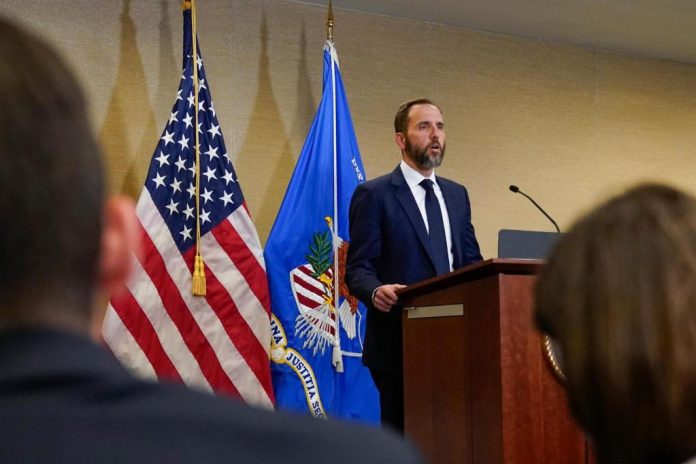
Special counsel Jack Smith speaks about an indictment of former President Donald Trump, Tuesday, Aug. 1, 2023, at a Department of Justice office in Washington. (AP Photo/Jacquelyn Martin)

Unlike the Mar-a-Lago classified documents case, there are no issues involving national security secrets, which require special hearings and potential delays.

Analysts also note that the indictment has been filed in a streamlined way to keep things as simple as possible. Smith’s decision to initially charge Trump alone and to not indict any of the six unindicted co-conspirators appears to be a move to avoid delays stemming from multiple defendants.

But most lawyers believe Trump could succeed in delaying the case for months, perhaps even until after the election.

Trump’s legal schedule is already crowded: he faces a May 20, 2024, trial date in the Mar-a-Lago documents case, a Jan. 15, 2024, date in the second E. Jean Carroll civil rape case, and a March 2024 trial in the Manhattan case related to hush-money payments made to porn actress Stormy Daniels.

It’s possible that federal prosecutors or judges could attempt to get the state and civil cases pushed back to accommodate their cases.

What’s Trump’s best defense?

Trump’s lawyers say he was merely exercising his First Amendment rights by denouncing the 2020 election as rigged for Biden.

Prosecutors agree that he had the right to be wrong or lie or even to believe his own lies.

But the indictment carefully lays out Trump’s intricate plan to act on those lies, including recruiting slates of fake electors, bullying ex-Vice President Mike Pence into joining his scheme, and eventually urge his supporters to physically block Congress from certifying Biden’s win.

It’s unlikely Chutkan will permit Trump to open an entire side trial on the veracity of his “Stop the Steal” campaign, especially after scores of judges rejected his claims in the weeks after the election.

What happens to the six co-conspirators?

Five of the six co-conspirators have been identified by news organizations: Rudy Giuliani, John Eastman, Sidney Powell, Jeffrey Clark and Ken Chesebro.

Any of them could eventually face charges themselves, as the indictment suggests by describing their various roles in Trump’s alleged scheme.

Prosecutors may hope to convince one or more of the co-conspirators to cooperate and testify against Trump in exchange for immunity or leniency.

Does Smith have a secret weapon against Trump?

The indictment suggests that at least one person in Trump’s inner circle has been dishing to Smith — and many political observers believe it could be ex-White House chief of staff Mark Meadows.

His role in the various aspects of the effort to overturn the election was at least as central as any of the other co-conspirators and Meadows was by Trump’s side during many key moments in the alleged scheme.

The charging document describes a previously unreported meeting on Jan. 6 when Trump praised the rioters as he watched television in the outer Oval Office at the White House after his 4:17 p.m. tweet praising the Capitol rioters but asking them to end the attack.

The indictment pointedly does not say how prosecutors learned about the meeting, raising eyebrows that it could have been revealed by Meadows.

“See, this is what happens when they try to steal an election,” Trump said, according to the indictment. “These people are angry.”

_____

©2023 New York Daily News. Visit nydailynews.com. Distributed by Tribune Content Agency, LLC.

Niger’s military ruler warns against foreign meddling, urges population to defend the country – Daily Press

0

By SAM MEDNICK (Associated Press)

NIAMEY, Niger (AP) — Niger’s new military ruler lashed out at neighboring countries and the international community in a nationally televised speech Wednesday night, and he called on the population to be ready to defend the nation.

In one of few addresses to the West African country since seizing power from Niger’s democratically elected president a week ago, Gen. Abdourahmane Tchiani warned against foreign meddling and military intervention against the coup.

“We therefore call on the people of Niger as a whole and their unity to defeat all those who want to inflict unspeakable suffering on our hard-working populations and destabilize our country,” Tchiani said.

Tchiani, who commands Niger’s presidential guard, also promised to create the conditions for a peaceful transition to elections following his ouster of President Mohamed Bazoum.

His speech comes amid rising regional tensions as the West African regional bloc ECOWAS threatens to use military force if Bazoum isn’t released from house arrest and reinstated by Aug. 6. The bloc has imposed severe travel and economic sanctions.

The coup has been strongly condemned by Western countries, many of which saw Niger as the last reliable partner for the West in efforts to battle jihadis linked to al-Qaida and the Islamic State group in Africa’s Sahel region. Russia and Western countries have been vying for influence in the fight against extremism.

France has 1,500 soldiers in Niger who conduct joint operations with its military, and the United States and other European countries have helped train the nation’s troops.

Tchiani said Niger is facing difficult times ahead and that the “hostile and radical” attitudes of those who oppose his rule provide no added value. He called the sanctions imposed by ECOWAS illegal, unfair, inhuman and unprecedented.

The fierce rhetoric came as a fourth French military evacuation flight left Niger, after France, Italy and Spain announced evacuations of their citizens and other Europeans in Niamey amid concerns they could become trapped.

Nearly 1,000 people had left on four flights, and a fifth evacuation was underway, France’s ministry of foreign affairs said.

An Italian military aircraft landed in Rome on Wednesday with 99 passengers, including 21 Americans and civilians from other countries, the Italian defense ministry said. Italian Foreign Minister Antonio Tajani said the flights took place with the permission of Niger’s new government.

The State Department on Wednesday ordered what it said was the temporary departure of nonessential embassy staff and some family members from Niger as a precaution. It said its embassy would remain open. Some American citizens already left with the help of the Europeans.

A two-day meeting of defense chiefs of the ECOWAS bloc opened Wednesday in Nigeria’s capital to confer on next steps. Abdel-Fatau Musah, the bloc’s commissioner for political affairs, peace and stability, said the meeting in Abuja would deal with how to “negotiate with the officers in the hostage situation that we find ourselves in the Republic of Niger.”

The sanctions announced by ECOWAS included halting energy transactions with Niger, which gets up to 90% of its power from neighboring Nigeria, according to the International Renewable Energy Agency.

On Tuesday, power transmission from Nigeria to Niger was cut off, an official at one of Nigeria’s main electricity companies said, speaking on condition of anonymity because they were not authorized to comment on the issue. The official did not clarify how much of Niger’s power the cut represented, but any reduction would further squeeze citizens in the impoverished country of more than 25 million people.

U.S. officials have stayed engaged in trying to roll back the armed takeover. Secretary of State Antony Blinken, who praised Niger as a “model of democracy” when he visited there in March, spoke again Wednesday with President Mohamed Bazoum, the State Department said in a statement. Blinken called the safety of Bazoum and his family “paramount,” and said the U.S. was committed to the restoration of democratically elected government in Niger.

A U.S. pullout would risk Washington’s longstanding counter-terror investments in the West African country, including a major air base in Agadez that is key to efforts against armed extremists across the Sahara and Sahel. The United States has roughly 1,000 military personnel in Niger and helps train some Nigerien forces.

Leaving Niger would also risk yielding the country to the influence of Russia and its Wagner mercenary group, which already has a significant presence in Mali, Central African Republic and Sudan.

Before sunrise Wednesday, hundreds of people lined up outside the terminal at Niamey’s airport hoping to leave. Some slept on the floor, while others watched television or talked on the phone.

A person who did not want to be named because of fears for personal safety, said they tried to shield their children from what was happening, telling them “just that they’re going home.” The person said they feared reprisal attacks against civilians if Niger’s regional neighbors follow through on threats to intervene militarily.

At a virtual United Nations meeting Tuesday night, the U.N. special envoy for West Africa and the Sahel said non-military efforts were underway to restore democracy in Niger.

“One week can be more than enough if everybody talks in good faith, if everybody wants to avoid bloodshed,” said the envoy, Leonardo Santos Simao. But, he added, “different member states are preparing themselves to use force if necessary.”

Others in the diplomatic community said military intervention was a real option.

ECOWAS is resolved to use military force because economic and travel sanctions have failed to roll back other coups, said a Western diplomat in Niamey, who did not want to be identified for security reasons.

The M62 Movement, an activist group that has organized pro-Russia and anti-French protests, called for residents in Niamey to mobilize and block the airport until foreign military personnel leave the country.

“Any evacuation of Europeans (should be) conditional on the immediate departure of foreign military forces,” Mahaman Sanoussi, the national coordinator for the group, said in a statement.

___

Associated Press writers Edith M. Lederer at the United Nations; Chinedu Asadu in Abuja, Nigeria; Ellen Knickmeyer in Washington; Thomas Adamson, John Leicester and Masha Macpherson in Paris and Frances D’Emilio in Rome contributed to this report.

Pence fought an order to testify but now is a central figure in his former boss’s indictment – Daily Press

0

By JILL COLVIN (Associated Press)

NEW YORK (AP) — Mike Pence fought the Department of Justice in court to try to avoid testifying against his former boss. But the former vice president plays a central role in a new federal indictment unsealed Tuesday that outlines the first criminal charges against Donald Trump connected to his efforts to overturn the 2020 election.

The 45-page indictment is informed, in part, by contemporaneous notes that Pence kept of their conversations in the days leading up to the Jan. 6 attack on the U.S. Capitol, as Trump tried to pressure Pence to go along with his desperate — and prosecutors say illegal — scheme to keep the two men in power.

Among the discussions: an episode in which Trump is alleged to have told Pence that he was “too honest” for rejecting Trump’s false claims that Pence had the power to overturn the vote. “Bottom line — won every state by 100,000s of votes,” Trump said in another conversation, according to the indictment.

Pence, who is among a crowded field of Republicans now challenging Trump for the 2024 presidential nomination, has spent much of his nascent campaign defending his decision to defy Trump. He launched his bid with a firm denunciation of his two-time running mate, saying Trump had “demanded I choose between him and our Constitution. Now voters will be faced with the same choice.”

Still, Pence said last month that he did not believe Trump had broken the law in connection with Jan. 6 and has repeatedly questioned the Department of Justice’s motivations for investigating him.

On Tuesday night, he hit anew on his belief that Trump was unfit to serve again.

“Today’s indictment serves as an important reminder: Anyone who puts himself over the Constitution should never be President of the United States,” he said in a statement. “Our country is more important than one man. Our Constitution is more important than any one man’s career.”

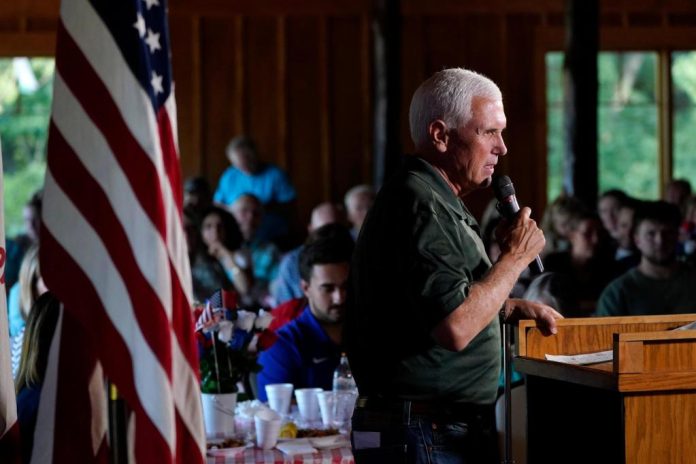
At a campaign stop Wednesday at the Indiana State Fair, Pence, who previously served as the state’s governor, said he had “hoped it wouldn’t come to this,” but believed that he had “done his duty” that day.

“Sadly the president was surrounded by a group of crackpot lawyers that kept telling him what his itching ears wanted to hear,” he said. “The president ultimately continued to demand that I choose him over the Constitution.”

Despite his once-prominent position as Trump’s No. 2, Pence has struggled to gain traction in his presidential campaign. Many of the former president’s most loyal supporters still blame him for Trump’s loss, believing Trump’s false claims that he could have used his ceremonial role overseeing the counting of the Electoral College votes on Jan. 6 to prevent Democrat Joe Biden from becoming president.

Trump critics, on the other hand, fault Pence as being complicit in Trump’s most controversial actions and standing by his side for so many years. Until the insurrection, Pence had been an extraordinarily loyal defender of his former boss.

With just three weeks until the first 2024 GOP presidential debate, it’s unclear if Pence will even qualify to make the stage. He has yet to meet the donor minimum set by the Republican National Committee, but told donors during a call Wednesday that he expects to hit that mark in the next seven to 10 days.

“We feel really encouraged about the progress that we’re making. … We’re not there yet, though,” he said, before encouraging his supporters to ask friends and family members to chip in. Campaign manager Steve DeMaura said that, as of Wednesday morning, Pence had over 30,000 donors and was adding an average of more than 1,000 new names a day.

In Washington, Pence had refused to testify before the House committee that investigated the Jan. 6 attack, dismissing the probe as politicized. And he fought a subpoena demanding he testify before a grand jury, arguing that, because he was serving on Jan. 6 as president of the Senate, he was protected under the Constitution’s “speech or debate” clause from being forced to testify. That provision is intended to protect members of Congress from questioning about official legislative acts.

Pence eventually complied when a judge refused to block his appearance, but said he wouldn’t be forced to answer questions related to his role as Senate president.

Trump’s lawyers had objected, too, citing executive privilege concerns.

Trump’s new indictment outlines his and his allies’ frantic efforts to remain in power. After first trying to persuade state lawmakers to reject certifying Biden’s win, it says, they focused on Jan. 6 and “sought to enlist the Vice President to use his ceremonial role at the certification to fraudulently alter the election results.”

They tried to persuade him to accept slates of fake electors or to reject states’ electoral votes and send them back to state legislatures for further review, the indictment says.

That effort included a series of phone calls in late December and early January, including on Christmas Day.

“You know I don’t think I have the authority to change the outcome,” Pence said during one call with Trump, the indictment says.

In another, on New Year’s Day, Trump berated Pence, telling him, “You’re too honest” — an episode also recounted in Pence’s book “So Help Me God.”

Some Trump claims were viewed as dangerous. During a private meeting on Jan. 5, he “grew frustrated” at Pence and told the then-vice president that he would have to publicly criticize him. Concerned for Pence’s safety, his chief of staff, Marc Short, alerted the head of Pence’s Secret Service detail.

The indictment also outlines how Trump worked to falsely convince his supporters that Pence had the power to overturn the results.

Immediately after their final conversation before the riot, on the morning of Jan. 6, the indictment alleges that Trump revised the speech he was set to give at the Ellipse, “reinserting language that he had personally drafted earlier that morning – falsely claiming that the Vice President had authority to send electoral votes to the states – but that advisors had previously successfully advocated be removed.”

Trump, in his speech, repeated his false claims of election fraud and again gave false hope to his supporters that Pence had the power to change the outcome.

Not long after, hundreds of Trump’s supporters were slamming through barricades, battling with police and breaking into the Capitol building — some chanting “Hang Mike Pence” as the former vice president and his family were rushed to safety.

Even after the rioters were cleared from the Capitol and Congress reconvened to certify the results, Trump’s allies were still pushing Pence, emailing his attorney to urge that he seek further delay by adjourning the session for 10 days.

Pence instead certified the election, finalizing his and Trump’s defeat.

___ Associated Press writer Rick Callahan contributed to this report from Indianapolis.