Home Blog Page 51

$1.58 billion jackpot goes to lucky Mega Millions player in Florida – Daily Press

0

The Associated Press

Someone in Florida won a $1.58 billion Mega Millions jackpot Tuesday night, ending a stretch of lottery futility that had stretched for nearly four months.

The winning numbers drawn were: 13 19 20 32 33 and the yellow ball: 14.

Before the big win Tuesday night, there had been 31 straight drawings since the last time someone won the game’s jackpot on April 18. That enabled the prize to steadily grow to be the third-largest ever in U.S. history.

Mega Millions jackpot winners are so rare thanks to odds of one in 302.6 million.

The $1.58 billion payout would go to the winner if they opt for an annuity, doled out over 30 years. But people usually prefer a lump sum option, which for Tuesday’s jackpot is an estimated $783.3 million.

The prize money is subject to federal taxes. Many states also tax lottery winnings.

Mega Millions is played in 45 states, Washington, D.C., and the U.S. Virgin Islands.

Norfolk girl, 15, has been missing for weeks; messages sent to her mom likely didn’t come from her, police say – Daily Press

0

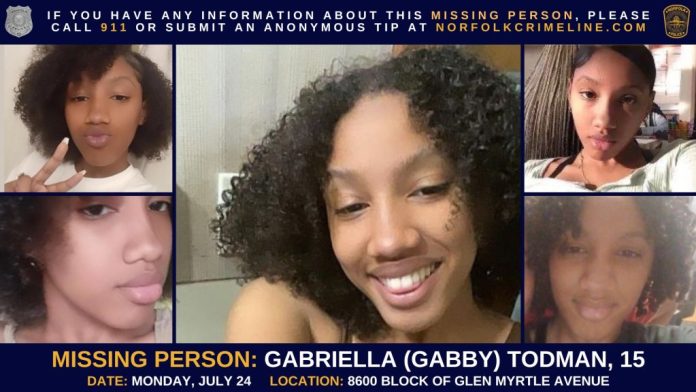
NORFOLK — Gabriella Todman, a 15-year-old Norfolk girl, has been missing for more than two weeks, and police say recent messages sent to Todman’s mother likely did not come from the girl.

Norfolk Police Chief Mark Talbot said at a press conference Tuesday that Todman had gone missing from home before, but she was always back within a day. Since her disappearance on July 24, Talbot said detectives have worked “nonstop,” but a more recent development has warranted more urgency and help from the public. On Aug. 3, Todman’s mother received texts and social media messages that were allegedly from her daughter. Talbot said though the person who may have sent the message may not have meant any harm, the department is continuing to investigate who may have sent them.

“We investigated that thoroughly. We do not believe that the messages came from Gabby at this point,” Talbot said. “We have more work to do related to those messages, much more investigative work. But at this point, we’re asking for the public’s help in finding out where that she might be.”

The timeline of her disappearance and the messages have Talbot feeling “anxious.” He said the messages “sparked a different thought” about what happened to Todman.

“There’s a sense of urgency that we’re bringing to this investigation, like we bring to all investigations,” Talbot said. “The reality of missing persons cases is they almost all worked out fine, but not all of them, as we’ve seen on a number of occasions. We’re going to do everything that we can to make sure that this case works out just fine.”

Todman was last seen at the 8600 block of Glenn Myrtle Avenue at about 1 p.m. on July 24. Todman is approximately 5 feet, 5 inches tall and weighs 135 pounds. She has brown eyes and curly dark brown hair. She was last seen wearing a black and green hoodie, black jeans, black socks and black slides.

Anyone who may have seen Todman or who may have information about her whereabouts are encouraged to call 911, or contact the Norfolk Crime Line at 1-888-LOCK-U-UP or the anonymous P3Tips mobile app.

Eliza Noe, [email protected]

Numbers drawn for giant $1.58 billion Mega Millions jackpot – Daily Press

0

The Associated Press

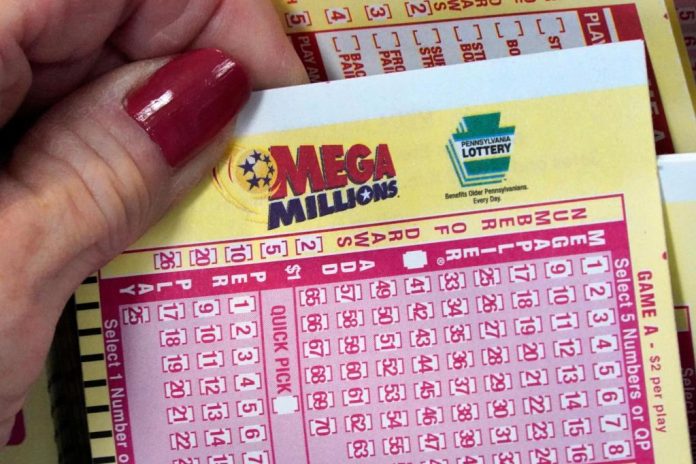
The numbers were drawn Tuesday night for an estimated $1.58 billion Mega Millions jackpot that is the third-largest in U.S. history.

The winning numbers announced were: 13 19 20 32 33 and the yellow ball: 14. .

It usually takes lottery officials a couple hours to determine if there has been a jackpot winner.

The $1.58 billion prize has been gradually building for months thanks to 31 straight drawings without a jackpot winner. The last time someone won the game’s top prize was April 18.

Each drawing without a winner pushes the prize closer to the record $2.04 billion Powerball jackpot that someone in California won last year. The second largest in size was in 2016, when the Powerball jackpot reached a nearly identical amount of $1.586 billion.

Mega Millions jackpot winners are so rare thanks to odds of one in 302.6 million.

The $1.58 billion payout would go to a winner who opts for an annuity, doled out over 30 years. But people usually prefer a lump sum option, which for Tuesday’s jackpot would be an estimated $783.3 million.

The prize money would be subject to federal taxes. Many states also tax lottery winnings.

Mega Millions is played in 45 states, Washington, D.C., and the U.S. Virgin Islands.

Virginia lags behind Maryland in protecting religious liberty – Daily Press

0

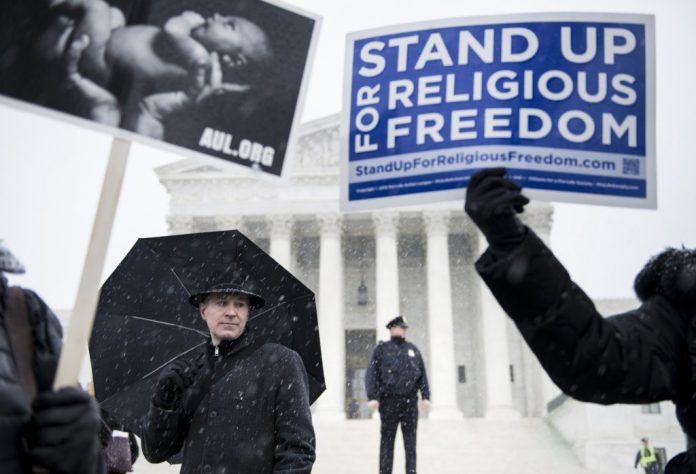
Americans often look to the national government to protect individual rights, but since the Supreme Court’s 1990 decision in Employment Division v. Smith it has often been up to the states to protect what many founders called “the sacred right of conscience.” Some states do a far better job than others. For instance, a person living in Maryland enjoys significantly more religious liberty protections than a person living in Virginia.

Religious Liberty in the States (RLS) is an annual research project that ranks states on their religious liberty policies. According to its 2023 ranking (released July 13), Maryland scored ninth with 57% of the religious liberty protections in place that were studied by the project. While Maryland lags behind the highest-ranked state of Illinois (85%), it’s still far ahead of Virginia. The Old Dominion ranked 35th out of 50, with a score of only 37%.

Virginia’s religious liberty falls short due to the absence of key safeguards. When it comes to the five measures used in evaluating a state’s protections in marriage-related issues, Virginia scores none while Maryland secures three. Both states can draw inspiration from Mississippi’s Protecting Freedom of Conscience from Government Discrimination Act. This crucial legislation safeguards the rights of various individuals and entities, including clergy, religious organizations, public officials and for-profit businesses. It allows them to respectfully decline participation in wedding services or celebrations that conflict with their deeply held religious beliefs or moral convictions. Since Mississippi extends these protections to private businesses, it scores all five measures connected to marriage-related issues.

In protections connected to health care, Maryland scored 10 out of 20, while Virginia received a score of five. A recent example of successful protections in this field is the Medical Ethics and Diversity Act of South Carolina, which went into effect in June 2022. This legislation explicitly grants medical professionals, health care institutions and payers the right to abstain from any health care service that contradicts their conscience. A crucial aspect of this law is the inclusion of robust safeguards that protect the conscience of providers, irrespective of their religious beliefs or lack thereof. According to this year’s RLS, South Carolina’s statutes earn a score of 19 out of 20 in this category.

Comparing the purple state of Virginia to the red states of Mississippi and South Carolina might suggest that protecting religious liberty is a conservative issue, but the highest-ranked state in the nation is blue Illinois, and our neighbor to the north is solidly blue as well. Protecting religious liberty is not a red-blue issue; it is a matter of protecting what many founders called “the sacred right of conscience.”

Thomas Jefferson, always an advocate of religious liberty as the foundation of freedom, penned the Virginia Statute for Religious Freedom in 1779. The bill, which became law in 1786, establishes religious liberty as a natural right conferred by God prior to governments. The legislation safeguarded what was already a natural right.

James Madison, who ushered the bill through the Virginia legislature while Jefferson was in France, said that the Virginia statute “is a true standard of religious liberty: its principle the great barrier against usurpations on the rights of conscience. As long as it is respected [and] no longer, these will be safe.”

Between the two neighbors, Maryland currently holds the title of being “more free.” However, this is primarily because Virginia, despite having a rich history of establishing and setting the foundation for religious liberty throughout the United States, has fallen short of its shining ideal. To close this gap, Virginia should strive to improve its score by implementing further safeguards and proactive measures to ensure strong religious liberty protections for all its residents. By doing so, Virginia can reclaim its historical legacy and once again become a shining example of freedom and inclusivity in the United States.

Mark David Hall is a professor in Regent University’s Robertson School of Government in Virginia Beach and a senior research fellow of the Center for Religion, Culture, & Democracy.

Drew Sheneman: SCOTUS Ethics

0

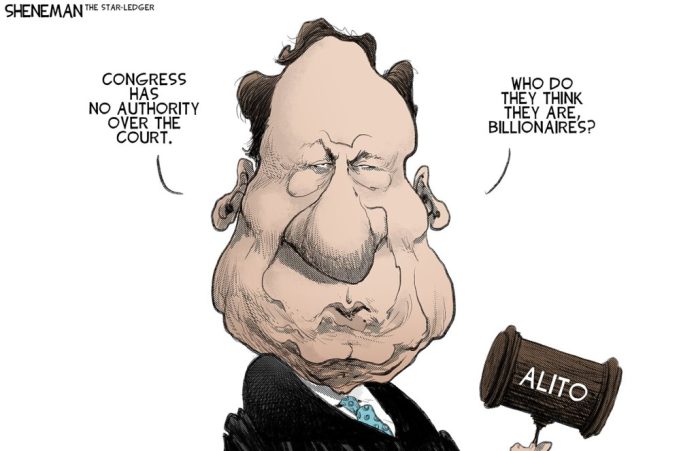
Cartoon by Drew Sheneman for Aug. 9, 2023.

Proposed Chesapeake National Recreation Area would benefit Hampton Roads – Daily Press

0

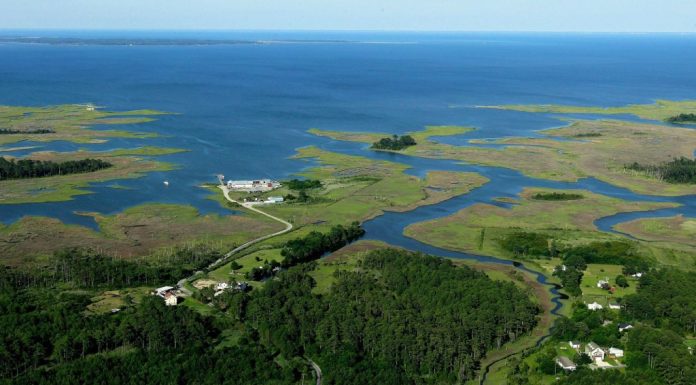
Hampton Roads boasts one of America’s best-kept historical secrets in Fort Monroe, a location of extraordinary importance in the nation’s complicated story but one unfamiliar to much of the country. The Chesapeake Bay, another of the region’s jewels, is far better known, though one at risk due to pollution.

A proposal to develop a Chesapeake National Recreation Area could change that, raising the fort’s profile and directing more federal funding toward bay protection and preservation. It’s a promising initiative for Hampton Roads and one that deserves the region’s full-throated support.

Protecting and promoting Fort Monroe should be one of this region’s top priorities. Rich in history, Point Comfort, where the fort is located, was the place where the first enslaved Africans set foot in North America, and it was to the fort where freed slaves found refuge during the Civil War, protected by Union forces in the surrounding areas.

There is so much more to the story, as visitors to the fort and the Casemate Museum there can attest. But while many visitors to the region surely know about the Jamestown settlement, the Yorktown battlefield and Colonial Williamsburg, Fort Monroe isn’t part of the American lexicon in the way it deserves to be.

Similarly, Hampton Roads — indeed, all of the states and communities in the watershed — have a vested interest in the health and preservation of the Chesapeake Bay. From the oystermen and anglers who make their living working the waters to the boaters, canoers and others who flock there for relaxation and enjoyment, the bay is a centerpiece of the region and a driver of the regional economy.

The Chesapeake National Recreation Area proposes to link those two things — the bay and the fort — along with other historical and recreational properties throughout the area under the common umbrella of “National Recreation Area” designation. That’s a term for land and sites placed by Congress under the direction of a federal agency, in this case the National Park Service.

Introduced last month by two members of Maryland’s congressional delegation — Sen. Chris Van Hollen and Rep. John Sarbanes — the CNRA “unified national recreation area … would provide more federal resources to the watershed region to celebrate its diverse cultural and economic history, conserve this environmental treasure, and foster public access to the Chesapeake Bay while spurring economic growth.”

The lawmakers have been deliberate and thorough in preparing this legislation, which comes after a six-month comment period on a draft bill. The CNRA intends to link sites and land already under NPS direction, with others acquired voluntarily as partner sites.

That includes about 122 acres of Fort Monroe’s north beach area and three sites in Maryland: the Thomas Point Shoal Lighthouse, built in 1875; the Burtis House, one of the only remaining waterman homes remaining in Annapolis; and Whitehall, a manor house in Anne Arundel County that was home to Maryland’s colonial governor.

Important, too, is what the legislation does not do. It would not allow the NPS to impose additional boating or fishing restrictions on the area, or infringe on state-level fish and wildlife management efforts. And the federal government will not purchase land from unwilling sellers; the CNRA is, again, based on voluntary participation.

What it may do — what sponsors, stakeholders and area residents should hope it can do — is boost efforts to manage and protect the Chesapeake Bay, highlighting the many ways in which it affects the lives of those living in the watershed. And it should put additional spotlight on Fort Monroe, raising its profile and opening the door for more Americans to learn about its historical significance.

Virginia’s Sens. Mark Warner and Tim Kaine, along with Reps. Rob Wittman and Bobby Scott, support the proposal, as do many of the groups and organizations that work on tourism, historical preservation and bay protection, along with those who want to make sure commerce driven by the bay is also protected.

The CNRA offers a promising opportunity to highlight two stars of our region —the fort and the bay — and Hampton Roads stands to benefit from its passage.

#Reviewing Space Civilization

0

In Space Civilization: An Inquiry into the Social Questions for Humans Living in Space, political science professor James Gilley provides an ambitious interdisciplinary overview of the social factors, from the interpersonal to the international levels, that will affect humanity’s ability to become a truly interplanetary species. In its relatively short format, the book moves briskly through many of the broad technological and biological, legal, economic, psychological, sociological, and political issues that will shape the future human exploration and potential settlement of outer space. Each chapter concludes with a series of discussion questions for further exploration.

Gilley believes that “humanity can and should become multi-planetary.”[1] To support this thesis, he cites evidence for the likely existence of valuable mineral and life-sustaining resources in space that could make it both valuable and feasible to live on other celestial bodies. He also anticipates that technological advances will result from efforts to populate other planets. He notes that some people desire to form other instances of human civilization in the solar system as a “backup” to preserve life in case Earth becomes uninhabitable. However, at the most fundamental level, he argues that the desire to explore and settle new frontiers is ingrained in human nature, and that we should carry that quest to other celestial bodies because it is in our nature to do so. After establishing the rationale for colonizing celestial bodies, he analyzes the practical requirements for doing so throughout the rest of the book, drawing from several different academic disciplines in turn.

Although the book’s greatest weight of effort concerns the social sciences, Gilley provides an early overview of the “hard science” and engineering that underpins any attempt to return to the Moon or settle celestial bodies beyond it.

Although the book’s greatest weight of effort concerns the social sciences, Gilley provides an early overview of the “hard science” and engineering that underpins any attempt to return to the Moon or settle celestial bodies beyond it. He analyzes what has been done already, identifies breakthroughs that will be needed in the near future, and makes a persuasive case that on current trends, solutions to many current obstacles (e.g., using lunar regolith as a construction material) are within reach. However, even if technology makes it possible to sustain life in space over the long term, it will remain a difficult and dangerous undertaking. Access to scarce resources as basic as water and breathable air, and the habitable vessels, vehicles, spacesuits, or facilities in which to consume and reprocess them, will be of paramount value. In turn, the vital importance of these limited natural and technological resources is likely to drive new developments in patterns of human interaction beyond the Earth’s gravity well.

Among other factors, Gilley recognizes that the current international space law regime, if not clarified or amended, may complicate long-term human habitation of the Moon and other celestial bodies. In particular, the Outer Space Treaty’s ban on national appropriation of space territory could make it difficult for a country or private entity to secure long-term access to a desirable area without being contested by a rival power.[2] Additionally, there will be practical challenges in extending extraterritorial jurisdiction of domestic law to a commercial or international space colony. While the Outer Space Treaty holds States Parties responsible for their national activities in outer space and expects them to exercise continuing supervision over these activities, in the case of other planetary settlements this may be easier said than done.[3] The U.S. national space policy already foresees that commercial and perhaps international enterprise, rather than NASA, will lead the way to settling Mars. When a commercial settlement begins there, how will it govern itself? Will it bring along police, judges, regulators, and politicians from the home country, or will these roles be performed by corporate officials? How will disputes be settled and people held accountable for wrongdoing? As the reach of terrestrial legal systems attenuates, it will become necessary to develop one or more legal, political, and economic systems to suit the new frontier. This could become more complicated if countries with contrary values and incompatible governance systems seed competing colonies on a new moon or planet.

The book does contain some unfortunate factual errors and gaps in legal analysis. For example, it claims that the Outer Space Treaty promotes “a general principle of no military activities in space,” despite very limited treaty language to that effect, and several decades of state practice to the contrary.[4] The book also fails to recognize that U.S. law already authorizes celestial resource extraction and distinguishes it from national appropriation of outer space.[5] Furthermore, while offering a novel proposal to bring back indentured service as a way to fund travel for Martian laborers, it does not examine how the 13th Amendment’s ban on involuntary servitude[6]–or the Slavery Convention’s restrictions on compulsory or forced labor that could become equivalent to slavery[7]–would affect such a plan. Finally, while the book provides a useful synthesis of social-scientific approaches to understanding and guiding human behavior when establishing a celestial civilization, it could have benefited from another chapter on the role of religion. Whether as a source of values, goals, and meaning, or as a source of tension and conflict, religion is another common human attribute that may influence the long-term sustainability of civilization in space.

As exemplified by the discussion questions at the end of each chapter, this book raises more questions than it answers.

Despite these shortcomings, the book ultimately succeeds in its mission. As Gilley seeks “to bridge the gap between science fiction and the social sciences,” he acknowledges that no single work, including his, will be able to definitively answer the question, “What is necessary for humans to build civilization in space?”[8] As exemplified by the discussion questions at the end of each chapter, this book raises more questions than it answers. Nevertheless, asking these questions is the necessary first step before we can find the answers.

$1.58 billion Mega Millions jackpot is third-largest in US history – Daily Press

0

The Associated Press

Lottery players will have another shot Tuesday night at a massive Mega Millions prize that ranks as the third-largest jackpot in U.S. history.

The estimated $1.58 billion prize has been gradually building for months thanks to 31 straight drawings without a jackpot winner. The last time someone won the game’s top prize was April 18.

Each drawing without a winner pushes the prize closer to the record $2.04 billion Powerball jackpot that someone in California won last year. The second largest in size was in 2016, when the Powerball jackpot reached a nearly identical amount of $1.586 billion.

Mega Millions jackpot winners are so rare thanks to odds of one in 302.6 million.

The $1.58 billion payout would go to a winner who opts for an annuity, doled out over 30 years. But people usually prefer a lump sum option, which for Tuesday’s jackpot would be an estimated $783.3 million.

The money would be subject to federal taxes. Many states also tax lottery winnings.

Mega Millions is played in 45 states, Washington, D.C., and the U.S. Virgin Islands.

More Virginians want budget surplus spent on projects than tax relief – Daily Press

0

As state budget negotiations continue to drag, a Virginia Commonwealth University poll released Tuesday highlights how Virginia residents want the state’s budget surplus to be spent.

The statewide poll found 48% of those surveyed would prefer the surplus go toward projects, such as building or repairing schools, compared to 43% who said it should be used for tax relief. Responses varied along party lines, with 64% of Republicans favoring tax relief and 68% of Democrats preferring projects.

The partisan divide isn’t surprising.

The General Assembly approved a two-year budget in 2022, but legislators this year were tasked with compromising on a series of budget amendments. However, partisan disagreements over tax cuts derailed the negotiations and a consensus still hasn’t been reached.

Gov. Glenn Youngkin called for $1 billion in cuts, including lowering the corporate income tax rate from 6% to 5%, increasing the standard income tax deductions for individuals and joint filers and expanding tax exemptions on veterans’ pensions by eliminating age requirements. The Republican-held House of Delegates backed the governor’s plan, while the Democrat-held Senate wanted to nix the tax cuts and give about $1 billion to school divisions.

Another takeaway from the poll, which was conducted in July by the L. Douglas Wilder School of Government and Public Affairs: Many Virginians are worried about the rising cost of living.

The survey found 36% of respondents consider inflation to be the most important issue facing Virginia today, followed by education (18%), women’s reproductive rights (13%) and gun control (12%).

“I’ve always had a one-word definition for politics — money — and the people are likewise focused on inflation and the skyrocketing cost of living,” Wilder, a Democrat who served as state’s 66th governor, said in a Tuesday news release about the poll.

Black Virginians were the only demographic that had a higher proportion of respondents cite other issues as the top concern. The majority of Black respondents listed education (28%) as the most important issue, followed by women’s reproductive rights (21%) and then inflation (20%).

The poll used landline and mobile telephone interviews from July 14-25 with a representative sample of 804 adults living in Virginia. It has a margin of error of plus or minus 5.46 percentage points, according to the release.

Katie King, [email protected]

Man wanted on attempted murder charge wounded by Marshals in Virginia shootout – Daily Press

0

ALEXANDRIA — A Maryland man wanted on an attempted murder charge was wounded Tuesday during an apparent shootout with U.S. Marshals in northern Virginia before being taken into custody.

Alexandria police said a man sought by the U.S. Marshals Capital Area Regional Fugitive Task Force was spotted Tuesday around 12:45 p.m. at the Potomac Yard shopping center in the city.

The suspect was shot and taken to the hospital with life-threatening injuries, police said.

News outlets showed video of the shooting, with a flurry of gunfire, shoppers taking cover in a parking lot and cars riddled with bullet holes.

The Talbot County Sheriff’s Office in Maryland said the man was sought for a shooting Sunday night near Unionville.

Alexandria police said their investigation of the shooting is ongoing.

The Marshals Service did not respond to an email seeking comment Tuesday.