
Cartoon by Drew Sheneman for Aug. 11, 2023.
Jacksonville hands Tides their first four-game losing streak of the season – Daily Press

For the first time this season, the Norfolk Tides have lost four straight games.
Jerar Encarnación hit a pair of two-run homers and the Jacksonville Jumbo Shrimp defeated the Tides 5-1 before 4,162 fans Thursday night at 121 Financial Ballpark in Florida.
Jacksonville (53-57, 21-15 in second half) took a 3-0 series lead and held Norfolk (68-42, 20-16) to two or fewer runs for the fourth straight game.
The Tides, who lost their series finale at Charlotte on Sunday, are in jeopardy of losing their first series since dropping four of six games to Worcester at home on June 13-18.
Heston Kjerstad accounted for the Tides’ lone run in the top of the first inning, hitting an RBI single to left to score Connor Norby. Norby led off the game with his 30th double of the season.
Encarnación hit the first of his two-run shots in the bottom of the second inning off Norfolk starter Cade Povich (0-1). That was Povich’s only mistake as he went five innings, allowing the two runs on four hits.
Jordan Groshans made it 3-1 in the bottom of the sixth with an RBI single off Tides reliever Mychal Givens, who then gave up Encarnación’s second two-run homer.
Jacksonville starter Daniel Castano (2-0) allowed the lone run in 5.1 innings, scattering seven hits. He and three relievers held Tides slugger Joey Ortiz hitless for only the third time in the past 18 games. Ortiz went 0 for 4.
Norby, Kjerstad, Kyle Stowers and Anthony Bemboom each had two hits for Norfolk.
The teams are set to play again at 7:05 p.m. Friday, with right-hander Justin Armbruester (1-1, 4.50) slated to start for Norfolk and Jacksonville expected to counter with lefty Ryan Weathers.
53 people have died from the Maui wildfires, governor says, and historic Lahaina has burned down – Daily Press
By TY O’NEIL, CLAIRE RUSH, JENNIFER SINCO KELLEHER and CHRISTOPHER WEBER (Associated Press)
LAHAINA, Hawaii (AP) — A search of the wildfire devastation on the Hawaiian island of Maui on Thursday revealed a wasteland of obliterated neighborhoods and landmarks charred beyond recognition, as the death toll rose to at least 53 and survivors told harrowing tales of narrow escapes with only the clothes on their backs.
A flyover of historic Lahaina showed entire neighborhoods that had been a vibrant vision of color and island life reduced to gray ash. Block after block was nothing but rubble and blackened foundations, including along famous Front Street, where tourists shopped and dined just days ago. Boats in the harbor were scorched, and smoke hovered over the town, which dates to the 1700s and is the biggest community on the island’s west side.
“Lahaina, with a few rare exceptions, has been burned down,” Hawaii Gov. Josh Green told The Associated Press. More than 1,000 structures were destroyed by fires that were still burning, he said.
Already the state’s deadliest natural disaster since a 1960 tsunami killed 61 people on the Big Island, the death toll will likely rise further as search and rescue operations continue, Green added.
“We are heartsick,” Green said.
Tiffany Kidder Winn’s gift store Whaler’s Locker, which is one of the town’s oldest shops, was among the many businesses destroyed. As she assessed the damage Thursday, she came upon a line of burned-out vehicles, some with charred bodies inside.
“It looked like they were trying to get out, but were stuck in traffic and couldn’t get off Front Street,” she said. She later spotted a body leaning against a seawall.
Winn said the destruction was so widespread, “I couldn’t even tell where I was because all the landmarks were gone.”
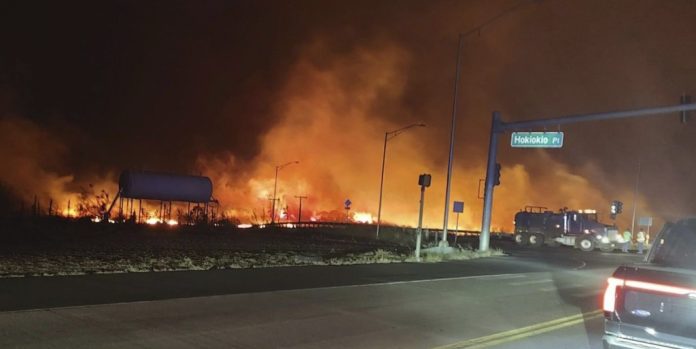
Fueled by a dry summer and strong winds from a passing hurricane, the fire started Tuesday and took Maui by surprise, racing through parched growth covering the island and then feasting on homes and anything else that lay in its path.
The official death toll of 53 as of Thursday makes this the deadliest U.S. wildfire since the 2018 Camp Fire in California, which killed at least 85 people and laid waste to the town of Paradise. The Hawaii toll could rise, though, as rescuers reach parts of the island that had been inaccessible due to the three ongoing fires, including the one in Lahaina that was 80% contained on Thursday, according to a Maui County news release. Dozens of people have been injured, some critically.
“We are still in life preservation mode. Search and rescue is still a primary concern,” said Adam Weintraub, a spokesperson for Hawaii Emergency Management Agency.
Search and rescue teams still won’t be able to reach certain areas until the fire lines are secure and access is safe, Weintraub added.
The flames left some people with mere minutes to act and led some to flee into the ocean. A Lahaina man, Bosco Bae, posted video on Facebook from Tuesday night that showed fire burning nearly every building on a street as sirens blared and windblown sparks raced by. Bae, who said he was one of the last people to leave the town, was evacuated to the island’s main airport and was waiting to be allowed to return home.
Marlon Vasquez, a 31-year-old cook from Guatemala who came to the U.S. in January 2022, said that when he heard the fire alarms, it was already too late to flee in his car.
“I opened the door, and the fire was almost on top of us,” he said from an evacuation center at a gymnasium. “We ran and ran. We ran almost the whole night and into the next day, because the fire didn’t stop.”
Vasquez and his brother Eduardo escaped via roads that were clogged with vehicles full of people. The smoke was so toxic that he vomited. He said he’s not sure his roommates and neighbors made it to safety.
Lahaina residents Kamuela Kawaakoa and Iiulia Yasso described their harrowing escape under smoke-filled skies. The couple and their 6-year-old son got back to their apartment after a quick dash to the supermarket for water, and only had time to grab a change of clothes and run as the bushes around them caught fire.
“We barely made it out,” Kawaakoa, 34, said at an evacuation shelter, still unsure if anything was left of their apartment.
As the family fled, they called 911 when they saw the Hale Mahaolu senior living facility across the road erupt in flames.
Chelsey Vierra’s grandmother, Louise Abihai, was living at Hale Mahaolu, and the family doesn’t know if she got out. “She doesn’t have a phone. She’s 97 years old,” Vierra said Thursday. “She can walk. She is strong.”
Relatives are monitoring shelter lists and calling the hospital. “We got to find our loved one, but there’s no communication here,” said Vierra, who fled the flames. “We don’t know who to ask about where she went.”
Communications have been spotty on the island, with 911, landline and cellular service failing at times. Power was also out in parts of Maui.
Tourists were advised to stay away, and about 11,000 flew out of Maui on Wednesday with at least 1,500 more expected to leave Thursday, according to Ed Sniffen, state transportation director. Officials prepared the Hawaii Convention Center in Honolulu to receive thousands.
In coastal Kihei, southeast of Lahaina, wide swaths of ground glowed red with embers Wednesday night as flames continued to chew through trees and buildings. Gusty winds blew sparks over a black and orange patchwork of charred earth and still-crackling hot spots.
The fires were fanned by strong winds from Hurricane Dora passing far to the south. It’s the latest in a series of disasters caused by extreme weather around the globe this summer. Experts say climate change is increasing the likelihood of such events.
Wildfires aren’t unusual in Hawaii, but the weather of the past few weeks created the fuel for a devastating blaze and, once ignited, the high winds created the disaster, said Thomas Smith an associate professor in Environmental Geography at the London School of Economics and Political Science.
Hawaii’s Big Island is also currently seeing blazes, Mayor Mitch Roth said, although there were no reports of injuries or destroyed homes there.
With communications hampered, it was difficult for many to check in with friends and family members. Some people were posting messages on social media. A Family Assistance Center opened at the Kahului Community Center for people looking for the missing.
Maj. Gen. Kenneth Hara, of the Hawaii State Department of Defense, said Wednesday night that officials were working to get communications restored, distribute water and possibly add law enforcement personnel. He said National Guard helicopters had dropped 150,000 gallons (568,000 liters) of water on the fires.
The Coast Guard said it rescued 14 people who jumped into the water to escape the flames and smoke.
Maui County Mayor Richard Bissen Jr. said Wednesday that officials hadn’t yet begun investigating the immediate cause of the fires.
President Joe Biden declared a major disaster on Maui. Traveling in Utah on Thursday, he pledged that the federal response will ensure that “anyone who’s lost a loved one, or whose home has been damaged or destroyed, is going to get help immediately.” Biden promised to streamline requests for assistance and said the Federal Emergency Management Agency was “surging emergency personnel” on the island.
___
Associated Press climate and environmental coverage receives support from several private foundations. See more about AP’s climate initiative here. The AP is solely responsible for all content.
____
Sinco Kelleher reported from Honolulu, Rush from Kahului and Weber from Los Angeles. Associated Press writers Nick Perry in Wellington, New Zealand; Andrew Selsky in Bend, Oregon; Bobby Caina Calvan and Beatrice Dupuy in New York; and Chris Megerian in Salt Lake City, Utah, contributed.
ODU’s Jason Henderson, W&M’s John Pius make Butkus Award watch list – Daily Press

COLLEGE FOOTBALL
Old Dominion’s Jason Henderson and William & Mary’s John Pius have each been named to the Butkus Award watch list, which honors the nation’s top linebacker.
Henderson, who has also been named a third-team All-American by Phil Steele magazine and the preseason Sun Belt Defensive Player of the Year, led the country last season with 186 tackles.
Pius, named an All-American by seven organizations last season, ranked fourth nationally in sacks (11.5) and fifth in tackles for loss (19). He was the runner-up for the Stats Perform Buck Buchanan Award, which honors the top defensive player in the FCS.
Pius is the only FCS player to make the Butkus watch list.
Lake Taylor TE commits to Syracuse
Lake Taylor High senior tight end Elijah Washington has committed to Syracuse.
Washington, 6-foot-7 and 210 pounds, had 43 receptions for 877 yards and 16 touchdowns last season for the Titans. He also averaged 17 points, 14 rebounds and four blocked shots in basketball and was named the 757Teamz runner-up Male Athlete of the Year.
Washington, a three-star prospect, is ranked the No. 17 senior in the state by 247Sports, No. 18 by ESPN and No. 20 by Rivals.
CAA to add Bryant
The newly renamed Coastal Athletic Association announced Thursday that its board of directors approved adding Bryant University as its 16th football member effective July 1, 2024.
Bryant, located in Smithfield, Rhode Island, is currently a member of the Big South-OVC Football Association. It is entering its 25th season playing football.
The addition of Bryant won’t change the footprint of the league, formerly known as the Colonial Athletic Association, along the Atlantic seaboard with Rhode Island already a member. The 16 teams will stretch from Maine to North Carolina.
The CAA’s football members have enjoyed annual success at the FCS Level, with 12 of its 15 members reaching the playoffs since 2015. The league has sent multiple teams to the playoffs for the past 31 years and has had three or more teams in the field in 15 of the past 17 seasons.
WOMEN’S COLLEGE SOCCER
W&M’s Crain makes All-CAA Team
William & Mary sophomore forward Ivey Crain has been named to the preseason Coastal Athletic Association Women’s Soccer All-Conference Team.
Crain led the Tribe with 24 points (nine goals and six assists) on her way to CAA Rookie of the Year and first-team All-CAA honors last season.
Meanwhile, W&M has been picked eighth in the CAA preseason poll by a vote of the league coaches. Hampton was last in the 13-team league.
Monmouth edged Northeastern by a single point for the top spot in the poll. Northeastern’s Vivian Akyirem is the preseason Player of the Year.
UVA third, VT ninth in ACC poll
Virginia has been picked to finish third and Virginia Tech ninth in the ACC women’s soccer preseason poll.
Cavaliers sophomore forward Maggie Cagle was the lone player from a Virginia school on the preseason All-ACC Team.
North Carolina finished No. 1 in the poll, followed by Florida State.
Briefly
- Old Dominion’s Jakob Chicoyne, Jacob Gunther and Philip Minnehan have been named All-America Scholars by the Golf Coaches Association of America.
- The Norfolk Admirals have signed defenseman Justin Allen and forward Gueorgui Feduolov to standard contracts for the 2023-24 season.
- Norfolk State will hold its annual Fan Day on Aug. 19, and this year’s event will feature the football and volleyball teams. The football team will conduct its event at 11:15 a.m. following its practice at Dick Price Stadium. The volleyball team’s event will be held at 5:15 p.m. at Gill Gymnasium.
- Norfolk State’s softball team will host a walk-on interest meeting on Aug. 21. The meeting will be held via a zoom call and begin at 7 p.m. Those interested should email head coach Carrie Hoeft at [email protected].
53 people have died from the Maui wildfires, governor says, and historic Lahaina has burned down – Daily Press
By TY O’NEIL, CLAIRE RUSH, JENNIFER SINCO KELLEHER and CHRISTOPHER WEBER (Associated Press)
LAHAINA, Hawaii (AP) — A search of the wildfire devastation on the Hawaiian island of Maui on Thursday revealed a wasteland of obliterated neighborhoods and landmarks charred beyond recognition, as the death toll rose to at least 53 and survivors told harrowing tales of narrow escapes with only the clothes on their backs.
A flyover of historic Lahaina showed entire neighborhoods that had been a vibrant vision of color and island life reduced to gray ash. Block after block was nothing but rubble and blackened foundations, including along famous Front Street, where tourists shopped and dined just days ago. Boats in the harbor were scorched, and smoke hovered over the town, which dates to the 1700s and is the biggest community on the island’s west side.
“Lahaina, with a few rare exceptions, has been burned down,” Hawaii Gov. Josh Green told The Associated Press. More than 1,000 structures were destroyed by fires that were still burning, he said.
Already the state’s deadliest natural disaster since a 1960 tsunami killed 61 people on the Big Island, the death toll will likely rise further as search and rescue operations continue, Green added.
“We are heartsick,” Green said.
Tiffany Kidder Winn’s gift store Whaler’s Locker, which is one of the town’s oldest shops, was among the many businesses destroyed. As she assessed the damage Thursday, she came upon a line of burned-out vehicles, some with charred bodies inside.
“It looked like they were trying to get out, but were stuck in traffic and couldn’t get off Front Street,” she said. She later spotted a body leaning against a seawall.
Winn said the destruction was so widespread, “I couldn’t even tell where I was because all the landmarks were gone.”
Fueled by a dry summer and strong winds from a passing hurricane, the fire started Tuesday and took Maui by surprise, racing through parched growth covering the island and then feasting on homes and anything else that lay in its path.
The official death toll of 53 as of Thursday makes this the deadliest U.S. wildfire since the 2018 Camp Fire in California, which killed at least 85 people and laid waste to the town of Paradise. The Hawaii toll could rise, though, as rescuers reach parts of the island that had been inaccessible due to the three ongoing fires, including the one in Lahaina that was 80% contained on Thursday, according to a Maui County news release. Dozens of people have been injured, some critically.
“We are still in life preservation mode. Search and rescue is still a primary concern,” said Adam Weintraub, a spokesperson for Hawaii Emergency Management Agency.
Search and rescue teams still won’t be able to reach certain areas until the fire lines are secure and access is safe, Weintraub added.
The flames left some people with mere minutes to act and led some to flee into the ocean. A Lahaina man, Bosco Bae, posted video on Facebook from Tuesday night that showed fire burning nearly every building on a street as sirens blared and windblown sparks raced by. Bae, who said he was one of the last people to leave the town, was evacuated to the island’s main airport and was waiting to be allowed to return home.
Marlon Vasquez, a 31-year-old cook from Guatemala who came to the U.S. in January 2022, said that when he heard the fire alarms, it was already too late to flee in his car.
“I opened the door, and the fire was almost on top of us,” he said from an evacuation center at a gymnasium. “We ran and ran. We ran almost the whole night and into the next day, because the fire didn’t stop.”
Vasquez and his brother Eduardo escaped via roads that were clogged with vehicles full of people. The smoke was so toxic that he vomited. He said he’s not sure his roommates and neighbors made it to safety.
Lahaina residents Kamuela Kawaakoa and Iiulia Yasso described their harrowing escape under smoke-filled skies. The couple and their 6-year-old son got back to their apartment after a quick dash to the supermarket for water, and only had time to grab a change of clothes and run as the bushes around them caught fire.
“We barely made it out,” Kawaakoa, 34, said at an evacuation shelter, still unsure if anything was left of their apartment.
As the family fled, they called 911 when they saw the Hale Mahaolu senior living facility across the road erupt in flames.
Chelsey Vierra’s grandmother, Louise Abihai, was living at Hale Mahaolu, and the family doesn’t know if she got out. “She doesn’t have a phone. She’s 97 years old,” Vierra said Thursday. “She can walk. She is strong.”
Relatives are monitoring shelter lists and calling the hospital. “We got to find our loved one, but there’s no communication here,” said Vierra, who fled the flames. “We don’t know who to ask about where she went.”
Communications have been spotty on the island, with 911, landline and cellular service failing at times. Power was also out in parts of Maui.
Tourists were advised to stay away, and about 11,000 flew out of Maui on Wednesday with at least 1,500 more expected to leave Thursday, according to Ed Sniffen, state transportation director. Officials prepared the Hawaii Convention Center in Honolulu to receive thousands.
In coastal Kihei, southeast of Lahaina, wide swaths of ground glowed red with embers Wednesday night as flames continued to chew through trees and buildings. Gusty winds blew sparks over a black and orange patchwork of charred earth and still-crackling hot spots.
The fires were fanned by strong winds from Hurricane Dora passing far to the south. It’s the latest in a series of disasters caused by extreme weather around the globe this summer. Experts say climate change is increasing the likelihood of such events.
Wildfires aren’t unusual in Hawaii, but the weather of the past few weeks created the fuel for a devastating blaze and, once ignited, the high winds created the disaster, said Thomas Smith an associate professor in Environmental Geography at the London School of Economics and Political Science.
Hawaii’s Big Island is also currently seeing blazes, Mayor Mitch Roth said, although there were no reports of injuries or destroyed homes there.
With communications hampered, it was difficult for many to check in with friends and family members. Some people were posting messages on social media. A Family Assistance Center opened at the Kahului Community Center for people looking for the missing.
Maj. Gen. Kenneth Hara, of the Hawaii State Department of Defense, said Wednesday night that officials were working to get communications restored, distribute water and possibly add law enforcement personnel. He said National Guard helicopters had dropped 150,000 gallons (568,000 liters) of water on the fires.
The Coast Guard said it rescued 14 people who jumped into the water to escape the flames and smoke.
Maui County Mayor Richard Bissen Jr. said Wednesday that officials hadn’t yet begun investigating the immediate cause of the fires.
President Joe Biden declared a major disaster on Maui. Traveling in Utah on Thursday, he pledged that the federal response will ensure that “anyone who’s lost a loved one, or whose home has been damaged or destroyed, is going to get help immediately.” Biden promised to streamline requests for assistance and said the Federal Emergency Management Agency was “surging emergency personnel” on the island.
___
Associated Press climate and environmental coverage receives support from several private foundations. See more about AP’s climate initiative here. The AP is solely responsible for all content.
____
Sinco Kelleher reported from Honolulu, Rush from Kahului and Weber from Los Angeles. Associated Press writers Nick Perry in Wellington, New Zealand; Andrew Selsky in Bend, Oregon; Bobby Caina Calvan and Beatrice Dupuy in New York; and Chris Megerian in Salt Lake City, Utah, contributed.
Maui fire deaths surge to 53 and likely to go higher, governor says. Over 1,000 structures burned – Daily Press
By TY O’NEIL, CLAIRE RUSH, JENNIFER SINCO KELLEHER and CHRISTOPHER WEBER (Associated Press)
LAHAINA, Hawaii (AP) — A search of the wildfire devastation on the Hawaiian island of Maui on Thursday revealed a wasteland of obliterated neighborhoods and landmarks charred beyond recognition, as the death toll rose to at least 53 and survivors told harrowing tales of narrow escapes with only the clothes on their backs.
A flyover of historic Lahaina showed entire neighborhoods that had been a vibrant vision of color and island life reduced to gray ash. Block after block was nothing but rubble and blackened foundations, including along famous Front Street, where tourists shopped and dined just days ago. Boats in the harbor were scorched, and smoke hovered over the town, which dates to the 1700s and is the biggest community on the island’s west side.
“Lahaina, with a few rare exceptions, has been burned down,” Hawaii Gov. Josh Green told The Associated Press. More than 1,000 structures were destroyed by fires that were still burning, he said.
The death toll will likely rise as search and rescue operations continue, Green added, and officials expect it will become the state’s deadliest natural disaster since a 1961 tsunami killed 61 people on the Big Island.
“We are heartsick,” Green said.
Tiffany Kidder Winn’s gift store Whaler’s Locker, which is one of the town’s oldest shops, was among the many businesses destroyed. As she assessed the damage Thursday, she came upon a line of burned-out vehicles, some with charred bodies inside them.
“It looked like they were trying to get out, but were stuck in traffic and couldn’t get off Front Street,” she said. She later spotted a body leaning against a seawall.
Winn said the destruction was so widespread, “I couldn’t even tell where I was because all the landmarks were gone.”
Fueled by a dry summer and strong winds from a passing hurricane, the fire started Tuesday and took Maui by surprise, racing through parched growth covering the island and then feasting on homes and anything else that lay in its path.
The official death toll of 53 as of Thursday makes this the deadliest U.S. wildfire since the 2018 Camp Fire in California, which killed at least 85 people and laid waste to the town of Paradise. The Hawaii toll could rise, though, as rescuers reach parts of the island that had been inaccessible due to the three ongoing fires, including the one in Lahaina that was 80% contained on Thursday, according to a Maui County news release. More than 270 structures have been damaged or destroyed, and dozens of people have been injured, including some critically.
“We are still in life preservation mode. Search and rescue is still a primary concern,” said Adam Weintraub, a spokesperson for Hawaii Emergency Management Agency.
Search and rescue teams still won’t be able to access certain areas until the fire lines are secure and they’re sure they’ll be able to get to those areas safely, Weintraub added.
The flames left some people with mere minutes to act and led some to flee into the ocean. A Lahaina man, Bosco Bae, posted video on Facebook from Tuesday night that showed fire burning nearly every building on a street as sirens blared and windblown sparks raced by. Bae, who said he was one of the last people to leave the town, was evacuated to the island’s main airport and was waiting to be allowed to return home.
Marlon Vasquez, a 31-year-old cook from Guatemala who came to the U.S. in January 2022, said that when he heard the fire alarms, it was already too late to flee in his car.
“I opened the door and the fire was almost on top of us,” he told The Associated Press on Thursday from an evacuation center at a gymnasium. “We ran and ran. We ran almost the whole night and into the next day, because the fire didn’t stop.”
Vasquez and his brother Eduardo escaped via roads that were clogged with vehicles full of people. The smoke was so toxic that he vomited. He said he’s not sure his roommates and neighbors made it to safety.
Lahaina residents Kamuela Kawaakoa and Iiulia Yasso described their harrowing escape under smoke-filled skies. The couple and their 6-year-old son got back to their apartment after a quick dash to the supermarket for water, and only had time to grab a change of clothes and run as the bushes around them caught fire.
“We barely made it out,” Kawaakoa, 34, said at an evacuation shelter, still unsure if anything was left of their apartment.
As the family fled, they called 911 when they saw the Hale Mahaolu senior living facility across the road erupt in flames.
Chelsey Vierra’s grandmother, Louise Abihai, was living at Hale Mahaolu, and the family doesn’t know if she got out. “She doesn’t have a phone. She’s 97 years old,” Vierra said Thursday. “She can walk. She is strong.”
Relatives are monitoring shelter lists and calling the hospital. “We got to find our loved one, but there’s no communication here,” said Vierra, who fled the flames. “We don’t know who to ask about where she went.”
Communications have been spotty on the island, with 911, landline and cellular service failing at times. Power was also out in parts of Maui.
Tourists were advised to stay away, and about 11,000 flew out of Maui on Wednesday with at least 1,500 more expected to leave Thursday, according to Ed Sniffen, state transportation director. Officials prepared the Hawaii Convention Center in Honolulu to take in the thousands who have been displaced.
In coastal Kihei, southeast of Lahaina, wide swaths of ground glowed red with embers Wednesday night as flames continued to chew through trees and buildings. Gusty winds blew sparks over a black and orange patchwork of charred earth and still-crackling hot spots.
The fires were fanned by strong winds from Hurricane Dora passing far to the south. It’s the latest in a series of disasters caused by extreme weather around the globe this summer. Experts say climate change is increasing the likelihood of such events.
Wildfires aren’t unusual in Hawaii, but the weather of the past few weeks created the fuel for a devastating blaze and, once ignited, the high winds created the disaster, said Thomas Smith an associate professor in Environmental Geography at the London School of Economics and Political Science.
Hawaii’s Big Island is also currently seeing blazes, Mayor Mitch Roth said, although there were no reports of injuries or destroyed homes there.
With communications hampered, it was difficult for many to check in with friends and family members. Some people were posting messages on social media. Maui officials opened a Family Assistance Center at the Kahului Community Center for people looking for the missing.
Maj. Gen. Kenneth Hara, of the Hawaii State Department of Defense, told reporters Wednesday night that officials were working to get communications restored, distribute water and possibly add law enforcement personnel. He said National Guard helicopters had dropped 150,000 gallons (568,000 liters) of water on the fires.
The Coast Guard said it rescued 14 people who jumped into the water to escape the flames and smoke.
Maui County Mayor Richard Bissen Jr. said Wednesday that officials hadn’t yet begun investigating the immediate cause of the fires.
President Joe Biden declared a major disaster on Maui. Traveling in Utah on Thursday, he pledged that the federal response will ensure that “anyone who’s lost a loved one, or whose home has been damaged or destroyed, is going to get help immediately.” Biden promised to streamline requests for assistance and said the Federal Emergency Management Agency was “surging emergency personnel” on the island.
___
Associated Press climate and environmental coverage receives support from several private foundations. See more about AP’s climate initiative here. The AP is solely responsible for all content.
____
Sinco Kelleher reported from Honolulu, Rush from Kahului and Weber from Los Angeles. Associated Press writers Nick Perry in Wellington, New Zealand; Andrew Selsky in Bend, Oregon; Bobby Caina Calvan and Beatrice Dupuy in New York; and Chris Megerian in Salt Lake City, Utah, contributed.
US probing Virginia fatal crash involving Tesla suspected of running on automated driving system – Daily Press

DETROIT (AP) — U.S. auto safety regulators have sent a team to investigate a fatal crash in Virginia involving a Tesla suspected of running on a partially automated driving system.
The latest crash, which occurred in July, brings to 35 the number of Tesla crashes under investigation by the National Highway Traffic Safety Administration since June of 2016. In all the cases, the agency suspects the Teslas were operating on a partially automated driving system such as Autopilot. At least 17 people have died.
The safety agency said in documents Thursday that the Tesla ran beneath a heavy truck, but gave no further details.
The Fauquier County Sheriff’s office in Virginia said in a statement that on July 19, a Tesla ran underneath the side of a tractor-trailer pulling out of a truck stop, killing the Tesla driver. The department says the truck driver was charged with reckless driving.
Sheriff’s office spokesman Jeffrey Long said the possible role of automated driving systems in the crash is under investigation. The sheriff’s office “is investigating the crash to determine the cause and any potential culpability,” Long said in an email. “The NHTSA is also involved and will contribute their expertise toward any investigative conclusion.”
Messages were left Thursday seeking comment from Tesla.
Recent crashes NHTSA is investigating include a July 5 head-on collision between a Tesla Model 3 and Subaru Impreza in South Lake Tahoe, California. The driver of the Subaru and an infant traveling in the Tesla were killed.
NHTSA also sent investigators to a March 15 crash in Halifax County, North Carolina, that injured a 17-year-old student. The State Highway Patrol said at the time that the driver of the 2022 Tesla Model Y, a 51-year-old male, failed to stop for the bus, which was displaying all of its activated warning devices.
The U.S. safety agency has been looking into a string of crashes involving Teslas that are suspected of operating on partially automated systems such as Autopilot and “Full Self-Driving.” Neither system can drive itself despite the names. Tesla says on its website that drivers must be ready to intervene at any time.
The agency hasn’t made public the results of the special crash investigation teams. At least two of the investigations involved Teslas running beneath tractor-trailers crossing in front of them.
In addition to the special crash investigations, NHTSA has opened at least six formal investigations into Tesla safety problems during the past three years.
Investigators are looking into Teslas that can crash into parked emergency vehicles while running on the Autopilot driver-assist system, emergency braking for no reason, suspension failures, steering wheels that can fall off, steering failures, and front seat belts that may not be connected properly.
Autopilot can keep a car in its lane and away from vehicles in front of it, while Tesla says “Full Self-Driving” can take on most driving tasks and is being tested on public roads by owners. In each case, Tesla tells owners they must be ready to intervene at all times.
Michael Brooks, executive director of the nonprofit Center for Auto Safety, said Autopilot is faulty and should be recalled. Many Tesla drivers clearly aren’t paying attention and are relying too much on the system to drive the vehicles, he said.
The recall “should be a slam dunk,” Brooks said. “That’s why I think it’s baffling why this is taking so long, and why we having to keep watching people die.”
Hundreds weigh in on future of Lamberts Point Golf Course, with many opting for a public park – Daily Press
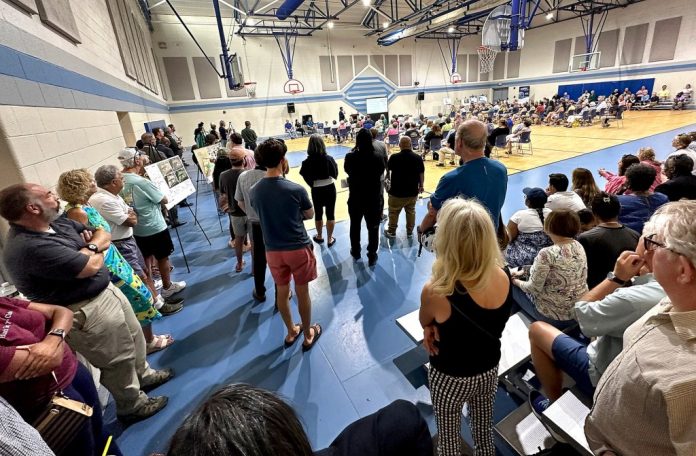
NORFOLK — City and sanitation district officials told a crowd of roughly 300 people Wednesday that discussions about the future of a city-owned portion of the former Lamberts Point Golf Course, which many want to become a park, are still in the early phase of considerations.
“We want to take our time to do this right,” said Pete Buryk, chief of staff for the office of the Norfolk City Manager. “City Council has asked that we do that.”
The closed Lamberts Point 9-hole golf course sits on a former landfill. Hampton Roads Sanitation District bought roughly 40 acres of the course from Norfolk for $30 million and plans to build a second water treatment plant. But that leaves about 15 acres of the course that still belong to the city.
Some community members are advocating for that part of the golf course to become a public park.
The city has received no formal proposals for the site, issued no requests for proposals and is not interested in selling the land, according to Buryk. But the city has had some preliminary conversations with Old Dominion University about use of some of the site. Though the golf course was closed in 2022, parking is being leased to nearby ODU and the university’s golf team has a lease for use of the clubhouse, according to Buryk.
During Wednesday’s packed community meeting at the Lamberts Point Community Center, city and sanitation district officials gave short presentations on the background of the property and limits to uses for the site because of environmental and landfill concerns and then answered questions.
Asked if the city has a plan for an environmental study of the site, Buryk said that is a “critical step” in determining the best use. But he said the city does not have such a plan at this time.
Many of those attending the Wednesday meeting wore green ribbons — given at the door by the Lamberts Point City Park Steering Committee, and many of the questions fielded at the meeting were about the potential costs and possibilities of a park or other community space. More than 4,000 signatures have been collected in favor of a green space at the city-owned parcel, according to Liz Paiste, one of the committee organizers.
A city survey, open until Aug. 23, also is collecting feedback. The majority of responses — almost 125 — voiced support for a park, with roughly 50 responses supportive of a golf course/driving range. Other responses included support for a variety of other amenities, such as a track, bike path and playground, or an amphitheater.
HRSD bought much of the course, which closed at the end of last year, from Norfolk to build a new water treatment facility as part of the Sustainable Water Treatment for Tomorrow. The new facility is slated to shoot treated water from an adjacent water treatment plant into the ground. The current water treatment facility, next to the golf course, discharges its treated water into the Elizabeth River.
HRSD needs the new facility to meet standards set by a 2021 state law that requires nitrogen and phosphorus load reductions for the Chesapeake Bay via new upgrades to facilities, according to Lauren Zuravansky, chief of design and construction for SWIFT with HRSD. She said HRSD’s engineering team is putting together a plan for building what’s needed at the site.
“This is not something that can be done at other locations,” she said when asked about potentially building the new HRSD facility elsewhere.
The land being used for the HRSD facilities will be fenced off for security and safety purposes, according to Zuravansky.
City Council approved the construction of the golf course in late fall 1997, according to previous reporting. An environmental review was completed before the development was approved, according to The Virginian-Pilot archives.

Park Place native Terrell Davis, 53, was at the meeting Wednesday and recalled being able to fish at the river’s edge of the property as a child. He said he’d like to see more done with the site, including some sort of amphitheater and fishing pier.
To some, like Lamberts Point resident Mark Hattler, there were still too many things unclear about how the new HRSD project will develop their portion of the property. Hattler, a member of the city’s environmental commission, said he’d like for all the property to remain open space.
Buryk said there was no assigned funding in the city’s budget for the current fiscal year for any development at the site. But he said the city will take direction from City Council for future funding and the turnout at the Wednesday meeting shows elected officials the public’s desires.
“This is the first step of that process,” he said.
Ian Munro, 757-447-4097, [email protected], @iamIanMunro
Maui surveys the burned wreckage caused by the deadliest US wildfire in years – Daily Press
By TY O’NEIL, AUDREY MCAVOY, JENNIFER SINCO KELLEHER and CHRISTOPHER WEBER (Associated Press)
LAHAINA, Hawaii (AP) — A search of the wildfire devastation on the Hawaiian island of Maui revealed a wasteland of obliterated neighborhoods and landmarks charred beyond recognition as the death toll rose to at least 36, with an untold number missing.
A flyover of historic Lahaina showed entire neighborhoods that had been a vibrant vision of color and island life reduced to gray ash. Block after block was nothing but rubble and blackened foundations, including along famous Front Street, where tourists shopped and dined just days ago. Boats in the harbor were scorched and smoke hovered over the town, which dates to the 1700s and is the biggest community on the island’s west side.
Tiffany Kidder Winn’s gift store Whaler’s Locker, which is one of the town’s oldest shops, was among the many businesses destroyed. As she assessed the damage Thursday, she came upon a line of burned-out vehicles, some with charred bodies inside them.
“It looked like they were trying to get out, but were stuck in traffic and couldn’t get off Front Street,” she said. She later spotted a body leaning against a seawall.
Winn said the destruction was so widespread, “I couldn’t even tell where I was because all the landmarks were gone.”
Fueled by a dry summer and strong winds from a passing hurricane, the fire started Tuesday and took Maui by surprise, racing through parched growth covering the island and then feasting on homes and anything else that lay in its path.
The official death toll stood at 36 late Wednesday, making it the deadliest U.S. wildfire since the 2018 Camp Fire in California, which killed at least 85 people and laid waste to the town of Paradise. The Hawaii toll could rise, though, as rescuers reach parts of the island that had been inaccessible due to obstructions of the three ongoing fires, including the one in Lahaina that was 80% contained on Thursday, according to a Maui County news release. More than 270 structures have been damaged or destroyed, and dozens of people have been injured, including some critically.
“We are still in life preservation mode. Search and rescue is still a primary concern,” Adam Weintraub, a spokesperson for Hawaii Emergency Management Agency, said Thursday.
He said search and rescue teams still won’t be able to access certain areas until the fire lines are secure and they’re sure they’ll be able to get to those areas safely.
The flames left some people with mere minutes to act and led some to flee into the ocean. A Lahaina man, Bosco Bae, posted video on Facebook from Tuesday night that showed fire burning nearly every building on a street as sirens blared and wind-blown sparks raced by. Bae, who said he was one of the last people to leave the town, was evacuated to the island’s main airport and was waiting to be allowed to return home.
Marlon Vasquez, a 31-year-old cook from Guatamala who came to the U.S. in January of last year, said that when he heard the fire alarms Tuesday, it was already too late to flee in his car.
“I opened the door and the fire was almost on top of us,” he told The Associated Press on Thursday from an evacuation center at a gymnasium. “We ran and ran. We ran almost the whole night and into the next day, because the fire didn’t stop.”
Vasquez and his brother Eduardo escaped via roads that were clogged with vehicles full of people. The smoke was so toxic that he vomited. He said he’s not sure his roommates and neighbors made it to safety.
Lahaina residents Kamuela Kawaakoa and Iiulia Yasso described their harrowing escape under smoke-filled skies Tuesday afternoon. The couple and their 6-year-old son got back to their apartment after a quick dash to the supermarket for water, and only had time to grab a change of clothes and run as the bushes around them caught fire.
“We barely made it out,” Kawaakoa, 34, said at an evacuation shelter, still unsure if anything was left of their apartment.
As the family fled, they called 911 when they saw the Hale Mahaolu senior living facility across the road erupt in flames.
Communications have been spotty on the island, with 911, landline and cellular service failing at times.
Chelsey Vierra’s grandmother, Louise Abihai, was living at Hale Mahaolu, and the family doesn’t know if she got out. “She doesn’t have a phone. She’s 97 years old,” Vierra said Thursday. “She can walk. She is strong.”
Relatives are monitoring shelter lists and calling the hospital. “We got to find our loved one, but there’s no communication here,” said Vierra, who fled the flames. “We don’t know who to ask about where she went.”
As the fires raged, tourists were advised to stay away, and about 11,000 flew out of Maui on Wednesday, with at least another 1,500 expected to leave Thursday, according to Ed Sniffen, state transportation director. Officials prepared the Hawaii Convention Center in Honolulu to take in the thousands who have been displaced.
In coastal Kihei, southeast of Lahaina, wide swaths of ground glowed red with embers Wednesday night as flames continued to chew through trees and buildings. Gusty winds blew sparks over a black and orange patchwork of charred earth and still-crackling hot spots.
The fires were fanned by strong winds from Hurricane Dora passing far to the south. It’s the latest in a series of disasters caused by extreme weather around the globe this summer. Experts say climate change is increasing the likelihood of such events.
Wildfires aren’t unusual in Hawaii, but the weather of the past few weeks created the fuel for a devastating blaze and, once ignited, the high winds created the disaster, said Thomas Smith an associate professor in Environmental Geography at the London School of Economics and Political Science.
The Big Island is also currently seeing blazes, Mayor Mitch Roth said, although there had been no reports of injuries or destroyed homes there.
Power was out in parts of Maui. Cellular service was down, too, making it difficult for many to check in with friends and family members. Some were posting messages on social media.
Maj. Gen. Kenneth Hara, of the Hawaii State Department of Defense, told reporters Wednesday night that officials were working to get communications restored, distribute water, and possibly add law enforcement personnel. He said National Guard helicopters had dropped 150,000 gallons (568,000 liters) of water on the Maui fires.
The Coast Guard said it rescued 14 people who had jumped into the water to escape the flames and smoke.
Maui County Mayor Richard Bissen Jr. said Wednesday that officials hadn’t yet begun investigating the immediate cause of the fires.
Mauro Farinelli, of Lahaina, said the winds started blowing hard on Tuesday, and then somehow a fire started up on a hillside.
“It just ripped through everything with amazing speed,” he said, adding it was “like a blowtorch.”
The winds were so strong they blew his garage door off its hinges and trapped his car in the garage, Farinelli said. So a friend drove him, along with his wife, Judit, and dog, Susi, to an evacuation shelter. He had no idea what had happened to their home.
“We’re hoping for the best,” he said, “but we’re pretty sure it’s gone.”
President Joe Biden declared a major disaster on Maui. While traveling in Utah on Thursday, Biden pledged that the federal response will ensure that “anyone who’s lost a loved one, or whose home has been damaged or destroyed, is going to get help immediately.” Biden promised to streamline requests for assistance and said the Federal Emergency Management Agency was “surging emergency personnel” on the island.
___
Sinco Kelleher reported from Honolulu and Weber from Los Angeles. Associated Press writers Nick Perry in Wellington, New Zealand; Bobby Caina Calvan and Beatrice Dupuy in New York; and Chris Megerian in Salt Lake City, Utah, contributed to this report.
Eliminating degree requirement for state jobs is the right move for Virginia – Daily Press

Virginia loves to blaze its own trail and to engineer its own home-grown solutions to public policy questions. Sometimes, however, it’s better to borrow from others’ best practices rather than trying to reinvent the wheel.
Maryland was the first state to eliminate academic degree requirements for most state jobs, a move that aligns with the hiring practices of private companies. Gov. Glenn Youngkin adopted a similar measure this year as part of his administration’s workforce development initiative, in what should be a win for the commonwealth.
The governor announced in May that, beginning July 1, about 90% of the roughly 20,000 jobs posted by the commonwealth each year would no longer require candidates to have an academic degree for consideration.
“As an employer, state government has one of, if not the most diverse occupational portfolios in Virginia,” Secretary of Administration Margaret “Lyn” McDermid said in a release announcing the change. “Our employees design, build, manage, and sustain public services across hundreds of lines of business and giving equal consideration to all job applicants, including those who have experience solving real world problems is a smart business practice.”
Maryland’s Republican Gov. Larry Hogan was the first to drop the four-year degree requirement for state jobs last year, his last in office. According to NPR, “Hogan said that other qualifications, including relevant experience, training, or community college education, will be given equal weight for many state government positions in IT, administrative work, and customer service.”
Since the Old Line State made that shift, other states — under Republican and Democratic leadership — have followed suit, with the enthusiastic support of officials from across the political spectrum. Youngkin’s announcement in May made Virginia the seventh state to embrace that common-sense approach.
The reasoning is straightforward: The private sector may require job applicants to hold a four-year college degree but more often they seek someone with practical experience, skills training or other specified instruction to serve in a given role. Limiting candidates to only those with a college diploma means that the competitive pay and job security of public positions are beyond the reach of many talented individuals who could do the work if given the chance.
It didn’t used to be this way. Degree requirements for all positions, in the public and private sectors, have ramped up in recent years; researchers point to the labor surplus that followed the Great Recession as accelerating that trend.
Things began to change following the release of a 2017 study by Harvard Business School researchers that concluded that degree requirements hurt both workers and employers. Workers without degrees were excluded from consideration and employers struggled to find qualified candidates — those with college degrees — to fill them.
The study also found that many positions advertised as requiring a degree were held by those without a diploma. “In 2015, 67% of production supervisor job postings asked for a college degree, while only 16% of employed production supervisors had one,” researchers wrote.
That’s a clear sign of a problem, and making this change allows state government to be part of the solution. There are plenty of talented, experienced workers in the commonwealth who have a path to public service once closed to them.
Research also suggests dropping degree requirements increases diversity in the workforce, as those with non-traditional academic careers are welcomed into the fold. After all, not everyone is accepted to college or can afford to pay the costs of a four-year degree program. Having skills training, professional certificates, community college work or on-the-job experience will be enough for consideration now.
A good-paying government job brings employment and financial security, which in turn helps build stronger, healthier communities. Maryland may have figured this out first, but Youngkin deserves credit for following suit and including this measure in his workforce development initiatives.