Home Blog Page 3

A New Book Takes Aim at American Foreign Policy in the Middle East, With Limited Results

0

American overreach in the Middle East since the Iranian revolution is examined by Steven Simon in his new book Grand Delusion: The Rise and Fall of American Ambition in the Middle East.[1] Simon reviews more than four decades of American endeavors in the region from the perspective of eight presidential administrations ranging from Jimmy Carter to Joe Biden. The book’s chapters illuminate cabinet-level thinking on vexing national security issues: Iranian influence in the Levant in the 1980s, the response to the U.S. Marine Corps barracks bombing in Beirut, the Persian Gulf War, the unsolvable Israel-Palestine quandary, and the rise and fall of Saddam Hussein and the resultant chaos in Iraq and Syria.

Simon, a former diplomat and policy advisor with deep experience in American Middle East policy, skewers the catastrophic choices made by one administration after another. The author’s experiences allow him to go  inside many of these decisions, revealing the motivations, assumptions, and often broad confusion underlying the few triumphs and many blunders. Simon’s explanation of the sad specter of America’s war in Vietnam War and its role in shaping policy in the Ronald Reagan and George H.W. Bush administrations is illuminating. Simon served in these administrations and observed the role of American sentiment and memory of that war in adjudicating policy in the Middle East. Simon also cleverly demonstrates, in revealing fashion, the surprising similarities between American presidential administrations in dealing with Iran. Many of the chapters are full of critical analysis and the kind of insight only someone involved in the decision-making can offer. In particular, the author’s insight on the Clinton administration’s development of the Oslo Accords is largely unavailable elsewhere.[2]

In the end, however, the book is not quite the sum of its parts and falls short of delivering a conclusive perspective, a comprehensive view, or a broad set of proposed policies. In focusing on his own observations and role in making decisions about American policy in the Middle East, the author does not go far enough to provide the kind of insight the book proposes to offer. Indeed, the narrow focus and the failure to provide alternative perspectives, particularly regarding the American response to a complex region’s deeply entrenched divides, ultimately diminishes the depth of the book’s insights.

A View of Misguided Ambition in the Middle East

Grand Delusion tends to oversimplify the multifaceted issues facing the Middle East. Simon frequently reduces complex geopolitical, cultural, and historical dynamics to convenient explanations. Some of these reductions seem to be a stylistic decision: Simon appears to want to get in and out of critical moments quickly to move the narrative along. This makes sense, given that there are many books covering in detail the major events he glosses over such as the Iranian hostage crisis, the Persian Gulf War, the rise of ISIS,  and more.  

At times, however, Simon seems to intentionally limit the material presented to that which fits his narrative. This reductive approach hinders the reader’s understanding of the intricate and often contradictory motivations behind various actions. For example, he attributes the failure of the Arab Spring entirely to American mismanagement and lack of understanding.[3] This section of the book does not consider the domestic factors, historical legacies, and geopolitical interests that shaped the outcomes of the movement in different countries. By neglecting the complex interplay between external and internal dynamics, Simon’s analysis falls short of a full exploration of the events he describes.

Throughout, Simon consistently reinforces his argument that American ambition in the Middle East has been inherently flawed and misguided, even when it does not make sense to do so. For example, Simon dismisses the development of an international coalition that defeated ISIS through a combination of precision airstrikes and ground assaults–a rare and remarkable strategic and operational success.[4] Simon claims, without much exploration, that ISIS’ territorial control was unsustainable irrespective of any opposing counteroffensive.

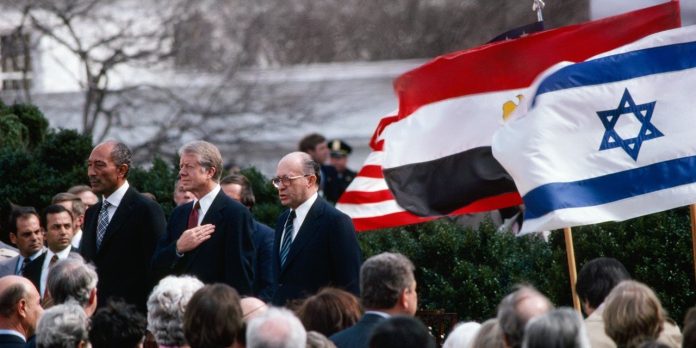
Similarly, Simon dismisses the Abraham Accords–the 2020 normalization of relations between Israel, the United Arab Emirates, and Bahrain–in a mere 127 words.[5] The historic series of agreements serves as perhaps the Trump administration’s signature diplomatic achievement in the Middle East.[6] By bringing the Israel Defense Forces and Arab militaries together in collaborative deterrence planning, the set of agreements created a new bulwark against Iran and advanced a new regional security architecture organized around shared threats. Indeed, the Abraham Accords represent a significant opportunity for American interests as well as stability in the region and deserve more analysis. Simon derides the agreements because the Emirates are disinclined to partner with Israel in a war with Iran. While this is accurate, the agreements, by fostering trade relations, seek to build a regional deterrence that might preclude a war with Iran. This oversight is consistent with Simon’s narrow perspective on regional complexities.
#Reviewing Writing Wars

0

In his new book, Writing Wars: Authorship and American War Fiction, WW1 to Present, David F. Eisler grapples with one of the most complex questions in war fiction studies: Who can and should write a war story? Throughout the 20th century, scholars have maintained that personal experience is essential to an authentic tale of combat and military service. As Samuel Hynes explains, soldiers’ perspectives supersede that of civilians for the simple fact that they were “there, in history.”[1] And while Paul Fussell suggests the “real war is unlikely to be found in novels,” he also maintains that literary representations should be left to the actual “participants.”[2] As leading critics in the field, Hynes and Fussell’s positions have influenced scholarly consensus on the matter of authorship within the genre. Only those who have worn the uniform earned the right—and trust among readers—to fictionalize their experiences.

In Writing Wars, however, Eisler—a veteran himself—views the authority of experience as an outdated premise with serious ethical shortcomings. Instead, he avers that both soldiers and civilians have the ethos to tell war stories, and society at large has a need to read them. While his argument is largely theoretical, tracing how the cultural capital of soldier-authors’ experiences changed over time, it hinges on a critical moment in American military history: the abolition of conscription in 1973. Without a military draft, the all-volunteer force led to a “growing abdication of responsibility” among civilians, thereby increasing the “separation between the military and American society,” which is known as the civil-military gap.[3] Whereas civilians bought war bonds or took factory jobs during earlier campaigns, they could now participate, if at all, to the extent they felt comfortable doing so. As a result, veteran-authors were left to grapple with the social and political implications of their nation’s wars. Through a series of cultural and close readings, Eisler outlines how veterans have responded to this dilemma, slowly relinquishing their cultural capital to let—even encourage—civilian-authors to tell their own war stories. This shift in authorship allows veterans “to share the experiential and interpretative burden of the conflicts with the disconnected population.”[4] Moreover, in addressing the vast ramifications of each war, civilian-authors also take responsibility in narrowing the civil-military gap that has adversely influenced society’s perception of soldiers and the military in recent years.

To this end, Eisler’s book posits a radical intervention among the current debates on the topic. Kate McLoughin and Jennifer Haytock, among others, suggest reading works by noncombatants such as nurses or engineers for a nuanced and diverse portrait of combat and military service. Eisler redefines the boundaries of the necessary experience for writing war stories altogether by accounting for civilians among this group of writers. His argument, then, opens the floodgates for waves of new critical analyses of war fiction old and new, which is a feat only trumped by the stakes of Writing Wars. In finding the historical justification to include civilian works, Eisler likewise finds a way to address the growing fissure between the military and society. Whereas the authority of experience once helped veterans find jobs and publishing opportunities, it has since become counterintuitive, marginalizing those on the other side of the conflict and insulating those with no service experience. Writing Wars shows how the “dispersion” of authority can potentially triage this issue and breathe new life into a genre that many scholars fear was growing stale and myopic.[5]

To realize his argument, Eisler applies pressure to combat gnosticism, a theory developed by Jeffrey Campbell to account for the specific military context of a veteran-author’s ethos. Combat gnosticism first gained traction during the early 20th century when critics assumed soldiers’ experiences translated to more authentic representations in fiction. With more wars came more war stories, and combat gnosticism snowballed into a hallmark that defined the genre. Writing Wars adopts this historical development for its structure and methodology. That is, Eisler dissects the credence attributed to veterans’ experiences through a cultural survey of 20th and 21st century politics, conflicts, and a miscellany of literature. Working chronologically, he deftly elucidates the rise of combat gnosticism in the fiction of World War I and World War II to its gradual destabilization during the Vietnam War years and finally its diminishing relevance in representations of the Global War on Terror. This approach serves Eisler’s culminating argument well, as it contextualizes later readings that examine how veteran and civilian authors have developed narrative techniques to address the civil-military gap. All of this makes for an organic and logical presentation, allowing readers to delve into the nuanced histories and literary analyses laced throughout the book.

The Strategy Bridge, Ten Years On

0

Ten years ago, a disparate group of field-grade military officers toiled away at their keyboards. The world of national security blog posting was nascent, and several of them were working on individual projects, attempting to make sense of the world they found themselves in, seeking to share thoughts and ideas that would help shape the future. Through sheer happenstance of timing and a little bit of luck, they found each other and realized they could accomplish much more together than any one of them could on their own. So was born The Strategy Bridge.

They envisioned it as a marketplace of ideas where practitioners, theorists, and students could collaborate in a new virtual space to develop themselves and one another, challenge each other’s assumptions, and share a professional discourse that had the potential to influence policymakers in the United States and the world. It would be a place where thoughts could bridge the gap between the current and the ideal.

It began on October 25, 2013, with the publication of an article from one of our founders, Nathan K. Finney, entitled ”Bridging Divides: Thoughts on a Startup Conference.” Another founder, Rich Ganske, followed closely behind with his thoughts on ”Building Better Generals,” to which Don Vandergriff responded with an ”Addendum to ‘On Building Better Generals.’” Next, Chris Zeitz gave the community a look at “Network Theory Vs. Networks in Theory,” and Rich Ganske then returned with thoughts on the importance of revolutions in military affairs. With the publication of these five articles, the foundation was laid for The Strategy Bridge to become what it is today: an organization focused on the development of people in strategy, national security, and military affairs.

Ten years later, The Strategy Bridge has grown from a few like-minded individuals to a global community comprising tens of thousands of readers, writers, thinkers, and decision-makers.

Thanks to the tools of modern mass communication, The Strategy Bridge has built an audience of more than 360 thousand unique annual visitors from 99 countries, with over 32,000 Twitter followers, nearly 10,000 Facebook fans, and more than 4,500 followers on LinkedIn. This marketplace of ideas boasts 1,787 unique journal articles (including nearly 450 national security-related book, movie, and even video game reviews) by more than 630 authors. The organization has hosted hundreds of new model mentoring gatherings in locations as diverse as Washington D.C., Boston, MA; Carlisle, PA; Leavenworth, KS; and even Canberra, New South Wales. Thanks to the talents of our podcast host and producer, we’ve published nearly 50 episodes to date on topics ranging from strategic education to the politics of the space race.

For the last seven of those ten years, The Strategy Bridge has hosted an annual student writing contest, publishing scores of student essays, sharing their ideas, and awarding thousands of dollars in prize money to participants, while simultaneously developing the writing abilities of hundreds more.

The Strategy Bridge Is, Was, and Will remain Free 

Importantly, this repository of ideas and exposure to discussions with leaders and experts all came at no cost to our audience and community. Since its inception, The Strategy Bridge has remained free. Free of paywall access controls. Free of advertising. Free. Thanks to a dedicated group of volunteers made up of editors, featured contributors, producers, event hosts, marketers, and generous donors, access to ten years of content has remained available to the entire community without any strings.

It is with sincere gratitude that The Strategy Bridge team offers thanks to our entire community. To those who have contributed to our archive, to those who have participated in our events, and to those who have given of their time and their skills to further our endeavor we say, “Thank you for ten wonderful years!” We hope that as members of this community, each of you has gained by the experience some small fraction of the benefit you have bestowed upon us by your participation.

THank you to Every Member of the Bridge Community

The Cold War on the Small Screen

0

The subject of John W. Lemza’s scholarly study The Big Picture: The Cold War on the Small Screen is a U.S. Army-produced documentary television series called The Big Picture that ran from 1951-1971 on network, local, and educational stations, as well as on the Armed Forces Network of overseas stations. The intent of the television series was to allow the Army to “tell its story” to the American public by offering weekly half-hour vignettes of Army battles, operations, culture, and weaponry, as well as portraits of memorable units and soldiers.[1] Lemza’s study is relevant to our own era in which a gaping civil-military divide separates the American public from the military, and in which the military largely fails to communicate a compelling appreciation of its goals, virtues, and activities. Lemza recovers a historical chapter in which the Army much more successfully married its messages with the possibilities of television technology, the entertainment realm, and the tastes of emerging mass-viewing audiences. The account of how it did so, and why the endeavor eventually collapsed, is full of intriguing insights and historical details.

Billed by the Army as “an official television report to the nation from the United States Army,” The Big Picture series is now largely forgotten, or remembered primarily for its portentously strident tone that relentlessly affirms the value and valor of the Army.[2] But the show was popular in its time and was  long-lasting: over its 20-year run, the Army produced 823 episodes, first broadcast on network television and later syndicated to 426 local commercial, educational, and cable television stations, as well as 51 stations on the Armed Forces Network.

Series episodes combined war footage primarily shot by the Army Signal Corps or images commissioned by the Army Pictorial Center (APC) to serve a particular episode’s needs. In some cases, created scenes were shot in the studios of the Army Pictorial Center. Most episodes were introduced by on-screen hosts, either Army officers and non-commissioned officers in uniform or civilian journalists, to include luminaries such as Walter Cronkite, Edward B. Murrow, and Ronald Reagan. Stirring martial music and stock footage of parades and waving flags highlighted the grandeur and patriotic valence of each episode’s subject. Many episodes, however, also contained graphic combat footage drawn from World War II, Korean War, and Vietnam War archives.

Lemza excels in establishing the 1950s cultural context that engendered The Big Picture series and allowed it to flourish. Especially important was the rise of the television industry as an entertainment medium, the popularity of which was immediately evident. By 1955, for example, 65% of American homes had television sets. Lemza describes how the Army adroitly partnered with the television industry—primarily the big national networks based in New York—to leverage the power of television to influence (while entertaining) viewers. Importantly, Lemza notes that the series was just one of a number of shows in the early 1950s produced by the military in conjunction with the television industry to meet audience appetites. The Army’s series ran alongside similar efforts by the Air Force, the Navy, and the Marine Corps, as well as other productions by the Army.

The branches’ respective efforts to publicize their virtues on network television were more competitive than cooperative, however, because the stakes were high. The Army, for example, worried the other branches were better positioned to curry favor with Washington politicians for funding dollars and with the American public to boost recruitment. As a consequence, The Big Picture episodes frequently promoted the Army’s continuing relevance in an age of high-tech Cold War conflict with Russia. Lemza reports that the shows sponsored by other military branches lasted just a few years at most, so while the Army was not successful in winning every battle for dollars in Washington or recruits among the American populace, it can be said to have won the television war. While not uncritical of some aspects of the show’s production, Lemza asks us to appreciate the overall craftsmanship and savvy of the show’s creators that allowed the series to survive for twenty years while other military-informational shows perished.

Leadership, Strategy, and Conflict in the 21st Century and Beyond

0

Notes:

[1] Jonathan Klug and Steven Leonard, eds., To Boldly Go: Leadership, Strategy, and Conflict in the 21st Century and Beyond (Havertown, PA: Casemate Publishers, 2021), vii.

[2] Andrew Liptak, The U.S. Military Is Turning to Science Fiction to Shape the Future of War, Medium, July 29, 2020, available at https://onezero.medium.com/the-u-s-military-is-turning-to-science-fiction-to-shape-the-future-of-war-1b40d11eb6b4

[3] Hannah Graf, ‘Invisible Force’ Graphic Novel Shows the Possible Future of Cyber Warfare, ArmyTimes, July 14, 2020, available at https://www.armytimes.com/news/your-army/2020/07/14/invisible-force-graphic-novel-shows-the-possible-future-of-cyber-warfare/

[4] I.F. Clarke, ed., The Tale of the Next Great War, 1871-1914: Fictions of Future Warfare and Battles Still-to-Come, (Syracuse University Press, 1995), 13

[5] I.F. Clarke, ed., The Tale of the Next Great War, 1871-1914: Fictions of Future Warfare and Battles Still-to-Come, (Syracuse University Press, 1995), 15.

[6] Rebecca Jensen, “Calm Men Who Deal Death Wholesale,” in To Boldly Go, eds. Jonathan Klug and Steven Leonard (Havertown, PA: Casemate Publishers, 2021), 190.

[7] M.L. Cavanaugh, “Blood Lessons,” in To Boldly Go, eds. Jonathan Klug and Steven Leonard (Havertown, PA: Casemate Publishers, 2021), 174.

[8] Liam Collins, “Man > Machine,” in To Boldly Go, ed. Jonathan Klug and Steven Leonard (Havertown, PA: Casemate Publishers, 2021), 223.

[9] Theresa Hitchens, “The Flag Follows Trade,” in To Boldly Go, eds. Jonathan Klug and Steven Leonard (Havertown, PA: Casemate Publishers, 2021), 128, and Erica Iverson, “The Final Frontier,” in To Boldly Go, Eds. Jonathan Klug and Steven Leonard (Havertown, PA: Casemate Publishers, 2021), 166.

[10] Kathleen J. McInnis, “Sun Tzu, Ender, and the Old Man,” in To Boldly Go, eds. Jonathan Klug and Steven Leonard (Havertown, PA: Casemate Publishers, 2021), 92.

[11] Kathleen J. McInnis, “Sun Tzu, Ender, and the Old Man,” in To Boldly Go, eds. Jonathan Klug and Steven Leonard (Havertown, PA: Casemate Publishers, 2021), 97.

[12] Rebecca Kheel, “Air Force uses AI on Military flight for first time,” The Hill, 12/16/2020, available at https://thehill.com/policy/defense/530455-air-force-uses-ai-on-military-flight-for-first-time/

#Reviewing The Peacemaker

0

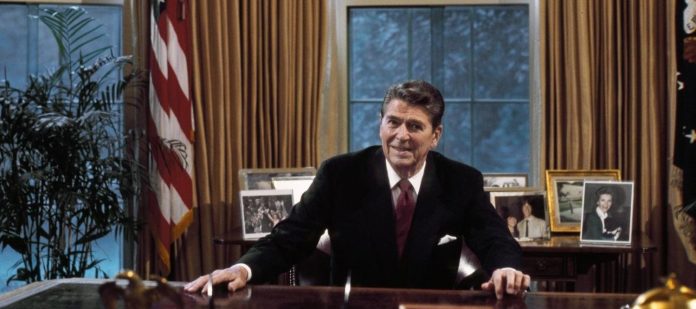
The Peacemaker proceeds chronologically, beginning a couple of years before the 1980 election campaign and ending with Ronald Reagan’s last day in office. Inboden breaks each chapter up into many short sections, allowing him to weave together multiple stories and to chronicle all of the events, challenges, and conflicts that emerged simultaneously at every given moment of the Reagan presidency. For example, chapter 6, which covers the first part of 1983, moves breathlessly from the issuance of National Security Decision Directive (NSDD) 75, to a speech Reagan made to the National Religious Broadcasters, to diplomacy with Japanese Prime Minister Yasuhiro Nakasone, to talks with the Soviets, and then moves on to discussions about the Strategic Defense Initiative, defense exercises in the Kurils, meetings with Afghan rebels, challenges in Suriname, South Africa, and Beirut, and more. Throughout these sections, Inboden does not shy away from covering the conflicts that divided Reagan’s advisors, whether they were petty interpersonal or interagency clashes or more serious philosophical and strategic disagreements. This was a purposeful stylistic approach on Inboden’s part, one that imparts a visceral sense of “the chaos of policymaking as it felt to Reagan and his team,” with the constant churn and crush of events meaning that “no issue could be considered on its own, no decision deferred in the fullness of time, because the world does not wait on the White House Situation Room calendar.”[1] It also makes clear how much personality and contingency can shape policy. While this messy reality is true for any presidential administration, it is an aspect that other narrative approaches might have masked. Embedding this sense of chaos within the structure of the book is very effective at illuminating the challenges of executive leadership and foreign policy decision making. 

Inboden’s granularity does not come at the expense of a bigger picture analysis or thematic thread. Despite the wide range of events, large and small, that Inboden surveys in each chapter, he still fleshes out the core themes that he outlines in his introduction: the fundamental importance of alliances and personal relationships to Reagan’s foreign policy strategy, the role of historical memory in shaping Reagan’s sense of personal and national mission, the paradoxical relationship between force and diplomacy in his “peace through strength” concept, and the set of beliefs about religious faith, freedom, ideology, and tragedy that undergirded his reading of the Cold War conflict and the possibilities for a post-Cold War world.[2] He is especially effective at integrating a discussion of the significant and still understudied role that religion and religious belief played in shaping U.S. foreign relations.

Despite its intellectual and literal heft (it comes in at nearly 600 pages with notes), the book reads quickly due to Inboden’s compelling writing style. A section on the 1985 hijacking of the ship the Achille Lauro is a great example. Even a well-known event in Inboden’s retelling reads like a suspenseful thriller. He moves through the key events—the hijacking, the murder of ship passenger Leon Klinghoffer, the docking of the ship in Egypt, the coordinated escape of the hijackers on EgyptAir 737, the U.S. F-14 Tomcats intercepting the flight and forcing it to land in Italy, and then the U.S. Navy Seals and hundreds of Italian soldiers surrounding the plane on the tarmac—interspersing these action-packed moments with details about the negotiations, discussions, and decisions happening simultaneously within the Reagan White House. He then neatly links the resolution of the incident with one of his core themes. Because the plane had landed in Italy, the Italian government prosecuted the hijackers. Although three of the men were sentenced to lengthy prison terms, Yasser Arafat, Chairman of the Palestine Liberation Organization, successfully pressured Italian Prime Minister Bettino Craxi to set the mastermind of the operation free. Inboden notes that this outcome left Reagan “angry for a few days,” yet the president forgave Craxi quickly because he “did not want to risk a rift with a friend on the eve of” the planned summit with the Soviet Union in Geneva.[3] Per Inboden’s argument, alliances and personal relations were paramount to Reagan.

Indeed, there are numerous moments in each chapter where Inboden’s identified themes shine through. This lends considerable coherence despite the “fog of war” narrative approach and on the whole these themes are analytically useful and compelling.

Yet the essential characterization of Reagan that Inboden seeks to present through the book is one that will inspire much debate among historians. Throughout The Peacemaker, Inboden implies that Reagan had a strategy from the outset of his presidency “to win the Cold War without firing a shot” by “extend[ing] one hand in friendship to the Soviet Union while using the other hand to try to bring it down.”[4] Although Inboden does note that the administration did not define a comprehensive grand strategy at the start of Reagan’s first term, he suggests throughout that Reagan had an almost instinctual grand strategy, one that he pursued with dogged focus until he succeeded in triumphing over the Soviet adversary. In one chapter, Inboden argues that while in 1982 “most elite opinion saw the Soviet Union as stable and resilient,” Reagan had a (gut-based) insight that Soviet military spending was unsustainable.[5] Reagan formalized his instincts and ideology through NSDD-32—a policy document that laid out a strategy of “pressuring the Soviet system on every front…not only to exploit its weaknesses, but to produce a reformist leader.”[6] Inboden contends that Reagan then spent “the rest of his first term looking for such a Soviet reformer. In his second term, he would find one.”[7] This suggests much of the agency rested with Reagan. Yet finding that reformist leader in Gorbachev does not mean that Reagan, his advisors, or the strategy of NSDD-32, engineered this outcome. Hope and instinct did not produce this outcome. Historical contingency (including the contingency of the relationship that developed between Reagan and Gorbachev) as well as factors internal to the Soviet Union did, as historians such as Melvyn Leffler, David Priestland, James Wilson, and Vladislav Zubok have demonstrated powerfully in their work.[8]

The Value of Satire as a Tool of Professional Development

0

Written in the middle of the global COVID-19 pandemic, Finley has given her lead protagonists, the Caro family, the ultimate pre-retirement tour: a three-year assignment to Rome. Victor and Vanessa Caro, who embody a modern partnership between a foreign intelligence officer and a federal investigator, are exactly as sharp witted and sarcastic as you hope they will be. Their coworkers at the CYA (yes, you read that correctly) and the FBI are the perfect amalgamation of everyone’s coworkers. Their sarcastic and perpetually online teenage offspring, Oliver, is every high school kid raised in the shifting life of foreign service families. But only Finley’s characters could find themselves embroiled in a national security nightmare, coming on the heels of a presidential election that is covered with the hallmarks of Russian interference, a conflict in Ukraine, a massive and coordinated internet disinformation campaign, and members of congress doing…well…everything that actual congressional leaders have been in the news for recently. Finley’s satire is built on a highly accurate skeleton of reality, a trend she began in her previous works. This makes her writing immediately accessible to even readers outside of the foreign service sphere. You do not have to be part of the Caro family’s world to immediately connect with Finley’s writing.

Finley’s antagonists are as delightful as her protagonists but with so many more blissfully duplicitous twists. Her Russian oligarchs are truly malevolent, partying on comically over-the-top yachts. Her Russian spy is a honeypot worthy of Ian Fleming. Her vociferous Facts News anchor, Kip Lawson, is suitable for the most prime of primetime slots on cable news. Her dungeon of Russian internet trolls is so on-point that you will catch yourself checking your social media trending menus to see if #KidneyIceCream or people lighting their flatulence on fire for the President has genuinely become a thing in the last hour. Don’t worry. It has not. What makes Finley’s universe of Russian bad guys so believable is her intimate knowledge of national policy, strategy, government bureaucracy, and human idiosyncrasies.

Finley’s work is part of a long and glorious tradition of satire in the world of military and foreign affairs. Her books are a welcome mental break for modern audiences, but the wellspring of military and diplomatic satire was already deep. For autocratic societies, where censorship is a defining characteristic, satirists walk fine lines to say quiet thoughts out loud. This flirtation with disaster is crucial to sharing the realities of authoritarian regimes and garnering support for everything from state corruption to genocide.[1] Even the Soviet Union of the 1920s had the underground paper, Krokodil, and a thriving underground literature world poking fun at life under Soviet rule. Josef Stalin, a man notorious for murdering all dissenters, defended the 1926 satirical play, The Day of the Turbins, and was rumored to read anti-bureaucratic satires to his young sons.[2] For democratic societies with a free press, satire has provided an avenue to address challenging topics and build a sense of community through shared humor. Floods of satirical music, art, and literature have emerged in the wake of national and global events, particularly wars. Rudyard Kipling’s cheeky short story, The Janeites, examined the absurdity of the First World War through the ritual of British soldiers gathering to discuss the literary world of Jane Austen, a talented satirist herself, in the misery of the trenches.[3] With the 1963 stage debut of Oh, What a Lovely War, critics and audiences realized the play’s messages went far beyond the archetypal British WWI hero. On stage, and later in film and television, it used popular songs, vaudevillian tropes, and choreographed dance to excavate audience memories and dissect a bittersweet historical period. Like all great satire, Joan Littlewood’s Oh, What a Lovely War reached into the historic wealth of actual songs, photographs, memoirs, eyewitness accounts, and official statistics from the war to present her distinctly anti-war sentiments.[4]

#Reviewing Military History for the Modern Strategist

0

Another example from that same period demonstrates both the importance of works like O’Hanlon’s and the perils of study in insufficient breadth. Russell Weigley’s The American Way of War: A History of United States Military Strategy and Policy, first published in 1973, was an unusually influential academic work within the military; the book was a staple not just in graduate and undergraduate history instruction, but also within professional military education. Weigley’s description of a U.S. military historically spoiled by riches, and so tending to a firepower-based model of warfare that was unartfully attritional and unthinkingly astrategic, resonated in the aftermath of Vietnam. Though a useful foil for military reformers, Weigley’s portrait was in many respects a caricature. Yet the eminence of Weigley was such that it was not until 2002 that historian Brian Linn noted both the significant flaws of Weigley’s muddled theoretical construct and that the narrative relied almost entirely on a selective history focused largely on the American Revolution, the Civil War, and World War II. Linn demonstrated that the patterns discerned by Weigley did not hold up even when applied to conventional conflicts like the Spanish-American War and World War I, much less the many other less conventional conflicts and uses of force.[7] In short, Linn highlighted that a narrow focus on a few cases can lead to skewed understandings of the past, particularly when they confirm our contemporary biases.

Antulio J. Echevarria II employs a wider vantage in Reconsidering the American Way of War: U.S. Military Practice from the Revolution to Afghanistan. As suggested by the title, Echevarria builds upon Linn’s critique of Weigley to offer a more nuanced appraisal of U.S. military history by examining all its uses, including those outside of major conflicts. That greater breadth yields more nuanced findings. Viewing U.S. military history through a narrower lens, O’Hanlon offers three major lessons for strategists: outcomes in war are not preordained; wars tend to be harder and more costly than policymakers anticipate; and American grand strategy is sufficiently strong to weather some setbacks. Those lessons are certainly sound, and strategists would do well to heed each of them. Collectively, they also make a strong case grounded in empirical historical evidence for O’Hanlon’s preferred grand strategy of “resolute restraint.” Yet there is more to be gained from a survey of so much history. In contrast, Echevarria’s final “Conclusions and Observations” chapter offers provocative insights into the relationship of politics and strategy, the quality of U.S. military strategy, and how the  “American way of battle” has yielded both success and failure over the centuries. Though a full overview of Echevarria’s conclusions is beyond the scope of this review, it is worth noting his observation that the exigencies of domestic politics—contrary to Weigley’s contention of a norm of overwhelming and decisive force—has actually led the U.S. military to conduct operations and campaigns with only a slight quantitative advantage, at parity, or even outnumbered.[8] This insight sheds light on both recent experiences in Afghanistan and Iraq, as well as providing a useful starting point for considering potential conflicts with Russia or China.

History in Depth and Context

Howard’s framework of studying history in width, depth, and context was advice for a lifetime of study, not something a single volume can achieve. The difficult trade-offs facing authors and publishers are evident in a comparison of Military History for Modern Strategists with Reconsidering the American Way of War. Because Echevarria covers much more ground, his discussions of each case are far more cursory than O’Hanlon’s. In respect to depth, Military History for Modern Strategists does not provide the best guide to those interested in further reading in depth. History is an active field, yet O’Hanlon’s footnotes suggest a significant reliance on aging standard works from a previous generation (or two).

Similarly, Howard’s final element of context is not as applicable to a survey such as O’Hanlon’s. Context generally, though not always, is a by-product of greater depth. A brief remark in the preface, however, suggests that O’Hanlon might not entirely understand what history provides in this regard. In contrasting his self-described concise and conceptual approach, O’Hanlon suggests that the main reason why historians go into greater detail is “the courage, sacrifice, and drama of individuals and peoples trying to achieve victory and avoid defeat and death that inspires us at the human level.”[9] Many popular histories are indeed filled with “human interest” stories or additional layers of technical detail, such as the precise number and type of aircraft in some bombing raid. Hopefully, O’Hanlon does not believe that the only difference between a shorter or longer work of history is the inclusion of such material. If so, that incorrectly conflates detail with context.

Life in the New American Army

0

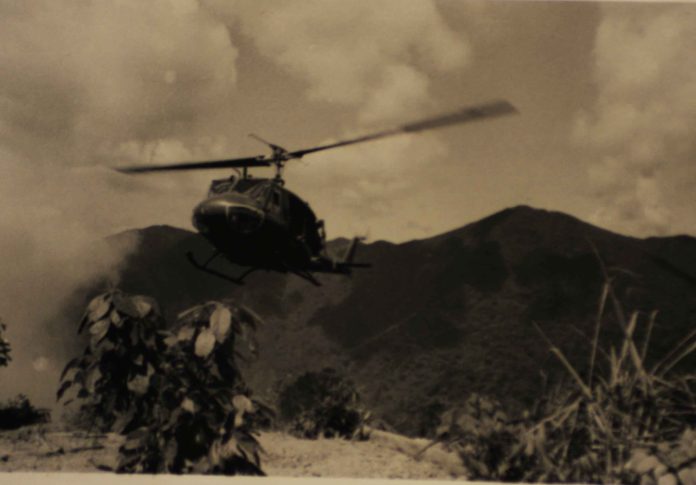
Mud Soldiers: Life in the New American Army is an examination of the post-Vietnam U.S. Army and the pre-Gulf War Army. It serves as an excellent supplement to recent works on the AVF by authors like Beth Bailey, Bernard Rostker, and William A. Taylor.[2] Author George C. Wilson writes a broad study of Charlie Company, 2nd Battalion, 16th Infantry Regiment (2-16), 1st Infantry Division spanning two generations of soldiers. In the first chapter, Wilson focuses on Charlie Company in Vietnam. The author recounts the company’s actions in the battle of Xa Cam My, part of Operation Abilene, on Easter Sunday and Easter Monday in 1966. Using interviews from survivors, Wilson provides a riveting narrative over the course of the vicious battle. The battle’s appalling 80% casualty rate left 71 wounded and 36 Americans killed, including Air Force pararescueman A1C William H. Pitsenbarger and Sergeant James W. Robinson. Both earned the Medal of Honor for their actions during the battle. In one emotional scene, “[One soldier] told a friend he felt like crying but knew once he started he could never stop. So much pain. So much death. So much being alone.”[3]

The ensuing 14 chapters cover the Charlie Company of 1987-1989 as it participated in the Cohesion, Operational Readiness, and Training (COHORT) program, designed to increase unit effectiveness and cohesion by keeping soldiers together for the duration of their careers, that lasted from 1981-1995. In an easy-to-read 276 pages, Wilson explores “one of history’s ironies that the 1966 Charlie Company draftees, by sacrificing themselves so heroically and in such great numbers, helped end the draft that yanked them into the Vietnam jungle.”[4] He provides a detailed narrative, explaining daily life of a volunteer soldier in the Army of 1987-89. He follows the soldiers as they begin their Army lives first as infantry trainees in One Station Unit Training (OSUT) at Fort Moore, Georgia and then infantrymen at Fort Riley, Kansas. Wilson builds close relationships with these men and their families as they adjust to Army life in training and at their first duty station, often far from home. 

Wilson was well-qualified to write this book. Spending nearly 25 years as a Washington Post defense correspondent from 1966-1990, he embedded with U.S. troops in Vietnam in 1968 and 1972. In 1983, Wilson was aboard the carrier USS John F. Kennedy during their retaliatory strikes in the aftermath of the Marine barracks bombings in Lebanon. This experience would form the basis of his 1986 book, Supercarrier: An Inside Account of Life Aboard the World’s Most Powerful Ship, the USS John F. Kennedy, which provided a detailed view of ship life from the sailor’s perspective.[5]  

Mud Soldiers draws common ground between the Charlie Company soldiers of Vietnam and the Charlie Company soldiers of 1987-1989. They are all normal people, from Somewhere, America. Their life circumstances often influenced their paths to becoming soldiers. The contrast between the two companies is clear. One saw significant combat with ranks filled with volunteers and draftees. The other was filled with all volunteers whose combat experience did not extend beyond maneuvers in “the box” at the Army’s National Training Center (NTC). In highlighting these differences, Wilson shows that the “mud” is both very real when slogging around the cold Kansas prairie, and unseen in experiencing close proximity to the same people every day, loneliness, boredom, overwork, and wasted time. These layered contrasts define the mud for the men of 2-16.

Geared toward the American public, Wilson presents an unvarnished look at a junior enlisted soldier’s life in the Army of the 1980s. The author pulls no punches on how drill sergeants treated their recruits, and how soldiers treated each other. Mentorship and frustration from the drills combines with trainees’ camaraderie and bullying one another, and their ultimate admiration for their drills. 

The author does not engage in a concentrated discussion on the utility of the AVF until over halfway through the book. This is a strength for a story about the AVF told through the eyes of someone in its ranks, rather than an academic study with jargon and institutional language. Wilson keeps the perspective at the junior enlisted level, an approach that is biased but also builds reader empathy for the soldiers of Charlie Company facing complicated leadership. 

Wilson presents post-Vietnam attitudes, which are not too different from some contemporary discussions. In a discussion with Colonel Richard S. Siegrfeid, then commandant of the U.S. Army Infantry School, on how the AVF ought to be employed, Wilson asks about the risk of the military becoming “separated from mainstream America.” Siegfried responds that the Army of 1987 was too small to fight a war with all volunteers. A draft would need to be called and the country mobilized for war. Siegfried explains that, “A country fights a war. If it doesn’t, then we shouldn’t send an army.”[6]

For those who have served at Fort Riley, Wilson’s descriptions of the weather on the Kansas plains are vivid and memorable. Hot, humid summers give way to bitterly cold, windy, and rainy winters that cause hypothermia for one Charlie Company soldier whose platoon brought no cold weather gear to the field. Wilson uses this incident to highlight leadership failures at the company level within 2-16. Platoon leaders seemed more interested in over-training their soldiers than getting to know or spend time with them, perhaps for fear of becoming too close with them. Summarizing this attitude is a young lieutenant,  commissioned at the nearby University of Kansas, who explains to Wilson, “‘What I’ve been taught is that when you’re a lieutenant you don’t have to explain your actions to soldiers. They have to do stuff without question: execute now…in combat you don’t have time to explain.’”[7] This is made worse, Wilson argues, by quick officer turnover. Junior officers have neither the experience nor the success in training to warrant further advancement on short timelines.

Wilson notes a clear divergence  between junior enlisted soldiers and the company leadership, and what each thinks are the challenges in Charlie Company. Greater input from company or battalion leaders during training exercises could have offered more  perspective on junior soldier performance and challenges. 

Wilson is highly critical of the COHORT experiment, discovering that 15 of the 66 soldiers who had arrived from Fort Moore were gone after one year on station. A 2022 paper published by Army University Press describes the COHORT program design as a way to create “stability within the junior enlisted ranks.”[8] As Wilson showed, this was not reality in Charlie Company and a fundamental challenge to many soldiers in the unit. In chapter 12, he explores this phenomenon with Army-provided data that shows Charlie Company’s attrition of new soldiers; 17% of Charlie Company’s soldiers had attrited, compared to 12% with the rest of the Army. However, both Article 15 administrative punishments and AWOL soldiers averaged far above the rest of the COHORT Army.[9]

In Wilson’s discussion with 2-16’s command sergeant major, he reveals that many of the Army’s most effective NCOs seemed to have left the service once the AVF was instituted. This led to a lapse in effective training, particularly for an experiment like COHORT. The new generation of soldiers lacked discipline, exacerbated by weaker and more inexperienced NCOs and the apparent nothingness of a duty station like Fort Riley.[10] As one Charlie Company soldier explained, “I’d sign up for the Army [again], but not COHORT. Everybody gets tired of seeing everybody.”[11]

Wilson does recommend changes, anticipating that “the pool of young men and women to recruit [would] shrink in the 1990s.”[12] Some of these can be seen in many organizations across the military with varying results. Competition with the broader American marketplace would make recruiting more challenging, on top of the retention issues Wilson identified at Fort Riley. He recommends that officers attend basic training to better understand junior enlisted perspectives. He notes that training should be more “fun” with digital training aids. He advocates liaising with families to prevent “stonewalling” when soldiers are injured during training, and improved exit options to mitigate AWOL cases and desertion. The most interesting recommendation is a new set of promotion criteria that relies on “winning” in battles at NTC or other training centers in order to take command, lead a platoon, or stay in a key leadership role.[13] 

Seasons of Development – The Military Leader

0

In Seasons in Leadership, I wrote about the leader’s role in sensing the environment and guiding teams through change:

Regardless of the situation, the best leaders know that by their role and responsibility positions them to intuit transition and see opportunity. These leaders intentionally develop vision to sense impending seasons. Then they fulfill their responsibility to define reality for the team and empathetically guide their followers through the change. In doing so, they model how to lead through change with foresight and intention.

We often forget that the precursor to navigating change is the leader’s own development, the arc of personal growth that prepares them for the road ahead.

Development

Recently, Ryan Holiday perfectly complemented this thought with the words of Epictetus:

First practice not letting people know who you are — keep your philosophy to yourself for a bit. In just the manner that fruit is produced — the seed buried for a season, hidden, growing gradually so it may come to full maturity. But if the grain sprouts before the stalk is fully developed, it will never ripen. . . . That is the kind of plant you are, displaying fruit too soon, and the winter will kill you.

Holiday adds, “The seeds of Stoicism are long underground. Do the work required to nurture and tend to them. So that they – and you – are prepared and sturdy for the hard winters of life.”

I like his reference to the winters of life…to seasons. It’s the idea of developing in due time – that a leader’s growth ebbs and flows over the course of a month, a year, a career, an entire life. Skills must be learned, cultivated, tested, challenged, refined, and perfected in practice.

What is the plan for this development? A series of books, jobs, experiences, conversations? Is there a strategy that connects the leader to who they wish to become?

With any luck, your profession gets you partway there.

But what must you bring to the table? How will you chart the arc of your development for the seasons ahead? Who must you become for the approaching winter?


I’ll humbly offer that The Military Leader blog, book, and podcast are great places to start.

Also, John Maxwell’s 15 Invaluable Laws of Growth reinforces that your personal growth links directly to your success.

And Ryan Holiday’s The Daily Stoic will fuel your mind and spirit along the way.

Subscribe to The Military Leader!

Complete Archive of Military Leader Posts

Back to Home Page