Home Blog Page 22

Hawaii officials urge families of people missing after deadly fires to give DNA samples – Daily Press

0

By AUDREY McAVOY, GENE JOHNSON and JENNIFER SINCO KELLEHER (Associated Press)

LAHAINA, Hawaii (AP) — Authorities in Hawaii pleaded with relatives of those missing after the deadliest U.S. wildfire in more than a century to come forward and give DNA samples, saying the low number provided so far threatens to hinder efforts to identify any remains discovered in the ashes.

Some 1,000 to 1,100 names remain on the FBI’s tentative, unconfirmed list of people unaccounted for after wildfires destroyed the historic seaside community of Lahaina on Maui. But the family assistance center so far has collected DNA from just 104 families, said Julie French, who is helping lead efforts to identify remains by DNA analysis.

Maui Prosecuting Attorney Andrew Martin, who is running the center, said that the number of family members coming in to provide DNA samples is “a lot lower” than in other major disasters around the country, though it wasn’t immediately clear why.

“That’s our concern, that’s why I’m here today, that’s why I’m asking for this help,” he said.

Martin and French sought to reassure people that any samples would be used only to help identify fire victims and would not be entered into any law enforcement databases or used for any other purpose. People will not be not asked about their immigration status or citizenship, they said.

“What we want to do — all we want to do — is help people locate and identify their unaccounted-for loved ones,” Martin said.

Compounding the collection problems are scams that have popped up, county officials said Wednesday. The family assistance center received reports about people receiving calls from individuals or organizations claiming to be with “DNA Services,” the county said in a statement. The center’s staff members are not calling community members to request DNA samples, it said.

Two weeks after the flames tore through Lahaina, officials are facing huge challenges to determine how many people who remain unaccounted for perished and how many made it to safety but haven’t checked in.

Something similar happened after a wildfire in 2018 that killed 85 people and destroyed the town of Paradise, California. Authorities in Butte County, home to Paradise, ultimately published a list of the missing in the local newspaper, a decision that helped identify scores of people who had made it out alive but were listed as missing. Within a month, the list dropped from 1,300 names to only a dozen.

Hawaii officials have expressed concern that by releasing a list of the missing, they would also be identifying some people who have died. In an email Tuesday, the State Joint Information Center called it “a standard held by all law enforcement and first responders here in Hawaii, out of compassion and courtesy for the families, to withhold the names until the families can be contacted.”

There have been 115 confirmed dead, according to Maui police. All single-story, residential properties in the disaster area had been searched, and teams were transitioning to searching multi-story residential and commercial properties, Maui County officials said in an update late Monday.

Police Chief John Pelletier said Tuesday that his team faces difficulties in coming up with a solid list of the missing. In some cases people only provided partial names, and in other cases names might be duplicated. There was “no secrecy, no hiding things,” he added.

“We want to get a verified list. The 1,100 names right now, we know that there’s a margin of that that some of them have first names only and there’s no contact number back. So there was a, ‘John’s missing,’ and when we try to call back who said that, no one is answering,” he said. “And so we’re trying to scrub this to make it as accurate as we can.”

Pelletier urged people to provide DNA and file a police report with as much information as possible if they have relatives unaccounted for.

“If you feel you’ve got a family member that’s unaccounted for, give the DNA,” he said. “Do the report. Let’s figure this out. A name with no callback doesn’t help anybody.”

One whose name was on the list was Roseanna Samartano, a resident of Lahaina, who didn’t know anyone was looking for her until an FBI agent phoned her a few days ago.

“I was shocked. Why is the FBI calling me?” the 77-year-old retiree said. “But then he came out with it right away, and then I kind of calmed down.”

It turned out a friend had reported her missing because he’d been unable to get in touch despite calling, texting and emailing. Her neighborhood of Kahana — which didn’t burn — had no power, cellphone service or internet in the days after the fires.

Clifford Abihai came to Maui from California after getting nowhere finding answers about his grandmother, Louise Abihai, 98, by phone. He has been just as frustrated on the ground in Maui.

“I just want confirmation,” he said last week. “Not knowing what happened, not knowing if she escaped, not knowing if she’s not there. That’s the hard thing.”

As of Tuesday, he said, he still had learned nothing further. He did provide a DNA sample, he said.

Abihai’s grandmother lived at Hale Mahaolu Eono, a senior living facility where another member of his extended family, Virginia Dofa, lived. Authorities have identified Dofa as one who perished. Abihai described Dofa and Louise Abihai as best friends.

He said his grandmother was mobile and could walk a mile a day, but it was often hard to reach her because she’d frequently turn off her cellphone to save battery power.

Confirming whether those who are unaccounted for are deceased can be difficult. Fire experts say it’s possible some bodies were cremated by the intense heat, potentially leaving no bones left to identify through DNA tests. Three-quarters of the remains tested for DNA so far have yielded usable results, French said.

People who lived through other tragedies and never learned of their loved ones’ fate are also following the news and hurting for the victims and their families. Nearly 22 years later, for example, almost 1,100 victims of the 9/11 terror attacks, which killed nearly 3,000, have no identified remains.

Joseph Giaccone’s family initially was desperate for any physical trace of the 43-year-old finance executive, who worked in the World Trade Center’s North Tower, brother James Giaccone recalled. But over time, he started focusing instead on memories of the flourishing man his brother was.

If his remains were identified and given to the family now, “it would just reinforce the horror that his person endured that day, and it would open wounds that I don’t think I want to open,” Giaccone said Monday as he visited the 9/11 memorial in New York.

___

Johnson reported from Seattle, and Kelleher reported from Honolulu. Associated Press writers Jennifer Peltz in New York, Janie Har in San Francisco and Becky Bohrer in Juneau, Alaska, contributed.
Virginia lawmakers appear close to budget deal as Gov. Youngkin encourages legislators to wrap up negotiations – Daily Press

0

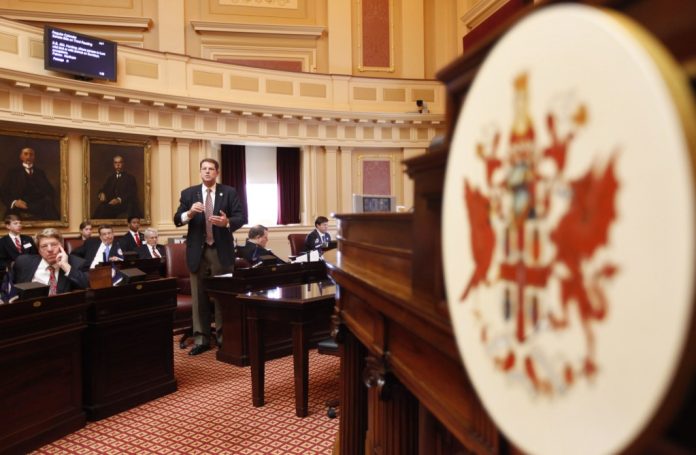
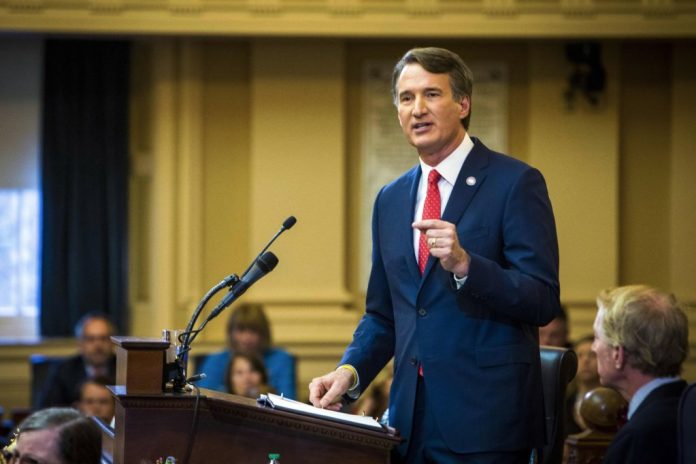
RICHMOND — Gov. Glenn Youngkin touted job growth and business expansion at a joint committee meeting Wednesday as he called on Virginia’s legislators to wrap up budget negotiations.

“If we want our current moment of growth to continue, if we want our businesses, our students and our communities to thrive, our course for the current budget is clear,” he said. “Please send me one.”

Youngkin addressed the General Assembly committees as legislators said they were closing in on a budget deal. They approved a two-year budget in 2022, but have struggled this year to reach a compromise on a series of budget amendments.

During Wednesday’s meeting, Secretary of Finance Stephen Cummings provided an overview of the state’s standing.

The forecast from December projected that 2023 general fund revenue would be $1.5 billion higher than the level assumed in the 2022 Appropriations Act, according to Cummings. But that forecast took into account a potential recession — and that recession never materialized, leaving $3.6 billion in excess state funds.

The secretary of finance, however, urged continued caution due to the potential global ramifications of an economic slowdown in China and the possibility of a federal budget impasse in October. Additionally, he said refunds related to the newly enacted Pass-Through Entity Tax are expected to have a $1 billion net impact on fiscal year 2024.

Virginia employment grew by 2.7% in fiscal year 2023, Cummings explained.

“Virginia is in excellent condition with the largest workforce ever and the highest labor participation rate in over a decade,” he said. “Recent data suggests that we are also winning in the domestic migration war.”

Cumming said rating agencies should be “very happy” with Virginia.

“We have never been in a situation where we are better prepared for unforeseen challenges,” he said.

After Wednesday’s meeting, Sen. Louise Lucas told The Virginian-Pilot she believed legislators would “absolutely” wrap up budget negotiations by the end of the day.

“I have every expectation that we are going to come together in a consensus for this budget today and get this done,” said Lucas, D-Portsmouth. “It’s going to make a lot of people in Virginia happy.”

The General Assembly was unable to reach an agreement on budget amendments during the legislative session due to disagreements over Youngkin’s proposed tax cut package. He is pushing for $1 billion in cuts, including lowering the corporate income tax rate from 6% to 5%, increasing the standard income tax deductions for individuals and joint filers, and expanding tax exemptions on veterans’ pensions by eliminating age requirements.

House Republicans backed the governor’s plan, while the Democrat-held Senate wanted to nix the tax cuts and give about $1 billion to fund school divisions.

The budget negotiations are headed by House Appropriations Committee Chair Barry Knight and Senate Finance and Appropriations Committee Chair Janet Howell and Co-Chair George Barker.

Corporate tax cuts, which Democrats have adamantly opposed, are off the table, Barker told The Pilot earlier this month.

But there are ongoing disagreements over the standard income tax deductions for individuals and joint filers. Senate Democrats have offered one-time tax rebates of $200 for individuals and $400 for couples.

After the joint committee meeting Wednesday, Youngkin told reporters he’d be open to one-time rebates now if more long-term tax relief was considered in the next budget.

On Wednesday, Sen. Tommy Norment — a committee member and longtime legislator who is no novice to budget talks — said this year’s negotiations stand out.

“It’s been more of an ideological debate between the House and the Senate,” he said. “We have one group focusing on the principle of tax relief and the other focusing on what they consider prioritized spending. Much of the impasse over the months has been on trying to reconcile those two different philosophical approaches.”

In previous years, Norment, R-Williamsburg, explained that a lack of funding sometimes led to less debate.

“Many times in the past we just haven’t had the revenue and this time we have the revenue and so it’s a question of what are we going to do with it,” he said. “This sounds ridiculous but it’s almost more challenging when you have more money than less money because when there is less money both the elected officials and the general public seem to understand that better.”

Katie King, [email protected]

Russian agency says mercenary leader Prigozhin was aboard plane that crashed, leaving no survivors – Daily Press

0


Russian agency says mercenary leader Prigozhin was aboard plane that crashed, leaving no survivors – Daily Press


Skip to content

Giuliani turns himself in on Georgia 2020 election charges after bond is set at $150,000 – Daily Press

0

By KATE BRUMBACK (Associated Press)

ATLANTA (AP) — Rudy Giuliani turned himself in at a jail in Atlanta on Wednesday on charges related to efforts to overturn then-President Donald Trump’s loss in the 2020 presidential election in Georgia.

The former New York mayor was indicted last week along with Trump and 17 others. Fulton County District Attorney Fani Willis said they participated in a wide-ranging conspiracy to subvert the will of the voters after the Republican president lost to Democrat Joe Biden in November 2020. Bond was set at $150,000, second only to Trump’s $200,000.

Giuliani, 79, is accused of spearheading Trump’s efforts to compel state lawmakers in Georgia and other closely contested states to ignore the will of voters and illegally appoint electoral college electors favorable to Trump.

Georgia was one of several key states Trump lost by slim margins, prompting the Republican and his allies to proclaim, without evidence, that the election was rigged in favor of his Democratic rival Biden.

Giuliani is charged with making false statements and soliciting false testimony, conspiring to create phony paperwork and asking state lawmakers to violate their oath of office to appoint an alternate slate of pro-Trump electors.

Leaving his apartment in New York on Wednesday morning, Giuliani said he was “fighting for justice” and has been since he first started representing Trump.

“I’m feeling very, very good about it because I feel like I am defending the rights of all Americans, as I did so many times as a United States attorney,” Giuliani told reporters.

Trump, the early front-runner in the 2024 Republican presidential primary, has said he plans to turn himself in at the Fulton County Jail on Thursday. He and his allies have characterized the investigation as politically motivated and have heavily criticized District Attorney Willis, a Democrat.

Giuliani criticized the indictment of lawyers beside himself who had worked for Trump and said the justice system was being politicized. He also highlighted the fact that some of the people indicted are not household names.

“Donald Trump told you this: They weren’t just coming for him or me,” Giuliani said. “Now they’ve indicted people in this case I don’t even know who they are. These are just regular people making a normal living.”

Willis has set a deadline of noon on Friday for the people indicted last week in the election subversion case to turn themselves in. Her team has been negotiating bond amounts and conditions with the lawyers for the defendants before they surrender at the jail.

A $100,000 bond was set Wednesday for Trump-allied lawyer Sidney Powell, one of several people accused in a breach of voting equipment in rural Coffee County, in south Georgia. Misty Hampton, who was the Coffee County elections director when the breach happened, had her bond set at $10,000.

David Shafer, who’s a former Georgia Republican Party chair and served as one of 16 fake electors for Trump, and Cathy Latham, who’s accused in the Coffee County breach and was also a fake elector, turned themselves in Wednesday morning. Also surrendering Wednesday were lawyers Ray Smith and Kenneth Chesebro, who prosecutors said helped organize the fake electors meeting at the state Capitol in December 2020.

Attorney John Eastman, who pushed a plan to keep Trump in power, and Scott Hall, a bail bondsman who was accused of participating in the breach of election equipment in Coffee County, turned themselves in Tuesday.

The Fulton County Sheriff’s Office has said it will release booking photos at 4 p.m. each day, but Shafer appeared to post his on the social media platform X, formerly known as Twitter, just after 7 a.m. Wednesday with the message, “Good morning! #NewProfilePicture.”

While Republicans in Georgia and elsewhere are calling for Willis to be punished for indicting Trump, a group of Black pastors and community activists gathered outside the state Capitol in Atlanta Wednesday to pray for and proclaim their support for the Democratic prosecutor.

Bishop Reginald Jackson, who leads Georgia’s African Methodist Episcopal churches, said that Willis is under attack “as a result of her courage and determination.”

___

Associated Press writers Jeff Amy in Atlanta and Michael R. Sisak in New York contributed reporting.

Private jet crash in Russia kills 10. Wagner chief Prigozhin was on passenger list – Daily Press

0

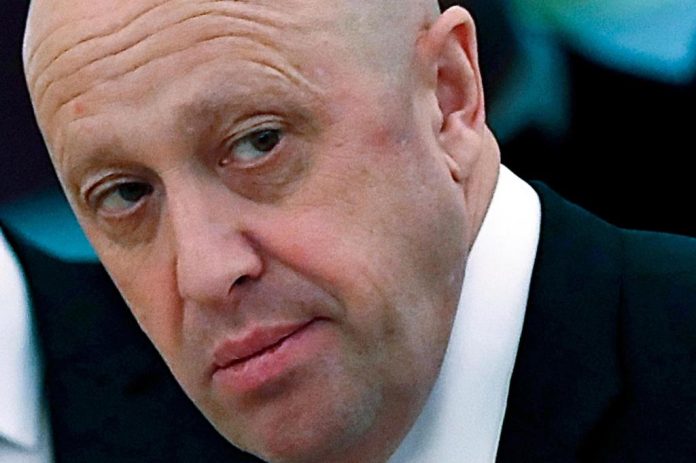
MOSCOW (AP) — A private jet crashed in Russia on Wednesday, killing all 10 people aboard, emergency officials said. Mercenary chief Yevgeny Prigozhin was on the passenger list, but it wasn’t immediately clear if he was on board.

Prigozhin’s fate has been the subject of intense speculation ever since he mounted a short-lived mutiny against Russia’s military leadership in late June. The Kremlin said the founder of the Wagner private military company, which fought alongside Russia’s regular army in Ukraine, would be exiled to Belarus.

But the mercenary chief has since reportedly popped up in Russia, leading to further questions about his future.

A plane carrying three pilots and seven passengers that was en route from Moscow to St. Petersburg went down more than 100 kilometers (60 miles) north of the capital, according to officials cited by Russia’s state news agency Tass. It was not clear if Prigozhin was among those on board, though Russia’s civilian aviation regulator, Rosaviatsia, said he was on the manifest.

Russia’s state news agency RIA Novosti reported, citing emergency officials, that eight bodies were found at the site of the crash.

Flight tracking data reviewed by The Associated Press showed a private jet registered to Wagner that Prigozhin had used previously took off from Moscow on Wednesday evening and its transponder signal disappeared minutes later.

The signal was lost in a rural region with no nearby airfields where the jet could have landed safely.

In an image posted by a pro-Wagner social media account showing burning wreckage, a partial tail number matching a private jet belonging to the company could be seen. The color and placement of the number on the engine of the crashed plane matches prior photos of the Wagner jet examined by The AP.

This week, Prigozhin posted his first recruitment video since the mutiny, saying that Wagner is conducting reconnaissance and search activities, and “making Russia even greater on all continents, and Africa even more free.”

Also this week, Russian media reported, citing anonymous sources, that a top Russian general linked to Prigozhin — Gen. Sergei Surovikin — was dismissed from his position of the commander of Russia’s air force. Surovikin, who at one point led Russia’s operation in Ukraine, hasn’t been seen in public since the mutiny, when he recorded a video address urging Prigozhin’s forces to pull back.

As the news about the crash was breaking, Russian President Vladimir Putin spoke at an event commemorating the Battle of Kursk, hailing the heroes of Russia’s “the special military operation” in Ukraine.

South Carolina’s new all-male highest court upholds strict 6-week abortion ban – Daily Press

0

By JAMES POLLARD

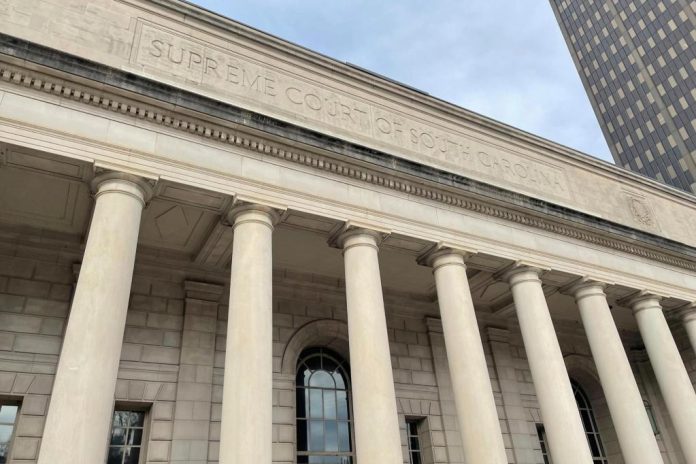
COLUMBIA, S.C. (AP) — South Carolina’s new all-male Supreme Court reversed course on abortion on Wednesday, upholding a ban on most such procedures after about six weeks of pregnancy.

The continued erosion of legal abortion access across the U.S. South comes after Republican state lawmakers replaced the lone woman on the court, Justice Kaye Hearn, after she reached the state’s mandatory retirement age.

The 4-1 ruling departs from the court’s own decision months earlier striking down a similar ban that the Republican-led legislature passed in 2021. The latest ban takes effect immediately.

Writing for the new majority, Justice John Kittredge acknowledged that the 2023 law also infringes on “a woman’s right of privacy and bodily autonomy,” but said the state legislature reasonably determined this time around that those interests don’t outweigh “the interest of the unborn child to live.”

“As a Court, unless we can say that the balance struck by the legislature was unreasonable as a matter of law, we must uphold the Act,” Kittredge wrote.

Kittredge wrote that “we leave for another day” a determination on what the law’s language means for when exactly during a pregnancy the ban should begin, likely forecasting another long court fight on that question.

Chief Justice Donald Beatty provided the lone dissent, arguing that the 2023 law is nearly identical, with definitions for terms including “fetal heartbeat” and “conception” that provide no clarity on when the ban begins, exposing doctors to criminal charges if law enforcement disagrees with their expertise.

Beatty warned that the majority’s failure to address such a key question could lead to “political retribution. He added that judicial independence and integrity were weakened by the court’s decision to backpedal on its prior ruling.

It was Hearn who wrote the majority’s lead opinion in January striking down the ban as a violation of the state constitution’s right to privacy.

Hearn then reached the court’s mandatory retirement age, enabling the GOP-led legislature to put Gary Hill on what is now the nation’s only state Supreme Court with an entirely male bench.

Republican lawmakers then crafted a new law to address Justice John Few’s concern, expressed in the January ruling, that the legislature had failed to take into account whether the restrictions were reasonable enough to infringe upon a woman’s privacy rights.

Abortion providers, including Planned Parenthood South Atlantic, sued again. Planned Parenthood South Atlantic’s lawyer said during oral arguments this summer that both laws limited abortions at the same point in pregnancy and were equally unconstitutional.

The 2023 law restricts most abortions once cardiac activity can be detected, declaring that this happens about six weeks after a pregnant woman’s last menstrual period. Lawmakers defined this as “the steady and repetitive rhythmic contraction of the fetal heart, within the gestational sac.”

But Beatty wrote that at six weeks, the fetus doesn’t exist yet — it’s still an embryo — and the heart doesn’t develop until later in a pregnancy. The American College of Obstetricians and Gynecologists says it’s inaccurate to call such “cardiac activity” a heartbeat.

“The terminology is medically and scientifically inaccurate. As such, it is the quintessential example of political gaslighting; attempting to manipulate public opinion and control the reproductive health decisions of women by distorting reality.” Beatty wrote.

The newly sworn Hill joined Wednesday’s majority along with Few, who had previously voted to overturn the 2021 law. In a separate concurring opinion, Few wrote that the state constitution’s right to privacy does not provide blanket protections against “reasonable” invasions.

The majority opinion found a key difference in the lawmakers’ deletion of a reference to a pregnant woman having the right to make an “informed choice.” The 2023 law expanded “the notion of choice to the period of time before fertilization, certainly before a couple passively learns of a pregnancy,” Few wrote.

That change lengthens the window for couples to avoid unwanted pregnancies by promoting “active family planning.” In addition, the new law provides insured contraceptives to “almost all couples,” and places responsibility on sexually-active couples to actively use pregnancy tests, Few wrote.

Planned Parenthood South Atlantic’s lawyer had noted during oral arguments that such analysis ignored the possibility for failures in testing and contraceptives. The lawyer warned that the law’s language could extend beyond abortion and be used to outlaw birth control.

Since the U.S. Supreme Court last year overturned Roe v. Wade, the 1973 ruling that provided nationwide access to abortion, most GOP-controlled states have enacted or adopted abortion bans of some kind. All have been challenged in court.

Beatty must retire in 2024 because he, too, will reach the mandated retirement age of 72 for judges. Kittredge is the only judge who applied to replace him. The Legislature is expected to approve Kittredge and choose another new justice next year.

—-

Associated Press writer Jeffrey Collins contributed to this report. Pollard is a corps member for the Associated Press/Report for America Statehouse News Initiative. Report for America is a nonprofit national service program that places journalists in local newsrooms to report on undercovered issues.

In Senate District 25, incumbent and challenger navigate a new map – Daily Press

0

West Point and King William County have been represented in the Virginia State Senate for more than a decade by District 3 Sen. Tommy Norment, who is retiring after his current term.

Statewide General Assembly redistricting means that West Point, King William and 11 other jurisdictions on the Middle Peninsula, Northern Neck and in the Piedmont region are now part of Senate District 25, where an incumbent Republican senator and Democratic challenger hope to represent the reconfigured district.

Richard Stuart

A veteran of the U.S. Marine Corps, Sen. Richard Stuart of King George has held a seat in Virginia’s Senate since 2008. Stuart was elected after serving as the commonwealth’s attorney for Westmoreland County.

Stuart said the new Senate District 25 skews more rural than his previous district — a turn of events that he said makes him an ideal representative. “I come from rural Virginia,” Stuart said. “I was born and raised in rural Virginia.”

While Stuart has not yet developed legislation that he will introduce in next year’s General Assembly session should he win another term, he said that he will continue to go to bat for several priorities, among them protection of agricultural communities, backing law enforcement and supporting education.

Stuart said his rural background and legislative experience gives him special insight into the needs of his neighbors. “I believe that I can represent them very effectively,” he said. “I’m going to be a strong conservative voice for the region.”

Challenger Jolicia Ward, also a resident of King George, said her political ambition stems from community advocacy, working on behalf of families that needed help navigating difficult circumstances, such as a mother whose 19-year-old son was shot by police.

Jolicia Ward
Jolicia Ward

Ward said she feels like she can be more impactful sponsoring legislation and bridging gaps across political divides to accomplish goals rather than just working from the sidelines.

While she was unsuccessful in a 2021 bid to be the Democratic nominee for House District 99, Ward said that being on the campaign trail has reinforced her will to fight for Senate District 25’s constituents. “I’ve been knocking on doors for three years straight. The issues haven’t changed,” she said.

Ward said she’s focused on three priorities. The first is infrastructure, aiming to expedite critical projects, among them replacing the Robert O. Norris Bridge across the Rappahannock River.

She also said she wants to make health care more accessible and protect reproductive rights – issues that are especially important to her as a mother and a professional healthcare worker.

Finally, Ward wants to tamp down the theatrics in education. “We need to focus on what’s best for our children, not political and culture wars,” she said.

Ward said she’s eschewing corporate contributions, running what she calls a grassroots campaign. “I don’t think this is an easy route to take,” she said. “But this ensures that my platform is everything that these communities have been asking me for.”

Sen. Richard Stuart, Republican (incumbent)

Age: 59

Residence: King George

Family: Wife Lisa; two daughters; one son

Occupation: Attorney

Political experience: State senator since 2008; commonwealth’s attorney in Westmoreland County, 2004-2005

Education: Bachelor’s degree in English from Virginia Wesleyan University; juris doctor, University of Richmond

Website: www.stuartforsenate.com

Jolicia Ward, Democrat

Age: 35

Residence: King George

Family: Partner Adrian Ward; one daughter; one son

Occupation: Health care administration

Political experience: Candidate for House District 99 Democratic nomination

Education: Bachelor’s degree in mass communications, the University of Virginia’s College at Wise; master’s degree in entrepreneurial management, Stratford University

Website: www.joliciaforva.org

Ben Swenson, [email protected]

Dan Bell, advocate for Hampton Roads tech sector and startup community, dies at 70 – Daily Press

0

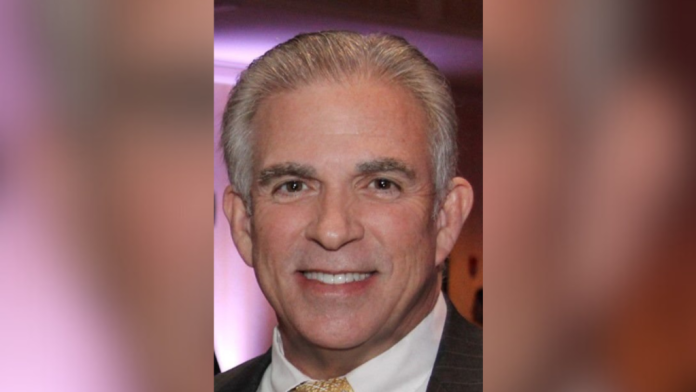
Dan Bell was among Hampton Roads’ biggest cheerleaders.

And like most cheerleaders, he was well known for his smile, positive attitude and boundless energy. The leader, visionary and vice chairman of nonprofit Innovate Hampton Roads died on Aug. 18. He was 70 years old.

Paul Hirschbiel, chairman of Innovate Hampton Roads, called Bell “the center of our universe” in terms of the region’s technology and innovation ecosystem.

“We’re going to carry on strong in his honor and his memory and make sure we continue to diversify our economy and build our ecosystem,” Hirschbiel said.

A retired computer industry executive, Bell used his experience and knowledge to help others by starting the Hampton Roads Business Education Collaborative and Chesapeake Technology Business Consortium.

Bell had led the Hampton Roads Innovation Collaborative, a 2016 re-launch of the Hampton Roads Technology Council that had formed in the late 1990s to advance tech businesses in the region. He was instrumental in merging the organization with StartWheel in May to create one force — Innovate Hampton Roads.

It was easy to see, by Bell’s longstanding work in the community, that he wanted to tout all the advantages in the region for entrepreneurs and startups, including its culture, climate, technology access, science and academic communities. Bell wanted to shine a positive light on Hampton Roads for regional innovation, collaboration, development and economic strength.

Bell was known for convening stakeholders and sparking connections through his Tech Tuesdays monthly meetups and Innovate Hampton Roads’ Venture Out (previously Bizwheel expos).

Michael Kuhns, former president of the Virginia Peninsula Chamber of Commerce, remembers his best friend as tenacious in his drive to create regional collaboration.

“The typical parochial hurdles were just bumps in the road for Dan. He never got discouraged,” Kuhns said, noting Bell worked under the radar and never sought recognition.

Tim Ryan, executive director of Innovate Hampton Roads, said that anyone who had the privilege to work with Bell knew how much he cared about the success and future of the region.

“Dan gave his all to help propel our region forward and he wasn’t afraid to challenge anyone in doing so,” Ryan said, noting that was one of the many lessons Bell taught him. “We will work extremely hard to keep his vision moving forward.”

Kevin Daisey, founder of Array Digital, said in a Facebook post that he was lucky to serve on the board of Innovate Hampton Roads alongside Bell from its inception. Calling Bell a great man, friend and mentor, Daisey said he will be greatly missed.

“Dan was a driver, a man that got things done when it came to an initiative we all supported,” he said. “He was the workhorse of our organization (HRIC) and he would charge ahead no matter what challenges we faced and he would drag us along with him.”

Born in Chicago, Illinois, Bell came to the region in the early 2000s and embraced it from the start. Bell relocated to the region to work for Canon Information Technologies in Chesapeake, working his way up to president before retirement in 2011.

He began his career with world-class companies including Honeywell and Xerox. He honed his skills in the high-tech field before moving up the ladder in corporate America.

In 1982, he was employee No. 2,734 for a then-fledgling company known as Apple Computer. Bell shared in a November 2022 episode of the “Fervent Four Show,” a weekly podcast with Ryan and Zack Miller, that he was one of the company’s original employees working under Steve Jobs and Steve Wozniak. He later became global vice president of consumer product support for U.S. Robotics (acquired by 3Com).

A self-proclaimed “ladder type of guy” who reflected on his career run as a good one, Bell penned “Rungs Not Wrongs: Steps for Your Career Ladder” during the pandemic.

A mentor to many, including students, exiting military, family, friends and colleagues, Bell stressed that everyone’s journey up life’s mountains is a unique climb.

Bell served the community in countless ways throughout his life, including volunteering with the Chesapeake Public Library Foundation; Future of Hampton Roads; Civic Leadership Institute; Virginia Supportive Housing; Chesapeake Alliance; and Chesapeake Economic Development Authority.

Bell leaves behind his wife, Patty, two daughters and four grandchildren.

Brad Scott, chairman emeritus of Hampton Roads Innovation Collaborative, said he has lost a close friend and a mentor while the community has lost an absolute selfless leader.

“He wanted to leave Hampton Roads a better place, and I know he did,” Scott said.

Sandra J. Pennecke, 757-652-5836, [email protected]

‘Outlander’ author eager to visit Yorktown – followed later by her characters – Daily Press

0

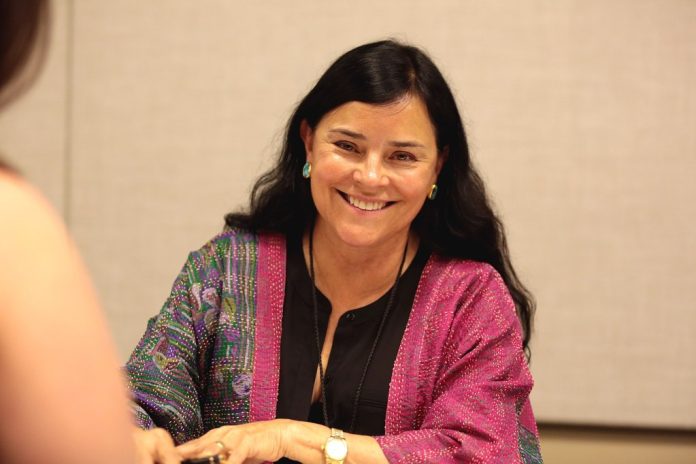
Diana Gabaldon, the author of the best-selling “Outlander” novels that inspired a successful television series, plans to visit Yorktown for two days in September, giving a lecture and walking the battlefield.

“My talk came at an opportune time,” she said in a recent telephone interview from her Arizona home, “because I’m now working on my 10th book, and it will include the end of the American Revolution at Yorktown.”

Although Gabaldon has walked the Yorktown battlefield twice in the past three years, “I plan to stay an extra day to walk again” over the fields, putting the atmosphere firmly in her mind. “And, oh yes, Jamie (one of the series’ two main characters) will be at Yorktown.”

She enjoys battlefield walks whether they’re at Yorktown, at Cowpens in South Carolina or at Guilford Courthouse in North Carolina. “I like them; they’re extremely interesting, and I like to write about battlefields,” which she has on numerous occasions in her books, such as Culloden — the Jacobite conflict in the Scottish highlands near Inverness.

The Culloden battlefield in the Scottish highlands near Inverness is one of battlefields depicted in Diana Gabaldon’s novels. Courtesy of Diana Gabaldon

Gabaldon will present a program and sign books on Sept. 16 at the American Revolution Museum at Yorktown in connection with the “Reign & Rebellion,” a special exhibition focusing on the Royal Stuarts and their ties to America and its revolution. Her talk, however, is already sold out.

Gabaldon’s book series began with a focus on the Stuarts of Scotland and the Jacobite rebellion against the English in the mid-18th century with primary characters Claire Elizabeth Beauchamp Randall and Jamie Fraser. Beauchamp Randall, a former World War II nurse, visits Scotland and accidentally travels in time back and meets Fraser, a dashing highland warrior 200 years earlier in time. The saga through her books continues to the colonies and the American Revolution.

Looking back over her work, she said she appreciates the Sony-produced television series released on Starz “given the time they have to operate. But in my books, I have more space and time for the stories,” she added.

It’s almost a believe-it-or-not situation for her because “Outlander” — the first novel she ever wrote — was begun in a church parking lot.

“I had happened to see a ‘Dr. Who’ program with a young man in a kilt, and it stuck with me. There really wasn’t much and what I wrote doesn’t really matter, but it was Scotland in the 18th century — that’s all I had.”

Gabaldon said she reached under the front seat of her car, found a shopping list and began to write. “The next day, I went to the university library. The card catalog had just been put on a computer, and I scanned Scotland and the 18th century.”

Diana Gabaldon at Falkland Palace in Scotland, which was used as a partial set for Claire's surgery at Leoch in the "Outlander" television series. Courtesy of Victoria Arias
Diana Gabaldon at Falkland Palace in Scotland, which was used as a partial set for Claire’s surgery at Leoch in the “Outlander” television series. Courtesy of Victoria Arias

Up came more than 400 books on Scotland. As a faculty member — she was a professor at Arizona State University — “I could take out as many books as I wanted and keep them for as long as I wanted. Then, I began with the Stuarts.”

Gabaldon said she had always wanted to be a novelist. “When I turned 35, I thought, ‘Mozart was dead by 36; I ought to get busy.’”

Before the novels, she had writing experience as a professor, as a freelancer and for writing Walt Disney comic books.

“So, I decided (in 1988) to write a novel for practice — to get the feel of research, daily commitment and the mental organization. I wouldn’t show it (to) anyone and decided the easiest novel for me perhaps would be historical fiction.”

Gabaldon does not work with an outline, “and I don’t even write in a straight line. I write in disconnected scenes, where I can see things happening, and then gradually as I work (and continue doing research and reading — I do this all the time, no matter what), the pieces I have begin to stick together and form shapes.

“It’s kind of like playing Tetris in my head, but very slowly.”

She said she doesn’t tend to rewrite. “I’m pretty sure of everything as it put it down.”

Her published book in 1991 was initially titled “Cross Stitch,” but later changed to “Outlander.” Usually, it takes her three to four years to complete her lengthy tomes, she said.

A view of redoubt nine at the National Park Service's Yorktown Battlefield in February 2017.

File Photo Joe Fudge / Daily Press

Diana Gabaldon’s 10th book will include the end of the American Revolution at Yorktown. File photo

After now writing nine books, several of them 1,000 pages or more, Gabaldon said she faces a “major conundrum.” How can she provide enough information to let a new reader know enough to enjoy a new book, “while at the same time not reiterating so much information that a continuing reader would become bored or impatient?”

Gabaldon calls this her “Jacquard” technique because it’s “like weaving using the same color of thread or yarn, but picking up a pattern of threads from the background or viewing it from a different angle. However, if you look at it straight on you’re not likely to notice the small patterns.”

Regardless of how she writes and what pattern she uses, her “Outlander” series has now sold more than 50 million copies worldwide and has been published in 114 countries and in 38 languages. All of the “Outlander” books have made it onto The New York Times bestseller list.

Prior to writing novels, Gabaldon completed three degrees in science — zoology, marine biology and a doctorate in quantitative behavioral ecology. She also holds an honorary doctorate degree for “services to literature” from the University of Glasgow.

The “Reign & Rebellion” exhibition, which is what is bringing her to the area, is a two-fold exhibit that has been at the American Revolution Museum at Yorktown and at the Jamestown Settlement since last November and is scheduled to close after Sept. 19.

At the Jamestown Settlement, the exhibit depicts how the reign of the Stuarts in the 17th century “solidified Virginia’s identity as the Old Dominion, which has lasting impacts not only (for the colonial years) but for the world we live in today,” according to the museum.

Among the memorabilia on display is the Rolfe family Bible, a mourning ring of Charles I with a secret message, and Indigenous and English objects, reflecting religious and political authority.

At the American Revolution Museum, the exhibit, emphasizing the 18th century, explores how the “legacies of the Stuart era contributed toward Virginia’s distinct American identity, resulting in formerly loyal Cavaliers fighting for independence from Great Britain.”

Wilford Kale, [email protected]


William & Mary’s lost observatory – Daily Press

0

The national media have recently featured the discovery on the Michigan State University campus of a forgotten 1881 observatory. William & Mary can trump that.

Almost entirely forgotten today, an observatory was built by the college in 1778, likely the first observatory in America.

Jeffery Shy, a local resident, published a detailed account in 2002 in the Journal of Astronomical History and Heritage, which I depend on here.

Shy makes the case that the college was in the forefront of scientific education in the 18th century, under the nascent influence of William Small (professor, 1760-1764) and especially under the guidance of its eighth president (1777-1812), Bishop James Madison.

In 1762, the board of visitors appropriated funds to purchase “a proper Apparatus for the instruction of the Students of the College in Natural and Experimental Philosophy.” And in 1764, Small was dispatched to London, where he purchased and sent back an impressive collection of scientific instruments, the best in America.

Among the purchases: “The Acroamatic Telescope with a Triple Object Glass 3½ feet focus,” “two Eye Tubes for Astronomy and one for Day Objects,” “A 12 Inch Concave Mirror, a flat mirror,” “A 6 Inch Concave Mirror” and “5 Lenses of different Sorts in Frames.”

But the considerable ambitions evinced by Small’s purchases pretty much evaporated when Small chose not to return to the college; the equipment lay largely unused until 1771 when his successor, Thomas Gwatkin, stepped in, and then with Madison’s 1773 appointment to the faculty.

In 1778, Madison moved to have an actual observatory built, presumably someplace on the college’s 330-acre campus, though precisely where we don’t know.

Shy cites the account book of the contractor, Humphrey Harwood, detailing, for example, on May 2, 1778, the cost of “Buildg pillers to Observitory.” The “pillers,” Shy explains, would have been piers for several telescopes, including the one Small bought, as well as perhaps another, an 18-inch reflecting instrument made in Scotland and known for its “optical superiority.”

Shy calculates from Harwood’s accounts that building the observatory required the equivalent of 81 days of labor (most likely enslaved labor) and some 10,000 bricks.

Although science and even astronomical observation flourished here well into the 19th century, the 1778 observatory seems to have been doomed. No record of what precisely happened to it exists. Shy writes that the structure was known to no longer exist in 1789, when Madison noted it had yet to be rebuilt. The guess is that it was destroyed with other structures during the occupation of the campus by the French following the Siege of Yorktown in 1781.

So, our observatory is older than Michigan State’s. Now, we need to find it.

Terry Meyers is chancellor professor of English emeritus from William & Mary.