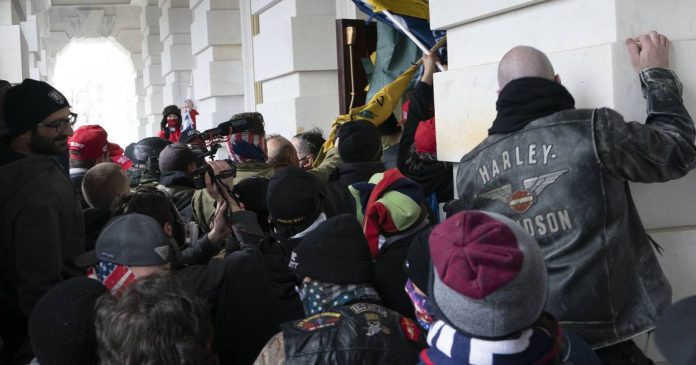
A Marine who said he was waiting for “Civil war 2″ and two other active-duty members of the military have been charged with participating in the riot at the U.S. Capitol, authorities said in newly filed court papers.
Micah Coomer, Joshua Abate and Dodge Dale Hellonen were arrested this week on misdemeanor charges after their fellow Marines helped investigators identify them in footage among the pro-Trump mob on Jan. 6, 2021, according to court papers.
Dozens of people charged in the riot have military backgrounds, but these three are among only a handful on active duty. A Marine Corps officer seen on camera scuffling with police and helping other members of the mob force their way into the Capitol was charged in 2021.
No defense lawyers for the men were listed in the court docket, so it was not immediately clear whether they have attorneys to comment on their behalf.
Their service records show they are all active-duty Marines. Maj. Kevin Stephensen, a spokesman for the Marine Corps, said it is aware of the allegations and “is fully cooperating with appropriate authorities in support of the investigation.”
Coomer, of Indiana, is stationed in Southern California’s Camp Pendleton; Abate, of Virginia, is at Fort Meade in Maryland; and Hellonen, of Michigan, is stationed at North Carolina’s Camp Lejeune, according to the Marines.
The men spent about 52 minutes inside the Capitol, authorities say. At one point while in the rotunda, they put a red “Make American Great Again” hat on a statue to take pictures with it, according to court papers. Hellonen was carrying a “Don’t Tread on Me” flag, authorities said.
Coomer posted photos on Instagram that appeared to be taken inside the Capitol with the caption “Glad to be apart of history,” according to court documents. Days after the 2020 election, he and another person discussed over Instagram message how he believed the election was rigged.
And in late January 2021, he told another person in a message that “everything in this country is corrupt.”
“We honestly need a fresh restart. I’m waiting for the boogaloo,” Coomer wrote in a message detailed in court documents. When asked by the person what’s “a boogaloo,” Coomer responded “Civil war 2,” authorities said.
The boogaloo is an anti-government, pro-gun extremist movement. Its name is a reference to a slang term for a sequel — in this case, a second U.S. civil war. The movement is named after “Breakin’ 2: Electric Boogaloo,” a 1984 sequel to a movie about breakdancing.
Supporters have shown up at protests over COVID-19 lockdown orders and protests over racial injustice, carrying rifles and wearing tactical gear over Hawaiian shirts. The shirts are a reference to “big luau,” a riff on the term “boogaloo” sometimes favored by group members.
During an interview related to his security clearance in June, Abate acknowledged walking through the Capitol with two “buddies,” investigators said. Abate said they “walked around and tried not to get hit with tear gas.”
The trio face charges including illegal entry and disorderly conduct.
Among Jan. 6 defendants with military backgrounds are members of the far-right extremist group the Oath Keepers, accused of plotting to violently keep President Donald Trump in power. The group’s leader, Stewart Rhodes, a former Army paratrooper, was convicted of seditious conspiracy in November.
A Navy reservist from Virginia accused of storming the Capitol was convicted this week on charges that he illegally possessed silencers disguised to look like innocuous cleaning supplies. Hatchet Speed is scheduled to go on trial in his Jan. 6 case later this year.
And a former U.S. Army reservist described by prosecutors as a Nazi sympathizer was convicted of storming the Capitol to obstruct Congress from certifying President Joe Biden’s electoral victory. Timothy Hale-Cusanelli, who was employed as a security contractor at a Navy base, was sentenced to four years in prison in September.
Nearly 1,000 people have been charged so far in the riot and the tally increases by the week. Almost 500 people have pleaded guilty to riot-related charges and more than three dozen have been convicted at trial.
____
Richer reported from Boston. Associated Press reporters Tara Copp, Michael Kunzelman and Nomaan Merchant contributed to this report from Washington.
CHESAPEAKE — A new outpatient medical clinic for local veterans will put downroots in the Western Branch community of Chesapeake next year.
The Chesapeake City Council this week gave the green light to a new 27,100-square-foot community-based outpatient clinic to be located on the west side of Chesapeake Square Ring Road, between Portsmouth Boulevard and Taylor Road. City staff say it will reduce the travel burden for many local veterans seeking health and wellness visits.
The Department of Veterans Affairs will lease the building once it’s constructed. Work could be complete as soon as next summer.The clinic will provide general outpatient services and feature a mobile MRI unit, a drive-thru pharmacy and a sensory garden. It will operate Monday through Friday from 7 a.m. to 5 p.m. and on Saturdays from 7 a.m. to 1 p.m.
The clinic will be located at the site of a former Cinemark movie theater that operated from 1990 to 2011. The Chesapeake Economic Development Authority then purchased the nearly 6-acre parcel of land for $1.8 million and still owns it.
A new VA community-based outpatient clinic is expected to set its roots in the Western Branch community of Chesapeake in 2024 on Chesapeake Square Ring Road. (Courtesy of City of Chesapeake)
North Carolina-based Construction Managers Inc. is currently leasing the property from the authority. Sammy Sasser, president of Construction Managers Inc., told The Virginian-Pilot that Western Branch CBOC LLC, which is the applicant listed for the project, is working to purchase the land.
Sasser said design plans are about 90% done and then construction can begin.
The land where the clinic will be constructed is within a general business district, but one condition attached with the use permit approval is the addition of sidewalks and crosswalk markings for the adjacent residential properties.
Earlier this year, the VA released a study about its nationwide health care system and forecast that cities across Hampton Roads would see a significant increase in their veteran populations. The largest growth is expected for Chesapeake, which is expected to increase by nearly 49% over the next 20 years.
The Chesapeake City Council unanimously approved the conditional use permit Tuesday. Councilwoman Ella Ward called the project “exciting,” adding that it will be a “tremendous asset for the Western Branch community.”
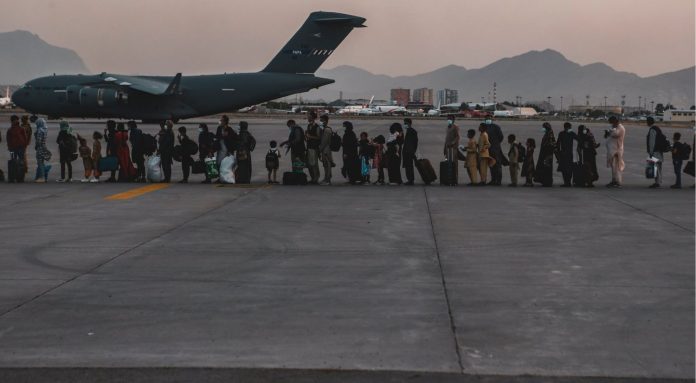
Yet, while the nation may be ready to move on from war, many American veterans are still scrambling to help Afghan asylum seekers find safe passage and find adoptive communities. The rapid collapse of the U.S.-backed government in Afghanistan and frantic non-combatant evacuation operation (NEO) in its wake have stoked emotional traumas for those veterans that continue to smolder.
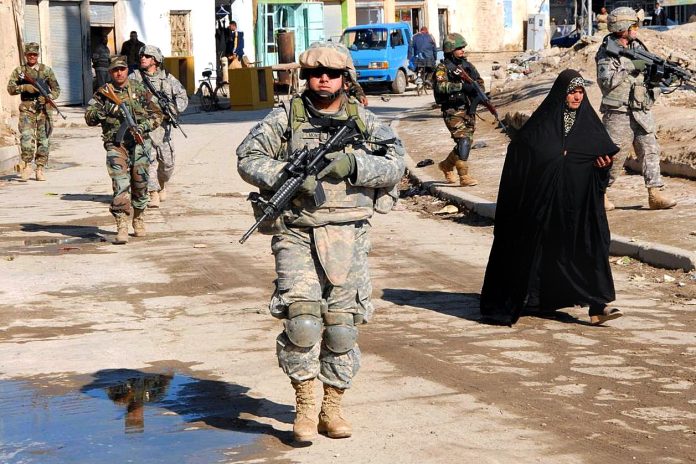
The inglorious withdrawal marked a dramatic ending to one of the longest chapters of America’s Global War on Terror and a war that Andrew Bacevich describes as an unambiguous strategic failure.[1] In a new book, Paths of Dissent: Soldiers Speak Out Against America’s Misguided Wars, Bacevich joins Daniel A. Sjursen as co-editor of a compendium of reflective essays by American veterans who have borne the brunt of America’s post-9/11 generational campaigns in Iraq and Afghanistan. Paths of Dissent puts those veterans’ voices at the center of the discourse—veterans whose journeys led them into dissenting openly with the ways in which American power has been exercised abroad.
The text features fifteen intimate essays from veterans who served in the U.S. Army, Navy, and Marine Corps. Their unifying argument, set forth by Bacevich and Sjursen, is that America’s military campaigns during the Global War on Terror amounted to “flagrant malpractice.” Among the many transgressions the book’s author’s allege are the irresponsible expenditure of lives and treasure and the wreaking of havoc on our troops, the people we sought to liberate, and the foundations of our own democracy—all justified under the rationalizations of senior leaders professing self-exculpatory versions of history.[2]
Bacevich and Sjursen are careful to differentiate the authors’ dissent from a general opposition to war. The authors in Paths of Dissent are neither pacifists nor were they naturally inclined to be anti-war when they entered the military. Instead, their stories are those of men and women who were “serving soldiers or combat veterans who actively oppose[d] military policies that they deem ill-advised, illegal, or morally unconscionable.”[3] While there is some diversity of perspective, readers experience a common journey that unites each voice: the initial pride and moral clarity of duty giving way to moral ambiguity and ultimately culminating with a new moral clarity where each was moved to preach their own truth on the wars they fought in. What is at stake, according to Bacevich, is no less than the soul of our nation.
What Works
What Paths of Dissent does well is its intimate, diverse portrayals of courage across the ranks, from field grade officers to junior enlisted service members—all following a moral imperative to correct the narrative.
Jason Dempsey explores the political and institutional dysfunctions of the war. Dempsey deployed as an infantry officer to both Iraq and Afghanistan and found himself working in assignments that highlighted major impediments to basic coordination between the Department of Defense, Department of State, and ultimately with Congress. Those hindrances to effective coordination frequently lead to large projects operating at cross purposes, wasting exorbitant amounts of taxpayer money. Dempsey labeled the dysfunction as “the Accountability-Avoidance Two-Step,” which he defined as a civil-military dynamic that enabled both politicians and generals to bask in the public adoration of the military without being held to any account for military failures.[4]
Erik Edstrom dives into the inner life of a former idealist. In his essay, Edstrom laments the disconnect between the advertised principles of the U.S. military and the reality in combat where he “saw the systematic dehumanization and devaluation of Afghan lives on a regular basis.” He says, “We searched homes, people, and cars unilaterally and without warning…we regularly violated Karzai’s Twelve, a series of principles intended to protect civilian lives and safeguard Afghan citizens against the deep indignities of a foreign military occupation.”[5] Like many of his fellow authors, Edstrom notes that his reasons for joining the military were “a conflated mix of economic necessity and idealistic do-goodery.”[6] His observation is reminiscent of comedian George Carlin, who said that “inside every cynical person, there is a disappointed idealist.”[7] Channeling the jaded idealism common across all of these essays, Dempsey puts it another way, quoting World War II veteran Paul Fussell: “To become disillusioned, you must earlier have been illusioned.”[8]
Other voices raise qualms with the military institution itself. Jonathan W. Hutto, Sr., shines light on the endemic history of institutional racism in the military. Hutto, a U.S. Navy veteran, details how he overcame an oppressive disciplinary board convened on the USS Theodore Roosevelt. Under the auspices of the Military Whistleblower Protection Act and related DoD guidance, he organized the “Appeal for Redress” in 2006 which saw over two thousand service members petition Congress for an end to the Afghanistan and Iraq Wars.[9] Hutto lauds the power of the enlisted corps as one that “if organized, can potentially help change the course of history.” He raises the class nature of the rank structured military where “[b]y and large, enlisted members hail from the margins of American society, rural towns and blighted urban centers all but abandoned by the elites.”[10]
ALEXANDRIA — A Navy reservist who is charged with storming the Capitol on Jan. 6 is going back on trial in Virginia on separate charges that he illegally bought silencers — and talked about using them against Jewish people and others he considered to be enemies.
Opening statements Tuesday in U.S. District Court in Alexandria against Hatchet Speed, a northern Virginia resident, marked the second trial he has faced on the weapons charges in the past two months. A mistrial was declared last month in the first case after the jury failed to reach a verdict.
The trial hinges on three devices that Speed bought in March 2021 that the government said are unregistered silencers. Speed contends the devices are “solvent traps” to collect excess liquid that spills out when a gun is cleaned.
In her opening statement Tuesday, prosecutor Amanda Lowe called the devices purchased by Speed “unregistered silencers masquerading as solvent traps.”
She said the devices are designed to be easily converted into silencers — which is why people spend more than $300 for them.
The devices that Speed purchased are made of titanium and can be screwed onto the threaded barrel of a 9 mm handgun. A firearms expert for the government said it takes about 10 minutes to convert the device that he purchased into a fully functional silencer.
Speed’s public defenders, though, said the devices are exactly what they are marketed as — solvent traps. Defense lawyers have pointed out that there is no hole at the end of the silencer for a bullet to pass through. Speed never modified the devices in any way to make them operable as silencers.
“The government jumped the gun” on filing weapons charges against Speed, public defender Brook Rupert told jurors.
But prosecutors said the device is designed in a way that the proper size hole can easily be made with a hand drill.
In recent years, the Bureau of Alcohol, Tobacco and Firearms has shut down and seized several websites that sold solvent traps, including the one from which Speed purchased his devices.
The first witness that jurors heard from on Tuesday was an undercover FBI employee identified only as “Al.” A large screen was placed in the courtroom to shield Al’s face from the public.
The jury heard recordings of conversations between Al and Speed in which Speed said the devices work well as silencers.
In the recording, Speed also made antisemitic comments and proposed targeting Jewish people with acts of violence.
Rupert acknowledged in her opening statement that jurors would hear “shocking and unpleasant” conversations but urged them to distinguish “between what is distasteful and what is illegal.”
After the Capitol riot, prosecutors said Speed engaged in “panic buying” firearms, ammunition and accessories — including several silencers — spending more than $40,000. Prosecutors said that when Speed learned in March 2021 that paperwork and registration requirements for silencers would significantly delay the delivery time to him, he bought the devices marketed as solvent traps several days later and received them immediately.
He defines irregular warfare as conflict below the threshold of conventional warfare waged in the minds and wills of the population with limited support.[2] His theme throughout is that warfare is a human endeavor and the U.S. military must retool its understanding of how it affects human behavior through psychological, relational, economic, and military means. Humans are the key to successfully influencing local politics and culture, in Cleveland’s mind. Thus, leaving a competent partner force in place is the only way the US can avoid future indefinite commitments of Americans to stay and fight.
While satisfied with the U.S. military’s tactical performance in irregular warfare, Cleveland rejects the argument that special operations can raid their way to victory or capture enough terrain. Cleveland uses the strategic failures of the U.S. in Vietnam, Iraq, and Afghanistan to argue the U.S. military must focus on its failure to structurally, doctrinally, and militarily invest in irregular warfare to succeed.
In practice, Cleveland sees leveraging of a partner force interspersed with American Special Operations Forces advisors as the ideal model. Advisors serve as a connecting sinew between fighters and external assets as a partner nation gains military competence and political legitimacy. He wants the U.S. to eliminate the grey-zone gaps that nation-states and non-state actors exploit in competing against a nuclear and conventionally dominant U.S. military. He argues the United States military is designed to dominate in the land, sea, air, space, and cyberspace domains but has failed to understand or appreciate the necessity of influencing populations.
Cleveland asserts locals must be empowered to retain legitimacy, or operations and U.S. personnel will foster resentment and insurgency against an occupying force. He offers a vignette from his experience removing Manuel Noriega from power in Panama. Panamanians approached U.S. soldiers with a report of a homicide. In response, the American leaders armed and empowered the local police detective. Cleveland observes that the Panamanian detective solved the case better than any platoon of U.S. soldiers could have.[3]
He contrasts U.S. relative success in Panama to the dissolving of the Iraq Ba’ath Party and the costly insurgency that followed. Cleveland warns that the U.S. military cannot afford to ignore its operational and strategic inadequacies in irregular warfare operations to focus on conventional warfare.
Cleveland concludes with a structured call to action. He recommends starting with a bipartisan congressional investigation into the employment of U.S. irregular warfare capability with a focus on policies, strategies, and campaigns in irregular conflict. Beyond a broad reassessment, he offers a range of proposals for institutionalizing the investigation’s conclusions.
Cleveland makes a number of recommendations. First, he recommends a restructuring of the Department of Defense to create a hybrid combined department with expertise from the military, State Department, intelligence, and private enterprise to focus on irregular warfare campaigns. He also suggests establishing a second four-star Special Operations headquarters dedicated to irregular warfare, separate and different from current special operations commands. He suggests the new command could be component under one of the military service departments similar to that of the Department of the Navy’s relationship with the US Marine Corps.
To support the restructuring initiatives he proposes, Cleveland suggests creating civilian educational institutions independent of professional military education to continue the academic study of irregular warfare. These outside educational institutions would critique military capability, policies, and strategies while capturing and analyzing irregular warfare actions for American public scrutiny. Lastly, he suggests creating professional military education outside the conventionally minded service-specific professional military education system. He points to the Naval Postgraduate School’s master’s degree focused on irregular warfare as a positive example worth emulation.
While thoughtful, Cleveland’s proposals are ripe for critique. He applies irregular warfare to every scenario as the golden key while ignoring factors that seem to preclude any reasonable likelihood of fostering local legitimacy in places such as Afghanistan.
Cleveland and his co-author also use exhaustive half-page footnotes that merely amplify the message in the original paragraph. They discuss the concept of an American way of irregular warfare, but Cleveland fails to provide a succinct definition that works across the instruments of national power. However, he does reference several different current military definitions in his footnotes.
Cleveland rightly observes decisive victories are unlikely in the nuclear and information age. Anyone seeking to understand irregular warfare as integral to the entire continuum of warfare should read this book.
COLUMBUS, Ohio — Ohio’s restrictive new election law significantly shortens the window for mailed ballots to be received — despite no evidence that the extended timeline has led to fraud or any other problems — and that change is angering active-duty members of the military and their families because of its potential to disenfranchise them.
The pace of ballot counting after Election Day has become a target of conservatives egged on by former President Donald Trump. He has promoted a false narrative since losing the 2020 election that fluctuating results as late-arriving mail-in ballots are tallied is a sign of fraud.
Republican lawmakers said during debate on the Ohio legislation that even if Trump’s claims aren’t true, the skepticism they have caused among conservatives about the accuracy of election results justifies imposing new limits.
The new law reduces the number of days for county election boards to include mailed ballots in their tallies from 10 days after Election Day to four. Critics say that could lead more ballots from Ohio’s military voters to miss the deadline and get tossed.
This issue isn’t confined to Ohio.
Three other states narrowed their post-election windows for accepting mail ballots last session, according to data from the nonpartisan Voting Rights Lab. Similar moves pushed by Republican lawmakers are being proposed or discussed this year in Wisconsin, New Jersey, California and other states.
Ohio’s tightened window for receiving mailed ballots is likely to affect just several hundred of the thousands of military and overseas ballots received in any election. Critics say any number is too great.
“What kind of society do we call ourselves if we are disenfranchising people from the rights that they are over there protecting?” said Willis Gordon, a Navy veteran and veterans affairs chair of the Ohio NAACP’s executive committee.
Republican state Sen. Theresa Gavarone, who championed the tightened ballot deadline, said Ohio’s previous window was “an extreme outlier” nationally. She said Ohio’s military and overseas voters still have ample time under the new law.
“While there is certainly more work to do, this new law drastically enhances Ohio’s election security and improves the integrity of our elections, which my constituents and citizens across the state have demanded,” she said.
Republicans’ claims that Ohio needs to clamp down in the name of election integrity run counter to GOP officials’ glowing assessments of the state’s current system. Ohio reported a near-perfect tally of its 2020 presidential election results, for example, and fraud referrals represent a tiny fraction of the ballots cast.
Board of elections data shows that in the state’s most populous county, which includes the capital city of Columbus, 242 absentee ballots from military and overseas voters were received after Election Day last November. Of that, nearly 40% arrived more than four days later and would have been rejected had the new law been in effect.
In 2020, a federal survey administered by the U.S. Election Assistance Commission found that Ohio rejected just 1% of the 21,600 ballots cast by overseas and military voters with the 10-day time frame in place. That compared with 2.1% nationally, a figure attributed mostly to voters missing state ballot deadlines.
All states are required to transmit ballots to registered overseas and military voters at least 45 days before an election, or as soon as possible if the request comes in after that date.
Former state Rep. Connie Pillich, an Air Force veteran who leads the Ohio Democratic Party’s outreach to veterans and military families, rejects arguments that the relatively small number of affected ballots is worth the trade-off.
“These guys and gals stationed overseas, living in the sandbox or wherever they are, doing their jobs, putting themselves in harm’s way, you’re making it harder for them to participate,” said Pillich, who led an unsuccessful effort to have GOP Gov. Mike DeWine veto the bill.
“I can tell you everyone I’ve talked to is livid and upset,” she said.
Those familiar with submitting military ballots said applying for, receiving and filling out a mailed ballot requires extra time for those who are deployed. Postal schedules, sudden calls to duty, even extra time needed to consult family back home about the candidates and issues are factors. Ohio’s new law also sets a new deadline — five days earlier — for voters to request a mailed ballot, a move supporters say will help voters meet the tightened return deadline.
Neither the Ohio Association of Election Officials nor the state’s elections chief, Republican Secretary of State Frank LaRose, asked lawmakers to shrink the existing 10-day window for receiving mailed ballots.
Aaron Ockerman, a lobbyist for the election officials’ group, said the seven-day post-election window called for in an early version of the legislation was a compromise that county election directors decided they could live with.
“They felt the vast, vast majority of the ballots have arrived within eight days,” he said. The group opposed making the window any shorter, on grounds that voters — including those in the military — would be disenfranchised.
Research by the Voting Rights Lab shows Ohio joined three other states — Republican-controlled Arkansas and Iowa, and Nevada, where Democrats held full control at the time — in passing laws last year that shortened the post-election return window for mailed ballots. Five states lengthened theirs.
Nationwide, a little more than 911,000 military and overseas ballots were cast in 2020. Of those, about 19,000, or roughly 2%, were rejected — typically for being received after the deadline, according to the U.S. Election Assistance Commission.
The Secure Families Initiative, a national nonpartisan group advocating for military voters and their families, is trying to push state election laws in the other direction, toward broader electronic access to voting for service members and their families.
Kate Marsh Lord, the group’s communications director, said they were “deeply disappointed” to see DeWine sign the Ohio bill.
“In fact, I’m an Ohio voter — born and raised in Columbus — and I’ve cast my Ohio ballot from as far away as Japan,” she said. “HB458 set out to solve a problem that didn’t exist, and military voters will pay the price by having their ballots disqualified.”
Marsh Lord, currently in South Carolina where her husband is stationed in the Air Force, said mail sometimes took weeks to reach her family when they lived in Japan.
“Even if I were to get my ballot in the mail a week ahead of time, a lot of times with the military postal service and the Postal Service in general, there are delays,” she said. “So that shortened window doesn’t allow as much time for things that are really out of military voters’ control.”
She said it’s even more challenging for active-duty personnel deployed to remote areas — “the people on the front lines of the fight to defend our democracy and our freedom and the right to vote around the world. Those are the people who will be most impacted by this change.”
___
Fields reported from Washington. Associated Press writers Christina A. Cassidy in Atlanta and Mike Catalini in Trenton, New Jersey, contributed to this report.
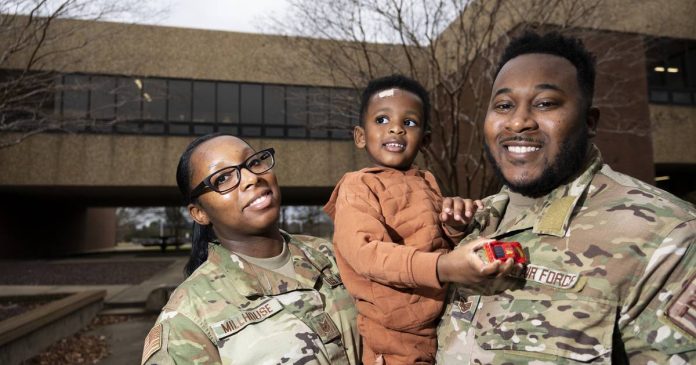
Staff Sgt. Kelton Millhouse steadied an office chair for his wife, Tech Sgt. Tameka Millhouse, who held her pregnant belly with one hand as she eased into the seat. The couple’s 3-year-old son, Kelton “Trey” Millhouse III, rolled a toy car across a conference table at Joint Base Langley-Eustis. The dual Air Force family is due to welcome a second child on March 30.
The couple’s introduction to parenthood was burdened by three- and six-week time constraints, which made recovery from birth, adjusting to having a new baby, and finding childcare before returning to work that much harder.
But this time will be different.
The Department of Defense released guidelines Jan. 4 to expand the military parental leave program, giving uniformed parents 12 weeks to welcome additions to their families. It did away with the distinction between primary and secondary caregivers.
According to the new policy, active-duty birth mothers are authorized 12 weeks of parental leave following six weeks of convalescent leave, while the non-birth parent is eligible for 12 weeks of parental leave. Uniformed parents welcoming adopted or long-term foster children also are authorized 12 weeks of leave.
The three months now offered to non-birth parents is a departure from the scant three weeks given under the previous policy. And it doubles the leave granted to active-duty birth mothers.
“The extra time will allow time to establish a routine, get into our roles, and when I go back to work, it will be a better and smoother transition because we had time to recover and figure out what our new baby and our family need,” Kelton said.
Following the birth of Trey, Tameka said, Kelton was considered a secondary caregiver, despite him acting as primary caregiver for most of his three-week leave while Tameka recovered from medical complications.
“(The new policy) shows our leaders are listening to us,” Tameka said. “The traditional roles in the home have changed — dads are much more hands-on now. They take care of the baby, too.”
The policy, mandated by the National Defense Authorization Act of 2022, is being implemented amid a year of recruitment and retention struggles across all military branches, as reported by the Associated Press in October, which raises questions about how commands will juggle 12-week vacancies with adequately manning operations.
When asked, Gilbert Cisneros Jr., the Under Secretary of Defense for Personnel and Readiness, indicated the additional 12 weeks of leave may have a positive impact on the readiness of the armed forces.
“During my travels over the past year to different military installations, I have seen firsthand that family readiness is tied to military readiness. And as the parent of young boys, I know that expanding the Military Parental Leave policy is the right thing to do to allow our Service members to bond with their children at one of the most critical moments of their lives,” Cisneros said in a statement to The Virginian-Pilot.
And area commands said they anticipate the leave improving overall retention rates.
“It will present challenges for our staffing at times, but nothing that we can’t overcome with advance planning, training, and ingenuity. At the end of the day, taking care of our people is the key to operational success … Building strong and stable Coast Guard families (mothers and fathers) from the start is a key ingredient to long-term service readiness in support of our nation,” said Capt. Jennifer Stockwell, Coast Guard Sector Commander in Portsmouth.
“The expansion of this policy is a vital step in improving quality of life for our Airmen and Guardians, which also improves retention,” said Chief Master Sgt. Maribeth Ferrer, of the 633d Air Base Wing out of Joint-Base Langley-Eustis in Hampton.
Language to implement the policy change is still trickling in from each of the armed forces, but according to the directive, uniformed family members who welcomed a new child on or after Dec. 27 fall under the new policy. The policy also directs the leave to service members with unused caregiver or maternity convalescent leave by Dec. 27, but their parental leave may not exceed 12 weeks when transitioning from the old policy to the new policy.
The leave can be taken in one continuous period or in increments, but it must be taken during the one-year period following the birth or placement of the child. Any parental leave not used within one year will be forfeited.
Chief Lauren Howes, a mass communication specialist for Norfolk-based U.S. Fleet Forces Command, said the new policy is a shift to a more family-friendly military.
“This is the military realizing that if you are worried about your family, it is hard to do your job … But I will be able to compartmentalize when I am at work because I know everything is taken care of at home because I had extra time to set it up and to bond with my children,” said Howes, who is on parental leave following the Nov. 7 birth of her third child, Joaquín Bacho Howes.
Chief Lauren Howes, a mass communication specialist for U.S. Fleet Forces Command public affairs office, is on parental leave following the birth of her son, Joaquín Bacho Howes, on Nov. 7. She is photographed with her husband, Pablo Bacho Manzorro, 11-year-old daughter Lydia Johnson, 2-year-old son James Bacho Howes and newborn Joaquín.
While she had her baby about two months before the new policy was released, Howes opted to briefly return to work after six weeks to allow time for the new policy to kick in before she started her parental leave.
The new policy, Howes said, allows working parents adequate time to find quality child care — something many service members struggle with, she said. Being comfortable with who is taking care of your child while you are at work, she added, likely will make it easier for many to stay in the military.
“I know a lot of girls who separated from the military because it was not enough time,” Howes said “It is just as important for men to bond with their children as it is women. With this, the men don’t have to worry about never getting to see their child like before. And very few jobs in the civilian sector have a parental leave policy that is comparable, so this is actually a reason to stay (in the military).”
Diana Moyer cradled her newborn son, Atticus Lee Moyer, in the crook of her arm, gently patting his bottom as he cooed. Steve Moyer, a chief in electrical engineering with the Navy, has yet to meet him because he is deployed on the Norfolk-based cruiser USS Leyte Gulf as part of the USS George H.W. Bush Carrier Strike Group. The new leave, Diana said, is a “huge blessing” to sailors.
“If you take any amount of leave when you are on sea duty, my husband said it’s like people look down on you, because its one less person there doing their job … But this baby leave is something that Big Navy and the DoD put out and I hope commands see how much a blessing it is to their sailors,” Diana said.
Steve, who communicated with The Virginian-Pilot via email, said losing even one seagoing sailor for 12 weeks could be “detrimental,” but suggested commands allow sailors to take the parental leave in smaller, seven-day chunks.
“I definitely feel like in my personal experience with the Navy it has been like the old saying ‘If the military wanted you to have a family, you would be issued one in your sea bag.’ Families have always been prioritized last and in part the Navy loses amazing sailors because they don’t want to miss out on their family — and they get out (of the Navy),” Steve said.
Steve, who has been in the Navy for 16 years, is slated to transfer in February to shore duty, where he plans to stay until he retires.
When asked if the policy change might encourage Steve to stay in the Navy past his 20-year milestone, Diana said, “It might.”
“He decided during his last deployment that he was missing too many milestones. He didn’t want to have to miss anymore of our lives. But this helps that a little bit,” Diana said.
While the policy allows service members more time with family, it does not put family before the mission. Commanders may disapprove parental leave if it conflicts with the operational requirements or training of the unit.
“Unit commanders must balance the needs of the unit with the needs of the member to maximize opportunity to use parental leave,” reads the directive-type memorandum signed by Cisneros.
Kelton, who oversees unit training for the Comptroller Squadron and wing staff agencies, said he does not know if he will request to take all 12 weeks of parental leave in one period or incrementally. But having the option to do so if his family needs him, he added, takes a weight off his mind.
“As soon as Trey got out of the hospital, I was stuck to him like glue…I was in full dad mode. And when the time came for me to go back to work, I did not want to let him go. This extra time will be great to learn about the child, figure out his needs. Is he a Cocomelon baby or is he a Paw Patrol baby? Just simple, but important things,” Kelton said.
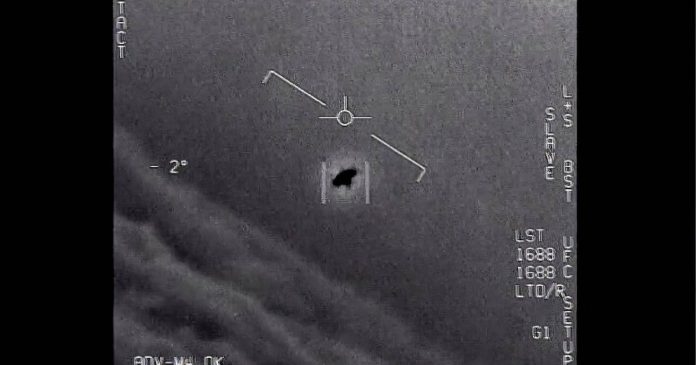
WASHINGTON — The U.S. has now collected 510 reports of unidentified flying objects, many of which are flying in sensitive military airspace. While there’s no evidence of extraterrestrials, they still pose a threat, the government said in a declassified report summary released Thursday.
Last year the Pentagon opened an office, the All-domain Anomaly Resolution Office, solely focused on receiving and analyzing all of those reports of unidentified phenomena, many of which have been reported by military pilots. It works with the intelligence agencies to further assess those incidents.
The events “continue to occur in restricted or sensitive airspace, highlighting possible concerns for safety of flight or adversary collection activity,” the Office of the Director of National Intelligence said in its 2022 report.
The classified version of the report addresses how many of those objects were found near locations where nuclear power plants operate or nuclear weapons are stored.
The 510 objects include 144 objects previously reported and 366 new reports. In both the old and new cases, after analysis, the majority have been determined to exhibit “unremarkable characteristics,” and could be characterized as unmanned aircraft systems, or balloon-like objects, the report said.
But the office is also tasked with reporting any movements or reports of objects that may indicate that a potential adversary has a new technology or capability.
The Pentagon’s anomaly office is also to include any unidentified objects moving underwater, in the air, or in space, or something that moves between those domains, which could pose a new threat.
ODNI said in its report that efforts to destigmatize reporting and emphasize that the objects may pose a threat likely contributed to the additional reports.
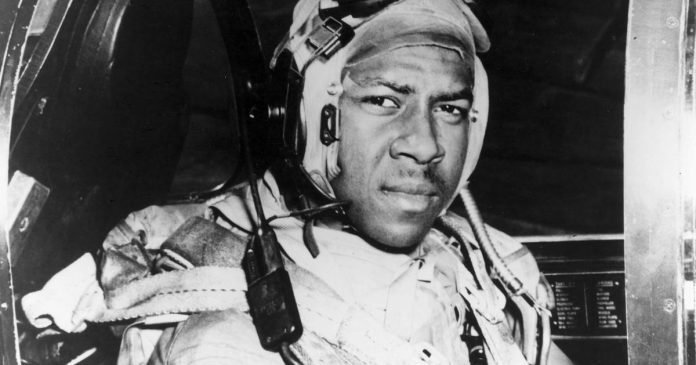
Fred Smith, the founder of Memphis-based FedEx, financed the film about Brown because he thought Brown deserved wider recognition, a feeling his surviving relatives share, and lobbied the Trump administration to support the search efforts after consulting with Brown’s daughter, Pamela.
“I’m still determined to try to get Jesse Brown home and put him where he ought to be in Arlington (National Cemetery),” Smith said. “Among the other heroes of the republic next to his wingman, Tom Hudner.”
Smith’s daughters, Rachel and Molly, who produced the film, met members of Brown’s family at the 2018 funeral of Hudner, who received the Medal of Honor after attempting to rescue Brown. Hudner returned to North Korea in 2013 in an attempt to locate Brown’s remains, but was unsuccessful.
Jessica Knight Henry, Brown’s granddaughter, said attending Hudner’s funeral at Arlington solidified her grandmother’s desire to have her husband’s remains interred in Arlington.
“He’s never had a full sort of burial with that with the pomp and circumstance that that we think is worthy of what his contribution is to this country” Knight Henry said, speaking from Washington.
Brown grew up in Mississippi, the son of sharecroppers, and succeeded in qualifying to be a pilot in the Navy, despite his training officer refusing to pin on his wings — just one of many racist insults and hurdles he overcame.
Smith has donated “Devotion”’s proceeds, in part, to endow a new scholarship fund, the Brown Hudner Navy Scholarship Foundation, for the children of Navy service members pursuing studies in STEM.
“Mr. Smith spent an incredible amount of money imaging the area where we think that my grandfather’s remains are,” said Knight Henry, adding that her family has worked with different agencies and groups to maximize any potential opportunity to get answers.
More than 7,500 American military personnel remain unaccounted for in the Korean War, according to the government agency that tracks prisoners of war and those missing in action.
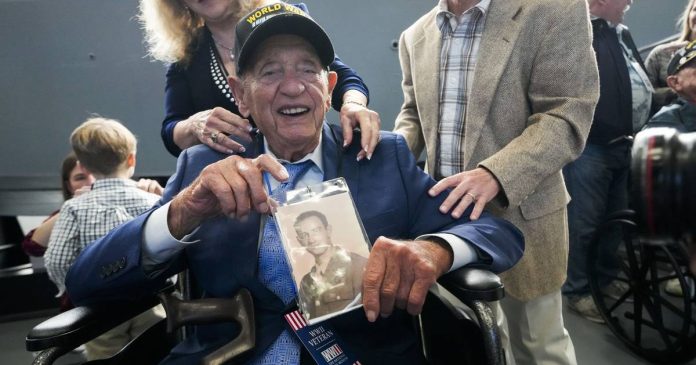
NEW ORLEANS — Flag-waving admirers lined the sidewalk outside the National World War II Museum in New Orleans on Wednesday to greet the oldest living survivor of the Japanese Attack on Pearl Harbor as he marked his upcoming 105th birthday.
“It feels great,” Joseph Eskenazi of Redondo Beach, California, told reporters after posing for pictures with his great-grandson, who is about to turn 5, his 21-month-old great-granddaughter and six other World War II veterans, all in their 90s.
Eskenazi turns 105 on Jan. 30. He had boarded an Amtrak train in California on Friday for the journey to New Orleans. The other veterans, representing the Army, Navy and Marines, flew in for the event.
They were visiting thanks to the Soaring Valor Program, a project of actor Gary Sinise’s charitable foundation dedicated to aiding veterans and first responders. The program arranges trips to the museum for World War II veterans and their guardians.
Eskenazi was a private first class in the Army when the attack occurred. His memories include being awakened when a bomb fell — but didn’t explode — near where he was sleeping at Schofield Barracks, reverberating explosions as the battleship USS Arizona was sunk by Japanese bombs, and machine gun fire from enemy planes kicking up dust around him after he volunteered to drive a bulldozer across a field so it could be used to clear runways.
“I don’t even know why — my hand just went up when they asked for volunteers,” Eskenazi said. “Nobody else raised their hand because they knew that it meant death. … I did it unconsciously.”
He was at the Army’s Schofield Barracks when the Dec. 7, 1941, attack began, bringing the United States into the war. About 2,400 servicemen were killed.
Eskenazi and his fellow veterans lined up for pictures amid exhibits of World War II aircraft and Higgins boats, designed for beach landings.
“Thank you guys for providing us a country that was worth fighting for,” veteran Billy Hall, a who rose to the rank of major in the Marines after enlisting in 1941, shouted to well-wishers.
The museum opened in 2000 as the National D-Day Museum and has expanded in size and scope since then.