The Pentagon is reportedly concerned Chinese-made cranes operating at U.S. ports may be a “Trojan horse,” collecting intelligence on the movements of defense supplies.
According to the Wall Street Journal, ship-to-shore cranes manufactured by Zhenhua Heavy Industries Co. — or ZPMC — contain sophisticated sensors with the capability of tracking the origin and destination of cargo containers.
The cranes in question are widely used by the Portsmouth-based Port of Virginia, with four having been installed at the Virginia International Gateway in 2019 after sailing to Hampton Roads from China. The cranes, standing 170 feet tall and weighing roughly 14.6 million pounds each, are among the largest on the East Coast.
Sachin Shetty, associate professor for Old Dominion University’s Modeling, Analysis and Simulation Center and a cybersecurity expert, said it is “not likely” the cranes could spy on area ports given all the security measures in place.
“Anytime you talk about threats, it is not about possibilities. It is about probabilities. Is it possible? Yes. But is it probable? No,” said Shetty, who has worked with the Port of Virginia in recent years to identify and mitigate potential security threats.
Joe Harris, spokesperson for Port of Virginia, said the Chinese-manufactured cranes purchased by the authority are not brought into port and immediately put into service.
“Before any new cranes are put into service they are subject to a detailed forensic cyber analysis that is performed by one of the nation’s federal law enforcement agencies,” Harris said.
It can take around eight weeks to get the cranes in place, power them up and conduct safety inspections. Those awaiting analysis are isolated with dedicated firewalls to insure there is no contact with port networks or the internet, Harris said.
According to Shetty, the extensive cyber-scrub is necessary, particularly for Hampton Roads ports.
“There is a reason why we need to have these processes in place. It is so we never have devices that are capable of gathering intel on our military operations,” Shetty said.
The report that the Pentagon is concerned about Chinese-manufactured cranes was released one month after the U.S. shot down a high-altitude Chinese surveillance balloon. Officials believe the balloon was deployed by China to collect signals intelligence and other information about U.S. military operations and capabilities.
Inside Business
Weekdays
Business news for the Hampton Roads region
But Shetty said even if the cranes were capable of gathering useful intelligence, the probability of them doing so is very different than that of the surveillance balloon.
“The balloon was just floating in the air. There was nobody there and no physical place where we could monitor it. It is different with the cranes. There is monitoring that would take place, and there is not enough wiggle room for it to freelance,” Shetty said.
Using technology to gather surveillance, Shetty said, is much like eavesdropping and it is one of the hardest threats to detect because it is “very passive.”
“It is like burglars casing a joint. They know when you come in, when you don’t come in. Do you use the front door or do you use the garage? And that is information we never want to reveal,” Shetty said.
Because this type of surveillance is so hard to catch, the goal of cybersecurity measures such as what the Port of Virginia has implemented, is to reduce the probability of the threat as much as possible.
“It is not to say it will never happen. But you need to make sure that if something happens, if something slips through the cracks, the level of information they gather is so trivial, so benign, that it is just meaningless information,” Shetty said.
American news outlets announced that the Taliban would take months to roll back the Afghan government following coalition departure in 2021, and it took days. The Russians intended to take Kyiv in days, and Ukrainians continue to fight and win a year later. Both instances highlight the difficulty in predicting outcomes. History is littered with these strategic blunders where states misjudged the future. States may struggle to envision future warfare because they draw too much from history. This is not an anti-history article. History feeds theory. Theory, when tested, drives doctrine. Yet states, specifically the planners and decision-makers within those states, must learn to take historical knowledge a step further.
The art of trying to envision the future is not a cure-all; foresight-driven warfare is what we seek. The goal of any nation should be to prepare for various plausible futures or outcomes, which drives down strategic risk, enables a state to become operationally flexible, and positions a state with the means necessary to fight the next fight. Achieving foresight driven national strategy, defense policy, and modernization begins with finding an effective model for planners, which might include Scenario Planning. Scenario Planning methodologies provide prognosticators a way to envision multiple plausible futures versus a singular outcome for a complex, adaptive global system.
Scenario planning is an art. When done correctly, the process opens minds, enhancing strategic thought and exploration of the future.[1] As a result, planners can prepare for a wider range of futures by testing current plans against the unveiled futures. In today’s complex environment, the process is invaluable. During this process, planners must seek to anticipate the future, not attempt to predict it. According to Conway, strategy’s importance lies in positioning correctly for the future, but historical information and the present operating environment drive strategic decision-making.[2]
Achieving foresight driven national strategy, defense policy, and modernization begins with finding an effective model for planners, which might include Scenario Planning. Scenario Planning methodologies provide prognosticators a way to envision multiple plausible futures versus a singular outcome for a complex, adaptive global system.
The Pitfalls of Utilizing History to Prepare for the Future
Two fundamental problems occur when examining history. First, the lessons learned are generally stale, and only portions of the lessons learned apply to the next conflict. The lessons learned are also generally written without utilizing the full context. Strategists must understand the why behind a successful campaign, maneuver, etc., and be able to apply that to a future scenario.
Planners can appear to move at cumbersome speeds. History informs plans, but the intelligence that drives this information is stale even before the plan is generally finalized. Planners may struggle to think about what the enemy could do long term and iterate on this process. A plan may appear to be completed after just a few explorations of the future, and lack branch or sequel plans to accompany them.
Themes in Current Planning
Through strategic lenses, states have envisioned future warfare. In American military schools, there is an apparent shift from insurgency or guerrilla fighting back to a large-scale combat operations (LSCO) mindset. LSCO preparation has advantages. The military can demonstrate a need for modernized weapons to fight peer adversaries or to gain an asymmetric advantage against a more significant force, reflecting changes in service and joint doctrine. The current doctrinal trends also reflect the emergence of service and joint views on an extended battlefield, information’s importance, space dominance, and offensive and defensive cyber. The next war will be truly global, with forces able to disrupt each other’s homelands.
Moreover, the shift has reflected changes in the recently published 2023 National Defense Authorization Act, focused on the People’s Republic of China as a pacing threat. With a new Cold War appearing to erupt, the emphasis remains on building competitive edges in all domains against adversaries. In some areas, the Western world is trying to catch up. Elsewhere, it fights to maintain its advantage.
A common discussion in a counter-PRC fight remains the defense of Taiwan; yet, this is only one future scenario. For America’s more immediate threat, Russia, Ukrainian forces continue to maim the Russian military. If we are not careful, this might accidentally cause a myopic approach in preparing for future military operations. The question to be asked, though, is this: What other scenarios create threats to the U.S. that are not given enough consideration and how does it prepare for them?
The Navy’s nuclear-powered warships will be increasingly made of 3D-printed parts, which are cutting costs and reducing production time on billion-dollar ships that are years in the making.
Huntington Ingalls Industries announced Tuesday that its Newport News Shipbuilding division has been cleared to use printed pipe fittings or other potential components in the construction of aircraft carriers, submarines and other Naval Sea Systems platforms.
“This will continue to propel our progress in efficiency, safety and affordability as we remain steadfast in our mission to deliver the critical ships our Navy needs to protect peace around the world,” said Dave Bolcar, vice president of engineering and design for Newport News Shipbuilding.
Three Gerald R. Ford-class aircraft carriers and the Columbia- and Virginia-class submarines are being built at Newport News Shipbuilding. Delivery dates are scattered across the next decade.
The USS George Washington (CVN-73) and USS John C. Stennis (CVN-74) are undergoing mid-life refueling and overhauls. The Washington began its refueling and complex overhaul at Newport News Shipbuilding in August 2017, and the Stennis arrived in May 2021.
Daywatch
Weekdays
Start your morning with today’s local news
According to Huntington Ingalls spokesperson Todd Corillo, it is uncertain exactly how much time and money could be shaved off construction and overhauls thanks to the 3D printed stainless steel parts. But in general, Corillo said, the option to use 3D parts “can offer enhanced schedule production benefits in a cost-effective manner.”
Recently, the Navy approved 3D printing of specific door hinges to be used on the new Ford-class carrier Enterprise (CNV 80).
“Newport News Shipbuilding, working with our partners, produced the parts in less than eight weeks. It would typically take five to six months using traditional casting methods,” Corillo said.
Newport News Shipbuilding has worked for more than 15 years to bring 3D printing, also known as additive technology, to the shipyard.
The technology was first approved in October 2018, when Naval Sea Systems Command announced a prototype 3D-printed metal drain strainer would be installed on the Newport News-built USS Harry S. Truman (CVN 75). Ultimately, a 3D-printed piping assembly was the first to be installed on the carrier in 2019.
The Newport News shipyard is pursuing additional 3D fabrication approvals for broader use and implementation of printed parts. As more printed warship parts are approved, Corillo said, printed parts will likely be made in-house when possible.
The future of armed conflict is a divisive topic in which competing camps and actors grapple to control the narrative.[1] Not formalized in existing literature, four basic schools of thought exist in the conflict and defense studies fields.[2] These camps include the Futurist, Traditionalist, Institutionalist, and Conflict Realism. Each of these camps provides value to the study of armed conflict. Yet, the over-reliance on one camp over others creates unhelpful distortions and implications that can impede the student and practitioner of war’s ability to think clearly about war and warfare. A holistic view of armed conflict, which takes into consideration all four camps, is needed to help overcome unhelpful distortions and find the essence of the problems in armed conflict.
The Futurist camp, for instance, asserts that drones, artificial intelligence, and cyber are the future of armed conflict.[3] Meanwhile, the Traditionalist camp does not drift far from the musings of Prussian theorist Carl von Clausewitz and they often serve as a regulating force on those making bold assertions that are out of step with historical precedent. Institutionalists, or those who are socialized to think and speak in their professional organizations’ respective language, tend toward reinforcing their professional institution’s thinking.[4] As a result, Institutionalist thought in Western militaries stays close to maneuver, precision, and technology-centric advocacy.
These three camps are the leading voices in today’s conflict and defense studies communities, despite dubious records of success. They are the leaders not because they are more right than wrong, but because they reinforce institutional and cultural values, and because they are more comfortable than the alternative—Conflict Realism.
This article asserts that Conflict Realism is a marginalized field regarding the future of armed conflict and that Conflict Realists are one of the most overlooked actors when it comes to the study of war. Nonetheless, Conflict Realists provide a useful and pragmatic alternative to the Futurists, Traditionalists, and Institutionalists that dominate the study of war today.
The primary problem with these camps is that they generally represent modern, and future, war through the gilded lens of aspiration and how armed conflict should be, instead of viewing war and warfare through the blood-red lens of how things are, and arguably, how armed conflict will be in the future. Futurists, Institutionalists, and Traditionalists thinking on armed conflict fails to appropriately account for realistic deductions from modern war and how those deductions factor into future armed conflict.
Moreover, all three camps reflect a view of war which is idealistic, optimistic, and self-centered. This gilded and bureaucratic outlook on armed conflict overlooks or discredits many disquieting realities of war and warfare. The impact of these omissions and rejections of reality tends to not be felt in the moment, but down the road when the truth of armed conflict again overturns rosy assertions of how wars should be fought. The U.S. government provided Ukraine dire warnings of a pending Russian invasion ahead of February 2022.[5] Nonetheless, The meaculpas emanating from theorists, academics, and practitioners in the wake of Russia’s February 2022 re-invasion of Ukraine, and the horrendous combat that has ensued, make this point self-evident.[6] Conflict Realism, not so much a coherent body of knowledge, but a generalized grouping of thoughts by critically minded analysts, offers a more useful alternative to the study of war and warfare.
To think strategically about the future of armed conflict requires embracing a holistic view of war, as opposed to a preferential view, and must not operate in a zero-sum manner, which is a problematic undercurrent stifling military thought today.
States and Western militaries must more fully embrace Conflict Realism as a viable school of thought when examining future armed conflict. Conflict Realism, which emphasizes the importance of causal mechanisms in armed conflict, as opposed to preference, narrative, procurement strategies, and centuries-old logic, provides a useful tool for policymakers, academics, and practitioners preparing for future armed conflict.
The Conflict Realism taxonomy is offered with a degree of reservation because detractors will quickly find flaws with the schools of thought set forth in this paper. Nonetheless, the schools of thought are not intended to be a scientific classification, but an ontological frame to illuminate an overlooked and underappreciated element in the study of armed conflict. Further, to think strategically about the future of armed conflict requires embracing a holistic view of war, as opposed to a preferential view, and must not operate in a zero-sum manner, which is a problematic undercurrent stifling military thought today.
Schools of Thought
The conflict and defense studies communities can be classified along various lines. Aligning participants into three primary interest groups—theorists, academics, and practitioners—is a useful taxonomy. These groupings are the large pots in which the conflict and defense studies’ schools of thought socialize their respective ideas. Individuals can easily fit into more than one classification. For instance, a practitioner can also be an academic, or an academic can also be a theorist. This degree of fidelity, however, is not required to continue discussing the schools of thought.
A 2021 paper by John Myers and David Jackson makes a good attempt to further classify military thought by aligning it into Futurist and Traditionalist camps.[7] These groups are useful, but simultaneously insufficient. Four basic schools of military thinking—Futurists, Traditionalists, Institutionalists, and the Conflict Realists—provide the community of interest a more nuanced understanding of contemporary military thought.
A holistic view of armed conflict, which takes into consideration all four camps, is needed to help overcome unhelpful distortions and find the essence of the problems in armed conflict.
Futurists
Futurists—the prophets of technology—promise that applied science will make future armed conflict more precise, less expensive, more indirect, and less destructive.[8] As a result, the Futurist prospectus commands attention today. The U.S.’s fascination with technological advancement and technology-based problem-solving results in the Futurists being the camp de jure, and at the front of nearly all contemporary discussion on future armed conflict. Recent Western investment in futures commands in both the U.S. and the U.K. make this fact readily apparent.[9]
Futurists are often the leading proponents for so-called revolutions in military affairs, and the assertions that game-changing technology has, or will, fundamentally alter the nature of war.[10] Futurist thought thumbs its nose at analysis which posits that technology is more often evolutionary instead of revolutionary, and that technological advancement just contributes to the morass of wars of attrition.[11] Further, Futurists brush aside inconvenient truths about armed conflict, such as the fact that neither drones, precision targeting, nor precision munitions have made modern armed conflict any less destructive, less expensive, or less resource-intensive than war from a generation ago.[12] To be sure, billionaire Futurist Elon Musk recently, and incorrectly, argued that the side in war which possesses the best technology wins, and does so quickly.[13]
History remains the best guide to predicting the future — but such predictions are still more likely than not to be wrong. Those who postulate and prognosticate on the future of warfare, and those consuming their output, would be well served by keeping this in mind. Such is the nature of predicting the future writ large, and this applies in the realm of warfare. The future is inherently unknowable as will be demonstrated through reviewing the general experience of prediction and then confirming this phenomenon applies to predicting future warfare. Acceptance of the unlikelihood of successful prediction should be cause for introspection; whilst several measures are offered, it is humility which is paramount.
the surest predictions tend to be those that are the most conservative, but their conservativeness lends those predictions to being less empowering for leaders.
A desire to know the future is an innately human need. The methods may have evolved over time, with examination of entrails now less common and the use of computational power on the rise. Alongside the more structured disciplines of the modern era such as technology foresight, there remains adherence to less robust approaches such as that of astrology, which has seen a rise in interest over the last few years though this may be attributable to the COVID-19 pandemic.[1] While some approaches may be more successful than others, the surest predictions tend to be those that are the most conservative, but their conservativeness lends those predictions to being less empowering for leaders.
Predicting the future of war is a compelling need for security institutions. The difficulty of anticipating the trends of future warfare are well commented on, from Clausewitz’s characterisation of war as a chameleon to Lawrence Freedman’s acknowledgement that such “prediction is difficult and likely to be wrong.”[2] Driven by institutional necessity as well as intellectual curiosity, scholars and military professionals have relied upon the study of history to inform societies, states, and their institutions about how they might prepare for and conceptualise future warfare. The episodic nature of war precludes military professionals from benefiting from the kind of experiential learning that doctors and lawyers rely on to mature and adapt their professions and associated institutions.[3] Thus, history provides the necessary and proper substitute for security institutions and their professionals to broaden their understanding of war and the most useful basis for extrapolating about its future character.
More specifically, predictions exist within a larger theory of causation.
History may be the best foundation for predicting the future of war, but the reality that prediction is likely to be wrong remains valid. More specifically, predictions exist within a larger theory of causation. Thus discrete, erroneous prediction by a theorist can invalidate their larger theory of future war. Giulio Douhet’s enthusiastic advocacy for the coming dominance of the air domain in 1921 was, he asserted, based on historical analysis. He stated that the lesson to be learnt from World War I was that war on land would inevitably devolve into attritional stalemate owing to the primacy of the defensive means.[4] It was the unlikelihood of decision on land that made Douhet assert that air would be the decisive domain in future conflict due to offensive primacy of aircraft. Bernard Brodie offered that Douhet was not alone in this misreading of the historical lessons of World War I and overlooking the return to manoeuvre demonstrated by both sides of the conflict on the Western Front in the final campaigns of 1918.[5]
Where Douhet made a mistake in his reading of history, there can also be risks associated with wilful misreading or misrepresentation of history. John Mearsheimer in his acerbic Liddell Hart and the Weight of History asserts that Liddell Hart wilfully misrepresented history to create the impression that he had a decisive influence over the German Army in the lead up to and during World War II, amongst other transgressions such as retroactively changing his commentary on contemporary events.[6] Mearsheimer accused Liddell Hart of deliberate deception and considered the case an example of “the fragility of history and the importance of being alert to the danger of its manipulation for selfish purposes.”[7] Noting there are several rebuttals to Mearsheimer’s work, John Harris characterises the core critique of Liddell Hart was that while he was an admirable historian, he was unreliable as a historian of his own times and “especially with regard to issues in which he was personally involved.”[8] In predicting the future on the basis of history it is natural to use the most recent history as the basis for extrapolation, however proximity to events can cloud the effectiveness of historical analysis.
Mistakes in interpretation and misrepresentation of history are also susceptible to the bias, whether individual or institutional, of predetermined outcomes. A purist approach might be to suggest that one could discretely examine the historical event or period, with lessons or trends identified being derived from an objective assessment in isolation. However, this approach opens the door to interminable disputes over particular factors, technologies or military institutions that were decisive in an isolated instance.[9] Such varied debate should be welcomed. Even so, deriving insights for the future from history in isolation should be guarded against to avoid being misled by oversimplifying history through analogy. Neustadt and May in their work on applied history in the 1970s and 80s identified cases of policymakers making false equivalences between North Korean aggression in 1950 to Nazi Germany in the 1930s as well as flawed comparisons made between the French and American challenges in Vietnam.[10]
Whilst a single prediction can be accurate, this does not imply the predictor will always be accurate. A twenty year study of forecasting conducted by Philip Tetlock found that the average results for 28,000 predictions failed to exceed the performance of blind or uninformed choice.[11] Daniel Kahneman’s work on cognitive bias further confirms the pervasive influence of biases as observed by others on Strategy Bridge in the context of decision making.[12] Kahneman corroborates Tetlock’s findings that biases overly influence forecasts.[13] To counteract the effect of bias, he also offers advice about how we should treat outliers, i.e., those who have successfully made accurate predictions about the future in opposition to the trend of mostly being wrong. Kahneman asserts that prediction is subject to the rule of ‘regression to the mean’ where performance that is outside the expected average is unlikely to be sustained or enduring.[14] Using the example of a stock trader picking a well performing stock, he argues that it is likely that any individual trader will be outperformed by a market index over a series of picks over time.[15]
So what do we do if we’re going to be wrong?
While there may be reason to doubt the accuracy of prediction, thinking about the future of conflict remains an important element of preparing for war, and military institutions have largely recognized its necessity. Acknowledgement that predictions are likely wrong should change behaviour.
If one accepts that the character of future warfare cannot be entirely anticipated, one can then aim closer to the mark that is both more useful and accurate.
Humility in the practice and presentation of prediction should be the first response. Introspection may also facilitate a more ruthless examination of the assumptions which underlie one’s thesis — overconfidence and conviction can blind an author. While any author will naturally favour their position, having a firm awareness of bias and contingency and the concomitant humility are fundamental to a more authentic engagement with alternate views. If one accepts that the character of future warfare cannot be entirely anticipated, one can then aim closer to the mark that is both more useful and accurate.
The most consequential objective a force can pursue is maintaining the capacity for adaptation.
Hedging is an appropriate response to uncertainty; maintaining a balanced approach which can react to a number of alternate futures. Douhet was so convinced that the air domain would be dominant in future conflict that he advocated for massive reallocation from the navy and army to fund an “Independent Air Force.”[16] Following his exhortations would have resulted in an unbalanced force of limited utility in the realised character of conflict that did not reflect his predictions. After avoiding the force design equivalent of placing all your money on a single horse, the most consequential objective a force can pursue is maintaining the capacity for adaptation. Adaptation capitalises on a hedging approach to predictions, and indeed it is premised on the fact that anticipating the exact character of future conflict is near impossible.[17] The aim of prediction could change to being least wrong when compared to potential adversaries, in order to reduce the adaptation required.
The nature of predicting the future is that the majority of predictions will be wrong.
The nature of predicting the future is that the majority of predictions will be wrong. This has been demonstrated in the case of generic predictions and predictions relating to the future of warfare. History is recognised as the best foundation for predicting the future of warfare yet the use, or claimed use, of history as the basis for prediction does not offer a panacea. When practitioners and audiences for predictions of future warfare accept that any individual predictions is likely to be wrong, several conclusions naturally follow such as maintaining a sense of humility and hedging force design so as not to overcommit to any one future vision. Maintaining awareness that predictions of warfare are likely wrong should lead to maintaining a broader aperture and openness to contrary views.
History has also demonstrated periods where predictions of warfare have coalesced and when proven wrong have had devastating results. This is exemplified by Ivan Bloch in 1899 who presciently identified many, though not all, of the characteristics of warfare encountered in World War I.[18] Largely dismissed at the time, the accuracy of his prediction was only realised in hindsight in large part owing to its divergence from the accepted orthodoxy.[19] Given any single prediction is likely to be wrong, those interested in the future character of warfare would be well served by entertaining non-conformist predictions of the future, lest they miss the next Bloch.
Will Hitchen is an officer in the Australian Army. The views expressed are the author’s and do not reflect the official position of the Australian Army, the Australian Department of Defence, or the Australian Government.
The Strategy Bridge is read, respected, and referenced across the worldwide national security community—in conversation, education, and professional and academic discourse.
Thank you for being a part of The Strategy Bridge community. Together, we can #BuildTheBridge.
[1] Ian Miles, “The development of technology foresight: A review,” Technological Forecasting and Social Change 77, no. 9 (2010), 1448-1450; Kristoffer Lopez et al., “Social contagion of astrology in the social media amid COVID-19 pandemic,” International Journal of Multidisciplinary: Applied Business and Education Research 2, no. 4 (2021), 350-351; Abhilasha Das et al., “Fixating on the future: An overview of increased astrology use,” International Journal of Social Psychiatry 68, no. 5 (2022), 931.
[2] Carl von Clausewitz, On War, ed. and trans. Michael Howard and Peter Paret (Princeton: Princeton University Press, 1984), 89; Lawrence Freedman, The Future of War: A History (New York: Public Affairs, 2017), xvi.
[3] Michael Howard, “The Use and Abuse of Military History,” Parameters XI, no. 1 (1981): 13.
[4] Giulio Douhet, The Command of the Air, trans. Dino Ferrari (Washington, D.C.: Office of Air Force History, 1983), 35.
[5] Bernard Brodie would note that Douhet “was not the only student of World War One, either lay or professional, who deduced the same lesson from the experience of that war without somehow taking into account such events as the German offensive of March 1918.” Bernard Brodie, Strategy in the Missile Age (Princeton: Princeton University Press, 1959), 80.
[6] John Mearsheimer, Liddell Hart and the Weight of History (Ithaca: Cornell University Press, 1988).
[7] John Mearsheimer, Liddell Hart and the Weight of History, 13.
[8] Paul Harris, Men, ideas and tanks: British military thought and armoured forces, 1903-1939 (Manchester: Manchester University Press, 1995).
[9] Daryl Press, “The Myth of Air Power in the Persian Gulf War and the Future of Warfare,” International Security 26, no. 2 (2001).
[10] Richard Neustadt and Ernest May, Thinking in Time: The Uses of History for Decision Makers (New York: The Free Press, 1986), 34-46, 157-171.
[11] Philp E Tetlock, Expert Political Judgment: How Good Is It? How Can We Know? (Princeton: Princeton University Press, 2005).
[13] Daniel Kahneman, Thinking, Fast and Slow (Great Britain: Allen Lane, 2011), 209-221.
[14] Kahneman, Thinking, Fast and Slow, 175-184
[15] Kahneman, Thinking, Fast and Slow, 220-221. Warren Buffett is considered the champion of the argument that individual stock picking is outmatched by following indexes. See Warren Buffett, “Berkshire’s Performance vs the S&P 500,” Berkshire Hathaway Inc. (25 Feb 2017 2017), https://www.berkshirehathaway.com/letters/2016ltr.pdf.
[16] Douhet, The Command of the Air, 24, 30, 187, 199-200, 228-234.
[17] An important topic, but unable to be discussed in any detail in this paper. See: Williamson Murray, Military Adaptation in War (Alexandria, VA: Institute for Defence Analyses, 2009); Frank Hoffman, Mars Adapting: Military Change During War (Annapolis: Naval Institute Press, 2021).
[18] Ivan Bloch, Is War Now Impossible? (London: Grant Richards, 1899).
[19] Michael Welch, “The Centenary of the British Publication of Jean de Bloch’s Is War Now Impossible? (1899-1999),” War in History 7, no. 3 (2000): 275-278.
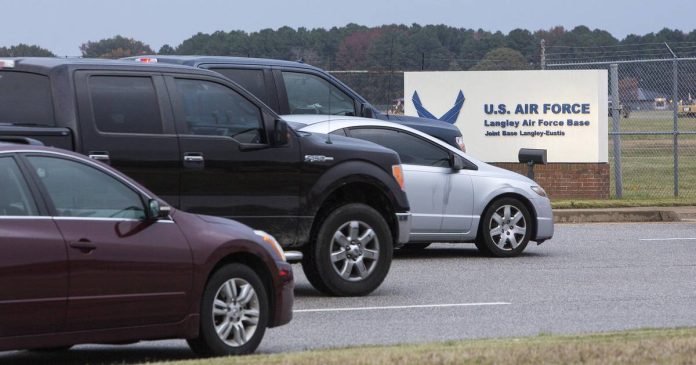
Fire crews are battling a structural fire at Langley Air Force Base in Hampton.
Langley, Hampton, and NASA fire departments responded around 10:50 a.m. to a fire at Building 777 on Sweeney Boulevard in the area of the Air Combat Command campus. As of 12:30 p.m., the scene was still active, according to a spokesperson for Joint Base Langley-Eustis.
“All personnel in the affected facility and surrounding buildings have been accounted for; there are no hazardous exposures or injuries reported at this time,” the 633rd Air Base Wing Public Affairs office wrote in a press release.
Motorists are asked to avoid Sweeney Boulevard between Thompson and Plumb streets. Base traffic is being routed through Dodd Boulevard.
“Once the fire is confirmed to be extinguished, the cause of the incident and the extent of its damage will be investigated,” the press release read.
This is a developing story. Check back for updates.
In 2022, we considered questions ranging from identifying the greatest weakness of the U.S. in the national security arena to considering how to de-center the U.S. in discussions, expand the array of perspectives, and bring together fresh solutions and new ideas.
To begin 2023, we wanted to explore the relationship between historical lessons and preparation for an unknown future. A wide array of thinkers have inspired this theme, including Lawrence Freedman. InThe Future of War: A History, Freedman explainsthat the future is so difficult to predict because “it depends on choices that have yet to be made, including by our own governments, in circumstances that remain uncertain.” Freedman continues to unpack this notion, stating:
History is made by people who do not know what is going to happen next. Many developments that were awaited, either fearfully or eagerly, never happened. Those things that did happen were sometimes seen to be inevitable in retrospect but they were rarely identified as inevitable in prospect.[1]
This quarterly thus examines preparation for future warfare based on historical lessons, learned or not. How have states and other actors envisioned future warfare? How did they prepare, or fail to prepare, for future warfare? Are these lessons of use to states and other actors as they prepare for future conflict?
First, Will Hitchen begins this quarter by reminding us that most forward-leaning predictions are just wrong. The author explores prediction in general before honing in on how often past predictions about future warfare have been erroneous. Predictions fail for a number of reasons, including misapplying history or even misrepresenting it. One solution to best preparing for future warfare includes hedging to prepare for a variety of different potential developments.
Next, Amos Fox identifies four different schools of thought to understand how institutions and individuals view future conflict: the futurist, the traditionalist, the institutionalist, and the conflict realist. Only by blending each camp, Fox contends, can militaries best prepare for future warfare.
Samuel Shamburg acknowledges how much history shapes theory and doctrine, but argues that military leaders often fail to use history appropriately. Planners can help resolve this challenge by engaging in better scenario planning, especially looking for leading indicators that so often result due to scenario planning. If one considers a future scenario as akin to a maze, then these indicators are like breadcrumbs that provide “signals to watch for,” helping create mindsets that allow leaders to respond better when tomorrow becomes today.
Nate Bump then suggests that story matters more in avoiding past catastrophes than predicting specific events years into the future. As British soldier and military historian B.H. Liddell Hart concludes, “the value of history is in the countless repeated ways things can go wrong.”[2] This piece examines recent thinking and planning examples to better understand how states effectively envision future warfare by examining their performance in past and present conflict to include how lessons learned were applied by the countries in focus, or not.
Next, Peter Hickman highlights how even the most studious military professionals can often repeat previous military predecessors by exploring Napoleon’s disastrous invasion into Russia. The author argues that because politics shapes strategy, situations that may superficially appear to be similar are in reality “utterly unique, unbounded, and rarely conform to previous experience.”
Then Kyle Rable highlights the US Army’s “amnesia” regarding unconventional wars, arguing that the institution stubbornly refuses to use history correctly. Rather than learning lessons from conflicts in Vietnam and Afghanistan, the Army instead pushes learning opportunities aside and rushes headlong into developing new doctrine for high-intensity conflict.
Timur Nersesov then walks us backward before Russia’s 2022 invasion of Ukraine to argue that the US failed the international world order regarding the Armenia and Azerbaijan conflict, thereby helping to precipitate the Russian invasion of Ukraine. That the US did not respond is even more surprising in light of the past 30 years of US involvement seeking to mediate between the two warring nations. The international community has taken a Jekyll and Hyde approach to these recent conflicts although both overlap in being “ ethnic-territorial disputes between early democracies and autocratic neighbors.”
Ryan Easterday then returns to a more macro-level discussion of the tendency of nations to forget one of the recurring lessons of history: that wars rarely turn out to be as short as expected or hoped. An enduring historical lesson is the need to resist such overoptimism and plan for a potentially long and highly attritional conflict.
In keeping with Lawrence Freedman’s warning as to how often predictions fail, Cameron Ross next advises leaders to be humble regarding future anticipations. In the face of an unknown future, the best course of action involves pursuing flexibility in shaping strategy, training, and acquisition to best hedge against the impact of unexpected developments.
In a similar vein, Ian Li highlights two cautionary themes for military professionals. There can be a danger in looking backwards for historical parallels, such as reflexively viewing tensions between the US and China as another Cold War running the risk of ignoring significant contextual differences. Additionally, it is not enough to study recent history out of the assumption that it has more relevance for future warfare.
Finally, Bryce Johnston looks to the past to forecast the future with the warning that technology has not simply had an additive effect historically; rather, it has been fundamentally transformative, albeit not in the way that proponents of the revolution in military affairs have argued. Johnston points to how it is not always the flashy technologies like hypersonics and drones that have the greatest effects on warfare and society. This point is important because of the sweeping changes that have begun occurring to warfare because of large-language models and the impact they will have on automating staff work, thereby transforming warfare by greatly speeding up decision making.
This collection of essays represents a varied set of ideas and arguments from our community. Considered together, they give us a point from which to continue the conversation about what history can, or cannot, tell us about the future of conflict.
VIRGINIA BEACH — After more than two years searching, Byron and Darcy Hendrix have a new friend who’s already brightening the family’s home.
Jeff, a 13-week-old sheepadoodle and service dog recruit, traveled to Norfolk from Arizona free of charge last weekend via a network of people and organizations united by a concern for the well-being of veterans. But Jeff’s path to becoming a certified service dog is uncertain as the Hendrixes struggle to find an affordable way to get him trained.
Darcy Hendrix, like Byron a disabled veteran, said she’s made searching for a service dog for her husband her full-time job. She said she’s spoken with more than 200 organizations, including at least 20 in Hampton Roads area, about getting a service dog for Byron.
The roadblocks have come down to cost and time: The Hendrixes need to have a dog with a certain level of certification or get on a waiting list for training that is 2-5 years long, said Darcy, 53.
The organizations Darcy has spoken with have been unwilling to put them on a payment plan, as well.
“I haven’t gotten anywhere, I just get a number to call another number,” she said.
Byron’s physicians with the Department of Veterans Affairs, who his wife said have been “amazing,” recommended a service dog based on his condition. But the process has been arduous.
“The problem is you get a lot of roadblocks … by the time you get there you’ve already wasted so much time that technically you could have already had a dog here working with him,” she said.
According to Assistance Dogs International, an assistance dog — guide, hearing or service — is trained to perform at least one task for an individual with a disability. In contrast, an emotional support dog provides only emotional support for a mental health condition or emotional disorder.
James Moss, Veterans of Foreign Wars assistant director for health policy, said the VA requires that veterans seek a referral from orthotic and prosthetic services, who will connect them with a service dog provider.
This is done at little to no cost to the veteran, and the VA will even cover veterinary bills throughout the canine’s lifespan. But the department will only mitigate the costs for service dogs provided by organizations accredited through Assistance Dogs International.
While dozens of providers serve Virginia veterans, Hampton Roads has just one accredited facility — Virginia Beach’s Mutts with a Mission. The next closest facility, Paws for Purple Hearts, is two hours away in Ruther Glen.
Mutts with a Mission receives roughly 50 applications a year, but typically accepts 15. Those selected wait about two years before taking home a dog trained to their unique needs. But the two-year wait is not unique to Mutts with a Mission, said Brooke Corson, director of the nonprofit.
Accredited service dog providers, Corson said, do not allow a dog to go home with its veteran until the dog has been systematically exposed, socialized, and trained to complete tasks that mitigate the veteran’s disabilities. The process takes 18-24 months.
Mutts with a Mission also requires that the dog and its matched veteran participate in two-week class, with annual recertifications, before the dog graduates. The training focuses on bonding the veteran and the dog, teaching the veteran what the dog is trained to do and working the pair through various scenarios. Such programs do not allow veterans to provide their own dogs.
“They aren’t just getting a pet — they are getting a highly trained and skilled dog that will change their life and with that comes responsibilities to the public and the dog,” Corson said.
The two-year wait can discourage people from seeking certified service dogs from accredited organizations.
“Unfortunately, many people want a service dog now,” Corson said.
Because the Hendrixes received Jeff through non-credentialed provider, the VA will not cover the cost to train him, which Corson said runs about $60,000 for two years of intense weekly training and custom-made gear for the dog. And training programs that would be covered by the VA typically do not allow veterans to provide their own dog.
In December, frustration sent Darcy to Facebook for help. She posted on the “Veterans Claims Assistance Group,” with more than 54,000 members across the country, and got connected to Dan McSparran, director of retiree services for the Arizona chapter of the nonprofit AT&T Veterans, and Bridgette Bollinger, a dog breeder and co-founder of the Arizona-based Asgardian Doodles.
McSparran, a disabled veteran, and Bollinger have partnered to provide 20 future service dogs to veterans across the country for free over the past 12 months, according to McSparran. They were accepting applications for puppies from a litter purchased by McSparran’s mother, Mary Jane, around the holidays. Darcy wrote a letter describing Byron’s situation.
Within a week they received a call saying they were approved — all it took was some heroics by Kim Whiles, a volunteer with Southwest Airlines’ Southwest Animal Transport Team, to get Jeff where he was needed.
Daywatch
Weekdays
Start your morning with today’s local news
“We’re looking to change veterans’ lives and make things better,” McSparran said. “It changes everything in your household, for your kids, your family — it changes everything for everybody.”
Byron, 55, served in the Gulf War on the carrier USS John F. Kennedy and USS Nassau as an aviation boatswain’s mate. He was seriously injured in two accidents on board that left his body in shambles. Byron also suffers from diabetes, post-traumatic stress disorder and sleep apnea, among other issues.
Jeff, a 13-week old sheepadoodle puppy and service dog recruit, travelled to Norfolk from Arizona to be paired with Byron Hendrix, a disabled veteran. (Kristine Hendrix, Kristine Hendrix Photography)
To the Hendrixes’ amazement, Jeff already seems to know his role. In the first week, Jeff was bouncing on Byron’s feet to help him realize his blood sugar had gotten low — which service dogs are trained to sense. If Byron gets upset, Jeff will nudge him and try to sit on his lap, Darcy said.
At night, Jeff already is cuddling up to Byron in bed and waking him when he has issues with apnea-related blockages. Because of his PTSD and difficulty hearing, Byron is easily startled. But Jeff and their other dog, Penny, serve as extra eyes and ears: they will sit up or look around when they sense someone coming.
“It helps you kind of smooth out the bumps in your life,” Byron said.
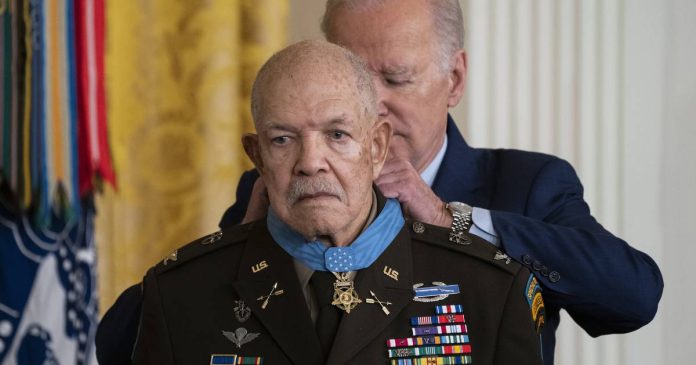
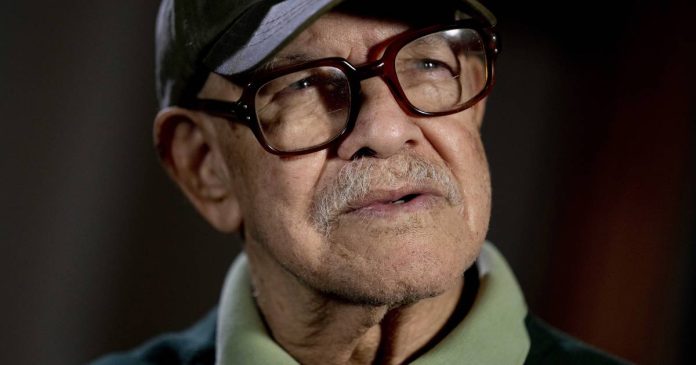
Nearly 60 years after he was recommended for the nation’s highest military award, retired Col. Paris Davis, one of the first Black officers to lead a Special Forces team in combat, received the Medal of Honor on Friday for his bravery in the Vietnam War.
At a crowded White House ceremony, Davis emphasized the positive of the honor rather than negative of the delay, saying, “It is in the best interests of America that we do things like this.”
Thanking President Joe Biden, who draped a ribbon with the medal around his neck, he said, “God bless you, God bless all, God bless America.”
The belated recognition for the 83-year-old Virginia resident came after the recommendation for his medal was lost, resubmitted — and then lost again.
It wasn’t until 2016 — half a century after Davis risked his life to save some of his men under fire — that advocates painstakingly recreated and resubmitted the paperwork.
Biden described Davis as a “true hero” for risking his life amid heavy enemy fire to haul injured soldiers under his command to safety. When a superior ordered him to safety, according to Biden, Davis replied, “Sir, I’m just not going to leave. I still have an American out there.” He went back into the firefight to retrieve an injured medic.
“You are everything this medal means,” Biden told Davis. “You’re everything our nation is at our best. Brave and big hearted, determined and devoted, selfless and steadfast.”
Biden said Davis should have received the honor years ago, describing segregation in the U.S. when he returned home and questioning the delay in awarding him the medal.
“Somehow the paperwork was never processed,” Biden said. “Not just once. But twice.”
Davis doesn’t dwell on the delayed honor and says he doesn’t know why decades had to pass before it finally arrived.
“Right now I’m overwhelmed,” he told The Associated Press in an interview Thursday, the eve of the medal ceremony.
“When you’re fighting, you’re not thinking about this moment,” Davis said. “You’re just trying to get through that moment.”
“That moment” stretched over nearly 19 hours and two days in mid-June 1965.
Davis, then a captain and commander with the 5th Special Forces Group, engaged in nearly continuous combat during a pre-dawn raid on a North Vietnamese army camp in the village of Bong Son in Binh Dinh province.
He engaged in hand-to-hand combat with the North Vietnamese, called for precision artillery fire and thwarted the capture of three American soldiers — all while suffering wounds from gunshots and grenade fragments. He used his pinkie finger to fire his rifle after his hand was shattered by an enemy grenade, according to reports.
Davis repeatedly sprinted into an open rice paddy to rescue members of his team, according to the ArmyTimes. His entire team survived.
“That word ‘gallantry’ is not much used these days,” Biden said. “But I can think of no better word to describe Paris.”
Davis, from Cleveland, retired in 1985 at the rank of lieutenant colonel and now lives in Alexandria, Virginia, just outside Washington. Biden called him several weeks ago to deliver the news.
He says the wait in no way lessens the honor.
“It heightens the thing, if you’ve got to wait that long,” he said. “It’s like someone promised you an ice cream cone. You know what it looks like, what it smells like. You just haven’t licked it.”
Davis’ commanding officer recommended him for the military’s top honor, but the paperwork disappeared. He eventually was awarded a Silver Star, the military’s third-highest combat medal, but members of Davis’ team have argued that his skin color was a factor in the disappearance of his Medal of Honor recommendation.
“I believe that someone purposely lost the paperwork,” Ron Deis, a junior member of Davis’ team in Bong Son, told the AP in a separate interview.
Deis, now 79, helped compile the recommendation that was submitted in 2016. He said he knew Davis had been recommended for the Medal of Honor shortly after the battle in 1965, and he spent years wondering why Davis hadn’t been awarded the medal. Nine years ago he learned that a second nomination had been submitted “and that also was somehow, quote, lost.”
“But I don’t believe they were lost,” Deis said. “I believe they were intentionally discarded. They were discarded because he was Black, and that’s the only conclusion that I can come to.”
Daywatch
Weekdays
Start your morning with today’s local news
Army officials say there is no evidence of racism in Davis’ case.
“We’re here to celebrate the fact that he got the award, long time coming,” Maj. Gen. Patrick Roberson, deputy commanding general, U.S. Army Special Operations Command, told the AP. “We, the Army, you know, we haven’t been able to see anything that would say, ‘Hey, this is racism.’”
“We can’t know that,” Roberson said.
In early 2021, Christopher Miller, then the acting defense secretary, ordered an expedited review of Davis’ case. He argued in an opinion column later that year that awarding Davis the Medal of Honor would address an injustice.
“Some issues in our nation rise above partisanship,” Miller wrote. “The Davis case meets that standard.”
Davis’ daughter, Regan Davis Hopper, a mom of two teenage sons, told the AP that she only learned of her dad’s heroism in 2019. Like him, she said she tries not to dwell on her disappointment in how the situation was handled.
“I try not to think about that. I try not to let that weigh me down and make me lose the thrill and excitement of the moment,” Hopper said. “I think that’s most important, to just look ahead and think about how exciting it is for America to meet my dad for the first time. I’m just proud of him.”
WASHINGTON — Nearly 60 years after he was first recommended for the nation’s highest award for bravery during the Vietnam War, retired Col. Paris Davis, one of the first Black officers to lead a Special Forces team in combat, will receive the prestigious Medal of Honor on Friday.
The overdue recognition for the 83-year-old Virginia resident comes after his recommendation for the medal was lost, resubmitted — and then lost again.
It wasn’t until 2016 — half a century after Davis risked his life to save some of his men by fighting off the North Vietnamese — that a volunteer group of advocates painstakingly recreated and resubmitted the paperwork.
Some of Davis’ supporters believe racism was to blame, but Davis doesn’t dwell on it. He said he doesn’t know why it has taken decades for his heroism to be recognized.
“Right now I’m overwhelmed,” he told The Associated Press in an interview the day before he attends a White House ceremony where President Joe Biden will hang the blue ribbon holding the Medal of Honor around Davis’ neck.
“When you’re fighting, you’re not thinking about this moment,” Davis said. “You’re just trying to get through that moment.”
That moment lasted nearly 19 hours and stretched over two days in mid-June 1965.
Davis, then a captain and commander with the 5th Special Forces Group, engaged in nearly continuous combat during a pre-dawn raid on a North Vietnamese army camp in the village of Bong Son in Binh Dinh province.
He led the charge against the enemy, called for precision artillery fire, engaged in hand-to-hand combat with the North Vietnamese and thwarted the capture of three American soldiers — all while suffering multiple wounds from gunshots and grenade fragments. Davis used his pinkie finger to fire his rifle after his hand was shattered by an enemy grenade, according to reports.
Davis repeatedly sprinted into an open rice paddy to rescue each member of his team, according to the ArmyTimes. His entire team survived. Davis refused to leave the battlefield until his men were safely removed.
Davis, a native of Cleveland, retired in 1985 at the rank of colonel and now lives in Alexandria, Virginia, just outside Washington. Biden called him several weeks ago to deliver the news.
He compares receiving the medal to getting a long-anticipated ice cream cone and says the wait in no way lessens the honor.
“It’s just the antithesis of that,” he said. “It heightens the thing, if you’ve got to wait that long … It’s like someone promised you an ice cream cone. You know what it looks like, what it smells like. You just haven’t licked it.”
Davis’ commanding officer recommended him for the military’s top honor, but the paperwork disappeared. He eventually was awarded a Silver Star Medal, the military’s third-highest combat medal, as an interim honor, but members of Davis’ team have argued that his skin color was a factor in the disappearance of his Medal of Honor recommendation.
“I believe that someone purposely lost the paperwork,” Ron Deis, a junior member of Davis’ team in Bong Son, told the AP in a separate interview.
Deis, now 79, helped compile the recommendation that was submitted in 2016. He said he knew Davis had been recommended for the Medal of Honor shortly after the battle in 1965 and he spent years wondering why Davis hadn’t been awarded the medal. Nine years ago he learned that a second nomination had been submitted “and that also was somehow, quote, lost.”
“But I don’t believe they were lost,” Deis said. “I believe they were intentionally discarded. They were discarded because he was Black, and that’s the only conclusion that I can come to.”
Daywatch
Weekdays
Start your morning with today’s local news
Army officials say there is no evidence of racism in Davis’ case.
“We’re here to celebrate the fact that he got the award, long time coming,” Maj. Gen. Patrick Roberson, deputy commanding general, U.S. Army Special Operations Command, told the AP. “We, the Army, you know, we haven’t been able to see anything that would say, ‘Hey, this is racism.’”
“We can’t know that,” Roberson said.
In early 2021, Christopher Miller, then the acting defense secretary, ordered an expedited review of Davis’ case. He argued in an opinion column later that year that awarding Davis the Medal of Honor would address an injustice.
“Some issues in our nation rise above partisanship,” Miller wrote. “The Davis case meets that standard.”
Davis’ daughter, Regan Davis Hopper, a mom of two teenage sons, told the AP that she only learned of her dad’s heroism in 2019. But, like him, she said she tries not to dwell on her disappointment in how the situation was handled.
“I try not to think about that. I try not to let that weigh me down and make me lose the thrill and excitement of the moment,” Hopper said. “I think that’s most important, to just look ahead and think about how exciting it is for America to meet my dad for the first time. I’m just proud of him.”