Home Blog Page 190

Prosecutors have tape of Donald Trump discussing holding onto classified doc after leaving office – Daily Press

0

Justice Department prosecutors have obtained an audio recording of former President Donald Trump from after he left office in which he talks about holding onto a classified Pentagon document related to a potential attack on Iran, according to media reports.

CNN first reported that Trump suggested on the recording that he wanted to share with others information from the document but that he knew there were limitations about his ability to declassify records after he left office.

The comments on the recording, made in July 2021 at his golf club in Bedminster, New Jersey, undercut the former president’s repeated claims that he declassified the documents he took with him from the White House to Mar-a-Lago, his Florida estate, after leaving office. The recording could also be a key aid for prosecutors looking to prove Trump knew his ability to possess classified documents was limited.

The recording has been provided to special counsel Jack Smith, whose team of prosecutors have spent months investigating the potential mishandling of classified documents at Mar-a-Lago and whether Trump or anyone else sought to criminally obstruct the probe. The investigation shows signs of being in its final stages, with prosecutors having interviewed a broad cross-section of witnesses before the grand jury.

No one has been criminally charged.

According to the CNN report, the recording was made during a gathering at Bedminster with aides to Trump and two people who were working on the autobiography of his former chief of staff, Mark Meadows.

It said Meadows’ autobiography includes a description of what appears to be the same meeting. A lawyer for Meadows declined to comment Wednesday when reached by The Associated Press.

CNN said witnesses including Gen. Mark Milley, the chairman of the Joint Chiefs of Staff, have been questioned about the document. A spokesman for Milley declined to comment.

A spokesman for the special counsel declined to comment.

A Trump spokesman said in a statement that the investigation was “meritless” and amounted to “continued interference in the presidential election.”

High school scoreboard | Princess Anne Girl Soccer Secure Region Title Game Bid and State Tourney Spot with A Victory over Cox – Daily Press

0

Baseball

Class 6 Region A semifinals

Grassfield 2, James River 0

WP: Tsutsui. LP: Early.

Bradley Zayac and Maddux Tsutsui combined on a 4-hit shutout over nine innings, and Pudgy Snoh delivered a run-scoring single in the ninth to put the Grizzlies on top. Snoh, Jacob Henry, and Jack Wecht each had two hits for Grassfield.

Western Branch 5, Cosby 0

Gavin Biernot scattered six hits over seven scoreless innings to pick up the win and advance the Bruins to the region championship game at 6 p.m. Friday at Grassfield.

Class 5 Region B semifinals

Gloucester 4, Menchville 3

Nansemond River 4, Maury 3

WP: Baker

Cam Bauswell went 2-3 with three RBIs and Buddy Baker was the winning pitcher, striking out eight over four innings. The Warriors earned a state tournament berth and a spot in the title game at 6 p.m. Friday against Gloucester at War Memorial Stadium.

Class 4 Region A semifinals

Smithfield 6, Warwick 4

The sixth-seeded Packers’ Maddax Brown went 2-3 and pitched 4 innings, giving up one run, and Walt Bondurant scored 3 runs and stole home in the bottom of the sixth. James Fitchett gave up 1 hit to close out the win for the Packers.

Jamestown 2,Great Bridge 1

The No. 5 seed Eagles knocked off top-seeded Great Bridge to gain a state tournament bid and a berth in Thursday’s region title game at home.

Class 3 Region A semifinals

Lakeland 4, Tabb 3

Landon Patton and Cash Harrington threw 7 innings combined, allowing 1 earned run. Cole Harrington was 2-4 with a double to start the bottom of the seventh, and Patton singled in the winning run. Lakeland finished with eight hits and visits New Kent in Thursday’s region championship game.

#3 New Kent 4, #2 Colonial Heights 0

Region 2 Class A semifinals

Poquoson 11, Arcadia 1

Lucas Power was 2 for 2 with two RBIs and Connor McDaniels had 2 RBIs for Poquoson, which scored 10 runs in the first two innings in semifinal victory. The top-seeded Islanders (16-6) clinched a state tourney bid and will host No. 3 Randolph-Henry in Thursday’s championship game.

Randolph-Henry 5, King William 1

Softball

Class 6 Region A semifinals

Kellam 10, Manchester 0

Sydney Harris hit a two-run home run in the bottom of the first inning, and Chloe Jackson, Carson Schakel, and Carson Griffith each added two hits apiece for the top-seeded Knights. Abby Adamek pitched a one-hit shutout and fanned eight.

Grassfield 5, Cosby 1

WP: Bailey. LP: Brown.

Addi Casassa hit a three-run home run in the fifth inning to pace the Grizzlies, who visit Kellam at 5 p.m. Friday in the region championship game. Grassfield’s Mya Davis and Bailey Murphy each had two hits.

Class 5 Region B championship

Nansemond River 10, Granby 6

Cammie Stuffel blasted her 18th home run of the season and Whitney DeFreitas had three hits as the Warriors won the region title. Kennnedy Linhardt and Taylor Shreck both had two hits and combined with DeFreitas for five RBIs. Cammie Stuffel started in the circle with Taylor Shreck pitching in relief.

Region 4 Class A semifinals

Deep Creek 2, Great Bridge 1

Sydney Seals hit a game-tying RBI single and Rayna Klar delivered the go-ahead run with a run-scoring single as the Hornets scored twice in the sixth-inning to knock off No. 1 seed Great Bridge. Seal pitched a complete game and struck out five. Deep Creek hosts Smithfield at 6 p.m. Thursday at Deep Creek Elementary for the region championship.

Smithfield 4, Grafton 2

Region 3 Class A semifinals

New Kent 8, Lakeland 0

WP: Berg. LP: Cale.

Leah Rounds was 2 for 3, including a double and an RBI. Alline Alexander scored two runs and drove in a run and Morgan Berg added a hit and RBI.

York 7, Southampton 1

Sarah Witt was strong on the mound, giving up only three hits, while Mackenzie Hahn was 2 for 4 with a double and two RBIs. Morgan Hunter went 2 for 4 with a double.

Region 2 Class A semifinals

Poquoson 3 , Arcadia 2

Brooklyn Arneault fanned four over seven innings and at the plate had a double. Kendall Snapp added two singles, and Alanna Gragg and AJ Smith drove in runs. The top-seeded Islanders host King William in Thursday’s championship game.

King William 2, Randolph-Henry 0

Boys soccer

Class 6 Region A semifinals

Kellam 3, James River 0

Hamilton Howes, Josh Nevins and Hunter Roche scored for the Knights, who host Landstown in the region title game Friday night.

Landstown 1, Cosby 0

Girls Soccer

Class 6 Region A semifinals

Kellam 4, James River 0

Jashyra Johnson scored twice and Lauren Croley and Dylan McEntarfer contributed a goal to lead the Knights. Kylie Cass and Anna Wise combined in goal for a clean sheet.

Cosby 4, Western Branch 1

Class 5 Region A semifinals

First Colonial 6, Hickory 0

FC-G-Miller 2, Kainer, Wold, Bourne, Todd.

Skylar Miller has two goals and two assists in leading the Patriots to a win — clinching the program’s seventh consecutive state tournament berth.

Princess Anne 1, Cox 0

Amy Woodworth scored the lone first-half goal off a Nina Murth assist as the Cavaliers earned a region title game bid and a state tourney spot.

Thursday’s Schedule

Baseball

Class 4 Region A

Championship at higher seed

Smithfield at Jamestown, 5:30 p.m.

Class 3 Region A

Championship at higher seed

Lakeland at New Kent, 4:30 p.m.

Class 2 Region A

Championship at higher seed

#3 Randolph-Henry at #1 Poquoson

Softball

Class 5 Region A

Championship at Princess Anne

#1 First Colonial vs. #2 Hickory, 5 p.m.

Class 4 Region A

Championship at higher seed

Smithfield vs. Deep Creek at Deep Creek Elementary School, 6 p.m.

Class 3 Region A

Championship at higher seed

York at New Kent

Class 2 Region A

Championship at higher seed

King William at Poquoson

Boys soccer

Class 4 Region A

Championship at Wanner Stadium

Smithfield vs. Jamestown, 5:30 p.m.

Class 2 Region A

Championship at higher seed

Poquoson at Arcadia, 6 p.m.

Girls soccer

Class 4 Region A

Championship at higher seed

Great Bridge at Smithfield, 7 p.m.

Class 3 Region A

Championship at higher seed

York at Lafayette, 7:30 p.m.

What’s changed, FAQs and more – Daily Press

0

You’re not imagining it: The dailypress.com website has a new look!

We’ve rebuilt Daily Press on a new platform with a simpler, cleaner design that loads faster so you can spend less time waiting — and more time reading our local journalism. With the new site, you can:

— Get a full and uncluttered reading experience on any device.
The site can easily be viewed on mobile, desktop or tablet devices, each with a custom view. We’ve also reduced a lot of widgets and other intrusions that detracted from the reader experience.

— Quickly find what you are looking for.
The streamlined site navigation is better organized, making it easier to find the sections and topics that interest you.

— Better identify subscriber-exclusive content.
Stories and features exclusive to subscribers are labeled throughout the site, better highlighting the value of our digital subscriptions.

— Easier sign up for our newsletters and e-mail alerts.
A sign-up button is prominently displayed on the homepage below Latest Headlines and in the main navigation bar. Also, our new platform allows us to create additional newsletters easier, so stay tuned.

Feedback

While we’ve tried to fix what you didn’t like about the old site, we realize there’s always room to improve. We will continue to make tweaks based on your feedback. What do you like? What isn’t working for you? Let us know at [email protected].

Frequently Asked Questions

How do I log in? Why does the login screen look different?

To log in on mobile devices, tap the silhouette of a person in the upper right corner (to the left of the magnifying glass) and then tap the blue “Log in” button. On desktop, the “Log in” button will show automatically.


When the login screen opens, you’ll notice some changes. First, it has a different URL (mng-prod.auth0.com) from the rest of the site. You’ll also notice the login screen has a different layout.

You still have options to sign in with a Google, Facebook or Apple account; you can tap one of those options and follow the prompts. Or if you have a dedicated site login, you can enter your e-mail address and password and tap the “Log In” bar.

NOTE: You can no longer sign in with a Twitter or Yahoo account.

What if I don’t want to sign in with a Google, Facebook or Apple account, and I don’t have a dedicated site login?

From the login screen, tap the Sign Up tab, enter your email address and create a password to register for a free, limited-access account.

Where is my favorite section?

Tap on the (All Sections) button in the top left corner of the site to browse our sections and topics, then tap a section name to see a list of subsections (for example, tap “Sports” to find the “High School Sports” section).

How do I search for a specific story or page?

Tap the (magnifying glass) to use our robust search feature.

Where is the e-edition?

You can find the e-edition — an exact PDF replica of the day’s print edition — link in the top left corner under the date on desktop or under the pop-out menu on the left side on mobile. This is available to anyone with a print or digital subscription but requires account activation.

Where can I find the Obituaries?

There is a link to the Obituaries section in the navigation list across the top of the site on desktop or under the pop-out menu on the left side on mobile. You can also go directly to it at legacy.com/obituaries/dailypress.

Where can I find the weather forecast?

You can still find weather information at dailypress.com/weather.

How do I contact someone in the newsroom?

You can find direct contacts for reporters and editors on our newsroom contact page.

How do I contact other departments?

Visit our Contact Us page.

How do I subscribe?

From the All Sections (hamburger nav) button in the upper left-hand corner of the site on desktop, tap the blue “Subscribe” button to see our current best offers. You can also go to https://dailypress.com/subscribe.

I am already a subscriber. How do I manage my account online?

Make sure you are logged into the site. Then tap on your avatar to the left of the magnifying glass in the top right corner of the site on desktop. From the drop-down, select “Account Settings.”

You can also access subscriber services by going to myaccount.dailypress.com. For additional assistance, call 407-420-5353 or email [email protected].

I don’t like the new design. What can be done about it?

We realize change can be hard but ask you to keep an open mind as you explore the new site. We will continue to make changes based on your feedback so send your suggestions to [email protected].

King William’s farmers market, now a permanent seasonal fixture, opens Friday

0

King William County’s popular farmers market has returned to the county and is set to become a permanent fixture, according to its organizers.

King William held its first farmers markets in 2022, attracting large crowds at just two events. Before that, local producers and farmers had to travel to West Point or further afield to Williamsburg and New Kent to sell their produce for years.

The first farmers market of the 2023 season is on June 2 at King William High School. The markets will be held on the first and third Fridays of each month from June to September at King William High School from 4-7 p.m.

After the test pilot farmers market and family fun night was such a success last year, the Economic Development Authority (EDA) decided to continue this year, said Ashley Herndon, the marketing member of the Farmers Market Board on the EDA.

“The King William County Farmers Market is back and here to stay,” Herndon said.

Herndon and her husband Bryan sell jams, jellies, butter and pickles as well as fresh cut flowers and other produce from Timber Hollow Farm.

“We have over 30 vendors registered for this year’s markets ranging from locally grown produce, meats and cheeses, artisan breads and baked goods, homegrown potted plants, honey, fresh herbs and flowers, handcrafted goods, food and dessert trucks, local artists and more,” Herndon said. “We are still accepting vendors and musician applications for upcoming markets, but you must register in advance.”

Sarah and Dennis Williams, who own Bees Knees Farm and Creamery, are on the citizens board that runs the King William Farmers Market.

Admission to the farmers market is free and there are no vendor fees. Sellers must complete an application on the King William County Farmers Market Facebook page to sell their goods at the markets. Musicians may also apply.

“We would love to have as many vendors and live music at each market but need your help finding our local talent and vendors,” a Facebook post reads.

Farms represented on the newly formed citizens board for the market include Bees Knees Farm and Creamery, Timber Hollow Farm and Olde Footpath Farm. Bees Knees, formed in 2015 by Sarah and Dennis Williams, has compassionately raised meats and cheeses. They offer a wide range of meat cuts including pig, goat, chicken and turkey as well as artisan cheeses.

Buddy and Ginger Rice started farming the land at Olde Footpath Farm in the Mangohick area in 2012. They produce garlic, mushrooms, berries and fruit and provide baked cakes, pies, cookies and fresh eggs to the community.

David Macaulay, [email protected]

Competing Proxy Strategies in the Russo-Ukrainian War

0

Notes:

[1] Seth Jones, Riley McCabe, and Alexander Palmer, ‘Ukrainian Innovation in a War of Attrition,’ Center for Strategic and International Studies, 27 February 2023, accessed 30 March 2023, available at: https://www.csis.org/analysis/ukrainian-innovation-war-attrition.

[2] Peter Dickinson, ‘2022 Review: Why Has Vladimir Putin’s Ukraine Invasion Gone Badly Wrong?”, Atlantic Council, 19 December 2022, accessed 29 March 2023, available at: https://www.atlanticcouncil.org/blogs/ukrainealert/2022-review-why-has-vladimir-putins-ukraine-invasion-gone-so-badly-wrong/; Natasha Bertrand, Alex Marquardt, and Katie Bo Lillis, ‘The US and Its Allies Want Ukraine to Change its Battlefield Tactics in the Spring,’ CNN, 24 January 2023, accessed 29 March 2023, available at: https://www.cnn.com/2023/01/24/politics/ukraine-shift-tactics-bakhmut/index.html.

[3] Orlando Figes, The Story of Russia (New York: Metropolitan Books, 2022), 290-291.

[4] Candace Rondeaux, ‘Decoding the Wagner Group: Analyzing the Role of Private Military Security Contractors in Russian Proxy Warfare,’ New America, 5 November 2019, accessed 18 April 2023, available at: www.newamerica.org/international-security/reports/decoding-wagner-group-analyzing-role-private-military-securitycontractors-russian-proxy-warfare/.

[5] Figes, The Story of Russia, 291-292.

[6] Altman, ‘By Fait Accompli, Not Coercion,’ 884.

[7] Amos Fox, “On Proxy War: A Multipurpose Tool for a Multipolar World,” Journal of Military Studies, Forthcoming: 10.

[8] Sean Case, ‘Putin’s Undeclared War: Summer 2014 – Russian Artillery Strikes Against Ukraine,’ Bellingcat, 21 December 2016, accessed 20 March 2023, available at: https://www.bellingcat.com/news/uk-and-europe/2016/12/21/russian-artillery-strikes-against-ukraine/.

[9] Victoria Butenko, Laura Smith-Spark, and Diana Magnay, ‘US Official Says 1,000 Russian Troops Have Entered Ukraine,’ CNN, 29 August 2014, accessed 30 March 2023, available at: https://www.cnn.com/2014/08/28/world/europe/ukraine-crisis/index.html

[10] Mark Galeotti, Putin’s Wars: From Chechnya to Ukraine (New York: Osprey Publishing, 2022), 316-318.

[11] Galeotti, Putin’s Wars, 316;Hughes, ‘Syria and the Perils of Proxy War,’ 523.

[12] Amos Fox, “On Proxy War,” Journal of Military Studies, (Forthcoming): 13-14.

[13] DPR is the Donetsk People’s Republic, which is the name given to the Russian controlled portion of Donetsk Oblast. LPR is the Luhansk People’s Republic, which is the name given to the Russian controlled portion of Luhansk oblast.

[14] Mark Galeotti, Pavel Baev, and Graeme Herd, ‘Militaries, Mercenaries, Militias, Morale, and the Ukraine War,’ George C. Marshall Center for Security Studies, November 2022, accessed 18 March 2023, available at: https://www.marshallcenter.org/en/publications/clock-tower-security-series/strategic-competition-seminar-series-fy23/militaries-mercenaries-militias-morale-and-ukraine-war.

[15] Galeotti, Baev, and Herd ‘Militaries, Mercenaries, Mercenaries, and Morale and the Ukraine War’.

[16] Galeotti, Baev, and Herd, ‘Militaries, Mercenaries, Militias, Morale, and the Ukraine War.’

[17] Mike Eckel, ‘Russia Proposes Major Military Reorganization, Conscription Changes, Increases Troop Numbers,’ Radio Free Europe/Radio Liberty, 23 December 2022, accessed 30 March 2023, https://www.rferl.org/a/russia-military-reorganization-expansion/32190811.html.

[18] Alexander Svechin, Strategy (Minneapolis, MN. East View Information Services, 1991), 246.

[19] Svechin, Strategy, 247.

[20] Kateryna Stepanenko and Karolina Hird, Russian Offensive Campaign Assessment, May 18, (Washington, DC: Institute for the Study of War, 2022).

[21] Thomas Gibbons-Neff, Marc Santora, and Natalia Yermak, ‘Tens of Thousands of Civilians Are Now Largely Stranded in the Middle of One of the War’s Deadliest Battles,’ New York Times, 16 June 2022, accessed 30 March 2023, available at: https://www.nytimes.com/2022/06/16/world/europe/sievierodonetsk-ukraine-civilians-stranded.html.

[22] Andrew Meldrum, ‘Battle Rages in Ukraine Town; Russia Shakes Up its Military,’ Associated Press, 12 January 2023, accessed 20 March 2023, available at: https://apnews.com/article/russia-ukraine-war-donetsk-9cc363adc31419311cadb3c5ed8e0601; Paul Niland, ‘Putin’s Mariupol Massacre is One of the 21st Century’s Worst Crimes,’ Atlantic Council, 24 May 2022, accessed 20 March 2023, https://www.atlanticcouncil.org/blogs/ukrainealert/putins-mariupol-massacre-is-one-the-worst-war-crimes-of-the-21st-century/.

[23] Alex Vershinin, ‘The Return of Industrial Warfare,’ RUSI, 17 June 2022, accessed 20 March 2023, available at: https://www.rusi.org/explore-our-research/publications/commentary/return-industrial-warfare.

[24] Peter Dickinson, ‘2022 Review: Why Has Vladimir Putin’s Ukraine Invasion Gone So Badly Wrong?,’ Atlantic Council, 19 December 2022, accessed 17 April 2023, available at: https://www.atlanticcouncil.org/blogs/ukrainealert/2022-review-why-has-vladimir-putins-ukraine-invasion-gone-so-badly-wrong/.

[25] John Kirby, ‘Press Briefing by Press Secretary Karine Jean-Pierre and NSC Coordinator for Strategic Communications John Kirby,’ White Press Briefing, 16 February 2023, accessed 19 April 2023, https://www.whitehouse.gov/briefing-room/press-briefings/2023/02/17/press-briefing-by-press-secretary-karine-jean-pierre-and-nsc-coordinator-for-strategic-communications-john-kirby-9/.

[26] Andrew Kramer and Antoly Kurmanaev, ‘Ukraine Claims Bahkmut Battle is Wagner’s ‘Last Stand’,’ New York Times, 7 March 2023, accessed 19 April 2023, available at: https://www.nytimes.com/2023/03/07/world/europe/bakhmut-ukraine-russia-wagner.html.

[27] David Axe, ‘The Donetsk Separatist Army Went to War in Ukraine with 20,000 Men. Statistically, Almost Every Single One of Them Was Killed or Wounded,’ Forbes, 18 November 2022, accessed 19 April 2023, https://www.forbes.com/sites/davidaxe/2022/11/18/the-donetsk-separatist-army-went-to-war-in-ukraine-with-20000-men-statistically-almost-every-single-one-was-killed-or-wounded/?sh=497acf411c09.

[28] Axe, ‘The Donetsk Separatist Army Went to War in Ukraine,’.

[29] Max Seddon and Christopher Miller, ‘Crimean Bridge Explosion Leaves Russian Supply Lines Exposed,’ Financial Times, 9 October 2022, accessed 19 April 2023, available at: https://www.ft.com/content/453d8aff-b8f2-42a3-919b-10a327475dfb.

[30] Amos Fox, ‘Ukraine and Proxy War: Improving Ontological Shortcomings in Military Thinking,’ Association of the United States Army, Landpower Paper 148 (August 2022): 3-4.

[31] Geraint Hughes, My Enemy’s Enemy: Proxy Warfare in International Politics (Brighton, England: Sussex University Press, 2014), 13-14.

[32] David Lake, ‘Iraq, 2003-2011: Principal Failure,’ in Eli Berman and David Lake, ed., Proxy Wars: Suppressing Violence Through Local Agents (Ithaca, NY: Cornell University Press, 2019), 240.

[33] Lake, ‘Iraq, 2003-2011,’ in Berman and Lake, ed., Proxy Wars, 240.

[34] Hughes, My Enemy’s Enemy, 5.

[35] Fox, “On Proxy War,” 11.

[36] Fox, “Ukraine and Proxy War,” 11.

[37] Fox, “On Proxy War,” 3-4.

[38] ‘Fact Sheet, US Security Cooperation with Ukraine,’ US Department of State, 4 April 2023, accessed 19 April 2023, available at: https://www.state.gov/u-s-security-cooperation-with-ukraine/.

[39] ‘Fact Sheet, US Security Cooperation with Ukraine,’ US Department of State.

[40] ‘Fact Sheet on US Security Assistance to Ukraine as of 21 April 2022,’ US Defense Department, 22 April 2022, accessed 20 March 2023, available at: https://www.defense.gov/News/Releases/Release/Article/3007664/fact-sheet-on-us-security-assistance-for-ukraine-roll-up-as-of-april-21-2022/.

[41] ‘Fact Sheet on US Security Assistance to Ukraine.’

[42] ‘Fact Sheet, US Security Cooperation with Ukraine.’

[43] Arabia, Bowen, and Welt, ‘US Security Assistance to Ukraine.’

[44] Ellen Mitchell, ‘Russian has Seen 70,000 to 80,000 Casualties in Attack on Ukraine, Pentagon Says,’ The Hill, 8 August 2022, accessed 20 March 2023, available at: https://thehill.com/policy/defense/3593041-russia-has-seen-70000-to-80000-casualties-in-attack-on-ukraine-pentagon-says/; Jim Garamone, ‘Russian Efforts to Raise Numbers of Troops ‘Unlikely to Succeed,’ US Official Says,’ DoD News, 29 August 2022, accessed 19 April 2023, available at: https://www.defense.gov/News/News-Stories/Article/Article/3143381/russian-efforts-to-raise-numbers-of-troops-unlikely-to-succeed-us-official-says/.

[45] ‘Russian Federation: UN Experts Alarmed by Recruitment of Prisoners by “Wagner Group”,’ United Nations Human Rights Office of the High Commissioner, 10 March 2023, accessed 20 March 2023, available at: https://www.ohchr.org/en/press-releases/2023/03/russian-federation-un-experts-alarmed-recruitment-prisoners-wagner-group

[46] Eugene Rumer, ‘Putin’s War Against Ukraine: The End of the Beginning,’ Carnegie Endowment for International Peace, 17 February 2023, accessed 19 April 2023, available at: https://carnegieendowment.org/2023/02/17/putin-s-war-against-ukraine-end-of-beginning-pub-89071.

[47] ‘Brutality of Russia’s Wagner Gives it a Lead in Ukraine War,’ Associated Press, 27 January 2023, accessed 30 March 2023, available at: https://apnews.com/article/russia-ukraine-wagner-group-yevgeny-prigozhin-803da2e3ceda5dace7622cac611087fc

[48] Olivia Yanchik, ‘Human Wave Tactics are Demoralizing the Russian Army in Ukraine,’ Atlantic Council, 8 April 2023, accessed 19 April 2023, available at: https://www.atlanticcouncil.org/blogs/ukrainealert/human-wave-tactics-are-demoralizing-the-russian-army-in-ukraine/.


Virginia Beach music festival to raise money for brain injury treatments for military veterans

0

VIRGINIA BEACH — A music festival will rock the city this weekend to raise money for emerging treatment used to ease symptoms of service-related traumatic brain injuries in military veterans.

The Veterans Band Aid Music Festival is set for Friday and Saturday at the Holiday Trav-L-Park. Doors will open at 4 p.m. Friday and 1:30 p.m. Saturday. Headlining the event is 38 Special and Larry Fleet. Tickets range from $35 to $65 for one and two-day general admission.

Proceeds from the ticket sales will go to the Coastal Authority Care Foundation, festival host and Virginia Beach-based nonprofit organization. The money will be used to offer grants to veterans with service-connected traumatic brain injuries and post-traumatic stress disorder who are seeking a treatment that is not covered by insurance, such as hyperbaric oxygen therapy and neurotherapy.

“We call it the ‘band aid’ festival because the bands are aiding us raise money,” said Jill Crist, president of Coastal Authority Care Foundation.

Hyperbaric oxygen therapy and neurotherapy typically cost $5,000. Treatments last 30-40 weeks. Because it is not yet approved by the U.S. Food and Drug Administration for traumatic brain injury treatment, it is not covered by insurance.

Daywatch

Weekdays

Start your morning with today’s local news

According to Crist, the foundation was created to help veterans pay for such therapies — something she said she’s seen help her husband, a retired Navy SEAL.

“My husband has a traumatic brain injury and had both of these therapies. He was headed down a very bad road before we found the therapies — and nothing pharmaceutical-wise was helping … These two therapies helped him so much and completely turned him around. We didn’t understand why this wasn’t mainstream,” Crist said.

This is the fourth year Coastal Authority Care Foundation has put on the festival. In past years, the event has drawn 800-1,000 people per day. Last year, the foundation’s Emerging Therapy Grant program distributed $40,000 among 11 veterans.

“There are veterans killing themselves because they don’t know about this therapy or they don’t have access to it. We are just trying to get enough money to help as many veterans as we can,” Crist said.

The weekend will also feature Anthony Rosano and The Conqueroos; Exploding Sun; and The Gold Sauce; Buck Shot; The Piedmont Boys; The Daniel Jordan Band; and Chase Payne. Festivalgoers can enjoy food trucks, alcoholic and non-alcoholic beverages, a visual artist village and a live auction.

Tickets can be purchased on the Coastal Authority Care Foundation webpage at https://cacarefoundation.org/tickets.

Caitlyn Burchett, [email protected]

Vertical Coalitions and the Question of Sovereignty in Networks

0

The conflict in Ukraine offers unexpected insight into a military construct that had previously been mostly theoretical. Ukrainian ground forces, fighting beneath an information domain dominated almost exclusively by American intelligence, surveillance, and reconnaissance capabilities, while no U.S. forces fight in the conflict, is what military theorists and strategists in the 1990s described as a vertical coalition. They conceived it as the future of American warfare, during a brief period in which violent ground-based conflict among powerful states was believed, by some, to be vanishing from the world. The correlating concept of sovereign identity, as the founding principle of nation-statehood, was considered by these vanguard thinkers to be malleable or changing in historically unprecedented ways. Tracing the brief history of vertical coalitions reveals the unravelling of an entire way of seeing the world, even as the construct makes its first appearance in the most unexpected war of the 21st century. That history offers a live study in how truth, hubris, and reality trade blows through the lens of military technology and concepts under modern conditions.

Vertical Coalitions

Accompanied by the misappropriation of several insights from the natural sciences, lots of talk in the 90s within the U.S. national security and strategy communities centred on what advantages could be expected from the future of networked digital information technologies.[1] As essentially the owner and administrator, the U.S. stood peerless atop this regime of tech. No other nation approached the American military’s capacity to sense and shoot with rising precision. But how would such dominant battlespace knowledge be translated into military and strategic outcomes? Serious heads such as the late Andrew Marshall and his pupil Andrew Krepinevich frequently counselled on the need for technological innovations to be culturally and organisationally materialised for advantage to accrue, lest their value be squandered.[2] One answer spanning the gamut from tactics to strategy was the concept of vertical coalitions.[3] Vertical coalitions offered a U.S. military enterprise wielding dominant battlespace knowledge the prospect of greater strategic value, for lower operational cost, and reduced political risk.

Vertical coalitions were a military adaptation of the vertical alliance concept in corporate business. There it describes a business-level strategic relationship between a firm and its suppliers or distributors aimed at improving competitive advantage. Vertical alliances deepen relationships between the firm and its suppliers and distributors through the exchange of knowledge and commercial intelligence to mutual benefit. When a supplier or distributor agrees to work exclusively with a firm, it can bring about a lock-out dynamic that further enhances the firm’s competitive advantage by denying valuable commercial intelligence to rivals. Suppliers benefit by becoming actively involved in product design and distribution arrangements. A supplier might only agree to being locked in if it sees for itself a strategic advantage in doing so, for example where a firm might have a powerful market position or, better yet, a monopoly. Choosing the right partner is an important factor in the success of the strategy, making common intentions and compatible visions of the business a must. In the business world, actors considering a vertical alliance analyse each other’s corporate cultures to map learning opportunities and avert communication problems. It’s easy to see why military thinkers considering the implications of the digital networked age would be attracted.

One of the chief thinkers on vertical coalitions for the military was Martin Libicki. He described the way U.S. air power and expeditionary forces were used in combination with a beleaguered ally that was expected to provide the bulk of ground forces. In contrast to horizontal coalitions, which involved two or more brigades fighting side-by-side, Libicki thought that future military coalitions would be decidedly more vertical and that the emerging concept of dominant battlespace knowledge would be the critical enabler. In sum, it was a vision for how the United States would fight and win in the future. In 1995, Libicki wrote:

We would supply overall intelligence on the whereabouts and movements of distant echelons. Our overhead systems (both space and air breathing) would permit pinpointing of enemy platforms. Our distributed sensor systems would be put in place to operate, analyze, and convert data into fire-control solutions. This would permit friendly forces to take precise measure of the enemy, providing them with real-time one-shot, one-kill capability. We might even control the targeting once they have fielded the weapon. In some cases, the United States might be able to tilt the contest to one side without unambiguous proof that we had intervened at all. The use of stand-off sensors as a substitute for forces also frees us from the necessity of overseas bases; they permit more operations to be planned and conducted from international waters.[4]

Critically, vertical coalitions offered partner states a quid pro quo. As the predominant actor in the information domain, the U.S. was conceivably able to provide access to otherwise unavailable information to partner states. In this way, the dominant battlespace knowledge concept was plausibly scalable. It did not apply only to high-intensity warfare. The U.S. could provide information on everything from environmental degradation, law enforcement particularly in the maritime domain, transportation, transnational crime, disaster relief and so forth. In return, U.S. sensor systems require access to such entities as open skies, extant monitors and databases, supply lines and logistics would be granted. Libicki sensed the underlying political tension. He thought that such an arrangement was contingent on the provision of information at such a level of detail that the U.S. could not be accused of only giving access to information that only supported  its objectives.

Nonetheless, the status of the U.S. would have a subtle but pervasive effect on what partners saw when they plugged into the system. It guarded U.S. sensitivities, emphasised strengths, and acted as a powerful moderator by reinforcing some transparency. Broadly speaking, Libicki enunciated a vision of the illumination of the battle space and the unbundling inclusion of allies and partners to keep alliances and coalitions together, drive down risk and mistrust, and increase cooperation.[5]

This expansive vision had a technical Achilles heel. How would vertical coalitions turn out in a world where cyber vulnerability became the defining condition of the electromagnetic spectrum? Further, was it a realistic prospect when politics among nations returned to historical norms, after a brief and hubristic post-Cold War hiatus? Either way, few military analysts anticipated we would get the chance to see a vertical coalition in action, let alone in a war with the Russian Federation in the 21st century. The fate of nation-states in vertical coalitions with the U.S. should now be front of mind in every capital in which the digital age progresses apace, because we are watching the construct operate in the furnace of battle. 

Another Notch in the Post for Realpolitik

0

Though each observation may be accurate on its own terms, each is also incomplete. These officers, like most, view the world through the lens they have developed over a career in their particular branch of service and career specialty. A bureaucratic model of politics suggests that “where you stand depends on where you sit.”[4] You see what you see, you study that which you see, and the evidence sought and found will tend to support predetermined notions.

What does this have to do with the assumptions made prior to and during this particular conflict in Ukraine? First, the quote about logistics is true to the point of being cliché. Second, it has been well-established that a lack of air superiority is problematic on the battlefield. Yet, when neither side dominates the air, other aspects of offense and defense come into the fore. Lastly, Sun Tzu could have made the same observation about reconnaissance thousands of years ago. These observations regarding the viewpoints of senior leaders are not meant to demean the intelligence of these leaders, but to suggest that our understanding of the unfolding situation is incomplete and simplistic. It is easy to armchair quarterback this conflict at the tactical level, but it is not over yet. While the military in particular may be able to glean early tactical lessons from both sides of this conflict, it is too early to draw operational and strategic lessons from this war. Much like correctly predicting when or where the next war will occur, accurately predicting the final results of this conflict is improbable—especially regarding potential enduring second- and third-order effects. Yet, valid expectations about war and peace, interstate relationships, and the future of conflict are possible. Tactics change with context, strategy less so. An assumption that the use of military force—even naked aggression—will continue to be a key aspect of international relations will endure.

There are several military and political assumptions regarding the war in Ukraine worthy of continued discussion. For example, Russia likely assumed the objectives of the invasion would be achieved quickly, and Ukraine would not be able to offer significant resistance. The West assumed that Russia would not continue an invasion if it faced stiff resistance. Some pundits may have assumed the war Russia launched was merely limited in nature, seeking to secure a route to a warm sea port or to protect ethnic Russians. Others assumed Russian aggression was to secure a key industrial and agricultural region of the former Soviet Union that Russia cannot afford to lose.[5] Another important assumption is that Putin would possibly back down in the face of near-universal condemnation of his actions.[6]

All of these assumptions are important, but too specific to the context to be useful in the examination of possible future events. What the situation does provide is additional evidence in the empirical record that assumptions central to liberal international relations theory are faulty. That international relations have moved beyond realpolitik and hard-nosed calculations based on relative power and position is incorrect. Even the Strategy Bridge call for papers provides some insight into what those assumptions might be, given the use of the term “Russia’s naked aggression,” indicating a moral element to the situation.[7] To quote a famous movie character, “Is there another kind?”[8]

A Notch for Neorealist Theory

A brief review of the primary assumptions of neorealist scholarship is necessary. First, interstate interactions take place within a system of anarchy. There is no power or authority higher than the state that is empowered to enforce international rules or to prevent one state from attacking or otherwise harming another. Second, because of the anarchical nature of the world, states must always be concerned about their own survival. This leads to a third crucial point—that states seek security as their primary interest. Liberal theory suggests that once state security is assured, the state can have myriad additional interests, which can lead to instances of cooperation, and possibly even enduring peace. In contrast, neorealist literature expects that cooperation through alliances is merely a byproduct of the quest for survival and security. Neorealism expects that in a world characterized by anarchy, cooperation only occurs when it benefits the security interests of a state.

Scholars, policymakers, and military experts should not conflate the way the world works—as it is characterized by anarchy, survival, security—with the conduct or results of a specific conflict. The execution of combat operations and the results of those operations should not lead military and political experts to conclusions that naked aggression may be prevented by strong alliances among liberal democracies. Nor should potential military success in Ukraine create the false impression that at some future point other states will not act aggressively. The neorealist expectation that Russia felt threatened by NATO expansion, as posited by noted scholars George Kennan and John Mearsheimer, resulted in predictable behavior.[9] No matter how naked the aggression is deemed by others, how ill-informed the attack was, or ill-fated the Russian invasion might turn out to be, military failure in any instance cannot and should not influence thinking on how the world works in terms of the potential triggers for violent actions by state actors. That said, a brief examination of key liberal assumptions that have been challenged by this specific situation is in order.

Challenged liberal assumption #1: State survival and security are no longer the primary concern of the modern state. Cooperation between states is more economically sound. A neorealist would assume that Ukraine would beg to differ and wishes it could go back in time and make preparations for its own security.

Challenged liberal assumption #2: Modern alliances, unlike those of the past, are stable and reliable. The enduring NATO alliance purportedly provides evidence to support this assumption. However, the enduring nature of NATO is easier to explain. NATO survives because the threat endures.

Memorial Day parade in Norfolk focuses on community, honoring military sacrifices

0

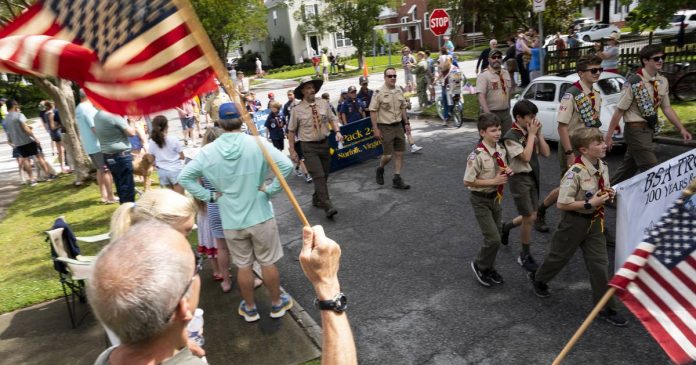
Stars and stripes lined the streets in Larchmont for the first Memorial Day parade in Norfolk hosted by the Larchmont Edgewater Civic League.

The parade kicked off at St. Patrick Catholic School and meandered through the Larchmont/Edgewater neighborhood. Boy Scouts, Daughters of the American Revolution and Sons of the American Revolution in period attire, a Norfolk fire truck and others made up the procession. The parade swelled as kids on bikes and families joined in.

The parade ended a few blocks away at Larchmont United Methodist Church with a wreath laying ceremony and performances by a Navy bugler, a vocalist and a bagpipe player.

Gary and Deborah Chiaverotti, Larchmont residents, originated the idea for the parade. Both grew up in small towns with local celebrations, and wanted to see something similar in their own neighborhood.

Gary Chiaverotti, a retired Navy captain in summer whites, presented the history of Memorial Day during the wreath laying ceremony.

“It is unclear when and where this tradition originated, but we’re sure they were all local events,” Chiaverotti said. “Our locally held parade and remembrance ceremony hearkens back to the origin and intents of Decoration Day.”

Mike Crockett, vice president of the Larchmont Edgewater Civic League and an organizer of the parade, said this was the right neighborhood for the celebration.

“This is a military town, this is a Navy town,” Crockett said. “In this neighborhood, there’s active duty, reserve, guard, defense contractors. We’re all doing the same thing. …This is the perfect neighborhood to have a parade like this come through the heart of.”

Crockett said 700 to 800 people participated or attended. Hot dogs and ice cream ran out at the event at Larchmont United Methodist Church after.

Daywatch

Weekdays

Start your morning with today’s local news

For Navy bugler Alyssa John, Memorial Day is a special occasion.

Musician Petty Officer second class Alyssa John plays taps during a ceremony dedicating The Larchmont Edgewater Civic League inaugural Memorial Day parade in Norfolk.

“To me, it’s a chance to honor all the people that came before me and sacrificed so much,” John said.

John performed “Taps” during the wreath laying ceremony — a piece she called a final salute and thank you typically played at military funerals.

Mayor Kenny Alexander summed up Memorial Day in his remarks.

“We are honored to celebrate with you our freedom with a fun parade,” Alexander said. “More importantly, the reason that we’re here is to honor and celebrate the men and women who have given the ultimate sacrifice to save our freedom and democracy.”

The wreath laying ceremony concluded with a bagpipe performance of “Flowers of the Forest” by Lt. J.G. Carter. Solemn notes contrasted with the fun-filled community party celebrating Memorial Day.

Cianna Morales, 757-957-1304, [email protected]

The State of Our Assumptions

0

To mark the passing of a year since Russia’s full-scale invasion of Ukraine and the subsequent return of high intensity conflict to Europe, we wanted to look to the recent past instead of to an unknown future. We asked: How then should we reflect on this experience? What happened to our previously held assumptions in the wake of Russia’s aggression? Which assumptions were challenged; which were validated?

Looking to the past instead of the future has a few distinct conceptual advantages. First, the desire to collect lessons learned often drives analysis to the tactical or, at best, operational level where information is more granular and events and actions are easier to measure or quantify. Second, these analyses look to apply lessons in preparation for the next conflict—though we cannot know how, when, or where it will take place. Militaries are notoriously bad at predicting future conflicts and this is likely even more true in the middle of a conflict. 

Our community approached this question from a number of different perspectives. Taken together these perspectives offer a well-rounded understanding of the nature of the assumptions that were in play prior to the conflict and how they shape the state of the conflict today.

Beginning with the issue of grand strategy, Brent Lawniczak questions many of the assumptions of liberal international relations to offer a neorealist perspective as a better alternative for understanding the Russian invasion of Ukraine. Among a number of neorealist assumptions he sees validated, for example, he views alliances as existing primarily for survival and self-interest. 

Next, Zac Rogers highlights how Ukraine has brought into play the unexpected costs of vertical coalitions. This idea came into prominence in the 1990s in light of US technological ascendency. Partners would be expected to provide the bulk of ground forces while the US would contribute more exquisite capabilities such as airpower. Ukraine has now challenged that model, Rogers argues. For example, the extent to which the kill chain has been spread horizontally through numerous nations creates legitimate targets outside Ukraine, thus resulting in the significant expansion of risk, thus greatly amplifying the costs to the US of these coalitions.

Amos Fox then provides an important perspective to how we can next understand the war in Ukraine as undergirded by the dynamics of proxy war. The firepower that the US provides to Ukraine results in Russia’s response to protect its conventional army by using human wave tactics made possible by drawing on prisoners and Wagner mercenaries. Taken together, the two proxy approaches result in costly attrition because each proxy’s strategies “feed off” the other’s. 

Rowan Wise then addresses the nuclear spectre. Framing his article within the long history of Russia relations with the West, he stresses how the Soviet Union’s development of a nuclear arsenal changed that relationship considerably. Borrowing from Clausewitz, Wise asks the reader to consider what political objectives the U.S. might be seeking and how those might be problematic in light of Russia’s nuclear weapons. 

Shifting from nuclear weapons, Jon Beto examines why Russia’s seemingly vaunted cyber and electronic capabilities did not seem to be as effective as anticipated. Beto explores Putin’s problematic assumption regarding Russian superiority and how this created complacency because “it’s what you know for sure that just ain’t so” that will get you in trouble.

Similarly, Joshua Ratta looks at Russian problems in hybrid warfare given some pre-2022 thinking that Russia had “perfected” this form of warfare.  What this view failed to see, is that Russia’s 2014 success in Ukraine owed much to the “opportune conglomeration of fortuitous circumstances and opponent weaknesses in Russian targeted areas.” The U.S. has also demonstrated that it is better at hybrid warfare than some initially thought. Although hybrid warfare proved to be overhyped, it will continue to be used by both Russia and the US as they engage in strategic competition.

Even more amorphous than hybrid warfare, yet equally powerful, is the battle for meaning occurring in the digital sphere. Nathan White argues observers too often measure progress in this conflict in terms of the geographical progression of the conflict on a map when the battlespace in the digital realm—such as public opinion, for example—could be an even more critical realm. 

Mariya Omelicheva picks up on similar themes, suggesting “mainstream perspectives on war ascribe an outsized importance to the tangible aspects of conflict and underplay the role of intangibles as useful guides for understanding the sources and outcomes of war.” Because war is as much shaped by the larger society that enables it as it is by its combatants, it is essential to understand the national identity of one’s opponent to understand that war’s character. To understand Russia’s war in Ukraine, one must above all understand Russian identity. 

Our series then pivots back to Clausewitz’s notion of friction. Alessandra Nisch urges the U.S. to draw on John Boyd’s injunction to operationalize friction. Nisch reveals how much friction ultimately benefited Ukraine. Due to externally applied friction in Ukraine such as the quick imposition of economic sanctions, Putin’s primary assumptions—“that the invasion of Ukraine would be quick and easily accomplished, that the world would denounce but not stop it, and that it would sufficiently deter NATO expansion”—all crumbled under the imposition of external friction from U.S. and NATO partners.

In a similar sphere, Nathan Colvin uses the war in Ukraine to challenge U.S. assumptions about the likelihood of large-scale combat operations. He argues this conflict demonstrates that the “costs of modern conventional war are so high it is difficult to justify its use.” While the U.S. should continue to focus on large-scale combat operations, the primary reason is to deter conventional war since it is highly unlikely to occur. The challenge for the U.S., however, comes in balancing that investment with developing the ability to engage in non-large-scale combat operations, which is essential to enabling deterrence by denial.   

Should deterrence fail, Julian Waller then explores how problematic Russian assumptions can be useful for the U.S. in light of potential engagement with either Iran or China. In both of these cases, the most important lesson the U.S. can glean is regarding “ideological realities on the ground” of both elites and the population at large. Russia’s faults in Ukraine represented more than a simply intelligence failure but also highly-flawed “sociopolitical assumptions.” 

Jerry Garzon explores both deterrence and flawed assumptions in his analysis of whether economic deterrence works or not. Prior to invading Ukraine, Russia made several reasonable but ultimately flawed assumptions, one of which was that it would not be subject to crippling economic measures given past historical precedent. Thus the U.S. did not offer a credible economic deterrent. And, while not necessarily showing a noticeable impact, quickly-imposed economic measures may prove just as significant as what is occurring on the battlefield. 

Finally, Robert Umholtz ruminates on possible outcomes to the conflict. Contextualizing this conflict within a long legacy of invasions, scorched earth policies, and popular insurgencies reveals that both sides will pay any cost to win. He predicts that diplomacy will not bring the two nations to any sort of compromise, with neither side being content to cede the ultimate prize: Crimea.

We hope you get as much from reading these essays as we did!