Home Blog Page 169

Tides drop series finale vs. RailRiders – Daily Press

0

The Norfolk Tides will come home on a rare losing streak, falling 7-4 Sunday afternoon at Scranton/Wilkes-Barre before 4,134 fans in Pennsylvania. Jamie Westbrook led the RailRiders with four RBIs.

In a series delayed two days because of poor air quality because of wildfires in Canada, the International League-leading Tides (43-19) won the first three games but the RailRiders won the last two.

Norfolk (29-33) led 3-0 and 4-1 Sunday but couldn’t hold off the New York Yankees’ top affiliate, which socked three home runs.

Terrin Vavra began the contest with the Tides’ only homer of the day, and Joey Ortiz’s RBI double and Daz Cameron’s run-scoring single gave Norfolk a 3-0 lead in the first inning. But RailRiders left-hander Tanner Tully raised his game, finishing 6 2/3 innings.

Scranton came back against Tides starter Ryan Watson, with Westbrook drawing a bases-loaded walk in the bottom of the first.

In the top of the fifth, Vavra tripled and scored on Connor Norby’s sacrifice fly for a 4-1 lead, but Watson couldn’t hold the lead in the bottom of the fifth.

Franchy Cordero and Elijah Dunham drew walks, and Westbrook tied the score at 4 with a two-out homer to left.

Leading off the RailRiders’ eighth, Carlos Narvaez broke that deadlock by lining a home run to right field off reliever Chris Vallimont (2-3). Brandon Lockridge doubled, and two outs later, Estevan Florial lifted the margin to 7-4 by pounding a homer to right-center.

Reliever Tanner Myatt (1-0) gained the victory, and Matt Bowman pitched a shutout ninth for a save.

The Tides are off Monday before playing host to Worcester, the top farm club of the Boston Red Sox, for a six-game series at Harbor Park.

Saturday night, after losing 4-2 in Game 1 of a doubleheader, Scranton snapped Norfolk’s five-game winning streak with a 7-6, 11-inning triumph in Game 2.

Norfolk has hit plenty of up-and-coming and veteran pitchers hard, but the Tides went 0 for 6 in the night’s final two innings against 31-year-old infielder Wilmer Difo, who gained his first pro pitching victory.

According to baseball-reference.com, Difo, 31, has played in 492 MLB games — mostly with the Washington Nationals from 2015-20 — and had only pitched in two of them. He gave up eight runs in two innings with Pittsburgh in 2021. No record was provided of him ever pitching in the minors, though he turned pro in 2010.

The Tides’ Robbie Glendinning hit two home runs, and Norfolk extended the game in the seventh inning on a tying steal of home by Heston Kjerstad on a play in which Ortiz was thrown out at second base.

With runners placed at second base to start extra innings, Glendinning brought one home in the top of the eighth, but Norfolk left the bases loaded. The RailRiders extended the game on Westbrook’s two-out RBI double.

Norfolk, known for prolific offense, couldn’t bring home its gifted runners in the next three innings, even against Difo in the last two of them. That kept the door open for the RailRiders to prevail when Bastidas grounded a pitch by Eduard Bazardo (3-1) up the middle to bring home Andres Chaparro.

INTERNATIONAL LEAGUE STANDINGS

(through most of Sunday’s games)

Team, W-L, Pct., GB

East Division

Norfolk (Orioles), 43-19, .694, –

Durham (Rays), 36-27, .571, 7.5

Lehigh Valley (Phillies), 32-29, .525, 10.5

Worcester (Red Sox), 31-32, .492, 12.5

Scranton/W-B (Yankees), 29-33, .468, 14.0

Buffalo (Blue Jays), 29-34, .460, 14.5

Charlotte (White Sox), 29-34, .460, 14.5

Rochester (Nationals), 28-33, .459, 14.5

Jacksonville (Marlins), 27-35, .435, 16.0

Syracuse (Mets), 24-38, .387, 19.0

West Division

St. Paul (Twins), 36-26, .581, –

*Louisville (Reds), 35-26, .574, –

Iowa (Cubs), 34-27, .557, 1.5

Memphis (Cardinals), 34-29, .540, 2.5

Nashville (Brewers), 31-31, .500, 5.0

*Columbus (Guardians), 30-31, .492, 5.5

*Omaha (Royals), 28-32, .467, 7.0

Gwinnett (Stripers), 29-34, .460, 7.5

*Indianapolis (Pirates), 28-33, .459, 7.5

Toledo (Tigers), 26-36, .419, 10.0

*Does not include Sunday’s result.

Michael Ramirez: Reelection Chances

0

Cartoon by Michael Ramirez for June 12, 2023.

Section of heavily traveled I-95 collapses in Philadelphia after tanker truck catches fire – Daily Press

0

By RON TODT (Associated Press)

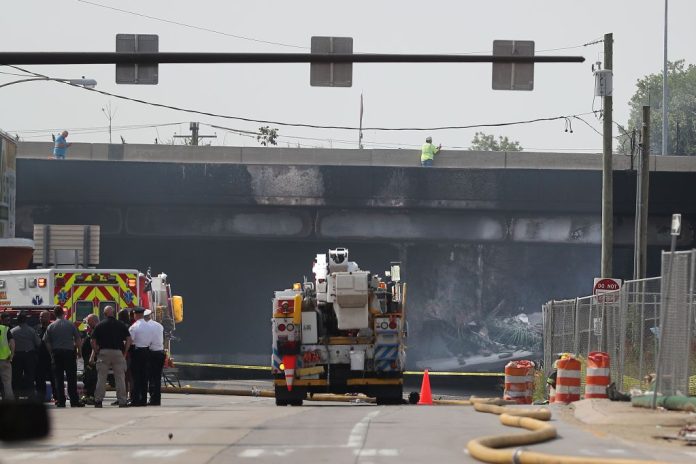
PHILADELPHIA (AP) — An elevated section of Interstate 95 collapsed early Sunday in Philadelphia after a tanker truck carrying flammable cargo caught fire, closing a heavily traveled segment of the East Coast’s main north-south highway indefinitely, authorities said.

Transportation officials warned of extensive delays and street closures and urged drivers to avoid the area in the northeast corner of the city. Officials said the tanker contained a petroleum product that may have been hundreds of gallons of gasoline. The fire was reported to be under control.

Video from the scene showed a massive concrete slab had fallen from I-95 onto the road below. There were no reports of injuries.

The northbound lanes of I-95 were gone, and the southbound lanes were “compromised” due to heat from the fire, said Derek Bowmer, battalion chief of the Philadelphia Fire Department. Runoff from the fire or perhaps broken gas lines were causing explosions underground, he added.

Some kind of crash happened on a ramp underneath northbound I-95 around 6:15 a.m. The northbound section above the fire collapsed quickly, state Transportation Department spokesman Brad Rudolph said.

Mark Fusetti, a retired Philadelphia police sergeant, said he was driving south toward the city’s airport when he noticed thick, black smoke rising over the highway. As he passed the fire, the road beneath began to “dip,” creating a noticeable depression that was visible in video he took of the scene, he said.

He saw traffic in his rearview mirror come to a halt. Soon after, the northbound lanes of the highway crumbled.

“It was crazy timing,” Fusetti said. “For it to buckle and collapse that quickly, it’s pretty remarkable.”

The southbound lanes were heavily damaged, “and we are assessing that now,” Rudolph said Sunday afternoon.

The collapsed section of I-95 was part of a $212 million reconstruction project that wrapped up four years ago, Rudolph said. There was no immediate time frame for reopening the highway, but officials would consider “a fill-in situation or a temporary structure” to accelerate the effort, he said.

Motorists were sent on a 43-mile (69-kilometer) detour, which was going “better than it would do on a weekday,” Rudolph said. The fact that the collapse happened on a Sunday helped ease congestion.

He expected traffic “to back up significantly on all the detour areas.”

White House press secretary Karine Jean-Pierre said in a Twitter post that President Joe Biden was briefed on the collapse and that White House officials were in contact with Pennsylvania Gov. Josh Shapiro and Philadelphia Mayor Jim Kenney’s offices to offer assistance.

“This is a major artery for people and goods, and the closure will have significant impacts on the city and region until reconstruction and recovery are complete,” Transportation Secretary Pete Buttigieg said in a social media post.

The National Transportation Safety Board said it was sending a team to investigate the fire and collapse.

Most drivers traveling the I-95 corridor between Delaware and New York City use the New Jersey Turnpike rather than the segment of interstate where the collapse occurred. Until 2018, drivers did not have a direct highway connection between I-95 in Pennsylvania and I-95 in New Jersey. They had to use a few miles of surface roads, with traffic lights, to get from one to the other.

Officials were also concerned about the environmental effects of runoff into the nearby Delaware River.

After a sheen was seen in the Delaware River near the collapse site, the Coast Guard deployed a boom to contain the material. Ensign Josh Ledoux said the tanker had a capacity of 8,500 gallons, but the contents did not appear to be spreading into the environment.

“As far as waterways go, it’s being contained, and it seems like things are under control,” he said.

Thousands of tons of steel and concrete were piled atop the site of the fire, and heavy construction equipment would be required to start to remove the debris, said Dominick Mireles, director of Philadelphia’s Office of Emergency Management.

The fire was strikingly similar to another blaze in Philadelphia in March 1996, when an illegal tire dump under I-95 caught fire, melting guard rails and buckling the pavement.

The highway was closed for several weeks, and partial closures lasted for six months. Seven teenagers were charged with arson. The dump’s owner was sentenced to seven to 14 years in prison and ordered to pay $3 million of the $6.5 million repair costs, The Philadelphia Inquirer reported.

More recently in Atlanta, an elevated portion of Interstate 85 collapsed in a fire, shutting down the heavily traveled route through the heart of the city in March 2017. A homeless man was accused of starting the blaze, but federal investigators said in a report that the state transportation department’s practice of storing combustible construction materials under the highway increased the risk of fire.

___

Associated Press writers Mark Scolforo in Harrisburg, Pennsylvania, and Jake Offenhartz in New York contributed to this report.

‘Unabomber’ Ted Kaczynski died by suicide in prison medical center, AP sources say – Daily Press

0

By MICHAEL R. SISAK AND MIKE BALSAMO AND JAKE OFFENHARTZ

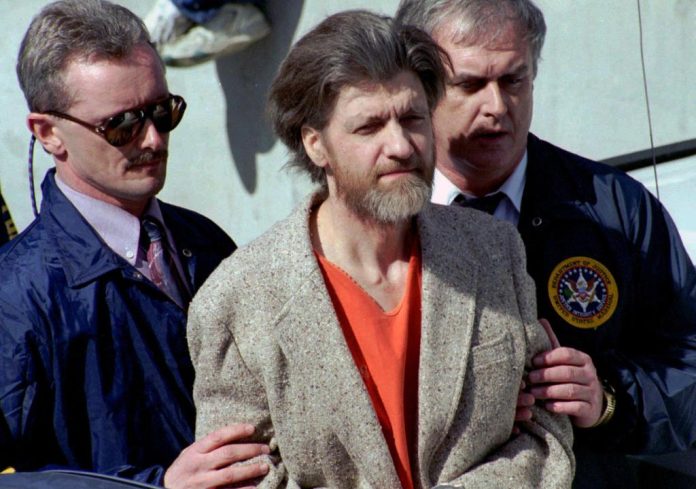
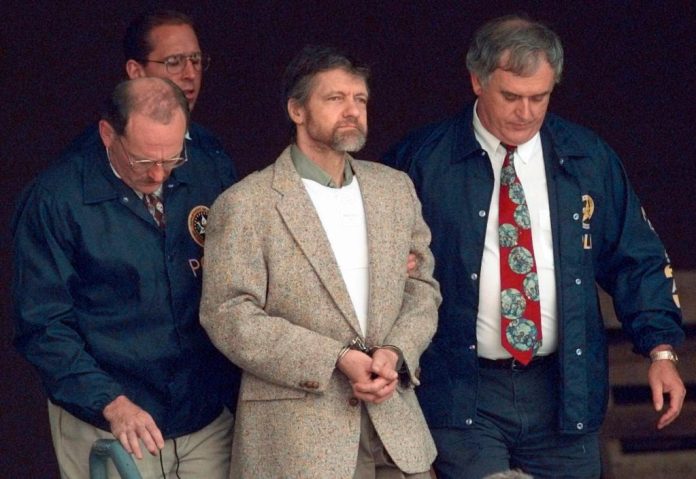
Ted Kaczynski, known as the “Unabomber,” who carried out a 17-year bombing campaign that killed three people and injured 23 others, died by suicide, four people familiar with the matter told The Associated Press.

Kaczynski, who was 81 and suffering from late-stage cancer, was found unresponsive in his cell at the Federal Medical Center in Butner, North Carolina around 12:30 a.m. on Saturday. Emergency responders performed CPR and revived him before he was transported to a hospital, where he was pronounced dead later Saturday morning, the people told the AP. They were not authorized to publicly discuss Kaczynski’s death and spoke to the AP on condition of anonymity.

Kaczynski’s death comes as the federal Bureau of Prisons has faced increased scrutiny in the last several years following the death of wealthy financier Jeffrey Epstein, who also died by suicide in a federal jail in 2019.

Kaczynski had been held in the federal Supermax prison in Florence, Colorado, since May 1998, when he was sentenced to four life sentences plus 30 years for a campaign of terror that set universities nationwide on edge. He admitted committing 16 bombings from 1978 and 1995, permanently maiming several of his victims.

A Harvard-educated mathematician, Kaczynski lived as a recluse in a dingy cabin in rural Montana, where he carried out a solitary bombing spree that changed the way Americans mailed packages and boarded airplanes.

His targets included academics and airlines, the owner of a computer rental store, an advertising executive and a timer industry lobbyist. In 1993, a California geneticist and a Yale University computer expert were maimed by bombs within the span of two days.

Two years later, he used the threat of continued violence to convince The New York Times and The Washington Post to publish his manifesto, a 35,000 word screed against modern life and technology, as well as damages to the environment.

The tone of the treatise was recognized by his brother, David, and David’s wife, Linda Patrik, who tipped off the FBI, which had been searching for the Unabomber for years in the nation’s longest, costliest manhunt.

Authorities in April 1996 found him in a small plywood and tarpaper cabin outside Lincoln, Montana, that was filled with journals, a coded diary, explosive ingredients and two completed bombs.

While awaiting trial, in 1998, Kaczynski attempted to hang himself with a pair of underwear. Though he was diagnosed by a psychiatrist as a paranoid schizophrenic, he was adamant that he wasn’t mentally ill. He eventually pleaded guilty rather than allow his attorneys to present an insanity defense.

Growing up in Chicago, Kaczynski skipped two grades before attending Harvard at age 16, where he published papers in prestigious mathematics journals.

His explosives were carefully tested and came in meticulously handcrafted wooden boxes sanded to remove possible fingerprints. Later bombs bore the signature “FC” for “Freedom Club.”

The FBI called him the “Unabomber” because his early targets seemed to be universities and airlines. An altitude-triggered bomb he mailed in 1979 went off as planned aboard an American Airlines flight; a dozen people aboard suffered from smoke inhalation.

During his decades in prison, Kaczynski maintained regular correspondence with the outside world, becoming an object of fascination – and even reverence – among those opposed to modern civilization.

“He’s turned into an iconic figure for both the far-right and far-left,” said Daryl Johnson, a domestic terrorism expert at the New Lines Institute, a nonprofit think tank. “He definitely stands out from the rest of the pack as far as his level of education, the meticulous nature in which he went about designing his bombs.”

___

This story corrects the last name of the expert in final paragraph to Johnson.

___

Balsamo reported from Miami.

AP Sources – Daily Press

0

By MICHAEL SISAK AND MIKE BALSAMO AND JAKE OFFENHARTZ

Ted Kaczynski, known as the “Unabomber,” who carried out a 17-year bombing campaign that killed three people and injured 23 others, died by suicide, four people familiar with the matter told The Associated Press.

Kaczynski, who was 81 and suffering from late-stage cancer, was found unresponsive in his cell at the Federal Medical Center in Butner, North Carolina around 12:30 a.m. on Saturday. Emergency responders performed CPR and revived him before he was transported to a hospital, where he was pronounced dead later Saturday morning, the people told the AP. They were not authorized to publicly discuss Kaczynski’s death and spoke to the AP on condition of anonymity.

Kaczynski’s death comes as the federal Bureau of Prisons has faced increased scrutiny in the last several years following the death of wealthy financier Jeffrey Epstein, who also died by suicide in a federal jail in 2019.

Kaczynski had been held in the federal Supermax prison in Florence, Colorado, since May 1998, when he was sentenced to four life sentences plus 30 years for a campaign of terror that set universities nationwide on edge. He admitted committing 16 bombings from 1978 and 1995, permanently maiming several of his victims.

A Harvard-educated mathematician, Kaczynski lived as a recluse in a dingy cabin in rural Montana, where he carried out a solitary bombing spree that changed the way Americans mailed packages and boarded airplanes.

His targets included academics and airlines, the owner of a computer rental store, an advertising executive and a timer industry lobbyist. In 1993, a California geneticist and a Yale University computer expert were maimed by bombs within the span of two days.

Two years later, he used the threat of continued violence to convince The New York Times and The Washington Post to publish his manifesto, a 35,000 word screed against modern life and technology, as well as damages to the environment.

The tone of the treatise was recognized by his brother, David, and David’s wife, Linda Patrik, who tipped off the FBI, which had been searching for the Unabomber for years in the nation’s longest, costliest manhunt.

Authorities in April 1996 found him in a small plywood and tarpaper cabin outside Lincoln, Montana, that was filled with journals, a coded diary, explosive ingredients and two completed bombs.

While awaiting trial, in 1998, Kaczynski attempted to hang himself with a pair of underwear. Though he was diagnosed by a psychiatrist as a paranoid schizophrenic, he was adamant that he wasn’t mentally ill. He eventually pleaded guilty rather than allow his attorneys to present an insanity defense.

___

Balsamo reported from Miami.

Virginia ramp-building organization celebrates building more than 100 lifelines for the community – Daily Press

0

FREDERICKSBURG (AP) — More than 100 times in the last four years, the lives of people like George and Brenda Ford have been changed by an act of kindness — along with the skillful placement of a truckload of boards.

Local volunteers with an organization called SAWs-Virginia heard that George Ford, 87, was unable to get out of his home after he had a stroke in September 2021. His wife had to arrange with two family members to help carry him and his wheelchair out of the house when he needed to go to physical therapy or doctors’ appointments, but she “felt very bad” knowing it disrupted their schedules.

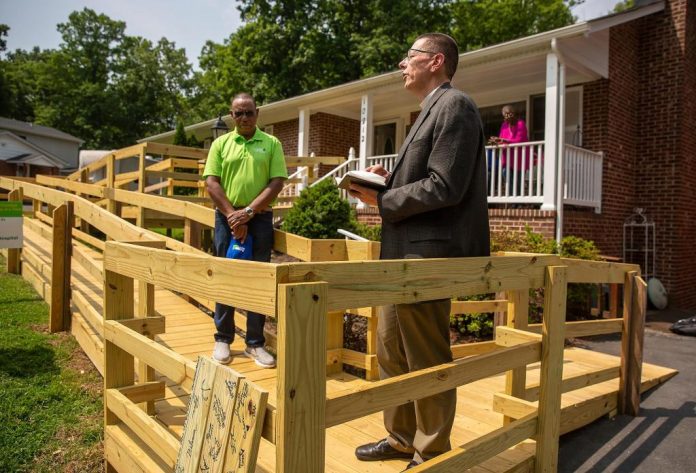
Then, SAWs, which stands for “Servants at Work,” built an 83-foot ramp that starts outside the front door of their Spotsylvania County home, takes a sharp left and runs down a graded slope in front of the porch, then turns left again and ends in the paved driveway.

Suddenly, the couple had their freedom again.

“Having this ramp is a lifesaver,” said Brenda Ford. “We don’t have to depend on anybody and mess up their schedule. This has made us very independent, so thank you so much.”

Even though his speech is somewhat slurred after the stroke, George Ford smiled at the wooden platform around him and thanked everybody for building “this beautiful ramp.”

Men and women in neon green shirts, as well as others in business–casual attire, gathered in the Ford’s front yard to celebrate the 100th wheelchair ramp built since the local SAWs chapter began in May 2019.

The volunteers actually hit the 100-mark in January, but Charlie Russell, executive director, didn’t think that was the best time for an outdoor celebration.

His group invited many of those who have supported the effort, with donations, prayers and sweat equity, to share the fruits of their labor — and some of the 100 cupcakes provided by the Blue Star Mothers of Fredericksburg — as part of the celebration.

The Fords watched the activities from their shaded perch on the porch. Neither expected a ramp as “humongous” as this one, she said. But SAWs sent engineers over twice, part of various teams who help design the ramps or put 8-foot sections together off-site, then assemble them during a six-hour or so effort on the property.

The Ford ramp had to be that long because of the slope and design of the front yard. Workers had to thread the needle, Russell said, building it between an existing flagpole on one side and lantern on the other.

“This one was particularly problematic,” said Ben Raterman, a retired engineer from the Dahlgren Navy base who worked on the design.

But the team figured it out, as they’ve done more than 100 times for veterans, elderly residents, the disabled or those in financial need in Fredericksburg and the counties of Caroline, King George, Spotsylvania and Stafford.

Russell came to Rev. Joseph Hensley Jr. of St. George’s Episcopal Church in 2018, a few months after moving to the area, and told him there was a need for such a ministry locally. Russell had worked with the national SAWs organization in Indiana and said he couldn’t be the one to run the Fredericksburg-based group.

“We see how that worked,” Russell said.

He’s hoping to step down this year, saying that the organization has outgrown him, and speakers praised his efforts. Jim and Vicki Lewis, members of the Fredericksburg Rotary Club, encouraged their organization to support SAWs, and Jim Lewis initially served on the board of directors.

“From there on, it’s grown unbelievably,” he said. “I can’t say enough for Charlie, he’s thrown his heart into this and sacrificed a lot of time. I wish him well finding a replacement because replacing him’s gonna be pretty hard.”

SAWs also has gotten support from The Community Foundation of the Rappahannock River Region, where Casey Hu, donor services manager, is constantly looking for grants to help pay for ramps and materials, Russell said.

Mary Washington Hospital Foundation, led by Xavier Richardson, also has donated funds, given that one of its top community priorities is making sure people have access to health care, said Richardson.

“There are many people in our community who are not fortunate enough to have persons who can transport them, or sometimes they may be limited by their inability to get out of their own homes,” Richardson said. “These ramps increase their accessibility.”

SAWs also has worked with Margaret Kenerly, a social worker with Mary Washington Home Health. She’s referred clients to Russell who were like the Fords, basically trapped in their homes after an injury or illness.

“Ramps are such a simple fix but they can be expensive and cost-prohibitive,” she said. Turning to the green shirts in the audience, Kenerly said a ramp does more than let a homeowner get out of the house again.

“It’s improving our patients’ medical, physical and mental health,” she said. “Thank you to all the volunteers that build that lifeline. Your clients that I meet in the home really appreciate it.”

One of the best parts about the SAWs ramps is that they’re built to be movable, said Sandy Wiseman, one of several project managers for the group. Already, the organization has removed some of the first ramps built, because they were no longer needed for various reasons, and reinstalled them elsewhere, Raterman said.

Hensley saw parallels between that and SAWs itself.

“SAWs is about giving people access, the freedom to move in and out of their homes and responding to the need at the time,” he said.

Elevated section of heavily traveled I-95 collapses in Philadelphia – Daily Press

0

By RON TODT (Associated Press)

PHILADELPHIA (AP) — An elevated section of Interstate 95 collapsed early Sunday in Philadelphia after a vehicle caught fire, closing the main north-south highway on the East Coast and threatening to upend travel in parts of the densely populated Northeast, authorities said.

Transportation officials warned of extensive delays and street closures and urged drivers to avoid the area. Early reports indicated that the vehicle may have been a tanker truck, but officials could not immediately confirm that. The fire was reported to be under control.

Video from the scene showed a massive concrete slab had fallen from I-95 onto the road below in northeast Philadelphia. There were no immediate reports of injuries.

The northbound lanes of I-95 were gone, and the southbound lanes were “compromised” due to heat from the fire, said Derek Bowmer, battalion chief of the Philadelphia Fire Department. Runoff from the fire or perhaps broken gas lines were causing explosions underground, he added.

Mark Fusetti, a retired Philadelphia police sergeant, said he was driving south toward the city’s airport when he noticed thick plumes of black smoke rising over the highway. As he passed the fire, the road beneath began to “dip,” creating a noticeable depression that was visible in video he took of the scene, he said.

He saw traffic in his rearview mirror come to a halt. Soon after, the northbound lanes of the highway crumbled.

“It was crazy timing,” Fusetti said. “For it to buckle and collapse that quickly, it’s pretty remarkable.”

Officials were also concerned about the environmental effects of runoff into the nearby Delaware River.

“Today’s going to be a long day. And obviously, with 95 northbound gone and southbound questionable, it’s going to be even longer than that,” said Dominick Mireles, director of Philadelphia’s Office of Emergency Management.

Heavy construction equipment would be required to start to remove the debris, he said.

Officials planned to launch a drone to assess the damage.

The fire was strikingly similar to another blaze in Philadelphia in March 1996, when an illegal tire dump under I-95 caught fire, melting guard rails and buckling the pavement.

The highway was closed for several weeks, and partial closures lasted for six months. Seven teenagers were charged with arson. The dump’s owner was sentenced to seven to 14 years in prison and ordered to pay $3 million of the $6.5 million repair costs, The Philadelphia Inquirer reported.

More recently in Atlanta, a massive fire collapsed an elevated portion of Interstate 85, shutting down the heavily traveled route through the heart of the city in March 2017. A homeless man was accused of starting the blaze, but federal investigators said in a report that the state transportation department’s practice of storing combustible construction materials under the highway increased the risk of fire.

___

Associated Press Writer Jake Offenhartz in New York contributed to this report.

Fire under I-95 in Philadelphia causes section to collapse, closing interstate in both directions – Daily Press

0

PHILADELPHIA (AP) — A large vehicle fire under an elevated section of Interstate 95 in Philadelphia caused a huge portion of the interstate to collapse, closing the highway in both directions, authorities said.

Video from the scene showed a massive slab covering an entire section of the northbound lanes collapsed onto the surface roadway in northeast Philadelphia. Officials said there were no immediate reports of injuries.

Capt. Derek Bowmer of the Philadelphia fire department said emergency crews responding shortly before 6:30 a.m. Sunday to an accident report found heavy fire from a vehicle or vehicles. Early reports indicated that the vehicle may have been a tanker truck, but officials said that hadn’t yet been confirmed. The fire was reported to be under control.

Bowmer said the northbound lanes were gone and the southbound lanes were “compromised” due to heat from the fire. He also said runoff from the fire or perhaps compromised gas lines were causing explosions underground. Officials said they were also concerned about the environmental impacts of runoff into the nearby Delaware River.

“Today’s going to be a long day. And obviously, with 95 northbound gone and southbound questionable, it’s going to be even longer than that,” said Dominick Mireles, director of Philadelphia’s Office of Emergency Management. Heavy construction equipment would be required to start to remove the debris, he said.

The emergency management office said other streets were closed for the response and urged people to avoid the area. They also said they planned to launch a drone to assess the damage.

___

This story corrects the spelling of official’s first name in 3rd paragraph.

Want to help someone? Listen to them first – Daily Press

0

When people begin to talk about their story, assume it, and reflect on it, (they) find meaning and significance in what they have lived through. … This is what allows us to go forward in life.” ~ Martha Cabrera, Living and Surviving in a Multiply-wounded Country

This is just one movement in the cycle of healing from trauma and building resilience. It is how we begin the process of making meaning out of what happened. It is a series of fluid movements that include spaces and practices that help us mourn and grieve, name fears, learn how to accept losses, memorialize what we must (through rituals, ceremonies, and artifacts), reflect together on any root causes of the trauma (traumatic events, various systems of violence, historical harms, injustices), and acknowledge the multiple stories present in our community. Some will understand and embrace these movements, some will not. But, it is important to press on and create space for these movements to unfold within a community.

Trauma can be understood as an emotional wounding. Traumatic stress can be understood as lacking any form of effective control or power in the midst of vulnerability and uncertainty where life feels destabilized or threatened.

Fred Liggin

In trauma-responsive care, there are four pillars critical to diminishing traumatic stress, two of which are voice and choice. As I define it, voice is the facilitation of a person’s self-directed power of the will to bring into time and space the feelings and thoughts that are provoked by an outside circumstance and internalized. If these feelings and thoughts are restricted or left as internalized realities, they can become a form of stress that activates neurochemical reactions with physiological consequences (ever had a stress headache?). At worse, in time, they can create cycles of varied forms of violence, inward or outward, not just as violence in physical forms, but violence in terms of emotion, relational, verbal, or self-harm. Remember Dr. King’s words when he said, “Riots are the language of the unheard?” When pain is not given a voice it turns to violence. But when pain is given a voice it turns it turns to perseverance. This perseverance becomes resilience.

When voice is reclaimed and re-centered, it becomes a form of power that brings into the open what is hidden and offers a sense of stability amidst vulnerability. When voice is reclaimed and re-centered in a community, it can create relational connections and the new possibilities of new choices. It naturally reveals where belonging and inclusion can be found. We are reminded that we are not alone in the harms or vulnerabilities and that we still have some sense of influence in the situation. But, when voice feels unheard or dismissed, it can be distressing, threatening and compound the vulnerability and lack of stability.

Creating space for voices to be reclaimed, re-centered and heard is something I’ve experienced in different ways within the church I serve. It has been life-giving and shaped who we are and are becoming, even in all the tension it has sometimes created. It is a messy and bumpy process, but one I believe God wants to guide. It is critical we press on if we are to become a community where hospitality and compassion are present and human flourishing possible.

Judith Herman in her work, Trauma and Recovery, says, “No intervention that takes power away from the survivor can possibly foster her recovery, no matter how much it appears to be in her immediate best interest.”

Too many times we want to do something for someone who is hurting. It is a beautiful and noble desire. But anything we do must begin with simply being present. By presence I mean a kind of with-ness committed to solidarity and compassionate listening to another person’s story or experience of trauma without judging it. Sometimes the first expression of a survivor’s power is the strength and courage to give their experience a voice. When we demean, dismiss or devalue another’s voiced experience, we take their power away and do harm.

All of this is a process. I am still learning how to listen and be with them in their story. I am still learning how to de-center myself. I am still learning to resist the urge to justify another person’s experience or over-identify with it. In all of this learning, I have discovered how precious it is to be invited into these stories and hold space for all that is shared in whatever way I can. Presence, solidarity, compassionate listening without judging — all of us can do this for someone living through traumatic stress or in trauma-response. We can create space where healing becomes just a little more possible for them –- for all of us. Then, whatever needs the harms or trauma created, we can find a way forward as neighbors who share a common humanity and together do the work of repair.

* The information contained in this article is for informational purposes only and is not intended as medical or therapeutic advice.

The Rev. Fred Liggin is one of the pastors at Williamsburg Christian Church and founder & co-executive director of Faith Community Development & Training with 3e Restoration Inc.

What a trip: Israel – Daily Press

0

Israel / submitted by Israel Zoberman of Virginia Beach

I was in Haifa, Israel, in early April for the funeral of my beloved mom, Chasia, a Ukrainian Holocaust survivor who was a symbol of love and sacrifice and who died at age 102. In the photo is a poster proclaiming the forthcoming celebration of the 75th anniversary of the state of Israel, with performances throughout greater Haifa.

israel.travel

Share your adventure Tell us about one favorite part — a restaurant, a hike, a monument, a hotel room — of one of your trips. Day trips, too. Submit a high resolution horizontal photo and a description of not more than 125 words to [email protected]. Include the city where you live.