Home Blog Page 159

George Floyd’s killing capped years of violence, discrimination by Minneapolis police, DOJ says – Daily Press

0

By JIM SALTER and MARK VANCLEAVE (Associated Press)

MINNEAPOLIS (AP) — The Justice Department on Friday issued a withering critique of Minneapolis police, alleging that they systematically discriminated against racial minorities, often violated constitutional rights and disregarded the safety of people in custody for years before George Floyd was killed.

The report was the result of a sweeping two-year probe, and it confirmed many of the citizen complaints about police conduct that emerged after Floyd’s 2020 death. The investigation found that Minneapolis officers used excessive force, including “unjustified deadly force,” and violated the rights of people engaged in constitutionally protected speech.

The investigation also concluded that both police and the city discriminated against Black and Native American people and those with “behavioral health disabilities.”

“We observed many MPD officers who did their difficult work with professionalism, courage and respect,” Attorney General Merrick Garland told a news conference in Minneapolis. “But the patterns and practices we observed made what happened to George Floyd possible.”

Garland said officers routinely disregarded the safety of people in custody, noting numerous examples in which someone complained that they could not breathe, only to have officers reply with a version of “You can breathe. You’re talking right now.”

Police “used dangerous techniques and weapons against people who committed at most a petty offense and sometimes no offense at all,” the report said. Officers “used force to punish people who made officers angry or criticized the police.”

Police also “patrolled neighborhoods differently based on their racial composition and discriminated based on race when searching, handcuffing or using force against people during stops,” according to the report.

As a result of the investigation, the city and the police department agreed to a deal known as a federal consent decree, which will require reforms to be overseen by an independent monitor and approved by a federal judge. That arrangement is similar to reform efforts in Seattle, New Orleans, Baltimore and Ferguson, Missouri.

Police Chief Brian O’Hara said his agency was committed to creating “the kind of police department that every Minneapolis resident deserves.”

Mayor Jacob Frey acknowledged the work ahead.

“We understand that change is non-negotiable,” Frey said. “Progress can be painful, and the obstacles can be great. But we haven’t let up in the three years since the murder of George Floyd.”

The scathing report reflected Garland’s efforts to prioritize civil rights and policing nationwide. Similar investigations of police departments have been undertaken in Louisville, Phoenix and Memphis, among other cities.

The Minneapolis investigation was launched in April 2021, a day after former officer Derek Chauvin, who is white, was convicted of murder and manslaughter in the killing of Floyd, who was Black.

Floyd repeatedly said he couldn’t breathe before going limp as Chauvin pressed his knee into Floyd’s neck for 9 1/2 minutes. The killing was recorded by a bystander and sparked months of mass protests as part of a broader national reckoning over racial injustice.

The Justice Department reviewed police practices dating back to 2016, and found that officers sometimes shot at people without determining whether there was an immediate threat.

Officers also used neck restraints like the one Chauvin used on Floyd nearly 200 times from Jan. 1, 2016 to Aug. 16, 2022, including 44 instances that did not require an arrest. Some officers continued to use neck restraints after they were banned following Floyd’s killing, the report said.

The investigation found that Black drivers in Minneapolis are 6.5 times more likely to be stopped than whites, and Native American drivers are 7.9 times more likely to be pulled over. And police often retaliated against protesters and journalists covering protests, the report found.

The city sent officers to behavioral health-related 911 calls, “even when a law enforcement response was not appropriate or necessary, sometimes with tragic results,” according to the report.

The findings were based on reviews of documents, body camera videos, data provided by the city and police, and rides and conversations with officers, residents and others, the report said.

The report noted that police are now prohibited from using neck restraints like the one that killed Floyd. Officers are no longer allowed to use some crowd control weapons without permission from the chief. “No-knock” warrants were banned after the 2022 death of Amir Locke.

The city has also launched a program in which trained mental health professionals respond to some calls rather than police.

The Justice Department is not alone in uncovering problems.

A similar investigation by the Minnesota Department of Human Rights found “significant racial disparities with respect to officers’ use of force, traffic stops, searches, citations, and arrests.” It criticized “an organizational culture where some officers and supervisors use racist, misogynistic and disrespectful language with impunity.”

The federal report recommends 28 “remedial” steps to improve policing as a prelude to the consent decree. Garland said the steps “provide a starting framework to improve public safety, build community trust and comply with the constitution and federal law.”

The mayor said city leaders want a single monitor to oversee both the federal plan and the state agreement to avoid having “two different determinations of whether compliance has been met or not. That’s not a way to get to clear and objective success.”

Several police departments in other cities operate under consent decrees, which require agencies to meet specific goals before federal oversight is removed, a process that often takes many years at a cost of millions of dollars.

Floyd, 46, was arrested on suspicion of passing a counterfeit $20 bill for a pack of cigarettes at a corner market. He struggled with police when they tried to put him in a squad car, and though he was already handcuffed, they forced him on the ground.

Chauvin was sentenced to 22 1/2 years for murder. He also pleaded guilty to a federal charge of violating Floyd’s civil rights and was sentenced to 21 years in that case. He is serving those sentences in Tucson, Arizona.

___

Salter reported from O’Fallon, Missouri. Associated Press Writer Lindsay Whitehurst in Washington contributed to this report.

___

Find AP’s full coverage of the killing of George Floyd at: https://apnews.com/hub/death-of-george-floyd


Heather Mack, convicted in Bali of killing mom and stuffing body in suitcase, pleads guilty in US – Daily Press

0

By MICHAEL TARM (AP Legal Affairs Writer)

CHICAGO (AP) — An American woman accused of helping to kill her mother and stuffing her body in a suitcase during a luxury vacation to Bali nine years ago changed her plea to guilty in Chicago federal court on Friday. Her lawyer said later she hoped to avoid a sentence of life behind bars by doing so.

Heather Mack pleaded guilty to one count of conspiring to kill Sheila von Wiese-Mack with her then-boyfriend to get access to a $1.5 million trust fund. Mack, then 18 and pregnant, covered her mom’s mouth in a hotel room while Tommy Schaefer bludgeoned her with a fruit bowl, prosecutors say.

The change-of-plea hearing is the latest chapter in a story that has garnered international attention in part because of photographs of the suitcase, which seemed too small to hold an adult woman’s body.

Mack, now 27, appeared calm and confident as she stood in orange jail garb and orange slippers, occasionally brushing her hair from her eyes as she answered the judge’s questions — saying she knew she was giving up her right to remain silent at the hearing.

After Mack paused before saying she understood the plea agreement hammered out with prosecutors in preceding weeks, U.S. District Judge Matthew Kennelly noted the hesitation and asked again if she was sure she fully understood it.

“Yes, your honor,” she responded.

Two other charges against Mack would be dropped at the end of the sentencing process. Schaefer was convicted of murder and remains in Indonesia, where he is serving an 18-year sentence. He is charged in the same U.S. indictment.

After the hearing, relatives of Wiese-Mack issued a statement saying they were “very relieved that the mastermind of Sheila’s murder admitted her guilt today.”

“We will continue to be our sister Sheila’s voice throughout the sentencing process to ensure that real justice is served,” they said.

The plea agreement calls for a sentence of no more than 28 years, though Kennelly told Mack he hasn’t yet decided whether to accept that sentencing cap. If he rejects it, Mack could withdraw her plea, and either hold fresh plea discussions or go to trial. The judge set a Dec. 18 sentencing date.

A key issue that wasn’t decided in talks between prosecutors and the defense prior to Friday’s hearing was whether the years Mack spent in prison in Indonesia for a 2015 conviction of being an accessory to Wiese-Mack’s murder would be subtracted from whatever U.S. sentence is imposed by Kennelly.

Mack, who lived with her mother in suburban Chicago’s Oak Park, served seven years of her 10-year Indonesian sentence. She was deported in 2021 and U.S. agents arrested her immediately after her plane landed at Chicago’s O’Hare International Airport.

Mack’s lawyer, Michael Leonard, told reporters after the hearing that his client’s decision to plead guilty was motivated in part by wanting to avoid a sentence of life in prison — something that would be off the table under the plea deal, if the judge formally OKs it.

In arguing for leniency at sentencing, Leonard said he would present evidence that Mack has matured and that she was “a fantastic mother” to her and Schaefer’s daughter, who she gave birth to in Indonesia after her arrest.

“She is certainly not the person she was,” Leonard said. “She has grown as a human.”

Her then-six-year-old daughter was with her when Mack was arrested at the Chicago airport. The girl was later placed with a relative after a custody fight.

Leonard said Mack was able to spend time with her daughter while serving her sentence in Indonesia and that her child was now her top priority.

“The most important thing for her is reunification with her daughter,” he said.

In successfully arguing against bond for Mack in 2021, prosecutors said she and Schaefer had planned the killing for months. They also said they had video evidence that showed both Mack and Schaefer trying to get the suitcase with Wiese-Mack’s body inside it into an Indonesian taxicab.

Some relatives of Wiese-Mack had complained that the Indonesian sentence was far too lenient. In filings, prosecutors said the U.S. charges don’t violate constitutional prohibitions against prosecuting someone twice for the same acts, including because the U.S. charges allege conspiracy and other acts not included in the Indonesian case.

Justice Department accuses Minneapolis police of rights violations after George Floyd’s killing – Daily Press

0

By JIM SALTER and MARK VANCLEAVE (Associated Press)

MINNEAPOLIS (AP) — The Justice Department alleged Friday that Minneapolis police have systematically discriminated against Black and Native American people for years and often violated constitutional rights following a sweeping investigation that began after George Floyd was killed.

The two-year probe found that Minneapolis officers used excessive force, including “unjustified deadly force,” and violated the rights of people engaged in constitutionally protected speech. The investigation also found that both police and the city discriminated against people with “behavioral health disabilities” when officers are called for help.

“We observed many MPD officers who did their difficult work with professionalism, courage and respect,” Attorney General Merrick Garland told a news conference in Minneapolis. “But the patterns and practices we observed made what happened to George Floyd possible.”

Garland said officers routinely disregarded the safety of people in their custody, noting numerous situations in which a person in custody complained that they could not breathe, and officers replied with a version of “You can breathe. You’re talking right now.”

The report included allegations that police “used dangerous techniques and weapons against people who committed at most a petty offense and sometimes no offense at all.” Officers “used force to punish people who made officers angry or criticized the police.”

Police also “patrolled neighborhoods differently based on their racial composition and discriminated based on race when searching, handcuffing or using force against people during stops,” the report said.

As a result of the investigation, the city and the police department agreed to a deal known as a federal consent decree, which will require reforms to be overseen by an independent monitor and approved by a federal judge. That arrangement is similar to reform efforts in Seattle, New Orleans, Baltimore and Ferguson, Missouri.

Police Chief Brian O’Hara, who led Newark, New Jersey, police through a consent decree, said the Minneapolis department was committed to creating “the kind of police department that every Minneapolis resident deserves.”

Mayor Jacob Frey acknowledged the work that lay ahead.

“We understand that change is non-negotiable,” Frey said. “Progress can be painful, and the obstacles can be great. But we haven’t let up in the three years since the murder of George Floyd.”

The investigation was launched in April 2021, a day after former officer Derek Chauvin, who is white, was convicted of murder and manslaughter in the May 25, 2020, killing of Floyd, who was Black.

Floyd repeatedly said he couldn’t breathe before going limp as Chauvin knelt on his neck for 9 1/2 minutes. The killing was recorded by a bystander and sparked months of mass protests as part of a broader national reckoning over racial injustice.

Garland also said the report found that Chauvin used excessive force on other people on multiple occasions, and fellow officers stood by and did not stop him.

The report found that the city sent officers to behavioral health-related 911 calls, “even when a law enforcement response was not appropriate or necessary, sometimes with tragic results. These actions put MPD officers and the Minneapolis community at risk.”

The findings were based on reviews of documents and incident files; observation of body-worn camera videos; data provided by the city and police; and ride-alongs and conversations with officers, residents and others, the report says.

Federal investigators acknowledged that the city and Minneapolis police have already begun reforms.

The report noted that police are now prohibited from using neck restraints like the one Chauvin used in killing Floyd. Officers are no longer allowed to use some crowd control weapons without permission from the chief. And “no-knock” warrants were banned after the 2022 death of Amir Locke.

The city also has launched a “promising” behavioral health response program in which trained mental health professionals respond to some calls rather than police.

The Justice Department is not alone in its findings of problems.

A similar investigation by the Minnesota Department of Human Rights led to a “court-enforceable settlement agreement” to address the long list of problems identified in the report, with input from residents, officers, city staff and others. Frey and state Human Rights Commissioner Rebecca Lucero signed the agreement in March.

The state investigation, which concluded in April 2022, found “significant racial disparities with respect to officers’ use of force, traffic stops, searches, citations, and arrests.” And it criticized “an organizational culture where some officers and supervisors use racist, misogynistic, and disrespectful language with impunity.”

Lucero said the legally binding agreement requires the city and the police department to make “transformational changes” to fix the organizational culture of the force, noting it could serve as a model for how cities, police departments and community members elsewhere work to stop race-based policing.

The report recommends 28 “remedial” steps to improve policing as a prelude to the consent decree. Garland said the steps “provide a starting framework to improve public safety, build community trust and comply with the constitution and federal law.”

The mayor said city leaders want a single monitor to oversee both the federal plan and the state agreement to avoid having “two different determinations of whether compliance has been met or not. That’s not a way to get to clear and objective success.”

Several police departments in other cities operate under consent decrees for alleged civil rights violations. A consent decree requires agencies to meet specific goals before federal oversight is removed, a process that often takes many years at a cost of millions of dollars.

Floyd, 46, was arrested on suspicion of passing a counterfeit $20 bill for a pack of cigarettes at a corner market. He struggled with police when they tried to put him in a squad car, and though he was already handcuffed, they forced him on the ground.

Chauvin was sentenced to 22 1/2 years for murder. He also pleaded guilty to a federal charge of violating Floyd’s civil rights and was sentenced to 21 years in that case. He is serving the sentences concurrently in Tucson, Arizona.

___

Salter reported from O’Fallon, Missouri.

___

Find AP’s full coverage of the killing of George Floyd at: https://apnews.com/hub/death-of-george-floyd

After George Floyd’s killing, DOJ probe finds Minneapolis police show pattern of violating rights – Daily Press

0

By JIM SALTER and MARK VANCLEAVE

MINNEAPOLIS (AP) — The Justice Department has found that Minneapolis police engaged in a pattern of violating constitutional rights and discriminating against Black and Native American people following an investigation prompted by the killing of George Floyd.

The sweeping two-year civil rights investigation concluded that systemic problems in the Minneapolis Police Department “made what happened to George Floyd possible,” the report said.

The investigation found that Minneapolis officers used excessive force, including “unjustified deadly force,” and violated the rights of people engaged in constitutionally protected speech.

The probe also found that both Minneapolis police and the city of Minneapolis discriminated against people with “behavioral health disabilities” when officers are called for help.

The “pattern or practice” investigation was launched in April 2021, a day after former officer Derek Chauvin, who is white, was convicted of murder and manslaughter in the May 25, 2020, killing of Floyd, who was Black.

Floyd repeatedly said he couldn’t breathe before going limp as Chauvin knelt on his neck for 9 1/2 minutes. The killing was recorded by a bystander and sparked months of mass protests as part of a broader national reckoning over racial injustice.

“For years, MPD used dangerous techniques and weapons against people who committed at most a petty offense and sometimes no offense at all,” the report states. “MPD used force to punish people who made officers angry or criticized the police. MPD patrolled neighborhoods differently based on their racial composition and discriminated based on race when searching, handcuffing, or using force against people during stops.”

The report found that the city sent officers to behavioral health-related 911 calls, “even when a law enforcement response was not appropriate or necessary, sometimes with tragic results. These actions put MPD officers and the Minneapolis community at risk.”

The findings were based on reviews of documents and incident files; observation of body-worn camera videos; data provided by the city and police; and ride-alongs and conversations with officers, residents and others, the report says.

Federal investigators acknowledged that the city and Minneapolis police have already begun reforms.

The report notes that police policy now prohibits neck restraints like the one Chauvin used in killing Floyd. Officers are no longer allowed to use some crowd control weapons without permission from the chief. And “no-knock” warrants were banned after the 2022 death of Amir Locke.

The city also has launched a “promising” behavioral health response program in which trained mental health professionals respond to some calls rather than police.

The Justice Department isn’t alone in its findings of problems.

A similar investigation by the Minnesota Department of Human Rights led to a “court-enforceable settlement agreement” to address the long list of problems identified in the report, with input from residents, officers, city staff and others. Frey and state Human Rights Commissioner Rebecca Lucero signed the agreement in March.

The state investigation, which concluded in April 2022, found “significant racial disparities with respect to officers’ use of force, traffic stops, searches, citations, and arrests.” And it criticized “an organizational culture where some officers and supervisors use racist, misogynistic, and disrespectful language with impunity.”

Lucero said the legally binding agreement requires the city and the police department to make “transformational changes” to fix the organizational culture of the force, noting it could serve as a model for how cities, police departments and community members elsewhere work to stop race-based policing.

The federal investigation could have prompted a separate but similar court-enforceable agreement, known as a consent decree, that would overlap the settlement with the state.

Several police departments in other cities operate under consent decrees for alleged civil rights violations. A consent decree requires agencies to meet specific goals before federal oversight is removed, a process that often takes many years at a cost of millions of dollars.

Floyd, 46, was arrested on suspicion of passing a counterfeit $20 bill for a pack of cigarettes at a corner market. He struggled with police when they tried to put him in a squad car, and though he was already handcuffed, they forced him on the ground. As Chauvin pressed his knee against Floyd’s neck, J. Alexander Kueng held Floyd’s back, Thomas Lane held Floyd’s feet and Tou Thao kept bystanders back.

Chauvin was sentenced to 22 1/2 years for murder. He also pleaded guilty to a federal charge of violating Floyd’s civil rights and was sentenced to 21 years in that case. He is serving the sentences concurrently at the Federal Correctional Institution in Tucson, Arizona.

Kueng, Lane and Thao were convicted of federal charges in February 2022. All three were convicted of depriving Floyd of his right to medical care, and Thao and Kueng also were convicted of failing to intervene to stop Chauvin during the killing. Lane and Kueng have since pleaded guilty to a state count of aiding and abetting second-degree manslaughter. In exchange, counts of aiding and abetting murder were dropped.

Lane, who is white, is serving his 2 1/2-year federal sentence at a facility in Colorado. He is serving a three-year state sentence at the same time. Kueng, who is Black, is serving a three-year federal sentence in Ohio, while also serving a 3 1/2-year state sentence.

Thao, who is Hmong American, received a 3 1/2-year federal sentence. In May, the judge in the state case found him guilty of aiding and abetting manslaughter. Thao had said it “would be lying” to have pleaded guilty and he agreed to let the judge decide the case. The judge set sentencing for Aug. 7.

___

Salter reported from O’Fallon, Missouri.

Outer Banks wild horse dies after encounter with stallion – Daily Press

0

An Outer Banks wild horse died of an apparent broken neck Thursday evening after an encounter with an aggressive stallion.

Around 5 p.m., witnesses in Carova saw a stallion chasing and trying to breed with the horse, a 12-year-old wild mare called Caroline.

The mare then fell to the ground and died “nearly instantaneously,” said Meg Puckett of the Corolla Wild Horse Fund, which manages the herd of about 100 Spanish mustangs roaming the northern beaches in Currituck County.

The herd veterinarian performed a field necropsy and found that Caroline’s neck had been broken. She showed no other injuries or abnormalities.

“Blood was taken and will be processed but we do not anticipate finding any abnormalities there either,” Puckett said.

Caroline’s injury was in line with the behavior witnesses reported and appeared to be the result of natural wild horse behavior.

“Caroline’s death should serve as yet another reminder of just how truly wild and dangerous these horses are, especially when hormones are involved,” Puckett said.

Kari Pugh, [email protected]

Ray Lewis III, former Virginia Union player and son of NFL Hall of Famer Ray Lewis, dies at 28 – Daily Press

0

Ray Anthony Lewis III, a son of Ravens legend Ray Lewis, died Thursday, one of his brothers said on social media. He was 28.

Rahsaan Lewis said on Instagram that he prayed his older brother was “at peace now,” and that he “won’t ever have the words” to describe the loss of his sibling.

“Be our guardian,” he wrote. “I promise I’ll make you smile and be proud.”

Along with his younger brother, Lewis III followed in the footsteps of his father, who is credited with forever changing the position of NFL middle linebacker throughout his 17-year career with the Ravens that ended with his retirement from football in 2013.

Lewis III attended Lake Mary Prep in Florida, rushing for 5,283 yards and 53 touchdowns in three seasons, according to MaxPreps, and telling The Baltimore Sun in 2010 that he had a dream of playing in the NFL, as well as aspirations of “making a difference in people’s lives outside the football field.”

He never played a down during his freshman year at the University of Miami, where his father was a consensus All-American before being drafted in the first round by the Ravens ahead of their inaugural season in 1996.

Lewis III transferred to Coastal Carolina University in 2015 and later played at Virginia Union University. His coach at VUU, Mark James, told The Sun on Thursday night: “Ray was a tremendous young man who played with the spirit of a lion. He was a great asset to the Virginia Union family. He will always be a Panther. May God bless his family.”

Former Ravens quarterback Robert Griffin III tweeted Thursday night: “Send a prayer up for Ray Lewis and his family after the passing of his son. Ray Lewis III was only 28 years old.”

1 person seriously wounded in overnight shooting in Virginia Beach – Daily Press

0

A person was left with serious injuries after being shot in Virginia Beach early Friday.

Virginia Beach Police reported on social media after 12:30 a.m. that one person had been transported to a hospital with serious injuries after a shooting in the 700 block of Garfield Avenue.

That’s in a residential area off of Rosemont Road, north of the intersection with Holland Road.

No suspect is in custody, police said.

Police provided no other details in the social media post, and the department’s press office didn’t immediately provide a response to questions from The Virginian-Pilot about the shooting.

Peter Dujardin, 757-247-4749, [email protected]

Florida executes murderer and rapist Duane Owen

0

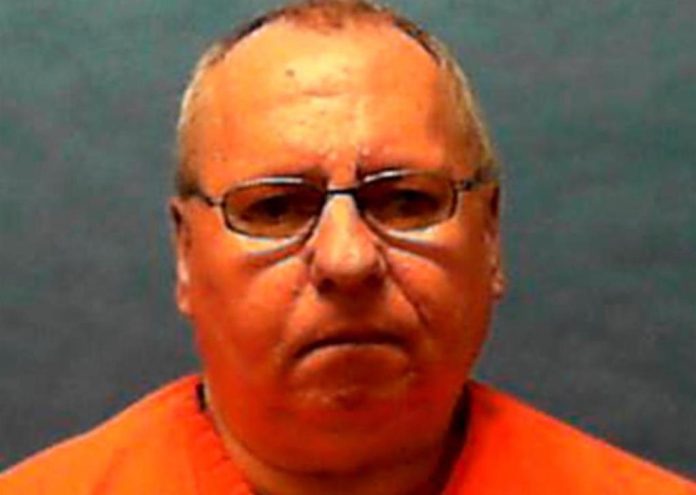
STARKE — Duane Owen was executed Thursday for killing a 14-year-old babysitter and a 38-year-old mother of two in separate attacks months apart in 1984 while children were sleeping in the homes he targeted in Palm Beach County.

Owen was pronounced dead at 6:14 p.m. after a lethal injection at Florida State Prison, according to Gov. Ron DeSantis’ office. One of Florida’s longest-held death row inmates, Owen was 23 at the time of the attacks and 62 when he was executed.

He was sentenced to death for the March 24, 1984, rape and stabbing attack on Karen Slattery, 14, in Delray Beach and for the rape and killing of Georgianna Worden, 38, in May 1984, in Boca Raton.

Owen attacked two other women in Palm Beach County who survived. All four attacks occurred just before and after Owen’s 23rd birthday. Of the more than 290 people on Florida’s death row, Owen was one of the longest held there.

Besides his death sentences, he also received six life sentences.

Owen awoke at 7 a.m. Thursday and received no visitors, prison officials said. His final meal included a bacon cheeseburger with no bun, onion rings and a milkshake. Asked if he wanted to make a final statement, he said “No.”

It was the state’s Florida’s fourth execution this year after none since 2019. Republican Gov. Ron DeSantis signed each of the death warrants in the months before announcing he is running for president.

There were 20 witnesses and eight media representatives in a small, silent, windowless observation room at Florida State Prison.

Slattery was repeatedly stabbed and raped in a home in Delray while two children in her care were sleeping.

Two months later, Worden was sleeping in her Boca home when Owen struck her several times with a hammer and raped her. One of Worden’s children found her body the next morning while getting ready for school, according to court records.

Slattery‘s younger sister, Debbi Johnson, watched Owen die. The Monroe County Sheriff’s deputy said the execution brings closure to her family, but it took much too long.

“Thirty-nine years is too long. Way too long,” said Johnson, 49, of Islamorada.  “We know who did it. There was no reason that it needed to take this long.”

Karen Slattery, left, was murdered when she was 14 years old. Debbi Johnson, right, was 10 years old when Duane Owen murdered her sister. (Courtesy/Debbi Johnson)

Owen’s lawyers argued that he shouldn’t be executed on grounds of insanity. The state Supreme Court rejected his latest appeal last week and the U.S. Supreme Court rejected it Wednesday.

A defense psychologist testified earlier this month that Owen believes he absorbed the souls of his victims and that they still exist inside him. Owen’s lawyers had argued that he is schizophrenic and suffers from delusions.

Prosecutors argued that while Owen has mental health issues, nothing would preclude him from being executed because he’s aware it’s a punishment for his crimes. Psychiatrists for the state testified that Owen’s schizophrenia is an act that he discusses when being evaluated, but he otherwise shows no signs of the illness.

Debbi Johnson, whose older sister was raped and fatally stabbed in 1984, speaks to reporters after the execution of the sister's killer. Duane Owen died by lethal injection Thursday evening, June 15, 2023, at Florida State Prison in Raiford, Fla. Owen was sentenced to death for the March 24, 1984, rape and fatal stabbing of Karen Slattery and for the rape and deadly hammer attack two months later on Georgianna Worden. Both killings occurred in Palm Beach County, Fla. (AP Photo/Brendan Farrington)
Debbi Johnson, whose older sister was raped and fatally stabbed in 1984, speaks to reporters after the execution of the sister’s killer, Duane Owen. (Brendan Farrington/AP)

And while the defense argued Owen has dementia and gender dysphoria, psychiatrists for the state said Owen has a good memory, doesn’t appear to present himself as female and that gender dysphoria doesn’t make people more aggressive or cause delusional thinking. They said instead, Owen is sexually sadistic, according to court records.

Owen’s mother died when he was 11 and his father took his own life when he was 13, court records indicate. They add that he was the victim of physical and sexual abuse as a child.

At the execution, a steady rain fell outside and a loud thunderclap was heard just before a dark curtain was lifted. Owen was covered in a heavy white sheet, but his face was visible.

“He died with dignity,” Johnson said of her sister’s killer. “Unfortunately, his victims did not.”

Sun Sentinel Opinion Editor Steve Bousquet witnessed the execution and contributed to this report.

Cheeky climate protest stops Mass. Senate after activists bare butts – Daily Press

0

The moon was out, or moons, during the Massachusetts Senate’s session.

Several climate protesters entered the chamber and dropped their drawers in an attempt to convince lawmakers there should be no new fossil fuel infrastructure.

Eight self-proclaimed members of the “extinction rebellion” movement, who say they were also responsible for a sit-in at Gov. Maura Healey’s office in February, were arrested after they stopped the work of the Senate because the upper chamber was discussing their tax cut package and, they reason, therefore not working to stop “the ongoing crisis precipitated by lawmaker inaction.”

“You can look away if you like, but just like the climate crisis, we’ll get more inconvenient until proper action is taken,” protesters shouted from the Senate Gallery over Senate Minority Leader Bruce Tarr, before warning the gathered lawmakers they would shortly see several butts.

Protesters then stood, dropped their pants, and mooned the full Senate, revealing pink thongs sandwiched between the letters of “stop passing gas!” written in black lettering on their cheeks.

Climate protesters wearing their hearts on their rears stopped the work of the State Senate and were eventually arrested. (Sam Doran/State House News Service)

“You’re a senator, not an ass, why are you still passing gas? Come on senators, you make the rules, time to ban new fossil fuel,” they chanted, before Sen. Will Brownsberger declared the chamber temporarily recessed.

Brownsberger approached the protesters after lawmakers exited the chamber, apparently asking them to cease their chanting and cover their bums so senators could resume their discussions.

Protestors apparently refused.

State Senate President Karen Spilka briefly called the chamber to order, offering to let the protesters, now flanked by police, stay if they would be quiet. They continued chanting over her and she then ordered the room cleared.

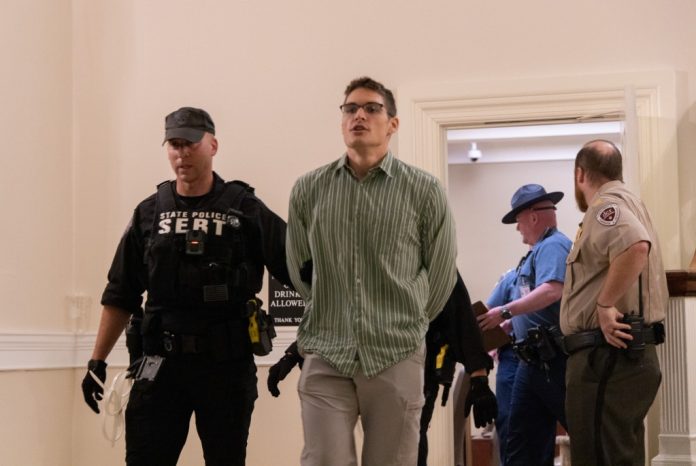
The protesters were subsequently arrested and removed by force, chanting “No new fossil fuels” as they were taken away.

When lawmakers resumed their business about an hour an a half later, they did so without acknowledging the protesters or their antics, though it was clear that some senators were having trouble holding in their laughter as Tarr resumed his discussion of tax policy.

Herald reporter Chris Van Buskirk and wire services contributed.

First phase of Greenies site redevelopment in Ocean View expected to be complete in 2025 – Daily Press

0

NORFOLK — City officials this week shared the next steps and timeline for redevelopment of the Ocean View site that was the longtime location of Greenies bar.

Phase one of the project is an expansion of Ocean View Beach Park, said Chuck Joyner, assistant city engineer, as he presented during Tuesday’s City Council work session. It factors in public comments from Ocean View residents, and will feature a half circle of green space bordering the beachfront, a food truck area, paths to the beach and a public shower and footwash.

The city purchased the infamous bar and another nearby restaurant for $2.3 million and demolished it in 2018. The lot has sat vacant since then.

Redevelopment is expected to take some time. Joyner said the site plan will be submitted for review by fall 2023, and the project completed spring 2025. It would cost an estimated $2.5 million.

The first phase of the proposal will also have an extended boardwalk, and picnic tables and swinging benches. There will be handicap parking and a handicap accessible ramp to the oceanfront. There may also be canopies factored into the final design, and electric vehicle chargers in the future.

Saving Ocean View’s last big dive: Norfolk antiques dealer, Hershee Bar co-founder revive Cap’n Ron’s

The park is designed to optimize beach access and provide a small performance venue, Joyner said. It will also provide additional parking. New landscaping will be salt spray tolerant and blend in with existing plants.

“We wanted to add … a place where smaller events and small entertainment things can occur for the community and for others to organize events as well,” Joyner said.

Joyner also outlined future plans for the area, which would include upgrading the intersection where 1st View Street meets Ocean View Avenue. Overhead cable and electrical would be undergrounded and the intersection updated, a process which is estimated to cost $3.3 million.

The building Greenies was located in was built in 1918, and the bar moved in to the property in 1930. It remained open until September 2018, and was demolished in December. For decades, Greenies was a local staple among Navy sailors.

Justin Stumberg / The Virginian-Pilot

Patrons sit on the patio at Greenies in Norfolk during happy hour on June, 18, 2010.

Initially, the space Greenies once occupied was supposed to become a parking lot.

Residents were split between beachfront views and another restaurant or bar, but all agreed on one thing: no residential development.

City officials didn’t discuss the second phase of construction during Tuesday’s meeting. In the past, proposed ideas for the property included a one-story waterfront restaurant with outdoor and rooftop dining or a bigger waterfront restaurant with outdoor dining.

Phase two would be built west of 1st View Street, expanding upon the Ocean View Beach Park property being developed in the first phase.

Sydney Haulenbeek, [email protected]