Home Blog Page 158

Pittsburgh synagogue gunman is found guilty in the deadliest attack on Jewish people in US history – Daily Press

0

By PETER SMITH (Associated Press)

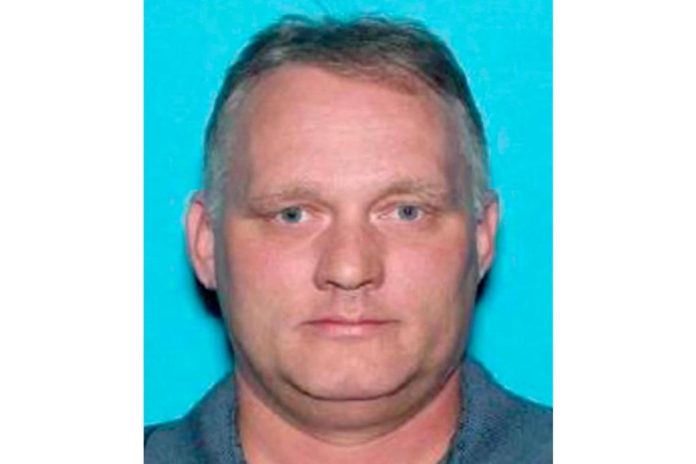
PITTSBURGH (AP) — A truck driver who spewed hatred of Jews was convicted Friday of storming a Pittsburgh synagogue and shooting everyone he could find on a Sabbath morning, killing 11 congregants in an act of antisemitic terror for which he could be sentenced to die.

The guilty verdict was a foregone conclusion after Robert Bowers’ lawyers conceded at the trial’s outset that he attacked and killed worshippers at the Tree of Life synagogue on Oct. 27, 2018, in the deadliest attack on Jews in U.S. history. Jurors must now decide whether the 50-year-old should be sent to death row or sentenced to life in prison without parole as the federal trial shifts to a penalty phase expected to last several weeks.

Bowers was convicted of all 63 criminal counts he faced, including hate crimes resulting in death and obstruction of the free exercise of religion resulting in death. His attorneys had offered a guilty plea in return for a life sentence, but prosecutors refused, opting instead to take the case to trial and pursue the death penalty. Most of the victims’ families supported that decision.

“I am grateful to God for getting us to this day,” Rabbi Jeffrey Myers of the Tree of Life Congregation, who survived the attack, said in a written statement. “And I am thankful for the law enforcement who ran into danger to rescue me, and the U.S. Attorney who stood up in court to defend my right to pray.”

The jury deliberated for about five hours over two days before reaching a verdict. Bowers, wearing a dark sweater and blue shirt, had little reaction. Several survivors and victims’ relatives were in the courtroom, bearing quiet witness. Sniffles could be heard in the gallery as the judge intoned “guilty” dozens of times.

Bowers, who had raged against Jews online and at the synagogue, turned a sacred house of worship into a “hunting ground,” targeting his victims because of their religion, a prosecutor said Thursday.

Reading each of the 11 victims’ names, prosecutor Mary Hahn asked the jury to “hold this defendant accountable … and hold him accountable for those who cannot testify.”

All three congregations sharing the building — Dor Hadash, New Light and Tree of Life — lost members in the attack. The victims ranged in age from 54 to 97.

Congregational leaders said the trial opened new wounds but was also validating.

“We learned things that we did not know,” said Stephen Cohen, co-president of New Light. “… In that sense, it was traumatizing. But it’s also, in a sense, cathartic because you did hear what happened.”

Jo Recht, president of Dor Hadash, applauded the prosecutors’ solid case.

“They drew a picture that was even more horrific than we had imagined,” Recht said. “And the level of antisemitism, the level of hatred, the volume of the outrageous (social media) posts was really sobering and really frightening. So for the jury to come back so quickly with the verdict of guilty on all 63 counts was affirming, and it was a relief.”

Prosecutors presented evidence of Bowers’ deep-seated animosity toward Jews and immigrants. Over 11 days of testimony, jurors learned that he had extensively posted, shared or liked antisemitic and white supremacist content on Gab, a social media platform popular with the far right, and praised Hitler and the Holocaust. Bowers told police that “all these Jews need to die,” Hahn said.

Jewish community members were bracing for the next stage of the trial, which would determine if Bowers is eligible for and should receive the death penalty. The penalty phase is scheduled to start June 26.

“It’s just as traumatic,” Cohen said. “Because now we get into learning about the shooter. In four and a half years, he has said nothing. We don’t know who he is. … There’s no background, nothing other than the Gab posts. So we’re going to be learning what kind of horrible human being he really is.”

Bowers, who was armed with an AR-15 rifle and other weapons, also shot and wounded seven, including five responding police officers.

Survivors testified about their terror on that day, including a woman who recounted how she was shot in the arm and then realized her 97-year-old-mother had been shot and killed right next to her. Andrea Wedner, the trial’s last witness, told jurors she touched her mother’s lifeless body and cried out, “Mommy,” before SWAT officers led her to safety.

Other survivors testified of hiding or fleeing for their lives, of making final prayers as they expected to die, of saying farewell to their slain fellow congregants. The slain were among the congregations’ stalwarts, always on time for Sabbath activities, many of which they led.

Bowers’ attorneys did not mount a defense at the guilt stage of the trial, signaling they will focus their efforts on trying to save his life. They plan to introduce evidence that Bowers has schizophrenia, epilepsy and brain impairments. Defense lawyer Judy Clarke had also sought to raise questions about Bowers’ motive, suggesting to jurors that his rampage was not motivated by religious hatred but his delusional belief that Jews were committing genocide by helping refugees settle in the United States.

The congregations have spoken out against antisemitism and other bigotry since the attack. The Tree of Life congregation also is working on a plan to overhaul the synagogue building — which still stands but has been closed since the shootings — by creating a complex that would house a sanctuary, museum, memorial and center for fighting antisemitism.

President Joe Biden said during his 2020 campaign that he would work to end capital punishment at the federal level and in states that still use it, and Attorney General Merrick Garland has paused executions to review policies and procedures. But federal prosecutors continue to work to uphold already-issued death sentences and, in some cases, to pursue the death penalty at trial for crimes that are eligible, as in Bowers’ case.

Killed were Joyce Fienberg, 75; Richard Gottfried, 65; Rose Mallinger, 97; Dr. Jerry Rabinowitz, 66; brothers David Rosenthal, 54, and Cecil Rosenthal, 59; Bernice Simon, 84, and her husband, Sylvan Simon, 86; Dan Stein, 71; Melvin Wax, 87; Irving Younger, 69.

Ellen Surloff, who was Dor Hadash president at the time of the attack, said hearing the guilty verdicts was a relief.

“Fighting antisemitism was always important to my family,” she said. “My mother passed away not long after the shooting. So from a personal matter, the first thought that went to my head was, I wish she could have been alive to hear the verdict, to hear this horrible, horrible monster convicted for what he did on Oct. 27.”

___

Associated Press reporter Michael Rubinkam in northeastern Pennsylvania contributed to this report.

___

Associated Press religion coverage receives support through the AP’s collaboration with The Conversation US, with funding from Lilly Endowment Inc. The AP is solely responsible for this content.

Virginia bullpen squanders late lead in first-night loss to Florida at College World Series – Daily Press

0

OMAHA, Neb. — That insurance run Virginia invested in Friday night in the ninth inning didn’t provide the coverage the Cavaliers needed to secure a first-round victory at the College World Series.

Right fielder Casey Saucke led off with a walk and moved to second base on a sacrifice bunt by Anthony Stephan. Then with one out, Harrison Didawick tripled down the left-field line to score Saucke and put Virginia ahead by two runs.

That lead then dissolved into a 6-5 loss in the bottom of the ninth inning before a stunned crowd of 24,801 at Charles Schwab Field. Solo home runs by Florida’s Ty Evans and Wyatt Langford tied the game at 5.

Designated hitter Luke Heyman hit a sacrifice fly to center field off reliever Jay Woolfolk to bring home first baseman Jac Caglianone with the winning run. Caglianone singled after Langford’s home run before a walk to Josh Rivera and catcher BT Riopelle loaded the bases for Heyman.

“Their power showed in the late part of the game,” Virginia coach Brian O’Connor said. “Jack Berry just couldn’t finish them off.”

Berry was the third pitcher O’Connor brought in from the bullpen after starter Nick Parker limited the Gators (51-15) to just one run on four hits through six innings.

In his 1 2/3 innings of work, Berry gave up four hits — the three home runs and a single — after facing 12 batters and throwing just 46 pitches. O’Connor said the Cavaliers were planning on leaning on their bullpen in the late innings of their series opener.

“I don’t feel great about how we finished out of our bullpen,” O’Connor said. ‘It’s been a little bit of a mixed bag all year. The plan coming into the game was if we had a lead in the eighth inning, the plan was to go with Jake Berry.

“That formula’s worked for us a lot this year. I don’t know for sure, but I would be surprised if all year that we’ve lost a game putting Jake Berry in the eighth inning or beyond with a lead.”

UVA fans left the stadium in disbelief after witnessing Virginia’s streak of 93 games with a lead after the eighth inning end. A leadoff solo home run by Riopelle in the bottom of the eighth cut Virginia’s lead to 4-3 before the beginning of the ninth-inning dramatics.

O’Connor finally pulled Berry with the bases loaded, and Woolfolk threw just three pitches.

Virginia will play TCU in an elimination game Sunday at 2 p.m. EDT. The loser will be the first team knocked out of the eight-team championship tournament. The Horned Frogs fell 6-5 to Oral Roberts in Friday’s first game.

The come-from-behind wins by Florida and Oral Roberts were the first time that both teams earned their victories that way on Day 1 of the CWS.

Now the Cavaliers (50-14) will have to win four consecutive games to reach the best-of-three championship series scheduled to begin June 24.

Both right fielder Griff O’Ferrall and starting pitcher Nick Parker said that is just what they plan to do. It was part of the conversation the team had in center field before heading to the locker room.

“That’s kind of what we talked about at the beginning, just this team has fought all year long,” O’Ferrall said. “Obviously no one wants to lose the first game. But it is what it is and we’re going to ride with our guys no matter what.

“So basically, we’re not going to put blame or be down on ourselves. We’re just going to get back to work.”

Florida opened the scoring with a run in the second inning. Riopelle led off the inning with a walk, advanced to second base on a single by Heyman and moved to third base on a fielder’s choice.

With runners at first and third, Gators third baseman Colby Harter laced a hard-hit single through the left side of the Cavaliers’ defense. That plated Riopelle and put the Gators ahead 1-0.

That run came between a pair of baserunning blunders that prematurely ended Virginia’s first and third innings. O’Ferrall led off the game with a first-pitch single to left. The Cavaliers followed that hit with two outs before catcher Kyle Teel coaxed a walk from Florida starter Brandon Sproat.

O’Farrall was on his way to second when ball four turned into a wild pitch and the ball got away from Riopelle. O’Ferrall tried going to third base, but Riopelle recovered in time to throw and easily get O’Ferrall for the third out.

Virginia’s third inning also ended earlier than the Cavaliers had planned. Ethan O’Donnell reached base with two outs after getting hit in the back by a pitch from Sproat. Moments later, O’Donnell got caught in a rundown trying to steal second base.

Florida couldn’t take advantage of those gaffes to extend its lead, though Sproat was pitching both effectively and efficiently through the first six innings. It took Sproat just 87 pitches to get the first 18 outs.

The junior from Pace, Florida, recorded just one more out, and that came on an RBI groundout in the seventh inning that scored Cox High graduate Ethan Anderson to tie the game 1-1. Sproat threw 22 pitches in the seventh inning before giving way to the bullpen.

That was just the start of Virginia’s big inning. Three more runs came home, with the big hit being a two-run double down the left field by O’Ferrall that gave the Cavaliers their first lead. He eventually scored on a single to center field by O’Donnell.

Virginia starting pitcher Nick Parker delivers during Friday night’s game against Florida in the College World Series in Omaha, Nebraska.

Canada police say bus carrying seniors did not have the right of way in crash that killed 15 – Daily Press

0

By ROB GILLIES (Associated Press)

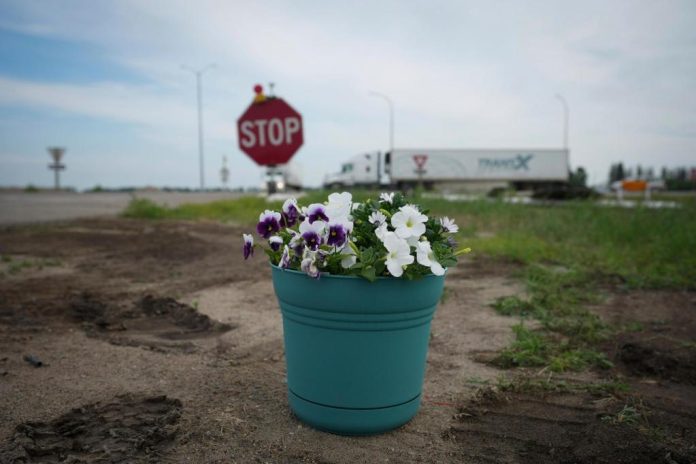
TORONTO (AP) — A bus carrying seniors to a casino that collided with a semi-trailer truck in a crash that killed 15 people did not have the right of way, police said Friday, after watching video of the accident.

Royal Canadian Mounted Police Supt. Rob Lasson said police also obtained witness statements from passing motorists that corroborated what investigators saw on the dash cam video from the semi truck.

“This video indicates the bus entered the roadway where the semi truck had the right of way,” Lasson said, adding later: “We don’t know why the bus proceeded.”

He said officers had not been able to speak to the driver of the bus, who is hospitalized. The truck driver has been released from the hospital.

Lasson said police were not assigning blame at this time and continued to investigate. He added that officers were looking into whether the truck had mechanical problems.

Lasson said investigators had not yet identified the bodies of the 15 killed, though those who were not injured were presumed to be deceased. He said the ages of the deceased and injured ranged between 58 and 88. Nineteen were women and six were men.

The group of 25 seniors was on a day-trip from rural Dauphin, Manitoba, when the crash happened on the Trans-Canada Highway.

Six of 10 seniors who survived were listed in critical condition, health officials said Friday. The remaining four were also hospitalized. Most of them had head injuries and broken bones.

“This is an elderly cohort of patients, so recoveries will be long and, of course, can be complicated,” Dr. Shawn Young, chief operating officer of Health Sciences Centre Winnipeg, said at a news conference.

Chief medical examiner John Younes said work continues on identifying those who died, using fingerprints, dental records and, if necessary, serial numbers on artificial hips and even DNA.

“The reason we have to undertake scientific means of identification is that most, if not all, of the deceased have significant facial trauma, so identifying them visually is not possible,” Younes said.

He said authorities hope to have post-mortem examinations done by Monday and identifications completed by the middle of next week.

In Dauphin, where most of the bus riders are from, flags were flown at half-staff.

Sandra Kaleta, who is involved with the Dauphin Active Living Centre, said she knew some of the people on the bus and played Scrabble every Tuesday with one of them.

“I have no idea how she is,” said Kaleta. “I think that’s the hardest part. I can’t imagine what some of these families are going through.”

Kaleta said she recalled everyone feeling excited about going to the casino, something that didn’t happen often. The last such outing may have been before the COVID-19 pandemic, she noted.

“It’s going to take years, not just days or months (to recover),” she said.

Prime Minister Justin Trudeau said the flag in Ottawa’s Peace Tower on Parliament Hill would also be lowered.

The crash happened just before noon Thursday. Police said road conditions were clear at the time.

Rescue crews encountered a horrific scene of bodies on the road.

The semi was still upright in a ditch, its front end crumpled, while the bus was on the grass a short distance away engulfed in flames that eventually burned it down to a blackened chassis.

Dauphin Mayor David Bosiak said everyone in the city of about 8,600 knows someone who was on the bus, and there’s a collective feeling of shock.

The accident brought back memories of a 2018 bus crash in the neighboring province of Saskatchewan that killed 16 people from the Humboldt Broncos minor league hockey team.

Meanwhile, police in the Canadian province of British Columbia said no critical injuries had been reported among 30 people on a charter bus that crashed on a forest service road north of Prince George, British Columbia on Friday.

RCMP Cpl. Jennifer Cooper said numerous ambulances and police officers have been dispatched. The bus was carrying pipeline workers Friday morning when it went off the road.

BC Emergency Health Services said 17 patients were transported to hospital.

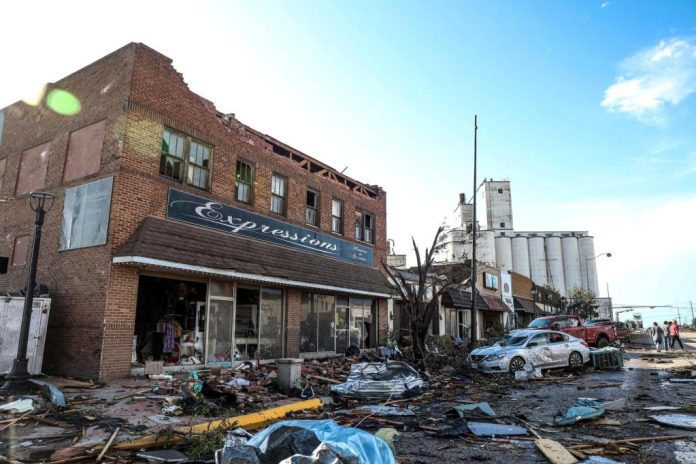
Photos: Storms pass through Hampton Roads

0

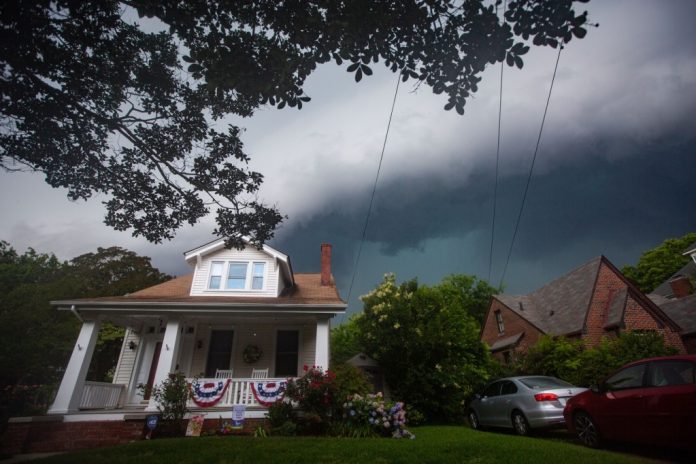
Multiple severe storms passed through Hampton Roads on Friday, July 16, 2023. Tornado, hail and flash flooding warnings went out to Hampton Roads citizens.

Losing hope of finding kids in plane crash, Indigenous searchers turned to a ritual: Ayahuasca – Daily Press

0

By REGINA GARCIA CANO (Associated Press)

BOGOTA, Colombia (AP) — The weary Indigenous men gathered at their base camp, nestled among towering trees and dense vegetation that form a disorienting sea of green. They sensed that their ancestral land — Selva Madre, or Mother Jungle — was unwilling to let them find the four children who’d been missing since their charter plane crashed weeks earlier in a remote area in southern Colombia.

Indigenous volunteers and military crews had found signs of hope: a baby bottle, half-eaten fruit, dirty diapers strewn across a wide swath of rainforest. The men were convinced the children had survived. But punishing rains, harsh terrain and the passing of time had diminished their spirits and drained their stamina.

The weak of body, of mind, of faith do not make it out of this jungle. Day 39 was do or die — for the children and the search teams.

That night at camp, Manuel Ranoque, father of the two youngest children, reached for one of the most sacred rituals of Indigenous groups of the Amazon — yagé, a bitter tea made of plants native to the rainforest, more widely known as ayahuasca. For centuries, the hallucinogenic cocktail has been used as a cure for all ailments by people in Colombia, Peru, Ecuador and Brazil.

Henry Guerrero, a volunteer who joined the search from the children’s home village near Araracuara, told The Associated Press his aunt prepared the yagé for the group. They believed it would induce visions that could lead them to the children.

“I told them, ‘There’s nothing to do here. We will not find them with the naked eye. The last resource is to take yagé,’” Guerrero, 56, said. “The trip really takes place in very special moments. It is something very spiritual.”

Ranoque sipped, and the men kept watch for a few hours. When the psychotropic effects passed, he told them it hadn’t worked.

Some searchers were ready to leave. But the next morning, 40 days after the crash, an elder reached for what little was left of the yagé and drank it. Some people take it to connect with themselves, cure illnesses or heal a broken heart. Elder José Rubio was convinced it would eventually help find the kids, Guerrero said.

Rubio dreamed for some time. He vomited, a common side effect.

This time, he said, it had worked. In his visions, he saw them. He told Guerrero: “’We’ll find the children today.”

___

The four children — Lesly, Soleiny, Tien and Cristin — grew up around Araracuara, a small Amazon village in Caquetá Department that can be reached only by boat or small plane. Ranoque said the siblings had happy but independent lives because he and his wife, Magdalena Mucutuy, were often away from home.

Lesly, 13, was the mature, quiet one. Soleiny, 9, was playful, and Tien, nearly 5 before the crash, restless. Cristin, 11 months then, was just learning to walk.

At home, Mucutuy grew onions and cassava, and used the latter to produce fariña, a type of flour, for the family to eat and sell. Lesly learned to cook at age 8; in the adults’ absence, she often cared for her siblings.

The morning of May 1, the children, their mother and an uncle boarded a light plane. They were headed to the town of San José del Guaviare. Weeks earlier, Ranoque had fled his home village, an area where illegal drug cultivation, mining and logging have thrived for decades. He told AP he feared pressure from people connected to his industry, though he refused to provide details about the nature of his job or business dealings.

“The work there is not safe,” Ranoque said. “And it is illegal. It has to do with other people … in a sector that I can’t mention because I put myself more at risk.”

He said he left Mucutuy $9 million Colombian pesos, about $2,695 U.S. dollars, before leaving to pay for food, other necessities and the charter flight. He wanted the children out of the village because he feared they could be recruited by one of the rebel groups in the area.

They were on their way to meet Ranoque when the pilot of the Cessna single-engine propeller plane declared an emergency due to engine failure. The aircraft fell off the radar a short time later.

“Mayday, mayday, mayday. … The engine failed me again. … I’m going to look for a river. … I have here a river to my right,” pilot Hernando Murcia reported to air traffic control at 7:43 a.m., according to a preliminary report released by aviation authorities.

“103 miles out of San José … I’m going to land.”

___

The Colombian military launched a search for the plane when it failed to arrive at its destination. About 10 days later, with no plane and no signs of life found, the Indigenous volunteers joined the effort. They were much more familiar with the terrain and the families in the area. One man told them the plane was making an odd noise when it flew over his house. That helped them sketch out a search plan that followed the Apaporis River.

As they walked the unforgiving terrain and took breaks in groups, ants crawled on them and mosquitoes feasted on their blood. One searcher almost lost an eye to a tree branch, and others developed allergy- and flu-like symptoms.

They kept searching.

Historically, the military and indigenous groups have feuded, but deep in the jungle, after food supplies and optimism diminished, they shared water, meals, GPSs and satellite phones.

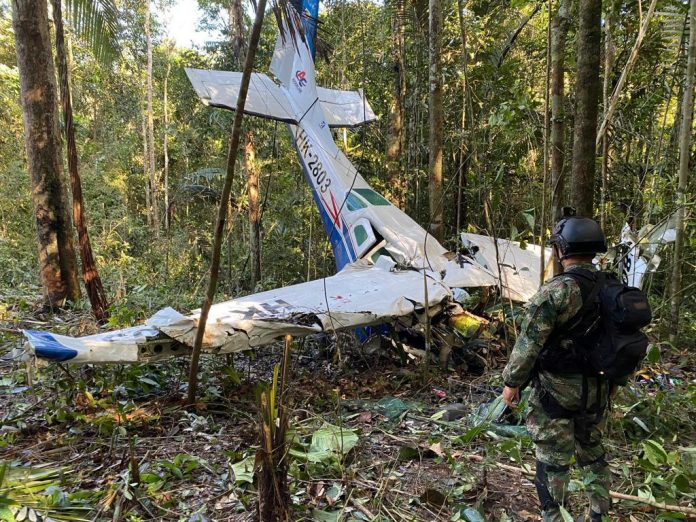
Sixteen days after the crash, with morale running low among all search parties, searchers found the wreckage. The plane appeared to have nosedived — it was was found in a vertical, nose-down position.

The group assumed the worst. The men had found the wreckage and seen human remains. Guerrero said he and others started packing up their camp.

But one of the men who’d walked up to the plane spoke up.

“Hey,” he said, according to Guerrero. “I didn’t see the kids.” The man slowly realized that when they found the wreckage, they hadn’t seen any children’s bodies. He’d approached the plane and seen the children’s bags outside. He noticed that some stuff appeared as if someone had moved it after the crash.

He was right. The bodies of three adults were recovered from inside the aircraft. But there was no sign of the children, nor any indications they were seriously injured, according to the preliminary report.

The military’s special operations forces changed its strategy, based on the evidence that the children might be alive. No longer were they quietly moving through the jungle.

“We moved on, to a second phase,” 1st Vice Sgt. Juan Carlos Rojas Sisa said. “We went from the stealth part to the noise part so that they could hear us.”

They yelled Lesly’s name and played a recorded message from the children’s maternal grandmother asking them in Spanish and the language of the Huitoto people to stay in place. Helicopters dropped boxes with food and leaflets with messages. The armed forces also brought its trained dogs, including a Belgian Shepherd named Wilson who did not return to its handler and is missing.

On the ground, nearly 120 members of the military and more than 70 Indigenous people were searching for the children, day and night. They left whistles for the children to use if they found them, and marked about 6.8 miles (11 kilometers) with crime scene-like tape, hoping the children would take the markings as a sign to stay put.

They began to find clues to the children’s location, including a footprint they believed to be Lesly’s. But no one could find the kids.

Some searchers had already walked more than 930 miles (1,500 kilometers) — the distance between Lisbon and Paris, or Dallas and Chicago. Exhaustion was setting in, and the military implemented a plan to rotate soldiers.

Guerrero made a call and asked for the yagé. It arrived two days later.

___

On day 40, after Elder Rubio took the yagé, the searchers combed the rainforest again, starting from the site where they found the diapers. His vision had reignited hopes but provided no specifics on where the children might be. Groups fanned out in different directions. But as the day went on, they returned to base camp with no news.

Sadness set in at camp. Guerrero told Ranoque as teams returned: “Nothing. We couldn’t … there is nothing.”

Then came the news. A soldier heard via radio that the four children had been found — 5 kilometers (3 miles) from the crash site, in a small clearing. Rescue teams had passed within 20 to 50 meters (66 to 164 feet) on several occasions but missed them.

The solider told Guerrero, who ran to Ranoque. “They found the four,” he said, through tears and hugs.

A helicopter lifted the kids out of the dense forest. They were first flown to San José del Guaviare and then to the capital, Bogota, each with a team of health care professionals. They were covered in foil blankets and hooked to IV lines due to dehydration. Their hands and feet showed scratches and insect bites.

Ranoque said Lesly reported that her mother died about four days after the crash. The children survived by collecting water in a soda bottle and eating cassava flour, fruit and seeds. They were found with two small bags holding clothes, a towel, a flashlight, two phones and a music box.

Tien and Cristin had birthdays while searchers looked for them.

All four remain in the hospital. A custody fight has broken out, with some relatives claiming Ranoque was violent against the children’s mother. He has admitted to verbal and occasional physical fights, which he called “a private family matter.” He’s also said he’s not been able to see the two oldest children.

Officials, medical professionals, special forces and others have praised Lesly’s leadership. She and her siblings have become a symbol of resilience and survival across the globe. The Colombian government, meanwhile, has boasted of the cooperation among Indigenous communities and the military as it tries to end national conflicts.

“The jungle saved them,” President Gustavo Petro said. “They are children of the jungle, and now they are also children of Colombia.”

That’s true, Ranoque told AP, but the Indigenous culture and rituals saved them, too. He credits the yagé and the vision of the elder among their group.

“This is a spiritual world,” he said, and the yagé “is of the utmost respect. It is the maximum concentration that is made in our spiritual world as an indigenous people.”

That’s why they drank the tea in the jungle, he said: “That was so that the goblin, that cursed devil, would release my children.”

Canada police say bus carrying seniors did not have right of away in crash that killed 15 – Daily Press

0

By ROB GILLIES (Associated Press)

TORONTO (AP) — A bus carrying seniors to a casino that collided with a semi-trailer truck in a crash that killed 15 people did not have the right of way, police said Friday, after watching video of the accident.

Royal Canadian Mounted Police Supt. Rob Lasson said police also obtained witness statements from passing motorists that corroborated what investigators saw on the dash cam video from the semi truck.

“This video indicates the bus entered the roadway where the semi truck had the right of way,” Lasson said, adding later: “We don’t know why the bus proceeded.”

He said officers had not been able to speak to the driver of the bus, who is hospitalized. The truck driver has been released from the hospital.

Lasson said police were not assigning blame at this time and continued to investigate. He added that officers were looking into whether the truck had mechanical problems.

Lasson said investigators had not yet identified the bodies of the 15 killed, though those who were not injured were presumed to be deceased. He said the ages of the deceased and injured ranged between 58 and 88. Nineteen were women and six were men.

The group of 25 seniors was on a day-trip from rural Dauphin, Manitoba, when the crash happened on the Trans-Canada Highway.

Six of 10 seniors who survived were listed in critical condition, health officials said Friday. The remaining four were also hospitalized. Most of them had head injuries and broken bones.

“This is an elderly cohort of patients, so recoveries will be long and, of course, can be complicated,” Dr. Shawn Young, chief operating officer of Health Sciences Centre Winnipeg, said at a news conference.

Chief medical examiner John Younes said work continues on identifying those who died, using fingerprints, dental records and, if necessary, serial numbers on artificial hips and even DNA.

“The reason we have to undertake scientific means of identification is that most, if not all, of the deceased have significant facial trauma, so identifying them visually is not possible,” Younes said.

He said authorities hope to have post-mortem examinations done by Monday and identifications completed by the middle of next week.

In Dauphin, where most of the bus riders are from, flags were flown at half-staff.

Sandra Kaleta, who is involved with the Dauphin Active Living Centre, said she knew some of the people on the bus and played Scrabble every Tuesday with one of them.

“I have no idea how she is,” said Kaleta. “I think that’s the hardest part. I can’t imagine what some of these families are going through.”

Kaleta said she recalled everyone feeling excited about going to the casino, something that didn’t happen often. The last such outing may have been before the COVID-19 pandemic, she noted.

“It’s going to take years, not just days or months (to recover),” she said.

Prime Minister Justin Trudeau said the flag in Ottawa’s Peace Tower on Parliament Hill would also be lowered.

The crash happened just before noon Thursday. Police said road conditions were clear at the time.

Rescue crews encountered a horrific scene of bodies on the road.

The semi was still upright in a ditch, its front end crumpled, while the bus was on the grass a short distance away engulfed in flames that eventually burned it down to a blackened chassis.

Dauphin Mayor David Bosiak said everyone in the city of about 8,600 knows someone who was on the bus, and there’s a collective feeling of shock.

The accident brought back memories of a 2018 bus crash in the neighboring province of Saskatchewan that killed 16 people from the Humboldt Broncos minor league hockey team.

Meanwhile, police in the Canadian province of British Columbia said no critical injuries had been reported among 30 people on a charter bus that crashed on a forest service road north of Prince George, British Columbia on Friday.

RCMP Cpl. Jennifer Cooper said numerous ambulances and police officers have been dispatched. The bus was carrying pipeline workers Friday morning when it went off the road.

BC Emergency Health Services said 17 patients were transported to hospital.

Storm blamed for 3 deaths wrecked mobile homes and main street – Daily Press

0

By DAVID ERICKSON, SARAH BRUMFIELD and KEN MILLER (Associated Press)

PERRYTON, Texas (AP) — As Sabrina Devers watched what would turn out to be a deadly storm approach her ranch just north of the Texas Panhandle town Perryton, she first spotted golf ball-sized and then softball-sized hail.

Then, Devers said, across the high plains toward Perryton, the system spawned a tornado.

Once the twister had moved through, Devers drove into into the town to find a path of wreckage local officials estimated was a quarter of a mile (400 meters) wide, and 1 mile (1.6 kilometers) long. The Thursday afternoon storm would be blamed for three deaths and more than 100 injuries as it destroyed hundreds of homes, tossed vehicles into buildings and knocked out power and cellphone service in Perryton, a town of 8,000 about 115 miles (185 kilometers) northeast of Amarillo, just south of the Oklahoma line.

“The devastation was unbelievable,” Devers told Fox Weather. “It took a tanker truck and threw it into a pasture.”

Cleanup efforts were underway Friday in Texas as the same system that slapped Perryton continued to wreak havoc as it marched across the Deep South, dumping rain in the Florida Panhandle and sending howling winds into Mississippi. In total, the storms were blamed for five deaths: three in Texas, and one each in Florida and Mississippi.

Ochiltree General Hospital in Perryton treated 115 patients suffering minor to major injuries, including head trauma, collapsed lungs, lacerations and broken bones, the medical center said on Facebook.

“We kind of expected to see more last night and we didn’t,” the hospital’s interim CEO, Kelly Judice, said. “We just want people in our community to know that we’re here. We’re open. We have clinics open. We’re ready for business to take care of the people that need to be treated.”

People with routine medical checkups planned were asked to reschedule.

The hospital was operating on a generator and some patients were being treated in a sunlit conference room since exam rooms in one clinic don’t have windows, Judice said.

Perryton Fire Chief Paul Dutcher estimated that 150 to 200 homes in the community had been destroyed and said that in the downtown area, many storefronts were totally wiped off and buildings had collapsed or partially collapsed.

“It is such a tragedy,” Dutcher said on NBC’s “Today” show. “All the stuff behind me, it can all be rebuilt, but those lives that we’ve lost is really the tragedy of everything.”

Tornadic activity is not typical for this time of year, according to meteorologist Matt Mosier at the Storm Prediction Center in Norman, Oklahoma, but it’s not out of the realm of possibility.

“You expect thunderstorms this time of year,” Mosier said. “It’s definitely not rare, but tornadoes are not on a lot of people’s minds because they’ve just kind of moved away from the season that they’re typically focused on (tornadoes).”

This week has been very warm with moist, unstable conditions that combined with strong wind shear, which is abnormal for this time of year, Mosier said.

In the Florida Panhandle, a person died Thursday night when at least one confirmed tornado cut through Escambia County, toppling a tree onto a home, county spokesperson Andie Gibson told the Pensacola News Journal.

Flash flooding also was reported in Pensacola where between 12 and 16 inches (30 and 40 centimeters) of rain has fallen since Thursday evening, said Caitlin Baldwin, a meteorologist with the National Weather Service’s Mobile in Pensacola.

In West Pensacola, flash floodwaters surrounded an apartment complex that was evacuated of all its 146 residents. Boats were used to remove some and take them to a local community center, said Davis Wood, public information officer for Escambia County Public Safety. No injuries were reported.

In Mississippi a man died after a tree fell on him during stormy weather early Friday. Canton Police Chief Otha Brown told WLBT-TV the man was killed after high winds toppled a tree onto his carport as he was entering his car.

The storm system also brought hail and possible tornados to northwestern Ohio.

More than 536,000 customers were without electricity in Oklahoma, Texas, Louisiana, Mississippi, Alabama and Florida on Friday afternoon, according to the poweroutage.us website.

The National Weather Service in Amarillo was surveying damage Friday to determine the tornado rating in the Perryton area, meteorologist Brett Muscha said.

More thunderstorms were possible in the far northern Texas Panhandle and the Oklahoma Panhandle Friday afternoon and night, Muscha said. The greatest chance of strong and severe storms were on the Oklahoma side with golf ball-size hail and 60 mph (100 kph) wind gusts.

Also in Texas and Southern states including Louisiana, heat advisories were in effect Friday and were forecast into the Juneteenth holiday weekend with temperatures reaching toward 100 degrees Fahrenheit (38 degrees Celsius). It was expected to feel as hot as 110 degrees Fahrenheit (43 degrees Celsius).

Earlier this week, damaging winds toppled trees, damaged buildings and blew cars off a highway as powerful storms crossed the South from Texas to Georgia.

___

Brumfield reported from Washington, D.C. and Miller reported from Oklahoma City. Associated Press journalists Rick Callahan in Indianapolis; Robert Jablon in Los Angeles; Alina Hartounian in Phoenix; Lisa Baumann in Seattle; Michael Goldberg in Jackson, Mississippi; Juan Lozano in Houston and Adam Kealoha Causey in Dallas contributed to this report.

6 seniors critically injured in Canada bus crash that killed 15 – Daily Press

0

DAUPHIN, Manitoba (AP) — Six of 10 seniors who survived a bus crash in Canada that killed 15 others were listed in critical condition in hospital, health officials said Friday. They were among a group of seniors from rural Dauphin, Manitoba on a day-trip to a casino when their minibus crashed with a semi while crossing the Trans-Canada Highway.

The remaining four were also in hospital, where most of the injured were dealing with head injuries and broken bones.

“This is an elderly cohort of patients, so recoveries will be long and, of course, can be complicated,” Dr. Shawn Young, chief operating officer of Health Sciences Centre Winnipeg, told a news conference.

In Dauphin, where most of the bus riders are from, flags were flown at half-staff as residents awaited word on the fate of loved ones and police started to piece together what caused the crash near the town of Carberry, some 190 kilometers (118 miles) to the south.

The Royal Canadian Mounted Police said they are working with the medical examiner’s office to confirm identities and pass on information to families of the victims.

The survivors include the drivers of both vehicles.

The bus was carrying 25 people when the collision happened Thursday, carrying people from the Dauphin Active Living Centre to the Sand Hills Casino in Carberry.

Sandra Kaleta, who is involved with the seniors center, said she knew some of the people on the bus and played Scrabble every Tuesday with one of them.

“I have no idea how she is,” said Kaleta. “I think that’s the hardest part. I can’t imagine what some of these families are going through.”

Kaleta said she recalled everyone feeling excited about going to the casino, something that didn’t happen often. The last such outing may have been before the COVID-19 pandemic, she noted.

“It’s going to take years, not just days or months (to recover),” she said.

Prime Minister Justin Trudeau said the flag in Ottawa’s Peace Tower on Parliament Hill would also be lowered.

The crash happened just before noon Thursday. Police said road conditions were clear at the time.

Rescue crews encountered a horrific scene of bodies on the road.

The semi was still upright in a ditch, its front end crumpled, while the bus was on the grass a short distance away engulfed in flames that eventually burned it down to a blackened chassis.

Dauphin Mayor David Bosiak said everyone in the city of about 8,600 knows someone who was on the bus, and there’s a collective feeling of shock.

The accident brought back memories of a 2018 bus crash in the neighboring province of Saskatchewan that killed 16 people from the Humboldt Broncos minor league hockey team.

Meanwhile, police in the Canadian province of British Columbia said no critical injuries have been reported among 30 people on a charter bus that crashed on a forest service road north of Prince George, British Columbia on Friday.

RCMP Cpl. Jennifer Cooper said that numerous ambulances and police officers have been dispatched. The bus was carrying pipeline workers Friday morning when it went off the road.

BC Emergency Health Services said 17 patients were transported to hospital.

Daniel Ellsberg, who leaked Pentagon Papers exposing Vietnam War secrets, dies at 92 – Daily Press

0

By HILLEL ITALIE (AP National Writer)

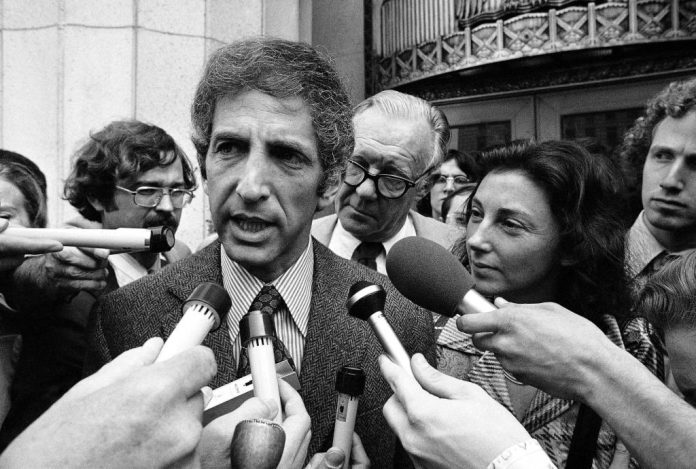
NEW YORK (AP) — Daniel Ellsberg, the history-making whistleblower who by leaking the Pentagon Papers revealed longtime government doubts and deceit about the Vietnam War and inspired acts of retaliation by President Richard Nixon that helped lead to his resignation, has died. He was 92.

Ellsberg, whose actions led to a landmark First Amendment ruling by the Supreme Court, had disclosed in February that he was terminally ill with pancreatic cancer. His family announced his death Friday morning in a letter released by a spokeswoman, Julia Pacetti.

“He was not in pain, and was surrounded by loving family,” the letter reads in part. “Thank you, everyone, for your outpouring of love, appreciation and well-wishes to Dan in the previous months. It all warmed his heart at the end of his life.”

Until the early 1970s, when he disclosed that he was the source for the stunning media reports on the 47-volume, 7,000-page Defense Department study of the U.S. role in Indochina, Ellsberg was a well-placed member of the government-military elite. He was a Harvard graduate and self-defined “cold warrior” who served as a private and government consultant on Vietnam throughout the 1960s, risked his life on the battlefield, received the highest security clearances and came to be trusted by officials in Democratic and Republican administrations.

He was especially valued, he would later note, for his “talent for discretion.”

But like millions of other Americans, in and out of government, he had turned against the yearslong war in Vietnam, the government’s claims that the battle was winnable and that a victory for the North Vietnamese over the U.S.-backed South would lead to the spread of communism throughout the region. Unlike so many other war opponents, he was in a special position to make a difference.

“An entire generation of Vietnam-era insiders had become just as disillusioned as I with a war they saw as hopeless and interminable,” he wrote in his 2002 memoir, “Secrets: A Memoir of Vietnam and the Pentagon Papers.” “By 1968, if not earlier, they all wanted, as I did, to see us out of this war.”

The Pentagon Papers had been commissioned in 1967 by then-Defense Secretary Robert S. McNamara, a leading public advocate of the war who wanted to leave behind a comprehensive history of the U.S. and Vietnam and to help his successors avoid the kinds of mistakes he would only admit to long after. The papers covered more than 20 years, from France’s failed efforts at colonization in the 1940s and 1950s to the growing involvement of the U.S., including the bombing raids and deployment of hundreds of thousands of ground troops during Lyndon Johnson’s administration. Ellsberg was among those asked to work on the study, focusing on 1961, when the newly-elected President John F. Kennedy began adding advisers and support units.

As much as anyone, Ellsberg embodied the individual of conscience — who answered only to his sense of right and wrong, even if the price was his own freedom. David Halberstam, the late author and Vietnam War correspondent who had known Ellsberg since both were posted overseas, would describe him as no ordinary convert. He was highly intelligent, obsessively curious and profoundly sensitive, a born proselytizer who “saw political events in terms of moral absolutes” and demanded consequences for abuses of power.

As much as anyone, Ellsberg also embodied the fall of American idealism in foreign policy in the 1960s and 1970s and the upending of the post-World War II consensus that Communism, real or suspected, should be opposed worldwide.

The Pentagon Papers were first published in The New York Times in June 1971, with The Washington Post, The Associated Press and more than a dozen others following. They documented that the U.S. had defied a 1954 settlement barring a foreign military presence in Vietnam, questioned whether South Vietnam had a viable government, secretly expanded the war to neighboring countries and had plotted to send American soldiers even as Johnson vowed he wouldn’t.

The Johnson administration had dramatically and covertly escalated the war despite the “judgment of the Government’s intelligence community that the measures would not” weaken the North Vietnamese, wrote the Times’ Neil Sheehan, a former Vietnam correspondent who later wrote a Pulitzer Prize winning book on the war, “A Bright Shining Lie.”

The leaker’s identity became a national guessing game and Ellsberg proved an obvious suspect, because of his access to the papers and his public condemnation of the war over the previous two years. With the FBI in pursuit, Ellsberg turned himself in to authorities in Boston, became a hero to the antiwar movement and a traitor to the war’s supporters, labeled the “most dangerous man in America” by National Security Adviser Henry Kissinger, with whom Ellsberg had once been friendly.

The papers themselves were seen by many as an indictment not just of a given president or party, but of a generation of political leadership. The historian and philosopher Hannah Arendt would note that growing mistrust of the government during the Vietnam era, “the credibility gap,” had “opened into an abyss.”

“The quicksand of lying statements of all sorts, deceptions as well as self-deceptions, is apt to engulf any reader who wishes to probe this material, which, unhappily, he must recognize as the infrastructure of nearly a decade of United States foreign and domestic policy,” she wrote.

The Nixon administration quickly tried to block further publication on the grounds that the papers would compromise national security, but the U.S. Supreme Court ruled 6-3 in favor of the newspapers on June 30, 1971, a major First Amendment ruling rejecting prior restraint. Nixon himself, initially unconcerned because the papers predated his time in office, was determined to punish Ellsberg and formed a renegade team of White House “plumbers,” endowed with a stash of White House “hush money” and the mission of preventing future leaks.

“You can’t drop it,” Nixon fumed privately to his chief of staff, H.R. Haldeman. “You can’t let the Jew steal that stuff and get away with it. You understand?”

Ellsberg faced trials in Boston and Los Angeles on federal charges for espionage and theft, with a possible sentence of more than 100 years. He had expected to go to jail, but was spared, in part, by Nixon’s rage and the excesses of those around him. The Boston case ended in a mistrial because the government wiretapped conversations between a defense witness and his attorney. Charges in the Los Angeles trial were dismissed after Judge Matthew Byrne learned that White House “plumbers” G. Gordon Liddy and E. Howard Hunt had burglarized the office of Ellsberg’s psychiatrist in Beverly Hills, California.

Byrne ruled that “the bizarre events have incurably infected the prosecution of this case.”

Meanwhile, the “plumbers” continued their crime wave, notably the June 1972 break-in of the Democratic Party’s national headquarters, at the Watergate Hotel in Washington, D.C. The Watergate scandal didn’t prevent Nixon from a landslide reelection in 1972, but would expand rapidly during his second term and culminate in his resignation in August 1974. U.S. combat troops had already left Vietnam and the North Vietnamese captured the Southern capital, Saigon, in April 1975.

“Without Nixon’s obsession with me, he would have stayed in office,” Ellsberg told The Associated Press in 1999. “And had he not been removed from office, he would have continued the bombing (in Vietnam).”

Ellsberg’s story was depicted in the 2009 documentary “The Most Dangerous Man in America: Daniel Ellsberg and the Pentagon Papers.” The movie had its West Coast premiere only a few blocks from the Rand Corp. headquarters in Santa Monica, Ellsberg former workplace. He sent college students with fliers to urge old colleagues to attend the screening, but none attended.

Ellsberg was born in Chicago in 1931, to Jewish parents who converted to Christian Science. His father was an unemployed engineer in the early years of the Great Depression and the family later moved to suburban Detroit, where his father worked in a plant making B-24 bombers. Daniel held vivid memories of learning that the Japanese had bombed Pearl Harbor in 1941, and of reports of the Nazis bombing London and the U.S. bombing Germany and Japan.

In his teens, Ellsberg found himself in agreement with Harry Truman and other “Cold War liberals,” believing in civil rights and economic justice at home, and containing the Soviet Union overseas. He was also shaped profoundly by personal tragedy. During a car trip in 1946, his father nodded off at the wheel and crashed into a sidewall, killing Ellsberg’s mother and younger sister. Ellsberg would look back with a sense of loss and mistrust — his father, the authority figure, had failed to keep his family safe.

With thoughts of becoming a labor organizer, Ellsberg won a scholarship to Harvard University and graduated summa cum laude. He served in the Marines as an act of defiance against his Ivy League background, but eventually returned to Harvard and earned a doctorate in economics. In 1959, he became a strategic analyst at the Rand Corp., a global policy think tank based in Santa Monica, California, and consulted for the Defense Department and the White House on nuclear weapons, nuclear war plans and crisis decision-making. Ellsberg spent two years in the mid-1960s with the State Department in Vietnam, where he learned first-hand how casually military and political officials lied and became convinced the conflict was unwinnable, in part through the firefights with the North Vietnamese that he survived.

Encouraged by a close friend from Rand, researcher Anthony J. Russo, Ellsberg had decided by the fall of 1969 that the Nixon administration would continue the policies of other presidents and that the McNamara study needed to be seen. His life would soon resemble an espionage thriller.

Ellsberg removed some of the bound, classified volumes from his safe in the Rand offices, placed them in his briefcase and walked past security guards and a sign reading “Loose Lips Sink Ships.” With Russo’s girlfriend owning an advertising agency, Ellsberg spent months copying the documents on an office Xerox machine, sometimes helped by his teenage son Robert. On occasion, the office alarm would mistakenly ring, police would show up, and leave soon after. Ellsberg became so worried that he began slicing off the “Top Secret” markings from the papers, in case authorities wanted to inspect more closely.

Leaking to the Times was not his first choice. He had hoped that government officials, including Kissinger, would read the study and realize the war was hopeless. Legislators turning him down included Sen. William J. Fulbright of Arkansas, the longtime chairman of the Foreign Relations Committee, and Sen. George McGovern of South Dakota, who in 1972 would run for president as an antiwar candidate.

A final plot twist was unknown to Ellsberg until decades later. He had showed some of the report to Marcus Raskin and Ralph Stavins of the liberal think tank the Institute for Policy Studies before approaching Sheehan. Only in the early 2000s did he learn that Raskin and Stavins, who had recommended that he speak with Sheehan, had already given some of the papers to the Times reporter. Sheehan, who died in 2021, also defied Ellsberg’s request not to make duplicate copies and did not give him advance notice before the first Times report ran.

“It was just luck that he didn’t get the whistle blown on the whole damn thing,” Sheehan later said of Ellsberg, whom he regarded as “out of control.”

In his later years, a spry, silver-haired Ellsberg became a prominent free speech and anti-Iraq war activist, drawing parallels between U.S. involvement in Iraq and Vietnam, and called for impeachment of President George W. Bush. He expressed similar fears about Afghanistan during the Obama administration, saying it had the potential to become “Vietnamistan” if the U.S. increased troops there.

He was active in campaigns to prevent nuclear arms proliferation and drew upon his history in government for the 2017 book “The Doomsday Machine: Confessions of a Nuclear War Planner,” in which he included a once-top secret document showing that the U.S. had considered launching nuclear attacks on the Chinese in 1958. He also defended other leakers and whistleblowers, among them WikiLeaks founder Julian Assange, former Army intelligence analyst Chelsea Manning and Edward Snowden, the government contractor who disclosed details of secret U.S. surveillance programs and is now living in Russia.

“Many of the people whistle-blowers work with know the same things and actually regard the information in the same way — that it’s wrong — but they keep their mouths shut,” Ellsberg told The New York Times in 2023.

On Friday, Snowden tweeted that he had spoken with Ellsberg last month and found him more concerned about the world’s fate than about his own.

“He assessed the risk of a nuclear exchange to be escalating beyond 10%,” Snowden wrote. “He had hoped to dedicate his final hours to reducing it, for all those he would leave behind. A hero to the end.”

Ellsberg is survived by his second wife, the journalist Patricia Marx, and three children, two from his first marriage. He and Marx wedded in 1970, the year before the Pentagon Papers were made public. In a New York Times wedding announcement, he was identified as a “senior research fellow at the Massachusetts Institute of Technology’s Center for International Studies, where he was writing a critical study of United States involvement in Vietnam.”

___

Associated Press reporters Eric Tucker and Nomaan Merchant in Washington, D.C., contributed to this story, which includes biographical material compiled by former AP reporter Louise Chu.

___

Online:

http://www.ellsberg.net

Patriotic 4th of July recipes you need to try – Daily Press

0

Kaitlyn Keegan | Hartford Courant

For this Fourth of July, bring something special to your cookout with friends and family.

Spice up the drink table with a Firecracker Sangria or add a touch of sweetness for dessert with Puff Pastry Star Cookies. Your friends will love a tasty, simple peach cobbler with homemade whipped cream and will be snacking away on Cornmeal Hushpuppies.

If you’re an adventurous cook in the kitchen, try making the Crab Cake Sliders. They’re a bit of work, but sure to be absolutely delicious and something new and different to serve.

You’ll be sure to make these again as a summer treat.

Puff Pastry Star Cookies

Recipe by Country Living

Note: If at any point the dough starts to feel soft during assembly, put it on parchment paper-lined baking sheets and refrigerate until slightly firm, but not stiff. Then proceed.

Ingredients

All-purpose flour, for work surface

2 sheets (1 17.3 ounce package) puff pastry, thawed

1 large egg, beaten

1/4 cup jam, jelly or fruit preserves

Sanding sugar for sprinkling

Directions

Preheat oven to 400 degrees Fahrenheit. Line two baking sheets with parchment paper.

On a lightly floured work station, roll each sheet of puff pastry into a 10-by-12-inch rectangle. Using a 3 1/2-inch star-shaped cookie cutter, cut out 12 stars from each sheet. Transfer to baking sheets.

Brush the tips of the stars with egg and spoon about a teaspoon of jam onto the center of each star. Using a 1 3/4-inch star shaped cookie cutter, cut out smaller star shapes from the centers of the remaining 12 larger stars.

Place stars with the holes over the jam, doing your best to line up the points. Press edges to seal. Brush tops with egg and sprinkle with sugar.

Bake, rotating halfway through, until golden brown or about 10-12 minutes. Cool before serving. Cookies can be made 2 days ahead. Store tightly covered at room temperature.

Firecracker Sangria

Recipe by Country Living

Makes about 8 servings.

Ingredients

2 (750-ml) bottles Vinho Verde or other dry white wine, chilled

2 cups white grape juice or apple juice, chilled

1 cup strawberries, hulled and halved (quartered if large)

1 cup raspberries

1 cup blueberries

Club soda or seltzer, chilled for serving

Directions

Combine wine, juice and fruit in a punch bowl or pitcher. Refrigerate until ready to serve, up to 6 hours. Serve over ice with a splash of club soda.

Crab Cake Sliders

Recipe by Food Network

Makes about 15 sliders

Ingredients

18 mini potato buns

1/2 cup plus 2 tablespoons mayonnaise

2 tablespoons unsalted butter, melted, plus more for brushing

1 large egg

1 teaspoon Old Bay Seasoning

1 teaspoon Worcestershire sauce

1 teaspoon yellow mustard

Kosher salt

1 pound lump crabmeat, picked through

10 strips bacon

Finely grated zest of 1 lemon

Freshly ground pepper

Diced red onion, sliced tomatoes and lettuce for topping

Pickles for serving

Directions

Prepare the crab cakes: Tear 3 buns into small pieces to make about 3/4 cup; put in a medium bowl.

Whisk 2 tablespoons mayonnaise, the melted butter, egg, Old Bay, Worcestershire sauce, mustard and 1/4 teaspoon salt in another bowl.

Add the mayonnaise mixture to the bun pieces and stir to combine; let sit 10 minutes, then gently fold in the crabmeat.

Brush a baking sheet with butter. Tightly pack the crab mixture into 15 small patties and arrange on the prepared baking sheet; refrigerate at least 1 hour or overnight.

Preheat oven to 350 degrees. Arrange bacon on rimmed baking sheet in a single layer and bake until slightly crispy or about 20 minutes. Transfer to a paper towel-lined plate, saving 1 tablespoon of drippings.

Break each piece of bacon into thirds, set aside. Combine remaining 1/2 cup mayonnaise, lemon zest and bacon drippings in a bowl; season with salt and pepper.

Preheat the broiler. Arrange the remaining 15 buns cut-side up on a baking sheet; brush with butter and broil until golden.

Transfer the crab cakes to the broiler and cook, rotating the pan as needed, until golden and warmed through, about 6 minutes.

Spread cut sides of buns with lemon mayonnaise. Sprinkle with diced red onion. Serve with tomatoes, lettuce, bacon and pickles.

Mama’s Cornmeal Hushpuppies

Recipe by Food Network

Makes about 48 hushpuppies

Ingredients

2 cups self-rising white cornmeal

3/4 cup finely chopped onion

1 large jalapeno, chopped fine

Kosher salt

2 cups buttermilk

8 cups peanut oil for frying

Directions

In a large bowl, mix the cornmeal, onions, jalapeno and a pinch of salt. Add enough of the buttermilk to make a stiff batter. You may not need the whole 2 cups.

Heat the peanut oil in a deep fryer or a large heavy bottomed pot to 250 degrees F.

Drop the batter into the hot oil by teaspoonfuls. The hushpuppies will turn over in the oil as they cook. They are done when they are brown all over, 6 to 8 minutes.

Remove them from the oil with a slotted spoon, drain on paper towels and season with salt. Keep the hushpuppies warm while you fry the remaining batter. Serve hot.

Note: If you can’t find self-rising cornmeal, substitute 2 cups cornmeal plus 3 teaspoons baking powder and 1/4 teaspoon salt.

Easy Peach Cobbler

Recipe by Food Network

Makes about 8 servings

Ingredients

Two 15-ounce cans sliced peaches in syrup

1/2 cup (1 stick) butter

1 cup self-rising flour

1 cup sugar

1 cup milk

For the Homemade Whipped Cream

2 cups whipping cream, chilled

4 tablespoons sugar

Directions

Preheat oven to 350 degrees.

Drain 1 can of peaches; reserve the syrup from the other. Place the butter in a 9- by 12-inch ovenproof baking dish.

Heat the butter on the stove or in the oven until it’s melted. In a medium bowl, mix the flour and sugar. Stir in the milk and the reserved syrup.

Pour the batter over the melted butter in the baking dish. Arrange the peaches over the batter.

Bake for 1 hour. The cobbler is done when the batter rises around the peaches and the crust is thick and golden brown. Serve warm with fresh whipped cream.

For the Homemade Whipped Cream

Chill a large metal mixing bowl and the wire beater attachment in the freezer for about 20 minutes. Pour the chilled cream and sugar into the cold mixing bowl and beat until it forms soft peaks, about 5 minutes.

The mixture should hold its shape when dropped from a spoon. Don’t overbeat or you’ll have sweetened butter.

Note: If you don’t have self-rising flour, use 1 cup all-purpose flour mixed with 1 1/2 teaspoons baking powder and 1/8 teaspoon salt.

©2022 Hartford Courant. Visit courant.com. Distributed by Tribune Content Agency, LLC.