Home Blog Page 146

Live updates | US Navy acoustic system detected ‘anomaly’ that was likely implosion, official says – Daily Press

0

By The Associated Press

Follow along for live updates on the submersible that vanished while taking five people down to the wreck of the Titanic.

___

US NAVY ACOUSTIC SYSTEM DETECTED ‘ANOMALY’ THAT WAS LIKELY IMPLOSION, OFFICIAL SAYS

A U.S. Navy acoustic system detected an ‘anomaly’ Sunday that was likely the Titan’s fatal implosion, according to a senior military official.

The Navy went back and analyzed its acoustic data after the Titan submersible was reported missing Sunday. Coast Guard officials on Thursday announced that the craft suffered a catastrophic implosion, killing all five aboard.

That anomaly was “consistent with an implosion or explosion in the general vicinity of where the TITAN submersible was operating when communications were lost,” according to a senior Navy official.

The official spoke on condition of anonymity to discuss a sensitive acoustic detection system.

The Navy passed on the information to the Coast Guard, which continued its search because the Navy did not consider the data to be definitive.

The Wall Street Journal on Thursday first reported the Navy’s involvement.

___

Associated Press writer Lolita C. Baldor in Washington contributed to this report.

___

What to know:

— The pilot and 4 passengers of the Titan submersible are dead, US Coast Guard says

— What we know so far about the submersible, what may have gone wrong, and what was done to find it

— A look at the five passengers aboard the vessel

— Did initial delays in communication hamper tourist sub search?

— A 2018 lawsuit warned that insufficient prototype testing could put passengers in danger

— The vessel is a submersible not a submarine, and there is a key difference

___

TITANIC SALVAGE RIGHTS OWNER MOURNS LOSS OF SHIPWRECK EXPERT

RMS Titanic, Inc., the company that owns the salvage rights to the Titanic shipwreck, is mourning the loss of Titanic expert Paul-Henri Nargeolet, who was among five people killed aboard the Titan submersible when it imploded this week.

Nargeolet — known as “PH” — was a long-term employee of the company.

“The maritime world has lost an iconic and inspirational leader in deep-sea exploration, and we have lost a dear and treasured friend,” the company said in a statement Thursday.

Friend and former colleague Matthew Tulloch said Nargeolet loved his work from the time they collaborated in the 1990s up until Nargeolet’s death.

“I never got the impression that he was looking forward to retirement,” Tulloch said with a small laugh. “You sort of think of people as they retire, then they can go on and do things that they love to do. This was exactly that for him — I can’t think of anything that I’m aware of that he would enjoy doing more than traveling around and sharing information and his experiences with people.”

___

WHITE HOUSE OFFERS CONDOLENCES TO FAMILIES OF TITAN VICTIMS

The White House offered its condolences to the families mourning the five people killed aboard the Titan submersible.

U.S. Coast Guard officials announced their deaths Thursday following the vessel’s catastrophic implosion in the North Atlantic.

“Our hearts go out to the families and loved ones of those who lost their lives on the Titan,” the White House said in a statement. “They have been through a harrowing ordeal over the past few days, and we are keeping them in our thoughts and prayers.”

The statement also thanked the searchers, including the Coast Guard, involved in the international effort to find the submersible.

“This has been a testament to the skill and professionalism that the men and women who serve our nation continue to demonstrate every single day,” the statement said.

___

“TITANIC” DIRECTOR JAMES CAMERON SAYS DEEP-SEA EXPLORERS VOICED CONCERNS ABOUT TITAN

“Titanic” movie director James Cameron says the Titan submersible tragedy has eerie parallels to the ocean liner’s disaster more than a century ago.

Debris from the submersible’s catastrophic implosion, killing all five aboard, was discovered near the shipwreck.

In an interview with ABC News, Cameron said he was “struck” by the similarities. The Titanic’s captain ignored warnings about ice in the North Atlantic, and the movie director said deep-sea explorers voiced concerns about the Titan submersible, saying it was too experimental to carry passengers.

“To take place at the same exact site with all the diving that’s going on all around the world, I think it’s just astonishing,” Cameron told the TV station. “It’s really quite surreal.”

Cameron had previously traveled to the Titanic wreckage, including on Sept. 11, 2001, in a submersible vessel.

___

PAKISTAN OFFERS CONDOLENCES TO FAMILY OF FATHER AND SON ABOARD IMPLODED SUBMERSIBLE

Pakistan has offered the country’s condolences to the Dawood family after the father-and-son explorers were among five killed when the Titan submersible imploded deep in the North Atlantic waters during a trip to the Titanic’s wreckage.

Pakistani nationals Shahzada Dawood and his son Suleman were aboard the Titan when it went missing Sunday. Authorities on Thursday said the catastrophic implosion meant there were no survivors.

The Dawoods are members of one of Pakistan’s most prominent families and their firm, Dawood Hercules Corp., based in Karachi, is involved in agriculture, petrochemicals and telecommunication infrastructure.

“Our deepest condolences to the Dawood family and the family of other passengers on the sad news about the fate of Titanic submersible in the North Atlantic,” Pakistan’s Foreign Ministry wrote on Twitter. “We appreciate the multinational efforts over the last several days in search of the vessel.”

___

COAST GUARD SAYS SOUNDS HEARD DURING SEARCH LIKELY UNRELATED TO TITAN SUBMERSIBLE

The Coast Guard says underwater sounds and banging noises detected in the search area for the Titan were likely unrelated to the missing submersible.

The sounds, heard over two days, gave hope to searchers and those watching the massive effort unfold since Sunday, when the vessel was reported missing, but ultimately seems irrelevant.

Experts say the ocean floor is a “noisy” place and a potential connection between the banging and the Titan was unlikely.

Debris from the Titan, which suffered a catastrophic implosion that killed all five men aboard, was found near the Titanic shipwreck deep in the North Atlantic waters.

“There doesn’t appear to be any connection between the noises and the location on the seafloor,” Rear Adm. John Mauger of the First Coast Guard District said Thursday.

___

COAST GUARD WILL CONTINUE SEARCHING SEA FLOOR FOR CLUES ABOUT WHAT HAPPENED TO TITAN

The Coast Guard will continue searching the sea floor near the Titanic shipwreck for more clues about what happened to the Titan submersible deep in the North Atlantic waters.

Officials say there isn’t a timeframe for when they will call off the massive international search. Rear Adm. John Mauger, of the First Coast Guard District, said search efforts will continue but that the prospect of finding or recovering remains was unknown.

Much of the search is being done by remotely operated underwater vehicles known as ROVs that can scan the sea floor.

“This is an incredibly unforgiving environment down there on the seafloor,” Rear Adm. John Mauger of the First Coast Guard District said Thursday.

___

TITAN’S DEBRIS FIELD WAS FOUND NEAR THE TITANIC SHIPWRECK, COAST GUARD SAYS

Coast Guard officials say the Titan’s debris field was discovered near the Titanic shipwreck but it’s too early to tell exactly when the catastrophic implosion occurred.

The Titan submersible was reported missing Sunday – eight hours after it initially lost contact with its surface ship – and its 96-hour oxygen supply would have run out Thursday morning.

It’s not clear whether the implosion occurred Sunday or in the days following, during an international search effort to find the missing submersible.

The Titan’s debris field was located roughly 1,600 feet (488 meters) from the Titanic.

___

TITAN SUBMERSIBLE LIKELY IMPLODED AND THERE WERE NO SURVIVORS, COAST GUARD SAYS

The Coast Guard says the Titan submersible likely imploded in the North Atlantic waters and there were no survivors among the five people aboard.

The implosion likely occurred near the Titanic shipwreck, where the submersible was headed.

“The debris is consistent with the catastrophic loss of the pressure chamber,” Rear Adm. John Mauger, the First Coast Guard District, said Thursday. “Our most heartfelt condolences go out to the loved ones of the crew.”

___

COMPANY LEADING TITANIC EXPEDITION SAYS FIVE PEOPLE ON MISSING SUBMERSIBLE BELIEVED TO BE DEAD

The company leading the Titan submersible trip to the wreckage of the Titanic says the five missing crew members are believed to be dead.

OceanGate Expeditions on Thursday says its pilot and chief executive Stockton Rush, along with passengers Shahzada Dawood and his son Suleman Dawood, Hamish Harding, and Paul-Henri Nargeolet “have sadly been lost.”

OceanGate did not provide details Thursday when the company announced the “loss of life” in a statement or how officials knew the crew members perished.

The vessel’s 96-hour oxygen supply likely ended early Thursday morning.

The company has been chronicling the Titanic’s decay and the underwater ecosystem around it via yearly voyages since 2021.

___

8-HOUR TIME DELAY TO REPORT MISSING TITAN RAISES QUESTIONS

Questions remain about the eight hours between when the Titan lost communication with the surface and when its Canadian support vessel reported it missing to the U.S. Coast Guard.

The time delay has yet to be explained by the company that owns the submersible, OceanGate Expeditions.

Sean Leet, head of the company that co-owns the Titan’s support ship, has refused to discuss the timeline, saying only that “all protocols were followed for the mission.”

But experts familiar with deep-sea exploration say those lost hours raise red flags.

The submersible used a rudimentary system that basically communicated with the surface ship through text message, and likely lacked an emergency radio beacon that could have floated to the surface and started beeping if there was an emergency.

The vessel had lost communication with the support ship, Canadian research icebreaker Polar Prince, during previous dives.

___

PAST DEEP-SEA RESCUES SHOW CHALLENGES FOR TITAN

The search for the Titan submersible has drawn attention to other deep-sea rescues, only some of which ended in lives being saved.

Those successful efforts — from a submersible off Ireland to a submarine off the New Hampshire coast — offer some measure of hope for the passengers and their families.

But many ended with some, if not all, the passengers on board dying — demonstrating the inherent risk of operating in the deep ocean.

Either way, those rescue missions were not as complex as the effort to find the Titan submersible. They were often in shallower waters and, in several cases, were much bigger crafts.

For example, the USS Squalus sank off the coast of New England in 1939 during a test dive, due to a catastrophic valve failure that partially flooded the military submarine. A newly developed rescue chamber was lowered into the water to famously save the surviving 33 crew members. Twenty-six others drowned in the initial accident.

But the Titan is a civilian vessel and would not have standard Navy hatches that could attach to a rescue chamber like the one used for the Squalus. That makes it almost impossible to rescue any of the submersible’s occupants if they are found underwater.

___

SEARCH FOR TITAN SHOWS NEED FOR MORE DEEP-SEA TECH

An underwater researcher says the search for the Titan shows the desperate need for more deep-sea technology in the U.S.

The unsuccessful efforts have “really opened up people’s eyes that we need a much more robust capability over larger areas of the ocean to be able to detect and sense where things are,” said Nick Rotker, who leads underwater research for non-profit research and development company MITRE.

The U.S. needs more underwater robots and remotely operated underwater vehicles, known as ROVs, to ensure safety, he said, especially as private exploration of the ocean expands.

“The issue is we don’t have a lot of capability or systems that can go to the depth this vessel was going to,” Rotker said.

Several ROVs are in the North Atlantic waters to search for the missing submersible. One found a debris field near the Titanic wreckage that could be linked to the Titan. The debris field was discovered by a robot from a Canadian vessel.

___

DEBRIS FIELD DISCOVERED BY DEEP-SEA ROBOT

Officials say a remote-operated robot discovered the debris field near the Titanic that could be linked to the missing Titan.

The robot is one of several remotely operated vehicles, known as ROVs, scanning the sea floor for clues of the missing submersible.

The ROVs are outfitted with cameras and travel to depths many other vessels cannot and have been used for undersea exploration for decades.

The Coast Guard’s post on Twitter gave no details, such as whether officials believe the debris field is connected to the Titan.

The Titanic wreckage is located at a depth of 12,500 feet (3.8 kilometers) in the North Atlantic waters.

The Coast Guard has scheduled an afternoon news conference in Boston to discuss the ROV’s findings.

___

This story has been updated to correct that Nargeolet’s father was not a former CEO of RMS Titanic, Inc. Matthew Tulloch’s father was a former CEO of the company.

The Titan submersible imploded, killing all 5 on board, the US Coast Guard says – Daily Press

0

By PATRICK WHITTLE and HOLLY RAMER (Associated Press)

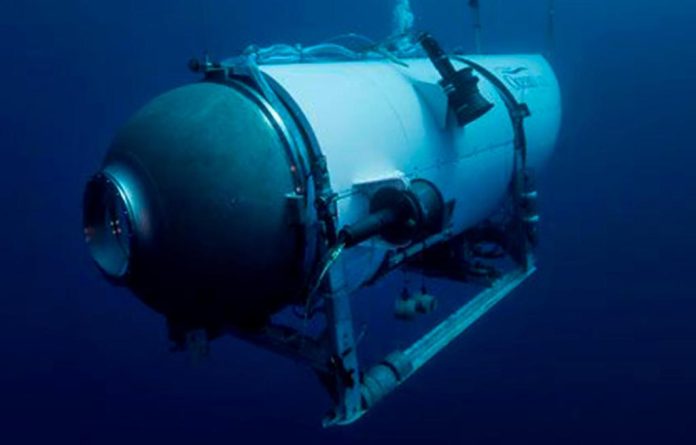
A submersible carrying five people to the Titanic imploded near the site of the shipwreck and killed everyone on board, authorities said Thursday, bringing a tragic end to a saga that included an urgent around-the-clock search and a worldwide vigil for the missing vessel.

Coast Guard officials said during a news conference that they’ve notified the families of the crew of the Titan, which had been missing since Sunday.

The sliver of hope that remained for finding the five men alive was wiped away early Thursday, when the submersible’s 96-hour supply of oxygen was expected to run out and the Coast Guard announced that debris had been found roughly 1,600 feet (488 meters) from the Titanic in North Atlantic waters.

“This was a catastrophic implosion of the vessel,” said Rear Adm. John Mauger, of the First Coast Guard District.

After the submersible was reported missing Sunday, the U.S. Navy went back and analyzed its acoustic data and found an anomaly that was consistent with an implosion or explosion in the general vicinity of where the TITAN submersible was operating when communications were lost,” a senior Navy official told The Associated Press on Thu4rsday.

The official spoke on condition of anonymity to discuss a sensitive acoustic detection system.

The Navy passed on the information to the Coast Guard, which continued its search.

OceanGate Expeditions, the company that owned and operated the submersible, said in a statement that all five people in the vessel, including CEO and pilot Stockton Rush, “have sadly been lost.”

The others on board were: two members of a prominent Pakistani family, Shahzada Dawood and his son Suleman Dawood; British adventurer Hamish Harding; and Titanic expert Paul-Henri Nargeolet.

“These men were true explorers who shared a distinct spirit of adventure, and a deep passion for exploring and protecting the world’s oceans,” OceanGate said in a statement. “We grieve the loss of life and joy they brought to everyone they knew.”

OceanGate has been chronicling the Titanic’s decay and the underwater ecosystem around it via yearly voyages since 2021.

Rescuers rushed ships, planes and other equipment to the site of the disappearance.

Authorities were hoping underwater sounds detected Tuesday and Wednesday might help narrow their search, whose coverage area had been expanded to thousands of miles — twice the size of Connecticut and in waters 2 1/2 miles (4 kilometers) deep.

But the Coast Guard indicated Thursday that the sounds were likely generated by something other than the Titan.

“There doesn’t appear to be any connection between the noises and the location (of the debris) on the seafloor,” Mauger said.

Mauger said it was too soon to say whether the implosion happened at the time of the submersible’s last communication on Sunday. But it was not detected by sonar buoys used by search crews, he said, which suggests it happened before they arrived several days ago.

“We had listening devices in the water throughout and did not hear any signs of catastrophic failure from those,” he said.

The Coast Guard will continue searching near the Titanic for more clues about what happened to the Titan. Efforts to recover the submersible and the remains of the five men who died will also continue, Mauger said.

The White House thanked the U.S. Coast Guard, along with Canadian, British and French partners who helped in the search and rescue efforts.

“Our hearts go out to the families and loved ones of those who lost their lives on the Titan. They have been through a harrowing ordeal over the past few days, and we are keeping them in our thoughts and prayers,” the statement said.

The Titan launched at 6 a.m. Sunday and was reported overdue Sunday afternoon about 435 miles (700 kilometers) south of St. John’s, Newfoundland, as it was on its way to where the Titanic sank more than a century ago. By Thursday, when the oxygen supply was expected to run out, there was little hope of finding the crew alive.

Broadcasters around the world started newscasts at the critical hour Thursday with news of the submersible. The Saudi-owned satellite channel Al Arabiya showed a clock on air counting down to their estimate of when the air could potentially run out.

At least 46 people successfully traveled on OceanGate’s submersible to the Titanic wreck site in 2021 and 2022, according to letters the company filed with a U.S. District Court in Norfolk, Virginia, that oversees matters involving the Titanic shipwreck. But questions about the submersible’s safety were raised by former passengers.

One of the company’s first customers likened a dive he made to the site two years ago to a suicide mission.

“Imagine a metal tube a few meters long with a sheet of metal for a floor. You can’t stand. You can’t kneel. Everyone is sitting close to or on top of each other,” said Arthur Loibl, a retired businessman and adventurer from Germany. “You can’t be claustrophobic.”

During the 2 1/2-hour descent and ascent, the lights were turned off to conserve energy, he said, with the only illumination coming from a fluorescent glow stick.

The dive was repeatedly delayed to fix a problem with the battery and the balancing weights. In total, the voyage took 10 1/2 hours.

The submersible had seven backup systems to return to the surface, including sandbags and lead pipes that drop off and an inflatable balloon.

Nicolai Roterman, a deep-sea ecologist and lecturer in marine biology at the University of Portsmouth, England, said the disappearance of the Titan highlights the dangers and unknowns of deep-sea tourism.

“Even the most reliable technology can fail, and therefore accidents will happen. With the growth in deep-sea tourism, we must expect more incidents like this.”

___

Associated Press writers Lolita C. Baldor in Washington, Jon Gambrell in Dubai, United Arab Emirates; Ben Finley in Norfolk, Virginia; Frank Jordans in Berlin; Danica Kirka in London; and John Leicester in Paris contributed to this report.

Biden and Modi cheer booming economic ties in visit that also reckoned with India’s record on rights – Daily Press

0

By AAMER MADHANI, COLLEEN LONG and SEUNG MIN KIM (Associated Press)

WASHINGTON (AP) — President Joe Biden on Thursday pronounced the U.S.-India relationship never stronger and rolled out new business deals with Indian Prime Minister Narendra Modi as human rights activists and American lawmakers questioned the administration’s decision to honor the leader with a pomp-filled state visit.

In a joint news conference with Modi, Biden called the relationship between the U.S. and India among the most consequential in the world and “more dynamic than at any time in history.” He underscored how two of the world’s most powerful democracies were cooperating on issues such as the climate, health care and space, saying that the U.S-India economic relationship was “booming.”

But Modi bristled at a reporter’s question about his country’s commitment to democratic values as the country has seen an erosion of religious, political and press freedoms under his watch.

“Democracy is our spirit,” Modi, who rarely takes questions from journalists, said through an interpreter. “Democracy runs in our veins. We live democracy and our ancestors have actually put words to this concept.” He said India has “proved that democracies can deliver and when I say deliver, this is regardless of class, creed, religion, gender.”

Yet Modi has faced criticism over legislation amending the country’s citizenship law that fast-tracks naturalization for some migrants but excludes Muslims, a rise in violence against Muslims and other religious minorities by Hindu nationalists, and the recent conviction of India’s top opposition leader, Rahul Gandhi, for mocking Modi’s surname.

Nevertheless, later in an address before a joint meeting of Congress, Modi insisted that in India “diversity is a natural way of life.”

“We are home to all faiths in the world, and we celebrate all of them,” added Modi, in a line that brought many cheering lawmakers to their feet.

The premier’s description runs counter to accusations by rights groups of widespread attacks and discrimination against India’s Muslims and other minorities under Modi.

A group of more than 70 lawmakers wrote to Biden this week urging him to raise concerns about the erosion of religious, press and political freedoms during the visit. At least six Democratic lawmakers —Democratic Reps. Cori Bush of Missouri, Rashida Tlaib of Michigan, Ilhan Omar of Minnesota, Greg Casar of Texas, Jamaal Bowman and Alexandria Ocasio-Cortez of New York — boycotted Modi’s address to Congress, because of concerns about his human rights records.

“When it comes to standing up for human rights, actions speak louder than words,” Bush, Tlaib, Omar and Bowman said in a joint statement. “By bestowing Prime Minister Modi with the rare honor of a joint address, Congress undermines its ability to be a credible advocate for the rights of religious minorities and journalists around the world.”

Standing alongside Modi, Biden emphasized that press, religious and other fundamental freedoms should be at the core of how both democracies operate. During their Oval Office meeting, Biden said, he and Modi had a “good discussion about democratic values” while Modi said “there’s absolutely no space for discrimination” when pressed about his own commitment on human rights.

The state visit, just the third of the Biden’s presidency, was certainly a glitzy affair.

Thousands gathered on the White House South Lawn for the welcoming ceremony, listening to performances by violinist Vibha Janakiraman and the a cappella group Penn Masala. As Modi arrived, the crowd — including many members of the Indian diaspora — broke out in a chant of “Modi, Modi, Modi.”

“All eyes are on the two largest democracies in the world, India and America,” Modi said. “I believe that our strategic partnership is important. I’m confident that working together will be successful.”

Later, Modi told Congress that “our partnership augurs well for the future of democracy” as the two countries expand partnerships in defense, semiconductor manufacturing and other industries. He also cheered the “samosa caucus”—the six U.S. House members of Indian descent—and Vice President Kamala Harris, who is Black and of Indian descent, as examples of the impact of the diaspora.

Said Biden: “Since I’ve become president, we’ve continued to build a relationship built on mutual trust, candor and respect.”

Biden administration officials say honoring Modi, the leader of the conservative Hindu nationalist Bharatiya Janata Party, is Diplomacy 101. The U.S.-India relationship will be vital in coming decades as both sides navigate an ascendant China and the enormity of climate change, artificial intelligence, supply chain resilience and other issues.

“On the issues that matter most that will define the future, our nations look to one another including on critical regional and global issues,” Biden said.

Among the announcements made Thursday is an agreement that will allow U.S.-based General Electric to partner with India-based Hindustan Aeronautics to produce jet engines for Indian aircraft in India and the sale of U.S.-made armed MQ-9B SeaGuardian drones.

The Biden administration also is coming out with plans to bolster India’s semiconductor industry. U.S.-based Micron Technology has agreed to build a $2.75 billion semiconductor assembly and test facility in India, with Micron spending $800 million and India financing the rest. U.S.-based Applied Materials is announcing it will launch a new semiconductor center for commercialization and innovation in India, and Lam Research, another semiconductor manufacturing equipment company, will start a training program for 60,000 Indian engineers.

On the space front, India will sign on to the the Artemis Accords, a blueprint for space exploration cooperation among nations participating in NASA’s lunar exploration plans. NASA and the Indian Space Research Organization also agreed to make a joint mission to the International Space Station next year.

“We made critical and emerging technologies the pillar of our next generation partnership to ensure these technologies promote and protect our values, remain open, accessible, trusted and secure,” Biden added. “All this matters for America, for India and for the world.”

At the welcoming ceremony, Modi called the Indian diaspora in America — the millions of immigrants and their children from the subcontinent living in the U.S. — “the real strength” of the U.S.-India relationship. He said the honor of a formal state visit — the first in the U.S. for India since Barack Obama honored Modi’s predecessor, Manmohan Singh, in 2009 — reflected the positive impact Indians are having worldwide.

Modi, the son of a tea seller who rose to be India’s premier, also recalled that the first time he visited the White House was three decades ago as a “common man.”

“I have come here many times but today for the first time, the doors of the White House have been opened for the Indian American community in such large numbers,” Modi said to an estimated crowd of 7,000.

Despite the major deals, the visit was shadowed by concerns laid out by rights activists and lawmakers who question Modi’s commitment to democratic principles.

In 2005, the U.S. revoked Modi’s visa to the U.S., citing concerns that, as chief minister of the state of Gujarat, he did not act to stop communal violence during 2002 anti-Muslim riots that left more than 1,000 people dead. An investigation approved by the Indian Supreme Court later absolved Modi, but the stain of the dark moment has lingered.

Biden and Modi have also had differences over Russia’s war in Ukraine. India abstained from voting on U.N. resolutions condemning Russia and refused to join the global coalition against Russia. Since the start of the war, the Modi government has also dramatically increased its purchase of Russian oil.

White House officials note that there are signs of change in India’s relationship with Russia, which has long been New Delhi’s biggest defense supplier.

India is moving away from Russian military equipment, looking more to the U.S., Israel, Britain and other nations. Modi recently met with Ukrainian President Volodymyr Zelenskyy and has spoken out about his worries about the potential use of nuclear weapons by Russia.

Modi, before Congress, said the war is “causing great pain” in Ukraine and having residual effects on Europe and beyond.

“This is not an era of war, but it is one of dialogue and diplomacy” Modi said. “And we must all do what we can to stop the bloodshed and human suffering.”

Without specifically naming China, Modi also addressed heightened tensions in the region, saying “dark clouds of coercion and confrontation are casting their shadow in the Indo Pacific.”

Later Thursday, Modi is to attend a lavish White House state dinner in his honor.

___

Associated Press writers Lisa Mascaro, Fatima Hussein, Stephen Groves, and Ellen Knickmeyer contributed to this report.

The pilot and 4 passengers of the Titan submersible are dead, US Coast Guard says – Daily Press

0

By PATRICK WHITTLE and HOLLY RAMER (Associated Press)

A submersible carrying five people to the Titanic imploded near the site of the shipwreck and killed everyone on board, authorities said Thursday, bringing a tragic end to a saga that included an urgent around-the-clock search and a worldwide vigil for the missing vessel.

Coast Guard officials said during a news conference that they’ve notified the families of the crew of the Titan, which has been missing since Sunday.

The sliver of hope that remained for finding the crew alive was wiped away early Thursday, when the submersible’s 96-hour supply of oxygen was expected to run out and the Coast Guard announced that a debris field had been found roughly 1,600 feet (488 meters ) from the Titanic.

The Coast Guard said the submersible likely imploded in the North Atlantic waters.

“The debris is consistent with the catastrophic loss of the pressure chamber,” said Rear Adm. John Mauger, of the First Coast Guard District.

OceanGate Expeditions, the company that owned and operated the submersible, said in a statement that all five people in the vessel, including CEO Stockton Rush, “have sadly been lost.”

The others on board were: two members of a prominent Pakistani family, Shahzada Dawood and his son Suleman Dawood; British adventurer Hamish Harding; and Titanic expert Paul-Henri Nargeolet.

“These men were true explorers who shared a distinct spirit of adventure, and a deep passion for exploring and protecting the world’s oceans,” OceanGate said in a statement. “We grieve the loss of life and joy they brought to everyone they knew.”

OceanGate has been chronicling the Titanic’s decay and the underwater ecosystem around it via yearly voyages since 2021.

Rescuers rushed ships, planes and other equipment to the site of the disappearance.

Authorities were hoping underwater sounds detected Tuesday and Wednesday might help narrow their search, whose coverage area had been expanded to thousands of miles — twice the size of Connecticut and in waters 2 1/2 miles (4 kilometers) deep.

But the Coast Guard indicated Thursday that the sounds were likely generated by something other than the Titan.

“There doesn’t appear to be any connection between the noises and the location (of the debris) on the seafloor,” Mauger said.

The Coast Guard will continue searching near the Titanic for more clues about what happened to the Titan. Efforts to recover the submersible and the remains of the five men who died will also continue, Mauger said.

The Titan launched at 6 a.m. Sunday and was reported overdue Sunday afternoon about 435 miles (700 kilometers) south of St. John’s, Newfoundland, as it was on its way to where the iconic ocean liner sank more than a century ago. By Thursday, when the oxygen supply was expected to run out, there was little hope of finding the crew alive.

Broadcasters around the world started newscasts at the critical hour Thursday with news of the submersible. The Saudi-owned satellite channel Al Arabiya showed a clock on air counting down to their estimate of when the air could potentially run out.

At least 46 people successfully traveled on OceanGate’s submersible to the Titanic wreck site in 2021 and 2022, according to letters the company filed with a U.S. District Court in Norfolk, Virginia, that oversees matters involving the Titanic shipwreck. But questions about the submersible’s safety were raised by former passengers.

One of the company’s first customers likened a dive he made to the site two years ago to a suicide mission.

“Imagine a metal tube a few meters long with a sheet of metal for a floor. You can’t stand. You can’t kneel. Everyone is sitting close to or on top of each other,” said Arthur Loibl, a retired businessman and adventurer from Germany. “You can’t be claustrophobic.”

During the 2 1/2-hour descent and ascent, the lights were turned off to conserve energy, he said, with the only illumination coming from a fluorescent glow stick.

The dive was repeatedly delayed to fix a problem with the battery and the balancing weights. In total, the voyage took 10 1/2 hours.

The submersible had seven backup systems to return to the surface, including sandbags and lead pipes that drop off and an inflatable balloon.

Nicolai Roterman, a deep-sea ecologist and lecturer in marine biology at the University of Portsmouth, England, said the disappearance of the Titan highlights the dangers and unknowns of deep-sea tourism.

“Even the most reliable technology can fail, and therefore accidents will happen. With the growth in deep-sea tourism, we must expect more incidents like this.”

___

Associated Press writers Jon Gambrell in Dubai, United Arab Emirates; Ben Finley in Norfolk, Virginia; Frank Jordans in Berlin; Danica Kirka in London; and John Leicester in Paris contributed to this report.

Live updates | Coast Guard will continue searching sea floor for clues on what happened to Titan – Daily Press

0

By The Associated Press

Follow along for live updates on the submersible that vanished while taking five people down to the wreck of the Titanic.

___

COAST GUARD WILL CONTINUE SEARCHING SEA FLOOR FOR CLUES ABOUT WHAT HAPPENED TO TITAN

The Coast Guard will continue searching the sea floor near the Titanic shipwreck for more clues about what happened to the Titan submersible deep in the North Atlantic waters.

Officials say there isn’t a timeframe for when they will call off the massive international search. Efforts to recover the submersible and the remains of the five men who died in a catastrophic implosion aboard the vessel remain ongoing.

Much of the search is being done by remotely operated underwater vehicles known as ROVs that can scan the sea floor.

“This is an incredibly unforgiving environment down there on the seafloor,” Rear Adm. John Mauger of the First Coast Guard District said Thursday.

___

What to know:

— What we know so far about the submersible, what may have gone wrong, and what’s being done to find it

— Debris has been found near the Titanic during search for submersible, US Coast Guard says

— Did initial delays in communication hamper tourist sub search?

— A look at the five passengers aboard the vessel

— A 2018 lawsuit warned that insufficient prototype testing could put passengers in danger

— The vessel is a submersible not a submarine, and there is a key difference

___

TITAN’S DEBRIS FIELD WAS FOUND NEAR THE TITANIC SHIPWRECK, COAST GUARD SAYS

Coast Guard officials say the Titan’s debris field was discovered near the Titanic shipwreck but it’s too early to tell exactly when the catastrophic implosion occurred.

The Titan submersible was reported missing Sunday – eight hours after it initially lost contact with its surface ship – and its 96-hour oxygen supply would have run out Thursday morning.

It’s not clear whether the implosion occurred Sunday or in the days following, during an international search effort to find the missing submersible.

The Titan’s debris field was located roughly 1,600 feet (488 meters) from the Titanic.

___

TITAN SUBMERSIBLE LIKELY IMPLODED AND THERE WERE NO SURVIVORS, COAST GUARD SAYS

The Coast Guard says the Titan submersible likely imploded in the North Atlantic waters and there were no survivors among the five people aboard.

The implosion likely occurred near the Titanic shipwreck, where the submersible was headed.

“The debris is consistent with the catastrophic loss of the pressure chamber,” Rear Adm. John Mauger, the First Coast Guard District, said Thursday. “Our most heartfelt condolences go out to the loved ones of the crew.”

___

COMPANY LEADING TITANIC EXPEDITION SAYS FIVE PEOPLE ON MISSING SUBMERSIBLE BELIEVED TO BE DEAD

The company leading the Titan submersible trip to the wreckage of the Titanic says the five missing crew members are believed to be dead.

OceanGate Expeditions on Thursday says its pilot and chief executive Stockton Rush, along with passengers Shahzada Dawood and his son Suleman Dawood, Hamish Harding, and Paul-Henri Nargeolet “have sadly been lost.”

OceanGate did not provide details Thursday when the company announced the “loss of life” in a statement or how officials knew the crew members perished.

The vessel’s 96-hour oxygen supply likely ended early Thursday morning.

The company has been chronicling the Titanic’s decay and the underwater ecosystem around it via yearly voyages since 2021.

___

8-HOUR TIME DELAY TO REPORT MISSING TITAN RAISES QUESTIONS

Questions remain about the eight hours between when the Titan lost communication with the surface and when its Canadian support vessel reported it missing to the U.S. Coast Guard.

The time delay has yet to be explained by the company that owns the submersible, OceanGate Expeditions.

Sean Leet, head of the company that co-owns the Titan’s support ship, has refused to discuss the timeline, saying only that “all protocols were followed for the mission.”

But experts familiar with deep-sea exploration say those lost hours raise red flags.

The submersible used a rudimentary system that basically communicated with the surface ship through text message, and likely lacked an emergency radio beacon that could have floated to the surface and started beeping if there was an emergency.

The vessel had lost communication with the support ship, Canadian research icebreaker Polar Prince, during previous dives.

___

PAST DEEP-SEA RESCUES SHOW CHALLENGES FOR TITAN

The search for the Titan submersible has drawn attention to other deep-sea rescues, only some of which ended in lives being saved.

Those successful efforts — from a submersible off Ireland to a submarine off the New Hampshire coast — offer some measure of hope for the passengers and their families.

But many ended with some, if not all, the passengers on board dying — demonstrating the inherent risk of operating in the deep ocean.

Either way, those rescue missions were not as complex as the effort to find the Titan submersible. They were often in shallower waters and, in several cases, were much bigger crafts.

For example, the USS Squalus sank off the coast of New England in 1939 during a test dive, due to a catastrophic valve failure that partially flooded the military submarine. A newly developed rescue chamber was lowered into the water to famously save the surviving 33 crew members. Twenty-six others drowned in the initial accident.

But the Titan is a civilian vessel and would not have standard Navy hatches that could attach to a rescue chamber like the one used for the Squalus. That makes it almost impossible to rescue any of the submersible’s occupants if they are found underwater.

___

SEARCH FOR TITAN SHOWS NEED FOR MORE DEEP-SEA TECH

An underwater researcher says the search for the Titan shows the desperate need for more deep-sea technology in the U.S.

The unsuccessful efforts have “really opened up people’s eyes that we need a much more robust capability over larger areas of the ocean to be able to detect and sense where things are,” said Nick Rotker, who leads underwater research for non-profit research and development company MITRE.

The U.S. needs more underwater robots and remotely operated underwater vehicles, known as ROVs, to ensure safety, he said, especially as private exploration of the ocean expands.

“The issue is we don’t have a lot of capability or systems that can go to the depth this vessel was going to,” Rotker said.

Several ROVs are in the North Atlantic waters to search for the missing submersible. One found a debris field near the Titanic wreckage that could be linked to the Titan. The debris field was discovered by a robot from a Canadian vessel.

___

DEBRIS FIELD DISCOVERED BY DEEP-SEA ROBOT

Officials say a remote-operated robot discovered the debris field near the Titanic that could be linked to the missing Titan.

The robot is one of several remotely operated vehicles, known as ROVs, scanning the sea floor for clues of the missing submersible.

The ROVs are outfitted with cameras and travel to depths many other vessels cannot and have been used for undersea exploration for decades.

The Coast Guard’s post on Twitter gave no details, such as whether officials believe the debris field is connected to the Titan.

The Titanic wreckage is located at a depth of 12,500 feet (3.8 kilometers) in the North Atlantic waters.

The Coast Guard has scheduled an afternoon news conference in Boston to discuss the ROV’s findings.

___

DEBRIS FIELD FOUND NEAR TITANIC SITE AMID SEARCH FOR MISSING SUBMERSIBLE

The U.S. Coast Guard says an underwater vessel has located a debris field near the Titanic in the search for a missing submersible with five people aboard, a potential breakthrough in an increasingly urgent around-the-clock effort.

The Coast Guard’s post on Twitter gave no details, such as whether officials believe the debris is connected to the Titan, which was on an expedition to view the wreckage of the Titanic. The search passed the critical 96-hour mark Thursday morning when breathable air could have run out.

The Titan was estimated to have about a four-day supply of breathable air when it launched Sunday morning in the North Atlantic — but experts have emphasized that was an imprecise approximation to begin with and could be extended if passengers have taken measures to conserve breathable air.

____

PAKISTAN’S GOVERNMENT FOLLOWING DEVELOPMENTS IN SEARCH FOR TITAN

A spokesperson for Pakistan’s Foreign Ministry says the country’s diplomats in the United States and Canada are following developments in the search for the Titan.

Pakistani businessman Shahzada Dawood and his son, Suleman, are among the five people aboard the submersible that went missing Sunday as it descended to the wreckage of the Titanic.

“We have confidence that this matter will be pursued effectively by the local authorities,” ministry spokesperson Mumtaz Zahra Baloch said Thursday at a news conference in Islamabad.

It was the first comment by any Pakistani official since the submersible vanished.

“We would not like to speculate on the circumstances of this incident and we would also like to respect the wishes of the Dawood family that their privacy may be respected,” she said.

The Dawoods are members of one of the country’s most prominent families.

The family’s company, Dawood Hercules Corp., based in Karachi, is involved in agriculture, petrochemicals, telecommunication infrastructure and other ventures.

___

AS OXYGEN LEVELS RUN LOW ON BOARD TITAN, PASSENGERS CAN MAKE MINOR CONSERVATION EFFORTS

The Titan was said to have enough oxygen on board to to last 96 hours, according to the U.S. Coast Guard, meaning they could run out sometime Thursday.

But there are ways the five passengers can conserve, said professor professor Hugh Montgomery, director of the Centre for Human Health and Performance at University College London, even as temperatures drop to near freezing.

The human body makes every effort to maintain a core body temperature so shivering may increase oxygen demands, he said.

“The only effective way to limit O2 demand in this circumstance is not to burn excess energy,” Montgomery said.

That means staying immobile or sleeping. Meditation can also slightly reduce oxygen demand by producing less stress hormones, less movement and more relaxed muscles, but such effects will be marginal, he said.

___

FRENCH DEEP SEA ROBOT JOINS INTERNATIONAL SEARCH FOR MISSING SUBMERSIBLE

A French deep sea robot that can dive to depths of 6,000 meters (19,685 feet) has joined the search for the missing Titan submersible and its five passengers.

France’s state-run ocean research institute said Thursday the Victor 6000 is fitted with cameras, lights and robotic arms that could, if Titan is found, assist in raising it to the surface.

“With all of its cameras and things, we’re capable of finding things really well in an area 20 to 30 meters (yards) around,” said Olivier Lefort, the fleet director at the French ocean research institute Ifremer. He added that if the Titan is found, Victor 6000 could help attach cables to the submersible in an effort to raise it.

The robot was aboard the French ocean research ship L’Atalante, which was working in the Atlantic, 48 hours away, when the Titan vanished Sunday on its way to the Titanic wreckage, which is at about 3,800 meters (12,467 feet) deep.

___

‘DESPERATE SITUATION:’ SCIENTISTS, WHILE REALISTIC ABOUT SURVIVAL CHANCES, OFFER HOPE

Scientists, while remaining realistic about the chances of finding the Titan on the vast ocean floor, are still offering a glimmer of hope.

Rob Larter, a marine geophysicist with the British Antarctic Survey, said in London on Thursday that it’s incredibly difficult to find an object the size of the Titan in a totally dark environment. He says it’s not going to be found with active sonar from a surface ship, but rather with a towed or autonomous vehicle that’s near the seafloor. Even those vehicles can see just a matter of meters.

“I’ve been involved in searches for hydrothermal vent sites,” he said. “We’ve have the vehicles just a few tens of meters away and missed them and then come back and find them. So it really is, you know, literally it’s just a needle in a haystack situation unless you’ve got a pretty precise location”

Jamie Pringle, an expert in forensic geosciences at Keele University in the United Kingdom says the first 24 hours are critical in these kinds of rescue operations and that time period has long passed.

“So there’s always a chance. It’s never zero. But I think obviously the longer the time elapses, the lower the chance of success,” he said.

Larter called it a “desperate situation” buy says you try to stay optimistic as long as possible.

“It’s kind of unimaginable if people are alive, trapped in a submersible with oxygen supplies running down,” he said.

___

THE SEARCH FOR THE SUBMERSIBLE IS NEARING THE CRITICAL 96-HOUR MARK

The search is nearing the critical 96-hour mark when breathable air is expected to run out, reaching a vital moment in the intense effort to save the five people aboard.

The Titan submersible was estimated to have a 96-hour supply of breathable air when it launched Sunday morning in the North Atlantic. That means the deadline to find and rescue the sub is roughly between 6 a.m. (1000 GMT) and 8 a.m. (1200 GMT) on Thursday based on estimates the U.S. Coast Guard and company behind the expedition have provided.

Experts say that the oxygen supply number is an imprecise estimate and could be extended if passengers have taken measures to conserve breathable air. And it’s not known if they survived since the sub disappeared Sunday morning.

Officials have expanded the coverage area to thousands of miles — twice the size of Connecticut and in waters 2 1/2 miles deep. Airplanes, ships, remote-operated underwater vehicles and a U.S. Navy-owned specialized salvage system have been deployed, concentrating where unidentified noises had been heard for two days. The noises raised hopes of a possible discovery.

Hampton fined nearly $20,000 for safety violations during blaze that injured 8 firefighters – Daily Press

0

Hampton has been fined $19,978 by the Virginia Department of Labor and Industry for numerous safety violations that led to eight firefighters being injured in a fire last year.

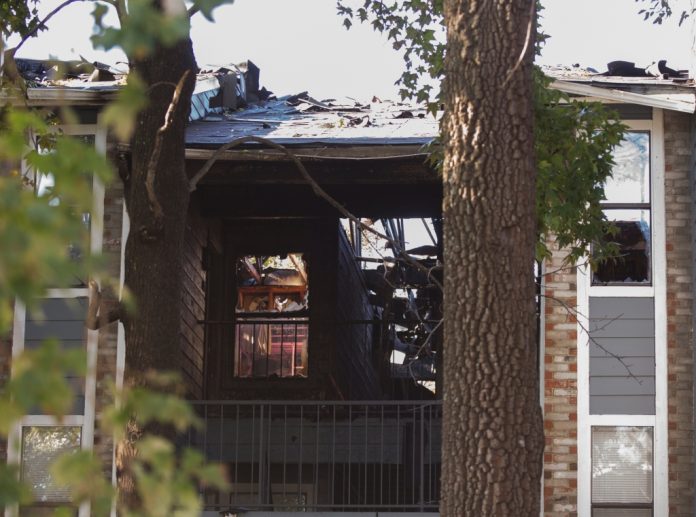
The labor department launched an investigation shortly after the firefighters and four residents were injured in an Oct. 21 fire at the Township in Hampton Woods apartment complex. The Hampton Fire and Rescue Division previously reported that an electric blanket started the fire, which ended up displacing 50 people.

At the fire in October, the first crew to enter the building shut itself in the apartment without a charged hose line and could not suppress the fire due to a lack of a water supply. Among those to enter the building was the incident commander, who is responsible for establishing a command post, providing clear and concise information to incoming companies, ensuring firefighter lifesaving initiatives are established, and keeping control of the incident until it is transferred to another commanding officer or until the matter is safely resolved.

One “serious” safety violation cited in the investigation — which cost the city $9,989 — was that the Hampton fire division failed to provide a safe working environment “free from recognized hazards” likely to cause death or serious physical harm. The report notes that employees were exposed to the hazards of thermal burns, smoke inhalation and asphyxiation from the fire.

The citation says the incident commander immediately entered the burning structure, “failing to ensure that the one firefighter left outside the danger zone properly charged the hand hose brought in for fire attack and search and rescue.” The report also says the incident commander “failed to do an initial 360 degree assessment” and monitor the structural conditions of the building.

Because the hose line wasn’t charged, the first crew to enter the building had no water. A flashover event occurred in the structure, leading to crew members being burnt before other firefighters rescued them. Ultimately, eight firefighters received serious thermal burns and had to be treated at a hospital.

The city was also fined $9,989 for communication failures between the firefighters inside the burning building and those outside.

The report says the firefighter stationed at Engine 10 handling the water lines was not on the same tactical radio frequency as the firefighters inside the structure. The firefighter responsible for providing the water at Engine 10 could also not see the stairwell where the crew entered from his position.

The report says, “He was unaware the entry firefighters were injured until it was reported to him later after they had been transported. The water supply to the hand hose was not properly charged, and no water was flowing to the interior firefighting crew. The use of the primary radio channel, Tac 2 channel, and Tac 6 channel for the incident caused confusion and overlapping safety-sensitive transmissions to the Battalion Chief once in command.”

Hampton was also cited, but not charged, for inadequately training the firefighter at Engine 10 to charge the water hose line properly. Hampton was also cited, but not fined, for employees using fire helmets where the installed reflective tetrahedron stickers were not maintained and were defective.

Initially, Hampton was slated to receive $28,540 in fines, but the city was able to get the penalties reduced. Hampton Fire and Rescue Battalion Chief Anthony Chittum said in an emailed statement that the division received the citations on April 21. After attending an informal conference with the agency, the Division received an amended citation with a reduced fine.

Chittum said the city contested information contained within the report by providing supporting facts, information and data. Subsequently, the citation and its contents were reduced and the penalties were paid in full.

“It is the goal of the Hampton Fire Division to meet or exceed the best practices, standards, and expectations of similar public safety agencies across the country,” Chittum said in an emailed statement. “The Division is internationally accredited by (Commission on Fire Accreditation International) and holds the highest ISO rating of ‘1’ and was recently re-evaluated, and subsequently re-accredited, to ensure compliance with industry standards. The Division welcomes these evaluations because it provides valuable guidance and continuous quality improvement opportunities.”

City Manager Mary Bunting issued an emailed statement in which he said that while the city “largely did not dispute” many of the investigation’s findings, it did negotiate the “appropriate remedies” to the violations in an informal meeting.

“I believe the result of that informal conference was fair to the City and all involved,” Bunting said in her statement. “Hampton is committed to the safety of our firefighters, as well as all of the members of our City team and to the public.”

The Hampton Fire Division previously issued a 72-page report listing causal factors believed to have played a role in the incident. Hampton’s report made various recommendations to improve the division’s response to further incidents.

Hampton’s earlier report received some criticism from the International Association of Fire Fighters, which accused the account of lacking accountability from top leadership and accused the city of ignoring warnings from Hampton firefighters of understaffing. The association also said the report blamed firefighters “who risked their lives to save residents while completely skirting the systemic problems that plague the Hampton Division of Fire and Rescue.”

A debris field has been found near the Titanic during search for submersible, US Coast Guard says – Daily Press

0

By PATRICK WHITTLE and HOLLY RAMER (Associated Press)

The search for a missing submersible with five people aboard took a bleak turn Thursday when the U.S. Coast Guard said a debris field was found at the bottom of the ocean near the Titanic, and the critical 96-hour mark passed when breathable air could have run out.

The Coast Guard’s post on Twitter did not say whether officials believe the debris is connected to the Titan, which was on an expedition to view the wreckage of the Titanic. It said the debris was discovered within the search area by a remotely operated underwater robot, and was being evaluated.

The Titan was estimated to have about a four-day supply of breathable air when it launched Sunday morning in the North Atlantic — but experts have emphasized that was an imprecise approximation to begin with and could be extended if passengers have taken measures to conserve breathable air. And it’s not known if they survived since the sub’s disappearance.

Rescuers have rushed ships, planes and other equipment to the site of the disappearance. On Thursday, the U.S. Coast Guard said an undersea robot sent by a Canadian ship had reached the sea floor, while a French research institute said a deep-diving robot with cameras, lights and arms also joined the operation.

Authorities are hoping underwater sounds might help narrow their search, whose coverage area has been expanded to thousands of miles — twice the size of Connecticut and in waters 2 1/2 miles (4 kilometers) deep. Coast Guard officials said underwater noises were detected in the search area Tuesday and Wednesday.

Jamie Pringle, an expert in Forensic Geosciences at Keele University, in England, said even if the noises came from the submersible, “The lack of oxygen is key now; even if they find it, they still need to get to the surface and unbolt it.”

The Titan was reported overdue Sunday afternoon about 435 miles (700 kilometers) south of St. John’s, Newfoundland, as it was on its way to where the iconic ocean liner sank more than a century ago. OceanGate Expeditions, which is leading the trip, has been chronicling the Titanic’s decay and the underwater ecosystem around it via yearly voyages since 2021.

By Thursday morning, hope was running out that anyone on board the vessel would be found alive.

Many obstacles still remain: from pinpointing the vessel’s location, to reaching it with rescue equipment, to bringing it to the surface — assuming it’s still intact. And all that has to happen before the passengers’ oxygen supply runs out.

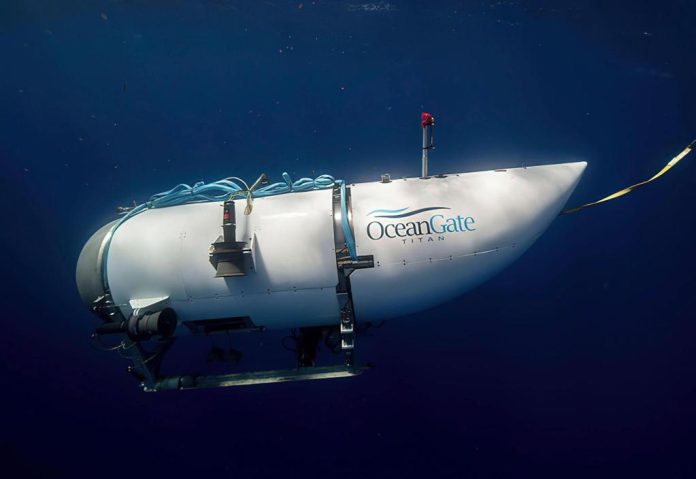
Dr. Rob Larter, a marine geophysicist with the British Antarctic Survey, emphasized the difficulty of even finding something the size of the sub — which is about 22 feet (6.5 meters) long and 9 feet (nearly 3 meters) high.

“You’re talking about totally dark environments,” in which an object several dozen feet away can be missed, he said. “It’s just a needle in a haystack situation unless you’ve got a pretty precise location.”

Newly uncovered allegations suggest there had been significant warnings made about vessel safety during the submersible’s development.

Broadcasters around the world started newscasts at the critical hour Thursday with news of the submersible. The Saudi-owned satellite channel Al Arabiya showed a clock on air counting down to their estimate of when the air could potentially run out.

Captain Jamie Frederick of the First Coast Guard District said a day earlier that authorities were still holding out hope of saving the five passengers onboard.

“This is a search-and-rescue mission, 100%,” he said Wednesday.

Retired Navy Capt. Carl Hartsfield, now the director of the Woods Hole Oceanographic Systems Laboratory, said the sounds detected have been described as “banging noises,” but he warned that search crews “have to put the whole picture together in context and they have to eliminate potential manmade sources other than the Titan.” Frederick acknowledged Wednesday that authorities didn’t what the sounds were.

The report of sounds was encouraging to some experts because submarine crews unable to communicate with the surface are taught to bang on their submersible’s hull to be detected by sonar.

The U.S. Navy said in a statement Wednesday that it was sending a specialized salvage system that’s capable of hoisting “large, bulky and heavy undersea objects such as aircraft or small vessels.”

The Titan weighs 20,000 pounds (9,000 kilograms). The U.S. Navy’s Flyaway Deep Ocean Salvage System is designed to lift up to 60,000 pounds (27,200 kilograms), the Navy said on its website.

Lost aboard the vessel is pilot Stockton Rush, the CEO of OceanGate. His passengers are: British adventurer Hamish Harding; Pakistani businessman Shahzada Dawood and his son Suleman; and French explorer and Titanic expert Paul-Henry Nargeolet.

In the first comments from Pakistan since the Titan vanished, Pakistani Foreign Ministry spokesperson Mumtaz Zahra Baloch said Thursday that officials have confidence in the search efforts.

“We would not like to speculate on the circumstances of this incident and we would also like to respect the wishes of the Dawood family that their privacy may be respected,” she said.

At least 46 people successfully traveled on OceanGate’s submersible to the Titanic wreck site in 2021 and 2022, according to letters the company filed with a U.S. District Court in Norfolk, Virginia, that oversees matters involving the Titanic shipwreck.

One of the company’s first customers characterized a dive he made to the site two years ago as a “kamikaze operation.”

“Imagine a metal tube a few meters long with a sheet of metal for a floor. You can’t stand. You can’t kneel. Everyone is sitting close to or on top of each other,” said Arthur Loibl, a retired businessman and adventurer from Germany. “You can’t be claustrophobic.”

During the 2 1/2-hour descent and ascent, the lights were turned off to conserve energy, he said, with the only illumination coming from a fluorescent glow stick.

The dive was repeatedly delayed to fix a problem with the battery and the balancing weights. In total, the voyage took 10 1/2 hours.

The submersible had seven backup systems to return to the surface, including sandbags and lead pipes that drop off and an inflatable balloon.

Nick Rotker, who leaders underwater research for the nonprofit research and development company MITRE, said the difficulty in searching for the Titan has underscored the U.S.’s need for more underwater robots and remotely operated underwater vehicles.

“The issue is, we don’t have a lot of capability or systems that can go to the depth this vessel was going to,” Rotker said.

Nicolai Roterman, a deep-sea ecologist and lecturer in marine biology at the University of Portsmouth, England, said the disappearance of the Titan highlights the dangers and unknowns of deep-sea tourism.

“Even the most reliable technology can fail, and therefore accidents will happen. With the growth in deep-sea tourism, we must expect more incidents like this.”

___

Associated Press writers Jon Gambrell in Dubai, United Arab Emirates; Ben Finley in Norfolk, Virginia; Frank Jordans in Berlin; Danica Kirka in London; and John Leicester in Paris contributed to this report.

China formally protests Biden’s depiction of its leader as an out-of-touch ‘dictator’ – Daily Press

0

By SYLVIE CORBET and ELLEN KNICKMEYER (Associated Press)

WASHINGTON (AP) — China said Thursday it had registered a formal protest over President Joe Biden’s reference to Chinese leader Xi Jinping as a “dictator,” while Treasury Secretary Janet Yellen stressed the critical importance of the two rival powers maintaining relations despite their disagreements.

Biden’s remarks at a 2024 reelection fundraiser Tuesday opened a new rift just after Secretary of State Antony Blinken concluded a visit to Beijing that was meant as a step toward stabilizing ties and improving communications with China.

Biden called the Chinese president a dictator, depicted him as out-of-touch during last winter’s tumult over a Chinese spy balloon, and dismissed China as having “real economic difficulties.”

China’s embassy in Washington said it had delivered a formal protest, with Chinese Ambassador Xie Feng telling senior White House and State Department officials Wednesday that Washington “should take earnest actions to undo the negative impact” of what Biden said or “bear all the consequences.”

“With the latest irresponsible remarks about China’s political system and its top leader, people cannot help but question the sincerity of the U.S. side” in seeking to stabilize relations, the embassy statement said. “The Chinese government and people do not accept any political provocation against China’s top leader and will resolutely respond.”

The diplomatic dispute with China comes as Biden hosts Indian Prime Minister Narendra Modi for a lavish state visit where a central theme will be a shared wariness of China.

As an official government-to-government communication, the ambassador’s message to the Biden administration carries more weight than the critical comments made a day earlier by a Chinese government spokesperson to reporters. China gave no further details of how the ambassador delivered his message, whether it was seeking an apology from the Biden administration, or what the consequences would be.

China and the U.S. in recent years have been cycling in and out of diplomatic flare-ups. China has used measures ranging from cutting diplomatic ties to staging military maneuvers off Taiwan to show its displeasure.

Biden administration officials on Wednesday defended Biden’s remarks, saying the president has made a point of drawing distinctions between the world’s democracies and autocracies. The State Department said Thursday that it does not comment on private diplomatic discussions.

Speaking at an unrelated news conference in Paris, Yellen said “with respect to the comments, I think President Biden and I both believe it’s critical to maintain communication … to clear up misperceptions, miscalculations. We need to work together where possible.”

“But we have disagreements, and we are also forthright in recognizing we do have disagreements,” she added.

Yellen has recently advocated for improving relations between the U.S. and China, arguing cooperation is needed for the sake of maintaining global stability.

Speaking as a two-day gathering gets underway in Paris on improving the global financial response to climate change and poverty, Yellen said she was “certainly pleased to see China participating in this summit.”

Chinese Premier Li Qiang was among the dozens of heads of state and government, world finance officials and activists who converged on the French capital to discuss ways of reforming the global financial system and address debt, climate change and poverty crises, especially for developing nations.

“I believe it’s important, as President Biden does, that the world’s two largest economies are … working together in addressing global challenges,” Yellen said.

She also emphasized that debt restructuring was a U.S. priority.

As a growing number of countries struggle with unsustainable debt aggravated by the fallout from climate change, Yellen encouraged all creditors to enter into negotiations to make the burden sustainable. China is the world’s biggest government lender.

Citing Zambia, the southern African country she visited in January, Yellen said she was “encouraged by progress” regarding debt negotiations and was hoping “debt treatment can move forward soon.” She did not provide details.

“Other urgent pending cases must also move forward quickly,” she added, mentioning Ghana and Sri Lanka.

___

Corbet reported from Paris.

The search for the missing Titanic submersible passes the critical 96-hour mark for oxygen supply – Daily Press

0

By PATRICK WHITTLE and HOLLY RAMER (Associated Press)

The search for the missing submersible on an expedition to view the wreckage of the Titanic passed the critical 96-hour mark Thursday when breathable air could have run out, a grim moment in the intense effort to save the five people aboard.

The Titan submersible was estimated to have about a four-day supply of breathable air when it launched Sunday morning in the North Atlantic — but experts have emphasized that was an imprecise approximation to begin with and could be extended if passengers have taken measures to conserve breathable air. And it’s not known if they survived since the sub’s disappearance.

Rescuers have rushed ships, planes and other equipment to the site of the disappearance. On Thursday, the U.S. Coast Guard said an undersea robot sent by a Canadian ship had reached the sea floor, while a French research institute said a deep-diving robot with cameras, lights and arms also joined the operation.

Authorities are hoping underwater sounds might help narrow their search, whose coverage area has been expanded to thousands of miles — twice the size of Connecticut and in waters 2 1/2 miles (4 kilometers) deep. Coast Guard officials said underwater noises were detected in the search area Tuesday and Wednesday.

Jamie Pringle, an expert in Forensic Geosciences at Keele University, in England, said even if the noises came from the submersible, “The lack of oxygen is key now; even if they find it, they still need to get to the surface and unbolt it.”

The Titan was reported overdue Sunday afternoon about 435 miles (700 kilometers) south of St. John’s, Newfoundland, as it was on its way to where the iconic ocean liner sank more than a century ago. OceanGate Expeditions, which is leading the trip, has been chronicling the Titanic’s decay and the underwater ecosystem around it via yearly voyages since 2021.

By Thursday morning, hope was running out that anyone on board the vessel would be found alive.

Many obstacles still remain: from pinpointing the vessel’s location, to reaching it with rescue equipment, to bringing it to the surface — assuming it’s still intact. And all that has to happen before the passengers’ oxygen supply runs out.

Dr. Rob Larter, a marine geophysicist with the British Antarctic Survey, emphasized the difficulty of even finding something the size of the sub — which is about 22 feet (6.5 meters) long and 9 feet (nearly 3 meters) high.

“You’re talking about totally dark environments,” in which an object several dozen feet away can be missed, he said. “It’s just a needle in a haystack situation unless you’ve got a pretty precise location.”

Newly uncovered allegations suggest there had been significant warnings made about vessel safety during the submersible’s development.

Broadcasters around the world started newscasts at the critical hour Thursday with news of the submersible. The Saudi-owned satellite channel Al Arabiya showed a clock on air counting down to their estimate of when the air could potentially run out.

Captain Jamie Frederick of the First Coast Guard District said a day earlier that authorities were still holding out hope of saving the five passengers onboard.

“This is a search-and-rescue mission, 100%,” he said Wednesday.

Frederick said while the sounds that have been detected offered a chance to narrow the search, their exact location and source hadn’t yet been determined.

“We don’t know what they are, to be frank,” he said.

Retired Navy Capt. Carl Hartsfield, now the director of the Woods Hole Oceanographic Systems Laboratory, said the sounds have been described as “banging noises,” but he warned that search crews “have to put the whole picture together in context and they have to eliminate potential manmade sources other than the Titan.”

The report was encouraging to some experts because submarine crews unable to communicate with the surface are taught to bang on their submersible’s hull to be detected by sonar.

The U.S. Navy said in a statement Wednesday that it was sending a specialized salvage system that’s capable of hoisting “large, bulky and heavy undersea objects such as aircraft or small vessels.”

The Titan weighs 20,000 pounds (9,000 kilograms). The U.S. Navy’s Flyaway Deep Ocean Salvage System is designed to lift up to 60,000 pounds (27,200 kilograms), the Navy said on its website.

Lost aboard the vessel is pilot Stockton Rush, the CEO of OceanGate. His passengers are: British adventurer Hamish Harding; Pakistani businessman Shahzada Dawood and his son Suleman; and French explorer and Titanic expert Paul-Henry Nargeolet.

At least 46 people successfully traveled on OceanGate’s submersible to the Titanic wreck site in 2021 and 2022, according to letters the company filed with a U.S. District Court in Norfolk, Virginia, that oversees matters involving the Titanic shipwreck.

One of the company’s first customers characterized a dive he made to the site two years ago as a “kamikaze operation.”

“Imagine a metal tube a few meters long with a sheet of metal for a floor. You can’t stand. You can’t kneel. Everyone is sitting close to or on top of each other,” said Arthur Loibl, a retired businessman and adventurer from Germany. “You can’t be claustrophobic.”

During the 2.5-hour descent and ascent, the lights were turned off to conserve energy, he said, with the only illumination coming from a fluorescent glow stick.

The dive was repeatedly delayed to fix a problem with the battery and the balancing weights. In total, the voyage took 10.5 hours.

The submersible had seven backup systems to return to the surface, including sandbags and lead pipes that drop off and an inflatable balloon.

Nicolai Roterman, a deep-sea ecologist and lecturer in marine biology at the University of Portsmouth, England, said the disappearance of the Titan highlights the dangers and unknowns of deep-sea tourism.

“I think it is important to remember that to us humans, the deep sea is a very inhospitable place,” he said.

“Even the most reliable technology can fail, and therefore accidents will happen. With the growth in deep-sea tourism, we must expect more incidents like this.”

___

Associated Press writers Jon Gambrell in Dubai, United Arab Emirates; Ben Finley in Norfolk, Virginia; Frank Jordans in Berlin; Danica Kirka in London; and John Leicester in Paris contributed to this report.

Live updates | French deep sea robot joins search for missing submersible – Daily Press

0

By The Associated Press

Follow along for live updates on the submersible that vanished while taking five people down to the wreck of the Titanic.

FRENCH DEEP SEA ROBOT JOINS INTERNATIONAL SEARCH FOR MISSING SUBMERSIBLE

A French deep sea robot that can dive to depths of 6,000 meters (19,685 feet) has joined the search for the missing Titan submersible and its five passengers.

France’s state-run ocean research institute said Thursday the Victor 6000 is fitted with cameras, lights and robotic arms that could, if Titan is found, assist in raising it to the surface.

“With all of its cameras and things, we’re capable of finding things really well in an area 20 to 30 meters (yards) around,” said Olivier Lefort, the fleet director at the French ocean research institute Ifremer. He added that if the Titan is found, Victor 6000 could help attach cables to the submersible in an effort to raise it.

The robot was aboard the French ocean research ship L’Atalante, which was working in the Atlantic, 48 hours away, when the Titan vanished Sunday on its way to the Titanic wreckage, which is at about 3,800 meters (12,467 feet) deep.

____

What to know:

— What we know so far about the submersible, what may have gone wrong, and what’s being done to find it

— A look at the five passengers aboard the vessel

— A 2018 lawsuit warned that insufficient prototype testing could put passengers in danger

— The vessel is a submersible not a submarine, and there is a key difference

____

‘DESPERATE SITUATION:’ SCIENTISTS, WHILE REALISTIC ABOUT SURVIVAL CHANCES, OFFER HOPE

Scientists, while remaining realistic about the chances of finding the Titan on the vast ocean floor, are still offering a glimmer of hope.

Rob Larter, a marine geophysicist with the British Antarctic Survey, said in London on Thursday that it’s incredibly difficult to find an object the size of the Titan in a totally dark environment. He says it’s not going to be found with active sonar from a surface ship, but rather with a towed or autonomous vehicle that’s near the seafloor. Even those vehicles can see just a matter of meters.

“I’ve been involved in searches for hydrothermal vent sites,” he said. “We’ve have the vehicles just a few tens of meters away and missed them and then come back and find them. So it really is, you know, literally it’s just a needle in a haystack situation unless you’ve got a pretty precise location”

Jamie Pringle, an expert in forensic geosciences at Keele University in the United Kingdom says the first 24 hours are critical in these kinds of rescue operations and that time period has long passed.

“So there’s always a chance. It’s never zero. But I think obviously the longer the time elapses, the lower the chance of success,” he said.

Larter called it a “desperate situation” buy says you try to stay optimistic as long as possible.

“It’s kind of unimaginable if people are alive, trapped in a submersible with oxygen supplies running down,” he said.

___

THE SEARCH FOR THE SUBMERSIBLE IS NEARING THE CRITICAL 96-HOUR MARK

The search is nearing the critical 96-hour mark when breathable air is expected to run out, reaching a vital moment in the intense effort to save the five people aboard.

The Titan submersible was estimated to have a 96-hour supply of breathable air when it launched Sunday morning in the North Atlantic. That means the deadline to find and rescue the sub is roughly between 6 a.m. (1000 GMT) and 8 a.m. (1200 GMT) on Thursday based on estimates the U.S. Coast Guard and company behind the expedition have provided.

Experts say that the oxygen supply number is an imprecise estimate and could be extended if passengers have taken measures to conserve breathable air. And it’s not known if they survived since the sub disappeared Sunday morning.

Officials have expanded the coverage area to thousands of miles — twice the size of Connecticut and in waters 2 1/2 miles deep. Airplanes, ships, remote-operated underwater vehicles and a U.S. Navy-owned specialized salvage system have been deployed, concentrating where unidentified noises had been heard for two days. The noises raised hopes of a possible discovery.

TITAN SEARCHERS FACE UNDERWATER CHALLENGES TO FIND SUBMERSIBLE

Underwater mountains and valleys. Deep-sea water pressure. Weather conditions. And a search area twice the size of Connecticut – in waters 2 1/2 miles (4 kilometers) deep – with few clues about the Titan’s location.

The crews tasked with finding the Titan, which was reported overdue Sunday night, are facing all those challenges and more to locate the submersible amid the North Atlantic waters.

While undersea search efforts are nothing new – a 2019 expedition found two lost Japanese aircraft carriers that went down in World War II’s historic Battle of Midway around the Northwestern Hawaiian Islands – looking for the 22-foot-long (6.7-meter) carbon-fiber vessel amid the vast ocean is far more difficult than finding a needle in a haystack.

Those Japanese aircraft carriers were exponentially larger than the Titan – and still they were lost for decades after the June 1942 air and sea battle.

“I’ve seen large vessels hiding within extreme geology so searching for smaller objects requires more detailed scrutiny as opposed to searching for a sunken (cruiser) or aircraft carrier,” wrote Robert Kraft, a deep-sea explorer who was part of the 2019 expedition, in an email to The Associated Press from aboard his latest voyage.

____

SOUND MAY HELP, OR HINDER, SEARCH FOR MISSING SUBMERSIBLE

Teams racing to find the missing Titan submersible have detected underwater noises in the search area. But it won’t be easy to find the source of that sound in the “noisy” ocean.

There are many other potential sources of sound underwater, including from fish, other animals and of course human-made instruments, according to Matt Dzieciuch, an ocean acoustics expert at the Scripps Institution of Oceanography.

While the Coast Guard said search teams heard banging noises at 30-minute intervals, it’s still unclear whether the banging noises were a true signal of life.

Usually, an underwater vehicle will have a device called a pinger that can correspond with the surface and make it easier to locate, Dzieciuch said. But it’s unclear whether the Titan submersible was using one.

The search team is facing additional challenges because sound gets bent as it travels underwater, due to how pressure and temperature change at different depths, Dzieciuch said. That can create echo-like effects and make it hard to locate the source of a particular sound.

____

TITAN FACED PROBLEMS DURING PREVIOUS VOYAGES

Since its first expedition to the Titanic shipwreck in the summer of 2021, the Titan’s crews encountered problems aboard the submersible, including issues with its electrical system and battery, according to documents filed in a federal court in Virginia that oversees matters involving the Titanic shipwreck.

The issues during the first expedition were mostly electrical problems that were “solved as they came up,” according to the documents filed by OceanGate Expeditions, the undersea exploration company that commanded the Titan’s missions.

Ultimately, 18 of the submersible’s crew members explored the wreck site for the first time in 2021, the filing stated. Others, such as Paul-Henry Nargeolet, had already traveled to the site.

Nargeolet co-piloted four dives in 2021 and is one of the five people missing since the submersible vanished Sunday on its latest dive to the Titanic wreck.

The 2022 expedition brought more problems to the Titan.

“On the first dive to the Titanic, the submersible encountered a battery issue and had to be manually attached to its lifting platform,” the company wrote in another filing. “In the high sea state, the submersible sustained modest damage to its external components and OceanGate decided to cancel the second mission for “repairs and operational enhancements.”

____

TITAN EXPEDITION FEATURED MULTIPLE MISSIONS TO SHIPWRECK

The Titan’s voyage this month was one of several missions the submersible took to the Titanic’s wreck site in recent weeks.

The entire expedition began in early May in St. John’s, Newfoundland in Canada and was expected to last until the end of June, according to documents filed in a federal court in Virginia that oversees matters involving the Titanic shipwreck.

Each mission lasted eight days, but it was not clear how many missions had taken place before the fateful trip – or how many were scheduled to occur afterward. Eighteen total dives were planned.

An Instagram photo posted by OceanGate Expeditions, the undersea exploration company that commanded the Titan’s missions, showed a group of smiling people labeled as “our Mission 3 and Mission 4 crew” at sea just days before the Titan vanished on Sunday – the first day of its latest voyage.

____

UNDERSEA EXPLORATION ROBOTS CRITICAL IN SEARCH FOR MISSING SUBMERSIBLE

Remote-operated robots that are typically used for undersea exploration will instead be critical to any hope of finding the Titan.

There were two such remotely operated vehicles — or ROVs – in North Atlantic waters on Wednesday, with more on the way.

Designed to scan the sea floor in real time, the ROVs are outfitted with cameras and travel to depths many other vessels cannot.

ROVs have been used for undersea exploration since at least the mid-1980s, according to deep-sea explorer Katy Croff Bell, who is president of Ocean Discovery League.

The vessels are expensive to use and their method of data collection can be slow and painstaking, which is partly why scientists know so little about the ocean floor even after years of exploration.

But the ROVs might be the only way to find the Titan after the submersible vanished Sunday on a dive to the wreckage of the Titanic.

“ROVs are essential to the search and rescue mission,” Bell said. “Really the only way you’re going to be able to recover anything from the deep sea floor in real time.”

____

SIMPLE VIDEO GAME CONTROLLER USED TO STEER TITAN

The Titan is steered by a simple, off-the-shelf video game controller – to the shock of gamers worldwide.

It’s not the only commercially available equipment onboard the submersible, according to OceanGate Expeditions’ website.

“The use (of) off-the-shelf components helped to streamline the construction, and makes it simple to operate and replace parts in the field,” the company said on its website.

The undersea exploration company, based in Everett, Washington, oversaw the Titan’s mission and has been making yearly voyages to the Titanic since 2021.

OceanGate chief executive Stockton Rush, in an interview with the CBC last year, said the video game controller is “super durable.” There are spare controllers kept onboard, but is not clear whether the submersible also had manual controls or other redundancies.

“It’s meant for a 16 year old to throw it around,” said Rush, who is the Titan’s pilot and among the five people missing.

Documents show the company was repeatedly warned that there might be catastrophic safety problems posed by the way the submersible was developed.

____

SPECIALIZED UNDERWATER VESSEL FLOWN FOR SEA FLOOR SEARCH

The daunting search and rescue effort for the Titan is rushing experts and specialized underwater equipment together by land, by air and by sea to find the submersible before its oxygen runs out.

A remotely operated vehicle that can scan the sea floor, known as an ROV, was flown to Canada on Tuesday and is expected to arrive at the Titanic site on Thursday morning.

“The equipment that is onsite and coming is the most sophisticated in the world and certainly capable of reaching those depths,” said Sean Leet, chief executive of Canadian Horizon Maritime company.

The company and the Mi’kmaq band co-own the Polar Prince, which is the research vessel that launched the Titan.

“We are praying for our friends onboard the Titan submersible,” said Miawpukek First Nation Chief Mi’sel Joe. “We want them to come home safely. We ask everyone across Canada and the world to pray with us that we can find and rescue the Titan.”

____

US NAVY SENDING EQUIPMENT FOR POSSIBLE SALVAGE

The U.S. Navy is sending a specialized salvage system that’s capable of hoisting “large, bulky and heavy undersea objects such as aircraft or small vessels” in the hopes that the Titan will be found in the waters of the North Atlantic.

The Titan weighs 20,000 pounds (more than 9,000 kilograms). The U.S. Navy’s Flyaway Deep Ocean Salvage System is designed to lift up to 60,000 pounds (27,215 kilograms), the Navy said on its website.

The Flyaway has a traction winch as well as a system that prevents “high-snap tension” from occurring in the lift line.

____

PASSENGER ON 2021 DIVE TO TITANIC DESCRIBES RISKS

Looking back on his own 2021 dive to the Titanic, an early OceanGate passenger says one must be “a little bit crazy.”

Arthur Loibl, a retired businessman and adventurer from Germany, told The Associated Press on Wednesday that he conceived the idea to see the Titanic while on a 2016 trip to the South Pole. He paid $110,000 for a dive in 2019, but the first submersible didn’t survive testing. Loibl went two years later.

“Imagine a metal tube, a few meters long with a sheet of metal for a floor. You can’t stand, you can’t kneel. Everyone is sitting close to or on top of each other,” Loibl said. “You can’t be claustrophobic.”

The dive, which was repeatedly delayed to fix problems, took 10 1/2 hours, he said.

Lost aboard the vessel are pilot Stockton Rush, the CEO of the company leading the expedition. His passengers are a British adventurer, two members of a Pakistani business family and a Titanic expert.

“I was a bit naive, looking back now,” said Loibl.

___

COAST GUARD BRINGS IN MORE SHIPS FOR SEARCH

The Coast Guard says it is bringing in more ships and underwater vessels to search for a submersible missing in the North Atlantic after underwater sounds were detected, providing a glimmer of hope three days after the Titan disappeared while taking five people down to the wreck of the Titanic.

Although the exact location and source of the sounds were not yet determined, they allowed searchers to focus on a more narrowly defined area. The full scope of the search was twice the size of Connecticut and 2 1/2 miles (4 kilometers) deep, said Capt. Jamie Frederick of the First Coast Guard District.

“This is a search and rescue mission, 100%,” Frederick said. “When you’re in the middle of a search and rescue case, you always have hope.”

But even those who expressed some optimism warned that many obstacles remain: from pinpointing the vessel’s location, to reaching it with rescue equipment, to bringing it to the surface — assuming it’s still intact — before the passengers’ oxygen supply runs out.

The U.S. Coast Guard did not elaborate on what rescuers believe the noises could be. The vessel hasn’t been heard from since Sunday. The passengers are estimated to have as little as a day’s worth of oxygen left.