Home Blog Page 138

Biden calls mutiny a ‘struggle within the Russian system’ and says US and NATO played no part – Daily Press

0

By SEUNG MIN KIM, AAMER MADHANI and ELLEN KNICKMEYER (Associated Press)

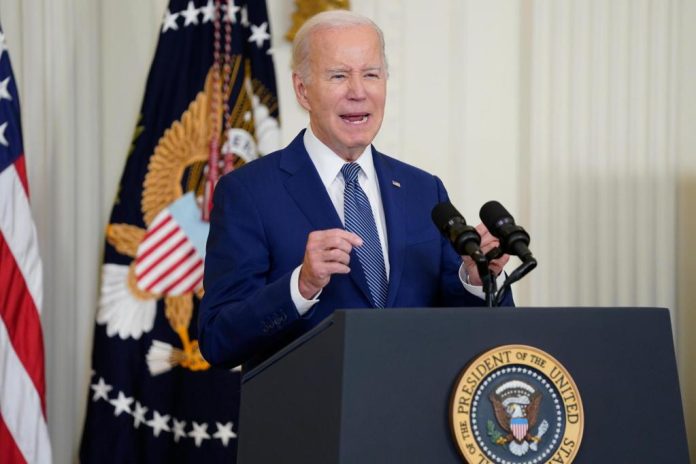
WASHINGTON (AP) — President Joe Biden declared Monday that the United States and NATO played no part in the Wagner mercenary group’s short-lived insurrection in Russia, calling the uprising and the longer-term challenges it poses for President Vladimir Putin’s power “a struggle within the Russian system.”

Biden and U.S. allies supporting Ukraine in its fight against Russia’s invasion emphasized their intent to be seen as staying out of the mercenaries’ stunning insurgency, the biggest threat to Putin in his two decades leading Russia. They are concerned that Putin could use accusations of Western involvement to rally Russians to his defense.

Biden and administration officials declined an immediate assessment of what the 22-hour uprising by the Wagner Group might mean for Russia’s war in Ukraine, for mercenary chief Yevgeny Prigozhin or for Russia itself.

“We’re going to keep assessing the fallout of this weekend’s events and the implications from Russia and Ukraine,” Biden said. “But it’s still too early to reach a definitive conclusion about where this is going.”

Putin, in his first public comments since the rebellion, blamed “Russia’s enemies” and said they “miscalculated.” He did not specify whom he meant.

Over the course of a tumultuous weekend in Russia, U.S. diplomats were in contact with their counterparts in Moscow to underscore that the American government regarded the matter as a domestic affair for Russia, with the U.S. only a bystander, State Department spokesman Matthew Miller said.

American diplomats also stressed to Moscow that they expected Russia to ensure the safety of the U.S. Embassy in Moscow and Americans detained in Russia, Miller said.

In a video call between Biden and leaders of U.S.-allied countries over the weekend, all were determined to give Putin “no excuse to blame this on the West,” Biden told reporters at the White House.

“We made clear that we were not involved. We had nothing to do with it,” Biden said. “This was part of a struggle within the Russian system.”

Michael McFaul, a former U.S. ambassador to Russia, said that Putin in the past has alleged clandestine U.S. involvement in events — including democratic uprisings in former Soviet countries, and campaigns by democracy activists inside and outside Russia — as a way to diminish public support among Russians for those challenges to the Russian system.

The U.S. and NATO “don’t want to be blamed for the appearance of trying to destabilize Putin,” McFaul said.

A feud between the Wagner Group leader, Yevgeny Prigozhin, and Russia’s military brass that has festered throughout the war erupted into a mutiny that saw the mercenaries leave Ukraine to seize a military headquarters in a southern Russian city. They rolled for hundreds of kilometers toward Moscow, before turning around on Saturday, in a reported deal whose terms remain uncertain.

Biden’s national security team briefed him hourly as Prigozhin’s forces were on move, the president said. He had directed them to “prepare for a range of scenarios” as Russia’s crisis unfolded, he said.

Biden did not elaborate on the scenarios. But national security spokesman John Kirby addressed one concern raised frequently by the public, news media and others as the world watched the cracks opening in Putin’s hold on power — worries that the Russian leader might take extreme action to reassert his command.

Putin and the Kremlin have made repeated references to Russia’s nuclear weapons since invading Ukraine 16 months ago, aiming to discourage NATO countries from ratcheting up their support to Ukraine.

“One thing that we have always talked about, unabashedly so, is that it’s in nobody’s interest for this war to escalate beyond the level of violence that is already visited upon the Ukrainian people,” Kirby said at a White House news briefing. “It’s not good for, certainly, Ukraine and not good for our allies and partners in Europe. Quite frankly, it’s not good for the Russian people.”

In the aftermath of the mutiny, both Prigozhin and Russian Defense Minister Sergei Shoigu made public comments Monday aiming to play down the crisis.

In an 11-minute audio statement, Prigozhin said he acted “to prevent the destruction of the Wagner private military company” and in particular in response to an attack on a Wagner camp that killed some 30 of his fighters.

Biden spoke with Ukrainian President Volodymyr Zelenskyy over the weekend, telling him, ”’No matter what happened in Russia, let me say again, no matter what happened in Russia, we in the United States would continue to support Ukraine’s defense and sovereignty and its territorial integrity.” Biden said. He said he intended to speak with Zelenskyy again late Monday or early Tuesday.

Biden, in the first weeks after Putin sent tens of thousands of Russian forces into Ukraine in February 2022, had issued a passionate statement against the Russian leader’s continuing in command. “For God’s sake, this man cannot remain in power,” he said then, as reports emerged of Russian atrocities against civilians in Ukraine.

On Monday, U.S. officials were careful not to be seen as backing either Putin or his former longtime protege, Prigozhin, in public comments.

“We believe it’s up to the Russian people to determine who their leadership is,” Kirby said.

___

AP Diplomatic Writer Matthew Lee contributed to this report.
Putin thanks nation for unity after aborted rebellion – Daily Press

0

By The Associated Press

Russian President Vladimir Putin thanked the nation on Monday for unity after an armed rebellion staged by a mercenary chief over the weekend was aborted less than 24 hours after it began. Putin also thanked most of the mercenaries for not letting the situation deteriorate into “bloodshed.” He reiterated that all necessary measures have been taken to protect the country and the people from the rebellion.

THIS IS A BREAKING NEWS UPDATE. AP’s earlier story follows below.

The leader of the Wagner mercenary group defended his short-lived insurrection in a boastful audio statement Monday as the Kremlin tried to project stability, with authorities releasing a video of Russia’s defense minister reviewing troops in Ukraine.

Yevgeny Prigozhin said he wasn’t seeking to stage a coup but was acting to prevent the destruction of Wagner, his private military company. “We started our march because of an injustice,” he said in an 11-minute statement, giving no details about where he was or what his plans were.

The feud between the Wagner Group leader and Russia’s military brass has festered throughout the war, erupting into a mutiny over the weekend when mercenaries left Ukraine to seize a military headquarters in a southern Russian city. They rolled seemingly unopposed for hundreds of miles toward Moscow before turning around after less than 24 hours on Saturday.

The Kremlin said it had made a deal for Prigozhin to move to Belarus and receive amnesty, along with his soldiers. There was no confirmation of his whereabouts Monday, although a popular Russian news channel on Telegram reported he was at a hotel in the Belarusian capital, Minsk.

Prigozhin taunted Russia’s military on Monday, calling his march a “master class” on how it should have carried out the February 2022 invasion of Ukraine. He also mocked the military for failing to protect Russia, pointing out security breaches that allowed Wagner to march 780 kilometers (500 miles) toward Moscow without facing resistance.

The bullish statement made no clearer what would ultimately happen to Prigozhin and his forces under the deal purportedly brokered by Belarusian President Alexander Lukashenko.

Prigozhin said only that Lukashenko “proposed finding solutions for the Wagner private military company to continue its work in a lawful jurisdiction.” That suggested Prigozhin might keep his military force, although it wasn’t immediately clear which jurisdiction he was referring to.

The independent Russian news outlet Vyorstka claimed that construction of a field camp for up to 8,000 Wagner troops was underway in an area of Belarus about 200 kilometers (320 miles) north of the border with Ukraine.

The report couldn’t be independently verified. The Belarusian military monitoring group Belaruski Hajun said Monday on Telegram that it had seen no activity in that district consistent with construction of a facility, and had no indications of Wagner convoys in or moving towards Belarus.

Though the mutiny was brief, it was not bloodless. Russian media reported that several military helicopters and a communications plane were shot down by Wagner forces, killing at least 15. Prigozhin expressed regret for attacking the aircraft but said they were bombing his convoys.

Russian media reported that a criminal case against Prigozhin hasn’t been closed, despite earlier Kremlin statements, and some Russian lawmakers called for his head.

Andrei Gurulev, a retired general and current lawmaker who has had rows with the mercenary leader, said Prigozhin and his right-hand man Dmitry Utkin deserve “a bullet in the head.”

And Nikita Yurefev, a city council member in St. Petersburg, said he filed an official request with Russia’s Prosecutor General’s Office and the Federal Security Service, or FSB, asking who would be punished for the rebellion, given that Russian President Vladimir Putin vowed in a Saturday morning address to punish those behind it.

It was unclear what resources Prigozhin can draw on, and how much of his substantial wealth he can access. Police searching his St. Petersburg office amid the rebellion found 4 billion rubles ($48 million) in trucks outside the building, according to Russian media reports confirmed by the Wagner boss. He said the money was intended to pay his soldiers’ families.

Russian media reported that Wagner offices in several Russian cities had reopened on Monday and the company had resumed enlisting recruits.

In a return to at least superficial normality, Moscow’s mayor announced an end to the “counterterrorism regime” imposed on the capital Saturday, when troops and armored vehicles set up checkpoints on the outskirts and authorities tore up roads leading into the city.

The Defense Ministry published video of defense chief Sergei Shoigu in a helicopter and then meeting with officers at a military headquarters in Ukraine. It was unclear when the video was shot. It came as Russian media speculated that Shoigu and other military leaders have lost Putin’s confidence and could be replaced.

Before the uprising, Prigozhin had blasted Shoigu and General Staff chief Gen. Valery Gerasimov with expletive-ridden insults for months, accusing them of failing to provide his troops with enough ammunition during the fight for the Ukrainian town of Bakhmut, the war’s longest and bloodiest battle.

Prigozhin’s statement appeared to confirm analysts’ view that the revolt was a desperate move to save Wagner from being dismantled after an order that all private military companies sign contracts with the Defense Ministry by July 1.

Prigozhin said most of his fighters refused to come under the Defense Ministry’s command, and the force planned to hand over the military equipment it was using in Ukraine on June 30 after pulling out of Ukraine and gathering in the southern Russian city of Rostov-on-Don. He accused the Defense Ministry of attacking Wagner’s camp, prompting them to move sooner.

Russian political analyst Tatiana Stanovaya said on Twitter that Prigozhin’s mutiny “wasn’t a bid for power or an attempt to overtake the Kremlin,” but a desperate move amid his escalating rift with the military leadership.

While Prigozhin could get out of the crisis alive, he doesn’t have a political future in Russia under Putin, Stanovaya said.

It was unclear what the fissures opened by the 24-hour rebellion would mean for the war in Ukraine, where Western officials say Russia’s troops suffer low morale. Wagner’s forces were key to Russia’s only land victory in months, in Bakhmut.

The U.K. Ministry of Defense said Monday that Ukraine had “gained impetus” in its push around Bakhmut, making progress north and south of the town. Ukrainian forces claimed to have retaken Rivnopil, a village in southeast Ukraine that has seen heavy fighting.

U.S. President Joe Biden and leaders of several of Ukraine’s European allies discussed the events in Russia over the weekend, but Western officials have been muted in their public comments.

Biden said Monday that the U.S. and NATO were not involved in the short-lived insurrection. Speaking at the White House, Biden explained that he was cautious about speaking publicly because he wanted to give “Putin no excuse to blame this on the West and blame this on NATO.”

“We made clear that we were not involved, we had nothing to do with it,” he said.

Biden said the U.S. was coordinating with allies to monitor the situation and maintain support for Ukraine.

NATO Secretary-General Jens Stoltenberg concurred Monday that “the events over the weekend are an internal Russian matter.”

And Russian Foreign Minister Sergey Lavrov said U.S. Ambassador Lynne Tracy had contacted Russian representatives Saturday to stress that the U.S. was not involved in the mutiny.

The events show the war is “cracking Russia’s political system,” said EU foreign policy chief Josep Borrell.

“The monster that Putin created with Wagner, the monster is biting him now,” Borrell said. “The monster is acting against his creator.”

___

Associated Press writers Lorne Cook in Brussels and Jill Lawless in London contributed.

___

Follow AP’s coverage of the war in Ukraine at https://apnews.com/hub/russia-ukraine-war

John Goodenough, a Nobel Prize-winning co-creator of the revolutionary lithium battery, dies at 100 – Daily Press

0

By JIM VERTUNO (Associated Press)

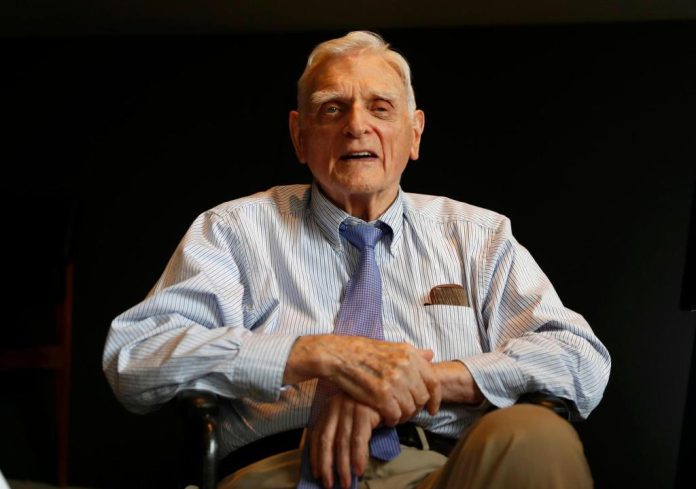
AUSTIN, Texas (AP) — John Goodenough, who shared the 2019 Nobel Prize in chemistry for his work developing the lithium-ion battery that transformed technology with rechargeable power for devices ranging from cellphones, computers, and pacemakers to electric cars, has died at 100, the University of Texas announced Monday.

Goodenough died Sunday at an assisted living facility in Austin, the university announced. No cause of death was given. Goodenough was a faculty member at Texas for nearly 40 years.

Goodenough was the oldest person to receive a Nobel Prize when he shared the award with British-born American scientist M. Stanley Whittingham and Japan’s Akira Yoshino.

“Live to 97 and you can do anything,” Goodenough said when the Nobel was awarded, adding he was grateful he wasn’t forced to retire at 65.

And while his name may not ring a bell to most, Goodenough’s research helped unlock a revolution in technology now taken for granted in today’s world of portable phones, tablets and just about anything else with a plug-in port for a recharge.

Lithium-ion batteries were the first truly portable and rechargeable batteries, and they took more than a decade to develop. Whittingham said in 2019 that he had no inkling that his work decades ago would have such a profound impact on the world.

“We thought it would be nice and help in a few things,” Goodenough said, “but never dreamed it would revolutionize electronics and everything else.”

Goodenough, Whittingham and Yoshino each had unique breakthroughs that laid the foundation for developing a commercial rechargeable battery and the three shared the $900,000 Nobel Prize.

Whittingham’s work in the 1970s harnessed the tendency of lithium — the lightest metal — to give away its electrons to make a battery capable of generating just over two volts.

By 1980, Goodenough had built on Whittingham’s work and doubled the battery’s capacity to four volts by using cobalt oxide in the cathode, one of the two electrodes that make up the ends of a battery.

That battery remained too explosive for general commercial use. Yoshino’s work in the 1980s eliminated the volatile pure lithium from the battery and instead opted for lithium ions that are safer. The first lightweight, safe, durable and rechargeable commercial batteries entered the market in 1991.

Born in Jena, Germany in 1922, Goodenough grew up in the United States and earned a Ph.D. in chemistry from the University of Chicago. He began his career at the Massachusetts Institute of Technology, where his research laid the groundwork for development of random-access memory for the digital computer.

Goodenough was head of the Inorganic Chemistry Laboratory at the University of Oxford in England when he made his lithium-ion discovery. He joined the Texas faculty in 1986, and was still teaching and researching battery materials and solid-state science and engineering problems when he won the Nobel Prize.

Goodenough and his wife Irene were married 70 years until her death in 2016.

Fox News unveils primetime lineup with Jesse Watters in Tucker Carlson’s former time slot – Daily Press

0

Jesse Watters will host an opinion show in the time slot formerly occupied by Tucker Carlson, Fox News Channel announced Monday.

Watters will remain a co-host on “The Five,” an evening roundtable discussion show that is hugely popular on the network.

“Jesse Watters Primetime” will begin at 8 p.m. Eastern on July 17 as part of a revamped weekly nighttime lineup on Fox News. Laura Ingraham’s show will air at 7 p.m., with Sean Hannity’s popular program remaining at 9 p.m. Greg Gutfeld’s late-night show will move up to the 10 p.m. hour that was previously Ingraham’s time slot.

Watters’ show previously aired at 7 p.m. Eastern.

The announcement comes roughly two months after Fox News fired Carlson shortly after settling a defamation lawsuit with the voting machine maker Dominion Voting Systems on the eve of trial. The case, which centered on the network’s airing of false claims following the 2020 presidential election, exposed a trove of private messages sent between Fox hosts including Hannity and Carlson in which they criticized peers at the network.

Carlson has since moved his show to Twitter, although Fox is attempting to get him to stop the broadcasts.

“The unique perspectives of Laura Ingraham, Jesse Watters, Sean Hannity, and Greg Gutfeld will ensure our viewers have access to unrivaled coverage from our best-in-class team for years to come,” Fox News CEO Suzanne Scott said in a statement.

Police identify 19-year-old Yorktown man killed in Newport News shooting – Daily Press

0

Police in Newport News have identified a 19-year-old man killed in a shooting Sunday night in the Newmarket area.

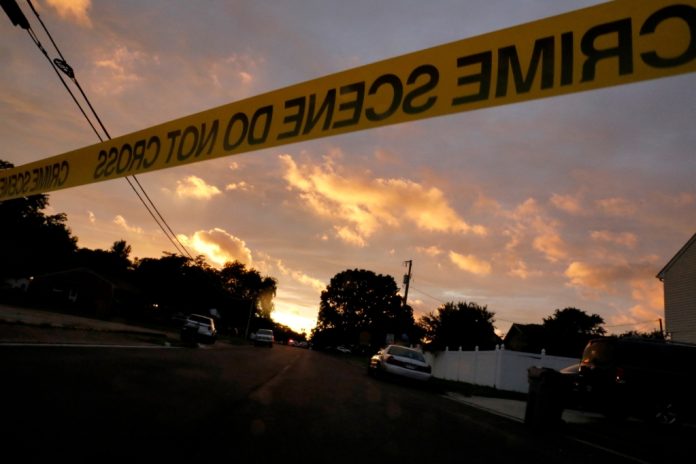
According to an update from police, officers responded to the 7700 block of Jarvis Place around 9:10 p.m. for reports of a shooting. They foundRasheed Caudle, of Yorktown, with a gunshot wound. He died at the scene.

Police have not released additional details about a potential suspect or what may have led to the shooting, and the investigation is ongoing.

Wagner mercenary leader issues defiant audio statement as uncertainty swirls after mutiny – Daily Press

0

By The Associated Press

The leader of the Wagner mercenary group defended his short-lived insurrection in an audio statement Monday, and Russian Defense Minister Sergei Shoigu made his first public appearance since the uprising that demanded his ouster, in a video aimed at projecting a sense of order after the country’s most serious political crisis in decades.

But uncertainty still swirled about his fate, as well as that of rebellion leader Yevgeny Prigozhin and his private army, the impact on the war in Ukraine, and even the political future of President Vladimir Putin.

In an 11-minute audio statement, Prigozhin denied trying to attack the Russian state and said he acted in response to an attack on his force that killed some 30 of his fighters.

“We started our march because of an injustice,” Prigozhin said in a recording that gave details about where he is or what his future plans are.

A feud between the Wagner Group leader and Russia’s military brass that has festered throughout the war erupted into a mutiny that saw the mercenaries leave Ukraine to seize a military headquarters in a southern Russian city and roll seemingly unopposed for hundreds of miles toward Moscow, before turning around after less than 24 hours on Saturday.

The Kremlin said it had made a deal for Prigozhin to move to Belarus and receive amnesty, along with his soldiers. There was no confirmation of his whereabouts Monday, although a popular Russian news channel on Telegram reported he was seen at a hotel in the Belarusian capital, Minsk.

Russian media reported a criminal probe against Prigozhin continued, and some lawmakers called for his head.

In a return to at least superficial normality, Moscow’s mayor announced an end to the “counterterrorism regime” imposed on the capital Saturday, when troops and armored vehicles set up checkpoints on the outskirts and authorities tore up roads leading into the city.

The Defense Ministry video of Shoigu came as Russian media speculated that he and other military leaders have lost Putin’s confidence and could be replaced.

Shoigu was shown in a helicopter and then meeting with officers at a military headquarters in Ukraine in video broadcast on Russian media, including state-controlled television. It was unclear when it was shot.

General Staff chief Gen. Valery Gerasimov, also a main target of Prigozhin’s ire, has not appeared in public.

It was unclear what would ultimately happen to Prigozhin and his forces under the deal purportedly brokered by Belarusian President Alexander Lukashenko.

Though his mutiny was brief, it was not bloodless. Russian media reported that several military helicopters and a military communications plane were shot down by Wagner forces, killing at least 15. The Defense Ministry has not commented. Prigozhin denied there were any casualties on his side, but media reports indicated the airstrikes hit some Wagner vehicles, and messaging app channels featured images of the damage.

The U.S. had intelligence that Prigozhin had been building up his forces near the border with Russia for some time, suggesting the revolt was planned. That conflicts with Prigozhin’s claim his rebellion was a response to a Friday attack on his field camps in Ukraine by the Russian military, which he said killed a large number of his men. The Defense Ministry denied that.

Russia’s RIA Novosti state news agency cited unidentified sources in the Prosecutor General’s office as saying the criminal case against Prigozhin hasn’t been closed, despite earlier Kremlin statements. The Interfax news agency carried a similar report.

Should the case continue, Prigozhin’s presence in Belarus — a staunch Kremlin ally — would offer little protection against arrest and extradition.

It was unclear what resources Prigozhin has to draw on, and how much of his substantial wealth he can access. Police searching his St. Petersburg office on the day of the rebellion found 4 billion rubles ($48 million) in trucks outside the building, according to Russian media reports confirmed by the Wagner boss. He claimed the money was intended to pay his soldiers’ families.

Russian media reported that Wagner offices in several Russian cities had reopened on Monday and the company had resumed enlisting recruits.

Several Russian lawmakers called for tight regulations of private military companies under a new law set to be considered — and some argued that Prigozhin must be punished.

Andrei Gurulev, a retired general and current lawmaker who has rowed with the mercenary leader, said Prigozhin and his right-hand man Dmitry Utkin, a former military officer who runs Wagner, deserve “a bullet in the head.”

“I firmly believe that traitors in wartime must be executed,” he said.

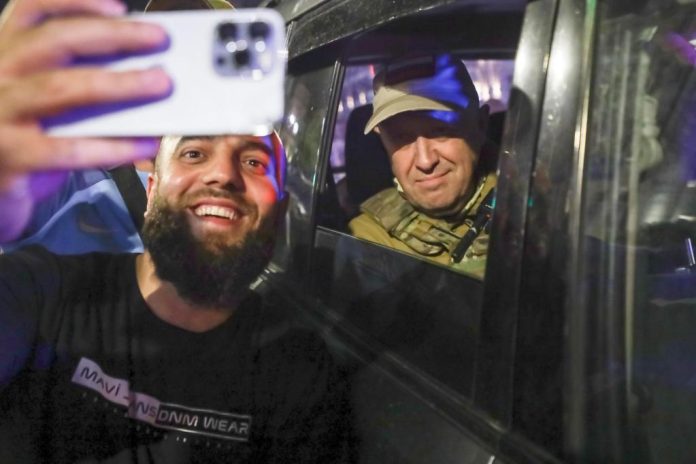
Prigozhin appeared nonchalant in some of the last video taken during the rebellion. As a convoy carrying him in an SUV drove out of the southern city of Rostov-on-Don after its brief occupation Saturday, he was asked how he viewed the result of his revolt, according to footage posted on Russian social media.

“It’s normal, we have cheered everyone up,” the mercenary chief responded.

Before the uprising, Prigozhin had blasted Shoigu and Gerasimov with expletive-ridden insults for months, attacking them for failing to provide his troops with enough ammunition during the fight for the Ukrainian town of Bakhmut, the war’s longest and bloodiest battle.

Prigozhin’s rift with the military dates back years, to Russia’s intervention in Syria, where Wagner forces also were active.

Putin stood back from the feud and Shoigu and Gerasimov remained mum, possibly reflecting uncertainty about the president’s support. Observers said that by failing to end the feud, Putin had encouraged Prigozhin to raise the stakes dramatically.

Some analysts saw Prigozhin’s revolt as a desperate move to save Wagner from being dismantled after an order that all private military companies sign contracts with the Defense Ministry by July 1.

Russian political analyst Tatiana Stanovaya said on Twitter that Prigozhin’s mutiny “wasn’t a bid for power or an attempt to overtake the Kremlin,” but a desperate move amid his escalating rift with Russia’s military leadership.

While Prigozhin could get out of the crisis alive, he doesn’t have a political future in Russia under Putin, Stanovaya said.

Alex Younger, former head of Britain’s MI6 intelligence agency, said “everyone comes out of this weaker.”

He told the BBC that Prigozhin “didn’t have a plan, he didn’t have enough people” to succeed, while Putin looked indecisive, first vowing to crush the rebels, then striking a deal.

Russian media and commentators speculated that Shoigu could be replaced, but that Putin, who avoids making decisions under pressure, would likely wait before announcing a shakeup.

Putin held calls Monday with the leaders of Iran and Qatar, the Kremlin said, and addressed a forum of youth engineers in a pre-recorded video message that contained no mention of the mutiny.

It was not yet clear what the fissures opened by the 24-hour rebellion would mean for the war in Ukraine, where Western officials say Russia’s troops suffer low morale. Wagner’s forces were key to Russia’s only land victory in months, in Bakhmut.

The U.K. Ministry of Defense said Monday that Ukraine had “gained impetus” in its push around Bakhmut, making progress north and south of the town. Ukrainian forces claimed to have retaken Rivnopil, a village in an area of southeast Ukraine that has seen heavy fighting.

U.S. President Joe Biden and leaders of several of Ukraine’s European allies discussed events in Russia over the weekend, but Western officials have been muted in their public comments.

Russian Foreign Minister Sergey Lavrov told broadcaster RT that U.S. Ambassador Lynne Tracy contacted Russian representatives Saturday to stress that the U.S. was not involved in the mutiny and considered it an internal Russian matter. There was no immediate confirmation from the U.S., although Secretary of State Antony Blinken said Sunday that U.S. officials had “engaged” with Russia to stress the importance of protecting U.S. citizens and interests.

NATO Secretary-General Jens Stoltenberg said Monday that “the events over the weekend are an internal Russian matter.” The U.K. said “issues of regime in Russia are for Russia to resolve, first and foremost.”

EU foreign policy chief Josep Borrell said the revolt showed that the war is “cracking Russia’s political system.”

“The monster that Putin created with Wagner, the monster is biting him now,” Borrell said. “The monster is acting against his creator.”

___

Associated Press writers Lorne Cook in Brussels and Jill Lawless in London contributed.

___

Follow AP’s coverage of the war in Ukraine at https://apnews.com/hub/russia-ukraine-war

Norfolk Tides open second half with Turn Back the Clock Night – Daily Press

0

A look at the Norfolk Tides as they return home to begin a six-game homestand against the Charlotte Knights, the top affiliate of the Chicago White Sox.

The Tides, first-half International League champions, enjoy a rare day off Tuesday, then begin a six-game homestand against Charlotte on Wednesday that runs through Monday.

Norfolk’s record: 48-26

New in town: RHP Justin Armbruester made his Triple-A debut last week for the Tides, allowing two hits and striking out seven over five innings. Armbruester, 24, is a former 12th-round draft pick out of New Mexico.

In the Charlotte dugout: OF Oscar Colás, rated Chicago’s No. 2 overall prospect by MLB.com, rose from Class A to Triple-A last season, batting .314 with 23 home runs. The Cuba native is hitting .292 with five homers and 25 RBIs this season.

Wednesday: 6:35 p.m., Turn Back the Clock Night — 50-cent hot dogs, sodas and popcorn.

Thursday: 12:05 p.m.

Friday: 6:35 p.m., Negro League Tribute

Saturday: 6:35 p.m., postgame fireworks.

Sunday: 6:35 p.m., postgame fireworks.

Monday: 6:35 p.m., postgame fireworks

When wealthy adventurers take huge risks, who should pay for rescue attempts? – Daily Press

0

By ADAM GELLER and WYATTE GRANTHAM-PHILIPS (Associated Press)

When millionaire Steve Fossett’s plane went missing over the Nevada range in 2007, the swashbuckling adventurer had already been the subject of two prior emergency rescue operations thousands of miles apart.

And that prompted a prickly question: After a sweeping search for the wealthy risktaker ended, who should foot the bill?

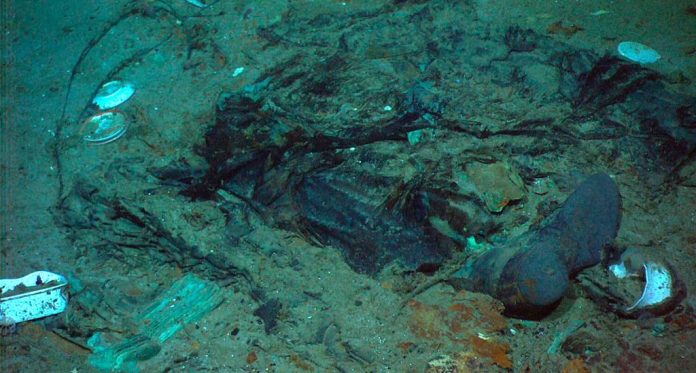
In recent days, the massive hunt for a submersible vehicle lost during a north Atlantic descent to explore the wreckage of the Titanic has refocused attention on that conundrum. And with rescuers and the public fixated first on saving and then on mourning those aboard, it has again made for uneasy conversation.

“Five people have just lost their lives and to start talking about insurance, all the rescue efforts and the cost can seem pretty heartless — but the thing is, at the end of the day, there are costs,” said Arun Upneja, dean of Boston University’s School of Hospitality Administration and a researcher on tourism.

“There are many people who are going to say, ‘Why should the society spend money on the rescue effort if (these people) are wealthy enough to be able to … engage in these risky activities?’”

That question is gaining attention as very wealthy travelers in search of singular adventures spend big to scale peaks, sail across oceans and blast off for space.

The U.S. Coast Guard declined Friday to provide a cost estimate for its efforts to locate the Titan, the submersible investigators say imploded not far from the world’s most famous shipwreck. The five people lost included a billionaire British businessman and a father and son from one of Pakistan’s most prominent families. The operator charged passengers $250,000 each to participate in the voyage.

“We cannot attribute a monetary value to Search and Rescue cases, as the Coast Guard does not associate cost with saving a life,” the agency said.

While the Coast Guard’s cost for the mission is likely to run into the millions of dollars, it is generally prohibited by federal law from collecting reimbursement related to any search or rescue service, said Stephen Koerting, a U.S. attorney in Maine who specializes in maritime law.

But that does not resolve the larger issue of whether wealthy travelers or companies should bear responsibility to the public and governments for exposing themselves to such risk.

“This is one of the most difficult questions to attempt to find an answer for,” said Pete Sepp, president of the National Taxpayers Union, noting scrutiny of government-funded rescues dating back to British billionaire Richard Branson’s hot air balloon exploits in the 1990s.

“This should never be solely about government spending, or perhaps not even primarily about government spending, but you can’t help thinking about how the limited resources of rescuers can be utilized,” Sepp said.

The demand for those resources was spotlighted in 1998 when Fossett’s attempt to circle the globe in a hot air balloon ended with a plunge into the ocean 500 miles off Australia. The Royal Australian Air Force dispatched a Hercules C-130 transport aircraft to find him. A French military plane dropped a 15-man life raft to Fossett before he was picked up by a passing yacht.

Critics suggested Fossett should pay the bill. He rejected the idea.

Late that same year the US Coast Guard spent more than $130,000 to rescue Fossett and Branson after their hot air balloon dropped into the ocean off Hawaii. Branson said he would pay if the Coast Guard requested it, but the agency didn’t ask.

Nine years later, after Fossett’s plane vanished over Nevada during what should have been a short flight, the state National Guard launched a months-long search that turned up the wreckage of several other decades-old crashes without finding the millionaire.

The state said the mission had cost taxpayers $685,998, with $200,000 covered by a private contribution. But when the administration of Gov. Jim Gibbons announced that it would seek reimbursement for the rest, Fossett’s widow balked, noting she had spent $1 million on her own private search.

“We believe the search conducted by the state of Nevada is an expense of government in performance of government action,” a lawyer wrote on behalf of the Fossett estate.

Risky adventurism is hardly unique to wealthy people.

The pandemic drove a surge in visits to places like national parks, adding to the popularity of climbing, hiking and other outdoor activities. Meanwhile, the spread of cellphones and service has left many feeling that if things go wrong, help is a call away.

Some places have laws commonly referred to as “stupid motorist laws,” in which drivers are forced to foot the emergency response bill when they ignore barricades on submerged roads. Arizona has such a law, and Volusia County in Florida, home to Daytona, enacted similar legislation this week. The idea of a similar “stupid hiker law” is a regularly debated item in Arizona as well, with so many unprepared people needing to be rescued in stifling triple-digit heat.

Most officials and volunteers who run search efforts are opposed to charging for help, said Butch Farabee, a former ranger who participated in hundreds of rescue operations at the Grand Canyon and other national parks and has written several books on the subject.

Searchers are concerned that if they did charge to rescue people “they won’t call for help as soon as they should and by the time they do it’s too late,” Farabee said.

The tradeoff is that some might take that vital aid for granted. Farabee recounts a call in the 1980s from a lawyer who underestimated the effort needed to hike out of the Grand Canyon. The man asked for a helicopter rescue, mentioning that he had an important meeting the following day. The ranger rejected that request.

But that is not an option when the lives of adventurers, some of them quite wealthy, are at extreme risk.

At Mount Everest, it can cost tens of thousands of dollars in permit and expedition fees to climb. A handful of people die or go missing while hiking the mountain every year — prompting emergency response from local officials.

While the government of Nepal requires that climbers have rescue insurance, the scope of rescue efforts can vary widely, with Upneja estimating that some could cost “multiple dozens of thousands of dollars.”

Nepal’s Ministry of Foreign Affairs did not respond to a message seeking comment.

On the high seas, wealthy yachtsmen seeking speed and distance records have also repeatedly required rescue when their voyages run astray.

When the yacht of Tony Bullimore, a British millionaire on a round-the-world journey, capsized 1,400 miles off the Australia Coast in 1997 it seemed he might be done for. Clinging to the inside of the hull, he ran out of fresh water and was almost out of air.

When a rescue ship arrived, he swam desperately toward the surface.

’I was starting to look back over my life and was thinking, ‘Well, I’ve had a good life, I’ve done most of the things I had wanted to,” Bullimore said afterward. “If I was picking words to describe it, it would be a miracle, an absolute miracle.′

Australian officials, whose forces rescued a French yachtsman the same week, were more measured in their assessment.

“We have an international legal obligation,” Ian McLachlan, the defense minister said. “We have a moral obligation obviously to go and rescue people, whether in bushfires, cyclones or at sea.”

Less was said, however, about the Australian government’s request to restrict the routes of yacht races — in hopes of keeping sailors to areas where they might require less rescuing.

___

Associated Press writer David Sharp in Portland, Maine contributed to this story.

Woman dies, man seriously injured after possible ‘domestic-related’ shooting, Hampton police say – Daily Press

0

Police in Hampton are investigating a shooting that killed a woman on Sunday night.

According to an update from police, emergency services received a call just before 8 p.m. for reports of a gunshot victim inside a home on the first block of Wendell Drive, near the Hampton Golf Course.

When they arrived, police said officers found a woman dead at the scene with gunshot wounds. Responding officers also found a man with “unknown” life-threatening injuries, and he was transported to the hospital. Police said officers at the scene could not determine what may have caused his injuries.

At this time, the investigation is ongoing, but the update from police states the shooting “appears domestic-related.” The victim’s identification has not been released, and officers are notifying next-of-kin of her death.

Anyone with information about the shooting is encouraged to contact the Hampton Police Division at 757–727–6111.

China’s economy and America’s opportunity – Daily Press

0

Many have tried not buying items made in China, but it is a near impossibility. Everything from prescription drugs to you name it seems to originate in a country whose regime is proving to be America’s greatest adversary and growing enemy.

Which is why now may be the ideal time for the U.S. to respond to the threat of Chinese expansionism where it hurts the most: China’s economy.

TNS

Cal Thomas is a columnist for Tribune Content Agency.

As The New York Times reports, “Investment in China has stagnated this spring after a flurry of activity in late winter. Exports are shrinking. Fewer and fewer new housing projects are being started. Prices are falling. More than one in five young people is unemployed.”

According to the Department of Commerce, “In 2021, U.S. imports of $50.3 billion of Textile Products from China constituted 32.6% of the total U.S. imports of Textile products. Additionally, in 2021, China remained the major source of U.S. imports of Furniture, Bedding, Lamps, Toys, Games, Sports Equipment, Paint, and other Miscellaneous Manufactured Items.”

America’s trade deficit with China, reports the DOC, is a whopping $355.3 billion, a $45 billion increase (14%) from 2020 when it was $310.3 billion.

Robby Smith Saunders is vice president for National Security at the Coalition for a Prosperous America. She writes: “Economic statecraft ought to be our number one objective right now when it comes to China and mitigating their threats to the U.S. and democratic values, as well as U.S. economic and security interests. But instead of making a few tough financial, investment, export, and business decisions now, our policymakers want to keep as much of the money and knowledge flowing as possible between China and the U.S. for as long as they can, while simultaneously drawing up war plans for Taiwan. It does not make sense to me.”

It makes no sense to me, either. Properly addressed it would make no sense to many Americans.

The United States ought to declare its intention to wean itself from China by starting to make more things in this country, starting with prescription drugs. There could be serious consequences should China ever decide to cease their manufacture to bend Washington to its will.

This would require, among other things, politicians to unite in a bipartisan and patriotic effort to slow and even stop China’s plans for world domination. I suspect many people would be willing to pay at least slightly higher prices for things now made in China if they could be persuaded it was in the best interest of their country and its future.

This from the Center for Strategic & International Studies ought to be the starting point for any argument in favor of a changed economic relationship with China: “It should be noted that the incidents of Chinese espionage far outnumber those by any other country, even Russia. The long-term cost to the American economy and national security cannot be precisely measured, but estimates run into the billions of dollars for commercial and technological espionage. Chinese espionage also created immeasurable damage to national security with the theft of weapons technology, including nuclear weapons test data. In the last few years, China has added the theft of massive quantities of personal information, political coercion, and influence operations, to its espionage activities.”

Is there anyone running for president who will take this up as a major foreign and domestic policy issue? What about Congress, which seems to be too timid to do much?

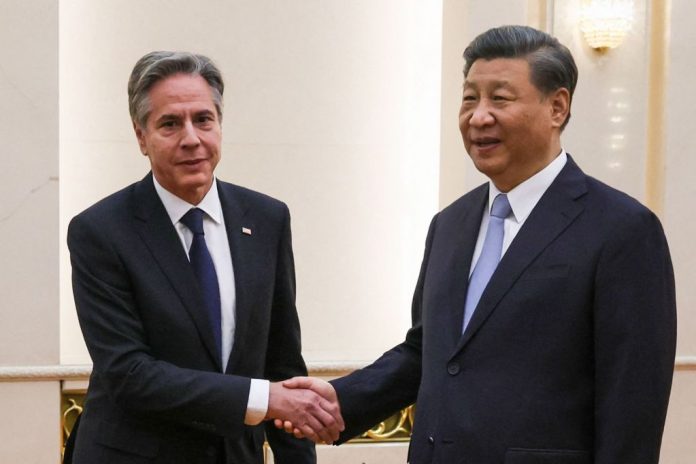
If we don’t start now, we will regret it later. It might already be too late. Secretary of State Antony Blinken told NBC News that his Beijing trip was an “important start” in stabilizing U.S relations with China. He also said countries should move on from the spy balloon incident.

The Chinese haven’t moved on. The Wall Street Journal reported Tuesday that China and Cuba are negotiating to establish a new joint military training facility on the island, sparking alarm in Washington that it could lead to the stationing of Chinese troops and other security and intelligence operations just 100 miles off Florida’s coast.

How much closer will we allow them to get?

Cal Thomas is a columnist for Tribune Content Agency. Email him at at [email protected] and look for his latest book “A Watchman in the Night: What I’ve Seen Over 50 Years Reporting on America” (HumanixBooks).