Home Blog Page 123

Do bladeless tower fans work better than traditional fans? – Daily Press

0

As the air remains warm for a few months, you might wonder how you can stay cool and comfortable. While a fan doesn’t actually lower the temperature of the air, it does increase evaporation, which makes you feel cooler. As long as the temperature doesn’t get oppressively hot, a fan is an excellent way to stay comfortable in warm weather.

There are two main types of fans: bladeless and traditional. If you are going to buy a new model, it is important to know the difference between them.

How does a traditional fan work?

A traditional fan, such as a box fan or a desk fan, typically has three to five blades with a scooped shape. As these blades whirl about in a circle, they scoop up a section of air and push it forward. The vacuum that is left by the missing air pulls more air in to fill the void, and that air gets pushed forward. While this happens quickly, buffeting does occur, so the breeze created by a traditional fan has a slight staccato feel to it.

How does a bladeless fan work?

“Bladeless” is a slick marketing term that captures the imagination and creates wonder. However, it is an inaccurate way of describing how this type of fan works because it does use a blade. The blade is hidden in the base of the unit, so it can’t be seen unless you take the fan apart.

The correct term is “air multiplier” because this type of fan draws a small amount of air in through the base and directs it out a very slim opening along the edge of a circle or an oval. As the air travels, it increases in velocity and pulls along other air to effectively multiply not only the force but the volume of air the fan moves as well. Only a small amount is actually moved by the tiny interior fan. The result is a steady, quiet stream of air that feels more like a natural breeze. 

What are the benefits of using a bladeless fan?

A bladeless fan has a number of performance benefits that make it better than a traditional fan. One of the most important aspects is that the hidden blade makes it a much safer option — no injuries to curious children or pets. Also, since the blade and motor are in the base, it has a lower center of gravity, which makes it much more stable than a traditional fan.

As far as performance, it is quiet and moves a surprising amount of air, and that air flows smoothly. This makes it much more comforting than a traditional fan. It is also easier to keep clean because you just need to wipe down the exterior. You don’t have to disassemble the protective cage and clean each blade. And, while it has nothing to do with performance, a bladeless fan just looks more sleek and modern than a traditional fan.

What are the drawbacks of using a bladeless fan?

A bladeless fan is comparable or superior to a traditional fan in every way except one: price. While it is possible to purchase low-end bladeless fans, most models cost significantly more than traditional fans.

FAQ

Q. What is a bladeless tower fan?

A. A bladeless tower fan operates in much the same way as a bladeless fan. The blades are hidden inside a tall tower. However, since it doesn’t feature the same aerodynamic design, it doesn’t multiply the air as much as a circle or oval model. On the plus side, tower fans are typically more affordable. They are a great option for someone who wants a steady airflow but doesn’t have the budget for a high-end model, such as a Dyson.

Q. Do bladeless fans require less power than traditional fans?

A. In general, a bladeless fan requires a little less power to operate than a traditional fan. However, this is not always the case, so you will need to compare the watt usage of the two models you are considering to know for sure.

Best bladeless fans

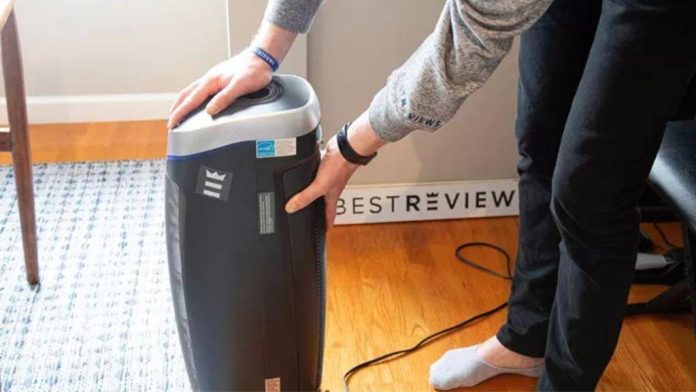
Dyson Pure Cool TP01 HEPA Air Refresher and Fan

Dyson is the innovator and top manufacturer of bladeless fans. This model not only cools large rooms but also contains a HEPA filter to help create healthier air in your home. It features 10 speeds, oscillation and a timer.

Where to buy: Available at Amazon


LivePure Bladeless Oscillating Pedestal Fan

The LivePure bladeless fan has a coconut carbon filter that removes small particles, such as allergens, from your air. It features a four-color accent light, three speeds and a timer.

Where to buy: Available at Amazon


Lasko Bladeless 37-inch Oscillating Tower Fan

This bladeless tower fan arrives fully assembled. It has four speeds, an oscillation mode and an auto shut-off. The nighttime setting dims the display to help you sleep.

Where to buy: Available at Amazon


Dreo Cruiser Pro Tower Fan with Remote

This entry-level model is a solid value. It has all the essential features along with a low price that makes it very appealing to individuals on a budget. Purchase also includes a remote so you can change the settings without getting out of bed. 

Where to buy: Available at Amazon

Sign up here to receive the BestReviews weekly newsletter for useful advice on new products and noteworthy deals. 

Allen Foster writes for BestReviews. BestReviews has helped millions of consumers simplify their purchasing decisions, saving them time and money.

BestReviews spends thousands of hours researching, analyzing, and testing products to recommend the best picks for most consumers.

BestReviews spends thousands of hours researching, analyzing and testing products to recommend the best picks for most consumers. BestReviews and its newspaper partners may earn a commission if you purchase a product through one of our links.

Distributed by Tribune Content Agency, LLC.

© 2023 BestReviews. Distributed by Tribune Content Agency, LLC
How to choose the best power bank for your next trip – Daily Press

0

Whether you’re binge-watching Netflix or chatting with friends on WhatsApp, nothing gets in the way like a dead battery. This is especially true when you’re traveling and might not have access to a wall outlet. However, since power connectors and power delivery protocols are relatively standardized these days, it’s not hard to find a battery pack that works with all your devices.

Important power bank features

Capacity

The first thing to consider is just how much energy you need to store. Power banks can get large, but you probably don’t want to carry around something that weighs 20 pounds. Most travelers gravitate toward power banks with storage under 100 watt-hours, because that’s the maximum capacity allowed on commercial flights.

Today’s laptop batteries often fall in the range of 60 to 90 watt-hours with premium models, such as the Apple MacBook Pro 16, checking in at nearly 100 watt-hours. In other words, the biggest power banks allowed on airplanes can recharge your laptop entirely at least once.

Smartphone batteries are much smaller, usually in the neighborhood of 20 to 25 watt-hours. Given the efficiency of modern phones, a power bank with a capacity of 98 watt-hours could power your phone for days.

Charging wattage and protocols

If you need to power a modern laptop with a USB-C port, you’ll want a USB-C Power Delivery 3.0 protocol. There are some power banks with AC outlets that support electronics without USB-C ports, but they’re not common. You’ll also need to make sure you have a cable rated to 100 watts.

Finding the perfect power bank for your smartphone has an added wrinkle. Anything with a USB port will do the job, but you’ll have to pay special attention if you want to take advantage of fast charging. The Qualcomm Quick Charge standard is the most common among Android devices, and Apple products use the same USB Power Delivery fast charging that laptops do. A decent number of power banks support Quick Charge.

There are a few other fast-charging protocols, and some are even cross-compatible with Qualcomm’s. Examples include those from Samsung (Adaptive Fast Charging) and Xiaomi (Mi Fast Charge). There are even some from non-smartphone manufacturers, such as Anker’s PowerIQ, which offers partial compatibility with Quick Charge-enabled devices.

Power bank fast charging

When they first hit the market, it took several hours to refill the largest power banks that were easily portable. Thanks to the advent and popularity of the USB PD standard, that’s no longer the case. Large power banks can recharge in a few hours or less using USB PD. This is useful if you find yourself near a power outlet but not close enough to use it. In that case, you can use the power bank to charge your laptop fully, then recharge the power bank while you’re using the computer.

Other premium features

Integrated USB hub functionality is one of the most interesting power bank features. With it, you can charge and use multiple peripherals at a time without draining your laptop battery. Another common feature is an LED capacity indicator. The simplest models just have four dots that represent four levels or charge from empty to full. The most complex have OLED screens that share the active ports and the protocols they’re using in addition to battery temperature, current output and exact charge remaining. Some large and costly models have features that go far beyond powering a laptop, such as dedicated inputs for solar panel setups.

Power bank safety and maintenance

To keep your power bank in peak condition, avoid draining it past 20%. Batteries stay healthier longer if they don’t go from 100% to empty all the time.

Another thing to consider is temperature. High heat degrades lithium cells and hurts efficiency, which creates more heat. This isn’t great for battery health. Your best bet is to avoid placing a power bank in direct sunlight.

Finally, don’t take a power bank apart yourself without proper training, and don’t use it in the rain or otherwise let it get wet.

Best power banks for your next trip

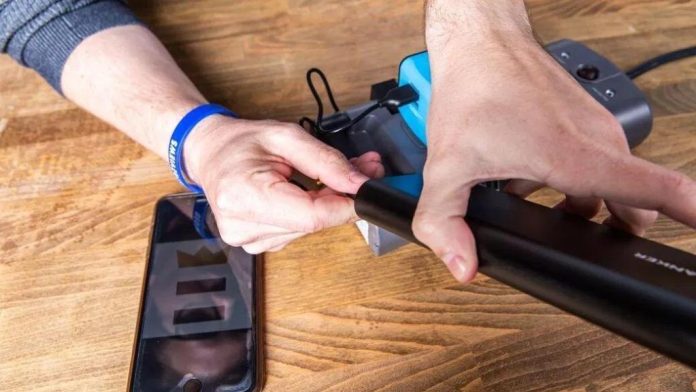
Anker 737

It has the highest capacity you’re allowed to fly with and can run most USB-C-enabled laptops. It comes with a 65-watt Power Delivery charger for fast refueling.

Available at Amazon


Omni 20c+

It has a more comprehensive LED display than almost any other and is one of the rare models that can serve as a USB hub.

Available at Amazon


Baseus 65W

It’s not heavy, and it doesn’t cost much. It can recharge most laptops once before needing to be recharged.

Available at Amazon


Belkin USB-C PD

Its thin and light construction, plus the dependability of its manufacturer, make this an effective and convenient choice.

Available at Amazon


Jackery Explorer 300

If you’re headed to the woods but don’t want to lose the use of your electronics, this massive power station should do the trick. It can hold up to 293 watt-hours and creates a pure sine wave current that’s safe for the most sensitive electronics.

Available at Amazon


Anker PowerCore Fusion

This novel offering combines the wall charger and power bank to improve convenience and save space in your luggage.

Available at Amazon


Sign up here to receive the BestReviews weekly newsletter for useful advice on new products and noteworthy deals. 

Chris Thomas writes for BestReviews. BestReviews has helped millions of consumers simplify their purchasing decisions, saving them time and money.

BestReviews spends thousands of hours researching, analyzing, and testing products to recommend the best picks for most consumers.

BestReviews spends thousands of hours researching, analyzing and testing products to recommend the best picks for most consumers. BestReviews and its newspaper partners may earn a commission if you purchase a product through one of our links.

Distributed by Tribune Content Agency, LLC.

© 2023 BestReviews. Distributed by Tribune Content Agency, LLC
Gunman opens fire at random on Philadelphia streets, killing 5 before he is arrested, police say – Daily Press

0

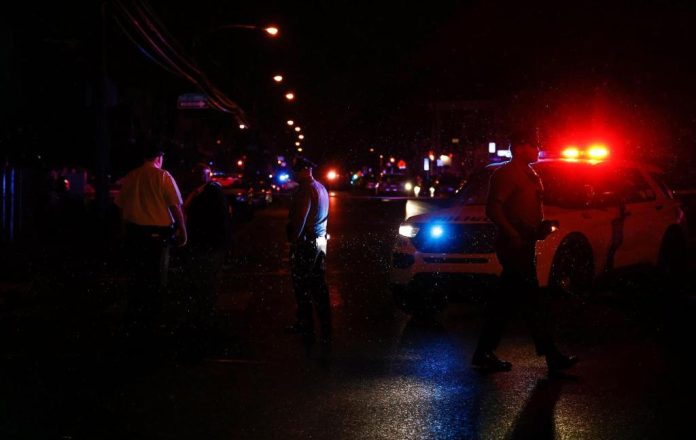
PHILADELPHIA (AP) — A gunman wearing a bulletproof vest opened fire on the streets of Philadelphia on Monday night, seemingly at a random, killing five people and wounding two boys in the latest outbreak of gun violence in the United States, police said.

The shootings took place over several city blocks in the southwestern neighborhood of Kingsessing. Responding officers chased the suspect as he continued to fire, and he was arrested in an alley after surrendering, Police Commissioner Danielle Outlaw said at a news conference.

No connection was immediately known between the victims and the shooter.

“At this point all we know is that this person decided to leave their home and target individuals,” Outlaw said.

He had a bulletproof vest, an “AR-type rifle,” multiple magazines, a handgun and a police scanner, she said.

Officers were flagged down at about 8:30 p.m., and multiple calls of shots fired came in from Kingsessing. Police found some gunshot victims, and as they were attending to them, they heard more gunfire, Outlaw said. Police later told Fox 29 that a fifth victim was found. He was chased into his home and shot to death. Bullet casings were found outside the home.

The suspected shooter was identified as a 40-year-old man. A second person was also taken into custody who may have returned fire at the suspect, but police did not know whether there was a connection between the two people, Outlaw said.

The chief said dozens of shell casings were found across an eight block area.

“You can see there are several scenes out here,” Outlaw said. “We’re canvassing the area to get as much as we can, to identify witnesses, to identify where cameras are located and to do everything to figure out the why,” Outlaw said.

Three of the dead were 20 to 59 years old, while the fourth, who had not yet been identified, was estimated to be between 16 and 21. The victim found in his home was 31 years old. All were male.

The two hospitalized victims are boys, ages 2 and 13. They were in stable condition, Outlaw said.

The shooting occurred a day after gunfire erupted at a holiday weekend block party in Baltimore, about 100 miles (160 kilometers) to the southwest, killing two people and wounding 28 others. The wounded in that shooting ranged in age from 13 to 32, with more than half minors, according to officials.

The Philadelphia violence is the country’s 29th mass killing in 2023, according to a database maintained by The Associated Press and USA Today in partnership with Northeastern University, the highest on record by this time in the year.

The numbers people killed in such events is also the highest by this time in the year.

There have been more than 550 mass killings since 2006, according to the database, in which at least 2,900 people have died and at least 2,000 people have been injured.

Virginia Beach college stars, former NCAA champ, area coach in tennis exhibition Tuesday morning – Daily Press

0

TENNIS

Cape Henry Racquet Club’s clay courts in Virginia Beach will serve as the host of a doubles exhibition of college standouts past and present at 10:30 a.m. Tuesday.

Thai-Son Kwiatkowski, who won the 2017 NCAA singles champion as a Virginia player and helped the Cavaliers take three NCAA team titles, will play on one duo alongside Barrett Foster, who has competed at No. 1 singles for Hampden-Sydney for two seasons.

Kwiatkowski, 28, has played in the singles main draw of all four Grand Slam events.

On the other side of the net will be CHRC head coach Dan McCain, a former Michigan Wolverines player who has earned victories over the likes of James Blake, and Ashton Legum.

Foster and Legum, a key starter for Christopher Newport’s NCAA Division III Tournament-qualifying team in 2023, were teammates and doubles partners for Cox, one of the state’s best high school teams.

BASEBALL

Tides, Charlotte rained out

The scheduled series finale between the Norfolk Tides and Charlotte Knights at Harbor Park was rained out Monday, necessitating a doubleheader on a date to be announced.

The Tides now move on to North Carolina for a six-game series against the Durham Bulls, starting at 6:35 p.m. Tuesday. Norfolk, which won the International League’s first half, began the second half by going 4-1 in its series against the Knights.

BASKETBALL

Former VCU 3-point ace on Knicks’ summer roster

David Shriver, a transfer who provided key outside shooting for VCU’s Atlantic 10 champions last season, gained a spot on the New York Knicks’ NBA Summer League roster.

Summer competition began Monday night with the California Classic in Sacramento and the Salt Lake City Summer League.

Among the other players on summer league rosters:

**former James Madison guard Matt Lewis on the Brooklyn Nets;

**former Virginia Tech guard Justin Robinson on the Charlotte Hornets;

**former Virginia player Braxton Key on the Dallas Mavericks;

**former UVA guard Armaan Franklin and ex-Richmond post player Grant Golden on the Denver Nuggets;

**former Liberty guard Darius McGhee on the Indiana Pacers;

**former Richmond guard Jacob Gilyard and ex-VCU wing Vince Williams Jr. on the Memphis Grizzlies;

**former William & Mary and Northwestern guard Chase Audige on the Miami Heat;

**former Norfolk State post player Kris Bankston on the Minnesota Timberwolves;

**former Lake Taylor High and N.C. State player Dereon Seabron and former Virginia Tech, Memphis and Cincinnati player Landers Nolley II on the New Orleans Pelicans;

**Norfolk native Keyontae Johnson of Kansas State on the Oklahoma City Thunder;

**former Hampton University and Texas Tech player Davion Warren on the Orlando Magic;

**ex-Virginia Tech forward Justyn Mutts on the Sacramento Kings;

**former George Mason player Justin Kier on the San Antonio Spurs;

**former Norfolk Academy and Kansas post player David McCormack on the Toronto Raptors;

**former UVA guard Kihei Clark on the Utah Jazz.

WOMEN’S LACROSSE

JMU sweeps top VaSID state honors

James Madison swept the top honors of the Virginia Sports Information Directors all-state team after advancing to the NCAA quarterfinals.

Isabella Peterson was the Player of the Year, Mairead Durkin was the Defensive Player of the Year, Shelley Klaes was the Coach of the Year, and Maddie Epke was the Rookie of the Year.

Virginia, which reached the NCAA round of 16 in 28th-year coach Julie Myers’ final season, equaled JMU by putting four players on the first team: Rachel Clark, Ashlyn McGovern, Mackenzie Hoeg and Aubrey Williams.

The wait for US passports is creating travel purgatory and snarling summer plans – Daily Press

0

By LAURIE KELLMAN, REBECCA SANTANA and DAVID KOENIG (Associated Press)

WASHINGTON (AP) — Seeking a valid U.S. passport for that 2023 trip? Buckle up, wishful traveler, for a very different journey before you step anywhere near an airport.

A much-feared backup of U.S passport applications has smashed into a wall of government bureaucracy as worldwide travel rebounds toward record pre-pandemic levels — with too few humans to handle the load. The result, say aspiring travelers in the U.S. and around the world, is a maddening pre-travel purgatory defined, at best, by costly uncertainty.

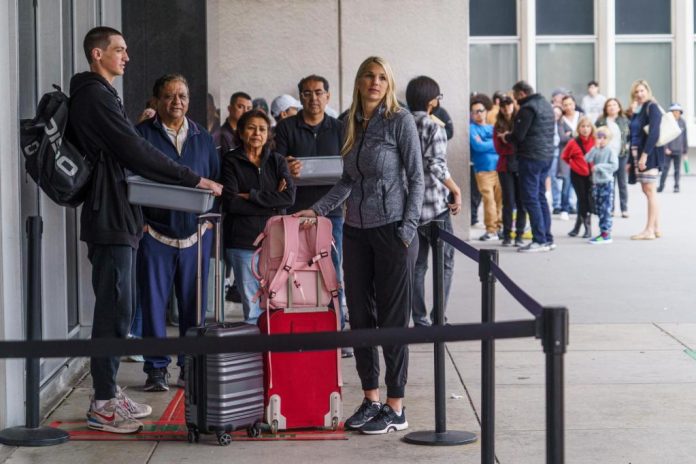
With family dreams and big money on the line, passport seekers describe a slow-motion agony of waiting, worrying, holding the line, refreshing the screen, complaining to Congress, paying extra fees and following incorrect directions. Some applicants are buying additional plane tickets to snag in-process passports where they sit — in other cities — in time to make the flights they booked in the first place.

So grim is the outlook that U.S. officials aren’t even denying the problem or predicting when it will ease. They’re blaming the epic wait times on lingering pandemic -related staffing shortages and a pause of online processing this year. That’s left the passport agency flooded with a record-busting 500,000 applications a week. The deluge is on-track to top last year’s 22 million passports issued, the State Department says.

Stories from applicants and interviews by The Associated Press depict a system of crisis management, in which the agencies are prioritizing urgent cases such as applicants traveling for reasons of “life or death” and those whose travel is only a few days off. For everyone else, the options are few and expensive.

So, 2023 traveler, if you still need a valid U.S. passport, prepare for an unplanned excursion into the nightmare zone.

‘PLENTY OF TIME’ TO ‘WE’LL STILL BE OK’ TO BIG PROBLEMS

It was early March when Dallas-area florist Ginger Collier applied for four passports ahead of a family vacation at the end of June. The clerk, she said, estimated wait times at eight to 11 weeks. They’d have their passports a month before they needed them. “Plenty of time,” Collier recalled thinking.

Then the State Department upped the wait time for a regular passport to as much as 13 weeks. “We’ll still be okay,” she thought.

At T-minus two weeks to travel, this was her assessment: “I can’t sleep.” This after months of calling, holding, pressing refresh on a website, trying her member of Congress — and stressing as the departure date loomed. Failure to obtain the family’s passports would mean losing $4,000, she said, as well as the chance to meet one of her sons in Italy after a study-abroad semester.

“My nerves are shot, because I may not be able to get to him,” she said. She calls the toll-free number every day, holds for as much as 90 minutes to be told — at best — that she might be able to get a required appointment at passport offices in other states.

“I can’t afford four more plane tickets anywhere in the United States to get a passport when I applied in plenty of time,” she said. “How about they just process my passports?”

THE AMERICAN GOVERNMENT HAS A CULPRIT: COVID

By March, concerned travelers began asking for answers and then demanding help, including from their representatives in the House and Senate, who widely reported at hearings this year that they were receiving more complaints from constituents on passport delays than any other issue.

The U.S. secretary of state had an answer, of a sort.

“With COVID, the bottom basically dropped out of the system,” Antony Blinken told a House subcommittee March 23. When demand for travel all but disappeared during the pandemic, he said, the government let contractors go and reassigned staff that had been dedicated to handling passports.

Around the same time, the government also halted an online renewal system “to make sure that we can fine tune it and improve it,” Blinken said. He said the department is hiring agents as quickly as possible, opening more appointments and trying to address the crisis in other ways.

Passport applicants lit up social media groups, toll-free numbers and lawmakers’ phone lines with questions, appeals for advice and cries for help. Facebook and WhatsApp groups bristled with reports of bewilderment and fury. Reddit published eye-watering diaries, some more than 1,000 words long, of application dates, deposits submitted, contacts made, time on hold, money spent and appeals for advice.

It was 1952 when a law required, for the first time, passports for every U.S. traveler abroad, even in peacetime. Now, passports are processed at centers around the country and printed at secure facilities in Washington, D.C. and Mississippi, according to the Government Printing Office.

But the number of Americans holding valid U.S. passports has grown at roughly 10% faster than the population over the past three decades, according to Jay Zagorsky, an economist at Boston University’s Questrom School of Business.

After passport delays derailed his own plans to travel to London earlier this year, Zagorsky found that the number of U.S. passports per American has soared from about three per 100 people in 1989 to nearly 46 per 100 people in 2022. Americans, it turns out, are on the move.

“As a society gets richer,” says Zagorsky, “the people in that society say, ‘I want to visit the rest of the world.’”

FOR AMERICANS AND OTHERS ABROAD, IT’S NO PICNIC EITHER

At U.S. consulates overseas, the quest for U.S. visas and passports isn’t much brighter.

On a day in June, people in New Delhi could expect to wait 451 days for a visa interview, according to the website. Those in Sao Paulo could plan on waiting more than 600 days. Aspiring travelers in Mexico City were waiting about 750 days; in Bogota, Colombia, it was 801 days.

In Israel, the need is especially acute. More than 200,000 people with citizenship in both countries live in Israel. It’s one appointment per person, even for newborns, who must have both parents involved in the process, before traveling to the United States.

Batsheva Gutterman started looking for three appointments immediately after she had a baby in December, with an eye toward attending a family celebration in July, in Raleigh, N.C.

Her quest for three passports stretched from January to June, days before travel. And it only resolved after Gutterman paid a small fee to join a WhatsApp group that alerted her to new appointments, which stay available for only a few seconds. She ultimately got three appointments on three consecutive days — bureaucracy embodied.

“We had to drive the entire family with three small children, an hour-and-a-half to Tel Aviv three days in a row, taking off work and school,” she said. “This makes me incredibly uneasy having a baby in Israel as an American citizen, knowing there is no way I can fly with that baby until we get lucky with an appointment.”

Recently, there appeared to be some progress. The wait for an appointment for a renewed U.S. passport stood at 360 days on June 8. On July 2, the wait was down to 90 days, according to the web site.

FRUSTRATING TALES EMERGE FROM THE TRENCHES

Back in the U.S., Marni Larsen of Holladay, Utah, stood in line in Los Angeles, California, on June 14, in hopes of snagging her son’s passport. That way, she hoped, the pair could meet the rest of their family, who had already left as scheduled for Europe, for a long-planned vacation.

She’d applied for her son’s passport two months earlier and spent weeks checking for updates online or through a frustrating call system. As the mid-June vacation loomed, Larsen reached out to Sen. Mitt Romney ’s office, where one of four people he says is assigned full-time to passport issues were able to track down the document in New Orleans.

It was supposed to be shipped to Los Angeles, where she got an appointment to retrieve it. That meant Larsen had to buy new tickets for herself and her son to Los Angeles and reroute their trip from there to Rome. All on a bet that her son’s passport was indeed shipped as promised.

“We are just waiting in this massive line of tons of people,” Larsen said. “It’s just been a nightmare.”

They succeeded. But not everyone has been so lucky.

Miranda Richter applied in person to renew passports for herself and her husband, as well as apply a new one on Feb. 9 for a trip with their neighbors to Croatia on June 6. She ended up canceling, losing more than $1,000.

Her timeline went like this: Passports for her husband and daughter arrived in 11 weeks, while Richter’s photo was rejected. On May 4, she sent in a new one via priority mail. Then she paid a rush fee of $79, which was never charged to her credit card. Between May 30 and June 2, four days before travel, Richter and her husband spent more than 12 hours on the national passport line while also calling their congressman, senators and third-party couriers.

Finally, she showed up in person at the federal building in downtown Houston, 30 minutes before the passport office opened. Richter said there were at least 100 people in line.

“The security guard asked when is my appointment, and I burst out in tears,” she recalls. She couldn’t get one. “It didn’t work.”

FINALLY: A HAPPY ENDING

“I just got my passports!” Ginger Collier texts.

She ended up showing up at the passport office in Dallas with her daughter-in-law at 6:30 a.m. and being sorted into groups and lined up against walls. Finally they were called to a window, where the agent was “super nice” and pulled all four of the family’s applications — paperwork that had been sitting in the office since March 17. More than seven hours later, the two left the office with directions to pick up their passports the next day.

They did — with four days to spare.

“What a ridiculous process,” Collier says. Nevertheless, the reunion with her son in Italy was sweet. She texted last week: “It was the best hug ever!”

___

Kellman reported from Tel Aviv, Israel, Santana reported from Washington, and Koenig reported from Dallas. Follow Kellman on Twitter at http://twitter.com/APLaurie Kellman, Santana at http://twitter.com/russkygal and Koenig at http://twitter.com/airlinewriter.

Legitimacy of ‘customer’ in Supreme Court gay rights case raises ethical and legal flags – Daily Press

0

By ALANNA DURKIN RICHER and COLLEEN SLEVIN (Associated Press)

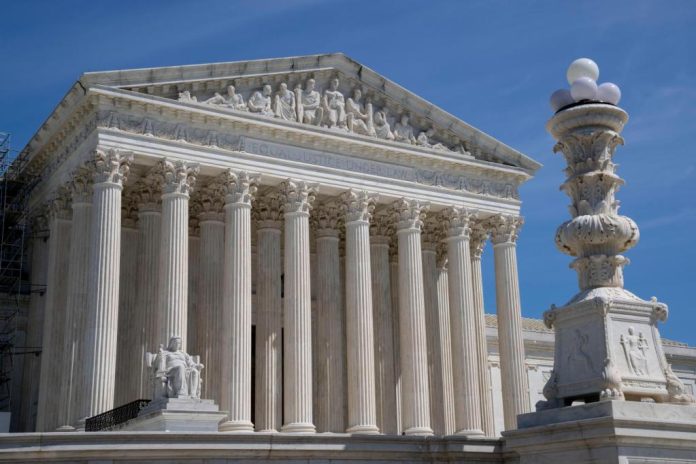
A Christian graphic artist who the Supreme Court said can refuse to make wedding websites for gay couples pointed during her lawsuit to a request from a man named “Stewart” and his husband-to-be. The twist? Stewart says it never happened.

The revelation has raised questions about how Lorie Smith’s case was allowed to proceed all the way to the nation’s highest court with such an apparent misrepresentation and whether the state of Colorado, which lost the case last week, has any legal recourse.

It has served as another distraction at the end of a highly polarizing term for a Supreme Court marked by ethical questions and contentious rulings along ideological lines that rejected affirmative action in higher education and President Joe Biden’s $400 billion plan to cancel or reduce federal student loan debts.

Here’s a look at the legal questions surrounding the mysterious would-be customer, “Stewart:”

About a month after the conservative legal group Alliance Defending Freedom filed the case in Colorado federal court in 2016, lawyers for the state said it should be dismissed partly because Smith hadn’t been harmed by the state’s anti-discrimination law. Smith — who did not plan to start creating wedding websites until her case was resolved — would first have to get a request from a gay couple and refuse, triggering a possible complaint against her, the state argued.

Smith’s lawyers maintained that she didn’t have to be punished for violating the law before challenging it. In a February 2017 filing, they revealed that though she did not need a request to pursue the case, she had, in fact, received one. An appendix to the filing included a website request form submitted by Stewart on Sept. 21, 2016, a few days after the lawsuit was filed. It also included a Feb. 1, 2017, affidavit from Smith stating that Stewart’s request had been received.

Two documents Smith filed with the Supreme Court briefly mention that she had received at least one request to create a website celebrating a same-sex wedding but do not elaborate.

The request stated that Stewart and his fiancé Mike were looking for design work on things like invitations and place setting cards for their upcoming wedding. “We might also stretch to a website,” the form said.

Lawyers for Colorado wrote in their brief to the Supreme Court in August that it did not amount to an actual request for a website and the company did not take any steps to verify that a “genuine prospective customer submitted the form.” It’s not clear whether the state took any steps to verify whether Stewart — whose contact information was included in court papers — was a real potential customer.

Stewart told The Associated Press last week that he didn’t even know his name had been invoked in the case until he was contacted by a reporter for The New Republic, which first reported his denial. Stewart, who declined to give his last name for fear of harassment and threats, said he was incredibly surprised, adding he has been married to a woman for 15 years.

It’s highly unlikely. The would-be customer’s request was not the basis for Smith’s original lawsuit, nor was it cited by the high court as the reason for ruling in her favor. Legal standing, or the right to bring a lawsuit, generally requires the person bringing the case to show that they have suffered some sort of harm. But pre-enforcement challenges — like the one Smith brought — are allowed in certain cases if the person can show they face a credible threat of prosecution or sanctions unless they conform to the law.

The 10th U.S. Circuit Court of Appeals, which reviewed the case before the Supreme Court, found that Smith had standing to sue. That appeals court noted that Colorado had a history of past enforcement “against nearly identical conduct” and that the state decline to promise that it wouldn’t go after Smith if she violated the law.

“If there are other places where you can get standing, then legally speaking I don’t think it actually does make a difference,” said Jessica Levinson, a professor at Loyola Law School.

However, it could have affected the case by undermining the credibility of Smith’s legal team, potentially causing the judge to look more skeptically at everything else they filed, Levinson said. It could also result in potential sanctions against Smith’s legal team if it turns out they knew Stewart’s request was false, Levinson said.

While the revelation cannot change the decision, “it’s something that should’ve come up in the litigation,” said Erwin Chemerinsky, the dean of Berkeley Law, “because then what the court should have done is say we have doubts about this, we can’t resolve it, we send it back to the federal district court.”

Kristen Waggoner — the president of Alliance Defending Freedom, who argued the case before the high court— has said her client doesn’t have a way of doing background checks on those requesting business nor is it her responsibility to do so. On Monday, Waggoner slammed suggestions that her client made up the request, adding that “the more likely scenario” is that “‘Stewart’ or another activist did in fact submit the request.”

“To say that Lorie Smith or ADF fabricated a request for a same-sex wedding website is a lie,” she said in an emailed statement. “It would make no sense to have fabricated a request because one wasn’t required for the court to decide her case.”

An error like that — especially at the level of the Supreme Court — is highly unusual, legal experts say.

“Assuming the allegation is correct that this was something that was factually inaccurate … I’ve never seen anything that blatant happen before,” said Adam Feldman, who follows the court as the creator of the Empirical SCOTUS blog.

Lawyers have, however, had to walk back statements made to the court before.

The solicitor general, who represents the government before the Supreme Court, apologized in a court filing this year for an “inaccurate statement” made to the court during oral arguments over a 2017 patent case. Solicitor General Elizabeth Prelogar wrote that the lawyer was given wrong information by the United States Patent and Trademark Office, adding: “We regret any misimpression inadvertently created by the answer that was given.”

The court has also included errors in its own rulings. In 2017, ProPublica published a review of several dozen cases in which they found several “false or wholly unsupported factual claims.” Among them was an error in Shelby County v. Holder, which struck down part of the Voting Rights Act. The publication reported that Chief Justice John Roberts included incorrect data in a comparison of voter registration among Black people and white people in certain states.

____

Associated Press reporter Jesse Bedayn contributed from Denver.

Fright over crack on North Carolina ride serves as reminder of risks at amusement parks – Daily Press

0

By HANNAH SCHOENBAUM, KIMBERLEE KRUESI and ERIK VERDUZCO (Associated Press)

CHARLOTTE, N.C. (AP) — A visible crack in the support beam of a North Carolina roller coaster served as a reminder of the risks that sometimes arise with amusement park rides, particularly as families and adrenaline junkies flock to the attractions in summer.

Video footage of the Charlotte-based Carowinds’ popular Fury 325 — known as a “Giga coaster” due to its dramatic height of 325 feet (99 meters) — showed a key support beam bending with the top visibly detached as cars packed with unsuspecting passengers whirled by at speeds of up to 95 mph (150 kph).

The park, which straddles the North Carolina and South Carolina line, closed the ride late last week as questions swirled about how the crack occurred. Those answers remained largely unknown as state investigators were on site in Monday morning.

Tommy Petty, chief of the state Department of Labor’s Amusement Device Bureau, confirmed investigators “already came and went” from Carowinds on Monday but declined to share details about their findings. Meanwhile, Carowinds said in a statement that all of its rides, including Fury 325, are inspected daily “to ensure their proper functioning and structural integrity.”

Several Carowinds visitors said they were aware that the ride had been closed for repairs, but they were not deterred from enjoying the park’s other attractions.

Greg Bledsoe, a 22-year-old season pass holder, visited the park Monday despite having watched the viral video of the Fury 325 track separating from its support beam mid-ride.

“I’m just glad I wasn’t on it because I don’t want to fall off. I’m glad nobody fell off,” he said.

While Bledsoe said the video was “a bit of a shock,” he remains confident in the park’s overall safety and plans to make good use of his season pass.

“Hopefully they get it fixed before the season’s over so I can ride it some more,” he said of the broken coaster. “It’s like the main thing here.”

Industry experts have been quick to counter that millions of Americans hop on roller coasters, Ferris wheels, water slides and many other rides without ever experiencing issues. They note injury rates are extremely low.

A 2021 survey compiled on behalf of the International Association of Amusement Parks and Attractions found “0.9 injuries per million rides,” said Caitlin Dineen, the group’s spokesperson. That year, more than 1,200 ride-related injuries were reported out of the typical 1.7 billion rides that take place each year across 400 locations in North America.

“Safety is the top priority for the global attractions industry,” Dineen said. “An excellent safety record is in the best interest of the industry, and leaders within it are committed to providing safe and secure attractions for all their guests and visitors.”

For Steven Powers, a resident of Columbia, South Carolina who visited Carowinds Monday with friends, the positive atmosphere of the park outweighs any worries.

“As far as any other safety concerns, I don’t believe there are any,” Powers said. “I think always subconsciously we think something might happen in the back of our minds, but I also know that they do have people’s lives in their hands so they’re going to make sure that they do what they’re supposed to do on their end.”

Even when amusement park mishaps don’t result in injuries, they can still upend vacations and cause headaches for summer fun-seekers.

Shortly after footage was released of the crack inside Fury 325’s support structure, riders on a roller coaster in northeastern Wisconsin were trapped upside down for three hours before emergency responders arrived to rescue them.

WJFW reports the ride had been inspected recently when a mechanical failure occurred, halting the coaster mid-ride, according to Capt. Brennan Cook of the Crandon Fire Department.

But sometimes deaths do occur on an amusement park ride.

In 2022, Orlando’s International Drive district removed a towering 400-foot (122-meter) ride after it was directly linked to the death of 14-year-old Tyre Sampson — a Missouri teen who fell to his death while on the ride the year prior.

Sampson, who lived near St. Louis, Missouri, was visiting Orlando during spring break when he died.

An initial report from outside engineers hired by the Florida Department of Agriculture said sensors on the ride had been adjusted manually to double the size of the opening for restraints on two seats, resulting in the teen not being properly secured.

___

Schoenbaum reported from Raleigh, and Kruesi from Nashville, Tennessee. Associated Press writer Claire Savage in Chicago contributed to this report.

Grand Strategy is What States Make of It: #Reviewing Wars of Revelation

0

The Fuzzy Nature of Strategy

Lissner’s argument might seem as obvious as it is compelling. She stresses that her research and analysis goes beyond the merely intuitive and provides insight into how interventions provide crucial opportunities for information gathering. However, it is difficult to generalize from her analysis because three key questions are left unaddressed. First, what is grand strategy? Second, who makes grand strategy? Finally, is grand strategy a stable concept?

Pinning down a concept like grand strategy is challenging. However, it is important for the reader of Lissner’s book to understand what it is and how it is to be observed. Lissner’s initial definition, which describes grand strategy as “the highest-order and most consequential dimension of statecraft” is fuzzy.[8] Something so vast and important seems difficult to discern, and it’s not clear that it could be found in a single document or that it would be authored by a particular person or even group.

Lissner refers to grand strategy almost as though it hangs in the ether. She questions explanations of grand strategy focused on leaders, arguing its evolution was much more continuous than a great leader focus would suggest.[9]

Lissner does not clearly specify the roles and influence of the various policy makers involved in creating and revising grand strategy. In each case study she provides substantial archival evidence of civilian and military leaders gaining information from each intervention and ultimately revising U.S. grand strategy. However, it is not clear who is consistently engaged in the creation and revision of grand strategy and how differences between the players might be resolved.

For example, one might ask why it took the United States so long to learn from the intervention in Vietnam. Lissner notes: “From Johnson’s escalation in 1965 through the end of 1967, however, the Vietnam War’s adverse trends went largely unexamined. To some extent, the messy and multifaceted nature of the conflict on both sides of the north-south border obscured data from coalescing into clear patterns.”[10] The lack of clarity on the positions of various decision makers and the process of creating grand strategy weakens Lissner’s ability to make testable and generalizable claims.

Lissner’s analysis presumes that policymakers agree on a unitary understanding of U.S. grand strategy. Given that grand strategy includes military, economic, and diplomatic calculations, it is hard to imagine that it can be pinned down to one agreed upon meaning at any time. It is possible at any one time that decision makers, holding different kinds of information, could have divergent views of U.S. grand strategy.

Conclusion

Lissner’s Wars of Revelation is a rich and thoughtful discussion of how military interventions provide information to civilian and military leaders about the global security environment and current U.S. capabilities. However, her book leaves unresolved questions about how grand strategies are created, negotiated, and revised. Given the importance of thinking about grand strategy, this book should spur greater discussion about who is involved in these conversations and what influence they have.

Given the importance of thinking about grand strategy, this book should spur greater discussion about who is involved in these conversations and what influence they have.

Gunman opens fire at random on Philadelphia streets, killing 4 before he is arrested, police say – Daily Press

0

PHILADELPHIA (AP) — A gunman wearing a bulletproof vest opened fire on the streets of Philadelphia on Monday night, killing four people and wounding two boys in the latest outbreak of gun violence in the United States, police said. The victims were apparently random, with no connection immediately known between them and the shooter.

The shootings took place over several city blocks in the southwestern neighborhood of Kingsessing. Responding officers chased the suspect as he continued to fire, and he was arrested in an alley after surrendering, Police Commissioner Danielle Outlaw said at a news conference.

“At this point all we know is that this person decided to leave their home and target individuals,” Outlaw said.

He had a bulletproof vest, an “AR-type rifle,” multiple magazines, a handgun and a police scanner, she said.

Officers were flagged down at about 8:30 p.m., and multiple calls of shots fired came in from Kingsessing. Police found some gunshot victims, and as they were attending to them, they heard more gunfire, Outlaw said.

The suspected shooter was identified as a 40-year-old man. A second person was also taken into custody who may have returned fire at the suspect, but police did not know whether there was a connection between the two people, Outlaw said.

The chief described the scene as covering an area of two by four blocks and said dozens of shell casings were found.

“You can see there are several scenes out here,” Outlaw said. “We’re canvassing the area to get as much as we can, to identify witnesses, to identify where cameras are located and to do everything to figure out the why,” Outlaw said.

Three of the dead ranged in age from 20 to 59, while the fourth, who had not yet been identified, was estimated to be between 16 and 21. All were male. The two hospitalized victims are boys, ages 2 and 13. They were in stable condition, Outlaw said.

The shooting occurred a day after gunfire erupted at a holiday weekend block party in Baltimore, about 100 miles (160 kilometers) to the southwest, killing two people and wounding 28 others. The wounded in that shooting ranged in age from 13 to 32, with more than half of them minors, according to officials.

The Philadelphia violence marks the country’s 29th mass killing in 2023, according to a database maintained by The Associated Press and USA Today in partnership with Northeastern University.

So far this year, the nation has witnessed the highest number on record of mass killings and deaths to this point in a single year.

There have been more than 550 mass killings since 2006, according to the database, in which at least 2,900 people have died and at least 2,000 people have been injured.

Crowds across France show solidarity at town halls targeted in rioting following police shooting – Daily Press

0

By CARA ANNA and NICOLAS GARRIGA (Associated Press)

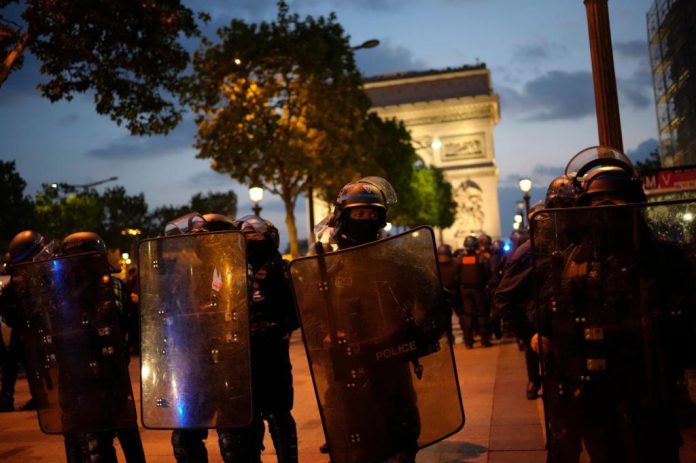
NANTERRE, France (AP) — Crowds gathered at town halls across France Monday to show solidarity with local governments targeted in six nights of violence touched off by the fatal police shooting of a 17-year-old in suburban Paris.

The unrest, which appeared to be easing on Sunday night, was driven by a mainly teenage backlash in the suburbs and urban housing projects against a French state that many young people with immigrant roots say routinely discriminates against them. In all, 99 town halls have been attacked in the violence, the Interior Ministry said, including a weekend attempt to ram the home of one mayor and apparently set it afire.

In the municipality of l’Hay-les-Les Roses in the southern suburbs of Paris, hundreds of people gathered Monday to support Mayor Vincent Jeanbrun, whose wife and one of his young children were injured when a car set afire by rioters rammed into his home early Sunday while they slept.

It was an unusually personal attack that authorities said would be prosecuted as an attempted homicide, and it prompted an outpouring of support for local governments in many towns where the city hall is often literally central to public life.

“We saw the real face of the rioters, that of assassins,” Jeanbrun said in an emotional speech. France and “democracy itself” were being attacked in days of rioting. “This won’t last last,” the mayor said, adding that the “silent majority” is speaking out to say “Stop. This is enough!” The crowd responded with the chant “Enough!”

President Emmanuel Macron made a surprise visit to a northern Paris district reportedly to thank security officials for their work, according to French media reports. Video showed Macron and Interior Minister Gerald Darmanin entering the building in the 17th district where a specialized night brigade is headquartered.

There has been little in the way of organized protests beyond a march last week for Nahel, the 17-year-old French man of Algerian descent who was killed last Tuesday in the Paris suburb of Nanterre by a white police officer. Instead, the anger has manifested in young people targeting police, with both sides using increasingly aggressive tactics.

The average age of the 3,354 people arrested over the past week was 17, the interior minister said. But the problem of discrimination strikes all ages, according to Ahmed Djamai, a 58-year-old born in Nanterre who attended a solidarity gathering Monday at the town hall.

Djamai said police stopped him not long ago and demanded a residence permit, even though he neither has nor needs one as a French citizen. He said the problem won’t go away even as the violence subsides.

“Our second, third and fourth-generation children face the same problem when they go out to get a job, when they go to prestigious universities,” he said. “They’re not accepted. So even now, the problem is social, but it’s also one of identity. It goes much deeper than that.”

President Macron was meeting Tuesday with mayors of 220 towns from across the country which were hit by violence. Across France, 34 buildings — many of them linked to the government — were attacked from Sunday into Monday, along with 297 vehicles.

Macron last week blamed social media for the spread of the unrest and called on parents to take responsibility for their teenagers. Justice Minister Eric Dupond-Moretti told France Inter radio that parents who abdicated that responsibility, “either through disinterest or deliberately,” would be prosecuted.

The anger has descended into attacks against symbols of the state, widespread arson and nighttime looting. The interior minister said during a visit to a town in central France that he’s been proven right to put 45,000 police on the streets in recent nights — and did so again Monday night. But he added that police “can’t educate children in the place of their parents.”

“We know all too well that this violence penalizes first and foremost the children, the people and the families of our neighborhoods and all of the residents of our city,” Nanterre Mayor Patrick Jarry said. “We want justice to be done for Nahel and for the appeal by the family and notably by his grandmother for an end to the violence and destruction to be heard and respected.”

In all, according to the Interior Ministry, there were 157 arrests overnight out of a total of 3,354 since last Tuesday, and two law enforcement stations were attacked, among other damage.

The interior minister said children as young as 12 or 13 had been detained for attacking law enforcement and setting fires.

In the Paris suburb of Clichy-sous-Bois, where a fire also struck the town hall, residents over the weekend said anger had simmered for years and many said the government had done little to help them.

“Young people are afraid to die by the hands of police. They are hopeless. They are bored and they need something to distract them so they don’t hang out in the streets,” said Samba Seck, 39.

___

Oleg Cetinic and Alex Turnbull contributed from L’Hay-les-Roses, France. Jade Le Deley contributed from Clichy-sous-Bois, France. Lori Hinnant contributed from Paris.