Home Blog Page 112

Business notes for the week of July 10

0

Appointed and elected

Paul Muse, CEO of Newport News-based 1st Advantage Federal Credit Union, was reelected to a three-year term as treasurer of the Virginia Credit Union League’s board of directors.

Awards and honors

Lawson’s Market Heights Apartments in Norfolk was awarded the Home Builders Association of Virginia Multifamily Project of the Year Award. The property is a 164-unit income-restricted, 100% affordable low income housing tax credit community in Norfolk’s St. Paul’s district. Seventeen apartments are accessible 504-compliant units and 80 units are of universal design. All indoor and outdoor common spaces exceed accessibility standards. It’s the first property approved under Norfolk’s new resilience code mandating specific resilient measures applying to flooding, energy efficiency and building integrity. The site has been raised out of the flood plain and includes a new public sidewalk that improves safety for students walking to the neighboring middle school. A $100,000 grant from LISC Hampton Roads powered by Sentara Health will fund a food pantry, accessible fitness equipment and a resident telehealth booth for residents. The company also partnered with Hope House Foundation and Volunteers of America to provide permanent on-site supportive services for residents with disabilities.

The U.S. Department of Energy’s Thomas Jefferson National Accelerator Facility in Newport News was recognized by the Public Relations Society of America with three Anvil Awards. The lab’s Fall for Science Virtual Field Trip, created in response to COVID-19 restrictions, was awarded a Bronze Anvil Award in the website category. The full digital platform built to support the website and event was honored with a Bronze Anvil Award of Commendation in the digital platform category. The lab was awarded the Silver Anvil Award of Excellence for the virtual field trip in the events and observances category.

The Virginia Outdoors Foundation awarded the city of Norfolk’s grant proposal to implement Larchmont Library trailhead improvements on the Elizabeth River Trail for $404,625. It will fund approximately 3.9 acres of land around the Larchmont Library on Hampton Boulevard that will be dedicated to open space. The trailhead improvements include enhanced accessibility and connections to the trail, improved signage, a trailhead kiosk, an outdoor recreational space for library patrons and trail users, and a kayak launch for a new access point along the Lafayette River. (Courtesy photo)

Fundraisers

The Langley for Families Foundation raised more than $535,000 in gross profits at its 9th Annual Charity Golf Classic in Williamsburg on May 16. Net proceeds from the event will be granted to area nonprofits in the areas of health care, housing and human services, and access to education.

Grants and donations

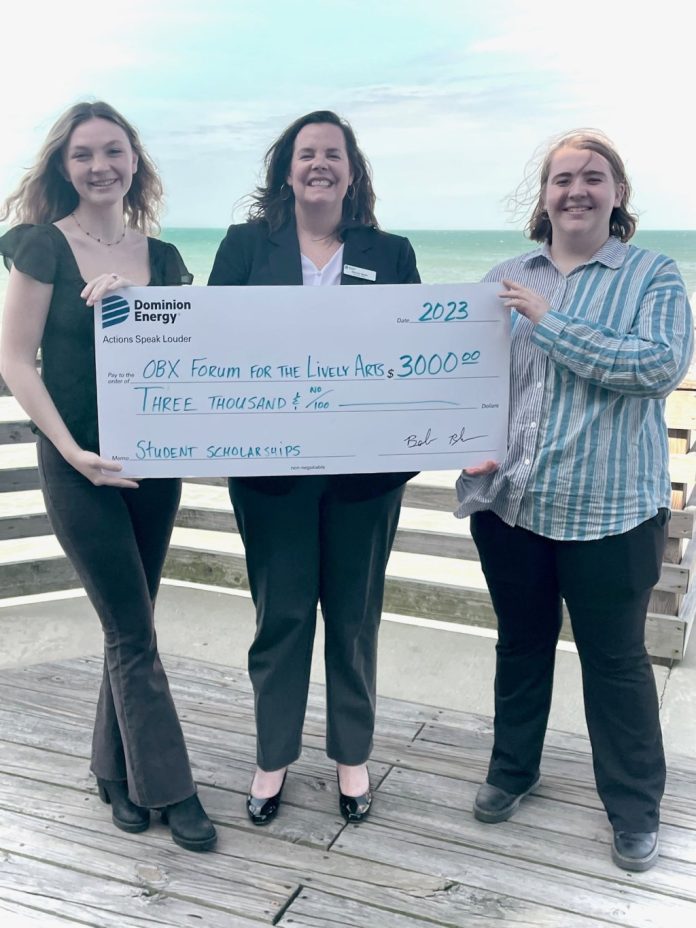
Access College Foundation awarded five $25,000 scholarships to exceptional local students. They include: Manor High School graduate Brooke Pearce, who won the Margaret M. “Peggy” and Conrad M. Hall Scholarship; Landstown High School graduate Aleah Johnson, who won the Chesapeake Bay Wine Classic Scholarship; Salem High School graduate Tatyana Calloway, who won the Robert M. Stanton Memorial Scholarship; Indian River High School graduate Jevae’ Copeland, who won the Joan P. and Macon F. Brock, Jr. Scholarship; and Lakeland High School graduate Alexis Perkins, who won the Anne B. Shumadine Scholarship.

Church of the Holy Family in Virginia Beach was awarded a $750 Green Grant in the recycling category to create a drop-off location for food scrap composting as part of Keep Virginia Beautiful’s 13th Annual Green Grants Program. The church will become a weekly drop-off location for people to bring their food scraps to a composting bin, which will be picked up weekly by Natural Organic Process Enterprises for processing.

Lynnhaven River NOW was awarded a $1,000 Green Grant in the litter prevention category as part of Keep Virginia Beautiful’s 13th Annual Green Grants Program. Funds provided by program will be used to purchase cleanup tools, such as wheelbarrows, litter grabbers, children’s litter grabbers and safety vests to replace broken equipment and provide additional equipment.

Coastal VA STEM Hub, a regional science, technology, engineering and math learning ecosystem, announced the grant awards for educators and nonprofits in the region to establish new STEM-focused initiatives, activities and programming. The competitive application process resulted in awarding grants to 20 organizations totaling nearly $450,000. Recipients include, among others, Newport News’ Brooks Crossing Innovation + Opportunity Center, Virginia Partnership for Out-of-School Time, Nauticus Foundation and Virginia Living Museum. Additionally, the hub was invited to join the STEM Learning Ecosystems Community of Practice, a global movement devoted to advancing STEM learning opportunities for all.

Opening

7 Brew, a drive-thru coffee stand franchise, announced the brand’s expansion to Newport News by dropping the stand from a crane on site at 5018 W. Mercury Blvd. As part of its mission to make an impact in the communities it serves, the company donated $2,000 to the Navy-Marine Corps Relief Society Newport News.
‘It’s getting progressively worse’ – Daily Press

0

Texas was among the hottest places on Earth last week as a heat wave brought misery from Mexico to Florida. While residents across the region struggled to stay cool, the extreme heat took a particularly severe toll on those who could least protect themselves, particularly incarcerated people.

According to The Texas Tribune, at least nine people in Texas prisons died as temperatures in the state reached triple digits. These deaths illustrate the unique dangers incarcerated people face when extreme weather hits, dangers that will only grow as heat waves, droughts and hurricanes become more frequent due to climate change.

The exact impact the heat had on incarcerated people in Texas last week, let alone the death toll, is unclear because the state prison system hasn’t classified a death as heat-related in more than a decade. But a 2022 study found that between 2001 and 2019, roughly 13% of deaths in Texas prisons during warm months could be attributed to extreme heat. That estimate is 30 times higher than the number of heat-related deaths in the general U.S. population.

The Texas heat wave was fueled by a heat dome — that is, hot air trapped under a stagnant bubble of high pressure. It’s “a dome because it sits right above you, it doesn’t really move anywhere,” said Mingfang Ting, a professor of climate, ocean and climate physics at Columbia University. “And the longer it lasts in the same location, the hotter it gets because the sun’s constantly heating (things) up. There’s no relief.”

The searing heat recently was made five times more likely because of climate change, according to research nonprofit Climate Central. The heat dome drove especially extreme temperatures because it was essentially adding heat to an already overheated system.

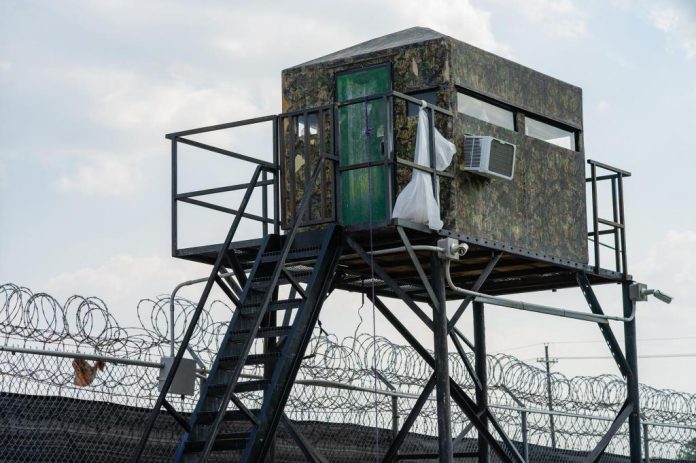
Incarcerated people are especially vulnerable to high temperatures not just because they lack air conditioning but because prison architecture makes staying cool difficult. Windows, if they exist at all, typically don’t open, limiting ventilation and cross breezes that can lower indoor temperatures by at least a few degrees.

“There have been reports of an inside temperature of 149F,” Julie Skarha, a lead author on the 2022 study who recently received her Ph.D. in epidemiology from Brown University, said of Texas prisons. “The temperature people are experiencing is extreme.”

After a postal worker collapsed and died from the heat during the recent heat wave, the USPS moved postal carriers’ start times to 7:30 a.m. to limit their exposure to the hottest times of the day. But these kinds of behavioral changes to cool down “are all things that might not be possible for those on the inside,” said Skarha. “Taking a cold shower when you want, that’s not possible for everyone. Drinking as much water as you want, water isn’t available 24/7 in some of these facilities like we might assume. Also like clothing, maybe we change what kind of clothing we’re wearing to help cool down. That’s also not an option inside.”

Two-thirds of Texas prisons lack the obvious solution: air conditioning. The same is also true for prisons in other similarly hot states. In 2022, a Florida spokesperson told USA Today that only a quarter of the state’s prisons were fully air conditioned. Only 15% of Alabama prisons were air conditioned as of 2022.

The lack of air conditioning in U.S. prisons stands in stark contrast to availability outside of them. Nationwide, nearly 90% of households have air conditioning. That number creeps up in the Southeast to 95% of households.

“We would not build any kind of new building except a prison without adding air conditioning,” said David C. Fathi, the director of the American Civil Liberties Union National Prison Project.

“It’s pretty hard to buy a new home in the U.S. in the last 20 years that doesn’t have air conditioning, no matter where you live,” Andrew deLaski, executive director of the Appliance Standards Awareness Project, told CityLab in 2019. Data from the U.S. Energy Information Administration shows that 86% of homes built between 2016 and 2020 had central air conditioning while less than 0.1% of homes did not have any air conditioning at all.

Fathi’s office has sued a number of correctional departments for not air conditioning their prisons. Courts in states such as Mississippi and Wisconsin have found that failure to abate extreme heat violates the Eighth Amendment, which includes a clause against cruel and unusual punishment. But despite these rulings, prisons still lag the rest of the country when it comes to air conditioning. Earlier this year, Texas’s legislature allocated no direct funding to air conditioning prisons despite a $32.7 billion surplus in the two-year budget.

“I think the only explanation (for the lack of air conditioning) is a desire to be seen as harming prisoners,” said Fathi. “And we sometimes hear politicians say this explicitly, ‘I don’t want prisoners to have air conditioning.’ ”

In 2014, voters in Jefferson Parish, Louisiana, approved a new jail only after local leaders promised there would be no air conditioning. Two years later, in 2016, Louisiana spent over $1 million fighting a lawsuit — four times the cost of installing air conditioning, according to an expert testimony — to install air conditioning on death row. Similarly, Texas paid more than $7.3 million in legal fees opposing air conditioning the geriatric unit of one state prison. After a 2018 settlement, the state agreed to cool the prison at a cost of less than $4 million.

“That tells you that this is not a rational economic decision that’s being made,” said Fathi. “This is a performative political decision that’s being made to harm prisoners.”

It’s not just Southern states where people are at risk. Skarha has also authored a separate broader study on heat-related deaths in prisons. “I looked at what regions of the U.S. see the most increase in heat-related deaths on extreme behavior for that specific region,” said Skarha. “It was in the Northeast.”

Other forms of extreme weather being worsened by climate change also threaten those incarcerated across the country. During hurricanes, for example, it is common for incarcerated people to remain in prisons in the path of the storm. The same is true for wildfires.

Skarha’s research also found that incarcerated people 65 years old and up saw increased mortality when temperatures rose. In a warming world, Fathi pointed out that those vulnerabilities, coupled with what he called “brutally long sentences,” are among the factors that are making prisons increasingly unsafe without proper cooling. So, too, is the number of mentally ill incarcerated individuals that rely on medications that can make them more susceptible to heat-related illness.

“This problem is truly national in scope, and it’s getting progressively worse,” said Fathi. “Hotter temperatures, and an older, more sick, more mentally ill prison population has truly been a lethal combination.”

©2023 Bloomberg L.P. Visit bloomberg.com. Distributed by Tribune Content Agency, LLC.

Nesting sea turtle on the Outer Banks dies after being hit by car – Daily Press

0

Wildlife officials are searching for the driver who struck and fatally injured a sea turtle that had just dug a nest on the northern Outer Banks.

Deputies on patrol along the four-wheel drive beach in Carova received a call about an injured turtle and discovered the loggerhead early Sunday morning. She was taken to the STAR Center sea turtle hospital at the N.C. Aquarium on Roanoke Island, but the crush injuries to her shell were so severe, she had to be euthanized, the Network for Endangered Sea Turtles said in a news release.

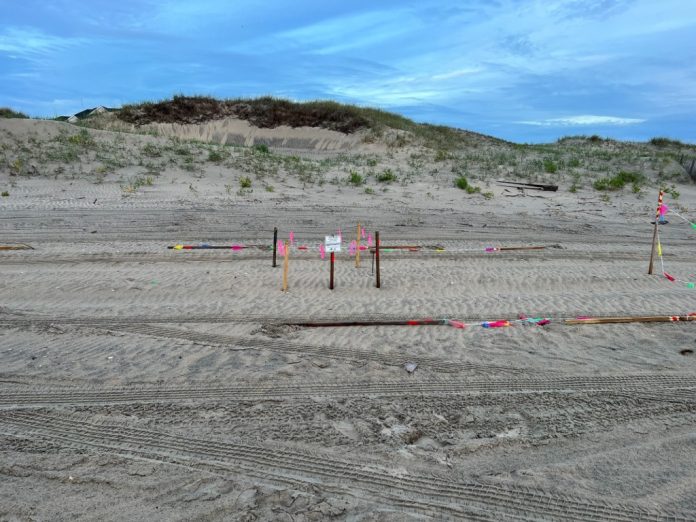
NEST volunteers on the scene were able to find her freshly-dug nest and protect more than 100 incubating eggs.

The loggerhead’s death followed a near-miss on Thursday night, where the marked outer perimeter protecting a turtle nest was run over by a vehicle, also in Carova, the release said. The nest itself was safe.

Outer Banks sea turtle nesting season runs from May through September, with turtles returning year after year to lay their eggs by digging nests into the sand. About two months later, the tiny turtles hatch out, scatter across the beach and head to the ocean.

Five species of turtles are found along the Outer Banks, with the most common being the loggerhead and green turtle. Leatherbacks, hawksbill and Kemp’s ridleys also make appearances.

So far this year, NEST has discovered 16 turtle nests on the beaches from Duck to Nags Head. Last year, there were 47 sea turtle nests, with 2,500 hatchlings making it to the ocean, according to NEST records.

“N.E.S.T. reminds drivers to use caution on the 4×4 beach at night. Protected nests have perimeters marked with reflective tape,” the release said. “Please follow the posted speed limits, scan the beach carefully in front of your vehicle, and give wildlife space.”

Sea turtles are protected by the Endangered Species Act and punishments for destruction of nests or sea turtles include fines up to $25,000 and six months in jail.

Anyone with information about either incident in Carova is asked to call the U.S. Fish and Wildlife Service hotline at 844-397-8477.

By following a few guidelines, people can help protect endangered sea turtles as they nest this summer. Here are some tips from the N.C. Wildlife Commission:

  • Because sea turtles nest mostly at night, beachfront property owners and those renting beachfront property are encouraged to turn off their outdoor lights and close their blinds/draperies after dark. Or, in lieu of turning off the lights, they can redirect lights so they are not visible on the beach.
  • People on the beach after dark should refrain from using flashlights or cellphones. Bright, artificial light can deter females from coming on to shore to nest and can disorient sea turtle hatchlings, causing them to wander inland, where they often die of dehydration or predation.
  • Beachgoers should remove beach equipment, such as lounge chairs, umbrellas, tents and other items from the beach when they leave. If left on the beach these items can prevent nesting attempts and prevent hatchlings from reaching the ocean. In fact, in many coastal towns, it is illegal to keep these items on the beach after dark.

Kari Pugh, [email protected]

Chesapeake’s Grant Holloway, Hampton’s Jalani Davis will represent Team USA at World Track & Field Championships – Daily Press

0

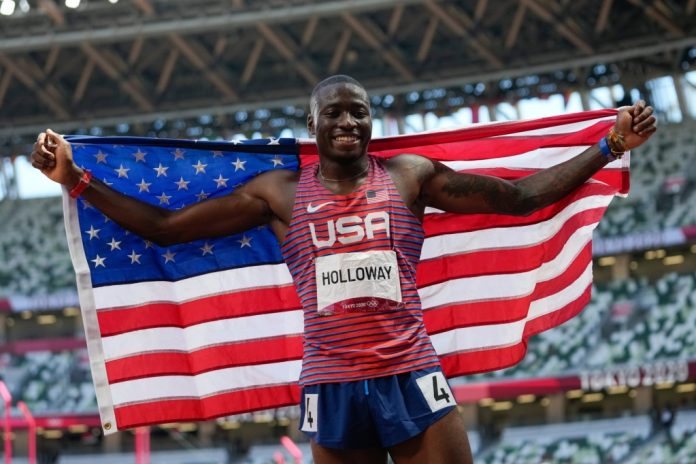
Chesapeake’s Grant Holloway and Hampton’s Jalani Davis will represent the United States at the World Athletics Championships next month in Budapest, Hungary.

Holloway, a Grassfield High grad, had already clinched a spot on the team because he’s the defending world champion and received a bye. He won his semifinal heat in 13.10 seconds, but decided not to run in the finals of the USA Track & Field Outdoor Championships.

Holloway, the two-time world champion, wasn’t a surprise to Team USA.

The same couldn’t be said for Davis.

A walk-on at Ole Miss four years ago, she won an NCAA title in the weight throw at 80 feet, 5 inches, making her the No. 4 performer in the history of the meet.

But she struggled at the NCAA region meet and didn’t advance to the NCAA Outdoor Championships in both the hammer and shot put.

Prior to the USA Track & Field Outdoor Championships, she said, “I am beyond excited about being able to participate in this track meet,” she said. “My expectations are to compete at my highest ability and have fun.”

She got off to a rough start when she fouled on her first attempt. She bounced back with a throw of 60-9 ½ that put her in third place. After another foul, she had a throw of 61-1 ¼. She ended up edging out world champion Chase Ealey on a tiebreaker.

Several other Hampton Roads athletes also hoped to win a spot on Team USA.

Suffolk’s Michaela Rose came up short as she finished sixth in the 800 meters. Rose, who was homeschooled, ran 2:01.47. She needed to finish in the top three to make Team USA.

Rose got out fast and was in second place through the first 200 meters. She moved to the front of the pack after 300 meters and kept the lead as she came through the first 400 meters in 58.50. She was in third place with 200 meters to go, but faded to sixth in the final 50 meters.

“It was not the outcome that I wanted, but I am so grateful for this amazing season,” she said. “To make the U.S. finals was such an experience and I have gained so much from it. It was so exciting to race against such talented ladies. I trust that God has blessings in store for me, I just need to stay patient and keep working.”

It was a remarkable season for Rose. The LSU sophomore won the NCAA 800 meters last month when she ran 1 minute, 59.83 seconds. It was her third sub-2-minute time of the outdoor season and made her the only woman in NCAA history to accomplish that feat.

She also clocked the second-fastest time in collegiate history earlier in the season when she ran 1:59.08 at the Bryan Clay Invitational. Only two-time Olympic gold medalist Athing Mu has run faster. She ran 1:57.03 in 2021 when she was at Texas A&M.

Rose also was selected as a semifinalist for The Bowerman, the highest individual honor in collegiate track and field.

Recent high school graduates Madison Whyte (Heritage) and Jaydin Williams (Norview) competed in the USATF U20 Championships.

Whyte, who will compete for Southern Cal next year, finished fourth in the 400. She tied her personal-best time of 52.49. She will run on the relay team at the U20 Pan Am Games. She was recently named the Gatorade Virginia Girls Track and Field Athlete of the Year for the second consecutive season.

Williams tied for eighth in the high jump with a leap of 6-6 ¾. Last month, he cleared 7 feet to set a Class 5 state meet record. He is one of only 20 high school athletes in the country to clear that height this season.

Larry Rubama, 757-575-6449, [email protected]. Twitter @LHRubama

More scrutiny of medical professionals’ access to painkillers is needed – Daily Press

0

Painkillers

Re “Virginia Beach surgeon convicted of drug possession, acquitted of stealing from patients” (June 8): This case raises questions. Dr. John Stuart Mancoll was found guilty of illegally possessing Percocet and Dilaudid, two highly addictive painkillers.

This kind of behavior is unacceptable from a licensed medical professional who is supposed to be trusted in the community. These types of actions, asking patients to return pills so he could dispose of them correctly, also spread misinformation about proper drug disposal. During his trial, three doctors testified saying, “they’d never heard of a doctor asking patients to return pills.” Per the Virginia Department of Behavioral Health and Developmental Services, it is completely safe to flush many unused pills down the toilet, even opioids. Him asking for pills back should have gotten him apprehended sooner.

Another concern about this case is that during the two-year period Mancoll’s case was pending, he was still able to practice his profession and assumingly still had access to other people’s medications. This puts all medical professionals under scrutiny as well as Mancoll’s previous work. How is it acceptable that someone who is found guilty of illegally possessing pills is still able to work with pills? The community deserves to have these important questions answered.

Tre Richard, Chesapeake

Research it

Re “Poor resume” (Your Views, July 3): I would suggest John Kellogg thoroughly check the facts. We can agree to disagree on candidates. Former President Donald Trump is a brash, outspoken New Yorker, which cost him votes. He’s not a politician, but he ran the America he loves as a business, improving the economy in his four years and leaving office with gas priced at $2.38 a gallon, an inflation rate of 1.4%, an unemployment rate of 6.3%, and a stock market that set new records during his four year reign.

Let’s consider candidate qualifications. Year-over-year inflation surged to 8.5% under President Joe Biden. Gas exceeded $5 a gallon under Biden. The financial dealings of Biden’s family are being investigated by the U.S. House Committee on Oversight and Accountability. Then there’s Biden’s seventh grandchild, a 4-year-old by college graduate Lunden Roberts in Arkansas.

Kellogg accuses Trump of encouraging a riot at the Capitol, resulting in deaths and destruction, when Trump actually tweeted, “go home with love & in peace.” Capitol police shot Ashli Babbitt; Kevin D. Greeson died of a heart attack, Benjamin Philips of a stroke, Rosanne Boyland of a drug overdose; Officer Brian D. Sicknick died of natural causes; and Officers Howard Liebengood and Jeff Smith committed suicide days after Jan. 6.

May we elect a competent president who will honor our country, our military and honor our relatives, my Navy SEAL brother William E. Gardner and all his teammates who fought for America. Hooyah!

Robyn Johnson, Virginia Beach

White House

Immediately after finding cocaine in the White House people started associating this with Hunter Biden and his prior drug addiction. Although Biden is supposedly drug free now, people are still tying his past use to this latest fiasco.

If I were Biden, I would step forward and request a drug test be administered, with witnesses, to calm those in doubt and take some of the heat off his dad. After all, that is what a good son would do, isn’t it?

Robert B. Gregory, Knotts Island, North Carolina

Very wrong

Re “The Supreme Court rules for a designer who doesn’t want to make wedding websites for gay couples” (June 30): “We don’t serve your kind here because my God doesn’t approve of you,” just doesn’t sound very Christian to me. But then again, it’s the new motto of the Christian right.

Patrick L. Blake, Virginia Beach

UVA catcher Kyle Teel taken 14th in the major league draft by Boston Red Sox – Daily Press

0

Virginia catcher Kyle Teel, the ACC Player of the Year and consensus All-American who led the Cavaliers to the College World Series, was selected in the first round with the 14th overall pick by the Boston Red Sox in the Major League Baseball amateur draft Sunday evening.

Teel, a 6-foot-1, 190-pound junior from New Jersey, is UVA’s first top-15MLB draft pick since first baseman Pavin Smith and outfielder Adam Haseley were selected seventh and eighth overall, respectively, in 2017.

MLB.com estimated Teel’s pick value at $4.66 million.

Teel started all 65 games this season for a UVA team that finished 50-15 and won its Charlottesville Regional and a Super Regional at home in the NCAA Tournament. The Cavaliers went 0-2 in the College World Series, losing a pair of one-run games to Florida and Texas Christian.

Teel finished the season with a .407 batting average — sixth-highest in UVA history — and became just the third Cavalier since 1985 to bat over .400. Teel also had 25 doubles, a career-high 13 home runs and 65 RBIs. His 105 hits ranked fourth in the country.

Behind the plate, Teel managed a Cavalier pitching staff that boasted the fourth-lowest ERA in college baseball. He was the Buster Posey National Collegiate Catcher of the Year Award winner and was named a first-team All-American by six publications.

Teel’s career batting average was .343 — 10th in UVA history — and he ranks among the Cavaliers’ top 10 all-time in career home runs, runs scored, total bases and doubles.

Pittsburgh selected hard-throwing LSU right-hander Paul Skenes with the top pick.

Skenes went 12-3 with 209 strikeouts in 122 innings in helping lead the Tigers to the College World Series championship. The pick was announced by Hall of Famer Ken Griffey Jr., the top pick of the 1987 draft by the Seattle Mariners.

Skenes was the first college pitcher selection No. 1 overall since Casey Mize by Detroit in 2018.

For the second time in three years, the Pirates held the top overall selection after picking catcher Henry Davis at the top of the 2021 draft. Davis made his major league debut last month for Pittsburgh.

It seemed to be a debate between Skenes and LSU’s Dylan Crews for the top pick. Crews, who hit .426 with 18 home runs while playing center field for the Tigers, was chosen No. 2 by Washington — marking the first time college teammates were taken with the top two picks.

Skenes’ slot value is expected to be about $9.7 million.

Detroit selected high school outfielder Max Clark from Franklin, Indiana, at No. 3. Clark was the Gatorade national Player of the Year after hitting .646 with six homers and 33 RBIs during his high school season.

Florida outfielder Wyatt Langford went No. 4 to Texas, and high school outfielder Walker Jenkins, from Oak Island, North Carolina, went fifth to Minnesota.

Oakland took college shortstop Jacob Wilson, the son of former major league shortstop Jack Wilson, from Grand Canyon at No. 6.

The Associated Press contributed to this story.

US military’s recruiting woes are a national-security crisis – Daily Press

0

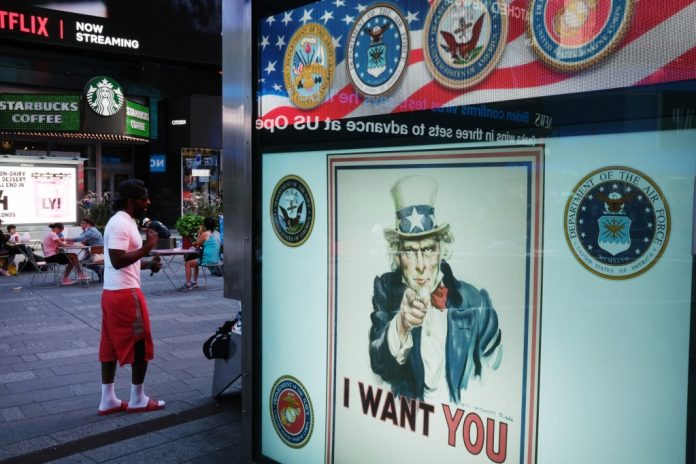
America’s armed services are failing to meet their recruiting goals, with the Army in particular suffering the worst shortfalls in five decades. There are many reasons behind this, but one is very surprising: veterans themselves.

Recent reporting and anecdotal evidence indicate the likelihood that children of service members will sign up, or be urged to do so by their families, is at a nadir. Given that 80% of new recruits have a relative who served in uniform, there is no understating the crisis.

As I entered the Naval Academy on a hot summer’s day half a century ago, it was entirely unclear if the volunteer force would succeed. After a bumpy post-draft period, the military was rejuvenated under President Ronald Reagan in early 1980s, becoming the highly successful force that fought the nation’s battles from Panama to the Persian Gulf. Yet the foundations of that all-volunteer military feel shakier than they have for decades. What can the Pentagon do about it?

The first step is to understand why recruiting is down. The biggest factor is probably today’s very strong civilian job market. In so many ways, life is “compared to what?” If someone can make a starter wage of $20-plus an hour, perhaps with a decent healthcare plan and a 401K, it is simply much harder to convince them to shave their head, report to a steaming Parris Island boot camp, meet rigorous physical standards, get up before dawn every day, and prepare for long separations from their friends and family, often in risky conditions.

Another factor, counterintuitively to many, is the withdrawal of the U.S. from large-scale, active war. Some young people have always been drawn to what they see as the enormous life-test of combat, as well as the adventure of deploying to distant lands. The dispiriting images of the chaotic withdrawal from Afghanistan in 2021 shattered that image for many.

Additionally, the bar to get into the military is high. Only 25% of the nation’s youth can meet the standards: a high school diploma or equivalent; reasonably high standardized test scores; physical fitness; no drug use or arrest record; mental stability.

Finally, the growing sense of political division across the nation is diminishing the young person’s faith in America. The respect for the military overall, still atop the list of the country’s institutions, has been dropping sharply. Fewer than half of Americans now say they “trust” the armed forces, down from 70% just five years ago.

The Pentagon needs to reverse these trends or there will be grave risk to national security in an era of great-power competition. Fortunately, planning and executing complex campaigns is something the Department of Defense is very good at.

First, just as any good company knows when it needs to focus on marketing and advertising in the face of falling market share, the military must send its brightest and most impressive personnel to lead recruiting efforts; provide additional resources to generate leads (artificial intelligence can perhaps help); re-tailor marketing campaigns to appeal directly to the most promising and untapped communities; assign inspirational two-star generals and admirals to lead the services’ recruiting commands; and provide incentives for success — give the most successful recruiters the choice of their next assignment, for example.

As for quality-of-life criticisms: Barracks need to be spotless and well run; food in the chow halls must be plentiful and reflective of new trends and appetites; medical treatment has to be first-rate; and pay/benefit packages must more than keep pace with inflation. (Fortunately, Congress just approved a 5% pay raise, the biggest in two decades.)

Above all, we as a nation we need to do more to encourage the idea of service. A pledge to honor the Constitution rises above the rancor and bitter divisions in the country — something America’s veterans know but seem to be less willing or able to instill in their children. On this Independence Day especially, we need to thank our troops for their sacrifice, sincerely and continuously. America’s security in a dangerous world depends on it.

James Stavridis is a Bloomberg Opinion columnist. A retired U.S. Navy admiral, former supreme allied commander of NATO, and dean emeritus of the Fletcher School of Law and Diplomacy at Tufts University, he is vice chairman of global affairs at the Carlyle Group.

General Daily Insight for July 10, 2023 – Daily Press

0

General Daily Insight for July 10, 2023

We have to roll with the punches. Active Mars travels into grounded Virgo at 7:40 am EDT, providing a direction for our willpower and cooling down Mars’ explosive nature. Intellectual Mercury then faces off with chaotic Pluto, subverting our expectations and shocking us with unexpected communications and delays. Finally, the Moon enters comforting Taurus, providing us with the emotional stability to clear up any miscommunications or mistakes. Be persistent and don’t give up when obstacles appear — just pivot to the next plan.

Aries

March 21 – April 19

It can be difficult to find your motivation now. You may have plans that you want to adhere to, but life is ready to throw other ideas at you like cosmic curveballs. That might leave you feeling deflated, with obstacles that prevent you from going after your true passions, but this delay could actually be a blessing in disguise. While paused, search for clarity on whatever ambitions are driving you toward your goals. Meditating on this should help you lay out a straightforward vision.

Taurus

April 20 – May 20

Solitude can clear any ongoing noise in your mind. You might be overwhelmed with everything going on in your life, as though you’ve got many different tabs open in your brain that combine to slow down your mental capacity. All the different tasks that you must complete and all the new information that you should learn could be muddling your thoughts — it’s okay to feel like it’s hard to keep up. Check in with yourself without the outside world chiming in.

Gemini

May 21 – June 20

Family can cause you to doubt yourself now. Whether they’re questioning your love life, career, spirituality, or something else, you may worry that what you’re doing isn’t enough or isn’t satisfying to them. Regardless of how positive their motivations are, that kind of judgment isn’t fun to sit with — especially if it makes you feel like a failure. Everyone moves at their own pace and to their own rhythm, so don’t hold yourself to a timeline that doesn’t make sense for you.

Cancer

June 21 – July 22

Current communication can clear the air. There may be someone in your life that you offended without meaning to, and their response might catch you off guard. Even if they give you a piece of their mind in a hurtful way, you’re capable of listening to their hurt without being overly defensive. They are looking for comfort in this time, and it might be healing for both of you to reassure them that you meant no harm. Sometimes an honest apology is all you need.

Leo

July 23 – August 22

Your security doesn’t have to be dependent on other people! You might want to wear an outfit that’s a little more daring or get a bold tattoo, and the people around you could be discouraging if they know what you’re up to. Peers or acquaintances might feel like they need to follow the status quo and avoid rocking the boat with their fashion choices, but you can follow your heart and take a more creative route with confidence. It’s okay to stand out!

Virgo

August 23 – September 22

You’re rising above revenge. Be wary of any opportunities that are tempting you to get back at someone else who potentially hurt you in the past. While the potential to create drama is there waiting for you, the joy that you would get from this would likely be short-lived, and the following fallout could take up more of your time than any schadenfreude would be worth. Taking the high road can be the best revenge — they don’t deserve a rise out of you.

Libra

September 23 – October 22

Intuition can push past your current fears! You may have been afraid to confront certain ideas or dreams that you had in the past, thinking that such things could never happen for you or that you’re setting unrealistic goals. Don’t let such anxieties box you in and make you feel unsatisfied with life! Instead, look into a happy medium and set some goals that feel like miniature versions of your big goal. Making a little progress is better than wondering what could have been.

Scorpio

October 23 – November 21

Your friends may be giving you some guidance. It might feel like you’re directionless or unsure of where to go next, but talking about your potential paths can help you realize which one you actually like the sound of. You have many talents that you’re ready to invest in and build up to help you succeed in life, but making a choice between them might be your biggest obstacle. Get your feelings out into words, then see if they become clearer.

Sagittarius

November 22 – December 21

Proving the opposition wrong takes hard work behind the scenes. There might be naysayers, from your past or present, who tell you that you don’t have what it takes, but you know better! You’ve likely been making plans for your next move without telling everyone else about it, and this subtle process could have allowed you to grow your idea without feeling swayed by their opinions. Be consistent with what’s inspiring you, and you should be able to prove them wrong in due time.

Capricorn

December 22 – January 19

You’re presently able to learn more about your loved ones. Perhaps a close relative or friend is ready to teach you about their own life experiences, and they’re unlikely to match with yours! Whatever you glean from them could be downright shocking. Everyone comes from a different background that only they truly know, with unique strengths and weaknesses. Be an active listener and try to internalize some of what they’re saying — after all, you’d likely appreciate their listening ear in the future.

Aquarius

January 20 – February 18

It could be time to loosen your grip. Holding on tight to a person, an item, or an activity isn’t necessarily bad — until it becomes an obsession. Intense fascination can lead to wanting to control someone or something, and because you feel this need so strongly, it can be easily mistaken for regular caring. Wanting to spend every minute of every day together with someone or trying to do something non-stop just because it’s fun is unhealthy! Look for a way to step back.

Pisces

February 19 – March 20

Emotions can rise up without warning. You may have recently felt like you were suppressing the urge to debate someone or call them out, and these words could rise to the surface without you meaning them to. The other person might be surprised by your boldness and take it the wrong way, so you may end up having to do some backpedaling if you can’t control your tongue. If you can’t help but say something, do your best to remain tactful.

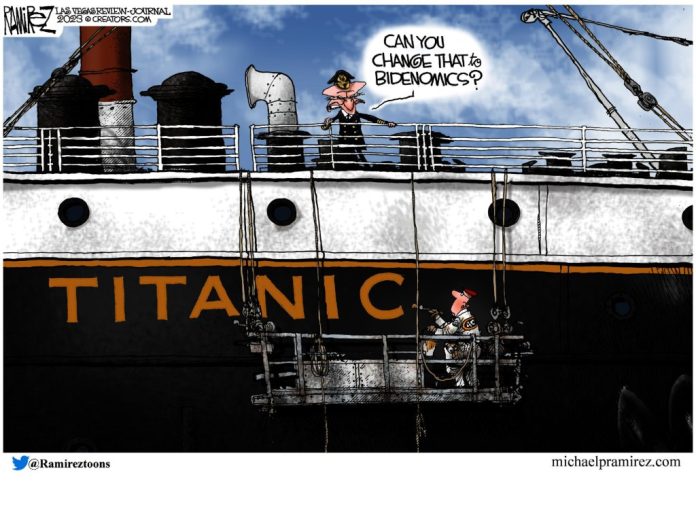
Michael Ramirez: Rechristening

0

Cartoon by Michael Ramirez for July 10, 2023.

Don’t forget about the student loan plan already in place – Daily Press

0

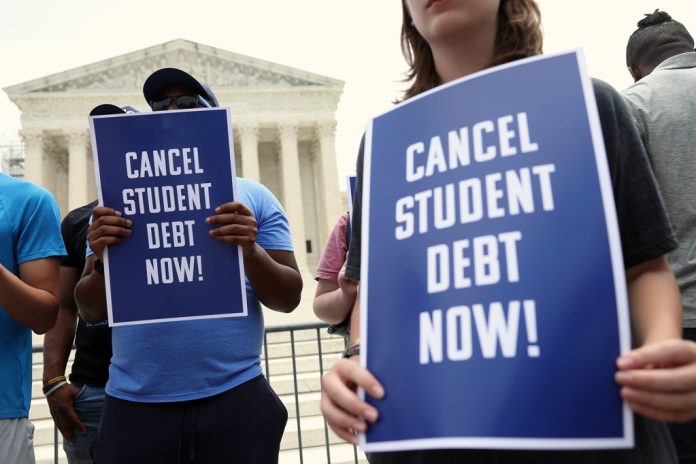
The Supreme Court recently struck down the Biden administration’s student loan forgiveness plan, which would have done away with as much as $20,000 per borrower. And that was the second blow to borrowers in recent weeks. The first was when House Republicans used the deal to raise the nation’s debt ceiling to force borrowers to start paying back their loans in October, which is sooner than planned.

Some macroeconomists who have spoken out against forgiveness, fearing it would either spark inflation or represent fiscal malfeasance or both, should remember that the plan is not large enough to move the needle on macroeconomic conditions. In reality, the plan was primarily about the positive effects on individuals, not gross domestic product or inflation. The bipartisan Congressional Budget Office estimated that the loan forgiveness program would have cost $400 billion over the next 10 years, but that’s only around 1% of the $25 trillion economy annually.

The Biden administration and advocates who had been pushing for broad-based forgiveness should focus on the narrower program already on the books: the Public Service Loan Forgiveness program. A fresh look might improve the PSLF program for public servants and help meet at least some of the administration’s goals. In the PSLF program, recipients must make loan payments and work full-time in a public service job, in the military, or at a qualifying non-profit. The top occupational groups eligible are teachers, doctors and social workers, and protective services (such as police and firefighters). After 10 years, a borrower’s remaining loan balance is forgiven.

Sure, the program is much smaller than the plan envisioned by the Biden administration, and, in principle, it sounds simple. But the PSLF needs to work on low take-up, and the implementation of that is burdensome, especially the verification of work and workplace. In 2017, when the first cohort completed the 10-year program, only 96 borrowers received loan forgiveness. The following year was not much better, with a little under 400. Finally, by the start of 2022, some 84,000 had received PSLF loan forgiveness. But that’s out of 3.5 million borrowers who are likely eligible for the program. Low completion rates are due, in part, to the implementation of benefits. Recertification — the annual process to verify that a borrower is still eligible — is a particular sticking point. For example, a borrower must get a signed form from their employer yearly to show eligibility.

Given that the PSLF was not fulfilling its mandate, the Department of Education created a temporary waiver from October 2021 to October 2022. The key innovation was to allow borrowers to receive benefits after the fact. In the normal system, an eligible borrower starts the program in year one of repayment and then proceeds for 10 years through the end of the program. With its simpler administration and requirement, the waiver had noticeably increased the number of borrowers getting loan forgiveness. But it expired in October. An excellent first step toward improving the program would be to make permanent changes like retroactive benefits as was the case with the temporary waiver.

In contrast, the take-up on Biden’s plan looked like it would have been high, with the administration estimating that 40 million borrowers would have been eligible. Some 26 million — more than two-thirds of the eligible – had signed up for the program in a matter of weeks. Yes, the programs are different, but the gap is so wide that there must be lessons on outreach for the PSLF from Biden’s plan.

Sarah Turner, a professor at the University of Virginia, and her co-authors found in a study of the PSLF plan that enrollment is a big factor in which groups — whether by income, race/ethnicity, or education — receive disproportionate more benefits. This type of analysis is called “distributional analysis.” It’s not enough to look at the legislation; it’s essential to see what happens in the real world. The goal should be 100% enrollment, as getting close as possible will do policy as intended.

The court’s decision was a hard day for many. But it’s also a chance to exchange ideas with other forgiveness plans. And before that, focus on getting the best possible loan repayment.

Claudia Sahm is a columnist for Bloomberg Opinion. The founder of Sahm Consulting and a former Federal Reserve economist, she is the creator of the Sahm rule, a recession indicator.