Home Blog Page 110

Deadly flooding is hitting several countries at once. Scientists say this will only be more common – Daily Press

0

ISABELLA O’MALLEY, BRITTANY PETERSON and DREW COSTLEY (Associated Press)

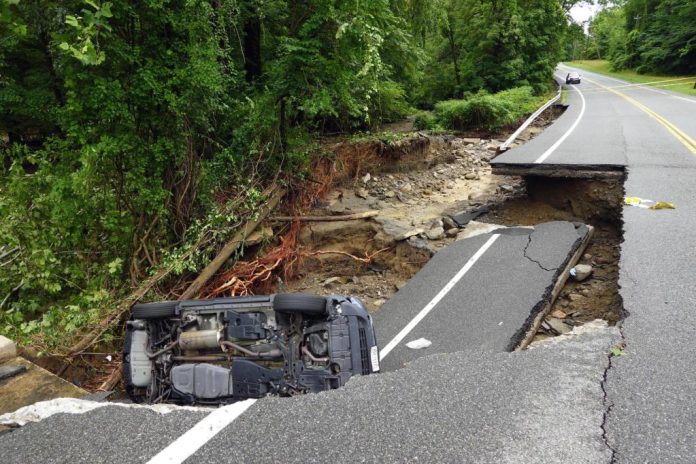
Schools in New Delhi were forced to close Monday after heavy monsoon rains battered the Indian capital, with landslides and flash floods killing at least 15 people over the last three days. Farther north, the overflowing Beas River swept vehicles downstream as it flooded neighborhoods.

In Japan, torrential rain pounded the southwest, causing floods and mudslides that left two people dead and at least six others missing Monday. Local TV showed damaged houses in Fukuoka prefecture and muddy water from the swollen Yamakuni River appearing to threaten a bridge in the town of Yabakei.

In Ulster County, in New York’s Hudson Valley and in Vermont, some said the flooding is the worst they’ve seen since Hurricane Irene’s devastation in 2011.

Although destructive flooding in India, Japan, China, Turkey and the United States might seem like distant events, atmospheric scientists say they have this in common: Storms are forming in a warmer atmosphere, making extreme rainfall a more frequent reality now. The additional warming that scientists predict is coming will only make it worse.

That’s because a warmer atmosphere holds more moisture, which results in storms dumping more precipitation that can have deadly outcomes. Pollutants, especially carbon dioxide and methane, are heating up the atmosphere. Instead of allowing heat to radiate away from Earth into space, they hold onto it.

While climate change is not the cause of storms unleashing the rainfall, these storms are forming in an atmosphere that is becoming warmer and wetter.

“Sixty-eight degrees Fahrenheit can hold twice as much water as 50 degrees Fahrenheit,” said Rodney Wynn, a meteorologist at the National Weather Service in Tampa Bay. “Warm air expands and cool air contracts. You can think of it as a balloon – when it’s heated the volume is going to get larger, so therefore it can hold more moisture.”

For every 1 degree Celsius, which equals 1.8 degrees Fahrenheit, the atmosphere warms, it holds approximately 7% more moisture. According to NASA, the average global temperature has increased by at least 1.1 degrees Celsius (1.9 degrees Fahrenheit) since 1880.

“When a thunderstorm develops, water vapor gets condensed into rain droplets and falls back down to the surface. So as these storms form in warmer environments that have more moisture in them, the rainfall increases,” explained Brian Soden, professor of atmospheric sciences at the University of Miami.

Along Turkey’s mountainous and scenic Black Sea coast, heavy rains swelled rivers and damaged cities with flooding and landslides. At least 15 people were killed by flooding in another mountainous region, in southwestern China.

“As the climate gets warmer we expect intense rain events to become more common, it’s a very robust prediction of climate models,” Soden added. “It’s not surprising to see these events happening, it’s what models have been predicting ever since day one.”

Gavin Schmidt, climatologist and director of the NASA Goddard Institute for Space Studies, said the regions being hit hardest by climate change are not the ones who emit the largest amount of planet-warming pollutants.

“The bulk of the emissions have come from the industrial Western nations and the bulk of the impacts are happening in places that don’t have good infrastructure, that are less prepared for weather extremes and have no real ways to manage this,” said Schmidt.

_____

Associated Press climate and environmental coverage receives support from several private foundations. See more about AP’s climate initiative here. The AP is solely responsible for all content.
Judge dismisses lawsuit seeking reparations for the 1921 Tulsa Race Massacre – Daily Press

0

By JAKE BLEIBERG (Associated Press)

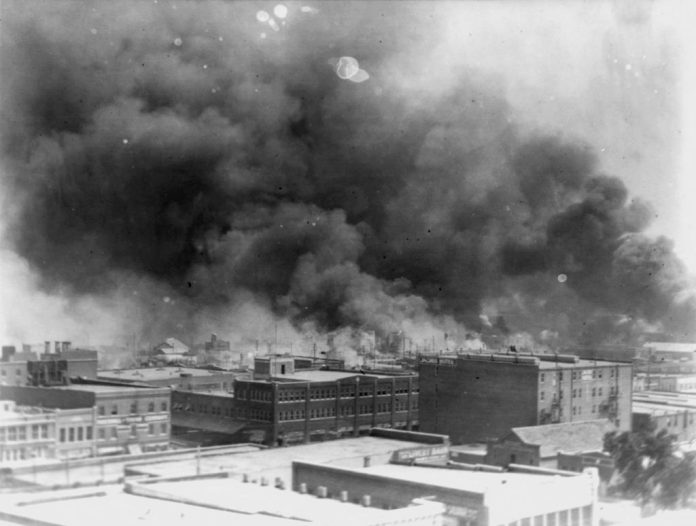
An Oklahoma judge has thrown out a lawsuit seeking reparations for the 1921 Tulsa Race Massacre, dashing an effort to obtain some measure of legal justice by survivors of the deadly racist rampage.

Judge Caroline Wall on Friday dismissed with prejudice the lawsuit trying to force the city and others to make recompense for the destruction of the once-thriving Black district known as Greenwood.

The order comes in a case by three survivors of the attack, who are all now over 100 years old and sued in 2020 with the hope of seeing what their attorney called “justice in their lifetime.”

Tulsa Mayor G.T. Bynum said in a statement that the city has yet to receive the full court order. “The city remains committed to finding the graves of 1921 Tulsa Race Massacre victims, fostering economic investment in the Greenwood District, educating future generations about the worst event in our community’s history, and building a city where every person has an equal opportunity for a great life,” he said.

A lawyer for the survivors — Lessie Benningfield Randle, Viola Fletcher and Hughes Van Ellis — did not say Sunday whether they plan to appeal. But a group supporting the lawsuit suggested they are likely to challenge Wall’s decision.

“Judge Wall effectively condemned the three living Tulsa Race Massacre Survivors to languish — genuinely to death — on Oklahoma’s appellate docket,” the group, Justice for Greenwood, said in a statement. “There is no semblance of justice or access to justice here.”

Wall, a Tulsa County District Court judge, wrote in a brief order that she was tossing the case based on arguments from the city, regional chamber of commerce and other state and local government agencies. She had ruled against the defendants’ motions to dismiss and allowed the case to proceed last year.

Local judicial elections in Oklahoma are technically nonpartisan, but Wall has described herself as a “Constitutional Conservative” in past campaign questionnaires.

The lawsuit was brought under Oklahoma’s public nuisance law, saying the actions of the white mob that killed hundreds of Black residents and destroyed what had been the nation’s most prosperous Black business district continue to affect the city today.

It contended that Tulsa’s long history of racial division and tension stemmed from the massacre, during which an angry white mob descended on a 35-block area, looting, killing and burning it to the ground. Beyond those killed, thousands more were left homeless and living in a hastily constructed internment camp.

The city and insurance companies never compensated victims for their losses, and the massacre ultimately resulted in racial and economic disparities that still exist today, the lawsuit argued. It sought a detailed accounting of the property and wealth lost or stolen in the massacre, the construction of a hospital in north Tulsa and the creation of a victims compensation fund, among other things.

A Chamber of Commerce attorney previously said that the massacre was horrible, but the nuisance it caused was not ongoing.

Fletcher, who is 109 and the oldest living survivor, released a memoir last week about the life she lived in the shadow of the massacre. It will become widely available for purchase in August.

In 2019, Oklahoma’s attorney general used the public nuisance law to force opioid drug maker Johnson & Johnson to pay the state $465 million in damages. The Oklahoma Supreme Court overturned that decision two years later.

___

This story has been updated to reflect that Fletcher’s memoir has already been published, rather than being published next month, and will become widely available for purchase in August.

___

Bleiberg reported from Dallas and Associated Press staff writer Michael Biesecker contributed reporting from Washington.

Russian mercenary leader Prigozhin’s commanders met Putin after short-lived mutiny, pledged loyalty – Daily Press

0

By The Associated Press

Just five days after staging a short-lived rebellion, mercenary chief Yevgeny Prigozhin ‘s commanders met with Russian President Vladimir Putin and pledged loyalty to the government, a senior government spokesman said Monday, the latest twist in a baffling episode that has raised questions about the power and influence both men wield.

The three-hour meeting took place June 29 and involved not only Prigozhin but commanders from his Wagner Group military contractor, Kremlin spokesman Dmitry Peskov said. Putin gave an assessment of Wagner’s actions on the battlefield in Ukraine — where the mercenaries have fought alongside Russian troops — and of the revolt itself.

“The commanders themselves presented their version of what happened. They underscored that they are staunch supporters and soldiers of the head of state and the commander-in-chief, and also said that they are ready to continue to fight for their homeland,” Peskov said.

The confirmation that Putin met face-to-face with Prigozhin, who led troops on a march to Moscow last month to demand a military leadership change, was extraordinary. Though the Russian leader branded Prigozhin a traitor as the revolt unfolded and vowed harsh punishment, the criminal case against the mercenary chief on rebellion charges was later dropped.

Prigozhin has not commented on the Kremlin meeting, and his ultimate fate remains unclear, particularly since Monday’s announcement shows much is negotiated behind closed doors. He could still face prosecution for financial wrongdoing or other charges.

Monday’s announcement came as Russia’s Defense Ministry published a video featuring military chief Gen. Valery Gerasimov — who was one of the targets of Prigozhin’s rebellion. It was the first time Gerasimov has been seen since the revolt.

In the video, Gerasimov is seated at a table with his team, watching a video report from the chief of staff of Russia’s aerospace forces about a missile attack on Russian territory on Sunday. Gerasimov responds by calling for preemptive strikes against missile bases and for improvements in missile defenses.

The twin updates appeared to be another attempt by the Kremlin to show it’s in control after a turbulent period, and to reflect Putin’s delicate balance between condemning the biggest threat to his 23-year rule and the man behind it while not alienating a popular figure whose troops scored the biggest battlefield victory for Russia in the past year of the war.

Former Putin speechwriter Abbas Gallyamov told The Associated Press that Putin acknowledges Prigozhin’s patriotism and needs his forces on the front line, while Prigozhin needs Putin to ensure his freedom from prosecution. The two are negotiating as allies, with Prigozhin escaping punishment, Gallyamov said.

Prigozhin “emerged victorious from this rebellion,” Gallyamov said in a Zoom interview from Tel Aviv. “He has shown himself to be the master of the situation.”

Adding to the unusual nature of the meeting was that until very recently, Putin had denied any link between the state and Prigozhin’s forces. Mercenaries are illegal in Russia, but Wagner troops have fought for Russian interests around the globe and played a vital role in the capture of Bakhmut in the war’s longest and bloodiest battle. Putin has confirmed that Prigozhin’s companies operated under government contracts.

Throughout the war, Prigozhin has criticized decisions made by Russia’s top military brass, leading to tensions with the Kremlin that culminated in the June 24 mutiny.

The rebellion severely weakened Putin’s authority, even though Prigozhin claimed the uprising was not aimed at the president but at removing Defense Minister Sergei Shoigu and Gerasimov. Prigozhin called off his mutiny after a deal was brokered for him to go to Belarus.

Mark Galeotti, an author who heads the consulting firm Mayak Intelligence, said the delicate dance with Prigozhin is “a further compromise on Putin’s part and reflects his unwillingness to take tough and ruthless personnel decisions.”

“He is willing to see Ukrainians bombed by the dozen, but not confront any of the figures in his own circle,” Galeotti wrote in The Spectator.

Tatiana Stanovaya, a senior fellow at the Carnegie Russia Eurasia Center, predicted that some Russian observers would be stunned by the turn of events.

“When you look from the point of view of Russian elite, it’s ridiculous,” she told the AP. “It’s just so unbelievable and just so shocking.”

Days after the revolt, Belarusian President Alexander Lukashenko said Prigozhin was in Belarus. But last week the president said the mercenary chief was in Russia while his troops remained in their camps.

Peskov said that during the June 29 meeting, Putin offered an “assessment” of Wagner’s actions on the battlefield in Ukraine and “of the events of June 24.” The president also “listened to the explanations of the commanders and offered them options for further employment and further use in combat,” the Kremlin spokesman said.

A total of 35 people took part in the meeting, Peskov said. Putin has given options to Prigozhin’s fighters: fight as part of the regular Russian army, retire from service or join Prigozhin in Belarus.

A NATO summit later this week in Lithuania is looking at how to crank up the pressure on Moscow after 16 months of war.

In other developments, a Russian airstrike on a school in southern Ukraine killed seven people as residents gathered to receive humanitarian aid, authorities said, with the governor of Ukraine’s Zaporizhzhia region branding the attack “a war crime.”

Gov. Yuriy Malashko said a guided aerial bomb caused an explosion Sunday at a school in Orikhiv, without providing evidence.

Overall, Russia fired on 10 settlements in the province over the course of a day, he said.

Moscow denies it targets civilian locations. Russia has been accused numerous times of doing so and committing other war crimes since the start of its full-scale invasion in February 2022.

In March, the International Criminal Court issued an arrest warrant for Putin for war crimes, accusing him of personal responsibility for the abductions of children from Ukraine.

Investigations are also underway in Ukraine, Estonia, Latvia, Lithuania and Poland. The International Center for the Prosecution of the Crime of Aggression against Ukraine, located in The Hague, is helping with those probes.

Ukraine has launched a counteroffensive to regain occupied land, and on Monday, the deputy defense minister, Hanna Maliar, reported progress.

She said the country’s fighters had reclaimed 10.2 square kilometers (3.9 square miles) of territory in the south and four square kilometers (1.5 square miles) in the east in the past week. The gains, she said on Telegram, included the commanding heights of Bakhmut, where Prigozhin’s forces declared control of the city in May. None of the claims could be independently verified.

___

Follow AP’s coverage of the war in Ukraine at https://apnews.com/hub/russia-ukraine

Relentless rain causes floods in Northeast, prompts rescues and swamps Vermont’s capital – Daily Press

0

By LISA RATHKE and JOHN MINCHILLO (Associated Press)

ANDOVER, Vt. (AP) — Rescue teams raced into Vermont on Monday after heavy rain drenched parts of the Northeast, washing out roads, forcing evacuations and halting some airline travel. One person was killed in New York’s Hudson Valley as she tried to escape her flooded home.

Mike Cannon of Vermont Urban Search and Rescue said crews from North Carolina, Michigan and Connecticut were among those helping to get to towns that have been unreachable since torrents of rain belted the state. The towns of Londonderry and Weston were inaccessible, Cannon said, and rescuers were heading there to do welfare checks. Water levels at several dams were being closely monitored.

The U.S Army Corps of Engineers said late Monday they expected two dams to release water overnight, causing “severe flooding” downstream likely to affect multiple towns.

Flooding hit Vermont’s state capital, with Montpelier Town Manager Bill Fraser estimating Monday night that knee-high waters had reached much of downtown and were expected to rise a couple more feet during the night. Montpelier had largely been spared during Tropical Storm Irene, which struck the region in 2011.

“For us, this is far worse than Irene. We got water but it went up and down. There were some basements flooded but it didn’t last long,” Fraser said, comparing this flooding to the Montpelier Ice Jams in 1992. “We are completely inundated. The water is way, way higher than it ever got during Irene.”

During Irene, Vermont got 11 inches (28 centimeters) of rain in 24 hours. Irene killed six in the state, washed homes off their foundations and damaged or destroyed more than 200 bridges and 500 miles (805 kilometers) of highway.

There have been no reports of injuries or deaths related to the latest flooding in Vermont, according to state emergency officials. Roads were closed across the state, including many along the spine of the Green Mountains.

Some people canoed their way to the Cavendish Baptist Church in Vermont, which had turned into a shelter. About 30 people waited it out, some of them making cookies for firefighters who were working to evacuate and rescue others.

“People are doing OK. It’s just stressful,” shelter volunteer Amanda Gross said.

Vermont Rep. Kelly Pajala said she and about half dozen others had to evacuate early Monday from a four-unit apartment building on the West River in Londonderry.

“The river was at our doorstep,” said Pajala. “We threw some dry clothes and our cats into the car and drove to higher ground.”

The slow-moving storm reached New England in the morning after hitting parts of New York and Connecticut on Sunday. Additional downpours in the region raised the potential for flash flooding; rainfall in certain parts of Vermont had exceeded 7 inches ( 18 centimeters), the National Weather Service in Burlington said.

One of the worst-hit places was New York’s Hudson Valley, where a woman identified by police as Pamela Nugent, 43, died as she tried to escape her flooded home in the hamlet of Fort Montgomery.

The force of the flash flooding dislodged boulders, which rammed into the woman’s house and damaged part of its wall, Orange County Executive Steven Neuhaus told The Associated Press. Two other people escaped.

“She was trying to get through (the flooding) with her dog,” Neuhaus said, “and she was overwhelmed by tidal wave-type waves.”

Officials say the storm has already wrought tens of millions of dollars in damage. In New York, Gov. Kathy Hochul said at a news conference Monday the storm sent “cars swirling in our streets” and dumped a “historic” amount of rain.

“Nine inches of rain in this community,” Hochul said during a briefing on a muddy street in Highland Falls. “They’re calling this a ‘1,000 year event.’”

As of Monday evening, several washed-out streets in Highland Falls remained impassable, leaving some residents stuck in their homes but otherwise OK, Police Chief Frank Basile said in a telephone interview.

Massachusetts Gov. Maura Healey said there were reports of flooding in central and western Massachusetts and that state emergency management officials were in touch with local authorities.

The U.S. Military Academy at West Point was pounded with more than 8 inches (20.32 centimeters) of rain that sent debris sliding onto some roads and washed others out. Superintendent Lt. Gen. Steven W. Gilland said recently arrived new cadets and others at the historic academy on the Hudson River were safe, but that assessing the damage will take time.

Atmospheric scientists say destructive flooding events across the globe have this in common: Storms are forming in a warmer atmosphere, making extreme rainfall a reality right now. The additional warming that scientists predict is coming will only make it worse.

The storm also interrupted air and rail travel. There were hundreds of flight cancellations at Kennedy, LaGuardia and Newark airports and more than 200 canceled at Boston’s Logan Airport in the last 24 hours, according to the Flightaware website. Amtrak temporarily suspended service between Albany and New York.

Swift water rescue teams in Vermont have done more than 50 rescues, mainly in the southern and central areas of the state, Vermont Emergency Management said Monday night.

Among the buildings flooded Monday was the Weston Playhouse in Weston, Vermont, which had been performing “Buddy — The Buddy Holly Story” to sold-out audiences.

The Weston Theater Company’s executive artistic director Susanna Gellert said the call was made at around 4 a.m. to evacuate 11 people associated with the production to higher ground and another 15 in nearby Ludlow. The three-floor playhouse, which had been damaged during Irene, was also flooded, with the dressing room and props room under water.

“As a theater, we were just starting to get back from the COVID shutdown,” Gellert said. “To have this happen right now is painfully heartbreaking.”

Cara Philbin, 37, of Ludlow, Vermont, was awakened by a neighbor early Monday and told to clear out of her second-floor apartment because the parking lot was already flooded.

“He told me me, ‘You need to get out of here … your car is going to float away, and I suggest you do not stay,’” said Philbin. The neighbor took her car keys and moved her car to a higher spot, while she called her parents and then drove to their home to ride out the storm, she said.

Ross Andrews and his wife were driving back home to Calais, Vermont, on Monday when he saw trucks parked at a 230-year-old dam with crews trying to keep it from failing. There were trees down everywhere.

“The interstate was closed right at our exit. Our road was closed right at our driveway. We managed to thread our way back just in the nick of time,” he said.

___

Minchillo reported from Highland Falls, New York. Kathy McCormack in Concord, New Hampshire; Michael Hill in Albany, New York; and Mark Pratt and Steve LeBlanc in Boston contributed.

Jury picked in trial of Las Vegas police officer accused of stealing $165k in trio of casino heists – Daily Press

0

By RIO YAMAT (Associated Press)

LAS VEGAS (AP) — A Las Vegas police officer accused of carrying out a trio of casino heists will face trial after a jury was finalized Monday afternoon.

Opening statements are set to begin Tuesday with prosecutors for the federal government expected to paint Caleb Rogers as a gambling addict who grew increasingly desperate under a crush of debt. The trial is anticipated to last through the end of the week.

Rogers, 35, is accused of stealing nearly $165,000 in the robberies over four months at casinos off the Las Vegas Strip. In at least one of the heists, he was armed with a weapon issued by the police department, prosecutors have said.

The officer’s attorney, Richard Pocker, has said the government’s evidence allegedly tying Rogers to two of the robberies is weak. He accused the FBI and Las Vegas Metropolitan Police Department detectives of pressuring two people, including Rogers’ brother, into identifying him as the suspect in the robberies to close out the cases.

Rogers made off with more than $85,000 in the first two robberies between November 2021 and January 2022 while his police colleagues spent months trying to catch the thief, investigators and prosecutors said.

In February 2022, authorities said, Rogers bagged an additional $79,000 in a third robbery at the Rio All-Suite Hotel & Casino, but security guards detained him outside following a brief struggle.

The robber’s approach was essentially the same in all three crimes, authorities said. He wore a face mask, dark clothing and black latex gloves. After cashiers handed over the money, he placed the cash inside a bag underneath his jacket. Then the suspect with the “unique gait” ran back to a “disposable vehicle,” limping “because of a problem with his leg,” according to a criminal complaint.

Mehmet Erdem, a professor at the University of Nevada, Las Vegas, whose expertise includes hotel and casino operations, said that casino heists are hard to successfully pull off.

“The chances you get caught and are identified is very high,” he said, because of a combination of robust casino security teams with uniformed guards and plainclothes officers and advancements in security technology including facial recognition software and high-definition cameras.

Rogers was a seven-year police veteran employed by the Las Vegas metro police as an active-duty patrol officer at the time of the robberies. He remains employed but is on unpaid leave “without police powers” pending the outcome of the criminal case, a department spokesperson said.

The witness list includes casino cashiers, security guards and Josiah Rogers, who identified his brother on video captured by casino security cameras during the first two robberies. Josiah Rogers has been granted immunity from prosecution.

Caleb Rogers, who was denied bail and has been in custody on four charges since his arrest, used his brother’s car in one of the robberies and instructed him to get rid of it shortly thereafter, according to court documents.

In the third alleged robbery, Rogers parked an unregistered minivan outside the casino and entered just before 7 a.m., while employees at the casino’s sportsbook prepared to open. He wore body armor underneath his clothing and was armed with a department-issued revolver with a yellow sticker covering its serial number, according to a criminal complaint.

He climbed over the counter, shoved one of two cashiers — a woman in her 60s — who was loading cash into registers from a plastic bag containing $119,000 and yelled that he had a gun, the complaint said. As he shoveled money into a bag hidden inside his jacket, loose bills floated onto the casino floor.

A group of security guards caught up to the suspect just after he made it past the casino’s exit with about $79,000 in his jacket. He drew his weapon and asked the guards if they were “willing to be shot over this” before one of them grabbed the gun, the complaint said.

When police officers arrived, Rogers allegedly announced his department personnel number, which authorities said is “a way police officers commonly identify themselves to one another.”

A detective later asked Rogers if anything could have been done to prevent the robberies, according to the complaint.

“Nothing,” Rogers said.

#Reviewing Desert Redleg

0

The last three chapters cover DIVARTY’s role in stage-setting for the cease-fire negotiations, the interminable purgatory of post-operations reconstitution, and, ultimately, the tedious and bureaucratic—but joyous—redeployment home. An artillery commander’s role in setting conditions for General Schwarzkopf’s meeting with the Iraqis at Safwan airfield offers a useful metaphor for the entire conflict. The artillery commander makes an offer that the Iraqis occupying Safwan could not refuse: “I regret to inform you that if you do not leave by 1600 hours, I will be forced to kill your soldiers.”[4]

The author occasionally repeats an anecdote or order of battle detail, but it does not detract from the narrative; as a memoir, Desert Redleg reveals the generational nostalgia of a late Cold War-era soldier and the pride of being affiliated with the storied history of the Big Red One. Lingamfelter is also clear about his goal in correcting a perceived historical slight by telling “a story not addressed in other works of this nature, specifically, the performance of the Field Artillery in Desert Storm” In his view, the hype surrounding the great Left-Hook maneuver, the rapid advance of mechanized infantry and armored units into Iraq, and the amplified air campaign with made-for-TV bomb-camera footage effectively diminished the contributions of the “king of battle.” Even the Iraqis take some of the blame for disrespecting the king by being a “feckless opponent.”[5] While such branch or service jealousies may be inevitable, it seems an awkward diversion from the polished prose that proceeds and follows it.

The final chapter, “Retrospective and Reality—Did We get the Job Done?” is the weakest. Most of the entries are dedicated to a general lessons-learned survey of the war’s specific tactical and operational implications; all seem logical—if the goal were to create a better Desert Storm force. And while not surprising in a memoir, it risks fixing the future context to the one in the past. Perhaps this is the inevitable limitation of all lessons-learned efforts that are easier to collect than to apply to the context and character of the next war. The author also argues, “Saddam was ripe for the taking, and we were poised to accomplish the mission.”[6] This musing about the road not taken is interesting because (as opposed to other such counterfactual histories) there is evidence for how such an operation might have unfolded. The late Colin Gray sums it up well: “Frequently it is just assumed that a heap of anticipated tactical victories will assume an operational significance that must, miraculously almost, produce the desired strategic result. It should be needless to add that this approach to the use of force for policy ends is almost criminally irresponsible, even though it can succeed occasionally.”[7] Needless to say, I am unconvinced that simply marching to Baghdad in 1991 would have somehow overcome the policy, strategy, and operational planning failures that were manifest in Operation Iraqi Freedom in 2003.

Notwithstanding the somewhat limited value of the book’s final chapter, military history (including memoirs like this one) plays a general and highly utilitarian role in the profession of arms. A soldier’s study of other combatants’ past ordeals is essential if one is to avoid the limitations of one’s lived experiences. It is perhaps not too great an exaggeration to say that the generation of Redlegs after 1991 saw a decline in their relative operational value, and as a measure of relative role, the prestige of artillery. Artillery may have still been the “king” but the scale and nature of its kingdom changed after 1991. The experiential gap between the kind of large-scale artillery deployment and employment described in Desert Redleg and, the short march-up to Baghdad in 2003 excepted, most of the operational artillery experience of the past 30 years is significant. A decade of fire support to co-called Military Operations Other Than War, followed by almost two decades of counterinsurgency and counterterrorism operations has generated creative but relatively small-scale solutions (and associated experiences) to the indirect-fire challenges of the 21st Century. One need only examine artillery’s role in the ongoing war in Ukraine and rumors of a potential Great Power war to appreciate the value of the insights that an earlier generation might offer. Vicariously experiencing the challenges of deploying and employing artillery at scale (at one point the Big Red One’s DIVARTY controlled ten battalions of rocket and mixed tube artillery) may, if considered in today’s context, help a new generation of Redlegs to wrestle with the question: “Are we ready?”

Dig begins for the remains of children at a long-closed Native American boarding school – Daily Press

0

By TRISHA AHMED and CHARLIE NEIBERGALL (Associated Press)

GENOA, Neb. (AP) — In a remote patch of a long-closed Native American boarding school, near a canal and some railroad tracks, Nebraska’s state archeologist and two teammates filled buckets with dirt and sifted through it as if they were searching for gold.

They’re trying to find the bodies of children who died at the school and have been lost for decades, a mystery that archeologists aim to unravel as they dig in a central Nebraska field that was part of the sprawling campus a century ago.

People toting shovels, trowels and even smaller tools are searching the unmarked site where ground-penetrating radar suggested a possible location for the cemetery of the Genoa Indian Industrial School.

Genoa was part of a national system of more than 400 Native American boarding schools that attempted to assimilate Indigenous people into white culture by separating children from their families and cutting them off from their heritage. And the discovery of more than 200 children’s remains buried at the site of what was once Canada’s largest Indigenous residential school has magnified interest in the troubling legacy both in Canada and the U.S. since 2021.

“For all those families with students who died here in Genoa and weren’t returned home — and that information being lost for over 90 years now — it creates this perpetual cycle of trauma,” Dave Williams, the state archeologist, said Monday.

Williams added, “Finding the location of the cemetery, and the burials contained within, will be a small step towards bringing some peace and comfort” to tribes after a long period of uncertainty where children were sent to boarding schools and never came home.

The school, about 90 miles (145 kilometers) west of Omaha, opened in 1884 and at its height was home to nearly 600 students from more than 40 tribes across the country. It closed in 1931 and most buildings were long ago demolished.

For decades, residents of the tiny community of Genoa, with help from Native Americans, researchers and state officials, have sought the location of a forgotten cemetery where the bodies of students are believed to be buried.

Judi gaiashkibos, the executive director of the Nebraska Commission on Indian Affairs, whose mother attended the school in the late 1920s, has been involved in the cemetery effort for years and planned to travel to Genoa on Monday. She said it’s difficult to spend time in the community where many Native Americans suffered, but the vital search can help with healing and bringing the children’s voices to the surface.

“It’s an honor to go on behalf of my ancestors and those who lost their lives there and I feel entrusted with a huge responsibility,” gaiashkibos said.

Newspaper clippings, records and a student’s letter indicate at least 86 students died at the school, usually due to diseases such as tuberculosis and typhoid, but at least one death was blamed on an accidental shooting.

Researchers identified 49 of the children killed but have not been able to find names for 37 students. The bodies of some of those children were returned to their homes but others are believed to have been buried on the school grounds at a location long ago forgotten.

As part of an effort to find the cemetery, last summer dogs trained to detect the faint odor of decaying remains searched the area and signaled they had found a burial site in a narrow piece of land bordered by a farm field, railroad tracks and a canal.

A team using ground-penetrating radar last November also showed an area that was consistent with graves, but there will be no guarantees until researchers can dig into the ground, said Williams, the archeologist.

The process is expected to take several days.

“We’re going to take the soil down and first see if what’s showing up in the ground-penetrating radar are in fact grave-like features,” Williams said. “And once we get that figured out, taking the feature down and determining if there are any human remains still contained within that area.”

If the dig reveals human remains, the State Archeology Office will continue to work with the Nebraska Commission on Indian Affairs in deciding what’s next. They could rebury the remains in the field and create a memorial or exhume and return the bodies to tribes, Williams said.

DNA could indicate the region of the country each child was from but narrowing that to individual tribes would be challenging, Williams said.

The federal government is taking a closer examination of the boarding school system. The U.S. Interior Department, led by Secretary Deb Haaland, a member of Laguna Pueblo in New Mexico and the first Native American Cabinet secretary, released an initial report in 2022 and is working on a second report with additional details.

___

Ahmed reported from Minneapolis. Scott McFetridge contributed from Des Moines, Iowa.

___

This story has been corrected throughout to note that researchers determined more than 80 children died at the school, not that there are more than 80 bodies buried there.

The FDA is being asked to look into Logan Paul’s energy drink, which has the caffeine of 6 Coke cans – Daily Press

0

By JAKE OFFENHARTZ (Associated Press)

NEW YORK (AP) — An influencer-backed energy drink that has earned viral popularity among children is facing scrutiny from lawmakers and health experts over its potentially dangerous levels of caffeine.

On Sunday, Sen. Charles Schumer called on the Food and Drug Administration to investigate PRIME, a beverage brand founded by the YouTube stars Logan Paul and KSI that has become something of an obsession among the influencers’ legions of young followers.

“One of the summer’s hottest status symbols for kids is not an outfit, or a toy — it’s a beverage,” said Schumer, a Democrat from New York. “But buyer and parents beware because it’s a serious health concern for the kids it so feverishly targets.”

Backed by two of YouTube’s best known stars, PRIME was an immediate sensation when it launched last year, prompting long lines in grocery stores and reports of school yard resale markets.

Advertising itself as zero sugar and vegan, the neon-colored cans are among a growing number of energy drinks with elevated levels of caffeine; in PRIME’s case, 200 milligrams per 12 ounces, equivalent to about half a dozen Coke cans or nearly two Red Bulls.

That high content prompted bans from some schools in the United Kingdom and Australia where some pediatricians warned of possible health effects on young children such as heart problems, anxiety and digestive issues.

The FDA said in a statement Monday that it was reviewing Schumer’s letter and would respond to the senator directly.

A company representative said their energy drink, which comes with a warning label that it is “not recommended for children under 18,” contains a comparable level of caffeine to other competitors.

“As a brand, our top priority is consumer safety, so we welcome discussions with the FDA or any other organization regarding suggested industry changes they feel are necessary in order to protect consumers,” spokesperson Alyx Sealy, said in a statement.

Sealy also noted the company sells a separate sports drink, PRIME Hydration, which contains no caffeine at all.

But in his letter to the FDA, Schumer claimed there was little noticeable difference in the online marketing of the two drinks – leading many parents to believe they were purchasing a juice for their kids, only to wind up with a “cauldron of caffeine.”

“A simple search on social media for Prime will generate an eye-popping amount of sponsored content, which is advertising,” he wrote. “This content and the claims made should be investigated, along with the ingredients and the caffeine content in the Prime energy drink.”

Norfolk casino developer details plans to Architectural Review Board – Daily Press

0

Norfolk’s Architectural Review Board heard plans for the first of two phases to build the HeadWaters Resort and Casino on Monday evening.

The first phase is technically a temporary casino, but architects estimate that 67% of the structure will be included in the permanent design, which will be completed with phase two.

“By law, you can’t operate a temporary casino for more than a year,” said John Thompson, a development consultant working on the project. Virginia Lottery can approve an additional 12 months if construction of the permanent structure is underway, he said.

“The legislature has said you may operate a temporary casino for 12 months. You can then extend that another 12 months if you are demonstrating to the lottery that you are complying with the requirements,” Thompson said. “And that’s what we plan to do when we’re ready to go.”

Thompson projected beginning construction on the first phase by the end of 2023, pending Planning Commission and City Council approval. Construction on the second phase would begin 12 to 14 months later, with the full project completed within 24 months of the start.

The board will vote on the plan at its next meeting on July 24. Approval would send the project to the Planning Commission meeting on July 27.

The latest proposal, released in June, scrapped two previous plans to build a temporary casino — the first to house a temporary casino inside the Harbor Park baseball stadium while the permanent structure was built, and the second to build the temporary casino in the parking lot.

The current iteration of planning lays out two phases for construction. Phase one includes a 90,000 square foot structure with a casino floor, sports bar, lobby and 1,200-space parking structure. The second phase would consist of a hotel, pool, spa, entertainment venue and other resort amenities.

The total project cost is projected at $500 million.

Pamunkey Indian Tribe signed a development agreement with Norfolk to build the casino. Norfolk voters initially approved the gaming facility in a 2020 referendum. Since then, there’s been little movement on the project. HeadWaters submitted a development certificate application for the new plans in June.

Architectural Review Board members questioned Johnson and Daron Andrus, a partner at HKS architecture and design firm, about the structure’s facade, pedestrian areas and parking garage, in addition to questions about minimum investments required of casino operators.

State code mandates casino operators to make an initial capital investment of at least $300 million.

The first phase would cost roughly $100 million, with phase two making up the rest of the requirement, Thompson said.

“We’ve been trying to be very responsive to generate cash for the city as soon as possible,” he said. “That’s what has driven all of these temporary facilities. And so we are working very diligently to deliver that.”

Cianna Morales, 757-957-1304, [email protected]

UVA basketball team releases 11-game non-conference schedule – Daily Press

0

COLLEGE BASKETBALL

An ACC/SEC Challenge game against NCAA Tournament participant Texas A&M on Nov. 29 at home highlights the Virginia men’s basketball team’s non-conference schedule for the upcoming season.

The Cavaliers have 11 non-ACC contests planned, including seven home games.

Other matchups include a game at Memphis on Dec. 19, and neutral-site contests against Florida (Nov. 10) in the Hall of Fame series in Charlotte, North Carolina, and Wisconsin (Nov. 20) and West Virginia or SMU (Nov. 22) in the Rocket Mortgage Fort Myers Tip-Off in Florida.

The other home games include Tarleton State (Nov. 6), North Carolina A&T (Nov. 14), Texas Southern (Nov. 16), North Carolina Central (Dec. 5), Northeastern (Dec. 16) and Morgan State (Dec. 27).

PRO BASKETBALL

Ex-NSU star part of team’s Hall induction

Norfolk State legend Bob Dandridge’s legacy continued to grow on Sunday as the 1977-78 Washington Bullets championship team was inducted into the Washington D.C. Sports Hall of Fame at Nationals Park.

Dandridge played a key role in the team’s championship run in 1978, leading the squad to the franchise’s only NBA title. He averaged 19.3 points and 5.9 rebounds a game and 21.2 points and 6.5 rebounds per contest in the playoffs.

HIGH SCHOOLS

11 local schools collect VHSL honor

The Virginia High School League has recognized 116 member schools for their outstanding sportsmanship during the 2022-23 spring season, and 11 of them are from Hampton Roads.

These schools had no player or coach ejections, and their programs weren’t placed on warning status.

The Hampton Roads schools included Bethel, Denbigh, Granby, Green Run, Hickory, Lake Taylor, Manor, Maury, Oscar Smith, Smithfield and Tabb.

COLLEGE TENNIS

ITA recognizes four ODU players

Four Old Dominion men’s tennis players — Luca Maldoner, Brandon Perez, Cosme Rolland De Ravel and Oliver Tobisch — have been selected as ITA Scholar-Athletes.

The Monarchs also picked up  ITA All-Academic Team honors.

  • Four Virginia men’s tennis players were named ITA All-Academic Scholar-Athletes: Chris Rodesch, Ty Switzer, Jeffrey von der Schulenburg and Douglas Yaffa.

WOMEN’S COLLEGE TENNIS

Five ODU players earn ITA award

Five Old Dominion women’s tennis players have been named ITA Scholar-Athletes.

The honorees were Shahar Biran, Sofia Johnson, Tatsiana Sasnouskaya, Alexandra Viktorovitch and Alesya Yakubovich.

The Monarchs also earned All-Academic Team honors.

WOMEN’S COLLEGE GOLF

ODU trio get scholar awards

Old Dominion’s Federica Torre, Leah Onosato and Pilar Muguruza have been named Women’s Golf Coaches Association All-American Scholars.

To receive the distinction, honorees must have an overall cumulative GPA of 3.50 or higher, be an amateur and on their team’s roster through the end of the season and have played in 50% of their school’s regularly scheduled competitive rounds during the year.

COLLEGES

VWU reveals new coaches

Virginia Wesleyan has announced new coaching appointments for upcoming academic year:

  • Shane Kohler as men’s soccer head coach
  • Dillon May as Director of men’s/women’s cross country and track & field
  • K’Vonte Scott as Assistant Director of men’s/women’s cross country and track & field
  • Madison Heck as women’s lacrosse head coach

Briefly

  • Single-game tickets for Virginia home football games, except for the Virginia Tech game on Nov. 25, will go on sale to the public at 9 a.m. Wednesday. The Cavaliers’ home opener is set for Sept. 9 against James Madison.