Home Blog Page 104

Hollywood actors join screenwriters in historic industry-stopping strike as contract talks collapse – Daily Press

0

By ANDREW DALTON and LESLIE AMBRIZ (Associated Press)

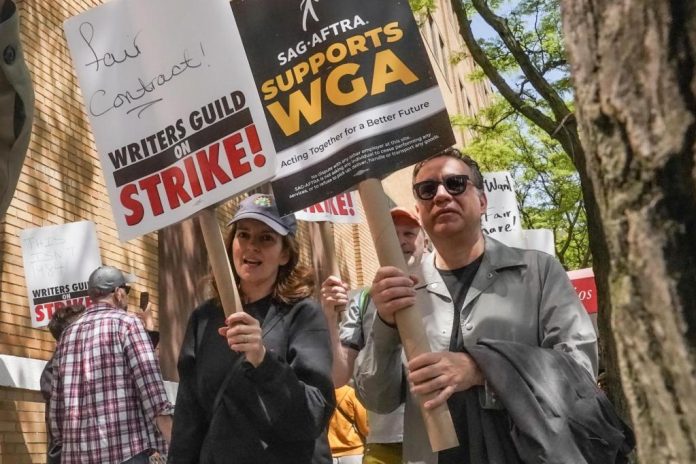
LOS ANGELES (AP) — Leaders of a Hollywood’s actors union voted Thursday to join screenwriters in the first joint strike in more than six decades, shutting down production across the entertainment industry after talks for a new contract with studios and streaming services broke down.

Duncan Crabtree-Ireland, executive director of the Screen Actors Guild-American Federation of Television and Radio Artists, said at a news conference that the union leadership voted for the work stoppage hours after their contract expired and talks broke off with the Alliance of Motion Picture and Television Producers representing employers including Disney, Netflix, Amazon and others.

“A strike is an instrument of last resort,” he said. Union leaders said at a news conference that they voted unanimously for a strike to begin at midnight. Outside Netflix’s Hollywood offices, picketing screenwriters chanted “Pay Your Actors!” immediately after the strike was announced.

It’s the first strike for actors from film and television shows since 1980. And it’s the first time two major Hollywood unions have been on strike at the same time since 1960, when Ronald Reagan was the actors’ guild president.

“Employers make Wall Street and greed their priority and they forget about the essential contributors that make the machine run,” former “The Nanny” star and SAG-AFTRA president Fran Drescher said in an impassioned speech that drew applause from union leaders in the room. “It is disgusting. Shame on them. They stand on the wrong side of history.”

With a stoppage looming, the premiere of Christopher Nolan’s film “Oppenheimer” in London was moved up an hour so that the cast could walk the red carpet before the SAG board’s announcement.

The looming strike also cast a shadow over the upcoming 75th Emmy Awards, whose nominations were announced a day earlier.

Disney chief Bob Iger warned Thursday that an actors strike would have a “very damaging effect on the whole industry.”

“This is the worst time in the world to add to that disruption,” Iger said in an appearance on CNBC. “There’s a level of expectation that (SAG-AFTRA and the Writers Guild of America) have that is just not realistic.”

A nearly two-week extension of the actors union contract, and negotiations, only heightened the hostility between the two groups. Drescher said the extension made us “feel like we’d been duped, like maybe it was just to let studios promote their summer movies for another 12 days.”

Before the talks began June 7, the 65,000 actors who cast ballots voted overwhelmingly for union leaders to send them into a strike, as the Writers Guild of America did when their deal expired more than two months ago.

When the initial deadline approached in late June, more than 1,000 members of the union, including Meryl Streep, Jennifer Lawrence and Bob Odenkirk, added their names to a letter signaling to leaders their willingness to strike.

The stakes in the negotiations included both base and residual pay, which actors say has been undercut by inflation and the streaming ecosystem, benefits, and the threat of unregulated use of artificial intelligence.

“At a moment when streaming and AI and digital was so prevalent, it has disemboweled the industry that we once knew,” Drescher said. “When I did ‘The Nanny’ everybody was part of the gravy train. Now it’s a vacuum.”

The AMPTP said it was disappointed in the breakdown.

“This is the Union’s choice, not ours. In doing so, it has dismissed our offer of historic pay and residual increases, substantially higher caps on pension and health contributions, audition protections, shortened series option periods, a groundbreaking AI proposal that protects actors’ digital likenesses, and more,” the group said in a statement.

It added that instead of continuing to negotiate, “SAG-AFTRA has put us on a course that will deepen the financial hardship for thousands who depend on the industry for their livelihoods.”

SAG-AFTRA represents more than 160,000 screen actors, broadcast journalists, announcers, hosts and stunt performers. The walkout affects only the union’s 65,000 actors from television and film productions, who voted overwhelmingly to authorize their leaders to call a strike before talks began on June 7. Broadway actors said in a statement that they stand “in solidarity” with SAG-AFTRA workers.

The 11,500 members of the Writers Guild of America have been on strike since their own talks collapsed and their contract expired on May 2. The stoppage has showed no signs of a solution, with no negotiations even planned.

That strike brought the immediate shutdown of late-night talk shows and “Saturday Night Live,” and several scripted shows, including “Stranger Things” on Netflix,” “Hacks” on Max, and “Family Guy” on Fox, which have either had their writers’ rooms or their production paused. Many more are sure to follow them now that performers have been pulled too.

___

Associated Press journalists Sian Watson in London, Krysta Fauria in Los Angeles, and Jake Coyle and Jocelyn Noveck in New York contributed to this story. For more on the Hollywood strikes, visit https://apnews.com/hub/hollywood-strikes/

Thousands of Ukraine civilians are being held in Russian prisons. Russia plans to build many more. – Daily Press

0

By LORI HINNANT, HANNA ARHIROVA and VASILISA STEPANENKO (Associated Press)

ZAPORIZHZHIA, Ukraine (AP) — The Ukrainian civilians woke long before dawn in the bitter cold, lined up for the single toilet and were loaded at gunpoint into the livestock trailer. They spent the next 12 hours or more digging trenches on the front lines for Russian soldiers.

Many were forced to wear overlarge Russian military uniforms that could make them a target, and a former city administrator trudged around in boots five sizes too big. By the end of the day, their hands curled into icy claws.

Nearby, in the occupied region of Zaporizhzhia, other Ukrainian civilians dug mass graves into the frozen ground for fellow prisoners who had not survived. One man who refused to dig was shot on the spot — yet another body for the grave.

Thousands of Ukrainian civilians are being detained across Russia and the Ukrainian territories it occupies, in centers ranging from brand-new wings in Russian prisons to clammy basements. Most have no status under Russian law.

And Russia is planning to hold possibly thousands more. A Russian government document obtained by The Associated Press dating to January outlined plans to create 25 new prison colonies and six other detention centers in occupied Ukraine by 2026.

In addition, Russian President Vladimir Putin signed a decree in May allowing Russia to send people from territories with martial law, which includes all of occupied Ukraine, to those without, such as Russia. This makes it easier to deport Ukrainians who resist Russian occupation deep into Russia indefinitely, which has happened in multiple cases documented by the AP.

Many civilians are picked up for alleged transgressions as minor as speaking Ukrainian or simply being a young man in an occupied region, and are often held without charge. Others are charged as terrorists, combatants, or people who “resist the special military operation.” Hundreds are used for slave labor by Russia’s military, for digging trenches and other fortifications, as well as mass graves.

Torture is routine, including repeated electrical shocks, beatings that crack skulls and fracture ribs, and simulated suffocation. Many former prisoners told the AP they witnessed deaths. A United Nations report from late June documented 77 summary executions of civilian captives and the death of one man due to torture.

Russia does not acknowledge holding civilians at all, let alone its reasons for doing so. But the prisoners serve as future bargaining chips in exchanges for Russian soldiers, and the U.N. has said there is evidence of civilians being used as human shields near the front lines.

The AP spoke with dozens of people, including 20 former detainees, along with ex-prisoners of war, the families of more than a dozen civilians in detention, two Ukrainian intelligence officials and a government negotiator. Their accounts, as well as satellite imagery, social media, government documents and copies of letters delivered by the Red Cross, confirm a widescale Russian system of detention and abuse of civilians that stands in direct violation of the Geneva Conventions.

Some civilians were held for days or weeks, while others have vanished for well over a year. Nearly everyone freed said they experienced or witnessed torture, and most described being shifted from one place to another without explanation.

“It’s a business of human trafficking,” said Olena Yahupova, the city administrator who was forced to dig trenches for the Russians in Zaporizhzhia. “If we don’t talk about it and keep silent, then tomorrow anyone can be there — my neighbor, acquaintance, child.”

The new building in the compound of Prison Colony No. 2 is at least two stories tall, separated from the main prison by a thick wall.

This facility in Russia’s eastern Rostov region has gone up since the war started in February 2022, according to satellite imagery analyzed by the AP. It could easily house the hundreds of Ukrainian civilians who are believed detained there, according to former captives, families of the missing, human rights activists and Russian lawyers. Two exiled Russian human rights advocates said it is heavily guarded by soldiers and armored vehicles.

The building in Rostov is one of at least 40 detention facilities in Russia and Belarus, and 63 makeshift and formal in occupied Ukrainian territory where Ukrainian civilians are held, according to an AP map built on data from former captives, the Ukrainian Media Initiative for Human Rights, and the Russian human rights group Gulagu.net. The recent U.N. report counted a total of 37 facilities in Russia and Belarus and 125 in occupied Ukraine.

Some also hold Russian prisoners accused or convicted of a variety of crimes. Other, more makeshift locations are near the front lines, and the AP documented two locations where former prisoners say Ukrainians were forced to dig trenches.

The shadowy nature of the system makes it difficult to know exactly how many civilians are being detained. Ukraine’s government has been able to confirm legal details of a little over 1,000 who are facing charges.

At least 4,000 civilians are held in Russia and at least as many scattered around the occupied territories, according to Vladimir Osechkin, an exiled Russian human rights activist who talks to informants within Russian prisons and founded Gulagu.net to document abuses. Osechkin showed AP a Russian prison document from 2022 saying that 119 people ‘opposed to the special military operation’ in Ukraine were moved by plane to the main prison colony in the Russian region of Voronezh. Many Ukrainians later freed by Russia also described unexplained plane transfers.

In all, Ukraine’s government believes around 10,000 civilians could be detained, according to Ukrainian negotiator Oleksandr Kononeko, based on reports from loved ones, as well as post-release interviews with some civilians and the hundreds of Ukrainian soldiers returned in prisoner exchanges. Ukraine said in June that about 150 civilians have been freed to Ukrainian-controlled territory, and the Russians deny holding others.

“They say, ‘We don’t have these people, it’s you who is lying,’” Kononeko said.

The detention of two men from the Kherson region in August 2022 offers a glimpse at how hard it is for families to track down loved ones in Russian custody.

Artem Baranov, a security guard, and Yevhen Pryshliak, who worked at a local asphalt plant with his father, had been friends for over a decade. Their relationship was cemented when both bought dogs during the coronavirus pandemic, according to Baranov’s common-law wife, Ilona Slyva. Their evening walks continued even after Russia seized their hometown of Nova Kakhovka — shy Baranov with a giant black Italian mastiff and Pryshliak with a toy poodle whose apricot fur matched his beard.

Their walk ran late the night of Aug. 15, and Pryshliak decided to stay at Baranov’s apartment rather than risk being caught breaking the Russian curfew. Neighbors later told the family that 15 armed Russian soldiers swooped in, ransacked the apartment and seized the men.

For a month, they were in the local jail, with conditions relaxed enough that Slyva was able to talk to Pryshliak through the fence. Baranov, he told her, couldn’t come out.

She sent in packages of food and clothes but did not know if they were reaching him. Finally, on Baranov’s birthday, she bought his favorite dessert of cream eclairs, smashed them up, and slipped in a scrap of paper with her new Russian phone number scrawled on it. She hoped the guards would have little interest in the sticky mess and just pass it along.

A month went by, and the families learned the men had been transferred to a new prison in Sevastopol, in Crimea. Then the trail went dark.

Four more months passed. Then a call came from the family of a man they had never met but would soon come to know well: Pavlo Zaporozhets.

Zaporozhets, a Ukrainian from the occupied Kherson region charged with international terrorism, was sharing a cell in Rostov with Baranov. Since he faced charges, he had a lawyer.

It was then that Slyva knew her gift of eclairs — and the phone number smuggled within them — had reached its destination. Baranov had memorized her number and passed it through a complex chain that finally got news of him to her on April 7.

Baranov wrote that he was accused of espionage — an accusation that Slyva scorned as falling apart even under Russia’s internal logic. He was detained in August, and Russia illegally annexed the regions only in October.

“When he was detained, he was on his own national territory,” she said. “They thought and thought and invented a criminal case against him for espionage.”

Baranov wrote home that he was transported across prisons with his eyes closed in two planes, one of which had about 60 people. He and Pryshliak were separated at their third transfer in late winter. Pryshliak’s family has received a form letter from the Rostov prison denying he is an inmate there.

The number of civilian detainees has grown rapidly over the course of the war. In the first wave early on, Russian units moved in with lists of activists, pro-Ukrainian community leaders, and military veterans. Melitopol Mayor Ivan Fedorov was taken when Russian forces seized control of his city but exchanged within a week for nine Russian soldiers, he said.

Then they focused on teachers and doctors who refused to work with the occupation authorities. But the reasons for apprehending people today are as mundane as tying a ribbon to a bicycle in the Ukrainian colors of blue and yellow.

“Now there is no logic,” Fedorov said.

He estimated that around 500 Ukrainian civilians are detained just in his city at any time — numbers echoed by multiple people interviewed by the AP.

A Ukrainian intelligence official said the Russian fear of dissidents had become “pathological” since last fall, as Russians brace for Ukraine’s counteroffensive. The official spoke on condition of anonymity to discuss the situation.

The AP saw multiple missing person notices posted on closed Ukrainian social media chats for young men seized off the streets. The messages, written in Ukrainian, describe detentions at gunpoint at home and on the street, with pleas to send information and emojis of hearts and praying hands.

The Geneva Conventions in general forbid the arbitrary detention or forced deportation of civilians, and state that detainees must be allowed to communicate with loved ones, obtain legal counsel and challenge allegations against them. But first they must be found.

After months writing letter after letter to locate Pryshliak, his sister-in-law Liubov thinks she knows why the prisoners are moved around: “So that the families cannot find them. Just to hide the traces of crimes.”

Hundreds of civilians end up in a place that is possibly even more dangerous than the prisons: the trenches of occupied Ukraine.

There, they are forced to build protection for Russian soldiers, according to multiple people who managed to leave Russian custody. Among them was Yahupova, the 50-year-old civil administrator detained in October 2022 in the Zaporizhzhia region, possibly because she is married to a Ukrainian soldier.

Under international humanitarian law, Yahupova is a civilian — defined as anyone who is not an active member of or volunteer for the armed forces. Documented breaches of the law constitute a war crime and, if widespread and systematic, “may also constitute a crime against humanity.”

But the distinctions between soldiers and civilians can be hard to prove in a war where Ukraine has urged all its citizens to help, for example by sending Russian troop locations via social media. In practice, the Russians are scooping up civilians along with soldiers, including those denounced by neighbors for whatever reason or seized seemingly at random.

They picked Yahupova up at her house in October. Then they demanded she reveal information about her husband, taping a plastic bag over her face, beating her on the head with a filled water bottle and tightening a cable around her neck.

They also dragged her out of the cell and drove her around town to identify pro-Ukrainian locals. She didn’t.

When they hauled her out a second time, she was exhausted. As a soldier placed her in front of a Russian news camera, she could still feel the dried blood on the back of her neck. She was going to give an interview, her captors told her.

Behind the camera, a gun was pointed at her head. The soldier holding it told her that if she gave the right answers to the Russian journalist interviewing her, she could go free.

But she didn’t know what the right answers were. She went back to the cell.

Three months later, without explanation, Yahupova was again pulled outside. This time, she was driven to a deserted checkpoint, where yet another Russian news crew awaited. She was ordered to hold hands with two men and walk about 5 meters (yards) toward Ukraine.

The three Ukrainians were ordered to do another take. And another, to show that Russia was freeing the Ukrainian civilians in its custody.

Except, at the end of the last take, Russian soldiers loaded them into a truck and drove them to a nearby crossroads. One put shovels into their hands.

“Now you will do something for the good of the Russian Federation,” he said.

And so Yahupova ended up digging trenches until mid-March with more than a dozen Ukrainian civilians, including business owners, a student, a teacher, and utility workers. She could see other crews in the distance, with armed guards standing over them. Most wore Russian military uniforms and boots, and lived in fear that Ukrainian artillery would mistake them for the enemy.

The AP confirmed through satellite imagery the new trenches dug in the area where Yahupova and a man on the Ukrainian crew with her said they were held. He requested anonymity because his relatives still live under occupation.

“Sometimes we even worked there 24 hours a day, when they had an inspection coming,” he said.

The man also spoke with other Ukrainian civilians digging mass graves nearby for at least 15 people. He said one civilian had been shot for refusing to dig. Satellite imagery shows a mound of freshly-dug earth in the spot the man described.

The man escaped during a Russian troop rotation, and Yahupova also made her way out. But both said hundreds of others are still in the occupied front lines, forced to work for Russia or die.

When Yahupova returned to her home after more than five months, everything had been stolen. Her beloved dog had been shot. Her head ached, her vision was blurred, and her children — long since out of the occupied territories — urged her to leave.

She traveled thousands of miles through Russia, north to the Baltics and back around to the front line in Ukraine, where she reunited with her husband serving with Ukrainian forces. Earlier married in a civil ceremony, the two got wed this time in church.

Now safe in Ukrainian territory, Yahupova wants to testify against Russia — for the months it stole from her, the concussion that troubles her, the home she has lost. She still reflexively touches the back of her head, where the bottle struck her over and over.

“They stole not only from me, they stole from half the country,” she said.

The abuse Yahupova described is common. Torture was a constant, whether or not there was information to extract, according to every former detainee interviewed by the AP. The U.N. report from June said 91% of prisoners “described torture and ill-treatment.”

In the occupied territories, all the freed civilians interviewed by the AP described crammed rooms and cells, tools of torture prepared in advance, tape placed carefully next to office chairs to bind arms and legs, and repeated questioning by Russian’s FSB intelligence agency. Nearly 100 evidence photos obtained by the AP from Ukrainian investigators also showed instruments of torture found in liberated areas of Kherson, Kyiv and Kharkiv, including the same tools repeatedly described by former civilian captives held in Russia and occupied regions.

Many former detainees spoke of wires linking prisoners’ bodies to electricity in field telephones or radios or batteries, in a procedure one man said the Russians dubbed “call your mother” or “call Biden.” U.N. human rights investigators said one victim described the same treatment given to Yahupova, a severe beating on the head with a filled water bottle.

Viktoriia Andrusha, an elementary school math teacher, was seized by Russian forces on March 25, 2022, after they ransacked her parents’ home in Chernihiv and found photos of Russian military vehicles on her phone. By March 28, she was in a prison in Russia. Her captors told her Ukraine had fallen and no one wanted any civilians back.

For her, like so many others, torture came in the form of fists, batons of metal, wood and rubber, plastic bags. Men in black, with special forces chevrons on their sleeves, pummeled her in the prison corridor and in a ceramic-tiled room seemingly designed for quick cleaning. Russian propaganda played on a television above her.

“There was a point when I was already sitting and saying: Honestly, do what you want with me. I just don’t care anymore,” Andrusha said.

Along with the physical torture came mental anguish. Andrusha was told repeatedly that she would die in prison in Russia, that they would slash her with knives until she was unrecognizable, that her government cared nothing about a captive schoolteacher, that her family had forgotten her, that her language was useless. They forced captives to memorize verse after verse of the Russian national anthem and other patriotic songs.

“Their job was to influence us psychologically, to show us that we are not human,” she said. “Our task was to make sure that everything they did to us did not affect us.”

Then one day, without explanation, it was over for her and another woman kept with her. Guards ordered them to pack up, cuffed them and put them in a bus. The weight Andrusha had lost in prison showed starkly in the cast-off jacket that hung from her shoulders.

They were soon joined by Ukrainian soldiers held captive elsewhere. On the other side, Andrusha saw three Russian soldiers. Although international law forbids the exchange of civilians as prisoners of war, the U.N. report on June 27 said this has happened in at least 53 cases, and Melitopol Mayor Fedorov confirmed it happened to him.

A man detained with Andrusha in March 2022 is in captivity still. She doesn’t know the fate of the others she met. But many former captives take it upon themselves to contact the loved ones of their former cellmates.

Andrusha recalled hours spent memorizing whispered phone numbers in a circle with other Ukrainians, on the chance one of them might get out. When she was freed, she passed them along to Ukrainian government officials.

Andrusha has since regained some of her weight. She talks about her six months in prison calmly but with anger.

“I was able to survive this,” she said, after a day back in the classroom with her students. “There are so many cases when people do not return.”

In the meantime, for loved ones, the wait is agony.

Anna Vuiko’s father was one of the earliest civilians detained, in March last year. A former glass factory worker on disability, Roman Vuiko had resisted when Russian soldiers tried to take over his home in suburban Kyiv, neighbors told his adult daughter. They drove a military truck into the yard, shattered the windows, cuffed the 50-year-old man and drove off.

By May 2022, Vuiko was in a prison in Kursk, Russia, hundreds of kilometers (miles) away. All his daughter has gotten from him since is a handwritten letter, which arrived six months after he was taken away and four months after he wrote it. The standard phrases told his daughter nothing except that he was alive, and she suspects he has not received any of her letters.

“I think about it every day,” she said. “It’s been a year, more than a year. … How much more time has to pass?”

___

Arhirova reported from Kyiv. Contributors include Michael Biesecker in Washington, Illia Novikov in Kyiv, Mstyslav Chernov in Kherson and Evgeniy Maloletka in Zaporizhzhia.

Got Sriracha? The price for a bottle of Huy Fong’s iconic hot sauce gets spicy with supplies short – Daily Press

0

By WYATTE GRANTHAM-PHILIPS (AP Business Writer)

NEW YORK (AP) — It’s not just you. Sriracha is hard to come by these days — at least for one popular brand.

The shortage of Huy Fong Foods’ Sriracha, the beloved red hot sauce packaged in those green-capped bottles, isn’t new — with the company pointing to a scarcity of chile pepper supply for several years now. And as frustrated fans continue to face store shelves missing the Huy Fong name, third-party resellers are punching up prices.

Huy Fong Sriracha, which used to go for under $5 or $10 a bottle, is now selling for shocking amounts in some listings posted to sites with vast third-party marketplaces — including Amazon, eBay and Walmart. Many are simply sold out.

For those still in stock, prices range depending where you look. As of Thursday morning, for example, ads for a single 17-ounce bottle on eBay stretched from around $20 to a whopping $150 — contrasting significantly with the price tags of other hot sauce brands, which don’t appear to have the same level of supply troubles.

Huy Fong told The Associated Press this week that it continues to be beset by shortages of raw materials, echoing a similar scarcity last year when the company temporarily suspended sales of Sriracha and other popular products like Chili Garlic and Sambal Oelek.

Huy Fong said Wednesday that “limited production” resumed recently, although the California company didn’t specify by how much or provide an estimate of when it believes suppliers will be able to deliver an adequate number of peppers.

“Because we do not sell directly to retail/market levels, we cannot determine when the product will hit shelves again and/or who currently has the product in stock,” Huy Fong said in a prepared statement. “We are grateful for your continued patience and understanding during this unprecedented inventory shortage.”

Here’s what you need to know.

Some experts say that Huy Fong’s shortage is partially a consequence of climate change — pointing to weather shifts and extreme drought in Mexico and the U.S. Southwest, where Huy Fong sources all of its chile peppers.

“The main culprit here is a shortage of their primary ingredient, the red jalapeño chile pepper,” said David Ortega, a food economist and associate professor at Michigan State University. “And that’s due to climate change and the mega drought.”

These peppers are typically grown under irrigation, with a lot of water drawn from the Colorado River — which has reached unprecedented low levels over recent years, Ortega said. The region has suffered insufficient rainfall and reduced run-off from snow pack.

Huy Fong’s troubles with chile supply aren’t new. When the company suspended sales last year, it pointed to a 2020 email warning of a chile pepper shortage, noting that a lack of supply had become more severe due to recent weather conditions.

But while climate change impacts agriculture as a whole, it’s “not the whole story” for the current Huy Fong Sriracha shortage, said Stephanie Walker, extension vegetable specialist and professor at New Mexico State University. She speculates that Huy Fong may not have enough suppliers with different farmers — and could be looking to build relationships with new growers.

“Last year (Huy Fong) just couldn’t get the jalapeños that they needed,” said Walker, who also specializes in chile pepper breeding. She noted the contrast to other brands’ supply. “It really does come down to relations that individual processors have with their grower base.”

She added that it looks like this year will be a strong season for jalapeño and other chile growth in the region.

Huy Fong, which was founded decades ago by David Tran, currently sources its chile peppers from various farms in California, New Mexico and Mexico.

Before sourcing from these farms, California-based Underwood Ranches was Huy Fong’s sole supplier for nearly 30 years. The partnership collapsed in 2017 following a financial dispute. Two years later, a jury determined that Huy Fong breached its contract with Underwood Ranches and also committed fraud — awarding Underwood $23.3 million.

In a phone interview Thursday afternoon, Craig Underwood, owner of Underwood Ranches, disagreed with the drought and climate change explanations for Huy Fong’s shortage — arguing that Tran “has not rebuilt his supply chain the way he needed to.”

According to Underwood, there has continued to be a steady supply of jalapeño peppers from Mexico. Underwood Ranches, which now sells its own brand of Sriracha, also started producing red jalapeño peppers again this year — in part because of the Huy Fong shortage, he added.

“The demand for our product has increased rather dramatically,” Underwood said.

The erosion of Huy Fong’s available supplies has rocked the prices of the brand’s Sriracha that is still available. In many places, the bottles are simply sold out — giving leverage to resellers listing the now hard-to-find and highly sought-after product.

Another market force at play is consumer behavior, in this case, hording. The panic around potentially losing access to a desired product leads many people to buy more than they would typically need, as was seen with toilet paper at the beginning of the COVID-19 pandemic.

“People just stock up and that exacerbates the situation,” said Ortega, also an expert in consumer decision-making. “You have an increase in demand for the product, on top of these supply shocks. And prices have really nowhere to go but up.”

There’s a myriad of hot sauces, including other of Sriracha-style products, that remain easy to find at reasonable prices. Tabasco, for example, has created a page dedicated to helping customers find nearby stores that sell its brand of Sriracha — and notes that it’s been able to scale production to “meet the majority of the of surge in demand” for its sauce.

There are a few possible explanations for this, experts say. Some speculate that Huy Fong has issues with its current chile suppliers. Other brands could also use different pepper variants and source from more farms. Some might also be in a position to tinker with recipes — but perfecting sauces take a long time, as would finding a new variant, experts say.

“Growing the crop in an area less affected by extreme weather or breeding new variants of the peppers that are more tolerant to heat and require less water, if possible, at all, would take years,” Richard Howells, a supply chain expert at SAP, wrote in a blog post earlier this week.

Best deals the first day of Prime Day 2023 – Daily Press

0

Don’t miss these first-day Prime Day deals

It’s official, the first day of Amazon’s iconic Prime Day has arrived. Last year, Amazon reportedly sold roughly 300 million items worldwide during its 48-hour event. This year, the numbers are expected to increase. However, to make the most of this event, you need to know where to look so you can scoop up the deals before they are gone. Whether it’s a robotic vacuum cleaner or an ultra-high-definition television, we’ve curated some of the top deals you can find on this opening day, but only if you act fast.

Top deals on Day 1 of Prime Day

Please note that any prices and discounts mentioned in this article were accurate at the time of writing but may have changed, since Prime Day is a live event.


Shark AV1010AE IQ Robot Vacuum: 35% OFF

With this helpful gadget, you can forget about vacuuming for up to 45 days. The Shark robot vacuum is a bagless device that has a self-emptying base that can hold an impressive amount of dirt and debris. The multi-surface brush roll is suitable for both carpets and floors, making this vacuum a good choice for your entire home.

Available at Amazon


Elegoo Saturn 2 8K MSLA 3D Printer: 11% OFF

If you’re looking for an exhilarating new hobby, this compact, high-resolution 3D printer is a solid option. The ultra-fine detail and one-to-three-second cure time gives you the features you need to create beautifully detailed work. Even better, the activated carbon filter absorbs the resin odor, so you can print in an odor-free environment.

Available at Amazon


Amazon Fire TV 75-Inch Omni QLED Series 4K UHD Smart TV: 20% OFF

Amazon’s Fire TV has an advanced high-definition resolution that gives you deeper, more realistic colors for superior images. The adaptive brightness feature automatically optimizes the brightness of the screen to give you the best possible experience in all types of lighting. And, of course, this internet-ready TV gives you access to over 1 million TV shows and movies.

Available at Amazon


Renpho Eyeris 1 Eye Massager: 46% OFF

Self-pampering just reached a new level. This eye massager contains built-in heating pads that offer relief for tired, puffy or dry eyes. The comforting device can help reduce eyestrain and improve sleeping. To get the maximum benefits, wear this device for 15 minutes before going to bed each night.

Available at Amazon


Samsung T7 2-terabyte Portable SSD: 13% OFF

With more and more of the world moving into the digital realm, you can never have enough storage. This portable solid-state drive is nearly 10 times faster than a typical external hard drive. The slim, compact and resilient design lets you take this device with you wherever you go.

Available at Amazon


EF EcoFlow Portable Power Station: 17% OFF

Whether you are an adventurer who never likes to be too far from your device or you just want a reliable backup battery, consider this model from EcoFlow. It gives you  600 watts of power and a wide variety of ports and outlets so you can run nearly any device. The long-life battery can be recharged up to 3,000 times before hitting a noticeable degradation in functionality.

Available at Amazon


Holy Stone 2-Axis Gimbal GPS Drone: 12% OFF

For stunning bird’s-eye footage, you need a drone. This model has a two-axis gimbal and electric image stabilization to help you capture breathtaking 4K video. The long-lasting battery gives you up to 26 minutes of runtime while the built-in functions make it easy to pilot, even if you are a novice.

Available at Amazon


Philips 3200 Series Fully Automatic Espresso Machine: 20% OFF

The Philips espresso machine lets you select the coffee you crave with a single touch. You can also adjust the strength and quantity while the aroma extract system intelligently creates the optimum balance between temperature and extraction, so you always get the highest quality brew. If desired, use the LatteGo Milk System to top off your cup with a silky-smooth layer of froth.

Available at Amazon


GoWise USA GW44800-O Deluxe Air Fryer: 46% OFF

Large ovens are becoming less and less essential in today’s modern kitchen. This compact offering offers 12.7 quarts of cooking space, making it small enough to fit on your counter but large enough to prepare family-sized meals. It comes with 10 accessories, ensuring it is versatile enough for all of your home cooking needs.

Available at Amazon


Cricut EasyPress 2 Heat Press Machine: 32% OFF

Cricut has a range of products that can add polish to at-home craft projects that allow them to compete in a professional market. This heat press has an adjustable temperature of up to 400 degrees and a time to let you tackle nearly any heat transfer project you desire.

Available at Amazon


Goo Goo Clip-in Hair Extensions for Women: 12% OFF

If you crave longer, thicker hair, extensions are an excellent way to achieve your desired look. These offerings from Goo Goo are made from real hair that is as soft as your own locks. With care, these clip-ins can last up to three months. Although they are ready to use as is, if you prefer, these extensions can be dyed to create striking highlights.

Available at Amazon


Cool Spot 11×11 Pop-Up Instant Gazebo Tent: 14% OFF

This pop-up gazebo is lightweight, spacious and cool. It has zippered sides to keep out insects. The high-quality fabric blocks up to 99% of the sun’s harmful rays and is certified flame resistant. The frame is made of powder-coated steel for durability, and it comes with a carrying bag for ease of transport.

Available at Amazon


Reductus Retractable Garden Hose Reel: 10% OFF

As important as it is to have a hose, it can be cumbersome. This retractable wall-mount model has a swivel bracket to give it 180-degree rotation. The auto-rewind keeps things tidy while the kink-resistant material ensures your hose will work. To use, just pull the hose out to a desired length and it will lock in place, so you don’t have to drag around more than you need.

Available at Amazon


SnapFresh Leaf Blower: 22% OFF

Cordless is the best way to go with a leaf blower. This model features two speeds — 60 mph and 130 mph — and weighs only 2.7 pounds, making it light enough to operate with one hand. The battery can be fully charged in an hour, and it provides up to 25 minutes of leaf-blowing power.

Available at Amazon


SodaStream E-Terra Sparkling Water Maker: 44% OFF

Have you ever dreamed of making sparkling water on demand in your own home? That is what you can do with this SodaStream kit. It comes with everything you need to get started: a sparkling water maker, a Co2 cylinder and a dishwasher-safe, reusable carbonating bottle. The preset carbonation levels ensure you always get the perfect amount of bubbles.

Available at Amazon


Margaritaville Key West Frozen Concoction Maker: 44% OFF

With the extra-large ice reservoir, you can make up to 2.5 pitchers of your favorite frozen drinks with this countertop appliance. Instead of crushed ice, it makes fluffy snow-like ice which is perfect for a margarita. The four automatic cycles let you create your drink of choice at the touch of a button.

Available at Amazon


Check out Prime Day deals here and be sure to bookmark this page to shop smart and stay in the loop on the best genius gadget discounts of the Prime Day sale. 

Visit our Prime Day sale hub for more deals.

Want to shop the best products at the best prices? Check out Daily Deals from BestReviews.

Sign up here to receive the BestReviews weekly newsletter for useful advice on new products and noteworthy deals.

Allen Foster writes for BestReviews. BestReviews has helped millions of consumers simplify their purchasing decisions, saving them time and money.


BestReviews spends thousands of hours researching, analyzing and testing products to recommend the best picks for most consumers. BestReviews and its newspaper partners may earn a commission if you purchase a product through one of our links.

Distributed by Tribune Content Agency, LLC.

© 2023 BestReviews. Distributed by Tribune Content Agency, LLC

Hollywood actors poised to join writers on strike after talks collapse – Daily Press

0

LOS ANGELES (AP) — The union representing film and television actors says no deal has been reached with studios and streaming services and its leadership will vote on whether to strike on Thursday.

The Screen Actors Guild-American Federation of Television and Radio Artists said early Thursday that its decision on whether to join already striking screenwriters will be considered by leadership at a meeting later that day. A press conference announcing the decision is scheduled for noon Pacific.

If the actors do go on strike, it will be the first time since 1960 that the actors and writers guilds picket simultaneously.

The actors’ guild released a statement announcing that its deadline for negotiations had ended without a contract. The statement came hours after this year’s Emmy nominations, recognizing the best work on television, were announced.

“The companies have refused to meaningfully engage on some topics and on others completely stonewalled us. Until they do negotiate in good faith, we cannot begin to reach a deal,” said Fran Drescher, the star of “The Nanny” who is now the actors guild president.

The group representing the studios, the Alliance of Motion Picture and Television Producers, said it was disappointed by the failure to reach a deal.

“This is the Union’s choice, not ours. In doing so, it has dismissed our offer of historic pay and residual increases, substantially higher caps on pension and health contributions, audition protections, shortened series option periods, a groundbreaking AI proposal that protects actors’ digital likenesses, and more,” the AMPTP said in a statement.

It added that instead of continuing to negotiate, “SAG-AFTRA has put us on a course that will deepen the financial hardship for thousands who depend on the industry for their livelihoods.”

If the actors strike, they will formally join screenwriters on the picket lines outside studios and filming locations in a bid to get better terms from studios and streaming giants like Netflix and Amazon. The actors’ guild had previously authorized a strike by a nearly 98% margin.

Members of the Writers Guild of America have been on strike since early May, slowing the production of film and television series on both coasts and in production centers like Atlanta.

Issues in negotiations include the unregulated use of artificial intelligence and the effects on residual pay brought on by the streaming ecosystem that has emerged in recent years.

In a letter to SAG-AFTRA membership overnight, Drescher told actors to prepare to hit picket lines after the board’s vote Thursday.

“As you know, over the past decade, your compensation has been severely eroded by the rise of the streaming ecosystem,” Drescher wrote. “Furthermore, artificial intelligence poses an existential threat to creative professions, and all actors and performers deserve contract language that protects them from having their identity and talent exploited without consent and pay.”

Appearing on CNBC, Disney chief Bob Iger warned Thursday morning that an actors strike would have a “very damaging effect on the whole industry.”

“This is the worst time in the world to add to that disruption,” Iger said. “There’s a level of expectation that (SAG-AFTRA and the WGA) have that is just not realistic.”

Actors have joined writers on picket lines for weeks in solidarity. An actors’ strike would prevent performers from working on sets or promoting their projects.

With a stoppage looming, the premiere Christopher Nolan’s film “Oppenheimer” in London was moved up an hour so that the cast could walk the red carpet before the SAG board’s announcement.

Attending a photo event on Wednesday, “Oppenheimer” co-star Matt Damon said that while everyone was hoping a strike could be averted, many actors need a fair contract to survive.

“We ought to protect the people who are kind of on the margins,” Damon told the AP. “And 26,000 bucks a year is what you have to make to get your health insurance. And there are a lot of people whose residual payments are what carry them across that threshold. And if those residual payments dry up, so does their health care. And that’s absolutely unacceptable. We can’t have that. So, we got to figure out something that is fair.”

The looming strike has cast a shadow over the upcoming 75th Emmys. Nominations were announced Wednesday, and the strike was on the minds of many nominees.

“People are standing up and saying, ‘This doesn’t really work, and people need to be paid fairly,’” Oscar winner Jessica Chastain, who was nominated for her first Emmy for playing Tammy Wynette in “George & Tammy,” told the AP. “It is very clear that there are certain streamers that have really kind of changed the way we work and the way that we have worked, and the contracts really haven’t caught up to the innovation that’s happened.”

Recent flash floods and withering heat show the importance of good planning – Daily Press

0

Communities in New York and Vermont are sifting through the muck today after flash flooding caused by extraordinary downpours inflicted a heavy toll on homes, businesses and infrastructure there. The hardest-hit towns and cities face a long road to recovery.

At the same time, a heat dome settled this week over the Southwest, with temperatures soaring to record-setting triple digits. More than 100 million Americans were under heat advisories this week, and the heat index could top 100 in several Hampton Roads communities this weekend.

Extreme weather is happening with greater frequency across the United States. That makes planning and preparation critical to saving lives and ensuring our most vulnerable residents are protected from the elements.

The large, slow-moving storm system that moved through the Northeast in recent days left a path of destruction in its wake. Between 7-9 inches of rain fell in only a few hours in some places, quickly turning creeks and streams into roaring rivers that rushed through homes, washed out roads and bridges and left several cities with widespread flooding that is still receding.

The speed with which this unfolded caught many residents flat-footed, and first responders rescued more than 100 people in Vermont and dozens more in New York amid treacherous conditions. Other people were rescued by neighbors when emergency help couldn’t reach them.

The oppressive heat engulfing a huge swath of the nation — and poised to settle into Hampton Roads soon — poses a different type of threat. Yes, it’s the summer and temperatures are supposed to be hot, but this year’s heat wave has set records in cities such as Miami, Austin and Phoenix, all of which have plenty of experience with warm conditions.

Prolonged, excessive heat is a tremendous danger to public health, but it poses a greater threat to those who work outside, the very young and the very old, and those with preexisting conditions. It can also affect infrastructure as the power grid struggles to keep pace, and roads and even sidewalks buckle as a result of baking for days on end.

For both issues — flash floods and extreme heat — readiness is the watchword.

Good preparation starts with good information, and it’s more important than ever to keep an eye on the weather at the start of the day. Check for heat warnings or thunderstorm threats, and take a peek at the air quality index too — a measure of particulates in the air that was useful during the spell of Canadian wildfire smoke last month.

Most of a household’s planning for flash flooding mirrors our region’s annual obligations for hurricane season. Have a family emergency plan that specifics where to meet in a crisis if not at home, and be ready to evacuate should conditions demand it. Have a “go bag” with essentials — clothing, medicine, a weather radio, flashlight or lamp, batteries, food and water (budget 1 gallon per person per day and don’t forget your pets) — which will save time when moments can make all the difference.

For extreme heat, the best suggestion is to be inside during the hottest part of the day. Wear loose clothing if you need to be outside, plan outdoor activities in the early morning or late evening, take frequent breaks and hydrate, hydrate, hydrate. (You’re probably not drinking enough water anyway.)

Not everyone can simply retreat into the air conditioning when heat hits, so it’s incumbent upon communities to make available cooling stations and other options for the unhoused and indigent, knowing that a failure to do so could be deadly.

Most of all — and this is timeless advice, for natural disasters or not — look out for one another. Know your neighbors and help them if needed. Assist people in distress and show compassion toward others who are also dealing with fear and fatigue.

Find ways to help the Northeast flood victims, as well as planning tips, at the American Red Cross (redcross.org) and important disaster preparedness suggestions from the Virginia Department of Emergency Management (vaemergency.gov).

Top 10 events on the Outer Banks – Daily Press

0

Theater: The Lost Colony | July 14, 15, 17, 18, 19, 20

Long-running symphonic play about first English settlers on Roanoke Island has been an Outer Banks institution for more than 80 years. Outdoor, open-air performances six nights per week until late August. Gates open 7:30 p.m., house opens 8 p.m., curtain drops 8:30 p.m. Tuesday, Friday, Saturday feature Native-American pre-show at 8 p.m. Backstage tours also available. Tickets $40, $35, $25. Waterside Theater, Fort Raleigh National Historic Site, 1409 National Park Drive, Manteo.

www.thelostcolony.org; 252-473-6000

___

Music: Chairmen of the Board | July 14, 15

Reconfigured ‘70s soul vocal group drops in for a pair of shows at refurbished landmark Pioneer Theater in Manteo. Elected to North Carolina Music Hall of Fame in 1999. Distinctive style led by late lead singer General Norman Johnson produced hits such as “Give Me Just A Little More Time,” “Everything’s Tuesday,” “Finders Keepers.” Tickets $40-$60. Ages 18-and-up. Saturday night courtyard shag hour. Doors open 7 p.m., show 8 p.m. 113 Budleigh Street, Manteo.

www.thepioneertheater.com; 252-305-8578

___

Outdoors: Sunset Fest | July 14, 17, 18, 19, 20

Sunset Festival each evening, Monday thru Friday, at Jockey’s Ridge Crossing and the big dunes at Jockey’s Ridge State Park. Mermaid Mondays, where kids can meet a mermaid. Family games and kite lessons on Tuesdays, Magic Wednesdays with magician Chris Kram in courtyard in front of Kitty Hawk Kites, Light Up Thursdays with hula hoop dancer Alyssa Crespo in courtyard, Pirate Fortunes Fridays with treasure hunts, music, games and toys. Free. 7 p.m.-sunset each night. 3933 S. Croatan Hwy, Nags Head.

www.kittyhawk.com/event/sunset-festival; 252-449-2210

___

Art: Here Come The Surfmen | July 14-29

Dare Arts Council hosts exhibition by local artists Noah Snyder, Daniel Pullen and Mike Rowe celebrating ocean and surf culture. Rowe is a surfboard shaper who creates sculptures from the waste of glassing surfboards. Pullen is a renowned local photographer whose exhibit features Hatteras Island surf culture. Snyder’s work combines fractal wood-burning and acrylic paint mediums. Free admission. Regular hours Tuesday-Friday 10 a.m. to 5 p.m., Saturday 10 a.m. to 4 p.m. 300 Queen Elizabeth Ave., Manteo.

www.darearts.org; 252-473-5558

___

Baseball: Outer Banks Scallywags | July 17, 18, 19, 20

College summer baseball. Old Outer Banks Daredevils re-branded as Scallywags and compete in six-team Premier Collegiate League against regional opponents. Wooden bat league, NCAA compliant. Home games at Coy Tillett Field at Manteo HS. Adult general admission $10, kids general admission $8. Gates open 6 p.m., first pitch 7 p.m. July 17 vs. Va. Beach Sea Dogs, July 18 vs. Edenton Steamers, July 19 vs. Tarboro River Bandits, July 20 vs. Norfolk Redbirds. 829 Wingina Ave., Manteo.

www.outerbanksdaredevils.com

___

Music: Ocrafolk Opry | July 19

Ocracoke musicians Martin Garrish, and Gary Mitchell and Fiddler Dave Tweedie from renowned local band Molasses Creek host weekly roots, Americana, bluegrass show every Wednesday at Deepwater Theater. Sometimes joined by guests. Tickets $20 adults, $10 youth up to age 17. Show 8-9:15 p.m. 84 School Road, Ocracoke.

www.ocracokealive.org/deepwater-theater.html; 252-921-0260

___

Market: Soundside Market | July 19

Dozens of local vendors at spacious Soundside Events Site in Nags Head, weather permitting. Most Wednesdays throughout summer. Arts, crafts, food, drink. Free admission, plenty for sale. 10 a.m.-2 p.m. 6800 S. Croatan Hwy, Nags Head.

www.soundsidemarket.com

___

Outdoor fest: Corolla Cork and Craft | July 19

Currituck County Tourism bureau stages outdoor event each Wednesday in historic Corolla Park, weather permitting. Local beer and wine, live music, food, artisans and crafts. Music by Kamea Blake. Free admission. Beer and wine and food and crafts available for purchase. 3-6 p.m. Also, weekly cornhole tournament if you’re up for tossing bags. Registration $20 per team. Advance registration required. 3-6 p.m. Prizes for winners and runners-up. 1160 Village Lane, Corolla.

www.visitcurrituck.com/events/; 252-453-9612, 252-453-9040 (cornhole registration)

___

Music: Tuesday’s Gone | July 20

Primo Lynyrd Skynyrd tribute band stops in at Koru Village Beach Klub in Avon. Touring for almost 18 years, band took root in Raleigh at an open mic night in 2005 when several musicians decided to play a few Skynyrd tunes. They liked the sound and the vibe, began rehearsing and playing locally. Since branched out and play all over the country. Original Skynyrd band members and inner circle have endorsed their sound. Expect to hear all their hits. Tickets $25 advance, $30 day of show. Doors open 7 p.m., show 8-ish. 41001 NC Hwy 12, Avon.

www.koruvillage.com; 252-995-3125

___

Outdoors: Acoustic Sunset | July 20

Sanctuary Vineyards on Currituck mainland hosts family-friendly, weekly get-together every Thursday evening, weather permitting. Food truck, beer and wine tasting. Live music by local strummers The Mo-Rons. Free admission, food and drink for purchase. 5:30-8:30 p.m. 7005 Caratoke Hwy, Jarvisburg.

www.sanctuaryvineyards.com; 252-491-2387

No fingerprints, DNA sample or leads from cocaine found at the White House, the Secret Service says – Daily Press

0

By COLLEEN LONG and MICHAEL BALSAMO (Associated Press)

WASHINGTON (AP) — No fingerprints or DNA turned up on the baggie of cocaine found in a lobby at the White House last week despite a sophisticated FBI crime lab analysis, and surveillance footage of the area didn’t identify a suspect, according to a summary of the Secret Service investigation obtained by The Associated Press. There are no leads on who brought the drugs into the building.

U.S. Secret Service agents found the white powder during a routine White House sweep on July 2, in a heavily trafficked West Wing lobby where staff go in and out, and tour groups gather to drop their phones and other belongings.

“Without physical evidence, the investigation will not be able to single out a person of interest from the hundreds of individuals who passed through the vestibule where the cocaine was discovered,” Secret Service officials said in the summary.

It’s most likely the bag was left behind by one of the hundreds of visitors who traveled in and out of the building over the weekend, according to a person familiar with the investigation who was not authorized to talk about an ongoing probe and spoke to The Associated Press on condition of anonymity.

The presence of cocaine at the White House prompted a flurry of criticism and questions from Republicans, who received a closed briefing Thursday on the results of the investigation.

“There is no equal justice,” House Speaker Kevin McCarthy said Thursday. “Anything revolving around ‘Biden, Inc.’ gets treated different than any other American and that’s got to stop.”

White House press secretary Karine Jean-Pierre said President Joe Biden believed it was “incredibly important” for the Secret Service to get to the bottom of how the drugs ended up in the White House. The Secret Service is responsible for securing the White House and led the investigation.

Biden wasn’t there at the time of the discovery. He was at Camp David with members of his family for the holiday weekend.

The complex was briefly evacuated as a precaution when the white powder was found. The fire department was called in to test the substance on the spot to determine whether it was hazardous, and the initial test came back negative for a biohazard but positive for cocaine.

The bag was sent for a secondary, more sensitive lab analysis. Homeland Security’s National Biodefense Analysis and Countermeasures Center analyzed the item for any biothreats. Tests conducted at the facility came back negative.

The cocaine and packaging underwent further forensics testing, including advanced fingerprint and DNA work at the FBI’s crime laboratory, according to the summary. The FBI also did chemical testing.

Meanwhile, Secret Service investigators put together a list of several hundred individuals who may have accessed the area where the drugs were found. Anyone who comes through the White House must give identifying information and pass through security before entering.

But the lab results didn’t turn up latent fingerprints or DNA, so agents can’t compare anything to the possible suspect pool. White House staff are fingerprinted; participants in tour groups are not.

Video of the West Executive street lobby entrance did not identify the person or provide any solid investigative leads, the Secret Service said.

The lobby is open to staff-led tours of the West Wing, which are scheduled for nonworking hours on the weekends and evenings. Those tours are invitation-only and led by White House staff for friends, family and other guests. Most staffers who work in the complex can request an evening or weekend tour slot, but there is often a long wait list. There were tours on the day, a Sunday, the drugs were found, as well as on the two preceding days.

The Situation Room, located in the West Wing, where staffers would also drop their phones before entering, has been undergoing construction work and was not in use at the time the baggie was found, national security adviser Jake Sullivan said last week.

___

Associated Press writer Kevin Freking contributed to this report.

First over-the-counter birth control pill gets FDA approval – Daily Press

0

By MATTHEW PERRONE (AP Health Writer)

WASHINGTON (AP) — Federal regulators on Thursday approved the nation’s first over-the-counter birth control pill in a landmark decision that will soon allow American women and girls to obtain contraceptive medication as easily as they buy aspirin and eyedrops.

The Food and Drug Administration cleared once-a-day Opill to be sold without a prescription, making it the first such medication to be moved out from behind the pharmacy counter. The manufacturer, Ireland-based Perrigo, won’t start shipping the pill until early next year, and there will be no age restrictions on sales.

Hormone-based pills have long been the most common form of birth control in the U.S., used by tens of millions of women since the 1960s. Until now, all of them required a prescription.

Medical societies and women’s health groups have pushed for wider access for decades, noting that an estimated 45% of the 6 million annual pregnancies in the U.S. are unintended. Teens and girls, women of color and those with low incomes report greater hurdles in getting prescriptions and picking them up.

The challenges can include paying for a doctor’s visit, getting time off from work and finding child care.

“This is really a transformation in access to contraceptive care,” said Kelly Blanchard, president of Ibis Reproductive Health, a nonprofit group that supported the approval. “Hopefully this will help people overcome those barriers that exist now.”

Perrigo says Opill could be an important new option for the estimated 15 million U.S. women who currently use no birth control or less effective methods, such as condoms. They are a fifth of those who are child-bearing age.

But how many women will actually gain access depends on the medication’s price, which Perrigo plans to announce later this year. Most older birth control pills cost $15 to $30 for a month’s supply without insurance coverage.

Over-the-counter medicines are generally much cheaper than prescriptions, but they typically aren’t covered by insurance.

Forcing insurers to cover over-the-counter birth control would require a regulatory change by the federal government, which women’s advocates are urging the Biden administration to implement.

The FDA approval gives U.S. women another birth control option amid the legal and political battles over reproductive health, including last year’s reversal of Roe v. Wade, which has upended abortion access across the U.S.

That said, Opill’s approval is unrelated to the ongoing court battles over the abortion pill mifepristone. And anti-abortion groups have generally emphasized that they do not oppose contraceptives, which are used to prevent pregnancies, not end them.

The studies in Perrigo’s FDA application began almost a decade ago, before recent state laws curtailing women’s reproductive rights.

But in the last year, the FDA has faced pressure from Democratic politicians, health advocates and medical professionals to ease access to birth control. The American Medical Association and the leading professional society for obstetricians and gynecologists backed Opill’s application for over-the-counter status.

Birth control pills are available without a prescription across much of South America, Asia and Africa.

Perrigo submitted years of research to FDA to show that women could understand and follow instructions for using the pill. Thursday’s approval came despite some concerns by FDA scientists about the company’s results, including whether women with certain underlying medical conditions would understand that they shouldn’t take the drug.

The FDA’s action only applies to Opill. It’s in an older class of contraceptives, sometimes called minipills, that contain a single synthetic hormone and generally carry fewer side effects than more popular combination hormone pills.

But women’s health advocates hope the decision paves the way for more over-the-counter birth control options and, eventually, for abortion pills to do the same.

An outside panel of FDA advisers unanimously voted in favor of the switch at a hearing in May where dozens of public speakers called for Opill’s approval.

Dyvia Huitron was among those who presented, explaining how she has been unable to get prescription birth control more than three years after becoming sexually active. The 19-year-old University of Alabama student said she still isn’t comfortable getting a prescription because the school’s health system reports medical exams and medications to parents.

“My parents did not let me go on the pill,” Huitron said in a recent interview. “There was just a lot of cultural stigma around being sexually active before you’re married.”

While she uses other forms of contraception, “I would have much preferred to have birth control and use these additional methods to ensure that I was being as safe as possible.”

Huitron spoke on behalf of Advocates for Youth, one of the dozens of groups that have pushed to make prescription contraceptives more accessible.

The groups helped fund some of the studies submitted for Opill, and they encouraged HRA Pharma, later acquired by Perrigo, to file its application with the FDA.

Advocates were particularly interested in Opill because it raised fewer safety concerns. The pill was first approved in the U.S. five decades ago but hasn’t been marketed here since 2005.

“It’s been around a long time, and we have a large amount of data supporting that this pill is safe and effective for over-the-counter use,” Blanchard said.

Newer birth control pills typically combine two hormones, estrogen and progestin, which can help make periods lighter and more regular. But their use carries a heightened risk of blood clots, and they shouldn’t be used by women at risk for heart problems, such as those who smoke and are over 35.

Opill has only progestin, which prevents pregnancy by blocking sperm from reaching the cervix. It must be taken around the same time daily to be most effective.

In its internal review published in May, the FDA noted that some women in Perrigo’s study had trouble understanding the drug’s labeling information. In particular, the instructions warn that women with a history of breast cancer should not take the pill because it could spur tumor growth.

And women who have unusual vaginal bleeding are instructed to talk to a doctor first, because it could indicate a medical problem.

Common side effects include bleeding, headaches, dizziness, nausea and cramps, according to the FDA. The label also cautions that certain drugs can interfere with Opill’s effectiveness, including medications for seizures, HIV and hypertension.

Perrigo executives said the company will spend the rest of the year manufacturing the pill and its packaging so it can be available in stores early next year.

___

Follow Matthew Perrone on Twitter: @AP_FDAwriter

___

The Associated Press Health and Science Department receives support from the Howard Hughes Medical Institute’s Science and Educational Media Group. The AP is solely responsible for all content.egnancies, not end them.

The gunman who killed 11 people in a Pittsburgh synagogue is found eligible for the death penalty – Daily Press

0

By PETER SMITH (Associated Press)

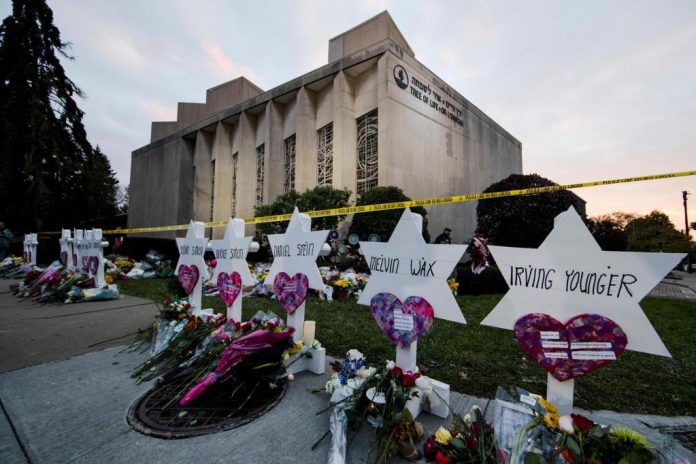
PITTSBURGH (AP) — The gunman who killed 11 people at a Pittsburgh synagogue in 2018 is eligible for the death penalty, a federal jury announced Thursday, setting the stage for further evidence and testimony on whether he should be sentenced to death or life in prison.

The government is seeking capital punishment for Robert Bowers, who raged against Jewish people online before storming the Tree of Life synagogue with an AR-15 rifle and other weapons in the nation’s deadliest antisemitic attack. The jury agreed with prosecutors that Bowers — who spent six months planning the attack and has since expressed regret that he didn’t kill more people — had formed the requisite legal intent to kill.

Bowers’ lawyers argued that his ability to form intent was impaired by mental illness and a delusional belief that he could stop a genocide of white people by killing Jews who help immigrants.

Bowers showed little reaction to the verdict, in keeping with his demeanor throughout the trial. In the courtroom gallery, survivors and victims’ relatives heeded the judge’s request to keep their emotions in check.

Testimony is now expected to shift to the impact of Bowers’ crimes on survivors and the victims’ loved ones.

“It has been nearly five years since 11 people were taken from us. They were beloved and valued family members, friends and neighbors. They cannot speak for themselves, and so their family members will speak for them,” Maggie Feinstein, director of 10.27 Healing Partnership, a program helping survivors of the rampage and others who were impacted, said in a statement after the verdict.

Bowers, 50, a truck driver from suburban Baldwin, killed members of three congregations who had gathered at the Tree of Life synagogue on Oct. 27, 2018. He also wounded two worshippers and five police officers.

Bowers was convicted last month on 63 criminal counts, including hate crimes resulting in death and obstruction of the free exercise of religion resulting in death. His attorneys offered a guilty plea in return for a life sentence, but prosecutors refused, opting instead to take the case to trial and pursue the death penalty. Most of the victims’ families supported that decision.

If jurors decide Bowers deserves to die, it would be the first federal death sentence imposed during Joe Biden’s presidency. Biden campaigned on a pledge to end capital punishment, but federal prosecutors continue to pursue the death penalty in some cases.

The penalty phase of Bowers’ trial began June 26. Jurors heard weeks of technical testimony about Bowers’ psychological and neurological states, with mental health experts for both sides disagreeing on whether he has schizophrenia, delusions or brain disorders that played a role in the rampage.

Bowers ranted incessantly on social media about his hatred of Jewish people before the 2018 attack and told police at the scene that “all these Jews need to die.” He told psychologists who examined him afterward, including as recently as May, that he was pleased with the attack.

The sentencing now shifts to a more emotional stage, with jurors expected to hear about the pain and trauma Bowers inflicted on worshippers in the heart of Pittsburgh’s Jewish community.

The prosecution will also present evidence about other aggravating factors — including that Bowers’ rampage was motivated by religious hatred — while the defense will present mitigating factors that might persuade jurors to spare his life. The defense case could include pleas from his relatives.

To put him on death row, jurors will have to agree unanimously that the aggravating factors outweigh the mitigating ones.

In final arguments Wednesday, prosecution and defense lawyers took turns attacking the findings of the others’ expert witnesses — doctors who testified about Bowers’ mental condition and whether he could form the intent to commit the attack.

Prosecutor Soo Song said Bowers meticulously plotted the attack over a period of months..

“On Oct. 27, 2018, this defendant violated the safe, holy sanctuary that was the Tree of Life synagogue,” she said. “He turned it into a killing ground.”

But Bowers’ defense lawyer, Michael Burt, cited expert witnesses to bolster the claim that a “delusional belief system took over his thinking,” which left him unable to do anything but “following the dictates” of those delusional thoughts.

Burt argued that Bowers’ ability to form intent was also impaired by schizophrenia and epilepsy.

Song denounced the idea that Bowers lacked control of his actions. She noted that Bowers told one of the defense’s own expert medical witnesses that he meticulously planned the attack, considered other potential Jewish targets, and “regrets that he didn’t kill dozens more.” Song said Bowers described himself as calm and focused as he shot to kill.

U.S. Attorney Eric Olshan said Bowers wasn’t delusional, but that he “just believes things that are repugnant.”

___

Associated Press reporter Michael Rubinkam in northeastern Pennsylvania contributed to this report.

___

Associated Press religion coverage receives support through the AP’s collaboration with The Conversation US, with funding from Lilly Endowment Inc. The AP is solely responsible for this content.