Home Blog Page 103

Lafayette grad makes 800-meter finals at national meet – Daily Press

0

The two most talented young runners from Williamsburg, Jamestown High grad Caroline Bauer and Lafayette High grad Derek Holdsworth, are rarely seen actually running or racing these days in the Williamsburg area.

Last week’s running column featured 2022 Jamestown grad Bauer, after she easily won the women’s division of the July 4 Yorktown Independence Day 8K. Despite running just a “workout,” Bauer, after completing her freshman year at the University of Florida, ran an impressive time of 29:37 for the 4.97-mile distance, the only sub-30:00 road time for 8K this year by women from Hampton Roads. Several (Bethany Spector and Sabrina Little) have been in the low 30s, but Bauer is the only one below that benchmark.

The other talented runner, Holdsworth, was seen not in person, but on TV, competing in the finals of the 800 meters at the USATF National Track and Field Championships July 6-9 in Eugene, Ore. The top three finishers in each event qualified for the World Track and Field Championships, scheduled for Aug. 19-27 in Budapest, Hungary.

The 800 meters had three rounds. The heats were on Thursday. Holdsworth emailed, “I wouldn’t say I was nervous because I had been there before and was confident I could make it out of each round.” He was in a heat with 2016 Olympic bronze medalist Clayton Murphy and 2022 NCAA indoor champion Brandon Miller, but made it through as an automatic qualifier (top three in each heat) with a season best time of 1:46.74. The semifinals were on Friday. Holdsworth emailed, “The race went out uncharacteristically slow and I was in last until 600 meters, still time to move up but it was now or never. I confidently moved out wide and passed 3 athletes, outleaning one at the line.” But he was fourth in 1:47.53, and emailed, “I was immediately frustrated realizing I wouldn’t be a time qualifier or an automatic qualifier.” But heat winner Wes Ferguson was disqualified for running outside of his lane twice at the start, so Holdsworth made the final after all. The final was on Sunday, and he went through 400 meters in 52 seconds, but was sixth in the eight-runner final in 1:47.61.

Holdsworth ran a half dozen tune-up 800-meter races this spring, with a best of 1:46.96 at the Oregon Nike outdoor nationals, good for second place. His lifetime PR is 1:45.37 from 2022. He plans at least two more summer track races, July 22 and Aug. 4. He emailed, “I did make the Team USA pool so I might have some meets in other countries as long as my passport issue is resolved and I am selected.” His 400-meter PR is still the 48.30 he ran at Lafayette, although he did have a 46.7 relay split.

Holdsworth works with agent Chris Layne of Total Sports. “Total Sports helps enter me in meets and is searching for an ideal situation for me to gain sponsorship. I currently run for Bell Lap Elite but it is not a shoe contract deal. I think I could run around 1:43.75 if everything goes according to plan and I run the perfect race. I’d love to consistently run under 1:45 on any given day.”

Holdsworth currently lives and trains in Seattle, but is planning on grad school online for sports management this fall at Texas A&M University. Holdsworth texted “Thank you to everyone who has supported me. Also a special thanks to my coach Mike Johnson.”

A journalistic disclaimer here. After the Peninsula Track Club’s Riverwatch on the Piankatank 5K last November, I participated in a 50-50 lottery where the final two (of 250 total to start) shared $5,000 in cash winnings. I had promised in the remote chance that I won, to donate half that amount to Holdsworth’s training and racing expenses (as he did not have a shoe contract), and the other half to a family with high medical expenses due to a premature daughter. I was thrilled to win, and donated $1,250 to Holdsworth.

Also last weekend was the final race in the three-race Trailzilla series, starting with two Tuesday evenings (June 6 and June 20) at Sandy Bottom Nature Park in Hampton. The finale, the JoeZilla 5 Miler, held last Saturday morning, is in memory of long-time PTC president Joe Harney, the most beloved member ever of the PTC. The last PTC race Harney attended was the Trailzilla 5 Miler in July 2017, shortly before his death of congestive heart failure at age 79. Harney would have turned 85 on July 10. He was PTC president from 2003 to 2017.

Jim Highsmith had the top men’s time at last Saturday’s Joe-Zilla 5 Miler. He finished in 34:04. Courtesy of Bruce Davis

Saturday’s race was on a revised course (downed trees on the original course forced the change) with three varying loops, each of which included a brutal section in the hot sun around the park’s lake. There were 73 finishers for the PTC Grand Prix event. The top three for the men were Jim Highsmith, 40, of Newport News (34:04), Jared Orgeron, 40, of Yorktown (36:00) and Kevin Klapproth, 19, of Carrollton (36:03). For the women, the top three were Katie Proffitt, 25, of Bellefonte, Pa. (37:45), Megan Schulze, 40, of Newport News (39:51) and Crystal Witte, 38, of Yorktown (40:28).

For the Trailzilla series, points were tallied for the first two races, preceding the finale, with low score best. For the men, the top four who ran both races were Warwick High runners Nate Cochran, 15, and Benjamin Perry, 16, of Newport News, followed by Steve Menzies, 59, of Williamsburg, and Ken Alberg, 62, of Suffolk. Based on that, it was expected that Cochran would win the men’s overall title, Menzies would win the age 40+ title, and Alberg would win the 50+ title. But as seems to happen every year, some of the expected series winners were not able to make the final race, and neither Cochran, Menzies or Alberg were at JoeZilla, so the series awards were wide open.

Perry went out fast but succumbed to the sun, heat and humidity, and ended up a subpar 15th overall (42:21) with an 8:32 mile pace, after averaging 5:58 per mile the first race (3.0 miles) and 6:29 per mile the second race (3.8 miles). Nevertheless he had built up enough of a points lead to beat Dex Moore, 36, of Norfolk who was fifth overall at Trailzilla (37:14).

In the absence of Menzies and Alberg, Douglas Marshall, 49, of Mathews edged Chris Laws, 47, of Yorktown for the 40+ series title. Laws was faster at JoeZilla (37:52 to 38:04), but Marshall had won the first two races. Similarly, without Menzies and Alberg, Walt Bruce, 61, of Yorktown won the 50+ title, running 44:44 at JoeZilla, and Eric Wiebke, 66, of Hampton won the 60+ title, running 48:23 at JoeZilla. Similar to Marshall beating Laws for the 40+ honors, Rick Platt, 72, of Williamsburg beat Ronald Kellum, 79, of Hampton at JoeZilla, but Kellum had won the first two races, so therefore won the 70+ series award.

Megan Schulze placed first in the three-race Trailzilla series. Courtesy of Bruce Davis

The women’s Trailzilla series awards were much simpler. Megan Schulze won the first two races, and was second to Proffitt at JoeZilla, but Proffitt only ran the finale, so Schulze easily won the series award. She had also won the Trailzilla series in 2021. The women’s 40+ title went to Jaime Lawson, 41, of Hampton, and the 50+ title went to Jeanne Fiocca, 51, of Yorktown. There were no women who ran all three races in either the 60+ or 70+ categories, so those two series glass awards went to Imogene Leone, 8, of Newport News (women 19-and-under) and her mother Sarah Leone, 38, of Newport News (women 20-39).

The race walk series award winners were Rick Webb, 65, of Yorktown and Gilda Cortez, 67, of Yorktown.

Schulze started out in third, passed one woman after a half mile, then caught and briefly passed Proffitt around the one mile mark. Schulze texted, “She was chatting casually to another guy and I was struggling to breathe in the heat and humidity, so I knew she would probably beat me. She just seemed more fit. I’ve been running this series for years. I used to always run it with my Dad, but he doesn’t run much anymore. It used to always be a family event where my Mom and my kids would come watch, so it’s always been a favorite of mine.”

Although Proffitt’s listed address was Bellefonte, Pa., she’s actually staying in Suffolk now as a travel physical therapist, doing outpatient rehab. She ran cross country and track in high school (Owen J. Roberts in Pottstown, Pa., with a 5:41 mile and 12:06 two mile), and in college (Slippery Rock University, 19:51 for 5K, 23:19 for 6K cross country and one 43:10 10K). While in Hampton Roads, she plans more PTC and Colonial Road Runners races. She ran her first marathon last December (3:21:12), qualifying for Boston, and plans to run the Philadelphia Half Marathon this November, with a goal of bettering her last half marathon time of 1:35.

Rick Platt is president of Colonial Road Runners.

For first time, every player at the Women’s World Cup will be paid at least $30K – Daily Press

0

By ANNE M. PETERSON (AP Sports Writer)

A group of players across the globe asked FIFA late last year to increase the prize money for this summer’s Women’s World Cup. There had been pleas from the women to boost those funds before, but this time it was different.

The players not only wanted a prize pool equal with the men’s World Cup, they also sought a guarantee that a percentage of the prize money would go directly to the players themselves.

While it wasn’t true equity with the men’s World Cup, FIFA indeed raised the prize pool for the women’s tournament by more than three times that of the 2019 event in France.

But more than that, soccer’s governing body agreed in June that a chunk of those funds should be paid straight to the players — all 732 of them. Every player will earn at least $30,000, with the amount increasing the further along that teams progress in the tournament. The 23 players in the title-winning squad will each get $270,000.

That’s significant for many of the players, who in some cases don’t have club teams that pay salaries, are semi-pros or even amateurs. FIFA released a report last year that said the average salary for female players was $14,000 a year.

And not only that, the conditions the players will experience on the ground in Australia and New Zealand — such as travel and accommodations — are now equitable to those provided the men.

“We still have a ways to go, but having them direct the payments to players is huge — it’s a life-changing thing for many of these players entering the tournament. Coming away with each player making $30,000 is huge because usually that money goes to federations and those players don’t see any, or much of that money,” U.S. forward Alex Morgan said.

A $152 million fund was set for the first 32-team Women’s World Cup. The total covers prize money, team preparation and payments to players’ clubs. That’s a big boost from the 2019 Women’s World Cup in France, which had a $40 million fund, with $30 million in prize money.

In contrast, the prize money pool for the men’s World Cup last year in Qatar was $440 million. The nations that got knocked out after the group stage made $9 million apiece.

FIFPRO, the global players union, backed the effort by 150 players from 25 nations — including the United States, Japan and Germany — to push FIFA for more equitable terms. The result was a letter to FIFA President Gianni Infantino dated Oct. 19, 2022. The Associated Press obtained a copy of the letter.

“It’s really positive that we have shown them (the players) what’s possible through their collective voice — through their collective action and the solidarity that they have between each other — and this really intrinsic, inherent drive to want to push the women’s game forward and create sustainable models for themselves and for the industry more broadly,” said Sarah Gregorius, FIFPRO’s director global policy and strategic relations for women’s soccer.

“It just shows what happens when players come together united behind very clear principles for change for themselves, but also a legacy for players to come,” she added.

Earlier this year, Infantino said that the ultimate goal is equity between the men’s and women’s games by the 2026 Men’s World Cup and the 2027 women’s edition.

The U.S. bargained for equal pay with their male counterparts in a groundbreaking agreement reached last year that will split tournament winnings equally among all players. But the United States is the only country that has such an arrangement.

For many teams at the World Cup, that kind of equality isn’t realistic. So the $30,000 can mean a college education, even a down payment on a home. And for those who aren’t paid well — or at all — by their clubs, it can mean a chance to play without having another job.

“That is a lot of money, and it can be used for a lot of things. I know definitely a lot of my teammates are happy for that money. I’m definitely happy for that money,” said Michelle Alozie, who plays for Nigeria and the Houston Dash of the National Women’s Soccer League.

The prize money pool trickles down to all participating teams. The 16 nations that exit the group stage will get a total of $2.25 apiece million from FIFA — $690,000 to share among the players and $1,560,000 for the federation.

FIFA will pay $10.5 million to the title-winning nation. The majority of that, $6.21 million, will be distributed among the players with the remaining $4.29 million going to the federation.

In addition to helping pay the players, the teams and federations that haven’t often seen the big stage will benefit, too. Each team is receiving nearly $1 million in preparation funds.

“It means a lot to every player stepping into that tournament because it really means that the women’s game has finally taken the steps that we’ve been fighting for,” U.S. defender Crystal Dunn said. “We’re playing for federations to do better by their players. And I think this prize money is a testament to all of our fights — the collective fight.

“When we step on to the field, yes, we are opponents, but at the end of the day we’re all fighting for this game to grow, and for everybody.”

___

More AP coverage of the Women’s World Cup: https://apnews.com/hub/fifa-womens-world-cup

What is craft beer? Here’s a complete guide — for beginners to veterans – Daily Press

0

America’s craft beer history began nearly 200 years ago in 1829 when D.G. Yuengling & Son was founded in Pottsville, Pennsylvania. Not only was it the state’s first craft brewery, but it was America’s first brewery as well. According to the Brewers Association, to this day, D.G. Yuengling & Son qualifies as a craft brewer.

Since 1829, the country’s fondness for craft beer has gradually increased. Over the past decade, however, the craft brewing business has experienced unprecedented growth. In 2011, for example, there were roughly 2,000 craft breweries in the United States. By 2021, that number grew to over 9,000.

So what is craft beer, and why is it so popular?

What is craft beer?

Definition of a craft brewer

The Brewers Association defines a craft brewer as a small, independent brewer. Specifically, this means three things: 

  1. The company makes beer and has an Alcohol and Tobacco Tax and Trade Bureau Notice. 
  2. The brewery’s annual production is six million barrels of beer or fewer. 
  3. The company is independent.

The six craft beer market segments

  • Microbreweries: A microbrewery sells at least 75% of its beer off-site and produces fewer than 15,000 barrels per year.
  • Brewpubs: A brewpub sells at least 25% of its beer on-site and operates as a restaurant-brewery.
  • Taproom breweries: A taproom brewery sells at least 25% of its beer on-site.
  • Regional breweries: A regional brewery brews between 15,000 and 6 million barrels per year.
  • Contract brewing companies: A contract brewing company is any business that hires another brewery to brew its beer.
  • Alternating proprietors: An alternating proprietor is two or more brewers that use the same brewing space.

Craft beer vs. mass-produced beer

If you’ve only had mass-produced beer, you might think all beer tastes the same. That is because mass-produced beer doesn’t have the most diverse ingredients. To keep manufacturing costs reasonable, mass-produced beer tends to use cheaper products — rice or corn instead of hops — which makes the flavor less robust. Craft brewers, on the other hand, make smaller batches using hand-selected ingredients that offer a much broader scope of flavor.

Even more revealing, mass-produced beer is often served very cold. This is partially because cold temperatures lower a person’s ability to taste certain flavors that might be considered undesirable in a beer. Craft beer, however, can be served at warmer temperatures. This helps the drinker better identify the many flavors that are present.

Mass-produced beer typically has a narrower field of color — many are pale yellow. Conversely, craft beer has a rich palette that ranges from light to dark.

Pros and cons of craft beer

Pros

The most obvious pro is craft beer has a more robust flavor palate than mass-produced beer. This means there is a greater selection — if you don’t like IPAs, maybe something fruity and sweet will be a better match for you. Also, since the beer is brewed in smaller batches, brewers often experiment with flavors, so the menu is constantly changing. 

When you purchase craft beer, you are supporting the local economy and fostering a feeling of community. Additionally, brewpubs are family-friendly. If you venture out on a weekend, you will find games, a bright environment, outdoor seating and earlier hours. Some establishments even encourage bringing along the family dog.

Cons

The biggest con of craft beer is the cost. It is not uncommon for craft beer to cost twice as much, or more, than mass-produced beer. However, if the alcohol content is important to you, you might consider craft beer a good value because it may have two to three times the alcohol content of mass-produced beer.

What types of craft beer are there?

Since the biggest benefit of craft beer is the wide variety, it is important to understand a little about the many types of brews that are available. 

Ales vs. lagers

Beers are either ales or lagers. Ales are aged over a few weeks at warm temperatures. The yeast gathers at the top, which creates a more aromatic and full-bodied flavor. Lagers are aged for about two months at cold temperatures. The yeast gathers at the bottom, which creates a crisp, refreshing flavor.

Some common ale styles

  • India pale ale: An IPA is the most popular craft beer. The wide yet distinctive flavor can range from a tropical citrus to an earthy pine.
  • Pale ale: A pale ale is similar to an IPA, only it has a lighter flavor and lower alcohol content.
  • New England-style IPA: A New England-style IPA has a less bitter taste than a regular IPA. It is an unfiltered beer with a hazy appearance.
  • Double IPA: A double IPA has a strong hoppy flavor and a high alcohol content.
  • Stout: A stout is made with roasted barley. It has a dark color and a chocolate or coffee flavor.
  • Wheat: A wheat beer is brewed with generous amounts of grain. This gives the beer a light color with a sweet bready taste.
  • Gose: A gose beer is a wheat ale that is brewed with salt. This diminishes the sweetness and gives the beer a sour, but not tart, flavor.

Some common lager styles

  • Lager: Over 80% of beer sold in the U.S. is a lager, such as Budweiser and Coors. Because lagers take longer to brew, they aren’t as popular with craft brewers.
  • Mexican lager: A Mexican lager is brewed using flaked corn. It has a refreshing flavor with a low ABV.
  • Vienna lager: A Vienna lager is brewed with toasted malts, which give it an amber color and a malty character.
  • Pilsner: A Pilsner is a highly carbonated lager that gets its distinctive flavor from hops. 
  • Helles: Helles is a light, crisp option that is similar to a Pilsner but with a sweeter flavor.

Can you make craft beer yourself?

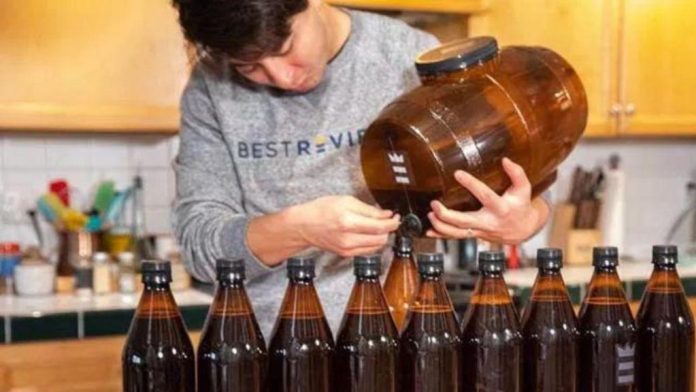
Depending on your proclivity to try something new, one of the best things about craft beer is it is something you can do yourself. All you need to make craft beer at home is a home brew kit, some patience, an adventurous spirit and the eagerness to experiment. Even better, once you have some hands-on experience mixing different ingredients and learning how to use devices, such as a hydrometer or a refractometer, you will have a deeper understanding and appreciation of the brewing process.

FAQ

What is ABV?

A. ABV stands for alcohol by volume. So, if a beer has a 6% ABV, 6% of that drink is alcohol. The higher the ABV, the higher the alcohol content. Most mass-produced beer has an ABV of 4% to 5% while the ABV of craft beer can vary greatly depending on the style. A double IPA, for instance, can range from 7.6% to 10.6% ABV. By comparison, around 12% ABV is the average for wine.

How long does craft beer last?

A. While different brews last for different amounts of time, most craft beer is best when it is fresh. If there is no “best if used by” date on the can or bottle, ideally, you want to drink it within three to six months for the best flavor. Refrigerated storage is recommended.

What you need to buy to brew your own craft beer

Brooklyn Brew Shop Everyday IPA Beer-Making Kit

If you like IPAs, this is the beer-making kit for you. It comes with everything you need to make 1 gallon of 6.8% ABV beer.

Sold by Amazon


Mr. Beer Complete Beer-making Starter Kit

This starter kit is designed for first-time brewers. It has simple, step-by-step instructions, and it only requires 30 minutes of your time to brew. The beer will be ready to drink in about three to four weeks.

Sold by Amazon


Brewing America Brewing Hydrometer Alcohol Tester Kit

If you’d like to test the ABV of your home brew, this alcohol tester kit lets you do that. It comes with everything you need to quickly and accurately measure alcohol levels in beer, wine, cider and mead.

Sold by Amazon


NutriChef Pressurized Beer Miniature Keg System

This compact keg is small enough to fit inside your refrigerator. It holds 64 ounces of craft beer and can keep it fresh for up to two months. The keg works with a disposable Co2 cartridge, which is not included with the purchase.

Sold by Amazon


Rolf Glass Heron 16-ounce Beer Mug Set

Once you make your beer, you will want to enjoy it in style. This set of four lead-free, glass, 16-ounce mugs features a sand-engraved heron in a picturesque landscape.

Sold by Amazon


Want to shop the best products at the best prices? Check out Daily Deals from BestReviews.

Sign up here to receive the BestReviews weekly newsletter for useful advice on new products and noteworthy deals. 

Allen Foster writes for BestReviews. BestReviews has helped millions of consumers simplify their purchasing decisions, saving them time and money.


BestReviews spends thousands of hours researching, analyzing and testing products to recommend the best picks for most consumers. BestReviews and its newspaper partners may earn a commission if you purchase a product through one of our links.

Distributed by Tribune Content Agency, LLC.

© 2023 BestReviews. Distributed by Tribune Content Agency, LLC

Stop wasting time chasing tennis balls. Get a ball hopper – Daily Press

0

Which tennis ball hoppers are best?

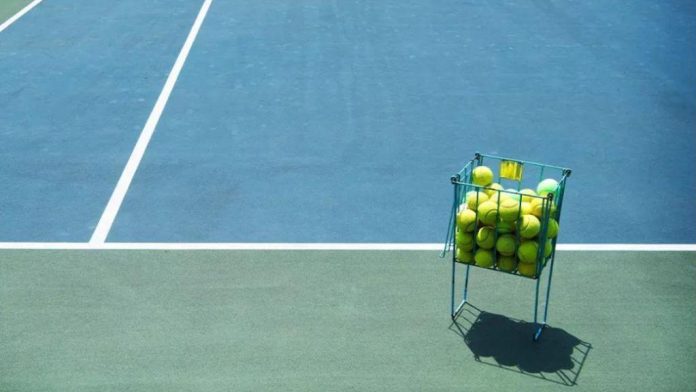
If you’re a regular on the tennis court, then a ball hopper is a necessary investment. This practical piece of equipment helps improve your tennis game by storing, picking up and carrying tennis balls. Some ball hopper models can fit dozens of balls, with some being large enough to hold 150 or more.

Stop wasting time chasing tennis balls when a ball hopper will add mobility, convenience and speed to your game. You have many options, but consider our top choice, Morvat Tennis Ball Cart.

What to know before you buy a tennis ball hopper

Speed up ball collection

A tennis ball hopper is a practical and useful way to maximize your repetitions, saving you the time and energy of pursuing balls every few volleys.

Transport tennis balls with ease

A tennis ball hopper is one of the easiest ways to painlessly transport a lot of balls. Rather than stashing balls in your pockets or racquet bag — or bringing an entirely separate bag to lug around your ball collection — a ball hopper can keep all your balls together and effortlessly portable.

Quickly feed balls

If you’re learning tennis or attempting to teach someone the game, a ball hopper is one of the best ways to do it. Practice your serve much easier with a ball hopper full of tennis balls or help someone else practice their returns. Quickly feed multiple balls across the net to help someone train, developing their skill and playing confidence.

What to look for in a quality tennis ball hopper

Ball quantity

Before finalizing what tennis ball hopper you want, check the size of the product. Know how many tennis balls the hopper holds. If you plan to spend several hours on the court, you want something with a sizable carriage to fit plenty of balls.

Height

Having a tall tennis ball hopper improves your practice since you won’t need to bend over constantly to grab balls. This can reduce back strain and fatigue while speeding up your serve practice.

Weight

You want something lightweight to easily pick up and carry with you while being durable enough to hold a lot of balls. If you buy a heavyweight tennis ball hopper, this may end up being reliable and strong but it could cause excessive fatigue as you carry it.

Wheels

While not a necessity, wheels can make tennis ball hoppers much easier to transport.

Design

Some tennis ball hoppers are designed as a basket but others are “mowers” to make ball pick-up easier. Consider what design you would prefer before purchasing.

How much you can expect to spend on a tennis ball hopper

Tennis ball hoppers tend to be $30-$100 depending on capacity, quality and design.

Tennis ball hopper FAQ

How many tennis balls can a hopper carry?

A. The capacity of a tennis ball hopper entirely depends on the model. A decent range for an average-sized hopper is 40-70 balls, although some are large enough to hold 150 tennis balls.

How does a tennis ball hopper work?

A. Many tennis ball hoppers are simply a basket or container designed to hold your collection of tennis balls. Some operate as a mower to collect the tennis balls while others hold dozens of them to make tennis practice and play easier.

What are the best tennis ball hoppers to buy?

Top tennis ball hopper

Morvat Tennis Ball Cart

Our take: This portable tennis ball cart comes with wheels, a quality frame and a sizable basket capacity.

What we like: This tennis ball hopper is easy to set up and takedown. When collapsed, it can easily fit inside your car’s trunk. Fit up to 150 tennis balls into the basket and enjoy the lightweight aluminum frame. 

What we dislike: Some users found the setup and tear-down of this tennis ball hopper tedious.

Where to buy: Available at Amazon

Top tennis ball hopper for the money

Tourna Ballport Tennis Ball Hopper

Our take: With an 80-ball capacity, this streamlined tennis ball hopper fits in small spaces.

What we like: A heavy-duty polypropylene frame means you won’t have any rust or peeling paint to worry about. Sliding bars keep the top closed and the balls secure. The solid legs are painless to mount, keeping the basket up and conveniently elevated.

What we dislike: Some users said the assembly directions lacked clarity.

Where to buy: Available at Amazon

Worth checking out

Gamma Sports EZ Travel Cart Pro

Our take: Get the most out of your tennis training sessions with this large-capacity tennis ball hopper.

What we like: Its lightweight material and convenient handles make transportation simple. Heavy metal straps secure this bag to your car for safe transportation. Mesh cover zips keep the balls from spilling.

What we dislike: Some users reported that the wheels on this tennis ball hopper wobble.

Where to buy: Available at Amazon

Want to shop the best products at the best prices? Check out Daily Deals from BestReviews.

Sign up here to receive the BestReviews weekly newsletter for useful advice on new products and noteworthy deals.

Abbey Ryan writes for BestReviews. BestReviews has helped millions of consumers simplify their purchasing decisions, saving them time and money.

BestReviews spends thousands of hours researching, analyzing and testing products to recommend the best picks for most consumers. BestReviews and its newspaper partners may earn a commission if you purchase a product through one of our links.

Distributed by Tribune Content Agency, LLC.

© 2023 BestReviews. Distributed by Tribune Content Agency, LLC

A heat wave named Cerberus has southern Europe in its jaws, and it’s only going to get worse – Daily Press

0

By DEREK GATOPOULOS and CIARAN GILES (Associated Press)

ATHENS, Greece (AP) — Tourists in central Athens huddled under mist machines and zoo animals in Madrid were fed fruit popsicles Thursday as southern Europeans suffered through a heat wave that was projected to get much worse heading into the weekend.

Temperatures in parts of Mediterranean Europe were forecast to reach as high as 45 degrees Celsius (113 F) starting Friday.

The high-pressure system affecting the region, which crossed the Mediterranean from north Africa, has been named Cerberus after the three-headed dog in ancient Greek mythology who guarded the gates to the underworld.

Officials in several countries were preparing emergency measures, cellphone alerts and adjustments to staffing levels.

In Athens and other Greek cities, working hours were changed for the public sector and many businesses to avoid the midday heat, while air-conditioned areas were opened to the public.

“It’s like being in Africa,” 24-year-old tourist Balint Jolan, from Hungary, told The Associated Press. “It’s not that much hotter than it is currently at home, but yes, it is difficult.”

Cerberus is being tracked by the European Space Agency, which warned that the heat wave will also be felt in parts of northern Europe.

“Italy, Spain, France, Germany and Poland are all facing a major heat wave, with temperatures expected to climb to 48 degrees Celsius on the islands of Sicily and Sardinia – potentially the hottest temperatures ever recorded in Europe” the agency said Thursday.

In the Arctic, a record high temperature of 28.8 degrees Celsius (83.8 degrees F) was measured at Slettness Fyr on the northern tip of the Norway, Norwegian meteorologists said Thursday. This tops a previous record from July 1964 when the thermometer reached 27.6 degrees Celsius (81.7 degrees F). The United Nation’s World Meteorological Organization on Monday said global temperatures recorded in early July were among the hottest on record. As Spain’s politicians fret about how the high temperatures might affect turnout in a general election this month, animals in Madrid’s Zoo were being treated this week to frozen food to cool off amid the sweltering heat. Zookeepers fed pandas and bears with watermelon popsicles, seals with frozen sardines and lions with frozen buckets of meat. Television ads in Italy reminded city dwellers to look after their pets and check in regularly with elderly relatives. Authorities were awaiting an autopsy of a 44-year-old roadworker who collapsed near Milan and later died in hospital. Storms overnight felled trees in an Italian region bordering Slovenia and Austria, while baseball size hail fell in valleys near Bergamo in Lombardy.

Rainfall provided some respite in Croatia, but evacuation orders were issued in several areas as a wildfire swept through coastal areas of the country. In North Macedonia, the high heat triggered a spike in emergency calls for health assistance, while residents in Kosovo, which is also landlocked, flocked to an artificial beach near the capital Pristina. Authorities in Cyprus urged the Mediterranean island’s residents to avoid forest areas where wildfires could be caused unintentionally.

Meanwhile, emergency services in nearby Turkey also grappled with simultaneous fires and floods. Flooding in the northern Black Sea coast claimed three lives. In the southwest Milas region, 26 water-dropping planes and helicopters helped 600 firefighters contain a wildfire. “While there are heat and fires on one side of the country, there are floods and deluges on the other,” Turkish Deputy Agriculture Minister Veysel Tiryaki said Thursday. “In our country as well as around the world, we are struggling with climate change.” ___ Ciaran Giles reported from Madrid. Jovana Gec on Belgrade, Serbia Srdjan Nedeljkovic in Athens, Menelaos Hadjicostis in Nicosia Cyprus, Jan M. Olsen in Copenhagen, Denmark, Andrew Wilks in Ankara, Turkey, Konstantin Testorides in Skopje, North Macedonia, Colleen Barry in Milan, Italy and Florent Bajrami in Pristina, Kosovo, contributed to this report.

Stop wasting time chasing tennis balls. Get a ball hopper – Daily Press

0

Which tennis ball hoppers are best?

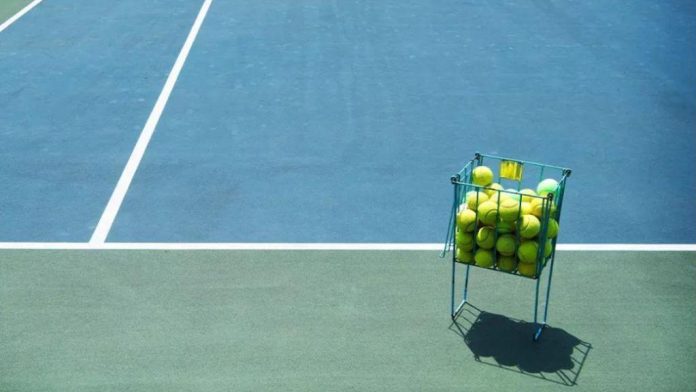
If you’re a regular on the tennis court, then a ball hopper is a necessary investment. This practical piece of equipment helps improve your tennis game by storing, picking up and carrying tennis balls. Some ball hopper models can fit dozens of balls, with some being large enough to hold 150 or more.

Stop wasting time chasing tennis balls when a ball hopper will add mobility, convenience and speed to your game. You have many options, but consider our top choice, Morvat Tennis Ball Cart.

What to know before you buy a tennis ball hopper

Speed up ball collection

A tennis ball hopper is a practical and useful way to maximize your repetitions, saving you the time and energy of pursuing balls every few volleys.

Transport tennis balls with ease

A tennis ball hopper is one of the easiest ways to painlessly transport a lot of balls. Rather than stashing balls in your pockets or racquet bag — or bringing an entirely separate bag to lug around your ball collection — a ball hopper can keep all your balls together and effortlessly portable.

Quickly feed balls

If you’re learning tennis or attempting to teach someone the game, a ball hopper is one of the best ways to do it. Practice your serve much easier with a ball hopper full of tennis balls or help someone else practice their returns. Quickly feed multiple balls across the net to help someone train, developing their skill and playing confidence.

What to look for in a quality tennis ball hopper

Ball quantity

Before finalizing what tennis ball hopper you want, check the size of the product. Know how many tennis balls the hopper holds. If you plan to spend several hours on the court, you want something with a sizable carriage to fit plenty of balls.

Height

Having a tall tennis ball hopper improves your practice since you won’t need to bend over constantly to grab balls. This can reduce back strain and fatigue while speeding up your serve practice.

Weight

You want something lightweight to easily pick up and carry with you while being durable enough to hold a lot of balls. If you buy a heavyweight tennis ball hopper, this may end up being reliable and strong but it could cause excessive fatigue as you carry it.

Wheels

While not a necessity, wheels can make tennis ball hoppers much easier to transport.

Design

Some tennis ball hoppers are designed as a basket but others are “mowers” to make ball pick-up easier. Consider what design you would prefer before purchasing.

How much you can expect to spend on a tennis ball hopper

Tennis ball hoppers tend to be $30-$100 depending on capacity, quality and design.

Tennis ball hopper FAQ

How many tennis balls can a hopper carry?

A. The capacity of a tennis ball hopper entirely depends on the model. A decent range for an average-sized hopper is 40-70 balls, although some are large enough to hold 150 tennis balls.

How does a tennis ball hopper work?

A. Many tennis ball hoppers are simply a basket or container designed to hold your collection of tennis balls. Some operate as a mower to collect the tennis balls while others hold dozens of them to make tennis practice and play easier.

What are the best tennis ball hoppers to buy?

Top tennis ball hopper

Morvat Tennis Ball Cart

Our take: This portable tennis ball cart comes with wheels, a quality frame and a sizable basket capacity.

What we like: This tennis ball hopper is easy to set up and takedown. When collapsed, it can easily fit inside your car’s trunk. Fit up to 150 tennis balls into the basket and enjoy the lightweight aluminum frame. 

What we dislike: Some users found the setup and tear-down of this tennis ball hopper tedious.

Where to buy: Available at Amazon

Top tennis ball hopper for the money

Tourna Ballport Tennis Ball Hopper

Our take: With an 80-ball capacity, this streamlined tennis ball hopper fits in small spaces.

What we like: A heavy-duty polypropylene frame means you won’t have any rust or peeling paint to worry about. Sliding bars keep the top closed and the balls secure. The solid legs are painless to mount, keeping the basket up and conveniently elevated.

What we dislike: Some users said the assembly directions lacked clarity.

Where to buy: Available at Amazon

Worth checking out

Gamma Sports EZ Travel Cart Pro

Our take: Get the most out of your tennis training sessions with this large-capacity tennis ball hopper.

What we like: Its lightweight material and convenient handles make transportation simple. Heavy metal straps secure this bag to your car for safe transportation. Mesh cover zips keep the balls from spilling.

What we dislike: Some users reported that the wheels on this tennis ball hopper wobble.

Where to buy: Available at Amazon

Want to shop the best products at the best prices? Check out Daily Deals from BestReviews.

Sign up here to receive the BestReviews weekly newsletter for useful advice on new products and noteworthy deals.

Abbey Ryan writes for BestReviews. BestReviews has helped millions of consumers simplify their purchasing decisions, saving them time and money.

BestReviews spends thousands of hours researching, analyzing and testing products to recommend the best picks for most consumers. BestReviews and its newspaper partners may earn a commission if you purchase a product through one of our links.

Distributed by Tribune Content Agency, LLC.

© 2023 BestReviews. Distributed by Tribune Content Agency, LLC

What is craft beer? Here’s a complete guide — for beginners to veterans – Daily Press

0

America’s craft beer history began nearly 200 years ago in 1829 when D.G. Yuengling & Son was founded in Pottsville, Pennsylvania. Not only was it the state’s first craft brewery, but it was America’s first brewery as well. According to the Brewers Association, to this day, D.G. Yuengling & Son qualifies as a craft brewer.

Since 1829, the country’s fondness for craft beer has gradually increased. Over the past decade, however, the craft brewing business has experienced unprecedented growth. In 2011, for example, there were roughly 2,000 craft breweries in the United States. By 2021, that number grew to over 9,000.

So what is craft beer, and why is it so popular?

What is craft beer?

Definition of a craft brewer

The Brewers Association defines a craft brewer as a small, independent brewer. Specifically, this means three things: 

  1. The company makes beer and has an Alcohol and Tobacco Tax and Trade Bureau Notice. 
  2. The brewery’s annual production is six million barrels of beer or fewer. 
  3. The company is independent.

The six craft beer market segments

  • Microbreweries: A microbrewery sells at least 75% of its beer off-site and produces fewer than 15,000 barrels per year.
  • Brewpubs: A brewpub sells at least 25% of its beer on-site and operates as a restaurant-brewery.
  • Taproom breweries: A taproom brewery sells at least 25% of its beer on-site.
  • Regional breweries: A regional brewery brews between 15,000 and 6 million barrels per year.
  • Contract brewing companies: A contract brewing company is any business that hires another brewery to brew its beer.
  • Alternating proprietors: An alternating proprietor is two or more brewers that use the same brewing space.

Craft beer vs. mass-produced beer

If you’ve only had mass-produced beer, you might think all beer tastes the same. That is because mass-produced beer doesn’t have the most diverse ingredients. To keep manufacturing costs reasonable, mass-produced beer tends to use cheaper products — rice or corn instead of hops — which makes the flavor less robust. Craft brewers, on the other hand, make smaller batches using hand-selected ingredients that offer a much broader scope of flavor.

Even more revealing, mass-produced beer is often served very cold. This is partially because cold temperatures lower a person’s ability to taste certain flavors that might be considered undesirable in a beer. Craft beer, however, can be served at warmer temperatures. This helps the drinker better identify the many flavors that are present.

Mass-produced beer typically has a narrower field of color — many are pale yellow. Conversely, craft beer has a rich palette that ranges from light to dark.

Pros and cons of craft beer

Pros

The most obvious pro is craft beer has a more robust flavor palate than mass-produced beer. This means there is a greater selection — if you don’t like IPAs, maybe something fruity and sweet will be a better match for you. Also, since the beer is brewed in smaller batches, brewers often experiment with flavors, so the menu is constantly changing. 

When you purchase craft beer, you are supporting the local economy and fostering a feeling of community. Additionally, brewpubs are family-friendly. If you venture out on a weekend, you will find games, a bright environment, outdoor seating and earlier hours. Some establishments even encourage bringing along the family dog.

Cons

The biggest con of craft beer is the cost. It is not uncommon for craft beer to cost twice as much, or more, than mass-produced beer. However, if the alcohol content is important to you, you might consider craft beer a good value because it may have two to three times the alcohol content of mass-produced beer.

What types of craft beer are there?

Since the biggest benefit of craft beer is the wide variety, it is important to understand a little about the many types of brews that are available. 

Ales vs. lagers

Beers are either ales or lagers. Ales are aged over a few weeks at warm temperatures. The yeast gathers at the top, which creates a more aromatic and full-bodied flavor. Lagers are aged for about two months at cold temperatures. The yeast gathers at the bottom, which creates a crisp, refreshing flavor.

Some common ale styles

  • India pale ale: An IPA is the most popular craft beer. The wide yet distinctive flavor can range from a tropical citrus to an earthy pine.
  • Pale ale: A pale ale is similar to an IPA, only it has a lighter flavor and lower alcohol content.
  • New England-style IPA: A New England-style IPA has a less bitter taste than a regular IPA. It is an unfiltered beer with a hazy appearance.
  • Double IPA: A double IPA has a strong hoppy flavor and a high alcohol content.
  • Stout: A stout is made with roasted barley. It has a dark color and a chocolate or coffee flavor.
  • Wheat: A wheat beer is brewed with generous amounts of grain. This gives the beer a light color with a sweet bready taste.
  • Gose: A gose beer is a wheat ale that is brewed with salt. This diminishes the sweetness and gives the beer a sour, but not tart, flavor.

Some common lager styles

  • Lager: Over 80% of beer sold in the U.S. is a lager, such as Budweiser and Coors. Because lagers take longer to brew, they aren’t as popular with craft brewers.
  • Mexican lager: A Mexican lager is brewed using flaked corn. It has a refreshing flavor with a low ABV.
  • Vienna lager: A Vienna lager is brewed with toasted malts, which give it an amber color and a malty character.
  • Pilsner: A Pilsner is a highly carbonated lager that gets its distinctive flavor from hops. 
  • Helles: Helles is a light, crisp option that is similar to a Pilsner but with a sweeter flavor.

Can you make craft beer yourself?

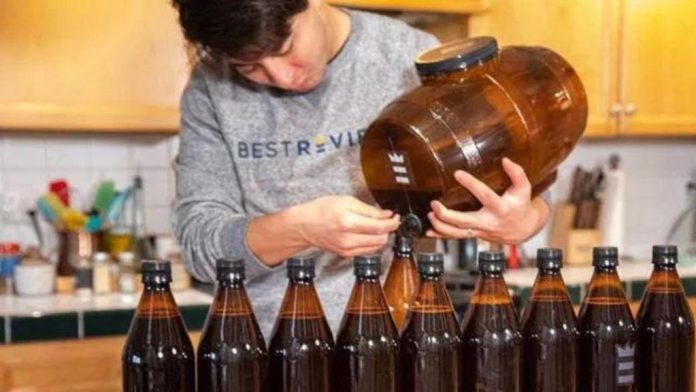
Depending on your proclivity to try something new, one of the best things about craft beer is it is something you can do yourself. All you need to make craft beer at home is a home brew kit, some patience, an adventurous spirit and the eagerness to experiment. Even better, once you have some hands-on experience mixing different ingredients and learning how to use devices, such as a hydrometer or a refractometer, you will have a deeper understanding and appreciation of the brewing process.

FAQ

What is ABV?

A. ABV stands for alcohol by volume. So, if a beer has a 6% ABV, 6% of that drink is alcohol. The higher the ABV, the higher the alcohol content. Most mass-produced beer has an ABV of 4% to 5% while the ABV of craft beer can vary greatly depending on the style. A double IPA, for instance, can range from 7.6% to 10.6% ABV. By comparison, around 12% ABV is the average for wine.

How long does craft beer last?

A. While different brews last for different amounts of time, most craft beer is best when it is fresh. If there is no “best if used by” date on the can or bottle, ideally, you want to drink it within three to six months for the best flavor. Refrigerated storage is recommended.

What you need to buy to brew your own craft beer

Brooklyn Brew Shop Everyday IPA Beer-Making Kit

If you like IPAs, this is the beer-making kit for you. It comes with everything you need to make 1 gallon of 6.8% ABV beer.

Sold by Amazon


Mr. Beer Complete Beer-making Starter Kit

This starter kit is designed for first-time brewers. It has simple, step-by-step instructions, and it only requires 30 minutes of your time to brew. The beer will be ready to drink in about three to four weeks.

Sold by Amazon


Brewing America Brewing Hydrometer Alcohol Tester Kit

If you’d like to test the ABV of your home brew, this alcohol tester kit lets you do that. It comes with everything you need to quickly and accurately measure alcohol levels in beer, wine, cider and mead.

Sold by Amazon


NutriChef Pressurized Beer Miniature Keg System

This compact keg is small enough to fit inside your refrigerator. It holds 64 ounces of craft beer and can keep it fresh for up to two months. The keg works with a disposable Co2 cartridge, which is not included with the purchase.

Sold by Amazon


Rolf Glass Heron 16-ounce Beer Mug Set

Once you make your beer, you will want to enjoy it in style. This set of four lead-free, glass, 16-ounce mugs features a sand-engraved heron in a picturesque landscape.

Sold by Amazon


Want to shop the best products at the best prices? Check out Daily Deals from BestReviews.

Sign up here to receive the BestReviews weekly newsletter for useful advice on new products and noteworthy deals. 

Allen Foster writes for BestReviews. BestReviews has helped millions of consumers simplify their purchasing decisions, saving them time and money.


BestReviews spends thousands of hours researching, analyzing and testing products to recommend the best picks for most consumers. BestReviews and its newspaper partners may earn a commission if you purchase a product through one of our links.

Distributed by Tribune Content Agency, LLC.

© 2023 BestReviews. Distributed by Tribune Content Agency, LLC

Vermont braces for more rain in wake of historic flooding – Daily Press

0

By KATHY McCORMACK (Associated Press)

Vermont prepared for the next round of storms — and possibly a tornado — as people took advantage of calm weather Thursday to clean up from historic flooding that damaged thousands of homes, businesses and roads, and left some residents stranded.

As floodwaters receded, the good news was that there were no new rescue missions, dams were holding up and more roads reopened. The bad news was that strong thunderstorms were expected to move into parts of the state by Thursday night, which could cause more flash flooding, Gov. Phil Scott said at a news conference. Conditions could spawn a tornado, he said. And the state could get more heavy rain over the weekend.

“The period we are more concerned about is Sunday because that could be more widespread and heavier, but not nearly on the scale of what we saw earlier in the week,” National Weather Service meteorologist Seth Kutikoff said.

Scott said it’s important for Vermonters to be vigilant, and that includes not going into the water.

“We’ve seen many pictures on social media of kids swimming in floodwaters. This is not typical rainwater — it’s filled with chemicals, oil, waste, and more. It’s simply not safe,” he said.

New Hampshire, where some roads, towns and campgrounds were flooded in several western counties, was also in the latest storm’s path.

“We strongly encourage residents and visitors, especially campers staying at sites along rivers and streams, and campgrounds in low-lying parts, to know what to do if evacuation is needed,” said Robert Buxton, director of the state’s Homeland Security and Management agency.

Other New England states to the south were also drying out, including Connecticut, where officials warned boaters and others about dangerous debris in the Connecticut River, including large trees. A dock with several boats attached was washed away in Glastonbury, just south of Hartford, and was seen floating down the river a few towns away.

In Vermont, communities were cleaning up from the floods that were more destructive in some places than 2011’s Tropical Storm Irene and regarded as the worst natural disaster since the 1927 floods, which killed dozens of people and caused widespread destruction. Unlike that event, no injuries or fatalities have been reported with this week’s flooding.

Transportation officials were moving equipment to areas that were considered more flood-prone to prepare for the storms as they continued to evaluate damage, including to rail lines. Amtrak and other railroad service has been suspended.

One death in New York was blamed on the storm — a woman whose body was found after she was swept away in Fort Montgomery, a small Hudson River community about 45 miles (72 kilometers) north of New York City.

Scott said he has submitted a request for a major disaster declaration to President Joe Biden. “It’s separate from, and in addition to, the federal emergency declaration the president already signed” on Tuesday, he said. If approved, the declaration would provide federal support for recovering communities.

In Vermont’s small state capital of Montpelier, where the swollen Winooski River had flooded downtown, the elevator at City Hall was damaged, making the building inaccessible, spokesperson Evelyn Prim said.

“Cleanup from the hazardous floodwater damage in City Hall is expected to take several months. Because of this, City Hall will be closing until further notice,” she said.

Offers of help poured in, including free pet food from an animal shelter in Morrisville and a donation collection for water and nonperishable food items at the University of Vermont. A Vermont Main Street Flood Relief Fund was set up to help small businesses and the Vermont Community Foundation established a fund to help longer-term efforts for people and communities. An annual concert, the Do Good Fest in Montpelier, will be livestreamed and act as a fundraiser.

“One of the defining truths about Vermont is that Vermonters look out for one another,” said Dan Smith, the foundation’s CEO. “We saw it during the pandemic; we saw it during Tropical Storm Irene.”

___

McCormack reported from Concord, New Hampshire. Associated Press reporters Lisa Rathke in Marshfield, Vermont, David Collins in Hartford, Connecticut, and Michael Casey in Boston contributed to this report.

Hollywood actors join screenwriters in historic industry-stopping strike as contract talks collapse – Daily Press

0

By ANDREW DALTON and LESLIE AMBRIZ (Associated Press)

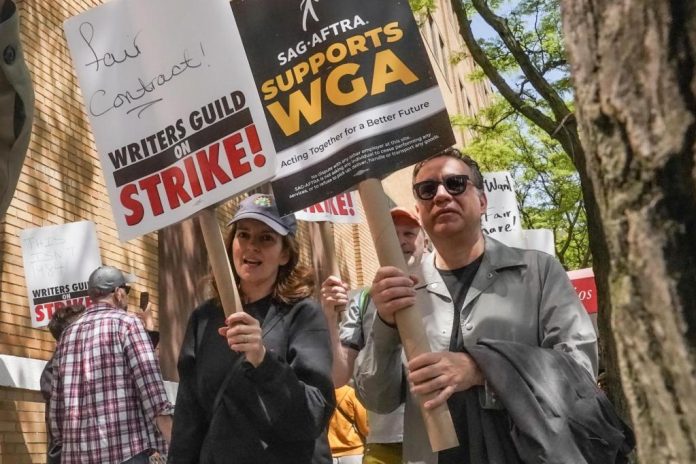
LOS ANGELES (AP) — Leaders of a Hollywood’s actors union voted Thursday to join screenwriters in the first joint strike in more than six decades, shutting down production across the entertainment industry after talks for a new contract with studios and streaming services broke down.

It’s the first time two major Hollywood unions have been on strike at the same time since 1960, when Ronald Reagan was the actors’ guild president.

In an impassioned speech as the strike, which begins at midnight, was announced, actors’ union president and former “The Nanny Star” Fran Drescher chastised industry executives.

“Employers make Wall Street and greed their priority and they forget about the essential contributors that make the machine run,” Drescher said. “It is disgusting. Shame on them. They stand on the wrong side of history.”

Hours earlier, a three-year contract had expired and talks broke off between the Screen Actors Guild-American Federation of Television and Radio Artists and the Alliance of Motion Picture and Television Producers representing employers including Disney, Netflix, Amazon and others.

Outside Netflix’s Hollywood offices, picketing screenwriters chanted “Pay Your Actors!” immediately after the strike was declared. Actors will begin picketing alongside writers outside studio headquarters in New York and Los Angeles on Friday.

“It looks like it’s time to take down the MASKS. And pick up the SIGNS,” Oscar-winner Jamie Lee Curtis said in an Instagram post with a photo of the tragic and comic masks that represent acting.

The premiere of Christopher Nolan’s film “Oppenheimer” in London was moved up an hour so that the cast could walk the red carpet before the SAG board’s announcement. Stars including Cillian Murphy, Emily Blunt and Matt Damon left the event once the strike was announced.

The strike — the first for film and television actors since 1980 — casts a shadow over the upcoming 75th Emmy Awards, whose nominations were announced a day earlier. Union rules prevent actors from doing any interviews or promotions around the awards, and they may not appear at the ceremony.

The strike rules also prevent actors from making personal appearances or promoting their work on podcasts or at premieres. And they are barred from do any production work including auditions, readings, rehearsals or voiceovers along with actual shooting.

While international shoots technically can continue, the stoppage among U.S.-based writers and performers is likely to have a drag on those too.

Disney chief Bob Iger warned the strike would have a “very damaging effect on the whole industry.”

“This is the worst time in the world to add to that disruption,” Iger said on CNBC. “There’s a level of expectation that they have that is just not realistic.”

A nearly two-week extension of the actors union contract, and negotiations, only heightened the hostility between the two groups. Drescher said the extension made us “feel like we’d been duped, like maybe it was just to let studios promote their summer movies for another 12 days.”

Before the talks began June 7, the 65,000 actors who cast ballots voted overwhelmingly for union leaders to send them into a strike, as the Writers Guild of America did when their deal expired more than two months ago.

When the initial deadline approached in late June, more than 1,000 members of the union, including Meryl Streep, Jennifer Lawrence and Bob Odenkirk, added their names to a letter signaling to leaders their willingness to strike.

While famous names predominate, the strike also includes tens of thousands of little-known actors who scramble for small parts at sometimes meager pay. The union says modest-but-essential income streams including long-term residuals for shows they appear in have dried up.

Stakes in the negotiations included that kind of pay, which actors say has been undercut by inflation and the streaming ecosystem, benefits, the growing tendency to make performers create video auditions at their own expense, and the threat of unregulated use of artificial intelligence.

“At a moment when streaming and AI and digital was so prevalent, it has disemboweled the industry that we once knew,” Drescher said, drawing applause from her fellow union leaders. “When I did ‘The Nanny’ everybody was part of the gravy train. Now it’s a vacuum.”

The AMPTP said it presented a generous deal that included the biggest bump in minimum pay in 35 years, higher caps on pension and health contributions, and “a groundbreaking AI proposal that protects actors’ digital likenesses.”

“A strike is certainly not the outcome we hoped for as studios cannot operate without the performers that bring our TV shows and films to life,” the group said in a statement. “The Union has regrettably chosen a path that will lead to financial hardship for countless thousands of people who depend on the industry.”

SAG-AFTRA represents more than 160,000 screen actors, broadcast journalists, announcers, hosts and stunt performers. The walkout affects only the union’s actors from television and film productions, who voted overwhelmingly to authorize their leaders to call a strike before talks began on June 7. Broadway actors said in a statement that they stand “in solidarity” with SAG-AFTRA workers.

The 11,500 members of the Writers Guild of America have been on strike since their own talks collapsed and their contract expired on May 2. The stoppage has showed no signs of a solution, with no negotiations even planned.

That strike brought the immediate shutdown of late-night talk shows and “Saturday Night Live,” and several scripted shows, including “Stranger Things” on Netflix,” “Hacks” on Max, and “Family Guy” on Fox, which have either had their writers’ rooms or their production paused. Many more are sure to follow them now that performers have been pulled too.

___

Associated Press journalists Sian Watson in London, Krysta Fauria in Los Angeles, and Jake Coyle and Jocelyn Noveck in New York contributed to this story. For more on the Hollywood strikes, visit https://apnews.com/hub/hollywood-strikes/

How to grill your favorite veggies on any type of grill – Daily Press

0

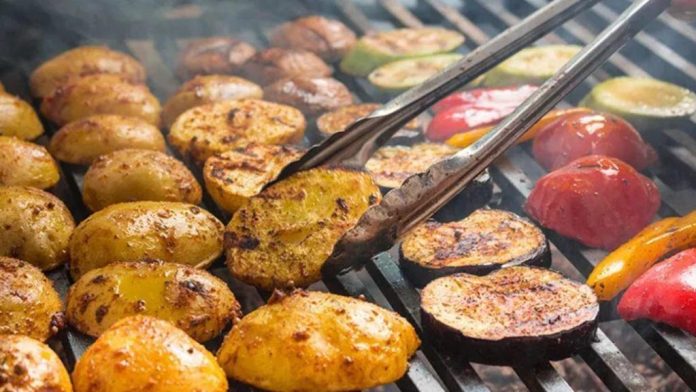
Summer means grilling season is in full swing. By now, you’ve probably enjoyed quite a few burgers, hot dogs, and steaks — but side dishes deserve just as much attention.

While chips and dip are a popular choice, you might be wondering how to incorporate healthy alternatives. Veggies have likely crossed your mind, but grilling them is totally different than cooking them indoors. But once you learn a few simple techniques, you’ll be grilling greens (and plenty of other colorful veggies) in no time.

Here are our top tips and tricks for grilling all types of veggies on all types of grills.

How to grill vegetables

Basics of grilling veggies

Grilling veggies isn’t hard, but you’ll need to take a few things into consideration for the most successful outcome.

Having the right tools or utensils, such as skewers or grill baskets, makes it infinitely easier to grill certain vegetables. You can also use the tinfoil method, in which you cut veggies into uniform pieces, toss them in a marinade, and grill them enclosed as a packet.

Preparation is the key to tasty grilled vegetables. Use salt and pepper, spices, rub, or marinade to draw out a vegetable’s natural flavor or introduce new ones. If you’re using skewers, be sure to let them soak in water for 15 minutes prior to use.

Heat control is everything when it comes to grilling, especially vegetables, which tend to be softer than meats. Start by preheating your grill for 10 to 15 minutes. Monitor heat to ensure it maintains temperature and avoids dangerous flare-ups.

Grilling veggies requires ongoing attention. Some veggies take longer to grill than others, such as root or fibrous vegetables. Those with higher water content, like summer squash, tend to cook more quickly. This means you may need to flip or toss veggies while they’re grilling, or continuously rotate them.

Optimizing cook time

While you can cook vegetables simultaneously, keep in mind that no two vegetables cook the exact same way. To optimize your time, you’ll probably average out the cook time as well as the temperature — which is six to 10 minutes at approximately 350 to 400 degrees Fahrenheit.

As far as knowing when veggies are done, sometimes it’s easy enough to tell by the char or noticeable change in color and aroma. If you’re not exactly sure, you can piece the veggies to gauge the texture and tenderness to determine whether it’s cooked to your preference.

Cooking vegetables in batches

If you’d like to give individual attention to veggies, cooking in batches is an ideal option. This helps you to achieve the correct char and tenderness without worrying about plucking certain veggies from skewers or grill baskets to let the others continue cooking.

Group veggies together based on similar cooking times and temperatures. It’s common, for example, to group eggplant, mushrooms, and squash. You can also cook certain veggies on their own, like onions, since they often require continuous rotation.

Techniques and tips by grill type

While grilling has foundational methods and techniques, there are a few tweaks and adjustments you’ll need to make depending on the type of grill you have.

Grilling veggies on a gas grill

When it comes to gas grills, the key to successful veggie grilling boils down to proper heat control. Since you can control the flame with dials, you’re able to make adjustments to maintain temperature — and to control flare-ups. If possible, grill veggies in their own medium-heat zone. Not only does this help maintain temperature, but it also prevents cross-contamination with foods grilled at higher temperatures like meats or seafood.

Grilling veggies on a charcoal grill

Tap into your brick-zoning skills to maximize your veggie grilling experience on charcoal grills. For the most part, batched veggies grill best at medium-high heat. Since many charcoal grill owners are used to assembling two zones — high heat and low heat — it’s recommended to sear veggies in the hot zone and then transfer them to the lower heat one to finish cooking.

Roasting veggies in a Big Green Egg or smoker

It’s best to cook veggies on the top rack of the smoker in a grill pan or basket, and most definitely above any meats or seafood you’re cooking at the same time. This gives them enough distance from the heat source to smoke without burning, plus it’s a great opportunity for the foods below to catch flavorful drippings.

Grilling veggies with cast iron pans

If you’re already a fan of cast iron cooking, you’ll be pleased to know that you can saute veggies with cast iron pans. Set your grill to medium heat, and once it reaches the optimal temperature, place the cast iron pan on it to preheat for five to eight minutes. Add a few tablespoons of butter, toss in the veggies, and let them saute until they reach your preferred tenderness.

Grilling veggies on an electric grill

Perhaps the easiest grilling method is using a nonstick electric grill. Simply spray the grill plates with non-stick spray, then set it to preheat to medium-high. While you’re waiting, prepare your veggies. You can cut them in large, slender pieces or you into one-inch cubes for kebab cooking. Cook time varies with these grills, so follow the cook time guide included with your user manual for reference.

Our favorite grilled veggie recipes

The sky’s the limit when it comes to grilling, so here are some of our favorite pairings of popular summer veggies. For most of these recipes, you can cook them on skewers, in a grill basket, or enveloped in tinfoil.

Classic kebabs: Round up bell peppers, onions, tomatoes, and zucchini, and soak skewers for 15 minutes. Chop each veggie into two-inch pieces and toss them in a light coating of olive oil, oregano, basil, salt, and pepper.

Deconstructed cucumber-tomato salad: Pick up firm red onions, cherry tomatoes, and cucumber, and cut them into uniform pieces for a grill basket. Toss them in a light marinade of red wine vinegar, olive oil, fresh dill, mint, and garlic salt.

Tri-squash delight: Go colorful with yellow squash, summer squash, and zucchini, and dice them in quarter-inch medallions. Add Vidalia onions, chopped in two-inch cubed pieces. Toss veggies in a light coating of olive oil, garlic powder, freshly ground black pepper, and a dash of nutmeg.

Grilled rosemary potatoes and button mushrooms: Parboil halved baby red potatoes. Add potatoes and mushrooms to a bowl and toss in light olive oil with fresh rosemary, salt, and freshly ground pepper.

Tinfoil veggie medley: Slice red peppers, red onions, and carrots into thin, uniform pieces. Grab your favorite marinade (we like garlic teriyaki) and toss the sliced veggies with string beans in a bowl. Transfer the medley into tinfoil, fold it into a packet, and cook for 20 minutes.

Want to shop the best products at the best prices? Check out Daily Deals from BestReviews.

Sign up here to receive the BestReviews weekly newsletter for useful advice on new products and noteworthy deals.

Sian Babish writes for BestReviews. BestReviews has helped millions of consumers simplify their purchasing decisions, saving them time and money.

BestReviews spends thousands of hours researching, analyzing and testing products to recommend the best picks for most consumers. BestReviews and its newspaper partners may earn a commission if you purchase a product through one of our links.

Distributed by Tribune Content Agency, LLC.

© 2023 BestReviews. Distributed by Tribune Content Agency, LLC