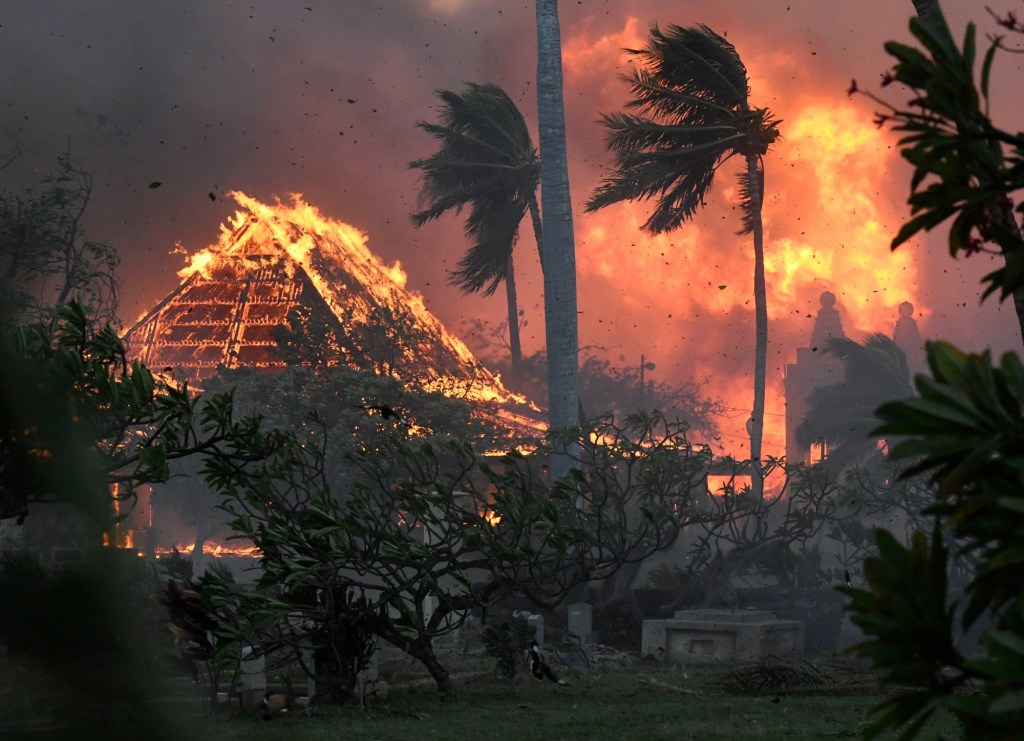
The wildfire that last week engulfed the Lahaina waterfront on the Hawaiian island of Maui almost defies comprehension. Fueled by powerful winds, the blaze tore through the beautiful oceanside hamlet, killing at least 106 people and leaving the area in ruins. More than a thousand people are missing.
The federal government is sending help and the state government is working with Washington to coordinate the response, with the president and first lady set to visit next week. But the people of Hawaii also need our generosity at this perilous hour, along with our best efforts to contain the climate forces which contributed to this disaster.
About 13,000 people live in the historic city of Lahaina, a place of cultural and economic importance to the Hawaiian people. Kamehameha I selected it as the capital of the Hawaiian kingdom in 1802 — it was moved to Honolulu in 1845 — and it was a hub of global trade for the island nation both before and after.
In recent years, Lahaina, and Maui, generated considerable revenue as a tourist destination but the city continued to be the center of preservation efforts to protect Hawaiian culture, including language and traditions that might otherwise be lost.
According to The New York Times, a brush fire that began under an electric pole snapped by high winds grew into an inferno that tore through the city hours after firefighters said it had been contained. There was little notice of the imminent danger faced by those in the fire’s path, which may have contributed to the devastating toll.
That’s the overhead, antiseptic view of what happened. The situation on the ground, as told through numerous media reports, was harrowing and terrifying. People scrambled through smoke and over walls to take refuge in the water. Others lost their lives helping others or rescuing pets. So many homes, businesses and memories were reduced to ash and rubble.
If it’s heartbreaking to those of us reading about it on the other side of the country, one cannot imagine the devastation of those who lived through it and must now rebuild. As Hampton Roads residents know all too well, the aftermath of a natural disaster saps your spirit and makes it hard to hold on to hope.
President Joe Biden’s issuance of a Major Disaster Declaration for Hawaii will expedite federal relief efforts to care for the affected and displaced. So too will the rapid mobilization of non-government organizations to Maui to provide on-the-ground help.
These include the American Red Cross (redcross.org), the Hawai’i Community Foundation’s Maui Strong Fund (hawaiicommunityfoundation.org), and Mercy Chefs (mercychefs.com), a faith-based non-profit located in Portsmouth serving meals to victims. As always, be wary of scams and use Charity Navigator at charitynavigator.org to avoid bad actors.
Climate change is the larger issue fueling this disaster and so many others caused by extreme weather. What happened in Hawaii wasn’t solely due to a warming planet, but meteorologists contend that changing conditions make storms more destructive, droughts more severe and wildfires more ferocious.
From slow-moving storms, heavy with precipitation, that caused flash floods in the Northeast last month, to the brutal heat that has baked the Southwest for months, to tornadoes that ripped through the Southeast — including a twister that hit Virginia Beach in April, this has been a year of extreme weather. The National Oceanic and Atmospheric Administration says the United States has already recorded 15 disasters costing $1 billion or more in 2023, with more than four months left to go.
Helping those who lost everything in Hawaii — and doing so today — remains the top priority. Those affected have a long road ahead and every bit of generosity will make it easier to travel. But the nation must also act proactively to make communities more resilient to extreme weather and reduce the harmful emissions fueling global warming, recognizing that conditions will continue to worsen without swift and concerted action.