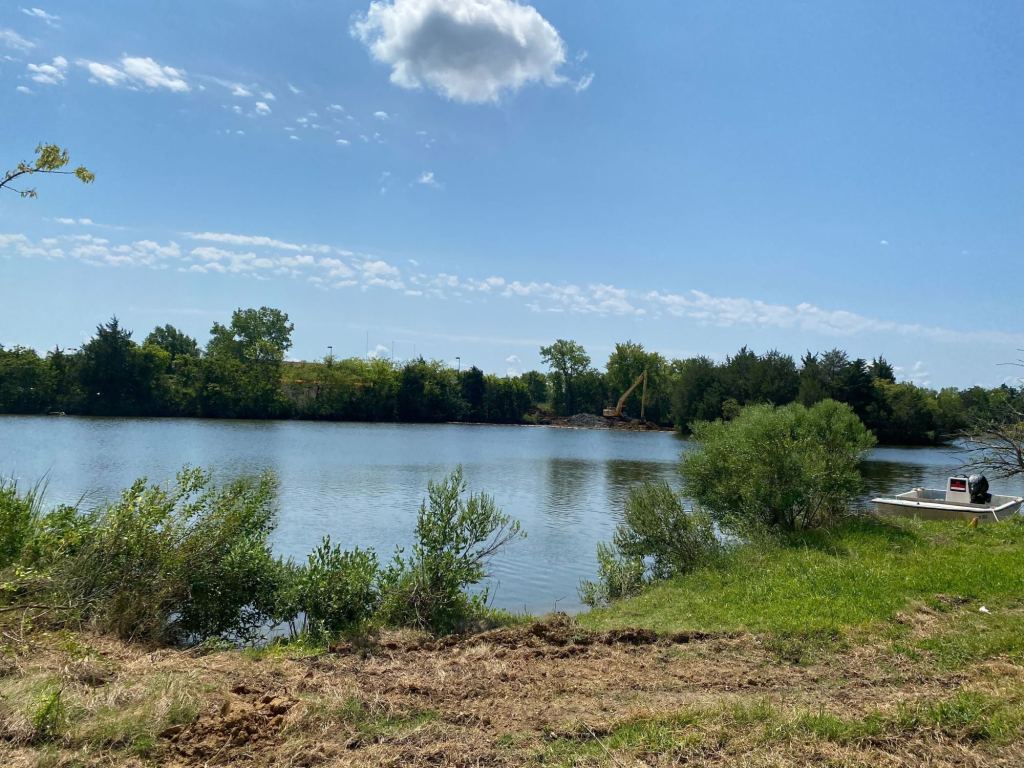
Construction is underway on the first of three Hampton stormwater projects are meant to make the Newmarket Creek area more resilient to flooding by increasing water runoff storage capacity by more than 8 million gallons.
The three infrastructure projects — the Lake Hampton stormwater park, North Armistead Avenue roadway elevation and Big Bethel Blueway — cost a total of $34 million and are being paid for in part through environmental impact bonds.
“Residents of Hampton regularly express concern over the frequency and severity of flooding events,” said Hampton Community Development Director Bonnie Brown at a groundbreaking held Friday on the banks of Lake Hampton. “And these events might be simple nuisances most days, but can also become more severe events that threaten lives, property, and businesses. Longtime citizens have voiced that they’ve never experienced water-related events to the degree that they do now.”
She said the new projects will “significantly add to our stormwater capacity.”
The Lake Hampton project will transform a detention pond into a stormwater park featuring surrounding walkways and additional water storage capacity. It calls for raising the dam height and installing smaller detention basins with wetlands plants to slow and clean runoff from North Armistead before it flows into the lake.
The park will also become a thriving habitat for birds and other wildlife and pathways will connect to the existing Waterwalk Trail park.
Although city officials held a ceremonial groundbreaking on the Lake Hampton project Friday, resiliency specialist Olivia Askew said construction actually kicked off in June. The project is scheduled to be complete by April.
Construction on the other two projects has yet to begin. The North Armistead Avenue project will raise the roadway to eliminate chronic flooding on the major thoroughfare. The project also adds plants and green infrastructure at the road’s median and shoulders to help slow, store, and redirect stormwater.
The Big Bethel Blueway is a project intended to store and slow water through the redesign of existing waterways to reduce flooding upstream and downstream in Newmarket Creek. The project will expand the main drainage channel, install several weirs, add new vegetation on the channel bank that will filter and slow stormwater. This project also creates over a mile of new trails.
“These three projects are prototypes for us to learn from and replicate as we continue our journey toward adaptation and coastal resiliency,” Brown said.
Big Bethel Blueway is expected to go out for construction bids in September and to be completed in fall 2025. North Armistead project is expected to be bid for construction in late 2024 and completed in 2027, according to Brown.
Mayor Donnie Tuck said the three projects “aim for innovative ways to manage stormwater and flooding.”
“These projects reduce localized flooding and improve water quality,” Tuck said. “They increase access to green space and enhance native wildlife habitat. They eliminate transportation disruptions on a key corridor, and they invest and improve equity in vulnerable communities.”
Hampton is the first locality in Virginia to use an environmental impact bond to help fund an infrastructure project. Environmental impact bonds are a funding mechanism that allows municipalities to borrow from private investors seeking environmental as well as financial returns. The $12 million bond will be paid off using the revenues from the city’s stormwater impact fee.
“You’re not just a regional leader in innovative public finance — you’re a national leader,” said Jason Lee, a director at Qualified Ventures, which facilitated the bond sale.
The bonds have helped secure an additional $24 million in grants from state and federal agencies, so the city only expended about $6 million from the bond so far. Brown said the city plans to explore the feasibility of using remaining bond grant funds for other resiliency projects.
The city has other plans in the works to target flooding in the downtown, Buckroe and Phoebus areas. The City Council is expected to vote on that array of projects next month.
Josh Janney, [email protected]