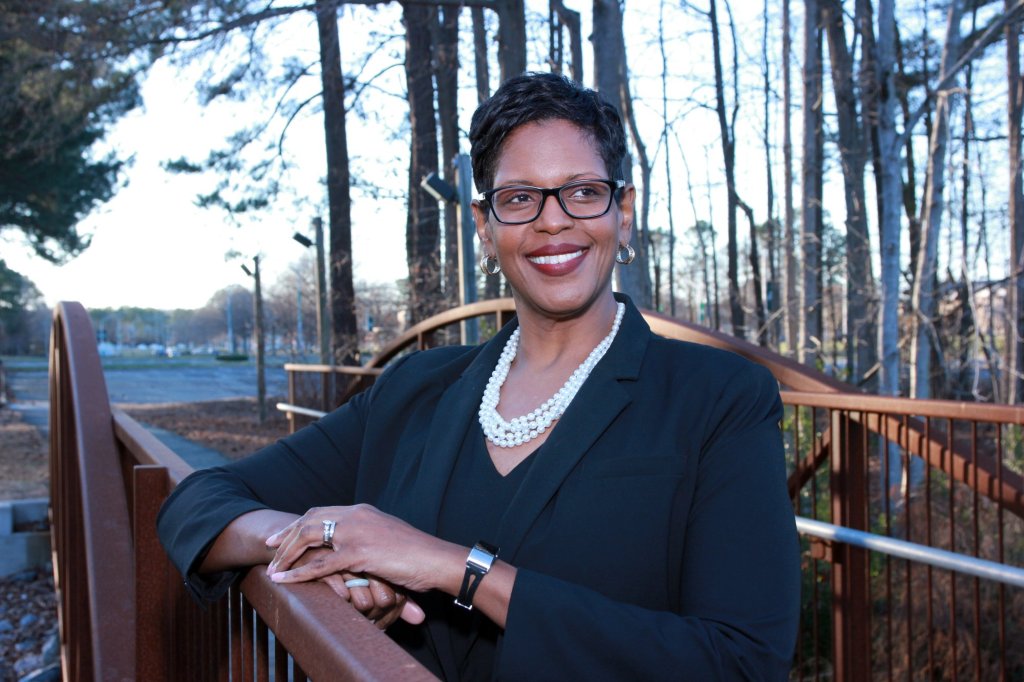
Virginia Peninsula Community College President Towuanna Porter Brannon has been at the helm for just two and a half years. Yet, she’s made quite an impact.
Brannon came on board in 2021, replacing Interim President Gregory T. DeCinque. One of Brannon’s first accomplishments was helping change the name from Thomas Nelson Community College.
In 2019, the college was preparing a new strategic plan along with new branding initiatives, she said. In the summer of 2020, following the death of George Floyd, then Virginia community college system Chancellor Glenn DuBois asked community college presidents to evaluate the names that adorned their colleges and facilities.
“I arrived in January 2021, and our faculty had completed extensive research into the college’s namesake, Thomas Nelson. Additionally, surveys and town halls were conducted to include key stakeholders in consideration of a potential name change. The college board considered three potential names and ultimately chose a name that represented the region we serve, Virginia Peninsula Community College,” she said.
While some data sets consider Virginia Peninsula Community College’s enrollment low with nearly 9,000 students in its academic credit courses, they don’t consider noncredit and industry certifications. VPCC also has a robust set of noncredit workforce development courses and programs that are not included in that student count.
In that same year, the college served 2,678 students in its noncredit programs and courses, bringing total students served in the year up over 11,500, said Steven Felker, director of institutional research and effectiveness, using 2021-22 data. Enrollment had declined from more than 9,600 students in the 2020-21 academic year, and final reporting for the 2022-23 academic year is still ongoing.
Overall college enrollment started to decline in 2012, Felker said. The persistent declines were in part attributed to a rapidly improving economy followed by the onset of the COVID-19 pandemic, he added.
And so, Virginia Peninsula Community College is focused on meeting students where they are.
“We are big on short-term certifications. Not everyone wants to go to school for years, but they still want a skilled profession,” Brannon said. “We have many programs where they can get training and be working in that position in two months. Our focus is on addressing the workforce shortage by offering skilled trades. The skilled trade center at the Williamsburg campus is one way we are addressing it. The 16-week programs can transform a life.”
In addition to determining a student’s career path, Brannon said it is important to figure a student’s limitations such as economic constraints, child care and transportation issues.
“Tuition is not the only cost of an education,” she said. For instance, it can take two hours for a student to take public transportation from Southeast Newport News to the main campus.
The Southeast Center, operated by VPCC, offers specific degree and certificate programs with in-person and hybrid classwork. Newport News is the largest city in the school’s service area. When enrollment declined, the college held listening sessions last year under the direction of Keisha Samuels, interim dean of community partnerships and chair of the college’s human services program.
Brannon’s understanding of disadvantaged student challenges comes from her own experiences growing up on a limited income in the Bronx, New York. She said the help she received shaped her views.
“I am here because people made an investment in me. When you invest in someone, you are investing in business; you are investing in your community,” she said.
To introduce VPCC to children, Brannon said they are working with community organizations including Hampton Roads Community Action Program, Boys and Girls Clubs, the Girl Scouts and probation officers.
In addition to attracting students, retaining them is equally important, she said. For instance, a program called The Barber Shop helps Black men with coaching, weekly meetings and a monthly excursion such as a theater performance.
The military community is also a focus. Last academic year, about 25% of the credit students indicated a military affiliation, including active-duty, veteran, military spouse or military dependent. Brannon said meeting their educational needs benefits the community.
The college also offers high school seniors an opportunity to earn college credit before they graduate high school.
Looking into the future, Brannon wants to increase mental health help.
“The pandemic caused many young people long-term anxiety,” she said. “They were not mature enough to make sense of it.”