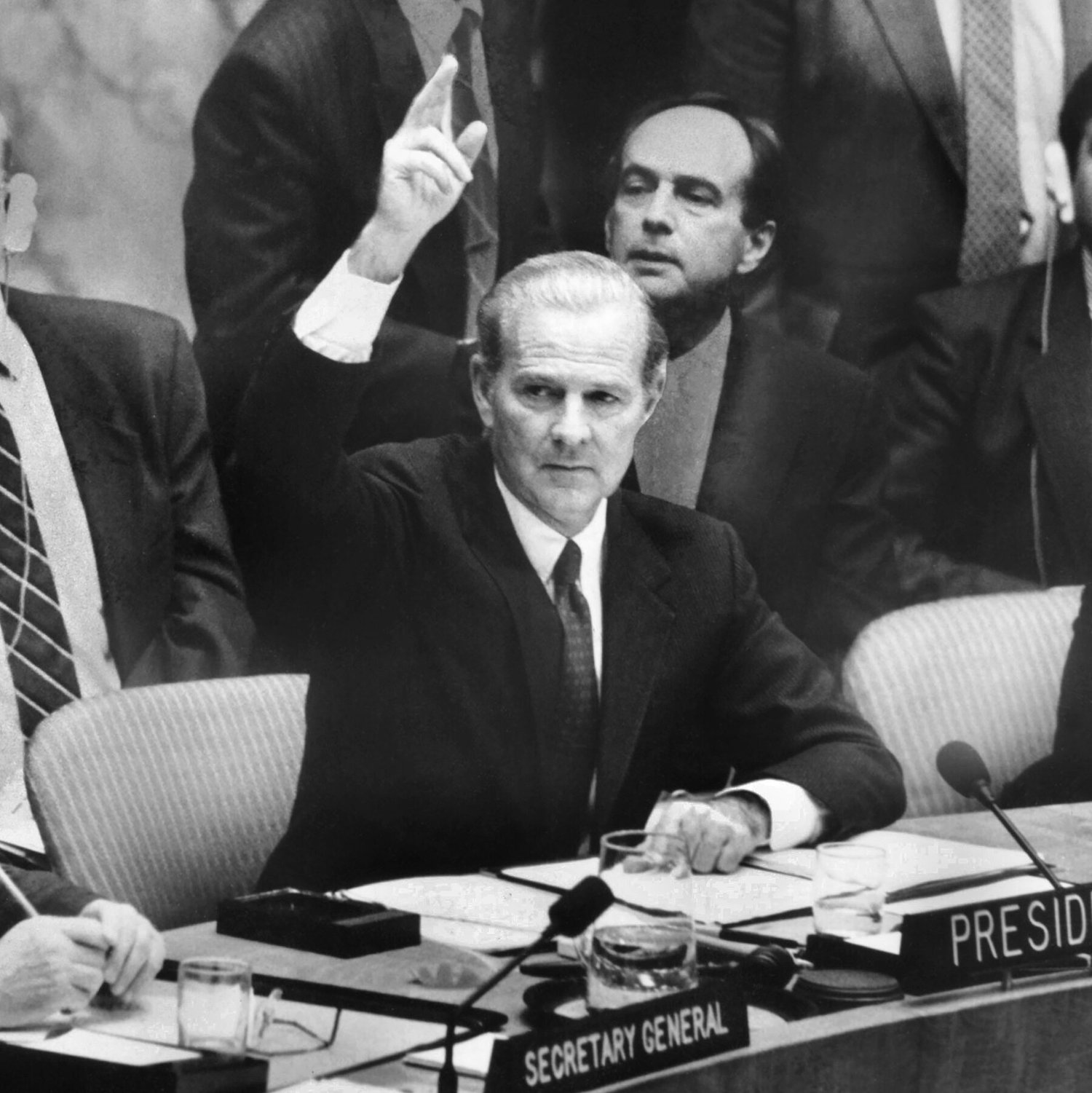
The narrative that Negroponte depicts of Baker’s time as secretary of state resembles not so much a master negotiator, but rather a master crisis manager. The author depicts the numerous challenges Baker and the United States faced between 1989 and August 1992 when Baker left the State Department to become Chief of Staff to George H.W. Bush. The Gulf War, Tiananmen Square, the collapse of the Soviet Union and the end of communism in Europe, the Middle East peace process, and the ethnic fighting that erupted in Yugoslavia were just some of the challenges that Baker faced. With these, and other challenges, the author presents Baker as a capable and able secretary of state. Yet, the limitations Baker sometimes faced in trying to get parties to negotiate—in Yugoslavia and in the Middle East, for example—are expertly described by the author and illustrate how it was sometimes not possible for Baker to juggle and balance the interests of the parties involved to achieve a negotiated settlement. Negroponte, rather than depicting a master negotiator, presents an able member of Bush’s administration working to implement his policies, but facing limits, even at the height of America’s power and prestige at the end of the Cold War and America’s victory in the first Gulf War.
Negroponte conducted significant research in writing this book, with ample sources cited that include interviews, newspapers, books, articles, and other sources. The book would be a stronger asset for researchers, however, if it included an index. The organization of the book via seven main themes works to focus the reader on some key issues Baker faced as secretary of state. The drawback to this thematic approach, however, is that the chronology of events sometimes gets lost. Baker faced multiple challenges at the same time. A thematic approach, rather than a chronological one, does not illustrate just how many international issues Baker managed concurrently. If such a chronological approach had been offered, readers would have a better appreciation for the complex issues and negotiations that Baker had to manage.
The style and focus of this book make it a good source for readers wanting an introduction to either the foreign policy of the Bush administration or events leading to the end of the Cold War. Stylistically, the book flows in a more journalistic fashion than scholarly. This is not to say the work is not rigorous in its sources. It is, but it does not read like a typical scholarly work of history. Negroponte’s narration of events is suitable for this work that is covering several major events over four years. If, however, readers want more in-depth analysis or detail on a particular event, like Yugoslavia, they should consult other sources. Even so, the amount of information provided by the author is enough to whet readers’ appetites for more.