North Carolina Gov. Roy Cooper on Tuesday declared a state of emergency ahead of potential impacts from Hurricane Idalia later this week.
Meanwhile, officials on the Outer Banks are warning residents and visitors to prepare for the impacts of both Idalia later this week, and Hurricane Franklin, which is churning offshore.
The governor’s declaration mobilizes the state’s emergency operations plan, waiving transportation rules to help the transport of fuel and critical supplies and emergency services.
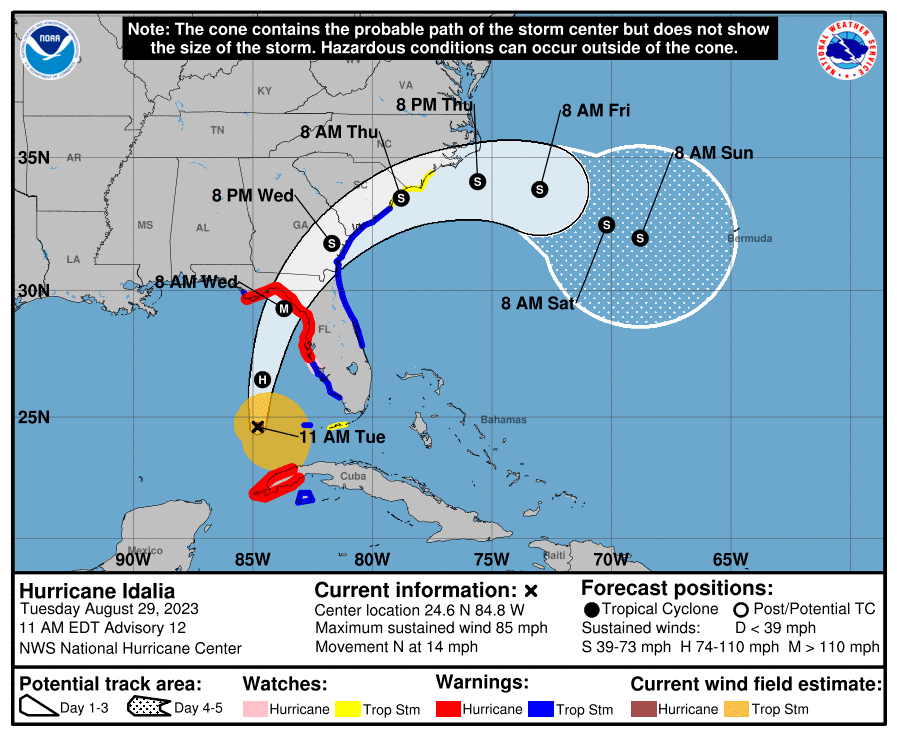
Idalia strengthened to a Category 1 hurricane overnight, but is expected to come ashore in Florida as a Category 3 system with sustained winds of up to 120 mph, the Associated Press reported.
Northeast North Carolina is already seeing impacts from Hurricane Franklin, which was a major Category 4 storm in the Atlantic with winds of 130 mph on Tuesday afternoon. The storm will remain far offshore, but is creating hazardous ocean conditions with life-threatening rip currents and large breaking surf, Dare County Emergency Management said in a news release.
Hurricane Idalia’s forecast remained dynamic Tuesday afternoon, with impacts to the Outer Banks still unknown, the release said. The storm is expected to move off the East Coast into the Atlantic Ocean after making landfall as a major hurricane in Florida on Wednesday.
The National Weather Service forecast for the Outer Banks calls for “significant rain,” high winds and minor storm surge inundation.
“Most impacts will be realized on Hatteras Island based on the current forecast track. Impacts are anticipated to start late Wednesday, August 30, 2023, into Thursday, August 31, 2023, so now is the time to prepare,” Dare County’s release said.
The N.C. Department of Transportation’s Ferry Division on Tuesday suspended Ocracoke Express passenger ferry service for Wednesday and warned travelers expect statewide impacts to ferry schedules.
“All other routes will suspend operations if and when conditions worsen,” the ferry division said in a news release.
The governor’s office released the following tips to prepare for the storm:
- Have multiple ways to receive emergency information, including watches and warnings. Make sure emergency alerts are enabled on a cell phone and download a weather app.
- Have an emergency plan. Know where to go if there’s a need to evacuate. Make a plan to stay with family, friends or at a hotel. Public shelters should be a last resort.
- Gather some emergency supplies or refresh an emergency kit. Visit ReadyNC.gov for info on how to build an emergency kit.
- If people live near or are visiting the coast, be aware if you are located in a coastal evacuation zone. Visit KnowYourZone.nc.gov to see if you are located in a predetermined evacuation zone.