The last three chapters cover DIVARTY’s role in stage-setting for the cease-fire negotiations, the interminable purgatory of post-operations reconstitution, and, ultimately, the tedious and bureaucratic—but joyous—redeployment home. An artillery commander’s role in setting conditions for General Schwarzkopf’s meeting with the Iraqis at Safwan airfield offers a useful metaphor for the entire conflict. The artillery commander makes an offer that the Iraqis occupying Safwan could not refuse: “I regret to inform you that if you do not leave by 1600 hours, I will be forced to kill your soldiers.”[4]
The author occasionally repeats an anecdote or order of battle detail, but it does not detract from the narrative; as a memoir, Desert Redleg reveals the generational nostalgia of a late Cold War-era soldier and the pride of being affiliated with the storied history of the Big Red One. Lingamfelter is also clear about his goal in correcting a perceived historical slight by telling “a story not addressed in other works of this nature, specifically, the performance of the Field Artillery in Desert Storm” In his view, the hype surrounding the great Left-Hook maneuver, the rapid advance of mechanized infantry and armored units into Iraq, and the amplified air campaign with made-for-TV bomb-camera footage effectively diminished the contributions of the “king of battle.” Even the Iraqis take some of the blame for disrespecting the king by being a “feckless opponent.”[5] While such branch or service jealousies may be inevitable, it seems an awkward diversion from the polished prose that proceeds and follows it.
The final chapter, “Retrospective and Reality—Did We get the Job Done?” is the weakest. Most of the entries are dedicated to a general lessons-learned survey of the war’s specific tactical and operational implications; all seem logical—if the goal were to create a better Desert Storm force. And while not surprising in a memoir, it risks fixing the future context to the one in the past. Perhaps this is the inevitable limitation of all lessons-learned efforts that are easier to collect than to apply to the context and character of the next war. The author also argues, “Saddam was ripe for the taking, and we were poised to accomplish the mission.”[6] This musing about the road not taken is interesting because (as opposed to other such counterfactual histories) there is evidence for how such an operation might have unfolded. The late Colin Gray sums it up well: “Frequently it is just assumed that a heap of anticipated tactical victories will assume an operational significance that must, miraculously almost, produce the desired strategic result. It should be needless to add that this approach to the use of force for policy ends is almost criminally irresponsible, even though it can succeed occasionally.”[7] Needless to say, I am unconvinced that simply marching to Baghdad in 1991 would have somehow overcome the policy, strategy, and operational planning failures that were manifest in Operation Iraqi Freedom in 2003.
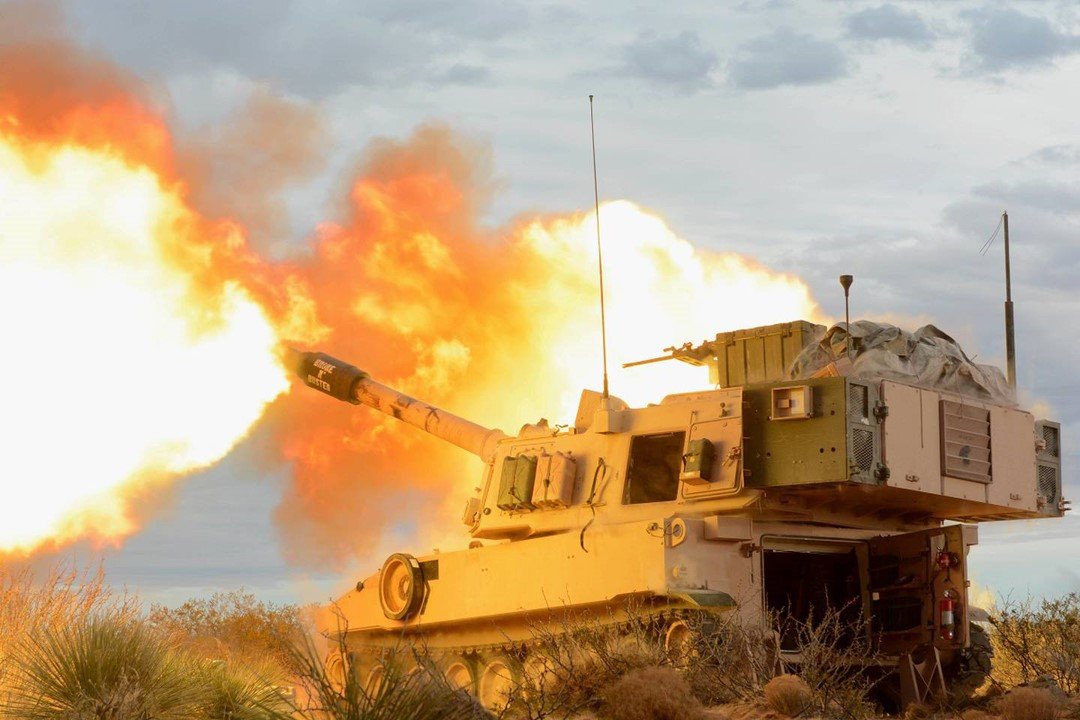
Notwithstanding the somewhat limited value of the book’s final chapter, military history (including memoirs like this one) plays a general and highly utilitarian role in the profession of arms. A soldier’s study of other combatants’ past ordeals is essential if one is to avoid the limitations of one’s lived experiences. It is perhaps not too great an exaggeration to say that the generation of Redlegs after 1991 saw a decline in their relative operational value, and as a measure of relative role, the prestige of artillery. Artillery may have still been the “king” but the scale and nature of its kingdom changed after 1991. The experiential gap between the kind of large-scale artillery deployment and employment described in Desert Redleg and, the short march-up to Baghdad in 2003 excepted, most of the operational artillery experience of the past 30 years is significant. A decade of fire support to co-called Military Operations Other Than War, followed by almost two decades of counterinsurgency and counterterrorism operations has generated creative but relatively small-scale solutions (and associated experiences) to the indirect-fire challenges of the 21st Century. One need only examine artillery’s role in the ongoing war in Ukraine and rumors of a potential Great Power war to appreciate the value of the insights that an earlier generation might offer. Vicariously experiencing the challenges of deploying and employing artillery at scale (at one point the Big Red One’s DIVARTY controlled ten battalions of rocket and mixed tube artillery) may, if considered in today’s context, help a new generation of Redlegs to wrestle with the question: “Are we ready?”