If you have ever put an addition on your home, you know how onerous obtaining the needed permits can be. Energy infrastructure projects have price tags in the millions rather than thousands. Nevertheless, they too are slowed by permit procedures.
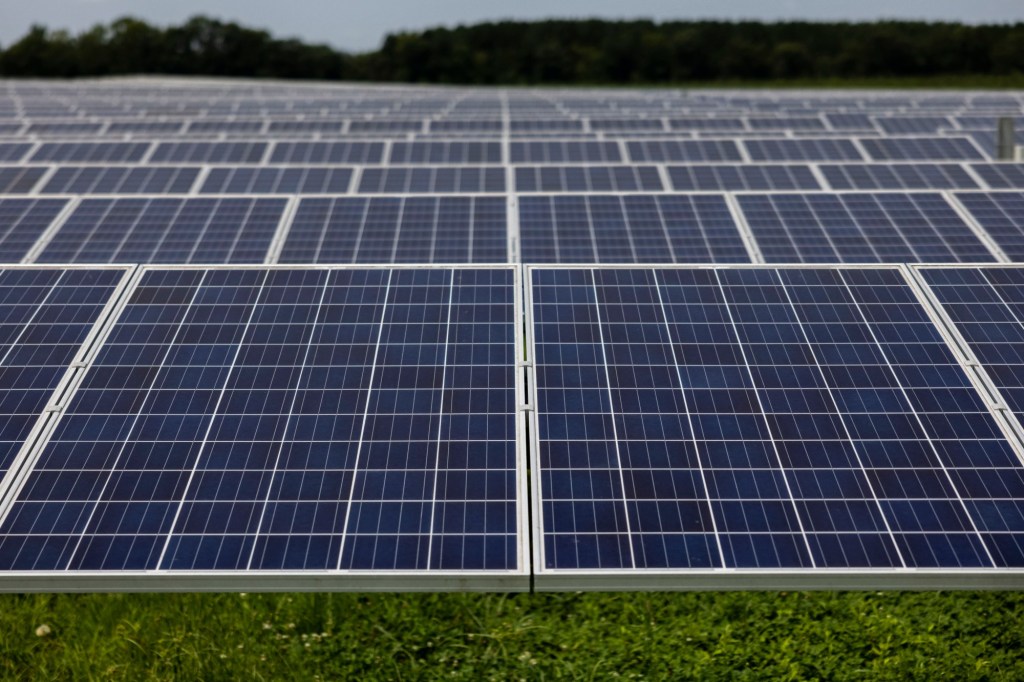
The vast majority of energy infrastructure projects involve renewable energy, not fossil fuels, and the most urgent are new electricity transmission lines. Transmission lines link renewable energy sources, such as wind and solar, to demand centers. Both wind and solar require a lot of land that can be cost prohibitive closer to demand centers. Currently it takes 10 years or more to complete a new transmission line and about half that time is getting through the federal permit process.
The current growth rate for new transmission lines is 1% per year, and if that pace doesn’t increase, only 20% of clean energy projects in the works will come online soon enough to meet our goals of cutting greenhouse gas emissions under the Paris Agreement. Any effort to reduce fossil fuel use requires replacing carbon energy with carbon-free energy.
Much of the need in the United States involves getting wind power and solar power from the heartland to the coasts, but here in Virginia the electricity resources of offshore wind are likely to require more transmission lines. Construction of these lines will employ many, but more importantly, will make possible the jobs at the renewable energy projects.
The U.S. Chamber of Commerce has put forth four principles that should be followed: 1) predictability, so that clean energy project investors can have a degree of certainty that the rules of the game won’t change midstream; 2) efficiency, so that multiple agencies at all levels of government can act quickly and simultaneously rather than slowing down the process; 3) transparency, so that stakeholders know where things are in the process; and 4) early stakeholder and community input.
The current permitting process is governed by two acronyms: NEPA and FERC. NEPA is the National Environmental Policy Act, signed into law on Jan. 1, 1970. Using the NEPA process, agencies evaluate the environmental and related social and economic effects of proposed actions. The Federal Energy Regulatory Commission has jurisdiction over pipelines that run across multiple states. However, there is no such agency for electricity transmission lines. Increasing FERC’s role in those transmission lines that cross a region in conjunction with the local regional authorities is an important component of speeding up the permitting process. FERC and NEPA are not equipped to handle permitting quickly enough. It is possible to fix this, and to do so while improving the timeliness and thoroughness of community input.
The recent Fiscal Responsibility Act, which raised the debt ceiling, contained some provisions that move us in the right direction. These provisions include having one lead agency that supervises cooperating agencies’ preparation of documents and review schedules. Procedures to allow project sponsors to prepare environmental assessments (EA) and environmental impact statements (EIS) with the agency doing the review keep the process transparent and timely. A two-year time limit for EISs and a one-year time limit for EAs is in place unless the agencies negotiate an extended deadline with applicants. Also, agencies may rely on prior environmental documents within five years if the circumstances have not substantially changed.
Even with these changes there remains an urgent need for additional reform. As the Bipartisan Policy Center says, “Both Democrats and Republicans have incentive to pursue a bigger, more comprehensive permitting bill even with the bipartisan provisions included in the Fiscal Responsibility Act of 2023.” Neither political party will gain all they desire from enacting this reform, but it is an essential component of our climate survival strategy. Please contact your congressional delegation and let them know that now is the time for permitting reform in order to achieve job creation and climate survival.
Perry Lindstrom of Arlington is a volunteer on the Citizens’ Climate Lobby electricity team. He was previously the lead subject matter expert on energy-related carbon dioxide with the U.S. Energy Information Administration.