Home Blog Page 77

Niger’s president vows democracy will prevail after mutinous soldiers detain him and declare a coup – Daily Press

0

By SAM MEDNICK (Associated Press)

NIAMEY, Niger (AP) — Niger’s president defiantly declared Thursday that democracy would prevail, a day after mutinous soldiers detained him and announced they had seized power in a coup over the West African country’s deteriorating security situation.

While many people in the capital of Niamey went about their usual business, it remained unclear who was in control of the country and which side the majority might support. A statement tweeted by the army command’s account declared that it would back the coup in order to avoid a “murderous confrontation” that could lead to a “bloodbath.” It was not possible to confirm that the statement was genuine.

Meanwhile, President Mohamed Bazoum — who was elected in 2021 in Niger’s first peaceful, democratic transfer of power since its independence from France and is a key ally of the West — appeared to have the backing of several political parties.

“The hard-won achievements will be safeguarded. All Nigeriens who love democracy and freedom will see to it,” Bazoum tweeted early Thursday morning.

Foreign Minister Hassoumi Massoudou issued a similar call on news network France 24, asking “all Nigerien democratic patriots to stand up as one to say no to this factious action.”

He demanded the president’s unconditional release and said talks were ongoing.

U.N. Secretary-General Antonio Guterres, who spoke to Bazoum by phone on Wednesday, said in a statement that he was “extremely worried” about the situation in Niger and warned of the “terrible effects on development” and civilians due to “successive unconstitutional changes of government in the Sahel region.”

The Economic Community of West African States regional grouping sent Benin President Patrice Talon to lead mediation efforts.

Bazoum is a key ally in the West’s efforts to battle jihadists linked to al-Qaida and the Islamic State group in Africa’s Sahel region. Extremists in Niger have carried out attacks on civilians and military personnel, but the overall security situation is not as dire as in neighboring nations.

The fight against extremism in the region has become a major arena in which the West and Russia have vied for influence.

Bazoum was seen by many as the West’s last hope for partnership in the Sahel after Mali turned away from former colonial power France and instead sought support from the Russian mercenary group Wagner. Wagner appears to be making inroads in Burkina Faso as well.

Western countries have poured aid into Niger, and U.S. Secretary of State Antony Blinken visited in March, seeking to strengthen ties. American, French and Italian troops train the country’s soldiers, while France also conducts joint operations.

But the threat to Bazoum has raised concerns that Niger could also turn away from the West.

On Thursday, several hundred people gathered in the capital and chanted support for Wagner while waving Russian flags. Later, they began throwing rocks at a passing politician’s car.

“If Mohamed Bazoum resigns from the presidency, Niger will probably move to the top of the list of countries where the Wagner Group will seek to expand,” said Flavien Baumgartner, an Africa analyst at Dragonfly, a security and political risk consultancy.

Wagner already had its sights set on Niger, in part because it’s a large producer of uranium sought after by Russia. But Bazoum posed an impediment because of his pro-French and pro-Western stance, said Baumgartner.

Wagner’s head, Yevgeny Prigozhin, weighed in on Thursday, describing the developments as part of Niger’s fight against the “colonizers.”

“It effectively means winning independence. The rest will depend on the people of Niger, on how efficient they could govern,” Prigozhin, who led a brief mutiny against the Kremlin last month, said in a statement.

Underscoring the importance of Niger to the West, Blinken said Thursday that he had spoken with the president, saying that he “made clear that we strongly support him as the democratically elected president of the country.”

Blinken, who was in New Zealand, repeated the U.S. condemnation of the mutiny and said his team was in close contact with officials in France and Africa.

On Wednesday morning, members of the presidential guard surrounded Bazoum’s house and detained him.

The mutinous soldiers, who call themselves the National Council for the Safeguarding of the Country, took to state television and announced they had seized control because of deteriorating security and poor economic and social governance in the nation of 25 million people. They said they had dissolved the constitution, suspended all institutions, and closed all the borders.

The coup was reportedly sparked because Bazoum was allegedly planning to fire the head of the presidential guard, Gen. Omar Tchiani, Niger analysts say. Military experts say some of the people who appeared on state television were high-ranking officers, including Gen. Moussa Salaou Barmou, the head of Niger’s special forces who has a strong relationship with the United States.

According to someone close to the president who spoke on condition of anonymity because they were not authorized to speak about the situation, the president has not and will not resign and is safe in his residence.

In a statement Wednesday, several political parties expressed their support for him, calling the coup “suicidal and anti-republican madness.”

The “country, faced with insecurity, terrorism and the challenges of underdevelopment, cannot afford to be distracted,” they said. Protesters also came out in support of Bazoum that day.

The international community strongly condemned the attempted takeover in Niger, which has experienced multiple coups since independence in 1960.

French Foreign Minister Catherine Colonna tweeted that France is concerned about the events in Niger and following the situation closely. France “firmly condemns any attempt to take power by force,” the minister said.

U.N. Human Rights chief Volker Türk called for Bazoum’s release and said “all efforts must be undertaken to restore constitutional order and the rule of law.”

Russia also called for the president’s release and Foreign Ministry spokeswoman Maria Zakharova said the country wants to see “a speedy resolution of this internal political crisis.”

___

This story has been updated to correct that Benin President Patrice Talon is not the head of ECOWAS. He was tapped as their mediator.

___

Associated Press reporters Tracy Brown in Washington, D.C.; John Leicester in Paris; and Vladimir Isachenkov in Moscow contributed to this report.

Biden announces an advanced cancer research initiative as part of the bipartisan ‘moonshot’ effort – Daily Press

0

By ZEKE MILLER (AP White House Correspondent)

WASHINGTON (AP) — President Joe Biden’s administration on Thursday announced the first cancer-focused initiative under its advanced health research agency, aiming to help doctors more easily distinguish between cancerous cells and healthy tissue during surgery and improve outcomes for patients.

The administration’s Advanced Research Projects Agency for Health, or ARPA-H, is launching a Precision Surgical Interventions program, seeking ideas from the public and private sectors to explore how to dramatically improve cancer outcomes in the coming decades by developing better surgical interventions to treat the disease.

ARPA-H is modeled after the military-focused DARPA, which spawned the internet and GPS. The administration hopes the new investment will yield tools that will help surgeons avoid healthy nerves and blood vessels, while ensuring they can remove all cancerous cells.

ARPA-H, along with the administration’s “cancer moonshot,” is a key part of Biden’s “unity agenda” announced during his 2022 State of the Union address to bring Washington together on a bipartisan basis to combat cancer, improve veterans’ health and make mental health more accessible.

The initiative could markedly improve cancer treatments and make scientific breakthroughs that have as yet unknown applications, said Arati Prabhakar, the director of the White House Office of Science and Technology.

“What’s true is that many cancer treatments still start with surgery,” she told The Associated Press in an interview. “So being really smart and attacking and developing new technology to make that first step better could really revolutionize how we are able to treat cancer for so many Americans.”

Prabhakar, a former director of DARPA, said most federal research dollars are designed to go to university or government labs, while ARPA-H programs will search more broadly.

“They are just dead focused on those goals, and whoever it takes to get there is who they’ll be trying to make sure they bring to the table,” she said. “What you’re looking for is the quality of the ideas and then the ability to really be bold and fearless and experimenting and then start prototyping in the real world.”

The agency is hosting an event in Chicago in September for interested researchers with the aim of quickly identifying and approving projects.

Prabhakar acknowledged that the ARPA-H model entails risks, but she said that even in failure most projects have significant payoffs.

“The mission is to reach for things that aren’t that obvious or feasible today — and to do that, you have to take risks,” she said. “The process allows you to explore things that could have a bigger impact if they do work and very often what I have seen is that the overall program succeeds even though some of the individual pieces don’t succeed.”

The Department of Veterans Affairs on Thursday is also announcing that veterans exposed to toxic burn pits during their service will be able to access breast cancer risk assessments and mammograms regardless of their age or if they are enrolled in VA healthcare. And on Tuesday, the department announced that it would study the relationship between deployed servicemembers’ toxic exposures and additional cancers.

ARPA-H has also placed an open call for other research objectives, said Danielle Carnival, the director of the White House cancer moonshot, calling the agency’s work a “central pillar” of the administration’s plans to meet its goals of reducing mortality and improving outcomes from cancer.

“I would expect some really great ideas and new projects to come out of that call,” she said.

White House deputy chief of staff Bruce Reed said the ARPA-H announcement helps meet Biden’s efforts to show “that government can still work, both sides can come together, and we can get things done.”

“Mental health, cancer, veterans, our efforts on fentanyl, are all priorities that affect everyone without regard to party,” Reed said.

Kids’ books about sea creatures

0

Summer is a great time for beach trips, splashing in the sun and enjoying the magic of the ocean. For anyone who prefers to stay cool and dry, however, books about watery wonders are the perfect thing for a hot summer day.


Candlewick

“Great White Shark” by Claire Saxby, illustrated by Cindy Lane.

“Great White Shark” by Claire Saxby, illustrated by Cindy Lane. (Ages 5 through 8. Candlewick Press. $18.99.)

Cindy Lane’s sun-dappled illustrations — created with seawater and natural pigments as well as watercolors, pastel, and digital effects — offer an alluring view of the great white shark cruising through life.

The text is as elegant as a curved fin, offering day-in-the-life moments as well as background information about the star of this story: “She is a silent and powerful submarine and follows her own maps,” hunting, swimming, and then bearing shark pups who venture off to begin their own solitary, fascinating lives.

___

Cover of "Behold the Octopus!"

Candlewick

“Behold the Octopus!” by Suzanne Slade, illustrated by Thomas Gonzalez.

“Behold the Octopus!” by Suzanne Slade, illustrated by Thomas Gonzalez. (Ages 4 through 8. Peachtree. $18.99.)

In “Behold the Octopus!” the cephalopod’s slick, undulating body seems almost to crawl off the page, brought to gorgeous life by Thomas Gonzalez’s pastel and colored-pencil illustrations.

Suzanne Slade’s poetic text offers both an appreciation of how the octopus’s “eight long arms swirl and curl through salty seas” and clearly written, intriguing facts about this versatile creature’s life. Slade explores the octopus’s boneless physique, mimicry, and hunting and problem-solving skills, and marvels in its overall strangeness to human eyes and minds.

___

Cover of "A is for Australian Reefs"

Candlewick

“A is for Australian Reefs” by Frané Lessac.

“A is For Australian Reefs” by Frané Lessac. (Ages 5 through 8. Candlewick. $18.99.)

From Australian reefs to zebra seahorses and every scuttling, swimming, gliding, gobbling creature and bustling habitat in between, Frané Lessac’s vibrantly colored A to Z pays tribute to the stunning biodiversity of Australia. Lesser known creatures, like the irukandji, a small, very venomous jellyfish, and big stars, such as the Great Barrier Reef, “so big that it can be seen from space,” all get glorious spreads.

Lessac also peppers her pages with in-depth information about reef life, climate change, and astounding underwater inhabitants such as leafy sea dragons, wobbegongs, handfish and nudibranchs, making it a joyful book to read and read again.

___

Caroline Luzzatto has taught preschool and fourth grade. Reach her at [email protected]


Regular napping is good for your brain, study finds – Daily Press

0

PITTSBURGH — A study published last month in the journal Sleep Health found that regular napping is linked to larger brain volume and could indicate anti-aging properties of napping.

While past research looked at people’s brains and sleep habits and made correlations, this study — with global collaboration including Harvard Medical School — took it one step further in analyzing participants’ genes to locate specific traits associated with napping. The Allegheny Health Network Center for Sleep Medicine thinks it’s a step in the right direction for learning more about sleep and cognition.

It is estimated that one in three U.S. adults does not get adequate sleep (an average 7 to 8 hours a night), and that around 18% of Americans have a sleep disorder. Teens need more sleep than adults, to accommodate a developing brain. Chronic poor sleep can decrease immune function and increase risk of high blood pressure, diabetes and other health conditions.

However, power naps — characterized as an intentional 15- to 30-minute nap, typically in the afternoon — can temporarily relieve the burden of a sleep deficit, and some studies have shown they have benefits for cognition.

The new study’s researchers asked people aged 40 to 69 about their power-napping habits: Did they nap regularly, sometimes or rarely? They then combed through participants’ genomes to find similarities. The study sample came from more than 300,000 people who had registered with the UK Biobank, a vast consortium of participant genetic and medical data. The National Institutes of Health’s All of Us Research Program, of which Pitt is a partner, is a similar cohort-based program but said it does not yet have the data to conduct a similar study, an NIH spokesperson said.

In those who napped regularly, they found specific genes consistent across the cohort that were associated with napping behavior, suggesting that some sleep habits are ingrained.

“Although our question is not necessarily unique, our approach is,” said Hassan Dashti, assistant investigator in anesthesia, critical care and pain medicine at Massachusetts General Hospital Research Institute, a professor of anesthesia at Harvard Medical School and an author on the study.

Variables such as disease, depression, sleep disorders and poor sleep quality might impact a person’s propensity to nap, making it hard to parse out the true reason for napping in a scientific study. But looking at genes, which a person has over their lifetime, can help rule out some of those confounders. “Relying on genetics is a powerful tool because now we can control for those variables,” said Dashti.

In addition to the napping genes shared among those who snoozed regularly, the researchers also found that those who reported napping had larger total brain volumes compared to those who only napped sometimes or not at all.

Brain volume has been a measure of overall brain health and propensity for aging in previous studies, as the aging brain tends to shrink. In this study, researchers estimated that the brain size of those who napped was protective against the equivalent to 2.6 to 6.5 years of aging.

“Napping does have a protective effect on overall brain health,” said Dashti.

The study also looked at markers of cognition, such as reaction time, visual memory and the size of a participant’s hippocampus — a region deep in the brain largely responsible for memory. Researchers did not find correlations between regular napping and these functional measures of cognition, which they said surprised them, as previous research has found benefits to napping on these measures.

Daniel Shade, medical director of the AHN Sleep Disorders Center and a board-certified sleep medicine specialist, said like any study, this one had some strengths and some flaws.

“Brain volume is nice as an anatomical finding, but it’s not a functional finding,” he said, meaning the results don’t signal that a larger brain is linked to functional changes like better reaction time or memory. “I was surprised not to see (that).” Shade was not involved in the research. He said the study was a great foundation to build upon scientific knowledge of links between sleep, napping and dementia, which more than 7 million Americans suffer from. “This is starting to show directions of where we need to go with research,” he said.

Being both a researcher and a clinician in a sleep clinic, Shade thought the genetics component was a novel addition to the study, and that it reflected in part what he sees in the clinic. “Some people have a daily nap and that’s just them, and others can’t nap,” he said. “If you don’t need to nap, you shouldn’t.”

Dashti echoed this: “Even with these findings, I would never recommend people to start napping if they don’t need it. However, if you feel the need to, napping is OK.”

It’s important to recognize, said both researchers, that power naps can’t erase chronic bad sleep.

“If you consistently sleep six hours, you’re going to accrue a sleep deficit,” said Shade. “Short naps will increase attention for a period of a few hours, but what (they) won’t do is compensate for a preexisting sleep debt.”

When we stay awake for long hours and lag on proper sleep, a chemical in our bodies called adenosine builds up, causing us to feel sleepy (caffeine is an adenosine blocker). This behavior, said Shade, also promotes a sort of proinflammatory response, as proteins called cytokines ramp up production. Napping can reduce this sleep pressure, temporarily alleviating the urge to sleep, which accrues throughout the day.

And while the genetic analysis gave more evidence that this protective napping behavior is ingrained in some people, it could also be true that people who nap regularly are able to do so based on other proffered benefits.

“They have the gene, but they also have the opportunity,” said Shade.

“Daytime napping is a privilege and a luxury,” said Dashti. “These people have a comfy bed, and they have time in the day to nap.” And this could signal that those populations are enjoying other health benefits, too.

Using the UK Biobank, study participants were only white Europeans, so there’s an opportunity to replicate the study in a more diverse cohort. Shade also suggested the possibility of a longitudinal study, looking at people’s napping habits over a period of many years and tracking who gets dementia and who doesn’t.

He was also interested to see the napping and memory aspect of the study explored further. “It would be great to see a functional correlation, but that’s probably their next step,” said Shade.

Researchers reiterated that feeling extremely sleepy throughout the day, sleeping long hours at night (typically 10 hours or more) or taking longer naps of around 2 hours could be a sign of an underlying problem that should be checked by a sleep specialist if these problems persist. Naps should be intentional, 15- to 30-minute periods.

“We don’t want to use a nap as a mechanism to compensate for poor sleep,” said Dashti.

As e-bikes proliferate, so do deadly fires blamed on exploding lithium-ion batteries – Daily Press

0

NEW YORK (AP) — The explosion early on a June morning ignited a blaze that engulfed a New York City shop filled with motorized bicycles and their volatile lithium-ion batteries. Billowing smoke quickly killed four people asleep in apartments above the burning store.

As the ubiquity of e-bikes has grown, so has the frequency of fires and deaths blamed on the batteries that power them — sparking a push to better regulate how the batteries are manufactured, sold, reconditioned, charged and stored.

Consumer advocates and fire departments, particularly in New York City, are urging the U.S. Consumer Product Safety Commission to establish national safety standards and confiscate imports that don’t comply with regulations at the border, so unsafe e-bikes and poorly manufactured batteries can be taken off the streets and out of homes.

The matter comes under discussion when the commission convenes a public hearing Thursday in Washington.

“We’ve been sounding the alarm for months,” New York City Mayor Eric Adams said a day after an exploding battery ignited the Chinatown e-bike shop fire last month. “We need real action, not only on the state level, but on the federal level.”

With some 65,000 e-bikes zipping through its streets — more than any other place in the U.S. — New York City is the epicenter of battery-related fires. There have been 100 such blazes so far this year, resulting in 13 deaths, already more than double the six fatalities last year.

Nationally, there were more than 200 battery-related fires reported to the commission — an obvious undercount — from 39 states over the past two years, including 19 deaths blamed on so-called micromobility devices that include battery-powered scooters, bicycles and hoverboards.

New York’s two U.S. Senators, Democrats Chuck Schumer and Kirsten Gillibrand, introduced legislation last month that would set mandatory safety standards for e-bikes and the batteries that power them.

Because mandatory standards don’t exist, Schumer said, poorly made batteries have flooded the U.S., increasing the risk of fires.

Earlier this year, New York City urgently enacted a sweeping package of local laws intended to crack down on defective batteries, including a ban on the sale or rental of e-bikes and batteries that aren’t certified as meeting safety standards by an independent product testing lab.

The new rules also outlaw tampering with batteries or selling refurbished batteries made with lithium-ion cells scavenged from used units.

Meanwhile, New York City officials also announced they had received a $25 million federal grant for e-bike charging stations across the city — which fire marshals hope will reduce the risk of fires.

These aren’t typical fires, said New York City Fire Commissioner Laura Kavanagh. The batteries don’t smolder; they explode.

“When they fail, they fail quite spectacularly,” said Kavanagh, who will speak at Thursday’s forum and advocate for national safety standards and stronger measures against possibly dangerous devices. “Once one of these ignites, there is a huge volume of fire, often so much so that the person in their home can’t get out and the firefighters can’t get in to get them.”

Such was the case in April when two siblings, a 7-year-old boy and his 19-year-old sister, died when a scooter battery ignited a fire in Queens.

Because of the fire hazard, some residential buildings have banned e-bikes. Last summer, the New York City Housing Authority sought to prohibit tenants in all of its 335 developments from keeping or charging e-vehicles in their units, only to back down a few months later after protests from delivery workers.

Use of motorized bicycles grew dramatically in the city during the COVID-19 pandemic as homebound people turned more to food delivery workers for meals and groceries.

With the rash of fires, delivery workers like Lizandro Lopez say they are now more mindful about precautions.

“As soon as the battery is charged, I disconnect it. You shouldn’t leave it charging for too long,” Lopez told The Associated Press in Spanish, “because if you leave it on there too long, that’s when you can cause a fire.”

Los Deliveristas Unidos, which represents app-based delivery workers in the New York area, estimates that fewer than 10% of e-bikes sold in the city have been deemed safe by a third-party evaluator, such as UL Solutions, a product testing company that certifies safety compliance for a host of electrical products, including Christmas lights and televisions.

E-bike batteries rely on the same chemistry to generate power as the lithium-ion batteries in cellphones, laptops and most electric vehicles — products that were initially prone to overheating.

Tighter regulations, safety standards and compliance testing drastically reduced the risk of fires in such devices, according to Robert Slone, the senior vice president and chief scientist for UL Solutions.

The same can happen with e-bike batteries, he said, if they are made to comply with established safety standards.

“We just need to make them safe, and there is a way to make them safe through testing and certification,” Slone said, “given the history that we’ve seen in terms of fires and injuries and unfortunately, deaths as well — not just in New York, but across the country and around the world.”

In London, the fire brigade says lithium batteries are the city’s fastest growing fire risk, with one fire erupting about every two days. Last year, there were a total of 116 fires involving e-bikes and e-scooters. At least one death has been attributed this year to an overheated battery.

In San Francisco, there have been at least 21 battery fires so far this year — compared with just 13 battery-related fires in 2017, according to an analysis by the San Francisco Chronicle.

Last year, some 1.1 million e-bikes were imported into the U.S., according to the Light Electric Vehicle Association, an industry group. In 2021, more than 880,000 e-bikes came into the country — about double from the year before and triple the number in 2019.

Many of the batteries now on the road are aftermarket products that are cheaply made and popular with delivery workers because of their lower prices.

“But that product is so cheap because it hasn’t gone through those design and testing. … It doesn’t meet a standard, so that’s why they’re inexpensive,” said Matt Moore, the general and policy council for the PeopleForBikes Coalition, which will also take part in the forum. “Even if there was a regulation, there will still be the ability of foreign sellers and manufacturers to send these products into the United States.”

___

Associated Press video journalist Ted Shaffrey and video producer Vanessa A. Alvarez contributed to this report.

Federal Reserve raises rates for 11th time to fight inflation but gives no clear sign of next move – Daily Press

0

By CHRISTOPHER RUGABER (AP Economics Writer)

WASHINGTON (AP) — The Federal Reserve raised its key interest rate Wednesday for the 11th time in 17 months as part of its ongoing drive to curb inflation. But it provided little guidance about when — or whether — it might hike rates again.

Wednesday’s move raised the Fed’s benchmark short-term rate from roughly 5.1% to 5.3% — its highest level since 2001. Coming on top of its previous hikes, the Fed’s latest action could lead to further increases in the costs of mortgages,auto loans, credit cards and business borrowing.

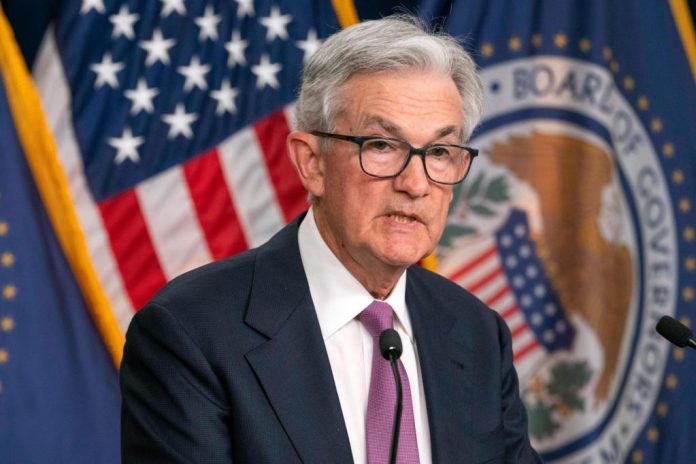
Speaking at a news conference, Fed Chair Jerome Powell was noncommittal about any expectations for future rate hikes. Since it began raising rates in March 2022, the Fed has often telegraphed its upcoming action. This time, though, Powell said the Fed’s policymakers may or may not raise rates again at their next meeting in September.

“It is certainly possible that we will raise rates again at the September meeting,” he said. “And I would also say it’s possible that we would choose to hold steady at that meeting.”

Powell sent a mixed message about whether he thinks the Fed will eventually need to further raise rates or instead just keep the current level of rates in place for a prolonged period.

“It was about as clear as mud, and I think that was the point,” said Diane Swonk, chief economist at accounting giant KPMG. “They don’t want to declare victory too soon. They know inflation moves in fits and starts.”

Powell acknowledged that the economy has proved surprisingly resilient despite the Fed’s rapid rate hikes, with growth continuing and companies still adding jobs. He also revealed that the Fed’s staff economists no longer foresee a recession. In April, the minutes of the central bank’s March meeting had said that staff economists envisioned a “mild” recession later this year.

And he said he still thinks that a “soft landing” — in which inflation would fall back to the Fed’s 2% target, without causing a deep recession — is still possible.

“My base case is that we will be able to achieve inflation moving back down to our target without the kind of really significant downturn that results in high levels of job losses,” the Fed chair said. “We do have a shot at a soft landing.”

Though inflation has reached its slowest pace in two years, Wednesday’s hike reflects the concern of Fed officials that the economy is still growing too fast for inflation to fall back to their 2% target. With consumer confidence hitting its highest level in two years, Americans keep spending — crowding airplanes, traveling overseas and flocking to concerts and movie theaters. Most crucially, businesses keep hiring.

Year-over-year inflation in June was 3%, according to the government, down sharply from a peak of 9.1% in June 2022. Yet a “core” inflation measure that is preferred by the Fed, which excludes volatile food and energy costs, was still up 4.6% in May from a year earlier.

Powell said he welcomed, in particular, a milder-than-expected report on inflation for June. But he said additional such data would be needed to show that inflation is declining in a sustained way.

“We’re going to be careful about taking too much signal from a single reading,” he said.

The key question swirling around the Fed is whether Wednesday’s increase will or won’t be its last. Powell made clear that the fight against inflation isn’t over. The Fed’s rate hikes, he said, have “not been restrictive enough for long enough” to exert their full effect.

“We want core inflation to be coming down,” Powell said. “Core inflation is still pretty elevated. And so we think we need to stay on task.”

He stressed that the Fed’s policymakers will assess a range of incoming economic data in determining what action, if any, to take at their next meeting. When the officials last met in June, they signaled that they expected to raise rates twice more. By the time they meet again Sept. 19-20, Powell noted, they will have much more data in hand: Two more inflation reports, two reports on hiring and unemployment and updated figures on consumer spending and wages.

Some economists think the Fed might decide to forgo a rate increase in September before weighing a possible hike at its meeting in November.

In recent weeks, several Fed officials have said they worry that the still-brisk pace of job growth will lead workers to demand higher pay to make up for two years of inflationary prices. Sharp wage gains can perpetuate inflation if companies respond by raising prices for their customers.

At the same time, the steady easing of inflation pressures has lifted hopes that the Fed can bring down inflation without a recession.

Durable consumer spending has been a key driver of growth. Many Americans still have savings stemming from the pandemic, when the government distributed stimulus checks and people saved by spending less on travel, restaurants and entertainment.

And hiring has remained healthy, with employers having added 209,000 jobs in June and the jobless rate reaching an ultra-low 3.6%. That’s about where it was when the Fed began raising rates in March 2022 — a sign of economic resilience that almost no one had foreseen.

Some Fed officials, including Christopher Waller, an outspoken member of its Board of Governors, and Lorie Logan, president of the Federal Reserve Bank of Dallas, have said they think the cumulative effects of the previous rate hikes have already been baked into the economy. With inflation still above the Fed’s target, they think additional hikes may be needed to further slow price pressures.

Some analysts caution that the drop in year-over-year inflation from roughly 9% to 3% was the relatively easy part. Getting it down to the Fed’s 2% target will be harder and take longer.

Other experts say they think the recent mild inflation readings can be sustained. Rental cost increases, which have already fallen, should drop further as more apartment buildings are completed.

Though the Fed began tightening credit before central banks in many other developed countries did, most others are now following suit. The European Central Bank is expected to announce its own quarter-point rate hike on Thursday. Though inflation has declined in the 20 countries that use the euro, it remains higher there than in the United States.

The Bank of Japan is expected to keep its policies unchanged when it meets next week even though prices there are creeping higher after roughly two decades of declining prices. The Bank of England has been among the most aggressive in Europe, having raised its key rate last month by a half-point to a 15-year high of 5%. Year-over-year inflation in the U.K. reached a painful 8.7% in May.

Sinead O’Connor’s death brings tributes from Chuck D, Bryan Adams, Billy Corgan and Ice T – Daily Press

0

Brian Niemietz | New York Daily News

The death of Irish singer Sinead O’Connor at age 56 was met with sorrow by fans, politicians, athletes and musical contemporaries on both sides of the pond.

In remembrance of the international star, Public Enemy rapper Chuck D from Flushing Queens cited his band’s 1987 single “Bring the Noise.”

“Rest In Beats and PowEr Sinead O Connor who always Brought The Noise,” Chuck D posted on social media Wednesday.

NEW YORK, NY – FEBRUARY 23: Musician Sinead O’Connor performs at the Highline Ballroom on February 23, 2012 in New York City. (Photo by Jason Kempin/Getty Images)

His bandmate Flavor Flav called O’Connor “a legend that’s gone too soon.”

Newark, N.J. rapper Ice T also brought local flavor to a long list of online tributes to the politically active Dublin native.

“Respect to Sinead….. She stood for something… Unlike most people…,” he tweeted.

“Cuts Like a Knife” Canadian singer Bryan Adams burst onto the international music scene along with O’Connor in the 1980s.

RIP Sinéad O’Connor, I loved working with you making photos, doing gigs in Ireland together and chats,” he tweeted. “All my love to your family.”

Irish singer Sinead O'Connor performs.
Irish singer Sinead O’Connor performs on August 11, 2013 in Lorient, western of France during the Inter-Celtic Festival of Lorient. AFP PHOTO FRED TANNEAU (Photo by Fred TANNEAU / AFP) (Photo credit should read FRED TANNEAU/AFP via Getty Images)

Ireland’s President Michael D. Higgins remembers O’Connor as a national treasure.

“What Ireland has lost at such a relatively young age is one of our greatest and most gifted composers, songwriters and performers of recent decades, one who had a unique talent and extraordinary connection with her audience, all of whom held such love and warmth for her,” he tweeted.

Irish politico and Sinn Féin vice-president Michelle O’Neill mourned that “Ireland has lost one of our most powerful and successful singer, songwriter and female artists.”

Fellow Dublin native and MMA fighter Conor McGregor said he “lost a friend” when O’Connor died.

“Sinead’s music will live on and continue to inspire!” he tweeted. “Rest In Peace, Sinead you are home with your son I am sure.”

Singer Sinead O'Connor poses next to a cover of one her CDs.
NEW YORK – JUNE 26: Singer Sinead O’Connor makes an appearance at Borders to promote her new 2-CD release “Theology” on June 26, 2007 in New York City. (Photo by Evan Agostini/Getty Images)

Smashing Pumpkins frontman Billy Corgan remembered his fellow rockstar for her willingness to do things that weren’t always popular, like tearing up a photo of Pope John Paul II — who she called “the real enemy” — during a 1992 appearance on “Saturday Night Live.”

“Fiercely honest and sweet and funny, she was talented in ways I’m not completely sure,” he wrote on social media. “But Sinead stands alone as a figure from our generation who was always true to the piercing voice within and without.”

As of Wednesday evening, O’Connor’s cause of death has not been reported.

The “Nothing Compares 2 U” singer had been outspoken about her grief in the wake of her son’s death by suicide in January 2022. Shortly after, she was briefly hospitalized following a string of tweets in which she said she planned to “follow my son.”


Virginia High School League will not change its policy for trans athletes, despite Youngkin’s new guidelines – Daily Press

0

RICHMOND (AP) — The athletics sanctioning organization that oversees most high school sports in Virginia told schools this week it has no immediate plans to change its regulations governing the participation of transgender athletes despite Republican Gov. Glenn Youngkin’s new guidance concerning trans students.

The Youngkin administration’s model policies say student participation in athletics should be determined by biological sex, rather than gender or gender identity, with “reasonable modifications” offered only to the extent required by law.

But the Virginia High School League’s executive director, John “Billy” Haun, told school leaders Monday he recommended the league’s existing policies, which allow transgender athletes to participate on teams that match their gender identity under certain conditions, not be changed.

“As the VHSL fall sport season begins this week, I am recommending the League stay with the current policy which has served us well,” Haun wrote in an advisory to school leaders. “We certainly will respect the decision of any school division as they address their policies and will continue to review this matter as we move forward and the new school year begins.”

Haun noted that when previous Democratic Gov. Ralph Northam’s administration first rolled out model policies for the treatment of transgender students in 2021, the league’s policy — in place since 2014 — similarly remained unchanged.

The policy allows for consideration of participation by trans athletes who have undergone sex reassignment before puberty or who meet certain other conditions, such as undergoing hormone therapy “in a verifiable manner and for a sufficient length of time to minimize gender-related advantages.”

A miniscule number of students participate under the policy, according to data provided by VHSL spokesman Mike McCall. Between 2014 and the 2022-23 school year, 38 trans athletes filed appeals to participate under the process, with 34 granted.

The difference between the league’s stance, which was reported earlier by The Washington Post, and the Youngkin administration’s policies will likely lead to confusion for parents and school staff, said Breanna Diaz, policy and legislative counsel for the ACLU of Virginia.

Diaz noted that the 2020 law that initially directed the Department of Education to create model policies explicitly excluded the issue of athletics from the topics the guidelines should cover.

“It really is unknown territory,” said Diaz, whose organization has been sharply critical of the new policies.

Pursuant to the law, school boards are asked to adopt policies that are “consistent with” the administration’s.

Across the state, school boards and superintendents were beginning to process and respond to the new policies, which encompass more than just athletics and were made final last week. The administration’s guidelines also address issues like the use of bathrooms and other sex-segregated facilities and increase parental notification requirements about certain discussions involving gender identity.

That process of analyzing the policies will take some time, especially since some school boards have a summer break, said Scott Brabrand, executive director of the Virginia Association of School Superintendents.

But, as expected, school leaders in some blue-leaning parts of the state have already made clear they do not plan to adhere to the Youngkin administration’s guidance. A similar dynamic played out in prior years when districts in red-leaning areas declined to adopt the Northam administration’s model policies.

“I don’t think its going to be the same exact reaction from every school district,” said Brabrand, whose organization has not taken a formal position on the matter.

The 2020 law is silent on the issue of enforcement.

“The Virginia Department of Education has fulfilled its responsibility to develop the model polices, school boards are expected to follow the law,” Youngkin spokeswoman Macaulay Porter said in a statement Wednesday.

She did not directly address a question about whether the administration viewed the VHSL’s guidance as being in conflict with the policies but said that under the 2020 law, the VHSL “does not have a role.”

The development of the new model policies in politically divided Virginia comes as many other GOP-led states move to restrict transgender students’ participation in school athletics.

At least 22 other states have enacted laws to keep transgender girls and women from playing on girls or women’s school, club or intramural sports, with a majority applying from kindergarten through college. Also, North Carolina’s Republican-controlled Legislature plans to consider overriding Democratic Gov. Roy Cooper’s veto of a related measure, and Alaska’s governor-appointed state school board was considering a ban Wednesday.

Democrats who control the Virginia Senate blocked such legislation in February.

___

Associated Press reporter John Hanna in Topeka, Kansas, contributed to this report.
General Daily Insight for July 27, 2023 – Daily Press

0

General Daily Insight for July 27, 2023

Our intuitions may guide us in strange ways at this time. Intellectual Mercury misreads whimsical Neptune, strengthening our empathy, but confusing our reactions to the emotions we’ve discovered. Mercury conjoins balanced Venus at 11:16 am EDT, bettering our luck and easing communication with each other, aiding in detangling any earlier misunderstandings. Finally, the emotional Moon moves into Sagittarius, taking some weight off of our shoulders and helping us to grow from our mistakes. We can and should commit to understanding ourselves and others.

Aries

March 21 – April 19

It’s okay to let someone be dramatic. They may have recently undergone a difficult time in life, and now want to wallow in the struggles that they’ve had to a friend who’s genuinely willing to listen. You might share in their emotions, whether laughing or crying, but do your best to take what they’re saying with a grain of salt, because it might not quite align with what really happened. This is potentially more about catharsis for them than it is about being realistic.

Taurus

April 20 – May 20

Friends and family may not understand each other at first. You might bring a new friend over to meet your family, or bring your sibling to a friend’s house for the first time, and their cultures or personalities could clash in a way that makes things awkward for you all. Luckily, you’ll likely be able to clear up any misunderstandings with some communication — as long as everyone is on board to work things out. Despite any difficult first impressions, fresh friendships can be forged.

Gemini

May 21 – June 20

Your words can make a difference for someone. You might share a story of your own past struggles, or you may be counseling someone through a difficult time in their own life, and you could be doing so in a way that is quite vulnerable or public. This person or a group of people might begin considering you a mentor. While this is a heavy responsibility, your future self will probably be happy and find fulfillment in having been brave enough to shoulder it.

Cancer

June 21 – July 22

Modern foundations are ready to be constructed where old ones have crumbled. Someone in your life may have deceived you, bringing on a reevaluation of the direction you’re going in life and the people that you’re taking with you. This can embolden you to highlight healthier friendships or relationships with family members that you weren’t as close with before, while phasing out other connections that have been revealed to be toxic. Now that you know what to look out for, you’re on a better path.

Leo

July 23 – August 22

You may be acting more obsessive than usual. Your focus might be on a single person or subject to a strong degree, wherein you rarely take your mind off of this fixation. This can cause you to slip in other areas of life — plus, the object of your concentration or a close peer could worry like you’re being too intense or driven when it comes to how you’re prioritizing your time and energy. Too much of anything is not good for you.

Virgo

August 23 – September 22

Confusion could cloud your current communication with someone. Perhaps they’re having trouble putting their feelings into words, or maybe you’re put off by their cryptic phrasing. They might not feel confident enough to approach you with this information directly, as it could be embarrassing or stressful for them to say. Unfortunately, this can push you to act in seemingly nonsensical ways as you attempt to interpret what they’re implying. You’re not a mind reader, and you don’t have to be. Try asking for clarification.

Libra

September 23 – October 22

Someone who isn’t on your side may reveal themselves amongst your friends. This person might show themselves when they criticize you but disguise it as a joke, or you could overhear them complaining about you behind your back. It can be difficult to reconcile that this person is not showing up for you, but ignoring it and allowing them to stay in your circle may cause issues not too much farther down the road. Those who aren’t supportive don’t belong in your support system.

Scorpio

October 23 – November 21

You might be about to learn something new regarding an authority figure. Whether this person is your parent, grandparent, boss, or just someone who’s more mature than you, the universe is showing you how to listen as they share their words of wisdom with you. They may not have been so forthcoming with you before, so this can also clear up misperceptions that you had about them. Be open to their vulnerability by giving them a chance to share their heart.

Sagittarius

November 22 – December 21

There is room for emotional growth right now. You might feel like you can’t get past a certain grudge that you hold or fear that you carry, and are possibly struggling to enjoy the present while you’re trapped by your past. This can trick you into repeating old history, as you could be unconsciously seeking it out in order to right whatever wrongs were done. Take steps toward freeing yourself from the past, because you deserve to move out of the darkness!

Capricorn

December 22 – January 19

Secrecy may be causing confusion. Someone in your life could be leaving you out of the loop, not telling you what’s been going on with their life or what’s happening in their mind. Because of this, you might end up making plans that will not come to fruition or expecting things from them that they’re not planning to supply. Let them know that you would rather hear their intentions directly from them so that you won’t be disappointed if they don’t align with yours.

Aquarius

January 20 – February 18

Your confidence could be knocked by a friend. Someone special to you may critique you or even judge someone else for something that they don’t know you do as well, leading you to doubt yourself. You might feel like there is a rift between you because of their views, especially if the criticism was far more pointed than constructive. Having a conversation with them about how they made you feel instead of shutting them out is a good step to mend the bond between you.

Pisces

February 19 – March 20

You’re learning to shut out the world’s noise. There may be people who don’t know you well with a bias against you — they potentially feel that you aren’t the right person for a job or a friend group. This is likely their own projection onto you and not something that you’ll be able to easily change, so all you can do is be yourself! Trying to change who you are because of someone you don’t know could speedily set you up for failure.

Hunter Biden’s plea deal on hold after federal judge raises concerns over the terms of the agreement – Daily Press

0

By CLAUDIA LAUER, RANDALL CHASE and COLLEEN LONG (Associated Press)

WILMINGTON, Del. (AP) — The plea deal in Hunter Biden’s criminal case unraveled during a court hearing Wednesday after a federal judge raised concerns about the terms of the agreement that has infuriated Republicans who believe the president’s son is getting preferential treatment.

Hunter Biden was charged last month with two misdemeanor crimes of failure to pay more than $100,000 in taxes from over $1.5 million in income in both 2017 and 2018 and had been expected to plead guilty Wednesday after he made an agreement with prosecutors, who were planning to recommend two years of probation. Prosecutors said Wednesday Hunter Biden remains under active investigation, but would not reveal details.

U.S. District Court Judge Maryellen Noreika, who was appointed by President Donald Trump, raised multiple concerns about the specifics of the deal and her role in the proceedings. The plan also included an agreement on a separate gun charge — Biden has been accused of possessing a firearm in 2018 as a drug user. As long as he adhered to the terms of his agreement, the gun case was to be wiped from his record. Otherwise, the felony charge carries 10 years in prison.

The overlapping agreements created confusion for the judge, who said the lawyers needed to untangle technical issues — including over her role in enforcing the gun agreement — before moving forward.

“It seems to me like you are saying ‘just rubber stamp the agreement, Your Honor.’ … This seems to me to be form over substance,” she said. She asked defense lawyers and prosecutors to explain why she should accept the deal. In the meantime, Hunter Biden pleaded not guilty to the tax charges.

The collapsed proceedings were a surprising development in the yearslong investigation, and a resolution that had been carefully negotiated over several weeks and included a lengthy back-and-forth between Justice Department prosecutors and Biden’s attorneys.

The plea deal was meant to clear the air for Hunter Biden and avert a trial that would have generated weeks or months of distracting headlines. But the politics remain as messy as ever, with Republicans insisting he got a sweetheart deal and the Justice Department pressing ahead on investigations into Trump, the GOP’s 2024 presidential primary front-runner.

Trump is already facing a state criminal case in New York and a federal indictment in Florida. Last week, a target letter was sent to Trump from special counsel Jack Smith that suggests the former president may soon be indicted on new federal charges, this time involving his struggle to cling to power after his 2020 election loss to Joe Biden.

Republicans claim a double standard, in which the Democratic president’s son got off easy while the president’s rival has been unfairly castigated. Congressional Republicans are pursuing their own investigations into nearly every facet of Hunter Biden’s dealings, including foreign payments.

“District Judge Noreika did the right thing by refusing to rubberstamp Hunter Biden’s sweetheart plea deal,” said House Oversight Committee chairman Rep. James Comer, R-Ky. “But let’s be clear: Hunter’s sweetheart plea deal belongs in the trash.”

Wednesday’s hearing quickly veered into confusion, with Hunter Biden at one point answering “yes” when asked if he was pleading guilty of his own free will, before later pulling back in moving forward with the plea.

The judge said she was concerned about a provision in the agreement on the gun charge that she said would have created a role for her where she would determine if he violated the terms. She argued such a role doesn’t exist for judges; the lawyers said they were only asking for the court to play a factfinding role as a neutral party in determining if a violation happened.

“We wanted the protection of the court,” Biden’s attorney Chris Clark said.

She also raised concerns that the agreement included a non-prosecution clause for crimes outside of the gun charge.

The attorneys appeared to squabble over the deal’s terms, too, retreating to their corners to discuss the issues, before they met at the prosecutors’ table and, at one point, could be heard yelling at each other. “Well, we’ll just rip it up!” Clark was heard shouting.

The Justice Department did not immediately respond to a request for comment.

The judge also asked Biden to be more specific about his business relationships and to discuss his substance use issues as she combed through the plea agreement. She asked him to name the Ukrainian and Chinese entities referred to without name in the agreement.

She also asked him the last time he used alcohol or drugs and whether he was currently receiving treatment.

Biden answered June 1, 2019, and said he was not currently in treatment, though he did say he was in an anonymous support program for his substance abuse issues.

“Hunter Biden is a private citizen, and this was a personal matter for him,” White House press secretary Karine Jean-Pierre said. “As we have said, the president, the first lady, they love their son, and they support him as he continues to rebuild his life. This case was handled independently, as all of you know, by the Justice Department under the leadership of a prosecutor appointed by the former president, President Trump.”

President Biden, meanwhile, has said very little publicly, except to note, “I’m very proud of my son.”

___ Long reported from Washington. Associated Press writers Lindsay Whitehurst and Darlene Superville contributed to this report.