Home Blog Page 69

As work begins on the largest US dam removal project, tribes look to a future of growth – Daily Press

0

By ADAM BEAM (Associated Press)

SACRAMENTO, Calif. (AP) — The largest dam removal project in United States history is underway along the California-Oregon border — a process that won’t conclude until the end of next year with the help of heavy machinery and explosives.

But in some ways, removing the dams is the easy part. The hard part will come over the next decade as workers, partnering with Native American tribes, plant and monitor nearly 17 billion seeds as they try to restore the Klamath River and the surrounding land to what it looked like before the dams started to go up more than a century ago.

The demolition is part of a national movement to return the natural flow of the nation’s rivers and restore habitat for fish and the ecosystems that sustain other wildlife. More than 2,000 dams have been removed in the U.S. as of February, with the bulk of those having come down within the last 25 years, according to the advocacy group American Rivers.

When demolition is completed by the end of next year, more than 400 miles (644 kilometers) of river will have opened for threatened species of fish and other wildlife. By comparison, the 65 dams removed in the U.S. last year combined to reconnect 430 miles (692 kilometers) of river.

Along the Klamath, the dam removals won’t be a major hit to the power supply; they produced less than 2% of power company PacifiCorp’s energy generation when they were running at full capacity — enough to power about 70,000 homes. Though the hydroelectric power produced by dams is considered a clean, renewable source of energy, many larger dams in the U.S. West have become a target for environmental groups and tribes because of the harm they cause to fish and river ecosystems.

The project will empty three reservoirs over about 3.5 square miles (9 square kilometers) near the California-Oregon border, exposing soil to sunlight in some places for the first time in more than a century.

For the past five years, Native American tribes have gathered seeds by hand and sent them to nurseries with plans to sow the seeds along the banks of the newly wild river. Helicopters will bring in hundreds of thousands of trees and shrubs to plant along the banks, including wads of tree roots to create habitat for fish.

This growth usually takes decades to happen naturally. But officials are pressing nature’s fast-forward button because they hope to repel an invasion of foreign plants, such as starthistle, which dominate the landscape at the expense of native plants.

“Why not just let nature take its course? Well, nature didn’t take its course when dams got put in. We can’t pretend this gigantic change in the landscape has not happened and we can’t just ignore the fact that invasive species are a big problem in the west and in California,” said Dave Meurer, director of community affairs for Resource Environmental Solutions, the company leading the restoration project.

PacifiCorp built the dams starting in 1918 to generate electricity. The dams halted the natural flow of the river and disrupted the lifecycle of salmon, a fish that spends most of its life in the Pacific Ocean but returns to the chilly mountain streams to lay eggs. The fish are culturally and spiritually significant to a number of Native American tribes, who historically survived by fishing the massive runs of salmon that would come back to the rivers each year.

A combination of low water levels and warm temperatures in 2002 led to a bacterial outbreak that killed more than 34,000 fish, mostly Chinook salmon. The loss jumpstarted decades of advocacy from Native American tribes and environmental groups, culminating last year when federal regulators approved a plan to remove the dams.

“The river is our church, the salmon is our cross. That’s how it relates to the people. So it’s very sacred to us,” said Kenneth Brink, vice chairman of the Karuk Tribe. “The river is not just a place we go to swim. It’s life. It creates everything for our people.”

The project will cost $500 million, paid for by taxpayers and PacifiCorps ratepayers. Crews have mostly removed the smallest of the four dams, known as Copco No. 2. The other three dams are expected to come down next year. That will leave some homeowners in the area without the picturesque lake they have lived on for years.

The Siskiyou County Water Users Association, which formed about a decade ago to stop the dam removal project, filed a federal lawsuit. But so far they have been unable to stop the demolition.

“Unfortunately it’s a mistake you can’t turn back from,” association President Richard Marshall said.

The water level in the lakes will drop between 3 feet and 5 feet (1 meter to 1.5 meters) per day over the first few months of next year. Crews will follow that water line, taking advantage of the moisture in the soil to plant seeds from more than 98 native plant species including wooly sunflower, Idaho fescue and Blue bunch wheat grass.

Tribes have been invested in the process from the start. Resource Environmental Solutions hired tribal members to gather seeds from native plants by hand. The Yurok Tribe even hired a restoration botanist.

Each species has a role to play. Some, like lupine, grow quickly and prepare the soil for other plants. Others, like oak trees, take years to fully mature and provide shade for other plants.

“It’s a wonderful marriage of tribal traditional ecological knowledge and western science,” said Mark Bransom, CEO of the Klamath River Renewal Corporation, the nonprofit entity created to oversee the project.

The previous largest dam removal project was on Washington state’s Elwha River, which flows out of Olympic National Park into the Strait of Juan de Fuca. Congress in 1992 approved the demolition of the two dams on the river constructed in the early 1900s. After two decades of planning, workers finished removing them in 2014, opening about 70 miles (113 kilometers) of habitat for salmon and steelhead.

Biologists say it will take at least a generation for the river to recover, but within months of the dams being removed, salmon were already recolonizing sections of the river they had not accessed in more than a century. The Lower Elwha Klallam Tribe, which has been closely involved in restoration work, is opening a limited subsistence fishery this fall for coho salmon, its first since the dams came down.

Brink, the Karuk Tribe vice chair, hopes similar success will happen on the Klamath River. Multiple times per year, Brink and other tribal members participate in ceremonial salmon fishing using handheld nets. In many years, there have been no fish to catch, he said.

“When the river gets to flow freely again, the people can also begin to worship freely again,” he said.

___

Associated Press writer Eugene Johnson in Seattle contributed.
Paul Reubens, who starred as Pee-wee Herman, dies at 70 – Daily Press

0

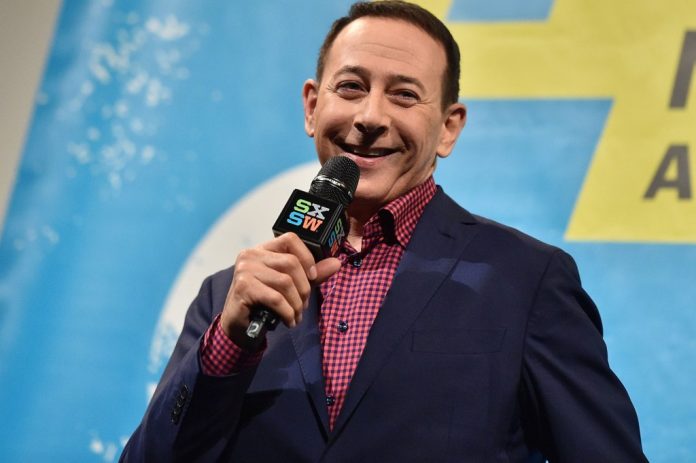
Paul Reubens, the actor best known for portraying Pee-wee Herman, died Sunday night after a private bout of cancer. He was 70.

“Please accept my apology for not going public with what I’ve been facing the last six years,” wrote Reubens in a statement posted to Instagram after his death. “I have always felt a huge amount of love and respect from my friends, fans and supporters. I have loved you all so much and enjoyed making art for you.”

“Last night we said farewell to Paul Reubens, an iconic American actor, comedian, writer and producer whose beloved character Pee-wee Herman delighted generations of children and adults with his positivity, whimsy and belief in the importance of kindness,” wrote Reubens’ estate in the caption. “Paul bravely and privately fought cancer for years with his trademark tenacity and wit. A gifted and prolific talent, he will forever live in the comedy pantheon and in our hearts as a treasured friend and man of remarkable character and generosity of spirit.”

Mar-a-Lago worker De Oliveira makes his first court appearance in Trump’s classified documents case – Daily Press

0

By ADRIANA GOMEZ LICON and ALANNA DURKIN RICHER (Associated Press)

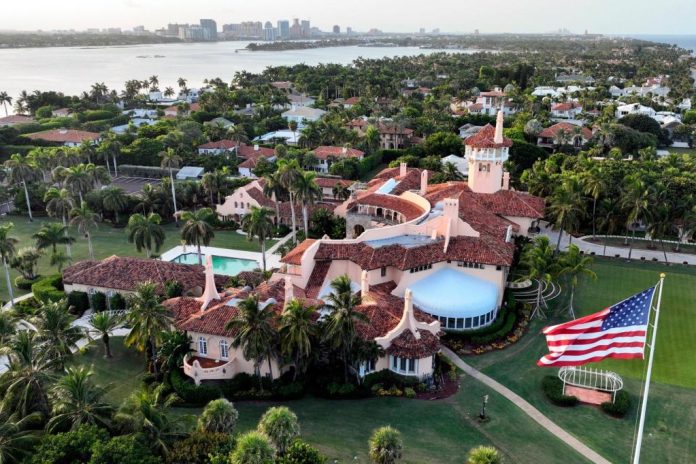
MIAMI (AP) — The property manager of Donald Trump’s Mar-a-Lago estate made his first court appearance on Monday on charges in the classified documents case against the former president but did not enter a plea because he has not found a Florida-based attorney to represent him.

Carlos De Oliveira is accused of scheming with Trump to try to delete security footage sought by investigators probing the former president’s hoarding of classified documents at his Palm Beach, Florida, club.

De Oliveira was added last week to the indictment with Trump and the ex-president’s valet, Walt Nauta, and faces charges including conspiracy to obstruct justice and lying to investigators.

A magistrate judge in Miami’s federal court read De Oliveira the charges against him and ordered him to turn over his passport and sign an agreement to pay $100,000 if he doesn’t appear in court. The judge scheduled his arraignment for Aug. 10 in Fort Pierce.

The developments in the classified documents case come as Trump braces for possible charges in another federal investigation into his efforts to cling to power after he lost the 2020 election. Trump, the early front-runner in the 2024 Republican presidential primary, has received a letter from special counsel Jack Smith indicating that he is a target of that investigation, and Trump’s lawyers met with Smith’s team last week.

Trump, who pleaded not guilty in June, Trump has denied any wrongdoing. He post on his Truth Social platform last week that the Mar-a-Lago security tapes were voluntarily handed over to investigators and that he was told the tapes were not “deleted in any way, shape or form.”

Prosecutors have not alleged that security footage was actually deleted or kept from investigators.

Nauta has also pleaded not guilty. U.S. District Judge Aileen Cannon had previously scheduled the trial of Trump and Nauta to begin in May, and it’s unclear whether the addition of De Oliveira to the case may impact the case’s timeline.

The latest indictment, unsealed on Thursday, alleges that Trump tried to have security footage deleted after investigators visited in June 2022 to collect classified documents Trump took with him after he left the White House.

Trump was already facing dozens of felony counts — including willful retention of national defense information — stemming from allegations that he mishandled government secrets that as commander-in-chief he was entrusted to protect. Experts have said the new allegations bolster the special counsel’s case and deepen the former president’s legal jeopardy.

Video from Mar-a-Lago would ultimately become vital to the government’s case because, prosecutors said, it shows Nauta moving boxes in and out of a storage room — an act alleged to have been done at Trump’s direction and in effort to hide records not only only from investigators but also from Trump’s own lawyers.

Days after the Justice Department sent a subpoena for video footage at Mar-a-Lago to the Trump Organization in June 2022, prosecutors say, De Oliveira asked an information technology staffer how long the server retained footage and told the employee “the boss” wanted it deleted. When the employee said he didn’t believe he was able to do that, De Oliveira insisted the “boss” wanted it done, asking, “What are we going to do?”

Shortly after the FBI searched Mar-a-Lago and found classified records in the storage room and Trump’s office, prosecutors say, Nauta called a Trump employee and said words to the effect of “someone just wants to make sure Carlos is good.” The indictment says the employee responded that De Oliveira was loyal and wouldn’t do anything to affect his relationship with Trump. That day, the indictment alleges, Trump called De Oliveira directly to say that he would get De Oliveira an attorney.

Prosecutors allege that De Oliveira later lied in interviews with investigators, falsely claiming that he hadn’t even seen boxes moved into Mar-a-Lago after Trump left the White House.

___

Richer reported from Boston.

New York Times hardcover bestsellers list: week ended July 15

0

Little, Brown

In its first week, Jeff Goodell’s book was at No. 6 in nonfiction.

Hardcover rankings reflect sales for the week ended July 15, which were reported on a confidential basis by vendors offering a wide range of general interest titles. Every week, thousands of diverse selling locations report their actual sales on hundreds of thousands of individual titles. The panel of reporting retailers is comprehensive and reflects sales in stores of all sizes and demographics across the United States.

An asterisk (*) indicates that a book’s sales were barely distinguishable from those of the book above. A (b) indicates that some bookstores reported receiving bulk orders.

___

FICTION

1. FOURTH WING, by Rebecca Yarros. (Red Tower) Violet Sorrengail is urged by the commanding general, who also is her mother, to become a candidate for the elite dragon riders.

LAST WEEK: 1

WEEKS ON LIST: 10

2. HAPPY PLACE, by Emily Henry. (Berkley) A former couple pretend to be together for the sake of their friends during their annual getaway in Maine.

LAST WEEK: 2

WEEKS ON LIST: 12

3. LESSONS IN CHEMISTRY, by Bonnie Garmus. (Doubleday) A scientist and single mother living in California in the 1960s becomes a star on a TV cooking show.

LAST WEEK: 3

WEEKS ON LIST: 62

4. OBSESSED, by James Patterson and James O. Born. (Little, Brown) A killer, who targets women in New York City, becomes obsessed with Michael Bennett’s daughter.

LAST WEEK: —

WEEKS ON LIST: 1

5. THE FIVE-STAR WEEKEND, by Elin Hilderbrand. (Little, Brown) After a tragedy, a popular food blogger brings friends from distinct times in her life to spend a weekend in Nantucket.

LAST WEEK: 4

WEEKS ON LIST: 5

6. THE COVENANT OF WATER, by Abraham Verghese. (Grove) Three generations of a family living on South India’s Malabar Coast suffer the loss of a family member by drowning.

LAST WEEK: 5

WEEKS ON LIST: 11

7. DEMON COPPERHEAD, by Barbara Kingsolver. (Harper) Winner of a 2023 Pulitzer Prize for fiction. A reimagining of Charles Dickens’ “David Copperfield” set in the mountains of southern Appalachia.

LAST WEEK: 6

WEEKS ON LIST: 37

8. TOMORROW, AND TOMORROW, AND TOMORROW, by Gabrielle Zevin. (Knopf) Two friends find their partnership challenged in the world of video game design.

LAST WEEK: 12

WEEKS ON LIST: 41

9. THE ONLY ONE LEFT, by Riley Sager. (Dutton) In 1983, a mute woman in a wheelchair types out her side of the story about a family massacre to her home-health aide.

LAST WEEK: 7

WEEKS ON LIST: 4

10. YELLOWFACE, by R.F. Kuang. (Morrow) June Hayward, a struggling writer, must conceal the fact that she stole Athena Liu’s just-finished masterpiece after Liu’s sudden death.

LAST WEEK: 9

WEEKS ON LIST: 7

11. HELLO BEAUTIFUL, by Ann Napolitano. (Dial) In this homage to Louisa May Alcott’s “Little Women,” a young man’s dark past resurfaces as he gets to know the family of his college sweetheart.

LAST WEEK: 8

WEEKS ON LIST: 18

12. MUST LOVE FLOWERS, by Debbie Macomber. (Ballantine) A nursing student and her widowed landlady navigate life changes and potential love interests.

LAST WEEK: —

WEEKS ON LIST: 1

13. THE SUMMER OF SONGBIRDS, by Kristy Woodson Harvey. (Gallery) Four women join together to save a summer camp for girls.

LAST WEEK: —

WEEKS ON LIST: 1

14. REMARKABLY BRIGHT CREATURES, by Shelby Van Pelt. (Ecco) A widow working the night shift at the Sowell Bay Aquarium is aided in solving a mystery by a giant Pacific octopus living there.

LAST WEEK: 15

WEEKS ON LIST: 21

15. HELLO STRANGER, by Katherine Center. (St. Martin’s) A portrait painter, who is diagnosed with a condition known as face blindness, falls for two different men.

LAST WEEK: —

WEEKS ON LIST: 1

___

NONFICTION

1. BEYOND THE STORY, by BTS and Myeongseok Kang. (Flatiron) An oral history of the K-pop group that is celebrating its 10th anniversary.

LAST WEEK: —

WEEKS ON LIST: 1

2. OUTLIVE, by Peter Attia with Bill Gifford. (Harmony) A look at recent scientific research on aging and longevity.

LAST WEEK: 1

WEEKS ON LIST: 16

3. THE WAGER, by David Grann. (Doubleday) The survivors of a shipwrecked British vessel on a secret mission during an imperial war with Spain have different accounts of events.

LAST WEEK: 2

WEEKS ON LIST: 13

4. I’M GLAD MY MOM DIED, by Jennette McCurdy. (Simon & Schuster) The actor and filmmaker describes her eating disorders and difficult relationship with her mother.

LAST WEEK: 3

WEEKS ON LIST: 49

5. UNBROKEN BONDS OF BATTLE, by Johnny Joey Jones. (Broadside) The Fox News military analyst shares stories from working with veterans for over a decade. (b)

LAST WEEK: 4

WEEKS ON LIST: 3

6. THE HEAT WILL KILL YOU FIRST, by Jeff Goodell. (Little, Brown) The impact that rising temperatures have on our seasons, food supply, economy and vulnerable populations.

LAST WEEK: —

WEEKS ON LIST: 1

7. PAGEBOY, by Elliot Page. (Flatiron) The Oscar-nominated star details discovering himself as a trans person and navigating abuse in Hollywood.

LAST WEEK: 7

WEEKS ON LIST: 6

8. SPARE, by Prince Harry. (Random House) The Duke of Sussex details his struggles with the royal family, loss of his mother, service in the British Army and marriage to Meghan Markle.

LAST WEEK: 10

WEEKS ON LIST: 27

9. 1964, by Paul McCartney. (Liveright) A collection of photographs taken with a 35-millimeter camera during the rise of the Beatles from the end of 1963 through early 1964.

LAST WEEK: 5

WEEKS ON LIST: 5

10. THE IN-BETWEEN, by Hadley Vlahos. (Ballantine) A hospice nurse shares some of her most impactful experiences and questions some of society’s beliefs around end-of-life care.

LAST WEEK: 6

WEEKS ON LIST: 5

11. THE BOOK OF CHARLIE, by David Von Drehle. (Simon & Schuster) The Washington Post columnist shares stories and wisdom he learned from a neighbor who was more than a century old.

LAST WEEK: —

WEEKS ON LIST: 7

12. DARK FUTURE, by Glenn Beck with Justin Haskins. (Forefront) The second book in the Great Reset series. The conservative commentator gives his take on advances in technology and their potential impact. (b)

LAST WEEK: —

WEEKS ON LIST: 1

13. THE ART THIEF, by Michael Finkel. (Knopf) The author of “The Stranger in the Woods” tells the story of Stéphane Breitwieser, who stole art more than 200 times for the sake of admiring it.

LAST WEEK: 8

WEEKS ON LIST: 3

14. POVERTY, BY AMERICA, by Matthew Desmond. (Crown) The Pulitzer Prize-winning author of “Evicted” examines the ways in which affluent Americans keep poor people poor.

LAST WEEK: —

WEEKS ON LIST: 12

15. WHAT AN OWL KNOWS, by Jennifer Ackerman. (Penguin Press) The author of “The Genius of Birds” explores new scientific discoveries about the brains and behavior of owls.

LAST WEEK: 9

WEEKS ON LIST: 5

___

The New York Times bestsellers are compiled and archived by the bestseller lists desk of The New York Times news department and are separate from the culture, advertising and business sides of The New York Times Co. More information on rankings and methodology: nytimes.com/books/best-sellers/methodology.

The latest round of health policy proposals reprises existing ideas – Daily Press

0

Forget “repeal and replace,” an oft-repeated Republican rallying cry against the Affordable Care Act.

House Republicans have advanced a package of bills that could reduce health insurance costs for certain businesses and consumers, partly by rolling back some consumer protections. Rather than outright repeal, however, the subtler effort could allow more employers to bypass the landmark health insurance overhaul’s basic benefits requirements and most state standards.

At the same time, the Biden administration seeks to undo some of the previous administration’s health insurance rules, proposing to retighten regulations for short-term plans.

Health policy experts aren’t surprised. Most of the GOP policy ideas have long drawn Republican support, have raised concern from Democrats about reduced consumer protections, and could fall under the theme: Everything old is new again.

Association Health Plans. Self-insurance. Giving workers money to buy their own individual coverage instead of offering a group plan. These are the buzzwords and, ultimately, revolve around one issue, said Joseph Antos, a senior fellow at the American Enterprise Institute, a Washington, D.C.-based think tank. “The real problem is the rising cost of health care. Always has been,” he said. And that problem, he added, is larger than the proposed solutions.

“It’s not clear that this kind of an approach would substantially help very many people,” Antos said.

The latest round of rules and legislation comes as the ACA — passed in 2010 — is now cemented in the system. More than 16 million people enrolled in their own plans this year, and millions more are getting coverage through expanded Medicaid in all but 10 states, leading to an all-time-low uninsured rate.

But even with enhanced subsidies for ACA health plans, initially approved in the American Rescue Plan and extended through 2025 by the Inflation Reduction Act, some people still struggle to afford deductibles or other costs, and employers — especially small ones — have long wrestled with rising insurance costs and the ability to offer coverage at all.

So, what is on the table in Washington? First, a caveat: Little is likely to happen in an election year.

While the Biden administration’s proposed regulations on short-term plans are likely to go into effect, either this year or early next, the GOP’s House-passed legislation — dubbed the CHOICE Arrangement Act, for Custom Health Option and Individual Care Expense — is unlikely to win favor in the Democratic-controlled Senate. If Republicans were to retake the Senate and White House, though, it illustrates the health policy direction they could take.

Here are the broad issues on the radar.

___

From the President’s Desk: Limits on short-term policies

These types of plans have been sold for decades, often as a stopgap measure for people between jobs.

They can be far less expensive than more traditional coverage because short-term plans vary widely and “run the gamut from comprehensive policies to fairly minimal policies,” said Louise Norris, an insurance broker who regularly writes about health policy.

The plans don’t have to cover all the benefits required of ACA plans, for example, and can bar coverage for preexisting medical conditions, can set annual or lifetime limits, and often don’t include maternity care or prescription drugs. Despite notices warning of such policies’ limitations, consumers may not realize what isn’t covered until they try to use the plan.

Concerned that people would choose this option instead of more comprehensive and more expensive insurance offered through the ACA, President Barack Obama’s administration set rules limiting the policy terms to three months.

President Donald Trump’s administration loosened those rules, allowing plans to again be sold as 364-day policies, and adding the ability for insurers to renew them for up to three years. Now President Joe Biden, whose representatives have called such plans “junk insurance,” proposes reining those in again, restricting policies to four months, at most.

The Biden proposal cites estimates from the Congressional Budget Office and the Joint Committee on Taxation that about 1.5 million people are enrolled in such plans.

Michael Cannon, director of health policy studies at the Cato Institute, a Washington, D.C.-based libertarian think tank, decried the proposed rule in an opinion piece published by The Hill. He wrote that the Biden proposal removes an important lower-cost alternative and could leave some consumers facing “sky-high medical bills for up to one year” if their policies expire between open enrollment periods for ACA plans.

The real fight comes down to defining “short-term,” said John McDonough, a professor of public health practice at the Harvard T.H. Chan School of Public Health in Boston, who worked on the original ACA legislation.

Progressives and Democrats support the view that “short-term” should end after four months and “then people go into an ACA plan or Medicaid,” he said. “Republicans and conservatives would like this to be an alternative permanent coverage model for folks, some of whom legitimately know what they are getting and are willing to roll the dice.”

___

Association health plans, self-insurance, and other workplace issues

Meanwhile, the House-passed CHOICE Arrangement Act, among other things, would allow more self-employed people and businesses to band together to buy Association Health Plans, which are essentially large group plans purchased by multiple employers.

These can be less expensive because they don’t have to meet all ACA requirements, such as covering a specified set of benefits that includes hospitalization, prescription drugs, and mental health care. Historically, some also have had solvency issues and state regulators have investigated claims of false advertising by certain association plans.

Another piece of the legislation would help more small employers self-insure, which also allows them to bypass many ACA requirements and most state insurance rules.

Both proposals represent a “chipping away at the foundation edges of the ACA structure,” said McDonough.

The package also codifies Trump-era regulations allowing employers to provide workers with tax-free contributions to shop for their own insurance, so long as it is an ACA-qualified plan, a benefit known as an individual coverage Health Reimbursement Account.

The CHOICE Arrangement Act “will go a long way toward reducing insurance costs for employers, ensuring that workers continue to have access to high-quality, affordable health care,” said Rep. Tom Cole (R-Okla.) in prepared remarks as the bill went before the House Committee on Rules in June.

Giving workers a set amount of money to buy their own coverage allows employees to choose what works best for them, supporters say. Critics warn that many workers may be unprepared to shop and that the effort by some employers might prove discriminatory.

”Firms may find strategies to shift sicker workers to HRAs, even with guardrails in the legislation meant to prevent this,” according to a blog post from the Center on Budget and Policy Priorities.

Not so, said Robin Paoli, executive director of the HRA Council, a nonprofit advocacy organization whose members include insurers, employers, and other organizations that support such individual accounts.

Employers have some discretion in choosing which groups of employees are offered such accounts, often based on geography, but cannot create a group made up solely of “people over 65, or a class of sick people,” said Paoli. “The rules absolutely prohibit discrimination based on age or health condition.”

The other two ideas — associations and the self-insured proposal — have drawn opposition from the National Association of Insurance Commissioners, which wrote to House leaders that the package “threatens the authority of states to protect consumers and markets” because it affects the ability of states to regulate such plans.

Current law allows businesses in the same industry to band together to buy coverage, essentially creating a larger pool that then can, theoretically, wield more negotiating clout and get better rates.

The House legislation would make changes to allow more self-employed people and businesses that aren’t in the same industry to do the same.

Some policy experts said expanding access to association plans and self-insurance to smaller businesses might adversely affect some workers by drawing healthier people out of the overall market for small-group insurance and potentially raising premiums for those who remain.

“The big picture of what these bills do is allow [employers and] insurance companies to get out from under the ACA standards and protections and offer cheaper insurance to younger and healthier employee groups,” said Sabrina Corlette, a researcher and the co-director of the Center on Health Insurance Reforms at Georgetown University.

But attorney Christopher Condeluci, who worked with GOP lawmakers in drafting the legislation, takes a different view. The entire GOP package, he said, represents “improvements to the status quo” that are needed because small businesses and individuals are confronting “health costs continuing to rise” and “out-of-pocket costs continuing to increase.”

Three career lessons from the frog float

0

I was recently reading “The Wisdom of the Bullfrog” by retired Navy Adm. William H. McRaven, and one of the lessons in the book is that we all have our frog floats.

For those who are not familiar with McRaven, he served as a Navy SEAL for 37 years, commanding at every level. He also shares that at the entrance to the basic underwater demolition/SEAL training facility there is a 6-foot-tall statue that is half-man, half-fish with a sign around his neck that says, “So, you want to be a frogman?”

By the way, 34 years after he started that training he was named “the bullfrog,” which is a title given to the longest-serving SEAL on active duty.

Wes Burwell (Courtesy photo)

With that as a backdrop, McRaven tells of a time during his training when his team had just finished an evolution (training session) at sea, and once his team got to land, he was told that the skipper wanted to see him without delay. His immediate thought was that he must have been doing a great job, and that the skipper wanted to see him to tell him that he had been chosen to head up a special mission. He thought, “Maybe he wants me to lead a mission to snatch some terrorists from the Balkans,” or, “Maybe he wants me to lead an across-the-beach mission into North Korea to take out a missile site.”

McRaven was even more confident that this was going to be a major mission when he was told that there was not even time for him to change into his khakis. He was then driven at breakneck speed to see the skipper, wearing a wet shirt and his swim trunks. To say that he was excited to learn about the mission he had been chosen for was an understatement.

When he arrived at the headquarters building, he was escorted into the commander’s office where he was told that he had been making a good impression and that he was the best ensign. Needless to say, McRaven nodded and swelled with pride.

He was then told he had been selected to do something very important. McRaven could barely contain himself, as he was sure that he had been chosen to lead a major mission.

The skipper then told McRaven that every year, the city of Coronado held a Fourth of July parade, and that the SEAL community had not participated in the parade for a long time. McRaven agreed but was confused. He thought for sure he must be missing something. The skipper then told him that he wanted the SEAL community to have a frog float in the parade and that McRaven had been chosen to take charge of building the float. To say the least, McRaven was less than enthusiastic and left the meeting muttering profanities under his breath.

Soon afterward, he told his master chief of his frustration. His master chief listened for a while and gave him the following advice: Sooner or later, we all must do things we don’t want to do. But if you’re going to do it, then do it right, and build the best frog float you can! McRaven never forgot that advice, and throughout the rest of his career he was often asked to do menial tasks that no one else wanted — those tasks that seemed beneath the “dignity” of his rank. But each time, he remembered the words of the master chief and tried to do the best he could and to be proud of whatever job he was given.

I would suggest that each of us examine the frog floats in our lives and how we are handling them.

From this experience, McRaven points out three things he learned, which I sense could benefit each of us:

  • Be humble in your demeanor and your expectations.
  • Accept the fact that you will be asked to do jobs that are beneath your status, and do them to the best of your ability.
  • Measure the strength of your employees by their willingness to do the little tasks and do them well.

By the way, during the Fourth of July parade that year, the frog float was awarded top prize in its category.

Wes Burwell is president and founder of Precision Placements Inc., an executive search firm serving private and public companies in Hampton Roads. He can be reached at [email protected].

Who’s really at fault for inflation? – Daily Press

0

Did greedy grocers and grabby workers cause the inflation?

That’s what the central bankers of the world would have us believe. Apparently losing confidence that they can fix the inflation they created, they’re turning to Plan B: Blame the people, so we fight each other.

As the European Central Bank succinctly put it on Twitter: “What really drives inflation? Profits or wages?”

Get it, voter? Is it the greedy right-wing capitalists or the greedy left-wing socialists?

Central bankers actually have a name for this scapegoating: “greedflation.” As in, double-digit inflation had nothing to do with central bankers printing up $7 trillion and handing it to governments, bankers and to the rich in asset purchases. Rather, it all happened because people like you and me suddenly got greedy.

In fact, something sudden did happen: By early 2022 1 of every 3 dollars in existence had been printed in just two years. For centuries, economists have known that reckless money printing causes inflation. And that inflation then causes higher prices, higher paper profits and higher paper wages.

Since the beginning of our current inflation, corporate profits have taken the brunt of this scapegoating. By mid-2022, annual pre-tax corporate profits were up roughly 50% — $1.1 trillion — compared to pre-pandemic. Socialist politicians such as U.S. Sen. Elizabeth Warren seized on this to accuse companies of causing inflation, bizarrely singling out grocery stores.

Workers got a free pass, partly because real wages have fallen dramatically since Biden took office, summing to a cumulative 10% drop. But now that workers are finally getting pay raises as the money printing trickles down to them, they are joining the naughty list as “wageflation” becomes the scapegoat du jour.

Do profits and wages cause inflation? In short, no: It’s the opposite. Inflation causes phantom profits for three reasons: too much money chasing too few goods; how accounting rules handle inflation; and economic uncertainty cutting investment. And when the money printing trickles down to workers, they catch up, as they are glacially doing now.

During the pandemic the Fed printed roughly $7 trillion in new money to finance deficits to buy lockdowns. This occurred even as those same lockdowns were reducing the amount of stuff for sale; supply chains were choked, and services were literally closed. Too much money chasing too few goods means more dollars per remaining good.

Next up is accounting. Inventory is by definition bought in the past — meaning it cost the old pre-inflation price. Say your haberdashery buys hats for $9 and sells them for $10 — you make a buck. If all prices go up 10%, last year’s $9 hats go for $11 — your profits doubled. But you’re no healthier as a business: Every hat sold has to be restocked at $10 now — you still only make a buck. But you get a one-time profit on old, cheap inventory. It’s an accounting quirk, not some nefarious shift of the economy toward Big Sneaker.

The final part is uncertainty. If a recession is on the horizon — or, say, a lockdown of half the economy — businesses pause investing because they’re trying to survive. This cuts their costs in the moment — which raises paper profits. But, of course, it sacrifices future growth.

Early on in the COVID pandemic, investment plunged by 22%. While investment did rise in 2021, recently it’s been crawling along at just over 1%, boosting paper profits even as the one-time accounting and supply chain effects fade.

So put it together and rising corporate profits these past three years have been a result, not a cause, of money printing paired with economic uncertainty. Both made in Washington, and both ongoing. Wages are only now beginning to catch up to prices.

Governments love to scapegoat the people for their screw-ups. Getting half the country to blame the other half lets them off scot-free so they can get back to fleecing and impoverishing us while we fight.

It’s enough to make you wonder if maybe Americans aren’t actually at each other’s throats. That perhaps both sides agree that the system is broken, but that our elite does everything possible to set us against one another.

Peter St. Onge, Ph.D., is the Mark A. Kolokotrones Fellow in Economic Freedom at The Heritage Foundation. Email him at [email protected]. He wrote this for Tribune News Service. 

Soccer’s women fight for workers everywhere – Daily Press

0

The U.S. national women’s soccer team is worth watching, not only as the favorites to win this year’s Women’s World Cup. They’re also at the forefront of a struggle for better treatment of workers — one that extends far beyond sports, and that is far from over.

Team USA has earned the rare distinction of getting paid as much as their country’s male team, an achievement that inspired legislation ensuring that all athletes representing the country internationally receive equal pay and benefits. Yet this is more than a heartwarming story about women’s progress. It should draw global attention to a stark reality: how soccer federations, and employers more broadly, continue to actively and deliberately wield power to keep workers paid less and treated worse, for their own benefit.

At least a third of the teams playing in the World Cup are in active dispute with the governing institutions for soccer in their countries. For example:

  • England’s Lionesses are fighting for bonuses based on how far they advance, which FIFA announced that all World Cup players would receive. Their country’s federation has denied them such performance-related pay, despite standing to gain commercially from their success.
  • Australia’s Matildas are protesting FIFA’s two tiers of pay and working conditions, which force women to fight for basic benefits, like not having to do their own laundry or playing on turf.
  • Last year, 15 senior players quit Spain’s La Roja over their coach’s approach to management and team culture. Their federation yielded nothing, and now three of them are playing in the cup alongside teammates who either didn’t support or eagerly replaced the protesters.
  • Canada, the reigning Olympic champions, are fighting mismanagement and its myriad effects on pay and morale. When they tried to refuse matches earlier this year, they were forced to play under threat of legal action. Their federation lacks basic transparency and is cutting budgets and investment, even as the team performs better than ever.

The athletes’ woes should sound familiar to workers throughout the economy, regardless of gender. Screenwriters and actors are striking over residuals for streaming rights, which accrue almost entirely to management and owners. Teamsters at UPS authorized a strike unless their next contract eliminates a two-tier wage system. Starbucks has a long track record of punishing, firing and replacing workers who attempt to unionize. Nurses across the U.S. have been reduced to striking over mismanagement and dangerous caseloads, despite their heroic efforts to save lives during the COVID-19 pandemic.

All these struggles are fundamentally about power — something the members of the U.S. women’s soccer team understand too well. Almost every one of them has played under a coach who was later fired for abusive, exploitative or sexually coercive behavior. An investigation by former acting Attorney General Sally Yates found that the National Women’s Soccer League and U.S. Soccer knowingly ignored sexual and emotional abuse, that coaches fired for such misconduct were rehired by other teams, and that players were dropped from rosters when they came forward for help and protection. The Yates report has spurred investigations into youth leagues, where many of the guilty coaches got their start.

No doubt, the U.S. national team has changed the world for women. They’ve waged a successful fight for pay and recognition while inspiring girls everywhere to dream big and play hard. But casting this as a women’s victory is selling them short. They and others remain engaged in a much bigger battle, taking on monopolistic entities with almost total control over worker outcomes and shocking disregard for their financial, physical and mental well-being. It’s a battle that won’t end even if equal pay is achieved.

Kathryn A. Edwards is a labor economist, independent policy consultant and a columnist for Bloomberg Opinion.

Suicide bomber at political rally in northwest Pakistan kills at least 44 people, wounds nearly 200 – Daily Press

0

By ANWARULLAH KHAN and RIAZ KHAN (Associated Press)

KHAR, Pakistan (AP) — A suicide bomber blew himself up at a political rally in a former stronghold of militants in northwest Pakistan bordering Afghanistan on Sunday, killing at least 44 people and wounding nearly 200 in an attack that a senior leader said was meant to weaken Pakistani Islamists.

The Bajur district near the Afghan border was a stronghold of the Pakistani Taliban — a close ally of Afghanistan’s Taliban government — before the Pakistani army drove the militants out of the area. Supporters of hard-line Pakistani cleric and political party leader Fazlur Rehman, whose Jamiat Ulema Islam generally supports regional Islamists, were meeting in Bajur in a hall close to a market outside the district capital. Party officials said Rehman was not at the rally but organizers added tents because so many supporters showed up, and party volunteers with batons were helping control the crowd.

Officials were announcing the arrival of Abdul Rasheed, a leader of the Jamiat Ulema Islam party, when the bomb went off in one of Pakistan’s bloodiest attacks in recent years.

Provincial police said in a statement that the attack was carried out by a suicide bomber who detonated his explosives vest close to the stage where several senior leaders of the party were sitting. It said initial investigations suggested the Islamic State group — which operates in Afghanistan and is an enemy of the Afghan Taliban — could be behind the attack, and officers were still investigating.

“There was dust and smoke around, and I was under some injured people from where I could hardly stand up, only to see chaos and some scattered limbs,” said Adam Khan, 45, who was knocked to the ground by the blast around 4 p.m. and hit by splinters in his leg and both hands.

The Pakistan Taliban, or TTP, said in a statement sent to The Associated Press that the bombing was aimed at setting Islamists against each other. Zabiullah Mujahid, a spokesman for the Afghan Taliban, said on the social media platform X, formerly known as Twitter, that “such crimes cannot be justified in any way.”

The Afghan Taliban’s seizure of power in Afghanistan in mid-August 2021 emboldened the TTP. They unilaterally ended a cease-fire agreement with the Pakistani government in November, and have stepped up attacks across the country.

The bombing came hours before the arrival of Chinese Vice Premier He Lifeng in Islamabad, where he was to participate in an event to mark a decade of the China-Pakistan Economic Corridor, or CPEC, a sprawling package under which Beijing has invested billions of dollars in Pakistan.

In recent months, China has helped Pakistan avoid a default on sovereign payments. However, some Chinese nationals have also been targeted by militants in northwestern Pakistan and elsewhere.

Feroz Jamal, the provincial information minister, told The Associated Press that so far 44 people had been “martyred” and nearly 200 wounded in the bombing.

The bombing was one of the four worst attacks in the northwest since 2014, when 147 people, mostly schoolchildren, were killed in a Taliban attack on an army-run school in Peshawar. In January, 74 people were killed in a bombing at a mosque in Peshawar. n February, more than 100 people, mostly policemen, died in a bombing at a mosque inside a high-security compound housing Peshawar police headquarters.

Prime Minister Shehbaz Sharif and President Arif Alvi condemned the attack and asked officials to provide all possible assistance to the wounded and the bereaved families. Sharif later, in a phone call to Rehman, the head of the JUI, conveyed his condolences to him and assured him that those who orchestrated the attack would be punished.

The U.S. Embassy in Islamabad also condemned the attack. In a post on social media platform X, formerly known as Twitter, it expressed its condolences to the families and loved ones of the victims killed in the attack..

Maulana Ziaullah, the local chief of Rehman’s party, was among the dead. JUI leaders Rasheed and former lawmaker Maulana Jamaluddin were also on the stage but escaped unhurt.

Rasheed, the regional chief of the party, said the attack was an attempt to remove JUI from the field before parliamentary elections in November, but he said such tactics would not work. The bombing drew nationwide condemnation, with the ruling and opposition parties extending condolences to the families of those who died in the attack.

Rehman is considered to be a pro-Taliban cleric and his political party is part of the coalition government in Islamabad. Meetings are being organized across the country to mobilize supporters for the upcoming elections.

“Many of our fellows lost their lives and many more wounded in this incident. I will ask the federal and provincial administrations to fully investigate this incident and provide due compensation and medical facilities to the affected ones,” Rasheed said.

Mohammad Wali, another attendant at the rally, said he was listening to a speaker address the crowd when the huge explosion temporarily deafened him.

“I was near the water dispenser to fetch a glass of water when the bomb exploded, throwing me to the ground,” he said. “We came to the meeting with enthusiasm but ended up at the hospital seeing crying, wounded people and sobbing relatives taking the bodies of their loved ones.”

___

Riaz Khan reported from Peshawar. Associated Press writer Munir Ahmad contributed from Islamabad.

Phil Hands: Jammed Up

0

Cartoon by Phil Hands for July 31, 2023.