Home Blog Page 67

What to know about the government’s latest round of health policy proposals – Daily Press

0

By Julie Appleby, KFF Health News

Forget “repeal and replace,” an oft-repeated Republican rallying cry against the Affordable Care Act.

House Republicans have advanced a package of bills that could reduce health insurance costs for certain businesses and consumers, partly by rolling back some consumer protections. Rather than outright repeal, however, the subtler effort could allow more employers to bypass the landmark health insurance overhaul’s basic benefits requirements and most state standards.

At the same time, the Biden administration seeks to undo some of the previous administration’s health insurance rules, proposing to retighten regulations for short-term plans.

Health policy experts aren’t surprised. Most of the GOP policy ideas have long drawn Republican support, have raised concern from Democrats about reduced consumer protections, and could fall under the theme: Everything old is new again.

Association Health Plans. Self-insurance. Giving workers money to buy their own individual coverage instead of offering a group plan. These are the buzzwords and, ultimately, revolve around one issue, said Joseph Antos, a senior fellow at the American Enterprise Institute, a Washington, D.C.-based think tank. “The real problem is the rising cost of health care. Always has been,” he said. And that problem, he added, is larger than the proposed solutions.

“It’s not clear that this kind of an approach would substantially help very many people,” Antos said.

The latest round of rules and legislation comes as the ACA — passed in 2010 — is now cemented in the system. More than 16 million people enrolled in their own plans this year, and millions more are getting coverage through expanded Medicaid in all but 10 states, leading to an all-time-low uninsured rate.

But even with enhanced subsidies for ACA health plans, initially approved in the American Rescue Plan and extended through 2025 by the Inflation Reduction Act, some people still struggle to afford deductibles or other costs, and employers — especially small ones — have long wrestled with rising insurance costs and the ability to offer coverage at all.

So, what is on the table in Washington? First, a caveat: Little is likely to happen in an election year.

While the Biden administration’s proposed regulations on short-term plans are likely to go into effect, either this year or early next, the GOP’s House-passed legislation — dubbed the CHOICE Arrangement Act, for Custom Health Option and Individual Care Expense — is unlikely to win favor in the Democratic-controlled Senate. If Republicans were to retake the Senate and White House, though, it illustrates the health policy direction they could take.

Here are the broad issues on the radar:

From the President’s Desk: Limits on short-term policies

These types of plans have been sold for decades, often as a stopgap measure for people between jobs.

They can be far less expensive than more traditional coverage because short-term plans vary widely and “run the gamut from comprehensive policies to fairly minimal policies,” said Louise Norris, an insurance broker who regularly writes about health policy.

The plans don’t have to cover all the benefits required of ACA plans, for example, and can bar coverage for preexisting medical conditions, can set annual or lifetime limits, and often don’t include maternity care or prescription drugs. Despite notices warning of such policies’ limitations, consumers may not realize what isn’t covered until they try to use the plan.

Concerned that people would choose this option instead of more comprehensive and more expensive insurance offered through the ACA, President Barack Obama’s administration set rules limiting the policy terms to three months.

President Donald Trump’s administration loosened those rules, allowing plans to again be sold as 364-day policies, and adding the ability for insurers to renew them for up to three years. Now President Joe Biden, whose representatives have called such plans “junk insurance,” proposes reining those in again, restricting policies to four months, at most.

The Biden proposal cites estimates from the Congressional Budget Office and the Joint Committee on Taxation that about 1.5 million people are enrolled in such plans.

Michael Cannon, director of health policy studies at the Cato Institute, a Washington, D.C.-based libertarian think tank, decried the proposed rule in an opinion piece published by The Hill. He wrote that the Biden proposal removes an important lower-cost alternative and could leave some consumers facing “sky-high medical bills for up to one year” if their policies expire between open enrollment periods for ACA plans.

The real fight comes down to defining “short-term,” said John McDonough, a professor of public health practice at the Harvard T.H. Chan School of Public Health in Boston, who worked on the original ACA legislation.

Progressives and Democrats support the view that “short-term” should end after four months and “then people go into an ACA plan or Medicaid,” he said. “Republicans and conservatives would like this to be an alternative permanent coverage model for folks, some of whom legitimately know what they are getting and are willing to roll the dice.”

Association health plans, self-insurance, and other workplace issues

Meanwhile, the House-passed CHOICE Arrangement Act, among other things, would allow more self-employed people and businesses to band together to buy Association Health Plans, which are essentially large group plans purchased by multiple employers.

These can be less expensive because they don’t have to meet all ACA requirements, such as covering a specified set of benefits that includes hospitalization, prescription drugs, and mental health care. Historically, some also have had solvency issues and state regulators have investigated claims of false advertising by certain association plans.

Another piece of the legislation would help more small employers self-insure, which also allows them to bypass many ACA requirements and most state insurance rules.

Both proposals represent a “chipping away at the foundation edges of the ACA structure,” said McDonough.

The package also codifies Trump-era regulations allowing employers to provide workers with tax-free contributions to shop for their own insurance, so long as it is an ACA-qualified plan, a benefit known as an individual coverage Health Reimbursement Account.

The CHOICE Arrangement Act “will go a long way toward reducing insurance costs for employers, ensuring that workers continue to have access to high-quality, affordable health care,” said Rep. Tom Cole (R-Okla.) in prepared remarks as the bill went before the House Committee on Rules in June.

Giving workers a set amount of money to buy their own coverage allows employees to choose what works best for them, supporters say. Critics warn that many workers may be unprepared to shop and that the effort by some employers might prove discriminatory.

”Firms may find strategies to shift sicker workers to HRAs, even with guardrails in the legislation meant to prevent this,” according to a blog post from the Center on Budget and Policy Priorities.

Not so, said Robin Paoli, executive director of the HRA Council, a nonprofit advocacy organization whose members include insurers, employers, and other organizations that support such individual accounts.

Employers have some discretion in choosing which groups of employees are offered such accounts, often based on geography, but cannot create a group made up solely of “people over 65, or a class of sick people,” said Paoli. “The rules absolutely prohibit discrimination based on age or health condition.”

The other two ideas — associations and the self-insured proposal — have drawn opposition from the National Association of Insurance Commissioners, which wrote to House leaders that the package “threatens the authority of states to protect consumers and markets” because it affects the ability of states to regulate such plans.

Current law allows businesses in the same industry to band together to buy coverage, essentially creating a larger pool that then can, theoretically, wield more negotiating clout and get better rates.

The House legislation would make changes to allow more self-employed people and businesses that aren’t in the same industry to do the same.

Some policy experts said expanding access to association plans and self-insurance to smaller businesses might adversely affect some workers by drawing healthier people out of the overall market for small-group insurance and potentially raising premiums for those who remain.

“The big picture of what these bills do is allow [employers and] insurance companies to get out from under the ACA standards and protections and offer cheaper insurance to younger and healthier employee groups,” said Sabrina Corlette, a researcher and the co-director of the Center on Health Insurance Reforms at Georgetown University.

But attorney Christopher Condeluci, who worked with GOP lawmakers in drafting the legislation, takes a different view. The entire GOP package, he said, represents “improvements to the status quo” that are needed because small businesses and individuals are confronting “health costs continuing to rise” and “out-of-pocket costs continuing to increase.”

___

KFF Health News, formerly known as Kaiser Health News (KHN), is a national newsroom that produces in-depth journalism about health issues and is one of the core operating programs of KFF — the independent source for health policy research, polling and journalism.

©2023 KFF Health News. Distributed by Tribune Content Agency, LLC.

Virginia Tech picked 11th, UVA 14th in ACC preseason football poll – Daily Press

0

Clemson has been picked No. 1 in the ACC preseason football poll for the eighth time in nine years.

Virginia Tech and Virginia, on the other hand, may try to use the poll as motivation this season.

The Hokies check in at No. 11 and the Cavaliers No. 14 — last — in the poll, which is voted on by a media panel, including those from last week’s ACC Football Kickoff.

The ACC has eliminated divisions starting this season, so each team will play an eight-game conference schedule. The top two teams will be determined by winning percentage in conference play and will meet in the league’s championship game on Dec. 2 at Bank of America Stadium in Charlotte, North Carolina.

Each team will play three opponents annually in a 3-3-5 scheduling model, which will allow all teams to play the other 10 schools twice in a four-year period.

The Tigers, who won the ACC title game and finished 11-3 last season, earned 103 first-place votes and 2,370 points. Florida State was second with 67 first-place votes and 2,304 points and North Carolina (5, 1,981) was third.

North Carolina State and Miami rounded out the top five.

Virginia Tech will open the season Sept. 2 by hosting Old Dominion at 8 p.m. Virginia will open against Tennessee at noon the same day in Nashville.

ACC preseason poll

1. Clemson (103), 2,370

2. Florida State (67), 2,304

3. North Carolina (5), 1,981

4. NC State (1), 1,662

5. Miami, 1,553

T6. Duke, 1,511

T6. Pitt, 1,511

8. Louisville, 1,344

9. Wake Forest, 1,181

10. Syracuse, 826

11. Virginia Tech, 678

12. Georgia Tech, 633

13. Boston College, 561

14. Virginia, 365

This Barbie collector turned a hobby into a 25-year design career at Mattel – Daily Press

0

Everyone has a Barbie story to tell.

Bill Greening, principal designer for Barbie Signature at Mattel Toys and Barbie Brand Historian, always loves hearing other people’s stories. Greening, a 52-year-old Long Beach resident with roots in Orange County, began as a Barbie collector himself and the hobby led him to work at the company for 25 years.

“Some of the Barbie collectors have known me since I was 16, so I think they’re happy to see that there’s a collector that is in the Dreamhouse, somebody in their community has made it to Mattel,” Greening said. “So now, I’m a collector designing for other collectors. That feels rewarding, giving back to my doll community.”

Greening has collaborated with celebrities as well as the community and has helped create memories for the millions of kids and adults who get their hands on the famous Barbie dolls.

As summer sizzles, “Barbie” is burning hotter than ever in the international consumer psyche. Greta Gerwig’s critically praised new comedy, starring Margot Robbie, took in a massive $93 million in North America in its second weekend, according to studio estimates Sunday — a week after a $162 million opening.  The film reaped another $122.2 million internationally over the weekend. Its global tally has topped $775 million, numbers that many experts are hailing as a post-pandemic milestone. The iconic doll, in big-screen form, is wooing folks back into theaters, in tandem with Christopher Nolan’s widely praised historical epic “Oppenheimer.”

As principal designer, Greening is responsible for getting the first prototype done before a new Barbie goes into production. He works with a large team which include sample makers, seamstresses, sculptors, hair stylists and face painters at Mattel to bring designs to fruition.


“Once we get the design figured out and management approves it, then there’s a whole other team that takes over,” he said, “and I work with them to kind of make sure as it goes through the development lifecycle, as we get closer to production and the dolls getting a box, that the doll remains true to my vision.”

It takes between a year to 18 months from idea to Barbie showing up in her retail box, Greening said. Designers and teams can be living in 2023 but they are already looking at dolls that will be coming out in 2024 and then are starting to ideate dolls for 2025.

Greening’s admiration and fascination for Barbie began at a young age.

Greening grew up in the City of Orange in northern Orange County. At 3 years old, Greening would take his Malibu Barbie, Skipper and PJ outside to play in their toy pool and, eventually, into his family’s own — real — swimming pool.

“I played Barbie a lot with my cousin, Cindy, she had a lot of Barbies growing up,” he said. “And the thing I liked about playing Barbies with her is that it really triggered our imagination and I think that’s what kids really like about Barbie today, it’s like a tool for storytelling and using your imagination.”

In 1988, at 16, Greening decided to start collecting Barbie as a hobby. His introduction to the collecting world was introduced at Adventure City in Anaheim (formerly called Hobby City) which had a doll museum at the time – including a wall of Barbie dolls. There he learned about collector books and doll shows.

Greening’s personal collection has exponentially grown, with more than 500 Barbies, including his personal favorite, the No. 1 Barbie – the first-ever version of the doll, released in 1959 with her golden hair, black-and-white bathing suit and striking blue eyeshadow.

“I think I would say almost every Barbie collector wants to own the original,” he said, “the first of what became this legend – I think is exciting.”

The 35-year collector said that part of the hobby is being very organized. Greening’s pink “Barbie room” in Long Beach has dolls lined up in glass cabinets, all showcasing their looks for the time. In separate drawers, different clothes, shoes and other accessories were neatly tucked away.

Although the Barbie collector community can be very competitive, Greening said that is it also very friendly and collectors will help each other find the rare dolls that they are searching for. While he mainly focuses on collecting dolls, Greening also collects the cases that Barbies have come in over the years.

“I love the graphics on it so much like that art has always inspired me, that’s what I would practice drawing with,” he said. “The art from the Barbie cases is what kind of got me drawing and became a passion.”

Greening started attending Fullerton Junior College as an art major and at some point, he said that a light bulb came on. “I thought if I switch to fashion design from art, maybe someday I could land a job for Mattel,” he said.

He switched to the fashion program, eventually transferred to Cal State Long Beach and graduated in 1998 with a bachelor’s degree in fashion design.

Long Beach then became a permanent home for Greening, and the community he had made as a local Barbie collector helped him land a job in the “Dreamhouse” – at Mattel. He started as an assistant designer in the spring of 1999, which was a dream come true, he said.

The first doll that Greening designed was “Cool Clips Barbie,” which was released in 2000. “It was a very surreal moment seeing your first doll, I don’t know it kind of feels like your first baby,” Greening said with a big smile. “Because there was this idea you had in your brain and now it’s in a box and now it’s on a shelf.”

The same year, Greening met the creator herself – Ruth Handler – at a doll signing and showed Handler his first design. Greening said Handler was “really gracious” and signed the box.

“I was there with my mom, Lorane, we waited an hour in line to meet Ruth,” he said. “It was a very kind of full-circle moment.”

Since then, Greening has gone on to design an array of dolls and collections. Last year, he designed Tina Turner’s Barbie, which sold out almost immediately. Other celebrities that he has helped be turned into dolls include Joan Jett, Debbie Harry, Cyndi Lauper, and most recently Sasha Calle, who plays Supergirl in the “Flash” movie.

“(Calle) was just so excited not only to be the first Latina Super Girl but just to have a doll made in her likeness was such a big honor for her,” said Greening. “It’s fun when it touches somebody like that.”

He has also gone on to collaborate with other fashion designers such as acclaimed designer Bob Mackie, as well as designers Tim Gunn, Trina Turk, and New York-based design duo David and Philip Blond also known as “The Blonds.”

Greening said that he finds inspiration for designs everywhere, especially being in Southern California.

“I think there’s a California sensibility, especially living in Long Beach and being so close to the water, and being a California native myself,” he said, “I think it somehow works its way into the designs subconsciously.”

The Barbie collector community is another source of inspiration, Greening said. Attending events like the annual Barbie Convention make him feel among his peer group, all speaking the same Barbie slang and getting their Barbie fix.

As a brand today, Barbie is more inclusive than ever, he said.

The toy industry giant recognizes the importance of representation and is “committed to doing the work to inspire the next generation,” according to the Mattel website. Barbie dolls — including Kens — now range in different body types, skin tones, hair textures, come in a variety of face sculpts, in wheelchairs, with prosthetics, hearing aids, and vitiligo. The first Barbie representing a person with Down Syndrome debuted this year as well.

“Everybody’s welcome to the table,” the principal designer said. “I think that’s the message that is exciting.”

From being a collector to designing “Cool Clips Barbie” and numerous popular designs of the fashionable doll – Greening continues having a strong passion for all things Barbie, especially those who love her just as much as he does.

“I think just interacting with other people that are passionate about Barbie is also inspiring because it might spark an idea,” he said. “Ideas come from everywhere.”

U.S. slips into round of 16 of Women’s World Cup after scoreless draw with Portugal – Daily Press

0

AUCKLAND, New Zealand (AP) — The two-time reigning champion United States came an inch short of Women’s World Cup elimination, but Portugal’s late near-miss helped the Americans avoid the biggest upset in tournament history.

The Americans slipped through to the knockout round Tuesday despite a listless, uninspiring 0-0 draw against Portugal. The U.S. won only one game in group play for the first time in tournament history, and scored just four goals over three games.

In a hold-your-breath moment, the Americans came an inch away from elimination when Ana Capeta nearly scored in stoppage for Portugal. Her shot hit the left post and the Americans preserved the draw.

The tie was just enough to ensure the Americans advanced to the knockout round. The U.S. looked shaky at best in a game they were were expected to win.

“It’s not the result we wanted, but we move forward,” forward Alex Morgan said.

The Americans, the most successful team ever at the World Cup with four titles, have never been eliminated in the group stage at the World Cup.

The path for the Americans also hinged on the results of the Netherlands match against Vietnam, played simultaneously in Dunedin. With a decisive 7-0 victory, the Netherlands bumped the United States from the top of Group E.

The Americans move on as the second seed as Portugal, playing in its first World Cup, heads home. The Portuguese sobbed on the field after the final whistle after having come so close to upsetting the mighty Americans.

Lynn Williams had a chance on a header in the 14th minute but Portugal goalkeeper Ines Pereira smothered it. While the U.S. controlled possession and had the better chances, the team could not finish and the game was scoreless at the break.

Rose Lavelle picked up a yellow card in the 38th minute, her second of the group stage, and she won’t be available for the team’s round of 16 match.

The frustration of the U.S. fans at Eden Park was evident at the break, when there were scattered boos among the crowd as the teams headed for the tunnel. Early in the second half, a fire alarm went off in the stadium. It turned out to be a malfunctioning sprinkler.

The United States had a free kick from a dangerous spot in the 57th minute, but Morgan’s header popped up well over the goal. She put her hands to her face in exasperation.

“I think we just need a little bit of ruthlessness in front of the net,” Lavelle said. “I think we’re getting the chances, but it’s that final bit of ruthlessness of just putting it away.”

Megan Rapinoe came in as a sub in the 61st minute, but the Golden Boot winner at the 2019 World Cup couldn’t find that elusive goal.

U.S. coach Vlatko Andonovski tweaked his starting lineup for the match and started forward Williams and midfielder Lavelle for the first time at this World Cup. He had started Trinity Rodman at forward and Savannah DeMelo in the midfield for the team’s first two games.

Lavelle boosted the team when she came in at halftime against the Netherlands on Thursday in Wellington when a lackluster opening half sent the Americans into the break down 1-0 to the Dutch. Lavell’s corner to Lindsey Horan gave the Americans a 1-1 draw in the match.

But the energy just wasn’t there against Portugal and the Americans seemed lost and unorganized for most of the match. In a post-game huddle, defender Kelley O’Hara, one of the veterans, appeared angry as she shouted at her teammates.

“I just told the team ‘Listen, we did what we had to do, we’re moving on, the group stage is done, this is over, it’s in the rearview, we have our next game in front of us and that’s the only one that matters,’” O’Hara said. “Maybe we didn’t do it the way we wanted to, or planned on doing it, but we’re advancing and this is the World Cup and that’s all that matters.”

The United States last lost in the group stage to Sweden at the 2011 World Cup, but the Americans still advanced to the final match before losing on penalties to champion Japan.

The Americans have not needed the third and final group-stage match to learn their tournament fate since 2007, when there was only a slim chance for elimination. A loss to Portugal on Tuesday would have ended the Americans tournament.

Going into the match against Portugal, the United States sat atop Group E, even on points with the Netherlands but holding an edge on goal differential.

The United States had won all of the previous 10 matches against Portugal. The Portuguese have never scored against the Americans.

With its decisive victory over Vietnam, the Netherlands heads to Sydney to face the second-place team from Group G, which includes Sweden, South Africa, Italy and Argentina. The United States plays the group’s top team.

“They made it frustrating for us, and yeah, I think we’re disappointed with ourselves. But we made it through, so we’ve got to put our energy toward that,” Lavelle said.

Newport News School Board set to name new superintendent Thursday – Daily Press

0

Newport News has called a special board meeting Thursday for the purpose of appointing a new superintendent.

The School Board began its search for a superintendent in March, after terminating former superintendent George Parker III in late January. Parker faced a barrage of criticism in the wake of a shooting at Richneck Elementary School, when a first grade student shot and injured his teacher.

Michele Mitchell, the division’s executive director of student advancement, has been serving as interim superintendent.

The Virginia School Boards Association assisted in the search process, which included conducting public hearings and surveying the school community. The board conducted interviews with candidates in June.

Thursday’s meeting will be held at 5:30 p.m. in the Newport News administrative building, 12465 Warwick Boulevard.

Nour Habib, [email protected]

Tides’ Chayce McDermott is International League Pitcher of Week – Daily Press

0

BASEBALL

Norfolk Tides right-handed pitcher Chayce McDermott was named the International League Pitcher of the Week.

On July 27, McDermott entered in the third inning against Nashville on a day Austin Voth struggled in a major league rehabilitation start. McDermott, 24, pitched five scoreless innings of relief, allowing two hits and two walks while striking out seven. The outing brought him his second win in Triple-A and his first weekly award in his pro career.

He is 2-0 in three appearances for Norfolk. Since his first Triple-A win on July 22, McDermott leads the IL in strikeouts (16), opponent’s average (.094) and opponent’s slugging (.125) while also ranking highly in earned-run average (tied for third, 1.80) and walks and hits per inning pitched (fourth, 1.10).

He was acquired in last year’s trade that sent Trey Mancini to eventual World Series champion. With Double-A Bowie this season, McDermott he made 16 appearances, going 5-6 with a 3.56 ERA in 68 1/3 innings. All but two of his appearances were starts.

COLLEGE FOOTBALL

Randolph-Macon ranked 15th in D-III

Randolph-Macon ranked 15th nationally in the preseason d3football.com poll after finishing 13th last season.

The Jackets were 11-1 in 2022, winning all 10 of their regular-season games and a playoff game at SUNY Cortland before falling 39-32 at Delaware Valley in the NCAA round of 16.

Defending champion North Central of Illinois was ranked first, while perennial power Mount Union of Ohio was second. Defending New Jersey Athletic Conference champion Salisbury was 25th.

R-MC’s fellow Old Dominion Athletic Conference members Bridgewater (two) and Shenandoah (one) received votes well below the top 25.

GYMNASTICS

Tribe athletes to compete at key Illinois meet

Four current and recently graduated members of the William & Mary men’s team will compete at the Core Hydration Classic from Aug. 4-6 in Hoffman Estates, Illinois.

Representing the Tribe at the national event, which will feature multiple Olympians and world medalists, will be recent graduates Christian Marsh and Aidan Cuy, as well as rising senior Sam Lee and incoming freshman Gavin Zborowski.

The meet will showcase the U.S. Men’s Senior National Team athletes and will determine the remaining qualifiers for the 2023 U.S. Championships, which will be held later in August.

COLLEGE WOMEN’S LACROSSE

UVA hires former Tar Heel as assistant

Virginia coach Sonia LaMonica announced the addition of Caylee Waters as an assistant coach.

Waters is a U.S. national team member and competes professionally with Athletes Unlimited. She is a two-time National Goalie of the Year and was part of the 2016 NCAA championship team with North Carolina. Waters also split time in goal during Team USA’s gold medal run to win the 2022 World Cup. She has been a volunteer assistant for UNC and Army.

Lawyers for tech consultant Nima Momeni say he had no reason to kill Cash App founder Bob Lee – Daily Press

0

By JANIE HAR (Associated Press)

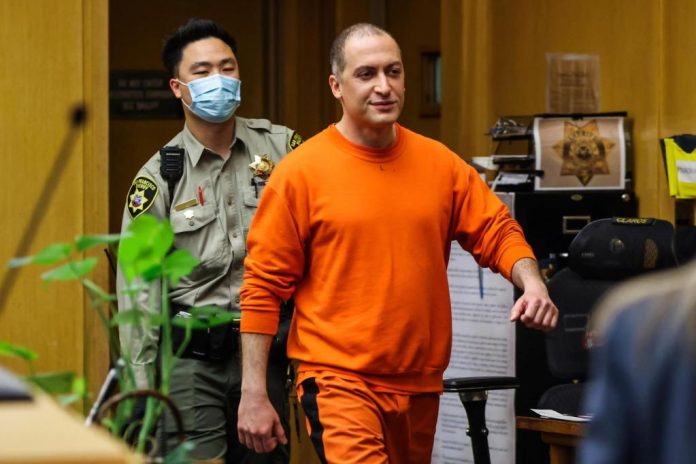
SAN FRANCISCO (AP) — Attorneys for Nima Momeni, the tech consultant charged in the death of Cash App founder Bob Lee, said Monday that the two men had a cordial relationship and the defendant had no reason to kill him.

The comments from Momeni’s lawyers came during a preliminary hearing, where the prosecution presents its evidence and a judge decides if there is enough to move ahead to trial. The hearing will continue Tuesday, when Momeni’s defense is expected to lay out more of their arguments.

Prosecutors have said that Momeni, 38, planned the April 4 attack that left Lee dying on a desolate San Francisco street. They said he drove Lee to a secluded spot and stabbed him three times after a dispute related to Momeni’s sister, Khazar.

But Tony Brass, one of four defense attorneys present Monday, said it was not Lee but another man whom Momeni suspected of acting inappropriately with his younger sister.

“What you see is cordial, a cordial relationship between Nima Momeni and Bob Lee,” Brass said to reporters after the hearing. “They’re in a car together. Those are not two men who have murderous rage between them.”

A friend of Lee told homicide investigators they had been hanging out and drinking with Momeni’s sister the day before the stabbing, prosecutors said previously in court documents. The friend said Momeni later questioned Lee about whether his sister was doing drugs or otherwise engaging in inappropriate behavior, and Lee said she had not.

But Saam Zangeneh, one of Momeni’s lawyers, said he asked those questions of Lee in regards to the man whose apartment they had been drinking at.

Zangeneh said in court he needed to dispute the idea of an “honor killing” committed to protect a sister.

Prosecutors have not spelled out a motive, but previously offered a timeline in a case that has drawn outsize media attention, partly due to Lee’s status in the tech world. Lee created Cash App, a mobile payment service, and was the chief product officer of the cryptocurrency MobileCoin.

Momeni, who has been in jail since his arrest April 13, has pleaded not guilty. He faces 26 years to life if convicted. His arrest came more than a week after Lee, 43, was found bleeding in the early morning hours of April 4. He later died at a hospital.

On Monday, Assistant District Attorney Omid Talai formally introduced evidence for his case, including photos of a knife that prosecutors say Momeni used to stab Lee, a trail of blood left by Lee as he staggered for help, and video footage showing the two men leave Momeni’s sister’s condo building before the stabbing.

Talai said at a May hearing that the weapon was part of a unique kitchen set belonging to Momeni’s sister and that analysis showed Momeni’s DNA on the weapon’s handle and Lee’s DNA on the bloody blade. Police recovered a knife with a 4-inch (10-centimeter) blade at the scene.

Zangeneh questioned why the rubber handle of the knife was tested for only DNA and not fingerprints. SFPD crime scene investigator Rosalyn Check said that it is difficult to get prints off rubber.

“When you want to see if someone’s touching something, you do fingerprint analysis, right?” he said to reporters. “And they weren’t done on the handle, which is the most important, relevant portion of who, if any, was handling that item.”

Surveillance video of Lee’s final night shows him entering the posh Millennium Tower downtown, where Momeni’s sister lives with her husband, a prominent San Francisco plastic surgeon.

Video footage then shows Lee and Momeni leaving the building together shortly after 2 a.m. and driving off in Momeni’s car. Lee was found shortly after 2:30 a.m. in the Rincon Hill neighborhood of San Francisco, which has tech offices and condominiums but little activity in the early morning hours.

Brain fog and other long COVID symptoms affect millions. New treatment studies bring hope – Daily Press

0

By LAURAN NEERGAARD (AP Medical Writer)

WASHINGTON (AP) — The National Institutes of Health is beginning a handful of studies to test possible treatments for long COVID, an anxiously awaited step in U.S. efforts against the mysterious condition that afflicts millions.

Monday’s announcement from the NIH’s $1.15 billion RECOVER project comes amid frustration from patients who’ve struggled for months or even years with sometimes-disabling health problems — with no proven treatments and only a smattering of rigorous studies to test potential ones.

“This is a year or two late and smaller in scope than one would hope but nevertheless it’s a step in the right direction,” said Dr. Ziyad Al-Aly of Washington University in St. Louis, who isn’t involved with NIH’s project but whose own research highlighted long COVID’s toll. Getting answers is critical, he added, because “there’s a lot of people out there exploiting patients’ vulnerability” with unproven therapies.

Scientists don’t yet know what causes long COVID, the catchall term for about 200 widely varying symptoms. Between 10% and 30% of people are estimated to have experienced some form of long COVID after recovering from a coronavirus infection, a risk that has dropped somewhat since early in the pandemic.

“If I get 10 people, I get 10 answers of what long COVID really is,” U.S. Health and Human Services Secretary Xavier Becerra said.

That’s why so far the RECOVER initiative has tracked 24,000 patients in observational studies to help define the most common and burdensome symptoms — findings that now are shaping multipronged treatment trials. The first two will look at:

— Whether taking up to 25 days of Pfizer’s antiviral drug Paxlovid could ease long COVID, because of a theory that some live coronavirus, or its remnants, may hide in the body and trigger the disorder. Normally Paxlovid is used when people first get COVID-19 and for just five days.

— Treatments for “brain fog” and other cognitive problems. They include Posit Science Corp.’s BrainHQ cognitive training program, another called PASC-Cognitive Recovery by New York City’s Mount Sinai Health System, and a Soterix Medical device that electrically stimulates brain circuits.

Two additional studies will open in the coming months. One will test treatments for sleep problems. The other will target problems with the autonomic nervous system — which controls unconscious functions like breathing and heartbeat — including the disorder called POTS.

A more controversial study of exercise intolerance and fatigue also is planned, with NIH seeking input from some patient groups worried that exercise may do more harm than good for certain long COVID sufferers.

The trials are enrolling 300 to 900 adult participants for now but have the potential to grow. Unlike typical experiments that test one treatment at a time, these more flexible “platform studies” will let NIH add additional potential therapies on a rolling basis.

“We can rapidly pivot,” Dr. Amy Patterson with the NIH explained. A failing treatment can be dropped without ending the entire trial and “if something promising comes on the horizon, we can plug it in.”

The flexibility could be key, according to Dr. Anthony Komaroff, a Harvard researcher who isn’t involved with the NIH program but has long studied a similarly mysterious disorder known as chronic fatigue syndrome or ME/CFS. For example, he said, the Paxlovid study “makes all sorts of sense,” but if a 25-day dose shows only hints of working, researchers could extend the test to a longer course instead of starting from scratch.

Komaroff also said that he understands people’s frustration over the wait for these treatment trials, but believes NIH appropriately waited “until some clues came in about the underlying biology,” adding: “You’ve got to have targets.”

___

The Associated Press Health and Science Department receives support from the Howard Hughes Medical Institute’s Science and Educational Media Group. The AP is solely responsible for all content.

Haitians, weary of gang violence, protest the kidnapping of an American nurse and her daughter – Daily Press

0

By EVENS SANON and MICHAEL CASEY (Associated Press)

PORT-AU-PRINCE, Haiti (AP) — Chants of “freedom” echoed through the streets outside an aid facility in Haiti’s capital, Port-au-Prince, on Monday where just days earlier an American nurse and her daughter were kidnapped by armed men.

Hundreds of Haitians marched through the gang-ravaged zone, bursting with anger at the abduction, which has become a symbol of the worsening violence plaguing the Caribbean nation.

New Hampshire woman Alix Dorsainvil had been working as a community nurse for the religious and humanitarian aid group El Roi Haiti when she and her daughter were taken from its campus on Thursday, the organization said. She is the wife of its founder, Sandro Dorsainvil.

Witnesses told the Associated Press that Dorsainvil was working in her organization’s small brick clinic when a group of armed men burst in and seized her. Lormina Louima, a patient waiting for a check-up, said one man pulled out his gun and told her to relax.

“When I saw the gun, I was so scared,” Louima said. “I said, ‘I don’t want to see this, let me go.’”

Other members of the community said the unidentified men asked for $1 million in ransom, something that’s become standard as Haiti’s gangs turn to slews of kidnappings to line their pockets and bleed the country dry. Hundreds have been kidnapping in Haiti this year alone, figures from the local nonprofit Center for Analysis and Research in Human Rights show.

Since the assassination of President Jovenel Moïse in 2021, gangs have taken over much of Port-au-Prince, killing, raping and sowing terror in communities already suffering endemic poverty.

The same day that Dorsainvil and her daughter were taken, the U.S. State Department issued a “do not travel advisory” for Haiti and ordered nonemergency personnel to leave amid growing security concerns. In its advisory, the State Department said that “kidnapping is widespread, and victims regularly include U.S. citizens.”

The violence has stirred anger among Haitians, who say they simply just want to live in peace.

Protesters, largely from the area around El Roi Haiti’s campus, which includes a medical clinic, a school and more, echoed that call as they walked through the sweltering streets wielding cardboard signs written in Creole in red paint.

“She is doing good work in the community, free her,” read one.

Among the protesters was Jean Ronald, a local resident who said the community has significantly benefitted from the care provided by El Roi Haiti.

Such groups are often the only institutions in areas far beyond the reach of the law, but have increasingly had to shut down operations as violence has deepened. The closures often leave thousands of vulnerable families without access to basic services like healthcare or education.

Earlier this month, Doctors Without Borders announced it was suspending services in one of its hospitals because some 20 armed men burst into an operating room and snatched a patient.

As the protesters walked through the area where Dorsainvil was taken, the streets were eerily quiet. The doors to the clinic where she worked were shut, the small brick building empty. Ronald and others in the area worried the latest kidnapping may mean the clinic won’t reopen.

“If they leave, everything (the aid group’s programs) will shut down,” the Haitian worried. “The money they are asking for, we don’t have it.”

Shortly after, protests dispersed.

State Department spokesman Matthew Miller refused to confirm Monday whether the abductors had made any demands, or to answer other questions.

“I will say we are aware of the reports that two US citizens were kidnapped in Haiti. Obviously, the safety and security of American citizens overseas is our highest priority. We are in regular contact with the Haitian authorities. We’ll continue to work with them and our US government interagency partners, but because it’s an ongoing law enforcement investigation, there’s not more detail I can offer,” Miller wrote in a statement Monday.

In a video for the El Roi Haiti website, Alix Dorsainvil describes Haitians as “resilient people.”

“They’re full of joy, and life and love. I’m so blessed to know so many amazing Haitians,” she says.

Dorsainvil graduated from Regis College in Weston, Massachusetts, which has a program to support nursing education in Haiti. Before that, she went to Cornerstone Christian Academy in Ossipee, New Hampshire which offers pre-K through eighth grade education.

“Pray that God would keep her safe, be with her through this trial, and deliver her from her captors,” the school said on its Facebook page.

Dorsainvil’s father, Steven Comeau, reached in New Hampshire, said he could not talk.

El Roi Haiti celebrated the nurse’s work in a statement over the weekend.

“Alix is a deeply compassionate and loving person who considers Haiti her home and the Haitian people her friends and family,” El Roi president and co-founder Jason Brown said in the statement. “Alix has worked tirelessly as our school and community nurse to bring relief to those who are suffering as she loves and serves the people of Haiti in the name of Jesus.”

Earlier this month, the National Human Rights Defense Network issued a report warning about an upsurge in killings and kidnappings and the U.N. Security Council met to discuss Haiti’s worsening situation.

AP reporters Megan Janetsky in Mexico City and Pierre Richard Luxama in Port-au-Prince contributed to this story.

Trump’s campaign finances are strained as legal peril mounts – Daily Press

0

By BRIAN SLODYSKO and JILL COLVIN (Associated Press)

WASHINGTON (AP) — Donald Trump’s political operation entered the second half of the year in a strained financial position with its bank account drained by tens of millions of dollars that were directed toward defending the former president from mounting legal challenges as he seeks the White House again.

Trump took in over $53 million since the start of 2023, records show, a period in which his two criminal indictments in Florida and New York were turned into a rallying cry that made his fundraising soar. Yet the Republican presidential front-runner burned through at least $42.8 million this year, much of it used to cover costs related to the mounting legal peril faced by Trump, his aides and other allies, leaving him with $31.8 million cash on hand. And that was after receiving a lifeline from a pro-Trump super PAC that agreed to refund millions of dollars in contributions that Trump’s operation had previously donated to it.

New campaign finance disclosures made public ahead of Monday night’s filing deadline showed Trump’s network of political committees spent roughly $25 million on legal fees. But according to a person familiar with the situation who insisted on anonymity to discuss the matter, the number is considerably higher: $40 million this year alone.

It’s a familiar position for Trump, carrying an echo of the 2020 presidential contest when his massive cash advantage over Joe Biden evaporated amid profligate spending by his campaign. Though Trump currently dominates the Republican primary field, a lack of cash could force his campaign to make difficult spending decisions as he braces for the possibility of two additional indictments, which could come as soon as this week in Georgia and Washington and are related to his efforts to overturn the outcome of the 2020 election.

“I’ve never seen anything like it,” said Paul S. Ryan, a longtime campaign finance attorney in Washington, referring to the sum Trump’s operation spent on legal fees this year. “There’s no legal issue. It’s really just a question for his donors: Do they want to be funding lawyers?”

Trump is not alone in his money struggles. His top rival, Florida Gov. Ron DeSantis raised over $20 million after launching his much-hyped candidacy in May. But DeSantis, who trails Trump in a distant second place, hemorrhaged cash in his first six weeks as a candidate, burning through $8 million in a spending spree that included more than 100 paid staffers, a large security detail and luxury travel.

Never Back Down, a super PAC supporting him that can raise and spend unlimited amounts, reported raising $130 million in a filings submitted before Monday’s midnight deadline. But it also spent roughly one-quarter of that money, much of it going to cover operations, like voter turnout, that are typically paid for by a candidate’s campaign, filings show.

The group was financed with $80 million left over from DeSantis’ successful 2022 gubernatorial reelection campaign. Most of the other cash was raised from several dozen corporations and donors, who gave over $100,000, including Robert Bigelow, a Las Vegas-based businessman, who gave Never Back Down $20 million, records show.

DeSantis has pledged to reset and trim expenses, laying off more than a third of his staff. Trump does not have the same luxury.

To help offset his growing legal bills, Trump’s allies are launching a new fundraising effort. The Patriot Legal Defense Fund, as it is called, is intended to defray costs for those “defending against legal actions arising from an individual or group’s participation in the political process,” according to a filing made last month with the IRS. The group will be run by Trump campaign senior advisers Susie Wiles and Michael Glassner.

“The weaponized Department of Justice and the deranged Jack Smith have targeted innocent Americans associated with President Trump,” said Trump spokesman Steven Cheung. “In order to combat these heinous actions by Joe Biden’s cronies and to protect these innocent people from financial ruin and prevent their lives from being completely destroyed, a new legal defense fund will help pay for their legal fees.” The fund was first reported by The New York Times.

Smith is the special counsel leading the federal investigations of Trump. His team has expressed interest in the payment of legal fees for Trump-aligned witnesses in the investigations and has sought information about it, according to a person familiar with the matter who spoke on the condition of anonymity in order to discuss ongoing criminal probes.

Trump’s PAC has also requested that his super PAC, MAGA Inc., return some of the money that it transferred to seed the group to help cover costs. Filings show Trump’s PAC, Save America, received $12.2 million in refunds from the group in May and June.

A spokesman for the super PAC did not respond to a request for comment.

Trump launched Save America, in the days after the 2020 election, which he lost to Biden. For weeks, the group bombarded supporters with a nonstop stream of text messages and emails that purported to raise money for an “election defense fund” that would be used to contest the election’s outcome.

But the $170 million that the effort raised in less than a month was not used to contest the election, records show. Instead, it was used to pay down campaign debt and replenish the coffers of the Republican National Committee, with Trump also stockpiling another large chunk for his future political endeavors. Last year, the Justice Department issued a round of grand jury subpoenas that sought information about the political action committee’s fundraising practices.

Since then, Save America has served as a different sort of “defense fund,” covering the legal expenses for Trump operatives, allies and employees who have been ensnared in the Justice Department’s ongoing investigation.

Some of Save America’s money has been used to boost other candidates, though it’s a pittance compared to how much Trump has spent on ballooning legal costs.

As the 2022 midterm elections approached, Trump pledged to back congressional candidates loyal to him. But of the roughly $65 million earmarked by Save America for political spending, less than a third — about $20 million — was used to back midterm candidates through campaign contributions or paid advertising.

___

Colvin reported from New York. Associated Press writer Eric Tucker in Washington contributed to this report.