Home Blog Page 66

Garrett Stallings’ strong start, Joey Ortiz’s clutch hit in eighth spark Tides to series-opening win over Charlotte – Daily Press

0

Former Grassfield High star Garrett Stallings pitched one of his best games of the season and Joey Ortiz sparked a four-run eighth inning with a tie-breaking two-run double as the Norfolk Tides defeated the Charlotte Knights 6-3 before 4,606 fans Tuesday night at Harbor Park.

The Tides (64-37, 16-11 in second half) took the opener of a scheduled seven-game series after splitting a six-game set at home with Nashville last week.

Stallings (3-3) allowed two unearned runs on six hits in eight innings with nine strikeouts and no walks. It was his longest outing of the season and he matched his season-high in strikeouts. He lowered his ERA from 5.02 to 3.93.

Connor Norby staked Norfolk to a 2-0 lead with a solo homer in the bottom of the first inning — his 15th long ball of the season — and an RBI double to left in the second.

Charlotte (39-63, 4-23), the Chicago White Sox’s Triple-A affiliate and the worst team record-wise in the International League, tied it with two runs in the top of the sixth. Clint Frazier reached on a fielder’s choice and Erik Gonzalez scored on throwing errors by the Tides’ Ortiz and Kyle Stowers. Victor Reyes then plated Frazier with an RBI double to right.

The game remained tied until the bottom of the eighth, when Norfolk took control. Maverick Handley led off with a walk and stole second. Norby then walked and Heston Kjerstad grounded into a forceout at second to put runners at the corners. Ortiz followed with his double to right to score Handley and Kjerstad and make it 4-2.

Stowers reached on a throwing error to score Ortiz and after Josh Lester singled, Daz Cameron hit an RBI single to make it 6-2.

Logan Gillaspie relieved Stallings in the ninth and allowed Lenyn Sosa’s 16th homer of the season, but closed it out.

The Tides finished with six hits as Charlotte starter Garrett Davila gave up only three in seven innings. Reliever Jordan Leasure (0-1) took the loss, allowing all four runs — two of which were unearned — in the eighth.

The two teams are set to play a doubleheader starting at 5:35 p.m. Wednesday. The second game is a makeup of a July 3 postponed contest.

Trump allies in Michigan charged with felonies involving voting machines, illegal ‘testing’ – Daily Press

0

By JOEY CAPPELLETTI (Associated Press)

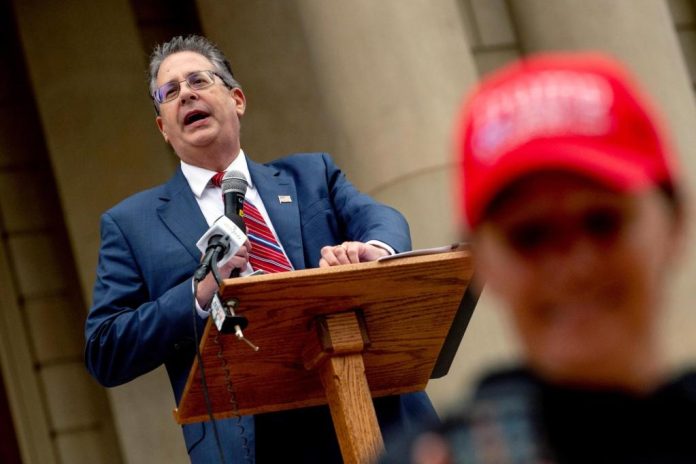
LANSING, Mich. (AP) — Two Michigan allies of former President Donald Trump, including a former Republican state attorney general candidate, were charged in connection with an effort to illegally access and tamper with voting machines in the state after the 2020 election, prosecutors announced Tuesday.

Attorney Matthew DePerno was charged with undue possession of a voting machine and conspiracy, while Daire Rendon, a former Republican state representative, was charged with conspiracy to commit undue possession of a voting machine and false pretenses, special prosecutor D.J. Hilson announced in a news release. Both were arraigned Tuesday afternoon, according to Richard Lynch, the court administrator for Oakland County’s 6th Circuit.

Michigan is just one of at least three states where prosecutors say people breached election systems while embracing and spreading Trump’s lie that the 2020 election was stolen.

DePerno, who was endorsed by Trump in an unsuccessful run for Michigan attorney general last year, acknowledged in a statement that he was arraigned Tuesday, but his lawyer said that he “categorically denies any wrongdoing” and “looks forward to the date when his innocence will be demonstrated in a court of law.”

A phone message was left Tuesday with a lawyer listed in court documents as representing Rendon.

DePerno and Rendon are among nine people in Michigan named thus far by Attorney General Dana Nessel’s office as having been involved in the scheme. Asked whether the broader investigation continues, Hilson replied in an email, “Still more to come unrelated to the individuals currently charged.”

Hilson has been considering charges since September. He convened a grand jury in March to determine whether criminal indictments should be issued, according to court documents.

In his statement, Hilson said the charges against DePerno and Rendon were authorized by “an independent citizens grand jury,” and that his office did not make any recommendations.

The charges come the same day Trump was charged by the U.S. Justice Department with conspiracy to defraud the United States and other counts as part of his efforts to overturn the results of the 2020 presidential election. The former president is also being investigated for election interference in Georgia.

In Michigan, five vote tabulators were illegally taken from three counties and brought to a hotel room, according to documents released last year by Nessel’s office. Investigators found that the tabulators were broken into and “tests” were performed on the equipment. DePerno was named as a “prime instigator” in the case.

Because Nessel ran against DePerno in 2022, her office cited a conflict of interest and requested a special prosecutor. The Prosecuting Attorneys Coordinating Council appointed Hilson to the case.

Charges were slow in coming, in part because prosecutors wanted clarification from a judge about what constitutes illegal possession of a voting machine. Some of the defendants argued that local clerks gave them permission to take the machines.

A state judge ruled last month that it is a felony, punishable by up to five years in prison, to take a machine without a court order or permission directly from the Secretary of State’s office.

In a separate investigation, Nessel announced eight criminal charges each last month against 16 Republicans who she said submitted false certificates as electors for then-President Trump in Michigan, a state Joe Biden won.

The charges include forgery and conspiracy to commit election forgery. The group includes the head of the Republican National Committee’s chapter in Michigan, Kathy Berden, and the former co-chair of the Michigan Republican Party, Meshawn Maddock.

Maddock pleaded not guilty at his arraignment last Thursday. Berden is set to be arraigned on Aug. 10.

___

Associated Press writer Christina A. Cassidy in Atlanta contributed to this report.

The judge assigned to Trump’s Jan. 6 case is a tough punisher of Capitol rioters – Daily Press

0

By MICHAEL KUNZELMAN (Associated Press)

WASHINGTON (AP) — The federal judge assigned to the election fraud case against former President Donald Trump has stood out as one of the toughest punishers of rioters who stormed the U.S. Capitol in an attack fueled by Trump’s baseless claims of a stolen election. She has also ruled against him before.

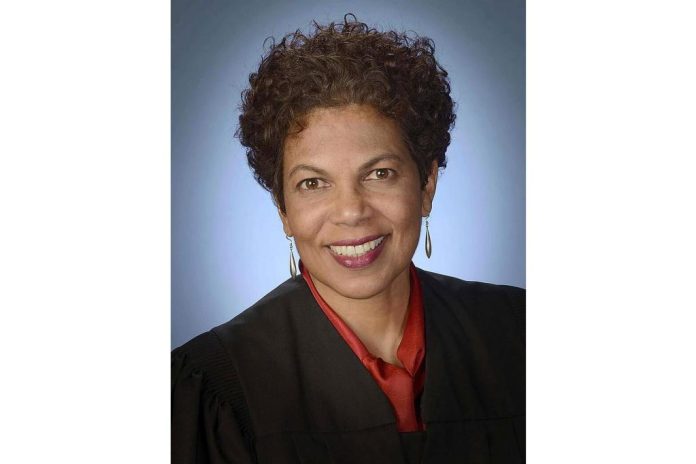
U.S. District Judge Tanya Chutkan, a former assistant public defender who was nominated to the bench by President Barack Obama, will oversee the case accusing Trump of trying to overturn his 2020 election loss in the two months leading up to the violent assault on the U.S. Capitol by his supporters.

Chutkan has often has handed down prison sentences in Jan. 6, 2021, riot cases that are harsher than Justice Department prosecutors recommended.

Chutkan has also ruled against Trump before in a separate Jan. 6 case. In November 2021, she refused his request to block the release of documents to the U.S. House’s Jan. 6 committee by asserting executive privilege.

She rejected his arguments that he could hold privilege over documents from his administration even after President Joe Biden had cleared the way for the National Archives to turn the papers over. She wrote that Trump could not claim his privilege “exists in perpetuity.”

In a memorable line from her ruling, Chutkan wrote, “Presidents are not kings, and Plaintiff is not President.”

Trump will make his first court appearance on Thursday before Magistrate Judge Moxila A. Upadhyaya. Such judges handle initial matters in federal cases.

Chutkan has sentenced at least 38 people convicted of Capitol riot-related crimes. All 38 received prison terms, ranging from 10 days to over five years, according to an Associated Press analysis of court records.

She is one of two dozen judges in Washington, D.C., who collectively have sentenced nearly 600 defendants for their roles in the Jan. 6 siege. More than one third of them avoided sentences that included incarceration.

Other judges typically have handed down sentences that are more lenient than those requested by prosecutors. Chutkan, however, has matched or exceeded prosecutors’ recommendations in 19 of her 38 sentences. In four of those cases, prosecutors weren’t seeking any jail time at all.

Chutkan has said prison can be a powerful deterrent against the threat of another insurrection.

“Every day we’re hearing about reports of anti-democratic factions of people plotting violence, the potential threat of violence, in 2024,” she said in December 2021 before sentencing a Florida man who attacked police officers to more than five years behind bars. At the time, that sentence was the longest for a Jan. 6 case.

“It has to be made clear that trying to violently overthrow the government, trying to stop the peaceful transition of power and assaulting law enforcement officers in that effort is going to be met with absolutely certain punishment,” she said.

Judge Trevor McFadden, a Trump nominee, suggested during a hearing in 2021 that the Justice Department was being too hard on those who broke into the Capitol compared with the people arrested during racial injustice protests following George Floyd’s 2020 murder.

Without naming her colleague, Chutkan criticized McFadden’s suggestion days later.

“People gathered all over the country last year to protest the violent murder by the police of an unarmed man. Some of those protesters became violent,” Chutkan said during an October 2021 hearing.

“But to compare the actions of people protesting, mostly peacefully, for civil rights, to those of a violent mob seeking to overthrow the lawfully elected government is a false equivalency and ignores a very real danger that the Jan. 6 riot posed to the foundation of our democracy.”

___

Associated Press writer Nomaan Merchant contributed to this report.

___

This story has been corrected to reflect that Trump’s first appearance on Thursday will be before a magistrate judge, not Judge Chutkan.

Photos: Norfolk’s National Night Out

0

Ivan Adkins, 12, lifts Isaiah Steward, 2, to reach for the net on the basketball court at the City of Norfolk’s National Night Out, an event to help build connections between police and the community, at Berkley Park in Norfolk, Virginia on Tuesday, August 1, 2023. (Tess Crowley / The Virginian-Pilot)

Virginia Beach Sheriff Ken Stolle will retire by end of year, Councilman Rocky Holcomb will succeed him – Daily Press

0

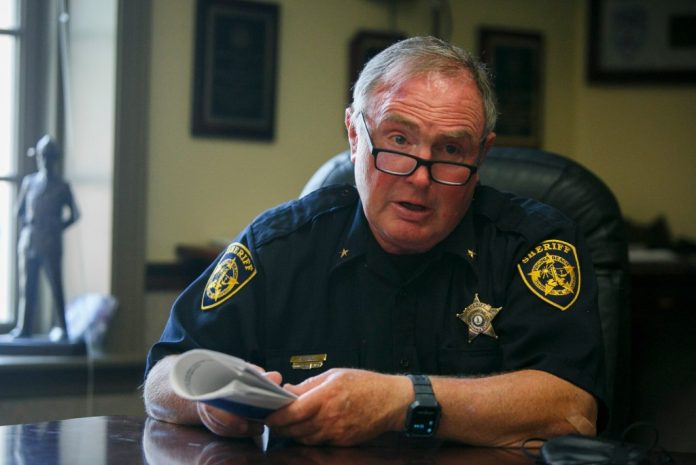
VIRGINIA BEACH — Longtime Virginia Beach Sheriff Ken Stolle announced Tuesday he plans to retire by the end of the year.

“The last 13 years have been the most rewarding of my career,” Stolle wrote in a letter to the City Council. “I am so proud to be your sheriff and to have had the privilege of leading you and serving alongside you. We have accomplished some incredible things together and have made the VBSO, the jail and Virginia Beach better, safer places.”

Stolle, 69, said he plans to focus on his family, and “make room for the next generation of leadership.”

Virginia Beach Mayor Bobby Dyer described Stolle as a “pillar, not only for Virginia Beach, but for the entire commonwealth.”

The sheriff will be replaced by Chief Deputy Rocky Holcomb — the next highest ranking member of the department — until a special election can be held in November 2024. Holcomb said he plans to run then.

Holcomb also is a City Council member representing District 1, and said he’ll resign from that role before assuming his new one. His colleagues on council will appoint a replacement to serve through the end of 2024. The district includes portions of Kempsville, Lake Christopher and Bellamy Manor.

“It’s bittersweet,” Holcomb said by phone Tuesday. “To rise to this level is very humbling.”

Stolle, a Republican, was first elected sheriff in 2009 and took office in January 2010. He ran for his fourth term in 2021 and was supposed to serve until January 2026.

A graduate of Cox High School, Stolle earned his bachelor’s degree in criminal justice in 1975 and worked as a Virginia Beach police officer from 1976 to 1987.

He studied the law while working as a police officer and was admitted to the Virginia State Bar in 1983 and became a full time lawyer in 1987. In 1991, he was elected a state senator and continued to serve until elected sheriff. He also worked eight years as a United State Naval Reserve intelligence officer. In 2006, he was diagnosed with Parkinson’s disease, a degenerative neurological disease that can impair motor skills.

Among the accomplishments Stolle is most proud of is creating several programs to assist inmates, including a reentry program to help them successfully transition back into society, an alternative sentencing program for nonviolent offenders, and a mental health program for those suffering from mental illness, according to a release issued by his office. He also has worked to improve pay for his deputies and expand the department’s footprint in the community, the release said.

Holcomb, 55, started his career in the Virginia Beach Sheriff’s Office as a deputy recruit in 1991. He was appointed chief deputy in May 2018. He served as a state delegate for the 85th District from 2017 to 2018.

Stacy Parker, 757-222-5125, [email protected]

Jane Harper, [email protected]


Virginia needs more transparency for government credit card purchases – Daily Press

0

Earlier this year, a subcommittee in Virginia’s House of Delegates quashed a bill that would have bolstered transparency about the use of government-issued credit cards by public officials.

The measure’s sponsor, state Sen. Scott Surovell, D-Fairfax, argued succinctly and correctly that, “[T]he public deserves to know not only when money is spent and how it’s spent but who’s spending it,” but was unable to sway the Republican majority into adopting the proposal.

The need for legislation such as this — and greater transparency about credit card usage throughout government — was recently made more apparent by members of the Newport News City Council.

Reporting by Josh Janney, who covers Hampton and Newport News for the Daily Press and The Virginian-Pilot, details thousands of dollars in charges made by four members of the city’s elected leadership this year.

According to the story, members paid for flights, hotels, meals and even assistants to help with constituent services using Newport News credit cards. The charges included $700 for airfare, $200 for lodging, about $1,100 in meals and various other costs that aren’t covered by the city’s authorized expenses or reimbursement policies.

Using the Virginia Freedom of Information Act, Janney obtained a May 1 legal memo from City Attorney Collins Owens to City Manager Cynthia “Cindy” Rohlf in which Owens concluded that many of the charges violated state code and the city’s travel policy. “He said he believed city council members and city employees, such as the director of finance and the city manager, could face criminal penalties under state code if the city didn’t seek reimbursements and the council members did not return the money,” Janney reported.

Four members were required to repay those debts: Vice Mayor Curtis Bethany owed $2,756; Councilman John Eley, $1,050; Councilwoman Pat Woodbury, $35; and Councilman Cleon Long, $33. Bethany, Eley and Long took office in January, and Mayor Phillip Jones said many of the introductory briefings about policies such as this were crowded out by the council’s focus on the Jan. 6 Richneck Elementary School shooting.

There are plenty of questions remaining about this episode, including Woodbury telling Janney that the misuse of city credit cards may have played a role in the city manager’s departure, which became effective on Tuesday. Newport News residents deserve a full accounting of that, and council members should be forthright in their answers.

However, it is worth noting that Janney’s FOIA request for the legal memo and credit card statement returned some information, but not all of it. Members’ names were not included, so they were only identified through the city attorney’s letter to the city manager.

That was precisely the practice that Surovell hoped to stop with his legislation earlier this year. It stems from a 2020 interpretation by the Virginia’s Department of Accounts that  instructed state agencies to redact credit card numbers and employee names when releasing records under FOIA, per reporting by the Virginia Mercury.

The law only requires that credit card numbers be redacted as a matter of financial security. The Department of Accounts recommended redacting names as well to adhere to Bank of America’s “recommended best practice” to protect account intrusion or theft.

That information should be public, as Newport News has so aptly demonstrated. Including employee names with charges for incidental purchases is critical to oversight and accountability. And even knowing that information will be available to citizens could itself deter fraud and abuse.

The real issue here is that government credit cards represent the use of public money — your money — and citizens have a right to know how that money is used and who is using it. Restoring access to that information, which was public prior to the 2020 policy change, will bring needed transparency and more muscular oversight to purchasing. And, as Newport News City Council members have helpfully demonstrated, adopting Surovell’s measure or one like it cannot come soon enough for the commonwealth.

Michigan prosecutors charge Trump allies in felonies involving voting machines, illegal ‘testing’ – Daily Press

0

By JOEY CAPPELLETTI (Associated Press)

LANSING, Mich. (AP) — A former Republican attorney general candidate and another supporter of former President Donald Trump have been criminally charged in Michigan in connection with accessing and tampering with voting machines after the 2020 election, according to court records.

Matthew DePerno, a Republican lawyer who was endorsed by Trump in an unsuccessful run for Michigan attorney general last year, was charged with undue possession of a voting machine and conspiracy, according to Oakland County court records.

Daire Rendon, a former Republican state representative, was charged with conspiracy to commit undue possession of a voting machine and false pretenses. A lawyer listed on court documents as representing Rendon could not be immediately reached for comment by phone.

Both were arraigned remotely Tuesday afternoon, according to Richard Lynch, the court administrator for Oakland County’s 6th Circuit.

A special prosecutor, D.J. Hilson, has been reviewing the investigation and considering charges since September. He convened a grand jury in March to determine whether criminal indictments should be issued, according to court documents.

In a statement, Hilson said the charges were authorized by “an independent citizens grand jury,” and that his office did not make any recommendations.

Those charged in Michigan are the latest facing legal consequences for alleged crimes committed after embracing Trump’s lie that the 2020 election was stolen.

The charges come as the former president is investigated for election interference in Georgia. Separately, Trump said in mid-July that he is a target of a federal investigation into efforts to overturn the results of the 2020 presidential election.

DePerno, whose name was incorrectly listed as “DeParno,” in court records, was named as a “prime instigator” in the case. He could not be reached by phone immediately for comment but has previously denied wrongdoing and has accused the state attorney general of “weaponizing her office.”

Five vote tabulators were taken from three counties in Michigan to a hotel room, according to documents released last year by Attorney General Dana Nessel’s office. Investigators found that the tabulators were broken into and “tests” were performed on the equipment. They said that DePerno was there.

Nine individuals, including DePerno and Rendon, were named by Nessel’s office as having been involved in the scheme.

When asked whether the broader investigation continues, Hilson, the special prosecutor said in an email “Still more to come unrelated to the individuals currently charged.”

Because Nessel ran against DePerno in 2022, she secured a special prosecutor who wouldn’t have a conflict of interest in the case and could operate independently.

Charges were slow to come in the case, in part because prosecutors wanted clarification from a judge about what constitutes illegal possession of a voting machine. Some of the defendants argued that local clerks gave them permission to take the machines.

In July, a state judge ruled that it’s a felony to take a machine without a court order or permission directly from the Secretary of State’s office.

That felony is punishable by up to five years in prison.

Judge won’t dismiss charges against movie armorer in fatal shooting by Alec Baldwin on film set – Daily Press

0

By MORGAN LEE (Associated Press)

SANTA FE, N.M. (AP) — A New Mexico judge told attorneys to “stay the course” on charges including involuntary manslaughter against a movie weapons supervisor in the 2021 shooting death of a cinematographer by Alec Baldwin during a rehearsal for the film “Rust,” rejecting on Tuesday a request from defense counsel to dismiss charges.

The ruling from Judge Mary Marlowe Sommer during online proceedings sets the stage for lengthy evidentiary hearings, starting next week, on manslaughter and evidence-tampering charges against movie armorer Hannah Gutierrez-Reed. She is the sole remaining defendant in the fatal shooting of cinematographer Halyna Hutchins during the filming of “Rust” on Oct. 21, 2021.

In April, prosecutors dropped charges against Baldwin, who was pointing a gun at Hutchins when it went off, killing her and injuring director Joel Souza. This left Gutierrez-Reed as the sole remaining defendant in the case. If convicted, she faces up to three years in prison.

An attorney for Gutierrez-Reed argued unsuccessfully Tuesday that the case had been compromised by changes in the prosecution team earlier this year, sloppiness with evidence and public statements by prosecutors that might interfere with the right to an impartial jury.

Sommer rejected the arguments and sided with prosecutors, who urged the court to move forward with a preliminary hearing that will decide whether evidence is sufficient to advance toward trial.

Prosecutors have said charges still could be refiled against Baldwin pending further investigation, including an ongoing independent examination by a firearms expert. The investigation is looking into the revolver involved in the fatal shooting, and other weapons and ammunition seized from the set of “Rust.”

Authorities have not yet determined how live ammunition found its way into the .45-caliber revolver made by an Italian company that specializes in 19th century reproductions.

Baldwin has said the gun fired accidentally after he followed instructions to point it toward Hutchins, who was behind the camera. He said he pulled back the hammer — but not the trigger — and the gun fired.

In April prosecutors commissioned additional weapons testing to investigate whether the hammer of the gun used in the fatal shooting may have been intentionally modified.

“We don’t have the firearms report yet, although they told me that it’s forthcoming. I hope to have it by the end of the week,” special prosecutor Kari Morrissey said Tuesday. “The causation issues as they relate to Mr. Baldwin and the functionality of the firearm do not create causation problems for Ms. Gutierrez. That is our legal opinion.”

An August FBI report on the agency’s analysis of the gun found that, as is common with firearms of that design, it could go off without pulling the trigger if force was applied to an uncocked hammer — such as by dropping the weapon.

The only way the testers could get it to fire was by striking the gun with a mallet while the hammer was down and resting on the cartridge, or by pulling the trigger while it was fully cocked. The gun eventually broke during the testing.

Separately, prosecutors withdrew a motion to shield the name of a witness from public disclosure as they pursue an evidence-tampering charge against Gutierrez-Reed.

They indicated Tuesday that a witness is prepared to testify that Gutierrez-Reed handed off a small bag of narcotics to the witness after returning from an interview at a police station. In previous court filings, prosecutors said the witness was worried about being harassed by media and blacklisted in the entertainment industry.

“She has agreed not to pursue a protective order,” Morrissey said of the witness.

Defense attorney Jason Bowles has called the evidence-tampering charge a vindictive attempt at “character assassination” by prosecutors.

In March of this year, “Rust” safety coordinator and assistant director David Halls pleaded no contest to a charge of unsafe handling of a firearm and received a suspended sentence of six months’ probation.

He agreed to cooperate in the investigation of the fatal shooting and is listed as a possible witness in evidentiary hearings next week to decide whether the case can advance toward trial.

The filming of “Rust” resumed in April in Montana under an agreement with the cinematographer’s widower, Matthew Hutchins, that makes him an executive producer.

What is cardiac arrest? A Mayo Clinic heart expert explains – Daily Press

0

Deb Balzer | Mayo Clinic News Network (TNS)

Cardiac arrest, or sudden cardiac arrest as it is more formally known, is a medical emergency. It happens when an event, usually an electrical disturbance, quickly and unexpectedly causes your heart to stop working. It’s not the same as a heart attack and is called sudden because it seems to happen without warning.

Dr. Christopher DeSimone, a Mayo cardiac electrophysiologist specializing in abnormal cardiac rhythm, answers questions about cardiac arrest, the differences between cardiac arrest and heart attack, and why time is critical when treating someone with cardiac arrest.

QUESTION: What happens during cardiac arrest?

Cardiac arrest is when the heart cannot fulfill its duties and pump blood, especially oxygenated blood, around the body to get to critical areas, such as the brain. Now, when there’s an arrest, there are two things we go over. One could be the heart stops electrically, so the heart is not going to pump. The other one is the heart goes into an abnormal or lethal rhythm, which we call ventricular fibrillation. That’s a more chaotic rhythm of the heart. So electrically this heart’s in a bad rhythm, and the ventricles are quivering and not pumping out. Ultimately, both things put you into cardiac arrest, sudden cardiac arrest or sudden cardiac death. The heart cannot fulfill its duties of pumping blood to the lungs and the rest of the body, so that all the nutrients and oxygen can get to the tissues of the heart, brain or what have you.

QUESTION: Why is immediate care, like CPR and AED, so critical?

Survival is possible with immediate, appropriate medical care. Call 911, if able, first.

Once you know that someone’s suffered or suspect that they’ve suffered a cardiac arrest or sudden cardiac arrest, it is important to restore the rhythm as fast as you can.

A cardiac arrest could happen wherever we are in life — in the malls, schools and at work. And if someone passes out, you want to make sure that they’re breathing, their heart has a pulse and their heart is pumping. If their heart’s not pumping, then what people need to do is emergent CPR.

And every time we walk by things in the hallway, whatever buildings we’re in, there are all these things called AED, or automated external defibrillators. That’s one of those things that people see on TV where they’re shocking the patient back into a normal rhythm.

Because if that device notes that the patient does not have a good rhythm and they’re in this ventricular fibrillation, the machine will tell you to shock the heart, and the machine will shock. You’re trying to electrically restart the heart so that it goes back into its normal rhythm, and you could have normal pumping function.

QUESTION: Why is time so crucial for dealing with cardiac arrest?

Time is critical because the heart’s not pumping blood to the rest of the body — not to the lungs, not to the brain. The oxygen is not getting to the tissues as it usually does when the heart’s pumping normally. Everyone knows that time is heart muscle, time is myocardium. When someone’s having a heart attack, think about the whole body having a heart attack. The brain is not getting blood, the liver is not getting blood, and the kidney is not getting blood. The heart itself isn’t getting oxygenated blood, so all those tissues could die off.

QUESTION: What is the typical treatment for a person having cardiac arrest?

As soon as you can establish a rhythm or if you’re still doing CPR and have given medications and doing advanced cardiac life support, part of that is to put a tube down the patient’s throat, intubation, and sedate them so that they’re under anesthesia.

Sometimes they’ll even cool the patient. The patient will not be breathing on their own. A machine will be breathing for the patient. And sometimes what we do is we also cool the patient down.

We’re trying to let the tissues that might not have gotten oxygen for minutes — hopefully not hours — recuperate some of their function and make the body spend the least energy as we can. It’s common for that to happen so that we can stabilize the patient.

QUESTION: What is the difference between cardiac arrest and heart attack?

When someone has a heart attack, it’s more of a plumbing problem. The major arteries going to the heart get plugged up with a clot. When that happens, there’s a blockage in the plumbing, and then the heart at that area might get weak because it can’t pump because it doesn’t get blood flow to itself. And things could happen — like the patient goes into an electrical problem, like sudden cardiac arrest. The plumbing leads to an electrical problem, that’s common.

But the heart attack is blocking the plumbing, so blood does not get to the heart. When someone has a sudden cardiac arrest or sudden cardiac death, it could be a manifestation of a heart attack. But sudden cardiac arrest doesn’t mean you necessarily need to have heart blockages.

___

©2023 Mayo Clinic News Network. Visit newsnetwork.mayoclinic.org. Distributed by Tribune Content Agency, LLC.

Oxford school shooter was ‘feral child’ abandoned by parents, defense psychologist says – Daily Press

0

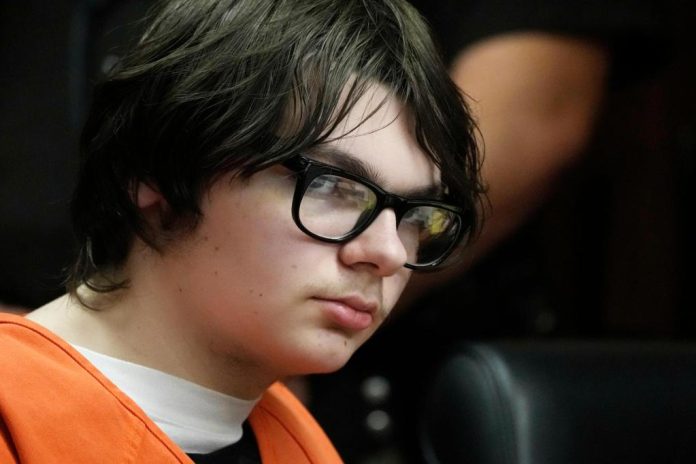
PONTIAC, Mich. (AP) — A teenager who killed four students at his Michigan high school in 2021 was like a “feral child,” deeply neglected by his parents during crucial years and mentally ill, a psychologist testified Tuesday at a hearing to determine if the mass shooter will get a life prison sentence.

Ethan Crumbley’s lawyers also played disturbing videos from jail showing the 17-year-old in deep distress as deputies restrained him while he wailed. In one incident, his head is completely covered with a hood. No dates were disclosed.

“Why didn’t you stop it? I’m sorry. … Stop it, God, why?” he said.

A psychologist, Colin King, said the shooter was experiencing psychosis, a break from reality. He later predicted that the boy “absolutely” can be rehabilitated.

“A number of my clients have had issues with the law,” said King, who has testified in many homicide cases. “Through psychotherapy and support, they’ve been able to make progress. … Ethan’s brain is still maturing.”

Crumbley pleaded guilty to murder, terrorism and other charges in a shooting that killed four students and wounded seven others at Oxford High School, about 40 miles (64 kilometers) north of Detroit.

Because of his age — 15 at the time — the shooter can’t automatically be a given life sentence. Oakland County Judge Kwame Rowe first must consider the shooter’s maturity, mental health, unstable family life and other factors set by the U.S. Supreme Court.

He still can order a life sentence, but it would be a rare outcome for a teen. Crumbley otherwise would face a minimum sentence somewhere between 25 years and 40 years in prison, followed by eligibility for parole. A decision isn’t expected Tuesday, the third and likely final day of the hearing

King said he spent more than 20 hours with the shooter during several meetings, interviewing him and running him through a series of psychological tests. He also reviewed the teen’s dark journal entries and text messages.

King disclosed for the first time that the boy believed that a gun was going to be found in his backpack on the day of the shooting when he was sent to the office for drawing violent images in class.

“Ethan said for the first time in his life he felt relieved,” King testified. “He said he just knew the sheriffs were going to burst into the office and arrest him because there was no way, after all that they saw, they weren’t going to search that backpack.”

But the backpack was never checked, and the boy was allowed to remain in school. He later emerged from a bathroom and started shooting.

King said the shooter was raised in a turbulent home by parents who left him alone for hours, argued in front of him and weren’t discreet when discussing infidelity, divorce and suicide. The boy was even forced to figure out what to do with his beloved dead dog.

“He can be considered a feral child,” King said.

“It is essentially a child who has been abandoned. … Someone who is abandoned has what is called arrested development,” he said. “They lack social cues. They become misfits in society.”

The shooter, King concluded, has major depression, anxiety and obsessive-compulsive disorder.

“He’s mentally ill,” the psychologist said.

His parents, James and Jennifer Crumbley, are separately charged with involuntary manslaughter. They’re accused of buying a gun for their son and ignoring his mental health needs.

Prosecutors want a life prison sentence with no chance for parole. Last week, they called four people who witnessed the shooting, including a school staff member who was wounded and a student who saved a wounded girl. It was the first time their details were personally aired in court.