Home Blog Page 64

Canadian Prime Minister Justin Trudeau and his wife separating after 18 years of marriage – Daily Press

0

By ROB GILLIES (Associated Press)

TORONTO (AP) — Canadian Prime Minister Justin Trudeau and his wife, Sophie, are separating after 18 years of marriage.

The two said in statements posted on Instagram that they made the decision after “many meaningful and difficult conversations.” A statement from the prime minister’s office said they both have signed a legal separation agreement.

Trudeau, the 51-year-old scion of one of Canada’s most famous politicians, was sworn into office in 2015. Sophie Trudeau is a former model and TV host. The couple were married in 2005. Together, they brought star power to the prime minister’s office and appeared in the pages of Vogue magazine.

They have three children, 15-year-old Xavier, 14-year-old Ella-Grace and 9-year-old Hadrien.

“As always, we remain a close family with deep love and respect for each other and for everything we have built and will continue to build,” the two said on Instagram.

An official familiar with the matter said Trudeau will continue to live at Rideau Cottage in Ottawa, where he has lived since 2015, and the children will primarily live there to maintain stability.

The official said she has moved to a separate Ottawa home, but will spend time at Rideau Cottage at times including when he is travelling. The official spoke on condition of anonymity because they were not authorized to speak publicly.

She has played a less visible role in recent years, rarely traveling with the prime minister on official trips. The two were seen together publicly at Canada Day events in Ottawa last month.

“They remain a close family, and Sophie and the prime minister are focused on raising their kids in a safe, loving and collaborative environment,” the statement from Trudeau’s office said. “The family will be together on vacation, beginning next week.”

His office requested respect for their privacy.

Justin Trudeau and Sophie Gregoire met as children when she was a classmate of his youngest brother, Michel, and they reconnected as adults when they co-hosted a 2003 charity gala.

Trudeau is the second prime minister to announce a separation while in office.

His father, Pierre Trudeau, and mother, Margaret Trudeau, separated in 1977 and divorced in 1984 during the elder Trudeau’s final year in the prime minister’s office.

Margaret Trudeau wrote in her memoir that she had a romance with Senator Ted Kennedy. During a 1977 visit to Washington, D.C. with Pierre, she sat listening to her husband’s speech before Congress while feeling “torn between an intense need for him and a longing for Ted Kennedy.” Margaret wrote she became infatuated with Kennedy after meeting him a few years earlier. She told Kennedy that he “had not destroyed my marriage but that I had used him to help me destroy a marriage that was already over.”

Just weeks later Margaret, who had then-undiagnosed mental illness, left her husband to party with the Rolling Stones in Toronto. The marriage ended soon after that.

Justin, who was a child when his parents separated, wrote in his 2014 book “Common Ground” that public life took its toll. “I knew, even then, that the demands imposed by the life my parents were leading affected them far more than the ordinary stress of parenthood,” he wrote.

Justin Trudeau channeled the star power of his Liberal icon father when he first won office in 2015. Scandals, voter fatigue and economic inflation have taken a toll on his popularity after eight years in power.

Just a few months ago Trudeau posted a picture of himself holding hands with his wife on their anniversary and wrote, “Every mile of this journey together is an adventure. I love you, Soph. Happy anniversary!”

Nelson Wiseman, a political science professor at the University of Toronto, had thought that Trudeau would seriously consider stepping down sometime next year or early in 2025.

“I now think he is more likely to stick in the political arena,” Wiseman said.

Niger’s military ruler warns against foreign meddling, urges population to defend the country – Daily Press

0

By SAM MEDNICK (Associated Press)

NIAMEY, Niger (AP) — Niger’s new military ruler lashed out at neighboring countries and the international community in a nationally televised speech Wednesday night, and he called on the population to be ready to defend the nation.

In one of few addresses to the West African country since seizing power from Niger’s democratically elected president a week ago, Gen. Abdourahmane Tchiani warned against foreign meddling and military intervention against the coup.

“We therefore call on the people of Niger as a whole and their unity to defeat all those who want to inflict unspeakable suffering on our hard-working populations and destabilize our country,” Tchiani said.

Tchiani, who commands Niger’s presidential guard, also promised to create the conditions for a peaceful transition to elections following his ouster of President Mohamed Bazoum.

His speech comes amid rising regional tensions as the West African regional bloc ECOWAS threatens to use military force if Bazoum isn’t released from house arrest and reinstated by Aug. 6. The bloc has imposed severe travel and economic sanctions.

The coup has been strongly condemned by Western countries, many of which saw Niger as the last reliable partner for the West in efforts to battle jihadis linked to al-Qaida and the Islamic State group in Africa’s Sahel region. Russia and Western countries have been vying for influence in the fight against extremism.

France has 1,500 soldiers in Niger who conduct joint operations with its military, and the United States and other European countries have helped train the nation’s troops.

Tchiani said that Niger is facing difficult times ahead and that the “hostile and radical” attitudes of those who oppose his rule provide no added value. He called the sanctions imposed by ECOWAS illegal, unfair, inhuman and unprecedented.

The fierce rhetoric came as a fourth French military evacuation flight left Niger, after France, Italy and Spain announced evacuations of their citizens and other Europeans in Niamey amid concerns they could become trapped.

Nearly 1,000 people had left on four flights, and a fifth evacuation was underway, France’s ministry of foreign affairs said.

An Italian military aircraft landed in Rome on Wednesday with 99 passengers, including 21 Americans and civilians from other countries, the Italian defense ministry said. Italian Foreign Minister Antonio Tajani said the flights took place with the permission of Niger’s new government.

A two-day meeting of defense chiefs of the ECOWAS bloc opened Wednesday in Nigeria’s capital to confer on next steps. Abdel-Fatau Musah, the bloc’s commissioner for political affairs, peace and stability, said the meeting in Abuja would deal with how to “negotiate with the officers in the hostage situation that we find ourselves in the Republic of Niger.”

The sanctions announced by ECOWAS on Sunday included halting energy transactions with Niger, which gets up to 90% of its power from neighboring Nigeria, according to the International Renewable Energy Agency.

On Tuesday, power transmission from Nigeria to Niger was cut off, an official at one of Nigeria’s main electricity companies said, speaking on condition of anonymity because they were not authorized to comment on the issue. The official did not clarify how much of Niger’s power the cut represented, but any reduction would further squeeze citizens in the impoverished country of more than 25 million people.

The U.S. government has yet to announce any decision on evacuations of American forces, diplomats, aid workers and other U.S. citizens in Niger. Some Americans already left with the help of the Europeans.

U.S. officials have stayed engaged in trying to roll back the armed takeover, with Secretary of State Antony Blinken calling Niger’s president late Tuesday to express “continued unwavering support.”

A U.S. pullout from Niger would risk Washington’s longstanding counter-terror investments in the West African country, including a major air base in Agadez that is key to efforts against armed extremists across the Sahara and Sahel. The United States has roughly 1,000 military personnel in Niger and helps train some Nigerien forces.

Leaving Niger would also risk yielding the country to the influence of Russia and its Wagner mercenary group, which already has a significant presence in Mali, Central African Republic and Sudan.

Before sunrise Wednesday, hundreds of people lined up outside the terminal at Niamey’s airport hoping to leave, after one French evacuation flight was canceled the night before. Some slept on the floor, while others watched television or talked on the phone.

A person who did not want to be named because of fears for personal safety, said they tried to shield their children from what was happening, telling them “just that they’re going home.” The person said they feared reprisal attacks against civilians if Niger’s regional neighbors follow through on threats to intervene militarily.

At a virtual United Nations meeting Tuesday night, the U.N. special envoy for West Africa and the Sahel said non-military efforts were underway to restore democracy in Niger.

“One week can be more than enough if everybody talks in good faith, if everybody wants to avoid bloodshed,” said the envoy, Leonardo Santos Simao. But, he added, “different member states are preparing themselves to use force if necessary.”

Others in the diplomatic community said military intervention was a real option.

ECOWAS is resolved to use military force because economic and travel sanctions have failed to roll back other coups, said a Western diplomat in Niamey, who did not want to be identified for security reasons.

The M62 Movement, an activist group that has organized pro-Russia and anti-French protests, called for residents in Niamey to mobilize and block the airport until foreign military perssonnel leave the country.

“Any evacuation of Europeans (should be) conditional on the immediate departure of foreign military forces,” Mahaman Sanoussi, the national coordinator for the group, said in a statement.

___

Associated Press writers Edith M. Lederer at the United Nations; Chinedu Asadu in Abuja, Nigeria; Ellen Knickmeyer in Washington; Thomas Adamson, John Leicester and Masha Macpherson in Paris and Frances D’Emilio in Rome contributed to this report.

General Daily Insight for August 03, 2023 – Daily Press

0

General Daily Insight for August 03, 2023

Jumping to conclusions could have us seeing things in an unnecessarily bad light today. The imaginative Pisces Moon unites with gloomy Saturn at 7:53 am EDT, inciting us to turn any passing negative emotions into something much bigger than they should be. We may then be inspired to rush into action on our concerns as Luna opposes busy Mercury and determined Mars, both in anxious Virgo. Although we’re equipped to get a lot done, channeling this energy toward worthwhile ends might be the hard part.

Aries

March 21 – April 19

Working to the point of exhaustion is possible for you now. Although you’re absolutely skilled in some way, you might be the last person to truly acknowledge that. Instead, your feelings of insecurity may be goading you to stretch beyond what’s reasonable — perhaps you’re assuming that others need something more impressive in order to approve of you. Exerting yourself harder and harder to prove your worth could backfire! Value what you have to offer enough to know and accept your limits.

Taurus

April 20 – May 20

Perceived judgment from your peers could have you seething at this time. As the impressionable Moon meets rigid Saturn in your social sector, you may assume that others’ coldness toward you means they think you’ve done something wrong. This might jab at your internal insecurities. Taking dramatic action to set the record straight can be tempting, but it’s not guaranteed to provide the validation you seek. If people are simply preoccupied with issues unrelated to you, adding to their burdens won’t help your cause.

Gemini

May 21 – June 20

Feeling like the outside world is too harsh could shift your current focus toward making a space that nurtures your soul. As the sensitive Moon in your public 10th house contrasts with analytical Mercury in your domestic zone, identifying any specific things you don’t like about everyone else’s approaches can help you decide what you’d prefer instead. Your efforts to get that may eventually succeed, but don’t insist on fully achieving your goal before you rest — work at a manageable pace.

Cancer

June 21 – July 22

You’re equipped to defend your beliefs with passion today. Even so, while the delicate Moon unites with defensive Saturn in your philosophical 9th house, you increase your risk of seeing threats that aren’t necessarily there — especially if you’re in a sensitive place regarding your own occasional doubts. Think twice before engaging with others on tender subjects. Journaling about your internal struggles, or talking to someone you know won’t judge you, are both more likely to help you compassionately sort out your views.

Leo

July 23 – August 22

Impulsively spending money could currently be a tempting way to get back at someone who’s restricting your choices. While the sentimental Moon joins suppressive Saturn in your 8th House of Shared Resources, they probably won’t be able to stop at simply telling you no. They’ll likely add a few guilt trips and sob stories in an effort to make you feel awful for even thinking of contradicting them. If you’re going to be seen as a monster anyway, you might as well enjoy the experience!

Virgo

August 23 – September 22

Your intellectual powers are likely at a high point now. Unfortunately, you might be disappointed that someone important to you isn’t as excited about your latest brainstorm as you are. That doesn’t mean you haven’t come up with something cool! As the tender Moon meets reserved Saturn in your partnership sector, this person may simply be too caught up in other concerns to focus on what you’re telling them. Be patient — they’ll probably feel up to hearing all the details a different time.

Libra

September 23 – October 22

Acknowledging your hidden resentments could be key to making your daily routine flow smoothly. Although you might think that pushing your emotions aside is necessary for you to get things done, whatever you suppress can continue to drag you down. As the security-seeking Moon in your responsible 6th house opposes potent Mars in your 12th House of the Subconscious, search for tremendous creative potential deep inside all the feelings you’re uncomfortable with. Listen to your anger, and hear what it has to say.

Scorpio

October 23 – November 21

You may have a lot of energy for networking at the moment. Still, deciding how much to reveal about yourself could be a challenge. As the perceptive Moon unites with subdued Saturn in your 5th House of Self-Expression, you might get the sense that some parts of your life are better off hidden for this purpose. Consider how long you’ll be able to conceal whatever the people you’re talking to wouldn’t approve of, though — perhaps a different crowd would be a more comfortable fit.

Sagittarius

November 22 – December 21

Telling others what to do could seem easier than figuring out your own ongoing life. As the emotional Moon meets harsh Saturn in your 4th House of Nurturing, you might feel totally down on yourself. Identifying someone else who appears to be worse off may temporarily lift your confidence. Keep in mind that if you cross the line into dumping unsolicited advice on them, that’s not likely to go over well. Focus on solving your personal problems, and let them deal with theirs.

Capricorn

December 22 – January 19

Resisting the opportunity to get involved in a political dispute is a wise move today. Although you might be biting your tongue when the observant Moon joins restrained Saturn in your conversation sector, remind yourself that you’re better off not taking the bait. What starts out as an intellectual exercise could become uncomfortably personal in a hurry. Thinking this provocation through on your own should help you understand your inner self, but don’t push yourself to share your findings with others before you’re ready.

Aquarius

January 20 – February 18

Someone else may presently have a lot of ideas for what you could do with your money. As the primal Moon meets protective Saturn in your finance sector, you might reflexively push back against anything that feels intrusive, no matter what it is. Remember that you shouldn’t have to make a final decision right away. Hearing out their suggestions can give you valuable tidbits to investigate further on your own. Even if their proposal ultimately isn’t the right fit, you’ll potentially learn something useful.

Pisces

February 19 – March 20

Withdrawing from someone who’s needling you could sound logical today. However, as the nurturing Moon in your sign clashes against demanding Mars in your partnership zone, your attempts to create space might just provoke them to chase after you harder. Try to make an inventory of what they want from you. Some of their desires may not be within your power to fulfill, but perhaps there’s a component of their problem you can realistically address. Feeling heard could cool their jets.

IRS aims to go paperless by 2025 as part of its campaign to conquer mountains of paperwork – Daily Press

0

By FATIMA HUSSEIN (Associated Press)

Most taxpayers will be able to digitally submit a slew of tax documents and other communications to the IRS next filing season as the agency aims to go completely paperless by 2025.

The effort to reduce the exorbitant load of paperwork that has plagued the agency — dubbed the “paperless processing initiative” — was announced Wednesday by Treasury Secretary Janet Yellen and IRS Commissioner Daniel Werfel.

The effort is being financed through an $80 billion infusion of cash for the IRS over 10 years under the Inflation Reduction Act passed into law last August, although some of that money already is being cut back.

“Thanks to the IRA, we are in the process of transforming the IRS into a digital-first agency,” Yellen said during a visit to an IRS paper processing facility in McLean, Virginia.

“By the next filing season,” she said, “taxpayers will be able to digitally submit all correspondence, non-tax forms, and notice responses to the IRS.”

“Of course, taxpayers will always have the choice to submit documents by paper,” she added.

Under the initiative, most people will be able to submit everything but their tax returns digitally in 2024. And as the IRS pilots its new electronic free file tax return system starting in 2024, the agency will be able to process everything, including tax returns, digitally by 2025.

The processing change is expected to cut back on the $40 million per year that the agency spends storing more than 1 billion historical documents. The federal tax administrator receives more than 200 million paper tax returns, forms, and pieces of mail and non-tax forms annually, according to the IRS.

Roughly 213.4 million returns and other forms were filed electronically in fiscal year 2022, which represents 81.2 percent of all filings, according to IRS data.

Coupled with decades of underfunding, an overload of paper documents has prevented the agency from processing tax forms at a faster pace in years past, agency leaders have said. The new initiative should allow the agency to expedite refunds by several weeks, according to the IRS.

In June, National Taxpayer Advocate Erin M. Collins said the IRS cut its backlog of unprocessed paper tax returns by 80%, from 13.3 million returns at the end of the 2022 filing season to 2.6 million at the end of the 2023 filing season.

The federal tax collector’s funding is still vulnerable to cutbacks. House Republicans built a $1.4 billion reduction to the IRS into the debt ceiling and budget cuts package passed by Congress this summer.

The White House said the debt deal also has a separate agreement to take $20 billion from the IRS over the next two years and divert that money to other non-defense programs.

New energy rule will expedite the transition away from fossil fuels – Daily Press

0

While the national transition away from fossil fuels and toward an electric grid powered by clean energy continues at an impressive pace, the United States cannot meet its obligations under the Paris climate accord without significantly changing long-standing policies that impede progress.

Last week, the Federal Energy Regulatory Commission, which regulates energy transmission, made one such change, approved a new rule intended to expedite connection of green-energy projects to the grid.

While that alone won’t solve the problem, it’s an important step in building out the nation’s solar, wind and battery storage capacity to meet the demand for power and help keep the country oriented toward its goal of dramatically reducing carbon emissions in the pivotal years to come.

After years of inaction or piecemeal efforts to reduce Americans’ dependence on fossil fuels, the transition to renewable energy sources has finally gathered momentum.

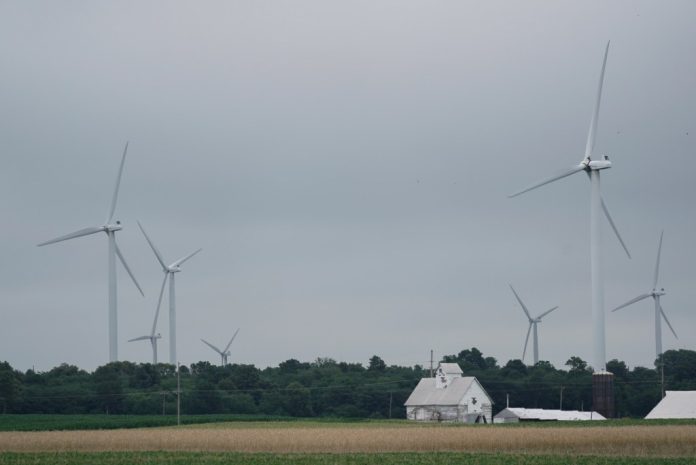
Wind and solar projects are being built from the West Coast to right here in Virginia, which has a tremendous opportunity to be a hub for green-energy jobs. Battery manufacturing for power storage and use in electric vehicles has grown dramatically nationwide. The commonwealth is among states exploring nuclear energy options.

The 2022 Inflation Reduction Act has supercharged those efforts, expanding programs, funding and tax incentives for businesses and organizations that manufacture clean-energy systems or transition toward the use of renewables. Energy Innovation, a nonprofit policy and analysis organization, reports that tax credits under the law have already generated nearly $250 billion in project announcements that could create more than 140,000 new jobs.

“These investments and their impacts are projected to increase Virginia’s GDP by $1.1 billion in 2030,” the group reported in May.

That’s the good news. The bad news is that many of these new renewable transmission projects languish for years in a protracted permitting process before they can be connected to the larger grid. The average wait time for completing this process has grown from two years in 2008 to more than five years now.

As a result, the United States has more than 2,000 gigawatts of proposed solar, wind and battery storage projects in the interconnection process, but some of those won’t be incorporated into the electric grid until 2028 or later. That means more time relying on fossil fuels instead of renewables, and could slow the development of additional projects needed to reach the nation’s emissions targets.

Enter FERC. As the agency charged with regulating energy transmission, the organization has the authority to adjust the rules governing the interconnection process to reduce wait times. And last week, that’s just what FERC did.

According to E&E News, a publication focused on energy reporting, the new FERC rule will evaluate projects in groups rather than one at a time and requires grid operators and electric utilities to change how they conduct studies. There will be tighter deadlines and financial penalties for missteps, and projects nearest to completion will be prioritized.

These are common-sense changes that will modernize an outdated approach to incorporating new generation sources into the grid. The result should be more renewable energy projects helping satiate the nation’s appetite for fuel at a quicker pace, and a speedier transition away from carbon-producing fossil fuel sources.

The nation must address a host of other problems with the electric grid. There is demand for additional transmission capacity, and the grid is terribly inefficient and very wasteful due to a lack of investment for modernization. It is also vulnerable to physical and cyber attacks, which should necessitate substantial investment in security and resilience.

But expediting the process to bring green-energy generation projects online was an straightforward solution to a problem in need of resolution. Virginians can join the rest of the nation in cheering FERC’s decision, which will ensure the green-energy boom continues unabated.

Progress made against massive California-Nevada wildfire but flames threaten iconic Joshua trees – Daily Press

0

By TY O’NEIL, STEFANIE DAZIO and RIO YAMAT (Associated Press)

MOJAVE NATIONAL PRESERVE, Calif. (AP) — Firefighters aided by rain fought to contain a massive blaze that swept through the California desert into Nevada and are threaten ing the region’s famous spiky Joshua trees.

The York Fire that erupted last Friday is California’s largest wildfire this year. As of early Wednesday it had burned through more than 128 square miles (333 square kilometers) of land and was 30% contained, fire officials said.

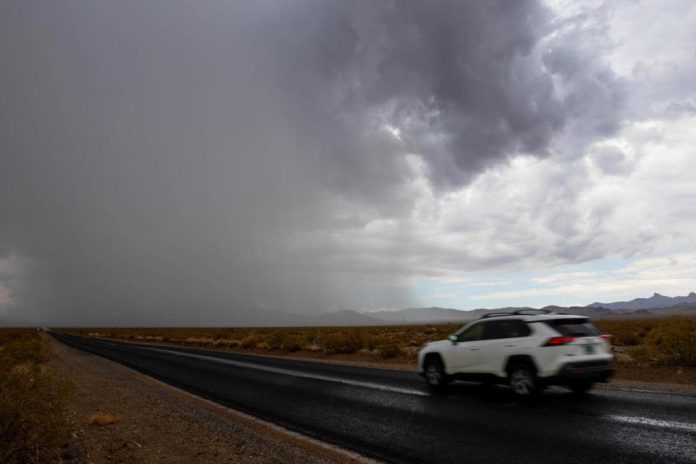
Humid monsoonal weather conditions Tuesday afternoon brought brief but heavy rain, especially on the south end of the fire, and kept its spread to a minimum, fire officials said. Similar conditions were expected on Wednesday, with drier weather poised to return on Thursday.

“Right now, the monsoonal influence is still over the fire,” said Marc Peebles, a spokesperson for California’s incident management team for the York Fire. “There’s always the possibility of showers that will help the effort.”

The 400 or so firefighters battling the blaze have had to balance their efforts with concerns about disrupting the fragile ecosystem in California’s Mojave National Preserve.

Crews used a “light hand on the land,” clearing and carving fire lines without the use of bulldozers in order to reduce the impact in the ecologically-sensitive region, which is home to some 200 rare plants.

“You bring a bunch of bulldozers in there, you may or may not stop the fire, but you’ll put a scar on the landscape that’ll last generations,” said Tim Chavez, an assistant chief for the California Department of Forestry and Fire Protection.

The blaze ignited near the remote Caruthers Canyon area of the vast wildland preserve, crossed the state line into Nevada on Sunday and sent smoke further east into the Las Vegas Valley.

The fire started on private lands within the preserve, but the cause remains under investigation. Less than 3% of the land in the 2,500-square mile (6,475-square kilometer) preserve is privately owned.

While it’s one of the largest national parks outside of Alaska and Hawaii, the vast majority of the Mojave National Preserve’s 880,000 visitors last year were just passing through on their way between Southern California and Las Vegas.

The desert landscape is varied — from mountains and canyons, to sand dunes and mesas, to Joshua tree forests and volcanic cinder cones — and features about 10,000 threatened desert tortoises within its boundaries.

Some of the preserve’s plants can take centuries to recover from destruction. The pinyon-juniper woodlands alone could take roughly 200 to 300 years to return, while the blackbrush scrub and Joshua trees — which grow only in the Mojave Desert — are unlikely to regrow after this catastrophic blaze, said Ileene Anderson, a senior scientist at the Center for Biological Diversity.

The 2020 Dome Fire in a different part of the national preserve destroyed an estimated 1 million Joshua trees.

But fire itself isn’t the only worry. On federal lands, with few people and little property at risk, firefighters sometimes forgo certain equipment like bulldozers, chainsaws and aircraft.

“You don’t disturb any more soil than you absolutely have to; you don’t cut trees unless they absolutely have to come down,” said Chavez, speaking about the tactics in general.

When there are ecological and cultural sensitivities at stake, firefighters negotiate with federal officials to determine what equipment can and cannot be used.

“It’s not just going out there and throwing everything we’ve got at it,” Chavez said.

In Nevada, the fire has entered the state’s newest national monument, Avi Kwa Ame, said Lee Beyer, a spokesperson for the U.S. Forest Service. But Beyer said the number of acres burned within the boundaries of the vast monument in southern Nevada wasn’t yet known.

President Joe Biden established the monument in March, permanently protecting the desert mountain region considered sacred by some tribes. The area stretches more than 500,000 acres (202,300 hectares) and includes Spirit Mountain, a peak northwest of Laughlin called Avi Kwa Ame (ah-VEE’ kwa-meh) by the Fort Mojave Tribe and listed on the National Register of Historic Places.

On Wednesday, firefighters continued to make progress on the Bonny Fire, a 3.6 square mile (9 square kilometer) wildfire that broke out nearly a week ago in California’s Riverside County and is now 60% contained. Evacuation orders remain in place for residents near the fire, but some evacuation warnings were lifted late Tuesday, fire officials said.

___

Dazio reported from Los Angeles, and Yamat reported from Las Vegas. AP writer Amy Taxin in Santa Ana, Calif. contributed to this report.

What’s happening in the Hampton Roads region – Daily Press

0

Our picks for what’s happening in the Hampton Roads region:

Gearing up for school

2023 Back to School Block Party. 10 a.m. to 3 p.m. Saturday. The Urban League of Hampton Roads, 7300 Newport Ave., Suite 500, Norfolk. A kick off to the school year for students K-12, featuring food, games and a school supply giveaway. Free.

___

Wing Warriors assemble!

Flavor Fight: Wing Showdown. 2 to 5 p.m. Saturday. Eight competitors with entries from spicy jalapeno to tangy BBQ. Capstan Bar Brewing Co., 2036 Exploration Way, Hampton. Tickets, $15.

___

Fish Fry in Ptown

11 a.m. to 3 p.m. Saturday. What’s the best thing since sliced bread? Two pieces of sliced bread with crispy fried fish in the middle. Menu items include baked beans, mac and cheese and more. Prices vary. Bayside Harley Davidson, 2211 Frederick Blvd.,Portsmouth

___

National Farmers Market Week

Yorktown Market Days: National Farmers Market Week kickoff. 8 a.m. to noon. Saturday. Riverwalk Landing, 331 Water St., Yorktown. This event features fresh produce aplenty and performances by Lana Puckett and Kim Person, followed by the Fifes and Drums of York Town. Free.757-890-5900; yorktownmarketdays.com.

___

Trivia Time

Ultimate Foodie Trivia. 7 p.m. Aug. 9. Frothy Moon Brewhouse, 1826 Jamestown Road, Williamsburg. .

___

The sweet smell of victory

One Sweet Night: Ultimate Dessert Competition. 6 to 9 p.m. Aug. 12. Local chefs go head-to-head, showcasing their best lavender-infused creations.Enjoy a dessert flight, lavender lemonade, live music and more. Under the Stars Farm, 7235 Putton Road, Gloucester.Tickets start at $10

___

Come for the food, stay for the fun

Virginia Beach Street Food Festival. Advertised times are 2 p.m. Aug. 12 to 8 p.m. Aug. 13. The Shack, 712 Atlantic Ave., Virginia Beach. Foods from around the world, eating competitions, family fun zone, music and more; food items are $5 or less. Tickets start at $12.99. bit.ly/VBfoodfest2023

Russian drone strikes hit a Ukrainian port on Romania’s border that is key to grain exports – Daily Press

0

By HANNA ARHIROVA (Associated Press)

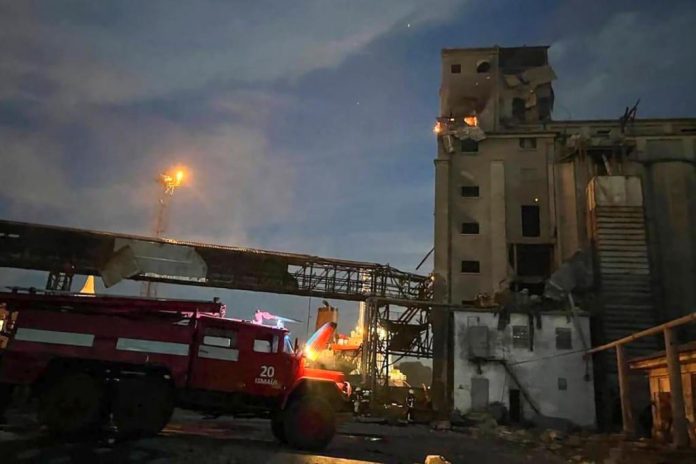
KYIV, Ukraine (AP) — Russian drones on Wednesday hit a Ukrainian port city along the border with Romania, causing significant damage and a huge fire at facilities that are key to Ukrainian grain exports.

The attacks followed the end of a deal with Russia that had allowed Ukrainian shipments to world markets from the Black Sea port of Odesa. Since scrapping the deal, Russia has hammered the country’s ports with strikes, compounding the blow to the key industry. In the past two weeks, dozens of drones and missile attacks have targeted the port of Odesa and the region’s river ports, which are being used as alternative routes.

The head of the Ukrainian president’s office, Andriy Yermak, said the city of Izmail, on the Danube River that forms part of the Ukraine-Romania border, was hit in the strikes.

Video obtained by The Associated Press showed explosions and a large fire in the distance on the Danube, captured by fishermen in Romania, a NATO member, on the other side of the river.

Three Ukrainian ports along the Danube are currently operating.

“The goal of the enemy was clearly the facilities of the ports and industrial infrastructure of the region,” Ukraine’s South operational command wrote in an update on Facebook. As a result of the attack, a fire broke out at industrial and port facilities, and a grain elevator was damaged.

Ukrainian infrastructure minister Oleksandr Kubrakov said that about 40,000 metric tons (44,000 tons) of grain, which had been expected by countries in Africa, China and Israel, was damaged in the attack.

Separately, Ukraine’s air force intercepted 23 Iranian-made Shahed drones fired by Russia over the country overnight, mostly in Odesa and Kyiv, according to a morning update.

All 10 drones fired at Kyiv were intercepted, said Serhii Popko, the head of Kyiv City Administration. Numerous loud explosions were heard overnight as air defense systems were activated. Debris from felled drones hit three districts of the capital, damaging a nonresidential building, Popko said.

“Russian terrorists have once again targeted ports, grain facilities and global food security,” President Volodymyr Zelenskyy posted Wednesday morning on Telegram. “The world must respond.”

He confirmed that some drones hit their targets, with the most “significant damage” in the south of Ukraine.

Wheat prices rose about 3% and corn prices nearly 2% on Wednesday in Chicago trading following the new attacks, before erasing those spikes and trading down. It showed the continued volatility in world markets as Russia targets Ukraine’s ports and agricultural infrastructure.

Ukraine is a major supplier of wheat, corn, vegetable oil and other agricultural products important to the Middle East, Africa and parts of Asia where people are struggling with high food prices and hunger.

Ukraine also can export by road and rail through Europe, but those routes are more costly than going by the Black Sea and have stirred divisions among nearby countries.

Russia and Ukraine agreed a year ago on a deal brokered by the United Nations and Turkey that reopened three Ukrainian Black Sea ports blocked by fighting and provided assurances that ships entering the ports would not be attacked. Russia declined to renew the agreement last month, complaining that its own exports were being held up.

In a telephone conversation Wednesday, Turkish President Recep Tayyip Erdogan told Russia’s Vladimir Putin that he would seek to restore the Black Sea initiative to export Ukrainian grain, according to his office.

Referring to the deal as a “bridge of peace,” Erdogan told Putin that Turkey would “continue to carry out intensive efforts and diplomacy for the continuation of the Black Sea initiative.”

The statement said the two leaders had agreed on Putin visiting Turkey but did not provide a date. Erdogan has previously said Putin would come during August.

A Kremlin statement about the call said “readiness was confirmed to return to the Istanbul agreements as soon as the West actually fulfills all the obligations to Russia recorded in them.” It said preparations were continuing for “a possible meeting” of Putin and Erdogan.

Kremlin spokesman Dmitry Peskov on Wednesday evening said the two leaders agreed to “in the nearest future determine exactly” where the meeting will take place and when.

Two civilians were wounded in shelling of the city of Kherson during the night, regional Gov. Oleksandr Prokudin said Wednesday. A summary from Zelenskyy’s office said a doctor was killed and five medical personnel were wounded in an attack on a city hospital in Kherson, but didn’t specify if the attack was on Wednesday or Tuesday.

A 91-year-old woman died in an attack on a village in the Kharkiv region, the presidential office said.

In the eastern region of Donetsk, four people were wounded in Russian shelling over the past day, according to Gov. Pavlo Kyrylenko.

The area around the city of Nikopol, across the river from the Russian-held Zaporizhzhia Nuclear Power Plant, was shelled three times, Gov. Serhiy Lysak said.

Overall in the war, Ukrainian authorities have so far confirmed the deaths of at least 10,749 civilians, and at least 15,599 more have been wounded, Yuri Belousov from Ukraine’s Prosecutor General’s Office said in an interview with Interfax-Ukraine that was released Wednesday.

“We understand that these numbers are the tip of the iceberg. Once we de-occupy our lands, the numbers will grow many times, possibly tens of times. I think in Mariupol alone there will be tens of thousands of deaths,” Belousov, who runs a department for combatting crimes committed during an armed conflict, said.

___

Associated Press writers Courtney Bonnell in London and Jim Heintz in Tallinn, Estonia, contributed to this report.

___

Follow the AP’s coverage of the war at https://apnews.com/hub/russia-ukraine

Bond denied for Virginia Beach woman charged with killing her husband – Daily Press

0

VIRGINIA BEACH — A judge on Wednesday denied bond for a Virginia Beach woman accused of fatally shooting her husband during an argument at their home last month.

Juvenile and Domestic Relations District Judge Cheshire Eveleigh made the ruling after prosecutors argued Christina Wang poses too great a threat to the community if she were allowed to remain free on bond, according to Macie Allen, a spokeswoman for the Virginia Beach Commonwealth’s Attorney’s Office.

Wang, 30, is charged with second-degree murder and using a firearm to commit a felony in the July 15 slaying of her husband, Calvin Wang.

Christina Wang. Wang is charged with second-degree murder in the death of her husband. Courtesy Virginia Beach Sheriffs Office.

Defense attorney Roger Whitus said he asked the judge to grant his client bond, arguing there was no evidence to indicate she’s a flight risk, or a danger to herself or others. Wang has no prior criminal history, Whitus said.

The incident happened at the couple’s home in Lake Smith Condominiums, near the intersection of Northampton and Independence boulevards, according to police. Calvin Wang, a 37-year-old Navy sailor, was shot in the head and stomach. His body wasn’t found until two days later, when police were called to the scene.

Deputy Commonwealth’s Attorney Tabitha Anderson told the judge the argument and shooting were captured by a video camera inside the couple’s home.

The Wangs had been married seven years and were in the midst of a divorce at the time, according to court documents. Calvin Wang, who shared a 6-year-old son with Christina Wang, had accused his wife of committing adultery, the documents said.

Jane Harper, [email protected]

Burnout, low pay and politics are driving away teachers. Turnover is soaring for educators of color – Daily Press

0

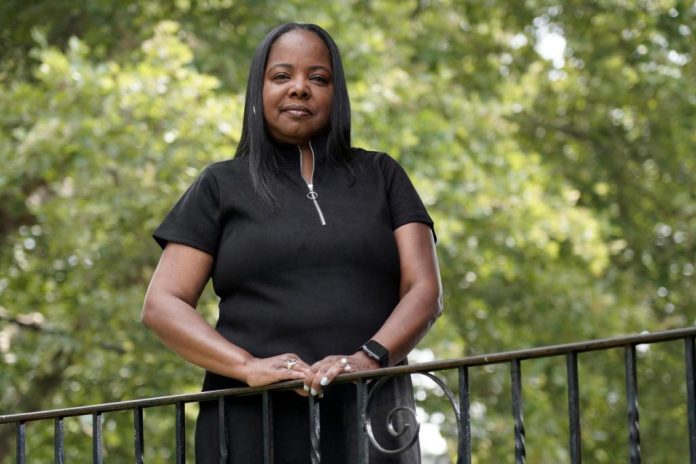
HARRISBURG, Pa. (AP) — Rhonda Hicks could have kept working into her 60s. She loved teaching and loved her students in Philadelphia’s public schools. As a Black woman, she took pride in being a role model for many children of color.

But other aspects of the job deteriorated, such as growing demands from administrators over what and how to teach. And when she retires in a few weeks, she will join a disproportionately high number of Black and Hispanic teachers in her state who are leaving the profession.

“I enjoy actually teaching, that part I’ve always enjoyed,” said Hicks, 59. “Sometimes it’s a little stressful. Sometimes the kids can be difficult. But it’s the higher-ups: ‘Do it this way or don’t do it at all.’”

Teachers are leaving jobs in growing numbers, state reports show. The turnover in some cases is highest among teachers of color. A major culprit: stress — from pandemic-era burnout, low pay and the intrusion of politics into classrooms. But the burdens can be heavier in schools serving high-poverty communities that also have higher numbers of teachers of color.

In Philadelphia, a city with one of the highest concentrations of Black residents in the U.S., the proportion of Black teachers has been sliding. Two decades ago, it was about one-third. Last fall, it fell to below 23%, according to district figures.

In the school buildings where Hicks taught, most teachers were white. She said she and other teachers of color were expected to give more of themselves in a district where half the students are Black.

“A lot of times when you see teachers that are saving Black and brown kids on TV, it’s always the white ones,” Hicks said. “There are Black teachers and Hispanic teachers out there that do the same thing in real life, all the time.”

Nationally, about 80% of American public school teachers are white, even though white students no longer represent a majority in public schools. Having teachers who reflect the race of their students is important, researchers say, to provide students with role models who have insight into their culture and life experience.

The departures are undoing some recent success that schools have had in bringing on more Black and Hispanic teachers. Turnover is higher among newer teachers. And researchers have found that teachers of color, who tend to have less seniority, often are affected disproportionately by layoffs.

In Pennsylvania, Black teachers were more than twice as likely to leave the profession as white teachers after the 2021-22 school year, according to a data analysis by Ed Fuller, an education professor at Penn State. Hispanic and multiracial teachers had a similar ratio, of around twice as likely.

Black and Hispanic teachers are more likely to be uncertified or teaching in an underfunded district, all of which is associated with someone leaving the profession at a higher rate, Fuller said.

“They’re in more precarious teaching positions, meaning you’re in a position with less resources and worse working conditions, so you’re more likely to quit no matter who you are,” Fuller said.

Sharif El-Mekki, a former Philadelphia teacher who leads the Center for Black Educator Development, said schools around the country come to him seeking help in recruiting teachers of color. But they don’t have plans to retain them, such as providing opportunities to help shape policies and curricula.

To address the problem, schools can start by ensuring students of color have better experiences in school themselves and offering them opportunities to consider teaching, El-Mekki said. Black teachers also are more likely stay on in school systems that have Black leaders, he said, as well as a culture and approaches to teaching that are anti-racist.

“We need to think about, ‘How are they experiencing my school?’” he said. “If they are having a better experience with us, they are more likely to stay.”

Attrition by teachers of color can vary greatly by state or region. Overall, it has been higher compared with white teachers for two decades, since around the time federal policies began encouraging the closure of schools with low test scores, said Travis Bristol, a professor of teacher education and education policy at the University of California-Berkeley.

In underfunded schools with large populations of Black and Hispanic children, teachers say they can expect more responsibilities, fewer resources and more children troubled by poverty and violence.

“I’m still in the classroom because this is my version of resistance and pushing back on a system that was not designed for folks that look like me and kids that look like me,” said Sofia Gonzalez, a 14-year teacher of Puerto Rican heritage in Chicago-area public schools. “We as teachers of color have to find so much inner strength inside of us to sustain our careers in education.”

The last few years have been a trying stretch for teachers everywhere. They’ve had to navigate COVID-19, a pivot to distance learning and the struggles with misbehavior and mental health that accompanied students’ return to classrooms.

Then there’s the pay: Educators’ salaries have been falling behind their college-educated peers in other professions.

Teachers unions have warned of flagging morale, and there are signs lately that more educators are heading for the exits. Data from at least a handful of states — including Pennsylvania, North Carolina, Texas and Washington — is showing an increase in teacher attrition.

Black teachers reported significantly higher rates of burnout and being significantly more likely to leave their job than white teachers, according to research sponsored by two national teachers unions and published in June by the Rand Corp. think tank.

Chantle Simpson, 36, taught her last day of school this spring in Frisco, Texas, ending her 11-year career as a teacher.

She described an exodus of her fellow teachers of color from the profession amid growing expectations from administrators, who put more work on teachers by repeatedly appeasing demands from parents.

Administrators — including those who are Black or Hispanic — put more pressure on Black and Hispanic teachers, she said.

“They believe we can handle more,” Simpson said. “Because we develop relationships better, the kids understand us more, so they’re more likely to behave for us or do what we ask them to. So we get fitted with the children who are more challenging or have more requirements. It’s crazy.”

That leaves those teachers with less time for the rest of their better-behaved students, Simpson said.

“I always was conflicted by it,” Simpson said. “It’s mixed with praise, but it’s a punishment. ‘Oh, you’re so great at building relationships, the kids really appreciate being with you, they respond to you.’ But at the same time, you’re increasing my workload, you’re increasing the amount of attention I have to give to one child versus my whole class.”

___

The Associated Press education team receives support from the Carnegie Corporation of New York. The AP is solely responsible for all content.