Some of the biggest names in publishing — and biggest names, period — will hit bookstores in the coming weeks. Fall is always a jam-packed season, especially for titles from our leading literary lights, but the next few months present so many superstars that this list of 12 didn’t have room for bestselling writers such as Alexander McCall Smith and Richard Osman, who have new entries in their beloved mystery series (due Oct. 31 and Sept. 19, respectively).
Here are the even dozen who made the cut, in order of publication. It all ends with the door-stopper that’s destined to cause some pulled muscles.
Stephen King: “Holly”
With “Holly,” the horrormeister revisits the empath who starred in his “The Outsider” (as well as the HBO Max series of the same name, where Holly Gibney was played by Cynthia Erivo). Now the proprietor of a detective agency, she’s called in on a missing persons case that, like “The Outsider,” has an uncanny dimension. This time that dimension lives in the home of a seemingly kind elderly couple. Tuesday.
Penguin Press
Zadie Smith’s first historical novel — set in the 1870s and involving a supposed heir — is due Tuesday.
Zadie Smith: “The Fraud”
The English writer has produced one international bestseller after another since her 1997 debut, “White Teeth.” Her latest is her first historical novel, set in the 1870s. Its narrator is Eliza, a housekeeper who becomes fascinated with a (true) court case in which, despite considerable evidence to the contrary, a man claimed to be the missing heir to a fortune and title. His unlikely assertion was supported by the claimant’s companion, an enslaved man whom Eliza befriends and who exerts a powerful pull on “The Fraud.” Tuesday.
Maria Bamford: “Sure, I’ll Join Your Cult”
The comedian and Minnesota native’s “Sure, I’ll Join Your Cult” is subtitled “A Memoir of Mental Illness and the Quest to Belong Anywhere.” Bamford has been vocal about her bipolar disorder and in “Cult,” she details the many, many groups she has joined (Overeaters Anonymous, Suzuki violin) in an attempt to figure out where she fits in. Tuesday.
Riverhead
The tale of a Colonial-era servant woman on the run, from the author of “Fates and Furies.” Due Sept. 12.
Lauren Groff: “The Vaster Wilds”
As freelancers reached out to the Star Tribune about the possibility of reviewing fall books, two titles were requested by virtually all of them: “The Fraud” and “The Vaster Wilds” from Groff, whose “Fates and Furies” — a marital portrait as thriller — was a huge hit. Here, she crafts an adventure tale, set in America’s Colonial years, about a servant woman on the run. It’s like “Robinson Crusoe” but with more worm-eating. Sept. 12.
Kerry Washington: “Thicker Than Water”
If Barbra Streisand weren’t finally unleashing her life story, Washington’s “Thicker Than Water” would be the biggest Hollywood name on bookstore shelves. Instead, the “Scandal” star will settle for second as she spills the beans on that show, sexism/racism in Hollywood, activism and her marriage to NFL star Nnamdi Asomugha in this tell-all (or at least -some). Sept. 26.
Kate DiCamillo: “Puppets”
Jonesing for some new DiCamillo? She published a picture book last Christmas, but it’s been two years since her last novel, “The Beatryce Prophecy.” She’s been busy. “Puppets,” the first in a planned trilogy of illustrated fairy tales, hits stores Oct. 10 and next spring brings two more from the two-time Newbery Award winner, a middle-grade novel called “Ferris” and the first in a new chapter book series.
Jhumpa Lahiri: “Roman Stories”
With “Roman Stories,” the Pulitzer Prize winner returns to the format that earned her that award for “Interpreter of Maladies”: short stories. Inspired by her move to Rome and efforts to learn Italian, “Roman Stories” comes with an unusual flex: The U.K. native wrote the stories in Italian and then translated them, with the help of Todd Portnowitz, into English. Oct. 10.
John Grisham: “The Exchange”
How many times would you guess the author of “The Firm” has been asked to write a sequel to that blockbuster debut? A zillion? Well, it’s finally here. Lawyer Mitch McDeere, who fled the country after exposing crooks he worked with in “The Firm,” is back to lawyering in “The Exchange,” set 15 years later. And back to sticking his nose in business that may again force him to escape to somewhere remote. Oct. 17.
Auwa
Sly Stone’s memoir, due Oct. 17, is named after one of his most popular songs with the Family Stone.
Sly Stone: “Thank You (Falettinme Be Mice Elf Agin)”
The other octogenarian with a career-spanning autobiography coming out in the next few months is the veteran rocker, whose book is named for one of his most popular songs with the Family Stone: “Thank You (Falettinme Be Mice Elf Agin).” Back in the spotlight because of his electrifying appearance in the Oscar-winning “Summer of Soul” (whose director, Questlove, is publishing the book), Stone writes about success but also the many decades in which he has faded from public view. Oct. 17.
Patty Wetterling: “Dear Jacob: A Mother’s Journey of Hope”
Writing with Joy Baker, the blogger whom Wetterling credits with helping solve the murder in 1989 of her son Jacob, Wetterling offers behind-the-scenes details of the Minnesota case. But “Dear Jacob: A Mother’s Journey of Hope” is also about Wetterling’s efforts to help grieving parents and improve techniques used to investigate sex offenders. Oct. 17.
Michael Connelly: “Resurrection Walk”
“Lincoln lawyer” Mickey Haller and his half-brother, regular Connelly detective Harry Bosch, team up to spring a woman who’s in prison for the murder of her husband, a sheriff’s deputy. She says she didn’t do it and, as Haller and Bosch bump into roadblock after roadblock during their investigation in “Resurrection Walk,” they search for the real killer. Nov. 7.
AP
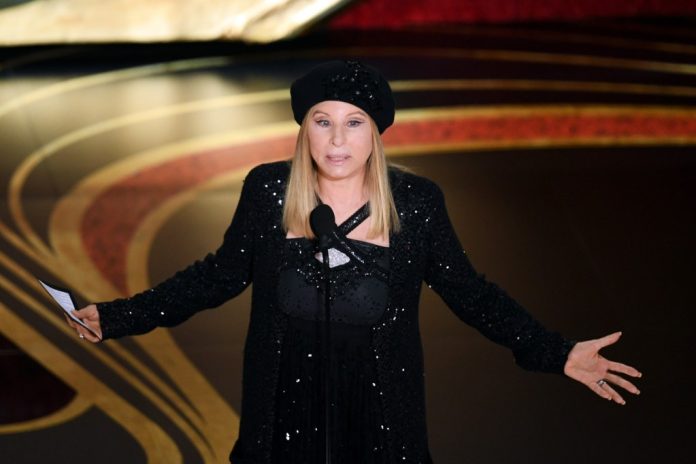
Streisand’s memoir, with more than 1,000 pages, is due Nov. 7
Barbra Streisand: “My Name is Barbra”
The “Funny Girl’s” memoir, “My Name Is Barbra,” is big in every way you can think of. Its press run is 1 million copies, a huge number at a time when only a few books each year sell that many. It’s 1,040 pages. And it’s priced at $47, gargantuan even considering inflation. The octogenarian EGOT, who said she’s been jotting down notes since 2009, officially announced her autobiography in 2015. It was supposed to be published two years later, but people who need people to tell us the stories of their lives will finally get Streisand’s when “My Name” hits stores Nov. 7.
NORFOLK — Kevin Decker’s eyes were fixed firmly on the road, and not at all on what his next move might be.
Decker, then the offensive coordinator at Fordham, was driving with his girlfriend from Durham, New Hampshire, to Fordham’s Bronx, New York, campus a day after his team’s 52-42 loss to New Hampshire in the FCS playoffs when his phone rang.
Looking down, Decker saw the caller ID: “Maybe: Jen Rahne.”
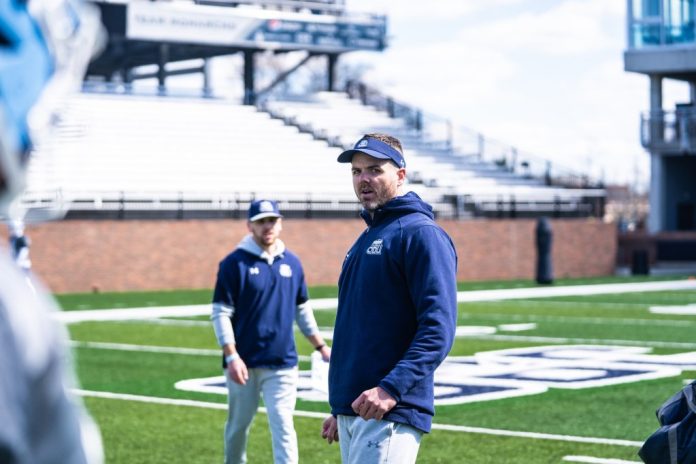
Many phone calls later, and without so much as a visit to Old Dominion’s campus, Decker became the Monarchs’ offensive coordinator.
A 35-year-old former New Hampshire quarterback, Decker accepted the job after taking Fordham to heights previously unreached.
Last season, the Rams put up an FCS-leading 609 yards of total offense per game, the second-highest total in FCS history. Fordham was second among FCS teams with 49.5 points per game.
The numbers piqued ODU coach Ricky Rahne’s interest.
“Obviously, stats were a huge part of it because it showed sustained production,” Rhane, whose team opens the season Saturday at Virginia Tech, said this week. “But it was also watching tape and understanding what type of offense I wanted to go down. So that was a huge part of it as well.”
Though the two men had never met, Rahne and Decker knew some of the same coaches in the industry.
Rahne, a former quarterback at Cornell, vetted Decker through, among others, longtime Brown University coach Phil Estes, who had employed Decker at the school for three years.
Rahne, apparently using his wife’s phone, decided to reach out to Decker, which prompted Decker to vet Rahne through Estes and UCLA coach Chip Kelly, a New Hampshire native.
“Yeah, I know him a little bit,” Kelly told Decker. “I know he’s a fast riser in this industry. I’ve heard nothing but good things.”
Four or five phone calls to Decker later, Rahne had his man.
“I became really comfortable, I would say, after talking to Coach Estes,” Decker said. “He knew Ricky pretty well, and he was like, ‘You guys are a lot alike. You would be a match made in heaven.’ Now I can see what he was talking about.”
ODU Athletics
Kevin Decker is ODU’s new offense coordinator after leading Fordham to heights previously unreached.
Decker hopes his explosive, fast-paced spread offense, which doesn’t use huddles and includes a balance between passing and running, can help the Monarchs improve upon last season’s numbers. They finished last in the Sun Belt Conference with 19.5 points per game, going 3-9 in a season riddled with injuries to key skill players.
Junior quarterback Grant Wilson, who was named the starter last week, said he happened to transfer to ODU from Fordham after Decker left the program.
Wilson entered the transfer portal, foregoing what would’ve almost certainly been a starting job, before he knew where Decker would land.
Of the 58 new players on the Monarchs’ roster, no one knows Decker’s offense better.
“You’re going to see guys playing fast, hard and smart and making sure everyone does their job,” Wilson said.
“I had no idea where (Decker) was going. He didn’t inform us on his whereabouts. But I knew that when he left, I wanted to leave.”
If what Decker orchestrated at Fordham is a repeatable blueprint, Wilson could be in for a big season. Rams quarterback Tim DeMorat passed for 4,891 yards and 56 touchdowns, both school records, as a senior in 2022.
Also arriving from Fordham was offensive line coach Alex Huettel, a former All-American lineman at Bowling Green who helped guide the Rams’ offense alongside Decker.
“They’re both very confident people, and that confidence is earned through their preparation and things like that,” Rahne said. “It’s not a cockiness; it’s a confidence, and it’s rubbed off on the rest of our offensive players. It’s rubbed off, I even think, on our defensive players, who have a lot of confidence in our offense and what’s going to happen this year.”
Before the mutual vetting began, Decker’s knowledge of ODU was limited to what he’d seen on crossover film in college. He remembers being impressed with the fan base and the stadium, even before it was razed and rebuilt anew in 2019.
Like Rahne, Decker’s players describe him as a man with a personality that leaves an impression.
“First and foremost, he brings energy and intensity each and every day,” said junior receiver Javon Harvey, a former star at Norfolk’s Lake Taylor High. “Whether it’s in a walk-through, a meeting, he’s always coming with something. It’s fun to have him around as a coordinator and a leader of this offense.”
When “Jen Rahne” finally made the call to a man who wasn’t looking for a job, he found that the right job had come looking for him.
“When I was at Fordham, I wanted to be the best offensive coordinator I could be at the FCS level,” Decker said. “I never really thought ahead, thought up. It just kind of happened. And now I’m trying to be the best offensive coordinator I can be at Old Dominion. And hopefully, we put up some points and win some games.”
ODU linebacker Jason Henderson during the Monarchs’ morning practice Thursday, August 10, 2023. (Stephen M. Katz/The Virginian-Pilot)
Jason Henderson
Jr., 6-1, 227, LB
The powerful former high school wrestler led the nation with 186 tackles last season, 39 more than anyone else. Henderson finished seven stops shy of the single-season FBS record.
Grant Wilson
Jr., 6-3, 217, QB
A largely unproven commodity, Wilson threw just 13 passes in two seasons as a backup at Fordham before transferring to ODU. He won a three-man battle to emerge as the starter late in fall camp.
Keshawn Wicks
Jr., 6-1, 196, RB
After star back Blake Watson (now at Memphis) entered the transfer portal, Wicks is the team’s top returning rusher. He carried 32 times for 125 yards and a touchdown last season.
Ethan Duane
Jr., 6-1, 226, P
During a season in which the Monarchs struggled to move the ball, the Australian was one of their most effective weapons. Duane averaged 43.1 yards per punt and dropped 28 inside the 20.
Javon Harvey
Jr., 6-0, 178, WR
The Norfolk native caught 30 passes for 558 yards and four touchdowns last season. He could emerge as one of Wilson’s favorite targets.
Storylines
ODU’s head football coach Ricky Rahne during the Monarchs’ morning practice Thursday, August 10, 2023. (Stephen M. Katz/The Virginian-Pilot)
Who does what?: Part of the challenge for ODU’s coaches this fall has been learning names, faces and capabilities. The roster has 58 new players on it, including 41 new scholarship players.
How effective will the new offense be?: First-year offensive coordinator Kevin Decker brought with him from Fordham a scheme that put up record-breaking FCS numbers. The frenzied spread approach can be tailored to a given team’s personnel, and it hopes to keep defenses guessing and playing catch-up.
Can Henderson do it again?: Linebacker Jason Henderson tackled everybody but the referees last season, leading all FBS players. His coaches believe the work he did in the offseason could make him even more destructive, even if teams now know to plan for him.
Is Wilson the answer?: Junior Grant Wilson won the starting quarterback job after transferring from Fordham and emerging in a three-man race. But Wilson has thrown just 13 college passes, and none at the FBS level.
Was last season a fluke?: The Monarchs started 3-3 but finished 3-9 in 2022. That followed a season in which they started 1-6 and finished 6-7, including a loss to Tulsa in the Myrtle Beach Bowl. To return to the postseason, they’ll have to be more consistent on first down and be able to finish drives.
Schedule
Mike Caudill/The Virginian-Pilot
Old Dominion running back Keshawn Wicks breaks a tackle during the Priority Charity Bowl ODU Spring Game on Saturday at S.B. Ballard Stadium
Sept. 2 at Virginia Tech, 8 p.m.
Sept. 9 vs. Louisiana, 6 p.m.
Sept. 16 vs. Wake Forest, noon
Sept. 23 vs. Texas A&M University-Commerce, 3:30 p.m.
At the Hampton Roads Chamber Annual Senatorial Forum on Aug. 14, Sen. Tim Kaine spoke about needs for immigration reform and developing a workforce to support the federal government’s investments in infrastructure. He also took questions from the audience about specific industries, including the need for affordable child care.
For Hampton Roads, a few of the highlights of funding recently approved by Congress include:
Combined $161.6 million from Coronavirus Aid, Relief, and Economic Security Act and American Rescue Plan for Hampton Roads airports and transit systems
$1.7 million to Virginia community health centers, including Peninsula Institute for Community Health in Newport News and Portsmouth Community Health Center
$800,000 to Portsmouth Public Schools to support workforce readiness and industry-based skills
The forum is an annual event that gave members the opportunity to hear directly from Kaine on the work he has been doing for the state and the Hampton Roads region. The next chamber legislative event is the Legislative Reception, which will be held on Sept. 14 at the Harbor Club in the Waterside District. This is your chance to come meet elected officials from the Virginia General Assembly and city councils in the region.
The art and science of leadership
“Leadership is a perishable skill, and it must be honed and practiced,” said Robert Pizzini, managing partner and CEO of iFly Virginia Beach Indoor Skydiving during the Chamber Leadership Series.
Pizzini shared both the art and science of leadership and taught attendees how to construct a leadership foundation to create a personal leadership profile. He revealed that leaders are created from three main components: their personal definition of leadership, deliberate leadership styles and purposeful power types.
To be a successful leader, he shared that you must start with a foundation, which is your personal definition of leadership. Pizzini provided several examples of leadership and challenged the room to focus on what leadership means to them to help determine their foundation.
Saluting Norfolk’s service members
On July 26, the chamber spent the afternoon saluting Norfolk’s military service men and women at the Military Recognition Reception. The keynote speaker, Capt. Janet Days, commanding officer for Naval Station Norfolk, addressed the room of military heroes and business professionals to provide words of wisdom and gratitude to our honorees.
The chamber thanked and recognized these honorees for their service to our region and country: E-5 Erik Babb, E6/BM1 Rio Flores, E-6 William Stevens, LS3 Azaliah McNabb, ABH2 Gabriel Guido, ABH3 Hassen Muhammad, Legalman First Class Latorri White, YN1 Ashely Rivera, YN1 Emily King, YN2 Taylor Hughes, Cpl. Holden L. Mesimer and Cpl. Troy Cordell.
Lifetime Sale Achievement awarded again
The Association of Chamber of Commerce Executives awarded Diane Raihle of the Hampton Roads Chamber with the Dana Ketterling Lifetime Sales Achievement Award. The award recognizes career sales achievement where Raihle earned recognition in the Million Dollar Circle category for achieving $1 million in sales in chamber memberships throughout her career.
Raihle serves as the senior manager of member development and has been a dedicated industry staff member for almost 15 years. She believes deeply in connecting with her clients and building those important relationships. To date, she has won five Lifetime Sales Achievement Awards from the association.
On a personal note, Raihle was born in New York, raised in California and found her way back to the East Coast in 2001. She is also a published author of her book “The Fountain of Youth, A Comedy About Three Women and Their Quest for Beauty.”
Sharing calendar events
The chamber is creating a Hampton Roads Regional Calendar, which will live on the chamber website. Individuals and organizations in the community can share regional events as often as they wish, according to calendar guidelines.
Event info can be added when the calendar launches Sept. 1.
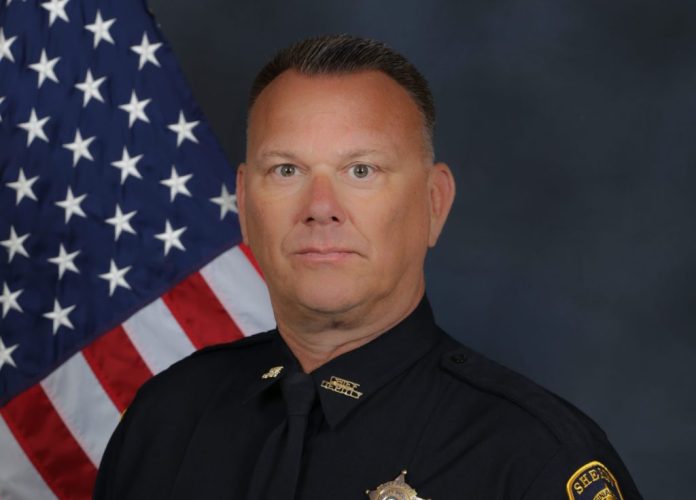
VIRGINIA BEACH — Sheriff Ken Stolle, who previously announced plans to retire this year, has set a resignation date. So has City Councilman Rocky Holcomb.
Stolle, 69, will leave office Sept. 29, and Holcomb will resign from City Council at 1:59 p.m. that day — a minute before he’s sworn in as sheriff.
“I’m fulfilling my duties to District 1 all the way to the last minute,” said Holcomb, 55.
A person is not allowed to hold both the office of sheriff and be a City Council member.
Once Holcomb’s resignation becomes effective, the City Council has 60 days to appoint an interim councilmember, according to the city. Under state law, if the council can’t agree or doesn’t act, Circuit Court judges will make an appointment to fill the vacancy.
“The City Council will determine the process and timeline for an interim appointment with these legal considerations in mind,” city spokesperson Bryan Clark wrote in an email.
The interim council member could serve for more than a year, as Holcomb’s term would’ve ended Dec. 31, 2024. District 1 includes portions of Kempsville, Lake Christopher and Bellamy Manor.
“The City Council could request a special election to be held prior to the November 2024 election, but it has historically not requested special elections on dates other than the November general election,” wrote Clark.
A special election can’t be called until there is a vacancy, according to the Virginia Beach registrar.
Several current council members originally were appointed to their seat, including Holcomb. In the past, when a council member has left before the end of his or her term, the city will call for applications, narrow the candidate list and hold public interviews and comment before voting on an interim member.
“City Council has not addressed the issue yet, so I cannot definitively say what the entire process will look like,” Clark wrote.
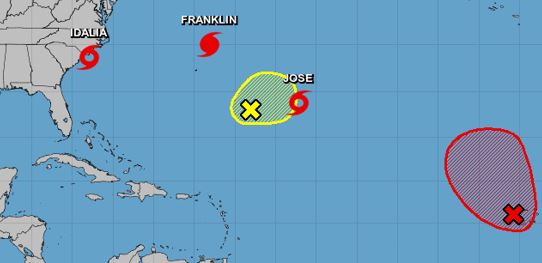
Tropical Storm Jose formed early Thursday in the central Atlantic from what was Tropical Depression 11 as activity in the tropics was teeming Hurricane Franklin, Tropical Storm Idalia and another potential tropical depression.
As of 5 a.m. Thursday, Jose was 785 east-southeast of Bermuda with maximum sustained winds of 40 mph. It was moving north at 5 mph. Jose is expected to stick around a few days before being absorbed by what is currently Hurricane Frankin, according to the latest from the National Hurricane Center.
Franklin was maintaining as a Category 2 hurricane early Thursday with top winds of 100 mph. As of 5 a.m., it was about 200 miles north-northeast of Bermuda. The hurricane is forecast to slowly weaken and dissipate this week.
A tropical wave in the far eastern Atlantic off Africa is likely to become a tropical depression later this week as it moves west-northwest, the National Hurricane Center said. As of 2 a.m. Thursday, its odds of developing increased to 70% in the next two to seven days.
Finally, the remnants of Tropical Storm Gert drifted several hundred miles north of the Leeward Islands. Its chances of regenerating were low, 30% in the next two to seven days.
By early Thursday, the former Hurricane Idalia was a fast-moving tropical storm lashing eastern North Carolina with heavy rain and winds. Its top winds were at 60 mph as of 5 a.m. Thursday as it moved north-northeast at 21 mph. Parts of North Carolina were under a tropical storm warning and a storm surge watch.
Idalia rapidly intensified into a major Category 4 storm before weakening to a Category 3 hurricane early Wednesday as it made landfall along the coast of Florida’s Big Bend near Keaton Beach about 7:45 a.m. Keaton Beach is along the Apalachee Bay.
The National Hurricane Center has been predicting an “above-normal” 2023 hurricane season as a result of ongoing record-breaking sea surface temperatures that continue to fight off the tempering effects of El Niño.
While sea surface temperatures have remained hot for longer than anticipated, El Niño’s effects, which typically reduce hurricane chances, have emerged more slowly.
The NHC, which operates under the National Oceanic Atmospheric Administration, has forecast 14-21 named storms, including 6-11 hurricanes, and two to five major hurricanes.
As of Aug. 31, there have been three hurricanes — Don, Frankin and Idalia, the latter two of which were major hurricanes.
The next named storm to form would be Katia (KAH-tyah).
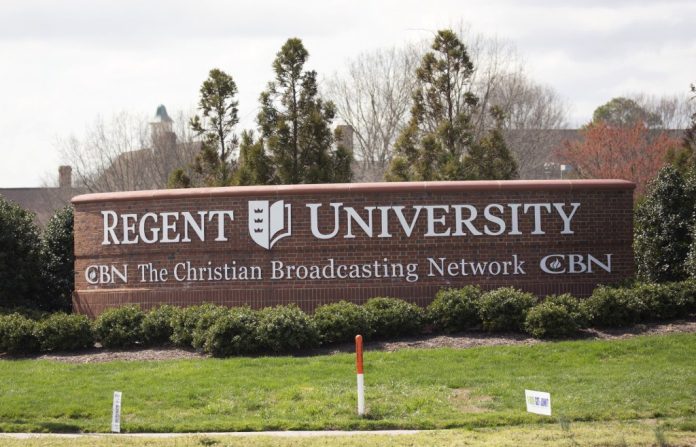
Hundreds of disaster relief kits heading to Florida in the wake of Tropical Storm Idalia will have been packed by Regent University students.
Working in collaboration with Operation Blessing, hundreds of students packed nearly 800 kits that will be sent to Operation Blessing International in Ocala, Florida on Thursday.
“To lead is to serve others—and by participating in a service project as vital as this one, Regent students got the opportunity to experience what our school is truly about,” Petra Bailor, a senior at Regent, said in a press release.
Each kit contains contractor bags, paper towel, Clorox wipes, cleaning spray, hand sanitizer, face masks, gloves and scour pads, according to the press release.
Tropical Storm Idalia made landfall Wednesday morning at Florida’s Big Bend region as a Category 3 hurricane. The National Hurricane Center downgraded the hurricane to a tropical storm Wednesday afternoon. States along the east coast are bracing for tropical storms — largely in Georgia, South Carolina and North Carolina. North Carolina remains under a state of emergency.
By HANNAH SCHOENBAUM (Associated Press/Report for America)
CHAPEL HILL, N.C. (AP) — A shooting that left a faculty member dead and frightened students at the University of North Carolina at Chapel Hill has galvanized gun safety advocates and local Democrats, who rallied the grieving campus community Wednesday to fight for stricter state gun laws.
About 600 students held protest signs on a large lawn in the heart of campus and bowed their heads during a moment of silence as the iconic campus Bell Tower rang in honor of the deceased associate professor, Zijie Yan.
Yan, who led a research group in the Department of Applied Physical Sciences, was fatally shot Monday by one of his graduate students inside a science lab building at the state’s flagship public university, authorities said.
Students who spoke at the rally described hours of terror and confusion during a lockdown and police manhunt that resulted in the arrest of Tailei Qi, 34, who has been charged with first-degree murder and having a gun on educational property. Qi briefly appeared Tuesday in Orange County Superior Court, and Judge Sherri Murrell ordered that he remain jailed without bond. Dana Graves, a public defender who represented Qi at the hearing, left court without talking to reporters and did not respond to an email seeking comment.
With quaking hands and trembling voices, students chanted Yan’s name Wednesday and raised signs that read “learning not lockdowns,” “this is my reality” and “1 death by guns is 1 too many.” They waved copies of The Daily Tar Heel, UNC’s student newspaper, which went viral overnight for its Wednesday front page displaying emotional text messages sent and received by students during the lockdown.
“One shot was fired but an entire community was injured,” said Luke Diasio, vice president of the UNC chapter of March For Our Lives. “It was the most terrifying experience of my life.”
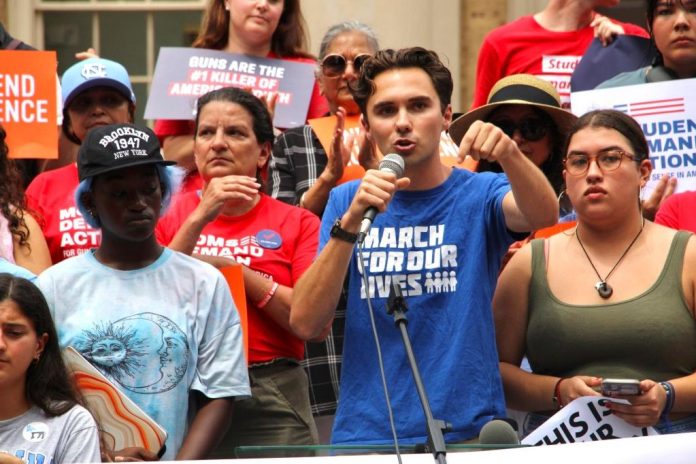
March For Our Lives co-founder David Hogg, who launched the nationwide gun control movement in the immediate aftermath of a fatal mass shooting at his high school in Parkland, Florida, in 2018, hugged teary eyed students, several who he had met previously. He urged them to take their pain and anger to the ballot box.
“The reality is, if we don’t mobilize after these things happen, they’re going to continue happening,” Hogg said in an interview with The Associated Press. “This is a critical state because this is where change is possible, a lot more than in Washington. If students at UNC and elsewhere turned out and voted, they could change the state legislature.”
Hogg criticized North Carolina Republicans, who hold a narrowly veto-proof supermajority in the General Assembly, for enacting legislation this year that repealed a permit system requiring sheriffs to evaluate gun applicants before they could purchase a pistol.
As Republicans plan to redraw legislative maps in a special session this fall, state Democrats are preparing for an uphill battle in 2024, said state party chair Anderson Clayton. Elected at 25 years old, Clayton has trained her focus on young voters, whom she views as essential to shedding Democrats’ superminority status in the legislature, holding onto congressional seats and retaining control of the governor’s office after Gov. Roy Cooper ends his term.
“Now is always the time” for political action, she told the crowd. “Now’s too late in a lot of ways to be thinking about what we’re doing at this moment and how you can engage and put your voices out there.”
Volunteers with the UNC Young Democrats registered 24 new voters at the rally, the organization said.
Clayton called for “a reckoning in our state capital” and accused Republican leadership of not taking the shooting seriously.
House Speaker Tim Moore, a Cleveland County Republican and UNC alumnus, had said in a statement Monday that he was “heartbroken” for his Tar Heel family and thankful for the officers and first responders who apprehended the suspect. Moore’s office did not immediately respond to an email seeking comment on Clayton’s accusation.
Danielle Kennedy, a freshman from Apex, held a handmade sign that read “This is my 2nd School Shooting.” The computer science student told The AP she was overwhelmed Monday with familiar feelings of terror after having lived through a similar three-hour lockdown earlier this year when a student brought a BB gun to her high school.
“The first time around, I felt afraid, but now I’m just angry,” Kennedy said. “I’m living proof of how common and deeply traumatic this is for kids in our country.”
___
Hannah Schoenbaum is a corps member for the Associated Press/Report for America Statehouse News Initiative. Report for America is a nonprofit national service program that places journalists in local newsrooms to report on undercovered issues.
Progress is possible now, but we might need to let go of our desire to understand it. The intuitive Pisces Moon sextiles buoyant Jupiter, setting an upbeat tone. Alas, when Luna opposes nervous Mercury at 3:29 pm EDT, we may worry that following our hearts doesn’t make logical sense. Fortunately, the Moon then harmonizes with innovative Uranus, making it clear that the best solutions tend to come about in unexpected ways. We can’t control everything — and that’s a really good thing!
Aries
March 21 – April 19
Your intuition could lead you to a surprising source of money at this time. This might be the boost you need to achieve a major goal! Yes, the effort you make matters. That aside, as the perceptive Moon in your mystical 12th house aligns with abundant Jupiter in your finance sector, it’ll possibly be a relief to see that sometimes the equation is more complicated than hard work alone. Not everything that goes wrong is your fault — and neither is everything that goes right.
Taurus
April 20 – May 20
You may be in the mood for a thoughtful and intellectually stimulating kind of pleasure at the moment. Nevertheless, while the cozy Moon in your social zone conflicts with cerebral Mercury in your 5th House of Fun, your friends might prefer to kick back and relax with as little effort as possible. Instead of opening a negotiation, just start thinking on your own. If you can single-handedly come up with a creative solution that satisfies everyone’s desires, your leadership will probably be accepted.
Gemini
May 21 – June 20
A decision you make today might seem impulsive, as far as the outside world can tell. As the volatile Moon in your public 10th house engages with analytical Mercury in your 4th House of Roots, there’s likely better planning behind it than you’re getting credit for. Although you may not like the idea that you’re being misinterpreted as reckless, giving others more information than they really need could just provide additional fodder for any complaints. Be content with your own knowledge of the truth.
Cancer
June 21 – July 22
Being more public than usual about your beliefs can help you now. While the tempestuous Moon in your philosophical 9th house opposes detail-oriented Mercury in your communication zone, you won’t be able to get away with pure passion — you may have to explain some things in detail. Even when you do a great job, it won’t be guaranteed that everyone you speak to will agree with you. Thankfully, the people you’re meant to be with are inclined to hear you and join you.
Leo
July 23 – August 22
A loved one’s emotional pleas could threaten to disrupt your carefully planned recent budget. Holding a firm line is harder than it sounds when you know giving in would restore peace and quiet. As the vulnerable Moon in your sharing sector coordinates with benevolent Jupiter in your 10th House of Authority, perhaps you also get a thrill out of potentially being powerful enough to have someone dependent on you — especially if you’ve felt disempowered in other situations lately. Own all of your motivations.
Virgo
August 23 – September 22
You may currently have a clear idea in your own mind concerning what a loved one needs. That said, peacefully and nonjudgmentally listening to them share their side of the story could challenge you much more than executing any of the “helpful” plans you’ve cooked up on their behalf would. There are probably things about their situation that you don’t know, so hear them out before you go any further. You might not choose their journey for yourself, but that shouldn’t devalue their path.
Libra
September 23 – October 22
Your approach to certain tasks might appear intuitive. Perhaps you’ve never tried to explain how you do what you do. However, you’ll have to get beyond that if you want anyone else to help you with your duties. While the primal Moon in your responsible 6th house interacts with logical Mercury in your 12th House of Secrets, do your best to put your workflow into words. Although some details may be lost in translation, it’ll still be better than doing everything yourself forever!
Scorpio
October 23 – November 21
Following the lead of a more spontaneous friend could be rewarding for you today. With the fluctuating Moon in your 5th House of Pleasure, you probably know you’re looking for a good time, but you might not know exactly what that would look like. Your companion can bring up several possibilities you wouldn’t have thought of on your own. You’re likely to enjoy any fresh activities — but, even if you don’t, at least you’ll have learned something important about your tastes!
Sagittarius
November 22 – December 21
You may want the current world to follow rational rules. However, you likely also know that you have other valid logical foundations, even if you’re conflicted about them. While the intuitive Moon in your 4th House of Roots aligns with revolutionary Uranus in your productive 6th house, it’s okay to use a mysterious source of inspiration to refine your workflow. Once you’re able to follow what feels most natural to you, your increased productivity will possibly draw the positive attention you’ve been hoping for!
Capricorn
December 22 – January 19
You may want people to see you as a deep thinker, but your natural way of speaking is probably more casual at the moment. You’re better off accepting this instead of fighting against it. After all, the most profound insights must work in the real world to be true! When the colloquial Moon in your communication zone encourages exuberant Jupiter and quirky Uranus in your playful 5th house, you might as well have fun while you’re at it — let your unique genius shine through.
Aquarius
January 20 – February 18
Impulse spending could potentially get you in trouble now. As the desirous Moon in your finance sector opposes discerning Mercury in your 8th House of Shared Resources, someone else with a stake in the situation may insist that you adhere closely to a budget. Don’t go behind their back, but don’t defer to them unquestioningly either. Although there’s value in having a plan, sometimes situations shift over time. If changes at home have made this purchase necessary for your comfort, make sure they know that.
Pisces
February 19 – March 20
Someone else might currently act like they’re the sensible, serious one in your relationship with them. Whether or not you’re comfortable with this dynamic, talking about it openly could help you understand what brings you together. If they’re so rational, can they explain what they get out of spending time with you? A genuine appreciation of the different perspective you bring to their life is a great reason to keep hanging out with them. A sense of superiority is not.
Earlier this year, The Strategy Bridge asked civilian and military students around the world to participate in our seventh annual student writing contest on the subject of strategy.
Now, we are pleased to present one of the Third Place winners from Marshall McGurk, a recent graduate of the U.S. Army’s School of Advanced Military Studies.
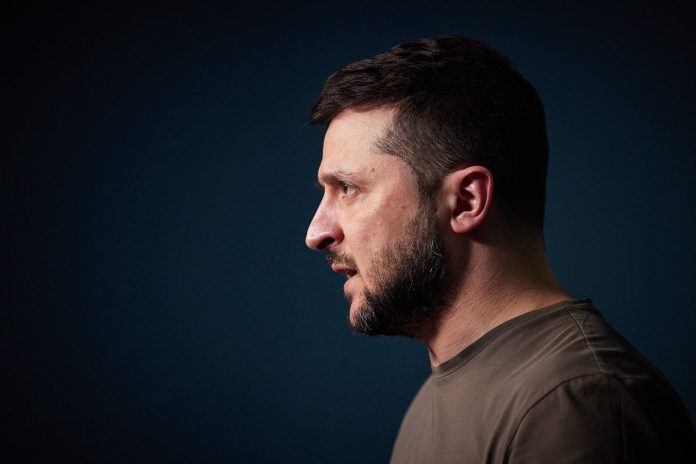
“We are all here. Our military is here, citizens are here. We are all here defending our independence, our state, and it will be so further. Glory to our defenders, glory to Ukraine!”[1] With those impassioned words, Ukrainian President Volodymyr Zelenskyy, flanked by his Prime Minister and party leaders around a cell-phone screen, galvanized his country and sent a message of defiance to the world on the first night of Russia’s invasion. At the time of this writing, Ukraine has met the call of President Zelenskyy’s words. Russia and President Vladimir Putin remain unable to overthrow the Zelenskyy government or gain control of the Ukrainian state.
While 20th-century leaders used mediums such as radio and television addresses, President Zelenskyy leveraged the power of smartphones to film the speech and promulgate it into the 24-hour news cycle through social media dissemination. The narrative stands well with the day of infamy speech by President Franklin Delano Roosevelt on December 8, 1941, or President George W. Bush’s impromptu bullhorn address at the World Trade Center site.[2]
The address gave not only the Ukrainian people, but Zelenskyy’s military commanders at all echelons clear objectives and a unifiednarrative to rally around, focused on the defeat of Russian forces and defense of Ukraine’s sovereignty. Ukraine has maintained its objectives and unified narrative since the outset of the war, leveraging the power inherent in the objective-narrative nexus to its advantage. The United States should look to Ukraine’s use of the objective-narrative nexus as a benchmark example as it competes with the pacing challenge of the People’s Republic of China, Russian aggression in Europe and Africa, and the states of Iran and North Korea.
In an age of global, near-real-time telecommunications technology fraught with disinformation, misinformation, and malinformation, it is vital that strategists, operational planners, and tacticians understand the importance and ramifications of the absence of clear objectives and a unified narrative during operations. Mitigation and protection strategies alone are not enough to counter adversary narratives or attempts to discredit U.S. narratives. As such, it is necessary to update military doctrine, mainly operational art—the bridge between strategy and tactics—to account for the elements of objective, unified narrative, and the resultant nexus. The goal of this paper is to show how important the objective-narrative nexus is to strategy, provide recommendations for military doctrine, and provide historical precedent for the appropriate use or misuse of objective and unified narrative.
There are two key terms and two assumptions to frame the argument. First, strategy, as defined by naval officer and theorist J.C. Wylie, is “a plan of action designed in order to achieve some end; a purpose together with a system of measures for its accomplishment.”[3] This definition provides sufficient boundaries for the additions of objective and narrative. The “end” constitutes the objective, and “narrative” is inclusive of purpose and how that purpose is communicated. Second, U.S. Army doctrine defines operational art as “the design of campaigns and operations by integrating ends, ways, and means, while accounting for risk.”[4] It is the bridge between strategy and tactics, arranging tactical actions and incorporating outcomes to achieve strategic goals.
This paper assumes the U.S. Congress will not declare war—something it has not done since December 1941. Authorizations for the use of military force will remain the status quo. As a result, certain authorities, permissions, or funding streams will be unavailable to joint, department, and theater command staffs. This assumption does not impact the necessity of objective or unified narrative, as both are vital in competition or in limited crises. This paper acknowledges that authorizations for the use of military force limit resources and concepts that might be viable in a declared war.
The second assumption is that while there are multiple definitions of operational art—nearly a dozen across a cursory literature review—the U.S. Army’s definition of operational art will remain constant through 2040. Furthermore, including objective, unified narrative, and the objective-narrative nexus does not interfere with the future operating concept for the U.S. Army of 2040 and henceforth can be considered as recommended additions to the concept. This assumption accepts the validity of the operational level of war, as well as the tactical and strategic levels in accordance with U.S. Army Field Manual (FM) 3-0, Operations. Arguments concerning the validity of the operational level of war are not considered here.
Strategy and Revisions To Operational Art
The nine elements of operational art—end state and conditions, center of gravity, decisive points, lines of operations and lines of effort, tempo, phasing and transitions, culmination, operational reach, basing, and risk—are tools used by commanders and staffs to “help understand an operational environment and visualize and describe their approach to conducting an operation.”[5] They are not imperatives, and therefore all are not necessary for success, but effective commanders seek to apply a majority to achieve victory and continue operations. Proper employment of operational art ensures tactical actions are arranged and resourced to meet strategic objectives. The elements must be revised if they are expected to be relevant in support of U.S. strategy now and in 2040.
The first revision concerns the end state and conditions. The end state is “a set of desired future conditions the commander wants to exist when an operation ends.”[6] It is a confusing and ill-advised term. The singular end state of a military operation is a set of desired conditions, plural, that are likely outside of a commander’s control.
Furthermore, the term end state does not account for the complexity within a system, a common issue during experiments about logics of failure.[7] Consider a combatant command during this present age of great power competition and integrated deterrence. At what point does a combatant command achieve an end state when it is constantly in a state of competition? Multiple attempts at the same end states may not result in the desired future conditions, and, as recent history shows, plans become emergent based on the complex system of unforeseen events such as a global pandemic.
A more specific and usable term is objective, “the clearly defined, decisive, and attainable goal toward which every operation is directed.”[8] A clear, concise, specific objective or set of objectives helps planners avoid unclear goals or negative goals that add to the fog and friction of military activities.[9] Sets of objectives can be nested across services and domains, as well as synchronize various elements of national power, thereby enabling integrated deterrence.[10]
Each member of a team, be it the joint force commander or the squad leader, should know what the objective is for a given operation and their roles and missions within them. This does not mean commanders, their staff, and soldiers disregard the conditions for those objectives. Rather, a return to the term objective, instead of end state, allows units to respond to problems presented by the environment and adversary and incorporate resultant outcomes, instead of pursuing nebulous end states that are desired but may well be unattainable.
The second proposed revision is to add the term narrative into the elements of operational art. In a growing age where altered photos, video, and speech are the norm for spreading disinformation, misinformation, and malinformation, the need for a clear narrative for all forms of military operations is paramount. Strategists should be aware of the power available when connecting the stated objective with a coherent, unified narrative, and leverage that objective-narrative nexus for comparative advantage. This nexus also ensures the integrated and coordinated use of information-related capabilities throughout military operations, be they joint training or combat.[11] Operational planners will focus their efforts on clarifying and maintaining the objective while units at all echelons will know why they are fighting, what they are fighting for, and take their own initiative to spread the narrative.
The revisions to operational art are thus: remove the uncertain element of end state and replace it with the element of objective; add in the element of narrative, defined in joint doctrine is an “overarching expression of context and desired results;”[12] and revise strategy and operational doctrine to acknowledge the objective-narrative nexus and the resultant power therein. An example definition of the objective-narrative nexus could read something like this:
The objective of the operation must be clearly tied with the narrative of that objective, and the narrative must consistently and clearly state the goal of the endeavor. There is power of will and spirit in the objective-narrative nexus that must be known and leveraged by all, whether in competition, crisis, or conflict. The narrative should be known at all echelons, where a unified narrative improves morale, reinforces the purpose of the objective, and the ways in which the objective will be accomplished.
Adding in the elements of objective and unified narrative will improve the theory of operational art and refine it for 21st century warfare.
Historical Precedent
The objective-narrative nexus is not new in warfare. Carl von Clausewitz in On War qualifies the moral elements as “among the most important in war.”[13] He goes on to describe how the elements create a spirit throughout the war closely aligned with the will that leads an army.[14] Furthermore, Clausewitz posits that the source of the army’s spirit comes from “frequent exertions of the army to the utmost limits of its strength.”[15] This growth and reinforcement of spirit comes from the exhortations of clear objectives and a unified narrative. Clausewitz saw the power of objective and unified narrative in Napoleon’s Grande Armée and the lack of it in his native Prussian forces. Soldiers, be they rifleman or corps logisticians, must know what they are fighting for and what they will tell those who question the worthiness of the endeavor.
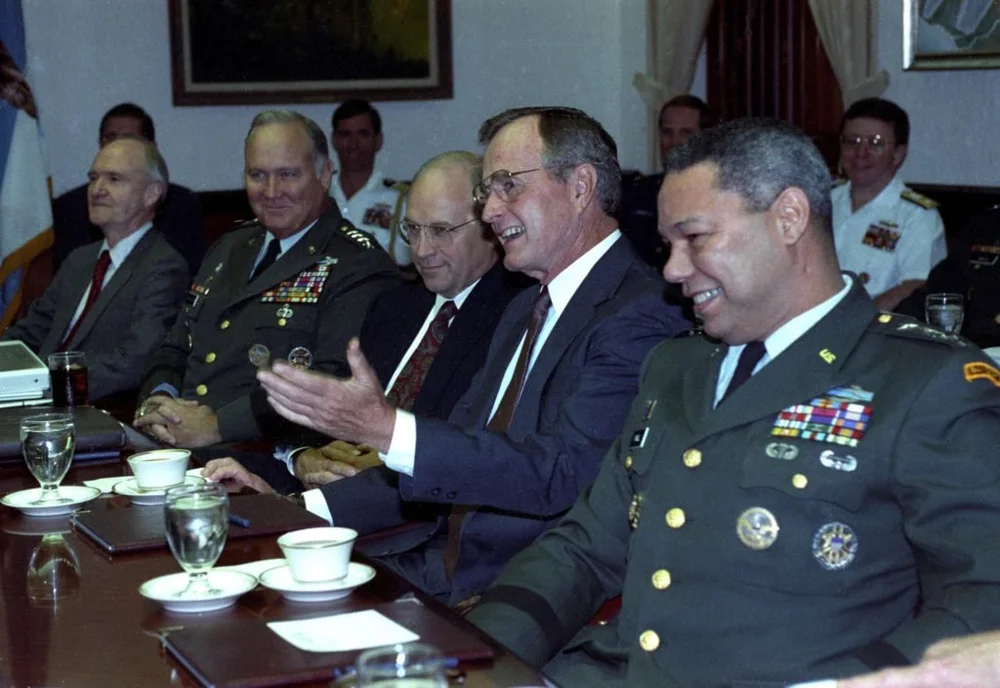
Successful U.S. military campaigns leverage the power of the objective-narrative nexus. The Vicksburg Campaign of 1862-1863 began with the primary objective of opening the Mississippi River for Union control, along with the freedom of action to exercise judgment and initiative.[16] This led into the narrative of the campaign and the narrative for the unconditional surrender terms of the Vicksburg garrison. Another example stems from the limited war aims of President Polk and the subsequent limited operational plans of General Winfield Scott during the Mexican-American War.[17] The objective for expelling Iraqi forces from Kuwait was clear and aligned with narratives set forth from President George H.W. Bush from 1990 to 1991 and resulted in rapid termination of the conflict once Iraqi forces left Kuwait.
President George H.W. Bush meets with General Norman Schwarzkopf, Secretary of Defense Dick Cheney, and Chairman of the Joint Chiefs of Staff Colin Powell to discuss the Gulf crisis on August 15, 1990. (Gary Cameron/Reuters)
Perfection in strategy is impossible, and the U.S. experience during the Vietnam war abounds with unclear objectives, narratives that were disbelieved, and chaos instead of power at the objective-narrative nexus. Incurring casualties at an average rate of over 100 killed in action per week over muddled, misunderstood, and unachievable objectives cannot save even the best of narratives.[18] Future histories of the U.S. wars in Iraq and Afghanistan may likely uncover missed opportunities to clarify objectives and maintain unified narratives.
A compelling example of the lack of the objective-narrative nexus comes from Russia’s side during the current Russia-Ukraine war. Since February 2022, Russia’s narrative has changed multiple times, covering everything from a war against fascism, defense of the Russian diaspora, and a war of unification.[19] This change in narrative has forced changes in Russia’s objectives so often that they are stalemated in eastern Ukraine and Crimea, unable to achieve their lofty and ever shifting goals. At the operational level, Russian troops may not maintain their spirit to do their utmost because they likely do not know for which objective or narrative they are fighting. Furthermore, international states and their citizens are less apt to believe Russia’s talking points, especially when such confusing and perhaps false narratives come through official state channels.
Unofficial channels such as internet and video blogs or chats such as Telegram also play an important role in echoing the narrative of a state during a crisis. Caveat emptor applies, as unofficial information operations groups supporting either side can dominate global social media and news platforms by willfully or unwittingly disseminating unverified or fake content.[20] Adversaries using unofficial sources to spread the narrative is nothing new, though; Al-Qaeda and ISIS used unofficial sources to spread scenes of violence and terror by filming and distributing public burnings, beheadings, and suicide bombings. U.S. strategists and operational planners should learn from our adversaries and seek to incorporate unofficial channels throughout the range of information-related capabilities.
Conclusion
Strategy must evolve with the changing environment of war, and this means strategic thinking must consider the power derived from the nexus of clear objectives and a unified narrative. Commanders and their staff cannot afford to dismiss political considerations in warfare or great power competition. They must think of objective and narrative as tools for the design of campaigns, be they security force assistance or large scale combat operations.
Policymakers must not only agree on the unified narrative. They must be able to incorporate bottom-up narratives as well. There are multiple historical examples showing the benefits of the objective-narrative nexus and how strategists and operational commanders leveraged its power with great effect. Russia’s failure to subjugate Ukraine provides the most recent example of a lack of clear objectives and disparate and shifting narratives producing a logic of failure. U.S. Army doctrine has to prepare itself for warfare in the 21st century. The addition of objective and narrative as elements of operational art, the bridge between strategy and tactics, would be a welcome step toward comparative advantage in competition and conflict.
Marshall McGurk is an Army officer and recent graduate of the Advanced Military Studies Program, School of Advanced Military Studies, academic year 2022-2023. The views expressed are the author’s alone and do not reflect those of the U.S. Army, the Department of Defense, or the U.S. Government.
The Strategy Bridge is read, respected, and referenced across the worldwide national security community—in conversation, education, and professional and academic discourse.
Thank you for being a part of The Strategy Bridge community. Together, we can #BuildTheBridge.
Header Image: Signals from the Negotiations, Kyiv, Ukraine, 2022 (Україна).
Notes:
[1] USA TODAY, “Ukrainian President Volodymyr Zelenskyy Shares a Message from Kyiv | USA Today.” 25 Feb. 2022, video, 00:46, https://youtu.be/tLv9IqcoNe8.
[2] UVA Miller Center, “December 8, 1941: Address to Congress Requesting a Declaration of War” UVA Miller Center: Presidential Speeches. Accessed 19 April 2023. https://millercenter.org/the-presidency/presidential-speeches/december-8-1941-address-congress-requesting-declaration-war, and FOX 35 Orlando, “George W. Bush’s bullhorn speech still echoes, ‘I can hear you! The rest of the world hears you’” 11 September 2019, video, 1:40, https://youtu.be/zi2SNFnfMjk.
[3] J.C. Wylie, Military Strategy: A General Theory of Power Control (Annapolis, MD: Naval Institute Press, 1989), 14.
[4] US Department of the Army, Field Manual (FM) 3-0, Operations (Washington, DC: Government Publishing Office, 2022), 3-1.
[5] US Department of the Army, Army Doctrinal Publication (ADP) 3-0, Operations (Washington, DC: Government Publishing Office, 2019), 2-5–2-6.
[6] ADP 3-0, Operations. 2-6.
[7] Dietrich Dörner, The Logic of Failure (New York: Metropolitan Books, 1996), 38-39.
[8] US Department of the Army, Field Manual (FM) 1-02.1, Operational Terms (Washington, DC: Government Publishing Office, 2021), 1-72.
[9] Dörner, The Logic of Failure, 52-53.
[10] The White House, National Security Strategy: October 2022 (Washington DC, 2022), 22, https://www.whitehouse.gov/wp-content/uploads/2022/10/Biden-Harris-Administrations-National-Security-Strategy-10.2022.pdf. It is notable that the National Security Strategy speaks multiple times about achieved objectives and desired objectives, instead of end states.
[11] FM 1-02.1, Operational Terms, 1-52. FM 1-02.1 defines information operations as “the integrated employment, during military operations, of information-related capabilities in concert with other lines of operation to influence, disrupt, corrupt, or usurp the decision-making of adversaries and potential adversaries while protecting our own.” Army doctrine defines misinformation but not disinformation or malinformation. See FM 1-02.1 Operational Terms, 1-67.
[12] Joint Chiefs of Staff, Joint Doctrine Note (JDN) 2-13 Commander’s Communication Synchronization (Washington DC: Government Publishing Office, 2013), III-9.
[13] Carl von Clausewitz, On War, Trans. Michael Howard and Peter Paret. (New York: Alfred A. Knopf Everyman’s Library, 1993), 216.
[14] Clausewitz, On War, 216-217.
[15] Clausewitz, On War, 221.
[16] Donald Stoker, The Grand Design: Strategy and the U.S. Civil War (New York: Oxford University Press, 2010), 209-210.
[17] Timothy D. Johnson, A Gallant Little Army: The Mexico City Campaign (Lawrence, KS: University of Kansas Press, 2007), 16.
[18] William F. Owen, “The Tactics Gap: Why We Wrestle With The Basics.” Military Operations, Vol 2, Issue 1. Winter 2014, 17-19, https://www.tjomo.com/article/the-tactics-gap-why-we-wrestle-with-the-basics/.
[19] Al-Jazeera, “‘No other option’: Excerpts of Putin’s speech declaring war.” Al-Jazeera>News>Russia-Ukraine war. Accessed 03 April 2023. https://www.aljazeera.com/news/2022/2/24/putins-speech-declaring-war-on-ukraine-translated-excerpts.
[20] Amanda Seitz and David Klepper, “Propaganda, fake videos of Ukraine invasion bombard users.” APNews, February 24, 2022, accessed June 3, 2022, https://apnews.com/article/russia-ukraine-technology-europe-media-social-media-80f729025396abf9ad9e4e9d0b4f5ece.















.jpg)