Home Blog Page 58

Local restaurants need public’s support as pandemic pressures linger – Daily Press

0

Though the worst of the coronavirus pandemic is now firmly behind us, presumably for good, the ripples created by that unprecedented period of social, economic and political upheaval continue to affect how we live, work and recreate.

Perhaps nowhere is that more apparent than in the hospitality industry — and specifically in restaurants. Many establishments are still struggling to hire and retain employees, keep prices affordable for customers and eke out a profit that allows them to survive another year.

That’s as true in Hampton Roads as it is anywhere, which is especially perilous given the region’s outsized reliance on hospitality and tourism revenue. Recent reporting by Virginian-Pilot and Daily Press food writer Rekaya Gibson put a spotlight on the ongoing hardship those businesses are enduring trying to serve the public — and it is illuminating.

When COVID-19 reached these shores in early 2020, public officials and health experts scrambled to contain the disease through screening and travel restrictions before turning to domestic measures once those proved unsuccessful. In short order, a public health emergency resulted in widespread closures of schools, businesses and public spaces.

It was as though our communities changed overnight as most people who could work from home did so and schools moved online. Other industries, such as restaurants and food service, adapted to the new environment by embracing curbside pick-up and home deliveries for patrons.

While those changes helped many places stay afloat in uncertain times, it also took a tremendous toll on employees. In early 2021, a study by researchers at the University of California-San Francisco found line cooks and those who work in agriculture were at greatest risk of dying from COVID, even more than medical professionals fighting the virus in hospitals and clinics.

As the pandemic eased, restrictions expired and the nation, more or less, returned to normal, restaurants that endured that turbulent period found the landscape had changed dramatically. It was harder to find employees to hire, much less to stay. Food costs soared, erasing profit margins. And customers, pent up for two years, were unpredictable and occasionally confrontational.

To meet the demand for higher wages and in order to ensure their survival, many area restaurants have increased prices or added surcharges and fees to diners’ bills. Gibson reports that those include a 20% gratuity to ensure servers and back-of-house staff are fairly compensated and so-called “swipe fees” of 3.5-5% charged by credit card companies that businesses had previously absorbed into costs.

Naturally, many customers have not received these changes gracefully. They are frustrated by longer wait times, often due to understaffing, and resentful of the higher costs. Some have left, pledging never to return until things change.

But paying fair wages, especially at a time when 1 in 15 food service workers quit every month, isn’t a luxury, but a necessity. Inflation exacts a toll across the economy, not only in food service. And while there is legislation that would boost immigration levels to expand the hiring pool for restaurants and offset the credit card companies’ swipe fees, there’s no telling when — or if — that relief will come.

But those measures should win passage, just as we should be willing to accept changes such as automatic gratuities and slightly higher fees to support local businesses. Sure, we may not be able to dine out as frequently, but there is value in rallying behind these much-loved establishments.

After all, neighborhood restaurants are staples of our communities. We cheer our wins and lament our losses at the local sports bar. We fill booths at the neighborhood joints to celebrate birthdays and anniversaries. We take first dates and propose marriage at white-tablecloth fine-dining spots. And we gather with friends, new and old, to share a bite and beer, having been reminded how important shared moments are to our lives.

Restaurants are fighting to stay afloat, doing whatever they can, and they won’t survive without us. We should lend our support, knowing our region would be far poorer without them.


Virginia Beach Sports Center is falling behind on bills, needs over $1 million – Daily Press

0

The Virginia Beach Sports Center is behind on its bills, and if it doesn’t get an influx of cash soon — to the tune of $1.16 million — future events could be canceled, according to the city.

An audit presented to the City Council in February revealed the facility was losing money, and it seems the situation has only gotten worse.

Eastern Sports Management, which operates the venue, is falling behind on payments to event promotors for ticket sales.

The City Council will vote Tuesday on whether to shore up the center with tourism tax funds.

The $68 million facility opened in 2020 near the convention center on 19th Street. It’s one of the largest multipurpose indoor sports venues on the East Coast and has hosted nearly a half-million athletes and spectators, many of whom stay in local hotels, eat in restaurants and shop in stores.

But since opening, the venue has been in the red.

Eastern Sports Management has used $750,000 from a reserve account to pay unanticipated operating costs and asked to borrow $260,000 more from the city earlier this year, according to the audit.

The problem is not enough money coming in from events, said Eastern Sports Management President John Wack.

“The prices being charged tournament operators are not sufficient to cover operating costs,” Wack wrote in a text Friday.

The city’s Convention & Visitor Bureau sets the pricing.

And while the sports center stays busy with large-scale tournaments most of the year, it relies on local camps and leagues in the summer when high hotel occupancies make it difficult to book large events, according to the city.

City Auditor Lyndon Remias recommended in February that the sports center host more events during the summer, charge more for big events and limit discounts to close the gap.

The venue houses 12 basketball courts that can be converted into 24 volleyball courts. It also features a 200-meter hydraulically banked indoor track, capable of hosting NCAA and international track and field meets. The building can host wrestling, gymnastics, field hockey, cheerleading, pickleball, cornhole and more.

The city pays the management company a monthly fee of $30,000 as well as a revenue-based monthly incentive for the operation and maintenance of the center. The city also pays $6 million a year in the debt services from the construction of the facility.

Wack said his management company owes event promoters $259,000 and that the company is requesting $1,164,299. The money would be used to pay the promotors and replenish the reserve account, according to the city.

If the funds are approved by the City Council, the management company will be required to provide a six-month plan on increasing revenues or decreasing expenses in order to return the money to the city, or it will be in default of the operating agreement.

Wack will meet with the city next week to map out a plan, he said.

Also, Eastern Sports Management’s incentive fee will be suspended until the funds are paid back, and it will have 10 days to show that event promotors have been paid or that the money has been placed in an escrow account for that purpose, according to the city.

Wack’s hopeful the situation will improve soon.

“The Sports Center has been wonderfully successful in terms of its primary mission, attracting sports tourists to Virginia Beach,” Wack wrote in his text. “Opening in the pandemic, operating in a tight labor market, and meshing local programming with sports tourism events have all challenged the balancing of revenue with expenses.”

Stacy Parker, 757-222-5125, [email protected]

60-year-old man dies after hit-and-run in Norfolk; woman arrested – Daily Press

0

A 20-year-old woman was arrested and charged in connection to a fatal hit and run in Norfolk Friday night.

Ahziyah Corprew was arrested after an investigation into the hit-and-run and is being held without bond Norfolk City Jail, according to a Saturday afternoon news release from the city.

She is charged with hit-and-run fatality, according to police.

Officers found 60-year-old James A. Edmonds suffering from life-threatening injuries after responding around 9:15 p.m. to a car crash involving a pedestrian at the 2100 block of Lafayette Boulevard in Norfolk. He died later of his injuries at a hospital.

The vehicle involved in the accident had left the scene before police arrived, police said.

Second Witch of Pungo dies at 91, after many years of strawberry festivals and love for community – Daily Press

0

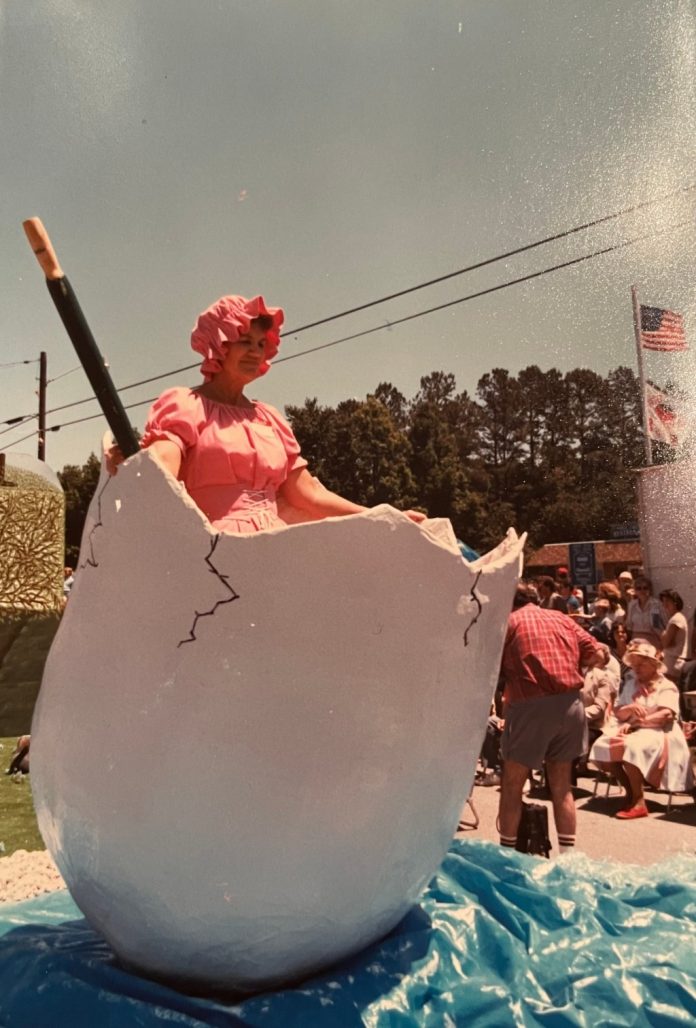
Dorothy Whitehurst, the second honory Witch of Pungo, on her egg. Grace Sherwood, the “real” witch, shocked neighbors by saying she would sail an egg shell to Europe for flowers for her garden. Courtesy of Angelique Thames

For decades, the community of Pungo has honored Grace Sherwood, the last person convicted of witchcraft in colonial Virginia, with the naming of an honorary ‘Witch of Pungo” at the annual strawberry festival.

In 1706, Sherwood’s thumbs were tied to her toes, and she was thrown into the Lynnhaven River. According to the belief of the time, if she was innocent, she would sink. If she was a witch, she would float.

Sherwood bobbed to the surface. She served eight years in jail for her “crimes” and her story became legend.

In 1984, the Pungo Strawberry Festival began its 36-year run, and the tradition of naming an annual honorary Witch of Pungo was born.

Being named the honorary Witch of Pungo for the village's annual Strawberry Festival was a huge honor in the event's early days. Courtesy of Angelique Thames
Being named the honorary Witch of Pungo for the village’s annual Strawberry Festival was a huge honor. Courtesy of Angelique Thames

Dorothy S. Whitehurst was named the festival’s second Witch of Pungo back in 1985. She died last month at the age of 91.

Her granddaughter, Angelique Thames, wrote the following about the strawberry festival and her grandmother’s time as the “witch.”

Dorothy S. Whitehurst, the second Witch of Pungo has passed away. Dororthy Whitehurst, 91, of Virginia Beach, served as the Honorary Witch of Pungo for the annual Pungo Strawberry Festival in 1985.

The Pungo Strawberry Festival was an annual event held during Memorial Day weekend and featured a parade, carnival rides, local eats and a host of entertainment.

Over the years the festival served as a time for the Hampton Roads community to come together, to share the beauty of our farmland and of course Pungo’s best red, ripe strawberries.

Being named the honorary Witch of Pungo for the village's annual Strawberry Festival was a huge honor in the event's early days. Courtesy of Angelique Thames
Being named the honorary Witch of Pungo for the village’s annual Strawberry Festival was a huge honor in the event’s early days. Courtesy of Angelique Thames

The Witch of Pungo story, written by Louisa Venable Kyle, became the basis for the selection of an honorary woman each year to represent the storyline of this famous character.

A press conference would be held each year in which a committee would announce the respected local woman to be selected. That person would not only ride in the annual parade but represent Pungo and greet festival-goers as they attended the weekend’s events.

Dororthy Whitehurst was a long standing resident of Pungo for many years, loving both the community and those living in it and attended the festival each year after time as the witch in 1985. She could be seen watching the parade from the grandstand or in one of the front yards of her Pungo friends that lived along the parade path.

She was also a participant in later Strawberry Festival parades including one in which many previous “witches” were in attendance. She loved to retell the story of the “Witch of Pungo” to her grandchildren and great grandchildren adding details that only those from Princess Anne County would know!

City of Norfolk honors former NSU basketball star ‘Pee Wee’ Kirkland for his work in the community – Daily Press

0

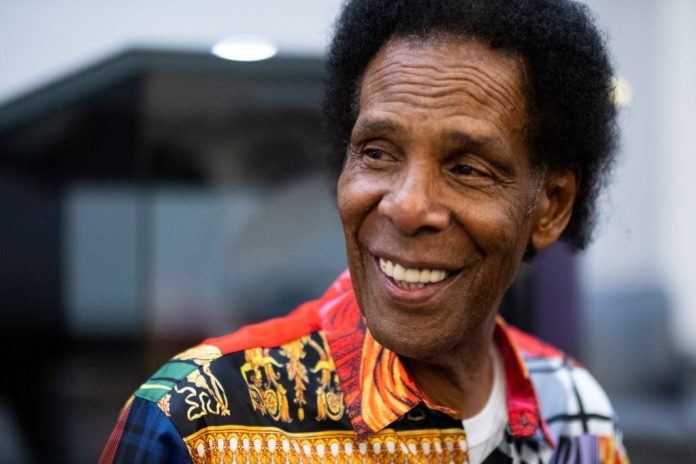
NORFOLK — Basketball legend Richard “Pee Wee” Kirkland was in Hampton Roads last week to receive a proclamation from the City of Norfolk.

Councilman John “JP” Paige, who represents Ward 4, made the presentation. Norfolk Mayor Kenneth Alexander, who was seated in the audience at Gethsemane Community Fellowship Church, signed it.

On the basketball court, Kirkland was an all-city guard at Charles Evans Hughes High. He got a scholarship to Kittrell Community College in North Carolina, where he averaged more than 40 points a game. He later attended Norfolk State, where he teamed with future Hall of Famer Bob Dandridge to help lead the Spartans to the CIAA title in 1968.

Kirkland’s fame rose at the renowned Rucker League tournament in West Harlem, where he reigned as scoring champion for several years. From 1968 to 1971, he matched skills with NBA stars like Julius Erving, Tiny Archibald and Charlie Scott.

Two months ago, Kirkland was inducted into the American Basketball Hall of Fame along with many others, including Dick Vitale, Harlem Globetrotter Tyrone “Hollywood” Brown, Miami Heat forward Grant Long and Detroit Pistons forward Terry Mills. At his introduction, the announcer told the crowd that Kirkland was “the greatest point guard that never played in the NBA.”

Kirkland’s fame even crossed over to music as he has been mentioned in many rap songs, including by the rap group Clipse in their 2002 hit “Grindin” and Ja Rule’s “Always on Time.” He also appeared in the film “Above the Rim” as a Georgetown recruiter, and made an appearance as himself in the 2018 basketball comedy “Uncle Drew.”

Richard “Pee Wee” Kirkland, center, speaks during a town hall meeting July 31 at Gethsemane Community Fellowship Church in Norfolk. Kirkland is considered one of the best basketball players at Norfolk State and was an NBA draft pick in 1969. (Billy Schuerman/Staff)

But Kirkland wasn’t honored last week for any of that.

He was recognized for his work over the past 40 years that he’s given tirelessly to help young people.

In 1969, the Chicago Bulls drafted him with the fourth pick in the 13th round. Instead, he made the decision to take another path that eventually led him to serve 11 years in federal prison.

It was while he was behind bars that he changed his life. He vowed to dedicate his life to giving back to try to help save young people.

In 1983, he began a program to help make a positive impact on the lives of youths in New York. He later founded Pee Wee Kirkland’s School of Skillz, a motivational community program that through basketball, works to change the culture of young people.

And he hasn’t stopped since then as he’s positively impacted the lives of countless youths.

Kirkland, 78, talked about what the proclamation meant to him.

“It means everything. This is why I do it,” he said. “Young people all over the country respect the name Pee Wee Kirkland … They know when I first said to myself that I committed my life to impacting their lives, I said I was going to do it until I dropped. And I meant that. I haven’t dropped, so I’m still doing it.”

One of the lives Kirkland touched while in Hampton Roads was Amarius Evans.

Evans grew up in Young Terrace, a public housing community. He got a chance to hear Kirkland earlier in the week. He didn’t get enough and had to come hear him speak again.

“He came and talked to us about two nights ago when we were playing basketball,” said Evans, who moved to Virginia Beach and will be a freshman at Landstown High. “He came out and talked to us and gave us some good words. Everybody just sat back and listened. It was very powerful.”

Richard “Pee Wee” Kirkland greets an attendee after speaking during a town hall meeting July 31 at Gethsemane Community Fellowship Church in Norfolk. (Billy Schuerman/Staff)

Kirkland was so impressed by Evans that he called him up on the stage with him.

“I was a little bit (nervous), but I’m not a shy person,” Evans said about the impromptu invitation. “But I was with a legend. It makes me feel good, and makes me feel proud of myself. And I hope I can be a legend one day.”

Kirkland’s life has impressed others, too, including his former teammate.

Dandridge remembers him as a “a very good player, good enough to be a starter at Norfolk State the one year he was there.”

But what’s impressed Dandridge even more is what Kirkland has done and continues to do in the community.

“I’ll remember him as a good basketball player, but also a good person who is giving back to is community, particularly in Harlem,” he said. “And for his willingness to try to turn some people around, especially young people. That’s how I’m going to remember him.”

Kirkland’s son, Pee Wee Jr., travels with his famed father often. He said seeing his father’s impact on others is humbling.

“It makes me feel like a proud son. It’s inspiring and gives people a sense of motivation and empowerment in their community,” he said. “He’s someone the youth and older people can look up to and be proud of. It’s just amazing.

“And he’s a living testament that you have to practice what you preach. If you’re teaching somebody, you can’t just say one thing, you have to do it. You have to follow your lead. Otherwise, it’s just talking.”

In a 1997 New York Times story, Kirkland was quoted as saying, “‘Thirty years ago, I was part of the problem. Thirty years later, I’m part of the solution.”

That’s exactly what he’s trying to do: make a difference.

As the night was coming to an end, Kirkland was asked how he wants to be remembered.

After a slight pause, he said, “For what I did today,” he said. “For what I said today because that’s the most important thing in my life. The rest of it was just things I survived to get to this level.”

Larry Rubama, 757-446-2273, [email protected], Twitter: @LHRubama

Boat crash that killed U.S. tourist off Italy coast prompts manslaughter investigation – Daily Press

0

By FRANCES D’EMILIO

ROME (AP) — The skipper of a rented motorboat involved in a crash off the Amalfi Coast that killed a U.S. tourist is being investigated for suspected manslaughter, a prosecutor in southern Italy said Saturday.

Salerno Chief Prosecutor Giuseppe Borrelli told a news conference in that port city that the skipper, an Italian who hasn’t publicly identified, is also being investigated on suspicion of causing a shipwreck. No charges have so far been filed against him, and the investigation is still ongoing.

Adrienne Vaughan, 45, was killed and her husband and the skipper of the rented motorboat were injured in the accident Thursday afternoon off a stretch of coastline popular with tourists. The motorboat slammed into a chartered sailboat, where some 70 guests aboard were enjoying a wedding reception.

Blood samples were taken from the skipper to determine alcohol and drug levels. But Borrelli indicated that for now the results were inconclusive.

“The results are being evaluated by a consultant of the prosecutor’s office since the data per se aren’t necessarily significant,” Borrelli. He added that more evaluation was needed to determine “the incidence of the levels on the ability of the subject” to pilot the boat.

On Friday, Italian news reports said that the blood toxicology tests had found traces of cocaine.

Investigators have questioned the skipper who remains hospitalized with what Italian media said are pelvis and rib fractures. The victim’s husband, Mike White, is being treated at another hospital for a shoulder injury, according to reports. Authorities have spoken to him and plan to do so again, Borrelli said.

The couple’s two young children were uninjured. They’re now in the care of one of the their grandfathers who travelled to Italy to help while their father is convalescing, the prosecutor said.

Borrelli said when the crash happened, Vaughan was sunning herself on the bow of the boat and “bounced” into the water at the moment of impact. He declined to detail her injuries, saying the results of an autopsy are still pending.

Two doctors who were among the passengers on the sailboat dived into the sea to to help Vaughan, while a nearby vessel brought her to shore, Italian state radio said, quoting the sailboat’s captain.

Borrelli said the woman died before a medical helicopter and local ambulance could take her to hospital.

The sailboat’s captain has told Italian media that the motorboat was speeding when it smashed into the stationary sailboat’s bow.

The prosecutor said investigators also questioned the captain of the sailboat as well as some 70 passengers including American and other foreign tourists.

The motorboat had set sail from the town of Amalfi, Borrelli said. According to Italian media, the family was headed to Positano, another popular coastal town when the crash happened.

Vaughan was president of Bloomsbury Publishing’s U.S. branch, which counts writers ranging from bestselling novelists Sarah J. Maas and Susanna Clarke to historian Mark Kurlansky among its roster of authors.

A Bloomsbury book, “Chasing Me to My Grave: An Artist’s Memoir of the Jim Crow South,” by the late Winfred Rembert (as told to Erin I. Kelly), won the Pulitzer Prize for biography in 2022.

Police identify man killed in central Newport News shooting – Daily Press

0

Newport News police have identified the man killed in a Friday afternoon shooting.

Officers were dispatched to the 400 block of Nelson Drive, off Warwick Boulevard north of Hilton Village, just after 2:15 p.m. When emergency services arrived at the scene, police found 31-year-old Kevin Hughes, a Newport News resident, with a gunshot wound. He was pronounced dead at the scene.

At this time, police say the investigation in ongoing, and there is no information about potential suspects or what may have led to the shooting.

Anyone with information about the shooting is to call the anonymous Crime Line at 1–888-LOCK-U-UP or submit a tip online at P3Tips.com.

Budget, Title IX review and pandemic challenges – Daily Press

0

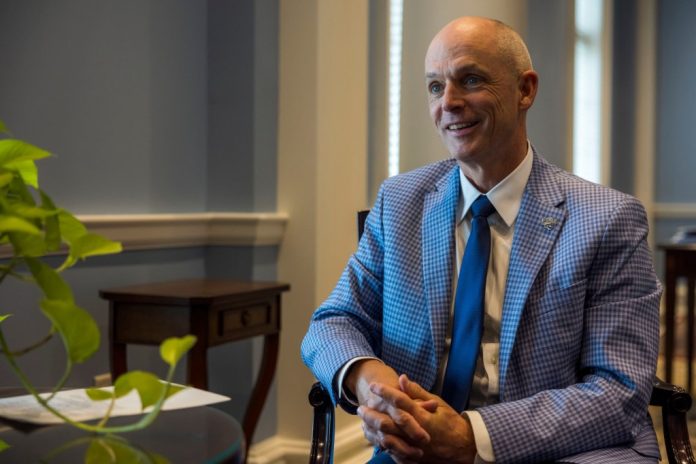
William Kelly has a word for his first month on the job — “whirlwind.”

During an interview at his office, Christopher Newport University’s new president said he is still getting acclimated to the community and the job.

“But all of my initial impressions of Christopher Newport are coming to fruition,” he said. “This place is squared away. It’s committed to serving its students.”

Kelly, 58, said he spent his first weeks listening and learning more about the university and its responsibilities to students and the wider community. He met with senior staff and with various local and state representatives. On Monday, he met with the governor and secretary of education. Kelly said is looking forward to students returning to campus this fall and the opportunity to start engaging with them. He also plans to meet with faculty.

Kelly, who retired from a 36-year career with the Coast Guard, will be inaugurated Aug. 14 as CNU’s sixth president.

There is a lot of good work happening on campus, Kelly said. But he also knows it is a challenging time for higher education. Some of those challenges stem from the pandemic.

Kelly said research shows the pandemic had educational and social effects, and “that goes back to about third grade.”

“So we’ll be dealing with those impacts at the secondary level and then higher education for years to come,” he said.

One of the things the pandemic shined a light on is the growing mental health crisis, Kelly said.

“We’ve been telling students for a long time to ask for help, and they are asking for help today,” he said. “And we’re not nearly prepared to do what we need to do.”

He said he and wife Angie plan to bolster mental health services on campus, and will build on the recent grant that CNU received to expand its mental health services.

Another challenge Kelly is looking to address is how to drive enrollment, particularly through raising awareness among prospective students about regional public colleges like CNU.

“This is a great institution,” he said. “It’s got some of the best facilities in the country. We have top-notch faculty who are winning awards. Our athletic teams are winning national championships. But if you’re not coming to campus, you don’t know that. You don’t know what a Christopher Newport University experience is like.”

___

Budget

Kelly starts his tenure as CNU and other universities across the commonwealth are experiencing budget difficulties because of inflation and declining enrollment. At June’s Board of Visitors meeting — before Kelly started — university officials said 26 vacant positions were being eliminated and a freeze would be instituted on 10 faculty searches. CNU also will scale back events, reduce hours and overtime where feasible, and implement efficiencies in grounds maintenance and housekeeping.

A university spokesman said officials also are looking at ways to increase revenue. One idea under consideration is offering programs to mid-career professionals, such as certificates and trainings requested by local employers.

“I would say we have a pretty good handle on it here,” Kelly said. “Our senior team has done what they need to do to assess where we’re at financially. It’s going to continue to be challenging across the board. Inflation is, as you know, jacking up prices for everything from the food that we serve our students to the utilities that we pay to the cost of maintenance, and all of those add up.

“I look forward to rolling up my sleeves and working with the team to figure out how we can be a more efficient and effective university while still providing the highest level of service to our students.”

Kelly said he would hold his first meeting with his strategic team next week, where budget efficiencies will be a big focus.

___

Title IX review

Kelly also addressed another critical issue facing CNU — how the university handles reports of sexual assault and supports victims. The university formed a Title IX review committee in the spring after a detailed report by The Virginian-Pilot and Daily Press about how CNU has handled such allegations. The committee submitted its final report, with recommendations, to the president this week.

Kelly said he knew the report and recommendations of the committee would be one of his first challenges.

He said the issue is “as much personal as it is organizational.”

“At the end of the day, it’s individuals that are impacted by the scourge of sexual assault,” he said.

“So how do we ensure that we are supportive of them, but understand also that we have to operate within the Title IX guidelines, and there’s a process and sometimes we need to do the best job possible to make sure that we adjudicate that process properly, but also do it in a compassionate and empathetic way that supports those complainants that come forward with a complaint of sexual assault or sexual harassment.

“It’s a very fine line to walk, but it’s the job and responsibility of all of us to walk that line, to carry out the process, to adhere to the Title IX guidelines and regulations but to also care and support our community.”

Kelly said he would review the report and form a committee to put the recommendations to action

“I can guarantee you that we will not be sitting on it,” he said.

Kelly said he expects to be able to publicly share some of the report findings and recommendations, as well as an action plan, later this month or in early September.

In a letter he sent out to the CNU community this week, Kelly said, “As the Superintendent of the Coast Guard Academy, I was personally involved with a comprehensive, ongoing effort to improve support and recovery services for victims of sexual assault.”

During his interview, Kelly said he will build on that experience as he addresses the issue on campus.

“The impacts of sexual assault are incredibly damaging to a community, so we have to continue to work tirelessly, each and every day, to let folks know that the safety and security of our community is job one,” he said.

“Job two is, if and when … a student or staff member or faculty member is impacted by sexual assault or sexual harassment, they have to be supported,” he said. “They have to be supported not only through what we call the investigation phase or the fact finding phase, but they have to be supported afterwards as well.

“What I found in my time in the Coast Guard is that the the impacts of sexual assault lasts with the victim long, long after, and it’s incumbent on all of us to be supportive of those members going forward.”

Kelly said transparency is also highly important.

“When you’re in a leadership position, you have to be transparent, you have to be honest, as honest as you can be with with the delicate and sensitive information associated with these with cases,” he said. “But you can’t sit on it, you have to action it. You have to communicate with the community. And that’s my intent with the Title IX report, to make sure that we are as transparent as we possibly can be.”

Nour Habib, [email protected]

Bird species have many different migration patterns – Daily Press

0

I looked up on the last day of July at the sound of purple martins, and instead of a swirling flock of feeding birds, I saw a line of the giant swallows flying south toward their winter home, perhaps in Brazil. Fall bird migration is well underway, despite the fact that your yard sounds the same as it has all summer.

Some birds never migrate, for example our Carolina wrens and northern cardinals and white-breasted nuthatches. Young of these species will disperse from their place of birth to an available territory, perhaps next-door, perhaps hundreds of miles away, but such a one-way journey is not a migration. Migration is a regular round-trip.

Other species are complete migrants in which every member of the population leaves the breeding ground before food runs out in autumn and spends the winter far away. Flycatchers are an example. Before the end of September all of our breeding eastern kingbirds; eastern wood-pewees; and acadian, least, alder, willow and great-crested flycatchers will have departed on solo nocturnal journeys to the tropics.

The migration of one flycatcher, the eastern phoebe, was the first subject of modern ornithological research into migration, when John James Audubon attached silver wire to the legs of nestling phoebes on his property in Pennsylvania to determine whether they would return the following year. Yet we still don’t fully understand their migration. Eastern phoebes will be present in small numbers through our increasingly mild winters, although the vast majority still migrate south to the Gulf Coast of the U.S. or Mexico. Phoebes may be evolving into partial migrants, in which some members of the population migrate and others do not, based on genetic differences. This would be advantageous to the non-migratory portion of the population in years when food is available throughout the winter, but their genetic contribution to future populations may be severely reduced with a single ice storm.

Is that phoebe searching for small fruits and larval insects in your December garden the same one that nested under the porch awning in May? This would be evidence of partial migration in the population — most leave but there is a resident population. It could be that breeding phoebes are still complete migrants, and the ones we see in winter have migrated here from the northern part of their range. The miniaturization of tracking devices will soon reach the point that we can answer that question directly, finally resolving the research question that Audubon initiated in 1804.

But does it really matter if we know the provenance of our wintering eastern phoebes, or American robins, eastern bluebirds, brown thrashers, great blue herons, red-tailed hawks or Canada geese? No, in the sense that we should maintain great bird habitat with native plants and insects on our properties year-round, for residents and migratory visitors alike.

However, it does matter a lot whether we understand migration patterns or we want to protect bird populations. Whether we like it or not, humans have so drastically modified the habitats and climate of the planet that we are now responsible for managing bird species. Their fates are in our hands. If we don’t know when and where birds need food, peace and water during their complex and evolving migratory journeys, we will not be able to save them from extinction.

Dan Cristol teaches in the biology department at William & Mary and can be contacted at [email protected]. To discover local birding opportunities, visit williamsburgbirdclub.org.

Letters for Aug. 2

0

Seeking help for researching history at W&M

I wonder if longtime residents of Williamsburg might help solve a mystery I’ve come across in researching the history of race at William & Mary.

In a Flat Hat article (Nov. 21, 1925, p. 2A), I came across a mention of what would be the first Black students to study under the aegis of the college:

“The colored classes of Williamsburg are a part of the William & Mary extension division. They are composed of ­colored teachers throughout the county (likely JCC) who have had training at Hampton Normal, Petersburg Normal or some other school, but have not had an opportunity to attend college. There are about twenty enrolled in the class under the instruction of the English department of the college.”

Can anyone shed any light on who these teachers were? Sallie Marchello, associate provost and university registrar, has reviewed grade sheets from the time and cannot find a record of this course or its students.

It was rare for extension courses to be offered locally, and I surmise that, given the era, the course was likely taught off campus and off the books, with no credit awarded.

A query to the Williamsburg-JCC school system about any records it may have has yet to be answered, but it’s possible memories about all this may linger among descendants of those involved.

Terry Meyers, James City County

___

Reimagining a school system

Great moments are born of great opportunity, which suddenly exists in the city of Williamsburg.

A cooperative WJCC Public Schools began in the Eisenhower administration, when Jackie Robinson was still playing baseball for the Brooklyn Dodgers. The dissolution of such an old partnership is sad, but when the James City County Board of Supervisors voted last week for separation, a door opened to the possibility of creating something new and forward-thinking for generations of students and families.

The city is home to one of the foremost educational foundations in the world in Colonial Williamsburg, not only in terms of history, but also with skills and trades of all sorts — likewise, William & Mary, whose school of education is filled with researchers and thinkers on the cutting edge. Were these two institutions to partner with the city of Williamsburg to reimagine and operate a different kind of school division, the result could be something truly innovative, unique and remarkably effective. The small size of the school system would make it manageable, and the amount of federal funds provided the city by Title 1 could make it feasible. Here is a chance to think outside of the box.

As one who teaches at a school in the county, but who lives in the city, I am neutral and torn, yet intrigued creatively by the possibility of something exceptional arising from this situation. The opportunity to build from scratch the culture and operations of a brand new school building is rare in the career of any educator; to do so for an entire school division, planning from the ground up, is exceedingly so. What such innovation could look like is best left to minds other than mine, but for the city to roll out simply a smaller version of the status quo might represent an opportunity squandered. City leadership should tap into the vast expertise, resources and ideas of CW and the college. After all, necessity is the mother of invention, and designing a post-WJCC Williamsburg City Public Schools is indeed now a necessity.

Brig Lampert, Williamsburg

___

The debate over schools should happen in public, with the public

When the Williamsburg City Council announced that it would begin a study of the Williamsburg-James City County joint WJCC Schools contract, I presumed it was a negotiating tactic for the next contract. The same discussion occurred while I served on the WJCC School Board, and the concerns were amicably settled.

This time, however, the James City County Board of Supervisors has taken the step of voting to terminate the 72-year-old contract. There was not a discussion of any study, just preparations to solve the logistical problems of housing all of the JCC students and to continue providing the education of students.

While newsworthy to report, there is little to enlighten the citizens, taxpayers, parents, teacher and students of the necessity of such a seemingly rash decision. Rash because until the end of closed session, there was no reason for anyone but the supervisors to know that this was a possibility. Or is all of this tumult just another negotiating tactic?

The reason the contract may be problematic for either party should be disclosed to the public. What are the reasons the City Council and supervisors have taken this course after 72 years of a successful partnership?

Should the public be concerned about the impact these tactics have on the cohesion of many other successful joint contracts such as the WJCC Court House, Williamsburg Area Transit Authority and Williamsburg Regional Library?

Hopefully, there will be a successful resolution before harm is done.

Mary Minor. James City County