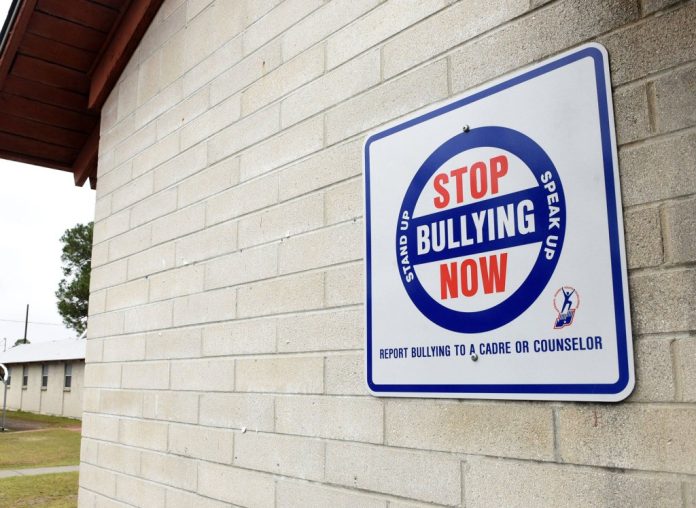
A new state law requiring schools to notify parents within 24 hours if their child is involved in an alleged bullying incident is well-intentioned and looks promising on paper. It’s an improvement over the previous requirement that parents be notified within five days.
A lot can happen in five days — especially among emotionally vulnerable children and teens. Reducing the time period is laudable.
The worry, however, is that this law imposes one more burden on the overworked and often underappreciated professionals who educate our children. Since COVID and all its disruptions, school systems are struggling to keep administrative and teaching jobs filled. Hiring enough good people wasn’t easy even before COVID, what with pay lagging behind other professions requiring similar education, and public schools being increasingly caught in the middle of our cultural and political strife.
It won’t always be easy for school personnel to quickly sort out what’s happening when things go wrong between children and to inform any parents whose children are involved in bullying.
The Code of Virginia says that “bullying” does not include “ordinary teasing, horseplay, argument or peer conflict.” That effectively leaves interpretation of bullying to the judgment of school employees.
Despite the extra pressure on school personnel, the dangers surrounding bullying are so serious that they justify making this effort to get a bad situation under control expeditiously.
A child who is being bullied needs help and support, from parents as well as adults at school. Responsible parents will want to know immediately if their child might be in danger. A parent may have insight into the problem, or the child may have kept it secret. In either case, parents need to know.
A child responsible for bullying also likely needs help in some ways. That child’s parents, too, should know and play a role in modifying the behavior if possible.
No one should make the mistake of dismissing bullying as just “kids being kids.” These aren’t harmless jokes or silly pranks but rather intentional acts meant to hurt, intimidate or humiliate the victims. Usually, the only thing the bullied child has done to provoke this aggressive, hurtful behavior is to be different in some way, or to appear weak or friendless.
Bullying can come in a variety of ways: It can be calling names, or threatening harm, or excluding someone from activities. It can be done face to face or on social media. The latter can be worse, because the bullied child feels exposed to the world.
Bullying is bad for all involved. The unpleasant distraction can make a child do poorly in classes. A child who is frightened may start skipping school or, if old enough, drop out. Bullied children sometimes turn to violence themselves, and weapons are too readily available. Bullying has led to more than one young person’s suicide. It is frequently cited as the reason a teenager brought a gun to school and fired at his classmates.
Bullying is bad for the bully, too, especially if there are no real consequences. What starts out as “just” bullying often turns into serious violence and criminal acts as a child grows up.
And, of course, bullying is bad for the school, because it interferes with teaching and learning, and puts extra burdens on overworked educators. Students who witness bullying of another may grow fearful, and they may be confused or feel guilty if they stand up to the bully or report the bad behavior.
This is a real and dangerous problem. Legislators were right to tighten the existing law requiring school officials to notify parents of children involved in bullying before more than a day passes. But they must make sure that school districts are properly funded so they are staffed to handle this new mandate.
Four or five days can seem an eternity in a child’s world. Taking action quickly, including making parents aware of the situation, is essential if we have any real chance of reducing bullying among school children.
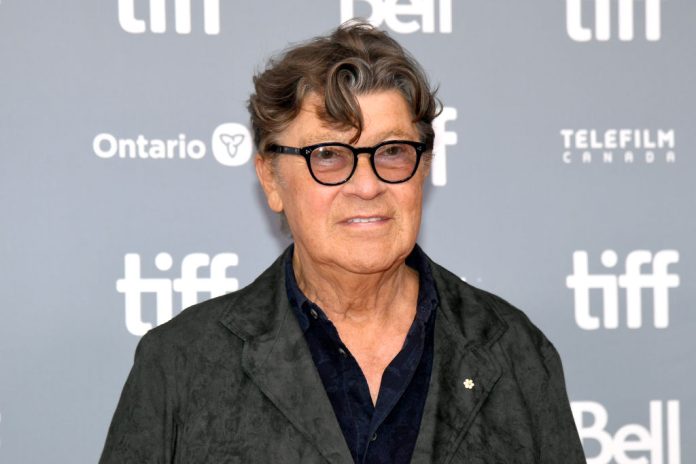
Robbie Robertson, The Band’s lead guitarist and songwriter who in such classics as “The Weight,” “Up on Cripple Creek” and “The Night They Drove Old Dixie Down” mined and helped reshape American music, has died at 80.
Robertson died surrounded by family, a statement from his manager said.
From their years as Bob Dylan’s masterful backing group to their own stardom as embodiments of old-fashioned community and virtuosity, The Band profoundly influenced popular music in the 1960s and ’70s, first by literally amplifying Dylan’s polarizing transition from folk artist to rock star and then by absorbing the works of Dylan and Dylan’s influences as they fashioned a new sound immersed in the American past.
Robbie Robertson is presented with Toronto’s Key to the City while attending the “Once Were Brothers: Robbie Robertson and the Band” press conference during the 2019 Toronto International Film Festival at TIFF Bell Lightbox on September 05, 2019 in Toronto, Canada. (Photo by Kevin Winter/Getty Images)
The Canadian-born Robertson was a high school dropout and one-man melting pot — part-Jewish, part-Mohawk and Cayuga — who fell in love with the seemingly limitless sounds and byways of his adopted country and wrote out of a sense of amazement and discovery at a time when the Vietnam War had alienated millions of young Americans. His life had a “Candide”-like quality as he found himself among many of the giants of the rock era — getting guitar tips from Buddy Holly, taking in early performances by Aretha Franklin and by the Velvet Underground, smoking pot with the Beatles, watching the songwriting team of Leiber and Stoller develop material, chatting with Jimi Hendrix when he was a struggling musician calling himself Jimmy James.
The Band began as supporting players for rockabilly star Ronnie Hawkins in the early 1960s and through their years together in bars and juke joints forged a depth and versatility that opened them to virtually any kind of music in any kind of setting. Besides Robertson, the group featured Arkansan drummer-singer Levon Helm and three other Canadians: bassist-singer-songwriter Rick Danko, keyboardist singer-songwriter Richard Manuel and all-around musical wizard Garth Hudson. They were originally called the Hawks, but ended up as The Band — a conceit their fans would say they earned — because people would point to them when they were with Dylan and refer to them as “the band.”
They remain defined by their first two albums, “Music from Big Pink” and “The Band,” both released in the late 1960s. The rock scene was turning away from the psychedelic extravagances of the Beatles’ “Sgt Pepper’s Lonely Hearts Club Band” and a wave of sound effects, long jams and lysergic lyrics. “Music from Big Pink,” named for the old house near Woodstock, New York, where Band members lived and gathered, was for many the sound of coming home. The mood was intimate, the lyrics alternately playful, cryptic and yearning, drawn from blues, gospel, folk and country music. The Band itself seemed to stand for selflessness and a shared and vital history, with all five members making distinctive contributions and appearing in publicity photos in plain, dark clothes.
Through the “Basement Tapes” they had made with Dylan in 1967 and through their own albums, The Band has been widely credited as a founding source for Americana or roots music. Fans and peers would speak of their lives being changed. Eric Clapton broke up with his British supergroup Cream and journeyed to Woodstock in hopes he could join The Band, which influenced albums ranging from The Grateful Dead’s “Workingman’s Dead” to Elton John’s “Tumbleweed Connection.” The Band’s songs were covered by Franklin, Joan Baez, the Staple Singers and many others. During a television performance by the Beatles of “Hey Jude,” Paul McCartney shouted out lyrics from “The Weight.”
Eric Clapton and Robbie Robertson performs on stage during the 2013 Crossroads Guitar Festival at Madison Square Garden on April 13, 2013 in New York City. (Photo by Larry Busacca/Getty Images)
Like Dylan, Robertson was a self-taught musicologist and storyteller who absorbed everything American from the novels of William Faulkner to the scorching blues of Howlin’ Wolf to the gospel harmonies of the Swan Silvertones. At times his songs sounded not just created, but unearthed. In “The Night They Drove Old Dixie Down,” he imagined the Civil War through the eyes of a defeated Confederate. In “The Weight,” with its lead vocals passed around among group members like a communal wine glass, he evoked a pilgrim’s arrival to a town where nothing seems impossible:
“I pulled into Nazareth, was feelin’ about half past dead / I just need some place where I can lay my head / Hey, mister, can you tell me where a man might find a bed? / He just grinned and shook my hand, ‘No,’ was all he said.”
The Band played at the 1969 Woodstock festival, not far from where they lived, and became newsworthy enough to appear on the cover of Time magazine. But the spirit behind their best work was already dissolving. Albums such as “Stage Fright” and “Cahoots” were disappointing even for Robertson, who would acknowledge that he was struggling to find fresh ideas. While Manuel and Danko were both frequent contributors to songs during their “Basement Tapes” days, by the time “Cahoots” was released in 1971, Robertson was the dominant writer.
They toured frequently, recording the acclaimed live album “Rock of Ages” at Madison Square Garden and joining Dylan for 1974 shows that led to another highly praised concert release, “Before the Flood.” But in 1976, after Manuel broke his neck in a boating accident, Robertson decided he needed a break from the road and organized rock’s ultimate sendoff, an all-star gathering at San Francisco’s Winterland Ballroom that included Dylan, Van Morrison, Neil Young, Muddy Waters and many others. The concert was filmed by Martin Scorsese and the basis for his celebrated documentary “The Last Waltz,” released in 1978.
American singer-songwriter, author, and visual artist Bob Dylan, Canadian singer-songwriter and musician Robbie Robertson (left) of The Band and festival promoter and architect Ray Foulk (right), at the Isle of Wight Festival press conference, Wootton, UK, 27th August 1969. (Photo by Evening Standard/Hulton Archive/Getty Images)
Robertson had intended The Band to continue recording together but “The Last Waltz” helped permanently sever his friendship with Helm, whom he had once looked to as an older brother. In interviews and in his 1993 memoir “Wheel on Fire,” Helm accused of Robertson of greed and outsized ego, noting that Robertson had ended up owning their musical catalog and calling “The Last Waltz” a vanity project designed to glorify Robertson. In response, Robertson contended that he had taken control of the group because the others — excepting Hudson — were too burdened by drug and alcohol problems to make decisions on their own.
“It hit me hard that in a band like ours, if we weren’t operating on all cylinders, it threw the whole machine off course,” Robertson wrote in his memoir “Testimony,” published in 2016.
The Band regrouped without Robertson in the early 1980s, and Robertson went on to a long career as a solo artist and soundtrack composer. His self-titled 1987 album was certified gold and featured the hit single “Show Down at Big Sky” and the ballad “Fallen Angel,” a tribute to Manuel, who was found dead in 1986 in what was ruled a suicide (Danko died of heart failure in 1999, and Helm of cancer in 2012).
Robertson, who moved to Los Angeles in the 1970s while the others stayed near Woodstock, remained close to Scorsese and helped oversee the soundtracks for “The Color of Money,” “The King of Comedy,” “The Departed” and “The Irishman” among others. He also produced the Neil Diamond album “Beautiful Noise” and explored his heritage through such albums as “Music for the Native Americans” and “Contact from the Underworld of Redboy.”
The Band was inducted into the Rock and Roll Hall of Fame in 1994; Robertson attended, Helm did not. In 2020, Robertson looked back and mourned in the documentary “Once Were Brothers” and in the title ballad, on which Robertson sang “When the light goes out and you can’t go on / You miss your brothers, but now they’re gone.”
Robertson married the Canadian journalist Dominique Bourgeois in 1967. They had three children before divorcing.
Jaime Royal Robertson was born in Toronto and spent summers at the Six Nations of the Grand River reserve where his mother Rosemarie Dolly Chrysler grew up. He never met his father, Alexander David Klegerman, who died before he was born and whose existence Robertson only learned of years later. His mother had since married a factory worker, James Robertson, whom Robbie Robertson at first believed was his biological parent.
Music was an escape from what he remembered as a violent and abusive household; his parents separated when he was in his early teens. He would watch relatives play guitar and sing at the Six Nations reserve, and became “mesmerized” by how absorbed they were in their own performances. Robertson was soon practicing guitar himself and was playing in bands and writing songs in his teens.
He had a knack for impressing his elders. When he was 15, his group opened for Hawkins at a club in Toronto. After overhearing Hawkins say he was in need of new material, Robertson hurried home, worked up a couple of songs and brought them over to his hotel. Hawkins recorded both of them, “Someone Like You,” and “Hey Boba Lu,” and Robertson would soon find himself on a train to Hawkins’ home base in Fayetteville, Arkansas.
Over the next few years, he toured with Hawkins in the U.S. and Canada as members left and the performers who eventually became The Band were brought in. By 1963, Robertson and the others had grown apart from Hawkins and were ready to work on their own, recording a handful of singles as the Canadian Squires and stepping into rock history when mutual acquaintances suggested they should tour behind Dylan, then rebelling against his image as folk troubadour and infuriating fans who thought he had sold out.
In 1965-66, they were Dylan’s co-adventurers in some of rock’s most momentous shows, with Dylan playing an acoustic opening set, then joined by the Hawks for an electric set that was booed so fiercely, Helm dropped out and was replaced on the road by Mickey Jones. As captured in audio recordings and in footage by filmmaker D.A. Pennebaker seen decades later in the Dylan documentary “No Direction Home,” the music on stage for such Dylan songs as “Just Like Tom Thumb’s Blues” and “Ballad of a Thin Man” more than equaled the fury of its detractors, culminating in a May 1966 show at Manchester, England, when one fan screamed out “Judas!”
“I don’t belieeeeve you,” Dylan snarled in response. “You’re a liar!” Calling on the Hawks to ”play f—-ing loud,” he led them through an all-out finale, “Like a Rolling Stone.”
“A kind of madness was percolating,” Robertson wrote in his memoir. “The whole atmosphere was heightened. I adjusted the strap on my Telecaster so I could release it with a quick thumb movement and use the guitar as a weapon. The concerts were starting to feel that unpredictable.”
Later in 1966, Dylan was badly injured in a motorcycle accident and recuperated in the Woodstock area, where The Band also soon settled. Under no contractual obligations or any sort of deadlines, Dylan and his fellow musicians stepped out of time altogether. They jammed on old country and Appalachian songs and worked on such originals as “Tears of Rage” and “I Shall Be Released” that were originally intended as demo recordings for other artists. “The Basement Tapes,” as they were eventually called, were among rock’s first bootlegs before being released officially — in part in 1975, and in a full six-CD set in 2014.
Working and writing with Dylan encouraged The Band to try an album of its own. “Music from Big Pink” featured the Dylan-Danko collaboration “This Wheel’s On Fire” and Dylan-Manuel’s “Tears of Rage,” along with such Band originals as Manuel’s “In a Station” and Robertson’s “Caledonia Mission.”
In his memoir, Robertson remembered the first time their old boss listened to “Music from Big Pink.”
“After each song, Bob looked at ‘his’ band with proud eyes. When ‘The Weight’ came on, he said, ‘This is fantastic. Who wrote that song?’” he wrote. “‘Me,’ I answered. He shook his head, slapped me on the arm, and said, ‘Damn! You wrote that song?’”
I recently visited Sundae Scoop in Virginia Beach which offers delicious homemade ice cream, sundaes, floats and more. The daily flavors range from chocolate to ube to birthday cake. A couple of nondairy options are also available.
Philip and Sibs Harrell opened the spot last year in the Kempsville Crossing Shopping Center to bring people together and put smiles on their faces. Philip, an Army veteran, attended Scoop School located in Wildwood, Missouri, to learn about the ice cream business, equipment and recipes.
I ordered an ice cream flight with four flavors and sat at one of the two tables that is large enough for families or meeting strangers. Most people got their cones, cups and prepackaged pints to go.
There were more than five weekly flavors to choose from; I settled on the strawberry caramel pecan, and lavender berry, which Harrell recently created.
Philip Harrell, who owns Sundae Scoop in Virginia Beach with his wife Sibs, makes several flavors of ice cream Tuesday, August 1, 2023, morning. (Stephen M. Katz/The Virginian-Pilot)
The strawberry and caramel blend was intriguing and had my spoon showing favorites. It reminded me of a deconstructed taffy apple but with fresh strawberry slices, faint caramel and toasted pecan. The lavender and berries worked beautifully together. Floral and fruity notes danced on my tongue without tasting like perfume. Fresh blueberry bits showed up periodically to let me know they were at the party too.
My other two ice cream selections also made me happy.
The pistachio was packed with nuts; I felt like swinging my legs back and forth like a delighted kid. It made me slow down, chew and enjoy the smooth creamy moments in between the crunchy bites. Scrumptious.
My go-to is the salted caramel buttered pecan. I’ve had it at Sundae Scoop before; it’s consistently good. The frozen treat is a buttery sensation with its pecan pieces, ribbons of caramel and a touch of salt in each bite. Yummy.
Sundae Scoop’s root beer float. A favorite at the Virginia Beach ice cream shop. As seen Tuesday, August 1, 2023. (Stephen M. Katz/The Virginian-Pilot)
I tried the root beer float on a return trip. It consisted of vanilla ice cream and A&W Root Beer. I felt nostalgic: young and carefree without any bills. I enjoyed the creamy bubbly as I slurped down the yesteryear.
I’ll travel to Flavor Town again.
Rekaya Gibson, 757-295-8809, [email protected]; on Twitter, @gibsonrekaya
___
If you go
Where: 1832 Kempsville Road, Virginia Beach
Hours: 5 to 9 p.m. Monday, noon to 9 p.m. Tuesday through Thursday; noon to 10 p.m. Friday and Saturday; noon to 9 p.m. Sunday
Prices: Ice cream starts at $4.85; sundaes $9.25 to $14; floats $6.50 to $7.15
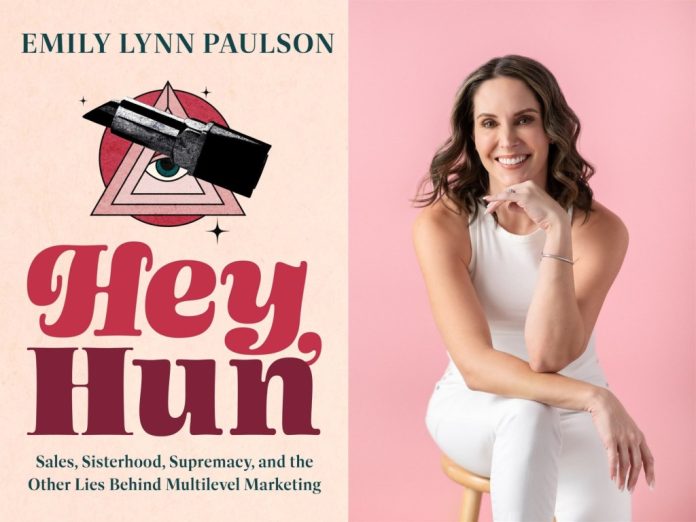
Emily Lynn Paulson was a 33-year-old mother of five, married to a successful and supportive man and living a comfortable life in Seattle when a “friend” from the past reached out to her via Messenger. This friend was someone from high school with whom she really had no relationship, but Paulson was feeling lonely and isolated as a stay-at-home mom, so she agreed to get together for a glass of wine.
That’s how Paulson stumbled into multilevel marketing (MLM) and it dominated her life for six and a half years. Sometimes called direct marketing or pyramid marketing, MLMs derive their revenue from non-salaried contractors who sell the company’s products or services to friends and family. The contractors’ earnings come from a multilevel commission system in which 96-99.7 percent of people selling for MLMs lose money. While Paulson was one of the few MLM success stories, it ultimately led to addiction and compromised her physical and mental health.
“This is the pretty much true, absolutely ridiculous, definitely catty story of my life in an MLM, but it’s more than that,” writes Paulson in “Hey, Hun: Sales, Sisterhood, Supremacy, and the Other Lies Behind Multilevel Marketing.” “It’s also about how MLMs operate, their role in the lives of suburban women across the United States, and the belief systems, systemic racism, and White supremacy that course through their trainings, marketing, and one-on-one interactions.”
Paulson, who now lives in central Oregon, writes that it took her a long time to “gather the guts to write this book.” She didn’t want to offend people she loves and some part of her believes that working for an MLM wasn’t all bad, “but if you keep reading,” she writes, “you’ll probably disagree.”
This interview has been edited for clarity and length.
Q. Why were you susceptible to the lure of MLMs?
I was looking for an escape outside of the mundane nature of being home with a bunch of kids and I was looking for a connection. Oh, here’s a whole community. I was looking for money. Oh, you can make millions from home. I’d love to get away. Oh, we have all these trips you can go on. That’s really what roped me in. It’s vulnerability that makes people really primed for these MLMs.
Q. Your 2019 memoir, “Highlight Real: Finding Honesty & Recovery Beyond the Filtered Life,” is about trauma, excessive drinking, disordered eating, and recovery. Much of your addiction took place while you were a top seller for an MLM. Were those two parts of your life feeding off each other?
Once I joined the MLM, the wine was really linked to meeting with friends, talking about products. When I had a couple of glasses of wine, I could send messages, texts and DMs that I probably wouldn’t have felt comfortable with otherwise. The more success I had, the more opportunities I had to drink because I was going to parties and retention events. It was this vicious cycle.
Q. What inspired this book — shifting the focus from you to this larger issue?
After the first book, I realized that being vulnerable and honest can help a lot of other people. And realizing that I was complicit in this system that does hurt a lot of people, I wanted to be just as loud on the other side. This is information I wish I would have known.
Q. Was there anything you discovered during your research that surprised you?
I didn’t realize how much money politically was tied up in MLMs. I didn’t know it was a $200 billion industry. In an MLM, you’re taught it’s your small business, it’s just you’re supporting your neighbor, supporting your friend, but these are huge corporations.
There are lobbyists, there are politicians who get money from MLMs. Even the United Nations gets money from MLMs. So there’s no incentive for the government to investigate them.
There’s a body called the Direct Selling Association. It’s self-governing and self-serving. It’s like the NRA being in charge of gun control. You have the FTC (Federal Trade Commission) investigating things, but it’s a very slow process. They’ll shut one MLM down, but then five more pop up. It’s like this game of Whac-A-Mole. And if they do get investigated a lot of times, it is the independent contractors, the consultants themselves, who are affected. It’s not the companies that suffer, it’s the women, mostly women.
Q. Reading the book, I couldn’t help but think that being in an MLM is like being in an abusive relationship, where the abuser isolates you further and further from your real life. Does that seem accurate?
Absolutely. You have to pay to get in so you’re in debt when you join and you have to earn your money back, which most people never do. And then you’re blamed for it. If you don’t get any customers, you didn’t work hard enough. If you quit, you didn’t work hard enough. There’s always something that you can be blamed for.
One thing people ask is, “Why didn’t you leave when you figured out it was bad?” Because it’s never all bad. There’s always something good that’s keeping you in and maybe leaving will be worse in some way, either financially, socially, emotionally.
Q. You write that once indoctrinated, you eventually ignored your own intuition and went against your values. Why do you think you allowed that to happen?
Part of the reason was I was drinking a lot. And it was being confirmed for me that what I was doing was working. I was successful so I thought that even if people say this seems culty or weird, or it’s a pyramid scheme, it’s working for me.
Then, you find out it’s not going to work for everybody. It’s like the worst parts of capitalism, pull-yourself-up-by-the-bootstraps American Dream. It’s unpaid labor and you’re hoping eventually you’ll make a sale or recruit somebody. But many times you don’t.
Q. You write that most MLMs are founded by White men who remain at the top of corporate leadership and on corporate boards, while women are the sales force, recruiting, selling products, and being exploited. What does that say about progress or the lack of it for women in America today?
It’s a very misogynistic industry. The avatar of an MLM is a 42-year-old White woman with 2.5 kids. It’s not diverse and it’s upholding this capitalistic, White supremacist idea of what an ideal woman is. And you’re supporting the patriarchy. It’s, “Be this certain woman, work as hard as you can to get to the top of the ladder, but even when you’re there, all you’re doing is elevating these corporations under the guise of having a small business.”
Q. You spent six years hustling and making money for the MLM, at the expense of your physical and mental health, and important relationships. Did anything positive come out of your experience?
I met some amazing people. I got to travel. I did earn money. I got to do a lot of public speaking. But I’m not one of those people who says everything happens for a reason. The things that are good about it weren’t because of the MLM. It could have been a different non-MLM company.
Q. Any advice for women currently in MLMs?
If you’re reading this and feeling defensive, ask who’s benefiting from the work you’re doing, who’s benefiting from the money you’re making. Get your information from someone other than your upline [the person who recruited you into the MLM]. Do a profit and loss statement. Protect yourself.
A new Montana law will provide sweeping legal protections to health care practitioners who refuse to prescribe marijuana or participate in procedures and treatments such as abortion, medically assisted death, gender-affirming care, or others that run afoul of their ethical, moral, or religious beliefs or principles.
The law, which goes into effect in October, will gut patients’ ability to take legal action if they believe they didn’t receive proper care due to a conscientious objection by a provider or an institution, such as a hospital.
So-called medical conscience objection laws have existed at the state and federal levels for years, with most protecting providers who refuse to perform an abortion or sterilization procedure. But the new Montana law, and others like it that have passed or been introduced in statehouses across the U.S., goes further, to the point of undermining patient care and threatening the right of people to receive lifesaving and essential care, according to critics.
“I tend to call them ‘medical refusal bills,’” said Liz Reiner Platt, the director of Columbia Law School’s Law, Rights, and Religion Project. “Patients are being denied the standard of care, being denied adequate medical care, because objections to certain routine medical practices are being prioritized over patient health.”
This year, 21 bills instituting or expanding conscience clauses have been introduced in statehouses, and two have become law, according to the nonprofit Guttmacher Institute. Florida lawmakers passed legislation that allows providers and insurers to refuse any health service that violates ethical beliefs. Montana’s law goes further, prohibiting the assignment of health workers to provide, facilitate, or refer patients for abortions unless the providers have consented in writing. South Carolina, Ohio, and Arkansas previously passed bills.
Supporters of the Montana law, called the Implement Medical Ethics and Diversity Act, say it fills gaps in federal law, empowering more medical professionals to practice medicine based on their conscience in circumstances beyond abortion and sterilization.
The bill applies to a wide range of practitioners, institutions, and insurers, encompassing just about any type of health care and anyone who could be providing it. The exception is emergency rooms, where the federal Emergency Medical Treatment and Labor Act takes precedence.
“We have technology that is pushing the limits of what is maybe ethical, and that is different in everybody’s minds,” said Republican state Rep. Amy Regier, who sponsored the Montana bill. “Having extra protections for people to practice according to their conscience as we continue down that path of innovation is important.”
Claims the bill discriminates against patients frustrate Regier, who said it’s about protecting health care providers. “Because someone has a conscientious objection to a specific service, they should be able to practice that way,” she said.
In 1973, federal regulations known as the Church Amendments were implemented after the Supreme Court’s Roe v. Wade decision made abortion legal nationwide. Under the Church Amendments, any institution that receives funding from the federal Department of Health and Human Services may not require health care providers to perform abortion or sterilization procedures if doing so would violate their religious or moral principles. Additionally, providers who refuse to perform these services may not be discriminated against for their decision.
Since then, at least 45 states have enacted their own abortion conscience clauses, according to the Guttmacher Institute. Of those, only 17 mandate that patients be notified of the refusal or limit the clause’s use in the case of miscarriage or emergency.
A March 2020 article in the American Medical Association’s Journal of Ethics said, “Clinicians who object to providing care on the basis of ‘conscience’ have never been more robustly protected than today.” Legal remedies for patients who receive inadequate care as a result have shrunk significantly, the article said.
But the wave of medical conscience bills introduced in statehouses since that article was published go beyond abortion to include contraception, sterilization, gender-affirming care, and other services. Opponents such as the American Civil Liberties Union, Planned Parenthood, and the Human Rights Campaign have been vocal opponents of this trend, criticizing it as a backdoor way to restrict the rights of women, LGBTQ+ community members, and other individuals.
Still, lawmakers across the country insist the right of doctors, nurses, pharmacists, and other medical providers to practice medicine in alignment with their beliefs is being infringed.
Some health care practitioners would “just be done” practicing medicine if forced to perform certain procedures such as abortion, Regier said. “That, to me, is what limits patient care.”
Many of the most sweeping bills are backed by organizations that have made it their business to promote this “conscience” agenda nationwide, such as the Christian Medical Association, Catholic Medical Association, and National Association of Pro-Life Nurses. Other groups launched a joint effort in 2020 with the explicit purpose of advancing state legislation that makes it easier for health care providers to refuse to perform a wide range of procedures, including abortion and types of gender-affirming care.
The organizations that started the initiative are the Religious Freedom Institute in Washington D.C., an Arizona-based nonprofit called the Alliance Defending Freedom, and the Christ Medicus Foundation in Michigan. According to its website, the coalition bolsters efforts to pass more sweeping medical conscience legislation, using methods including print and digital media campaign strategy, grassroots organizing, and advocacy. After successes in Arkansas, Ohio, and South Carolina in 2021 and 2022, it turned to Montana and Florida. Regier said there are a “number of different organizations” pushing this type of legislation, including the Alliance Defending Freedom.
Most of these conscience laws are part of an “arsenal” to further social conservatism, and they are often religiously motivated, said Lori Freedman, a researcher and associate professor at the Bixby Center for Global Reproductive Health at the University of California-San Francisco.
Although federal law is meant to ensure people receive lifesaving care in an emergency, Freedman said, there are cases in which patients don’t receive the care they should simply because they don’t clear the bar of what a facility considers emergent.
While experts warn of the potential patient health consequences of these medical conscience bills, academics say placing a provider’s choice over their patient’s rights is itself a threat.
“These bills do not protect religious liberty because they make it impossible for people to follow their own religious and moral values in making major decisions,” Reiner Platt said.
About 1 in 6 patients in the U.S. are treated in Catholic health care facilities, according to Freedman. Many of those venues strictly regulate or prohibit certain procedures, such as abortion, but do not necessarily disclose that to patients. As of 2016, more than 25% of hospital beds in Montana were in such facilities, according to the ACLU. Freedman determined through her research that about one-third of people whose primary hospital was Catholic didn’t know of its religious affiliation and therefore were unaware of those limitations on their care.
The problem can extend to secular medical institutions, too. According to the AMA Journal of Ethics article, there are no rules requiring a patient be informed a provider is practicing conscientious objection, which means the patient might “unknowingly receive substandard care” and “even be harmed by” the provider’s refusals.
“As much as we like to think about these providers and their opinions, so much is determined at a larger, structural level,” Freedman said. “Abortion has been stigmatized, marginalized, and constrained,” and plenty of hospitals and physician groups have made great efforts to “make a very safe service somehow illegal to provide within their context.”
___
(KFF Health News, formerly known as Kaiser Health News (KHN), is a national newsroom that produces in-depth journalism about health issues and is one of the core operating programs of KFF — the independent source for health policy research, polling and journalism.)
The 2023 Women’s World Cup may be wrapping up in a few weeks, but there’s still plenty of soccer to enjoy in the U.S. throughout the fall.
If you’re looking for cost-effective entertainment, attending a soccer match can be an affordable blast, offering the bright lights, concessions and high-octane moments you’d expect from other major league sporting events, often at a lower cost. That’s the case for both men’s and women’s games — but you could probably guess which ones are cheaper.
Men’s soccer games typically cost more than twice as much as women’s
On the resale markets, men’s soccer tickets are always pricier than women’s tickets. Like, a lot pricier.
First, a primer. The U.S. has two professional soccer leagues: the National Women’s Soccer League (NWSL) and the Major League Soccer (MLS), which is the U.S. league for men’s soccer.
To get a broad sense of what fans can expect to spend on MLS or NWSL tickets, consider data from SeatGeek, a ticket resale marketplace that has calculated average ticket costs for teams’ events.
Among tickets listed for resale on SeatGeek, MLS tickets cost an average of $50, while NWSL tickets cost an average of $23. Put another way: On SeatGeek, women’s soccer tickets cost less than half the price for a ticket to a men’s game.
And city to city, the gulfs between ticket costs range dramatically.
The starkest discrepancy is in Houston, where Houston Dash NWSL tickets average $15, and Houston Dynamo MLS tickets average $45 — three times as much.
Tickets to men’s and women’s games are the most closely priced in Washington, DC., with tickets to the Washington Spirit NWSL matches averaging $29, and those of the D.C. United MLS team, at $42, per SeatGeek.
The value of attending a women’s soccer game
So yes, across the board, tickets to NWSL matches are significantly cheaper than tickets to MLS matches — a disappointing byproduct of systemic discrimination in sports, but an excellent reason to put your entertainment dollars toward women’s soccer games.
And chances are, your local women’s team has some of the best professional soccer players on the planet. That’s because NWSL players also make up the U.S. Women’s National Team (USWNT) — you know, arguably the best women’s soccer team in the world.
The U.S. Women’s National Team has won four of the eight FIFA Women’s World Cups that have been held. Meanwhile, the U.S. Men’s National Team (USMNT) hasn’t won any of the 22 FIFA World Cups held since 1930. The women’s team has won four Olympic gold medals, while the men’s team has nabbed one Olympic medal since 1904 — bronze, in 2000.
Americans seem to be catching on to the hype. The NWSL is growing explosively as attitudes around women’s sports continue to evolve. Attendance skyrocketed 80% year over year in 2022, and revenue from ticket sales swelled more than 125%, according to CNBC.
Attending a NWSL match means supporting the league — and watching world-class players — for a relatively low cost.
“The rocket fuel behind the growth of any sport league is attendance,” Jessica Berman, commissioner of the National Women’s Soccer League, told ESPN in 2022.
Where to watch soccer
Catch a women’s soccer game if you live near one of the 12 U.S. cities with NWSL teams: Cary, North Carolina; Chicago (technically Bridgeview, Illinois); Houston; Kansas City, Kansas; Los Angeles; Louisville, Kentucky; Harrison, New Jersey (in the New York area); Orlando, Florida; Portland, Oregon; San Diego; Seattle and Washington, D.C.
If attending isn’t feasible, you can watch U.S. soccer matches on streaming services like Fubo, a streamer focused on live sports.
The 2023 Women’s World Cup concludes on Aug. 20, and all of its matches will be streamed on the Fox Sports app, through certain cable providers. Alternatively, Fubo, YouTube TV or Sling TV subscriptions may be your best move. For details, read up on how to watch the Women’s World Cup.
More From NerdWallet
Cara Smith writes for NerdWallet. Email: [email protected]. Twitter: @https://twitter.com/caramichelles.
If Dr. Kevin Bonner isn’t busy performing a life-changing arthroscopic shoulder surgery, he’s busy thinking of ways to improve the operation.
After five years and hundreds of surgeries a year, all of that mindful thinking has paid off.
“I love trying to look at deficits in the field where we don’t have a procedure that’s been perfected,” he said.
Bonner, an orthopedic surgeon at the Jordan-Young Institute in Virginia Beach, along with colleagues, Dr. David Diduch of University of Virginia and Dr. Mark Getelman of Southern California Orthopedic Institute, developed a device that is revolutionizing shoulder surgery.
The Tight-N Tendon Docking Anchor, ranging from 5.5 mm to 8.5 mm, is made of polyetheretherketone polymer, a bioinert plastic more commonly known as PEEK.
Dr. Kevin Bonner
This illustration shows the Tight-N Tendon Docking Anchor’s implantation. (Courtesy of Jordan-Young Institute)
The implant that holds a tendon and fixes a bicep was bought and co-developed by DePuy Synthes, the orthopedics company of Johnson & Johnson. It received approval by the Food and Drug Administration last year. Recently released in the U.S., Bonner said it will be available worldwide soon.
“There have been multiple ways — both arthroscopic and open — to fix somebody’s biceps tendon and tendons in their body, he said, “and all of them had upsides and downsides, but none were what I’ll call A-plus.”
Now, the bar is elevated.
“The tendon gets fixed to the bone and this is a way biologically to take advantage of certain things in an environment for the tendon to heal,” he said. “And it doesn’t cause any tendon damage, which is part of what makes it unique.”
Bonner has surgically implanted more than 130 since the device went on the market in December.
Renee Thomas of Virginia Beach had surgeries by Bonner for torn bicep tendons — her left shoulder four years ago and her right shoulder in February — and the anchor device was what set them apart.
“I was expecting a very similar experience after, but this recovery has been quite different,” Thomas said. “I legitimately did not need pain pills after day three.”
Four weeks post-operation, Thomas said she felt comfortable enough to remove her sling and had to remind herself not to return to normal activities yet.
Thomas said she was able to sleep lying down in bed rather than a recliner from day one, and her range of motion came back much quicker.
“The only real difference is this new device and I believe 100% that has a lot to do with the difference in recoveries that I have experienced,” Thomas said.
For Bonner, that is the greatest sense of satisfaction.
“We have a lot of innovation in medicine in the Hampton Roads area in orthopedics,” Bonner said, noting patients are referred here from throughout the world.
Bonner, who grew up on a small farm on the New Jersey-Pennsylvania border, spent four years in the Navy, serving as an orthopedic surgeon for the Navy SEALs.
A self-proclaimed “ortho geek,” it was an injury to his elbow while studying at Georgetown University on an athletic scholarship for baseball that spurred his interest in orthopedics and sports medicine.
“I like returning people to their active lifestyle, their activities and what they enjoy,” he said.
A professor at Eastern Virginia Medical School who also teaches throughout the world, Bonner joined Jordan-Young in 2002 and serves as the director of its research foundation.
Constantly researching, reading, learning and writing for textbooks and other medical publications, Bonner said it’s imperative he stay on the cutting edge in order to maintain the highest level of care for his patients.
“I tell everyone, including my OR staff, the day I stop reading and going to courses is the day you have to tell me I need to retire,” he said.
But for now, it’s not uncommon for Bonner to wake up in the middle of the night with an idea.
Blessed with a supportive family, Bonner said he is thankful they make it easier to maintain his work-life balance.
As a scientific adviser for Embody, a soft tissue company based in Norfolk recently bought by Zimmer Biomet, Bonner helped the startup develop a primarily collagen suture.
And he has several other inventions in the works.
“You only have one chance to go through this world, so I’m trying to contribute as much as I can,” he said.
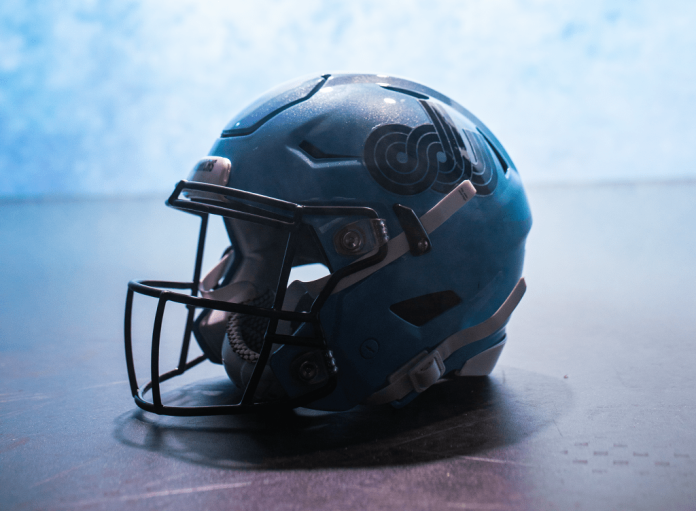
Old Dominion on Wednesday unveiled a new football helmet design for its homecoming game this fall, harkening back to 1975 — when VHS tapes were introduced, the blockbuster “Jaws” was released and Jimmy Hoffa disappeared.
The design, dubbed “the racetrack logo,” features a light-blue helmet with a dark-blue “ODU” in lowercase and circular letters. Old Dominion used the logo from 1975-80.
The Monarchs will wear Hudson blue uniforms for their homecoming game — scheduled for Sept. 23 at 3:30 p.m. against Texas A&M University-Commerce.
Game day homecoming events include an ODU Hall of Fame breakfast and a parade at 11 a.m. The campus’ Kaufman Mall will open at 11:30 a.m. with music, a beer garden and other activities. The first 5,000 fans to enter the stadium will receive a free T-shirt.
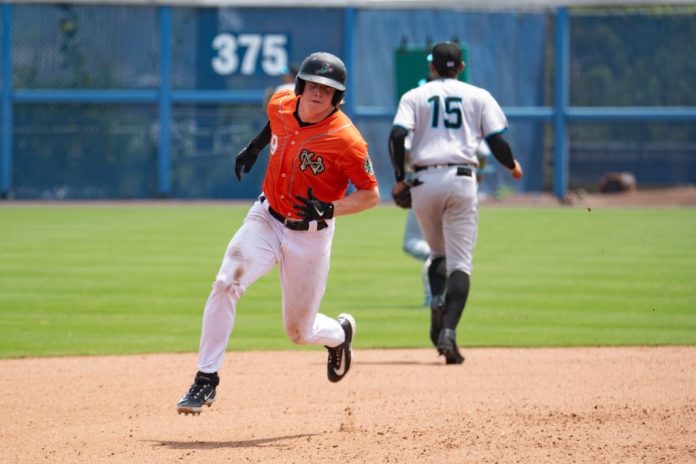
Troy Johnston hit an RBI single and three-run home run in the first four innings as Jacksonville rolled to an 11-2 victory over the Norfolk Tides on Tuesday night.
The Jumbo Shrimp scored eight runs in the first four innings – all against Tides starter Garrett Stallings (3-4). Garrett Hampson added three hits, and five other players finished with at least two hits.
Norfolk’s Heston Kjerstad had an inside-the-park home run and Joey Ortiz added an RBI single.
The teams continue their series in Jacksonville on Wednesday with a 7:05 p.m. game. Norfolk’s Chayce McDermott (3-0, 1.89) and Jacksonville’s Bryan Hoeing (1-0, 2.08) are the scheduled starters.
Hospital toxicologist Ryan Marino has seen up close the violent reactions of children poisoned by liquid nicotine from electronic cigarettes. One young boy who came to his emergency room experienced intense nausea, diarrhea, and vomiting, and needed intravenous fluids to treat his dehydration.
Kids can also become dizzy, lose consciousness, and suffer dangerous drops in blood pressure. In the most severe case he’s seen, doctors put another boy on a ventilator in the intensive care unit because he couldn’t breathe, said Marino, of Case Western Reserve University School of Medicine.
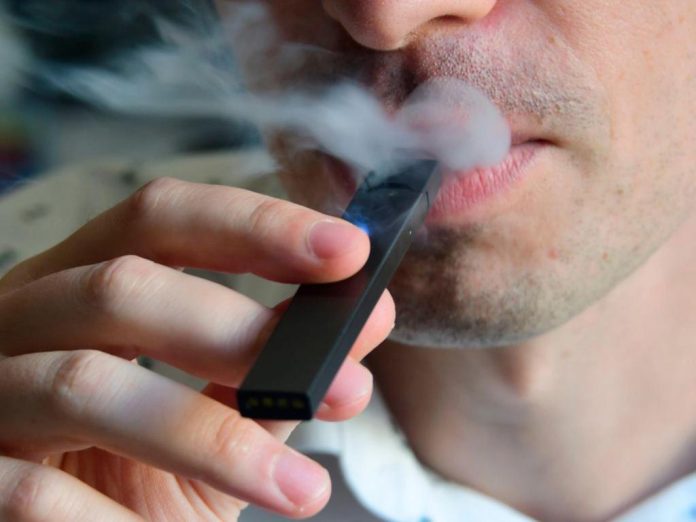
Thousands of kids a year are exposed to the liquid nicotine in e-cigarettes, also known as vapes. For a toddler, even a few drops can be fatal.
Cases of vaping-related nicotine exposure reported to poison centers hit an all-time high in 2022 — despite a 2016 law, the Child Nicotine Poisoning Prevention Act, that requires child-resistant packaging on bottles of vaping liquid. In what doctors call a major oversight, the law doesn’t require protective packaging on devices themselves.
Refillable vapes are designed to hold liquid nicotine in a central reservoir, making them dangerous to kids, Marino said. Even vapes that appear more child-resistant — because their nicotine is sealed inside a removable cartridge — present a risk, because the cartridges can be pried open. And some disposable e-cigarettes, now the top-selling type on the market, allow users to take thousands of “puffs” and contain as much nicotine as multiple packs of cigarettes.
Many e-cigarettes and liquids seem designed to appeal to kids, with pastel packages, names such as “Candy King,” and flavors such as bubble gum and blue raspberry. That makes vapes far more tempting — and hazardous — than traditional cigarettes, which have lower doses of nicotine and a bitter taste that often prompts children to quickly spit them out, said Diane Calello, the executive and medical director of the New Jersey Poison Information and Education System.
“Nicotine liquid is an accident waiting to happen,” Calello said. “It smells good and it’s highly concentrated.”
Sen. Richard Blumenthal (D-Conn.), who co-sponsored the 2016 legislation, said he would push to expand the childproof packaging requirement to disposable and pod-based e-cigarettes.
“Every day that FDA allows flavored e-cigarette products to remain on the market is another day that children can be enticed by these dangerous, and sometimes deadly, products,” he said.
Although the FDA declined to comment for this article, on Aug. 2 the agency included a special feature about nicotine poisoning in children in its “CTP Connect” newsletter.
The number of reports to poison control centers about e-cigarettes has more than doubled since 2018, according to an FDA analysis. Poison control centers reported more than 7,000 vaping-related exposures in people of all ages from April 1, 2022, to March 31, 2023.
According to the FDA, 43 of those exposures resulted in hospitalization and an additional 582 in other medical treatment. About half of poison center reports had no information about whether patients needed medical care.
Nearly 90% of exposures involved children under 5. Authors of the report say their numbers likely underestimate the problem, given that poison control centers aren’t contacted in every case.
A 1-year-old died from vaping-related nicotine poisoning in 2014. The new FDA report also mentions the apparent suicide of an adult via e-cigarette poisoning.
A spokesperson for the vaping industry said companies take safety seriously.
“All e-liquid bottles manufactured in the United States conform to U.S. law,” said April Meyers, the president of the board of directors and CEO of the Smoke-Free Alternatives Trade Association, which represents the vaping industry. “Not only are the caps child-resistant, but the flow of liquid is restricted so that only small amounts can be dispensed.”
Yet many vaping products are made outside the U.S., which has recently been flooded with illegal e-cigarettes, mostly from China.
The increasing number of nicotine exposures among kids — especially curious toddlers who put virtually everything they can grab into their mouths — likely reflects the sheer volume of e-cigarette sales, said Natalie Rine, the director of the Central Ohio Poison Center at Nationwide Children’s Hospital.
E-cigarette unit sales grew 47% from January 2020 to December 2022, rising from 15.5 million every four weeks to 22.7 million, according to a report published by the Centers for Disease Control and Prevention.
“This isn’t something that parents see as a really big risk,” Marino said. “But with the popularity of e-cigarettes, the risk isn’t going away anytime soon.”
One effective strategy to reduce e-cigarette sales has been to ban flavored products. California, Massachusetts, New Jersey, New York, Rhode Island, and Washington, D.C., have banned all flavored e-cigarettes, while Utah and Maryland have banned some flavors. A study showed overall e-cigarette sales dropped 25% to 31% in states after flavor bans, compared with states that didn’t ban them.
Some doctors say the country needs to do more to protect children.
“If the numbers are rising, then the law ain’t working,” said Carl Baum, a professor of pediatrics and emergency medicine at Yale School of Medicine.
Pediatrician Gary Smith said the lack of child safety requirements for e-cigarette devices is a major problem. Refillable e-cigarettes are relatively easy for kids to open.
Although most poison control center reports don’t include brand information, disposable e-cigarettes — including Elfbar, Puff Bar, and Pop Vape — were some of the most common products mentioned in the FDA analysis. Elfbar is now known as EB Design.
Expanding the federal law to include devices would be “an important step,” said Smith, president of the Child Injury Prevention Alliance, an Ohio-based advocacy group that works to prevent injuries in children.
In addition, federal officials should limit the nicotine concentration in vape juices to make them less toxic, as well as ban candy-like flavors and colors on packaging, Smith said.
“The public health response should be comprehensive,” Smith said.
Kids have been known to pick up a vape and begin puffing, in imitation of their parents, Calello said.
Even if children don’t inhale the aerosol, sucking on a vape exposes their skin to nicotine, which can be absorbed into the bloodstream, said Robert Glatter, an assistant professor of emergency medicine at Lenox Hill Hospital in New York City. Glatter noted that e-cigarette liquids also contain numerous harmful chemicals, including arsenic and lead, which is toxic at any dose; carcinogens such as acetaldehyde and formaldehyde; and benzene, a volatile organic compound found in auto exhaust.
Fortunately, children who inhale nicotine get a much lower dose than those who ingest it, reducing the risk of serious harm, said Marc Auerbach, a professor of pediatric emergency medicine at Yale School of Medicine.
Only about 2% of exposures in the FDA study were recorded as having a moderate or major effect.
That may be because little kids who get into dangerous liquids — from vape juice to household cleaning products or gasoline — usually spill most of it, Baum said. “They often end up wearing it rather than swallowing it,” Baum said.
Although Stephen Thornton has seen a lot of children with nicotine exposure, he said, the human body has ways of protecting itself from toxic substances. “Fortunately, when kids do ingest these e-cig nicotine products, they self-decontaminate. They vomit — a lot — and this keeps the mortality rate very low, but these kids still often end up in emergency departments due to all the nausea and vomiting,” said Thornton, an emergency medicine physician and medical director of the Kansas Poison Control Center.
The FDA urges parents and guardians of young children to keep e-cigarettes and vaping liquid out of reach and in its original container.
For emergency assistance, call Poison Help at 800-222-1222 to speak with a poison expert, or visit poisonhelp.org for support and resources.