Home Blog Page 34

Old Dominion is predicted second in Big East field hockey – Daily Press

0

COLLEGE FIELD HOCKEY

Old Dominion was predicted second among eight teams in the Big East coaches’ poll, and Monarchs senior forward Marlon de Bruijne was named the Preseason Offensive Player of the Year.

Two-time defending champion Liberty received six first-place votes and 48 voting points, while ODU had no firsts and 41 points. Third-place Connecticut had 40 points but six first-place votes.

Predicted fourth through eighth were Temple, Providence, Villanova, Quinnipiac and Georgetown, in that order.

Nicole Fredericks joined de Bruijne as the Monarchs among the 13 selections to the Preseason All-Big East teams.

Liberty graduate back Bethany Dykema of Newport News was named the Preseason Big East Defensive Player of the Year. She and three fellow Flames, including Preseason Goalkeeper of the Year Azul Iritxity Irigoyen and Preseason Co-Midfielder of the Year Reagan Underwood, made the preseason all-conference team.

COLLEGE FOOTBALL

UVA lineman on watch list for Polynesian award

For the second consecutive season, Virginia defensive lineman Aaron Faumui was among the 85 players featured on the watch list for the 2023 Polynesian Player of the Year Award, presented by the Polynesian Football Hall of Fame. The winner will be announced Dec. 14.

COLLEGE WOMEN’S SOCCER

UVA, JMU, Liberty players on Hermann watch list

Virginia senior midfielder Lia Godfrey, a semifinalist last season, James Madison redshirt senior goalkeeper Alexandra Blom and Liberty defender Bridie Herman were among 56 players named to the women’s Hermann Trophy watch list.

Blom posted a 0.60 goals-against average last season and was the Sun Belt Conference Preseason Defensive Player of the Year.

COLLEGE SWIMMING AND DIVING

ODU women will get to compete in Sun Belt

The Old Dominion women’s swimming program will compete in the Sun Belt Conference beginning with the 2023-24 season, Sun Belt commissioner Keith Gill announced Thursday. Old Dominion competed in the Coastal Collegiate Sports Association last season.

The current membership of four will include ODU, Georgia Southern, James Madison and Marshall. The Sun Belt previously sponsored women’s swimming and diving from 2001-2013, sending more than 30 athletes to the NCAA championships.

The Sun Belt championships are set for Feb. 14-17 at the Rosen Aquatics Center in Orlando, Florida.

The ODU men’s swimming team this season will compete in the Atlantic Sun (ASUN).

COLLEGE WOMEN’S TENNIS

ODU reveals fall schedule

Old Dominion announced its fall schedule of individual events, starting with the Sept. 15-17 Kitty Harrison Invitational at reigning national champion North Carolina.

The Monarchs also will compete Sept. 30-Oct. 8 at the Intercollegiate Tennis Association All-American Championships in Cary, North Carolin, and the ITA Atlantic Regional Oct. 19-23 in Lynchburg. Some Monarchs also will compete in International Tennis Federation tournaments.

“Having a professional tennis career is important to our players during their college experience. We want our players to feel like ODU is a professional training center,” coach Dominic Manilla said in a release.

MORE COLLEGES

W&M gymnasts, ODU golfers honored for academics

Seventeen William & Mary students were honored as Scholastic All-Americans by the Women’s Collegiate Gymnastics Association.

The Tribe gymnasts honored include: Catherine Bare, Avery Bernier, Caroline Blatchford, Sarah Brownstein, Abby Carpenter, Sophie Chandler, Sofia Huang, Amanda Jackson, Anne Marie Kuebler, Sarah Kuper, Katelyn Nels, Michelle Ngo, Keaghan Schafer, Brynn Vetrano, Lily Walker, Emma Wiley and Sarah Wozniak.

W&M’s team posted a 3.73 grade-point average during the 2022-23 academic year, which ranked 12th in the nation.After Old Dominion men’s golfers Jakob Chicoyne, Jacob Gunther and Philip Minnehan were named 2022-23 All-America Scholars, the Golf Coaches Association of America announced the Monarchs were among its recipients of the 2022-23 Outstanding Team Academic Award.

ODU was one of 266 programs across six divisions to earn the award. The Monarchs combined for a 3.18 grade-point average for the 2022-23 academic year.

COLLEGE TRACK AND FIELD

UVA names assistant to coach throwers

Virginia’s director of track and field and cross country, Vin Lananna, has appointed Brandon Amo to work with the UVA throwers. Amo was a Harvard assistant coach last season, and he led Kenneth Ikeji and Stephanie Ratcliffe to a sweep of the NCAA hammer throw titles. Amo was a standout thrower for Rhode Island from 2016-18.

Chesapeake OKs plan to cut 2 early voting locations, despite concerns about impact on minority communities – Daily Press

0

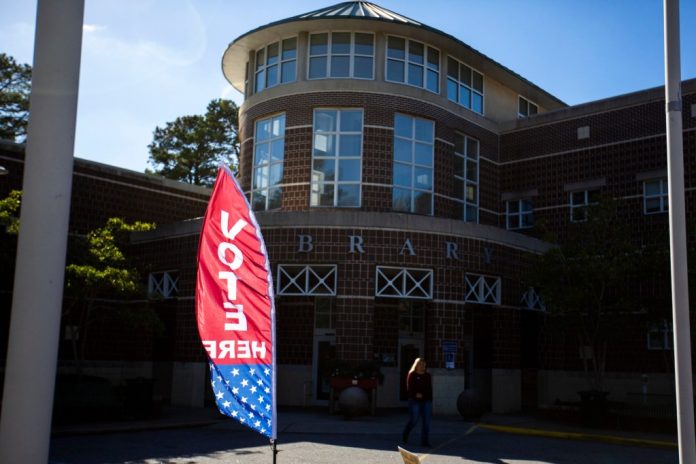
CHESAPEAKE — The city’s early voting plan for the November elections eliminates two polling locations and is drawing ire from residents and Democratic Party leaders who believe the decision will make it harder to vote early — particularly in Black communities.

City Council members voted 8-1 Tuesday to approve an early voting plan that includes five early voting sites and no Sunday voting. More than a dozen residents gathered at the council meeting to express disappointment, upset by the removal of satellite voting locations at Camelot Community Center and the Clarence Cuffee Community Center, which are both located in minority communities.

“That community in Cuffee, that community in Camelot represent the heartbeat of the African American community in Chesapeake,” said resident David Washington at Tuesday’s meeting.

Last year’s early voting period used seven polling locations. Election Registrar Mary Lynn Pinkerman said the suggestion to cut the number of sites was based on turnout and early voting trends. She told The Virginian-Pilot that satellite voting locations are meant to handle the overflow of early voting at the Registrar’s Office, where most voters cast their ballots during the early voting period. She said trends suggested there wasn’t a need for as many satellite locations.

A satellite site at Greenbrier Library, which was in place for last year’s election, was also removed. Use of Camelot center near Camelot Park for last year’s early voting period was temporary, according to Pinkerman, who added that Major Hillard Library, which was not used last year, is nearby in Deep Creek about a mile away.

Pinkerman’s office and the Director of Libraries worked together to determine which public library facilities could be used as satellite voting locations.

In addition to the registrar’s office, the electoral board on Aug. 1 approved the following four satellite locations in Chesapeake:

  • Major Hillard Library, 824 Old George Washington Hwy
  • Russell Memorial Library, 2808 Taylor Road
  • Central Library, 298 Cedar Road
  • Indian River Library, 2320 Old Greenbrier Road

At Tuesday’s meeting, several residents requested city leaders add the Camelot and Cuffee community centers to the list of early voting sites, as well as at least one day of Sunday voting. Sunday voting was available in 2021 but not 2022.

Sunday voting nationwide has ties to Black churches, which often hold “souls to the polls” events after services.

Though City Council can add or remove satellite voting sites, members said they’re out of time to make any changes. Council member Don Carey said not approving the plan presented Tuesday would mean no early voting plan for the city. Per state code, early voting sites must be in place no later than 60 days prior to the election to allow sufficient time to advertise.

Chesapeake’s next City Council meeting is Sept. 12, a few days past the deadline to make changes.

The removal of the Cuffee center quickly drew rebuke from the Democratic Party of Virginia, which released a statement condemning the council’s actions.

“It is obviously disappointing and I think it’s emblematic of what’s happening across the commonwealth this year,” said Aaron Mukerjee, voter protection director for the DPV. “Republican-controlled boards are trying to make it harder to vote early.”

In Chesapeake, the electoral board includes two Republicans and one Democrat, who voted unanimously for the early voting plan at the Aug. 1 meeting, according to meeting minutes provided to The Pilot.

State law requires each city and county to have an electoral board composed of three members appointed by the chief judge of the local circuit court. Two members must belong to the political party that cast the highest number of votes for governor during the last gubernatorial election.

The Richmond Electoral Board voted last month to cut two early voting satellite locations previously used in predominately Black and Hispanic neighborhoods in Richmond. Some board members said cost was the motivating factor behind the decision, but others viewed it as an act of voter suppression. The board ultimately reversed its decision earlier this month amid public outcry.

Meanwhile, the Virginia Beach Electoral Board opted at its July 18 meeting not to offer Sunday voting, as the city had the previous two years.

“After careful discussion with significant participation from citizens in attendance, Secretary (Dave) Belote moved to schedule Sunday voting on October 8 or 15,” the meeting minutes state. “The motion was not seconded, so Sunday voting will not be offered for the November 7 general election.”

Virginia Beach, however, did add an additional early voting site this year at the Kempsville Library.

Pinkerman attributed the elimination of the Cuffee center from Chesapeake’s plan to expenses and low turnout, noting elections that once cost the city $150,000 now cost $250,000. She also said turnout was as low as 1% in all of early voting last year at the Cuffee center, so “some logical decisions were made to centralize.”

“It was never intended to always maintain seven locations,” Pinkerman said at the meeting, noting expanded availability was a measure put in place during the pandemic.

Resident Jim Lang said the focus should be “equality in the opportunity to vote,” not “equality of outcomes or quotas.”

Chesapeake resident and educator Charlotte Worley said the approved plan “smacks of racism and voter suppression.”

“Chesapeake is a vibrant and diverse community. City Council’s decisions must not run this risk of making us look like some horrible Jim Crow era,” Worley said.

Shirley Auguste, acting president of Chesapeake’s chapter of the NAACP, said the commonwealth has a troubled history of voter suppression. She said older voters stand to suffer from limited access and availability of voting locations.

“Virginia is a place with a dark, insidious history of discrimination towards Black voters that spans generations,” Auguste said. “And we do not want Chesapeake to become part of that story.”

Pinkerman later said early voting plan decisions had nothing to do with race. Carey said the same.

“I disagree with the reason for the Cuffee center and Camelot being moved, being taken off, but that doesn’t mean it is a racial undertone to it,” Carey said.

But Council member Ella Ward, who voted against the plan, disagreed with the elimination of the Cuffee center due to low turnout, adding that those voters still matter.

In the last few years, early voting has been a source of contention between Democrats and Republicans nationwide. Democrats have pushed to expand the practice and promoted early and mail-in voting as a secure process that makes it easier to cast ballots. Meanwhile, many Republicans made unsubstantiated claims that it’s rife with fraud and moved to implement restrictions or audit elections. However, some GOP leaders have recently reversed course.

The Republican Party of Virginia and Gov. Glenn Youngkin — in partnership with the House and Senate Republican Caucuses — announced last month a new website, Secure Your Vote Virginia, intended to encourage Virginians to embrace early voting.

But Mukerjee said the recent actions from the electoral boards are painting a different picture.

“They are trying to win the election and then take away the right to vote,” he said. “These local boards are showing us exactly what the plan is.”

Meanwhile, Rich Anderson, chair of the Republican Party of Virginia, said the GOP had nothing to do with the decision regarding the Cuffee center.

“We are not involved with decisions about any voting locations in Virginia; those decisions are made by local electoral boards and governing bodies, not by state parties,” he wrote to the Pilot. “We encountered this recently in Richmond but had no role in decisions made there for the same reason.”

At least three other cities in Hampton Roads are not anticipating any changes this year: Registrars offices for Hampton, Portsmouth and Newport News confirmed the number of early voting sites will not be reduced. Hampton and Portsmouth each only operate one early voting location and Newport News offers early voting at two sites.

The registrar for Norfolk was unavailable for comment.

Many Virginians have relied on early or absentee voting in the last few years. In the 2020 presidential election, about 60% of 4.5 million Virginia voters cast absentee ballots, according to the Virginia Department of Elections. In the 2022 general election, about 33% of 3 million Virginia voters cast absentee ballots.

All 140 seats in the state Senate and House of Delegates are up for election in November. The Republicans currently hold the House, while Democrats have a majority in the Senate.

Natalie Anderson, 757-732-1133, [email protected] 

Katie King, [email protected]

Things to do on the Outer Banks for Aug. 18-31

0

Theater: The Lost Colony | Aug. 18, 19, 21, 22, 23, 24, 25, 26

Last shows of season for symphonic play about first English settlers on Roanoke Island that’s been an Outer Banks institution for more than 80 years. Outdoor, open-air performances six nights per week until late August. Gates open 7:30 p.m., house opens 8 p.m., show starts 8:30 p.m. Tuesday, Friday, Saturday feature Native-American pre-show at 8 p.m. Backstage tours also available. Tickets $40, $35, $25. Waterside Theater, Fort Raleigh National Historic Site, 1409 National Park Drive, Manteo.

www.thelostcolony.org; 252-473-6000

___

Aquarium: Behind-the-Scenes Tour | Aug. 18, 21, 22, 24, 28, 29

N.C. Aquarium on Roanoke Island offers behind-the-scenes tours for visitors, ages 8-and-up. Aquarium educator leads visitors through areas usually reserved for staff. Aug. 18 and Aug. 21 at 3 p.m., Aug. 22 at 24 at 1 p.m., Aug. 28 at 3 p.m., Aug. 29 at 1 p.m. Tickets $18, in addition to regular admission. Aquarium also offers behind-scenes shark feeding program on multiple days. Check website. Online registration required. 374 Airport Road, Manteo.

www.ncaquariums/roanoke-island; 252-475-2300

___

Art: Painting and Photography | Aug. 18, 19, 22, 23, 24, 25, 26, 27

Dare Arts Council in Manteo has month-long exhibits by painter Jackie Koenig and photographer Dave Huff. Koenig, based in Kitty Hawk, paints with oils and specializes in impressionistic styles of beach and coastal scenes. Huff’s work includes pics of the Outer Banks and many from elsewhere. Free admission. Gallery hours Tuesday-Friday 10 a.m.-5 p.m., Saturday 10 a.m. to 4 p.m. 300 Queen Elizabeth Ave., Manteo.

www.darearts.org; 252-473-5558

___

Flight: National Aviation Day | Aug. 19

Celebration in two spots, at Wright Brothers Memorial in Kill Devil Hills and Dare County Regional Airport in Manteo. Free admission at Memorial, ranger-led tours and activities all day. Also, evening activities and free outdoor screening of Disney movie “Planes.” Free admission at Manteo, with airplane displays, exhibitors, food trucks. 10 a.m. to 3 p.m. Aug. 19 is birthdate of flight pioneer Orville and sister Katharine Wright, three years apart. Memorial at 1000 N. Croatan Hwy, Kill Devil Hills; airport at 410 Airport Road, Manteo.

www.nationalaviationday.org; 252-475-5570

www.nps.gov/wrbr/; 252-441-7430

___

Music: Nirvani | Aug. 19

Nirvana tribute band plays gig at Outer Banks Brewing Station. Three-man band formed in Raleigh in 2021, faithfully recreates sound and energy of ‘90s grunge rockers from Seattle. Front man Rick Logan takes on role of late Kurt Cobain, bassist Brian Campbell duplicates Krist Novoselic, drummer Aaron Rodriguez in role of Dave Grohl. Tickets $12 advance, $15 day of show. 10:30 p.m. to 2 a.m. 600 S. Croatan Hwy, Kill Devil Hills.

www.obbrewing.com; 252-449-2739

___

Nature: Butterfly Release | Aug. 22, 24, 29, 31

Elizabethan Gardens in Manteo hosts weekly up-close sessions, where staff shepherd butterflies on first flight, discuss their lives, and recommend plants that attract butterflies to home gardens. Aug. 22 and 29 from 1-1:45 p.m., Aug. 24 and 31 from 10-10:45 a.m. and 1-1:45 p.m. Tickets $25, which includes admission fee. Online registration in advance recommended. Maximum 40 visitors per session. 1411 National Park Drive, Manteo.

www.elizabethangardens.org; 252-473-3234

___

Outdoors: Corolla Cork and Craft | Aug. 23, 30

Family-friendly get-together every Wednesday featuring local wine and beer, food, live music and arts and crafts at Historic Corolla Park, weather permitting. Free admission; beer, wine, food for purchase. Music by Phil Watson Aug. 23, by Scott Sechman Aug. 30. Also, weekly cornhole tournament if you’re into tossing bags, $20 per team, advance registration required. Prizes awarded. 3-6 p.m. 1160 Village Lane, Corolla.

www.visitcurrituck.com/events/cork-craft/; 252-453-9040

___

Comedy: Andy Beningo | Aug. 23

Michigan-based standup comic does a show at Sandtrap Tavern, part of Laughing Gull Comedy Club series. Performed in all 50 states, Canada and Europe. Named among 40 Best Up and Coming Comics in Country and Best Local Comic by a couple Detroit publications. Appeared on Comedy Central, CMT, Sirius XM. Proudly works clean, centering material around his wife, kids, tech-impaired parents, and road experiences. Tickets $25 plus fees. Show 8:30-10 p.m. 300 W. Eckner Street, Kitty Hawk.

www.facebook.com/laughinggullobx/; 252-261-2243

___

Magic: OBXtreme Magic Show | Aug. 23, 30

Renowned illusionist and magician Clive Allen does shows on Wednesday mornings at Duck Town Park. He’s also a comedian and hypnotist with a showman’s gift of gab and communication. Free admission. 9:30 a.m. 1200 Duck Road.

www.townofduck.com/series/obxtreme-magic-show/; 252-255-1234

___

Music: Ocrafolk Opry | Aug. 23, 30

Weekly performance of folk, Americana, bluegrass, roots music at Ocracoke’s Deepwater Theater by feature performers Martin Garrish, and Gary Mitchell and Fiddler Dave Tweedie of Molasses Creek, with special guests. 8-9:15 p.m., no intermission. Tickets $20 for age 18 and up, $10 for 17 and under. 82 School Road, Ocracoke.

www.ocracokealive.org; 252-921-0260

___

Surfing: WRV Outer Banks Surf Pro | Aug. 30, 31, Sept. 1, 2, 3

Early heads up for multi-day surfing contest at Jennette’s Pier in Nags Head. Part of World Surf League qualifying series. Multiple divisions, men and women. Free admission. Surf gear tents and food available on site and nearby. Action starts 8 a.m. each day, extends thru afternoon. 7223 S. Virginia Dare Trail, Nags Head.

www.jennettespier.net; 252-255-1501

Washington Commanders’ new management clearly puts the pressure on Ron Rivera – Daily Press

0

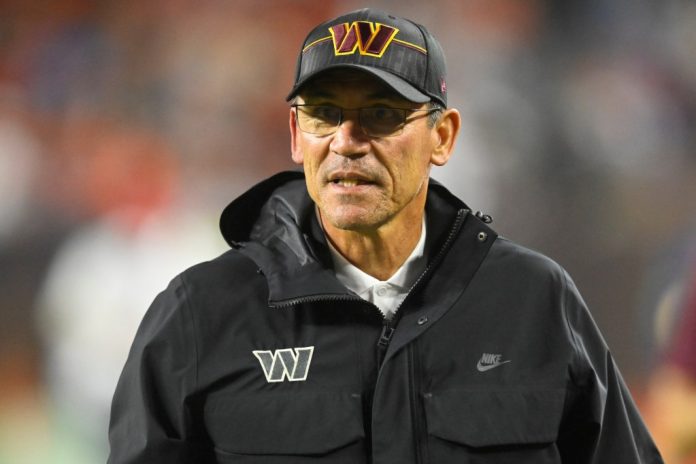
Now that new Commanders’ ownership, one not despised by everyone, is in charge, Ron Rivera has entered a larger danger zone. Before this season, even in a losing situation, Rivera could be viewed by fans as a sympathetic figure caught up in Dan Snyder’s clown show. But with a change in management, that pretext is gone. With it goes any rationalization that Rivera’s job could be saved after another poor season.

Riled up: A group called the Native American Guardian’s Association has worked its way into the news by demanding that Commanders’ ownership bring back the Redskins moniker. Considering the source, seems like a strange request. Memo to diehards of all races: This is not happening. Drop it.

Add nickname: Can anyone really picture Roger Goodell’s office allowing a return to Redskins? There’s a better chance the team changes its name to everyone’s favorite off-beat alternative — the Washington Unindicted Co-Conspirators.

Breakaway: Musing about ways to deal with the logistical problems created for basketball and other sports by far-flung football mega conferences, UCLA coach Chip Kelly says, “Notre Dame is an independent in football, but they’re in a conference for everything else. Why aren’t we all independent for football?” Maybe because there’s only one Notre Dame. Still, anything that can save the UCLA volleyball team from traveling to Rutgers is worth considering.

A lifer: Florida State holds the second slot in the ACC preseason media poll, largely on the strength of quarterback Jordan Travis, who is returning for his sixth college season. Can we assume that by now he’s familiar with the playbook?

Until next time: The deadline for schools to leave the ACC has passed for another year. But now a new countdown begins, with the expectation that fidgety Florida State will continue exploring its options.

Quick hit: As the ground falls out from under the Angels this month, there should be nothing keeping Shohei Ohtani in Anaheim. The franchise hasn’t held up its end of the bargain.

Difference maker: Braves rightfielder Ronald Acuna Jr. — the presumptive N.L. MVP — has 27 home runs to go with 55 stolen bases, putting him in position to become MLB’s first ever 30/60 man. It’s a great thing that stolen bases are back in the game (though I still don’t like the rule limiting pitchers to two pickoff throws).

Wondering: If the large, soft bubble helmets used in NFL and college preseason camps are a deterrent to head trauma, why aren’t they used in regular season games?

Such a surprise: So the U.S. women’s soccer team is looking for a new coach. Who could have seen that coming?

Futbol finale: Here’s hoping his final season at Old Dominion serves as a great sendoff for popular men’s soccer coach Alan Dawson, whose program has stood strong over 26 years.

Pay scales: Patrick Mahomes is following Tom Brady’s script of accepting less money from his team, enabling the Chiefs to keep better talent around him. Market forces being what they are, in the three years since Mahomes signed a contract worth $45 million a year, the NFL’s best at his position has dropped to seventh on the quarterback pay pecking order. Of course, his financial fortunes will grow as his Super Bowl and MVP resumes do.

No way: In a survey of men and women recreational tennis players of all ages, 71% think they could win a game off a touring pro. As a high-strung lefthander once said, “You cannot be serious!” Characterizing the survey responses as delusional doesn’t quite cover it.

Poaching: In another alarming national development, tennis courts are being turned into pickleball courts. There oughta be a law.

Bob Molinaro is a former Virginian-Pilot sports columnist. His Weekly Briefing runs Fridays in The Pilot and Daily Press. He can be reached at [email protected] and via Twitter@BobMolinaro.


Pentagon review calls for reforms to reverse spike in sexual misconduct at military academies – Daily Press

0

By LOLITA C. BALDOR (Associated Press)

WASHINGTON (AP) — The U.S. military academies must improve their leadership, stop toxic practices such as hazing and shift behavior training into the classrooms, according to a Pentagon study aimed at addressing an alarming spike in sexual assaults and misconduct.

U.S. officials said the academies must train student leaders better to help their classmates, and upend what has been a disconnect between what the cadets and midshipmen are learning in school and the often negative and unpunished behavior they see by those mentors. The review calls for additional senior officers and enlisted leaders to work with students at the Army, Navy and Air Force academies and provide the expanded training.

Several U.S. officials described the report on condition of anonymity because it has not yet been publicly released. They said that too often discussions about stress relief, misconduct, social media and other life issues take place after hours or on the weekends. The report recommends that those topics be addressed in classes and graded, to promote their importance.

The study comes on the heels of a report this year that showed a sharp spike in reported sexual assaults at the academies during the 2021-22 school year. It said that one in five female students said in an anonymous survey that they had experienced unwanted sexual contact. The survey results were the highest since the Defense Department began collecting that data many years ago.

Student-reported assaults at the academies jumped 18% overall compared with the previous year, fueled in part by the Navy, which had nearly double the number in 2022, compared with 2021. The anonymous survey accompanying the report found increases in all types of unwanted sexual contact — from touching to rape — at all the schools. And it cited alcohol as a key factor.

In response to the spike in assaults, Defense Secretary Lloyd Austin ordered on-site evaluations at the U.S. Naval Academy in Maryland, the Air Force Academy in Colorado and the U.S. Military Academy at West Point in New York, to explore the issues and identify solutions. The new report, expected to be released Thursday, makes several immediate and longer-term recommendations to improve assault and harassment prevention and eliminate toxic climates that fuel the problems. Austin is ordering quick implementation of the changes.

In a memo, Austin acknowledges that the academies “have far more work to do to halt sexual assault and harassment.” He says the increase in assaults and harassment “is disturbing and unacceptable. It endangers our teammates and degrades our readiness.”

Officials familiar with the study said that while the academies offer a lot of strong programs, toxic and unhealthy command climates make them less effective. When cadets and midshipmen learn one thing about leadership or prevention in the classroom, but they don’t see it reinforced in other settings, it sends mixed messages about what to expect, about how to be treated and how to treat others, said one official.

Such mixed messages, they said, create cynicism and distrust.

The officials pointed to the Air Force Academy’s longstanding system that treats freshmen differently and badly, promoting hazing and an unhealthy climate. They said those students may leave the academy with a poor sense of what good leadership looks like.

They added that a contributing factor to the behavior problems is that — like other college students around the country — many more cadets and midshipmen are arriving at the academies with previous bad experiences, ranging from assaults and harassment to thoughts of or attempts at suicide. On top of that, the report says incoming students then face a lot of stress as they grapple with their education and the military training.

In many cases, the report says that student leaders aren’t trained or equipped to handle those issues or provide proper support to the students.

Another problem, officials said, is the ever expanding influence of social media, where bullying and harassment can go on unchecked. The report pointed to Jodel, an anonymous social media app that focuses on a specific location and is in wide use by academy students.

The report said students can get inaccurate information about assault prevention, reporting, resources and military justice from the app, making them less likely to seek help.

It said training at the academies has not kept pace with change, including the ever-evolving social media platforms and how students differ today from in the past.

Interview with author of ‘The Underworld’

0

Some writers go to the ends of the Earth in pursuit of a great story. Susan Casey went to the bottom of the ocean.

While researching her new book, “The Underworld,” about the otherworldly inhabitants of the deep ocean and the explorers and scientists who are surveying these uncharted depths, Casey ventured down in deep sea submersibles, visiting eerie, alien landscapes that no humans had ever seen.

Doubleday

Susan Casey’s latest.

The deep sea makes up more than 90% of Earth’s biosphere, yet stunningly little is known about it. That’s starting to change, with new technology, such as smart drones that are mapping the ocean floor, and with expeditions in cutting-edge submersibles by private explorers such as director James Cameron and private equity investor Victor Vescovo, who set a world record when he reached the deepest point of the Mariana Trench, some 36,000 feet below the surface.

Casey became fascinated by the deep ocean while visiting the Farallon Islands, an archipelago some 30 miles from San Francisco Bay, where she was researching great white sharks for her 2005 book “The Devil’s Teeth.” “It started to occur to me that there was this parallel universe right beneath the surface,” she said. “What’s down there? What’s going on? What don’t we see?”

Her deep sea adventures were exhilarating, and occasionally harrowing.

On a dive, Casey and Vescovo plunged more than 5,000 meters (16,400 feet) to explore the ecosystem at the base of an underwater volcano in Hawaii, where they saw carpets of neon orange microbes and navigated a maze of lava formations. During a trip to the bottom in the Bahamas, Casey panicked briefly when the submersible’s pilot noticed water around their feet, and tasted it to determine if the water was fresh, from condensation, or salty, from a leak. It was fresh, and they continued exploring, flying over dunes of snow white silt.

In a phone interview from her landlocked home in New York’s Hudson Valley, Casey spoke about the most awe-inspiring life form on the planet, how the recent tragic accident involving the OceanGate submersible could affect deep sea expeditions, and why deep sea mining poses an unfathomable threat to the planet. Below are edited excerpts from the conversation.

Portrait of author Susan Casey.

Tony Cenicola/The New York Times

Susan Casey.

Q: Given how massive and important it is, why do you think we’ve paid so little attention to the deep ocean?

A: For the longest time, there was this sense of, it’s this barren, lifeless place. It’s dark. The pressures are pretty insane as you get deeper. How could anything live there?

It took a really long time for people to understand that there is life throughout the entire water column. When you hit the seafloor, there’s a whole other ecosystem that extends even below the seafloor. So, this vast, vast, vast, vast majority of our world is down there in the dark.

But as far as funding for research, that’s a very good question. I don’t understand it at all. I’m really hopeful that that will change for the better. It’s starting to dawn on people that this is the major part of our world. It’s the engine that drives the climate cycle. It basically is where 90% of the Earth’s microbial life is. There is a lot that we will need to know about how the planet works as a whole in order to be able to survive this next period of intense change.

Q: You write with alarm about companies’ plans to extract minerals from the seafloor. What are the risks?

A: It would be destroying an ecosystem before we even know what we have lost. Scientists are racing to research the area that will be affected first, which is called the Clarion-Clipperton Zone, the area of the Pacific between Mexico and Hawaii, a vast area that’s like 2 million square miles.

Every time they go out there and sample a tiny area, they come back with specimens, and 92% of them are new species. In the microbial realm, they are finding hundreds of thousands of creatures like microorganisms that are not only new species, they’re like new branches on the tree of life.

These are microbes that have figured out how to survive over hundreds of millions of years in an incredibly harsh environment. Those compounds will lend themselves to us learning a lot about resilience. That is probably where the answers lie to really intractable problems like antibiotic resistant drugs. We have just scratched the surface on this.

Q: While you were researching this book, there were big leaps in exploration. Do you think that progress will continue, especially in the wake of the Titan disaster?

A: I think it absolutely will continue.

We’ve just gone through this collective trauma of watching the Titan submersible implode, but it’s really important that people understand that that submersible has nothing in common whatsoever with the machines that I’m writing about and the machines that I dived in.

Manned submersibles have the most impeccable safety record of any mode of transportation, in the world’s riskiest environment. So, that shows how seriously that is taken. OceanGate did not take that seriously.

Q: Did you hear about OceanGate while researching the book?

A: I was aware of OceanGate. I had a friend who was the chief pilot of the University of Hawaii’s deep sea submersibles and ran the Hawaii Undersea Research Lab. He told me about a lot of the things that have come out. So, I was aware of it and had steered very clear of it. You’ll notice there’s no mention of OceanGate in my book, although all other organizations that deal with the deep ocean are in my book.

Q: It seems like many people in the field raised alarms about the risks the company was taking.

A: Everybody tried their hardest. There’s a limit to what you can do. Technically, there’s no law against what he was doing. I hope that changes.

Q: Part of the arc of this book has you going from understanding the vastness of the deep ocean intellectually, to being physically immersed in it. What was it like to be in that environment?

A: Unlike space, you’re surrounded by life. The deepest dive I did, we fell for maybe 2½ hours. You just get a sense of we’re just in one little, tiny spot, and you get a more visceral sense of the immensity of it.

Q: What’s the strangest deep sea creature?

A: A hadal snailfish is the coolest animal. It’s the deepest fish in the world. They’ve sighted them at almost 30,000 feet. I call it a pink gummy bear. It’s gelatinous. It has a skeleton, but the bones are demineralized, so the skeleton is soft. Its skull doesn’t close. It has two mouths. They have this little smile and these little black eyes. They look like they’re just having the time of their lives.

When researchers bring them to the surface, they have to be super careful, because snailfish need the pressure to maintain their body form. I did see a specimen, and it was in a baggie. It was like liquid.

Q: You use an evocative phrase to describe life at the very bottom of the ocean — intraterrestrial life. What’s happening under the seafloor?

A: The seafloor and the ocean crust and even deeper, it’s not solid. It’s got fissures and little, tiny, fractured aquifers. So, there’s microbial life that extends far beneath the seabed.

Archaea are the oldest. They found these archaea existing in places that they really didn’t think any life should be able to exist, at temperatures far higher than it should be able to survive, in poisonous chemical environments where it didn’t seem like anything should be able to survive. There’s nothing that I could read about microbes that would shock me. They’re just extraordinary. They run this planet.


Hawaii is vowing to protect landowners on Maui from being pressured to sell after wildfires – Daily Press

0

By BOBBY CAINA CALVAN, JENNIFER SINCO KELLEHER and CHRISTOPHER WEBER (Associated Press)

LAHAINA, Hawaii (AP) — Hawaii’s governor vowed to protect local landowners from being “victimized” by opportunistic buyers when Maui rebuilds from deadly wildfires that incinerated a historic island community and killed more than 100 people.

Gov. Josh Green said Wednesday that he instructed the state attorney general to work toward a moratorium on land transactions in Lahaina, even as he acknowledged the move would likely face legal challenges.

“My intention from start to finish is to make sure that no one is victimized from a land grab,” Green said at a news conference. “People are right now traumatized. Please do not approach them with an offer to buy their land. Do not approach their families saying they’ll be much better off if they make a deal. Because we’re not going to allow it.”

Since flames consumed much of Lahaina just over week ago, locals have feared that a rebuilt town could become even more oriented toward wealthy visitors, according to Lahaina native Richy Palalay.

Hotels and condos “that we can’t afford to live in — that’s what we’re afraid of,” he said Saturday at a shelter for evacuees.

As the death roll rose to 111 on Wednesday, the head of the Maui Emergency Management Agency defended not sounding sirens during the fire. Hawaii has what it touts as the largest system of outdoor alert sirens in the world, created after a 1946 tsunami that killed more than 150 on the Big Island.

“We were afraid that people would have gone mauka,” said agency administrator Herman Andaya, using a navigational term that can mean toward the mountains or inland in Hawaiian. “If that was the case, then they would have gone into the fire.”

Avery Dagupion, whose family’s home was destroyed, said he’s angry that residents weren’t given earlier warning to get out.

He pointed to an announcement by Maui Mayor Richard Bissen on Aug. 8 saying the fire had been contained. That lulled people into a sense of safety and left him distrusting officials, he said.

At the news conference, Green and Bissen bristled when asked about such criticism.

“I can’t answer why people don’t trust people,” Bissen said. “The people who were trying to put out these fires lived in those homes — 25 of our firefighters lost their homes. You think they were doing a halfway job?”

The cause of the wildfires, the deadliest in the U.S. in more than a century, is under investigation. But Hawaii is increasingly at risk from disasters, with wildfire rising fastest, according to an Associated Press analysis of FEMA records.

As the island begins to think about rebuilding, Green vowed to prevent land grabs. He said he would announce details of the moratorium by Friday, adding that he also wants to see a long-term moratorium on sales of land that won’t “benefit local people.”

Many in Lahaina struggled to afford life in Hawaii before the fire. Statewide, a typical starter home costs over $1 million, while the average renter pays 42% of their income for housing, according to a Forbes Housing analysis. That’s the highest ratio in the country by a wide margin.

The 2020 census found more native Hawaiians living on the mainland than the islands for the first time in history, driven in part by a search for cheaper housing.

Green made affordable housing a priority when he entered office in January, appointing a czar for the issue and seeking $1 billion for housing programs. Since the fires, he’s also suggested acquiring land in Lahaina for the state to build workforce housing as well as a memorial.

Meanwhile, signs of recovery emerged as public schools across Maui reopened, welcoming displaced students from Lahaina, and traffic resumed on a major road.

Sacred Hearts School in Lahaina was destroyed, and Principal Tonata Lolesio said lessons would resume in the coming weeks at another Catholic school. She said it was important for students to be with their friends and teachers, and not constantly thinking about the tragedy.

“I’m hoping to at least try to get some normalcy or get them in a room where they can continue to learn or just be in another environment where they can take their minds off of that,” she said.

___

Kelleher reported from Honolulu and Weber from Los Angeles. Associated Press journalists Haven Daley in Kalapua, Hawaii; Kathy McCormack in Concord, New Hampshire; Jennifer McDermott in Providence, Rhode Island; Seth Borenstein in Washington, D.C.; and Heather Hollingsworth in Kansas City, Missouri, contributed.

___

Associated Press climate and environmental coverage receives support from several private foundations. See more about AP’s climate initiative here. The AP is solely responsible for all content.

Federal grants will replace water tunnels beneath roads that are harmful to fish – Daily Press

0

The Biden administration on Wednesday announced nearly $200 million in federal infrastructure grants to upgrade tunnels that carry streams beneath roads but can be deadly to fish that get stuck trying to pass through.

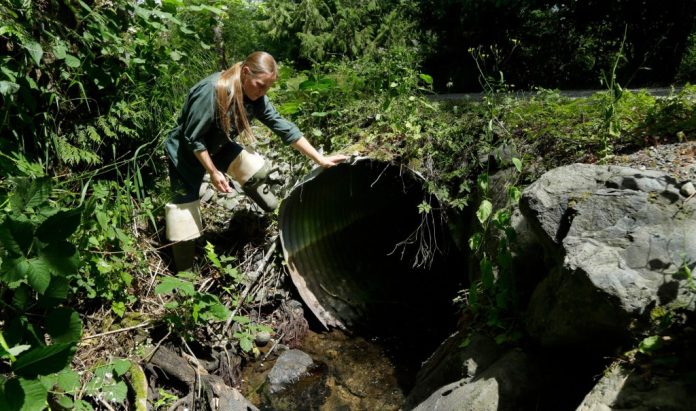
Many of the narrow passages known as culverts, often made from metal pipes or concrete, were built in the 1950s and contribute to population declines of salmon and other fish that live in the ocean but return to freshwater streams to spawn.

By extension, fisheries — including tribal-run operations in the Pacific Northwest — have experienced losses they blame in part on such barriers as culverts and dams.

“We inherited a lot of structures that were built in a way that just did not properly contemplate the effect they were having on fish,” U.S. Transportation Secretary Pete Buttigieg said in an interview with The Associated Press. “You don’t have to be a fish enthusiast or ecologist to care about this. It’s very important for the livelihoods, economies and way of life in many parts of the country.”

Some of the 169 projects that make up the first batch in a $1 billion initiative being rolled out over five years under the 2021 Infrastructure Investment and Jobs Act would upgrade the culverts or replace them with bridges to allow water — and fish — to flow more freely.

The projects are divided among 59 tribal, state and local governments — with at least one found in 10 different states — and the administration estimates they’ll improve some 500 miles of streams vital to fish ecosystems.

The most-expensive project announced Wednesday is $25 million for Alaska to replace a dozen culvert sites on a major highway connecting Fairbanks and Anchorage with three new bridges and other fish-friendly structures. State officials say the funding will help protect five species of Pacific salmon that are considered vital to the region’s economy.

Mark Eisenman, a former fisheries biologist who now works as a planner with Alaska’s transportation department, called the grant funding critical because many of the culverts below the long Parks Highway are clogged with debris — blocking the channels for fish while heightening the threat of catastrophic flooding.

Seafood ranks second only to oil among Alaska’s biggest industries, Eisenman said, although the impact of salmon on the state goes beyond that.

“It’s incredibly important, not just for the commercial value but also the way of life for Alaskans,” Eisenman said. “A lot of us go down and get our salmon every year to fill our freezers to have that to eat the rest of the year.”

Eisenman said some of the Alaska culverts under the grant would be upgraded to steel plate aluminum and anchored with gravel and rocks to make sure the barriers aren’t too high — or that the water doesn’t flow too quickly — for salmon to be able to pass through.

Washington state, which has been working for years under a court order to improve fish crossings under state roads, is receiving $58 million in federal grant money — the most for any state in the first round of the culvert projects.

Tribal governments there won an injunction in 2013 prohibiting the construction of new culverts deemed to harm fish habitats and requiring state officials to accelerate the removal of existing ones. The U.S. Supreme Court later deadlocked on the case, 4-4, allowing the lower court order to stand.

As of June, Washington had removed 114 culvert barriers and helped clear 502 miles (808 kilometers) of blocked salmon and steelhead habitat, according to the state’s Department of Transportation.

U.S. Sen. Maria Cantwell, a Washington Democrat who chairs the Senate Committee on Commerce, Science, and Transportation, said the federal money will only add to that effort.

“Washingtonians are going to see more salmon coming back to rivers all across the Evergreen state,” Cantwell said in a news release.

While the most funding went to Washington and Alaska, Maine was next with $35 million. Four other East Coast states also received grants — Massachusetts, New Hampshire, Virginia and North Carolina — but for much smaller amounts.

Other Western states to receive money are California, Oregon and Idaho.

Jessica Helsley, director of government affairs for the Wild Salmon Center, which advocates for fish crossings including culvert removal, said the effort will be much stronger with the federal government’s financial backing.

“It creates a new unique dialogue that otherwise might have been a little slower to develop,” Helsley said. “It used to be you’d go talk to an infrastructure department and say, ‘I’m here to talk fish,’ and you’d get ignored. Well, now, thanks to Congress, you can say, ‘I’m here to talk fish, and I have money to work with.’”

Man killed in shooting in Newport News Wednesday night – Daily Press

0

A man was killed in a shooting in Newport News Wednesday night.

Police responded to the first block of Heritage Way, off Warwick Boulevard, in the Jenkins neighborhood following a report of gunshots at 10:33 p.m. Officers found a man in a parking lot with a gunshot wound.

The man later died at a hospital. Police have not yet released the man’s name.

The investigation is ongoing. Anyone with information about this shooting is encouraged to submit an anonymous tip by calling the Crime Line at 1-888-LOCK-U-UP or by going to P3Tips.com.

Gavin Stone, 757-712-4806, [email protected]

Hawaii governor vows to block land grabs as fire-ravaged Maui rebuilds – Daily Press

0

LAHAINA, Hawaii (AP) — Hawaii’s governor vowed to protect local landowners from being “victimized” by opportunistic buyers when Maui rebuilds from a deadly wildfire that incinerated a historic island community, as schools began reopening.

Gov. Josh Green said Wednesday that he had instructed the state attorney general to work toward a moratorium on land transactions in Lahaina. He acknowledged the move will likely face legal challenges.

“My intention from start to finish is to make sure that no one is victimized from a land grab,” Green said at a news conference. “People are right now traumatized. Please do not approach them with an offer to buy their land. Do not approach their families saying they’ll be much better off if they make a deal. Because we’re not going to allow it.”

Also Wednesday, the number of dead reached 111, and Maui police said nine victims had been identified, and the families of five had been notified. A mobile morgue unit with additional coroners arrived Tuesday to help process and identify remains.

The cause of the wildfires, the deadliest in the U.S. in more than a century, is under investigation. Hawaii is increasingly at risk from disasters, with wildfire rising fastest, according to an Associated Press analysis of FEMA records.

Since flames consumed much of Lahaina about a week ago, locals have feared that a rebuilt town could be even more oriented toward wealthy visitors, Lahaina native Richy Palalay said Saturday at a shelter for evacuees.

Hotels and condos “that we can’t afford to live in — that’s what we’re afraid of,” he said.

Many in Lahaina were struggling to afford life in Hawaii before the fire. Statewide, a typical starter home costs over $1 million, while the average renter pays 42% of their income for housing, according to a Forbes Housing analysis, the highest ratio in the country by a wide margin.

The 2020 census found more native Hawaiians living on the mainland than the islands for the first time in history, driven in part by a search for cheaper housing.

Green pledged to announce details of the moratorium by Friday. He added that he also wants to see a long-term moratorium on sales of land that won’t “benefit local people.”

Green made affordable housing a priority when he entered office in January, appointing a czar for the issue and seeking $1 billion for housing programs. Since the fires, he’s also suggested acquiring land in Lahaina for the state to build workforce housing as well as a memorial.

Meanwhile, signs of recovery emerged as public schools across Maui reopened, welcoming displaced students from Lahaina, and traffic resumed on a major road.

Sacred Hearts School in Lahaina was destroyed, and Principal Tonata Lolesio said lessons would resume in the coming weeks at another Catholic school. She said it was important for students to be with their friends, teachers and books, and not constantly thinking about the tragedy.

“I’m hoping to at least try to get some normalcy or get them in a room where they can continue to learn or just be in another environment where they can take their minds off of that,” she said.

At least three surviving schools in Lahaina were still being assessed after sustaining wind damage, Hawaii Department of Education Superintendent Keith Hayashi said.

“There’s still a lot of work to do, but overall the campuses and classrooms are in good condition structurally, which is encouraging,” Hayashi said in a video update. “We know the recovery effort is still in the early stages, and we continue to grieve the many lives lost.”

The Federal Emergency Management Agency opened its first disaster recovery center on Maui, “an important first step” toward helping residents get information about assistance, FEMA administrator Deanne Criswell said Wednesday. They also can go there for updates on aid applications.

Criswell said she would accompany President Joe Biden on Monday when he visits to survey the damage and “bring hope.”

At Wednesday’s news conference, the head of the Maui Emergency Management Agency defended not sounding sirens during the fire. Hawaii has what it touts as the largest system of outdoor alert sirens in the world, created after a 1946 tsunami that killed more than 150 on the Big Island.

“We were afraid that people would have gone mauka,” said agency administrator Herman Andaya, using a navigational term that can mean toward the mountains or inland in Hawaiian. “If that was the case, then they would have gone into the fire.” There are no sirens in the mountains, where the fire was spreading downhill, he said.

Avery Dagupion, whose family’s home was destroyed, said he’s angry that residents weren’t given earlier warning to get out and that officials prematurely suggested danger had passed.

He pointed to an announcement by Maui Mayor Richard Bissen on Aug. 8 saying the fire had been contained, that he said lulled people into a sense of safety and left him distrusting officials.

At the news conference, Green and Bissen bristled when asked about such criticism.

“I can’t answer why people don’t trust people,” Bissen said. “The people who were trying to put out these fires lived in those homes — 25 of our firefighters lost their homes. You think they were doing a halfway job?”

Kelleher reported from Honolulu and Weber from Los Angeles. Associated Press journalists Haven Daley in Kalapua, Hawaii; Kathy McCormack in Concord, New Hampshire; Jennifer McDermott in Providence, Rhode Island; Seth Borenstein in Washington, D.C.; and Heather Hollingsworth in Kansas City, Missouri, contributed.