Home Blog Page 27

Teenage boy found dead after falling from train trestle in Chesapeake – Daily Press

0

A teenage boy who was reported missing Sunday night after falling into a body of water in Chesapeake was found dead a short time later.

Police and fire units responded to the 1000 block of Back Road at about 7:08 p.m. following a report that a teen had fallen from a train trestle and into the water below.

At 10:52 p.m., police reported they found the boy under water and he was pronounced dead at the scene. His name has not been released.

Gavin Stone, 757-712-4806, [email protected]

Man killed in Newport News shooting – Daily Press

0

A man was shot and killed in Newport News Sunday night.

Police responded to the 600 block of 34th Street in the Jefferson neighborhood following a report of shots fired at 9:36 p.m. Officers at the scene found a man outside who had multiple gunshot wounds.

He later died at the hospital, police said. Investigators have not determined the man’s identity.

The investigation into this shooting is ongoing.

Gavin Stone, 757-712-4806, [email protected]

Immigrant workers’ lives, livelihoods and documents in limbo after the Hawaii fire – Daily Press

0

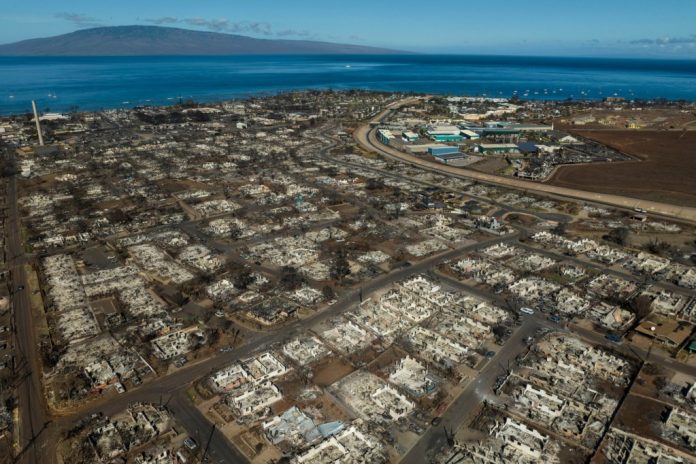
LAHAINA, Hawaii (AP) — Freddy Tomas was working in his yard in Lahaina when the fire advanced with stunning speed right up to his fence. He rushed to save valuables from a safe inside his house but realized he didn’t have time and fled, his face blackened with soot.

Days after fleeing in his pickup truck, amid smoke so thick he could only follow the red taillights of the vehicle in front of him and pray they were going the right way, the retired hotel worker from the Philippines returned to his destroyed home with his son to look for the safe. Tomas, 65, said it had contained passports, naturalization papers, other important documents and $35,000.

After sifting through the ashes, father and son found the safe, but it had popped open in the fire, whipped by hurricane-force winds, and its contents were incinerated.

For immigrants like Tomas, Lahaina was an oasis, with nearly double the foreign-born population of the U.S. mainland. Now, those workers are trying to piece their lives back together after the Aug. 8 fire leveled the town.

Maui County and the Maui Police Department on Sunday confirmed the identifies of another five victims of the wildfires that devastated the area, the county website said. The confirmed death toll remained at 114 as investigators continued to search the area.

Hawaii Gov. Josh Green said Sunday on the CBS News show “Face the Nation” that “an army of search and rescue teams” with 41 dogs have covered 85% of the impacted area.

Maui County Mayor Richard Bissen said in a social media post Sunday that 27 victims have been identified and 11 families were notified of the losses. The FBI and the Maui County Medical Examiner and Coroner office are working together to identify the recovered remains.

“There are currently 850 names on the list of missing persons,” Bissen said, adding that the number represented a positive change from the original list containing more than 2,000 names.

“Over 1,285 individuals have been located safe. We are both saddened and relieved about these numbers as we continue the recovery process. The number of identified will rise, and the number of missing may decrease,” Bissen said, explaining there is an expectation of daily fluctuations and that he plans to provide an update each day.

Jobs had been plentiful in the town that boasted a row of restaurants and shops along Lahaina’s Front Street, bordering the azure waters of the Pacific. Lured as well by its beautiful vistas and laid-back lifestyle, foreign workers had flocked to Lahaina from all over the world.

And they contributed significantly to the population and economy.

The presence of immigrant workers in Lahaina boosted the proportion of its foreign-born residents to 32%, which is almost double the 13.5% for the United States as a whole, the U.S. Census Bureau estimated in July 2022.

Still the labor shortage related to the COVID-19 pandemic took a toll in Hawaii, just as it did on the mainland. In February, almost three years after the start of the pandemic, employers were trying to fill 14,000 jobs in Hawaii — roughly double the number of unfilled job openings pre-pandemic, Hawaii News Now reported, citing state economists. Restaurants in Lahaina were literally hiring people off the street.

Many foreign-born workers lost everything in the inferno. Some residents perished.

The Mexican Consulate in San Francisco said two men were confirmed dead and was helping to arrange the return of their remains to their families in Mexico. A Costa Rican man was also among the 100-plus dead and many more remain missing.

The consulate said some 3,000 Mexican nationals are believed to be living on Maui, many working in pineapple fields, in hotels and restaurants, and other establishments with ties to tourism.

Mexico’s Consul General in San Francisco, Remedios Gomez Arnau, dispatched three staff members to Maui to help Mexican citizens deal with the tragedy. The Mexican government has been in contact with at least 250 of its citizens in Maui, she said, and reissued passports and birth certificates lost in the fire.

“Many of them lost everything because their homes burned down, and they lost their documents,” she said in an interview Friday.

With businesses burned down, legions of those who survived are now jobless. Many are also without a place to live after the blaze also tore through housing of many people who worked at the town’s hotels and resorts. And others are without a clear path forward.

Immigration attorney Kevin Block noted that some immigrants have permanent residency or temporary protected status, and some are in the United States illegally.

“A lot of those folks are nervous about applying for any kind of help,” he said. “When (the Federal Emergency Management Agency) rolls into town or when there’s government agencies around or even medical help, they’re very scared to get it because they’re scared of getting deported.”

A document provided by FEMA says anyone affected by a major disaster may be eligible for disaster assistance, including noncitizens whose deportation status is being withheld for at least one year, as well as noncitizens granted asylum. That assistance can include crisis counseling, legal assistance, medical care, food and shelter, and other relief services.

However, callers to the FEMA assistance hotline are told in recorded messages that they should provide a social security number and are warned that lying in an application for aid is a federal offense.

For immigrants who were brought to Maui as children, it is the only home they know.

“They are working as first responders, providing food, delivering supplies,” Block said. “They are right there with everybody else checking to see who needs help. It’s become more apparent than ever how vital they are to the community.”

Chuy Madrigal fled the blaze with nine members of his extended family, which originally is from Mexico.

They lost the home that his mom worked 30 years to save up enough money to buy and the food truck they started operating just three months ago, said Madrigal, who is a recipient of the Deferred Action for Childhood Arrivals program, or DACA, for immigrants who were brought to the U.S. as children but don’t have legal status.

Madrigal said he and others from the immigrant community have been knocking on doors to gather supplies for those in need and offering to translate. They have tried to comfort those, like him, who lost everything.

“There has been a lot of fear,” he said. “But once you talk to people and tell them, ‘When we got here, we started from zero, this is zero again, we just got to get back on it and continue’ — a lot of people have said, ‘You’re right.’”

The family is planning to rebuild their lives again on Maui.

Selsky reported from Salem, Oregon. Watson reported from San Diego. Jennifer Sinco Kelleher in Honolulu contributed to this report.

It’s time to set mandatory retirement ages for elected officials – Daily Press

0

Age limits

Re “Feinstein, 90, at home after fall, hospital visit” (Aug. 10): Sen. Dianne Feinstein, D-Calif., is no longer capable of doing her job. On July 27, she had to be prompted multiple times to vote “aye” on a defense appropriations bill.

Senate Minority Leader Mitch McConnell, R-Ky., has fallen three times this year, even suffering a concussion. McConnell froze during a recent press conference and was escorted from the podium; the freeze could have been a ministoke. I agree with a recent poll conducted for Newsweek that shows the majority of American voters want him to resign.

President Joe Biden has tripped or fallen numerous times in public. He often appears dazed and confused, routinely stumbles while speaking and has a list of gaffes a mile long. He’s barely up to being president now, much less a possible second term.

Airline pilots, military officers and judges in 32 states face mandatory retirement. Close to 25% of Congress is older than 70 years old, which is the highest it has ever been. Biden is the oldest serving president in U.S. history. A 2022 CBS News poll showed 73% of U.S. adults support a maximum age limit for elected officials. This isn’t a partisan issue; it’s a human one.

Joe Naneville, Windsor

Disfunction

Re “Why US debt deserved a downgrade” (Other Views, Aug. 13): The Heritage Foundation attempts to explain the downgrade of U.S. debt as deserved due to current out-of-control spending. In reality, debt as a percent of GDP peaked at the end of the Trump administration and has been declining since.

Revenue as a percent of GDP, however, is projected to decline. Lower revenue is mainly a function of the excessive and disproportionate tax cuts under former President Donald Trump on top of the tax cuts under former President George W. Bush on top of the tax cuts under former President Ronald Reagan, all of which were structured to benefit large corporations, real estate investors and high earners. The Fitch downgrade was justified by them, in large part, due to government disfunction particularly with respect to the debt ceiling. That was also some of the reasoning for the more significant downgrade in 2011. In both cases, that disfunction falls on Republicans in the House of Representatives and their apparent willingness shut down government rather than pay debts already incurred.

Peter Poirier, Virginia Beach

Facts first

Are we headed to anarchy? Our democracy and way of life depend on law and order. Without it, we slip into an abyss of chaos. Although no organization that involves humans is perfect, the justice system has generally been successful. Unfortunately, we are now drowning in a tidal wave of mistrust for our justice system. The legal woes of both former President Donald Trump and Hunter Biden have highlighted the malignancy of this situation.

Millions are prejudging these cases before the trials and without knowing all the facts. Some say there is a conspiracy, or a deep state or that no crimes were committed. Bias theories are further fueled by TV hosts who are primarily concerned with their ratings and by politicians who want to please their base. Many are “deniers” who have no solid proof to substantiate their contrarian positions. Instead of facts, we are deluged with opinions, beliefs and political talking points. The combination of all these factors is a breeding ground for discontent, physical threats and even violence, thereby placing an unnecessary strain on both our justice system and our country.

However, part of the solution involves we the people. Even though the process is often slow, we must be patient and promote evidence for determining judicial outcomes.

Page Brinkley, James City County

Do presidential debates still matter? – Daily Press

0

What nominee would bet on the proposition that the presidential debates don’t matter and then choose not to prepare?

Jimmy Carter’s desultory prep in 1980, combined with Ronald Reagan’s reassuring and masterful performance — “There you go again” — arguably turned a close election into a landslide that reshaped American politics for a generation. Barack Obama‘s uncharacteristic lack of discipline in the lead-up to his first encounter with Mitt Romney in 2012 led to an excruciating 90 minutes that drove Democrats into mass hysteria. He won the election anyway, although only after a hypersonic Joe Biden dominated Paul Ryan in their vice presidential exchange, and then Romney himself was shredded on the issue of Benghazi in the second debate — by a tag team of Obama and the debate moderator.

So do debates matter? Like most things in life and politics, sometimes yes, and sometimes no. Here are some other examples.

1960: Vice President Richard Nixon was running on the slogan “Experience Counts” when he made the mistake of debating John F. Kennedy. JFK used his opening statement — eight minutes long, without a single note — to define the terms of this high-stakes clash, which Nixon then largely accepted as he quibbled like a point-by-point high school debater with Kennedy’s arguments while often repeating them literally word for word.

Without the debates, especially the first one, it’s hard to imagine that the youngest president elected in one of the closest contests in history would have reached the White House. (And Kennedy’s triumph wasn’t all about image. The oft-told story that voters who listened on the radio instead of watching on television believed Nixon prevailed ignores the reality that those voters couldn’t watch: They were concentrated in pre-cable rural areas and the mountain west, which already heavily favored Nixon.)

1976: After an unexpectedly strong performance in the first debate, with the once beleaguered Gerald Ford having closed a yawning gap with Jimmy Carter to just 2%, Ford’s momentum stalled for a crucial period after he insisted in their second confrontation that “there is no Soviet domination of Eastern Europe.”

There is a convincing case that rhetorically freeing Poland did make the decisive difference in an election where a switch of a few thousand votes in a few states would have yielded an Electoral College majority for Ford.

1992 … when an indelible image truly did matter. The most memorable moment of the debates that year was incumbent George H.W. Bush glancing impatiently at his watch as an earnest questioner in the town hall audience asked him how the recession had affected him personally. The episode was a powerful metaphor for a presidency that appeared tired and out of ideas in a country yearning for change. Did it determine the results? Not by itself, but it does suggest a guideline: Maybe candidates should take their watch off before mounting the debate stage.

In other cases, assessing the effect of these face-to-face encounters is hard. How much did Donald Trump’s crass antics hurt him in 2016 and 2020 — and less noticed, how much did his emphasis on trade and immigration in the early innings of his first clash with Hillary Clinton help him in the “blue wall” states that crumbled on Election Day?

And sometimes, as in 1988, 1996 and 2008, debates won’t bend the campaign arc at all unless the likely winner’s performance is the unlikely political equivalent of belly-flopping into an empty swimming pool.

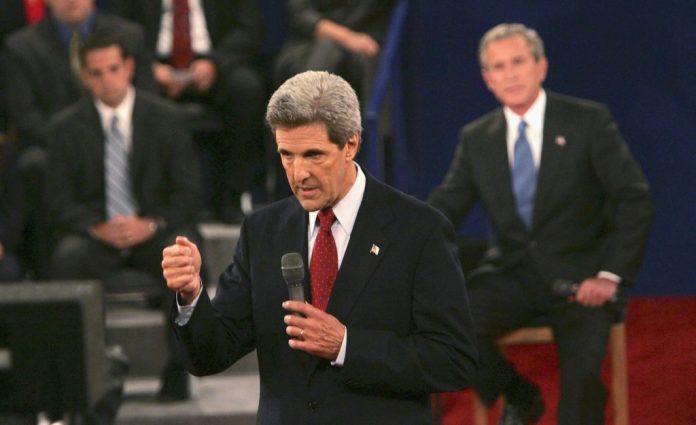
Finally, for me, there’s also a painful irony here: You can win all of the now customary three presidential debates and still lose the election — which, as the Gallup poll showed, is precisely what happened with John Kerry’s narrow defeat in 2004.

Robert M. Shrum is the director of the Center for the Political Future at the University of Southern California Dornsife and a veteran Democratic political operative who worked on presidential campaigns from George McGovern to John Kerry. He wrote this for insideSources.com.

Rethinking the significance of presidential debates – Daily Press

0

Televised presidential debates during the general election are viewed as the ultimate candidate showcase. They give voters the opportunity to watch competing worldviews and policy positions clash on America’s most significant political stage. Viewers get to test their assumptions about the candidates in real time.

Voters want to know how a potential commander in chief will perform in the face of adversity, and facing off against the other party’s nominee and hostile moderators is a great test.

But do this cycle’s primary debates provide that same value? There is a fair argument to make that the answer is no.

Because the candidates’ policy positions from either party are often similar, primary debates are much less about policy and overwhelmingly about character and personalities. In the modern era, the best debaters rarely go on to secure the nomination.

Nobody will accuse George W. Bush or Mitt Romney of being debate-club presidents, and John McCain’s performances were often viewed as less than stellar. And yet these men won the GOP nominations in 2000, 2004, 2008 and 2012.

But this is the era of Donald Trump. Primary debates have become about the spectacle: the performative clashes, the personalities and the snappy comebacks, which many believe sealed Trump’s nomination. Clashes between candidates are amplified and played out in the 24-hour news cycle and continuously replayed on social media. Indeed, some political professionals believe debates are no longer about winning the night but, instead, winning the “meme” — creating social media moments that will get shared from voter to voter. This has changed debates, where voters watch candidates take shots at one another rather than informing them about policy or leadership potential.

With the first debate of the 2024 presidential election approaching and spectators preparing for the drama that comes with presidential debates, many are left wondering about the significance.

The first debate of the primary election cycle touts itself as an introductory event for national and regional candidates to the voting audience for the first time. In other cycles, this stage is often where a front-runner may be born or an obvious standout on the stage emerges. However, in 2024, there is already a clear front-runner — Trump.

Although he may not be physically present — “Will he or won’t he” is the most critical debate question and the candidates haven’t even taken the stage — Trump’s influence hangs heavy over the debate stage.

With Trump leaps and bounds ahead of the crowded Republican field, these primary debates are poised to focus on Trump himself and efforts to overtake his lead rather than the Republican platform for the 2024 election. This will further eliminate what little policy conversations may otherwise sneak through the cracks.

Trump’s solid lead in the Republican primary and constant domination of the news coverage have forced other candidates to seek ways to reach voters outside the traditional news outlets — and changed the significance of presidential primary debates in the 2024 cycle.

Alternative formats — social media, town halls, open forums and direct voter contact — provide candidates with the platforms to bypass structured, time-limited debates and directly address voters. In today’s interconnected world that is defined by evolving communication platforms, voters can access many information sources — news outlets, social media, virtual events and in-person experiences. The controlled environment of a debate is increasingly overshadowed by the real-time interactions offered to candidates by digital platforms.

The decline in the significance of primary election debates cannot be tied to a single instance or example; instead, the proliferation of social media and digital communications provides more direct and unfiltered avenues to reach voters than a crowded debate stage. Further, Trump’s domination in various polls and nearly all news coverage — and the lack of a clear second-place candidate — may be a harbinger of the continued decrease in the significance of primary debates in the 2024 cycle.

Ryan Munce is president and CEO of co/efficient, a polling firm. He wrote this for InsideSources.com.

Steve Breen: Ridin’ With Biden

0

Cartoon by Steve Breen for Aug. 21, 2023.

Rain from Tropical Storm Hilary lashes California and Mexico, swamping roads and trapping cars – Daily Press

0

By DAMIAN DOVARGANES and JORDI LEBRIJA (Associated Press)

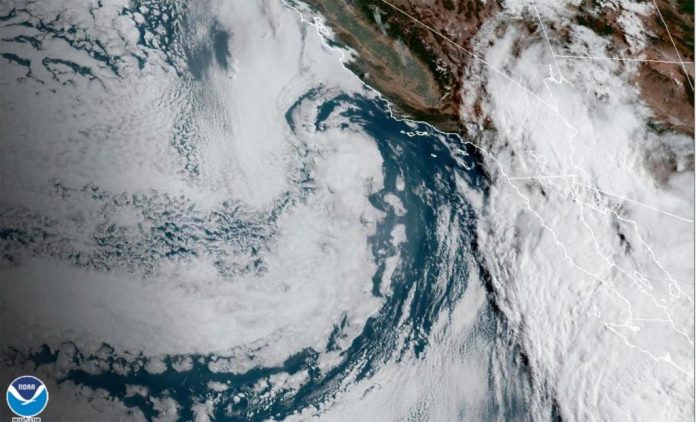
SAN DIEGO (AP) — Tropical Storm Hilary inundated streets across Mexico’s arid Baja California Peninsula with deadly floodwaters Sunday before moving over Southern California, where it swamped roads and downed trees, as concerns mounted that flash floods could strike in places as far north as Idaho.

Forecasters said Hilary was the first tropical storm to hit Southern California in 84 years, bringing floods, mudslides, high winds, power outages and the potential for isolated tornadoes. The storm already dumped more than 6 inches (15.24 centimeters) of rain in some mountain communities and threatened more than an average year’s worth of rain in inland desert areas.

Hilary made landfall along the Mexican coast in a sparsely populated area about 150 miles (250 kilometers) south of Ensenada Sunday, then moved through mudslide-prone Tijuana, threatening the improvised homes that cling to hillsides just south of the U.S. border. By Sunday evening, the storm had moved over San Diego and was headed north into inland desert areas.

As evening fell in California, the National Weather Service in Los Angeles warned of significant flooding risk throughout populous mountain areas along the coast northeast of Los Angeles.

“PLEASE … STAY OFF THE ROADS,” the agency posted on X, formerly known as Twitter.

Mud and boulders spilled onto highways, water gushed onto roadways and tree branches fell in neighborhoods from San Diego to Los Angeles. Dozens of cars were trapped in floodwaters in typically hot and dry Palm Desert and surrounding communities across the the Coachella Valley. Crews pumped floodwaters out of the emergency room at Eisenhower Medical Center in Rancho Mirage.

Hilary could wallop other Western states with once-in-a-century rains, with a good chance of it becoming the wettest known tropical cyclone to douse Nevada, Oregon and Idaho. Hilary was expected to remain a tropical storm into central Nevada early Monday before dissipating.

The Los Angeles Unified School District, the nation’s second largest school system, and said all campuses would be closed on Monday. San Diego schools postponed the first day of classes from Monday to Tuesday.

“There is no way we can compromise the safety of a single child or an employee, and our inability to survey buildings, our inability to determine access to schools makes it nearly impossible for us to open schools,” Superintendent Alberto Carvalho said at a media briefing.

Southern California got another surprise in the afternoon as an earthquake with a preliminary magnitude of 5.1 hit near Ojai, about 80 miles (130 km) northwest of downtown Los Angeles, according to the U.S. Geological Survey. It was felt widely and was followed by smaller aftershocks. There were no immediate reports of major damage or injury, according to a dispatcher with the Ventura County Sheriff’s Office.

Hilary is just the latest major climate disaster to wreak havoc across the U.S., Canada and Mexico. Hawaii’s island of Maui is still reeling from a blaze that killed over 100 people and ravaged the historic town of Lahaina, making it the deadliest U.S. wildfire in more than a century. Firefighters in Canada are battling that nation’s worst fire season on record.

Beaches were closed across the Mexican cities of Ensenada and Tijuana while shelters were opened at sports complexes and government offices.

One person drowned Saturday in the Mexican town of Santa Rosalia when a vehicle was swept away in an overflowing stream. Rescue workers saved four other people, said Edith Aguilar Villavicencio, the mayor of Mulege township.

Mexican army troops fanned out across Mulege, where some of the worst damage occurred Saturday on the eastern side of the Baja Peninsula. Soldiers used bulldozers and dump trucks to help clear tons of boulders and earth clogging streets and roads that were turned into raging torrents a day earlier.

Power lines were toppled in many places, and emergency personnel were working to restore power and reach those cut off by the storm.

California Gov. Gavin Newsom declared a state of emergency. The Federal Emergency Management Agency said it has officials inside California’s emergency preparedness office and teams on standby with food, water and other help.

To the north in Nevada, Gov. Joe Lombardo declared a state of emergency and activated 100 National Guard troops to assist with problems from predicted flooding in western Clark and Nye counties and southern Esmeralda County. In Arizona, wind gusts neared 60 mph (97 kph) in Yuma County, where officials gave out thousands of sandbags.

“I urge everyone, everyone in the path of this storm, to take precautions and listen to the guidance of state and local officials,” President Joe Biden said. Biden said in a later statement that he was being briefed on the storm and was prepared to provide federal assistance.

The warnings from officials didn’t keep everyone indoors. On Sunday morning in coastal Carlsbad, just north of San Diego, 19-year-old Jack Johnson and his friends kept an eye on the huge waves, determined to surf them at some point Sunday.

“It’s really choppy out there, not really surfable yet, but I think we can find a good break somewhere later,” Johnson said. “I can’t remember a storm like this.”

The weather service said tornadoes were possible in eastern San Diego County.

Death Valley National Park could get more rainfall from the storm than the area sees in an average year, officials said.

Meanwhile, one of several budding storm systems in the Atlantic Ocean became Tropical Storm Emily on Sunday, according to the National Hurricane Center. It was far from land, moving west in the open ocean. Also, Tropical Storm Franklin formed in the eastern Caribbean. Tropical storm watches were issued for the southern coasts of Haiti and the Dominican Republic.

In Sept. 1939, a tropical storm that roared into California ripped apart train tracks, tore houses from their foundations and capsized many boats, killing nearly 100 people on land and at sea.

___

Lebrija reported from Ensenada, Mexico. Associated Press contributors include Curt Anderson in St. Petersburg, Florida; Ignacio Martinez in Cabo San Lucas, Mexico; Mark Stevenson in Mexico City; Eugene Garcia in San Diego; Ryan Sun and Christopher Weber in Los Angeles; and Walter Berry in Phoenix.


Chesapeake’s Grant Holloway posts day’s fastest time in hurdles at Worlds – Daily Press

0

TRACK AND FIELD

Holloway posts day’s fastest time at worlds

Chesapeake’s Grant Holloway advanced through the first round of the 110-meter hurdles at the World Athletics Championships in Hungary on Sunday.

The Grassfield High graduate finished in 13.18 seconds, the fastest time of the day. The semifinals and final are Monday.

COLLEGE WOMEN’S SOCCER

Monarchs blank Campbell

Old Dominion (2-0) shut out Campbell 2-0 Sunday night in the Monarchs’ home opener.

Andrea Balcazar Algarin broke the tie in the 61st minute, heading in a pass from Anna Torslov into the right side of the net. Right-footed Ece Turkoglu doubled the lead in the 61st minute with her second goal of the year, making a steal and hitting a left-footed shot from beyond the 18-yard box.

The Monarchs outshot the Camels 18-4 and held Campbell (0-1-1), a new CAA member that won the Big South regular season last year, without a shot on goal.

W&M, St. Joe’s tie

Despite outshooting Saint Joseph’s, William & Mary women’s soccer played to a 0-0 draw with the Hawks in Philadelphia.

The Tribe, which beat Temple 4-0 Thursday, recorded its second straight shutout, marking the first time since 2011 that W&M recorded back-to-back clean sheets to start a season.

The Tribe (1-0-1), which outshot the Hawks 19-8, is unbeaten through two games for the first time since 2017.

Making her first start of the season, W&M junior goalkeeper Morgan Wood of nearby York, Pennsylvania, played all 90 minutes in goal and made three saves. Hawks keeper Katie Cappelletti made 10 stops.

Hampton drops to 0-2

Hampton (0-2) lost 3-0 to USC Upstate (1-0-1) at Powhatan Field in Norfolk.

The Pirates were outshot 20-5 by the Spartans, whose goals came from Hannah Blodget in the 41st minute, Ashley Finn at the 57-minute mark and Paige Armstrong in the 59th.

Alexis Deveaux made 11 saves for HU, while a pair of Upstate goalkeepers combined for two saves.

No. 5 UVA rolls past Radford

No. 5 Virginia (2-0) breezed past Radford 5-0 in Charlottesville, outshooting the Highlanders 24-1. Maggie Cagle scored 49 seconds into the match and again in the 12th minute.

Sarah Brunner, Yuna McCormack and Maya Carter added goals in the 24th, 69th and 76th minutes, respectively. The Highlanders fell to 1-1.

Hokies tie Indiana

Virginia Tech (1-0-1) played a scoreless draw at Indiana (1-0-1) despite being outshot 11-4.

The Hokies’ Alia Skinner made four saves, while the Hoosiers’ Jamie Gerstenberg made two.

HIGH SCHOOL FOOTBALL

IWA romps in exhibition

Isle of Wight Academy defeated Arcadia 43-0 in a preseason benefit exhibition game Friday night as Luke Dunlap scored two touchdowns. One was a 15-yard reception from Jason Chapman, who ran for two short TDs.

Jack Baker’s 8-yard run, Jett Williams’ 21-yard run and Sawyer Conrad’s safety also provided points for the Chargers. So did three PATs apiece from Will Bauman and Jayden Parsons.

BOWLING

Pennsylvania wins $8K at AMF W. Branch

Anthony Neuer of Milton, Pennsylvania, won twice in the stepladder finals for the championship of the PBA Booster Club of Hampton Roads Chesapeake Super Regional.

Neuer, who qualified in the second position among the 34 players who advanced to Sunday’s “cashers round” at AMF Western Branch, defeated Ryan Ciminelli of Clover, South Carolina, 265-215 in a semifinal before knocking off No. 1 qualifier Tim Foy Jr. of Seaford, Delaware, 233-200 to win the $8,000 first-place prize. Foy took $4,000.

A hundred bowlers rolled eight games apiece Saturday, and approximately the best third advanced to Sunday. Further cuts after 12, 15 and 17 total games established the five-man stepladder finals.

The top finisher from Hampton Roads, Norfolk’s Mathew Woodall, placed eighth with a 224.47 per-game average, winning $900. Zachary Tackett of Virginia Beach, who grew up in Indiana, placed 11th, two spots ahead of his brother EJ — who has won four major PBA Tour titles and is regarded by some as the world’s best active bowler.

Chesapeake’s Roscoe Pretlow (21st) and Newport News’ Chris Bolosan (23rd) were among the $550 winners, and Chesapeake’s Brandon Smith (33rd) took home $500.

VOLLEYBALL

U.S. men take fifth at Pan Am Cup

The United States team, including two players who grew up in the Coastal Virginia Volleyball Club, took fifth place in the NORCECA Pan American Cup in Guadalajara, Mexico.

After going 2-0 in group play, the Americans lost 3-0 to Canada (25-20, 25-20, 27-25) in a quarterfinal. They bounced back to defeat Colombia 3-0 (25-18, 25-20, 25-15) for fifth.

Against Canada, outside hitter Brett Wildman, a Cox High graduate, had eight kills. His former club and Penn State teammate Cole Bogner, a setter in his first tournament playing for the U.S., helped the team to a .438 percentage.

Wildman and Bogner both started against Colombia and now plan to compete professionally, Wildman in Romania and Bogner in the Netherlands.

GOLF

UVA’s James makes Walker Cup team

Virginia men’s golfer Ben James of Milford, Connecticut, was named to the United States Golf Association’s Walker Cup team Sunday.

Also named were Nick Gabrelcik, (Trinity, Florida), Austin Greaser (Vandalia, Ohio), Stewart Hagestad (Newport Beach, California), Dylan Menante (Carlsbad, California) and Preston Summerhays  (Scottsdale, Arizona).

Those six players join Nick Dunlap, David Ford, Gordon Sargent and Caleb Surratt, all of whom were previously selected to the team.

The U.S. will compete against Great Britain and Ireland in the 49th Walker Cup Match on Sept. 2-3 at the Old Course in St. Andrews, Scotland.

Rain from Tropical Storm Hilary lashes California and Mexico, swamping roads and trapping cars – Daily Press

0

DAMIAN DOVARGANES and JORDI LEBRIJA (Associated Press)

SAN DIEGO (AP) — Tropical Storm Hilary inundated streets across Mexico’s arid Baja California Peninunsula with deadly floodwaters Sunday before moving over Southern California, where it swamped roads and downed trees, as concerns mounted that flash floods could strike in places as far north as Idaho that rarely get such torrential rain.

Forecasters said Hilary was the first tropical storm to hit Southern California in 84 years, bringing flash floods, mudslides, high winds, power outages and the potential for isolated tornadoes.

Hilary made landfall along the Mexican coast in a sparsely populated area about 150 miles (250 kilometers) south of Ensenada, then moved through mudslide-prone Tijuana, threatening the improvised homes that cling to hillsides just south of the U.S. border.

At least 9 million people were under flash-flood watches and warnings as heavy rain fell across normally sunny Southern California ahead of the brunt of the storm. Desert areas were especially susceptible along with hillsides with wildfire burn scars, forecasters warned.

Mud and boulders spilled onto highways, water overwhelmed drainage systems and tree branches fell in neighborhoods from San Diego to Los Angeles. Dozens of cars were trapped in floodwaters in Palm Springs and surrounding desert communities across the the Coachella Valley. Crews pumped floodwaters out of the emergency room at Eisenhower Medical Center in Rancho Mirage.

The Los Angeles Unified School District, the nation’s second largest school system, said all campuses would be closed on Monday.

“There is no way we can compromise the safety of a single child or an employee, and our inability to survey buildings, our inability to determine access to schools makes it nearly impossible for us to open schools,” Superintendent Alberto Carvalho said at a media briefing. San Diego schools postponed the first day of classes from Monday to Tuesday.

Southern California got another surprise in the afternoon as an earthquake with a preliminary magnitude of 5.1 hit near Ojai, about 80 miles (130 km) northwest of downtown Los Angeles, according to the U.S. Geological Survey. It was felt widely and was followed by smaller aftershocks. There were no immediate reports of major damage or injury, according to a dispatcher with the Ventura County Sheriff’s Office.

Hilary could wallop other Western states with once-in-a-century rains, with a good chance of it becoming the wettest known tropical cyclone to douse Nevada, Oregon and Idaho. Hilary was expected to remain a tropical storm into central Nevada early Monday before dissipating.

By Sunday evening, Hilary had moved over San Diego and was headed north into inland desert areas. Around midday, it had maximum sustained winds of 60 mph (97 kph).

Hurricane Center Director Michael Brennan said that while Hilary had weakened from a Category 4 hurricane, it’s the water, not the wind, that people should watch out for most — some areas could get as much rain in hours that they typically get in a year.

“You do not want to be out driving around, trying to cross flooded roads on vehicle or on foot,” Brennan said during a briefing from Miami. “Rainfall flooding has been the biggest killer in tropical storms and hurricanes in the United States in the past 10 years, and you don’t want to become a statistic.”

Hilary is just the latest major climate disaster to wreak havoc across the U.S., Canada and Mexico. Hawaii’s island of Maui is still reeling from a blaze that killed over 100 people and ravaged the historic town of Lahaina, making it the deadliest U.S. wildfire in more than a century. Firefighters in Canada are battling that nation’s worst fire season on record.

The Mexican cities of Ensenada and Tijuana closed all beaches and opened a half-dozen shelters at sports complexes and government offices.

One person drowned Saturday in the Mexican town of Santa Rosalia when a vehicle was swept away in an overflowing stream. Rescue workers saved four other people, said Edith Aguilar Villavicencio, the mayor of Mulege township.

Mexican army troops fanned out across Mulege, where some of the worst damage occurred Saturday on the eastern side of the Baja Peninsula. Soldiers used bulldozers and dump trucks to help clear tons of boulders and earth clogging streets and roads that were turned into raging torrents a day earlier.

Power lines were toppled in many places, and emergency personnel were working to restore power and reach those cut off by the storm.

Brennan said rainfall could reach between 3 and 6 inches (7 centimeters and 15 centimeters) in many areas. Forecasters warned it could dump up to 10 inches (25 centimeters) — a year’s worth of rain — in some isolated areas.

California Gov. Gavin Newsom declared a state of emergency. The Federal Emergency Management Agency said it has officials inside California’s emergency preparedness office and teams on standby with food, water and other help.

In coastal Carlsbad, just north of San Diego, 19-year-old Jack Johnson and his friends kept an eye on the huge waves, determined to surf them at some point Sunday.

“It’s really choppy out there, not really surfable yet, but I think we can find a good break somewhere later,” Johnson said. “I can’t remember a storm like this.”

The weather service said tornadoes were possible in eastern San Diego County.

Authorities issued evacuation warnings Saturday for Santa Catalina Island, urging residents and beachgoers to decamp for the mainland, and for several mountain and foothill communities in San Bernardino County. Orange County sent an alert for anyone living in a wildfire burn scar in the Santa Ana Mountains’ Silverado and Williams canyons.

Los Angeles authorities scrambled to get homeless people off the streets and into shelters, and officials ordered all state beaches in San Diego and Orange counties closed.

Across the region, municipalities ran out of free sandbags and grocery shelves emptied as people stockpiled supplies. California’s Joshua Tree National Park, Mojave National Preserve and Death Valley National Park were closed.

Death Valley’s Furnace Creek Visitor Center received more than 1 inch (2.5 centimeters) of rain by 1:30 p.m., with up to 3 inches (7.6 centimeters) more possible overnight. “For comparison, Furnace Creek’s average annual rainfall is 2.2 inches (5.6 centimeters),” the park said in a statement, calling the rainfall “unprecedented.”

To the north in Nevada, Gov. Joe Lombardo declared a state of emergency and activated 100 National Guard troops to assist with problems from predicted flooding in western Clark and Nye counties and southern Esmeralda County. In Arizona, wind gusts neared 60 mph (97 kph) in Yuma County, where officials gave out thousands of sandbags.

“I urge everyone, everyone in the path of this storm, to take precautions and listen to the guidance of state and local officials,” President Joe Biden said. Biden said in a later statement that he was being briefed on the storm and was prepared to provide federal assistance.

Meanwhile, one of several budding storm systems in the Atlantic Ocean became Tropical Storm Emily on Sunday, according to the National Hurricane Center. It was far from land, moving west in the open ocean. Also, Tropical Storm Franklin formed in the eastern Caribbean. Tropical storm watches were issued for the southern coasts of Haiti and the Dominican Republic.

In Sept. 1939, a tropical storm that roared into California ripped apart train tracks, tore houses from their foundations and capsized many boats, killing nearly 100 people on land and at sea.

___

Lebrija reported from Ensenada, Mexico. Associated Press contributors include Curt Anderson in St. Petersburg, Florida; Ignacio Martinez in Cabo San Lucas, Mexico; Mark Stevenson in Mexico City; Eugene Garcia in San Diego; Ryan Sun and Christopher Weber in Los Angeles; and Walter Berry in Phoenix.