Home Blog Page 208

#Reviewing Our Best War Stories

0

O’Brien argues that the only way to tell a true war story is to merge moments across time, to invent, to exaggerate—to make things up. The reader gets, O’Brien says, empathy from these stories.

Our Best War Stories is a collection that embodies the “True War Story” concept and uses it to inspire empathy. These authors tell the truth even in the stories that are clearly invented. This is a collection that helps readers to understand how mutable actual experiences are. The reader’s certainty is undermined so that they can view the world with less biased eyes.

This notion of truth has become something that I, a civilian academic who teaches classes on war fiction and conflict literature, have come to rely upon. This is the kind of truth this collection conveys. It’s more honest than the numbers, more important than whether this particular gunshot happened on this particular day. Stories like those found in Our Best War Stories are the kind of stories that lead my students to see the truth of warfare alongside the facts. The abstract of casualties, cost, or achieved objectives are something very different from the actuality of truth.

Our Best War Stories from Midwest Press is a collection full of the most important kind of truth, the kind O’Brien extolls. It’s a collection of short stories and poetry (written by American veterans—from the Vietnam conflict to the present day—and their families) that have been selected or have received honorable mentions in the Darren L. Wright Memorial Awards.

This collection of prize winners, of course, features a number of stories and narrative poems that almost have to be factual. They’re filled with details that could not be imagined and minutiae that would escape someone outside of the military. More importantly, however, this collection is filled with writing that is true. And this truth comes by way of many different perspectives, writing styles, and experiences within the armed forces. These truths are what makes the book stand out amongst its peers.

…adhering to their task of relaying the experience of war while staying firmly in the realm of art. Truth never gets thrown out in favor of style, and art never seems to be discarded in favor of the dull facts.

It’s fitting, then, that the book begins with a story laced with magical realism. David R. Dixon’s “The Stay” is the tale of a man who can touch other people and delay their deaths. But not forever. It’s fantasy (or perhaps magical realism), but it captures the true pressure of someone who understands why and how death comes, but who cannot delay it. The story kicks off a string of extremely memorable and gripping stories that run the gamut of subject matter, ranging from time in theaters of war to the feelings of rotating home or deploying.

On the more realistic (but not more true) end of the spectrum is Brian L. Braden’s “Green,” a stark, quiet recounting of a mid-flight refueling taking place in the night sky. The author manages to make such a process seem both routine and dangerous, both dreamlike and incredibly real. The reader is entangled in the moment-to-moment dance of a delicate operation while simultaneously being uplifted by the gorgeous prose describing the milky spray of jet fuel parting like a veil, or afterburners lengthening in the night. Many of the stories in this volume are characterized by this adroit double-duty—adhering to their task of relaying the experience of war while staying firmly in the realm of art. Truth never gets thrown out in favor of style, and art never seems to be discarded in favor of the dull facts.

“Farragut Square” by Jillian Danback-McGhan is a tight mystery that deals with sexual assault in the military, houselessness, and a number of heavy, important subjects that are usually unaddressed in military fiction. Her story unfolds through a charming, unsteady narrator who has remade her life outside of the armed forces even as she struggles with a sexual assault that occurred inside her branch. As she attempts to live her life, a chance encounter gradually draws her into a bracingly-paced, noir-esque plot that makes her question everything around her.

On top of the excellent content in this collection, this book yields some significant insights when analyzed from a sociological perspective. The stories were published from 2016-2020, and it’s fascinating to see how the subject matter changes alongside the culture of the armed forces in any given year. The stories and poems in 2016 differ greatly from those in 2020. Social issues, the hierarchy of the armed forces, and gender politics are much more evident in the later stories in the collection. We can see how writers in different eras feel empowered to tackle subject matter that is important to them.

If you’re interested in military culture, the ongoing cultural change in the armed forces, or just looking for excellent writing from veterans and their families, this is a book that belongs on your shelf. I know I’ll revisit the short stories in this collection in years to come and that they’ll find their way in my coursework in the future.

#Reviewing Waging a Good War

0

Movement leaders knew from “painful experience that freedom is never voluntarily given by the oppressor; it must be demanded by the oppressed.”[6]  Waging a Good War describes how, after a defensive action in Montgomery, King chose a series of battles over the next decade that presented southern whites with a dilemma between a loss of political power or resorting to increased violence to maintain a system of segregation. This escalation of violence, and the growing attention it received outside the South, forced a reluctant federal government to intervene to enforce equal treatment.[7]

The Movement’s new strategy centered on nonviolent direct action to challenge unjust laws by employing “creative tension” that overwhelmed the system of segregation.

Adapting the Campaign to the Environment

In Nashville, the Movement transitioned from the defensive act of denying patronage to the offensive approach of demanding service at the city’s downtown lunch counters. As in Montgomery, leaders thoroughly planned these defiant actions and demonstrators displayed remarkable discipline. Waging a Good War describes how, drawing inspiration from Gandhi, James Lawson and Diane Nash led workshops in church basements for several months. In squads of twelve, they taught Nashville students about nonviolent action and executed realistic rehearsals that included name-calling and spitting to simulate the violent reactions expected from angry crowds. Lawson observed that “a protest cannot be spontaneous. It has to be systematic. There must be planning, strategy,” what he called “a common discipline.”[8]  

As in any campaign, the Movement faced setbacks. The strategy devised by King relied on two external components—violent reaction from opponents of integration and outrage from a broader public—to force the federal government to act. King argued, “In any nonviolent campaign there are four basic steps: collection of the facts to determine whether injustices are alive, negotiation, self-purification, and direct action.”

King focused on identifying locations where the most likely reaction would be violence. The strongholds of racism became ideal targets for the Movement—Montgomery, Nashville, Mississippi, and eventually Selma. However, their efforts stalled when the Movement faced an adaptive adversary in Albany, Georgia. The segregationist Albany Police Chief understood his enemy, planned well in advance for mass detentions, made arrests on charges that couldn’t be challenged as segregation, maintained police discipline during arrests, and engaged directly with the Movement in negotiations. In Albany, the Movement leadership culminated, withdrew, and learned to better choose its adversaries and to adapt its tactics.

In Birmingham’s Public Safety Commissioner, “Bull” Connor, King found an adversary he could rely on to escalate violence in ways that could enable the campaign to achieve progress. Thomas Ricks describes a training center set up in Dorchester, Georgia, to prepare demonstrators as a “school for noncommissioned officers of the civil rights movement.” However, Birmingham was so oppressive that, in the early days of protest, only a handful of demonstrators volunteered to march, knowing it would result in beatings and jail time. Sensing a faltering initiative, King volunteered to march and face arrest. This act, and the publicity generated by publishing his “Letter from The Birmingham Jail, brought journalists to the city, but the Movement still needed demonstrators.

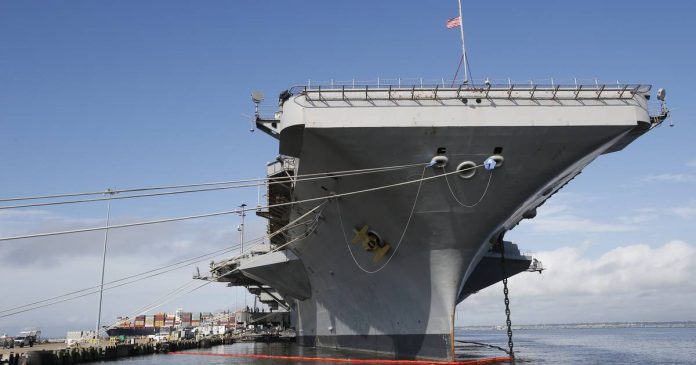
Probe into sailor suicides reveals taxed mental health system aboard USS George Washington – Daily Press

0

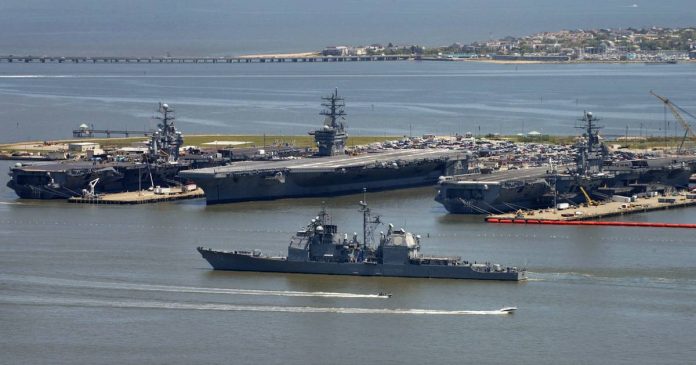
The mental health system aboard the USS George Washington is “overwhelmed” and sailors have a poor understanding of alternative resources, according to the Navy’s investigation into three sailor suicides.

In May, the Navy launched an investigation into the April deaths, interviewing senior medical officers and sailors aboard the carrier undergoing an overhaul at Newport News Shipbuilding. While the probe into three suicides of sailors assigned to the USS George Washington found the deaths were not connected, the roughly 60-page report released Dec. 19 found the Washington’s psychologist and behavioral health technician — Psych Boss and Psych Tech — were “overwhelmed” and struggled to keep up with the demand for services.

From January 2021 to January 2022, the ship reported about 2,600 mental health patient encounters with the psych boss, the behavioral health technician and two substance abuse rehabilitation program counselors. It was unclear how many sailors sought mental health services, as a “patient encounter” could mean one sailor was seen multiple times.

Of the three Washington sailors who died by suicide in April, only 24-year-old Natasha Huffman was a patient of the Washington mental health team.

The psych boss and psych tech reported a “significant backlog” for initial appointments despite each seeing as many as 20 patients a day. According to the investigation, this means it could take up to six weeks for a sailor to get a non-emergent initial mental health appointment.

“(Senior medical officer) and Psych Boss had considered switching from individual-based therapy to group therapy in order to handle the high volume, but chose not to because group therapy ‘hadn’t worked well in the past’,” the report reads.

Leadership aboard the Washington added to the demand for mental health services.

The Navy has sponsorship and mentorship programs available to connect sailors with leadership who will guide them through their assimilation into a new command. But according to the investigation, multiple sailors reported a lack of mentorship aboard the carrier and said leadership did not want to talk about or were uncomfortable discussing mental health issues with junior sailors.

“Psych Tech stated that ‘leadership,’ and specifically leading petty officers (LPOs), ‘don’t have time’ to deal with mental health issues of their subordinates and want to refer them to Psych Boss and Psych Tech to deal with,” the report reads.

While the medical team aboard the Washington was overwhelmed, the deployed resiliency counselor was “underutilized.”

The resiliency counselor, at an offsite location 3 miles from the carrier, only saw 46 patients from January 2021 to January 2022. Deployed resiliency counselors are civilian clinicians that offer confidential, non-medical counseling on a short-term basis while sailors are deployed or in port.

“Sailors interviewed were generally not aware that the deployed resiliency counselor is an available resource who does not readily share patient information, and any information shared with the DRC is not entered into the sailor’s military health record,” the report said.

Additionally, multiple sailors interviewed during the investigation did not know who the deployed resiliency counselor was or where they were. But those who knew the counselor was 3 miles from the carrier were “hesitant to take that much time off to go there (or don’t believe they can),” the report said.

Following the suicides, the Navy assigned an additional resiliency counselor to the Washington, this time placing them onboard the carrier. The ship also has three chaplains who can provide emotional and spiritual guidance.

The investigation included a slew of suggestions, some of which already have been implemented.

“Recommendations, such as adding additional mental health counselors and refining the welcome aboard process for new sailors, are underway. We are also improving our team-building program to ensure every Sailor knows they are a critical component of our Navy Team,” said Capt. Dave Hecht, spokesperson for U.S. Fleet Forces.

According to the first investigation, the Navy also is considering reviewing the adequacy of mental health care and practitioner manning for ships entering a complex refueling and overhaul to better balance manning with demand, as well as requesting the Military Entrance Processing Command review the Navy’s initial accession screening process for psychological suitability.

“This process should not be intended to prevent individuals from entering the Naval service, but designed to identify those that may be at risk for psychological hardship. This review should be focused on proactive measures to identify unresolved and/or untreated disorders, and to develop a treatment plan to help sailors better assimilate to the arduous environment of Naval service,” the report read.

The psychological suitability screening recommendation was modified to suggest the Navy coordinate this effort with the Marine Corps’ High Risk Sailor Identification Initiative to develop a risk management tool for Commanding Officers to use in order to define, identify, manage, and oversee high risk Sailors more effectively and transparently within their command and during transfer processes.

But those recommendations, as well as others meant to enhance mental health and support resources, recreational programs, and command mentorship initiatives, are being evaluated as part of a second, broader investigation that evaluates the command climate and quality of service challenges unique to the shipyard environment is ongoing.

“The findings from this quality of service investigation will be released in the coming months, which we anticipate having a positive impact on our Sailors and their families,” Hecht said.

Caitlyn Burchett, [email protected]

#Reviewing Flying Camelot

0

Flying Camelot: The F-15, the F-16, and the Weaponization of Fighter Pilot Nostalgia. Michael W. Hankins. Ithaca, NY: Cornell University Press, 2021.


Michael W. Hankins, in Flying Camelot: The F-15, the F-16, and the Weaponization of Fighter Pilot Nostalgia, argues that starting as early as the 1960s a group of fighter pilots and reformers sought to change the procurement process for aircraft to emphasize the importance of the fighter pilot and air superiority missions. Hankins states that this resulted in the development and acquisition of the F-15 and F-16 fighters by the United States Air Force. Hankins further asserts that these reformers sought to change how fighter pilots were trained to emphasize the importance of dogfighting and air superiority campaigns over other aspects of air combat. As Hankins shows throughout his book, the reformers who sought to emphasize the importance of dogfighting training and aircraft, more commonly known as the Fighter Mafia, were driven by nostalgia of the First World War. As a result, they tried to recreate the aerial duels of the First World War in the aftermath of the Vietnam War. 

Hankins shows that fighter pilots have a unique culture where they envision themselves as specialized individual combatants like knights from the medieval period.


Buy on Amazon

A fascinating aspect of Hankins’ work is the chapters analyzing fighter pilot culture. In many ways these chapters and this book pair well with the research done by Timothy Schultz in The Problem With Pilots, which analyzes the limitations of the pilot, but also examines pilot culture.[1] Like Schultz, Hankins shows that fighter pilots have a unique culture where they envision themselves as specialized individual combatants like knights from the medieval period. As Hankins shows this culture, the allure of aerial combat in the First World War to pilots and the public at large was because it was a new venue for combat. Flying the aircraft required great skill. Also, with ground combat stalled in trench warfare, the public looked to other domains to see progress or the success of the individual combatant. Soon politicians on both sides of the aisle saw the potential of fighter pilots as propaganda and recruiting tools.[2] Hankins does an excellent job at showing how that initial concept of knightly pilots gets passed down from generation to generation and still influences both the culture of fighter pilots today but also the expectations that the public has of fighter pilots in the twenty-first century.

The Ghost of Kyiv (Andriy Dankovych)

Hankins argues that fighter pilots believe that the individual in the machine enhances the capabilities of the aircraft.


Buy on Amazon

Hankins breaks down his discussion of fighter pilot culture quite effectively. He points out there are multiple aspects as to what traits fighter pilots are supposed to have. First, there is the eagerness for combat. Fighter pilots, by their very nature, are supposed to aggressively seek combat. The next aspect of fighter pilot culture is the importance of the individual pilot to the machine. Hankins argues that fighter pilots believe that the individual in the machine enhances the capabilities of the aircraft. Again, this is an area that Schultz touches upon but not in as much detail. Hankins also argues that fighter pilots are viewed more broadly in society as heroic figures and their feats seem almost mythological. A modern-day example of society idolizing the fighter pilot is the “Ghost of Kyiv” in the Russo-Ukrainian War, who with his/her outdated Ukrainian MiG-29 shot down as many as 40 Russian aircraft in the opening weeks of the war. While the story turned out to be more myth than fact, it did inspire Ukrainians at a moment when it was unclear whether their capital, Kyiv, would fall to the forces of the Russian Federation.[3] Hankins also argues that fighter pilots are supporters of technological changes that emphasize the role of the fighter pilot and enhance the ability of the pilot to engage in dogfighting. He also notes the secretive community in which fighter pilots live. Fighter pilots are in sort of a club of their own and the only entrance is to be a fighter pilot. No one else is allowed access. Finally, Hankins argues that fighter pilot culture embraces a hyper masculine attitude. Pilots need to possess many of the traits of an aggressive tough guy, or in other words the film version of John Wayne. Hankins writes, “Whether owing to the stresses of a combat environment, or the pressure of being surrounded by large groups of men who encouraged rowdiness, many performative displays of manhood became what Robertson called ‘hypermasculinity.’”[4] These first two chapters are incredibly important in providing the context for the reforms made by fighter pilots within the Air Force during and after the Vietnam War.

One of the more interesting aspects that Hankins touches upon is the change in leadership of the Air Force during the Vietnam War. Prior to the 1960s and 1970s much of the upper echelons of the officer corps in the Air Force included bomber pilots, who turned the attention of the Air Force towards strategic bombing and bomber production. During the Vietnam War many of these bombing advocates began getting replaced by officers with a fighter pilot background. Hankins argues when the Air Force began developing a new fighter, which eventually became the McDonnell Douglas F-15 “Eagle,” Colonel John Boyd and Pierre Sprey saw this as an opportunity to develop their ideal fighter which would be a pure air superiority fighter.

Hankins shows in these chapters through the acquisition process for the F-15 and F-16 how Boyd and the Fighter Mafia went from being outsiders to playing prominent roles within the Air Force.

Hankins argues that the Fighter Mafia, which included Boyd, wanted the new F-15 to be a purely air to air weapons platform rather than a fighter that conducted additional missions including close air support. The result was that the Fighter Mafia were able to change the development of the F-15 to an aircraft whose primary role was air to air combat and secondarily to provide ground support.[5] Hankins points out that this fell far short of what Boyd and Sprey sought in a fighter. They did not want a repurposed fighter but one built specifically for the kind of aerial warfare that they envisioned and romanticized. Hankins argues that the Fighter Mafia found that perfect fighter in the development and procurement of the General Dynamics F-16 “Falcon.” He argues that the Fighter Mafia wanted to create a fast and maneuverable single seat fighter designed to replicate the combat of the First World War. In the end the product that they helped produce created the ideal fighter that they sought and at the same time was more cost effective to the Air Force.[6] Hankins shows in these chapters through the acquisition process for the F-15 and F-16 how Boyd and the Fighter Mafia went from being outsiders to playing prominent roles within the Air Force. Furthermore, he shows how they sought to move the Air Force towards an emphasis on air to air combat missions.

Hankins argues that the military reform movement played a key role in the development of the F-16. More commonly known as the Reformers, they clashed with both the defense industry and those in favor of a more fire power centric doctrine within the Pentagon. They also disagreed with those in the political establishment who viewed new technologies as the means to solving some of the problems from the Vietnam War. In contrast, the Reformers were skeptical of the new complex technologies and stressed the importance of the pilot. They sought to create a cost-effective military with equipment that could be easily produced and molded to the user.[7] They also feared the attritional costs of a high intensity war. Therefore, they were skeptical of those in the Pentagon and weapons development who pushed for an Air Force that emphasized more expensive stealth aircraft and long-range missiles in favor of aircraft that were cheaper, easier to make, and pilot friendly. As Hankins shows, this group played a key role in supporting the F-16 program.

the Persian Gulf War showed to many that the days of dogfighting in visual range of an opponent were over.

The big test case for these theories came during the Persian Gulf War from 1990 to 1991. While Boyd, the Fighter Mafia, and the Reformers had created their two ideal jets, the strategy used during the war was influenced by Colonel John Warden, who had a different view of air power. Whereas the Fighter Mafia sought to achieve air superiority through close quarter dogfighting and maneuver warfare, Warden sought to apply warfare at the operational and strategic level. Warden believed that the best method for destroying the enemy was to find the enemy’s center of gravity and knock them off their equilibrium through the use of air power.[8] During the war the Air Force struck hard at operational and strategic targets. Instead of using the F-16 for air superiority missions and dog fighting, the fighter became the most effective fighter-bomber of the war conducting air interdiction and close air support missions. As Hankins points out due to the technology at the fingertips of the pilots, the air-to-air combat during the war was not the kind of fighting that Boyd had envisioned. There were very few dogfights and most occurred at long range beyond the vision of the pilots. As a result, it was the new long-range air to air missiles and radar that played the biggest role in these fights. Most dog fights were over in a few moves. This was not the close in maneuvers of the First World War that Boyd had envisioned.[9] As Hankins argues, the Persian Gulf War showed to many that the days of dogfighting in visual range of an opponent were over. Afterwards different weapon systems were sought such as fighters that used stealth, drones, and more advanced missile systems. He concludes by pointing out that while Boyd, the Fighter Mafia, and the Reformers lost the debate, their ideas still percolate in American society today.

This is a well-researched book. Hankins has brought together a wide variety of sources. These include important culture sources which include films, books, and even comic books to show the cultural attitude that developed in society about the expectations of fighter pilots. At the same time, Haskins also uses archival research and oral histories quite effectively. Hankins has done an excellent job at blending these diverse sources together to shape his arguments throughout the text. It is quite difficult to find a place to criticize him here.

Hankins’s book is an important addition to the historiography of air power during the Second Inter-War Period, which took place between the Vietnam and Persian Gulf Wars. Hankins offers a glimpse into how the culture of the Fighter Mafia affected the doctrinal and weapons procurement debates that the Air Force experienced during this period. Hankins also shows how Vietnam was not the only influencing factor behind the military reforms that took place after the war. In fact, as Hankins argues, the First World War dogfights had the greatest influence on the Fighter Mafia who tried to recreate that type of combat in the aftermath of Vietnam.

As the Fighter Mafia sought to use romanticized views of pilots to advance their agenda, so too is Ukraine tapping into that culture to convince both American politicians and the public to continue backing Ukraine in its war with the Russian Federation.

This book is incredibly important outside the academic community. The general public still yearn for fighter pilot culture and dogfights that this work addresses. As Hankins correctly argues the fighter pilot nostalgia played a major role in the development and acquisition of two major fighter systems. Today the public still embraces fighter pilots and their culture. In Ukraine we see the Ghost of Kyiv playing a major role in crafting the culture of these knights of the air. For example, on 7 August 2022, the Ukrainian Defense Ministry posted on their Facebook page a photo about their fighter pilots. The caption stated, “In the photos-Mirgorod aviators. Our guardian angels. Our knights of the sky.”[10] These messages are not just designed to galvanize the support of the Ukrainian public but also to target Americans by embracing fighter pilot culture. As the Fighter Mafia sought to use romanticized views of pilots to advance their agenda, so too is Ukraine tapping into that culture to convince both American politicians and the public to continue backing Ukraine in its war with the Russian Federation. It is not hard to imagine that the discussions Hankins writes about during the Second Inter-War Period will be revived as the United States prepares for potential conflicts with larger rivals such as the Russian Federation and China.

Hankins’ work is an excellent analysis of how the perception of fighter pilots inside and outside of the Air Force affected the evolution of the institution in the 1960s and 1970s.

Hankins effectively shows how fighter pilot culture drove the Fighter Mafia to acquire the F-15 and F-16 in the aftermath of the Vietnam War. He argues that the romanticized view of the fighter pilot from the First World War drove reformers like Boyd to try and create the perfect air superiority fighters. While Boyd and the Fighter Mafia were able to acquire their ideal fighters, they were ultimately employed in the Persian Gulf War contrary to their intended use. Hankins’ work is an excellent analysis of how the perception of fighter pilots inside and outside of the Air Force affected the evolution of the institution in the 1960s and 1970s. He uses a wide range of sources to advance his narrative. Hankins work builds on new trends to start analyzing and asking hard questions of pilot culture within the Air Force. This book is incredibly important to the public at large as the United States enters a new age of air power dominated by drones and less by fighter pilots.


Luke Truxal is an adjunct at Columbia State Community College in Tennessee. He completed his PhD in 2018 from the University of North Texas with his dissertation “Command Unity and the Air War Against Germany.” His previous publications include ‘Bombing the Romanian Rail Network,’ in Air Power History. He has also written “The Politics of Operational Planning: Ira Eaker and the Combined Bomber Offensive in 1943” in the Journal of Military Aviation History. He is currently working on his book Uniting Against the Reich: The American Air War in Europe which will be published in late 2023.


The Strategy Bridge is read, respected, and referenced across the worldwide national security community—in conversation, education, and professional and academic discourse.

Thank you for being a part of the The Strategy Bridge community. Together, we can #BuildTheBridge.


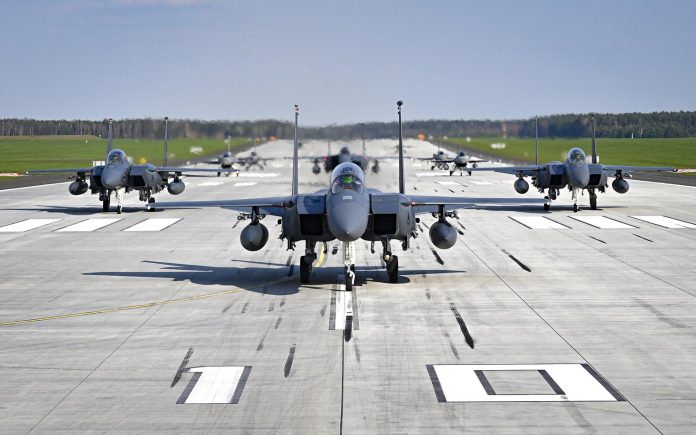
Header Image: F-15E Strike Eagles assigned to the 48th Fighter Wing, F-16 Fighting Falcons assigned to the 52nd Fighter Wing, Spangdahlem Air Base, Germany, and Polish air force F-16 Fighting Falcons perform an elephant walk at Łask Air Base, Poland, April 21, 2021 (Senior Airman Madeline Herzog).


Notes:

[1] Timothy Schultz, The Problem with Pilots: How Physicians, Engineers, and Airpower Enthusiasts Redefined Flight, (Baltimore: John Hopkins Press, 2018).

[2] Michael W. Hankins, Flying Camelot: The F-15, the F-16, and the Weaponization of Fighter Pilot Nostalgia, (Ithaca: Cornell University Press, 2021) 22-23.

[3]Lawrence Peters, “How Ukraine’s ‘Ghost of Kyiv’ legendary pilot was born,” May 1, 2022 https://www.bbc.com/news/world-europe-61285833.

[4] Hankins, Flying Camelot, 50.

[5] Ibid, 92-95.

[6] Ibid, 115-121.

[7] Ibid, 146.

[8] Ibid, 179-181.

[9] Ibid, 182-186.

[10] Міністерство оборони України, “Without days off and full-fledged rest, they “minusu вихідtʹ” the Russians, protecting the Ukrainian sky.” August 5, 2022. https://www.facebook.com/MinistryofDefense.UA.

Sailor suicides lead to calls for implementing Brandon Act

0

Norfolk-based Navy installations reported seven sailors died by suicide last year, renewing concern about the progress of efforts to improve mental health services and suicide intervention within the military.

Lawmakers are now prioritizing implementation of one key piece of legislation, which was signed into law by President Joe Biden in 2021 but has yet to take effect. The Brandon Act would allow service members to confidentially seek mental health care.

The deaths also have spurred interest in a review of how to address the unique mental health needs of service members, particularly those who may be placed on limited duty status.

The Norfolk deaths include three sailors linked to the USS George Washington, who died by suicide within a week in April while the carrier was undergoing an overhaul at Newport News Shipbuilding. A Navy report issued in December concluded that the deaths were not connected. Less than eight months later, between Oct. 30 and Nov. 26, four sailors assigned to Norfolk’s Mid-Atlantic Regional Maintenance Center died by apparent suicide.

Biden signed the Brandon Act into law as part of the 2022 National Defense Authorization Act. Under the law, service members would no longer be required to inform superiors about seeking mental health care, nor would they have to seek treatment from military medical providers. The act also would provide a confidential channel for service members to self-report mental health struggles.

But enforcement and implementation requirements were not included in the language of the bill, leaving it up to the Department of Defense to work the legislation into its policies at its leisure.

While the 2023 National Defense Authorization Act, signed by the president this week, does not include amendments to the Brandon Act, it will require the Secretary of Defense to provide an assessment of how suicide prevention reforms will be implemented across the armed forces.

The report, due March 1, will require the Department of Defense to detail how it will mandate comprehensive and in-person annual mental health assessments of all military members and training of leaders at all levels in suicide warning signs and suicide-specific interventions.

Sen. Tim Kaine, who serves on the Armed Services Committee, said in mid-December he would prioritize the implementation of the Brandon Act in 2023.

“That is going to be my most urgent priority going into writing next year’s defense bill, is really understanding with the Navy and the entire military, what is the status of the Brandon Act. It could be different from service to service, what can I do to put pressure on them to implement faster?” Kaine said.

The DOD did not respond to questions about how it is working to implement the legislation across the armed forces by this article’s deadline.

But Patrick and Teri Caserta, who championed the Brandon Act after son Brandon Caserta died by suicide in 2018, said they feel the military is “dragging their feet.” The Petty Officer 3rd Class was a naval squadron flight electrician serving a helicopter sea combat unit when he died in June 2018 at Naval Station Norfolk.

“It took us two years to get it passed because they fought it behind the scenes. And now, a year later, it is still not implemented. The military did not come up with (the Brandon Act), so they don’t want it. But this change wouldn’t hurt the military — it would save lives,” Patrick Caserta told The Virginian-Pilot.

In recent weeks, the Casertas have met with lawmakers across the country, as well as the Assistant Secretary of the Navy, Robert Hogue, to press the DOD to implement the act.

“Needless to say, I am very disappointed that it has not been implemented yet,” said Teri Caserta, Brandon’s mother. “Every time I get word of a suicide in the US Armed Forces, my heart shatters. It shatters for the one we lose — it shatters for their families and their friends.”

The Brandon Act may not be a “one size fits all” solution.

Following the suicides linked to the maintenance center, Sen. Mark Warner suggested taking a closer look at the mental health needs of service members on a case-by-case basis. The four recent deaths were identified as Kody Decker, Deonte Antwoine Autry, Janelle Holder, and Seaman Cameron Elan Armstrong. While the Navy has not confirmed if all four sailors were on limited duty, Warner said “hundreds and hundreds” of individuals are assigned to the command because the duties they can perform are restricted for medical or mental health reasons.

“We’re going to let the Navy finish the investigations, but it does raise a bigger question about how these sailors, in limited duty status, how we take care of their unique needs,” Warner said.

Sailors may be assigned limited duty for wide-ranging physical, mental or circumstantial conditions, including pregnancy, nearing retirement, recovering from surgery, or even diagnosis with a terminal illness.

Being placed on limited duty status is generally sign of “a major change to their regular life,” said Kayla Arestivo, a mental health professional called in by the Navy to conduct a mandatory seminar following the second suicide linked to the maintenance center.

Arestivo said while the military’s protocols and procedures on how care is handled need to be “revamped,” the additional privacy that would come with the Brandon Act may not be a good solution for service members on limited duty. If sailors withhold information from superiors about their mental health and well being, it can put leadership at a disadvantage, she said.

But Arestivo does think allowing service members to seek care outside of military physicians, as the Brandon Act specifies, will improve access to quality care.

“It’s not the Navy’s job to fix everybody’s mental health. That’s not the purpose of the Navy. You join the Navy to defend America — that’s the point. However, there is a civilian standard of care that is not being transmitted into the Navy. So, sailors are not getting the necessary investment and the attention from internal mental and health care professionals,” Arestivo said.

Since the suicides reported out of the USS George Washington and the Mid-Atlantic Regional Maintenance Center, the Navy has worked to improve quality of life at the installations by installing cell repeaters and wireless internet and stepping up morale and welfare programs. The Navy also provides sailors with immediate access when calling the Hampton Roads appointment line and is working to expedite appointments for mental health referrals. Sailors are encouraged to seek help from the Navy’s chaplains, psychologists, counselors, and leaders.

Arestivo also suggested requiring limited duty service members to attend counseling once a week and urged the DOD to start bringing in civilian physicians at a competitive pay rate to bring the military standard of care up to par with the civilian standard of care.

Would that fix everything? Arestivo says, “no.”

“We could do better,” Arestivo said. “Everybody (in the military) is trying to make sure they show what they did in response (to the suicides), but I don’t think anybody (in the military) is doing anything to implement a lasting change.”

Resources for service members and veterans struggling with mental health, including 24-hour crisis hotlines:

  • The Military Crisis Line: call 1-800-273-8255, ext. 1; or text “273Talk” to 839863
  • Military OneSource: 1-800-342-9647
  • National Suicide Prevention Lifeline: 988 — call or text

Caitlyn Burchett, [email protected]

#Reviewing War Transformed

0

One of the book’s shining points is the recurring theme of adaptation. In building a model of a world in constant competition, Ryan provides a theoretical construct for competition that is accessible to the military professional. By identifying historical and modern cases for the importance of adaptation, he connects this to the modern reader by identifying adaptive requirements to the emerging trends in 21st century warfare, such as a new appreciation for the importance of time, new forms of mass, the battle for signatures, and human-machine integration. Strategists and operational planners will find even more utility in Ryan’s concept for counter-adaptation, in which he outlines ways for denying an adversary the ability to adapt to friendly operations.[4] 

Leaders should also take note of the linkage of adaptation to institutional culture, which Ryan connects directly to military effectiveness. Ryan argues that without a culture open to self-examination, critique, and adaptation, military effectiveness will not be achieved. As today’s military practitioners find themselves tasked to develop and implement a litany of new operational concepts, they will be well served by Ryan’s argument for nurturing a culture that matches concepts to capacity, maintains a focus on their mission, and aligns their activities with their objectives.

Diagnosing several shortcomings found within most contemporary approaches to military learning, he proposes that a joint, integrated force can be better developed if military leaders are taught to be joint by design, rather than attempting to make officers joint qualified when they are over halfway through their careers.

Himself a noted writer on the subject of professional military education, it is no surprise that Ryan dedicates significant attention to the problem of intellectually developing military personnel. He argues for constructing a system of continuous learning, challenging military institutions to strategically design their efforts for training and education. Diagnosing several shortcomings found within most contemporary approaches to military learning, he proposes that a joint, integrated force can be better developed if military leaders are taught to be joint by design, rather than attempting to make officers joint qualified when they are over halfway through their careers. Similarly, Ryan proposes that learning will be enhanced through engagement with non-military institutions, a goal easily achievable through interaction with the interagency and civilian industry.[5]

Additionally, he makes a strong case for the applicability of speculative fiction as a means by which to develop plausible futures, anticipate challenges, and develop solutions. While many readers will be familiar with the genre of fiction intelligence, or FICINT, popularized by August Cole and Peter Singer through their novel Ghost Fleet, Ryan demonstrates that a long and wide-ranging application of science fiction for military education and planning exists and that this is a tool that is both useful and culturally acceptable to military organizations. Finally, Ryan makes the case for military educational institutions to formally repurpose a portion of their syllabi to deliberately study and solve emerging problems. In proposing the educational institution as think tank, Ryan again appeals to history, noting two key precedents: the U.S. Naval War College’s 1930s wargames that informed operations in the Pacific War, and the Marine Corps Schools’ task to its students to develop and write what would become the Tentative Manual for Landing Operations, which provided essential doctrine for amphibious operations conducted by the Allies in multiple theaters in World War II.[6]  

Ryan’s boldest and perhaps most important argument is his critique of hyper-war, a type of conflict where there is no human in the loop; instead, military decision-making is entirely automated, provided by combinations of artificial general intelligence and machine learning.[7] Ryan is forthright: “I can think of no human endeavor that would benefit from it—especially war.”[8] To reach this conclusion, he contests that such a form of war is possible, but instead examines whether such an arrangement is desirable. Without skin in the game, such constructs will never be able to fully consider the human implications of their decisions.

War Transformed provides the necessary lens through which military practitioners must consider modern competition and conflict.

This, too, is an old argument, one that strikes at the heart of the quantitative versus the qualitative when assessing value. But the debate takes on new meaning when the technology to offload strategic decisions from human beings is rapidly becoming available. This discussion is revisited in the epilogue, where Ryan disputes the argument that technological advances are changing not just the character, but also the nature of war. Weighing different arguments regarding whether the nature of war could ever change, he contends that no such change will occur in the near future, and regardless of the possibilities, that “no AI can inspire humans to cohere, learn, fight, and sacrifice.”[9]

War Transformed provides the necessary lens through which military practitioners must consider modern competition and conflict. It describes the rapidly changing operational environment, frames its defining problems, and provides suitable answers to its many dilemmas. While confirming the importance of technological change, Ryan makes a compelling case to focus instead on people, institutions, and operational concepts in order to be successful. In challenging leaders to embrace adaptation and to build cultures of learning, War Transformed offers a reliable path forward through an increasingly uncertain future.

The Question of Military Regulations and the Role of Routine and Creativity in Military Conduct

0

Clausewitz’s Thoughts on Creating Guidelines for Military Conduct 

Even if the committee working on a new field manual omitted Clausewitz, the short memorandum captured his thoughts on the ways to create guidelines for conduct in the field. Although published in the 1990 volume containing Clausewitz’s manuscripts and correspondence, the document has never been extensively studied, nor translated into English. This article offers its first English translation.

Clausewitz’s memorandum was sent to his close friend and former commander, Field Marshall August Neidhardt von Gneisenau.[7] Serving as the chief of staff for Blücher, Gneisenau was largely responsible for the planning of the Allied campaigns against Napoleon in 1813-1815. In the post-1819 period, the so-called Restoration Era, when Prussian politics took a reactionary turn, Gneisenau was awarded many honors but, as a suspected liberal, was kept away from active service. He and Clausewitz continuously exchanged ideas, and Gneisenau encouraged Clausewitz’s work on a general theory of war. It remains unclear whether Clausewitz expected that his friend would pass along the 1825 memorandum to other leading features in the Prussian military or used the occasion to simply clarify his thoughts on the subject.

A booklet capturing the conduct of armies in the field, a Feldmanual or field manual, was called to close a gap in Prussia’s military documentation. As part of the efforts to restructure and modernize the Prussian army after its disastrous defeat at the hands of Napoleon in the Jena-Auerstedt Campaign (1806), the reform circle led by Gerhard von Scharnhorst created an exercise manual in 1812.[8] The document aimed at introducing contemporary tactics, unifying the Prussian army’s conduct, and rebuilding it as a force able to face Napoleon’s troops. Following his mentor Scharnhorst’s instructions, as a General Staff major, Clausewitz served on the committee that compiled the infantry exercise manual. The booklet was considered a comprehensive guide for training troops that, with some changes, remained in use until 1843.[9]

Yet the realities of prolonged campaigning and mass warfare in the 1813-1815 period also revealed its limits. The exercise manual required extensive periods of training and long and systematic development of officers and non-commissioned officers able to lead troops. However, in the Wars of German Liberation, Prussia increasingly relied on newly drafted soldiers and the Landwehr (territorial reserve). For its officer corps, the Landwehr selected schoolteachers, civil servants, and prominent members of the society; although enthusiastic, they were far from military professionals. In general, the drafted Prussian troops and their leadership arrived at the war theater with four months of service on average. Without extensive training, newly commissioned and non-commissioned officers often lacked knowledge and experience leading to poor performance in the field.[10] They needed practical guidance for their conduct in combat.  

As a reaction to this experience in the Wars of German Liberation, Clausewitz considered writing a field manual in 1816. His request for institutional support for the project was met with little enthusiasm from the war ministry; instead, Clausewitz devoted his energy to writing war theory.[11] Nonetheless, the need for a new manual guiding and unifying the army’s conduct on the field became hard to overlook, leading the Prussian military to plan the maneuvers of 1825 as the basis for the creation of such document.

Clausewitz’s memorandum displays his disdain for habitual committee work. As he stated, the emphasis on consensus from early on and attempts to please every expectation tended to steer the process in the wrong direction: “From the very first moment, everything is taken into account and agreement is sought too early.” Instead, Clausewitz suggested a group of experienced and knowledgeable officers with diverse expertise should reflect and write their proposals separately; only after these rough drafts were prepared should the committee meet and discuss which requirements and ideas should be captured in the manual. This process, Clausewitz implied, would “safeguard against one-sidedness” and could produce a valuable product.

This careful reflection on military instructions promised to also bridge the gap between theory and practice. Clausewitz criticized the notion that a field manual should be based on the experience from such a limited event as a fourteen-day exercise: “It seems to me implausible that we will learn in a fourteen-day-long exercise what has not been learned while experiencing a four-year-long war.” Instead, the creation of a manual had to be a deliberate and thoughtful process: “It is more a question of capturing, through careful and persistent reflection, what needs to be prescribed and can be prescribed.”

A military manual, Clausewitz argued, should be written in clear language and aim to capture the majority of cases. Arguing that no guide could offer instructions for every occasion—nor should it attempt to do it—Clausewitz emphasized the need for reliance on “common sense.” He also took a jab at the military profession and its love for elaborate paperwork, “which some find the service’s particular dignity.”

The practical field manual, he concluded, had to unify the force’s performance. Clausewitz argued further that practical guidance for combat, military education, and war theory ought to be in constant dialog. To describe this theoretical and normative unification of conduct, Clausewitz used the term Methodismus or mode of procedure. The latter, not coincidently, was also a chapter in his treatise On War.

The Consequences for On War

In the 1990s, the eminent German scholar Werner Hahlweg briefly commented on the similarities between the 1825 Memorandum and the chapter in Book II, Chapter 4 (translated by Peter Paret and Michael Howard as “Method and Routine”).[12] Contrary to the popular perception that the entirety of Clausewitz’s manuscripts had been lost in World War II, some of the early drafts are preserved in the German archives and provide clues on the development of his thought. The early version of Methodismus is one of those preserved.[13] Famously, as captured in the Note of 1827 published as the preface of On War, Clausewitz envisioned comprehensive revisions in the drafts, a plan never to be fulfilled due to his unexpected death in 1831.[14] The preservation of the earlier manuscripts allow us to study the development of Clausewitz’s thought and particularly the influence of the 1825 events and the memorandum on his revisions of On War.

In its early version, the chapter offered a rather short discussion, merely two pages in print, on the place of guidance in the study of war and the role routine and patterns could play in military conduct. As Clausewitz wrote in the draft, with its complex enactment and ever-changing conditions, war may appear as a human activity the least amendable to rules, guidance, and routine. However, when considering that commanders usually worked with imperfect information and without the ability to oversee and control the execution of every order, basing disposition “on the general and probable” was often the case. (The paragraph was partially preserved in the mature version of On War).[15] Thus, the question Clausewitz raised in the early draft—but failed to answer—was how this methodical procedure should be devised to facilitate military performance on the field without becoming a stiff routine that shackled conduct and blinded commanders to the singular challenges they faced in combat.

The 1825 Memorandum helped Clausewitz to refine his thinking on the matter. The chapter in On War we read today is an extended meditation on the role guidance, regulations, and routine should and could play in the conduct of war. Echoing the memorandum, Clausewitz argued that a “method” or “mode of procedure” is a constantly recurring procedure “that has been selected from several possibilities.” Despite its seeming uniformity, it could not describe all eventualities but “should be designed to meet the most probable cases. Routine is not based on definite individual premises, but rather on the average probability of analogous cases. Its aim is to postulate an average truth, which, when applied evenly and constantly, will soon acquire some of the nature of a mechanical skill.”[16] Clausewitz also found an answer to the question he posed in the early draft, namely, how to create practical but undogmatic guidance for conduct on the field: “As such [routines] may well have a place in the theory of the conduct of war, provided they are not falsely represented as absolute, binding frameworks for action (systems); rather they are the best of the general forms, short cuts, and options that may be substituted for individual decisions.”[17] In other words, they had to be understood for what they are—general guidelines and heuristics; thus, if keeping in mind their limitations, modes of procedure had their place. However, if they were seen as rules to be continuously followed, the guidelines would become counterproductive and even dangerous.

Additionally, as in the memorandum, Clausewitz saw procedures and routines in perpetual discourse with war theory; the latter, as he stated in the same chapter, was the “intelligent analysis of conduct of war.”[18] While unified methods and routines are typical and acceptable on a tactical level, Clausewitz commented that, at the higher levels of war, some imitation of previously successful approaches, application of ready-made solutions, or preferences dictated by the fashion of the day was also unavoidable. The danger came, however, when people failed to recognize these routines on an operational and strategic level for what they were, a “style, developed out of a single case.” As an antidote, war theory and its study, according to Clausewitz, are called to provide context and reveal when a method had outlived its time while simultaneously empowering leaders to seek and develop new approaches.[19]

Understanding Clausewitz’s Experience

The discovery of the 1825 portrait and an understanding of its larger context reveals how little we still know about the military theorist’s life and writing process. Although his war experience is extensively studied, Clausewitz’s tangible achievements as a military reformer on the eve of the Wars of German Liberation and afterwards are not yet fully appreciated.[20] The process of creation of On War remains, too, largely unexplored, a circumstance particularly vexing given the treatise’s unfinished nature. In fact, due to its complex language, the chapter on Methodismus discussed in this article is seldom read or debated in professional military seminars, despite its valuable insight into the business of war. By studying the roots of Clausewitz’s ideas and their gradual development, we can better understand their meaning while broadening our modern interpretation of his thought. 

Most of all, for today’s national security practitioners exploring Clausewitz’s thought process brings reassurance and encouragement. The Prussian general continuously reflected on practical challenges he encountered in war and peace—and strove to capture these reflections in a general theory transcending the constraints of early nineteenth-century warfare. Thus, his treatise is an homage and empowerment of those enlightened professionals who constantly study the business of war and strive to conduct it in an informed and effective manner.

Afghan war orphan remains with U.S. Marine accused of abduction – Daily Press

0

The Afghan woman ran down the street towards her friend’s apartment as soon as she heard the news: the White House had publicly weighed in on her family’s case.

Surely her child, who she says was abducted by a U.S. Marine more than a year ago, would now be returned, she thought. She was so excited that it was only after she’d arrived that she realized she wasn’t wearing any shoes.

“We thought within one week she’d be back to us,” the woman told The Associated Press.

Yet two months after an AP report on the high-stakes legal fight over the child raised alarms at the highest levels of government, from the White House to the Taliban, the baby remains with U.S. Marine Corps Major Joshua Mast and his family. The Masts claim in court documents that they legally adopted the child and that the Afghan couple’s accusations are “outrageous” and “unmerited.”

“We are all concerned with the well being of this child who is at the heart of this matter,” said White House Press Secretary Karine Jean-Pierre after the AP detailed the child’s plight in October.

Last month, the U.S. Justice Department filed a motion to intervene in the legal wrangling over the fate of the child, arguing that Mast’s adoption should never have been granted. The government has said Mast’s attempts to take the child directly conflicted with a U.S. foreign policy decision to reunite the orphan with her Afghan family. They asked that the case be moved from a rural Virginia court to federal court, but were denied by Presiding Circuit Court Judge Richard E. Moore.

Additionally, federal authorities say multiple investigations are underway.

“We all just want resolution for this child, whatever it’s going to be, so her childhood doesn’t continue to be in limbo,” said Samantha Freed, a court-appointed attorney assigned to look after the best interests of the child. “We need to get this right now. There are no do-overs.”

The legal fight has taken more than a year, and Freed is worried it could take months — maybe even years — more. The child is now 3 ½ years old. The Afghan family spoke with the AP on condition of remaining anonymous out of fear for their safety and concerns for their relatives back in Afghanistan.

Mast became enchanted with the child while on temporary assignment in Afghanistan in late 2019. Just a few months old, the infant had survived a Special Operations raid that killed her parents and five siblings, according to court records.

As she recovered from injuries in a U.S. military hospital, the Afghan government and the International Committee of the Red Cross identified her relatives, and through meetings with the State Department, arranged for their reunification. The child’s cousin and his wife — young newlyweds without children yet of their own — wept when they first saw her, they said: Taking her in and raising her was the greatest honor of their lives.

Nonetheless, Mast — in spite of orders from military officials to stop intervening — was determined to take her home to the United States. He used his status in the military, appealed to political connections in the Trump administration and convinced the small-town Virginia court to skip some of the usual safeguards that govern international adoptions.

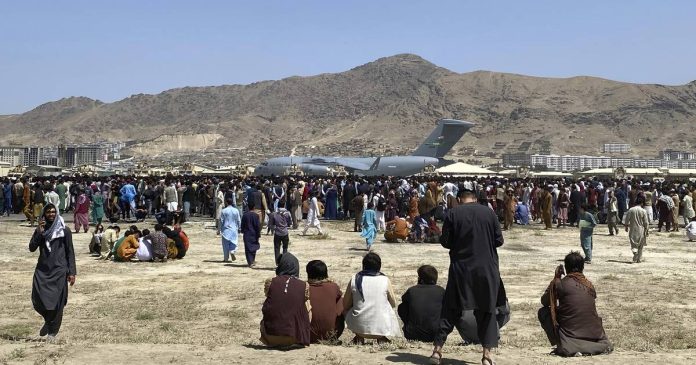
Finally, when the U.S. military withdrew from Afghanistan last summer, he helped the family get to the United States. After they arrived, they say, he took their baby from them at the Fort Pickett Virginia Army National Guard base. They haven’t seen her since and are suing to get her back.

The Afghan woman gave birth to a daughter just weeks after the girl they’d been raising was taken from them. Every time they buy an outfit or a present for their daughter, they buy a second matching one for the child they pray will come back to them soon.

The Masts did not respond to repeated requests for an interview. Stepping out from a recent hearing, Joshua Mast told AP they’ve been advised not to speak publicly.

In court filings, Mast says he acted “admirably” to bring the child to the United States and care for her with his wife. They say they’ve given her “a loving home” and have “done nothing but ensure she receives the medical care she requires, at great personal expense and sacrifice.” Mast celebrated his adoption of the child, whose Afghan family is Muslim, as an act of Christian faith.

The toddler’s future is now set to be decided in a sealed, secret court case in rural Virginia — in the same courthouse that granted Mast custody. The federal government has described that custody order as “unlawful,” “improper” and “deeply flawed and incorrect” because it was based on a promise that Afghanistan would waive jurisdiction over the child, which never happened.

The day Mast and his wife Stephanie Mast were granted a final adoption, the child was 7,000 miles away with the Afghan couple who knew nothing about it.

In court, Mast, still an active duty Marine, cast doubt on whether the Afghan couple is related to her at all. They argue that the little girl is ” an orphan of war and a victim of terrorism, rescued under tragic circumstances from the battlefield.” They say she is a “stateless minor” because she was recovered from a compound Mast says was used by foreign fighters not from Afghanistan.

The case has been consumed by a procedural question: Does the Afghan family — who raised the child for a year and a half — have a right under Virginia law to even challenge the adoption?

Judge Moore ruled in November that the Afghan family does have legal standing; the Masts’ appeal is under review.

The child’s Afghan relatives, currently in Texas, believe the U.S. government should be doing more to help them, because numerous federal agencies were involved in the ordeal.

“The government is not doing their job as they should,” said the Afghan woman. “And in this process, we are suffering.”

A State Department official said one of the agency’s own social workers stood with Mast when he took the baby at Fort Pickett, but “had no awareness of the U.S. Embassy’s previous involvement in reuniting the child with her next of kin in Afghanistan.” The official described how the U.S. had worked hard in Afghanistan to unite the child with her relatives.

“We recognize the human dimension of this situation,” said the official.

The Department of Defense said in a statement that the decision to reunite the child with her family was in keeping with the U.S. government’s foreign obligations, as well as international law principles that mandate family reunification of children displaced in war. The Defense Department said it is aware that Mast “took custody” of the child but declined to comment further.

The Afghan couple pleaded for help from the tangle of agencies at Fort Pickett: the military, the State Department, the Department of Homeland Security, the Federal Bureau of Investigation, the police. Some didn’t believe them, some said there was nothing they could do, some tried to intervene to no avail.

The couple eventually reached Martha Jenkins, an attorney volunteering at the base.

“When I first heard their story, I thought there must be something lost in translation — how could this be true?” said Jenkins. She contacted authorities.

Almost two months after they lost the child, Virginia State Police dispatch records obtained by the AP show “an advocate” called to report what had happened.

“The family is on Fort Pickett, they are requesting an investigation to the validity of the adoption and if it was done under false pretenses,” wrote the dispatcher. The record notes that the Department of Homeland Security and the FBI were involved.

Jenkins, who was in Virginia temporarily, called every Virginia adoption attorney she could find until she reached Elizabeth Vaughan.

“It was very surprising to me that no one helped them,” said Vaughan, who offered to represent the Afghan couple for free. “I don’t think they had a lot of the paperwork Americans like to see when someone’s proving that they have custody. But there are laws about people, trusted adults, who arrive with a child. So much more investigating should have been done.”

A Marine Corps spokesperson wrote in a statement that they are fully cooperating with federal law enforcement investigations, including at least one focused on the alleged unauthorized removal and retention of classified documents or material. In emails Mast sent asking for help bringing the child from Afghanistan, now submitted as exhibitions in court, he referenced reading classified documents about the raid that killed the girl’s family.

Investigators and prosecutors declined to comment, citing the ongoing inquiries.

On the other side of the globe, the Taliban issued a statement saying it “will seriously pursue this issue with American authorities so that the said child is returned to her relatives.”

Now every night before bed, the Afghan couple scroll through an album of 117 photos of the year and half they spent raising her — a sassy child with big bright eyes, who loved to dress up in shiny colors and gold bangle bracelets. There’s a photo of the child wearing a black and green tunic and tiny gold sandals, nestled on the young Afghan man’s lap, smiling mischievously at the camera. In one video, she runs alongside the man in their old Afghan neighborhood, bouncing down the sidewalk to keep up with his stride.

They’ll soon be moving to a new two-bedroom apartment. There, they say, the little girl’s room will be ready for her, whenever she comes home.

___

AP researcher Rhonda Shafner contributed to this report

Southwest Airlines breakdown upends holiday leave for service members – Daily Press

0

Amiah Manlove used most of her savings to buy a $711 airline ticket to go home for the holidays. Then the Army private got stuck midway through the over 4,000-mile journey from Hawaii to Indianapolis and had to sleep on an airport floor.

Manlove, 20, an active-duty soldier stationed in Oahu, was among the many travelers whose holiday plans were upended when Southwest Airlines canceled wave after wave of flights across the country. Her father then spent his rent money to buy her a new flight after she was stranded at the Phoenix airport.

“This is the only time that I have to come home, the time we were going to cherish most for the next year — and to lose any of it is just devastating,” said Manlove, who was finally able to make it home the afternoon of Christmas Day. “They would have done anything in their power to get me home.”

Travelers who are in the military are often on fixed schedules that make it challenging to roll with the punches of chaotic airline breakdowns.

The Army typically shuts down basic training and advanced individual training schools for a 10-day break during the Christmas season. Active-duty soldiers can use some of their 30 days of accrued annual leave if they want to travel home during that period, but transportation costs aren’t covered.

While she was stranded, Manlove’s family searched frantically for solutions, and her father, a home health aide who relies on disability payments, used the $650 he saved for rent to purchase the only flight he could find — a one-way flight to Louisville, Kentucky, a two-hour drive from Indianapolis.

When he came to pick her up, they were so happy to be reunited that he was in tears before she opened the door to get in the car, she said.

“It was heartbreaking,” she said.

Manlove, who is scheduled to fly back to Hawaii on Sunday, said she has not been able to reach Southwest on the phone to get a refund. She called more than 10 times and reached out on social media. The airline expected to resume normal operations on Friday.

The family still doesn’t know how her father is going to pay rent, she said. For now, they’ve just been trying to enjoy the time they have together.

“It put a lot of stress on me because I have so many friends and family to see, and 10 days is not a lot,” she said. “It’s not like I can just call my leadership and be like, ‘Oh, hey, can I have some more time?’ That’s not how that works.”

“I’m sure their hearts would be just as heavy as mine, telling them what happened, but I have a duty and a job to do, and I can’t spend all the time in the world here at home.”

Crystal and Steve Molidor in Trout Creek, Montana, said they’ve been waiting 15 months to see their son, who serves in the Air Force and just returned to the U.S. from being deployed. He is now stationed in Anchorage, Alaska, and his mother said his flight home on Southwest Airlines has been canceled at least four times already.

“We lost four plus days and Christmas with him due to their complete incompetence,” she said. “We can’t extend his trip because he can’t change up his leave dates at this point.”

Crystal Molidor said she was on hold with Southwest for six hours Tuesday night and into the early hours of Wednesday morning trying to reach a customer service representative, but wasn’t able to get through to anyone. When she woke up Wednesday, she tried again but gave up after a few more hours of silence.

She said the family finally decided to spend a couple hundred dollars to schedule a flight home for him on a different airline for Thursday, she said.

“I know this isn’t a lot of money – it’s more the stress they’ve caused our family and the principle of it,” she said. “To continue to let people rebook instead of looking at other options when they knew the flights would be canceled is wrong. Had they been honest upfront, we could have gotten him here a few days sooner.”

“I’ll just be glad when he’s home,” she said.

Veterans have faced their own challenges. Air Force veteran Kevin Moffitt was finally able to schedule a flight home to Atlanta for Thursday after being stuck since Monday in Philadelphia, where he flew last week to visit family for Christmas.

The 51-year-old, who served in Afghanistan and now works in law enforcement, said the delays caused him to miss work and a long-awaited appointment for a scan he needs for back pain at the veteran’s hospital.

He said he had to spend $579 with Delta for his new flight after being rescheduled multiple times by Southwest. He said he tried calling Southwest five times to discuss a refund but to no avail. On Wednesday, he received an email from the airline telling him he was getting a $15 refund with no context explaining what it was for.

Meanwhile, he’s been paying to park his car at the Atlanta airport on top of a $50-a-day charge to board his dog.

But he said his biggest concern was that he ran out of medication he relies on to treat his PTSD. When he misses a day, he experiences nausea, vomiting and severe headaches, among other symptoms.

“Hopefully nothing goes wrong,” he said of his next flight. “I’m hoping and praying nothing happens.”

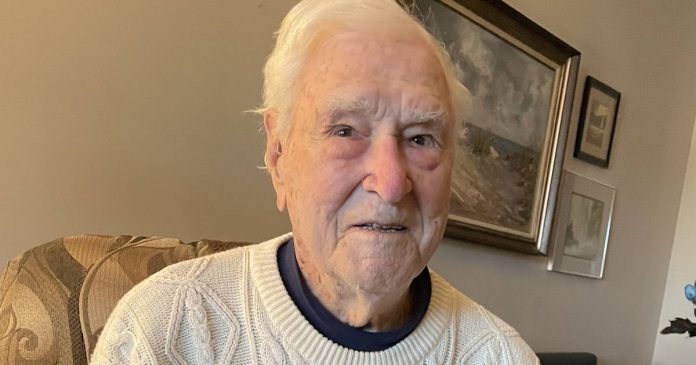
‘It’s been a pretty great life’: Decorated veteran gets ready to turn 100

0

York County resident Otto Wagner, a retired Air Force colonel and WWII vet, turns 100 on Jan. 6