Home Blog Page 204

In Yorktown veteran’s first novel, a true-to-life look at the fallout of combat – Daily Press

0

A tragically disfigured soldier becomes a reclusive creature of the night after his discharge, mastering high-stakes poker games online and in backrooms of casinos. A brief (and rare) perceived bonding with a female player results in a humiliating spurning when he suggests a date. His former squad mates are equally miserable — underemployed, struggling with relationships, adrift to varying degrees without the sustained adrenaline rush of multiple combat deployments. They feel collectively guilty about mistakes from split-second decisions and errors in judgment that cost the life of a popular teammate from Newport News and caused the death, and wounding, of others.

This is the landscape of the first novel by Bill Glose of Yorktown. He’s a veteran paratrooper who has published several poetry collections, as well as poetry, essays and feature articles in literary and other magazines. “All the Ruined Men” includes scenes throughout Hampton Roads and Richmond as Glose weaves interlocking and overlapping stories of the rocky postwar experiences of a U.S. Army squad over a 10-year span starting in 2003. Their squad leader and one member began their service with the Balkan crises of the late 1990s, but the rest got their baptism by fire in the initial phase of Operation Iraqi Freedom, which rapidly soured after the iconic fall of Baghdad’s “Saddam statue” and a grand offensive became an unpopular occupation.

Most of the squad also served together in Afghanistan, although one member called it quits after a horrifying training parachute jump gone wrong; his reaction had led him to be deemed psychologically unfit for further service. His return home to the family farm is awkward as friends and family seem to see him as some kind of coward, although watching two men be shredded by a propeller, and narrowly escaping the same fate himself, might have the same effect on anyone. He trades their disapproval for anonymity and a blue-collar job in Richmond, bonding with a terminally ill woman estranged from her family — but thinking all the while about his squad mates’ ill-fated deployment without him.

Glose’s writing is superbly gritty and rings true, from the men’s nonstop, off-color ribbing of one another to the classic boredom-to-terror-and-back nature of combat, to their inability to keep it together at the memorial service in Newport News of a buddy blown up at a checkpoint. The denouement of that day is an ugly barroom brawl with some local shipbuilders and one member’s glaring inability to step up as a husband and new father. The soldiers’ stories overlap and intertwine, at times with flashbacks, and Glose jumps from first-person thoughts to second-person narratives quickly, so the reader must be alert to whom he’s talking about and when.

Not only do the men’s stories ring true, but they also are the type we all should read and ponder before committing our young men and women to the next war. Glose shows us that it’s not just buildings and military vehicles that are ruined, but potentially the survivors as well. Time (and possibly more therapy than these men seem to have gotten) may ease the transition of these characters, but they may never stop dreading their phones’ alerting them to a suicide among them.

“All the Ruined Men” is a must-read for anyone, and local readers will especially savor the shout-outs to Hampton Roads settings.

Daywatch

Weekdays

Start your morning with today’s local news

Raymond Leach, a retired Marine, lives in Virginia Beach.

___

Read or listen to “In the Early, Cocksure Days: IRAQ, 2003″ — a selection from Bill Glose’s “All the Ruined Men” — at tinyurl.com/RuinedMen

___

“ALL THE RUINED MEN: Stories”

Bill Glose

St. Martin’s Press. 276 pp. $27.99.
Virginia’s Department of Veteran Services announces $4.5 million in funds to combat suicide, opioid addiction – Daily Press

0

The Virginia Department of Veteran Services will award $4.5 million to community organizations across the state as part of a new program designed to combat suicide and opioid addiction among service members and veterans.

Funds will be given out through the department’s newly minted Suicide Prevention and Opioid Addiction Services — or SOS — program. The goal, the department said in a press release Wednesday, is “to ensure the right help is widely available right now” for service members, veterans and their families across the state. Organizationshave until Feb. 28 to apply for funding through the new program.

The funding must be used to promote its use of evidence-based practices such as peer support, crisis intervention, behavioral health focused prevention, treatment, and recovery support to reach for service members and veterans.

“These grant funds offer a critical and timely opportunity to provide extended resources across the Commonwealth,” said Daniel Gade, Commissioner of the Department of Veteran Services, in a press release issued Wednesday.

The SOS program was launched on the heels of an especially tragic year for Norfolk-based Navy installations. A total of seven sailors were reported to have died by suicide last year. And Jan. 23, the Newport News police confirmed a sailor assigned to the USS George Washington had died by apparent suicide, marking the first reported local service member suicide of the year.

Additionally, the a 2022 report released by the U.S. Department of Veterans Affairs found the suicide rate for veterans was 57.3% greater than for non-military affiliated adults. The report, which was based on data collected from 2020, documented 181 veteran deaths in Virginia alone.

Resources for service members and veterans struggling with mental health, including 24-hour crisis hotlines:

  • The Military Crisis Line: call 1-800-273-8255, ext. 1; or text “273Talk” to 839863
  • Military OneSource: 1-800-342-9647
  • National Suicide Prevention Lifeline: 988, ext. 1 — call or text
  • Veteran Crisis Line: confidential online chat

Veterans in crisis can also go to any VA medical center regardless of discharge status of enrollment status with the VA, seek help at any emergency room or can call 911.

Caitlyn Burchett, [email protected]

Veteran held captive in Vietnam for 7-plus years laid to rest in Virginia Beach – Daily Press

0

VIRGINIA BEACH — Former prisoners of war Cmdr. George Coker and Rear Adm. Bob Shumaker tapped a final “good night and God bless” to Capt. James Mulligan Jr. But this time, they tapped the coded message to their cellmate of seven years on a church pew rather than the walls of a Vietnamese prison.

More than 400 people gathered Wednesday at Virginia Beach’s Church of the Holy Family for the funeral Mass of the retired Navy captain, celebrating Mulligan’s life and honoring the hell he endured.

“I thank you, Dad, for your love, sage advice, your example, your encouragement, your friendship — and for making it home. But most of all, thank you for your steadfast service and sacrifice and for serving as an example to all to never quit and never waiver when defending the American creed,” said James “Jim” Mulligan III during his father’s service.

Mulligan, who was 96 when he died Jan. 18, was one of three of the remaining “Alcatraz 11″ — American service members held captive for more than seven years by the North Vietnamese. Singled out as troublemakers, they were taken from the main prison complex in Hanoi and boarded in solitary confinement at a building the Americans dubbed Alcatraz.

Mulligan, a pilot, was shot down March 20, 1966, and held for 2,522 days. He was often starved and beaten, with his wrists bound with gasoline-soaked ropes. He endured leg irons for 26 months and over 42 months of solitary confinement.

Sunday, would have been the 50th anniversary of his release.

“American’s know Feb. 12 as Super Bowl Sunday, but I first and foremost will remember Feb. 12 as the day my father was once more a free man,” Jim Mulligan said.

Mulligan was among the first roughly 135 Americans released by North Vietnam on Feb. 12, 1973. Three days later, Mulligan and two other POWs — Jeremiah Denton and George Coker — would touch down in Norfolk.

“The word ‘hero’ is tossed around like candy on Halloween. But when I looked at (Mulligan), he was a real American hero — the epitome of the warrior patriot,” said Charles Hartig, a former reporter who covered the POWs’ return to Hampton Roads in February 1973 and filed subsequent stories for a number of years..

Following his release, Mulligan served in the Navy for another two years before retiring in July1975.

Having served on active duty throughout World War II, Korea and Vietnam, Mulligan accumulated over 5,000 single flying hours and made 650 arrested carrier landings. His career spanned six Mediterranean deployments, plus the Bay of Pigs and Cuban Missile crises prior to his West Pacific deployment on the USS Enterprise to Vietnam. It was there he was serving when, on his 80th mission, he was shot down and captured on March 20, 1966.

In the 1980s Mulligan penned “The Hanoi Commitment,” which detailed the horrors and heroism of Americans’ captivity in Vietnam. When it was released, he called Hartig, who did a series on the book, which he called “the most definitive description of a POW experience.”

“In talking to him, I wondered, ‘How did you do it? How did you survive?’ and I am convinced it was based on his unyielding faith, and his love of country and family. He simply wanted to come home, to return to Louise and his sons,” Hartig said.

When Hartig asked Mulligan if he would do it all over again, he said Mulligan answered without hesitation: “Absolutely.”

“This love of country and this deep faith is a reminder to all of us how lucky we are. They embodied what is best about this country — the best, the brightest and the most courageous. I am not sure how many are left, probably not a whole lot,” Hartig said.

Mulligan was preceded in death by his wife of over 73 years, Louise Kolce and sons, Kevin John and Terrance Adam Mulligan. He leaves surviving sons Jim, Mark, Sean, and Neil, as well as six daughters-in-law and a host of grandchildren and great-grandchildren.

At the conclusion of Jim’s tribute, Coker and Shumaker’s coded message seemed to echo through the sanctuary of the church, eliciting soft sobs.

Coker said the Alcatraz 11 shared the good night message each night they were held captive, tapping the code “GN, GB” on the walls.

Daywatch

Weekdays

Start your morning with today’s local news

“You didn’t know if you were going to be alive the next day. That was a real unknown … All we knew what right now we were together, so have a good night, God bless you, you are in our hearts and we hope we see you tomorrow,” Coker said.

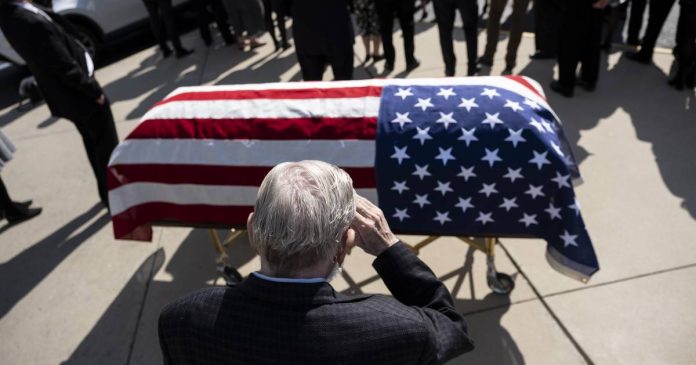
Following the Mass, the guests were ushered outside to witness Mulligan, whose casket was draped with the American flag, receive full military honors, including a 21-gun salute and a Navy flyover.

A sailor handed the folded flag to the Mulligan family. The sailor began, “On behalf of the President of the United States, the United States Navy and a grateful nation …”

Inside the reception area of the church, a portrait of Mulligan was on display alongside a copy of “The Hanoi Commitment.”

A passage reads: “I looked at the scars on my wrists from the ropes and the gasoline. I thought of the torture, the beatings, the starvation and loneliness. The utter misery of 42 months in solitary confinement. I thought of them all, but mostly, I thought about the countless others who wouldn’t return.”

Caitlyn Burchett, [email protected]

#Reviewing The Digital Silk Road

0

This short, yet comprehensive, and extensively documented examination of the Digital Silk Road and the Chinese Communist Party’s efforts to develop world-dominating technology (through collaboration between the military, state-owned enterprises, and closely associated parastatal private companies), will be of interest to policymakers, national security professionals, and hopefully U.S. and Western business leaders. That said, the book regularly engenders feelings of disgust, disappointment, and anger as Hillman recounts episode after episode of short-sighted, wrong-headed, and greed-fueled decision-making carried out by Western companies and governments. Vladimir Lenin’s taunt that “the capitalists will sell us the rope with which we will hang them,” seems as accurate pronounced with a Chinese accent as it did when the Russian communist made the statement a century ago. IBM’s 17-year consulting project with Huawei, in which it billed more than $1.6 billion in fees to teach the Chinese how to challenge and surpass its U.S. competitors, is one example of the short-term thinking that has provided China with potentially ruinous long-term strategic advantages.

Some of the most alarming anecdotes documented in the book are those in which customers and partners of Chinese tech companies believe they are engaged in above-board business transactions, when in reality they are being set up to be robbed and exploited. Examples abound. One of the Netherlands’ largest mobile phone providers—using Huawei switches—found that by 2010 Chinese intelligence could listen in on all calls carried by the service including those of the prime minister. Additionally they learned that Chinese authorities could see all numbers monitored by Dutch police and security services. The African Union (AU) had its headquarters financed and built by the PRC, and in 2018 it was discovered that for the previous five years the data from its servers was being sent nightly to China. In 2020, the African Union learned that its surveillance cameras were sending their footage there as well. Nortel Networks Corporation—once Canada’s largest and wealthiest company—went bankrupt after partnering with and then being victimized by its Chinese telecom partners. The Canadian ministry of defense purchased the defunct headquarters for $200 million, only to find it extensively penetrated with spy-gear. After spending an additional $790 million in remediation efforts it was still unable to certify the space as secure.

Hillman demonstrates the disconnect between American government policy and private industry’s goals. He makes a convincing case for the importance of government intervention in markets as part of a national security policy for critical topics such as rural broadband, given private industry’s lack of profit incentive to do so.

Where the book is perhaps less persuasive is in the final section, in which it proposes greater Western collaboration and cohesion. My enjoyment in reading The Digital Silk Road, was enhanced by serendipitously finding it in the small English-language section of a European bookstore. Unfortunately, the European Union and major economies such as Germany and France have their own stakeholders, and appear to be seeking their own path rather than siding too closely with the United States. The early November 2022 visit to Beijing of German Chancellor Olaf Scholz and the heads of 12 major companies (including Siemens, BASF, and Volkswagen) demonstrates Berlin’s interest in ever greater business ties with the People’s Republic.

Hillman’s work deserves to be discovered and read by a wide audience. Throughout the book, he documents how the Digital Silk Road poses a threat not only to U.S. economic interests, but potentially to wider national security interests as well. As an example, China’s undersea cable system, and access to the trunk-line landing stations, potentially provides them access to U.S. fiber-optic cables carrying trans-continental data, which may introduce questions of the reliability and security of U.S. communications. Similarly, the work focuses on how China intends for the BeiDou Navigation Satellite System (BDS) to compete to replace the lead position occupied by the U.S. Global Positioning System (GPS). In a war, BDS could provide the Chinese military with an alternative method to employ precision guided weapons, while at the same time using their well-known counter-space systems to blind U.S. GPS. This eye-opening and disturbing book is a welcome addition to the literature on the rising multi-spectrum threat posed by China, and deserves attention by the military, diplomats, and anyone considering doing business with entities engaged in China’s Digital Silk Road.

As Langley-based fighters closed in on Chinese balloon, hobbyists were listening – Daily Press

0

WASHINGTON — The extraordinary scene of U.S. fighter jets getting ready to strike a Chinese balloon had many people along the Carolina coast straining their necks and pointing their smartphones to the sky to capture the moment of impact.

But a group of aviation enthusiasts was, instead, intently scanning radio frequencies for the exchanges between the pilots who would follow as Huntress, NORAD’s eastern air defense sector controller, tracked the exact distance as two Air Force F-22 fighter jets closed in on the target.

The pilots had to balance striking the balloon when it was at least six miles (10 kilometers) offshore — the distance NASA had advised the military allow to keep debris from falling on land — with ensuring it was still in U.S. territorial airspace.

“Five miles offshore,” Huntress advises in a transmission that was captured by aviation hobbyist Ken Harrell, in a recording that was authenticated by NORAD.

“Frank One is switches hot,” the first F-22 reports. The call sign “Frank” was given to both aircraft to honor 2nd Lt. Frank Luke, who earned the Medal of Honor in World War I for downing multiple balloons and aircraft.

“Frank Two is switches hot,” the second F-22 radios in.

When Huntress calls out that the balloon is exactly six nautical miles out, Frank One takes the shot.

“The balloon is completely destroyed!” radios an F-15 fighter jet that also took part in the mission, advising quickly that “there appears to be metal chaff clouds. … It’s definitely metal breaking apart.”

This audio, which was first reported by The Drive, wasn’t on the civilian radio frequencies that commercial pilots use. The Air Force pilots were communicating on an unencrypted military frequency that the North American Aerospace Defense Command uses to conduct missions to secure the eastern United States, under the control center named Huntress.

Daywatch

Weekdays

Start your morning with today’s local news

Aviation enthusiasts with the right radios scan for Huntress missions and other military flights as a hobby, calling out exercises.

Ken Harrell, a 68-year-old retiree from Summerville, South Carolina, is one of those enthusiasts. On Saturday, he recorded the exchange of the balloon shootdown.

NORAD confirmed the authenticity of the recording to The Associated Press in a statement.

When Harrell got started a few years ago, he said he “bought the right kind of scanner, put up, you know, a decent antenna and a lot of software to connect to the scanner and just started listening.” He said the scanner only cost about $160 to get started.

On Saturday, he got a call from a fellow enthusiast who said Huntress was guiding F-22s in to hit what the Pentagon has said was a spy balloon and China has insisted was a civilian weather balloon.

“He says, get on the scanner, man! Huntress has been controlling the F-22 Raptors, you know for the balloon, they’re gonna do it,” Harrell said. “So I jump up, crank up everything, and started listening in.”

When Harrell heard the pilots’ and controller’s voices, “I was excited,” he said. “I’ve listened to a lot of other stuff — fighters practicing, intercept exercises, and that’s cool, but when I first turned the scanner on and it went to my local Huntress frequency, it was pretty apparent: This was a mission. Boom.”

Legacy of Navy’s first Black deep sea diver is lesson in determination – Daily Press

0

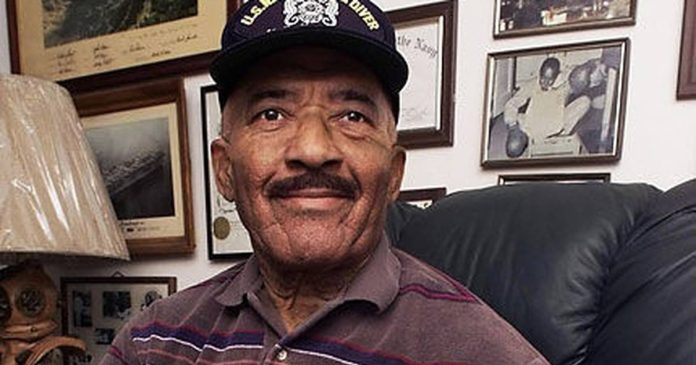
“In the word’s of my father, it is not a sin to get knocked down. It is a sin to stay down,” said Phillip Brashear, son of the late Master Chief Carl Brashear, the Navy’s first Black deep sea diver.

Phillip Brashear detailed his father’s unyielding determination with the crew of the USS Iwo Jima on Tuesday at Redeemer Church in Chesapeake in honor of Black History Month.

Five obstacles, Brashear said, were stacked against his father — racism, poverty, illiteracy, disability and later in life, alcoholism.

“But this story is not just meant for Black History Month. This story is universal for 12 months of the year. … This is about taking things you could complain about and make the best of it,” Brashear said to the packed room.

Members of the crew, which is experiencing shipyard life while the Iwo Jima undergoes a maintenance cycle, filled nearly every seat in the church’s auditorium and lined the back wall. Many bobbed their heads in agreement as Brashear spoke.

“You don’t quit because you had a bad experience … Each day you should wake up and think about how to make today better than yesterday,” he said.

Carl Brashear joined the Navy in 1948, enduring daily struggles with racism in a recently desegregated military to become the first Black diver in Navy history in 1953.

Then, on March 23, 1966, Brashear was aboard a salvage ship attempting to recover a nuclear bomb lost off the coast of Spain when a stern mooring line from a landing craft pulled a steel pipe out of the salvage ship’s deck. As the pipe flew across the deck, Brashear pushed another sailor out of the way but the pipe struck Brashear’s left leg.

Sailors assigned to the USS Iwo Jima listen to Phillip Brashear, son of the Navy's first Black deep sea diver Carl Brashear, speak about his father's legacy at Redeemer Church in Chesapeake on Tuesday, Feb. 7, 2023.

Doctors in Madrid and Germany attempted to save the leg, but when he arrived at the hospital in Portsmouth in May 1966, an infection had grown worse. According to a 1989 interview published by the U.S. Naval Institute, Brashear refused treatment and asked instead that the leg be amputated.

Yet, that was not the end of Carl Brashear’s military service.

“… My dad had to go through 11 months of strenuous training to prove to the Navy he was fit for duty,” Phillip Brashear said.

Carl Brashear returned to active duty and became executive officer of the Navy’s diving school barge. He advanced to the rank of master chief petty officer and became the Navy’s first Black master diver. He retired in 1979 and died in 2006 at Portsmouth’s Naval Medical Center, the very hospital that fitted him with an artificial leg and designed an exercise program that allowed him to return to diving.

During the presentation, Phillip Brashear played an interview clip of his father so the crew could hear the advice “straight from the horse’s mouth.” In the clip, Carl Brashear said, “(The word) ‘can’t’ is not in my vocabulary. When someone tells me I can’t do something, that means I will work that much harder to show them I can do something.”

While Phillip Brashear did not follow his father’s footsteps into the Navy, he did become a pilot for the Army before his eventual retirement in 2022 as a chief warrant officer 5 after a 40-year career.

Daywatch

Weekdays

Start your morning with today’s local news

The ship’s commanding officer, Capt. Stephen Froehlich, said both Carl and Phillip Brashear are trailblazers, whose lessons will guide the Iwo Jima sailors.

“This is an opportunity to learn about the struggles and challenges of the past and to hopefully improve our future culture and service,” Froehlich said.

Sailors from the USS Iwo Jima stand in line for a chance to shake hands and take a photo with Phillip Brashear, son of the Navy's first Black deep sea diver Carl Brashear, after listening to him speak about his father's legacy at Redeemer Church in Chesapeake on Tuesday, Feb. 7, 2023.

Carl Brashear’s words of wisdom are exactly what Jaime Woods needed to hear Tuesday, she said.

“When he was saying, ‘don’t give up,’ I was like, ‘Man, I needed to hear him say that today’,” Woods said with a laugh.

A Black female hospital corpsman, she said she has faced “many adversities” throughout her 10 years of naval service.

“It can be really easy to want to give up, but when you hear about somebody who’s gone through so much, it makes you stop and think. These little things that are bothering me are just little hiccups that I can definitely overcome. I haven’t nearly faced some of these tough adversities like (the Brashears) have. It makes me want to work harder and be a better version of myself,” Woods said.

Caitlyn Burchett, [email protected]

Air Force leader’s spouse opened fire during Joint Base Andrews breach – Daily Press

0

WASHINGTON — The intruder who breached Joint Base Andrews, the home of Air Force One, reached the residence of one of the Air Force’s top leaders before her spouse opened fire, the air base said Tuesday.

Chief Master Sergeant of the Air Force JoAnne Bass confirmed that the intruder had reached her home on Monday. The chief master sergeant is the Air Force’s top enlisted leader.

“We appreciate the outpouring of support we received after this incident. I can confirm that my husband, Rahn, was involved, and is safe, thanks to the quick response and professionalism of our Security Forces Airmen,” Bass said in a statement on Tuesday.

In a statement posted to Twitter, the air base said: “A resident discharged a firearm, security forces arrived on scene to apprehend the intruder and law enforcement is investigating the incident.”

Joint Base Andrews is home to the fleet of blue and white presidential aircraft, including Air Force One, and a frequent base for the “doomsday” 747 aircraft that can serve as the nation’s airborne nuclear command and control centers if needed.

It’s not the first time the base’s security has been breached; in February 2021 a man got through the military checkpoint onto the installation, then through additional fenced secure areas to gain access to the flight line and climb into a C-40, which is the military’s 737-equivalent aircraft used to fly government officials.

That intruder was apprehended because the “mouse ears” cap he was wearing struck an observant airman as odd.

An inspector general’s investigation found three main security failings, starting with “human error” by a gate security guard who allowed the man to drive onto the base even though he had no credentials that authorized his access.

Hours later, the man walked undetected onto the flight line by slipping through a fence designed to restrict entry. Finally, he walked onto and off a parked airplane without being challenged, even though he was not wearing a required badge authorizing access to the restricted area.

Suspected Chinese spy balloon recovered from Atlantic by Virginia Beach-based sailors – Daily Press

0

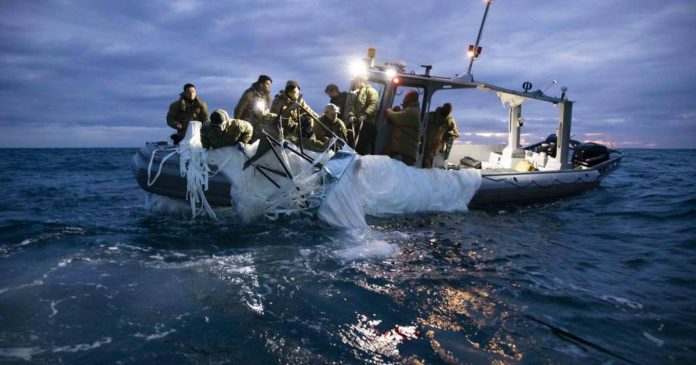
A team of sailors assigned to Joint Expeditionary Base Little Creek fished what is believed to be the high-altitude Chinese surveillance balloon out of the Atlantic days after it was shot down, officials confirmed Tuesday.

Six photos released by the U.S. Navy show the sailors, who were assigned to Explosive Ordnance Disposal Group 2 and the USS Carter Hall, working to pull the balloon into their boat sometime Sunday.

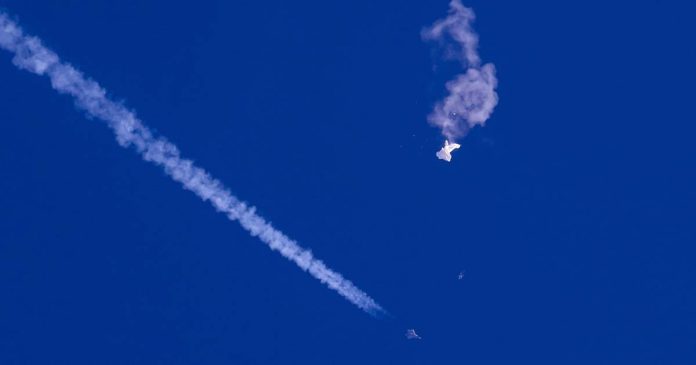
It was brought down around 2:40 p.m. Saturday by an F-22 Raptor fighter from Langley Air Force Base’s 1st Fighter Wing, Gen. Glen VanHerck, commander of the North American Aerospace Defense Command and U.S. Northern Command said Monday. The AIM-9X Sidewinder missile was fired at the large white orb, scattering debris about six miles off the South Carolina coast.

Debris recovery efforts launched Sunday at 10 a.m., with the USS Carter Hall, an amphibious landing ship out of the Virginia Beach base, acting as the lead ship.

The Carter Hall’s search was supported by the USS Oscar Austin and USS Philippine Sea from Norfolk, as well as the USNS Pathfinder, a survey ship that has been mapping the ocean floor using sonar.

Agents with the Federal Bureau of Investigation and Naval Criminal Investigative Service are embedded with salvage operations personnel to assist in counterintelligence work, VanHerck said.

Officials detected the balloon Jan. 28, when it entered U.S. airspace over the Aleutian Islands off the Alaska coast. It then passed over Canada and reentered U.S. airspace over Idaho on Tuesday, the Defense Department said. On Wednesday, President Joe Biden gave the order to shoot down the balloon once there was no risk to people on the ground.

Caitlyn Burchett, [email protected]

#Reviewing Backfire

0

Sanctions, as described in Agathe Demarais’ timely new book Backfire: How Sanctions Reshape the World Against U.S. Interests, have become the policy de jure for multiple presidential administrations, with more than 9,000 individuals, companies, and economic sectors targeted through 70 different sanctions programs.[2]

Even as the U.S. expanded its military profile overseas through a string of bases and foreign deployments, it has doubled-down on what historian Nicholas Mulder calls “the economic weapon,” deploying export controls and other measures against states it views as potential threats or violators of international norms.[3] Yet, as Demarais argues, the sanctions tool has served as a cudgel, rather than a scalpel, and changes in the international economic system and shifts in global geopolitics may bring the age of sanctions’ efficacy to an end.

Demarais, currently the global forecasting director at the Economist Intelligence Unit and formerly a policy advisor to the French Treasury, has worked at the forefront of sanctions policy for the last decade. This gives her unique insight into how U.S. sanctions have reshaped the global economic order. In a series of short, engaging, and clearly written chapters, Demarais breaks down why the U.S. found sanctions such an appealing policy instrument; how their widespread use in the 1990s and 2000s triggered changes and upheavals, as countries around the world coped with the issues of challenges of compliance; and, finally, how sanctions implementation has generally backfired, imposing costs on the U.S. and its allies while encouraging targeted states towards policies and strategies designed to insulate their governments and economies from U.S. pressure.

The main actor in Demarais’ story is the Office of Foreign Assets Control (OFAC), the division of the U.S. Treasury Department that oversees sanctions policy. Demarais details how early sanctions, operated through trade embargoes, were ineffective. An experiment at imposing financial constraints on a bank in Macau used by North Korea in the early 2000s formed the basis of future sanctions policy. Rather than restrict traded goods into or out of targeted countries like North Korea, Iran, Russia, or Cuba, the United States would target the country’s access to the dollar-based global financial system and go after specific actors tied to distinct economic sectors or industries.

The immediate purpose of sanctions is to limit the target’s access to dollar banking, which in turn limits their ability to access international credit or make deals with other entities. As Demarais explains, the key to the power of sanctions is the risk associated with non-compliance. It is easier for companies and governments to shun sanctioned targets rather than running afoul of OFAC. International financial institutions “could either stop conducting business” with Pyongyang, Moscow, or Tehran, “or be kicked out of the US financial system…for banks, this amounts to a death sentence, given the greenback’s global clout.”[4]

Sanctions are often effective at pushing actors out of the global financial system. But the long-term goal of sanctions policy—changing the behavior of states or punishing actors perceived to be damaging U.S. interests—is where things get complicated. As Demarais illustrates, the power of sanctions is often deployed unevenly, with unpredictable consequences. Bestriding the world like a colossus, the United States has angered or alienated allies while pushing competitors and enemies toward policies designed to avoid sanctions, all while damaging its own economic interests.

Sanctions are often effective at pushing actors out of the global financial system. But the long-term goal of sanctions policy—changing the behavior of states or punishing actors perceived to be damaging U.S. interests—is where things get complicated.

Demarais deploys countless examples to support her argument. In the case of sanctions against Iran, she notes first how the imposition of heavy sanctions in 2012-2014 seemed to yield a positive result. The Iranian people facilitated a response to sanctions policy, through the election of relative moderate Hasan Rouhani in 2013. Rouhani made a nuclear deal designed to reduce the sanctions burden a top priority of his government.

Yet even after the nuclear deal was reached in 2015, foreign companies were wary of signing agreements with Iran—both because they worried the deal would not last and because they feared running afoul of OFAC’s secondary sanctions and the penalties of non-compliance. Such fears proved well-founded, as the sanctions window closed again following the U.S. exit from the nuclear deal in 2018.

After jet from Langley AFB shot down suspected Chinese spy balloon, 3 Hampton Roads-based ships recovering wreckage – Daily Press

0

A weeklong saga that had much of the country watching the skies for the small white speck — that federal officials believe was a Chinese spy balloon — ended with a “bang” delivered by a fighter jet stationed at Langley Air Force Base in Hampton.

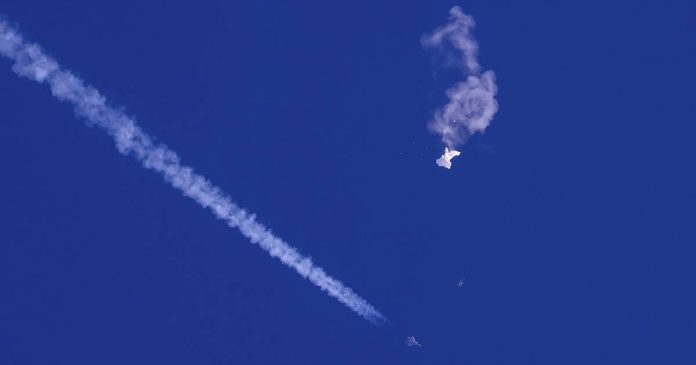
The F-22 from Langley’s 1st Fighter Wing fired one AIM-9X Sidewinder missile at the balloon. The large white orb — with what looked like a satellite-esque structure on the bottom — was destroyed about 6 miles off the South Carolina coast Saturday afternoon, according to the Department of Defense.

No one was injured in the operation and the balloon never posed a military or physical threat, defense officials said. Navy and Coast Guard vessels are engaged in a recovery effort, which is expected to be “fairly easy” because the water where the balloon was shot down was only about 47 feet deep, according to the DOD.

Three Hampton Roads-based ships are involved in the recovery effort: the USS Oscar Austin and USS Philippine Sea, both out of Norfolk, and the USS Carter Hall from Joint Expeditionary Base Little Creek-Fort Story in Virginia Beach.

“Today’s deliberate and lawful action demonstrates that President Biden and his national security team will always put the safety and security of the American people first while responding effectively to the [People’s Republic of China’s] unacceptable violation of our sovereignty,” Secretary of Defense Lloyd J. Austin III said in a news release Saturday.

Chinese officials over the last week described it as a “weather balloon” that entered U.S. airspace by accident, but military officials said the fact that it changed course during its time over the center of the country undermines that claim, Reuters reported.

During the balloon’s journey, the U.S. took steps to thwart any surveillance capability to mitigate its value to the Chinese, and analysts will examine the balloon’s equipment to gain intelligence about their capabilities.

Officials detected the balloon on Jan. 28 when it entered U.S. airspace over the Aleutian Islands off the coast of Alaska. It then passed over Canada and reentered U.S. airspace over Idaho on Tuesday, the Defense Department said. On Wednesday, President Joe Biden gave the order to shoot down the balloon once it could be done without causing risk to people on the ground.

The balloon, which CNN reported was carrying a payload the size of three Coach buses, passed over Montana at an altitude of about 60,000 feet on Wednesday. The Malmstrom Air Force Base in Great Falls is one of the United States’ three nuclear missile silos, causing defense leaders to fear it was gathering information about one of the country’s most sensitive sites, according to the Associated Press.

The balloon saga comes amid escalating tensions between the U.S. and China, and prompted Secretary of State Anthony Blinken to cancel an important trip to Beijing.

Gavin Stone, 757-712-4806, [email protected]