Home Blog Page 203

Norfolk Naval Shipyard preps for newest class of carriers with $300 million renovation – Daily Press

0

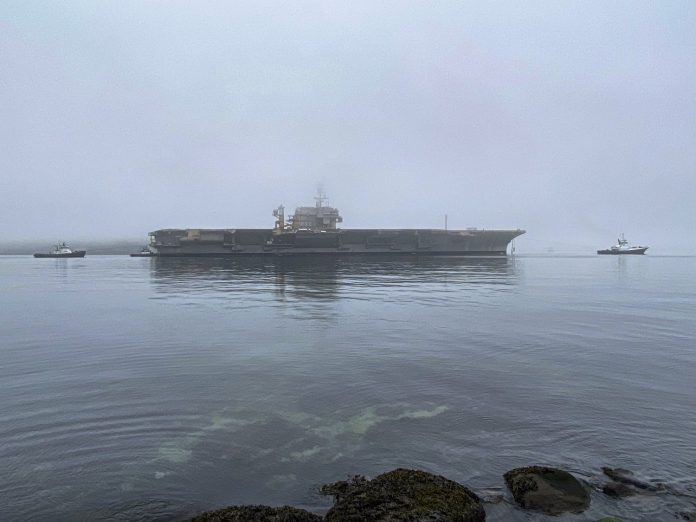
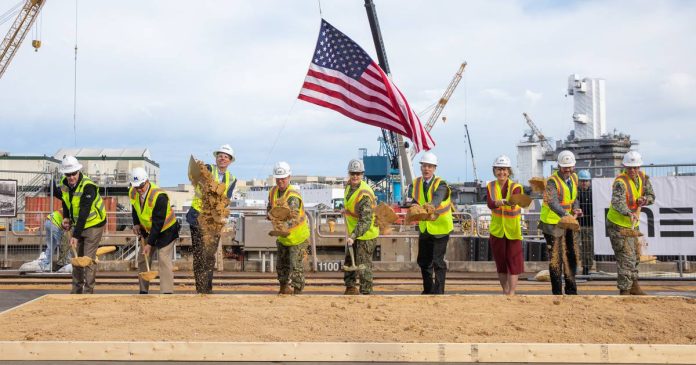
Norfolk Naval Shipyard broke ground Wednesday on a $300 million renovation that will modernize a historic dry dock to serve the Navy’s newest class of warships.

The multi-year renovation will bring Dry Dock 8 up to par with the USS Gerald R. Ford CVN-78. The new carrier is 4 feet wider and displaces 3,000 tons more than its Nimitz-class predecessors.

Dry Dock 8, which dates to 1942, will undergo saltwater upgrades to meet capacity and flow demand required to support a docked carrier, as well as caisson reports to allow faster, more controlled, flooding of the dock, and pump repairs. Of the $300 million, $90 million will be invested to repair the two berths adjacent to the dock.

The renovation of Dry Dock 8 is Norfolk Naval Shipyard’s biggest project as part of the Navy’s Shipyard Infrastructure Optimization Program (SIOP).

“Today signifies a new chapter in the story of SIOP and this historic facility as the shipyard workforce prepares for its new mission of supporting CVN 78,” said Pete Lynch, Program Executive Officer for Industrial Infrastructure responsible for the program. “CVN 78 is a critical enabler of increased naval capability and ushers in a new era of maritime readiness.”

The shipyard is also in the middle of a $200 million renovation on Dry Dock 4, the shipyards largest submarine dry dock.

Caitlyn Burchett, [email protected]

Helicopter squadron prepares to be shut down – Daily Press

0

A four-man crew of Helicopter Sea Combat Squadron 22 took one last flight Wednesday, getting one last view from the sole remaining MH-60 Seahawk bearing the squadron’s “Sea Knight” emblem before it is taken out of operation.

On the ground at Naval Station Norfolk, the hangar buzzed as members of HSC-22 gathered. A banner on the far left side of the hangar read “Sea Knight Country.”

But come June 30, Sea Knight Country will be no more. A squadron that was once 300 strong has been stripped to about 150 sailors as it prepares to be dissolved.

“It’s a pretty sad day for the squadron, I can honestly say that I don’t think anyone at HSC-22 is happy to see the squadron sundown,” said Matthew Estep, chief helicopter aircrewman.

Wednesday’s flight culminated 16 years of service, throughout which the Sea Knights have supported wartime and peacetime missions. Estep has been with HSC-22 for eight of those 16 years.

“Everyone here, truthfully, is a team and it’s sad to see the squadron shut down, but we are sending ourselves off with a true legacy of teamwork and successful operations,” Estep said.

The mission of HSC-22 was to deploy helicopter detachments for littoral combat ships, amphibious ready groups and combat logistics ships for such things as special warfare, search and rescue, theater security cooperation, humanitarian assistance or disaster relief.

In recent years, the squadron has supported the U.S. 4th Fleet with counter narcotics operations and the U.S. 6th Fleet in the Baltic Sea.

“We are just re-aligning with the capacity that we have and the needs of the Navy,” Cmdr. Aaron “Dempsey” Berger said.

The squadron had more than a dozen manned and unmanned aircraft. As the squadron dissolves, some are being distributed to other squadrons, others will be sent to the Aerospace Maintenance and Regeneration Group in Arizona. There, the helicopters will be put into long-term preservation storage in the event they are recalled or need to be stripped for parts.

All the sailors at the squadron will transfer or leave the service by June 30.

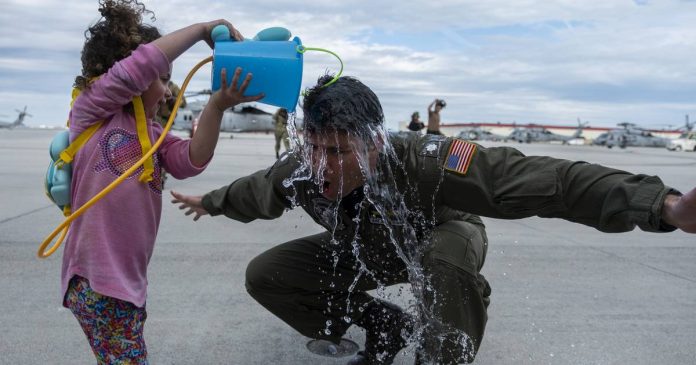
Berger, the commanding officer, was one of two pilots at the controls during the final flight. Moments after landing, he rushed to hug his wife and daughter, who splashed him with a pail of water just outside the hangar.

Several members of the crew followed behind with three large buckets and a water hose, dousing him as part of a traditional Navy “wet down.”

For the sundown flight, he and his crew traveled to Kill Devil Hills, where they flew over the Wright Brothers National Memorial before returning to Norfolk. The same journey was made on the squadron’s maiden flight.

“It was amazing. It was an honor … And leading these men and women has been incredible,” Berger said.

Daywatch

Weekdays

Start your morning with today’s local news

Following the final flight, Berger — still sopping wet — addressed the skeleton crew.

“(HSC) 22 wouldn’t be where it is today without all your hard work … I think we have raised the standard on the seawall,” Berger said to his crew.

Berger said he hopes the culture of the squadron lives on.

“If you ask anyone on the seawall or anyone that operated with us who they want to work with, they want to work with HSC-22. And that’s truly how professional we are. We show up. We execute on time with a smile on our face. When asked to do something, we lead with ‘Yes.’… I don’t think many other organizations truly have that culture like we built here,” Berger said.

As the bittersweet celebration concluded, Berger called out, “Knights of the Sea!”

“Best on the wall!” the crew bellowed.

Caitlyn Burchett, [email protected]

#Reviewing The Lone Leopard

0

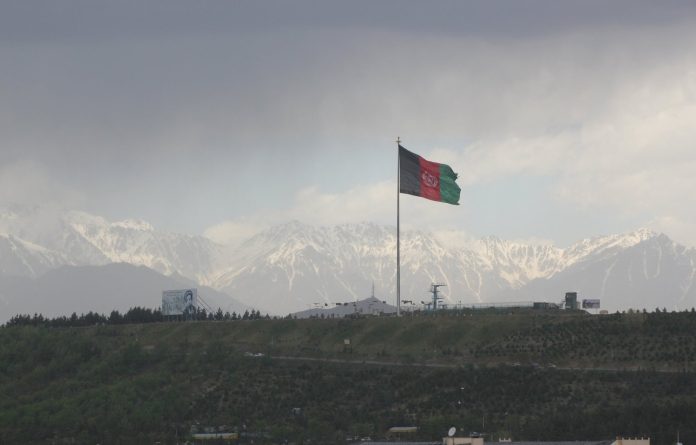
Dorani describes Kabul, and Afghanistan more broadly, as a melting pot of different ethnicities and religious factions that exist in the region. The Soviet Invasion and 10-year period of control dumped a new secular set of values and institutions into the bubbling ethnic cauldron. It is after the Soviet withdrawal, and near the end of the Soviet-backed government of Mohammad Najibullah, that Part 1 describes the ethnic and religious friction affecting Ahmad’s friends and family, fueling the instability that tears his world apart. Dorani details several instances where Ahmad’s conservative Sunni Pashtun neighbors ostracize Shia and non-Pashtun Afghans. Ahmad is a proud Pashtun who embraces his Sunni roots, yet embraces the ethnic diversity of his friends, school, and neighborhood. When asked, Ahmad defines Pashtunwali, the code-of-conduct for the Pashtun populations of Afghanistan, as standing for “independence, bravery, loyalty, justice, revenge, self-respect, righteousness, pride, honour, chastity, hospitality, love, forgiveness, tolerance, faith and respect of elders.”[1] The hardline mujahadeen in Part I, and the Taliban from the latter time-period, are more focused on the first 10 attributes from the code, and less on the last five. Those vying for control of Kabul in the book’s first half hold their highest level of disdain and seek the severest “justice” and “revenge” against the Afghans that cooperated with the Soviets and the Najibullah regime. Throughout the book, Dorani effectively reveals this resentment against non-Muslim foreign powers in Afghanistan, most specifically the Soviet Union and the United States.

Makroryan may have been an ideal neighborhood for elites living there, it showcased unfair advantages, drawing envy and bitterness from those living elsewhere in Kabul, and fueling the growing insurgency against the soon-to-be-deposed government. 

Following the Soviet withdrawal, Dorani reveals the tension between the secularized Afghan government and Afghan society and highlights how Afghans that cooperated were granted favors. Makroryan, the nice area of town where government bureaucrats and their families lived, including Ahmad, symbolized the new decadence that many conservative Afghans believed soiled their country. Early in the book, Ahmad describes his neighborhood.

The Central Heating kept our apartments warm as a sauna. The Mirror Show on television broadcast Kabulis queuing up with their coupons and complaining that their Soviet-subsidized cooperatives had run out of this or that. Supplies were never exhausted in Makroryan.[2]

Dorani shows us that while Makroryan may have been an ideal neighborhood for elites living there, it showcased unfair advantages, drawing envy and bitterness from those living elsewhere in Kabul, and fueling the growing insurgency against the soon-to-be-deposed government. 

Ahmad’s return to Kabul in 2013 in Part 2 witnesses the attitude of Afghans towards American involvement, and the resentment from the population. Many in Kabul appreciate the American presence and protection and enjoy the more Western way-of-life, while others, particularly the more conservative Pashtuns, resent the United States for their promotion of un-Islamic values and rampant corruption and incompetence of the leaders backed by American diplomats and soldiers. One of the book’s positive examples of Afghanistan’s pro-American faction rests in one of its main characters, Dorani’s heroic Frishta, “the lone leopard.” Frishta becomes Ahmad’s love interest, and is fervently pro-women’s rights. She perseveres through persecution and imprisonment by the Taliban only to flourish after the Americans arrive, ultimately becoming a powerful Member of Parliament (MP) by the time Ahmad returns to Kabul. As a teen, Frishta tells Ahmad, “If I lock you up and deprive you of an education, you’d equally become ‘stupid, frail, and a sex object.’”[3] She adds, “Educate us, and we’d be neither stupid nor a sex object.”[4] Later MP Frishta tells her American mentors, “Afghanistan’s women today aren’t the women of ten years ago. Our rights are now enshrined in the Constitution. We enter education and the workplace. We freely express our views.”[5] Frishta’s character is a prime example and composite of those in Afghanistan who supported America’s presence and the changes that followed, but there were many who opposed it.

In contrast to Frishta, Dorani vividly portrays the bitterness and anger against United States involvement, not just through the eyes of the Taliban, but also ordinary Afghans as well. Near the end of the book, a Taliban leader angrily sums up the general feeling, stating that the Americans and the British have “Oppressed our brothers and sisters. Insulted our religion. Stained our honour. Snatched our independence. Undermined our dignity.”[6] Ahmad’s own mother praises the Taliban for “bringing back Pashtunwali,” and believed the Americans had “ulterior motives.”[7] Even Ahmad himself, having spent virtually all of his adult life in England, and who shared many Western beliefs on the place of women in society, believes that “Americans were culturally insensitive by inspecting private areas on people” and agreed with his mother that war against Western occupation was “as much about ‘protecting Pashtunwali’ as it was about Islam.”[8] 

Sharifullah Dorani provides an interesting, suspenseful, and impactful story that should especially appeal to those who want to learn more about Afghanistan’s complex culture and recent tumultuous history.

The Lone Leopard is Dorani’s second book and first novel, and it follows the release of his historical analysis, America in Afghanistan.[9] In this novel, Dorani does a decent job providing an interesting storyline that gradually rises in intensity and drama, holding the reader’s interest through the slightly too-long 400 pages. Yet this reviewer was mildly disappointed in two areas. First, both Ahmad and Frishta develop a deep love for each other during the chaotic collapse in 1992, sharing very intimate details of family backgrounds and tragedy with each other.  Yet, as Ahmad’s family flees Kabul, they part without either verbalizing their feelings for the other. This avoidant behavior continues after they reunite in Part 2, and lasts all the way through to the last chapter, where the reader suddenly finds the whole situation resolved without getting to share in its climax. 

Secondly, through its depiction of several major violent attacks occurring in short order, the book makes 2013 Kabul seem far less safe than it really was, reinforcing the stereotype of the Afghan capital as an extremely dangerous city during this timeframe. This false narrative, fueled by the “if it bleeds, it leads” nature of western news stories, belies the truth. The Kabul of 2013 was the 5th fastest growing city in the world, with the causes of its growth “the toppling of the Taliban…the hope of increased security and economic possibilities…people displaced by fighting in the countryside, refugees returning from Pakistan and Iran, and hordes of labourers simply looking for a better life.”[10]  This rapid rise in population did lead to “criminality and economic malaise.”[11] However, Dorani’s 2013 Kabul is a place civilians seemingly cannot walk down the street without risking their lives, which was not the case.[12] While he should be allowed artistic license to add to the excitement of the storyline, the unfortunate side effect is that readers not familiar with Afghanistan may be unintentionally misled as to the extent the Taliban insurgency negatively affected the Afghan capital.

With his novel, The Lone Leopard, Sharifullah Dorani provides an interesting, suspenseful, and impactful story that should especially appeal to those who want to learn more about Afghanistan’s complex culture and recent tumultuous history. Although the ending was abrupt, the work offers a unique understanding of the complex cultural web that defined Afghanistan in general and Kabul in particular. Those only familiar with Afghanistan’s tumultuous 20 year period following the overthrow of the Taliban in 2001 will be particularly enlightened by the look at Kabul and its residents as they were caught in the middle of the turbulent 10-year transition between Moscow’s control and the eventual takeover by the Taliban in 1996. Readers of this book will no doubt reflect on the fact that Afghanistan has cycled back to Taliban control. Further, one cannot help being saddened by the fact that there are real-world “Frishtas” suffering under this new regime. Hopefully, Afghanistan’s history will continue to repeat itself, and the Taliban will be thrown off at some point in the not-so-distant future, and “lone leopards” can once again roam freely in this proud graveyard of empires.

Biden to award Medal of Honor to Vietnam-era Army officer – Daily Press

0

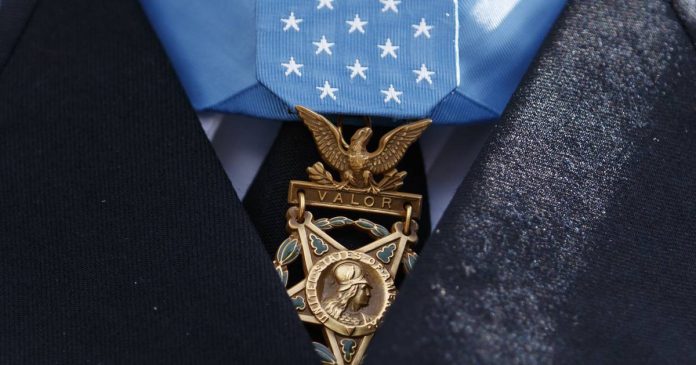
WASHINGTON — One of the first Black officers to lead a Special Forces team in combat will receive the nation’s highest award for bravery in battle nearly 60 years after his commanding officer first recommended him for the prestigious Medal of Honor.

President Joe Biden called retired U.S. Army Col. Paris Davis on Monday “to inform him that he will receive the Medal of Honor for his remarkable heroism during the Vietnam War.”

In a statement issued afterward, Davis, 83, said the telephone call had “prompted a wave of memories of the men and women I served with in Vietnam.” He thanked his family, friends in the military and volunteers for keeping the story alive, along with Biden and military leaders.

“I think often of those fateful 19 hours on June 18, 1965, and what our team did to make sure we left no man behind on that battlefield,” said Davis, who is originally from Cleveland and currently lives in Alexandria, Virginia.

Davis, then a captain, was recommended for the Medal of Honor by his commanding officer for distinguishing himself on that June morning during a pre-dawn raid on a North Vietnamese army camp in Bong Son. Every American there was wounded during a major enemy counterattack.

Davis repeatedly sprinted into an open rice paddy to rescue each member of his team, using his pinkie finger to fire his rifle after his hand was shattered by an enemy grenade, according to the ArmyTimes. His entire team survived.

The paperwork recommending Davis for the Medal of Honor disappeared at least twice. He eventually was awarded a Silver Star Medal, the third-highest military combat medal, but members of Davis’ team have long argued that race was a factor in his treatment.

Davis retired in 1985, having attained the rank of colonel.

In early 2021, Christopher Miller, then the acting defense secretary, ordered an expedited review of the case. He argued in an opinion column in June 2021 that awarding Davis the Medal of Honor would address an injustice

“Some issues in our nation rise above partisanship,” Miller wrote. “The Davis case meets that standard.”

The White House did not immediately announce a date for Davis’ medal ceremony.

#Reviewing Against All Tides

0

Truhe came to the topic with a unique background. As part of his later career, he served as the Assistant Attorney General of South Dakota, running the trial division of the Attorney General’s Office, before moving to a career in private practice in Rapid City, South Dakota, and eventually retiring to Colorado. However, in 1972 Truhe was a Navy Lieutenant a year and a half out of Northwestern University Law School and the Naval Justice School, serving in his first duty station as a Judge Advocate General (JAG) at the U.S. Naval Station Law Center in San Diego. Working as trial counsel at the Law Center, Lieutenant Truhe was assigned as defense counsel to five of the twenty-five African American sailors who were charged with several crimes, including rioting, following the incidents of 12 October 1972. Over the years, the importance of those events and the injustices involved stayed with him, leading him to return to his case files after nearly fifty years to write what he describes as the first telling of the history from the sailor’s point of view.

On the night of 12 October 1972, as Kitty Hawk secured from operations and prepared to rest before the next day’s flight operations, violence broke out below decks. It was the culmination of a perfect storm of events. The exhaustion of a crew working hard at the mission after a record 155 days on Yankee Station played a role. Inconsistent adjudication by the Captain during nonjudicial punishment proceedings—or “Captain’s Mast”—that seemed to punish African Americans more harshly than White sailors played a role. Aggressive and inconsistent action by the Marine detachment on board the ship played a role. And a confused night of orders and countermanding orders by leaders aboard the ship played a role. These are just a handful of the causes for the violence that seemed to break out in individual cases and in small groups in numerous parts of the ship.

Truhe offers a new and different view, constructed from contemporary records and the memories of African-American sailors.

From his case records and interaction with the sailors involved in the incidents, Truhe reconstructs events from the deck plate level. We learn the official statistics of the incident, showing that only White sailors were injured and that no White sailors committed violent acts, are likely the result of poor record keeping.  Later testimony showed that in the ship’s medical office records were not created for all of the sailors treated  and choices made by the all-white master-at-arms shop (the ship’s police force) in recording accusations and incidents. We learn that White sailors also joined in on the violence and sought out Black sailors to assault. We learn of the racial epithets that were commonplace and which the Captain himself heard used repeatedly and did nothing to correct. We learn that much of the crew, perhaps even a majority, had no idea that these small and isolated brawls were happening and that the events had no operational impact: missions were launched on time the next day. 

Prior authors have relied on the misleading, or at least incomplete, records and the decades-old memories of White sailors to make the “riot” label for events on Kitty Hawk stick, and some even went further to construct a narrative of an aggressive “Black Power” mutiny.[4] However, with no organization, no political goals or intent, and only a small number of the crew even aware it was happening, whether or not it was a riot at all is certainly questionable. Truhe offers a new and different view, constructed from contemporary records and the memories of African-American sailors. Readers come away from Truhe’s narrative with a more balanced and well sourced grasp of the events and contributing factors than the Navy’s official report and the congressional hearings that followed, or from other histories written by journalists with a flair for dramatic exaggeration.[5]

As much as it is a book of history, the strength of Against all Tides is its form as a legal memoir.

As much as it is a book of history, the strength of Against all Tides is its form as a legal memoir. Besides the events of October 1972, Truhe also tells the story of the legal battles that would follow. It is a story backed up by his own memories, his personal involvement in key decisions and courtroom drama, and the voluminous case files. In addition to a flawed investigation and questionable charges brought against more than two dozen Black sailors, the reader sees the complexities of the military justice system, including what happens when convening authorities make questionable decisions that tip the scales of justice toward their desired results. Throughout, we see Navy JAGs working alongside lawyers from the National Association for the Advancement of Colored People (NAACP) retained by the defendants, leaders from Washington, D.C., with unclear understanding of the events, and documented perjury and racism from accusers.

This book gives readers a new perspective on an event described as “a big deal” by many senior leaders both in the era of the incident as well as today.[6] But it also gives a sailor’s-eye view that in many cases reveals what can only be described as injustice. This reviewer often found himself with a clenched jaw after reading portions of the story, portions that included the questionable behavior of senior officers and the structure of a system that seemed intent on letting them tip the scales. Truhe’s book raises important questions about unconscious bias, the racism of the 1960s and 1970s, and Zumwalt’s call for leaders to make an effort towards “understanding the people they lead,” not only in the 1970s but also today. And it illustrated the vagaries of the military justice system, reinforcing the wisdom of recent policy that removed much of the power of convening authorities from cases of sexual assault.

Just as the history of the U.S. Navy is more than a mere history of ships, bombs, and battles, Marvin Truhe’s Against All Tides is more than simply Black History or legal memoir. It is an important contribution to our understanding of American naval and maritime history. The social history of African Americans in the Navy—from the volunteer enlisted Black sailors of the age of sail, through the “contraband” heroes of the Civil War like Robert Smalls, to President Truman’s executive order to desegregate the military, and Zumwalt’s efforts at greater inclusion—is important to understanding the fleet of the 21st century. The bottom-up approach of Truhe’s book, from the deck plates as we might say in the naval service, offers important insights and a valuable addition to our understanding of the experiences of our naval past.

Veterans’ testimony on magic mushrooms’ health benefits not enough to sway Virginia lawmakers – Daily Press

0

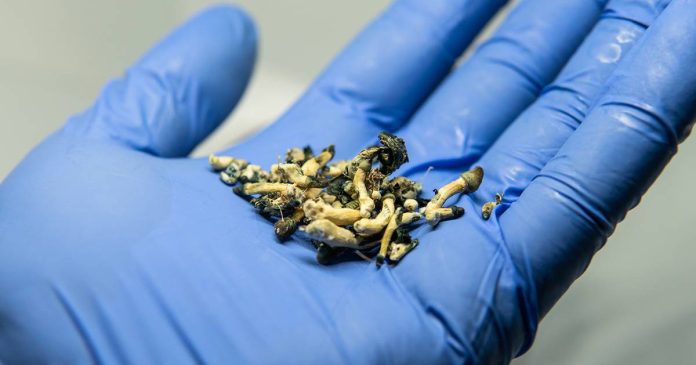
RICHMOND — Veterans’ testimony on the health benefits of psychedelic mushrooms did not convince House lawmakers to advance a bill allowing doctors to prescribe it — although the Senate agreed to create an advisory board to study such treatment.

Psilocybin is a chemical obtained from certain types of fresh or dried mushrooms, and sometimes referred to as magic mushrooms for its psychedelic effects.

Del. Dawn Adams, D-Richmond, introduced House Bill 1513, to allow doctors to prescribe some patients psilocybin, while also lowering the punishment for possession without a prescription. The bill is effectively dead for the session since it was not advanced out of a subcommittee.

Sen. Ghazala Hashmi, D-Richmond, introduced Senate Bill 932, to create a Virginia Psilocybin Advisory Board. The proposal also reclassifies psilocybin under the Drug Control Act from a schedule I drug like heroin or LSD, to a schedule III drug like testosterone. That would reduce the charge for illegal possession.

Hashmi’s bill passed the Senate with some Republican support and heads to the House for consideration.

“This will be a board that would help us to develop a long-term plan for thinking about how to provide psilocybin to individuals who could benefit from the treatment as a therapeutic option, primarily to address issues of PTSD and depression,” Hashmi said.

Hashmi didn’t always support the decriminalization of psilocybin, she said. She began to see its medical value after hearing testimony on how the drug has transformed lives, particularly in individuals with treatment-resistant mental illness, she said.

Access to therapeutic psilocybin has increased in the United States. Oregon became the first state to decriminalize it in 2020 and Colorado followed in 2022. Washington, D.C. voters also approved an initiative to decriminalize psilocybin in 2020. The Maryland legislature unanimously approved a Senate bill last year to create a fund to help veterans access psilocybin, ketamine and MDMA for post traumatic stress disorder and traumatic brain injury alternatives. State lawmakers in Iowa, Missouri, New Hampshire and Utah introduced psilocybin bills this year that would decriminalize, approve for study, or change the drug scheduling.

These trends are due to new research on the effectiveness of natural medicine, including research from Johns Hopkins, according to Hashmi. The Food and Drug Administration granted “breakthrough therapy designation” in 2018 to COMPASS Pathways mental health care company to research psilocybin. The initial phase of the peer-reviewed study yielded “positive results” that have been published in health journals.

Hashmi’s team modeled the proposed advisory board after Oregon’s, she said.

The board would report to the General Assembly annually on Dec. 1. It would consist of a panel of 12 Virginia citizens, ranging from physical and mental health officials, researchers and mycologists — mushroom experts.

A representative from the Department of Veterans Services would also serve on the board. Many veterans have advocated for therapeutic psilocybin as a means to treat their often treatment-resistant PTSD, according to Hashmi and multiple news reports.

Two veterans, as well as a neuropharmacologist, testified to the Courts of Justice subcommittee panel in support of Adam’s bill. They praised psilocybin for its breakthrough effects, as well as its nonaddictiveness and lack of physical side effects. Its nonaddictiveness is seen as an important trait given the widespread opioid epidemic, something Hashmi acknowledged as well.

Daywatch

Weekdays

Start your morning with today’s local news

Veteran Wyly Gray runs the nonprofit Veterans of War. He testified to the panel in support of Adam’s bill. Gray travels to foreign countries with veterans to provide them with psilocybin medicine that he believes should be available in the U.S., according to Gray. The bill is a way to ensure veterans are not punished for trying to get life-changing help, he said.

“One of my veterans ended up going to jail two years ago before being a part of my program for the very reason that we’re trying to prevent today, which is to try and heal themselves and not be another statistic,” Gray said. “Another one of the more than 7,000 veterans that commit suicide every year.”

There is “an absolute epidemic” of mental health care emergencies in the nation, he said.

“Many of these mental health care crises can be mitigated simply by having access to the flora and fauna that grow here in the commonwealth,” Gray said.

Both lawmakers introduced similar bills in the 2022 General Assembly session.

Hashmi is uncertain how the bill may fare in the House of Delegates, but said her team will continue to advocate for the bill.

Capital News Service is a program of Virginia Commonwealth University’s Robertson School of Media and Culture. Students in the program provide state government coverage for a variety of media outlets in Virginia.

Langley Air Force Base seeking ‘hometown hero’ to ride in a fighter jet – Daily Press

0

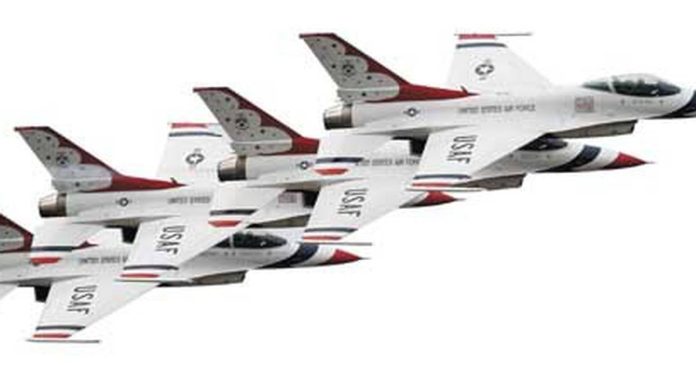
A Hampton Roads “hometown hero” will have the opportunity to take to the skies in the back seat of an F-16.

Joint Base Langley-Eustis is accepting nominees for a local resident to take part in a Thunderbird flight May 5 ahead of the weekend’s Air Power over Hampton Roads Air Show.

To qualify, the nominee must have had a major impact on the community. The nominee could be — but is not limited to — a teacher, a first responder, a youth mentor or coach, or someone who works with at-risk children.

A nomination application, detailing the nominee’s contributions to Hampton Roads, must be submitted to the 633rd Air Base Wing community engagement team at [email protected]. The deadline is Feb. 27.

The Thunderbirds, aerial performers, will headline the 2023 airshow, slated for May 6-7. F-22 and F-35 demonstration teams are also slated to perform.

Caitlyn Burchett, [email protected]

US fighter jets have shot down 4 objects in 8 days. The extraordinary chain of events is unprecedented in peacetime. – Daily Press

0

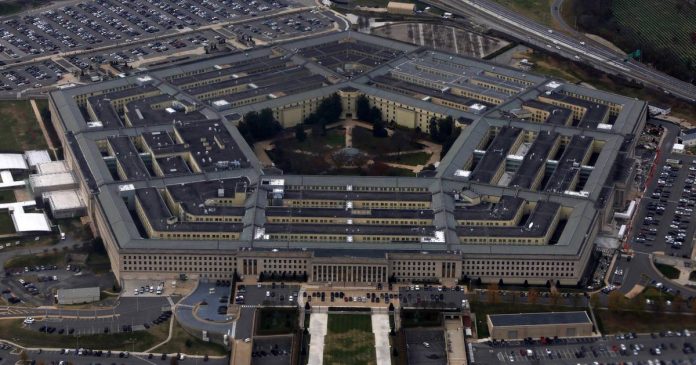
WASHINGTON — A U.S. fighter jet shot down an “unidentified object” over Lake Huron on Sunday on orders from President Joe Biden. It was the fourth such downing in eight days and the latest military strike in an extraordinary chain of events over U.S. airspace that Pentagon officials believe has no peacetime precedent.

Part of the reason for the repeated shootdowns is a “heightened alert” following a spy balloon from China that emerged over U.S. airspace in late January, Gen. Glen VanHerck, head of NORAD and U.S. Northern Command, said in a briefing with reporters.

Since then, fighter jets last week also shot down objects over Canada and Alaska. Pentagon officials said they posed no security threats, but so little was known about them that Pentagon officials were ruling nothing out — not even UFOs.

“We have been more closely scrutinizing our airspace at these altitudes, including enhancing our radar, which may at least partly explain the increase,” said Melissa Dalton, assistant defense secretary for homeland defense.

U.S. authorities have made clear that they constantly monitor for unknown radar blips, and it is not unusual to shut down airspace as a precaution to evaluate them. But the unusually assertive response was raising questions about whether such use of force was warranted, particularly as administration officials said the objects were not of great national security concern and the downings were just out of caution.

VanHerck said the U.S. adjusted its radar so it could track slower objects. “With some adjustments, we’ve been able to get a better categorization of radar tracks now,” he said, “and that’s why I think you’re seeing these, plus there’s a heightened alert to look for this information.”

He added: “I believe this is the first time within United States or American airspace that NORAD or United States Northern Command has taken kinetic action against an airborne object.”

Asked if officials have ruled out extraterrestrials, VanHerck said, “I haven’t ruled out anything at this point.”

The Pentagon officials said they were still trying to determine what exactly the objects were and said they had considered using the jets’ guns instead of missiles, but it proved to be too difficult. They drew a strong distinction between the three shot down over this weekend and the balloon from China.

Minnesota Gov. Tim Walz tweeted that airmen in the 148th Fighter Wing, an Air National Guard fighter unit in Duluth, shot down the object over Lake Huron.

The extraordinary air defense activity began in late January, when a white orb the officials said was from China appeared over the U.S. and hovered above the nation for days before fighter jets downed it off the coast of Myrtle Beach, South Carolina. That event played out over livestream. Many Americans have been captivated by the drama playing out in the skies as fighter jets scramble to shoot down objects.

The latest brought down was first detected on Saturday evening over Montana, but it was initially thought to be an anomaly. Radar picked it up again Sunday hovering over the Upper Peninsula of Michigan and it was going over Lake Huron, Pentagon officials said Sunday.

U.S. and Canadian authorities had restricted some airspace over the lake earlier Sunday as planes were scrambled to intercept and try to identify the object. According to a senior administration official, the object was octagonal, with strings hanging off, but had no discernable payload. It was flying low at about 20,000 feet, said the official who spoke to The Associated Press on condition of anonymity to discuss sensitive matters.

Meanwhile, U.S. officials were still trying to precisely identify two other objects shot down by F-22 fighter jets, and were working to determine whether China was responsible as concerns escalated about what Washington said was Beijing’s large-scale aerial surveillance program.

An object shot down Saturday over Canada’s Yukon was described by U.S. officials as a balloon significantly smaller than the balloon — the size of three school buses — hit by a missile Feb. 4. A flying object brought down over the remote northern coast of Alaska on Friday was more cylindrical and described as a type of airship.

Both were believed to have a payload, either attached or suspended from them, according to the officials who spoke to The Associated Press on condition of anonymity to discuss the ongoing investigation. Officials were not able to say who launched the objects and were seeking to figure out their origin.

The three objects were much smaller in size, different in appearance and flew at lower altitudes than the suspected spy balloon that fell into the Atlantic Ocean after the U.S. missile strike.

The officials said the other three objects were not consistent with the fleet of Chinese aerial surveillance balloons that targeted more than 40 countries, stretching back at least into the Trump administration.

Senate Majority Leader Chuck Schumer told ABC’s “This Week” that U.S. officials were working quickly to recover debris. Using shorthand to describe the objects as balloons, he said U.S military and intelligence officials were “focused like a laser” on gathering and accumulating the information, then compiling a comprehensive analysis.

“The bottom line is until a few months ago we didn’t know about these balloons,” Schumer, D-N.Y., said of the spy program that the administration has linked to the People’s Liberation Army, China’s military. “It is wild that we didn’t know.”

Eight days ago, F-22 jets downed the large white balloon that had wafted over the U.S. for days at an altitude of about 60,000 feet. U.S. officials immediately blamed China, saying the balloon was equipped to detect and collect intelligence signals and could maneuver itself. White House officials said improved surveillance capabilities helped detect it.

Daywatch

Weekdays

Start your morning with today’s local news

China’s Foreign Ministry said the unmanned balloon was a civilian meteorological airship that had blown off course. Beijing said the U.S. had “overreacted” by shooting it down.

Then, on Friday, North American Aerospace Defense Command, the combined U.S.-Canada organization that provides shared defense of airspace over the two nations, detected and shot down an object near sparsely populated Deadhorse, Alaska.

Later that evening, NORAD detected a second object, flying at a high altitude over Alaska, U.S. officials said. It crossed into Canadian airspace on Saturday and was over the Yukon, a remote territory, when it was ordered shot down by Prime Minister Justin Trudeau.

In both of those incidents, the objects were flying at roughly 40,000 feet. The object on Sunday was flying at 20,000 feet.

The cases have increased diplomatic tensions between the United States and China, raised questions about the extent of Beijing’s American surveillance, and prompted days of criticism from Republican lawmakers about the administration’s response.

___

Associated Press writers Aamer Madhani, Michael Balsamo, Ellen Knickmeyer and Tara Copp contributed to this report.

2Q23 Call for Strategy Bridge Submissions

0

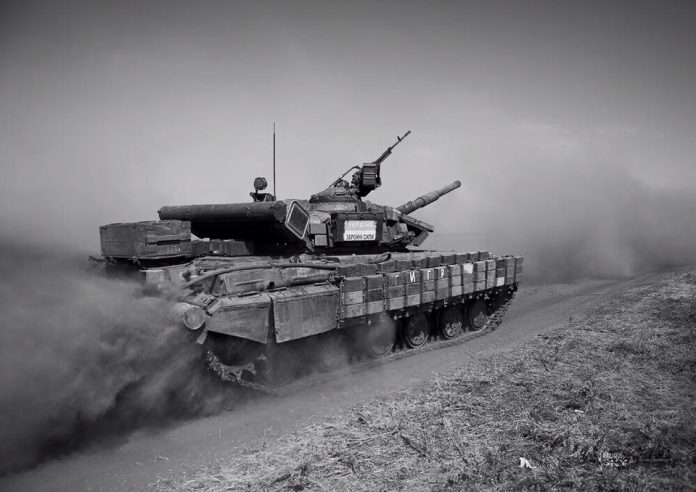
On the 24th of February 2022, Russia launched a full-scale invasion of Ukraine. Within weeks, U.S. generals began pointing to examples of lessons learned from the early days of the conflict that reinforced preexisting beliefs. For example, Chief of Staff of the U.S. Army, General James McConville, repeated the maxim that amateurs study tactics and professionals study logistics; General Mark Kelly, Commander of Air Combat Command, pointed to a lack of air superiority as Russia’s problem; while General Berger, Commandant of the Marine Corps, used the conflict to argue that “winning the reconnaissance/counter-reconnaissance fight early on [is] critical.”[1] As the war approached the six-month mark, the conversation increasingly turned to the familiar question of what allies and potential adversaries might be learning tactically, operationally, strategically, and geopolitically.[2]

The challenge here is twofold. First, the desire to collect lessons learned often drives analysis to the tactical or, at best, operational level where information is more granular and events and actions are easier to measure or quantify. Second, these analyses look to apply these lessons to preparation for the next conflict–though we cannot know how, when, or where it will take place. Militaries are notoriously bad at predicting future conflicts, an argument Lawrence Freedman makes in his book The Future of War.[3]

How then should we reflect on this experience? For 2Q23 we want to look back instead of to the future, and ask: What happens to previously held assumptions in the wake of Russia’s naked aggression? Which are challenged and which are validated?

Submissions should conform to our submission guidelines. They should be concisely written, 1000-2000 words in length (excluding citations), and must include appropriate footnotes formatted consistent with the Chicago Manual of Style.

Submissions should be scoped narrowly enough to make a complete and meaningful argument that is backed up by evidence. All submissions must be received no later than 3 April 2023. Those submissions selected for publication will be published beginning in early May 2023. We highly encourage writers to download our submissions template to save you time and to ensure that your submission comports with our editorial requirements.

We know our community will have ideas to add to this conversation and we look forward to reading your writing.

Army sees safety, not ‘wokeness,’ as top recruiting obstacle – Daily Press

0

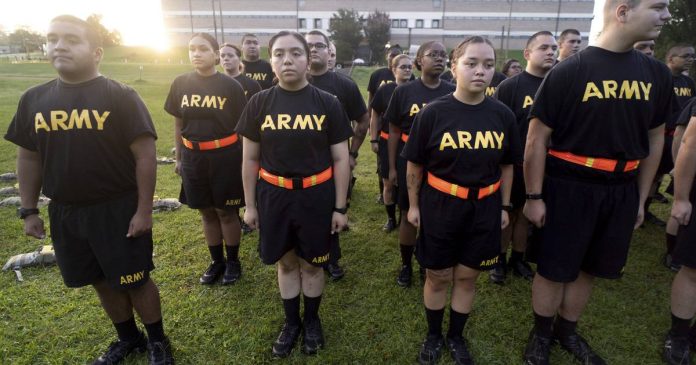
WASHINGTON — While some Republicans blame the COVID-19 vaccine or “wokeness” for the Army’s recruiting woes, the military service says the bigger hurdles are more traditional ones: Young people don’t want to die or get injured, deal with the stress of Army life and put their lives on hold.

They “just don’t see the Army as something that’s relevant,” said Maj. Gen. Alex Fink, head of Army marketing. “They see us as revered, but not relevant, in their lives.”

Addressing those longtime issues has taken on greater urgency as the Army tries to recover from its worst recruiting year in decades, a situation aggravated by the tight jobs market. The Army is offering new programs, advertising and enticements in an effort to change perceptions and reverse the decline.

One incentive gives recruiters bonuses of up to $4,500 per quarter if they exceed their baseline enlistment requirement. A pilot program allows young enlisted soldiers — those in the three lower ranks — to get a promotion if they refer someone who enlists and goes to basic training. Only one promotion per soldier is allowed.

The Army fell about 15,000 soldiers, or 25%, short of its 60,000 recruitment goal last year, when all the branches struggled to meet recruiting goals.

Army Secretary Christine Wormuth said the Army has set a difficult goal for this year: aiming to bring in 65,000 recruits, which would be 20,000 more than in 2022. It’s difficult to predict how it will go, she said, adding that recruiters need to do all they can to surpass last year’s numbers.

“I would say it is a stretch goal,” she said.

Wormuth said she and Gen. James McConville, the Army’s chief of staff, believed they needed to set a big goal.

“I think we are seeing some forward momentum. But it is still too early to tell where we will likely land at the end of this fiscal year. I know we will do better than we did last year,” she said.

Guiding the Army’s efforts are surveys intended to help pinpoint why young people dismiss the Army as a career.

Those surveys were conducted over four months last spring and summer. They involved about 600 respondents, ages 16 to 28, per month. The Army discussed the general findings with The Associated Press but declined to provide detailed methodology, saying the surveys were done by a private research contractor and that licensing agreements limited the public release of some data collection details.

Officials said that based on the surveys, young people simply do not see the Army as a safe place or good career path, and believe they would have to put their lives and careers on hold if they enlisted.

Army leaders said very few say they are deterred from enlisting due to “wokeness.” In fact, concerns about discrimination against women and minorities is seen as a bigger issue, along with a more general distrust of the military.

“Wokeness” is a slang term that originally described attentiveness to issues of racial and social justice. Some people and groups, especially conservatives, now use it in a derogatory sense implying what they see as overreactions.

Republicans in Congress, including Rep. Jim Banks, chairman of the House Armed Services subcommittee on military personnel, have pledged to target “wokeness” this year. Banks, R-Ind., has said “exposing and dismantling the Biden administration’s woke agenda that is driving down military recruitment and retention” will be a top priority for him this year. His spokesman, Buckley Carlson, said combating “wokeness” at the Defense Department will be a key issue for the congressman.

Banks and others have complained about the Pentagon’s efforts to target extremism in the military, provide courses in critical race theory and other efforts to expand diversity. They say focusing on partisan issues pushed by the left takes away from the Pentagon’s core missions, weakens the military and turns off recruits.

But the Army says that on average, only 5% of the respondents in the surveys listed “wokeness” as an issue, compared with 13% who say they believe that women and minorities will face discrimination and not get the same opportunities.

Wormuth said the survey data is a tool to “assuage the concerns that some may have, whether influencers or members of Congress, about wokeness or the vaccine mandate — which is now rescinded — and show they are not, by any means, primary drivers of the recruiting challenges we’re experiencing.”

She said the information from the surveys also provides insight on how the Army needs to better explain its benefits.

Daywatch

Weekdays

Start your morning with today’s local news

Fink, the Army’s marketing head, said the top three reasons young people cite for rejecting military enlistment are the same across all the services: fear of death, worries about post-traumatic stress disorder and leaving friends and family — in that order. He said the Army wanted a better understanding of any additional barriers to service, beyond those top three.

By a “significant margin,” he said, the most common response beyond Nos. 1-3 was, “I will be putting my life on hold.” That was cited by more than 1 in 5 people surveyed.

Many young people do not know anyone in the Army and are unfamiliar with the jobs or benefits it offers. Fink said trust in government institutions, including the military, has declined, particularly among this group.

“They just don’t perceive the Army as being in touch with the modern, everyday culture that they’re used to,” he said.

Fink said about 10% in the surveys say they do not trust military leadership, based on the way recent events or missions have been handled. That could include the Afghanistan withdrawal or use of the military during racial unrest and protests in the United States.

Other reasons get much smaller mentions. They include concerns about living conditions on military bases, getting assigned to unwanted jobs, the coronavirus vaccine and the “wokeness” issue.

In some cases, those reasons vary by region. But Fink said the “wokeness” issue was pretty consistent — between 4% and 5% across the nation, without much variance by gender or ethnicity.